Veteran will drive a Toyota Camry for an undetermined amount of Nationwide races

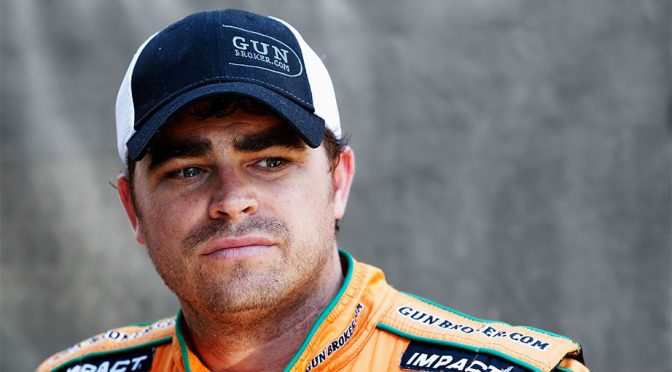
SR² Motorsports announced Tuesday that Jason White will join Blake Koch as the driver of one of the team’s three Toyota Camrys in its 2013 lineup.

The number of races White will drive is not finalized, but his first race with the team will be the DRIVE4COPD 300 at Daytona International Speedway on Saturday, Feb. 23. All of White’s 2013 NASCAR Nationwide Series starts will be with SR² Motorsports.

FULL SERIES COVERAGE

• View all articles
• View all videos
• View all photos

"I’m excited to be with SR² Motorsports," White said in a team release. "The commitment they’ve shown to improve and build upon is impressive. They exceeded expectations in their first season and we look forward to raising the bar this season. There’s lots of potential and promise as we head into 2013."

White made his first Nationwide start in 2001. Since then, he has competed in 40 events over the course of seven seasons. He began driving full time in the NASCAR Camping World Truck Series in 2008. In the past four years he has scored nine top fives, 21 top-10s and earned one pole. His best finish in the championship standings was 10th in 2010.

"I’m thrilled with the addition of Jason White to SR² Motorsports," said team owner Jason Sciavicco. "He brings a lot to the table in terms of talent and abilities. His experience and determination will certainly be assets to our team as we continue to grow and mature as a team.”

How are you watching The Sprint Unlimited? Use the table below to find all
the information you need to keep up with the latest from Daytona.

WATCHING AT HOME?

GOING TO THE RACE?
WATCHING RACEVIEW?
PLAYING FANTASY?

Even if you’re not at the track, you can keep up with all the live action on TV and at NASCAR.com. (All times Eastern, unless noted.)

Watch practices and the race on TV:

Saturday, Feb. 16: The Sprint Unlimited on FOX, 8 p.m.

Get inside the garage:

GarageCam presented by Miller Lite will be live streaming here Friday, Feb. 15, from 4:30-5 p.m.

Want more?

Get lap-by-lap updates on NASCAR.com during practice laps, qualifying and races.

Want to attend this weekend’s race? Buy tickets to The Sprint Unlimited at Daytona International Speedway here.

Know the track:

Check out our Daytona International Speedway track page to take a video tour of the track and explore the best fan views.

Want to meet a driver?

Here is a list of appearances. (List subject to change.)

Saturday, Feb. 16, 5:30 p.m.: Kevin Harvick | Budweiser 1876 hospitality area

Saturday, Feb. 16, 6 p.m.: Dale Earnhardt Jr. | Sprint FANZONE Main Stage

Get packing:

The weather in Daytona Beach is:

Click for Daytona Beach, Florida Forecast

The Sprint Unlimited is a 75-lap, non-points race limited to pole winners of the previous season and past winners.

The ultimate way to experience the race

1. RaceView Premium: Renders live, virtual 3-D Video with in-car audio as well as national radio broadcasts. Telemetry data, real-time stats with pit and driver information (Formerly known as RaceView 360)

2. RaceView Audio: Streams all 43 drivers’ in-car audio and Officials’ channel with live national radio broadcasts. (Formerly known as Scanner)

Play NASCAR FANTASY LIVE

Fantasy doesn’t start until next week, but you can set your lineup for the Daytona 500.

Expert tip of the week:

Five times, the winner of this race has gone on to win the Daytona 500: 1982 (Bobby Allison); 1987 (Bill Elliott); 1996 (Dale Jarrett); 1997 (Jeff Gordon); 2000 (Jarrett).

Last year’s top three finishers:

1. Kyle Busch

2. Tony Stewart

3. Marcos Ambrose

See the complete results from last year’s event here.

Former X Games star knows fans will follow if he succeeds

Travis Pastrana used to be one of those guys who made fun of people watching NASCAR.

Every year on the afternoon of the Daytona 500, when he and his buddies would gather to fire up the grill and take in the spectacle of the Great American Race, the X Games legend would be the one dishing out the most grief. “I had a lot of friends who were really passionate abut NASCAR, and I really enjoyed giving them a hard time,” he remembered. This is, after all, the same guy who for his first visit to a circle-track event chose a T-shirt featuring one word stripped across the front.

Boring.

Pastrana doesn’t wear that T-shirt anymore.

"No matter how many people you bring over, if you don’t do well, you’re not going to keep them."

— Travis Pastrana

“Getting in the car, I’m scared for my life. In a good way, because they have great safety precautions. But I am nervous and on the edge the entire race,” said Roush Fenway’s newest NASCAR Nationwide Series driver. “Everyone’s like, ‘Oh, did you get bored out there?’ I’m like, ‘Bored? I’m running a heart rate of 160 just sitting in a chair, in a seat.’ The car is sliding the whole way. It’s something you just don’t understand. You may watch it on TV, and pick a driver, but until you go to Charlotte, until you go to Daytona, until you go somewhere you can see the speed and the raw power of these things — it’s something you have to witness.”

Can we get an amen? Although he’s been involved in the sport for only a few years, Pastrana has emerged as one of NASCAR’s most ardent converts, his opinions on stock-car racing having flipped 180 — or more appropriately given his motorcycle jumping background, 540 — degrees. The 29-year-old has legions of fans, kids in flat-billed ball caps who were wowed by his exploits in motocross and the X Games, many of whom may be just as skeptical of NASCAR as their idol once was. Pastrana wants to bring them all in, to have them smell the gas fumes and the tire smoke and become as hooked as he is, but he knows one thing has to happen first.

He has to succeed. 

He’s done that in every other endeavor he’s been involved with, whether it’s winning 10 X Games gold medals or claiming two motocross titles or launching the Nitro Circus franchise or setting a world record by jumping a car 296 feet from a pier onto a barge anchored off the California coast. Pastrana has built his legend on not just doing crazy things, but doing them exceptionally well, always pushing the limits and never allowing the occasional broken bone to keep him down for very long.

In NASCAR, he’s found perhaps his greatest challenge. He’s leaping in full time, and with an organization that’s won the last two Nationwide titles, because he believes that’s what it will take to prosper in an extremely competitive field. And if he’s going to enthrall all his fans all over again, show them that turning laps in a stock car can be as fascinating as attempting a Superman seat-grab back flip on a motorbike, there’s one thing he has to do.

“I have to be successful,” Pastrana said. “… Hopefully, I can bring that crowd in.  Hopefully my fan base will stick with me, and they have done so far, which is great. When (Supercross star) Ricky Carmichael came to NASCAR, he did well, but a lot of his fan base didn’t really transfer. … But I’m hoping that the fan base sticks with us, and that I do learn how to drive these things. Because the bottom line is, no matter how many people you bring over, if you don’t do well, you’re not going to keep them.”

Hence the alliance with Roush, which provided Pastrana with a one-race tryout late last season in Richmond, where the former daredevil qualified fifth and finished 17th. That was enough to convince Jack Roush that Pastrana was serious, that there would be no more incidents like the botched X Games jump in 2011 that resulted in a broken ankle and pushed his NASCAR debut into the next year. Pastrana greatly enjoyed wading into NASCAR, although a limited schedule of 10 national-series starts in 2012 didn’t exactly help him progress behind the wheel. So Roush asked his prospective new driver: Do you want to have fun, or do you want to win?

Pastrana thought it was a trick question. It wasn’t.

“You can go out and do a lot of things in motorsports, and a lot of things in exhibition things, and if you get 80 percent of the potential of yourself … it can be enough,” Roush said. “But in the business of stock-car racing, you’ve got to be able to squeeze every ounce of blood out of this turnip. You’ve got to be able to get well up in the 90 percent of what the potential is, and you can’t do that without undivided attention and without focus and without patience. And I wanted to make sure he understood I thought it was going to require his absolute dedication to do it. And he’s committed to that.”

There’s no question Pastrana showed flashes of promise, even in his limited slate last year — a 13th-place run at Indianapolis Motor Speedway, a surprisingly solid showing his first time at Darlington Raceway, the Richmond event that won over a Roush camp which was very closely eyeing his every move. But committing to a full-time run, in equipment Ricky Stenhouse Jr. used to win the last two Nationwide titles, raises the bar substantially. There will be no excuses. As Roush told him, in his no-nonsense style — you fail, you know you’ve failed as a driver.

“That puts on a lot of pressure, but it also puts things in perspective,” Pastrana said. “Before, it was fun and games and every race was learning and it was great. … But the bottom line is, this is my year. I’ve got a whole season to figure it out. If I don’t do well, people are going to go, ‘Oh, you failed. You couldn’t make it. You’re not as good a driver as you thought.’ I have more to lose by going to NASCAR than I have to gain. But I do stuff because I’m passionate about it and it makes me happy.”

But what if he doesn’t fail? Granted, Pastrana doesn’t seem quite ready to challenge the likes of Elliott Sadler and Austin Dillon for race victories, but if he succeeds the breakthrough could be felt on many levels. 

“If he runs well, that will open more doors. And he’ll have more doors than most to be able to open,” said Roush President Steve Newmark.

Given Pastrana’s immense appeal to the youth market, that’s certainly the hope — on the part of NASCAR as well as Roush. But it all has to begin with performance first. “I think we’ve all learned in this sport that you don’t just bring someone over because of the appeal you think they may have with a different demographic,” Newmark added. “You only bring somebody into this sport if you think they can drive.”

It took Pastrana five years to master the double backflip he used to win X Games gold in 2006. He may not have that long to master NASCAR, but along the way he’ll continue to preach the sport’s message to the unconverted. He did just that with a group of action sports friends last year, bringing them to the summertime Daytona race, watching them ham it up in the most garish souvenir-stand garb they could find. Then there was a wreck, and Jeff Gordon’s car slid to a stop very near where they were standing, and they all saw the light.

“They’re like glued to the fence,” Pastrana remembered. “Half of my buddies went to another NASCAR race that year, and they brought their friends, and they went to races I didn’t even go to. So I think for me, all you have to do is see it.”
Innovative device to result in reduction of track-drying time

DAYTONA BEACH, Fla. — Less than eight months ago, NASCAR Chairman and CEO Brian France tasked the team at the NASCAR Research and Development Center in Concord, N.C., with developing a means to shorten the delay caused by rain.

The reasons for the initiative were many, but at the top of the list was fans, whether in the grandstands or watching on television, should not have to wait long before racing resumes following a downpour.

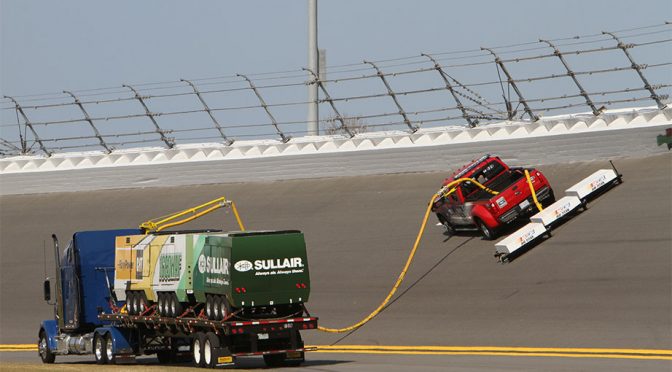
NASCAR announced today Phase 1 of France’s vision, introducing the Air Titan™ track-drying system that will debut during Speedweeks at Daytona International Speedway. This innovative technology, steeped in science and created by the NASCAR R&D Center, will reduce track drying time, improve the racing product and enhance the fan experience — starting this week and including The Sprint Unlimited on Saturday night at 8 p.m. ET on FOX.

“In a short amount of time, our talented team at the NASCAR R&D Center imagined, designed and built the Air Titan, an innovative device that will dramatically improve the race-viewing experience for our fans,” France said of the initiative’s first phase. “With its far-reaching potential and impact, we believe the Air Titan is a big win for the motorsports industry, and eventually will enhance many surface cleaning and drying industries as well.”

THE SPRINT UNLIMITED   
Sprint Cup Series kickoff

Fans decide: Vote on format

Mobile experience
New innovations for 2013

The Sprint Unlimited content
Fans at center of plans
Event gets an overhaul
New name, same setting

Video: Kyle Busch’s 2012 save

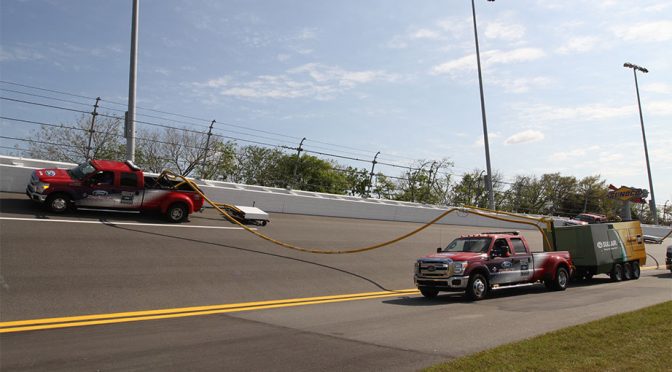
With the ultimate goal of reducing track-drying time by up to 80 percent, the NASCAR R&D team took an advanced scientific approach during the production of the Air Titan™. Using compressed air, the Air Titan™ efficiently and reliably pushes water off of the racing surface and onto the apron where vacuum trucks will remove the remainder of the moisture. Jet dryers will follow each Air Titan™, drying any excess water that remains on the racing surface.

As part of the Air Titan’s™ testing process, NASCAR enlisted the expertise of the National Center for Asphalt Technology (NCAT) at Auburn University and the International Speedway Corporation’s track construction group, Racing Surface Technologies and QualPro Inc. Additionally, Elgin Sweeper Company, Sullair and Ring Power CAT also provided equipment during the testing, and will be part of the track-drying process at Daytona during Speedweeks.

For the immediate future, jet dryers and vacuum trucks will continue to be used during track-drying efforts. Over time, the innovations of the Air Titan™ will lessen the carbon footprint of track drying, decreasing both emissions and noise pollution. The next evolution in the innovative technology will be to optimize the power source of the dryers.

Take a look at the history of The Sprint Unlimited by breaking down the numbers

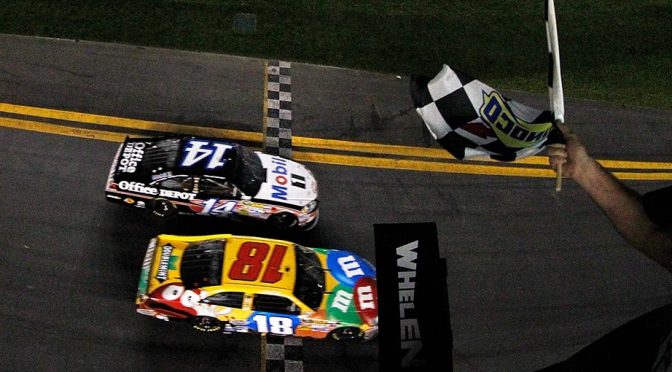
.013  Margin of victory in seconds by Kyle Busch over Tony Stewart in 2012, the closest margin in Sprint Unlimited history

.058  Margin of victory in seconds by Kurt Busch over Jamie McMurray in 2011, the second closest margin in Sprint Unlimited history

.080  Margin of victory in seconds by Dale Earnhardt over Sterling Marlin in 1995, the third closest margin in Sprint Unlimited history

1  Laps led by Rusty Wallace (1998), Neil Bonnett (1983-84), Dale Earnhardt (1980), Dale Jarrett (2000 and 2004) and Kevin Harvick (2009) in The Sprint Unlimited races they won

2  The starting position that has produced the most Sprint Unlimited wins (five).

2.75  Average finish by Dale Earnhardt, best by any driver with multiple starts

3  Number of drivers who started from the pole position and won: Darrell Waltrip (1981), Bill Elliott (1987) and Ken Schrader (1989)

4  Drivers who have won the race back to back: Neil Bonnett (1983-84), Ken Schrader (1989-90), Tony Stewart (2001-02) and Kevin Harvick (2009-10)

5  Drivers who have won the event in their first appearance (Buddy Baker, 1979; Dale Earnhardt, 1980; Jeff Gordon, 1994; Dale Jarrett, 1996; Denny Hamlin, 2006)

6  Number of Sprint Unlimited wins by Dale Earnhardt, the series leader

7  Number of fewest starters in the field for The Sprint Unlimited (1981)

8  Number of times Kasey Kahne has competed in the race

’09 Year Kevin Harvick had his first Sprint Unlimited victory

10 Possible number of laps in the last segment of the race based on fan vote

11  Number of starts before winning, most since race began in 1979 (Rusty Wallace and Mark Martin)

14  Number of different leaders in the 2009 event, the most since the race began in 1979

19  Number of wins by Chevrolet in The Sprint Unlimited; leads all manufacturers

20  Most consecutive starts in The Sprint Unlimited; by Mark Martin (1989-2008)

27  Kevin Harvick’s starting position in 2009, the lowest by a race winner in the event’s history

28  Number of lead changes in the 2011 event, the highest number since race began in 1979

44  Laps led by Greg Biffle in 2005, the most by a driver who did not win the event

47  Laps led by Dale Earnhardt Jr. in 2008, the most in a single Sprint Unlimited

124.095 mph  The slowest average speed of the race for The Sprint Unlimited was last season’s event won by Kyle Busch.

197.802 mph  The fastest average speed of the race for The Sprint Unlimited was in 1987 won by Bill Elliott.

"Air Titan" expected to dry track in fraction of the time

DAYTONA BEACH, Fla. — In one of the most highly anticipated, well-received technological developments in the sport’s recent history, NASCAR shared details and photos of its innovative Air Titan track drying system Tuesday.

Although the project is still in the developmental phase, the ultimate goal is to cut the time it takes to dry a race track by 80 percent — drastically reducing rain delays.

It’s welcome news for fans, drivers, track owners and television producers alike. But mostly for the fans, to whom NASCAR Chairman Brian France promises a “dramatically improved” race-viewing experience.

The Air Titan project was initiated by France himself last year and was developed at the NASCAR Research & Development Center by six in-house project managers during the past eight months.

It uses compressed air to push water off the racing surface and onto the track apron where vacuum trucks remove the water. Five jet dryers will follow behind drying any excess moisture.

There will be two systems on track at the same time (running at a speed between 4-5 mph) each tasked to dry half the track. Ideally, according to NASCAR Senior Vice President for Racing Operations Steve O’Donnell, there will only need to be one pass.

For logistical reasons — there are large hoses connecting the power source to the air compressors — the race cars will be parked on pit road during the process, which should increase safety as well.

Another benefit of using compressed air will be a reduction of the “weepers” created when water rises to the track surface — a situation exacerbated with jet dryers.

“When you go back and look — and all credit goes to Brian for saying, ‘we have to get this done’ — jet dryers were 1976 technology with Roger Penske and before that we were scraping the track with tires,” O’Donnell said. “So it’s been 45 years of the same technology tweaked a little bit, but not dramatically. We’re not all the way there yet, but we think this could be a significant game changer for the industry.”

The drying system is already at Daytona International Speedway awaiting this week’s start of the 2013 NASCAR season and may get its first test as early as Saturday night’s season-opening event, The Sprint Unlimited.

As part of its initial development the Air Titan system was actually tested at the famous 2.5-mile speedway, home to the Daytona 500. The engineers and project managers are continuing to develop the system — specifically fine-tuning its power source — to make it available at other tracks in the near future.

“This is an area where NASCAR and the tracks are perfectly aligned,” said Daytona International Speedway President Joie Chitwood. “We want the same thing. We want to give fans, competitors and television, a great experience and any chance to get the track dryer quicker is good for everyone.

“Fans travel from a far distance and especially if you’ve come from out of state, you want to see the race that day. Instead of a two-hour delay you have a much shorter delay, that’s a big deal to us. This is an area where we’re like, ‘great job NASCAR, what can we do to help.’ With our current technology and what they’re going to do it’s really going to make a big difference.’’

NASCAR cautions that the system is still being developed, but with two weeks of track activity on the schedule at Daytona, there may be a prime opportunity to give it a “real world” test.

“Similar to any new technology you see, from how big computers were to how small iPads are now, if you look at the Air Titan as a device, we’re really excited about that,” O’Donnell. “We have to find ways to make the power source small and more efficient, but it’s something we can come to the table as a solution not only for our race tracks, but it could have utilizations in many different aspects.”

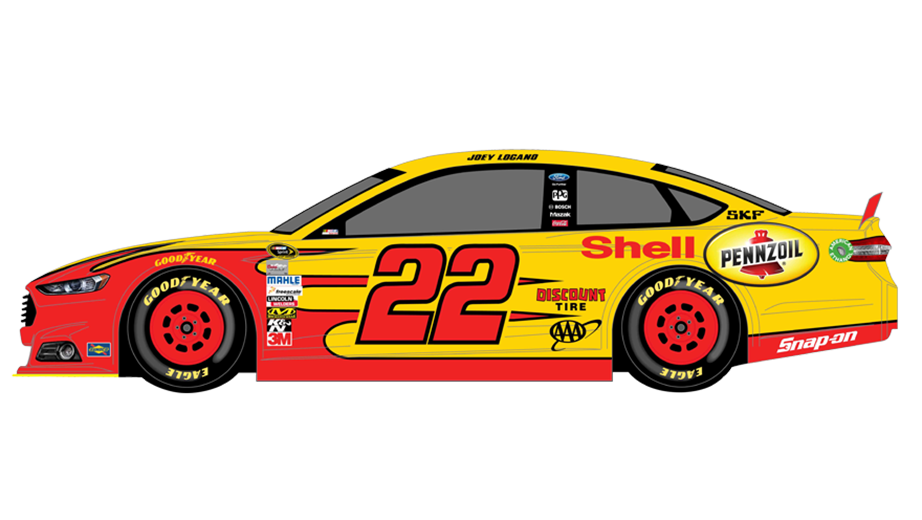
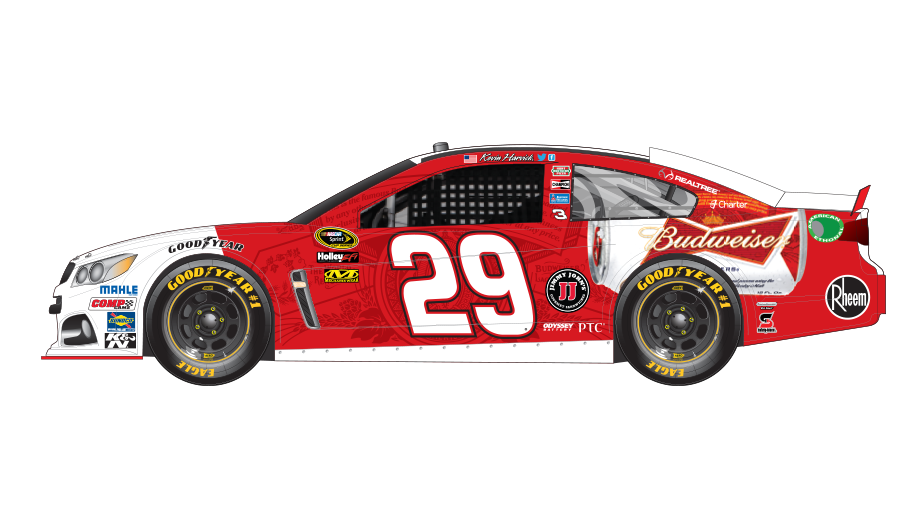
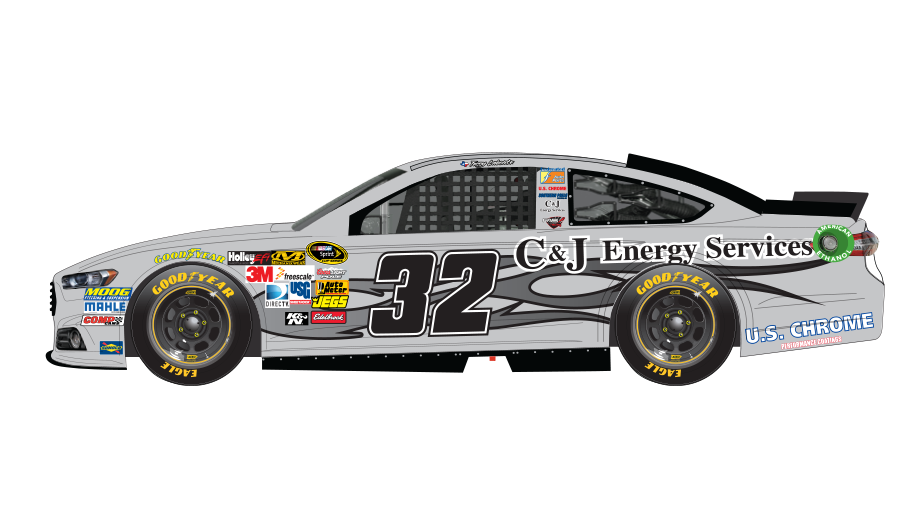
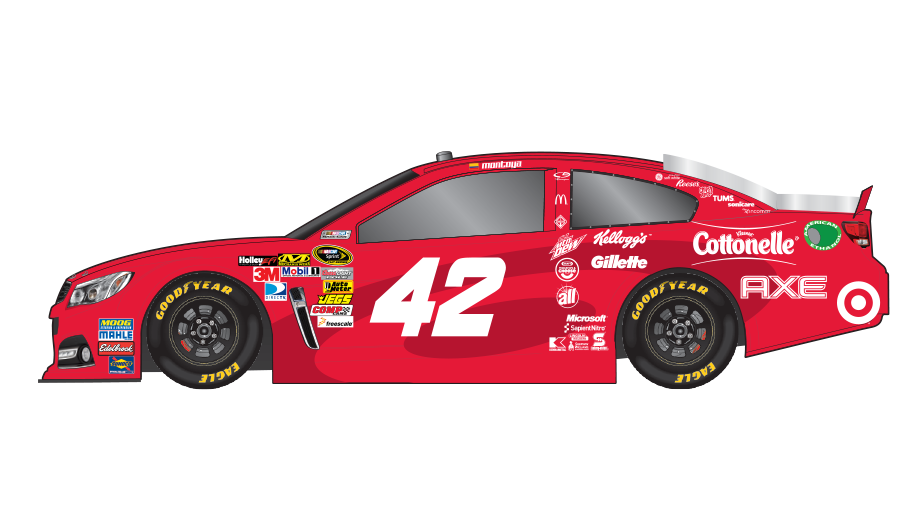
Keep track of all the special paint schemes for The Sprint Unlimited

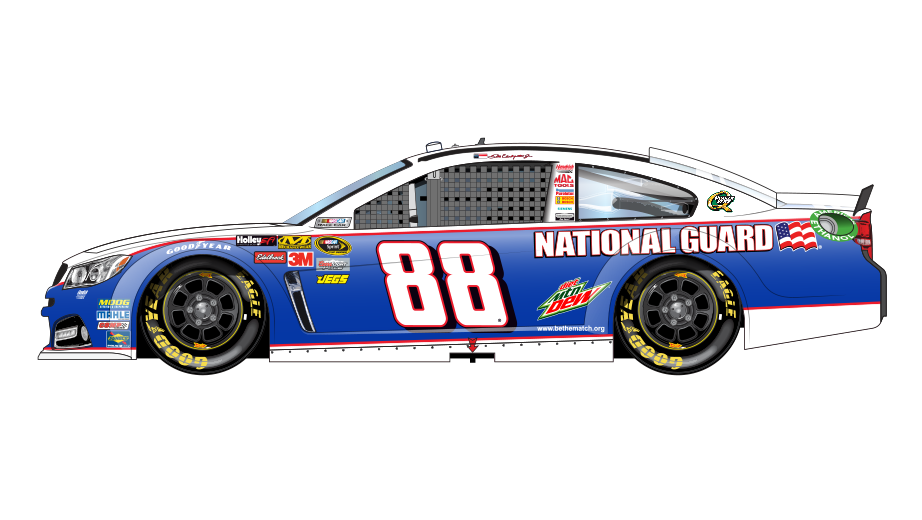
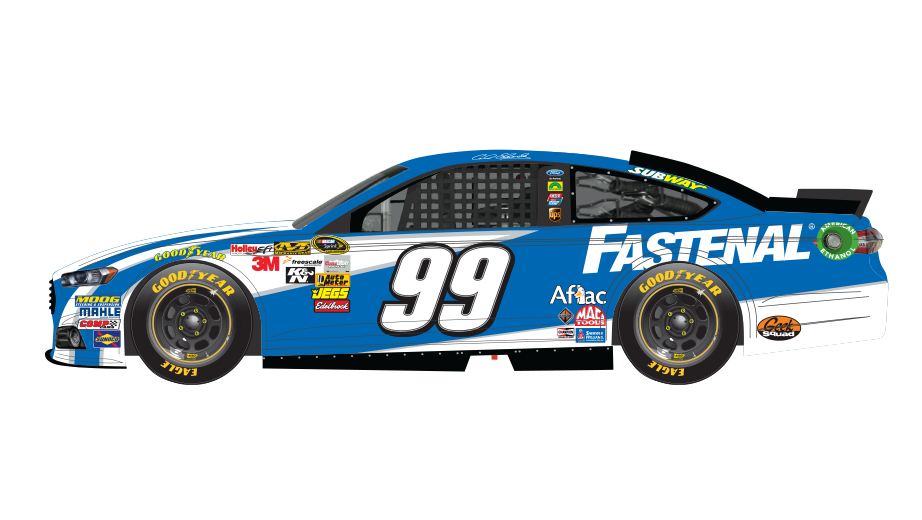
Daytona Speedweeks kicks off with The Sprint Unlimited, formerly known as the Budweiser Shootout. As in past years, teams run special paint schemes for this non-points event. The first event of the year, race entry is limited to those who won poles in 2012 and previous winners of the race.

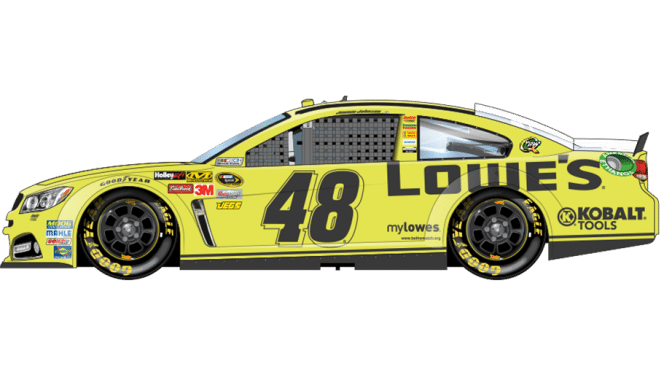
Jimmie Johnson‘s No. 48 Lowe’s Yellow Chevrolet, in particular, has some interesting background.

RELATED: Die-cast version of Johnson’s car (1:64 scale) | Die-cast version (1:24 scale)

• The “Daytona Yellow” paint formulation was used by Chevrolet on its Camaro and Corvette models in 1969 and 1970.  

• Variations of this yellow automotive paint color are also known as Bright Yellow, Goldenrod Yellow, Yellow and Colonial Yellow.

• The paint code of Daytona Yellow was used on several General Motors Corp. and Chrysler models (including the Firebird, Pontiac, Camaro, Corvette, Chrysler Special Order/Fleet, Oldsmobile, Chevrolet, Nova, Buick and GMC.), but the sales name of the color changed based on which car it was used on.

• The only instances in which it was called "Daytona Yellow" by the factory was on the ’69 and ’70 Camaros and Corvettes.

Below are paint schemes for 11 additional cars in the 19-car race.

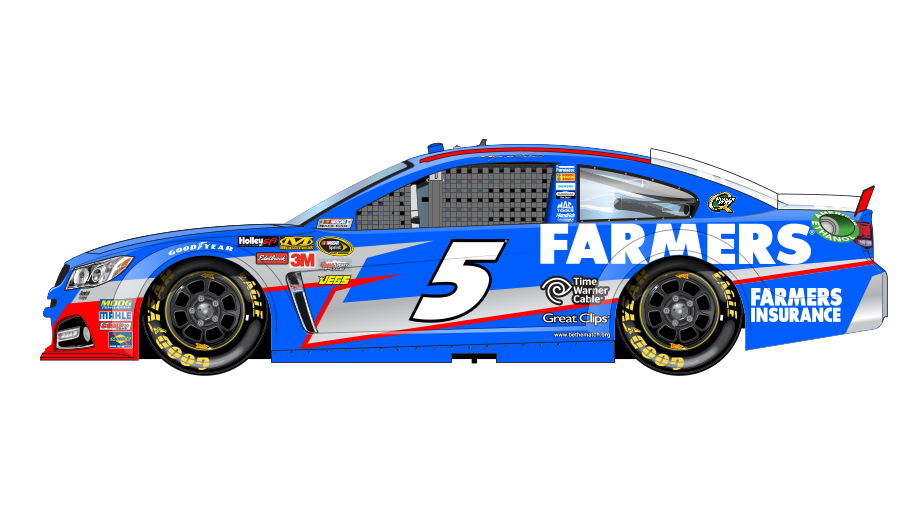
Kasey Kahne will drive the No. 5 Farmers Insurance Chevrolet.


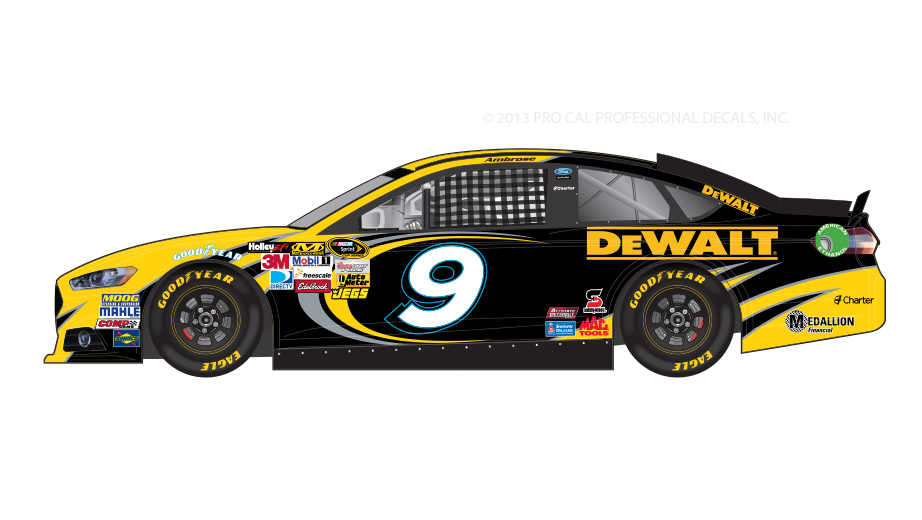
Marcos Ambrose will drive the No. 9 Stanley Ford.

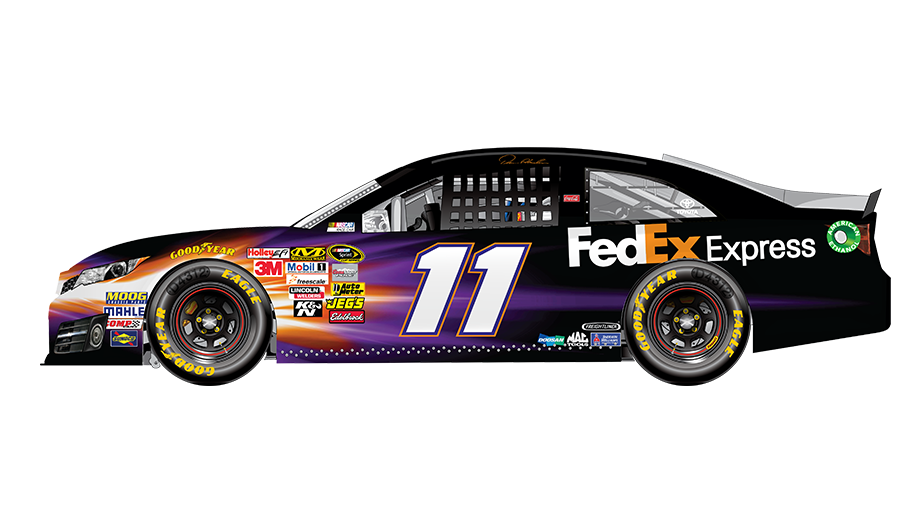
Denny Hamlin will drive the No. 11 FedEx Express Toyota.

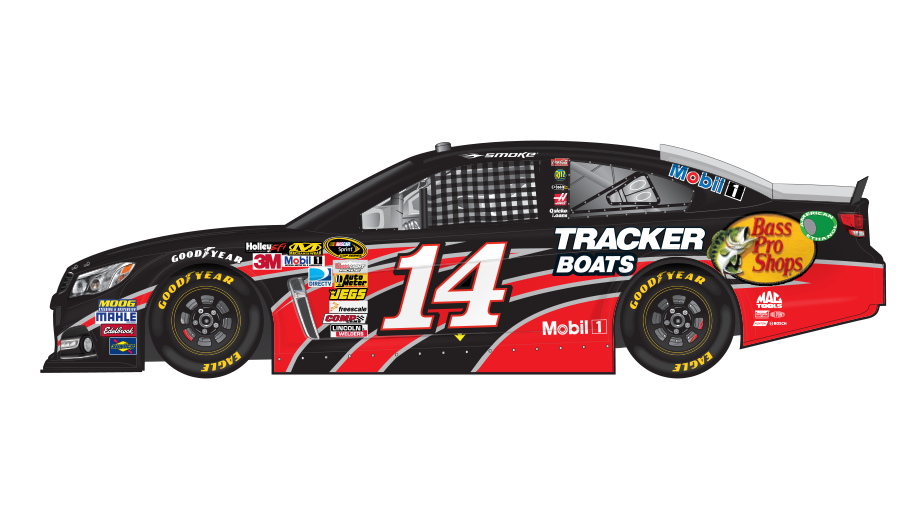
Tony Stewart will drive the No. 14 Mobil 1/Bass Pro Shops Chevrolet.


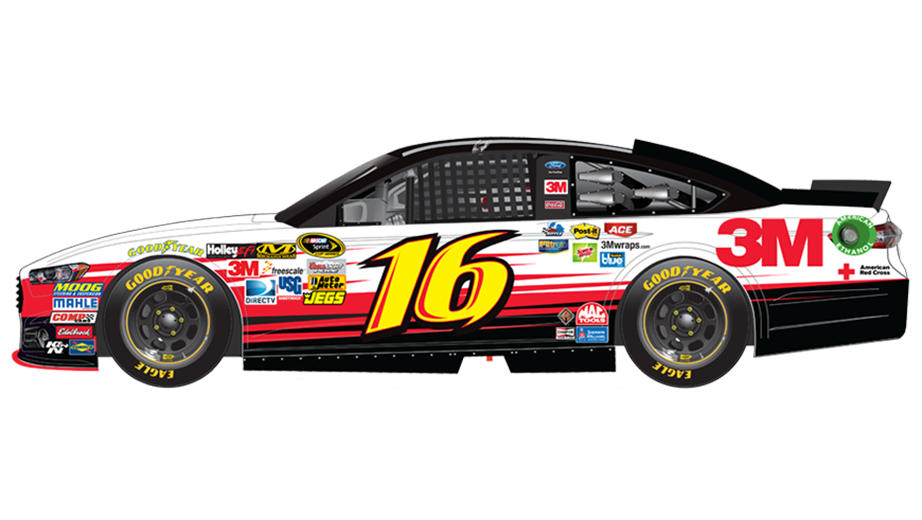
Greg Biffle will drive the No. 16 3M Ford.


Kyle Busch will drive the No. 18 M&M’s Toyota.


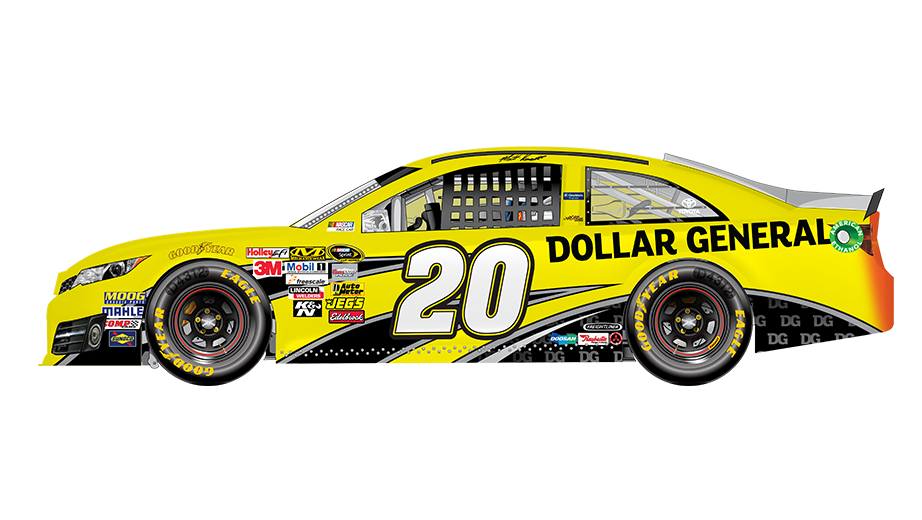
Matt Kenseth will drive the No. 20 Dollar General Toyota.


Joey Logano will drive the No. 22 Shell-Pennzoil Ford.


Jeff Gordon will drive the No. 24 Drive to End Hunger Chevrolet.


Kevin Harvick will drive the No. 29 Budweiser Chevrolet.


Terry Labonte will drive the No. 32 C & J Energy Services Ford.


Juan Pablo Montoya will drive the No. 42 Target.


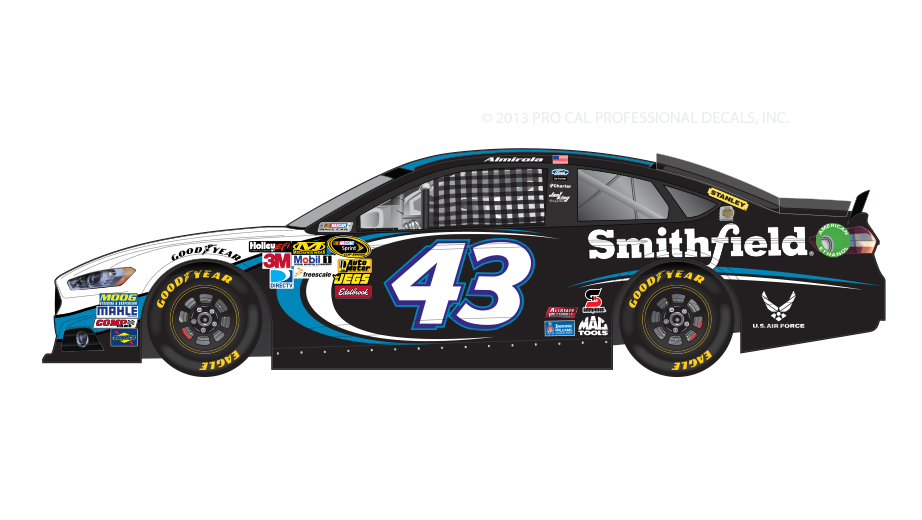
Aric Almirola will drive the No. 43 Smithfield Ford.

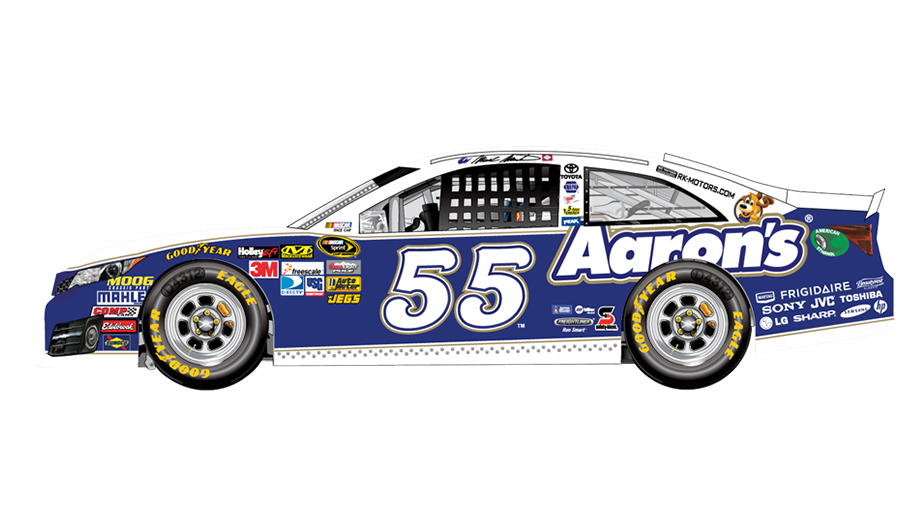
Mark Martin will drive the No. 55 Aaron’s Toyota.

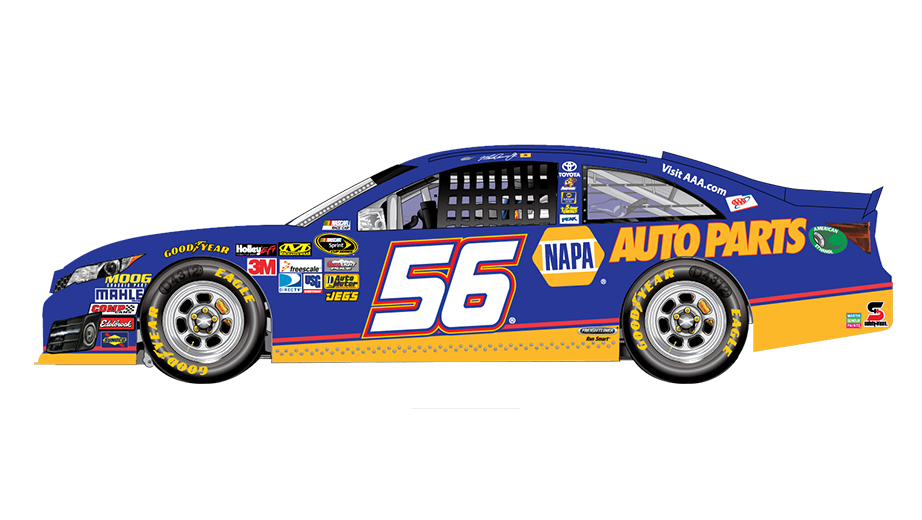
Martin Truex Jr. will drive the No. 56 NAPA Toyota.

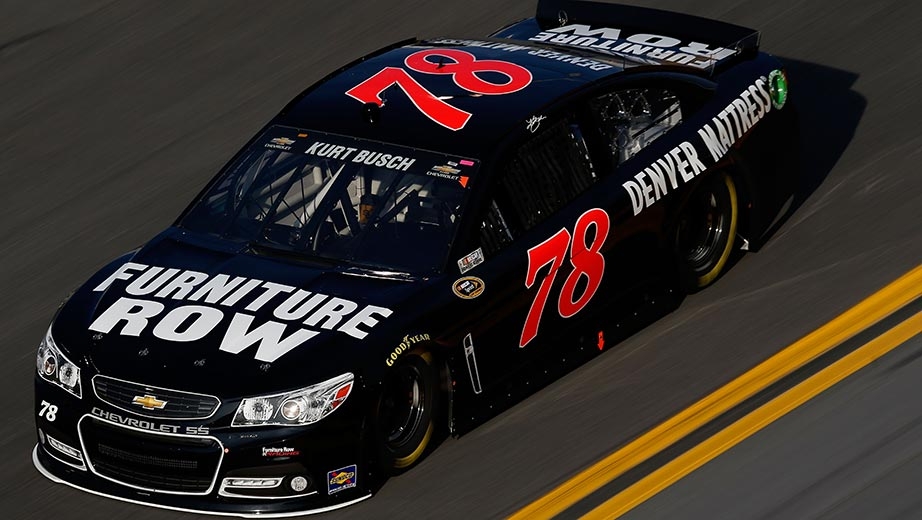
Kurt Busch will drive the No. 78 Furniture Row Racing Chevrolet.

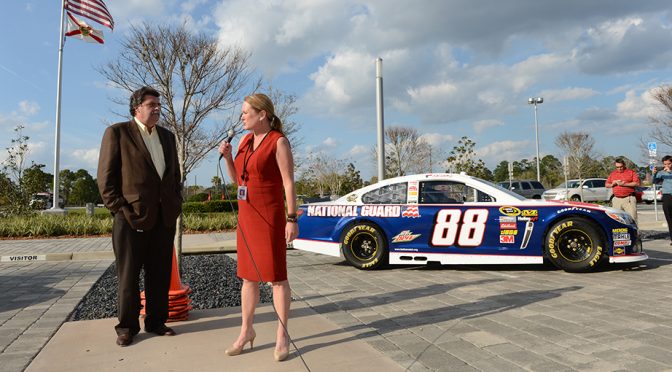
Dale Earnhardt Jr. will drive the No. 88 National Guard Chevrolet.


Carl Edwards will drive the No. 99 Fastenal Ford.

New NASCAR model introduces itself to the world ahead of Great American Race

The NASCAR #Gen6 Road to Daytona Fueled by Sunoco — a multi-city media blitz introducing the 2013 NASCAR Sprint Cup Series Chevrolet SS, Ford Fusion and Toyota Camry to America — kicked off this week in Detroit. Additional visits to New York City and other locations are on the schedule before the tour culminates in Daytona Beach, Fla. on Feb. 13-14 for Daytona Speedweeks.

Some highlights of the NASCAR #Gen6 Road to Daytona Fueled by Sunoco:

Tuesday, Feb. 5

• In Detroit, Autoweek hosted a breakfast and panel session at the College for Creative Studies. Participants included Mike Helton, NASCAR president; Robin Pemberton, NASCAR vice president of competition; Kim Brink, NASCAR vice president of brand, consumer, series marketing; Jim Campbell, U.S. vice president of performance vehicles and motorsports, Chevrolet; Jamie Allison, director of Ford Racing; and David Wilson, senior vice president of Toyota Racing Development. Autoweek Editorial Director and Associate Publisher Dutch Mandel moderated the conversation. The program was streamed live on NASCAR.com and autoweekracing.com. 

Wednesday, Feb. 6

• On Day 2, defending NASCAR Sprint Cup Series champion Brad Keselowski and the new Gen-6 cars visited the ESPN campus in Bristol, Conn. Keselowski (@keselowski) and the cars were the lunch-hour hit as he signed autographs for ESPN employees at the ESPN Cafe, while staff posed for photos with Keselowski’s No. 2 Ford Fusion, the Chevrolet SS driven by Dale Earnhardt Jr. and the Toyota Camry driven by Clint Bowyer. Keselowski also appeared on several ESPN programs including SportsCenter and Pardon the Interruption, and filmed a “This is SportsCenter” commercial. On a related note, NASCAR Now is back Friday on ESPN2 from the NASCAR Hall of Fame.

Thursday, Feb. 7

• Two-time Daytona 500 winner Michael Waltrip and his team’s No. 15 5-hour ENERGY Toyota stopped by FOX Plaza in Manhattan to chat with FOX News Channel and FOX Business Network. Tweeting his way through midtown (@mw55), he then visited SiriusXM Satellite Radio’s headquarters to talk about the Daytona 500 on FOX on Feb. 24.

Monday, Feb. 11

• NASCAR President Mike Helton, 2012 NASCAR Sprint Cup Series championship runner-up Clint Bowyer (@ClintBowyer) and Miss Sprint Cup Jaclyn Roney visited CNN Center and spoke with the host of "HLN Morning Express with Robin Meade." Meade is a NASCAR fan, who appeared at the 2012 NASCAR Sprint Cup Series Awards and has sung the national anthem before races at Daytona and Sonoma.

Tuesday, Feb. 12

• The tour also visited Jacksonville, Fla., where Mayor Alvin Brown welcome the Gen-6 cars, Daytona International Speedway President Joie Chitwood III and NASCAR Vice President of Public Affairs and Multicultural Development Marcus Jadotte. The Chevrolet SS, Ford Fusion and Toyota Camry then made the less-than-100 mile trip to Daytona Beach and the headquarters of the sport. NASCAR President Mike Helton and ISC Chief Executive Officer Lesa France Kennedy addressed their company’s employees as the cars rolled into the International Motorsports Center parking lot.

The NASCAR #Gen6 Road to Daytona Fueled by Sunoco can be followed on Twitter via @NASCAR and @SunocoRacing using the hashtags #Gen6 and #NASCAR. Since 2004, Sunoco has been the “Official Fuel of NASCAR,” providing fuel for NASCAR’s three national series — the NASCAR Sprint Cup Series, the NASCAR Nationwide Series and the NASCAR Camping World Truck Series. 

The NASCAR #Gen6 Road to Daytona Fueled by Sunoco arrives in Daytona Beach, Fla. on Feb. 13, and will be on display throughout the annual NASCAR Media Day scheduled on Feb. 14.

Getting rid of top-35 rule will impact Duels

Even at first glance, it’s obvious that changes to NASCAR Sprint Cup Series qualifying format will add two important aspects to the process — opportunity and suspense.

Nowhere will that be more in evidence than at Daytona International Speedway, where Cup teams will begin preparation for the Feb. 24 season-opening Daytona 500 this weekend.

The scrapping of the top-35 rule, which guaranteed starting spots in every Cup race to the top 35 cars in the owner standings, by definition broadens the opportunity to make the field. In the case of Daytona, it also injects a level of suspense and excitement into the Budweiser Duel 150 qualifying races that’s been minimized in the era of the top-35 rule.

For every Cup race this season, the 36 fastest cars will make the field. Rather than, say, 13 go-or-go-homers (non-exempt cars) competing for a maximum of eight starting spots, every team that takes to the track knows one thing. If you’re among the 36 fastest, you’re in the race. Period.

The next six positions — provisional starting spots — go to the top six cars in owner points that haven’t qualified on speed. The 43rd position is reserved for a past champion not other qualified, provided he participated in the Cup series during the previous season. If there’s no past champion to fill the final spot, it goes to the seventh car in the owners’ standings not otherwise qualified.

For the Daytona 500 and its unique qualifying format, here’s what to watch: 

As in the past, the front row will be locked in on pole day, Sunday, Feb. 17. After time trials, the starting positions of the fastest two cars will be set, on the pole and on the outside of the front row. The pole winner will lead odd-numbered qualifiers (positions 3, 5, 7, etc.) to the green flag in the first Duel on Feb. 21. The second-place car in time trials will pace the even-number qualifiers in the second Duel. 

The top six qualifiers on Sunday are locked into the race on speed no matter what, but the starting position of the third-through-sixth-place qualifiers won’t be determined until the Duels are run.

For the past eight seasons, with 35 cars locked in before they ever got to the race track, the functional purpose of the Duels was to set the starting order and to determine which two back markers from each race would ride shotgun on the field at the start of the Daytona 500. 

This year, things have changed — dramatically. The Duels will now determine not only the starting positions of the first 32 cars but also who actually makes the race. Finish in the top 15 in your Duel, and you’re in the Daytona 500 — simple as that.

Positions 33-36 are filled by the four fastest cars from time trials that 1) aren’t on the front row and 2) don’t transfer from the Duels. Positions 37-42 go to the top six cars in owner points not otherwise qualified. The final spot goes to a past champion or a seventh provisional starter, as with the general procedure for all races.

If the new format multiplies the suspense of the Duels from a fan’s standpoint, it also will lead to some white knuckles inside the race cars. A major wreck in one of the Duels, one that involves a number of top drivers, could create havoc with the starting field.

For instance, Kyle Busch and Carl Edwards, whose cars were 13th and 16th respectively, in 2012 owner points, have to be wary in the Duels, because in the case of an accident, provisionals may not save them.

Similarly, the new format places a huge premium on qualifying on Sunday. Matt Kenseth inherits a car at Joe Gibbs Racing that was 18th in owner points. Joey Logano, who left Gibbs for Penske Racing, climbs behind the wheel of a No. 22 Ford that was 21st in the owners’ standings. Kenseth, at least, has a champion’s provisional as insurance in the event of a disaster in the Duels. Logano does not.

The bottom line is that, if you’re slow in qualifying, and you have a problem in the race, you could miss the Daytona 500 — even if you’re one of the sport’s established stars.

So the addition of opportunity and suspense come at a price — the loss of an important safety net.