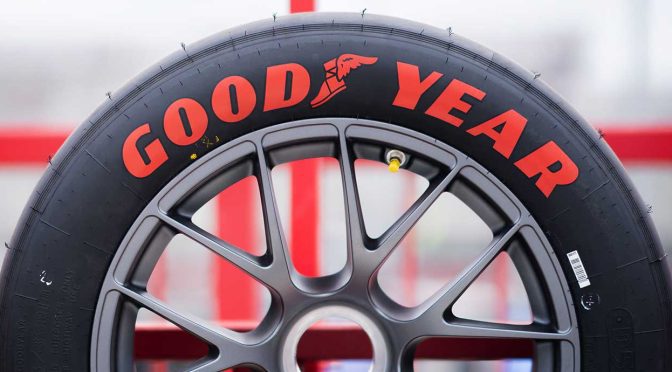
NASCAR announced Thursday that it has adjusted the wet-weather tire procedure on ovals where applicable.
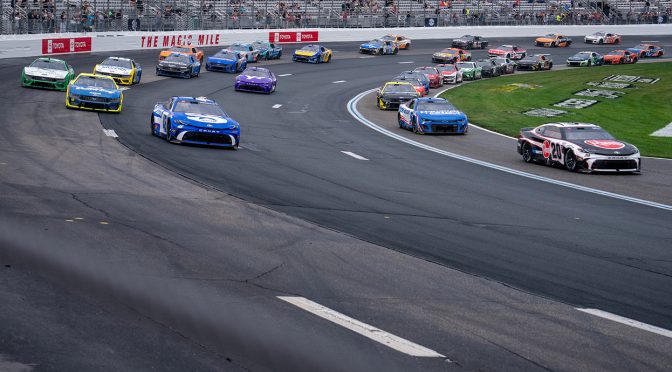
Ovals where the wet-weather tire is used are Phoenix Raceway, Martinsville Speedway, New Hampshire Motor Speedway, North Wilkesboro Speedway and Richmond Raceway, where the NASCAR Cup Series and NASCAR Craftsman Truck Series will compete this weekend. This also includes the Milwaukee Mile and Lucas Oil Indianapolis Raceway Park in the Truck Series.
If natural cautions fall while the track is still deemed in wet-weather conditions, tire changes will be permitted from wets only to wets.
Teams will manage how to use their wet-weather tire allotment of four sets, meaning that teams will have the option to stay out on the track and gain positions in relation to drivers who elect to pit. Previously, NASCAR dictated when teams were allowed to change wets for wets on ovals.
The updated procedure will be used if needed for both the Truck race Saturday (7:30 p.m. ET, FS1) and the Cup race on Sunday (6 p.m. ET, USA).
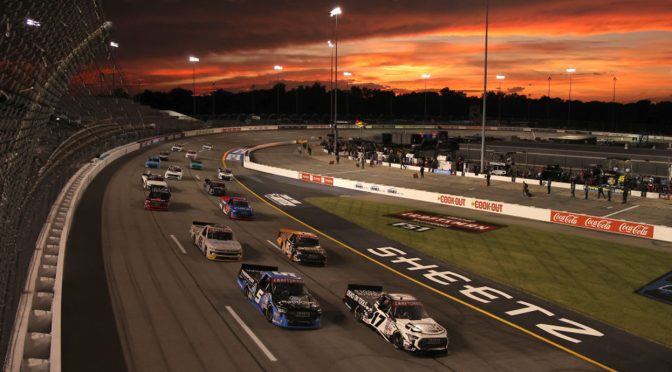
The NASCAR Craftsman Truck Series returns to action in Saturday’s Clean Harbors 250 (7:30 p.m. ET, FS1, MRN Radio, SiriusXM NASCAR Radio) at Richmond Raceway – the last regular-season race of the year and one that will formally set the 10-driver 2024 playoff field and crown the Regular Season Champion.
Five drivers have earned playoff positions with victories this year – including Christian Eckes, Corey Heim, Nick Sanchez, Ty Majeski and Rajah Caruth. Five other drivers are currently “In” playoff position via points – Tyler Ankrum (+83), Grant Enfinger (+77), Taylor Gray (+48), defending series champion Ben Rhodes (+22) and Tanner Gray (+5).
Daniel Dye (-5) and Stewart Friesen (-16) are just below the elimination line and within reasonable distance to challenge for a playoff position in the right race circumstances Saturday night. Three-time series champion Matt Crafton is just behind Friesen in the standings, 43 points back.
McAnally-Hilgemann Racing’s Eckes holds a 50-point advantage on Tricon Garage’s Heim for the regular-season title despite Heim’s series-best five-win tally. The 23-year-old Eckes could clinch the Regular Season Championship by scoring 11 or more points on Saturday – the regular-season title includes the all-important 15-point bonus playoff points to carry throughout the seven-race postseason. If Eckes claims that title, he would be the eighth different driver to do so.
Enfinger, driver of the No. 9 CR7 Motorsports Chevrolet, is the only full-time driver in the field with a previous win at Richmond, claiming the 2020 victory in the series’ first race back at the three-quarter miler after a 15-year break. And Enfinger’s 5.5 average finish (four top-10s in as many races) is best among those with at least four starts at the track.
Carson Hocevar – now a rookie in the Cup Series – won the Richmond truck race last year by more than two seconds over Majeski, who led a race-best 168 of the 250 laps. Among the four drivers closest to the cutoff mark, Rhodes was 12th last year, Tanner Gray was 16th, Dye was 21st and Friesen was 27th.
Of that foursome, Rhodes boasts the best average finish of 10.0 in his four Richmond starts, with a pair of top 10s and 79 laps led. Tanner Gray has never scored a top 10 at Richmond with a best showing of 16th place in three of his four starts there. Dye has just one previous race at the track and Friesen has one top-10 in his four starts – 10th place in 2020 – and has never led a lap.
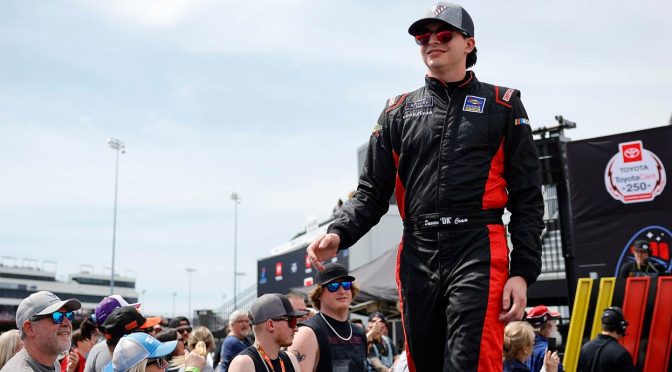
Highly touted young ARCA Menards Series drivers Connor Zilisch, 18, and William Sawalich, 17, will be on the starting grid this Saturday.
Zilisch will drive the No. 7 Spire Motorsports Chevrolet, making his second of five scheduled starts on the season. Sawalich will be making his fourth start this season, driving the No. 1 Tricon Garage Toyota. He scored a season-best 12th-place finish at Lucas Oil Indianapolis Raceway Park in the last race. He finished 10th at Richmond last year.
A half-hour practice is scheduled for the Craftsman Truck Series at 2:35 p.m. ET, followed by Cometic Gasket Pole Qualifying at 3:05 p.m. ET which can be viewed on FS1.
How might the regular season crown be won over the course of the next four races — at Richmond, Michigan, Daytona and Darlington?
Just like with the bubble drivers, we’ll enlist the help of 10,000 simulations of the rest of the regular season using my Adjusted Points+ index, rating every driver’s ability at each remaining track type and their projected odds of finishing in each position, each race. Results that have the biggest differentials between simulations where a driver wins the regular season championship or not are the ones that are most essential along their path to glory.
Here are the scenarios for the four drivers with a realistic shot at the crown:
Kyle Larson
Status: No. 1 in standings, 10-point lead What he needs: Dominate at Michigan.
Larson is in solid shape for the regular-season title at the moment, leading Chase Elliott in the standings and looking ahead to three of the final four races being at tracks he’s excelled at before. (Larson has combined for six wins and 26 top-10 finishes at Richmond, Michigan and Darlington.) Of the three, Michigan is probably the most important; in simulations where he wins the regular-season title, Larson wins 21% of the time there, with an average finish of 4.9 — compared with a 1% win rate and 22.8 average finish in the simulations where he doesn’t win the regular-season title. When Larson finishes in the top five at Michigan, he wins the regular-season crown 86% of the time.
Sean Gardner | Getty Images
Chase Elliott
Status: No. 2 in standings, 10-point deficit What he needs: Beat Larson head-to-head.
Elliott has a 586-196 record against all opponents head-to-head this season, including a 26-19 mark against his fellow Hendrick Motorsport teammates other than Larson. But Elliott is just 8-13 against Larson head-to-head, after going 36-29 against his teammate over the previous two seasons. He’ll need to tap into that earlier form down the stretch of the regular season to wrest the title away from Larson — particularly at Richmond and Michigan. In the subset of simulations where Elliott wins the regular-season crown, he finishes ahead of Larson at Richmond 79% of the time, and he beats Larson at Michigan 86% of the time. Those figures are only 37% and 32%, respectively, in the simulations where Elliott doesn’t win the crown.
Tyler Reddick
Status: No. 3 in standings, 15-point deficit What he needs: Outduel Larson on the ovals.
Larson has a reputation as NASCAR’s best on the bread-and-butter ovals that make up so much of the sport’s calendar on a week-in, week-out basis. But so far this season, it’s Reddick who actually has a slightly higher Adjusted Pts+ index at ovals (defined as anything that isn’t a short track, restrictor-plate track or road/street course) than Larson, 225 to 215. That sets up opportunities for Reddick at both Michigan — a classic large speedway — and Darlington — a steep, high tire-wear intermediate like Homestead and Dover. When he wins the regular season, Reddick finishes ahead of Larson at Darlington and Michigan 92% of the time, beating him by an average margin of 17.2 places. In other words, Reddick needs to drive the wheels off his No. 45 Toyota Camry and try to keep building up his oval edge.
James Gilbert | Getty Images
Denny Hamlin
Status: No. 4 in standings, 43-point deficit What he needs: Go on a winning streak.
Hamlin is just at the outer edge of striking distance on Larson and the rest of the regular-season title contenders, but he needs to go on a big run over these next four races to overcome his deficit. In 44% of the simulations where Hamlin takes the crown, he wins at least one of the next four races — and he wins multiple races down the regular-season stretch 31% of the time when he also wins the title. Or at the very least, he needs to start piling up the points, fast. In roughly half of the scenarios where Hamlin wins the title, he finished among the top five in at least three of the four remaining races. Such a heater is not out of the question, but it will be hard to make up the points Hamlin needs without that kind of performance coming out of the break.
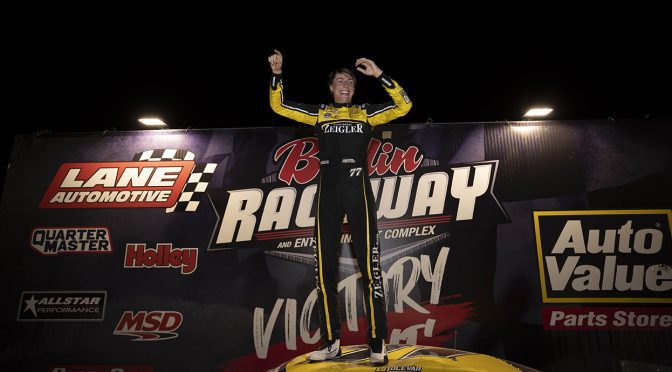
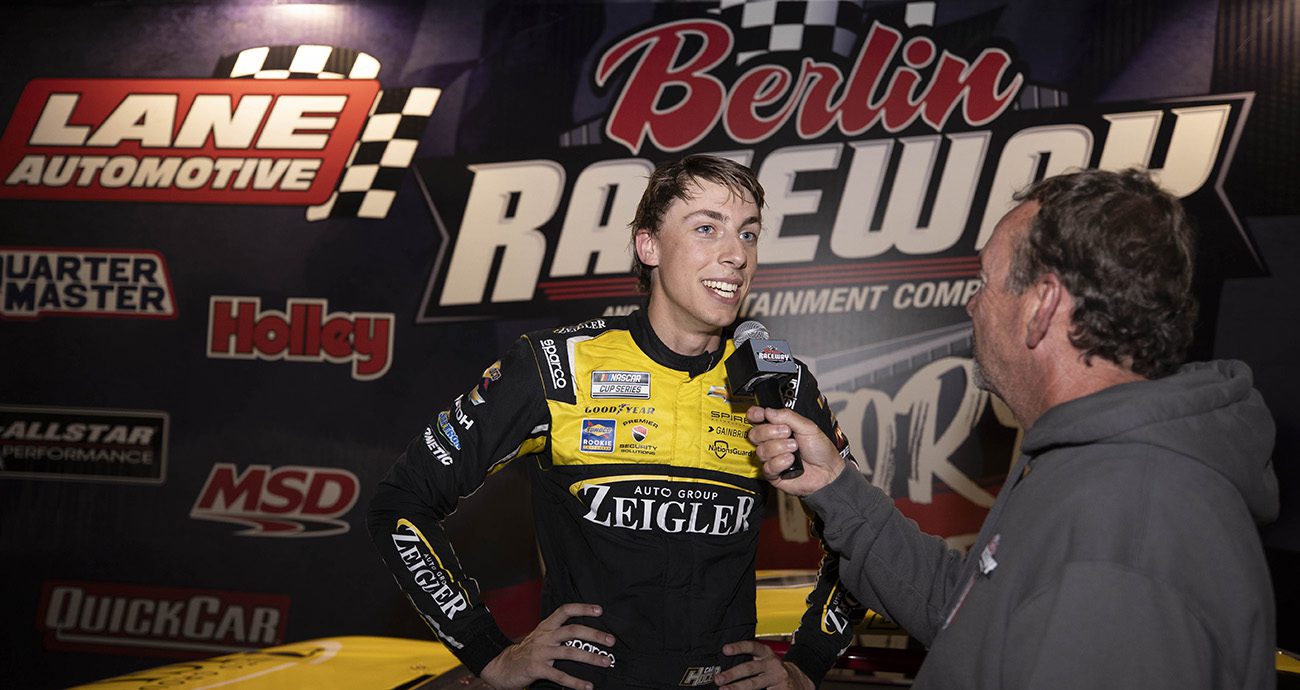
MARNE, Mich. — Wednesday night’s homecoming to Berlin Raceway for Carson Hocevar saw him finally visit Victory Lane in the track’s most prestigious event.
Hocevar proved to be in a league of his own during the Tekton 250 Battle at Berlin with a car that was efficient in every groove. After fending off fellow NASCAR Cup Series competitor Erik Jones on the last restart of the night, nothing could stop Hocevar from claiming his maiden Battle at Berlin 250 triumph.
Nothing came easy for Hocevar as he had to play both offense and defense with Jones and defending winner Bubba Pollard during the closing stages. Hocevar was unsure whether he was too aggressive earlier in the run, but he proved to have enough left to pull away from Jones when it mattered.
“This car was so fun to drive,” Hocevar said. “Erik and Bubba are super talented, and those cars are really good. I thought I burned the right-rear [tire] completely off and didn’t think we were going to get a shot. If I could slide up and take [Erik’s] line away, I might be able to clear him, and that’s exactly what happened.
“It’s special to win here, and this was the biggest one of them all.”
Hocevar’s early success at Berlin was crucial in paving the way for him to become a full-time Cup Series competitor.
Along with claiming a track championship in 2017 at just 14 years old, Hocevar also has two Money in the Bank 150 victories on his resume (2020 and 2021). The laps and accomplishments accumulated at Berlin only motivated Hocevar more to win the Battle at Berlin 250.
Qualifying set the tone for Hocevar and the rest of the field Wednesday afternoon, as he set the quickest lap of the session at 16.430 seconds. An invert relegated Hocevar to eighth on the starting grid, but it only took 10 laps for him to reach and secure the lead.
Once he had control of the pace, the next step for Hocevar was to master the tire strategy. He elected to stick to a three-tire strategy through both of his trips to pit road, which kept him at the front of the field but left a smaller margin of error when it came to overexerting his equipment.
The divergent strategy proved to have minimal impact on Hocevar’s overall performance even though he briefly lost the lead to Jones. Despite doing everything feasible to anticipate and withstand the assault from Hocevar, Jones ended up settling for second after Hocevar’s race-winning dive on the restart.
Photo: Julia Schachinger / NASCAR)
Jones entered Wednesday evening having gone winless in the Battle at Berlin 250 since 2016. He feels comfortable with where his Super Late Model program stands, but he admitted his car was not strong enough to keep Hocevar in his rearview mirror.
“I was just too tight,” Jones said. “We were kind of third there all day and needed to make an adjustment. We got the lead, and I was trying to hold it, but it didn’t work out. It’s hard to be that close, but we had a clean car, and that’s all we can ask for.”
With the 2024 Battle at Berlin 250 now in the record books, Jones is turning his attention toward Richmond Raceway on Sunday, when the Cup Series returns to action following a two-week sabbatical.
For Hocevar, the detour to his home track before the end of the Olympic break was equal parts fun and challenging. He had no idea what to expect from a tire perspective, which made it even more rewarding for Hocevar’s strategy to pay off with a Battle at Berlin 250 trophy now in his possession.
“[Going with three tires] probably put us at a little bit of a disadvantage compared to the guys who took four,” Hocevar said. “Track position was so important, but [the strategy] also gave us an idea on what the car was going to do. You never know with this place, but everybody did a really good job trying to keep on this thing.
“I had my tongue out the whole time, but luckily it was just enough.”
Hocevar only has a few days to prepare for another short track in Richmond, where he looks to parlay his crown jewel victory at Berlin into a career-best Cup Series performance this weekend.
Pollard placed third in the running order behind Hocevar and Jones, with Michael Atwell and Kole Raz completing the top five. Rounding out the top 10 were Evan Shotko, Brian Campbell, Chase Burda, Jeremy Doss and Treyten Lapcevich.
After two weekends without racing, we’re ready to get back to it. Here’s a refresher on where things stand with the push to the playoffs in full swing.
Aaand we’re back.
The NASCAR Cup Series is gearing up to return to action this Sunday at Richmond Raceway following a brief hiatus in the schedule due to the 2024 Summer Olympics. Let’s catch back up in case you need a refresher.
Plenty of compelling story lines continue to unfold, with just four races remaining before the 16-driver field is locked in for the 2024 NASCAR Playoffs.
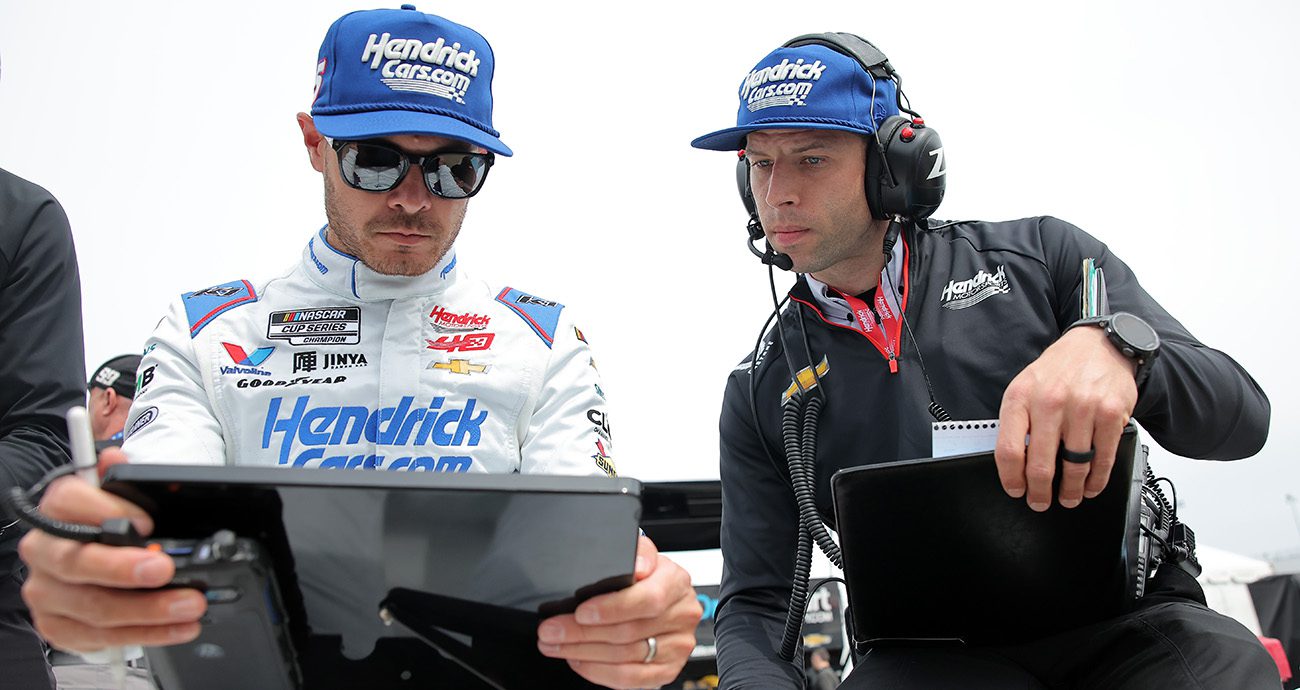
Kyle Larson looks every bit on a path that leads to him competing for championship No. 2 later this year at Phoenix Raceway, having secured his series-leading fourth win of the season before the break at Indianapolis Motor Speedway in convincing fashion. He and crew chief Cliff Daniels, pictured above, are the 1A combination in the sport at the moment and only appear to be gaining with their combined powers, which is a scary thought for the rest of the series.
The playoff landscape is becoming clearer, with the season’s 12 victors now officially all completely locked in with no chance at more than 16 winners. That leaves four coveted spots up for grabs, with nearly every driver below the elimination line likely needing to win if they want one of them. If that were to happen — holy drama.
The final playoff position on points is worth keeping a close eye on, however, as a red-hot Bubba Wallace has narrowed the gap to just seven points behind a sagging Ross Chastain, who has seen a dramatic decline in the standings after averaging a 26.5 finish over the past four races.
A lot could swing over the next four races, with positions 14th through 17th separated by just 42 points. Of the four above the elimination line but not yet locked in, RFK Racing driver Chris Buescher, currently 15th in the standings and 17 points to the good, should feel the most confident despite the modicum of cushion. No. 17 is the defending winner of three of the four remaining races, including Sunday’s Cook Out 400 at Richmond. He’s been running well of late, too, so things would have to go catastrophically wrong at this point for him not to be a 2024 playoff driver.
Tyler Reddick, Wallace’s 23XI teammate, is on a hot streak of his own and might just be in the process of emerging as Larson’s top competition during the stretch run. The No. 45 driver is riding the longest top-10 streak of any driver at the moment, with five in a row, while also working his way into a tie with the No. 5 Hendrick Motorsports driver for most top fives this season. Reddick still has just the lone win — Talladega Superspeedway back in the spring — but feels on the verge of a major breakout that could see him pile on multiple wins over the coming weeks.
The four final regular-season races offer a varied menu of tracks, with Richmond, Michigan International Speedway, Daytona International Speedway and Darlington Raceway each presenting a unique opportunity for drivers to secure their spots. Notably, Richmond this weekend will be the first points race to feature multiple tire compound options, introducing a new strategic element that could significantly impact race outcomes and flip the whole playoff field on its head.
Jonathan Bachman | Getty Images
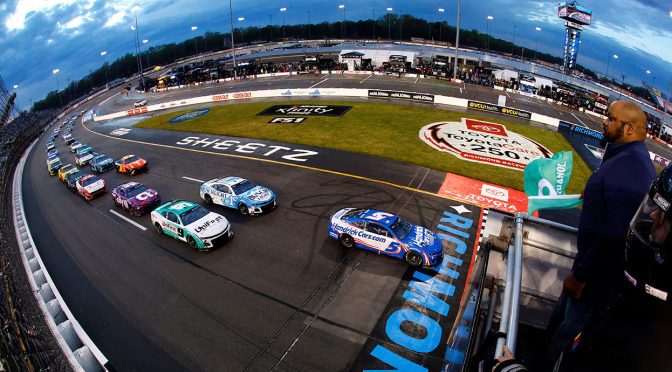
2. Now, what lies ahead at Richmond? Richmond saw a surprise winner last summer and now adds the wrinkle of giving teams an in-race tire option. What can we expect to see under the lights?
With the industry refreshed and ready for the last leg of the regular season, the stage is set for an intriguing battle on one of the circuit’s most challenging short tracks — with a twist in store. Sunday’s Cook Out 400 under the lights at Richmond promises to be a pivotal moment in the season, with several compelling story lines converging at this historic venue.
Adding to the excitement is the introduction of a new tire strategy, with Goodyear providing two tire compounds for teams to choose from: a prime (hard) tire with standard yellow lettering, serving as the baseline, and an option (soft) tire featuring red lettering. The soft tire is crafted from the same rubber as wet-weather tires but without tread, offering teams a new tactical element to consider in their race strategy.
With the first-of-its-kind tire element at play, it’s tough to forecast how the dominoes may fall at the Virginia short track, but for now, all eyes will likely fall on a pair of past teammates in particular — Kyle Busch and Martin Truex Jr.
This could very well be Rowdy’s best remaining shot to extend both his playoff appearances and consecutive wins streak, each extending as far back as the eye can see. Busch has an impressive past history on short tracks with 16 wins, yet he finds himself in an unusual position this weekend. Despite his past success, Busch currently ranks 17th in points earned on short tracks in the Next Gen car era. He’s rapidly approaching must-win territory, though, so Rowdy fans hope the two-week break was just what he and the No. 8 Richard Childress Racing group needed to get refocused and get NASCAR’s all-time winningest driver back to Victory Lane.
For Truex Jr., Richmond represents more than just another race — it’s perhaps his best remaining opportunity to end a 38-race winless streak and win in his final full-time season before exiting the No. 19 JGR Toyota. The 2017 champ’s history at Richmond is rock solid, having won three of the last 10 races at the track and leading the most laps in six of the last 15. He very nearly secured his playoff spot at the track earlier this season, picking up nearly half of his laps led this season (461) in that race alone before dipping to fourth after “The Restart.”
You can bet he’s had this one circled all season … but especially since then.
The short-track landscape has seen a bit of a shift in recent times, with ace Joe Gibbs Racing driver Denny Hamlin firmly establishing his long-standing dominance there and Team Penske’s Ryan Blaney emerging as perhaps the next short-track superstar. Together, they’ve claimed five of the last six short-track wins.
The Virginia native Hamlin is aiming to recalibrate before the playoffs after strong runs of late have all gone sour, and Richmond (five wins) is the perfect spot for him to accomplish that. Blaney, on the other hand, gets to put his short-track status to the test, where Richmond has been arguably his worst overall track. The reigning champ has turned in just three top 10s in 16 tries for an un-Blaney-like 20.0 average finish.
NBC’s Steve Letarte and MRN’s Todd Gordon break down the potential strategy options as the option tire returns at Richmond Raceway.
4. This year’s short-track superstars
With several short tracks already in the books for 2024, we have a strong idea of who’s excelling on them — will a fresh face emerge at Richmond, however?
Rank
Driver
Points
1
Kyle Larson
170
2
Chase Elliott
158
3
Joey Logano
150
4
Denny Hamlin
148
5
Martin Truex Jr.
141
6
Ryan Blaney
133
7
Alex Bowman
124
8
Brad Keselowski
124
9
Josh Berry
123
10
Bubba Wallace
123
5. Catch the pack — news and notes from around the garage
DAYTONA BEACH, Fla. – Today, NASCAR announced that National Debt Relief has become an Official Partner of NASCAR. The official multiyear partnership makes National Debt Relief the first-ever Debt Relief Partner of NASCAR and builds on the official partnership with the NASCAR Chicago Street Race, which was announced in June.
“Over the course of our 76-year history, NASCAR has taken great pride in putting our fans first and consistently offering one of the most unique and fan-friendly experiences in all of sports,” said Michelle Byron, NASCAR executive vice president and chief partnership and licensing officer. “The approach in prioritizing our fans aligns perfectly with the mentality of National Debt Relief, an organization that tailors its support to fit the needs of consumers. Because of this, National Debt Relief is a perfect fit as an Official Partner of NASCAR.”
As NASCAR’s Official Debt Relief Partner, National Debt Relief will have a presence at NASCAR events, including signage, NASCAR-themed advertising in race telecasts, as well as investments on NASCAR digital platforms and Motor Racing Network. Prominent at-track branding will begin this weekend at Richmond Raceway in the NASCAR Craftsman Truck Series’ Clean Harbors 250 (Sat., 7:30 p.m. ET, FS1, MRN Radio, SiriusXM NASCAR Radio) and the NASCAR Cup Series Cook Out 400 (Sun., 6 p.m. ET, USA, MRN Radio, SiriusXM NASCAR Radio, NBC Sports App).
“We’re ecstatic to further our partnership with NASCAR as an Official Partner and are looking forward to building stronger relationships with NASCAR fans, especially those dealing with overwhelming debt and are in need of relief,” said Alex Kleyner, National Debt Relief chief executive officer and co-founder. “As U.S. households continue to be saddled with record amounts of debt, this partnership will allow us to bring attention to debt settlement as a growing solution that can help people become debt-free faster and get their financial lives back on track.”
Since 2009, National Debt Relief has successfully helped hundreds of thousands of people resolve their debt and reclaim their independence. Their highly rated, unique Whole Human Finance approach to debt relief not only helps their clients become debt-free but also supports them with financial literacy and skill development, as well as emotional support throughout their debt journey, empowering them to resolve their debt and confidently build a more secure financial future. To learn more, visit NationalDebtRelief.com or call 1-800-718-0487 for a free consultation with a Certified Debt Specialist.
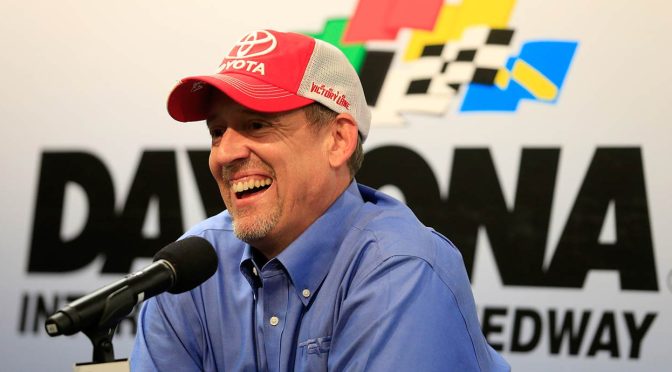
PLANO, Texas — Toyota Motor North America (TMNA) today announced executive leadership changes as David Wilson, group vice president and president of TRD, U.S.A. (Toyota Racing Development), will retire on Dec. 16 after 35 years with the organization. General Manager Tyler Gibbs will succeed Wilson as president of TRD, a subsidiary of Toyota Motor North America (TMNA).
During his long-standing career at TRD, Wilson has held many roles, including design engineer, track support engineer, vice president of operations and engineering, vice president of production and strategic planning, vice president of sales, operations and planning, and vice president of finance, operations and planning. Wilson was appointed to the position of TRD president in January 2014, where he has led Toyota’s U.S. motorsports arm for the past 11 years.
“It’s been such an honor to be a member of this team and work alongside so many dedicated, talented and passionate men and women,” said Wilson. “I’m humbled and grateful for the trust, support and friendship afforded me throughout my career by my colleagues at TMNA, the Toyota Motor Corporation, our industry and team partners and our athletes. But now, I’ve completed my lap and I’m proud to hand the keys over to my friend and ‘brother in arms,’ Tyler Gibbs. I have every confidence that Tyler and his team will continue to grow and strengthen TRD’s world-class legacy on and off the track.”
Wilson played a significant role in many championships and race wins with Toyota, Lexus and Toyota Gazoo Racing North America (TGRNA) teams and drivers during his 35-year tenure, including championships in CART, CORR, Grand-Am, IMSA, Indy Racing League, MTEG, NASCAR, NHRA, SCORE and USAC. He has also been a part of many noteworthy victories in iconic races across motorsports, including wins in the 12 Hours of Sebring, Baja 500 and 1000, Rolex 24 at Daytona, Daytona 500, Indianapolis 500, Petit Le Mans, Chili Bowl, and Pikes Peak International Hill Climb. Additionally, Wilson played an integral role with the Toyota and TRD leadership team that planned, supported and executed the company’s momentous entries into both CART/INDYCAR and NASCAR.
“For more than three decades, David Wilson’s immense talent, passion and leadership have helped build Toyota Racing Development into the massively successful organization we know today,” NASCAR President Steve Phelps said in a statement. “As TRD’s President since 2014, David has been a collaborative partner with NASCAR, and his friendship and counsel have helped grow the sport, deliver extraordinary moments for race fans and enhance global motorsports. We thank David for his tireless efforts and wish him the best on this new phase of his life and career. We look forward to working with Tyler Gibbs and the tremendous team at TRD.”
Prior to joining TRD, Wilson was employed by Johnson & Johnson and was an officer in the U.S. Army 101st Airborne Division, where he was awarded the Meritorious Service Medal, Army Achievement Medal, Parachutist’s Badge and the Air Assault Badge. Wilson earned a mechanical engineering degree from Virginia Tech in Blacksburg, Virginia.
In his new role, Gibbs will be responsible for all TRD operations and activities in North America. These include engine engineering, chassis engineering, manufacturing, administration and operations. He will oversee all TRD facilities, including the organization’s headquarters and engine operations in Costa Mesa, California, the chassis and team support operation in Salisbury, North Carolina, and the GR Garage and Toyota Performance Center (TPC) in Mooresville, North Carolina.
“I have big shoes to fill,” said Gibbs. “Dave has been the cornerstone of TRD’s growth and culture over the last 35 years. During my 28 years working for Dave, he has given me countless opportunities to learn and grow, and this is another one of those opportunities. I’m excited and grateful for the privilege to work with so many incredible people at TRD and TMNA, along with our many partners, and together we’ll seek to continue TRD’s history of success.”
Gibbs joined TRD in 1996 and has held various roles during his nearly 30-year tenure with the organization. He currently oversees competition, engineering, commercial and administration activities at TRD. In addition, he works closely with TMNA and Toyota Racing as well as with race team relationships and key motorsports partners.
A Westmont College graduate, Gibbs began his career with Cosworth Engineering in 1992. He later earned his MBA from the Wharton School at the University of Pennsylvania.
Gibbs will assume his new role as TRD President in late December.
After four rounds of voting, Ross Chastain’s “Hail Melon” move in the penultimate race of the 2022 NASCAR Cup Series season at Martinsville Speedway has won the fan vote for most memorable playoff moment in the elimination era.
The “Hail Melon” beat out the Matt Kenseth, Joey Logano clash in 2015, which also took place at Martinsville, by a 68% to 32% margin.
Four rounds of voting occurred over the past two weeks pitting the best moments from the first 10 years of the elimination era against each other in a bracket-style vote to see which moment fans thought was the best.
Chastain made the daring move on the final lap of the race, going from 10th to fifth between Turn 3 and the checkered flag to outpoint Denny Hamlin for the final spot to race in the Championship 4 at Phoenix Raceway.
Kevin Cram remembers the highlight of his summer vacations as a child: traveling north from Massachusetts to Vermont to visit dirt tracks.
That Cram racing lineage — and passion for racing — spans multiple generations. Kevin’s NASCAR roots date back to the formation of the Craftsman Truck Series, winning the series’ second championship as the truck chief for Ron Hornaday Jr. with Dale Earnhardt, Inc. Two years later, he guided Stacy Compton to a pair of truck wins as a crew chief.
Dodge got wind of Kevin’s success and wanted him to be involved with the manufacturer’s move to the Cup Series in 2001, spearheaded by Ray Evernham and Bill Elliott. Chip Ganassi also approached Kevin to crew chief Sterling Marlin, which quickly turned into a job with Jason Leffler. After failing to qualify for two races, change was needed. His last Cup stint came in 2002 with Casey Atwood, lasting just four races.
With three children — including an infant Dawson Cram — Kevin needed a break.
“[My] professional racing deal was very insecure, so I decided that I wasn’t going to wake up and be divorced and not have a relationship with my children chasing what I started,” Kevin said.
Kevin remained distant from the national scene, sprinkling in 18 starts as a crew chief in the Xfinity Series for Johnny Borneman III between 2008 and 2010. The most races he did in a single season was at the truck level in 2006, calling the shots for Steve Park, a two-time Cup Series victor, in 10 events.
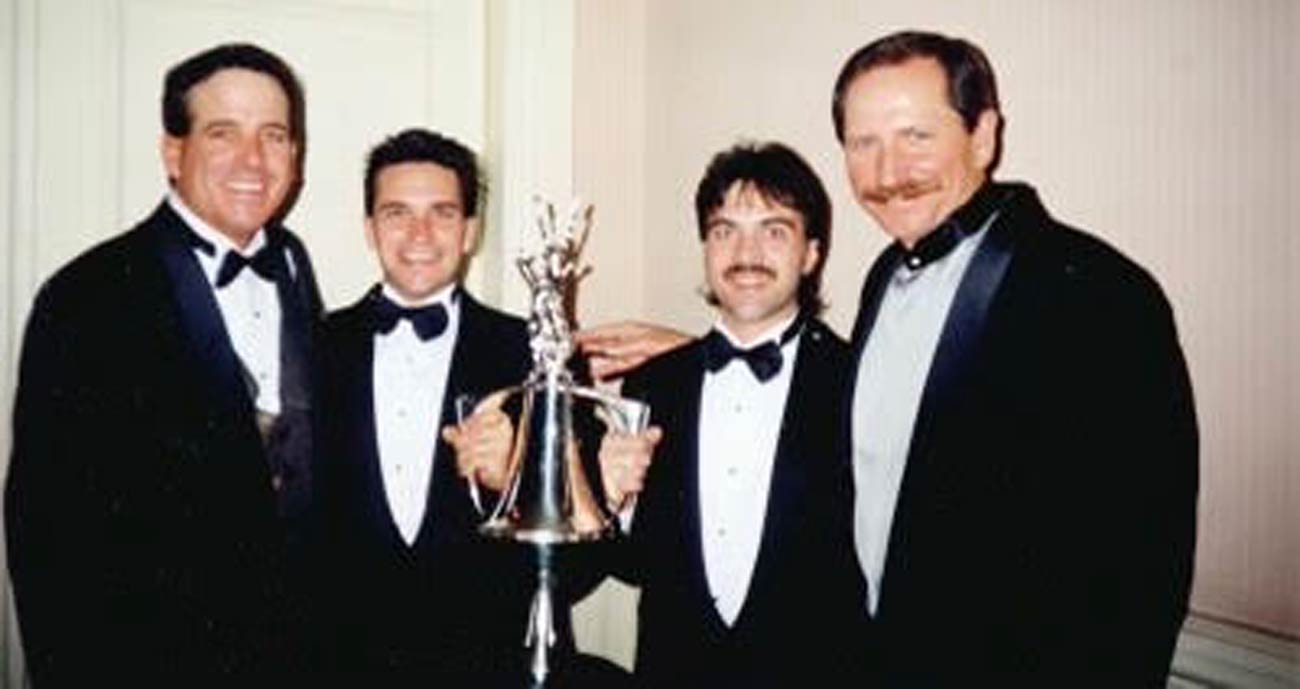
From left to right: Ron Hornaday Jr., Kevin Cram, Clinton Cram and Dale Earnhardt Sr. pose for a photo during a 1996 banquet. (Photo courtesy of Kevin Cram)
Meanwhile, Dawson began racing back home. His racing journey began at just 5 years old while living in California. After moving to North Carolina, his passion became serious, splitting time between asphalt and dirt.
“I didn’t like [racing] at first,” Dawson recalled of his first time racing. “I don’t remember a whole lot about it, but after a few times of driving, I started loving it. When I was 8, I moved back to North Carolina and started racing bandoleros. By that point, I loved it, and it was my entire life. I didn’t do anything but race.”
Admittedly, Dawson hasn’t tried to accomplish much professionally outside of racing. Having to go through NASCAR’s approval process, he was given the nod to attempt his first truck race at 16 years old at the famed Martinsville Speedway. His references put him over the edge, having Hornaday, Dennis Setzer and Don Hawk in his corner.
After getting approved, Dawson needed to find a truck to run. A deal with D.J. Copp went awry, leading to a last-minute conversation with Carl Long. Ultimately, Dawson ended up having to bring a superspeedway truck to Martinsville to try and qualify for his debut. His driving coach was short-track ace Josh Berry.
“We were fast enough to make the race, but we blew the motor in practice,” Dawson remembered. “We were sitting there picking up the pieces, and that’s all the money we had to do that. People started calling and said, ‘That was cool what you did, are you going to do it again?’ Enough people called that we were able to do it again, and I ran my first race a few months later with Mark Beaver.”
Dawson finished 17th in his NASCAR debut.
Between 2018 and 2019, Dawson ran a quartet of truck races before running the bulk of the 2020 schedule. The Crams took over the Long Motorsports truck team during the COVID-19 pandemic and were locked into each race they showed up to. Kevin made his NASCAR return and crew chiefed for his son.
“Me and my dad have definitely been a packaged pair,” Dawson said. “There is no way I would be able to be where I am today without him because if you look at anybody in the top three series, they are offering something to these teams. I don’t have the funds to offer these teams, but I have someone that has years and years of quality experience and quality knowledge.”
Since 2020, Kevin has been around for all 54 of Dawson’s NASCAR starts. His 26 Xfinity Series starts have come with five different race teams. Without an unlimited number of resources behind him, Dawson has scratched and clawed for every opportunity.
“He understands what I’m going through and the struggles of this sport,” Dawson said of his father. “To want to do this is hard. The only reason that I’m still here is because of my passion. He understands that passion because he has it too.”
Dawson knows his father’s knowledge about race cars is invaluable. The adjustments made are almost always in the right direction. Having an established relationship allows them to be blunt with one another without taking anything personally.
“We mesh together fine,” Dawson said. “I know there are people that can’t work with their dad that have a similar situation to me, but we’ve never had big arguments on the radio, and we understand what’s happening. It’s good because I can say almost anything I want to him and he’s not going to take it the wrong way.”
Racing together has allowed the father and son duo to become closer on and off the track.
“Dawson doesn’t do much without asking me if this is the right choice,” Kevin said. “Racing has provided that relationship. That’s probably what I value the most, and the fact that I can help him chase his dreams.”
Dawson holds his relationship with his father in high regard.
“It’s been awesome and means the world to me to spend this time with him,” Dawson quipped. “Getting to drive for some other people and seeing what it’s like, I cherish what we’ve been able to do. If it all ended tomorrow, I wouldn’t say I’d be OK with it because I have goals, but I appreciate what I’ve been able to do.”
Dawson has a four-race sponsorship deal lined up, beginning next month at Atlanta Motor Speedway in the Xfinity Series. He has competed in 14 races this season, scoring a pair of 22nd-place finishes for JD Motorsports.
The NASCAR Cup Series resumes this weekend at Richmond Raceway with a historic opportunity to try something new with its supply of Goodyear tires. Denny Hamlin — perhaps selfishly — is one driver hoping the outcome of Sunday’s race isn’t new, either.
NASCAR returns from a two-week Olympic hiatus to a Cook Out 400 that will feature two types of Goodyear tires for teams to choose from. Competition officials announced the move on July 16, aiming to stir up the strategy angles and potentially spice up the racing at the last short track on the schedule before the Cup Series Playoffs begin next month.
Hamlin enters Sunday’s 400-lapper (6 p.m. ET, USA, MRN Radio, SiriusXM NASCAR Radio, NBC Sports App) as Richmond’s most recent winner. He converted a mad overtime dash back in March to notch his fifth victory at the 0.75-mile oval. In the return trip, Hamlin and the rest of the field will be presented with tire choices — a baseline “prime” tire that should sacrifice short-stint speed for longer-run durability and an “option” tire made with a softer rubber compound that maximizes short-term grip at the cost of more rapid wear. Prime tires will have traditional yellow sidewall lettering; option tires will be marked with red letters.
The procedures were first used in the NASCAR All-Star Race exhibition in May. This weekend’s application will be a first in a points-paying Cup Series event.
“Well, as someone that I feel like is good there, I don’t love it because I think this is something that I could get beat by,” Hamlin said. “I could have the dominant car, and then someone’s got that extra set of softs, and they come by and blow our doors off at the end. But generally speaking, I think it could be really good and compelling for the show because I think you are going to have people that will use it and be fast for a little while and then really slow. So I’m excited for it. I think that I like their idea of let’s use this at Richmond and see if this could be our baseline short-track tire when we go to all short tracks. So I really like their thinking and testing it out this kind of way.”
Richmond marks the next step in what officials hope will be an enhancement for short-track racing since the introduction of the Next Gen car in 2022. Officials from both NASCAR and Goodyear seized upon the intrigue created by aggressive wear during the series’ stop at Bristol Motor Speedway in March, testing the option-tire setup at North Wilkesboro Speedway and Iowa Speedway this spring.
The All-Star Race deployment was a first for the tire alternatives, but the effect was measured by North Wilkesboro’s freshly paved surface. The older, more abrasive asphalt at Richmond should make a difference in wear levels.
“I don’t think we really got the full option tire experience at Wilkesboro, just because of the new pavement, but I think Richmond will be a little bit more,” said defending Cup Series champion Ryan Blaney. “It has to be two sides of the scale. It has to be half a second faster, like the option tire has to be a half-second faster for like 10 laps and then fall off a second after that. So it has to be two ways and hopefully Richmond helps that out.
“I’m happy they’re doing something. We’ve done everything else with the race car to try to help the short-track stuff, almost everything. The tire is kind of the last piece that we can touch, so hopefully that helps it out a little bit.”
Tire allotments may also provide a boost. Teams will have seven sets of prime tires (six for the race, plus one transferred from qualifying) and just two sets of option tires for Sunday’s 400-lap, 300-mile event. In the All-Star Race, teams had two sets of each tire type for the shorter 200-lap, 125-mile event, so crew chiefs may have to be more selective in determining when to bolt on the quick-grip options.
For the drivers, the selective component will be calculating when to push the limits of wear. Hamlin won the Bristol battle of tire management earlier this year, and the know-how of maximizing his equipment from his Late Model days could be a factor again on Sunday. Drivers with a deeper background in dirt-track racing may need to learn new tricks.
“I don’t know if the dirt guys have an advantage,” said admitted ‘dirt guy’ Chase Briscoe, driver of Stewart-Haas Racing’s No. 14 Ford. “If it’s slick, then maybe a little bit, but honestly, I think it plays into the pavement late model guys’ hands a lot more just because they’re really good at saving tires, and they know how to do that, where sprint car guys typically struggle with that. I think guys like Josh Berry, William Byron, Denny Hamlin, guys who are just really good at understanding where the tire is and the life of it. I feel like sprint car guys kind of struggle with that a lot of the time just because we don’t have a lot of experience doing it.”
Teams will get more of an idea of how the tire element may influence Sunday’s race with an expanded 45-minute practice session on Saturday (4:30 p.m. ET, NBC Sports App).
“I do think it’ll make a difference, and I’m curious to see what it’s like,” Briscoe says. “Practice is going to be interesting to see how it plays out, and I think after practice, you’ll have a lot better idea of what to expect for the race.”