1. Imagine that — Christopher Bell back in title-favorite picture
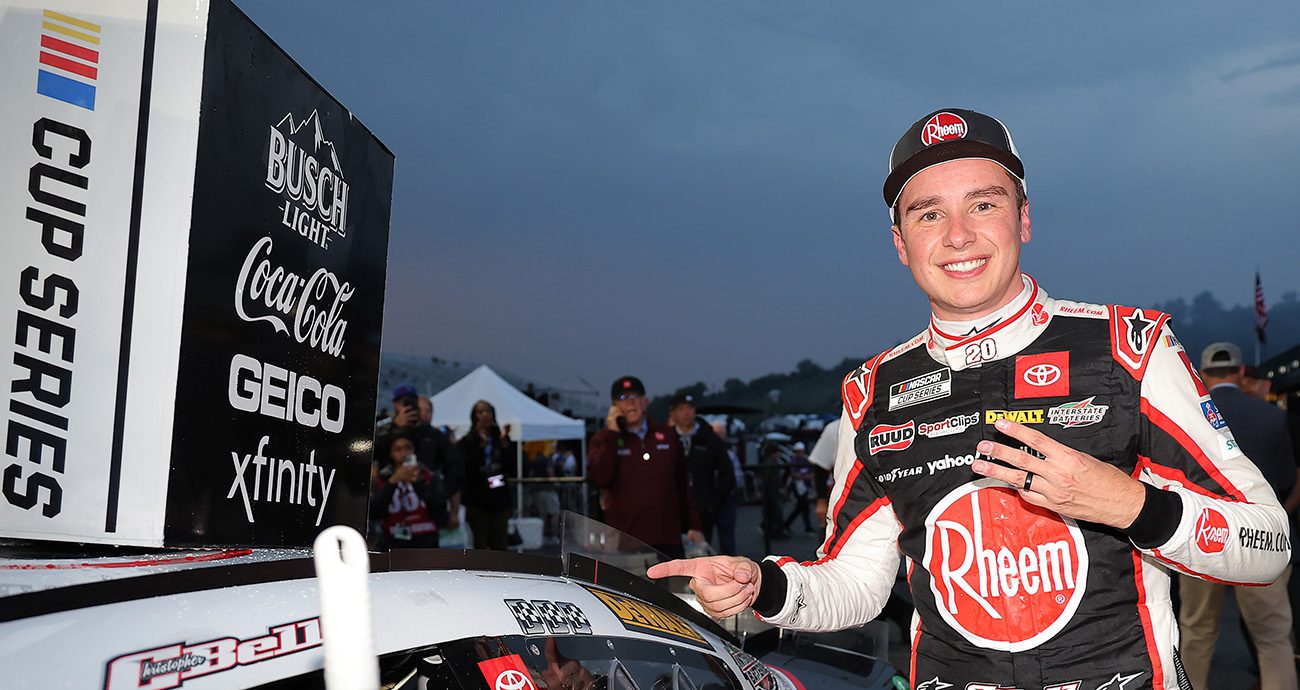
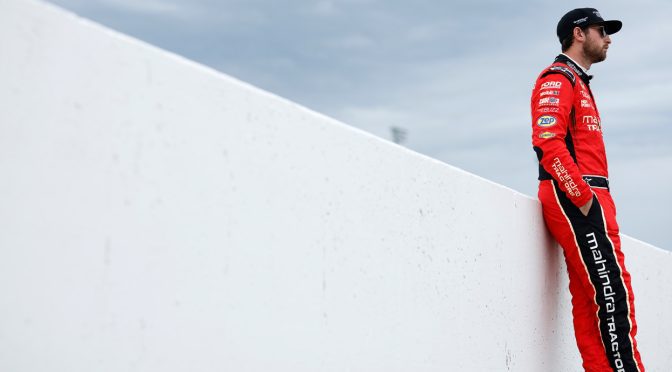
Christopher Bell just grabbed the New Hampshire weekend by its claws and inserted himself full throttle into the championship favorites tier.
Sorry to spoil the surprise, but Christopher Bell might just be your 2024 championship favorite.
For those who watched ‘NASCAR: Full Speed‘ on Netflix (and if you haven’t, what are you waiting for?), you’ll know that the reserved No. 20 driver tends to get a little slept on in favor of the more boisterous personalities among NASCAR’s perennial contenders.
Of every driver in the NASCAR Cup Series at the moment, however, there’s but one who can boast (though he wouldn’t) back-to-back Championship 4 appearances the past two years — and he just won his third race of 2024, a mere 18 weeks into the season. At the more micro level, Bell also has the longest current top-10 streak in 2024 with five straight finishes of ninth or better — two of which were wins — with the next closest driver having just two consecutive top 10s.
For whatever reason, the No. 20 driver often is not brought up immediately as a championship favorite in preseason conversations as the winter chatter of late generally centers around drivers like Kyle Larson, Chase Elliott, Joey Logano and Ryan Blaney. Even Bell’s teammates Denny Hamlin and Martin Truex Jr., who combine for 38 full-time seasons to his five — collectively have just one more Cup title than the Oklahoma native. When Bell won the Coca-Cola 600 — one of NASCAR’s most revered races — for the first time last month, even that got overshadowed by the rain-shortened nature of the victory and Larson’s frustrating day attempting the Indy/Charlotte double and subsequent waiver drama.
After the weekend we just saw, where he was the center of attention at the “Magic Mile” for literally three days straight, this feels like the moment he’s emerged as one of the sport’s true megastars. (Not to mention, he makes a pretty decent press conference moderator.)
Bell’s development into a lethal Cup Series contender capable of scraping together double-digit wins in a season hasn’t come as a surprise to one person who’s been behind him every step of the way since his 2017 Xfinity Series debut for the team — Coach Joe Gibbs.
“I just think Christopher … he’s gifted, and the further he goes, we all just really appreciate it. I think he’s a real talented, young guy,” Gibbs said after Bell put on a show to win the New Hampshire race on wet-weather tires. “To be truthful, with him not in (the media center), I’ll tell you, he’s the All-American guy. Sponsors love him. He’s just a kid that everybody loves. So it’s great to see him, too, get the success that I think he deserves. He’s worked hard. He came in (to the Cup Series) during COVID. He got in cars without making a lap that first year and went through all of that. So I really appreciate that.
” … I think he’s gaining confidence as he goes. It’s great to see a young guy like that, that really and truly deserves it. So it’s a thrill for us to be a part of it, and I joked with people. I said, ‘We can ride him for 20 years.’ ”
Twenty-year talents at one premier organization — that’s rare. That’s Hamlin, Jeff Gordon territory right there. And it truly doesn’t feel out of place for Gibbs to set that high of a bar for Bell — it feels quite evident JGR’s long-term foundation has been mostly set, with Bell, Ty Gibbs and newcomer Chase Briscoe continuing to sharpen under the veteran Hamlin’s tutelage until he’s ready to pass the baton to whoever winds up being the final piece of the puzzle for the Toyota-backed organization’s next decade-plus.
And down the line when the 43-year-old Hamlin does eventually exit the building, it’s obvious whose name will ring out as the team’s new de facto leader.
Logan Riely | Getty Images
2. Not in the provisional playoff field yet? You might need to win
< From this point on in the season, it’s historically been difficult for drivers below the elimination line to race their way into the playoffs on points.
In the history of the NASCAR Playoffs format, the steepest points deficit a driver has overcome with eight or fewer regular-season races remaining is … three.
Read that again, because I couldn’t believe it myself.
It’s actually only been accomplished a total of five times, period — all from a standings position no deeper than 17th at this point. Bubba Wallace was the last one to do it — last year — when he was in a three-point hole with seven to go. After a frustrating end to his New Hampshire race, Wallace is once again the 17th-place driver in the playoff standings, meaning that if he were to carve out a 2024 playoff spot on points, it would be by far the largest hole ever climbed out of at this point, and it’s a modest 13 points.
In other words, historically speaking, the only true remaining path to the playoffs for any driver currently below the elimination line at this point is a trip to Victory Lane.
Anything can happen in NASCAR, and we’ve already seen two mildly surprising winners in the Cup Series this year so far, but looking at the rest of the hopefuls, it’s tough to see any likely to win over the next eight races. Of the 14 drivers in the top 30 currently outside the playoffs, they have 14 total top-five finishes — combined.
Of course, one of those drivers is No. 8 Richard Childress Racing driver Kyle Busch, who has won at least one race in each of the previous 19 seasons. He’s probably the one you look at the hardest, but the two-time Cup champ is also riding a career-long winless streak and is currently mired in a truly dismal last month of races. RCR announced a shakeup to its competition department on Tuesday afternoon, however, which could potentially be a shot in the arm over the final two months of the regular season.
Rowdy is one of seven full-time drivers to win in 2023 and has yet to take a checkered flag in ’24, but one of just three that aren’t in the provisional playoff field, along with Michael McDowell and Ricky Stenhouse Jr.
Team Penske’s Joey Logano was also part of this club before New Hampshire, but he leaped over Wallace with 22 points to No. 23’s total of three despite finishing just two spots higher in the running order. (Stage points matter, friends.)
All that said, this does feel like the kind of year where this trend could be broken. We’ve already seen two of the closest finishes in the history of the sport in one season, so who’s to say another record-breaking moment isn’t right around the corner?
There are certainly some interesting tracks on the horizon with a lot of unknowns, all of them almost entirely different, as well. Here’s what’s left:
Nashville Superspeedway: 1.333 concrete oval
Chicago Street Course: 2.2 mile, 12-turn street course
Pocono Raceway: 2.5 mile “Tricky Triangle”
Indianapolis Motor Speedway: a return to the 2.5-mile oval after a few years running the infield road course
Richmond Raceway: 0.75-mile short track
Michigan International Speedway: 2-mile high-speed oval
Daytona International Speedway: 2.5-mile high-banked drafting track
Darlington Raceway: 1.366 egg-shaped oval
You can’t say those tracks aren’t full of opportunities. It’s just going to come down to who’s going to make the most of them.
On Stacking Pennies with Corey LaJoie, Chase Briscoe details how his contract with Joe Gibbs Racing came to be and his talks with other teams.
4. Drivers to beat this weekend — on the surface
See the active drivers with wins on the series’ three current concrete-surfaced tracks. Does this provide an edge for these drivers, or will they have to dig deeper?
Driver
Bristol
Dover
Nashville
Total
Kyle Busch
8
3
-
11
Brad Keselowski
3
1
-
4
Martin Truex Jr.
-
4
-
4
Denny Hamlin
4
2
-
6
Kyle Larson
1
1
1
3
Chase Elliott
-
2
1
3
Joey Logano
2
-
-
2
Alex Bowman
-
1
-
1
Chris Buescher
1
-
-
1
Ross Chastain
-
-
1
1
5. Catch the pack — news and notes from around the garage
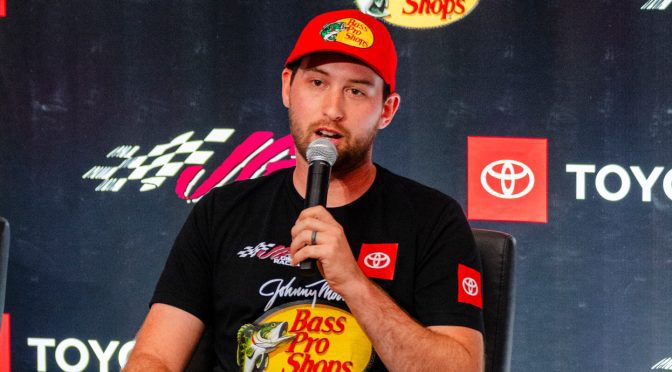
HUNTERSVILLE, N.C. — Chase Briscoe will be a Joe Gibbs Racing driver beginning in 2025.
That much is not news anymore, not after Tuesday’s press conference introducing Briscoe at the team’s headquarters. And if we’re honest, it hasn’t quite been “news” since at least last Friday, when Christopher Bell slipped up and tipped the team’s hand in a New Hampshire media availability.
But even after the official announcement in JGR’s auditorium, with direct quotes and reactions from Joe Gibbs, Briscoe and crew chief James Small, the story of Briscoe’s rise to fill the most sought-after seat this Silly Season and replace outgoing champion Martin Truex Jr. seems unbelievable.
The disbelief does not stem from a lack of confidence in Briscoe’s abilities or credentials — the 29-year-old is a 14-time winner across NASCAR’s three national series and has displayed his winning capabilities throughout his stock-car racing tenure. Rather, it originates from just how unlikely Briscoe’s entire career has been.
It’s so unfathomable, in fact, that even Briscoe has trouble wrapping his mind around it.
“Just the whole thing, right? Like to be driving for Joe Gibbs,” Briscoe said in amazement. “It’s funny. We do our pre-race prep every single week and they have the stats like where everybody stacks up, and I feel like every week it’s the 19 car is the best car. And I’m just in the back of my mind like, man, that’s gonna be the car I get to drive next year. So that’s super cool, right?”
Super.
The circumstances that led Briscoe to NASCAR’s uppermost echelon start where most unbelievable stories begin: Facebook.
After scrolling upon an advertisement back in 2013, Briscoe applied for and became a finalist in the PEAK Stock Car Dream Challenge, a contest that provided entrants with the opportunity to “compete for a chance to join Michael Waltrip Racing as a rookie stock-car driver.” Among those involved in coaching applicants were MWR’s Cup drivers Clint Bowyer, Mark Martin, Brian Vickers, and Truex, who was then piloting the team’s No. 56 Toyota.
Thus, after years of racing dirt micro 600cc cars and sprint cars, Briscoe’s journey to NASCAR was sparked.
“I had nothing going on,” Briscoe recalled. “We had blown our sprint car engine really early in the year. My dad was like, ‘Look, we’re not gonna be able to go race. You need to figure something out.’ I was on Facebook and saw this PEAK Stock Car Dream Challenge thing and signed up for it. Didn’t follow any of the guidelines, somehow got picked for it, and that was the whole reason I ever moved to North Carolina.
“Because when I came down here, that was my first time driving pavement, driving a stock car, any of that. And Ty Norris was the GM of Michael Waltrip Racing and pulled me in his office at the end of it and said, ‘Hey, look. If you’re serious about this, you need to move down here (to Charlotte) because I really think that if you ever did get the opportunity, you could do it.’ ”
Eleven years later, that same Facebook scroller — then an 18-year-old with no clue what awaited him — is now the 29-year-old heir to Truex’s championship-caliber car in the NASCAR Cup Series for Joe Gibbs Racing, one of the sport’s most elite programs.
Of course, there’s another tie from those formative years still integrally connected to all of this: Christopher Bell.
“If it wasn’t for Christopher, I don’t know if I’d even be in NASCAR, period,” Briscoe said.
Hyperbolic as it may sound, Briscoe might be right. He and Bell are just two Midwestern kids who love racing. That common bond connected them from the jump.
“I’ve known Christopher since I was probably 12 years old, I want to say,” Briscoe explained. “We started racing online together and just kind of formed this friendship and then lived together for a little bit.”
Robert Laberge | Getty Images
Those days as roommates 10 years ago resulted in Bell’s first helping hand toward Briscoe’s budding career.
“Back in 2015, I want to say it was, (Bell) had called me and said that Roush Fenway had offered him a deal for development driver and he wasn’t going to take it,” Briscoe recalled. “So I got the name from him and walked in the front door at Roush Fenway and said, ‘Hey, I need to talk to this guy.’ Somehow got a meeting and that was the whole meeting that really started me ever even getting an opportunity at Cunningham Motorsports.”
That connection to Cunningham Motorsports, a small team in the ARCA Menards Series, propelled Briscoe from a road trip home to Indiana, ready to give up his NASCAR aspirations, instead to the radar of everyone else in American stock-car racing. In his first full-time season driving Cunningham’s No. 77 Ford, Briscoe won six of 20 races in a dominant campaign to win the 2016 ARCA championship. And one year later, he was driving full-time in the Craftsman Truck Series for Brad Keselowski Racing, earning his first NASCAR win in the 2017 season finale at Homestead-Miami Speedway.
A piecemeal Xfinity schedule in 2018 resulted in a Briscoe win at the Charlotte Motor Speedway road course that October with Stewart-Haas Racing, leading Briscoe to SHR full-time in 2019. But without funding between ’19 and 2020, Briscoe was again on a path that led out of the sport entirely. But an offseason encounter between Briscoe’s dad and HighPoint CEO Mike Mendiburu on the Las Vegas Strip, as described in a story by The Athletic that Briscoe referenced Tuesday, ultimately resulted in proper sponsorship to keep Briscoe in the car. He went onto win a series-best nine races that year.
“When you hear his story,” Gibbs said, “there was a miracle in there really that happened for him to get a chance for that Xfinity year.”
Fast forward to the present year with Briscoe now in his fourth Cup season for SHR, and Bell is back playing another pivotal role in Briscoe’s ascension.
“Christopher texted me probably, I don’t know, I think it was the week of SHR shutting down and said, ‘Hey, I think Martin might not be coming back. You need to just be wearing them out over there,’ ” Briscoe said. “So I mean, he’s been a huge part of my career.”
Behind the scenes, Bell was going to bat for his longtime friend, amplifying Briscoe’s potential to Gibbs and explaining why Briscoe — a driver with just one Cup win — was the right selection for such a coveted seat.
“It went a lot deeper with (Bell) because he spent a lot of time with Chase when they were coming up,” Gibbs said. “And those were tough years for (Briscoe). They were battling and trying to get a chance and going through all that, and he knew how (Briscoe) sacrificed and at one point he was close to giving up. He spent like three years knocking on doors and nobody would give him a chance.”
Now, Briscoe has what he deemed “the opportunity of a lifetime” to compete for one of NASCAR’s winningest teams of the last 20 years, plugging into a team that will retain crew chief James Small and attempt to recreate the success Truex has built since climbing into the No. 19 car in 2019.
But not without the help of Bell.
“(Bell) had a great way of describing him to me,” Gibbs said. “He compared him to two other drivers that are in the sport. And he said this is where he is, and he compared him to somebody. I won’t give you the name, but he said, ‘This is the kind of guy I think you’re getting.’ And I thought it was really enlightening for me. I know I’ll always remember that. We’ll see. We’ll see if he’s right.”
The mystery comparison remains unknown for now. But at the conclusion of the 2024 campaign, Bell and Briscoe will advance from former roommates to current teammates.
“It’s just gonna be fun to get to work with Christopher and get our relationship back to kind of how it used to be,” Briscoe said.
The temperatures at South Boston Speedway in southern Virginia may have been warmer than usual on Oct. 22, 2011, but the atmosphere inside the venue was scorching.
Nearly 40 cars were set to take the green flag for the short track’s season-ending Late Model Stock Car race. The cast of characters were comprised of an even mix of seasoned veterans and young drivers seeking to one day advance to the top levels of NASCAR.
Two drivers stood out to the South Boston faithful.
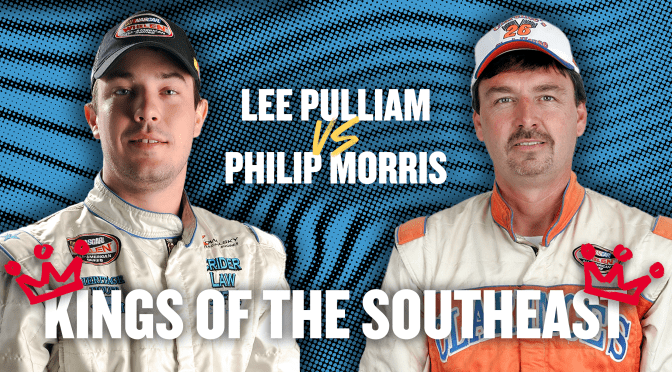
One was Philip Morris, a local Late Model Stock legend. Known as “The King” by peers and fans, Morris was preparing to wrap another stellar season with his second track championship and fourth NASCAR Advance Auto Parts Weekly Series national title.
The other was Lee Pulliam, a relative newcomer from Semora, North Carolina. Pulliam had emerged as one of the brightest young stars in the region, with his passion and consistency rewarding him with his first ValleyStar Credit Union 300 victory at Martinsville Speedway that year.
Both had something to prove to themselves and each other. Morris was doing everything possible to stay on top amidst a changing landscape. Pulliam was determined to establish himself as an elite competitor despite limited funding.
Their shared desire to win every race had already resulted in battles and confrontations. Each chapter served to captivate the weekly crowds in Virginia, everybody curious to witness the development of the Pulliam-Morris narrative.
Everything the two had experienced together over a year-and-a-half time span built to this one day at South Boston. What transpired at the end of the 300-lap race changed the lives of both Pulliam and Morris, and it cemented their rivalry as an iconic piece of lore in Late Model Stock competition.
South Boston Speedway, a NASCAR Home Track in southern Virginia, was the site of one of the most famous and controversial moments of the rivalry between Lee Pulliam and Philip Morris. (Photo: Victor Newman/South Boston Speedway)
Chapter I: The Humble Beginnings
Pulliam’s passion for motorsports developed when he was a spectator at his favorite short tracks, his childhood weekends often spent at either South Boston or North Carolina’s Orange County Speedway. He fell in love with the vibrant culture facilitated by competitors’ passion, which often manifested into heated on-track rivalries and devoted fan bases.
Lee Pulliam’s love for racing started by watching drivers like Philip Morris battle for wins at short tracks. (Photo: Sara D. Davis/Getty Images)
Now 36, Pulliam still considers the drivers he followed in his youth to be his heroes. The names include Barry Beggarly, a four-time Late Model Stock champion at Orange County, along with South Boston heavyweights Stacy Compton, David Blankenship, Wayne Patterson and Frank Deiny Jr.
Those drivers often found themselves chasing Morris, whom Pulliam regarded as a competitor who was equal parts aggressive and efficient.
“If [Morris] had the fastest car, he was going to try his best to lead every single lap,” Pulliam said. “You had some racers who were more methodical, but Philip won a pile of races, and he’d sometimes run his car so hard he would run out of tires at the end. If the tires held on, he was pretty tough to beat.”
Morris’ reputation was ubiquitous throughout the southeast before Pulliam became a teenager, but the journey toward becoming “The King” was a prolonged process.
Morris, now 59, turned his first competitive laps shortly after graduating from Longwood University in Farmville, Virginia. He was tested both mentally and physically throughout his formative years on dirt tracks before transitioning to pavement in 1992.
Philip Morris was tested by many short track elites on his way to becoming one of the best in a Late Model Stock. (Photo by Jared C. Tilton/Getty Images for NASCAR)
Morris was forced to earn everything when he began in a Late Model Stock. He recalls being a backmarker at Virginia tracks like Southside Speedway and Pulaski County Motorsports Park while doing everything possible to both learn the craft and earn respect from veteran racers.
He began to see results, and by the end of the 1990s, Morris had found his place amongst the upper echelon of Late Model Stock racing with a list of accomplishments that included a track championship at Pulaski County.
Those same drivers Pulliam idolized were the ones Morris was racing on a regular basis.
“David [Blankenship] was old school and politically correct,” Morris said. “He didn’t take damage off the track, but he did the damage on the track. You learn from guys like that and how to do things diplomatically. You can’t help but pick up a few things.”
The challenges Morris endured against fellow veterans, combined with his expansion to other states and NASCAR’s national touring divisions, helped him build an identity as an automatic favorite to win at any short track.
As Morris added NASCAR Weekly Series championships to his resume in the late 2000s, he kept an eye on the young talent rising through the ranks and into Late Model Stocks. By this point, Pulliam had amassed the funding to start a career of his own.
Morris knew how rough and exhilarating pavement short-track racing could be; he’d experienced the rivalries between competitors like Blankenship, Shayne Lockhart, Jeff Agnew, Johnny Rumley and more.
None compared to the relationship he was about to build with Pulliam.
Chapter II: The Rivalry Begins
Pulliam’s first full-time Late Model Stock campaign in 2009 was a lifelong dream coming to fruition.
Like that of Morris, Pulliam’s small operation required delicate time to reach the top of the discipline. He reached Victory Lane once during his rookie year at South Boston, but he had more trouble establishing consistency.
A long winter provided Pulliam time to use his limited budget on improving his silver and blue Late Model Stock. The start of South Boston’s 2010 season saw Pulliam become a more constant factor at the front, each race inching him closer to his goals.
On June 19, 2010, Pulliam turned a childhood fantasy into a reality: He bested Morris for a Late Model Stock win.
“I have a photo in my dad’s shop of my first time beating Philip,” Pulliam said. “I beat him by just a few feet to the finish line at South Boston one night, so that was a huge win for me. To be the best, you’ve got to beat the best, and I wanted to prove to everybody that I was the best Late Model Stock racer and wanted to go head-to-head against Philip.
“I got a lot of my driving style from him, being aggressive at the right times and not taking a lot of crap from people.”
Lee Pulliam formally entered the ring as an equal to Philip Morris once he started winning at South Boston Speedway and Pulaski County Motorsports Park. (Photo: NASCAR)
One of the first to congratulate Pulliam in Victory Lane that day — beyond crew members — was Morris.
Long before that checkered flag, Pulliam had started to earn Morris’ respect. Pulliam backed up his aggression on the track with his conviction in the pits. Morris watched Pulliam regularly go the extra mile to fix a problem or make an adjustment that might gain him a precious thousandth of a second.
Pulliam’s passion convinced Morris the younger driver would be a mainstay in motorsports.
“I looked at Lee as somebody who was destined to be great,” Morris said. “Even when we were having success during that period of time, I was still going to South Boston on 100-degree days by myself testing just like a couple of other guys would do, and Lee was one of them. With him being the one under the car in a pool of sweat, I knew he was going to be tough.
“If you’re tough like that, you’re going to be tougher on the track.”
Morris understood that Pulliam’s capabilities meant he was under more pressure to remain efficient at every short track in Virginia.
Chad McCoy, who at the time served as Morris’ mechanic, had watched his driver deal with countless challenges from Late Model Stock stalwarts, but he admitted to being surprised by Pulliam’s sudden emergence. Despite this, McCoy said Morris’ own dedication defined his greatness.
“If you look up racer in the dictionary, there would be a picture of [Philip Morris],” McCoy said. “He is the quintessential stock-car racer. He can assemble a car, fabricate, weld, build shocks and could probably build an engine. He’s one of the most super-talented guys behind the wheel you’d ever want to meet. The guy has a work ethic like no other.
“His success is driven solely by his work ethic, and you’d have to race with him to understand it.”
Pulliam mirroring Morris’ mindset only reinforced McCoy’s prognosis that the two would go blow-for-blow nearly every weekend.
That prediction materialized almost immediately after Pulliam’s first triumph over Morris. With Pulliam’s talent regularly exceeding his budget and Morris relying on years of trial and error, they proved to be evenly matched by trading wins between South Boston and Pulaski County.
For every victory Lee Pulliam obtained, Philip Morris had an answer, which only elevated their burgeoning rivalry. (Photo: NASCAR Regional)
For a brief period of time, late in the 2010 season, Pulliam and Morris both competed out of the same garage at Sellers Racing Inc., which further complicated an already intense situation. With Pulliam being extended family, H.C. and Peyton Sellers let the young upstart operate on their property. Morris, meanwhile, piloted the Sellers brothers’ primary No. 26 Clarence’s Steakhouse car.
McCoy knew Pulliam’s and Morris’ ambitious natures would result in tension amongst everyone.
“You can’t have two stallions in one barn stall,” McCoy said. “It became obvious pretty quick they were very competitive and were always racing each other for the win. Everywhere in the Virginia Late Model Stock scene during those years, it was usually them who were going to be your contenders.”
Peyton Sellers, who had engaged in his fair share of on-track battles with Morris and Pulliam to that point, did everything possible to keep the two composed off the track. Doing so was a constant challenge.
Despite the drama starting to bubble under the surface, Sellers saw the shared passion of Morris and Pulliam as a net positive.
“They had been competing week in and week out, and they were elevating their game, which made them good for each other,” Sellers said. “Philip was at a point in his career where he needed that kind of competition, and Lee was at the point where he was going to do whatever it took to put his name on the map.”
As hard as Sellers and the rest of the team tried, the aggressive-but-clean nature of the Pulliam-Morris duel was never going to remain status quo. The first escalation of their conflict occurred in 2010 at South Boston.
During the track’s 300-lap Late Model Stock feature in October, a typical battle between Morris and Pulliam concluded with the two making slight contact on the last lap and knocking Pulliam out of the groove. Morris prevailed and claimed a $10,000 paycheck; an agitated Pulliam settled for second.
Pulliam considers this the start of his rivalry with Morris, but the moment also served as motivation to put every ounce of energy he possessed into keeping Morris behind him — no matter the cost.
“We’re coming out of the same shop, so I’m not real happy,” Pulliam recalled thinking. “I vented pretty heavily about it, and at the time, I decided I was going to do things on my own. We moved into a different shop, and the rivalry consumed us in 2011. I wasn’t happy with the way he raced me coming to the checkered, so coming into 2011, I was hellbent on beating him every single week.”
Pulliam’s promise to himself transformed his battle with Morris into an all-out war, one of which the consequences extended far beyond the track.
Chapter III: The Flashpoint
In 2011, the Commonwealth of Virginia ended up becoming the battleground Pulliam envisioned after his encounter with Morris at South Boston the previous year.
Neither driver pulled punches during their bouts across the state. For all the punishment Morris dealt on the track, Pulliam delivered his own. Every race saw Pulliam fight for validation and survival. Winning would allow him to use the prize money to sustain his team and continue his regular clashes with Morris, ensuring his place as one of the best in a Late Model Stock.
“When [Morris] came to [Pulaski County], I’d wear him out, but when he came to South Boston, he was wearing me out that year,” Pulliam said. “We beat, banged and drove each other as rough as we could drive. He’d drive me rough, and I’d drive him rough the next corner. It was kind of getting ugly.
“I felt like I was the guy who didn’t belong there because I didn’t have any money and wanted to beat the other guys that much worse because of that.”
Pulliam’s efforts won him both trophies and praise from the local fans, but they were not enough to procure him the 2011 NASCAR Weekly Series title. Morris competed more regularly against big fields and built enough of an advantage to claim another title. Pulliam finished third in the standings.
Although Morris won the war, Pulliam found himself satisfied with the battles he claimed. They included his maiden ValleyStar Credit Union 300 crown, which he obtained after moving Matt McCall in Turn 3 coming to the checkered flag.
Lee Pulliam in 2011 joined Philip Morris as a winner of the prestigious ValleyStar Credit Union 300 at Martinsville Speedway. (Photo: Jared C. Tilton/Getty Images)
A victory in Late Model Stock racing’s equivalent to the Cup Series’ Daytona 500 led Pulliam to believe he was on the verge of his breakthrough into NASCAR’s top ranks.
“I’m sitting on top of the world in a Late Model Stock,” Pulliam said. “I’m thinking that Joe Gibbs, Richard Childress, Rick Hendrick or somebody else was about to call me. I’m winning all these races; I’m a young guy with a lot of success but not a lot of money. I was just waiting on that phone call.”
As he pondered his trajectory, Pulliam turned his attention back to where his feud with Morris began. In the year that had passed since the October dust-up at South Boston, Pulliam and Morris’ on-track excursions had resulted in hurt feelings and torn up race cars. Their adventures had also provided each a loyal, passionate fan base.
All these factors created a palpable tension when teams arrived at South Boston for the track’s 2011 finale, the last chance for fans to watch Pulliam and Morris hash out their differences before the rivalry cooled over the winter.
The afternoon immediately lived up to the hype. Morris and Pulliam hardly left each other’s sight lines throughout the day, dominating a race consisting of Late Model Stock stalwarts like C.E. Falk, Deac McCaskill and Tommy Lemons Jr. by exchanging the lead several times, much to the delight of the exuberant crowd.
Pulliam was confident he had the upper hand on Morris, but one fateful restart with 73 laps to go changed everything.
As the two raced for the lead, Morris made slight contact with Pulliam in Turn 3 and spun him around. Pulliam avoided major damage, but he was left with a limited amount of laps to work back toward the front.
He was enraged. Pulliam considered Morris’ move an act of disrespect, adding that he was bewildered the national champion would spin him at his home track. Running on adrenaline and fury, Pulliam wanted nothing more than to get back to Morris’ bumper.
“I drive an extremely desperate and mad race trying to get back toward the front,” Pulliam said. “Unfortunately, I spun out a lapped car to bring out the yellow [I needed], because that’s how mad I was at the time. I didn’t have anybody in my ear trying to calm me down, but they were enjoying watching me drive mad because I was up on the wheel.”
Pulliam’s furious drive came up short; he finished third while Morris took the checkered flag. Morris ended a stellar year on top of the Late Model Stock world. Pulliam felt like he’d been knocked back to the bottom.
The thought of Morris being gratified by another victory intensified Pulliam’s anger, and even with the race decided, Pulliam was not going to let Morris enjoy the moment. In his mind, at that juncture, retribution was in order.
Just like he did on track, Pulliam pulled no punches against Morris as he sought vengeance.
Pulliam initially showed his displeasure with Morris during the cooldown lap by spinning him into the inside wall on the backstretch. He then finished off his vitriol by driving back around and crashing head-on into Morris, destroying both cars.
Morris was taken aback by Pulliam’s decision to junk Sellers’ equipment and his own. He never expected a hard-working competitor like Pulliam to take such a drastic action over a spin that meant nothing in the long term.
“What’s going through my mind is that he snapped,” Morris said. “This guy has really snapped, because this is a kid that worked really hard to get to this spot, and for whatever reason, because of how he felt about me, he was getting ready to change his whole career. He had been around long enough to know how NASCAR was going to feel about it.
“Some guys are really good in the seat until you shake them.”
As Morris limped his battered car toward South Boston’s Victory Lane, he encountered a scene of pandemonium on the frontstretch.
Pulliam had parked his car in the pit stall of Austin Wayne Self, who competed under the Sellers Racing banner with Peyton as his crew chief. This resulted in a brawl that ended up spreading into the grandstands between the Pulliam and Morris fanbases. The altercation lasted several minutes before the local sheriff’s department restored order.
Peyton Sellers was angry at Pulliam for demolishing a car Morris had piloted to so many victories in 2011. For as much bedlam as Pulliam’s post-race crash caused to both programs, it also sent a message to Sellers and other competitors that he was not someone to anger.
“It basically showed the determination Lee had,” Peyton said. “He was not willing to sit there and take it, but it showed the differences in the two drivers. Philip was a driver who knew exactly where his car was and put it in a position where Lee had to come down on him. Lee just had a boiling point in a weak moment where he took his frustrations out.
“We all have those points.”
The 2011 finale at South Boston may have ended in chaos, but Philip Morris maintained control as the most dominant Late Model Stock driver at the time. (Photo: NASCAR)
McCoy didn’t engage anyone during the scrum, but he did witness punches get thrown and a couple people get escorted out of South Boston. He was disappointed to see the post-race melee since he held everyone involved in high regard, but McCoy did find enjoyment in celebrating with Morris and his torn-up car in Victory Lane.
What impressed McCoy was the composure Morris displayed under the circumstances. He knew the veteran driver would be fine; McCoy only hoped Pulliam would be able to handle the fallout and return more efficient.
“There were a few people in our group who did badmouth Lee, and you’re going to get that in racing,” McCoy said. “We had a mutual respect, Philip especially. I’ve never heard Philip badmouth Lee in any way, even after that happened. Nothing ever came out of his mouth along those lines.”
Once Pulliam got his emotions under control, he began to realize the ramifications of his actions.
The impending punishment Pulliam expected from NASCAR was not the only thing on his mind; he was concerned any major organization like Hendrick, Gibbs or RCR would be trepidatious about bringing him into its development program. Pulliam spent many winter days and nights unsure whether his career would recover.
“That was probably the worst decision of my career,” Pulliam said. “Looking back, I regret that day, and I wish so badly I could do so much of that over. I regret how mad I was after the race. It was a mess, and there was a lot of spotlight on me because I was so fast and was winning so many races.
“It bothers me to this day. I thought my career was over before it even began.”
With one of the worst moments of his career behind him, all Pulliam could do was focus on the future and how to rebuild from the destruction at South Boston.
Chapter IV: The Aftermath
Pulliam received the dreadful phone call not long after South Boston. He was suspended indefinitely from all NASCAR-sanctioned events.
The news emotionally devastated Pulliam, who faced a newfound uphill battle to repair his reputation and get his program back into a competitive rhythm against Morris.
Pulliam admits he was scared over the circumstances he created for himself, but he was willing to go through every necessary step of the reinstatement process. This included attending a hearing that featured many prominent industry figures such as Robert Yates and former Charlotte Motor Speedway general manager Humpy Wheeler.
Some of the people Pulliam admired most were the ones scolding him for the South Boston incident. Yet he admitted the constructive criticism helped him become a better person both on and off the track.
“I got chewed up one side down the other, but I needed it,” Pulliam said. “What I did was wrong, but I paid the price for it mentally and with having my career paused. There was going to be a second chance to get things right, so we prepared very hard for our return.”
Pulliam received support from other Late Model Stock drivers who understood he made a mistake and were optimistic NASCAR would rescind the suspension at some point in 2012.
One of Pulliam’s biggest advocates was Morris.
The rivals spoke frequently during Pulliam’s suspension to compartmentalize every aspect of their feud. These conversations allowed Morris insight into Pulliam’s frame of mind. He understood how some of his actions led to Pulliam’s retaliation.
Morris knew the best solution going forward was to keep his rivalry with Pulliam healthy for both parties.
“I was experiencing stuff I never experienced before, like getting wrecked under a caution in a head-on collision,” Morris said. “I had already unbuckled, so you know it was unexpected, but it’s not until a point like that you have to look at yourself from other people’s perspectives and figure out how someone could get that angry.
“From that point on, I had to take on a different mindset. If you entice people into bad things, bad things will follow you.”
McCoy said Morris’ previous adventures in short-track feuding is why he was able to sympathize with Pulliam.
In the 1990s, Morris came into conflict with several competitors as he attempted to find a comfort zone on pavement. One of his most heated rivalries came with the Grubb brothers Kevin and Wayne, with the action occasionally escalating from hard racing to post-event altercations.
Lee Pulliam was at a crossroads following South Boston in 2011, unsure if his career would continue. (Photo: Bob Leverone / Getty Images)
The roles of youth and experience were reversed for Morris when he found himself on the receiving end of Pulliam’s anger. McCoy said Morris could easily comprehend Pulliam’s emotion and was able to advise him on how to better handle future scenarios.
“Philip went through it with the old-school Late Model guys,” McCoy said. “That was the point of Philip’s career where he would have been equal to where Lee was at in the 2011 timeframe. Philip understood why it happened. There’s so much effort poured into this stuff. It’s your heart, your soul and your guts.”
Pulliam credits Morris’ support during the suspension as a key component behind his reinstatement, which the sanctioning body granted in May of 2012. Pulliam and his team went to work immediately upon his clearance to do so.
Pulliam’s original plan was to make his Late Model Stock return at Pulaski County, but he pivoted to South Boston when inclement weather canceled on-track activity at the former. Regardless, he had no intention of wasting his first race back behind the wheel, and the same facility that yielded one of Pulliam’s worst days as a driver ended up being the site of one of his best.
Nobody in South Boston could match Pulliam’s speed that day. He led all 150 laps and found himself back on top of the Late Model Stock world immediately after his extended absence.
By the end of 2012, Pulliam had equaled Morris in another regard. Despite starting the year so far behind because of his suspension, Pulliam’s dominance allowed him to join an elite list of NASCAR Weekly Series national champions, wrapping up the title with a month left in the year.
Lee Pulliam’s first NASCAR Advance Auto Parts Weekly Series national championship was a culmination of all the hard work he undertook to improve himself following his indefinite suspension. (Photo: Jared C. Tilton/Getty Images)
Sellers, who also was suspended for his role in the South Boston fight until it was overturned on two appeals, said the efficient run Pulliam managed in 2012 highlighted his reinvigoration.
A more confident and composed Pulliam meant the Sellers brothers needed more emphasis on improving the equipment at their shop, yet Peyton expressed satisfaction knowing one of his team’s toughest competitors had found himself and was focused on leaving South Boston in the past.
“[The suspension] put [Lee] in a low spot, but it built a lot of character,” Peyton Sellers said. “Before that, he had a feeling deep within that he had to prove himself and prove he could beat Philip Morris. That was a humbling spot for him, and he said, ‘I’m an equal to this guy; I just have to beat him now.’ It was a good growing point for Lee, truthfully.”
Although his mindset on motorsports was refined, Pulliam knew Morris would be the primary obstacle standing in the way of additional success.
The difference compared to the year before — aside from Pulliam being the champion — was that the battles were more cordial. Both learned their lessons after South Boston and were committed to fostering a relationship that was less toxic and more beneficial for all parties involved.
Neither driver gave the other breathing room on the track, of course, but the mutual respect they’d expressed over their conversations made those grueling duels more enjoyable.
“He never wanted it to get to the point that it got to, either,” Pulliam said. “He believed in me as a race-car driver. Throughout the process, there were some things that happened only me and him know about. He advocated for me more than most people realize, and off the track, he was a fan of mine.
“When you’re a legend like he is and a wannabe legend like I was, it just created [an environment] where when we put those helmets on, we became two monsters out there on the race track.”
Even with Morris stepping away from full-time racing during the 2010s, Pulliam ensured the NASCAR Weekly Series championship stayed nestled in the southeast.
Pulliam acquired insight into how a national championship is earned when he lost to Morris in 2011. He used that knowledge, plus his momentum from his first title, to add three more championships in 2013, 2015 and 2017, tying Morris’ total.
As the 2010s progressed, Lee Pulliam became a dominant force with four NASCAR Advance Auto Parts Weekly Series titles, including three between 2012-15. (Photo: Jared C. Tilton/Getty Images)
Morris wasn’t content during his sabbatical as he watched his longtime rival dominate. He returned in full force for 2018 with a vintage season reminiscent of his campaigns in the 2000s. Morris accumulated 23 wins that year, enough to break his tie with Pulliam and earn a fifth Weekly Series national title.
Morris felt a sense of pride seeing Pulliam control the standings in the 2010s. Pulliam’s unimpeded resolve reminded Morris of his own journey to the top of Late Model Stocks, which is why he wanted to see Pulliam win as many races as possible.
“There were times when I’d get knocked out of a race, [Lee] would still be racing, and I actually rooted for him,” Morris said. “You want to see that hard work pay off. If a guy is willing to do what he’s been willing to do, which is to really dedicate himself, that’s the guy you wanted to pull for.
“Unless he took me out … in which case I wanted him to go windshield deep into the wall.”
One of the few instances when Morris was not a Pulliam supporter came in April of 2019 at, of course, South Boston. After winning the first of two 75-lap Late Model Stock races scheduled that day, Morris found himself in another battle with Pulliam for second while they chased Sellers with fewer than five laps to go. Pulliam’s crossover attempt in Turn 3 turned Morris hard into the outside wall and knocked him out of the race.
Morris’ crew chief Forrest Reynolds responded during a red flag by attempting to climb into Pulliam’s car from the passenger-side window and rip out his ignition wires. Pulliam started his car and sent Reynolds tumbling onto the racing surface. Reynolds was escorted out of the track with no serious injuries.
Pulliam took the scenario in stride by placing a “no passengers” logo on his door following that race. He defended his decision to gas up his car with Reynolds still inside, adding that such a situation was never going to end favorably for either party.
“I had that done to me in the past by Peyton Sellers,” Pulliam said. “I’m sitting there strapped in, so I can’t defend myself at all. It’s a vulnerable situation to be put into, so I don’t regret taking off at all. When somebody is raging like that, you don’t know what could happen.”
The chaos garnered Reynolds an indefinite suspension from NASCAR events, which put Morris, McCoy and the rest of the team in a bind as they ascertained how to progress with a busy slate of upcoming events, including the Virginia Late Model Triple Crown.
South Boston Speedway remained a constant battleground for Lee Pulliam (5) and Philip Morris (01) long after the two had settled their differences. (Photo: NASCAR)
McCoy said the red-flag antics had no longstanding impact on the relationship Pulliam and Morris had built. He knew each would remain focused only on the next race at that point in their respective careers.
“It doesn’t matter whose fault it was; we ended up with a totaled race car,” McCoy said. “It was hard racing, and I don’t know where to lay the blame. Through all that, Philip never once bashed Lee, and he didn’t really talk about it a lot. That incident was nowhere near as bad [as 2011]. We just moved on.”
Morris echoed McCoy’s sentiment. He saw no point in reigniting old tensions with Pulliam over one inconsequential race, adding that both had grown as drivers and people.
“There were people thinking I should have done more to retaliate,” Morris said. “As a driver, if you don’t retaliate 10 times worse than what the other person did, you get picked on. That’s how I was brought up with guys that had raced Late Models from years past. [South Boston] was just a product of crew members and fans getting involved with our rivalry.”
Everybody who attended South Boston that day and was familiar with Pulliam and Morris’ backstory saw the “No Passengers” incident as another chapter in their ongoing rivalry with many more bound to be written.
What no one in the industry realized was that it would be the last chapter of the saga.
Pulliam by the end of the decade had scaled back his schedule so he could spend more time with his growing family. But he wanted to remain involved with Late Model Stocks and put more emphasis on driver development.
A reinvigorated Morris was determined to claim a sixth Weekly Series title. He formed a partnership with R&S Race Cars, led by veteran crew chief Marcus Richmond and his business partner Steve Stallings, to pilot their house car starting with the 2020 season.
The sudden passing of Morris’ son Blake that April made motorsports an afterthought. He never attempted a race with R&S.
The absence of Morris or Pulliam on entry lists brought about a reality many drivers and fans were unsure would materialize.
The opposition that had encompassed Late Model Stock competition for more a decade and spawned countless iconic moments was gone.
Chapter VI: After the Rivalry
Pulliam finds himself busier than ever as a car owner.
His vision of a thriving driver development program came to fruition, as he’s guided numerous young competitors to success in Late Model Stocks and beyond. Among the names that have raced for Pulliam include Brenden “Butterbean” Queen and Corey Heim, the latter of whom made his Cup Series debut at Dover Motor Speedway in April.
Pulliam has brought in as much help as possible to sustain the program’s growth. He hired McCoy, who now works as a mechanic and car chief on Queen’s car.
McCoy after Morris’ sudden retirement had been assisting various short-track operations to stay involved with racing. While working for Mike Darne Racing in 2022, he received a surprise call from Pulliam.
“It was out of the blue, and I didn’t even have his phone number,” McCoy said. “One of Mike Darne’s customers, [Aaron Donnelly], was going over to drive a Late Model for Lee Pulliam. I did some spotting for the kid, and he wanted me to go along with him. I didn’t really want to leave Mike, but Lee calling was very flattering.
“We talked like we had gone so far back, which I guess we do.”
Lee Pulliam has remained atop the Late Model Stock world following his retirement, guiding drivers like Brenden ‘Butterbean’ Queen to Victory Lane. (Photo: Adam Fenwick/NASCAR)
Pulliam and McCoy’s mutual admiration developed into a strong friendship. When they’re not deliberating over how to improve Queen’s car, they reminisce on their own histories, especially the intense battles Pulliam and Morris had on track.
Pulliam doesn’t contact Morris as much as he’d prefer, but he touches base regularly to check in and provide updates on his own life. Morris jokingly encourages his old rival to keep his former longtime crew member in check.
Morris is grateful for the continued communication with Pulliam, adding that he still passes down wisdom to Pulliam whenever applicable.
“It’s a small community,” Morris said. “It’s easy to keep up with each other. As things have happened in Lee’s life, especially with marriage and the addition of family members, you just stay in touch. It means a lot when someone is going through many of the same things and you reach out to try and make a difference.
“You would never know there was a rivalry if you saw us standing side-by-side anywhere.”
Pulliam has not forgotten the compassion Morris showed during the lowest point of his career, and he’s done everything feasible to reciprocate that gratitude. Pulliam nearly had the perfect manner to do so when Morris approached him about housing his own car out of Pulliam’s shop. In Pulliam’s eyes, the former rivals teaming up to dominate the southeast would have brought their story full circle.
Such a concept still crosses Pulliam’s mind every so often.
“It almost happened,” Pulliam said. “We were in the contract negotiations, and we still talk about what would have happened if he raced for me and how that would have blown people’s minds. Me and Philip are a lot alike both off the race track and on the race track. We’re both stubborn and don’t want to lose, so that would have made a deadly combination.”
Morris took everything into consideration regarding a potential alliance with Pulliam, including the possibility that he might have to battle his rival once again. After careful deliberation, Morris decided the best decision was to keep a respectful distance from racing.
“After I lost my son, who had just started racing Late Models, I just had to get away from the sport and figure things out,” Morris said. “When you lose someone that’s close, you try to look back and see if I missed out because I was over-invested. It would have been crazy, because the fans saw [Lee and I] as two people who would go at it in a UFC ring.
“In the end, I had to stay away from racing altogether, other than what we do to honor my son.”
Philip Morris ended his illustrious career in Late Model Stock racing with five NASCAR Advance Auto Parts Weekly Series titles, three ValleyStar Credit Union 300 victories and numerous other accomplishments. (Photo: NASCAR)
With that, the hypothetical Late Model Stock dream team never formed. Pulliam fully shifted his efforts to ownership after running his last race in the 2020 South Carolina 400. Morris’ one-off attempt in the 2021 ValleyStar Credit Union 300 with Mike Looney resulted in a DNQ.
Their time as drivers may have passed, but Pulliam and Morris consider themselves fortunate they have more good memories to reflect upon than bad ones.
Nothing about racing in the late 2000s and early 2010s came easy for Pulliam. Every race was a meticulous grind toward the top of the Late Model Stock pedestal against drivers who had their own devoted fanbases and were never going to tolerate getting pushed around.
At the center of everything was Pulliam’s rivalry with Morris. The hard battles, the psychological warfare and the passion of each man to win made for what Pulliam still considers the most exhilarating period of his career, a chapter he wishes he could have appreciated more contemporarily.
“Looking back on it, that was racing,” Pulliam said. “That was something we’ve both missed. We didn’t realize how special those moments were when we were in them. We were so focused on winning that things we were doing that were legendary just went over our heads at the time. People would pay an arm and a leg to watch that kind of entertainment every week.
“It was like having a couple of Intimidators out there, and neither one would back down.”
For Morris, Pulliam’s presence as a rival forced him to continue learning after decades of experience. Constantly being pushed allowed Morris to self-reflect and subsequently push himself to improve in nearly every aspect.
There were more bumps and torn up cars than Morris can count, but through all the heartbreak, tempers, jubilation and respect, he’s confident both parties came away as winners.
“In the end, someone like Lee would be able to tell you what the score is,” Morris said. “He’s on it, whether it’s three cars to four cars totaled, or ‘I owe you one straight into the wall’ or two rear clips. That’s how you keep score. Standing back and looking at what happened, I’m way ahead on every category in that I came out of this with a really great friend.
“I’d say we’re even and that it was all worth it.”
Epilogue
Pulliam and Morris haven’t run a race together in nearly five years, yet their historic rivalry remains fresh in the minds of witnesses.
Sellers said Morris filled the role of Dale Earnhardt, who had proven himself against established veterans and was pitted against the young Jeff Gordon in Pulliam. Just like the Earnhardt-Gordon rivalry at NASCAR’s highest level, the involvement of the fans added an element that made Pulliam and Morris’ duel legendary.
“Timing and history all have to mix together,” Sellers said. “The fact that both of those guys had fast cars that were well-funded at the time, and they were racing between South Boston and [Pulaski County] every week, they were just the two doing it full-bore. The fans loved it because half of them were Philip fans and half of them were Lee fans.”
McCoy hopes the new generation of Late Model Stock competitors takes lessons from the impact Pulliam and Morris made on the discipline. Learning from both has left a significant impression on McCoy, who said he’ll always hold a deep appreciation for their driving styles and work ethic.
“How many people get to work with two of the best that have ever done it?” McCoy said. “Everybody’s got their opinion, and that’s my own. Philip is probably my hero in all of racing, but Lee Pulliam is right there with him. I feel blessed to have known both on the level that I do, and it’s all come full circle for me.
“I don’t know how much cooler of a situation you could be in.”
The possibility remains that McCoy could one day assist Pulliam as both a car owner and driver.
When the dust finally settled on their rivalry, Lee Pulliam and Philip Morris left a legacy as two of the most determined and successful competitors in the history of Late Model Stock competition. (Photo: NASCAR)
Being around his growing Late Model Stock program, Pulliam occasionally feels an urge to grab his helmet and get back behind the wheel. He hasn’t closed the book on a return to racing and would love to do it with Morris in the field.
“It would be cool to strap in and do it one more time with him,” Pulliam said. “If I ever race again, I’m going to try and talk him into doing one more race. Just one more for old times’ sake, and have a good battle, at that.”
Given the increasingly competitive nature of modern-day Late Model Stock racing, Morris does not anticipate immediate success should he race again. Such a proposition would require time to catch up, but “the King” has never been one to back down from a challenge.
“If I ever said I wasn’t going to do something, I would get tested on it,” Morris said. “I’ve been trying to stay busy like Lee just in case the call comes to do it again. The door is still open, and I feel as good as I did during the last championship we won. I feel younger, actually, so you never know.
“It could happen.”
Pulliam and Morris made their mark on Late Model Stock and NASCAR history with a combined nine Weekly Series national titles, five ValleyStar Credit Union 300 wins and so many more accomplishments. On paper, they have nothing more to prove.
But if the right circumstances materialize, there could be one more chapter to write in one of short-track racing’s greatest stories.
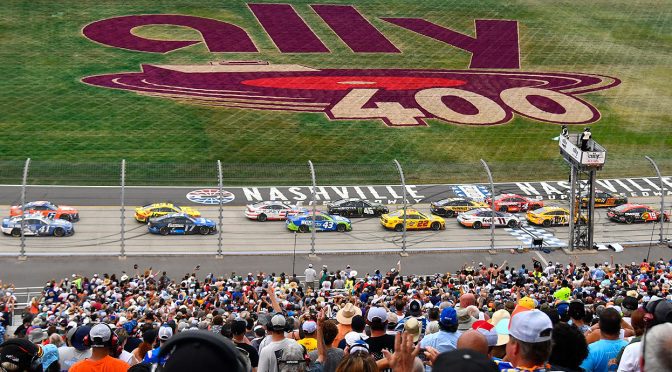
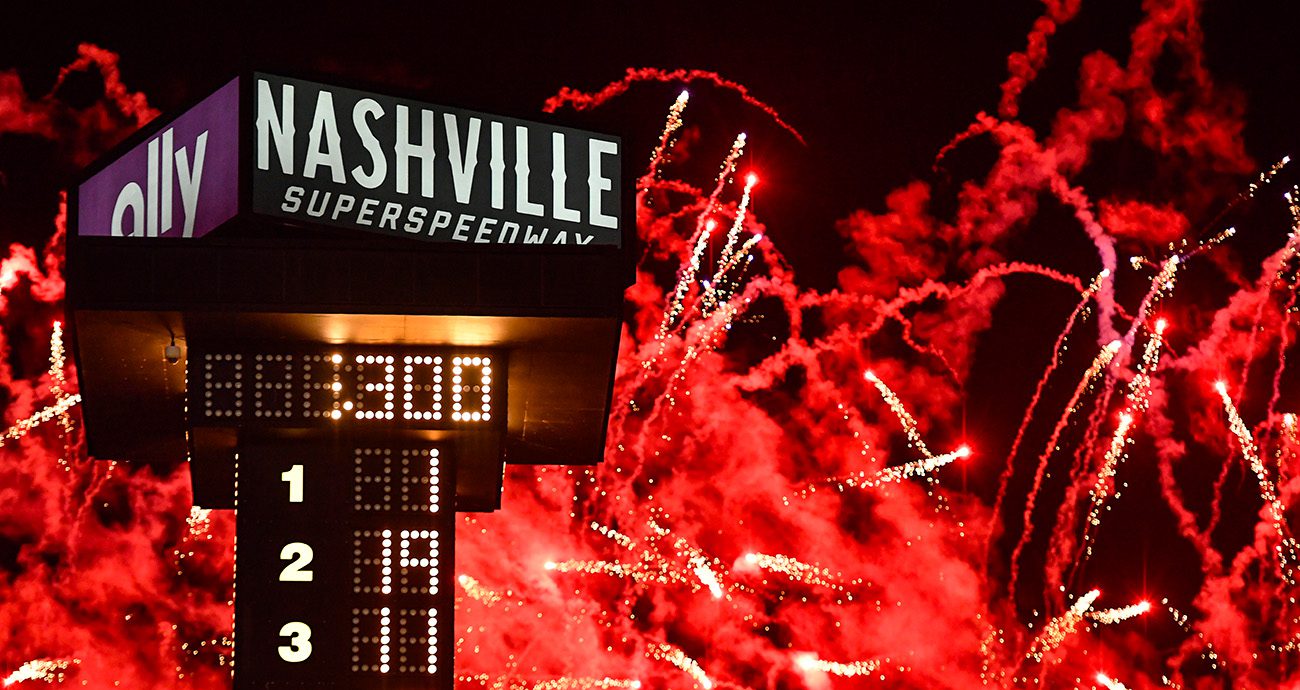
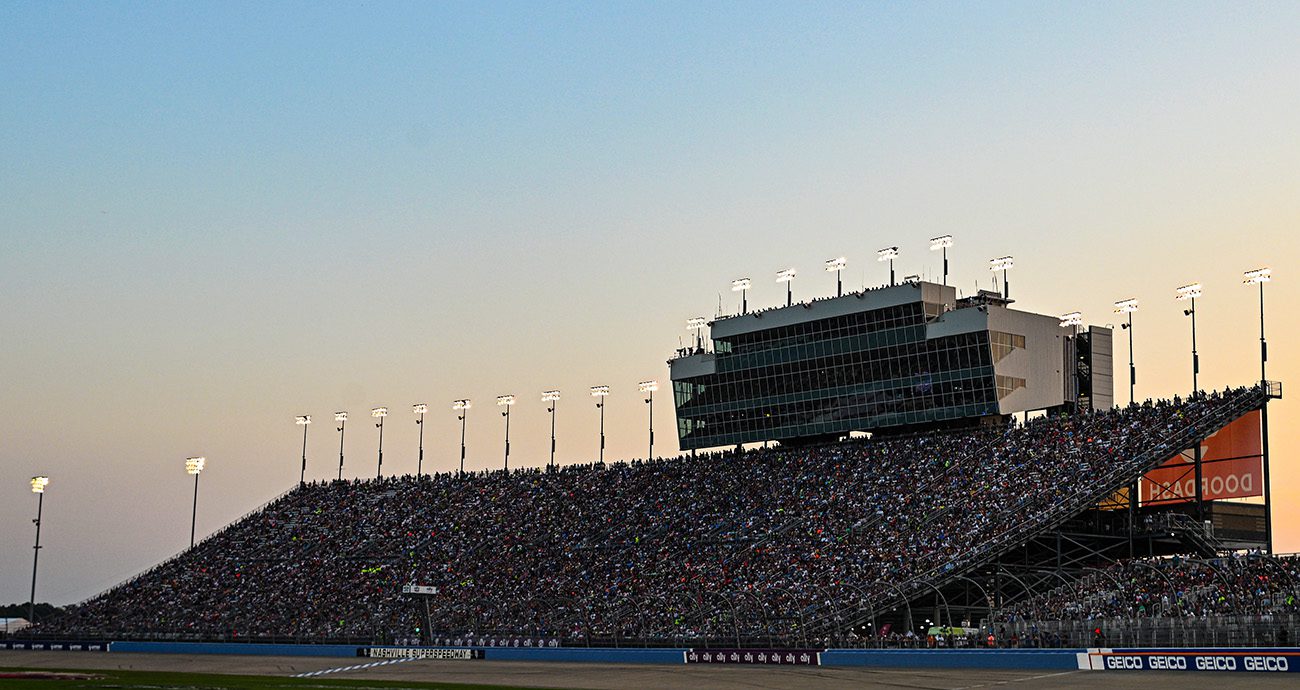
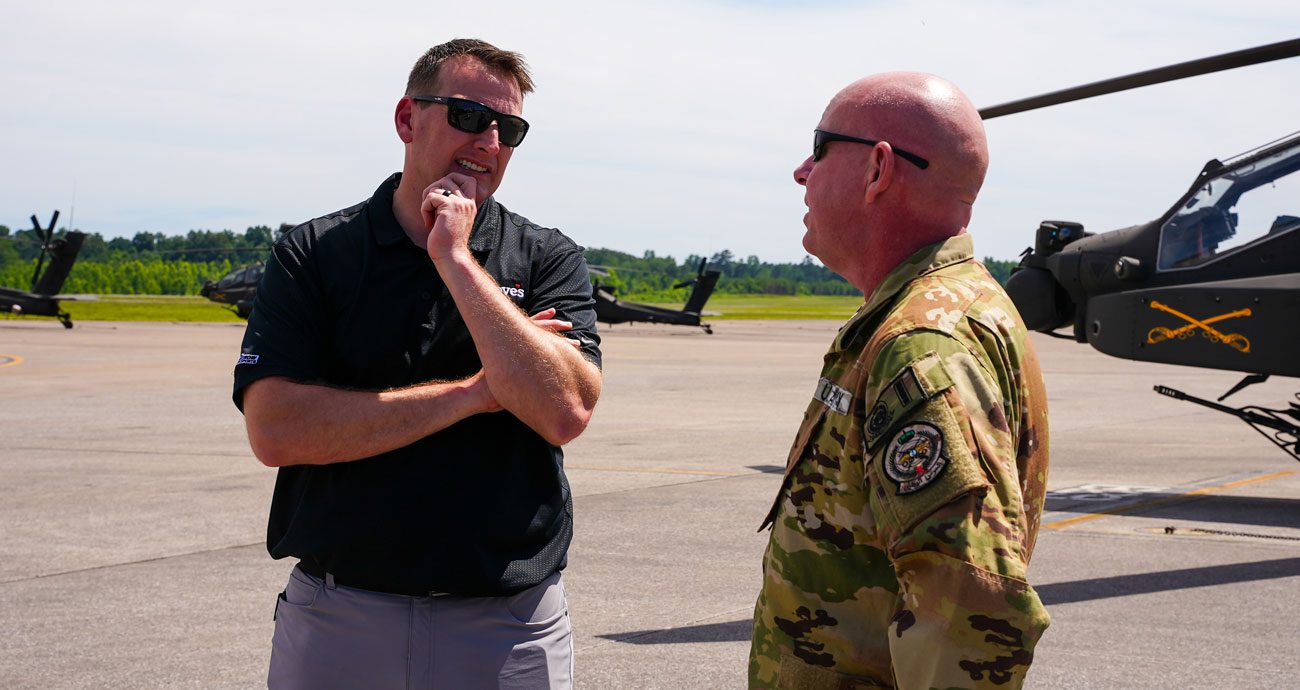
LEBANON, Tenn. – NASCAR Cup Series driver Michael McDowell recently visited Fort Campbell to experience a day in the life of a soldier while engaging with our nation’s finest ahead of Nashville Superspeedway’s Ally 400 NASCAR race weekend (June 28-30). The visit generated exposure for the NASCAR Salutes Together with Coca-Cola initiative to more than 250,000 people affiliated with the military in the Clarksville area.
Fort Campbell, the Army post at the Kentucky-Tennessee border, organized a day of activities for McDowell. The day featured lively discussions between McDowell and the soldiers, highlighting the strong connection between the military and NASCAR communities. McDowell also shared racing stories and life advice with young soldiers, and he signed memorabilia.
During McDowell’s visit, he visited the Gabriel Field memorial, toured the base and participated in shooting practice at the firing range. He also got a firsthand look at some training by the 101st Airborne Division, the only air assault division in the U.S. Army.
Nicknamed the Screaming Eagles, the 101st has demonstrated the highest standards of military professionalism since its activation in 1942. The 101st is recognized for its unmatched Air Assault capability, its ability to execute any combat or contingency mission anywhere in the world and is still proving its mettle as “tomorrow’s division in today’s Army.”
McDowell got a little taste of those futuristic methods by using the Virtual Combat Training System to virtually drive military vehicles and shoot select artillery. A little more old-school was his work on conquering his discomfort with heights — by rappelling from a 30-foot Air Assault tower.
Honoring history
One purpose of McDowell’s visit was to reconnect with the 5th Special Forces Group (Airborne). Special Forces soldiers are renowned for their ability to deploy in small teams, operate independently and conduct their mission in austere environments.
The 5th Special Forces and McDowell already share an incredible relationship and history. In 2019, during the Coca-Cola 600 at Charlotte Motor Speedway, drivers in the race carried the names of fallen service members on their windshields.
Chief Warrant Officer 2 Jonathan R. Farmer, a fallen 37-year-old father of four was McDowell’s co-pilot for the race. McDowell was able to reunite at Fort Campbell with those who continue to honor the memory of Farmer. He served proudly with the 5th Special Forces Group.
“It’s a really special, humbling time to go hear stories and to see their faces light up when they talked about memories. Officer Farmer had four children. He was a few years older than I am. He gave up watching his kids grow up. He gave up watching them graduate high school and get married and he did it for us. That makes it very real,” McDowell said of his visit with Farmer’s comrades in 2019. “None of this would be available to us if we didn’t have the freedom we have in the United States and that freedom isn’t free.”
Farmer, a distinguished Special Forces assistant detachment commander, died Jan. 16, 2019, of wounds sustained during an attack while conducting a local engagement in Manbij, Syria.
Farmer was with the 5th Special Forces Group (Airborne) throughout his career and exhibited unwavering commitment and expertise during his extensive and varied combat experience. He completed nine overseas combat tours, including missions in support of Operation Iraqi Freedom, Operation New Dawn, Operation Enduring Freedom and Operation Inherent Resolve.
Farmer, a native of Boynton Beach, Florida, dedicated nearly 14 years of exemplary service to the U.S. Army. His legacy is one of exceptional service, sacrifice, and dedication to his country.
NASCAR Salutes Together
Throughout its 75-year history, NASCAR has partnered with numerous groups and organizations. But perhaps no collaboration has carried more significance than the sport’s relationship with the United States military. From pre-race flyovers to the annual Coca-Cola 600 Memorial Day Weekend at Charlotte Motor Speedway, NASCAR and the armed forces have seemingly been joined at the hip.
The sport celebrates its close ties with the military thanks to the NASCAR Salutes initiative, paying homage to some of those close ties this weekend during the Ally 400 race weekend:
NASCAR Troops to the Track, presented by Chevrolet, honors and pays tribute to the men and women of the U.S. Armed Forces by inviting service members from local military installations to VIP experiences at NASCAR races, including hosting military personnel at Nashville Superspeedway.
Ford Motor Company will pay tribute to veterans and active service members in a special pre-race moment, including several specially wrapped vehicles ahead of the Ally 400 at Nashville Superspeedway.
NASCAR Salutes Together with Coca-Cola officially kicked off last month during the NASCAR Cup Series All-Star Race at North Wilkesboro Speedway. The campaign culminates celebrating the service and sacrifice of U.S. military members and their families through a multitude of at-track integrations, original content features and fan engagement opportunities through the Ally 400 at Nashville Superspeedway on June 30. Fans can visit NASCAR.com/salutes to learn more.
NASCAR officials issued a penalty Tuesday for a rear-axle violation in the Xfinity Series stemming from last weekend’s events at New Hampshire Motor Speedway.
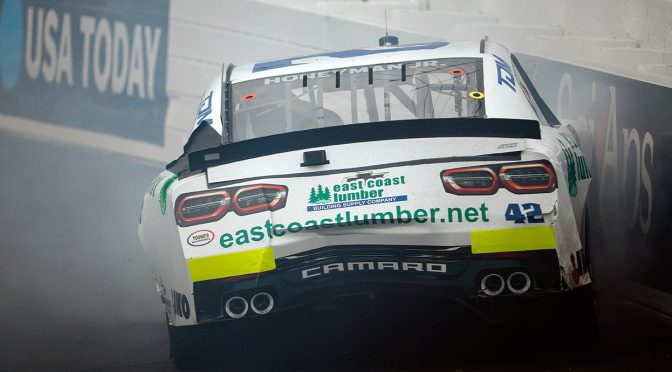
Following Christopher Bell’s victory in Saturday’s SciAps 200, No. 42 Young’s Motorsports crew member Dennis Powell has been suspended from the next Championship Series event, through and including Nashville Superspeedway.
The specific safety infraction states there was a violation of Sections 10.5.2.5.G: Loss or separation of an improperly installed rear axle from the vehicle. No. 42 driver Leland Honeyman wrecked in the race and finished 37th.
The Xfinity Series races at Nashville Superspeedway on Saturday in the Tennessee Lottery 250 (5 p.m. ET, USA Network, PRN Radio, SiriusXM NASCAR Radio).
On Tuesday, NASCAR announced the following penalty has been issued:
NASCAR Whelen Modified Tour driver Andy Seuss has been fined $500 and suspended from NASCAR until the fine is paid. He will remain on probation until December 31, 2024.
The rule infraction is as follows:
12-8.1 Member Conduct Guidelines
1. Heat of the moment actions or reactions, either on or off the race track.
E. 1. Actions by a NASCAR Member that NASCAR finds to be detrimental to stock car racing or NASCAR.
9-4.2.1 On-Track Incident Procedure
A 3 After being directed to exit the vehicle, the driver must immediately proceed to either the ambulance, other vehicle or as otherwise directed by safety personnel or a NASCAR Official.
5 At no time should a driver or crew member(s) approach another moving vehicle.
DAYTONA BEACH, Fla. (June 25, 2024) – As the summer heat cranks up, so does the action in the NASCAR Advance Auto Parts Weekly Series with a trio of historic Virginia tracks preparing to host the most prestigious series of Late Model Stock Car races of the year.
The Virginia Triple Crown rewards the driver with the best average finish over the contests at three famed short tracks – South Boston Speedway, Langley Speedway and Martinsville Speedway. The winner receives $7,000, while second place gets $2,000 and third earns $1,000.
The Thunder Road Harley-Davidson 200 at South Boston opens up the Virginia Triple Crown this weekend on Saturday, June 29, with the drivers ready to chase glory once again. Langley Speedway follows with the Hampton Heat 200 on Saturday, July 20. The Triple Crown champion will be decided at the ValleyStar Credit Union 300 at Martinsville Speedway on Saturday, Sept. 28.
In 2023, Bobby McCarty (South Boston) and Brendan “Butterbean” Queen (Langley) won the opening two races of the Virginia Triple Crown, and held the top two spots in the standings heading into the finale at Martinsville. But in the end, it was the driver who sat third in the standings entering the finale who walked away with the title. Trevor Ward had a patient late-race move to post the come-from-behind victory in both the race and the Triple Crown title chase at Martinsville.
“The triple crown is something I’ve always thought was a huge accomplishment,” said Ward. “Having the opportunity to chase the title last year was a great experience. Martinsville is something my family has dreamed of winning for many years and to have bene able to win that race is a feeling that will never be able to be replaced! Winning the triple crown was just that much better! We have put a lot of work into preparing for these races this year. It would mean so much to me and my team to put ‘two-time winner’ on the resume.”
However, another key driver from the 2023 season – reigning NASCAR Advance Auto Parts Weekly Series national champion and current points leader Connor Hall – wants to add his name to the consideration set and include the Triple Crown title in his list of achievements.
“To go into the triple crown as the 2023 National Champion means a ton,” said Hall. “It was an honor to have my name placed into that conversation. We’re working hard towards having a good showing in this year’s Triple Crown and we are excited to get going with the first event at South Boston this week!”
The 11th iteration of the Triple Crown is led off by South Boston, and it’s a major event for not only the competitors such as Hall, but the fans as well.
“This race is our showpiece and to kick off the prestigious Virginia Triple Crown here at South Boston is special,” said South Boston General Manager Brandon Brown. “We take a lot of pride in it being a crown jewel event not only here in the Commonwealth, but in all of grassroots racing. You can tell how much the Thunder Road Harley-Davidson 200 means just by talking to the drivers and fans. This race always delivers the action, and sets the tone for what’s to come at Langley and Martinsville.”
Ward is hoping to join four-time Virginia Triple Crown winner Peyton Sellers (2013, 2014, 2018, 2022) and two-time winner Lee Pulliam (2015, 2019) as the only the third multi-time winners of the Virginia Triple Crown. Other fan-favorite drivers, such as “Butterbean,” are chasing their first Triple Crown payday.
“The Triple Crown is the best of the best going at it for three crown jewel events,” said “Butterbean.” “Last year was a heartbreaker to be so close to winning it, but also, I was super proud to come out in second with all the competition involved. It gets harder and harder each year, and I’m sure that will be the case this year.”
It was “Butterbean” who won the middle race, the Hampton Heat 200, at Langley Speedway in 2023. He snapped an 11-race winning streak by eventual NASCAR Advance Auto Parts Weekly Series national champion Connor Hall, who had been undefeated at Langley until that point in the year.
“I am excited about entering the second decade and 11th season of the Virginia Triple Crown with Brandon Brown and his team at South Boston, and Clay Campbell at Martinsville Speedway,” said Langley Speedway Owner Bill Mullis. “When the three-track series started, we had high hopes. But to see where it is today is great, as with NASCAR’s support and the Advance Auto Parts Weekly Series, these races have been sought out by sponsors, race fans and drivers. Watching the best of the best at these tracks continues to showcase the ever-increasing popularity of Late Model Stock Car racing.”
The final race in the Virginia Triple Crown, Martinsville’s ValleyStar Credit Union 300, also offers up one of the most unique trophies in motorsports with the Grandfather Clock. Ward won the clock and the Triple Crown check while holding off Landon Huffman in a dramatic finish.
“Last year’s Virginia Triple Crown provided exactly the entertainment and on-track drama for the fans that makes this challenge so prestigious in the Late Model Stock Car community,” said Martinsville Speedway President Clay Campbell. “We share in the passion that our colleagues at South Boston and Langley put into this series of three races, and take great pride in hosting a fantastic finale and crowning the winner in the ValleyStar Credit Union 300 at Martinsville Speedway each September.”
The three races at South Boston on June 29, Langley on July 20, and Martinsville on September 28 will be streamed live on FloRacing.
Tickets for the opener of the Virginia Triple Crown at South Boston may be purchased at southbostonspeedway.com. Tickets for the second leg of the series at Langley are available at langley-speedway.com. For tickets to the finale at Martinsville, fans can go to martinsvillespeedway.com.
Fans can stay connected to NASCAR Advance Auto Parts Weekly Series action, including Virginia Late Model Triple Crown updates, at nascar.com/regional.
LOUDON, N.H. — Kyle Larson saw his opening and wasted no time at all in giving the business to his friendly rival Christopher Bell last Friday at New Hampshire Motor Speedway.
Bell became an instant, viral sensation on the stock-car racing side of X, formerly known as Twitter, with his accidental press-conference-reveal of soon-to-be teammate Chase Briscoe’s news that he’d be taking over the No. 19 Joe Gibbs Racing Toyota in 2025. Larson joined in by whipping his phone out immediately and dropping one of the most memorable social media posts (with a hammer of a hashtag) in years.
To recap, during Bell’s Friday media session, he slipped and mentioned that a “Chase” would be in the 19 car next year after the incumbent Martin Truex Jr. retires from full-time racing at the end of 2024. Already suspected of being the top candidate to take over the ride heading into the weekend, Bell’s inadvertent admission essentially confirmed Briscoe’s 2025 status before the team itself announced the news, which it officially did Tuesday.
“I was like, really proud of it,” Larson said Saturday at NHMS of his post. “I was typing it so fast. I couldn’t wait to get it out. I texted Bell and Briscoe, I think before I even sent that tweet. I was (expletive) dying laughing because that was, I mean, that’s the greatest way to announce somebody coming to a team. I’m sure PR departments (were) planning this extravagant, very professional thing, but they got way more clicks for that than once they finally (did) announce it.”
All mainstays of the dirt-racing ranks, the trio of Bell, Briscoe and Larson are all quite familiar with each other, and bringing the Indiana native into the fold to pair with Bell, Ty Gibbs and Denny Hamlin on a championship-capable organization should provide plenty of battles between them for years to come.
It’s a bit of a revamped, younger lineup for JGR than we’ve seen in years; the team as recently as 2016 featured a lineup of Hamlin, Kyle Busch, Carl Edwards and Matt Kenseth — at the time, four of the most tenured drivers in the sport and all current or future NASCAR Hall of Famers. Leading into next season, JGR’s three fresh-ish faces will have fewer than 400 Cup Series starts combined.
It’s not too dissimilar of a transformation that Hendrick Motorsports underwent over the past decade, seeing its own Hall of Famers Jeff Gordon, Dale Earnhardt Jr. and Jimmie Johnson all step out of the car in 2015, ’17 and ’20, respectively. The team has since invested in younger — and still extremely productive — talent, solidifying its core with Larson, Alex Bowman, William Byron and, of course, its own “Chase” — Elliott.
It’s not hard to see each of these legacy four-car stables competing annually as the 1A and 1B elite organizations in the Cup Series over the next decade, perhaps trading the Bill France Cup from shop to shop each year as well.
“Yeah, yeah, yeah, no, it is (a solid, young foundation for the future at JGR). And then you got one old guy that’s probably leaving in a few years, so yeah,” said Larson, playfully referring to the 43-year-old Hamlin. “I think they have a good lineup for sure. I think, looking at Hendrick Motorsports’ lineup, though, I think we have by far the strongest lineup for (the future). We’re all, you know, in our early 30s or late 20s. Mid 20s, for William. And yeah, lots of wins and championships and all that. So yeah, it’s cool to see where the sport’s at right now.”
HUNTERSVILLE, N.C. — “The opportunity of a lifetime” is now at Chase Briscoe’s fingertips.
With help from his new teammate Christopher Bell, Briscoe was officially introduced Tuesday as Joe Gibbs Racing’s newest driver, taking the reins of the No. 19 Toyota Camry on a multiyear deal to start the 2025 NASCAR Cup Series season.
Briscoe, who has spent the past four seasons driving the No. 14 Ford at Stewart-Haas Racing, will now step into a top-tier car at a powerhouse organization, replacing the retiring 2017 Cup champion Martin Truex Jr. at season’s end.
“I think it’s the worst kept secret in the sport for a while,” Briscoe laughed, flanked to his right by Gibbs and crew chief James Small. “Christopher, I guess, just couldn’t hold it any longer.”
Indeed, longtime friend and the most recent Cup Series winner Bell tipped everyone’s hand Friday at New Hampshire when he let Briscoe’s first name slip in response to a press conference question. To finish the job, JGR employed Bell as Tuesday’s conference moderator in the organization’s auditorium, officially welcoming the Indiana native to the JGR stable.
“Since I had the mistake of starting this on Friday, I guess I’ll get to finish it out,” Bell said. “… It is my honor to finally announce the full name of our driver next year, Chase Briscoe, in the No. 19 car.”
The transition to an elite seat in the NASCAR Cup Series struck Briscoe lightning fast. Stewart-Haas Racing announced on May 28 that it would close operations at the conclusion of 2024, placing all four of its current drivers on the free-agent market. Upon receiving the news at SHR, Briscoe wasted no time in searching for his next opportunity.
“Literally in the conference room, I just started texting all the team presidents I knew, and Dave (Alpern, JGR president) was one of them,” Briscoe said. “And just said, ‘Hey, Stewart-Haas let us know today that we’re kind of free to do whatever we want. Would love the opportunity just to talk to you guys if there’s any potential there.’ And I think that SHR announcement got done Tuesday and Wednesday night, Dave had called me and said, ‘Hey, would you like to go to breakfast Thursday?’ And I think I was signed by (Wednesday). So it was a super quick thing. It’s like four or five days.”
The whirlwind has left Briscoe unable to truly process the magnitude of his latest opportunity yet.
“It did happen crazy fast,” he said. “I say that it started that Thursday when I went to breakfast, but like I didn’t hear from him until Saturday really. And that’s when like, Saturday, Coach (Gibbs) called me for five minutes. Sunday, I finally met with Coach, and then he called me Sunday night, said let’s meet Monday morning.
“Monday morning, I sit there, and 48 hours later had a contract, and he told me that I was going to be in the car another 12 hours after that. So yeah, I don’t know if I really had time to process it all.”
Three hours after signing his contract, Briscoe got another call from Gibbs at 7 p.m. that Wednesday evening, asking about his morning plans. Suddenly, a 6 a.m. flight was on Briscoe’s calendar to fly to Missouri to meet Johnny Morris, the founder, owner and CEO of Bass Pro Shops. The quick out-and-back trip returned Briscoe to North Carolina 30 minutes before his SHR flight to Sonoma Raceway, Briscoe said.
“They snuck me around the back so nobody saw me getting on Joe’s plane and getting off Joe’s plane,” he added. “Yeah, like this whole process has happened unbelievably fast for sure.”
Al Wheeler | Joe Gibbs Racing
At the top of the sport’s echelon, an opening at Joe Gibbs Racing immediately became the most coveted landing spot in NASCAR. To fill it, Gibbs himself focused on two things: character and winning. Briscoe is a one-time winner in Cup with 11 Xfinity wins and two Craftsman Truck Series victories.
“The most important thing we (have) is our people and the people that you have on your team,” Gibbs said. “And so for us really here, it always starts with character. You’re always looking at what kind of a person you’re getting. …
“But also, we have to win. So we came down to the end. We think Chase can win. And so that’s where we are and it’s a thrill for us to have him coming on board.”
With the backing of Bass Pro Shops built into his program, funding was not a required piece of Briscoe’s puzzle in coordinating his JGR ride.
“Out of all the teams I met with, Joe’s is the only team that never said, ‘What can you bring?’” Briscoe said. “They just wanted me for me. That meant a lot to me personally, just that they felt that strongly about me in the car. … Joe was the one that literally called me two, three times a day and would reassure how bad that they wanted me in the car. That just made a difference for me personally because it honestly it helped my confidence even just knowing that he believed in me that much, and I haven’t even driven a race over here yet.”
For Gibbs, that stems from a simple need: For his company to succeed, it must win. And by winning, sponsors will continue to happily support the team’s efforts.
“All our people here work super hard,” Gibbs told NASCAR.com. “We don’t have outside income or anything, so this has to go based on its merits. We’ve got to make it go. I tell people we go to work every day knowing there’s no alternative. This thing’s gotta go. We gotta make it work.
“I do think, you know, when you have the flexibility of saying, ‘Alright, what’s first?’ First is character and can we win. And other things come after that. So we’re fortunate.”
Its lack of reliance on Briscoe’s funding also factored into his perception of the team’s culture, a significant part of Briscoe’s priorities as he evaluated where his next steps would lead him.
“I definitely felt like from a culture standpoint, it was a great fit and felt like what I believe in, how I try to go about everything, it was a perfect fit,” he said.
Gibbs also pointed to Toyota Racing Development for its part in Briscoe’s signing, noting the team’s need for the manufacturer to believe in its new hire’s ability too. That was affirmed in a statement from TRD USA president David Wilson Tuesday afternoon.
“We are very excited to welcome Chase Briscoe to the Toyota family next season,” Wilson said in a statement. “Chase’s proven high character and racing acumen will fit perfectly amongst the talented drivers in the Joe Gibbs Racing and Toyota camps. We believe in Chase and look forward to all of the on-track success he will achieve aboard a Toyota Camry XSE.”
Though the contract is signed and the ink has dried, Briscoe is not under any false premises. Once he gets behind the wheel of the No. 19 Toyota to begin the 2025 campaign, expectations are to find Victory Lane.
“I have to win. Like there’s no excuse not to win,” Briscoe said. “You have to make the playoffs. If you don’t make the playoffs, then there’s no reason I should be driving this race car. So yeah, I definitely think that you have to win races. You have to be running up front consistently, and I think they feel like I’m capable of doing that. But I have to show that, so hopefully that’s what I can do.”
On Sunday, Briscoe finished second in Sunday’s race at New Hampshire Motor Speedway behind Bell. Briscoe currently sits 16th in the regular-season points standings but 18th in the provisional playoff grid, 25 points beneath the elimination line to advance to the playoffs, which begin on Sept. 8 at Atlanta Motor Speedway.
Since the Triple Crown’s inception in 2012, many talented Late Model Stock competitors have battled across a grueling three-race stretch consisting of South Boston, Langley Speedway and Martinsville Speedway for an opportunity at a title. The list of champions includes Peyton Sellers, Lee Pulliam, Timothy Peters and more.
Every Virginia Triple Crown campaign kicks off at South Boston with the Thunder Road Harley-Davidson 200. A fast, 0.4-mile oval nestled in the heart of South Boston, Virginia, the facility has long been a proving ground for competitors seeking to build a successful short-track career or to find a path to NASCAR’s top ranks.
Fireworks will be prevalent both on and off track Saturday evening as a healthy contingent of drivers descend upon South Boston. A victory in the Thunder Road Harley-Davidson 200 could be paramount toward carrying momentum into the final leg of the championship at Martinsville for the prestigious ValleyStar Credit Union 300.
Below is everything to know about Saturday’s Thunder Road Harley-Davidson 200 at South Boston.
Saturday’s Thunder Road Harley-Davidson 200 at South Boston Speedway will be the 18th running of the prestigious race. (Photo: Victor Newman/South Boston Speedway)
What TV channel is the Thunder Road Harley-Davidson 200 at South Boston Speedway on?
All the on-track action for the Thunder Road Harley-Davidson 200 can be viewed live on FloRacing, the official streaming home for all NASCAR Regional properties.
The event will not be shown on a traditional television network.
Below is the complete schedule for FloRacing’s coverage of the 2024 Thunder Road Harley-Davidson 200.
This year’s Thunder Road Harley-Davidson 200 will take place Saturday, June 29.
Three support divisions encompass the evening’s schedule of events aside from Late Model Stocks. The Limited Sportsman, Pure Stock and Hornet classes open the festivities before the night concludes with the 200-lap Late Model Stock feature.
Below is the complete race-day schedule at South Boston Speedway.
(All times ET)
Time
Event
10 a.m.
Registration/Pit Gate/Tire Building/Frontstretch Spectator Gate/Tech Open
Green Flag (Late Model Stock LCQ: 20 Laps/25 Minutes … Limited Sportsman: 40 Laps/45 Minutes … Pure Stock: 20 Laps/15 Minutes … Hornets: 20 Laps/15 Minutes … Thunder Road Harley-Davidson 200 (200 Laps)
There will be plenty of fireworks as drivers look to pick up an important victory at South Boston Speedway to kick off the Virginia Triple Crown. (Photo: Victor Newman/South Boston Speedway)
Entry list
More than 30 cars are expected to participate in Saturday’s Thunder Road Harley-Davidson 200.
Leading the talented group of competitors is Bobby McCarty, the defending winner of the event. McCarty will be seeking a more orthodox path to Victory Lane this year, as he inherited last year’s victory after the original winner Carson Kvapil and second-place finisher Landon Huffman were disqualified for failing post-race inspection.
Joining McCarty on the entry list is the most recent NASCAR Advance Auto Parts Weekly Series champion Connor Hall. Currently in the middle of another standout season that includes 16 victories in 20 starts, Hall is piloting Nelson Motorsports’ No. 22 Late Model with the goal of adding a Thunder Road Harley-Davidson 200 win to his growing resume.
Brenden “Butterbean” Queen and Kaden Honeycutt will be two of the busiest drivers in the South Boston garage area this weekend. Both are participating in Friday’s NASCAR Craftsman Truck Series Rackley Roofing 200 at Nashville Superspeedway before heading to South Boston for Saturday’s 200-lap Late Model Stock feature.
Trevor Ward, the most recent Virginia Triple Crown champion, is also on the entry list for the Thunder Road Harley-Davidson 200. After finishing third at South Boston last year, Ward capped off the impressive three-race stretch by securing his maiden victory in the ValleyStar Credit Union 300.
Other names set to compete in the Thunder Road Harley-Davidson 200 include defending South Boston track champion Carter Langley, along with Peyton Sellers, Timothy Peters, Landon Pembelton, Deac McCaskill and Isabella Robusto, among many others.
Below is the current entry list for Saturday’s Thunder Road Harley-Davidson 200.
Car No.
Driver
00
Chase Burrow
0
Landon Pembelton
1
Andrew Grady
01
Camden Gullie
01
G.R. Waldrop
2
Brandon Pierce
2
Matt Waltz
03
Brenden Queen
4
Kyle Dudley
5
Carter Langley
05
Mason Bailey
6
Bobby McCarty
08
Deac McCaskill
12
Austin Thaxton
15
Logan Clark
17
Jason Myers
17
Kaden Honeycutt
17
Stacy Puryear
19
Jessica Cann
22
Connor Hall
22
Jordan Pickrel
23
Kade Brown
25
Jacob Borst
26
Peyton Sellers
40
Brian Thomas
50
Raymond Pittman
51
Timothy Peters
55
Isabella Robusto
77
Blake Stallings
77
Trevor Ward
87
Mike Looney
87
Tate Fogleman
95
Sam Yarbrough
Thunder Road Harley-Davidson 200 history, winners
Throughout its history, the Thunder Road Harley-Davidson 200 has primarily been dominated from drivers born outside of Virginia.
Lee Pulliam, who hails from Semora, North Carolina, was the most dominant of this group. A four-time NASCAR Advance Auto Parts Weekly Series national champion, Pulliam was unstoppable in the Thunder Road Harley-Davidson 200 during the 2010s, as he won the event six years in a row from 2011-16.
Virginia natives have tried to keep the Thunder Road Harley-Davidson 200 trophy inside the commonwealth over the past several years. Despite this, the event’s past three winners in Bobby McCarty and Corey Heim were born in North Carolina and Georgia, respectively.
Three past winners are on the entry list for this year’s Thunder Road-Harley Davidson 200. Along with McCarty and Peyton Sellers, two-time winner Deac McCaskill makes his return to the prestigious event after last competing in 2014.
Below is the complete list of winners in the Thunder Road Harley-Davidson 200: