Editor’s Note: This is Part II of a two-part series detailing the No. 7 JR Motorsports team in 2026. Read Part I here. 

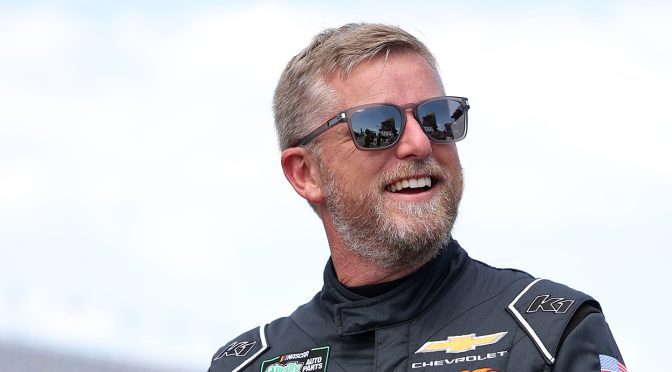
When Justin Allgaier learned The Chase was back, his eyes lit up, and that was before he began wondering how many championships he might have won over the past decade.

That thought ended quickly, however, when Allgaier and the No. 7 team started the 2026 campaign off with a scorching start, winning three of the opening seven races. By the 21st race of the season, he had already won a career-high six times.

RELATED: O’Reilly Series standings | Darlington weekend schedule

“I’ve probably enjoyed myself the most this year because I’m in a better place mentally than I’ve ever been,” Allgaier told NASCAR.com. “It doesn’t necessarily make it any better. There are things that I’m experiencing through some of those years that were cooler moments. But I would say the high moments this year have been more consistent.”

The No. 7 team entered the season with a sizeable change, as Andrew Overstreet took over as crew chief with Jim Pohlman moving to the Cup Series with Richard Childress Racing. Allgaier vowed to himself that this would be his final season, always having the goal of departing NASCAR at 40 years old. He even purchased a home in his native Illinois.

Allgaier’s parents, Mike and Dorothy, don’t attend as many races as they used to. Eventually, the 2024 series champion will take over the family business – D&M Speed Shop. But those plans have been put on hold as he’s amid the best season of his career and JR Motorsports wants him back. Nothing has been signed, though.

“When JRM asked if I wanted to say and continue doing this, I would say what’s weird about it is, my reason for telling them I would consider it is the people around me,” Allgaier added. “When it came out that I was potentially going to retire, which wasn’t potential to me in my mind, it was pretty made up. There are so many people in my inner circle, but also my outer circle, like fans, folks from our partners that we have on race cars. A lot of people that wanted me to stay and continue doing it. That’s probably more so what I’m doing this for.

“I’ve accomplished everything that I could have ever imagined in this sport. I don’t ever want to get stale and show up just to show up. This isn’t about money. For me, it’s about making the most for the people that are around me and relying on that circle.”

With that uncertainty out of the way, Allgaier is focused on the task at hand. He enters The Chase with a 25-point buffer over JRM teammate Carson Kvapil, who has won two of the last three O’Reilly Auto Parts Series races.

But Allgaier is the favorite for the championship, banking wins at seven of the nine tracks in The Chase. Of the seven venues in the nine-race stretch that the series has already competed at this year, the No. 7 team won three of them. He locked up the No. 1 seed for The Chase with three races remaining in the regular season and ended the opening 24 events 229 markers clear of second.

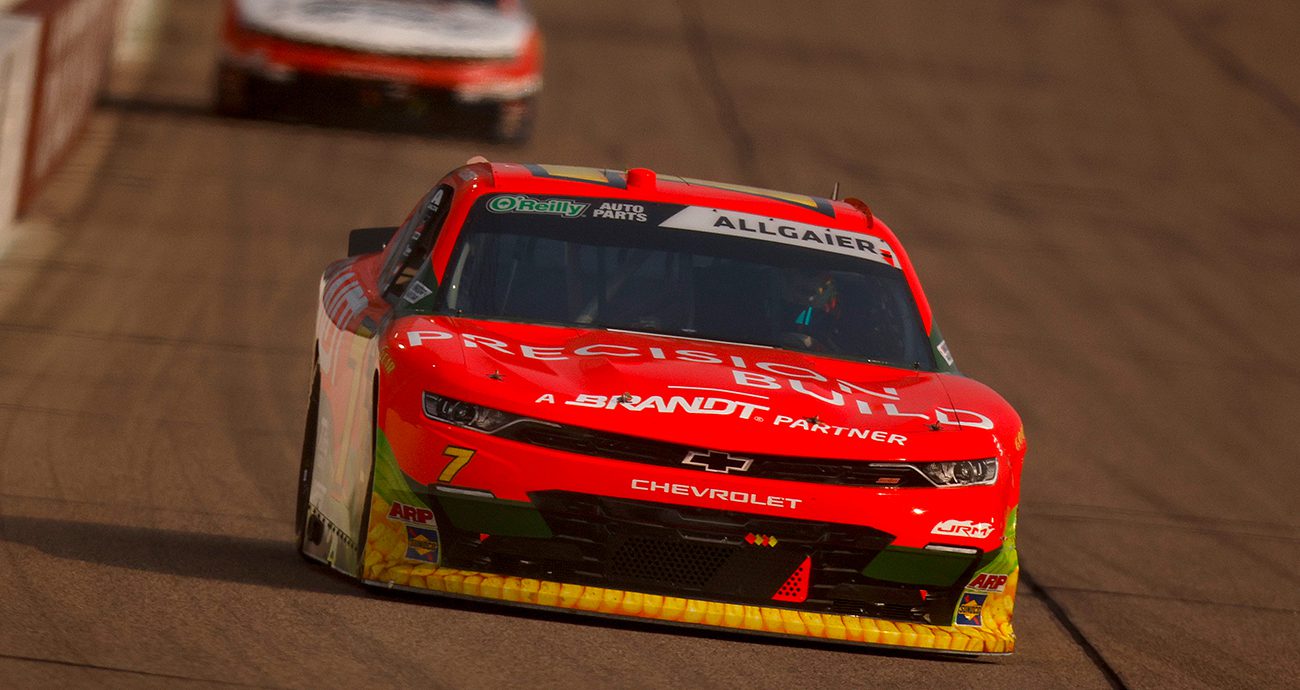
Justin Allgaier in the O'Reilly Series at Iowa
Sean Gardner | Getty Images

“There’s not a race track in The Chase that doesn’t fit our wheelhouse,” Allgaier stated. “There’s not a track that I don’t think we can’t go dominate at. I know that sounds a little bit egotistical, but I feel like with the cars, the team that we have this year, I have not shown up to a track this year other than the road courses that I haven’t felt like we could go out and be the dominant car.”

Under the previous playoff format, Allgaier saw several opportunities at a championship slip away. But with the title now determined by points accumulated over nine races, his years of experience could give him an advantage.

“In most cases, he’s the guy that’s going to get the points and be smart about how he runs his races and maximizes his days. This series doesn’t have a ton of veterans that are like that,” Dale Earnhardt Jr. said in June after Allgaier was victorious at Pocono Raceway. “There are some young kids that are fast, crazy good, very talented, going to be successful and win tons of races. But I think Justin has an advantage because he’s got one in the bank.

“When you have a championship in your pocket, it makes you more dangerous. You are more settled, a little calmer, a little less irrational on the race track with restarts and things like that. I like where he is with his career and all his accomplishments and success that he’s had.”

MORE: Justin Allgaier driver page

Not a single one of the nine races scare Allgaier. He’s had a mixed relationship with superspeedway racing, but the JRM cars have been elite in the draft this season, with the No. 7 Chevrolet earning three finishes of sixth or better, including a win at EchoPark Speedway. He isn’t overlooking his competition, however, as there are multiple obstacles in the field.

“You could throw a dart anywhere on the board at anybody inside the top 14 right now and could be a massive threat, could win any of these races and could be a threat anywhere we go,” Allgaier noted. “There’s nobody I’m counting out. There are plenty of guys who have raw speed and they are going to go out and be successful.

“When it’s all said and done, we have to rely on what we do. I know this is going to sound odd; I’m not racing anybody else.”

There is a target on Allgaier’s back, though. With the longevity of the No. 7 team, he knows that he’s the standard of the series over the last decade. Everyone will be fighting to upset the veteran racer.

“I think with the way the regular season has gone, I think there are other teams that have used us as a benchmark,” Allgaier said. “There are plenty of guys that can get the job done. I just feel like we’ve done a better job of doing it over and over again.”

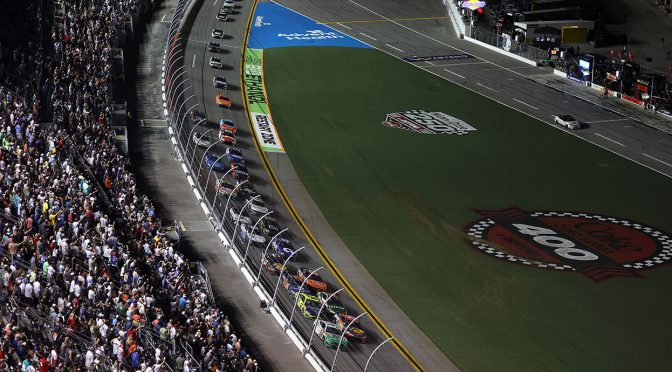
A red flag would have helped alleviate the lengthy caution that sent the NASCAR Cup Series race at Daytona International Speedway into overtime last Saturday.

The yellow flag for the Turn 4 crash involving Carson Hocevar and Erik Jones lasted nine laps. That went four laps past the scheduled distance and left many teams concerned about having enough fuel to reach the finish after circling for so long under the yellow flag.

RELATED: How 2026 Chase works | Notable drivers who missed Chase

“Hindsight being 20/20, we wish we had red-flagged it,” NASCAR vice president of racing communications Mike Forde said on the latest episode of the “Hauler Talk” podcast. “Our goal is always to get back to green as soon as possible. I think we felt that we would be able to clean it up faster than we did, and it really was the worst-case scenario.”

Forde said the wreck left oil against the outside wall on Daytona’s 31-degree banking, which made it unreachable with the vacuum truck that NASCAR normally uses for a cleanup. The process took longer with jet driers blowing off the Speedy Dry compound for absorbing fluids from the surface.

“Another problem we ran into is when you don’t red-flag it, the cars are still going by at speed,” Forde said. “So when you blow it down, the cars come back under caution, and they’re kind of kicking it back up and almost undoing the work that was already done. So that added some time as well.

“We had to lay down two layers of the Speedy Dry. The first one is just so that the blowers can get the traction to get up in that area, and then (a second layer) to actually clean up that area. So a lot of learnings for sure. It definitely took longer than we would have liked.”

Forde said a better solution would have been to apply the Speedy Dry by hand while the race was stopped.

“That was a lengthy topic of conversation in the debrief meetings because we want to be better, and that was one where we wish we could have that back,” Forde said. “We would have red-flagged it and done it better.”

Other topics covered by Forde and senior director of racing communications Amanda Ellis during the 68th episode of “Hauler Talk,” which explores competition issues in NASCAR:

— An evaluation of the new superspeedway rules package at Daytona and what’s ahead for its use at Talladega Superspeedway.

— What NASCAR safety officials learned in the aftermath of a heavy collision between the cars of Daniel Dye and Kyle Larson.

— The backstory of the “Does Everybody Hate Carson Hocevar?” release from NASCAR Communications.

Nate Ryan has written about NASCAR since 1996 while working at the San Bernardino Sun, Richmond Times-Dispatch, USA TODAY and for the past 10 years at NBC Sports Digital. He is a contributor to the “Hauler Talk” show on the NASCAR Podcast Network. He has also covered various other motorsports, including the IndyCar and IMSA series.

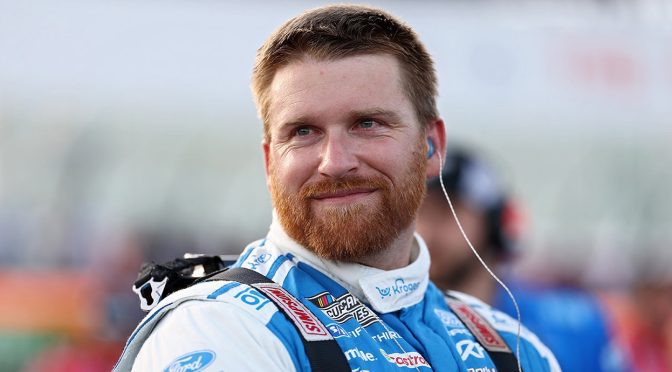
Brad Keselowski and Ryan Preece showed up early for their RFK Racing team’s scheduled press conference inside Daytona International Speedway over the weekend. After taking their seats on the podium to await their teammate Chris Buescher’s arrival — they jokingly made a $1 bet with one another as to the exact minute Buescher would enter the room.

And then, as if on cue, the door opened and Buescher quietly and unhurriedly walked in, taking his place on stage alongside the RFK pair with a minute to spare before their interview session started. Keselowski had taken the “under” on the timing and seemed to win the wager. Buescher just smiled.

Right on time. Ready to go.

“That’s just the Texas in him,” Preece grinned and said of his teammate. “He’s so laid back.”

That measured pace and even-tempered style are indicative of the 33-year-old Texan’s disposition, even if it seems at odds with someone enjoying success in a profession that rewards split-second decisions and controlled aggression.

Buescher’s perpetually modest “nothing to see here” demeanor is particularly intriguing, considering there actually is a whole lot to see here.

Two hours after that team press conference, Buescher put his No. 17 RFK Ford Mustang on the front row for the Coke Zero Sugar 400 regular-season finale — his best start ever at the sport’s most famous speedway, where he won the 2023 summer race in a dramatic overtime triumph.

Buescher is ranked 10th among the 16 championship hopefuls in the re-seeded Chase standings as the series heads to Darlington Raceway for Sunday’s Chase opener, the Cook Out Southern 500 (5 p.m. ET, USA Network, HBO Max, MRN Radio, SiriusXM NASCAR Radio).

RELATED: Darlington weekend schedule | Cup Series entry list

For the third time in his 11-year career at this level, Buescher will have the opportunity to add a NASCAR Cup Series title to his 2015 NASCAR O’Reilly Auto Parts Series and 2012 ARCA Menards Series championship work.

It’s a quietly impressive resume — so quiet that many don’t realize how accomplished Buescher really is, and how far he has come based solely on talent and potential. He’s had to rely on skill and the willpower to succeed instead of family money, a famous pedigree or longtime sponsor pushing him through the ranks.

Hard work, exceptional talent and a crucial boost earned from some of racing’s most respected team owners along the way helped land his opportunity. What he did with that illustrates both his on-track ability and the amazing determination it took him to reach NASCAR’s premier level.

“We’re a little bit understated and that’s OK. That’s frequently been the case for me,’’ Buescher said. “I’ve been in an underdog situation a lot growing up and I’m kinda used to flying under the radar. We got results, won a lot of races and championships and didn’t have to scream from the mountaintops to prove it.”

Of the unlikely and often hard-knocks way he earned a spot in NASCAR’s big time, Buescher insists, “It helped me in a lot of ways; one was in race-track demeanor due simply to the fact we scratched and clawed through it a lot of years and for a long time I worked on my own race cars.’’

It’s also indicative of Buescher’s upbringing in football-crazed Prosper, Texas — about a 40-minute drive north of Dallas and with a population of only about 10,000 when Buescher was a youngster.

Unlike most of Prosper’s residents, Friday night high school football games weren’t a part of Buescher’s routine. And in fact, he can’t even recall going to a single game. The town has produced multiple Major League Baseball and National Football League stars. But Buescher’s interests shone under another set of equally bright lights: at the race track.

His home state’s passion for football aside, Buescher recalls hosting a Super Bowl party in early 2016 after purchasing his first home in the wake of that first NASCAR championship. Buescher smiled and said it may well have been the first NFL game he honestly watched from kickoff to the final whistle.

“The pathway there in Texas is definitely better paved for football,” Buescher conceded. “But my dad’s a hot-rodder, so I grew up around cars, working in the garage, you know, making sure I held the flashlight right for him. That was what our weekends when I was a kid looked like. We’d turn the NASCAR race on and go inside and watch. Then when a caution flag came out, we’d go out in the garage and work on the car for a little while more. That was what we did when we weren’t racing. But we were mostly on the run, racing a lot.”

Pressed for more details about his early life away from the track, the famously private Buescher shares that before he was old enough to drive legally, he was “all in” as a skateboarder — complete with the bowl haircut, always in a pair of Vans shoes that the style required.

“It was a phase,’’ he beamed. “But I had a good time. Growing up, that’s how I got around town was skateboarding. My best friend lived on basically the other city-limit line, so like a five- or six-mile skateboard ride over. Not smooth.”

Not smooth. But he got there, and in many ways it also describes Buescher’s more unorthodox arrival in NASCAR’s premier series.

He succeeded on natural talent combined with a fundamental willingness to learn and work hard. It drew attention, and he was able to capitalize on a shot when some pivotal people in the sport recognized his uncommon abilities and work ethic and took great steps to elevate that potential.

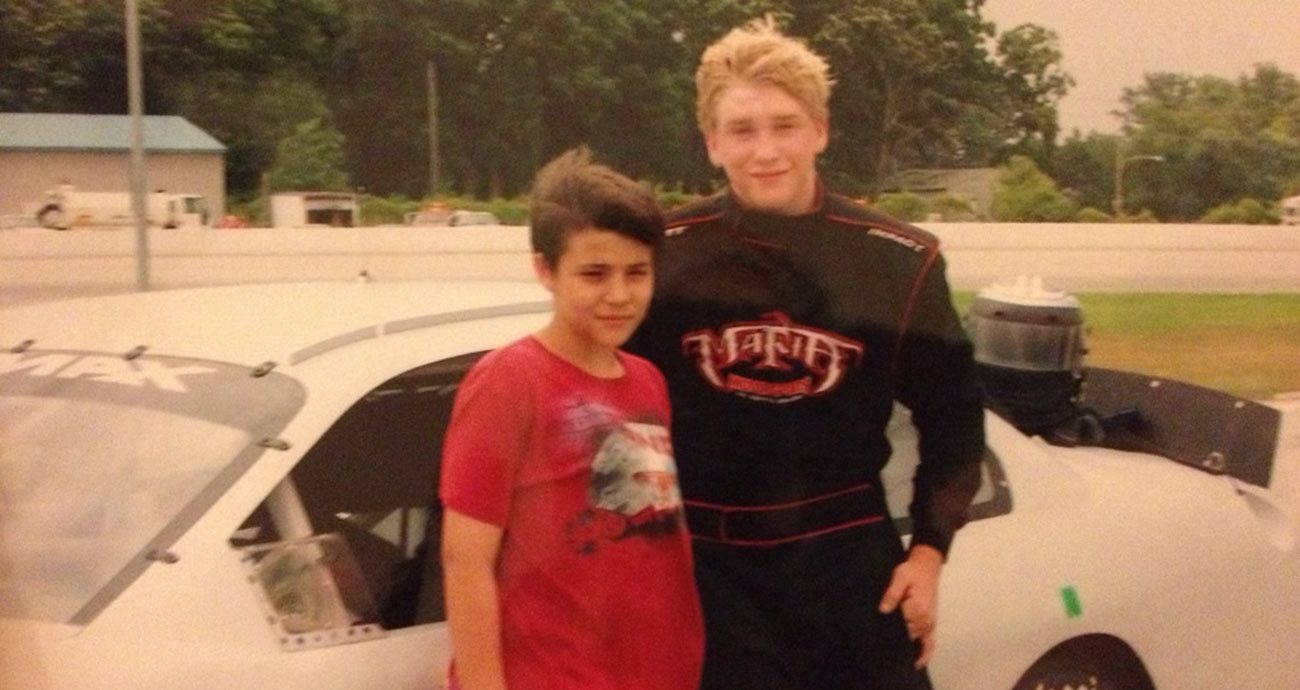
Buescher’s skill as a young teenager competing for his family-owned team in Legend Car races at Texas Motor Speedway and around the South was noticed early on by a pair of racing’s longtime version of talent scouts: Ken Ragan and Gary Roulo. Both were so impressed with Buescher that over the course of the next few years, they would even invite a teenaged Buescher to move in with them as he came up the ranks — living at times with the Ragan family in North Carolina and the Roulo family in Chicago — putting the young talent closer to opportunity.

Chris Buescher, then 15, at his first ARCA Menards Series test in 2008 with the Roulo Bros. team at Illiana Motor Speedway, with 12-year-old tire specialist David Roulo
Chris Buescher, then 15, at his first ARCA test in 2008 with the Roulo Bros. team at Illiana Motor Speedway, with 12-year-old tire specialist David Roulo | Roulo Bros. Racing

Former NASCAR Cup Series and O’Reilly Series standout driver David Ragan remembers well when his father was helping guide the early portion of Buescher’s career and how it all helped shape the kind of person Buescher is now.

“The first thing when I think of Chris, I think of the humble, hard-working, kind of laid-back, old-school race car driver,’’ Ragan said. “He doesn’t get into the flashy, self-promoting era that we kind of live in now, where a lot of young guys and girls have to push hard to promote themselves. He’s a great race car driver and I think he’s one of the more under-the-radar guys from the outside,’’ Ragan said. “He’s a champion and a lot of people forget that [2015 O’Reilly Auto Parts Series] championship.

“He doesn’t tear up a lot of race cars and doesn’t have a lot of controversy around him. He’s the kind of guy that any team owner would love to have. We’re proud of what he’s grown and become. Certainly, my days at RFK and still working with Ford, we pull for him every weekend.”

Buescher also draws high praise from Roulo, whose renowned family-owned Roulo Brothers Racing team fielded ASA and ARCA Menards Series cars over decades for a long list of successful racers, from Butch Miller, Dick Trickle, Ken Schrader, David Green and Joe Ruttman to NASCAR Hall of Famers Mark Martin and Darrell Waltrip.

“Chris was focused, coachable but couldn’t run eight or nine laps without lap times falling off because he just wasn’t physically mature yet, just a small, skinny kid in the beginning,’’ Roulo recollected of working with a teenage Buescher.

He credits Ken Ragan for encouraging Buescher to hit the YMCA for daily workouts and still gets a kick recalling Buescher’s perpetually shy personality — noting that while dining out, restaurant servers would ask him to repeat his food order because he was so soft-spoken.

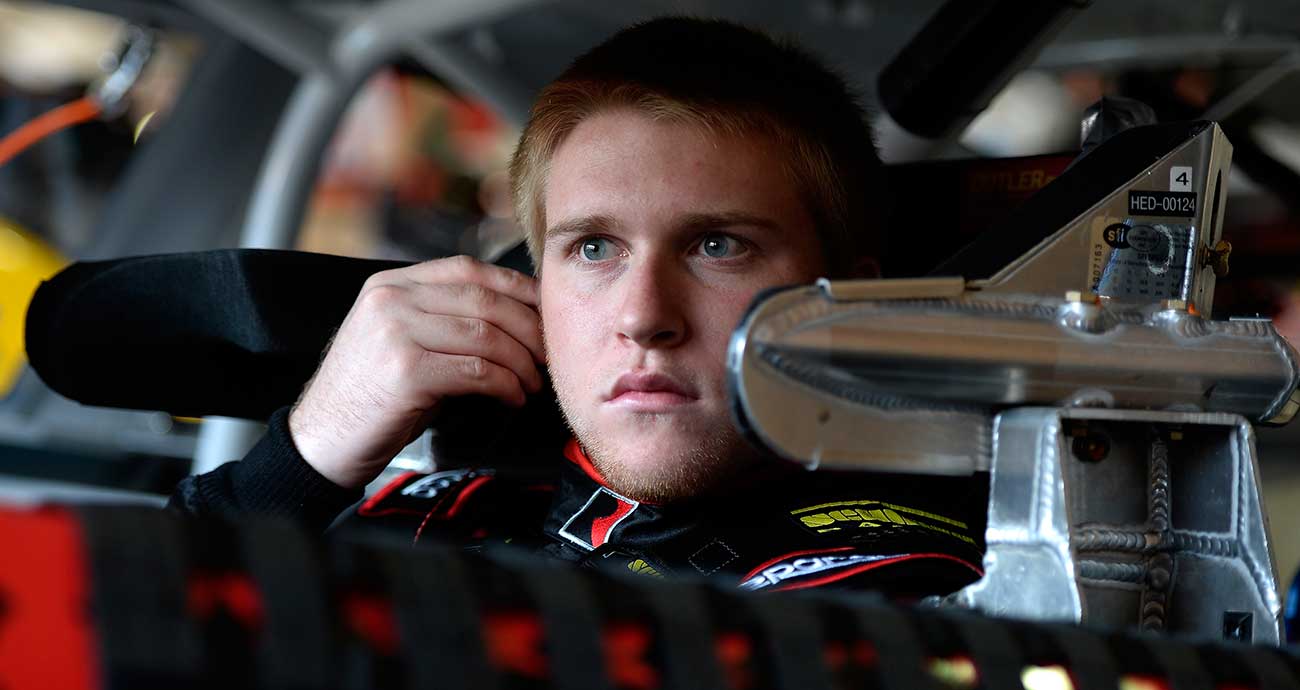
Chris Buescher suits up in the garage area at Auto Club Speedway
Kevork Djansezian | Getty Images

Buescher’s loudest statements were instead made behind the wheel. As with Ragan, Roulo was immediately impressed with Buescher enough to help secure him some starts and strengthen his relationship with Jack Roush, with whom he had a long history of helping develop drivers.

“Jack Roush had always told us, ‘You find the talent, and we’ll find a way to make it work,’ ” Roulo said, “and here we had the opportunity with a 15-year-old kid who’d never been in a big car before — only Legend Car racing prior to us. He didn’t have any bad habits. He was coachable, and he had talent. It was an opportunity to share everything we’d learned from this long list of established, winning race-car drivers. So it was an opportunity to translate that to him and go through different scenarios.’’

The results came quickly. Although Roulo had never fielded a full-season ARCA car with the same driver, he did so in 2011 with an 18-year-old Buescher. The team won three times and finished top five in an amazing 14 of the 19 races, finishing runner-up in the championship to Ty Dillon.

The next season, he won four times and had 16 top 10s, impressively claiming the 2012 ARCA title over veteran and multi-time series champ Frank Kimmel.

“I remember telling him even in those seasons that this is week by week,” Roulo said. “If we get tore up really bad or you do something stupid, we will have to park for a while. So every week, it was focus on taking care of equipment, taking care of tires, not wrecking race cars, not wrecking people on the race track, not getting involved in stupid stuff and being there at the end.

“That was part of the upbringing.”

And Buescher has learned well. After besting that crowded field of established veterans and talented young drivers in ARCA, he went on to do the same in what’s now called NASCAR’s O’Reilly Auto Parts Series with a huge opportunity driving for the Roush championship team. He scored his first top 10 in only his third start for Roush in a brief seven-race audition of sorts as a 20-year-old in 2013.

He answered that promise the next year in his first full-time season for Roush — fittingly hoisting his first O’Reilly Auto Parts Series trophy at the Mid-Ohio Sports Car Course and besting a field that included road-course specialists such as Alex Tagliani, a former Indianapolis 500 pole-sitter, and then sports-car regular Justin Marks, now a team owner with Trackhouse in the NASCAR Cup Series.

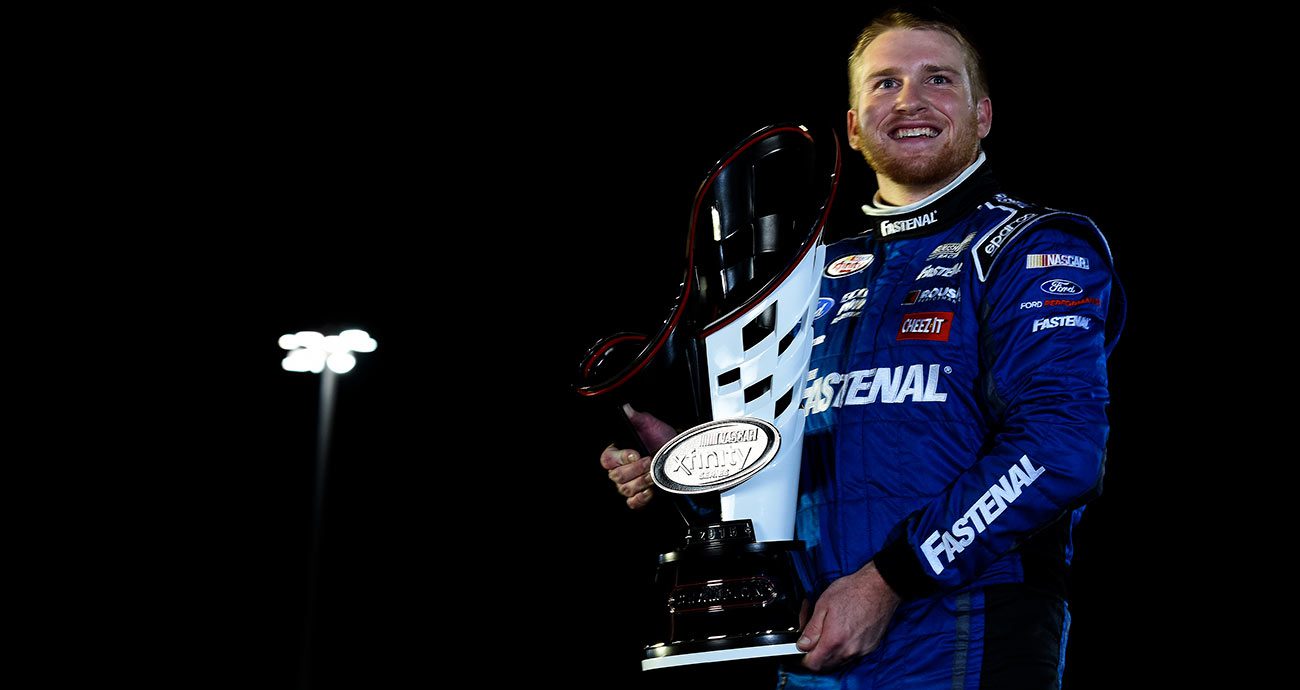
The next year, Buescher claimed the 2015 series championship over the likes of future NASCAR Cup Series champ Chase Elliott and future fellow O’Reilly Auto Parts Series champion Daniel Suárez.

Chris Buescher with his Xfinity Series championship trophy at Homestead-Miami Speedway
Getty Images

“When I think of great race-car drivers, the first thing that comes to mind is someone whose temperament is manageable and they can have a high racing IQ behind the wheel,” David Ragan said. “There’s a lot of drivers that can just go fast, but they make mistakes, pick the battles they don’t need to fight, and they’re not thinking about that final fuel run of the race, and if you sit down or hang out with Chris for a day, you’ll pick up that he listens a little more than he talks. He’s a little bit low-key, and I think he’s like that behind the wheel.

“His temperament off the track is a bit of an indicator of his decision-making behind the wheel, and I think ultimately that’s what separates the average race-car drivers from the great race-car drivers.”

MORE: Cup Series standings | Chase format 101

It’s indicative of the steady, we-got-this vibe that Buescher — now a husband and father of two young children — gives off. Ask enough people in the NASCAR Cup Series garage to describe Buescher and the faces tend to light up, invariably preceding the praise.

“He is quiet,’’ Buescher’s longtime crew chief Scott Graves concedes. “But I’d say a lot of his success is the talent side and his approach to this. His demeanor certainly plays a large part. He works hard, stays out of trouble on track. Having to work on his own stuff a lot coming up, he knows if he wrecked it, he fixed it. I think he really gained a lot of appreciation for what goes into this and how hard it is to bring a competitive car to the track every week. He works hard to stay out of trouble. But he knows how to go fast, and that’s a good combination for us.’’

After scoring his first NASCAR Cup Series win at Pocono Raceway for Front Row Motorsports in his first full-time season (2016), Buescher spent the next three years at JTG-Daugherty Racing, earning his first two top fives with the team at Daytona’s races in 2018.

In 2020, Buescher moved back to RFK and has been there ever since — adding five more wins to his NASCAR Cup Series resume and this summer extending his contract with the team in a multi-year deal that will keep him a part of an organization that has been so impactful in his career and life.

Buescher recalls something Roush told him nearly two decades ago: “You’ll get out of it what you put into it.” It’s appropriately understated advice that has driven him ever since.

“I understood this was my shot.”

And he’s still making good on it.

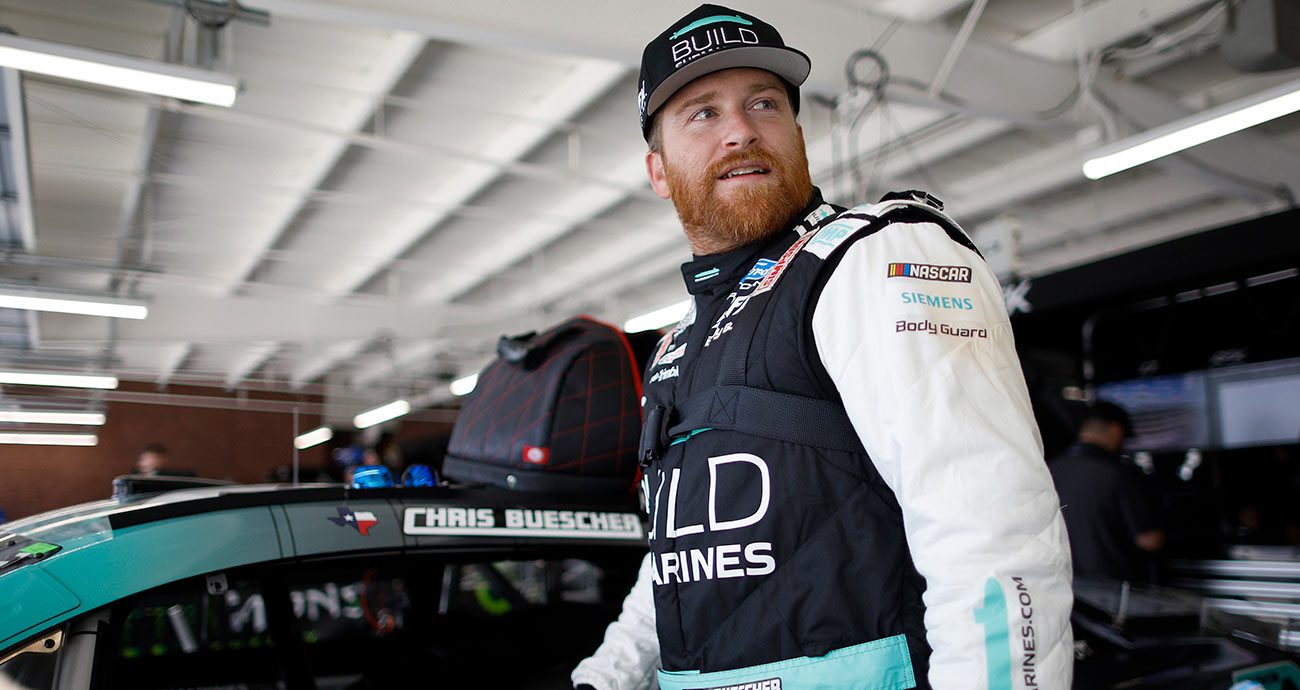
Chris Buescher looks on from the Cup Series garage at Dover Motor Speedway
Sean Gardner | Getty Images

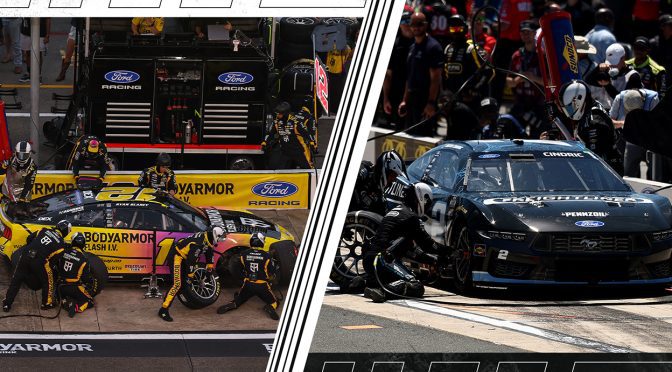
Team Penske has swapped the pit crews of its Nos. 2 and 12 teams driven by Austin Cindric and Ryan Blaney, respectively, before the start of The Chase presented by Mobil 1, a team spokesperson confirmed to NASCAR.com on Tuesday.

Blaney and the No. 12 team enter the NASCAR Cup Series Chase as the No. 2 seed, 25 points behind series leader Denny Hamlin. However, his pit crew through Daytona ranked just 32nd of 35 full-time teams, according to NASCAR Insights.

MORE: Chase standings | Darlington schedule

Cindric and the No. 2 team qualified for The Chase and enter as the No. 15 seed of 16, sitting 95 markers back of Hamlin ahead of Sunday’s Cook Out Southern 500 at Darlington Raceway (5 p.m. ET, USA Network, HBO Max, MRN Radio, SiriusXM NASCAR Radio). Cindric’s crew was the 10th-best crew in the series following Saturday’s regular-season finale at Daytona International Speedway.

That 10th-best crew now moves over to pit Blaney’s No. 12 Ford beginning at Darlington, featuring jackman Jourdan Osinskie, fueler Andrew Lackey, front tire changer Justin Armwood, rear changer Geoffrey Wall and tire carrier Jesse Mills.

Cindric will inherit jackman Graham Stoddard, fueler Chris Conklin, front changer Keiston France, rear changer Justin Fox and tire carrier Trevor Apsey to start the postseason.

This change marks the second major change to Blaney’s No. 12 crew this season. Team Penske made additional changes to the crew in April, adding Stoddard to the roster ahead of the NASCAR Cup Series race at Kansas Speedway. According to NASCAR Insights, the No. 12 crew has cost Blaney a series-worst 129 positions on the race track. The next-closest deficit is the No. 77 Spire Motorsports pit crew of Carson Hocevar, which has cost Hocevar 70 positions. Hocevar enters The Chase as the No. 12 seed.

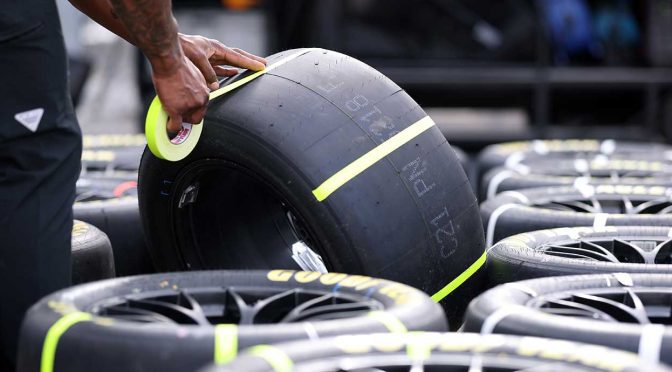
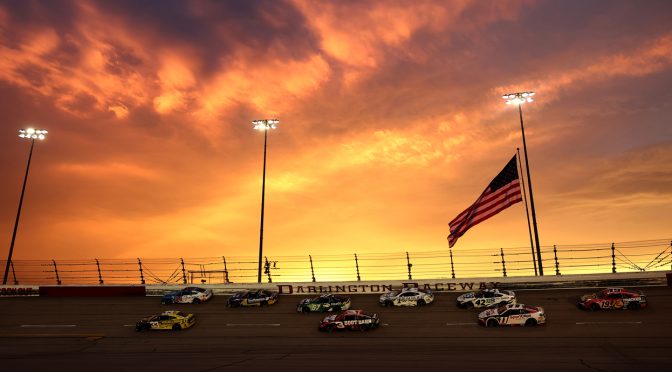
The NASCAR Cup Series teams that tackle the Cook Out Southern 500 this weekend will have the same Goodyear tire set-up from their last visit to Darlington Raceway, just with more of them.

The allotment grows to 15 total sets for Sunday’s opener to The Chase presented by Mobil 1 (5 p.m. ET, USA Network, HBO Max, MRN Radio, SiriusXM NASCAR Radio) at the rugged 1.366-mile South Carolina track, which is known for its treacherous layout and abrasive racing surface. Teams will have an additional set of tires for the extended practice, plus two more sets to accommodate the 100 miles of extra distance compared to the track’s Goodyear 400 in March.

RELATED: Darlington weekend schedule | Entry lists

“Darlington’s rough surface and egg-shaped layout make it a demanding track on tires,” said Justin Fantozzi, Goodyear’s Director of Racing for the Americas. “To account for the longer race distance, teams will have two additional sets of tires compared to the spring race, as well as the extra set for the new practice format. As we enter The Chase, giving teams a trusted tire package is even more important as they put everything on the line.”

The Cup Series tire configuration has been in action multiple times since the springtime trip to Darlington, most recently in July for the circuit’s return to Chicagoland Speedway.

The NASCAR O’Reilly Auto Parts Series also opens The Chase at Darlington with Saturday’s Fleetio 200 (7:30 p.m. ET, The CW, ESPN Unlimited, MRN Radio, SiriusXM NASCAR Radio). That series’ teams will have a right-side tire that’s making its Darlington Raceway debut, but was previously used at Charlotte Motor Speedway in May. The left-side tire is a familiar one, with its most recent usage at Iowa Speedway last month.

Tire allotment for each team competing this weekend:

Cup Series: 15 total sets — 12 new for the race, 2 for practice, 1 for qualifying, which transfers to the race.
O’Reilly Auto Parts Series: 7 total sets — 4 new for the race, 2 for practice, 1 for qualifying, which transfers to the race.

Editor’s note: Birches Health  is the leading national provider of Problem Gambling treatment and Responsible Gaming resources, offering specialized problem gambling support from the privacy of home, covered by insurance.

September is Responsible Gaming Education Month, and this year it lines up with a NASCAR Cup Series championship that looks different from any in the past decade. The Chase is back: 16 drivers, 10 races, no eliminations, and the driver with the most points after Homestead-Miami on Nov. 8 is the champion.

That change matters for fans who bet. The elimination playoffs of recent years created a series of do-or-die weekends, and the betting markets built around them (advancing to the next round, surviving a cutoff race) no longer exist. In their place is a points race that plays out over 10 weeks, which rewards patience over big swings. Here is how to enjoy The Chase and practice responsible sportsbetting, without letting the stakes run higher than you intended.

Understand the new format before you bet

Under The Chase, the 16 drivers are reseeded once at the start of the postseason, from 2,100 points for the top seed down to 2,000 for the 16th, with the regular-season winner earning a 25-point cushion over second place. From there, points simply accumulate across all 10 races with no resets and no eliminations. (MORE: The Chase 101: How NASCAR’s new championship format works)

A bad day at Talladega hurts, but it does not end a season the way a cutoff race once did. Before placing any futures or race-week bets, take a few minutes to understand how the standings work now, because assumptions carried over from the playoff era can lead to bets that no longer make sense. Sportsbooks may also change or drop the props they offered in past years, so check what is actually on the board.

Treat futures as entertainment, not a plan

Championship futures are the most tempting bet of the fall, and under a cumulative points format they are also the slowest to resolve. Money placed on a title pick in September is tied up until November, and the odds will move every week. If you want a rooting interest, size the bet small enough that it stays fun for 10 weeks even if your driver falls out of contention early.

Keep race-week exposure steady across all ten races

The 2025 guide to betting on NASCAR responsibly made the point that popular races invite bigger wagers, and The Chase compounds that with 10 weeks of elevated stakes in a row. Decide now how much of your bankroll each remaining race gets, and hold that number through Homestead. Ask the same question every week: if every pick loses, what is my total loss? If the answer changes as the standings tighten, that is the moment to stop and reset rather than push.

Know the rules of your book, and where you are betting

Sportsbook house rules on weather-shortened races, overtime finishes, and post-race penalties differ, and they can decide whether a bet wins or loses. Read them before you wager. It is also worth knowing what kind of platform you are using. Licensed sportsbooks in 39 states plus Washington, D.C. are required to offer deposit limits, timeouts and self-exclusion. Fans in other states may encounter prediction markets, which are regulated differently and may not provide those same protections. If the tools are not there, set the limits yourself before the race starts.

Use the tools your platform gives you

Common sportsbook features that support responsible betting, such as deposit limits, wager limits, and loss limits exist on every licensed sportsbook and take about a minute to set. The best time to set them is now, at the start of The Chase, when you are thinking clearly about the season as a whole, rather than in the middle of a cold streak. A limit set in September protects the version of you that is watching a late restart at Martinsville in November.

Watch for the signs that betting has stopped being fun

The most common warning sign for sports betting we see in our recovery clients is chasing losses: betting more to win back what was lost earlier in the week or the season. Others include betting money set aside for bills, hiding wagers from family, or feeling irritable when not betting. If any of these sound familiar, the most responsible bet of The Chase is to step away for a race or two.

Know where to turn for support

Following best practices reduces the chance that betting becomes a problem, but it does not eliminate the risk. Birches Health has a nationwide team of certified clinicians specially trained to help people dealing with gambling-related struggles. Care is confidential, available from home across the United States, and can be covered by insurance or state funding.

To book a consultation or learn more about Birches Health, just click here, call (866) 843-5917, or email [email protected].

Editor’s note: Birches Health is the leading national provider of Problem Gambling treatment and Responsible Gaming resources, offering specialized support from the privacy of home, covered by insurance.

As The Chase heats up and excitement continues to build, it is important to also recognize that September is Responsible Gaming Education Month. Led every September by the American Gaming Association (AGA), this annual campaign aims to educate and empower bettors and fantasy players with the knowledge and tools necessary to engage with those activities in responsible ways.

As a proud AGA partner, NASCAR supports their “Play Smart from the Start” campaign that encourages bettors to always understand why they’re playing, know the upside and downside of every bet beforehand, and set personal limits. When bettors play smart, they’re in control throughout the entire experience.

Playing smart also isn’t a one-time action; it is a cycle players return to every time. A positive betting experience begins before placing that first wager.

With that in mind, the AGA is also transparent about the likelihood of bettors turning a profit:

The House Really Does Always Win in the Long Run
“Casinos and sportsbooks maintain the ‘house advantage’ — a mathematical edge built into every game that ensures that over time, they always win. Depending on what you’re playing, it might be called the “vigorish,” “the vig,” the rake, hold, edge or juice. Whatever you call it, it’s keeping the casino or sportsbook in business so they can keep providing an exciting gaming experience for everyone… While sports bettors use knowledge of teams, players, etc., to inform their wagers, the mathematical reality remains: the odds ultimately favor the house. This isn’t hidden or deceptive — it’s simply how gambling economics work.”

Responsible Gaming tips and best practices

Responsible Gaming Education Month is a great time to run through some reminders about best practices for playing in a sustainable manner. Let’s run through a few of the most important tips.

— Approach betting as paid entertainment: As the AGA points out, you are statistically likely to lose money in the long term if you choose to bet. Therefore, you should view it as an entertainment expense, similar to paying to go to the movies or attend a NASCAR race. Bets can provide extra rooting interests to increase excitement while watching, but winning them should never be something you depend on financially.

— Bankroll management: It is critical to determine your “bankroll” before betting. This can be thought of as a betting budget and needs to be an amount that you can afford to lose entirely without it impacting your financial wellbeing.

— Set limits: Sportsbooks and other gaming platforms nowadays offer Responsible Gaming tools that allow users to set limits that help them play responsibly. These act as helpful guardrails for all bettors to keep their play in check. They can include Deposit Limits, Bet Limits, Loss Limits and Time Limits. And if you’d ever like to take a break, they often offer “Cool Down” periods to suspend your account for a set time frame.

— Never chase losses: Counselors at Birches Health have found that “chasing” losses is the at-risk behavior exhibited most commonly in gambling recovery clients before entering the program. Loss chasing involves betting more — additional wagers and often larger amounts — in attempts to win back what was lost. You are never “due” for a win, so accept losses as the cost of entertainment and move on to another (non-gambling) activity.

Responsible gaming tools can be useful guardrails, but they are not a test of willpower and they do not work equally well for everyone. If you repeatedly go past limits, feel unable to stop after a loss, hide your betting, or find gambling affecting your finances or relationships, it may be time to look beyond self-management and speak with someone who understands gambling & sports betting recovery.

For more on betting responsibly during NASCAR’s new championship format, see: Guide to betting on The Chase responsibly.

Gambling Addiction treatment & resources

Even if you are betting responsibly, there’s still the potential that you or someone you know may end up having a gambling problem. Therefore, it’s also important to know where you can turn for support if that ever happens.

Nowadays, there are gambling-specialized treatment options available nationwide. Birches Health offers the leading virtual gambling recovery program in the United States, featuring a team of counselors who have been specially trained to help individuals struggling with gambling addiction and related challenges. Treatment with Birches is confidential, available from the comfort of home, and can be covered by insurance or state funding for eligible residents.

If you or someone you know would like to speak with a Birches Health care specialist, simply click here, email [email protected] or call (866) 843-5917.

Editor’s note: Birches Health is the leading national provider of Problem Gambling treatment and Responsible Gaming resources, offering specialized support from the privacy of home, covered by insurance.

Since the Supreme Court’s 2018 repeal of the Professional and Amateur Sports Protection Act, 39 states have legalized sports betting in some form. During that time, NASCAR has seen significant increases in betting popularity and the number of bet types available at sportsbooks. As more racing fans get involved with sports gambling, it’s important to know how to engage with NASCAR betting in a responsible and sustainable manner. 

The excitement of NASCAR races often involves many lead changes, penalties, weather impacts and critical strategic decisions that regularly result in exhilarating finishes. For many fans, placing bets on different types of outcomes adds another level of engagement and rooting interests as they watch. But with hundreds of betting options available every race week, taking a measured and disciplined approach is key. 

Betting on NASCAR in a responsible, sustainable manner

The same general best practices for responsible sports betting naturally also apply to NASCAR betting, but there are nuances with making picks and predictions for NASCAR races that warrant special attention. So let’s run through some Responsible Gaming tips for NASCAR specifically. 

Limit your bets and risk

There are countless NASCAR bets available every race week, especially when you factor in live-betting opportunities. Therefore, it’s critical to enter with a plan for how many bets you’re comfortable placing and how much money you can comfortably lose. Ask yourself, “if all of these picks lose, what will my total losses be?” It’s common to think that at minimum some of them will win, but that is not always the case (even when diversifying with different bet types), so calculating your entire risk exposure is key. Always check beforehand that your total amount wagered isn’t going to surpass what you can afford to lose.  

Don’t increase your exposure for big races

The excitement around popular races like the Daytona 500 and The Chase may lead some bettors to risk more than usual. Increased exposure can quickly lead to heavier losses than expected, potentially your entire bankroll. Stay disciplined and don’t let the high stakes of an iconic race lead to your own stakes getting higher than usual. 

Learn the race format and rules

The variety of tracks, stage lengths and race formats creates excitement and intrigue throughout the season and playoffs. So before betting on a race, be sure to have a full understanding of all factors that could impact your wager(s).

Research the “house rules” of your sportsbook

Rules for grading wagers can vary from one sportsbook to another, so be sure to check your preferred platform’s individual set of rules before betting. Some will even have specific rules published for NASCAR, as approaches to grading certain bet types in unusual situations like post-race inspection penalties, multiple overtimes or weather-shortened races can differ notably and potentially be the difference between your bet winning or losing. Licensed sportsbooks are also required to offer deposit limits, timeouts and self-exclusion; if you are using a platform that does not, set those limits yourself before the race starts.

Steady as you go

The NASCAR Cup Series season spans February through early November every year, and The Chase alone runs 10 races from Labor Day weekend through the finale at Homestead-Miami, so taking a measured approach is strongly recommended. The cliche “marathon, not a sprint” applies here, as almost all bettors who wager throughout the season will encounter cold streaks. Therefore, betting exposure for any one race should only be a portion of your total bankroll. 

Problem Gambling Treatment

Learning and following best practices for betting responsibly may help reduce the chances of it ever turning into a problem, but it doesn’t fully eliminate that risk. Therefore, all bettors should be aware of the specialized resources available in case gambling-related issues arise. 

Birches Health has a nationwide team of certified counselors specially trained to help people dealing with gambling-related struggles. Birches’ leading gambling recovery program can be covered by insurance or state funding. Care is fully confidential and available from the comfort of home across the United States. 

To book a consultation or learn more about Birches Health, just click here, call (866) 843-5917, or email [email protected].

Editor’s note: Birches Health is the leading national provider of Problem Gambling treatment and Responsible Gaming resources, offering specialized support from the privacy of home, covered by insurance.

September is officially Responsible Gaming Education Month, but learning and following recommended best practices for betting and playing fantasy responsibly needs to be a year-round focus. Therefore, NASCAR has collaborated with Birches Health to provide guidance around responsible play to help try to ensure that fans who engage with these different forms of gaming do so in a healthy, sustainable way. 

Here are 10 tips to keep in mind if you are of legal age and choose to bet on NASCAR races or any other sporting events. 

1. Determine your bankroll

Your “bankroll” can be most simply thought of as a budget for betting and/or fantasy. This should be a portion of your disposable funds and an amount that you can afford to lose fully without any impact on your finances. Your bankroll should be sustainable for multiple weeks or months to avoid feeling a need to increase it or deposit more into your account. 

2. Pick a unit size and stick to it

Related to bankroll management is the concept of unit sizing. A “unit” in sports betting is your usual amount for a single wager. Some recommend that this be between 1-4% of your total bankroll. Being disciplined and keeping your unit size small should allow you to maintain funds during inevitable “cold streaks” without the need to deposit again or increase your bankroll. 

3. Set limits

Setting limits is an easy process nowadays. Sportsbooks and fantasy platforms provide tools to let players set personal limits that can help them play responsibly. These can be seen as an extra set of guardrails that assists all users (not just those who may have a problem) keep their play in check. Platforms generally offer: Deposit Limits (this can help with bankroll management, as noted above), Bet/Entry Amount Limits (set these to align with your unit size), Loss Limits, Time Limits and “Cool Down” periods.

4. See betting and fantasy as paid entertainment

The reality is that you are more likely than not to lose money in the long term when betting. Knowing that, it is recommended that bettors and DFS players approach it as an entertainment expense, such as buying tickets to a NASCAR event to elevate the experience of watching the race. Picks and lineups can create another level of engagement, but their outcomes should not ever impact your financial health. If your picks are correct and you do win, it can be a pleasant surprise. But in the (more likely) case that they result in a loss, it should be seen as a cost that helped increase your excitement throughout, not something you need to try to win back.

5. Never “chase” losses

Chasing losses involves betting or playing more – additional bets/picks, often at larger amounts – in hopes of winning back what was lost before. Our partners at Birches Health have seen first hand that loss-chasing is the most common at-risk behavior exhibited by individuals before entering their problem gambling recovery program. No matter how many times you’ve lost or come close to a win, you are not “due” for a correct pick. Betting more can result in compounding losses that may reach unforeseen levels.

6. Only bet with a clear mind

Your decision-making skills and risk-assessment abilities are critically important when betting or playing fantasy, so it’s paramount to only do so when able to think clearly. If you’re in a highly emotional state or have been drinking, you should not be risking your hard-earned money on sports picks.

7. Never borrow to bet

If you don’t have the funds for betting, you should not be wagering in the first place. Using borrowed money or credit to bet can be extremely risky and result in debts that you may not be able to pay.

8. Take breaks

Be sure to maintain balance between gaming and all other parts of life. If making picks, setting lineups or researching plays is taking up too much of your day, take time away to focus on other activities and priorities. The “Time Limit” options on gaming platforms can be a big help in making sure you’re not dedicating too much time to gaming. 

9. No such thing as a sure thing

Unfortunately, there is no such thing as a “lock” or “guarantee” in sports betting or fantasy. There is an incredibly large number of variables that can impact the outcomes of sporting events and make it difficult to predict their outcomes correctly, so no pick is ever guaranteed to win. Always keep this in mind when making a pick – huge upsets and highly unlikely results happen regularly in the world of sports, including NASCAR.

10. Know where to turn for support

In case sports betting or fantasy ends up leading to issues for you, a friend or family member, being aware of the specialized resources available is also very important. 

Birches Health has a nationwide team of counselors specially trained to help people dealing with gambling-related struggles. Birches offers the leading gambling recovery program in the United States, with costs that can be covered by insurance or state funding for eligible residents. Care is fully confidential and available virtually from the private comforts of home.

If you or someone you know could benefit from a conversation with Birches Health, you can simply click here, call (866) 843-5917 or email [email protected].

NASCAR.com’s Pat DeCola ranks the 16 NASCAR Cup Series drivers in The Chase presented by Mobil 1 after Ryan Preece’s win at Daytona International Speedway and before Sunday’s 2026 Chase opener at Darlington Raceway (5 p.m. ET, USA Network, HBO Max, MRN Radio, SiriusXM NASCAR Radio).

RELATED: Cup Series Chase schedule | Cup Series standings
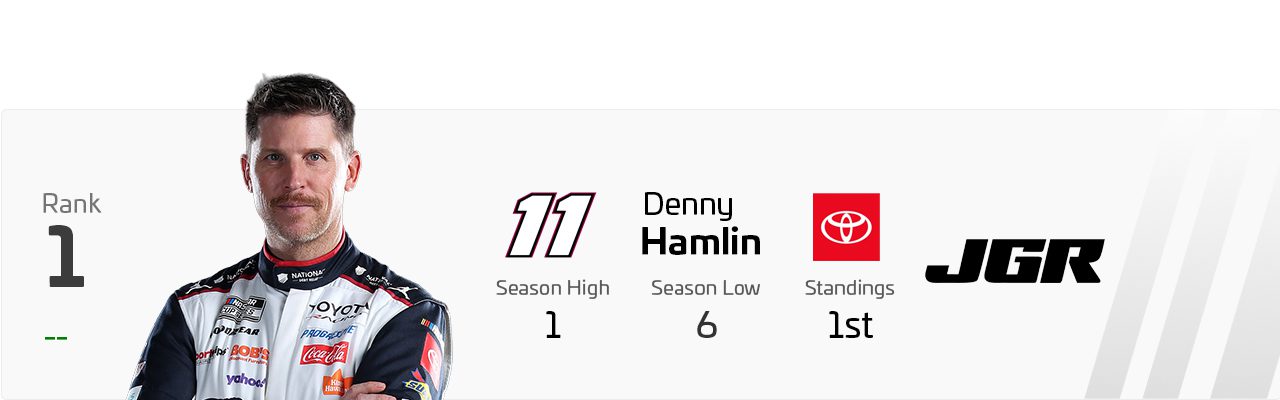
Seed: No. 1

Postseason appearance: 20th

Regular-season stats: 4 wins, 14 top fives, 17 top 10s, 4 poles, 880 laps led

Best Chase tracks: Darlington, Bristol, Martinsville, Kansas, Homestead

Analysis: The Chase resets the field, but it does not erase the fact that Hamlin and the No. 11 team spent the regular season looking more complete than anybody else. He starts with the maximum 2,100 points and a 25-point head start on Blaney, while ranking first in season-long speed, third in defense and fifth on pit road. Daytona was largely immaterial for Chase purposes — P11 after already clinching the top seed at Loudon — and now the schedule immediately tilts toward one of his strongest venues, with five career Cup wins at Darlington. There is no shortage of interesting championship storylines among the field, but Hamlin’s is the biggest: the long-elusive title, the top seed and a Chase schedule loaded with several of his best tracks. If there was ever a “now or never” feel to one of his championship runs — and there certainly have been — this might be the biggest one yet.
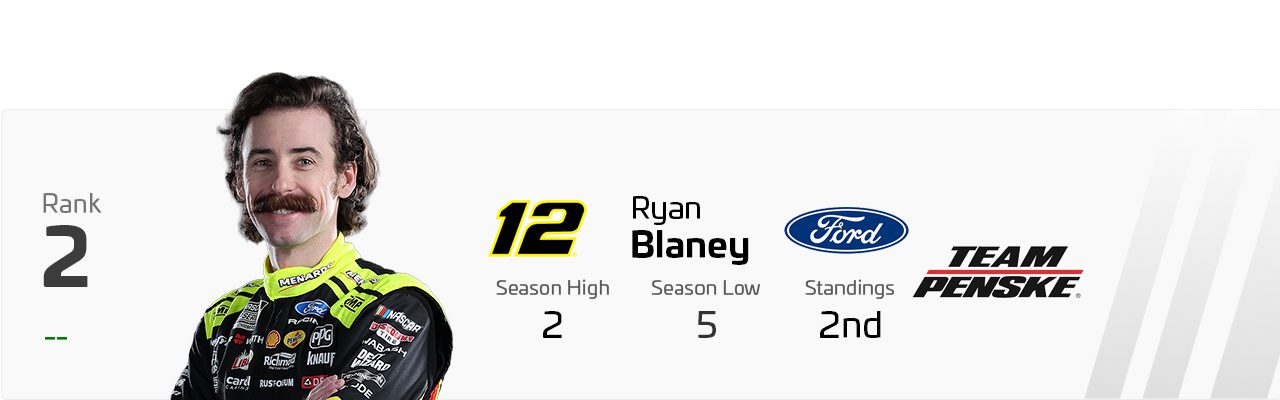
Seed: No. 2

Postseason appearance: 10th

Regular-season stats: 3 wins, 6 top fives, 17 top 10s, 4 poles, 828 laps led

Best Chase tracks: Bristol, Talladega, Martinsville, Phoenix

Analysis: Blaney enters The Chase with the second seed, the second-best season-long speed rating and probably the strongest combination of current form and organizational momentum outside Hamlin. Daytona ended in a wreck and 33rd-place run, but only after the No. 12 won Stage 2; the reset still leaves Blaney second, 10 points clear of Reddick. Darlington has historically been more nuisance than playground for Blaney, but third there this spring is a compelling recent data point on top of his strong summer. The glaring weakness remains the No. 12 pit crew, ranked 32nd for the season. If Penske cleans that up, Blaney has very few championship-profile holes to poke.
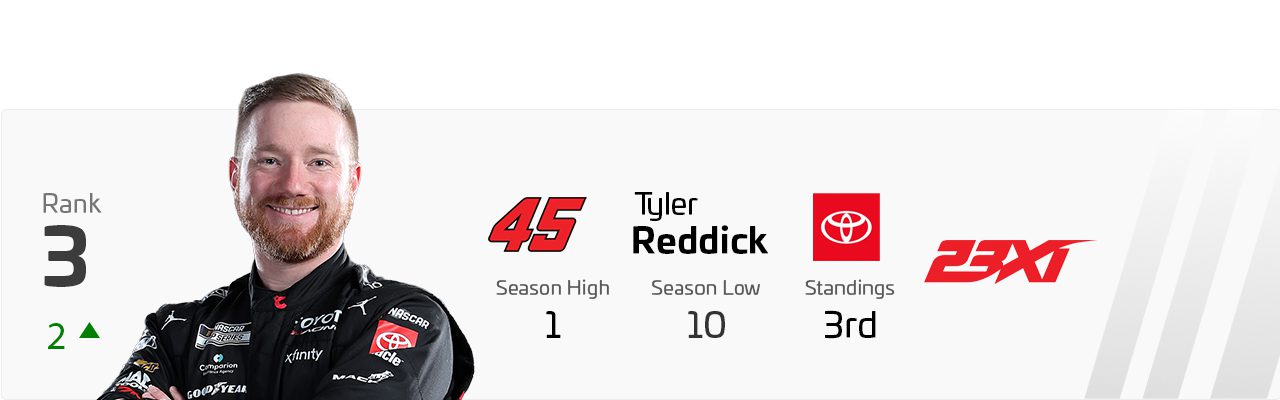
Seed: No. 3

Postseason appearance: 6th

Regular-season stats: 5 wins, 11 top fives, 16 top 10s, 5 poles, 449 laps led

Best Chase tracks: Darlington, Kansas, Homestead, Talladega, Las Vegas

Analysis: If Reddick needed a reset in every sense of the word, he got one. The five-win juggernaut No. 45 team from spring spent much of the summer fighting itself, but finishes of 11th, eighth and third in the final three regular-season races suggest the freefall may finally be leveling out and perhaps Reddick can sleep soundly for now. Daytona in particular looked much more like the old No. 45, which led late and was still attacking for the win on the final lap. Better still, The Chase opens where Reddick delivered perhaps his most impressive performance all year, winning at Darlington in March. He starts just 35 points behind Hamlin and still ranks third in both speed and passing — the early-season monster may have picked an awfully convenient time to wake back up.
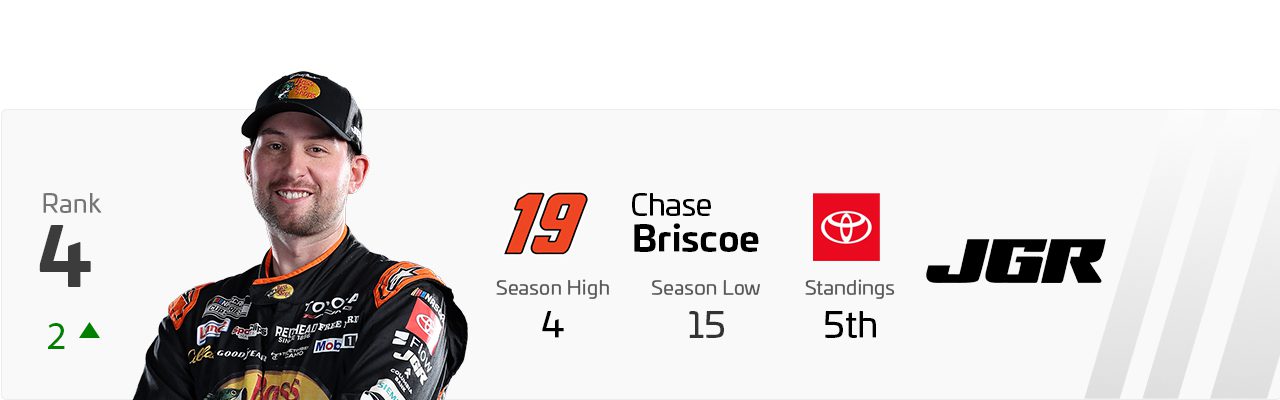
Seed: No. 5

Postseason appearance: 4th

Regular-season stats: 1 win, 10 top fives, 13 top 10s, 359 laps led

Best Chase tracks: Darlington, Phoenix, Bristol, Las Vegas

Analysis: There might not be a driver in the field happier to see the Southern 500 sitting at the front door of The Chase. Briscoe enters just 45 points behind his JGR teammate Hamlin after a summer in which the No. 19 evolved from fringe contender when it started into one of the most consistently dangerous cars in the garage at the turn of autumn. His season profile backs up the eye test: first in defense, first on restarts and fourth in pit-crew performance. Then there is Darlington itself. Briscoe has won the last two Southern 500s, doing it with two different organizations. Forget dark horse. That label no longer fits, especially where Briscoe was title-eligible down to the wire last year, too.

Seed: No. 6

Postseason appearance: 6th

Regular-season stats: 0 wins, 11 top fives, 13 top 10s, 1 pole, 559 laps led

Best Chase tracks: Bristol, Kansas, Phoenix, Martinsville, Homestead

Analysis: Bell enters The Chase in one of the strangest positions imaginable: fifth in these rankings, sixth in the reset and still winless despite spending chunks of the year looking as fast as anybody. Seven runner-up finishes will do that to a season, yet the championship case remains obvious — Bell ranks fourth in speed, fifth on restarts and carries the seventh-ranked pit crew into the postseason. Darlington is less straightforward after a 19th there this spring, though Bell has plenty of strength scattered throughout the remaining nine tracks. The guy spent months knocking on the door to get here, but The Chase is where “almost” stops carrying much, if any, value.
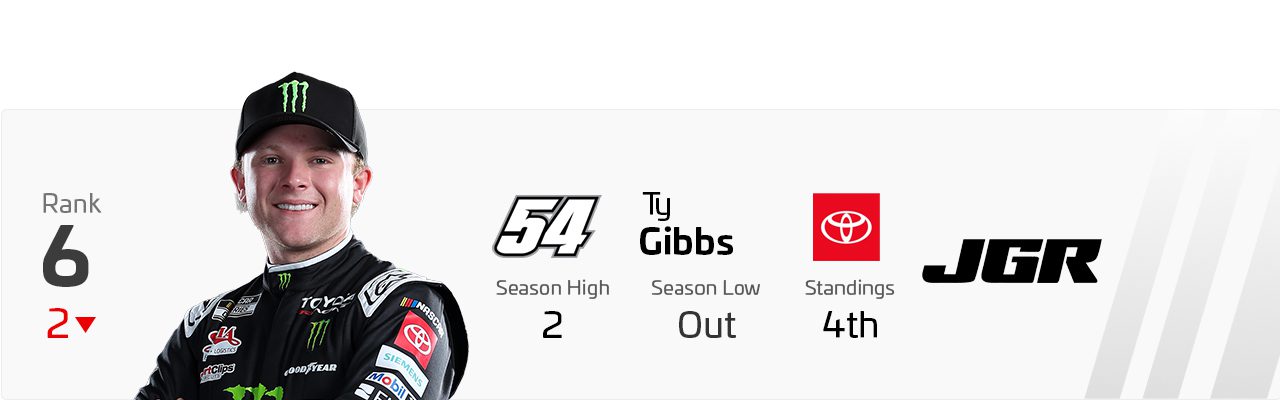
Seed: No. 4

Postseason appearance: 2nd

Regular-season stats: 2 wins, 10 top fives, 16 top 10s, 1 pole, 280 laps led

Best Chase tracks: Bristol, Darlington, Phoenix, Las Vegas, Kansas

Analysis: Gibbs took a nasty Daytona hit at exactly the wrong moment, collecting damage in Hocevar’s Lap 155 crash and even more in the final-lap melee to finish 34th, but the reset does him a considerable favor. He starts fourth in the standings, only 40 points behind Hamlin and five behind Reddick, after a regular season that produced two wins and one of the most balanced underlying statistical profiles in the field. Darlington is quietly encouraging, too: Gibbs finished sixth there in March, and Bristol already delivered his breakthrough Cup victory this season, so he could get off to a quick start. There is still somewhat of an “upstart” quality to the championship conversation around him, but the statistics stopped indicating him as one a while ago.
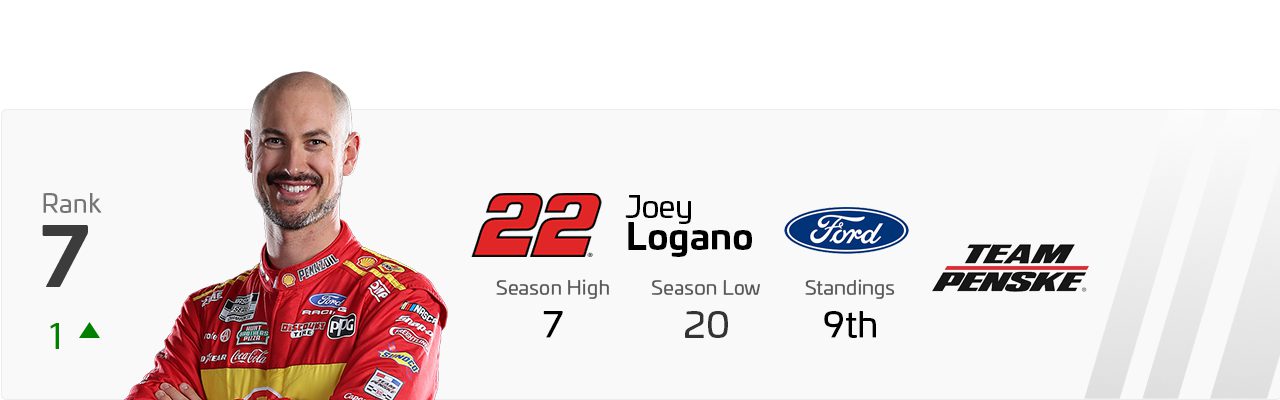
Seed: No. 9

Postseason appearance: 13th

Regular-season stats: 2 wins, 5 top fives, 9 top 10s, 1 pole, 536 laps led

Best Chase tracks: Las Vegas, Phoenix, Talladega, Bristol, Martinsville

Analysis: Here we go again. Logano spent much of the regular season looking like an afterthought, then won twice in a four-race stretch and suddenly arrives at The Chase with the same annoying-for-everyone-else profile that has preceded three championships. The reset leaves him 65 points behind Hamlin, a real hole but hardly insurmountable over 10 races. His season-long metrics remain surprisingly pedestrian — 12th in speed, 16th in passing, 14th in defense — which is why this ranking stops at seventh rather than following the championship hardware all the way toward the top. Nobody should be shocked if he disappears for a week. Nobody should be shocked if he is still standing at Homestead, either.
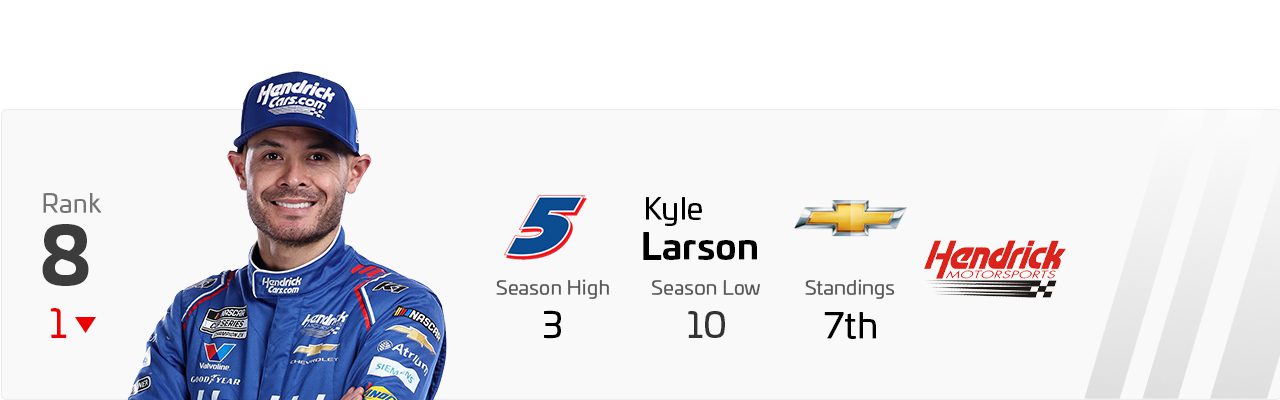
Seed: No. 7

Postseason appearance: 10th

Regular-season stats: 0 wins, 9 top fives, 13 top 10s, 659 laps led

Best Chase tracks: Las Vegas, Kansas, Darlington, Bristol, Homestead

Analysis: The reset might be exactly what Larson needs because judging the No. 5 strictly by regular-season results became a maddening exercise months ago. The speed never disappeared — Larson still ranks fifth there, while being second in defense and second on restarts, paired with the No. 1 pit crew in the series — but too many Sundays ended nowhere near where the car showed it belonged. Darlington captures the contradiction perfectly: Larson owns a Southern 500 win there, yet his recent results have been wildly uneven. He starts 55 points behind Hamlin as part of a Hendrick group that, remarkably, doesn’t feel like the championship favorite it usually does. That said, Larson is still the Hendrick driver most capable of changing that perception in a hurry, and perhaps as soon as Sunday.
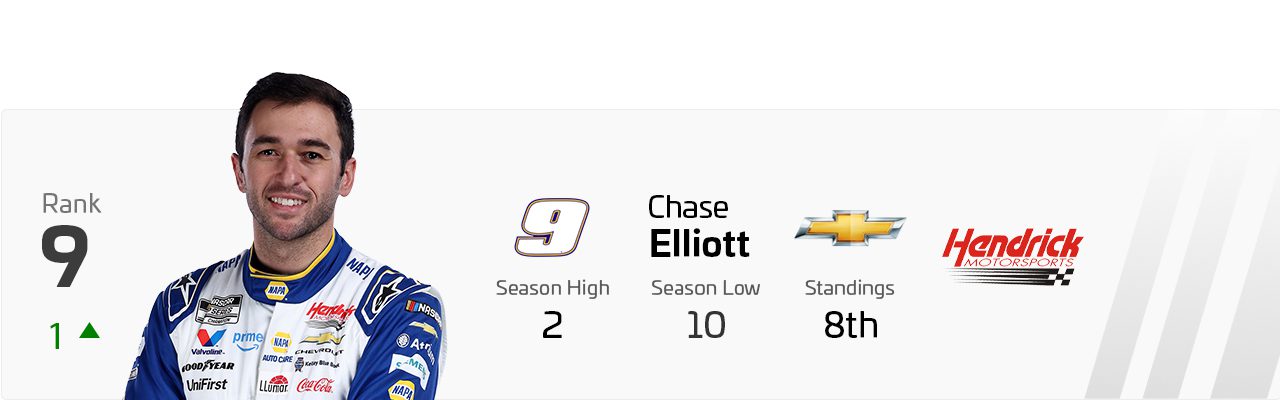
Seed: No. 8

Postseason appearance: 10th

Regular-season stats: 2 wins, 6 top fives, 9 top 10s, 317 laps led

Best Chase tracks: Talladega, Martinsville, Phoenix, Kansas

Analysis: Elliott enters The Chase in a much healthier place than he appeared headed a month ago, but he remains one of the harder champions to peg. The two wins remain banked, and Hendrick showed signs of life again late in the regular season, yet Elliott’s underlying numbers — 11th in speed, 11th in defense and 14th on restarts — are not exactly the profile of a driver poised to steamroll 10 races. He starts 60 points behind Hamlin, and Darlington was similarly middling in March. Hendrick going an entire Chase without seriously threatening for the title would qualify as a major development, as unlikely as it seemed in February, but Elliott has 10 races to make sure that conversation never gets there.
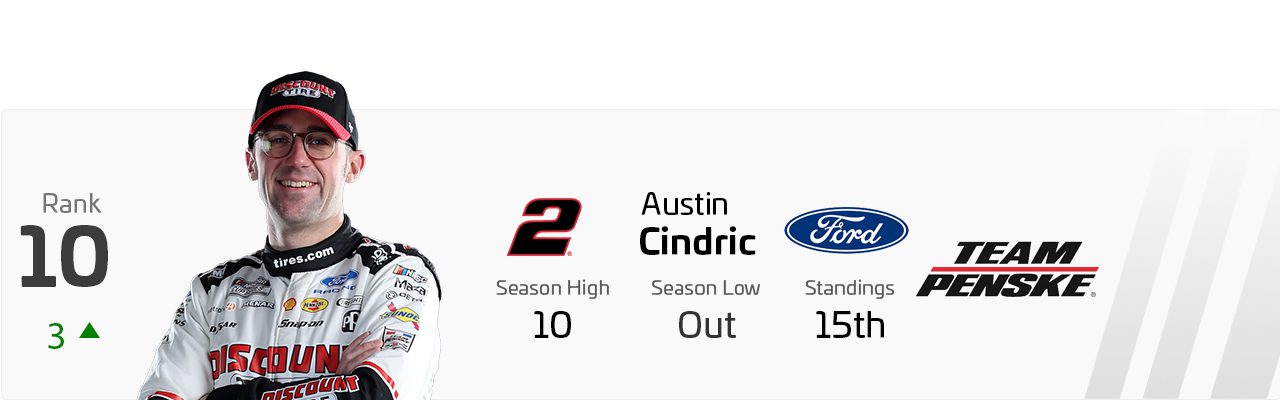
Seed: No. 15

Postseason appearance: 4th

Regular-season stats: 0 wins, 2 top fives, 6 top 10s, 51 laps led

Best Chase tracks: Gateway, Talladega, Darlington

Analysis: This is where the board starts getting interesting. Cindric is only the 15th seed, a whopping 95 points behind Hamlin, but he enters The Chase on easily the strongest footing of the lower-seeded group. Third at Richmond Raceway, 12th at Loudon and sixth at Daytona, while Penske is picking up steam, make for a sturdy closing stretch, and the No. 2 also ranks fifth in defense for the season. More important for Sunday: Cindric finished fifth at Darlington in March, his best Cup result there, while World Wide Technology Raceway at Gateway is already a Cup victory site. He has a mountain to climb in points, but there are considerably shakier profiles starting ahead of him. A sleeper fits.
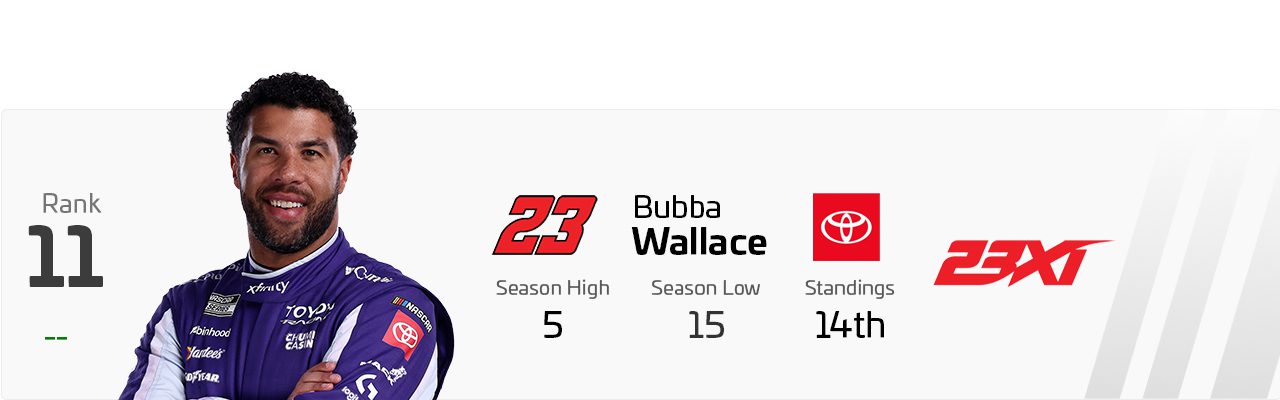
Seed: No. 14

Postseason appearance: 3rd

Regular-season stats: 0 wins, 4 top fives, 11 top 10s, 214 laps led

Best Chase tracks: Kansas, Talladega, Las Vegas, Homestead

Analysis: Wallace made it through a full regular season without needing a last-gasp miracle, but now comes the harder assignment: proving he can stay relevant for 10 straight weeks. He starts 14th, 90 points behind Hamlin, though his broader performance profile is much stronger than that seed suggests — seventh in passing, ninth in speed and eighth in restarts, defense and pit crew. Darlington was a disaster this spring, but there are friendlier venues ahead, particularly Kansas Speedway and Talladega, where Wallace has already won in Cup. The No. 23 has enough speed to make noise in this Chase. The larger question is whether it can stop turning good cars into avoidable, self-induced problems.
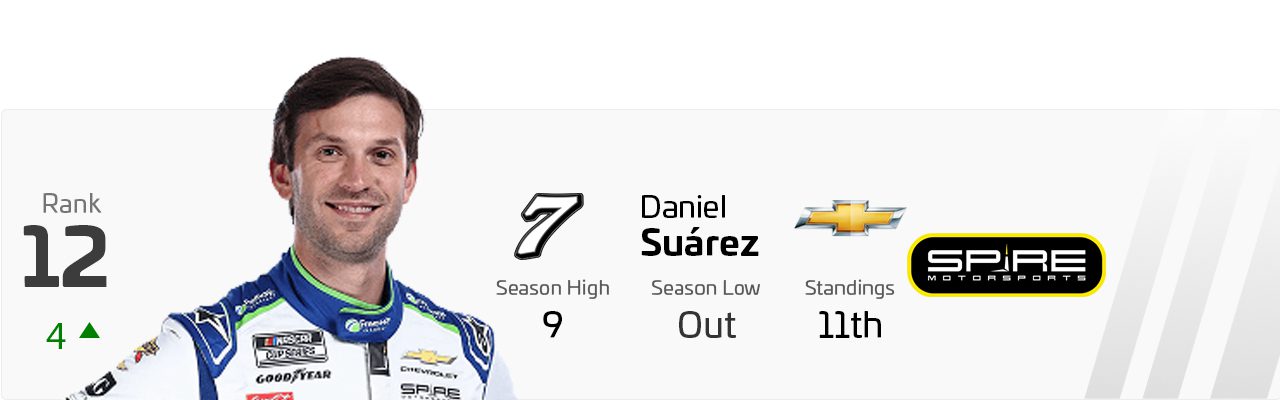
Seed: No. 11

Postseason appearance: 3rd

Regular-season stats: 1 win, 3 top fives, 7 top 10s, 40 laps led

Best Chase tracks: Darlington, Las Vegas, Kansas, Gateway, Charlotte

Analysis: Suárez could hardly have drawn up a better bridge into The Chase after a quiet summer than his Daytona runner-up. Starting 23rd, he avoided the late carnage and finished second for the second consecutive year in the summer Daytona race; a nice jolt for a team whose underlying season metrics remain much less flattering than its standings position. He starts 75 points behind Hamlin and ranks only 18th in speed, 20th in passing and 21st in defense. Darlington offers a reason to believe the result column can keep outrunning the spreadsheets after Suárez finished seventh there in March. This may not look like a championship profile on paper, but The Chase has 10 races to make paper irrelevant, and being the defending Coca-Cola 600 winner is notable given Charlotte is returning to its oval format for the fall race.
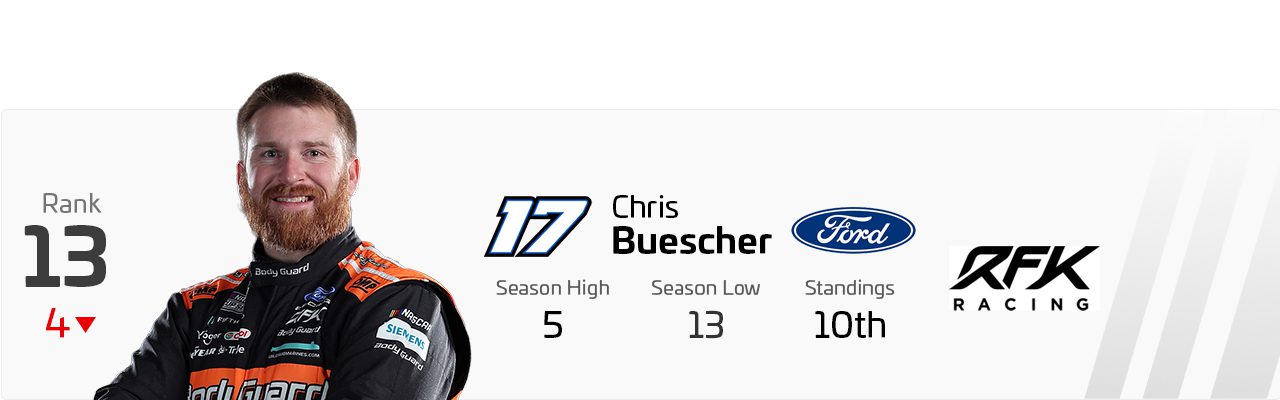
Seed: No. 10

Postseason appearance: 3rd

Regular-season stats: 0 wins, 2 top fives, 10 top 10s, 81 laps led

Best Chase tracks: Bristol, Darlington, Kansas

Analysis: Buescher enters The Chase with one of the better Darlington profiles in the lower half of the field — but one of the murkier overall championship cases. Daytona was a wash after Larson’s push sent the No. 17 spinning from the lead at the Stage 1 finish, eventually leaving Buescher 40th. The reset places him 70 points behind Hamlin, while the broader season says “solid” much more loudly than “champion” — 10th in speed, 19th in passing, but backed by the third-ranked pit crew. Darlington is where the argument gets better, as Buescher finished ninth there this spring, and Bristol remains the site of one of his signature Cup victories. If he is going to announce himself as more than Chase afterthought, Sunday is an excellent place to do it, and RFK Racing is already riding a high.
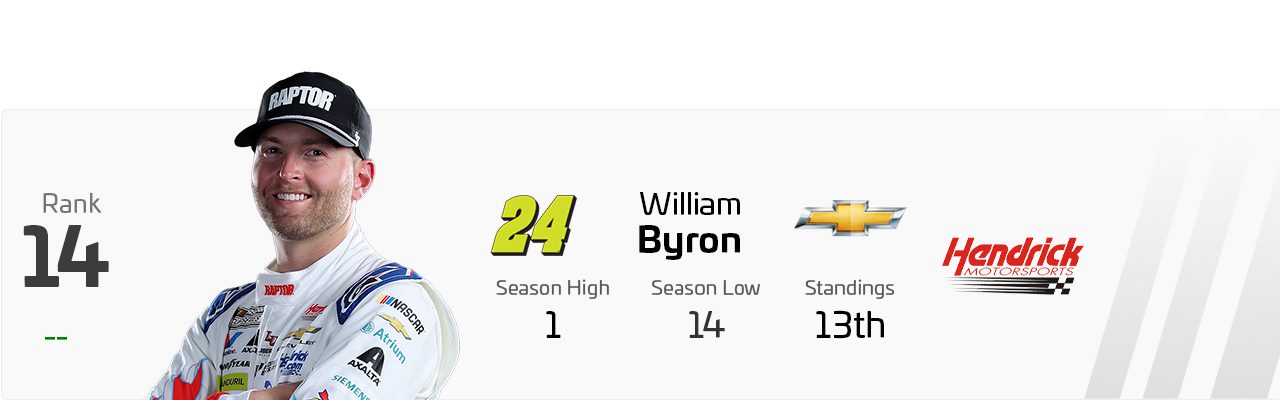
Seed: No. 13

Postseason appearance: 8th

Regular-season stats: 0 wins, 4 top fives, 11 top 10s, 176 laps led

Best Chase tracks: Martinsville, Las Vegas, Darlington, Phoenix, Homestead

Analysis: Byron has spent three straight years reaching the Championship 4, yet begins this revamped Chase as one of its strangest wild cards. He starts 13th and 85 points behind Hamlin after a winless, uneven regular season, but still owns the second-ranked pit crew and eighth-best speed profile. Darlington should be an obvious get-right venue: Byron won there in 2023 and finished eighth this March, with several more historically strong tracks waiting for him later in The Chase to help prod him along. Still, the broader Hendrick question hangs over him as much as anyone. Three straight championship-round appearances built a reputation that this year’s results have not yet matched, but indicate what he’s capable of.
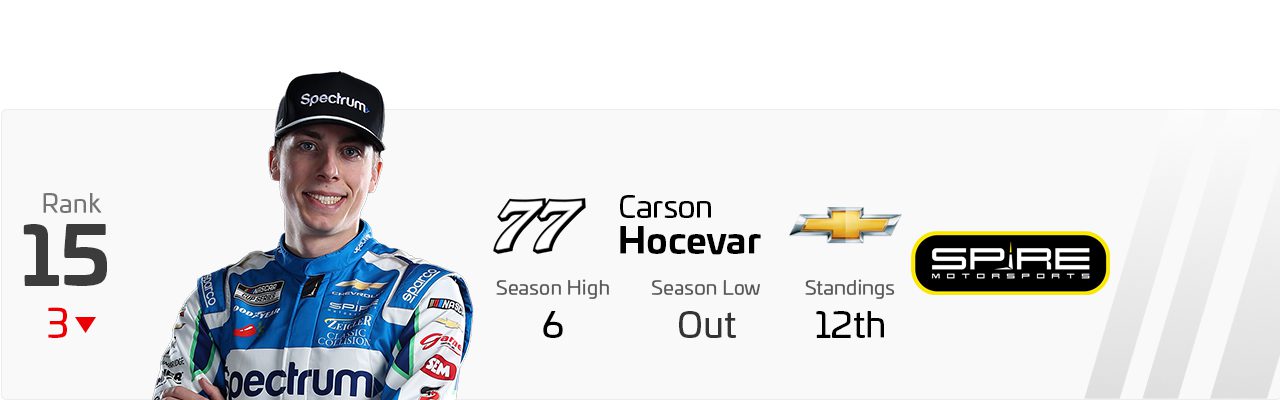
Seed: No. 12

Postseason appearance: 1st

Regular-season stats: 1 win, 5 top fives, 9 top 10s, 2 poles, 157 laps led

Best Chase tracks: Talladega, Darlington, Bristol, Gateway

Analysis: Hocevar’s regular season contained enough brilliance to make The Chase comfortably — and enough late carnage to make you wonder what might be left of the momentum. Daytona followed a P31 at Iowa Speedway and 37th-place showing at Richmond with another ugly box score — 38th after losing control while battling Preece for second and collecting Jones before the race went to overtime. That leaves him 80 points behind Hamlin after the reset, paired with the 27th-ranked pit crew and only the 14th-best season-long speed. And yet Darlington offers a very real counterpoint: Hocevar finished fourth there in March after starting 16th. The talent is not the question; it’s whether the unevenness can stop wobbling long enough for Hocevar to weaponize it in this 10-race run.
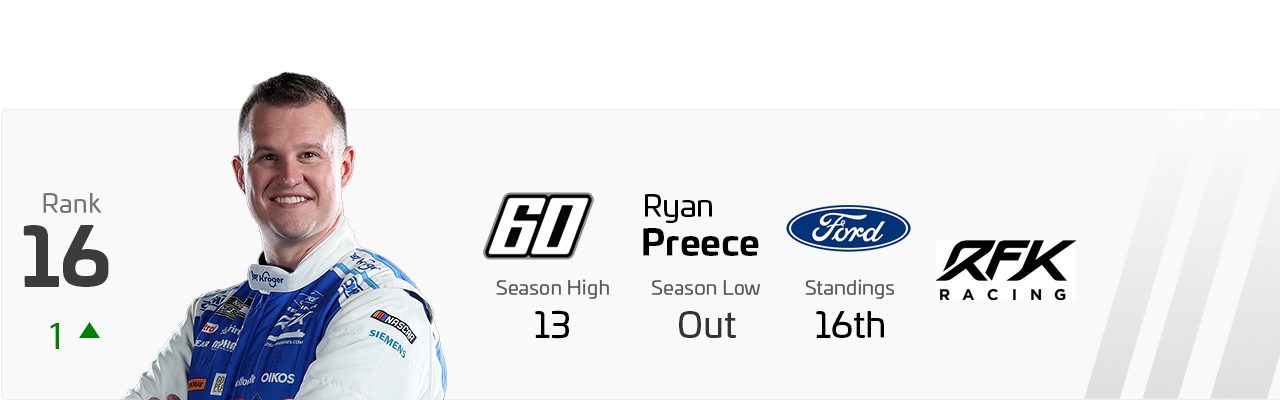
Seed: No. 16

Postseason appearance: 1st

Regular-season stats: 1 win, 1 top five, 7 top 10s, 55 laps led

Best Chase tracks: Bristol, Martinsville, Kansas, Darlington

Analysis: Nobody arrives at Darlington feeling better about how Saturday night ended, and nobody arrives with a steeper championship hill. Preece entered Daytona 31 points behind Shane van Gisbergen for the final Chase spot, meaning even a runner-up finish would not have gotten the job done. He had to win — and, after getting collected in the Stage 1-ending crash and surviving a chaotic final lap, did exactly that for his first career Cup victory. The reward is the No. 16 seed and a reset, exactly 100 points behind Hamlin. While Darlington produced a respectable 13th-place finish in March, his season-long speed ranks only 15th, so there is no pretending this suddenly looks like an obvious title run. But Preece already faced one must-win scenario this year and answered it about as emphatically as possible. At this point, it’s anybody’s ballgame.