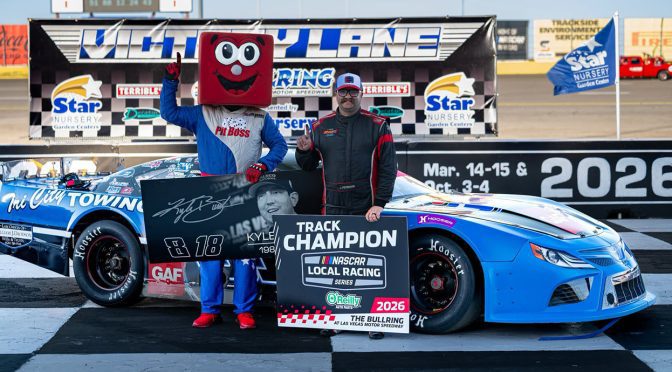
After winning 13 races at The Bullring at Las Vegas Motor Speedway and getting to Victory Lane 20 times in 22 races this year, confidence is sky high for California’s Jeffrey Peterson.
“It’s pretty amazing,” Peterson said of his season. “Every time I win one, I just kind of laugh just in disbelief that we can keep doing it.”
Peterson won the first 13 races in the Late Model division at the Bullring and was one race away from a perfect season. He was taken out in a crash in the final race, but he had such a big lead in the points, it didn’t matter. He won the track championship in the Limited Pro Late Model division by 58 points for his second title at the NASCAR Local Racing Series Powered by O’Reilly Auto Parts track.
Peterson said he and the team “far exceeded expectations” for the season. In six years racing full-time at Vegas, he’s always been fast, and even won six out of 14 races in his prior championship season in 2023. But he said, “this year, to rattle off the streak that we had was just nothing short of incredible.”
He credited his team with giving him the best car week after week.
“It’s the car that we’ve got,” Peterson said. “I think just no matter who’s driven it, that thing’s been up front. Lenny White works his butt off on the thing and it honestly makes me look a lot better than I really am.”
One thing Peterson said the team did that set them apart from others was putting a focus on long-run speed. When the track held practice on Fridays, he’d do 30-lap runs to make sure the car was consistent enough to last the entire race. Despite only setting fast time in qualifying twice this season, he was able to make his way through traffic in the features because his car was always so consistently fast.
“I can run almost a repetitive lap for the entire main event, which really helped us out,” he said. “That also helped us stay out of trouble, allowed us to kind of separate ourselves from the pack so when there’s a lot of tight racing going on and stuff and those guys would all fall off, I would stay the consistent speed and be able to kind of create a little gap and make our chances of surviving the night that much better.”
Peterson races for a team owned by Clay Wooster, the same owner Peterson’s dad drove for in the 1980s. After Peterson spent his childhood watching his dad race, Wooster put him in a race car for the first time when Peterson was 18.
He’s been with Wooster ever since.
“I grew up around Clay,” Peterson said. “Clay’s like a second father to me. It’s really cool we can go out and do this together, and the amount of success that we’ve had is something that I’ll cherish forever.
“It’s really cool to be able to do that, and Clay, he lives for racing. If they ran seven nights a week out here, he’d probably be at the race track seven nights a week.”
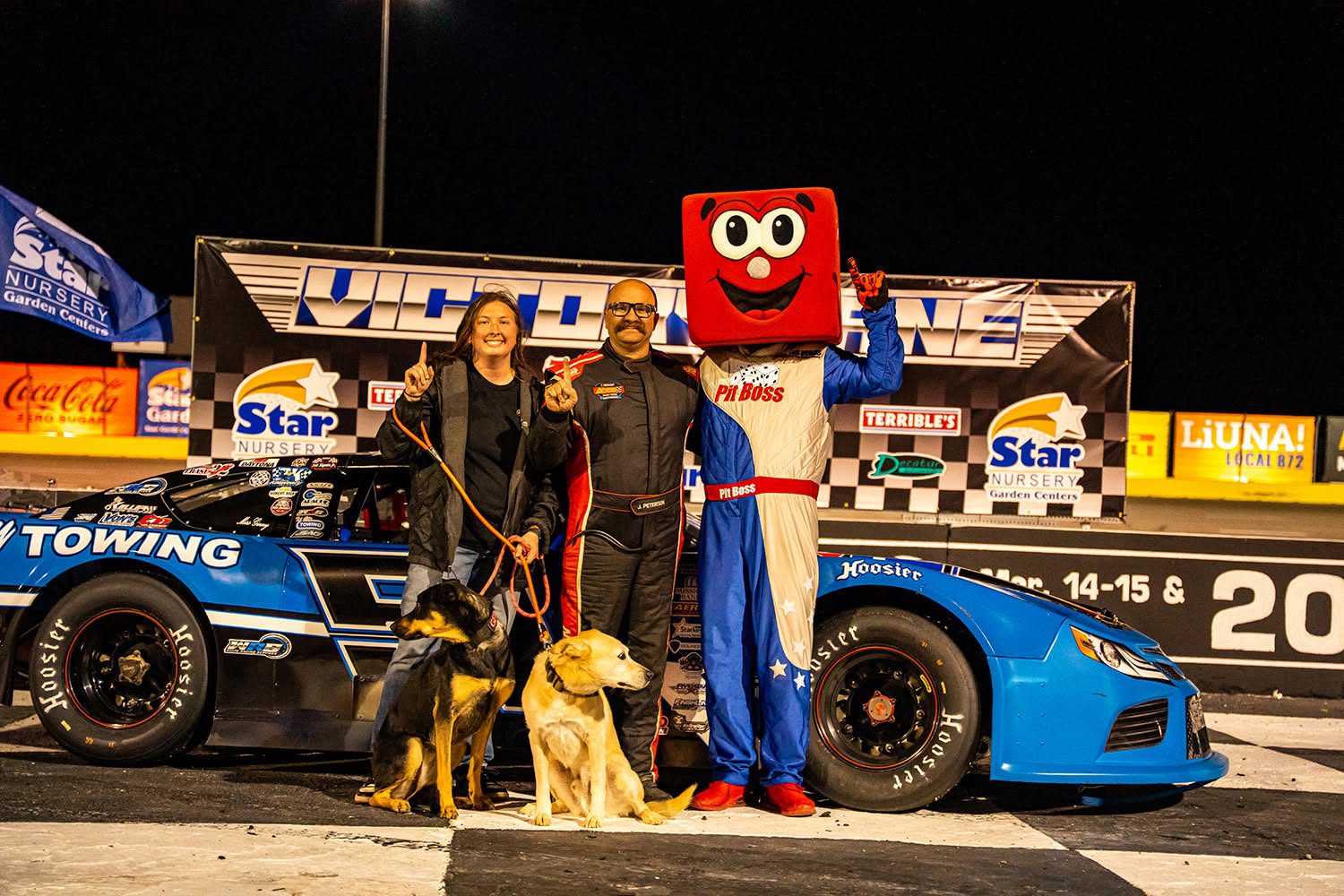
Jeffrey Peterson shares Victory Lane at The Bullring at Las Vegas Motor Speedway with his wife Kayli. (Photo: Las Vegas Motor Speedway)
Peterson isn’t the only one in his house who is racing as often as possible. His wife Kayli races in the Modified division at the Bullring; she finished fourth in the points this season.
Kayli has been racing at Vegas for more than 20 years. The two met through racing, and Peterson said he gets just as much joy out of seeing her be successful.
“It’s definitely really cool,” he said. “I’ve been really fortunate to be with her when she became the first female to win a Super Late Model race out there, first female to win a Modified race. I feel like I get more excited and happier for her when she wins than I do when I win. Every time that I’ve been there for one of her wins I’ve actually cried, and I don’t cry a whole lot.”
Having Kayli to talk to about racing helps him on the track, too.
“It’s really cool her being involved in the racing. It really helps make it nice,” Peterson added. “She understands everything that I go through as well as I understand the things that she goes through, so it makes it easy in that aspect. We’ve got that kind of common hobby that we can bond over.”
Even though the race season is over at the Bullring, Peterson isn’t done. He and the team pay close attention to the NASCAR Local Racing Series regional, national and state points. He currently leads the Nevada state championship standings by 36 points, is second in the West Region standings and ranks 12th in the Division I national standings.
He’ll continue racing this summer at All American Speedway in Bakersfield, California to try to gain points, but he said it can be hard late in the year to find races where he can add to his championship total.
“We definitely pay attention to the regional stuff. National, not so much just because we don’t get the car count that the East Coast does,” Peterson said. “So, it’s really difficult to compete with the East Coast guys on that aspect. But the West Region and stuff, we really do pay close attention to that. We’ve won it twice now, so we’re hoping to hoping to be able to do it a third time this year. But car count kind of struggled throughout the middle of the season up at the Bullring in Vegas, so that really didn’t help us much. We just we need more cars.”
No matter who he’s racing against, Peterson is showing up to the track every week with sky-high confidence. He has 20 wins this season that helped him get there.
“We just focus on doing what we can do to control our outcome and wherever the chips may stack after that is it,” he said. “Just trying to be consistent all year and show up with the best car that we can.
“We go to the race track knowing that we’re the team to beat, and we’ve just got to keep on our A-game, keep doing what we’re doing, and try and minimize any sort of bad nights or off nights that we have. It all comes down to controlling what you can control yourself.”
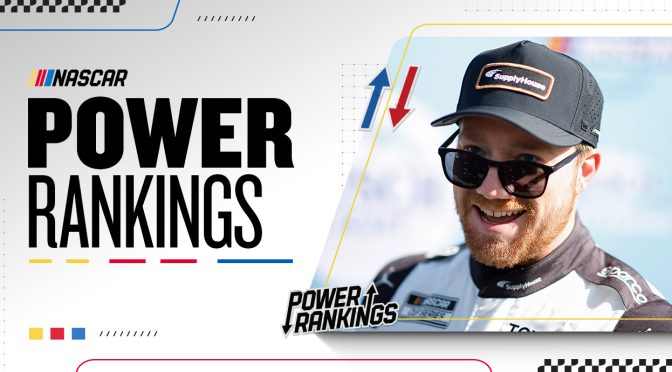
NASCAR.com’s Pat DeCola ranks the top 20 Cup Series drivers competing for the 2026 championship after Chase Briscoe’s win at Chicagoland Speedway and before Sunday’s Quaker State 400 at EchoPark Speedway (7 p.m. ET, TNT Sports, HBO Max, PRN Radio, SiriusXM NASCAR Radio).
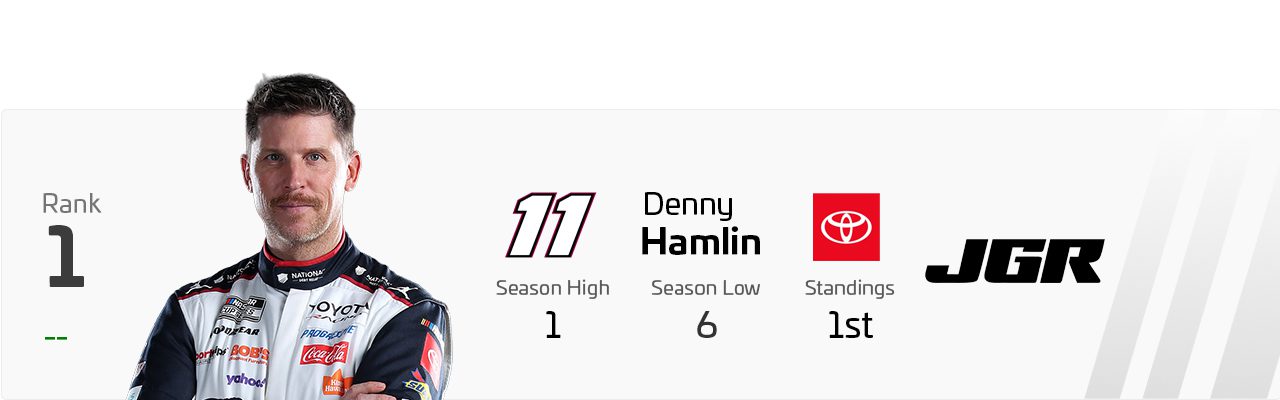
Analysis: Hamlin didn’t return to Victory Lane at Chicagoland, but he still posted a viable bounce-back after Sonoma. He started from the pole, led 30 laps, ranked No. 1 in speed per NASCAR Insights, finished third and extended his now-growing regular-season points lead to 44 over Tyler Reddick. That is a pretty reasonable consolation prize on a night when he finished third among his Joe Gibbs Racing teammates, which generally has not been the case this year. EchoPark Speedway keeps the argument interesting, too. Hamlin owns a win, six top fives, 11 top 10s and 462 laps led there, though the modern version of the track has a different kind of chaos attached to it, as we know. The crown still fits No. 11, but the 23XI/JGR family fight is not exactly quieting down.
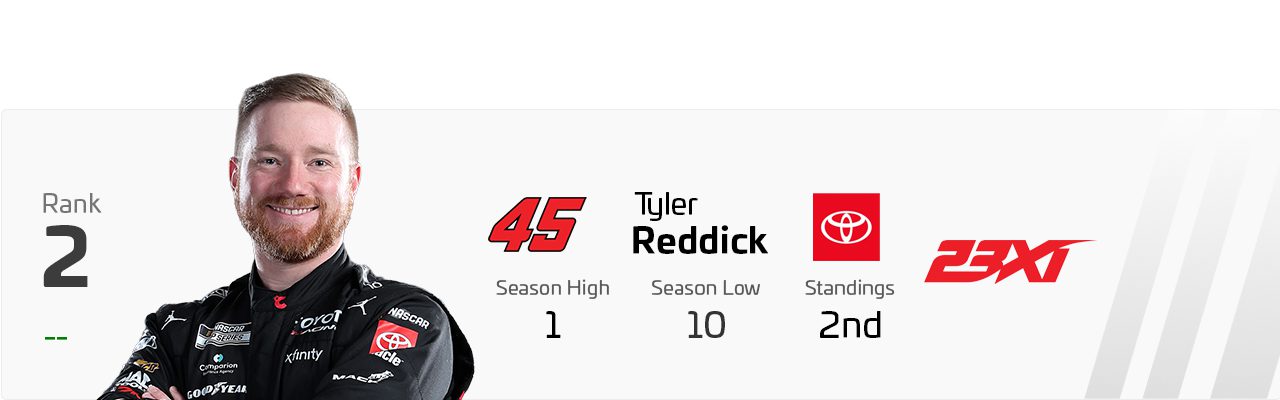
Analysis: Reddick’s Chicagoland was a rare total miss in a season with very few of them. The No. 45 finished 36th after a fluid issue, scored just two points and watched his boss stretch the standings gap from one tally to 44 in a single night. That doesn’t undo five wins, 12 top 10s and the best overall speed profile in the series, but it does make the regular-season title fight feel a lot less theoretical as it quickly appears to be getting away from him. EchoPark is the right place for a counterpunch, however, because Reddick won there earlier this season after starting first and owns a win, three top fives and five top 10s in 12 starts at the track. If he wants the top spot back, this is a pretty direct runway.
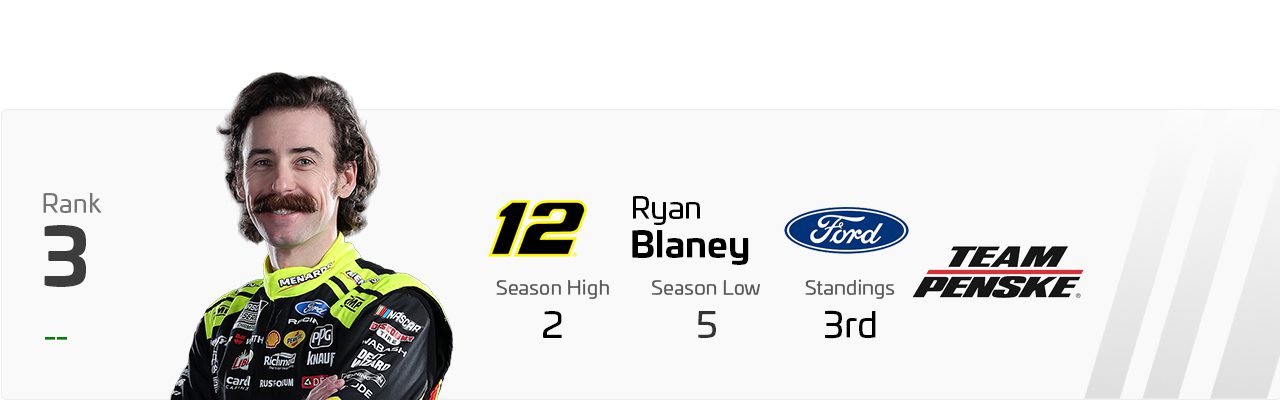
Analysis: Blaney keeps living in that sturdy third lane, and Chicagoland did nothing to knock him out of it — up or down. He finished seventh, led eight laps, scored Stage 2 points and now has a series-best 14 top 10s through 19 races. The No. 12 still doesn’t feel as electric as Hamlin or Reddick, but the week-to-week floor is about as stable as anything in the garage. EchoPark has been kind to him historically, too, with a win, seven top fives, 10 top 10s and an 11.5 average finish in 16 starts. At some point, all this reliability needs to turn into another trophy, but this track gives him a decent shot at making that happen.
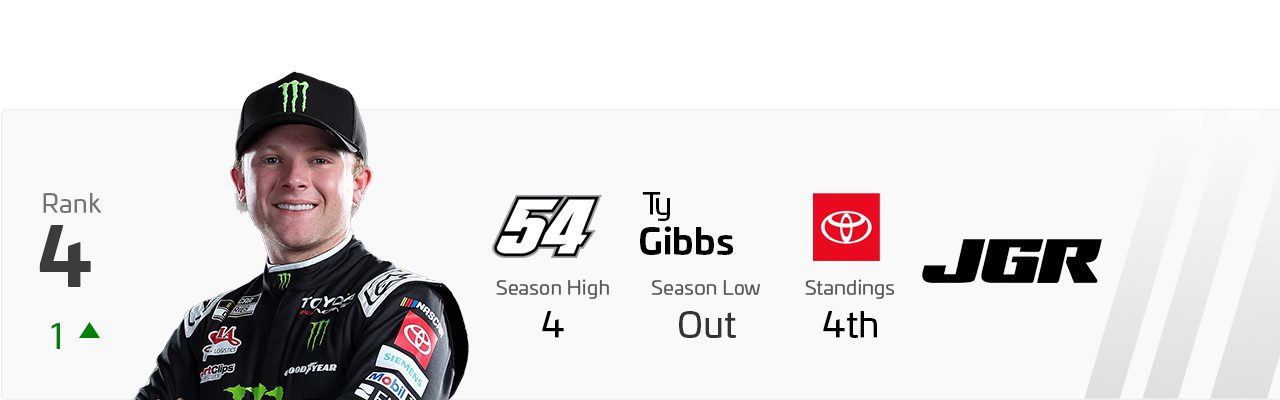
Analysis: Gibbs climbs yet again, and it’s not just because others keep slipping around him. Chicagoland was another mature points night for the No. 54, with an eighth-place run, Stage 1 and Stage 2 points and a leg up to fourth in the standings. He didn’t have the winning speed of his teammates Briscoe or Bell late, but he did exactly what strong Chase-caliber seasons require: stayed in the mix, scored points and left cleaner than several contenders. EchoPark is a little more complicated, with Gibbs owning just two top 10s and a 21.9 average finish in seven Cup starts there, but the 2026 version of Gibbs has repeatedly outgrown the old resume and previous limiting factors. This would be a useful place to do it again.
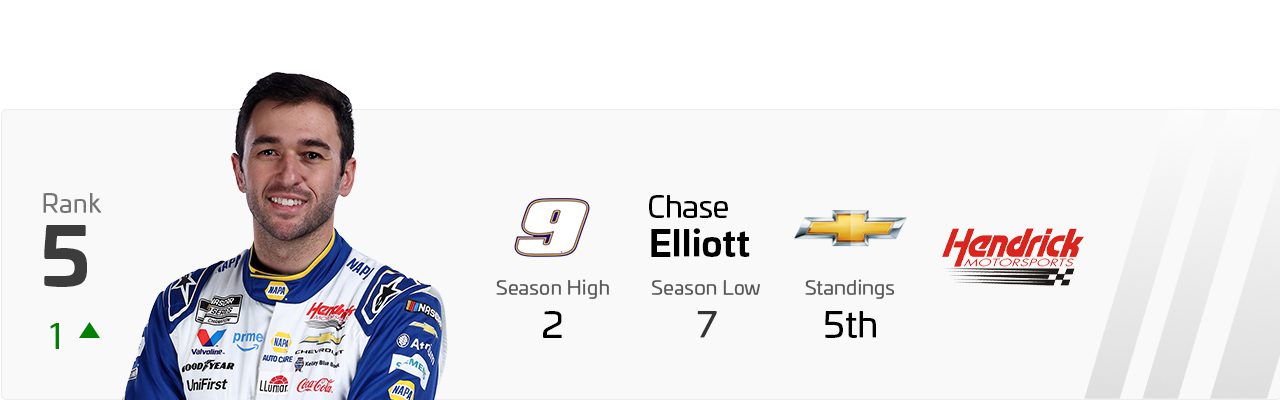
Analysis: Elliott moves back into the top five without a headline-grabbing Chicagoland, which feels about right for the way his season has been shaping up lately. He finished 11th, scored Stage 2 points and remained fifth in the standings, one point ahead of teammate Kyle Larson, even as the No. 9 still hasn’t quite rediscovered the sharpest version of itself from early in the year. EchoPark — Elliott’s home track — is a natural place for the tone to change. The Georgia native has two Cup wins there, including last year’s summer race, with three top fives, nine top 10s and a strong 11.3 average finish in 15 starts. If this season is going to heat back up before The Chase, this feels like a logical spark point.
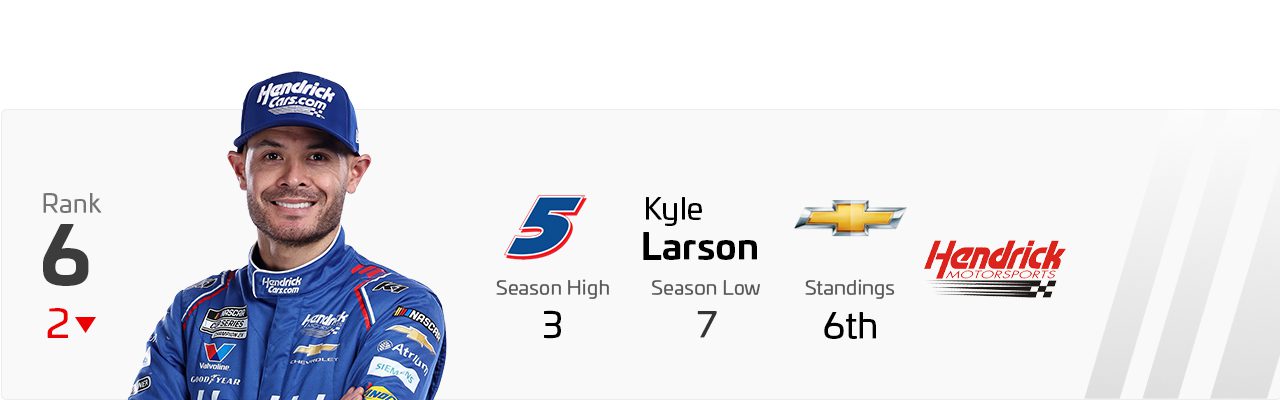
Analysis: Larson drops two spots because Chicagoland became the latest “how did that turn into that?” race for the No. 5. He started second, led 23 laps, finished second in Stage 1 and looked fully capable of winning before spinning off Turn 4, getting stuck in the infield grass and limping home 34th, two laps down. The speed is still ridiculous — 633 laps led without a win is almost comical at this point — but the finishes keep refusing to match. EchoPark is another tricky proposition. Sort of like his 2026 season in general, Larson has led 500 laps there but still has no Cup wins and a 19.6 average finish in 17 starts. The countdown may still be on, but the clock’s tick must be getting pretty annoying for him.
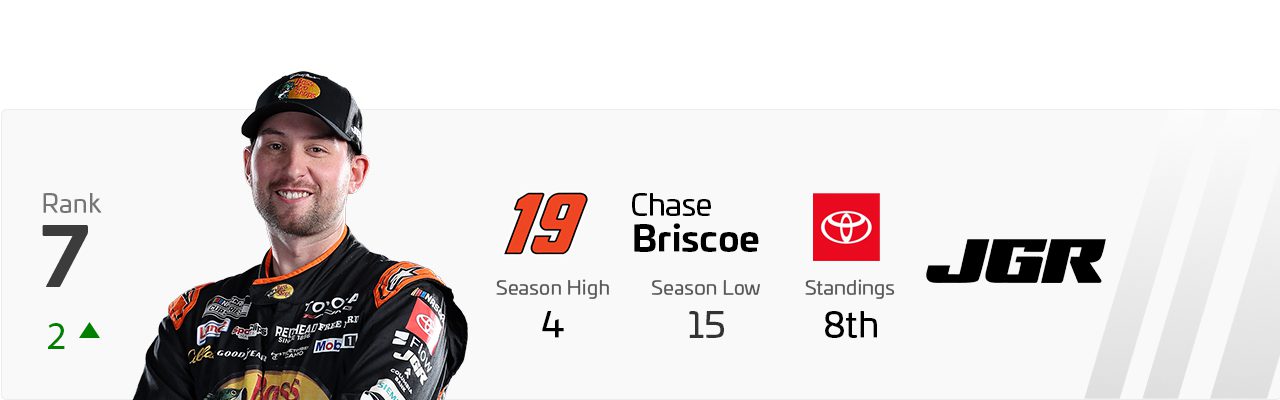
Analysis: Briscoe’s Chicagoland win felt less like a surprise and more like a confirmation of what we’ve been seeing the past several weeks. The No. 19 started seventh, led 51 laps, ranked third in speed and second on restarts and held off Christopher Bell by 0.276 seconds after Bell came charging through lapped traffic in the closing laps. Add in the Sonoma runner-up one week earlier, and this is no longer just a nice run. EchoPark is not exactly a slam dunk, with just one top 10 and a 22.0 average finish in 11 starts, but Briscoe now has seven top fives, nine top 10s and a win on the season. The track history matters, but his — and Toyota’s — current form might matter more.
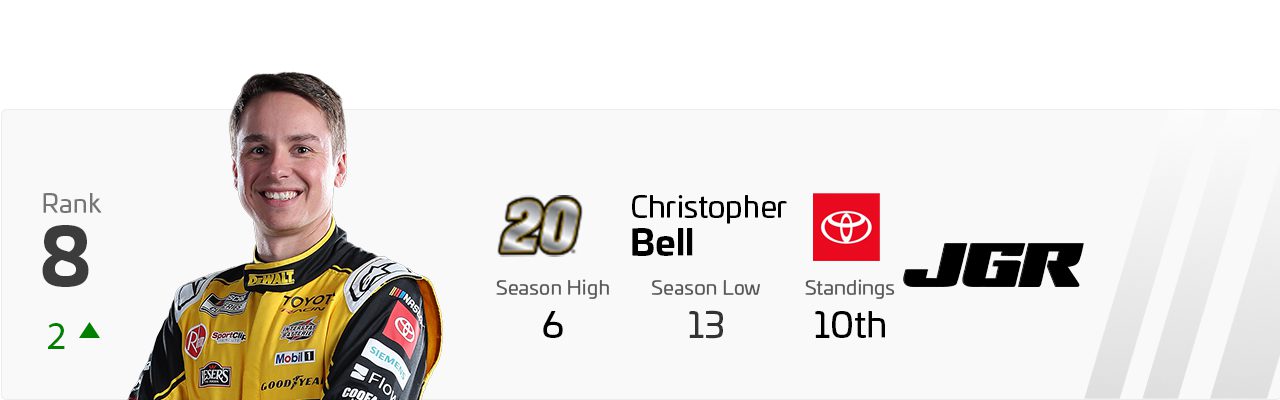
Analysis: Bell keeps climbing after his early- to mid-season lull, and Chicagoland made it feel deserved. He finished second, pushed his teammate to the final lap, scored Stage 2 points and has now stacked back-to-back top fives after a miserable stretch of engine trouble, wrist drama and fuel heartbreak. The No. 20 also sits fifth in season-long speed rating, so the rebound is not built on smoke — and EchoPark only strengthens the case that he’s on an upward trajectory. Bell won there last year for the first time in Cup and owns three top fives and four top 10s in 12 starts while also having O’Reilly Auto Parts Series and Craftsman Truck Series wins at the track. His apparent bad-luck tax may not be gone forever, but Bell looks a whole lot closer to normal again.
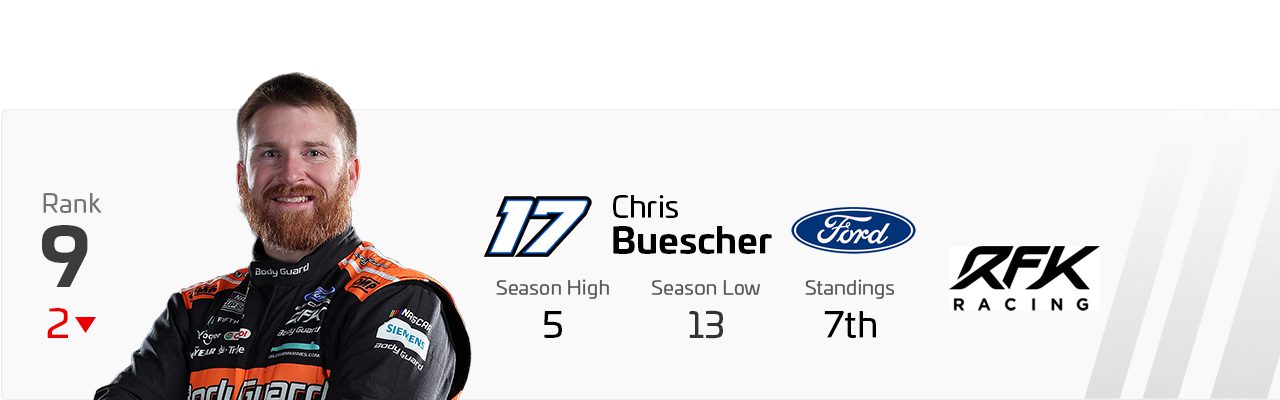
Analysis: Buescher falls two spots because Chicagoland was one of the few recent races where the No. 17 just didn’t quite cash in on its typical consistency. He started third, scored Stage 1 points and showed early pace, but finished 19th, a lap down, on a night when several drivers around him made bigger statements. The season is still in good shape — seventh in points, 134 above the cutline, still no panic button — but the argument for keeping him near the front needed a little more than that. EchoPark is not the easiest reset, either. Buescher has five top 10s in 16 starts there, but no top fives and a 20.0 average finish. The floor remains trustworthy. The ceiling needs to reappear quickly if he wants to get back into the top tier and have a realistic shot at this year’s title.
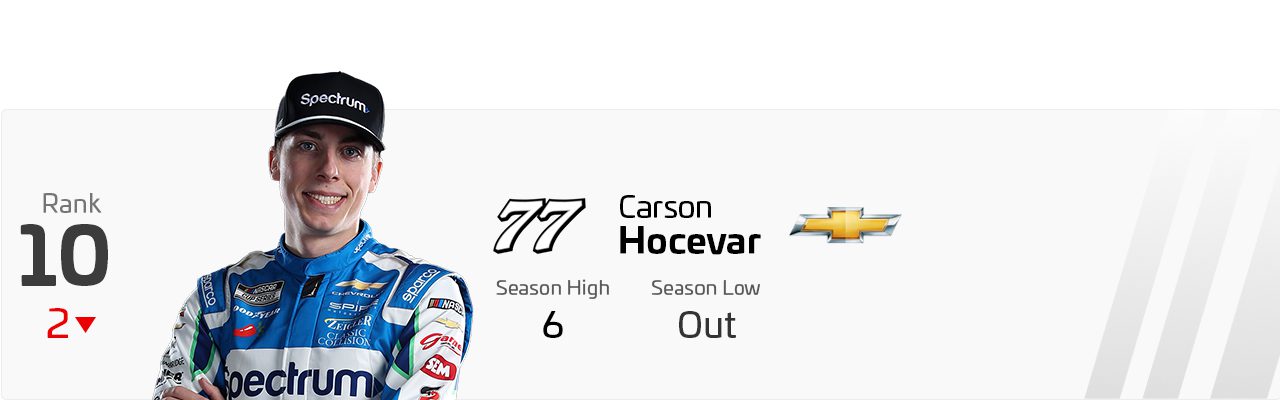
Analysis: Hocevar’s Chicagoland was a step backward from the cleaner runs he’d been putting together of late. He got tangled with rival Zane Smith while racing near 17th, finished 22nd and has lost just a bit of the shine that had built from his midseason surge. The bigger picture is still strong, though, still ninth in points, 117 above the cutline and already a Cup winner. EchoPark offers a fascinating reset. Hocevar has been excellent there in a small sample, with two top fives, three top 10s and a 10.2 average finish in five starts, on top of winning at Talladega earlier this year. The opportunity is there.
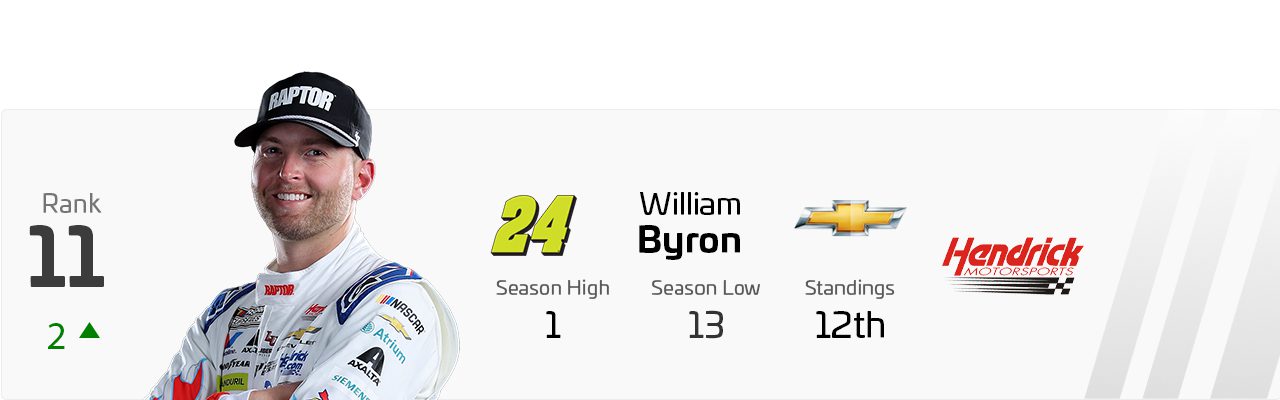
Analysis: Byron finally looked like Byron again for most of Chicagoland, even if the win got away. He led a race-high 94 laps, swept both stages, ranked second in speed, first on restarts and first on pit crew performance for the race, then settled for fourth in the running order after Briscoe and Bell took over late. That is still a major performance correction for a team that badly needed one. Plus, EchoPark gives the No. 24 an even louder rebound case. Byron owns two Cup wins there, including on the modern configuration, with 181 laps led in 14 starts. If Chicagoland was the reminder, EchoPark could be the part where the No. 24 starts becoming a problem again.
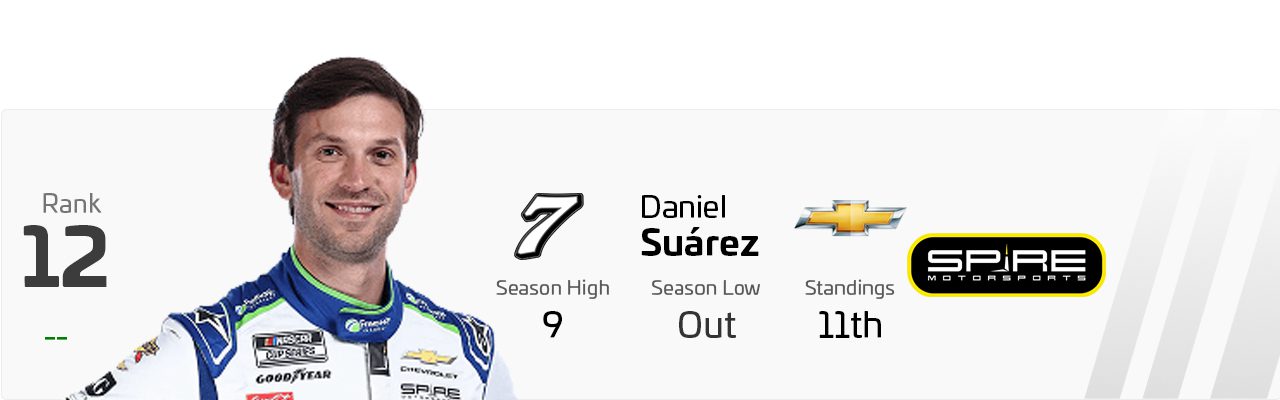
Analysis: Suárez stayed parked at No. 12 because Chicagoland was neither great nor damaging enough to force a bigger conversation. He finished 14th after starting 26th, gained a little in the overall points column and remains 100 points above the cutline, which is still a useful place to be with seven regular-season races left. EchoPark is where the story gets more interesting, however. Suárez won there in 2024 and owns five top fives, seven top 10s and a 16.4 average finish in 15 starts. The consistency has been a little bumpy lately, but if there is a place for No. 7 to look spicy again, this qualifies.
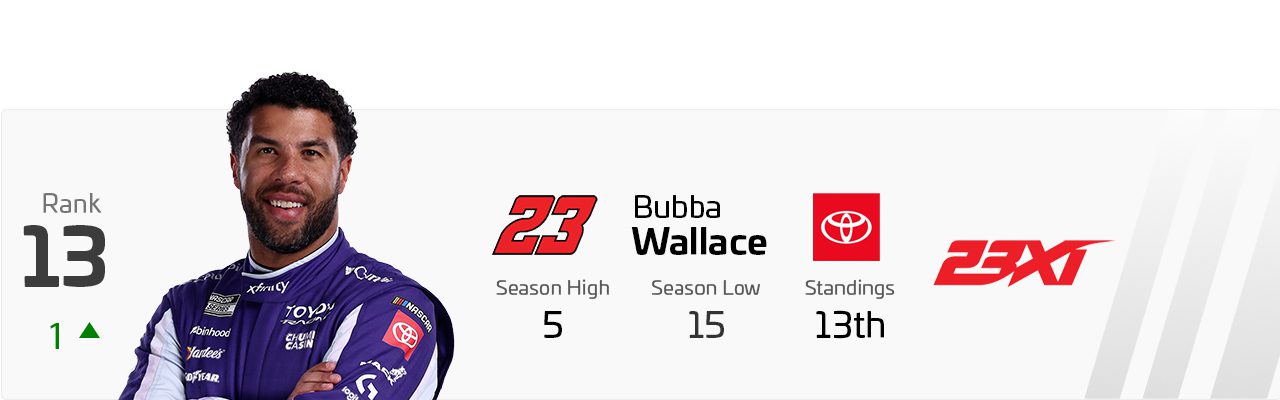
Analysis: Wallace’s sixth-place finish at Chicagoland was probably better than it will get credit for, especially among a slew of Toyotas in the top 10. But the No. 23 led 35 laps, ranked first in both passing and defense and spent long chunks of the race as a legitimate front-end player before the final cycle shuffled the win out of reach. That is a good sign after the Sonoma dent. EchoPark is not a bad follow-up, either, even if the raw stats are more solid than spectacular: one top five, three top 10s, 65 laps led and an 18.7 average finish in 14 starts. Wallace remains 77 points above the cutline, and the speed is showing up often enough that the next step is turning these strong runs into something with teeth.
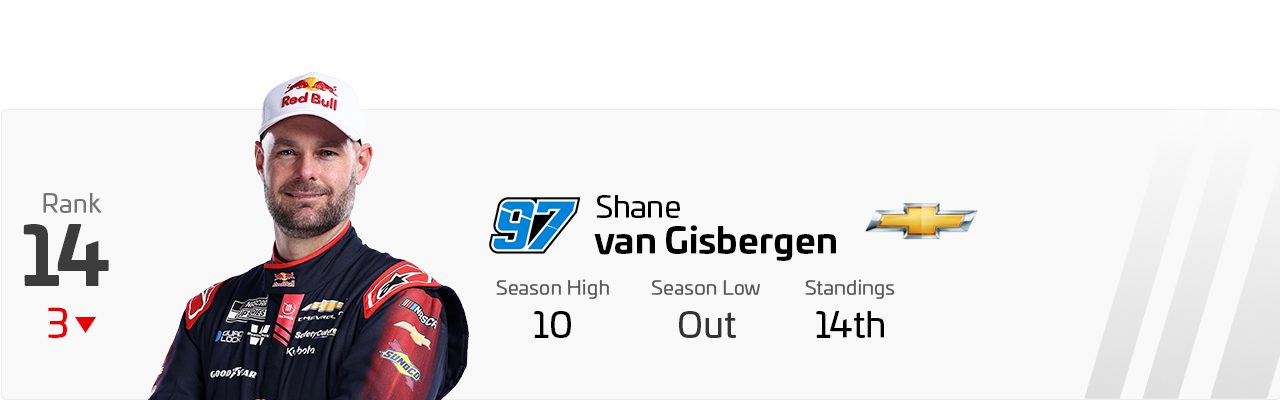
Analysis: SVG’s road-course annihilation vacation is over, and Chicagoland made that pretty clear. He started 30th, had contact with Austin Hill that triggered an early caution and finished 25th, one lap down, as the schedule snapped back to the kind of track that is still shaping his full-season ceiling. That does not erase the two wins or the road-course brilliance, but it does explain why he slips three spots and may not be done dropping. EchoPark is at least not empty for him. He has one top 10 in four starts there, but the average finish is still 21.3 and the sample remains thin. The mission now is less about fireworks and more about keeping The Chase cushion from shrinking before the next chance to strike, which is not obvious.
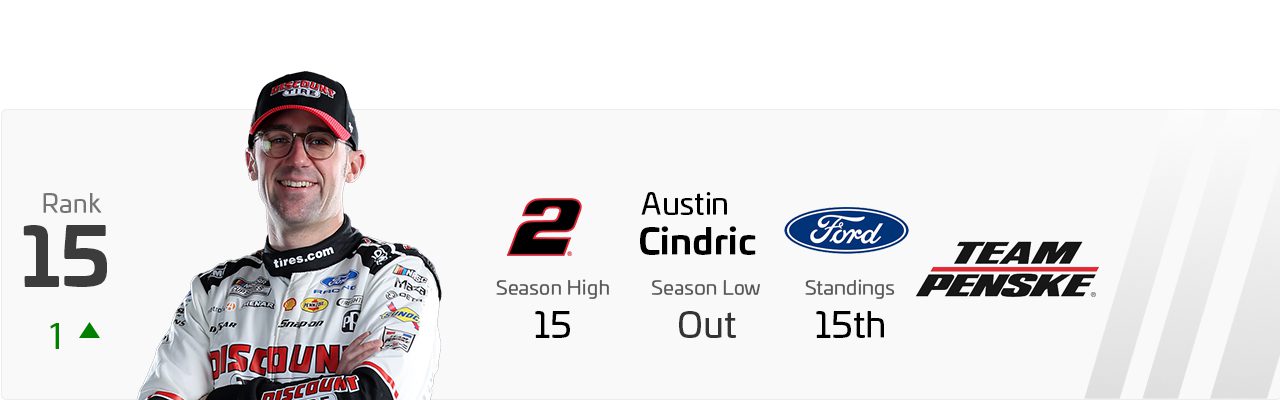
Analysis: Cindric moves up a spot because Chicagoland was quietly one of the more useful bubble nights on the board. He led 18 laps, finished fourth in Stage 1, ninth in Stage 2 and came home 13th, stretching his cushion to 27 points above the cutline. The No. 2 still doesn’t feel especially explosive, but Sunday was a reminder that Cindric can still manufacture real points when the race gives him an opening. EchoPark has been reasonably workable, too, with two top fives, three top 10s and 226 laps led in 10 starts. That is enough of a resume to matter when the bubble is this tight, and having a Daytona 500 win up his sleeve doesn’t hurt, either.
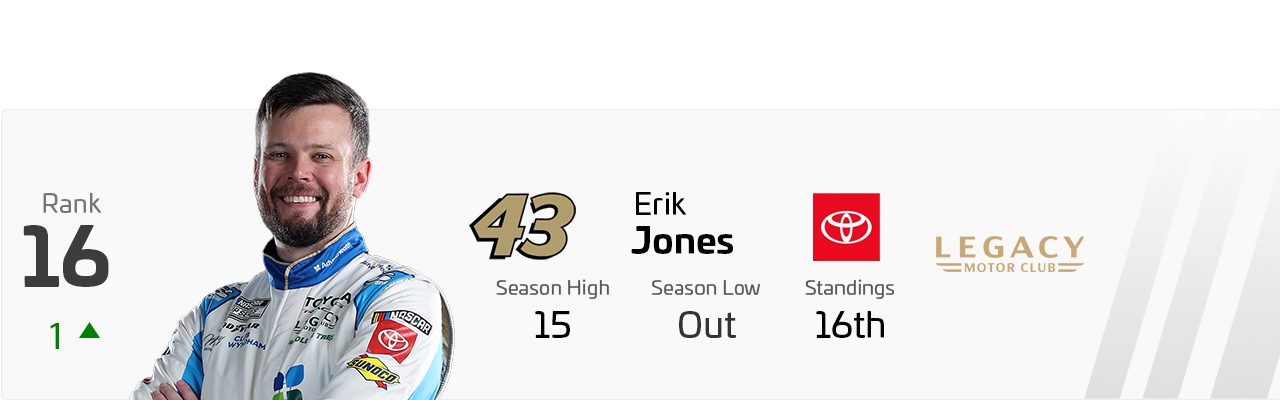
Analysis: Jones moves up one spot, though Chicagoland was more of a salvage than a surge. He finished 15th after brushing the wall and fading on a restart, which was enough to keep him barely above the red line but not enough to make the bubble feel comfortable. The Legacy Motor Club push is still alive, just a little less solid than it was after Michigan and Pocono. EchoPark offers a decent place to keep it upright, as Jones has two top fives, four top 10s and a 17.1 average finish in 15 starts there. With only four points separating him from the cutline, upright is not a boring word. It’s the whole job right now.
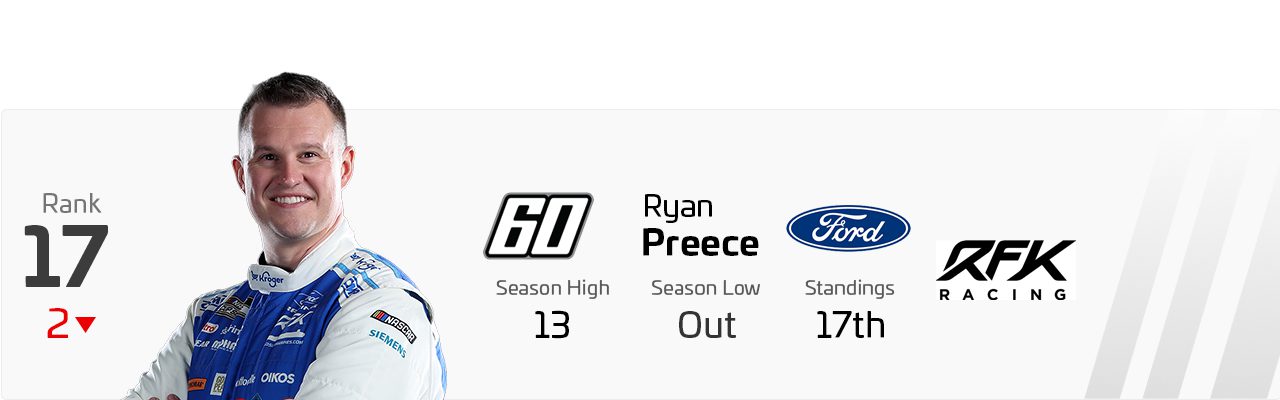
Analysis: Preece gives back two spots after Chicagoland undid much of the progress he made on the road-course swing. He got swept up in the opening-lap stack-up and later received the free pass twice, but still finished 32nd and fell four points below the cutline. That is a brutal reset for a driver who had just started to make his Chase picture feel a little less fragile. EchoPark does not offer much comfort, either. Preece has one top 10 and a 21.7 average finish in 11 starts there. The No. 60 has been better than the math suggests at times, but the math is getting a little less favorable.
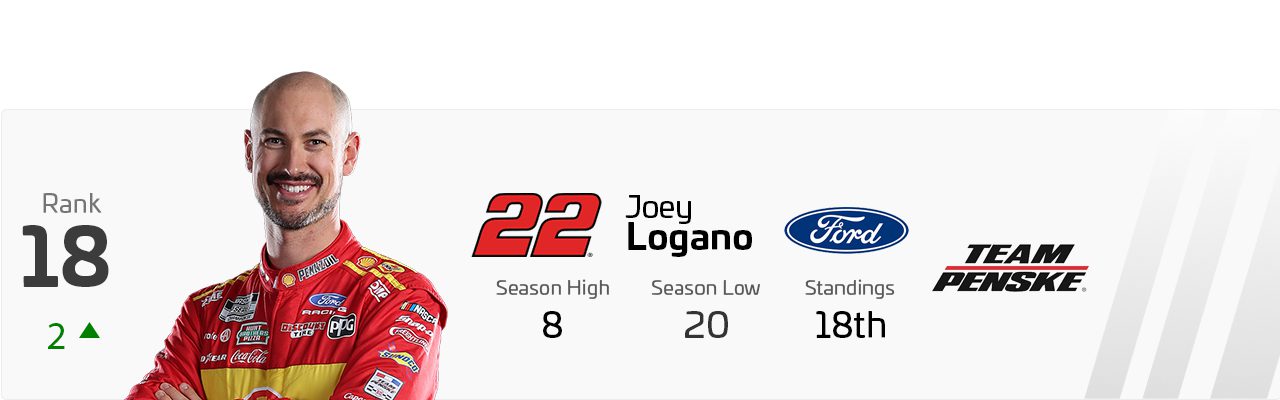
Analysis: Logano climbs two spots, which says as much about the bottom of the list as it does about a 12th-place finish, but there were still positives at Chicagoland. He started 31st, finished 12th, led a lap through the pit cycle and had the second-best pit crew performance of the race, matching a season-long pit crew profile that remains one of the best in the garage. The standings position still stinks considering who’s driving the car — the three-time champ is 16 points below the cutline — but EchoPark gives him a real lifeline. Logano owns two wins, four top fives, eight top 10s, three poles and 554 laps led there. If this season is going to stop feeling like a survival fight, this would be a very convenient place to start acting like the championship-caliber No. 22 Team Penske team that it is.
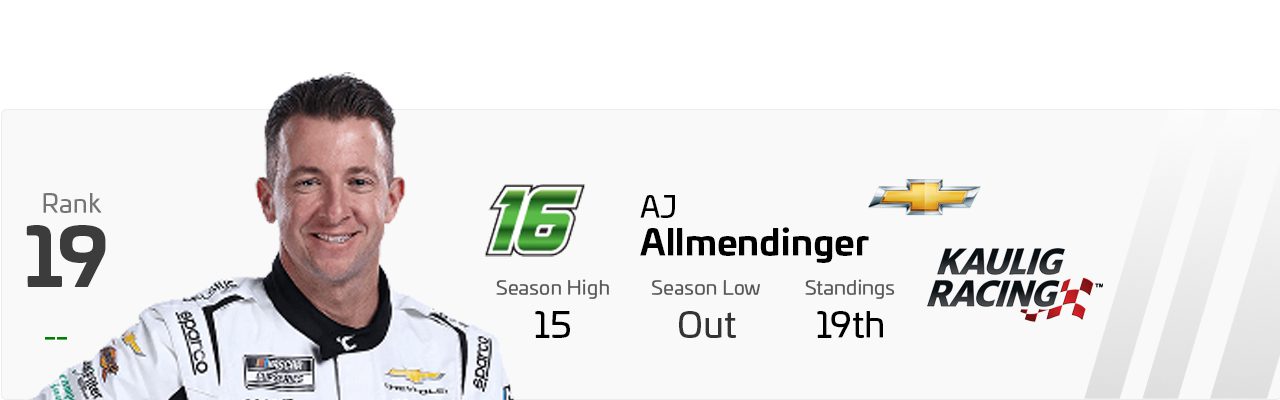
Analysis: Allmendinger holds 19th after finishing 17th at Chicagoland; basically the definition of staying alive without changing anything about the conversation. He remains tied with Logano in points, 16 below the cutline, and the schedule has moved away from the tracks where he had his cleanest shot to flip everything. But he’s a reasonable superspeedway racer, and EchoPark has not been terrible for him. Allmendinger owns one top five, four top 10s and a 16.7 average finish in 18 starts there, which is respectable enough to keep him in the discussion and afloat in The Chase mix. The problem is that “respectable” may not be enough for much longer, and points need to be accumulated consistently from here on out.
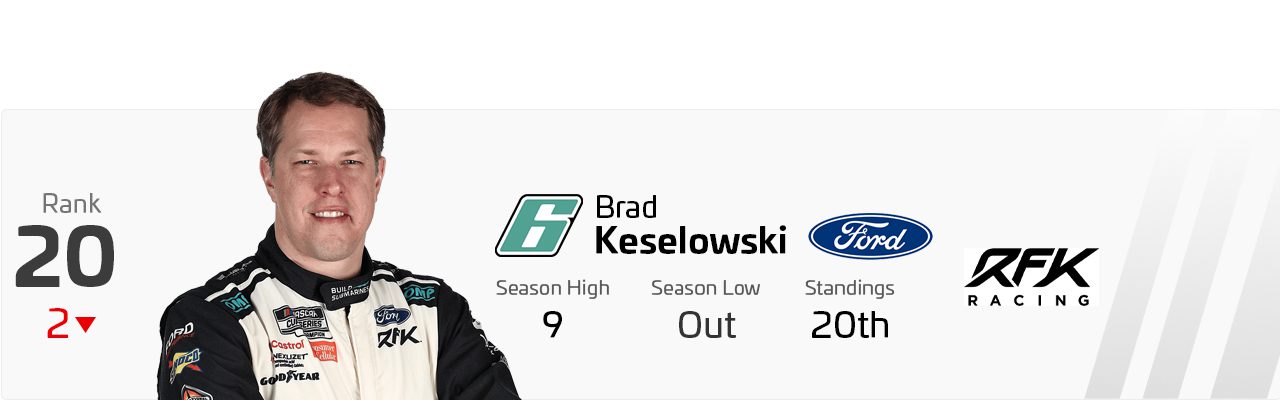
Analysis: Keselowski drops to the final spot, and the urgency is now impossible to ignore. Chicagoland should have been a place where the No. 6 could build off his strong track history, but instead, the 2012 champ finished 21st, lost more ground and slipped to 19 points below the cutline. EchoPark offers another veteran-friendly lifeline, and his history there is strong: two wins, six top fives, 12 top 10s, 259 laps led and a 15.7 average finish in 23 starts. That’s the good news. The bad news is that good track histories only matter if they start producing current points, and it feels like he can’t count on a clean weekend ahead. The Chase picture has not moved on without him yet, but it is absolutely checking its watch for when No. 6 might strike. And that’s a bigger “if” than “when.”
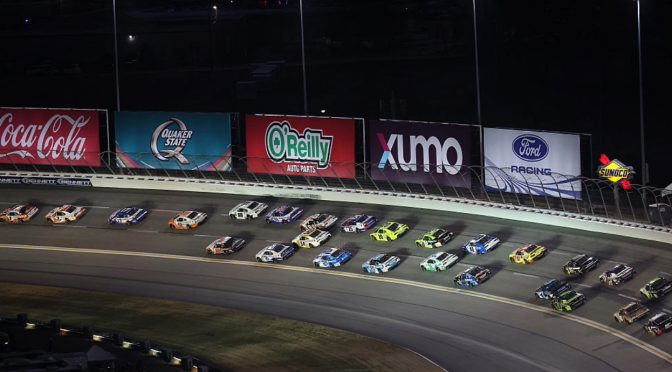
Following a return to the 1.5-mile Chicagoland Speedway for the first time since 2019, the NASCAR Cup Series heads to another 1.5-mile track this Sunday, but an entirely different beast in the high-banked, drafting-style EchoPark Speedway (7 p.m. ET, TNT Sports, truTV, HBO Max, PRN Radio, SiriusXM NASCAR Radio).
This will be the 20th points-paying race of the 2026 Cup Series season and the second trip to Georgia this year for the highly anticipated summer race in the Peach State.
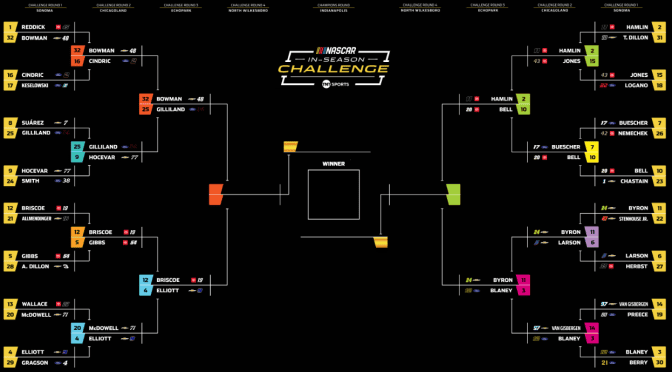
In Round 3 of the In-Season Challenge, (No. 25 seed) Todd Gilliland will go head-to-head with (No. 32 seed) Alex Bowman. Chicagoland winner (No. 12 seed) Chase Briscoe will battle Georgia native (No. 4 seed) Chase Elliott.
On the other side of the bracket, (No. 2 seed) Denny Hamlin is set to face off with Joe Gibbs Racing teammate (No. 10 seed) Christopher Bell. The final matchup will be a showdown between (No. 3 seed) Ryan Blaney and (No. 11 seed) William Byron.
Thirty-eight cars are entered into this weekend’s event.
The NASCAR O’Reilly Auto Parts Series makes its second trip to the Peach State this year for the summer race at EchoPark Speedway near Atlanta on Saturday (7 p.m. ET, The CW, PRN Radio, SiriusXM NASCAR Radio).
This will be the 21st points-paying event of the 2026 O’Reilly Auto Parts Series season.
Team owner Jordan Anderson will get back in one of his own cars, piloting the No. 32 Jordan Anderson Racing Chevrolet. This will be Anderson’s second start of the season after finishing fourth in the O’Reilly Auto Parts Series opener at Daytona International Speedway.
Jake Finch will drive the No. 9 JR Motorsports Chevrolet, making his second career series start after a 17th-place result in his O’Reilly Auto Parts Series debut last year at Dover Motor Speedway.
Thirty-eight cars are entered into this weekend’s event.
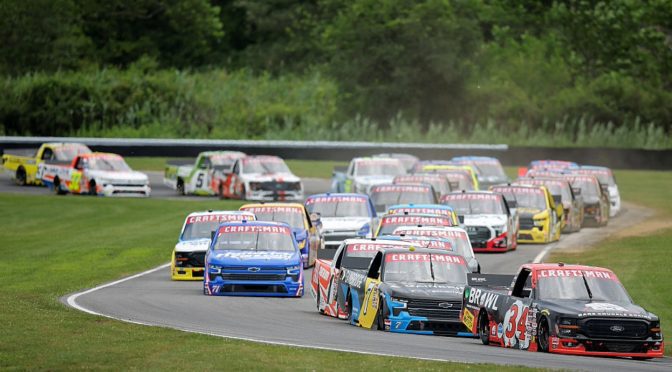
After a two-week break, the NASCAR Craftsman Truck Series returns to action Saturday afternoon for the final road-course race of the 2026 season at Lime Rock Park (1 p.m. ET, FS1, NASCAR Racing Network Radio, SiriusXM NASCAR Radio).
The event will be the 14th points-paying race of the 2026 Truck Series season. Front Row Motorsports driver Layne Riggs won both street-course races earlier this year at St. Petersburg and Naval Base Coronado and is looking for more success turning left-and-right with a potential Lime Rock victory on the horizon.
NTT IndyCar Series driver Louis Foster is set to make his Craftsman Truck Series debut in the No. 76 Freedom Racing Enterprises Chevrolet, while Spire Motorsports will have Connecticut native Parker Kligerman wheel its No. 77 Chevrolet at the 1.53-mile road course.
ARCA Menards Series regular Thomas Annunziata will drive the No. 1 Tricon Garage Toyota, with road-course specialist Colin Braun making his second start of the year in the No. 25 Kaulig Racing Ram.
Thirty-three trucks are entered into this weekend’s event.
The second of five weeks of head-to-head battles has trimmed the In-Season Challenge field after Sunday night’s showdown at Chicagoland Speedway. Only eight drivers remain eligible for the $1 million prize entering this Sunday’s NASCAR Cup Series race at EchoPark Speedway near Atlanta (7 p.m. ET, TNT Sports, truTV, HBO Max, PRN Radio, SiriusXM NASCAR Radio).
Here’s where things stand after Round 2 at Chicagoland:
Chicagoland race winner: During the final pit cycle of the eero 400, crew chief James Small used the undercut strategy by calling Chase Briscoe’s No. 19 Joe Gibbs Racing Toyota to the pits earlier than his competitors battling up front. Briscoe cycled to the lead and sailed to his first Cup Series win of the 2026 season despite a late-race challenge from JGR teammate Christopher Bell. The Hoosier driver advanced to the third round of the In-Season Challenge over teammate Ty Gibbs, who earned a solid eighth-place finish at the 1.5-mile Joliet, Illinois, track.
Who advances to Round 3
Advancing with the 12th-seeded Briscoe to the next round are: (2) Denny Hamlin, (3) Ryan Blaney, (4) Chase Elliott, (10) Christopher Bell, (11) William Byron, (25) Todd Gilliland and (32) Alex Bowman.
When Bowman missed four Cup Series races earlier in the year while recovering from vertigo, it all but ended his hopes of making up the points deficit to earn a Chase berth this fall. However, the In-Season Challenge gives the No. 48 Hendrick Motorsports driver some extra motivation, with something to fight for after the 32nd- and lowest-seeded competitor advanced to Round 3 by defeating 16th-seeded Austin Cindric at Chicagoland. Matching up against 25th-seeded Gilliland this Sunday at EchoPark Speedway near Atlanta, the unpredictable nature of a drafting-style track should give both Bowman and Gilliland an equal chance of advancing to the semifinal round. Both drivers may fit the bill for a “Cinderella story” in this year’s In-Season Challenge.
Matchup of the week
(No. 2) Denny Hamlin vs. (No. 10) Christopher Bell: In Round 3 of the In-Season Challenge, Joe Gibbs Racing teammates Hamlin and Bell will go head-to-head at EchoPark. Both drivers finished second and third at Chicagoland, respectively, with Bell beating seventh-seeded Chris Buescher and Hamlin topping 15th-seeded Erik Jones. With the third round taking place at the Georgia drafting-style track, Bell might be the early favorite, having won at EchoPark in 2025 and earning three top-five finishes. Plus, the driver of the No. 20 Toyota will have some extra motivation to earn a breakthrough trip to Victory Lane after expressing frustration over his fourth runner-up finish this year.
On the other hand, Hamlin has not found the same level of success on superspeedways in the Next Gen era, picking up only two top 10s in nine EchoPark races since the track was reconfigured. Nevertheless, the unpredictable nature of drafting-style tracks could shift the battle between teammates in either direction, as both drivers will need a little bit of luck to prevail in this matchup.
Who’s up
William Byron, No. 24 Hendrick Motorsports Chevrolet. After getting up front and leading 94 of 267 laps, Byron’s No. 24 Hendrick Chevrolet showed glimpses of the team we saw last year that led 1,330 laps. In 2026, Byron has not had the same level of success, with only 136 laps led after Chicagoland. Although Byron faded to a fourth-place finish after the final pit cycle, it was good enough for the 11th-seeded driver to defeat sixth-seeded teammate Kyle Larson to advance to the third round of the In-Season Challenge. At EchoPark Speedway, Byron is set to face third-seeded Ryan Blaney.
Chase Elliott, No. 9 Hendrick Motorsports Chevrolet. Sunday night in Illinois was relatively quiet for Elliott, who earned an 11th-place finish. He also finished 15th and seventh in both stages with no laps led. Still, the No. 9 Chevrolet driver bested 29th-place finisher and 20th-seeded driver Michael McDowell to move on to the third round of the In-Season Challenge. Although the performance at Chicagoland was not super flashy, the Georgia native and fourth-seeded driver has to be excited for his matchup against 12th-seeded Chase Briscoe at his home track. Elliott is the defending summer race winner at EchoPark Speedway.
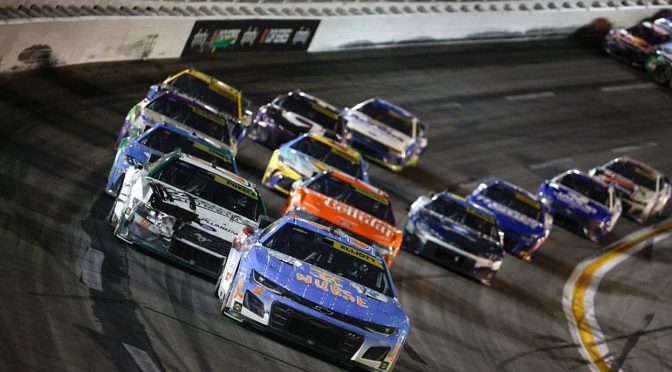
JOLIET, Ill. — William Byron led the most laps in Sunday’s NASCAR Cup Series race at Chicagoland Speedway and appeared on his way toward his first win of 2026.
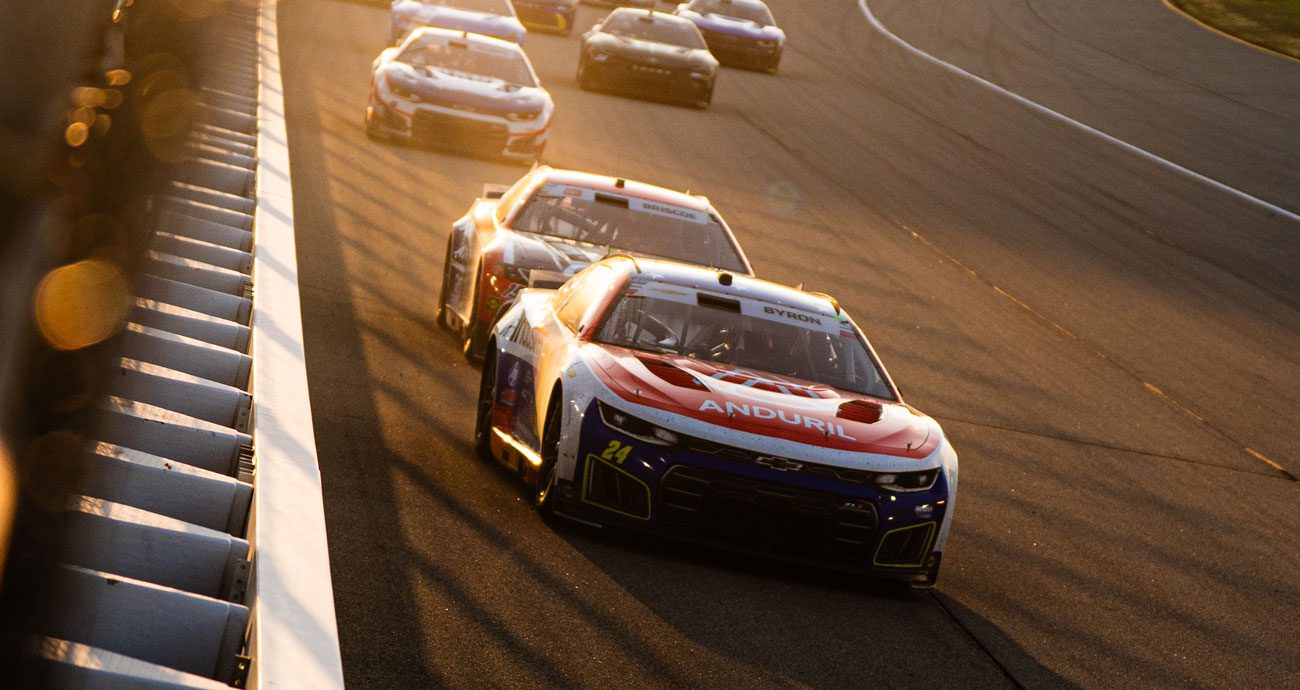
Instead, a battle of crew chiefs’ calls to pit road allowed Chase Briscoe to leapfrog Byron’s No. 24 Hendrick Motorsports Chevrolet with 50 laps remaining, with Briscoe prevailing to a rousing victory in the eero 400 and Byron settling for fourth.
Briscoe entered the final green-flag pit cycle in second place behind Byron before crew chief James Small called the No. 19 Joe Gibbs Racing Toyota to pit road at Lap 215. No. 24 crew chief Rudy Fugle drew Byron to pit road one lap later at Lap 216, but by then, the damage was done: Briscoe’s momentum on one-lap fresher tires caught Byron midway down the backstretch as Byron returned to the racing line. Briscoe flew by Byron’s outside and ultimately sailed to victory as Byron faded in the closing 50 laps.
“Those guys were just fast,” Byron said. “I mean, even when I was leading, they could just stay right with me, and everything had to be perfect. And ultimately, we got jumped there on the cycle, but it’s hard to know. They have the advantage of being second and being able to do that. So I don’t know. I feel like if I was perfect that last run, I could have gotten a little closer and just didn’t quite have the pace that they had. I don’t know. I think that was probably pretty maxed out for us. They just eventually got the clean air, and it was hard to defend.”
Like all strategy shot-callers, Fugle watched the laps tick away as the fuel window neared, targeting a particular lap number to hit pit road and leave with enough fuel to last until the checkered flag.
“We wanted to run a little longer, and we were right at the one-lap gap to the 19,” Fugle told NASCAR.com, “but it was probably just under. I was hoping for a faster pit stop and the best clean in and out that he could get and just missed it by a little bit. Yeah, that sucks. I don’t know how the race finishes and how we manage it otherwise, but yeah, keep gaining on the little things.”
Alejandro Alvarez | NASCAR Digital Media
While Fugle had to plan strategy to defend, Small and Briscoe were on offense, searching for any advantage they could find to jump past the No. 24 car.
“Every lap is just a process. OK, what are we going to do right now? What are we going to do?” Small said. “You are constantly managing the gap there, and you know what the undercut is worth. It’s like you said, a game of cat and mouse. You don’t want to go too early because you don’t want to risk burning your tires off at the end. All it can take is two or three laps’ difference. I knew we were getting close enough there and close enough to the number I had in my mind where I thought everything would work out and be safe at the end. We got to that, and thankfully he hadn’t pulled the trigger yet, either, and it gave us that opportunity. And then it just kind of started the chain of reaction with everybody else.”
To fall short of victory was disappointing for Byron and Co., but having contending speed was a certain step forward. Sandwiched around a double dose of road courses on the Cup Series slate, the No. 24 team displayed an apparent gain of speed on larger, intermediate ovals, evidenced by a third-place effort at Pocono Raceway before leading a race-high and season-best 94 laps Sunday at Chicagoland.
“I think we’re starting to gain,” Byron said. “I think, honestly, it makes a lot more sense now the way the car feels. And now in the last two oval races, we’ve had a shot to win. Here and Pocono, we’ve been top four, so yeah, we’ve just gotta keep inching up on it and hopefully find a little bit.”
After its fourth top five of the season, that momentum is felt throughout the No. 24 team, particularly with a stretch of diverse ovals standing between now and The Chase over the next seven weeks.
“I think since Dover, we’ve been making small gains,” Fugle said. “And the results haven’t always shown it — or hardly ever shown it until recently — but we’ve just got to keep our heads on straight and keep making small gains, and we’ll get where we need to be by the time the playoffs start.”
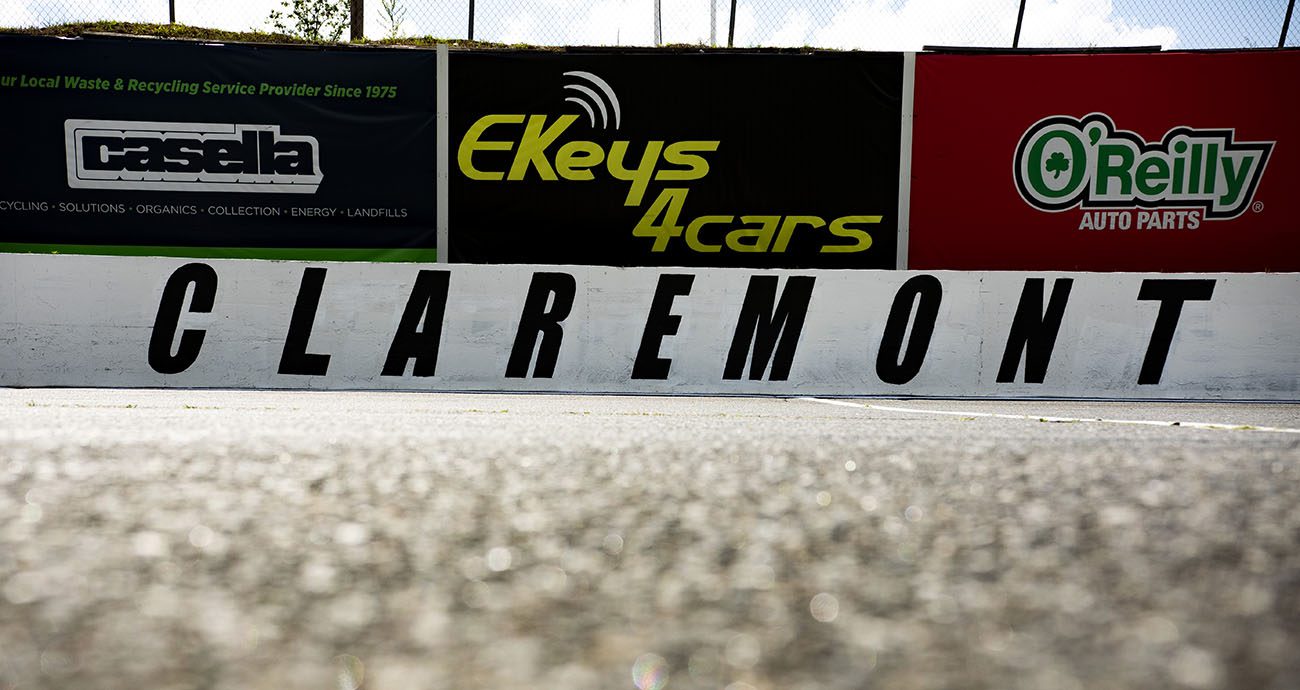
For the first time since 2022, the NASCAR Whelen Modified Tour is returning to New Hampshire’s Claremont Motorsports Park this Friday night for the running of the Clash at Claremont (8:30 p.m. ET on FloRacing).
The Clash at Claremont marks just the fourth time the Modified Tour will race at the track in Claremont, New Hampshire. The 0.333-mile asphalt oval first welcomed the series during the Tour’s inaugural season in 1985, when NASCAR Hall of Famer Richie Evans bested Jimmy Spencer to secure the victory.
Claremont didn’t host the Modified Tour again until 2007, when James Civali outlasted Matt Hirschman to earn one of his four series triumphs. The series returned again in 2022, when Jon McKennedy collected the only victory of his championship campaign. The series was scheduled to race at Claremont in 2023, but bad weather forced track and series officials to cancel the event.
Tickets to the Clash at Claremont at Claremont Motorsports Park are available here. Below is everything you need to know about the eighth race of the 2026 NASCAR Whelen Modified Tour season.
Claremont Motorsports Park will welcome back the NASCAR Whelen Modified Tour for the first time since 2022 this Friday night. (Photo: Rachel O’Driscoll/NASCAR)
Clash at Claremont at Claremont Motorsports Park
There is something to be said for momentum in racing. After a rough start to the NASCAR Whelen Modified Tour season, Matt Hirschman finally has some.
The pilot of the No. 60 PeeDee Motorsports Modified collected his first victory of the season last Wednesday in the Firecracker 150 at Seekonk Speedway. In addition to a much-needed positivity boost, the triumph gives Hirschman an early edge in JDV Productions’ Whelen Midsummer Championship miniseries.
The three-race miniseries, which continues at Claremont Motorsports Park this Friday and wraps up at Monadnock Speedway on July 25, will pay $5,000 to the champion. Hirschman has a chance to earn an additional $10,000 bonus if he were to sweep all three races.
Hirschman is no stranger to Claremont Motorsports Park. He’s won races at the track as far back as 2008 and should be a contender to win again Friday. However, he’s not the only expected entry with ample experience at Claremont.
Jon McKennedy, already a two-time winner this season with the Modified Tour, is the most recent series winner at the 0.333-mile asphalt oval. His victory, which came during his 2022 championship campaign, saw him lead 137 of 150 laps on his way to victory. He’ll be a serious contender when the green flag waves Friday night.
Stephen Kopcik continues to lead the Modified Tour standings as the series nears the halfway point of the season. He holds a 10-point advantage on defending series champion Austin Beers entering Friday’s event. Of the two, only Beers has competed in a Modified Tour event at Claremont previously.
Other notable entrants for Friday’s race include Patrick Emerling, Eric Goodale, Tyler Rypkema and Teddy Hodgdon, among others.
The complete entry list for Friday’s Clash at Claremont will be available later this week.
Claremont Motorsports Park has previously hosted the NASCAR Whelen Modified Tour three times. (Photo: Rachel O’Driscoll/NASCAR)
SCHEDULE: Friday, July 10: Practice from 3:30 – 4:10 p.m. ET … Final practice from 4:20 to 4:50 p.m. ET … American Racer Pole Award qualifying at 6:05 p.m. ET … Start of the Clash at Claremont at 8:45 p.m. ET (150 Laps / 49.95 Miles)
QUALIFYING: Two consecutive qualifying laps. Faster lap determines qualifying position. Adjustments or repairs may not be made on the vehicle after the vehicle has taken the green flag at the start/finish line. NASCAR reserves the right to have more than one vehicle engage in qualifying runs at the same time. Starting field for the Clash at Claremont 150 is limited to 28 starters including Provisional Positions.
TIRE ALLOTMENT: The maximum tire allotment available for this event is eight (8) tires per team. All tires used for qualifying and the race must be purchased at the track and scanned by NASCAR Officials, unless otherwise approved in advance by the Series Director. Four (4) tires must be used for qualifying and to begin the race. All qualifying tires must remain in impound until released by NASCAR Officials. The remaining tire allotment may be used for practice tires during the event. The tire change rule is zero (0) tires, any position.
RE-DRAW PROCEDURE: The fastest qualifier will spin the wheel to determine the number of drivers that will re-draw for their starting positions: 4, 6, 8 or 10 positions will re-draw. Once the fastest qualifier spins the wheel, NASCAR will have the various buckets ready to immediately start the re-draw procedure. Driver will re-draw in their qualifying order after qualifying has been completed (1 through 10, or however many are applicable). The pole position and/or any bonus point(s), if applicable, will be awarded to the fastest qualifier and will be the pole of record. If, due to adverse conditions, qualifying is canceled, the field will be set in accordance with the 2026 NASCAR Whelen Modified Tour Rule Book. The re-draw procedure will still take place regardless of how the field is set.
JOLIET, Ill. — Managing expectations is something relatively new for Chase Briscoe. Even before Sunday’s NASCAR Cup Series race at the rejuvenated Chicagoland Speedway, he spoke about how his three-victory season last year — his first with Joe Gibbs Racing — had made him conditioned to winning, a luxury he hasn’t had for big swaths of his journeyman NASCAR career.
Going winless through the first half of this season “has really burned me up,” he said Saturday, on the eve of Sunday’s first Cup Series go here in seven years. That feeling was new, too.
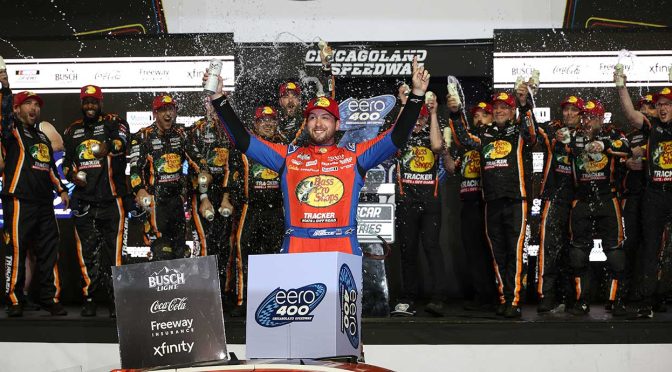
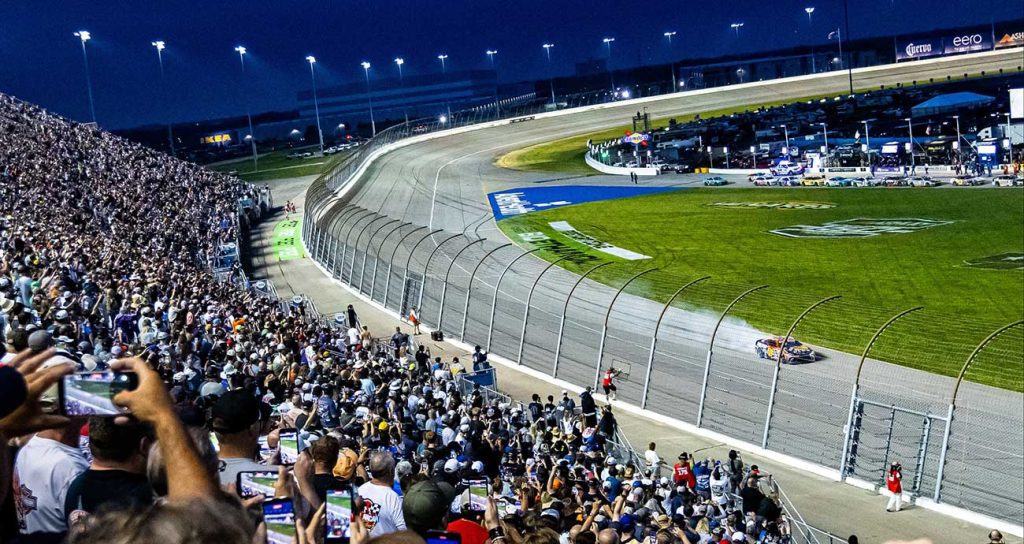
So it says something about the 31-year-old driver’s expectations when the celebration he unleashed Sunday night at Chicagoland was premeditated, something he’d thought of springing on spectators last season in a nod to his outdoorsman roots and his Bass Pro Shops sponsor. After a smoky frontstretch burnout, he stood on the roof of his No. 19 Toyota, cast an imaginary fishing rod and reeled in this triumph.
As far as Cup Series victories go for Chase Briscoe, this one was a lunker, scratching the win column and providing a boost — both in points and morale — back toward the Chase postseason. He called driving a patriotic paint scheme to victory on July 4th weekend “the most American I’ll ever feel in my life,” but in the context of the season as a whole, the moment provided a statement about his championship bona fides and his capabilities after an uncharacteristically slow start to the 2026 campaign.
“There’s been a couple that have kind of slipped away I feel like this year,” Briscoe said. “Then when your teammates are winning, it makes it worse as a competitor, because you know they have every equal opportunity that you have, and they’re performing better. So, yeah, there’s definitely a lot of pressure to go and run good. It goes in ups and flows.”
There was plenty of special to spread around in this latest up. Crew chief James Small was all smiles, savoring a moment when his No. 19 team’s potential was realized. A rocky start to the year with crashes or mechanical breakages in three of the first four races had left Briscoe and Co. 33rd in the early Cup Series standings. Sunday marked a 25-spot rise in the 15 races since.
Small’s role was crucial, and when he opted to bring Briscoe to pit road before fellow contender William Byron for his final green-flag stop, that move helped the team leapfrog an especially strong No. 24 Chevrolet, providing him an advantage that he’d keep to the end. He also spurred his driver on with pep and encouragement on the No. 19 radio, even with Christopher Bell — an equally hungry JGR teammate — chasing him down the stretch.
“We’ve had pace all year, it’s just been very yo-yo,” Small said from the side of the Victory Lane stage. “We’ve had incidents or mechanical failures, and we just needed clean races, and that has been the key since Pocono — just trying to have clean races, execute, put ourselves in position to win and just try to accumulate the points. And we knew if we could keep our car up front all night, we’d always have a chance, and tonight proved that.”
Helping sweeten the celebration, Sunday was Small’s 43rd birthday, and he marked it with a win for the first time. “This is a world’s first, and also the birthday of America, my first one as a U.S. citizen,” the Australian-born Small said, “so it’s been a great weekend.”
Charlie Ramirez | for NASCAR Digital Media
The moment was also a cherished one for Lee Cunningham, the No. 19’s veteran rear-tire changer and an Illinois native hailing from the township of Leaf River (population 432), some 80 miles northwest of the track. Cunningham motioned toward the Turn 1 side of the main grandstands to show where he sat as a teenager for Chicagoland’s first Cup Series race in 2001. In the years since he joined the NASCAR grind, he’s been on crews that have won multiple times here — including one where he caught some slime shrapnel from a Nickelodeon-themed Victory Lane for one of Martin Truex Jr.’s wins here nearly a decade ago.
As the team’s last pit stop approached Sunday, Cunningham admitted to some anxiety in the anticipation of their final service. The veteran presence, though, came through. The No. 19 crew members were careful not to tip their hands to other teams about their strategy, waiting until the last possible moment to position themselves on the pit wall.
The longing that Briscoe had for a return to winning ways? Cunningham says it was shared among the steady over-the-wall group.
“I mean, no matter how many races you win, you always want to win another one, right” Cunningham said, “and to win it with this group of guys, we’ve had a new guy come into the picture the last couple years, and it always seems to take us a little while to jell, so it’s kind of nice to get the win today, and now we get to look forward to the playoffs. We’re on a roll, we’re climbing in points. There for a while, we were way back in points, so as a team it just really kind of solidifies … like, we knew what we were capable of, but it kind of shows everybody else now.”
Sunday showed Briscoe that the path to a potential first Cup Series championship is a difficult-but-viable one, a journey that would be made more feasible if the wins were to accumulate. Toyota mates Denny Hamlin and Tyler Reddick still hold a significant advantage in the standings with seven races remaining before the 16-driver Chase field is locked, but the points premium on winning in this year’s new-look format provides an avenue.
A day before Sunday’s 400-miler, Briscoe hinted that he might have to channel his inner Tony Stewart, referencing both his former employer and a NASCAR Hall of Famer who famously went on an all-timer postseason tear to score his third Cup championship in 2011.
“I definitely think it’s it’s possible,” Briscoe said in Saturday’s preliminaries. “It’s not going to be easy. You’re going to have to go win races, but yeah, I think we’re more than capable of doing that.”
Sunday night, with a soundtrack of Chicago blues blaring in Victory Lane’s background, Briscoe showed he can still reel it in.