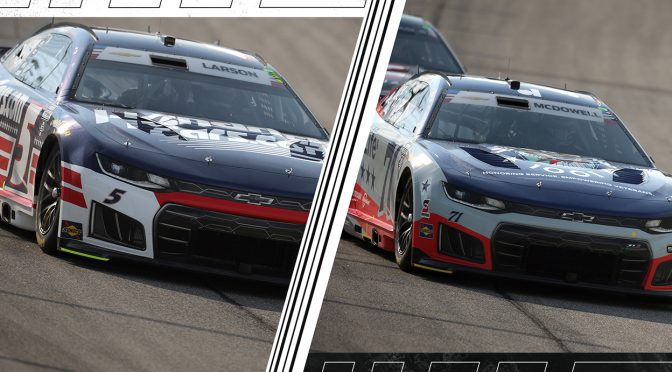
NASCAR officials levied penalties to the No. 71 Spire Motorsports Chevrolet and No. 5 Hendrick Motorsports teams Saturday at Chicagoland Speedway for multiple pre-race inspection failures, the sanctioning body announced.
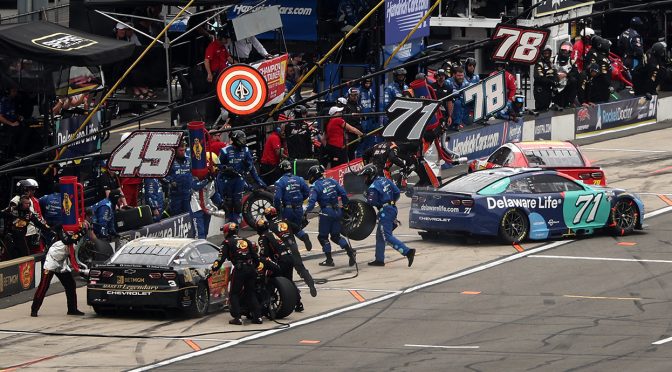
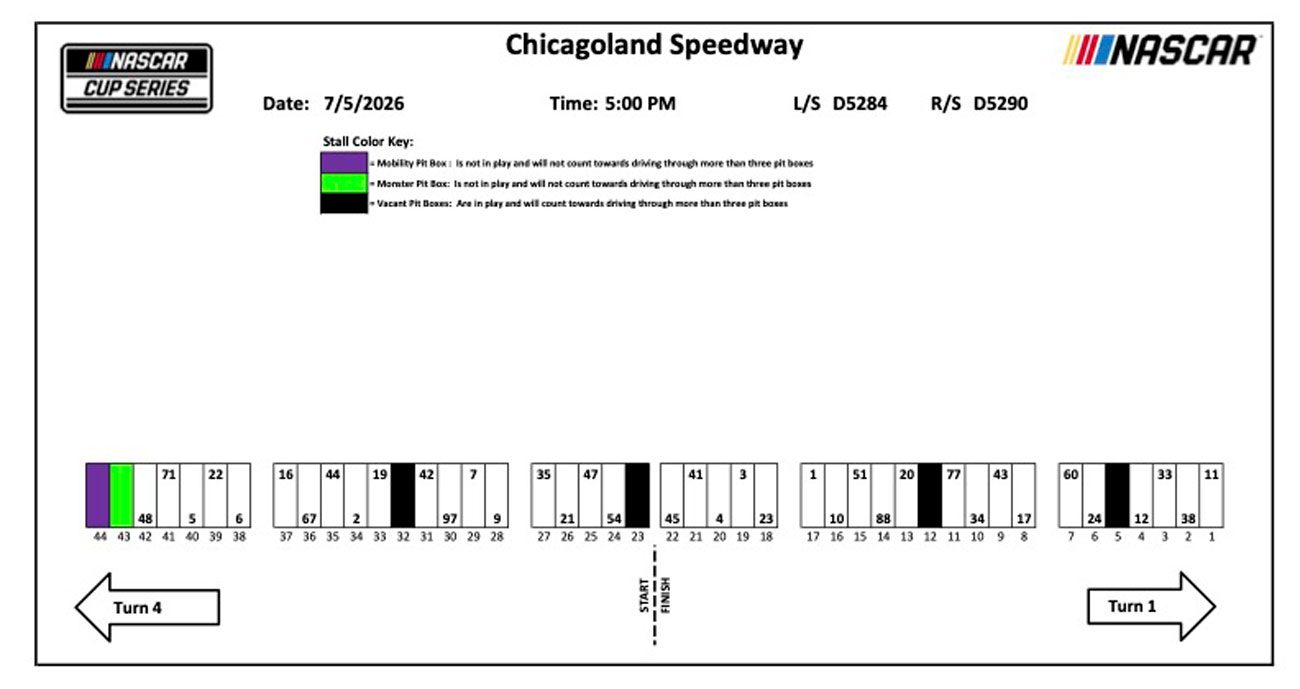
The No. 71 Chevrolet failed three times before passing on its fourth try. Consequently, driver Michael McDowell was not permitted to attempt a qualifying lap and will forfeit pit-stall selection. He’ll start Sunday’s eero 400 (6 p.m. ET, TNT Sports, truTV, HBO Max, MRN Radio, SiriusXM NASCAR Radio) from 38th and will also serve a pass-through penalty upon the green flag. Additionally, car chief Travis Young has been ejected for the remainder of the race weekend.
The No. 5 Chevrolet, driven by defending series champion Kyle Larson, failed inspection twice before passing on its third try. As a result, the team also lost pit-stall selection, and car chief Jesse Saunders was ejected for the remainder of the race weekend. Larson qualified second for the 400-miler.
McDowell enters the weekend with consecutive top-10 finishes at Naval Base Coronado and Sonoma Raceway, and sits 21st in points — 32 markers behind the provisional Chase cutline. Larson is fifth in points and finished runner-up in each of the series’ last two visits to the 1.5-mile track in 2018 and 2019.
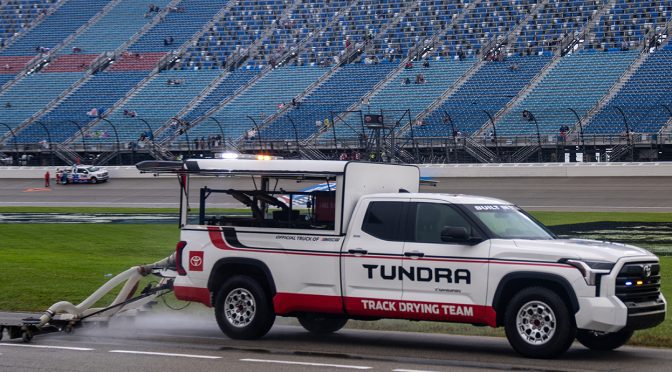
Saturday’s NASCAR O’Reilly Auto Parts Series race at Chicagoland Speedway is expected to begin at 10 p.m. ET after a lengthy delay due to inclement weather (The CW, MRN Radio, SiriusXM NASCAR Radio).
The Cuervo 300 was set to begin at 5:30 p.m. ET at the 1.5-mile Illinois track before thunderstorms arrived in the area. It’s the series’ first visit to Joliet since 2019.
Friday’s practice session was postponed until Saturday due to rain and was held in place of qualifying. Richard Childress Racing’s Jesse Love topped the leaderboard at 173.533 mph during the 50-minute session.
The starting lineup was set per the NASCAR Rule Book. When the race begins, JR Motorsports driver Connor Zilisch will lead the field to the green flag in his No. 1 Chevrolet, with Joe Gibbs Racing’s Brent Crews joining him on the front row.
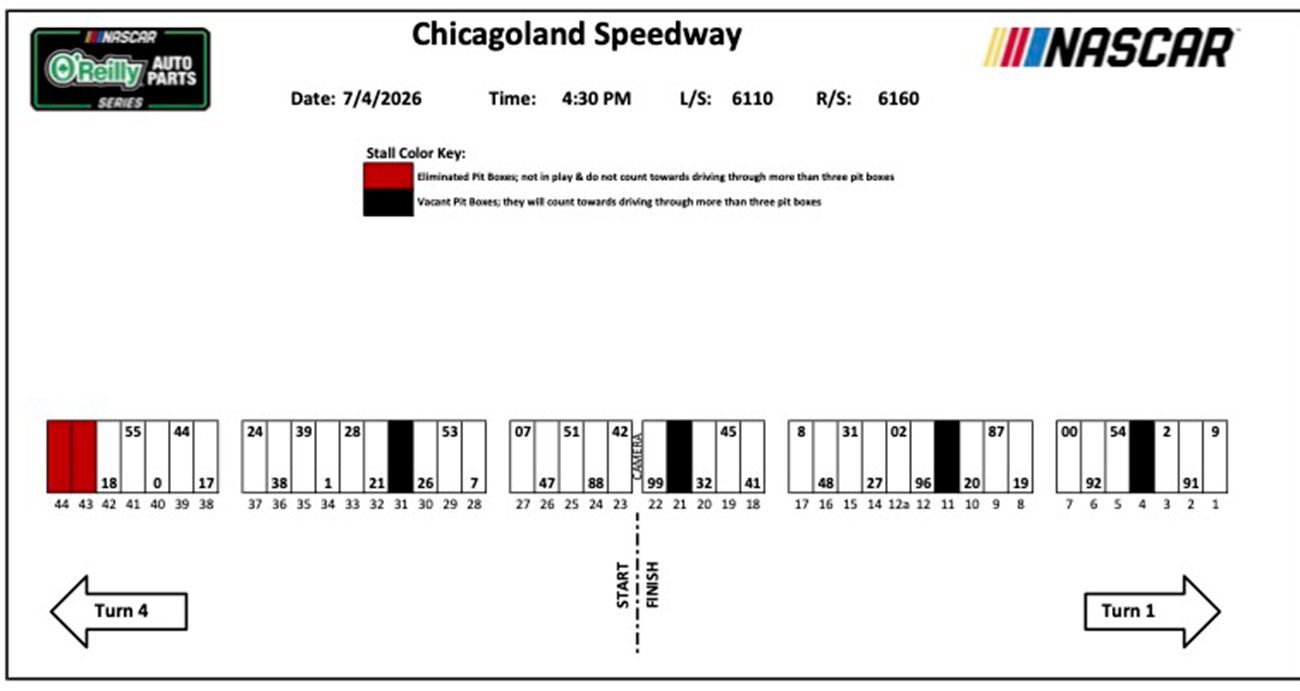
Track: Chicagoland Speedway Location: Joliet, Illinois Track length: 1.5 miles When: 6 p.m. ET Where to tune in: TNT Sports, truTV, HBO Max, MRN Radio, SiriusXM NASCAR Radio Race purse: $11,233,037 Race distance: 267 laps | 400.5 miles Segments: 80 | 165 | 267 Sunday’s starting lineup| Pit-stall assignments
Veterans, first-timers share new-car feel in Chicagoland’s rebirth
JOLIET, Ill. — Coming back to Chicagoland Speedway for the first time since 2019 has felt in some ways familiar. The trappings of race tracks that sprang up in the late 1990s and early aughts are all still here, and many of the faces that starred in the track’s first era are still stars during its rebirth.
Several Chicagoland memories have been replayed — the Kyle Busch crying-eyes meme, the Tropicana orange invasion, the Victory Lane slimings — in the buildup to Sunday’s revival, but many other facets of big-league stock-car racing have changed in the years since. Three organizations — 23XI, Trackhouse and Kaulig — didn’t exist as Cup teams back in 2019, and the current-generation Cup Series car that bowed in 2022 is a radical shift from its on-track predecessor.
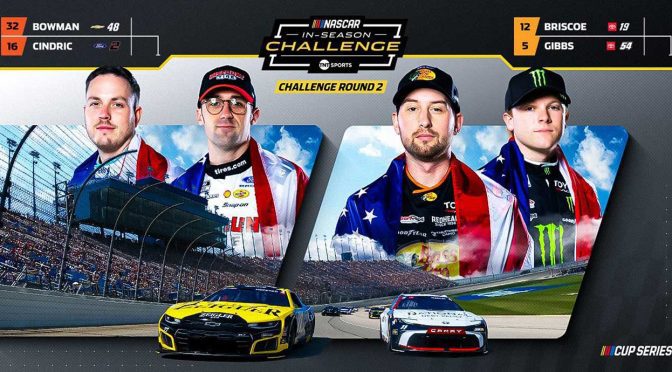
Nostalgia notwithstanding, there’s plenty of reason for drivers to approach Sunday’s eero 400 as a new race at a new venue on the schedule after three years of racing on Chicago’s downtown streets. It’s also another moment for the In-Season Challenge — another feature that wasn’t around in 2019 — with 16 drivers moving into the second round of the second-annual tournament.
With the degree of newness comes a measure of mystery. Of the 38 drivers in the field Sunday, 21 of them have Cup Series starts at Chicagoland. Those Joliet veterans, however, say that their experience in the track’s previous era may not tip the performance scales in their favor.
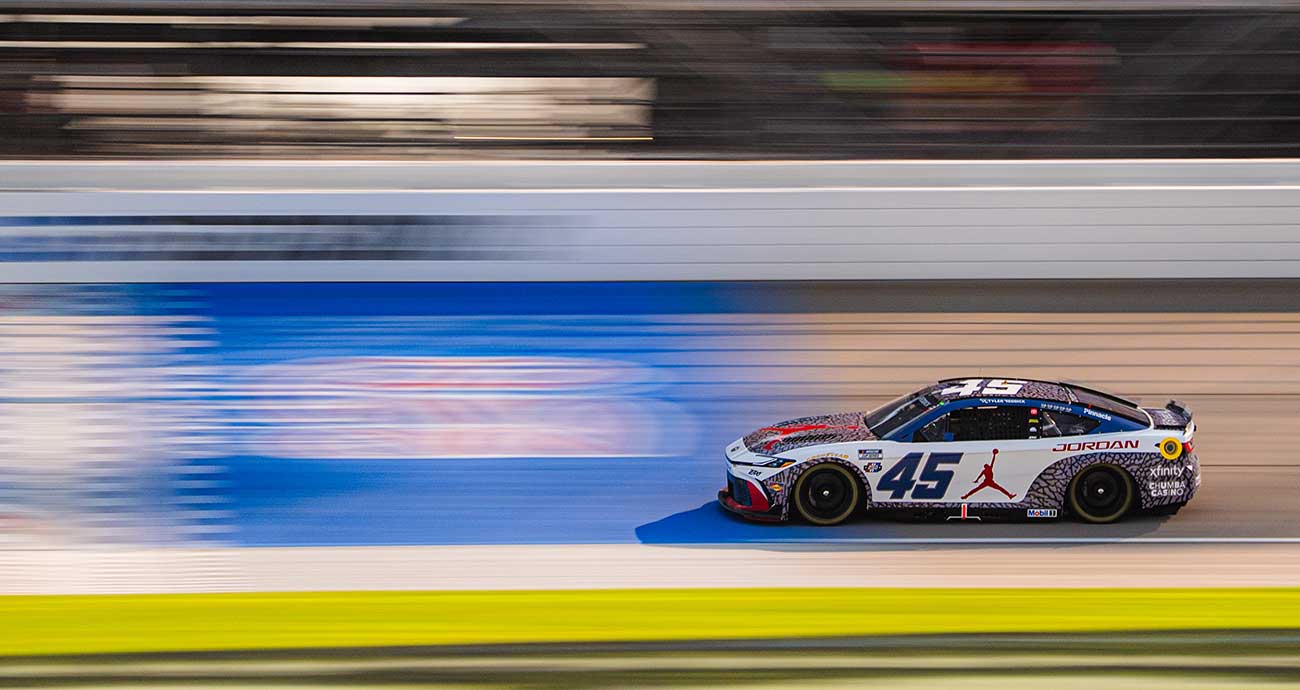
“I definitely thought coming into this, past experiences would matter,” 23XI’s Tyler Reddick said before qualifying 13th Saturday. “I mean it’s just one sample of it and that was yesterday’s practice, but just based off yesterday, I would say past experience doesn’t matter quite nearly as much as I thought it was going to. I remember coming here in an O’Reilly (Auto Parts Series) car, and lots of (tire) fall-off, having to move around. I’m sure they’re experiencing that right now, but just by nature, how different the Cup car can be kind of showed itself a bit yesterday.”
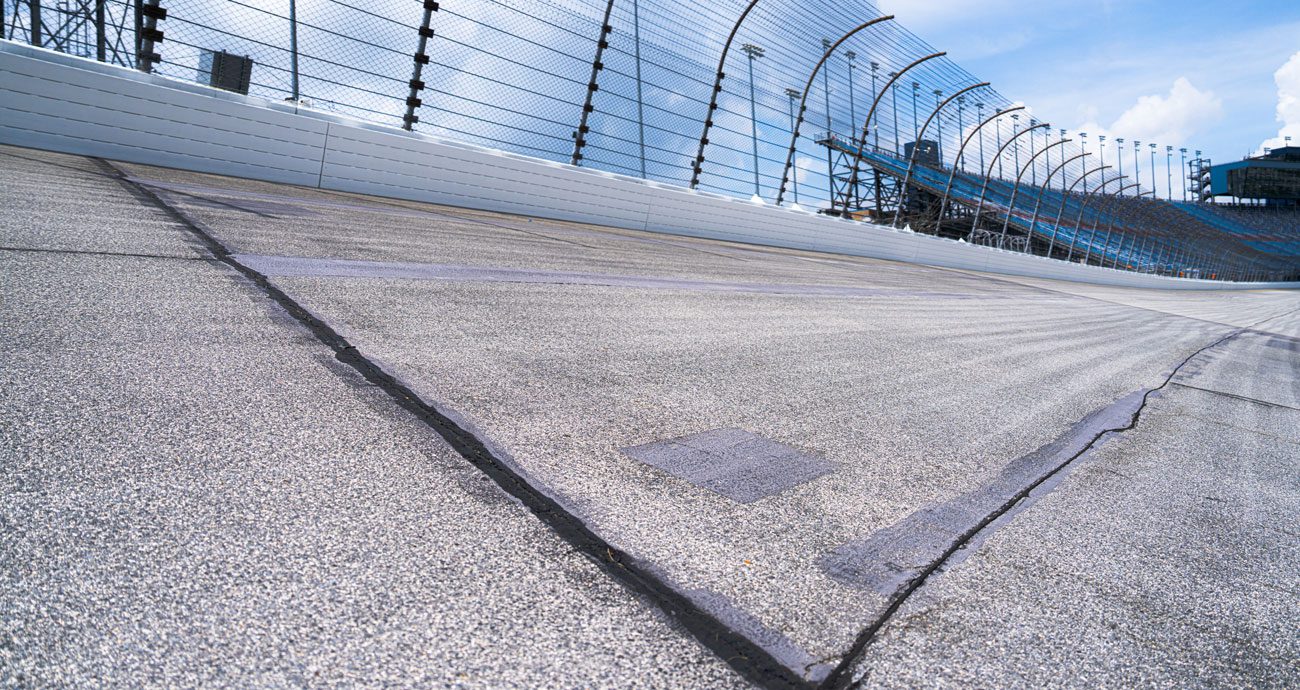
While there are comparable 1.5-mile tracks, the idiosyncrasies of each one present distinct challenges. The bumps from the original, sealed-up asphalt surface remain, but those quirks have hit differently with the Next Gen racer. A sizable drop in Turn 1 has unsettled several cars in practice and qualifying, and another dip through Turns 3 and 4 has provided another series of character marks. Finding reference points elsewhere on the Cup schedule has been a speedway scavenger hunt.
“No, because it’s like really smooth, and then it’s just the biggest slam that I think we have, and then you’re smooth again,” said Carson Hocevar, who was 16 years old when NASCAR last visited here and who connected Chicagoland’s traits to everything from the rough San Diego street-course runways to the treacherous portions of Texas.
In the short span of the first weekend back so far, several trends have already emerged. Cup Series drivers were reluctant to be the first to test the higher lanes in Friday’s 50-minute practice, but the groove widened upward once O’Reilly Auto Parts Series cars ventured that direction in Saturday’s preliminary sessions, hinting at more of the same in Sunday’s main event.
The other trend was speed from the Cup Series points leader as Denny Hamlin secured the top starting spot for the fourth consecutive oval race. The No. 11 Joe Gibbs Racing driver was one of three who participated in a Goodyear tire test here in April, with fellow front-runners Ryan Blaney and defending champ Kyle Larson joining him.
That experience might not tilt the playing field. Same goes for the experience from the first Chicagoland incarnation.
“I’ve been here a lot through the years, and that being said, going out there in this car after that long, felt like the first time,” said RFK Racing’s Chris Buescher, who made four Chicagoland starts from 2016-19. “Yes, I knew the bump into (Turn) 1 is big and has that big moment. I knew the roughness in (Turns) 3 and 4 was going to be there, but I’m still relearning where it’s all at and what this car does with it. So, is there an advantage there? Probably not a ton. Denny pointed out, even from the test here, there’s a couple cars that did a test, and you’d think that they would have a big advantage, and they may have for about five laps, but ultimately stuff changes really quick and everybody’s going to figure it out rather quickly.”
Alejandro Alvarez | NASCAR Digital Media
In the details …
The Cup Series schedule has made four trips to 1.5-mile tracks this season, excluding the same-length EchoPark Speedway near Atlanta and its superspeedway-hybrid style of racing. The intermediate-sized circuits have been a leading indicator for teams’ overall performance, but success at this specific track type doesn’t necessarily correlate to stature in the Cup Series standings.
Another 1.5-mile layout arrives Sunday in Chicagoland, and there’s a level of uncertainty looming, given the track’s seven-year absence from the schedule. Here’s a look at top performers on 1.5-mile tracks this year and their points placement heading into Sunday’s showdown:
Driver
Average finish
Points position
Denny Hamlin
2.5
1st
Tyler Reddick
5.5
2nd
William Byron
6.8
12th
Brad Keselowski
11.0
18th
Daniel Suárez
11.0
9th
Bubba Wallace
11.3
13th
Speed reads
Race-day essentials:
• Chicagoland hub: Key information, pit stalls, additional results | Read more • Sunday Setup: Navigating the nuances, tires and strategy in Chicagoland | Read more
• Revisiting greatness: A look back at Kyle Busch’s 2018 triumph in Joliet | Read more
• In-Season Challenge: Bracket, format, schedule and more for Round 2 | Read more
• Analysis: Predictors, expectations abound in Chicagoland’s return | Read more • Paint Scheme Preview: Fresh at-track looks for Sunday’s 400-miler | View gallery • Hauler Talk: A glimpse inside the Remote Race Control center | Listen now • NASCAR Classics: Reminisce with full-race replays from Chicagoland | Watch now
• Power Rankings: Bell looking for a spark after Sonoma | This week’s ranks
JOLIET, Ill. — NASCAR is back at Chicagoland Speedway for the first time since 2019, but it might as well be the NASCAR Cup Series’ first time ever.
Despite 19 prior races on the 1.5-mile oval dating back to 2001, the Cup Series has never raced at the Joliet speedway with its Next Gen car. That alone provides an extra challenge to crew chiefs ahead of Sunday’s eero 400 (6 p.m. ET, TNT Sports, truTV, HBO Max, MRN Radio, SiriusXM NASCAR Radio).
All 38 teams received 50 minutes of practice on Friday afternoon, but three cars came with some semblance of a reference point. Chris Gayle, crew chief of the No. 11 Joe Gibbs Racing Toyota and driver Denny Hamlin, got a step forward with a two-day tire test at Chicagoland in late April, earning extra laps along with the No. 5 Hendrick Motorsports team and No. 12 Team Penske group.
“It’s not huge, but it is an advantage, right?” Gayle told NASCAR.com on Saturday. “You get a leg up on where the place is. You get to try a few more things than what you would have tried in a 50-minute practice session, right? So our notebook for, ‘OK, we need to do this many things in practice and hustle through’ is a little different than other guys. And then it gives you a baseline setting for, OK, I think this is where I need to come back.
“But a lot of cars that get on the race track and start laying rubber down, and that kind of always shifts your target for balance where you need to be compared to the test, and so that’s always still a little bit of a guess and not gonna be fully fixed for you. But it helps. And then the driver obviously has a lot of experience here, but it’s been a while, so it kind of refreshes (Hamlin) on what to expect on the first few laps versus some of these other guys that you hear them on the radios, like, ‘oh my gosh, it’s so rough. This is terrible.’ He’s already tuned in and ready for that.”
Those bumps may create the most unique test this weekend. Other 1.5-mile tracks on the circuit feature worn pavement, but seven years of unraced asphalt mixed with the age of seven Chicagoland summers and winters have given the track’s aging pavement years of character development that would make any Hollywood director proud.
“I think the bumps are really aggressive,” Gayle said. “Particularly, two different styles, right? There’s basically a big spike bump in (Turns) 3 and 4 at the tunnel, which has a huge amplitude. And then Turn 1 is a little different, where it’s got kind of a longer duration of bumps, but a lot higher frequency on the way in. So I think you get the variety of everything. It feels rough in general everywhere, and there are big seams and cracks, and they’ve had to fill a lot of that.”
Rudy Fugle, crew chief of the No. 24 Hendrick Motorsports Chevrolet and driver William Byron, described that variety of bumps through Turns 1 and 2 as “ripple bumps” and “washboard bumps.” There is a particular section of bumps at the end of the frontstretch, though, that has caught Fugle’s eye.
“The bump into Turn 1, which has been there forever, it’s a patch. But now it’s a launch point,” Fugle told NASCAR.com. “You almost take off. It reminds me of a little bit of San Diego, where some of us were airborne. I know the cars aren’t airborne, but the car gets super, super light through there, so it’s a big, big jump.”
Alejandro Alvarez | NASCAR Digital Media
That added texture places responsibility on the crew chief, who must set up the car for smooth straights and various track surfaces throughout each 1.5-mile lap.
“You have to make the car ride over the bumps and not hit the race track in different ways,” Fugle said. “There’s bumps here that the car bottoms out, and actually the bottom of the car hits the track. There’s plenty of bumps where you hit the (shock) stop limiters that we talk about all the time, and that’s a ride-quality thing we try to find. It’s a fine line. We try to be on one side or the other of that, but we’re right on the edge of it.”
With added track texture comes the question of tire wear. Fugle said the tire wear he observed in Friday’s session didn’t deviate much from other mile-and-a-half tracks on the circuit like Kansas Speedway or Texas Motor Speedway, with Gayle noting “it’ll be Charlotte-ish.” But how they manage eight new sets of Goodyear tires throughout a 267-lap race will help dictate the outcome Sunday — particularly in a rash of quick cautions.
“I will be surprised if you get 20, 25 laps in, if there’s any varying strategies,” Gayle said. “I think you’re going to want tires and you’re probably going to want four at that point. I just am curious about running out of tires, maybe. Like, you would want them every time you get cautions, and I think that’s just going to be about those cautions, right? If you get the quick cautions that are only two or three laps on tires on a restart, then everybody’s safe. It’s when you get those every 15 laps that you could ultimately be short on tires.”
That particular fear may be every crew chief’s nightmare.
“Whenever the cautions come out every 10 laps, you’re scared to death,” Fugle said. “The five-lap cautions are, they’re kind of fun because you have the opportunity to trade and get ahead of something. If you pit (after) the five laps, it’s probably not advised, but if you get another one in five laps, everybody in front of you is going to pit, and then you get to stay, so some of those are fun. But when you get to 10, 12, 15 laps on tires and you stack those, you get really scared.”
But how long will tires last on a given run? That answer may change between Friday’s practice and Sunday’s checkered flag.
“At most of these intermediates, we would see cords in 35 laps,” Gayle said. “I don’t think anybody ran that long (in practice) with the number of tires we had yesterday. Somebody I thought ran 29 or 30, but I never heard of any cords or anything. But again, we’re going to need to go 40, 42, laps in the race, maybe a little longer (with) Stage 3 going green. I think it’ll be OK by then, but for as abrasive as it is, I think it’s more about the bumps and handling those because the fall-off isn’t all that different than a Kansas or anywhere else.”
JOLIET, Ill. — When it comes to oval tracks, Denny Hamlin has established himself on the throne as king of qualifying.
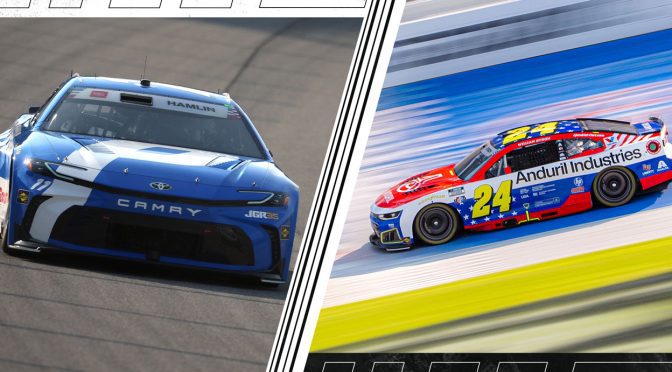
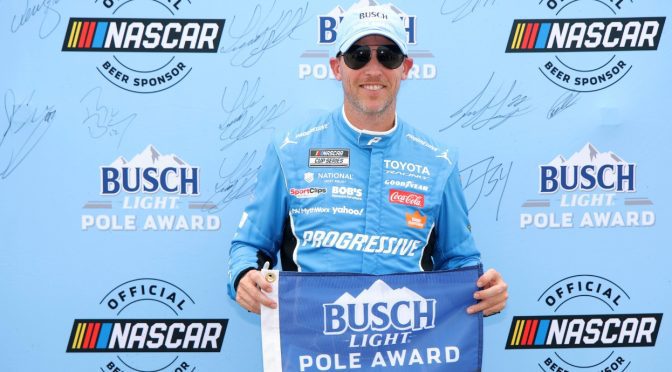
In Saturday’s NASCAR Cup Series time trials at Chicagoland Speedway, Hamlin beat Kyle Larson by 0.001 seconds to claim the pole position for Sunday’s eero 400 (6 p.m. ET, TNT Sports, truTV, HBO Max, MRN Radio, SiriusXM NASCAR Radio).
Hamlin sped around the 1.5-mile intermediate track in 30.296 seconds (178.241 mph). Larson, who ran later in the qualifying order, fell just short at 178.235 mph.
The Busch Light Pole Award was Hamlin’s fourth of the 2026 season, his first at Chicagoland (which hasn’t hosted a NASCAR national-series race since 2019) and the 52nd of his career, breaking a tie with Ryan Newman for ninth all-time.
Hamlin, the 2015 Chicagoland winner, won poles at the previous two oval tracks on the Cup Series schedule: Michigan International Speedway and Pocono Raceway. He is the only driver to win poles at both Chicagoland and the Chicago Street Course (2023).
“I’m the Chicago master — what can I say?” Hamlin said.
In fact, Hamlin considered himself lucky to win his third straight oval-track pole, having gotten the benefit of favorable cloud conditions.
“I don’t want to continue to underplay it, but we got very fortunate,” said Hamlin, who leads the series standings by one point over Tyler Reddick. “The last 12 cars had full sun — 100% sun. The last few had 90%, but I think that was the deciding factor.
“We saw that, right after I went, the track definitely got hotter, and it seemed like the corner speeds of those guys started to slow down. I think if there was one more car behind Ty Gibbs (the final qualifier), they definitely would have beaten us, because it went full shade. We got fortunate there, but they (Hamlin’s No. 11 team) did a real good job overnight with my car (whose balance wasn’t ideal during Friday’s practice).”
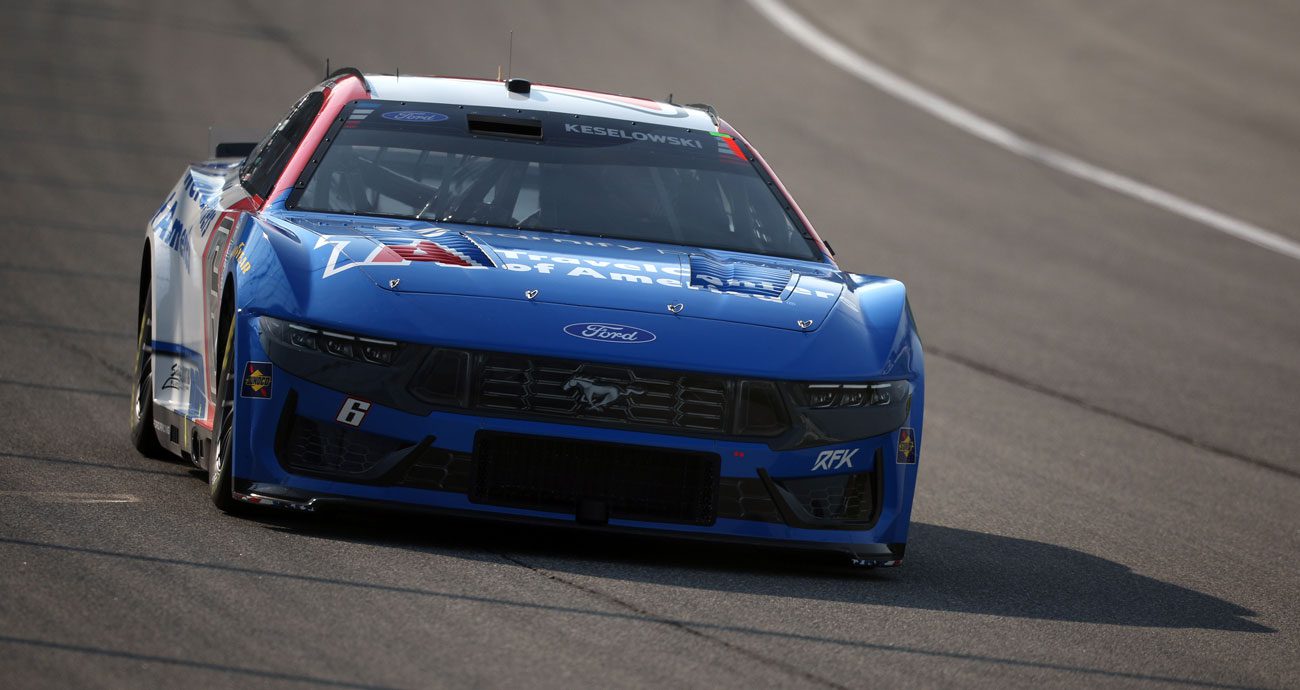
RFK Racing drivers Chris Buescher (178.153 mph) and Brad Keselowski (178.089 mph) qualified third and fourth, respectively. With two victories at Chicagoland, Keselowski is the only driver in the field for Sunday’s race with multiple wins at the track.
Hamlin’s Joe Gibbs Racing teammates Ty Gibbs, Christopher Bell and Chase Briscoe claimed the respective fifth through seventh starting positions. Bubba Wallace, Chase Elliott and William Byron completed the top 10, which consisted of four JGR Toyotas, three Hendrick Motorsports Chevrolets, two RFK Fords and one 23XI Racing Toyota (Wallace).
The No. 2 and top remaining seed in the NASCAR In-Season Challenge, Hamlin, faces Erik Jones in Sunday’s second round. Jones qualified 22nd.
In battles between teammates, Larson faces Byron, and Gibbs takes on Briscoe.
Hamlin, however, will have his eye on Larson.
“In my personal opinion, Kyle Larson is the best driver at this race track, so he’s going to be someone I have to contend with, and I’m sure all the Hendrick cars are.”
JOLIET, Ill. — To say Carson Hocevar hasn’t been focused on the In-Season Challenge is putting it mildly.
Last Sunday at Sonoma Raceway, the driver of the No. 77 Spire Motorsports Chevrolet finished 11th to Zane Smith’s 18th, eliminating Smith in the opening round of the tournament.
Asked after Friday’s practice about his second-round matchup Sunday at Chicagoland Speedway (6 p.m. ET, TNT Sports, truTV, HBO Max, MRN Radio, SiriusXM NASCAR Radio), Hocevar responded, “Who is it?”
In fact, Hocevar will face Todd Gilliland, who eliminated Daniel Suárez in the first round at Sonoma.
“Oh, it’s Todd?” said Hocevar, who will make his 100th NASCAR Cup Series start on Sunday at Chicagoland Speedway. “I don’t know. Hopefully he’s slow.”
In Friday’s practice, Hocevar was ninth fastest while Gilliland was 27th best.
About his 100th start in NASCAR’s top division, Hocevar was equally nonchalant.
“Yeah, you just kind of blink and you’re at a hundred,” he said. “Blink twice, and you’re at 200. “I just try to enjoy as many as possible. I’m just glad I have a win in the win column before a hundred, right?”
Hocevar picked up his only career victory so far on April 26 at Talladega Superspeedway. With eight races remaining in the regular season, he’s eighth in points.
JOLIET, Ill. — Ty Gibbs believes he can win the NASCAR Cup Series championship. And halfway through the 2026 campaign, he’s giving others a reason to believe, too.
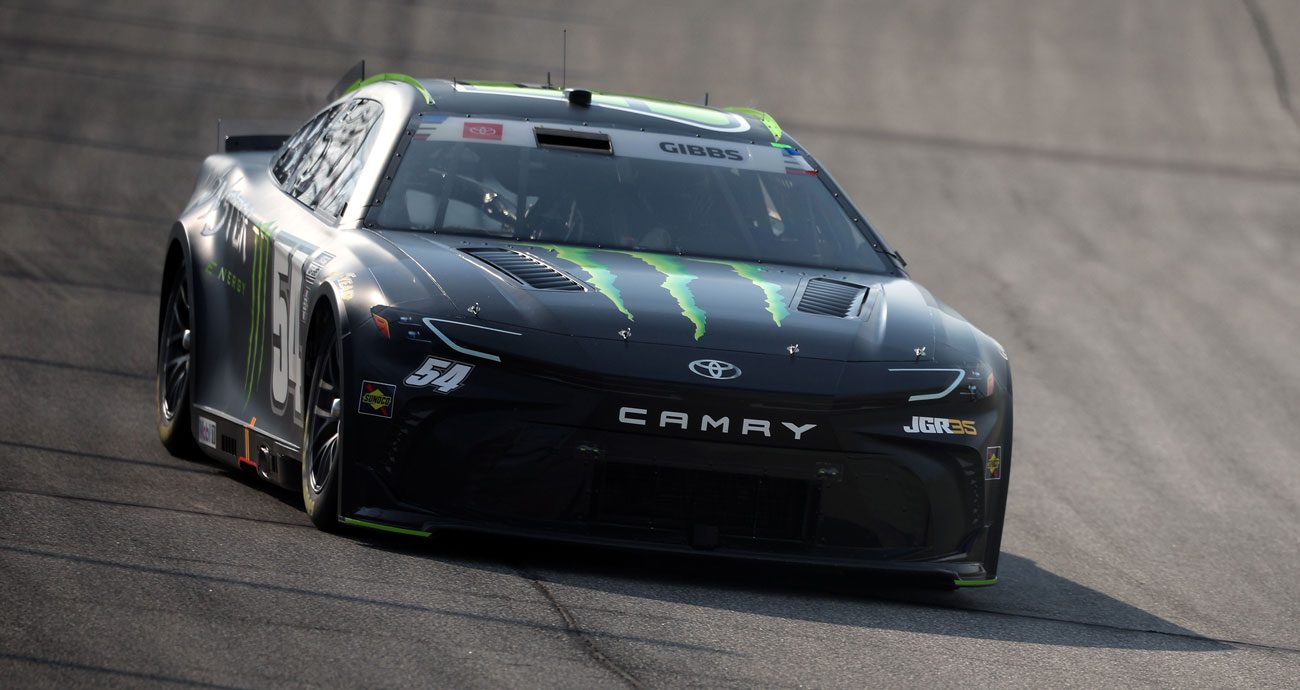
The fourth-year, second-generation driver enters Chicagoland Speedway fourth in the points standings after 18 of 26 regular-season races, with the 10-race Chase looming in September. Gibbs drove the No. 54 Joe Gibbs Racing Toyota to his first career Cup win at Bristol Motor Speedway in April and has largely been a top-five mainstay in the points standings since.
With just eight races left before the postseason fight begins, the 23-year-old racer is confident this success is sustainable.
“I think we’re easily a championship contender, honestly,” Gibbs said Friday at Chicagoland. “I’m very happy about that and just got to stick to it and got to keep working hard. We’ve not really had any bad weekends; we just got wrecked out a bunch by some guys and myself, and then we still are in the position we’re in.”
Gibbs’ performance has considerably improved from past seasons, already collecting seven top fives and 11 top 10s through 18 races. His 9.3 average start is on track for a career best, as is his 13.2 average finish, a notable uptick from last year’s 17.9 average. Over a seven-race spring stretch, he scored 33 or more points each week.
He points to the make-up of his No. 54 team as the catalyst for this year’s improvement, particularly as second-year crew chief Tyler Allen has settled into the role.
“It’s been great working with great people the whole time, and the right people make a big difference, obviously,” Gibbs said. “We compare last year to this year, we see so much of a difference. And getting more experience is really helpful as well. I love the people around me. It’s been so much fun this year. It’s been such a pleasure to drive the car and just working with great people.”
Gibbs was left with mixed emotions after last weekend’s race at Sonoma Raceway, where he finished third after leading 31 of 110 laps and sweeping both stages on the California road course. He was admittedly disappointed the team’s strategy didn’t allow him to chase the race win, but Gibbs left the day with a fitting and impressive 54 points earned, his most since earning 59 points in his Bristol win and bumping him one spot higher in the points standings.
“I mean it’s a great points day, right?” Gibbs said. “And being in the top five is super important going into the playoffs, and so I think it just is what it is, and sometimes that’s how it is. … I’d rather win a championship than a road-course race. I’ll leave it to the team to make that decision.”
Gibbs was fifth-fastest in Friday’s 50-minute practice session at Chicagoland, marking his inaugural laps around the 1.5-mile tri-oval. The Cup Series makes its return to competition at Chicagoland for the first time since 2019 on Sunday at 6 p.m. ET (TNT Sports, truTV, HBO Max, MRN Radio, SiriusXM NASCAR Radio).
JOLIET, Ill. — Through the first half of the 2026 NASCAR Cup Series season, Toyota teams have combined to win 11 of 18 races.
RFK Racing team co-owner and driver Brad Keselowski said Friday at Chicagoland Speedway he believes the manufacturer has earned its flowers. But he also sees lessons Ford and Chevrolet can learn from what a rival Original Equipment Manufacturer is accomplishing behind the scenes.
With 10 weekly entries from Team Penske, RFK Racing, Front Row Motorsports and Wood Brothers Racing, Ford has combined for just one points-paying win this year, courtesy of Penske’s Ryan Blaney at Phoenix Raceway in March. Ford will get a new body on the race track in 2027 via its Mustang Dark Horse SC, but no body updates can be made until then.
In Keselowski’s opinion, “dramatic” rules changes made in the last decade have altered the NASCAR paradigm, specifically as engineering responsibilities pivoted from the teams to the manufacturers, creating “a tremendous dynamic shift in the sport” triggered after Furniture Row Racing’s alliance with Joe Gibbs Racing led to a 2017 championship followed by a departure from the sport after the 2018 campaign.
“So the rules and all the things behind the scenes got altered and pushed in such a way as to prevent that from possibly happening again, and I think that’s where they are right now,” Keselowski said. “The unintended consequences, whether that was second-order or third-order effect, is you created this stalemate of organizations. And the OEMs all either consciously or subconsciously decided who their favorite was because they had to — or felt like they had to. And I think you’ve seen that now with how the last six or seven seasons have played out where it’s the top organization at each OEM.”
James Gilbert | Getty Images
Today, Toyota is excelling above its counterparts, notably through the performance of Joe Gibbs Racing’s four-car operation and an alliance shared with 23XI Racing, sharing 11 wins this year among four drivers. Other manufacturers’ lead programs share alliances, such as Chevrolet’s Hendrick Motorsports with Spire Motorsports and Ford’s Team Penske with Wood Brothers Racing. But those partnerships haven’t produced the same results as Toyota’s.
“What’s become unique, I think, over the last two or three years specifically is — and I’ll give a lot of credit to Toyota for this — is they’ve recognized that that stalemate is not necessarily good for the sport or for them as an OEM,” Keselowski said. “And they’ve done a lot of things to push elite collaboration amongst their top organizations so that they have, for reference, two ‘A’ organizations, rather than an ‘A,’ ‘B’ and ‘C.’ As I’ve seen to date, the other OEMs have not done that, and Toyota is making them pay for that with results on the race track. They deserve credit for that.
“The challenge that I see is: Will the other two OEMs actually react to that? I haven’t seen that at the moment. I think RFK is doing all the things it needs to do to position itself to be successful if that were to happen, particularly in the Ford camp. But at this point we have not seen the level of collaboration at Ford that we see at Toyota, and it creates challenges for the program. And I have not seen from the outside — I’m not inside Chevrolet — the same things there. So we’re having one of these seasons where it looks like Toyota is going to dominate throughout, and there’s a great argument to be made that they’re winning races in the boardroom with really great decision-making.”
RFK Racing and Penske, both of which are three-car operations, sit atop the pecking order in Ford Racing, though Penske has been considered the manufacturer’s most successful outfit with championships in four of the last eight NASCAR Cup Series seasons. If the information among Ford’s top teams could be shared equally the way Keselowski believes it should, he sees a path in which the rising tide could lift Ford’s boats.
“In my mind, at least, I think the burden is on the OEMs and the decision-makers at the highest of levels that want their programs to be successful in NASCAR to react accordingly within the rules,” Keselowski said. “And there’s means and measures to do that. As it works its way specifically into RFK, I think we’ve proven our merit. We have three teams that are in a position that I’m proud of. Are we winning races every week? No. We only have one win this season in the non-points-paying race with the Clash. But we continue to show that we have, I think, the organization to push to that next level, given the right opportunities. And I’m really proud of that.”
The team isn’t going anywhere any time soon, Keselowski said, as he confirmed RFK Racing has a long-term contract in place with Ford Motor Company.
“We’re committed to that. We want to be successful with them,” he said. “We’re hopeful that we can continue to innovate with them to this next level. We’re in a lull right now that we don’t want to be in. Ford doesn’t want to be in the same lull — I feel pretty safe in saying that. The onus is on us to step it up and figure it out.”
JOLIET, Ill. — Ryan Blaney described last week’s cool-suit failure as a “snowball effect” of cascading problems that caused him to overheat at Sonoma Raceway. Any snowballs or other forms of frozen precipitation would have come in handy during his sweltering Sunday drive.
“Yeah, I was down bad,” Blaney said Friday, five days later. “I was down bad. Your boy was struggling.”
Blaney gutted out a sixth-place finish last weekend at Sonoma, visiting the track’s care center post-race for fluids after exiting his No. 12 Team Penske Ford. He arrives this weekend at a revived Chicagoland Speedway in better health, riding a consistent streak into Sunday’s eero 400 (6 p.m. ET, TNT Sports, truTV, HBO Max, MRN Radio, SiriusXM NASCAR Radio).
Blaney said when he flipped on his driver-cooling suit after Stage 1 of last weekend’s event, the system malfunctioned. Cycling through and resetting it didn’t work. As the cool suit’s fluid warmed, his No. 12 crew handed him a pressure-filled tool during a pit stop to help him flush the system. The race, however, stayed under mostly green-flag conditions the rest of the way, and Blaney didn’t have much chance for a water-bottle break as he navigated the intricate road course at speed.
Blaney tried to stash the tool in a small compartment inside the driver’s door, but it rattled loose to the floorboard — “into the abyss,” he said. Then leg cramps cropped up with 20 laps left, especially in his left calf entering the Turn 11 hairpin.
“I haven’t had that in a while, and like the worst place to cramp is your left calf at a road course, and I was happy I didn’t run off anywhere,” Blaney said. “But we got through it, and the AMR (medical) folks were great. They were at me really quick and got me fixed up after, so appreciate them for responding really quick from when I needed them. I think we diagnosed the problem, so that was good that we found the gremlin and were able to fix it, so hopefully it doesn’t happen again.”
Blaney has equaled a career-best streak of six consecutive top-10 finishes heading into Sunday’s 400-miler, the first event of the season’s second half. He’s also heading into a potentially opportune time to heat up — his last two summers have been marked by multirace performance spikes, and 11 of his 18 career Cup Series wins have arrived in the back half of the season.
Other bellwethers are a little less favorable. Ford is winless in the last 14 Cup Series races, dating back to his March 8 victory at Penske stronghold Phoenix Raceway. Ford drivers have also managed just one top-five result in the four events on 1.5-mile tracks in 2026, and Team Penske has weathered the last 10 races without a top-five finish — its longest dry spell since 2008.
Blaney has stayed steady through the season’s first half, slotting him third in the Cup standings but still 100-plus points behind Toyota drivers Denny Hamlin and Tyler Reddick, the campaign’s front-runners. Before his top-10 streak began, Blaney was 162 points off the top, but now stands 104 points back of Hamlin, the new series leader.
Just eight races remain until the 16-driver Chase field is determined, and there’s more ground to gain to fulfill Blaney’s aspirations of claiming the Regular Season Championship and the advantageous No. 1 seed. Difficult but doable is how he sees it.
“You never know,” Blaney said after Friday’s practice. “I don’t know. You can see big, big swings week to week. Denny was able to do it off of really, really good performance, and tons and tons of points winning races. I think the 45 (Reddick) might have had a little bit of trouble while he was winning. Like, Michigan was a big one, then like in our case, we just kind of banged out some top 10s. Those guys had some problems, and we cut down a lot of points in the last just two weeks. So, you never know. We just try to focus on us. Like, I look at the points, but I don’t study it methodically. I kind of look at it a few times through the week to remind myself where we’re at, and just try to put together the best weekend.
“So you never know, the last couple months could get interesting, and we just try to get better week in, week out, and you never know where that stuff could go. So I’d say it’s not out of the question, but it’s going to be really, really hard to achieve.”
Blaney made four Chicagoland starts in Cup Series competition before the track was temporarily shuttered after the 2019 season, but he’s among a handful of drivers with recent experience here. Blaney joined Hamlin and defending Cup champion Kyle Larson in participating in a Goodyear tire test in April, and those laps may prove to be beneficial.
“They helped,” Blaney said. “Give us a little bit of a … I wouldn’t say head-start, but we were able to come here and learn for two days. Then as a driver, for me, up to speed a little bit faster of how to approach the race track. So, I hope it helps. We’ll see come Sunday.”