Seven-time NASCAR Cup Series champion Jimmie Johnson returns to Indianapolis Motor Speedway this year, and he’ll do so sporting a unique No. 84 Carvana paint scheme — one designed by those closest to him.
In celebration of Father’s Day weekend, Jimmie Johnson’s daughters, Genevieve (13) and Lydia (11), designed a unique and heartfelt paint scheme for their father’s race car at a place teeming with history — and one where Johnson has had incredible success.
A four-time winner of The Brickyard 400, Johnson’s dark blue Toyota will have extra special meaning as Genevieve and Lydia poured their love and creativity into a custom design that unites their dad’s favorite things and funny quirks.
“It was a lot of trial and error but we are so excited to see our designs at the race,” said Genevieve and Lydia Johnson in a press release. “It was really fun for us to combine colors and patterns that remind us of Dad’s racing world and some of our favorite memories with him. We hope everyone loves it as much as we loved creating it.”
The No. 84 Carvana Toyota Camry XSE is covered in pink, turquoise, yellow and purple doodles along with images of the family’s spirited Jack Russell Terrier, “Charlie Meatball”, and references how the girls wish their dad luck before each race, telling him to “drive over the moon” – their way of saying Johnson he will be the fastest car.
“Seeing my daughters take such an active role in designing the paint scheme for my car has been an incredibly special experience,” said Johnson. “Their creativity and vision have brought a fresh and personal touch to the race track and will keep me inspired lap after lap. It’s a special moment I’m excited to share with the fans, especially as we celebrate Father’s Day.”
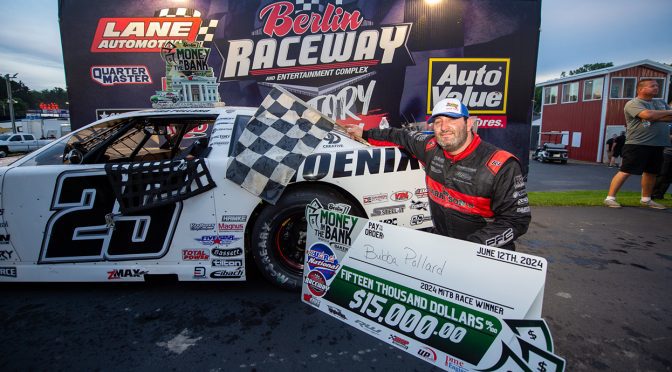
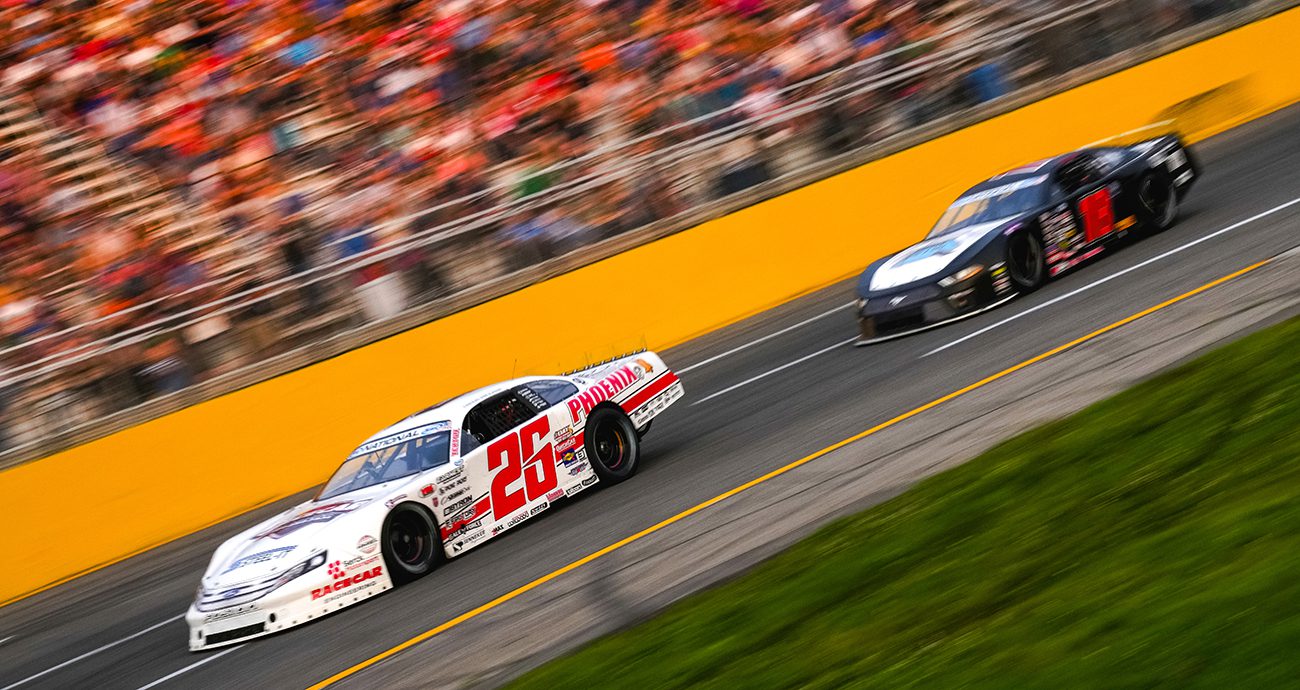
The journey to Victory Lane was not an easy one for Pollard, but he felt confident about adding another Berlin win to his storied short-track resume once he was able to make adjustments and obtain ideal track position.
“[We] just had to get the stagger right,” Pollard said. “We missed it that first run, but that’s a product of the tires. If you’re off a quarter of an inch, it’s make or break, but this is big boy racing, and you need to put the big boy pants on. Once we got the tires right, we were fine.”
As was the case with the Battle at Berlin, Pollard knew patience would be pertinent to have a shot at the victory.
The early portion of the Money in the Bank 150 saw Pollard enact a conservative strategy. With Jones and Carson Hocevar battling hard for the lead, Pollard displayed no urgency and continued to bide his time until a caution for Brian Bergakker’s spin halted the race with 61 laps remaining.
Pollard then went on the offensive after making his pit stop, utilizing Berlin’s high line to pick off his competition one by one. It would take a competition caution with 11 laps to go for Pollard to get within striking distance of Rowe, who had gone off-sequence with pit strategy and ended up inheriting the lead.
Despite a spirited defense against both Pollard and Jones, the expended rubber worked to Rowe’s detriment. He was unable to fend off a swift charge from Pollard on the top side, which forced him to surrender the lead and settle for a disappointing second in the Money in the Bank 150.
Rowe wished there was no competition yellow in the closing laps, as he had built a comfortable lead over Pollard and Jones even with old tires. He still found solace with his runner-up finish knowing he held his own against many of the best drivers on both the short-track and national level.
“We were just flat out of tire there at the end,” Rowe said. “We had 65 or so more laps on our stuff than everybody else. It was so close. If the [competition yellow] wouldn’t have fallen, we were riding free. I’m just really proud of the run. We were struggling there at the start and the whole crew never quit on this thing. It was a hot rod.”
Rowe plans to regroup for the prestigious Battle at Berlin in just a couple of months, when Pollard is once again expected to be a favorite.
With his second Money in the Bank 150 victory, Bubba Pollard now turns his attention towards defending his Battle at Berlin win from 2023. (Photo: Eric Bronson/NASCAR Regional)
Although Pollard has found plenty of success in his trips to Berlin, which included winning the inaugural Money in the Bank 150 back in 2017, none of his ventures have been easy due to the talented contingent of regulars like Rowe who show up for the facility’s marquee events.
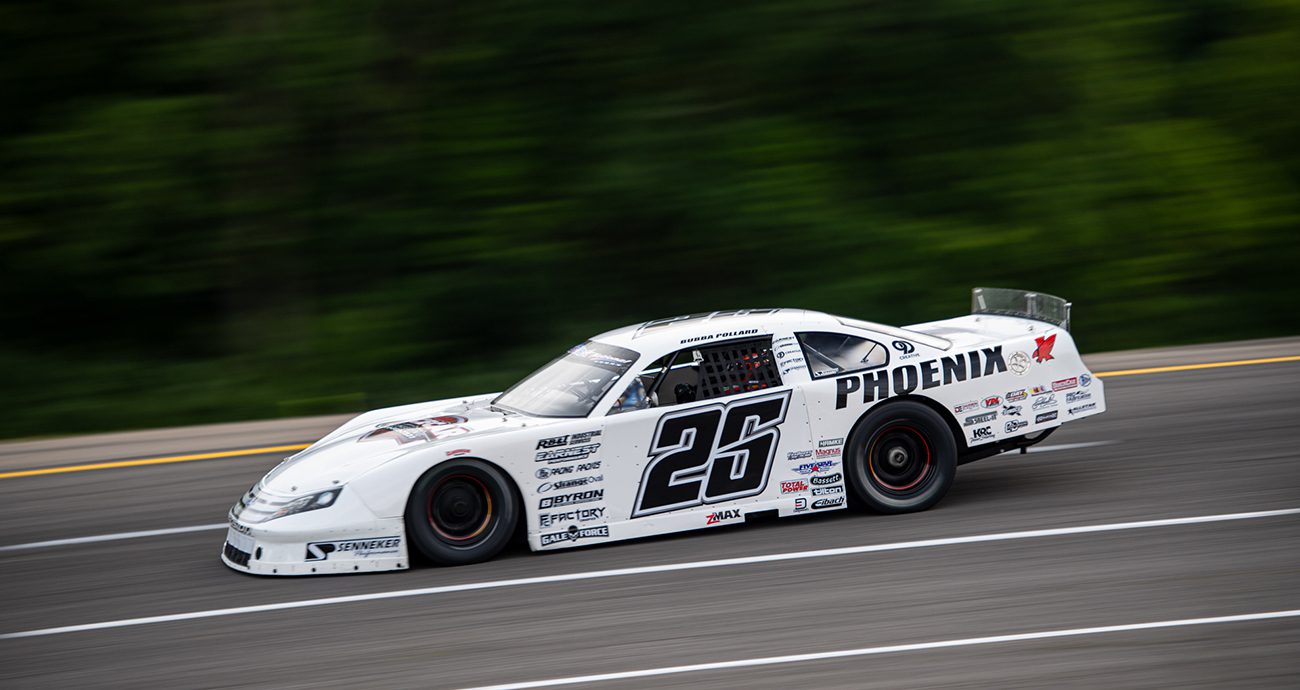
Pollard said the expertise of local racer Terry Senneker and everyone at Senneker Performance has been crucial in keeping him prepared for races like the Money in the Bank 150. With Senneker on his side, Pollard heads into his defense of last year’s Battle at Berlin victory confident and determined.
“These guys around here are good, but we have good race cars,” Pollard said. “Terry Senneker and everyone who works at his shop makes it possible to give us a fast race car. When we pick up the phone to call them, they are there for us, so I can’t thank those guys enough. It takes a group effort.”
Jones’ quest to defend his Money in the Bank 150 victory from 2023 ended with a third-place finish. Gavan Boschele and Derek Griffith followed him in the running order to complete the top five.
Hocevar came home in sixth after leading early in the Money in the Bank 150. The rest of the top 10 were Evan Shotko, Kris Wright, Dylan Stovall and Chase Pinsonneault.
Despite a season with its share of hurdles, Kyle Larson continues to outpace the field — is his second title inevitable this year?
Like nothing ever happened.
Perhaps the most frustrating thing for Kyle Larson’s competitors about racing against him is just how nonchalantly easy he makes everything look both on and off the track, not unlike his crew chief Cliff Daniels’ former driver — a certain seven-time NASCAR Cup Series champion.
Larson’s racing plate tends to be a little more full than the rest of his premier series peers, between his loaded dirt racing schedule and, new for this year, a little jaunt over in Indianapolis that you might’ve heard about. That foray into open-wheel racing on the grandest stage was a dizzying schedule full of hiccups that wound up in one of the most frustrating Sundays of Larson’s life and a full race missed at his full-time job to take him out of the points lead. After what felt like weeks of discourse about his playoff waiver status as fallout stemming from his Coca-Cola 600 absence, Larson’s playoff eligibility was restored last Tuesday and he promptly went out and emerged victoriously at Sonoma Raceway on Sunday.
And through it all, he remained unflappable as always, barely breaking a sweat despite a steamy environment in Napa Valley and the entire motorsports world focused on him for a month-plus.
Nothing about this sport is ever written in stone, but paths to a championship trophy don’t get much clearer than Larson’s trajectory toward holding the Bill France Cup at the end of the 2024 season. He essentially spotted the whole field an entire race, and yet he’s still leading them all by 14 points in the standings. To accomplish that in this age of Next Gen parity is jaw-droppingly impressive and hard to fathom anybody else being able to accomplish.
Needless to say, he’s probably going to be the guy to beat again this weekend at Iowa Speedway, too.
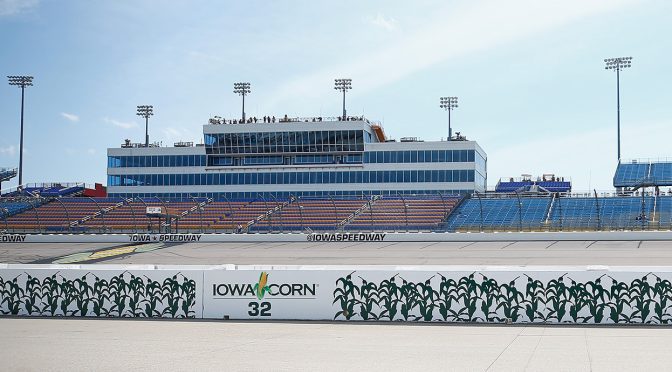
No. 5 opened at 11-2 odds to win Sunday’s Iowa Corn 350 powered by Ethanol (7 p.m. ET, USA, MRN Radio, SiriusXM NASCAR Radio, NBC Sports App), tucked just behind dirt rival Christopher Bell, a 19-5 favorite to win. While Bell’s Iowa resume is perhaps the best in the field, NASCAR hasn’t held races there since 2019, and it got a bit of a facial in the lead-up to the inaugural Cup Series race with a targeted resurfacing. Both Larson and Bell (along with Brad Keselowski, to represent Ford) ran a test at Iowa recently, surely a pivotal advantage those three — all three of them 2024 winners, interestingly — will have over the field.
Both drivers are on a roll lately, but be real — does it feel like anything at all is going to get in Larson’s way at this point? We’re witnessing greatness in real-time and this part of the season was around when things really clicked for Larson in 2021 as he turned on the afterburners en route to 10 wins and his first title. Despite Sonoma being just his third 2024 victory, double-digit wins still aren’t out of the question for him — Sonoma was his third win that year, too.
He followed up his first victory in wine country that year with a trophy the following race at Nashville Superspeedway to claim a win on Father’s Day for the second consecutive time the series raced on the day for dads, a somewhat rarity. The series hasn’t raced on Father’s Day since Larson’s 2021 win.
And guess what Sunday is.
Getty Images
2. Will Joey Logano claim Iowa’s first race — again?
The “King of The New” can add to his lore with a win Sunday night at Iowa … as well as clinch a much-needed provisional playoff spot.
Joey Logano only has the fourth-best odds to win Sunday at Iowa, but there’s a reason all eyes shifted to him after everyone left the West Coast — he’s the unparalleled driver to beat whenever there’s any sort of “new” wrinkle to a race weekend.
Same for the first Cup race at World Wide Technology Raceway and the inaugural Busch Light Clash at the Coliseum in 2022. Perhaps the quick adaptability comes with the territory of being a 34-year-old veteran approaching 600 Cup starts, but it’s still beyond impressive and feels like more than an anomaly that No. 22 has won three of the past eight races on “new tracks.”
But this is nothing new to Logano. In fact, the Connecticut native has always been a quick study; look no further than his full-time status in the Cup Series for Joe Gibbs Racing as an 18-year-old rookie in 2009.
And if he’s able to win Sunday, it’ll be something of a full circle moment for him — Logano won the literal first-ever NASCAR race at Iowa Speedway, claiming victory there in May 2007 in his only start in any series in Newton en route to a championship in what is now the ARCA Menards Series East.
(Note: Logano does have some national series laps at Iowa under his belt but no starts, having qualified the No. 22 Team Penske Ford for the May 2013 Xfinity Series race, pictured above, before rain forced his departure and an up-and-coming future Cup champ raced it for him.)
Not only is Iowa a fresh entrant to the Cup schedule, its surface got some touching up and offers plenty of unknowns on top.
“Until you get there, you don’t really know. It’s probably the most interesting repave-ish thing that we’ve seen,” Logano said in a team release. “I can’t really form an opinion until I make laps on it, but it’s definitely unique. Good or bad, I guess we’ll have to wait and see. Going off the tire test at Wilkesboro, I thought that was gonna be a single-lane race that wasn’t gonna have any passing, and I was completely wrong about that. The track was up to the wall, so who knows? Maybe things have changed. You just don’t know.”
Logano, who has the fifth-best average finish on short tracks (10.77) in the Next Gen car, has just one top-10 finish in the last eight races — with an All-Star Race win sandwiched in there, mind you — but getting things turned around certainly seems like it’s going to happen this weekend in the Hawkeye State.
Kim Coon and Skip Flores break down everything to watch as the NASCAR Cup Series hits Iowa Speedway for the first time.
4. Plenty of past Iowa winners in Sunday’s field
Iowa Speedway was a previous constant on the Xfinity and Craftsman Truck Series schedules and many of today’s Cup Series stars won there on the way up.
Driver
Xfinity Series wins
Truck Series wins
Brad Keselowski
3
0
Ricky Stenhouse Jr.
3
0
Christopher Bell
2
0
Kyle Busch
1
0
Ryan Blaney
1
1
Chase Briscoe
1
0
Chris Buescher
1
0
William Byron
1
1
Ryan Preece
1
0
Erik Jones
1
2
Austin Dillon
0
1
John Hunter Nemechek
0
1
5. Catch the pack — news and notes from around the garage
DAYTONA BEACH, Fla. — The NASCAR Diversity Internship Program (NDIP) has launched its 24th year, welcoming a new class of 34 talented undergraduate and graduate students from across the country.
This group of interns commenced their transformative journey with an immersive orientation weekend in Charlotte, igniting the beginning of their 10-week journey within the NASCAR community. Over the summer, interns will receive mentorship and network with industry leaders. Through exclusive behind-the-scenes tours and extensive networking opportunities, the students will acquire invaluable hands-on experience, delving deeply into the multifaceted world of the motorsports industry.
“The NASCAR Diversity Internship Program is not just about providing internship opportunities; it’s about cultivating the next generation of leaders in NASCAR,” said Brandon Thompson, NASCAR’s vice president of diversity and inclusion. “Our interns bring fresh perspectives and innovative ideas that are vital to the growth and evolution of the sport.”
NDIP stands as the industry’s longest-running inclusion initiative and has significantly impacted NASCAR since its inception in 2000. Over the past 24 years, the program has introduced more than 500 college students to various careers within the NASCAR industry.
NDIP is open to undergraduate and graduate students from diverse backgrounds and experiences who are at least sophomores or above with a minimum 3.0 GPA.
CONCORD, N.C. — RFK Racing has announced that its #Stage60 program will return for another road course event with sports car driver Joey Hand piloting the No. 60 BuildSubmarines.com Ford at the upcoming Chicago Street Race (July 7, 4:30 p.m. ET, NBC).
Hand — currently a Ford factory driver across multiple disciplines of sports car racing — is a former Champion of the Star Mazda Series, co-winner of the 24 Hours of Daytona in 2011, 12 Hours of Sebring in 2012, and 24 Hours of Le Mans LMGTE Pro Class in 2016.
Hand, a native of California, joined the Ford factory program for the 2016 WeatherTech SportsCar Championship and formerly competed in the International V8 Supercars Championship; the same series where fellow #Stage60 driver Cam Waters currently competes.
“Saying I’m excited is an understatement,” Hand said. “To be part of the #Stage60 program is going to be awesome. I’ve gotten close with the RFK team while working with them on the simulator over the past three years and have a ton of respect for what they are doing.
“I love street racing and have done a lot of it in my career, so Chicago is right in my wheelhouse. NASCAR is some of the toughest competition I’ve been up against and there’s nothing like some good street fighting to put on a show for the fans.”
The 45-year-old made his NASCAR debut in 2021 for Rick Ware Racing, driving the No. 52 car at the ROVAL at Charlotte Motor Speedway. He went on to drive for RWR in six races in 2022, all on road courses (COTA, Sonoma, Road America, Indianapolis Road Course, Watkins Glen, ROVAL).
BuildSubmarines.com, which partnered with the #Stage60 initiative at Daytona and Sonoma, will again be featured on the No. 60 Ford Mustang with Hand behind the wheel at Chicago. The Windy City event will mark the first time BuildSubmarines.com will be the primary partner on-board an RFK Racing Ford in the Great Lakes region since the engagement between RFK and BlueForge Alliance began in the summer of 2023.
The Great Lakes region — made up of Illinois, Indiana, Michigan, Ohio and Wisconsin — features more than 2,300 suppliers in the U.S. Navy’s Submarine Industrial Base and serves as a key component in designing, creating, inspecting and assembling components for the Navy’s undersea platforms.
“BuildSubmarines.com racing through the streets of Chicago puts thousands of skilled trades career opportunities in front of massive in-person and television audiences,” said Kiley Wren, co-founder and chief executive officer at BlueForge Alliance. “It represents yet another incredible opportunity for fans to learn about these jobs and the purpose behind them. We are grateful to work alongside RFK Racing, as part of their Stage 60 program, and we thank Joey Hand for getting behind the wheel of the BuildSubmarines.com ‘Car With a Mission’ for this event.”
As Martin Truex Jr.’s No. 19 Joe Gibbs Racing Toyota sat on the Sonoma Raceway frontstretch in a painful stall only yards before the checkered flag on Sunday afternoon, it was a vivid and frustrating microcosm of the former NASCAR Cup Series champion’s day and season. So good. So close.
“It’s just one of them years,’’ a frustrated Truex told reporters walking down Sonoma’s pit road afterward. Instead of what looked like a runner-up finish, he was scored 27th.
It was actually a demonstrative theme among several of the sport’s best as the summer “Playoff push” begins. So many of the high-profile names on the starting grid — including multiple former champions — are still racing for their first victory of the season, missing the trophies with close calls and late-race misfortune with 10 races now remaining to set the 16-driver postseason field.
Reigning NASCAR Cup Series champion Ryan Blaney and Team Penske teammate Joey Logano — a two-time series champ — lead a list that includes Truex and another two-time Cup champion in Kyle Busch.
All four of those drivers had solid days on track Sunday — and in weeks previously — but none of them have claimed a win despite strong efforts and now move to the Iowa Speedway debut on the schedule still competing for that first victory. A win isn’t just an automatic Playoff bid — these high-achieving drivers are likely to point their way in regardless — but it is an important morale boost and a signal their teams are championship-forward.
Despite his 27th-place finish at Sonoma – his third finish of 20th or worse in the last four races — Truex is still ranked fourth in the championship, the highest among those without a win.
Logano started his No. 22 Team Penske Ford from the pole position and was encouraged by his chances at Sonoma, even though he’s only had a single road course win in his career (2015, Watkins Glen International). He did lead 16 laps but finished 21st.
His current 16th-place position in the championship standings isn’t good enough to make him postseason-eligible right now because two race winners — Team Penske teammate Austin Cindric and Trackhouse Racing’s Daniel Suárez — have race wins despite being ranked below Logano and would supersede his place in the standings.
The two-time series champ, Logano, hasn’t been ranked this low in the standings through 16 races since 2011 when he was 22nd in the championship standings, ironically having also won pole position at Sonoma, then driving for Joe Gibbs Racing.
“Unfortunate end to our weekend in Sonoma, especially with the speed we showed the last two days,’’ Logano said. “Anything can happen on these re-starts, and it was just wrong place, wrong time for us after trying to flip the strategy on everyone up front. Still proud of the effort from the 22 crew to keep after it all day long despite the early setback there.’’
Blaney’s No. 12 Team Penske Mustang ran among the top 10 most of the day at Sonoma and finished seventh; his best outcome in five weeks and coming after a heart-breaking showing in St. Louis a week earlier when it appeared he would hoist a trophy. Instead, the fan favorite ran out of gas while leading with only a lap to go, resulting in his teammate Cindric getting the hardware instead. Blaney is still safely among the Playoff-eligible in 12th place in the points standings.
Busch, in his second year with RCR, looked to finally get a break from weeks of on-track frustration. Although he didn’t lead any laps Sunday, he managed to work his way forward and was contending for a top five when contact with Trackhouse Racing’s Ross Chastain sent him spinning off course in the final laps. Busch still ended up finishing 12th but is ranked 15th in points, and like Logano, would miss a postseason position because of Cindric’s and Suárez’s wins.
The two-time series champion’s last top 10 was five weeks ago at Kansas Speedway (eighth place), and his best showing of the year is third at Atlanta in the second race of the season. He has won a race in all 19 seasons he’s competed in the series, the longest streak in series history.
“[Crew chief] Randall Burnett and all the guys on the Chevrolet team came up with a great strategy today that put us in position to score a top-five finish,’’ Busch said. “Early in the race, I thought I broke something on the right-front, but we had a damaged wheel. We lost track position, but our strategy kept us in the game.
“A couple of guys there at the end of the race had better tires than we did, but we were going to have a good day. Unfortunately, one of those guys got into us on the last lap and ruined our day. It’s frustrating to not get the finish that we deserved.’’
They will all have another very fresh opportunity at Iowa Speedway this weekend. In two Xfinity Series starts there, Busch has a victory (2010) and a runner-up finish (2009), but it is the first NASCAR Cup Series race ever at the 0.875-mile oval. There is a practice session on Friday, with qualifying on Saturday afternoon and the Iowa Corn 350 Powered by Ethanol on Sunday night at 7 p.m. ET (USA Network, MRN Radio, SiriusXM NASCAR Radio).
NASCAR officials issued penalties Tuesday for lug nut infractions in the Xfinity Series stemming from last weekend’s events at Sonoma Raceway.
In post-race inspection following Shane van Gisbergen’s victory in Saturday’s Zip Buy Now, Pay Later 250, Austin Hill’s No. 21 Richard Childress Racing Chevrolet and Ryan Sieg’s No. 39 Ford were each found with one unsecured lug nut.
This violates Sections 8.8.10.4a: Tires and Wheels of the NASCAR Rule Book. As a result, crew chiefs Andy Street (No. 21) and Matt Noyce (No. 39) were each fined $5,000.
The Xfinity Series will return to Iowa Speedway for the first time since 2019 on Saturday to race in the Hy-Vee Perks 250 (3:30 p.m. ET, USA Network, MRN Radio, SiriusXM NASCAR Radio).
It was because Junie Donlavey didn’t have the cash to send his NASCAR team west to Riverside, California, that Donlavey Racing instead ventured east across the Atlantic Ocean.
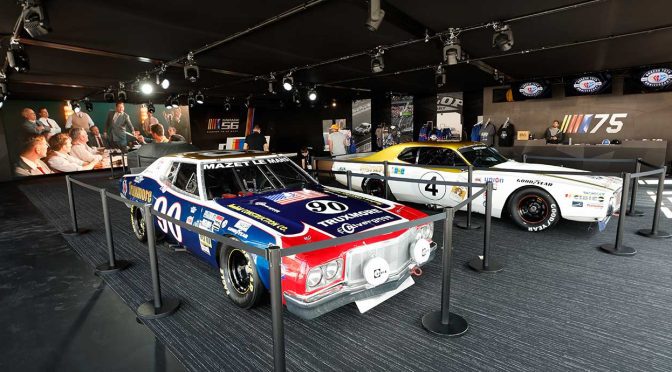
The trip was to the 24 Hours of Le Mans, where the No. 90 Ford Torino entered the world’s biggest sports car event instead of a Cup race on June 13, 1976 at Riverside International Raceway.
If that seems quite the fanciful expedition, welcome to the life story of a charmed car owner who got by mostly on gumption and good cheer for more than 50 years in NASCAR.
“We didn’t have money to get to Riverside, and we wound up in Le Mans,” Donlavey said with a laugh in a 2002 interview with the Richmond Times-Dispatch — the anecdotes and quotes from which mostly remained unpublished until this story. “That was a real experience.”
The No. 90 was dubbed ‘Le Monster’ when it debuted at Le Mans in 1976.
This weekend’s running of the 24 Hours of Le Mans certainly will trigger memories of last year’s Garage 56 project that put a Camaro ZL1 in the 2023 endurance racing classic. The joint effort between Hendrick Motorsports, NASCAR, Chevrolet and Goodyear was a smash hit, drawing an enthusiastic global fan reaction and spurring renewed manufacturer interest in Cup.
With many getting their first glimpse of a Next Gen car, a crowd packed the city square where the Garage 56 Camaro went through pre-race inspection. Fans snapped photos and cheered for a megawatt lineup that included Le Mans winner Mike Rockenfeller, Formula One champion Jenson Button and seven-time Cup champion Jimmie Johnson.
NASCAR’s first visit to the famed Circuit de la Sarthe nearly 50 years earlier was a more subdued affair for Donlavey’s merry band of 15 (most of them volunteers) from Richmond, Virginia.
With Bill France engineering Le Mans entries for two stock cars, NASCAR financed overseas transport for the No. 4 Dodge Charger (driven by Hershel McGriff and his son Doug) and Donlavey’s No. 90 Ford (driven by Americans Dick Brooks and Dick Hutcherson and Frenchman Marcel Mignot).
“They took one car off the West Coast and one from (the East Coast),” Donlavey said. “NASCAR let me take a dozen crewmen over there and gave me a certain price for their tickets.”
But one of his volunteer team members also ran a travel agency and made the funding go much further.
“We took that money and broke it down, and we got 15 people over there for that amount,” Donlavey said. “We went to London for two days and two nights, Paris for two days and two nights and then Le Mans for eight or nine days. And my wife and four or five other ladies went.
“That one trip was all I wanted. It was worth it. We didn’t have 10 cents and couldn’t even get to Riverside. We still had a ball.”
• • •
Donlavey’s car completed 104 laps before a gearbox failed roughly halfway through the 24-hour race. The McGriff car retired after two laps because its engine wasn’t configured for the right octane.
But their V8 engines left an indelible mark with a roar unfamiliar to many European fans and media. Their celebrated response mirrored the spellbound reaction to the throaty rumble of last year’s Camaro.
“We had headlines in the paper,” Donlavey said. “They called our cars, ‘The Le Monster.’ ”
The No. 4 Dodge Charger certainly stood out to the Le Mans crowd.
His Le Mans outing is among many ways that the late team owner touched NASCAR despite a career with only one victory in 863 Cup starts from 1950-2002.
Sunday, June 9, marked 10 years since the passing of Donlavey (who would have been 100 in April), but his presence still is felt.
Next February, Ricky Rudd will be inducted into the NASCAR Hall of Fame in another reminder of Donlavey’s impact on developing stars. Rudd ran the 1979 season for Donlavey, and the 22-year-old turned enough heads to help land a full-time ride at DiGard Racing.
“When he left us, he went straight on up,” Donlavey said of Rudd. “Kenny Schrader was the same way. One thing that puts fun in the game is if you have a rookie and watch him get better and better. That’s the payoff more than the money you get.”
Schrader was the 1985 Cup Rookie of the Year with Donlavey Racing, which also won the award in 1980 with Jody Ridley (who gave the No. 90 its only win the next year at Dover) and in 1970 with Bill Dennis, who was the team’s hometown star from Richmond. (With Dennis behind the wheel, Donlavey’s team won three consecutive Permatex 300 season openers from 1972-74 at Daytona in Late Model Sportsman, the precursor to the Xfinity Series.)
Donlavey, belovedly nicknamed “Chief” by his loyal followers, provided up-and-coming opportunities for Brooks, Sonny Hutchins, Ernie Irvan and Robby Gordon. He also fielded cars for many NASCAR Hall of Famers, including Joe Weatherly, Bobby Isaac, Fred Lorenzen, David Pearson, Benny Parsons and Buck Baker.
But because he “wasn’t used to country clubs, big bucks and all that stuff,” Donlavey operated his team as a feeder system rather than aspiring to become a powerhouse.
“To give someone a chance to get involved in this game, that meant more to me than worrying about winning a race,” Donlavey said. “I have everything that I needed. I came through the Depression years. We never knew it. Mama always had food on the table. What more did you want?
“So, to have an excess of a couple of million dollars in the bank, what good would it do if you don’t use it?”
• • •
One of Donlavey’s favorite stories of cultivating talent (while also scaring the daylights out of them) involved Gordon, whose NASCAR career began racing the No. 90 at Daytona and Richmond to start the 1991 season.
An off-road superstar weighing a career in IndyCar, Gordon tested at Daytona International Speedway for Donlavey and told the car owner during a break that he was unimpressed by the pace with restrictor plates on the 2.5-mile oval.
“He made the statement like, ‘These are nothing to drive right here, I could read a magazine coming down the backstretch,’ ” Donlavey said. “We were changing carburetors, and I told them leave the (restrictor) plate off that thing. They said, ‘What?’ I said, ‘Leave the plate off of it.’
“Robby made two laps, and when he came in, his knuckles were white. Then he knew what those guys had gone through all those years running without a restrictor plate.”
Donlavey claimed NASCAR fined him $5,000. “Robby had the audacity the next day, he said, ‘Chief, we got another five grand we can stand to lose?’ He wanted to try it again,” Donlavey said. “He made that lap running about 205 (mph). The fans watching that practice went nuts. He went through some of those turns sideways. Things like that make this game exciting and interesting.”
Junie Donlavey had respect from everyone, including Richard Petty.
It always was more about the journey than the destination for Donlavey, who entered racing on a lark after returning from a stint in the Navy (he was in Guam when World War II ended) and going into the auto repair business with his father in 1946.
In a 2014 tribute, longtime NASCAR journalist Monte Dutton wrote that in a sport of “saints and sinners, workaholics and con artists, contenders and pretenders,” Donlavey was “the only leprechaun. I will never think of the No. 90 without thinking of the leprechaun Junie Donlavey, always chuckling, never depressed or angry, everything in its proper perspective.”
That’s another way that the Le Mans experience was a fitting encapsulation of the life and times of Donlavey, who seemed as enamored with the places he visited as the famous tracks he raced.
“When you’re in a race, if you don’t win, it’s not the end of the day,” he said. “You still had fun participating. If you got into racing and the only thing that satisfied you was winning, your life would have so many hills and valleys in it.
“There’s only one thing I enjoy more than racing and that’s being around the people. You wouldn’t believe the number of nice people all over the country you meet. The only thing I regret is it passed by so quickly.”
Nate Ryan has written about NASCAR since 1996 while working at the San Bernardino Sun, Richmond Times-Dispatch (where he covered Junie Donlavey’s final years in NASCAR), USA TODAY and for the past 10 years at NBC Sports Digital. He is the host of the NASCAR on NBC Podcast and also has covered various other motorsports, including the IndyCar and IMSA series.
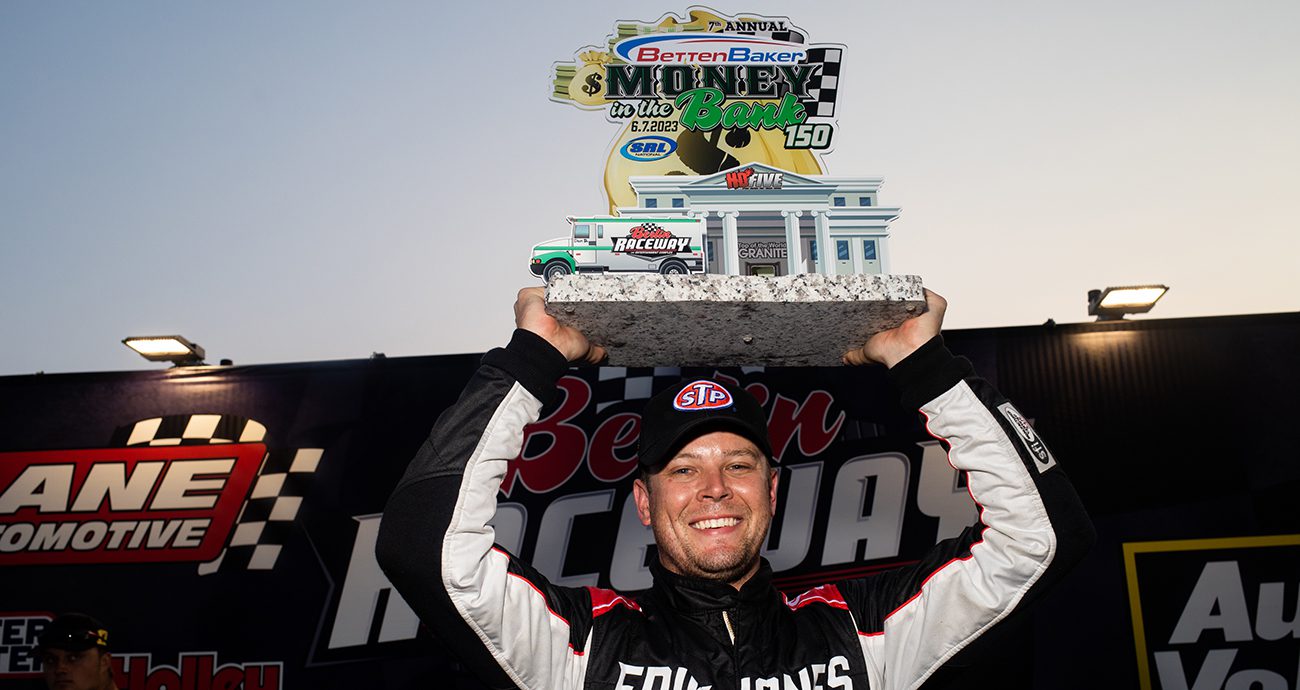
The second of three crown jewel events at Berlin Raceway in Marne, Michigan, the Money in the Bank 150, is set to take place Wednesday evening, when NASCAR Cup Series driver Erik Jones will look to defend last year’s victory.
Despite being in just its eighth year of existence, the Money in the Bank 150 has quickly become a cherished event amongst the drivers and fans due to its large entry lists, intense racing and a $10,000 race-winning paycheck.
Although local drivers have historically shined during the Money in the Bank 150, the past four victors in the event all currently compete in the Cup Series. The most recent of this group is Jones, who brought home an emotional win driving his own No. 4 Super Late Model in 2023.
Jones will attempt to defend his Money in the Bank 150 triumph against a stout field of local regulars and outsiders, all of whom are looking to make their own mark in the long, prestigious history of Berlin.
Below is everything you need to know about Wednesday’s 2024 Money in the Bank 150 at Berlin Raceway in Marne, Michigan.
Wednesday’s Money in the Bank 150 will be the second of three crown jewel events at Berlin Raceway this year. (Photo: Nic Antaya/NASCAR)
What TV channel is the Money in the Bank at Berlin Raceway on?
All feature racing action from the 2024 Money in the Bank 150 at Berlin Raceway can be viewed live on FloRacing, the official streaming home for all NASCAR Regional properties.
The Money in the Bank 150 will not be shown on a television network.
Below is the complete schedule for coverage on FloRacing.
This year’s Money in the Bank 150 is scheduled for Wednesday, June 12. June 11 will serve as a practice day for Super Late Model teams.
Below is the complete race-day schedule for the 2024 Money in the Bank 150 at Berlin Raceway.
(All times ET)
Time
Event
9:30 a.m.
Pit Pass Window Opens
10 a.m.
Pit Area Opens
11 a.m.
Race Tires Sold and Impounded
12 p.m.
Super Late Model Drivers / Spotters Meeting
1-1:50 p.m.
Super Late Model Practice
2-2:50 p.m.
Super Late Model Practice
3:30 p.m.
Super Late Model Tech
4:10-4:40 p.m.
Sportsman Practice
5:30
Super Late Model Qualifying
6:27
Invocation/National Anthem
6:30
Money in the Bank 150 (Super Late Model LCQ: 40 laps, Sportsman feature: 50 laps, Driver Introductions, Super Late Model feature: 150 laps)
Erik Jones enters Wednesday’s Money in the Bank 150 as the event’s most recent winner. (Photo: Emily Elconin/NASCAR)
Entry list
The current entry list for the 2024 Money in the Bank 150 features 31 cars.
Four of the five winners in the history of the event lead a strong group of competitors set to make the trip to Berlin on Wednesday. Along with Jones, this list consists of current NASCAR Cup Series competitor Carson Hocevar, Super Late Model standout Bubba Pollard and defending track champion Brian Campbell.
Hocevar’s success at Berlin Raceway, which includes a track championship and two straight Money in the Bank 150 wins in 2020 and 2021, played a substantial role in propelling him into NASCAR’s top ranks. He will also be fielding his own developmental car on Wednesday, which will be driven by Chase Pinsonneault.
Leading the local contingent of Berlin regulars is Andrew Scheid, the current points leader in the Super Late Model standings. Scheid holds a small advantage over fellow competitors Tyler Rycenga, Joe Bush and Austin Hull, all of whom are on the preliminary Money in the Bank 150 entry list.
Other notable competitors taking part in the Money in the Bank 150 include Derek Kneeland, who spots for Kyle Busch in the Cup Series, along with Evan Shotko, Derek Griffith, Kris Wright, Gavan Boschele and Katie Hettinger.
Below is the complete entry list for Wednesday’s main event.
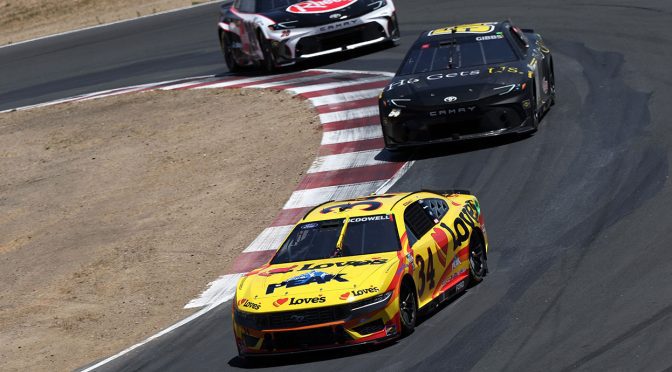
When Michael McDowell passed a fuel-strapped Martin Truex Jr. in the final turns Sunday at Sonoma Raceway, he scored more than just a season-high second-place finish … he secured a first, too.
No, not a race win. McDowell finished runner-up for the very first time in his 481-race NASCAR Cup Series career.
It’s a notable milestone because it now means the veteran has completed the All 40 Challenge — the name for our just-for-fun statistical category that tracks a driver’s progression of checking off every possible finishing position at least once throughout their careers from first to 40th.
Yes, prior to Sunday, second place was all that eluded the Daytona 500 winner McDowell — but now, he joins 12 fellow full-time competitors in the All 40 club.
Before McDowell, the most recent driver to complete the All 40 Challenge was Ross Chastain last month when his 11th-place finish at Darlington Raceway checked the last box off his list. Austin Dillon, Chase Elliott, Brad Keselowski, Kyle Larson, Daniel Suárez and Bubba Wallace might be next; each driver is only one spot shy of All 40.
So, while a win would have been big for McDowell’s season, a P2 is a breakthrough, too — in a different way.