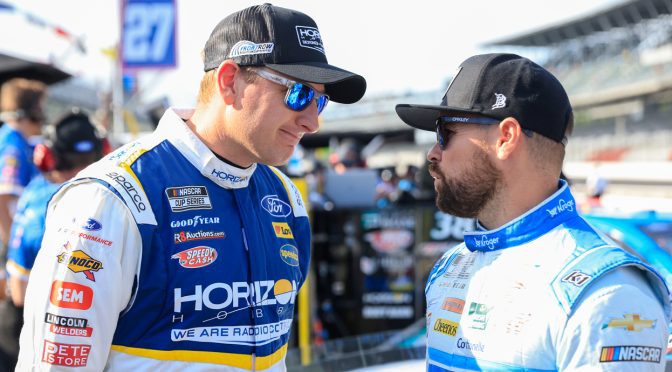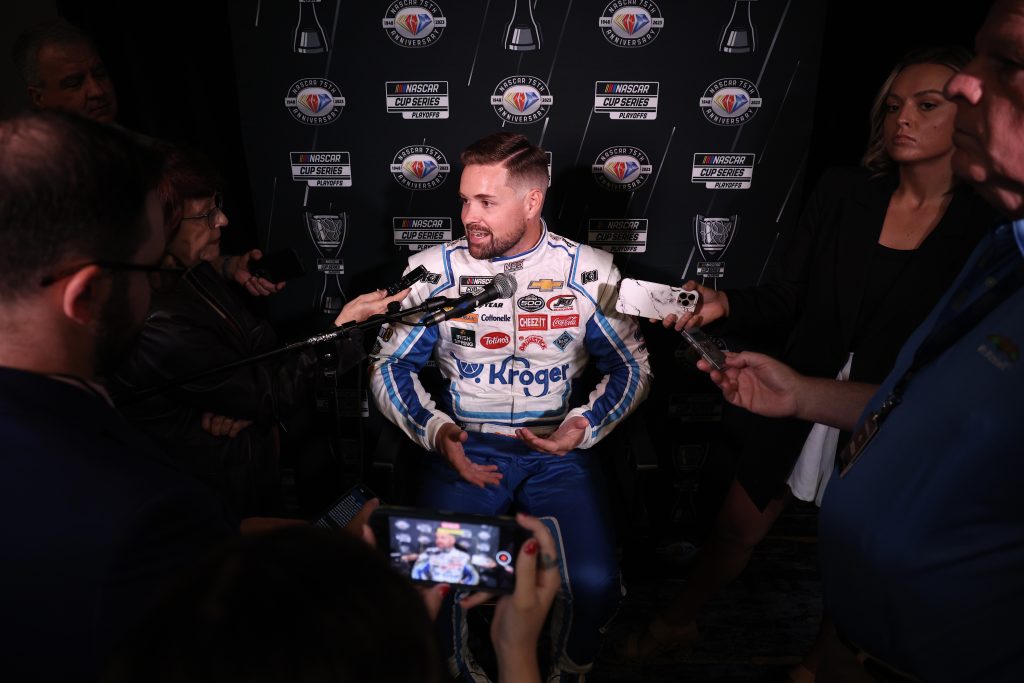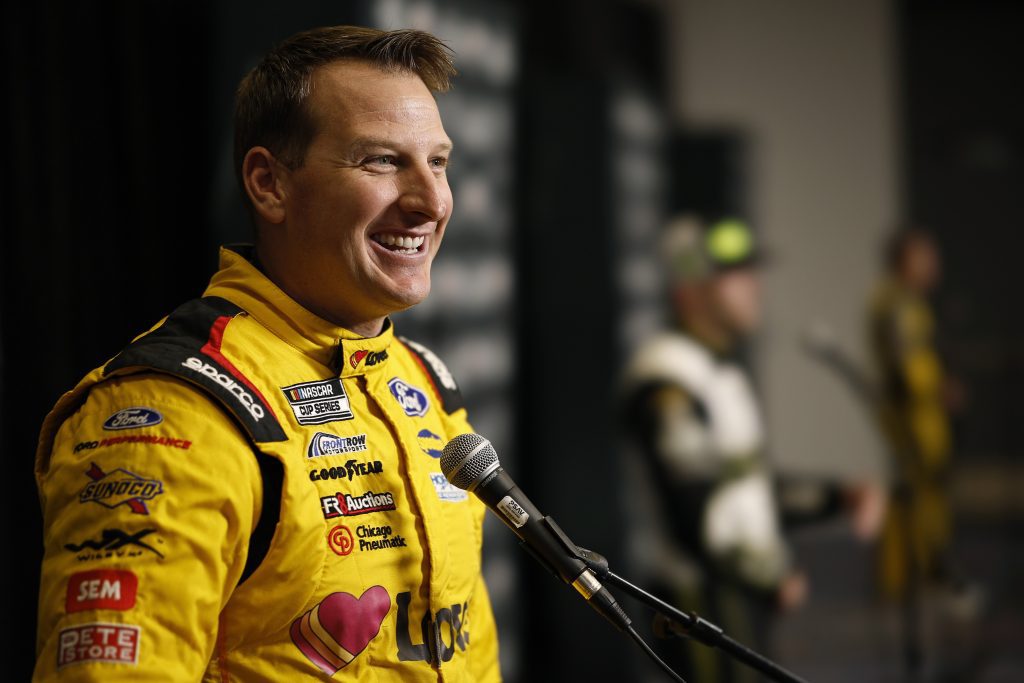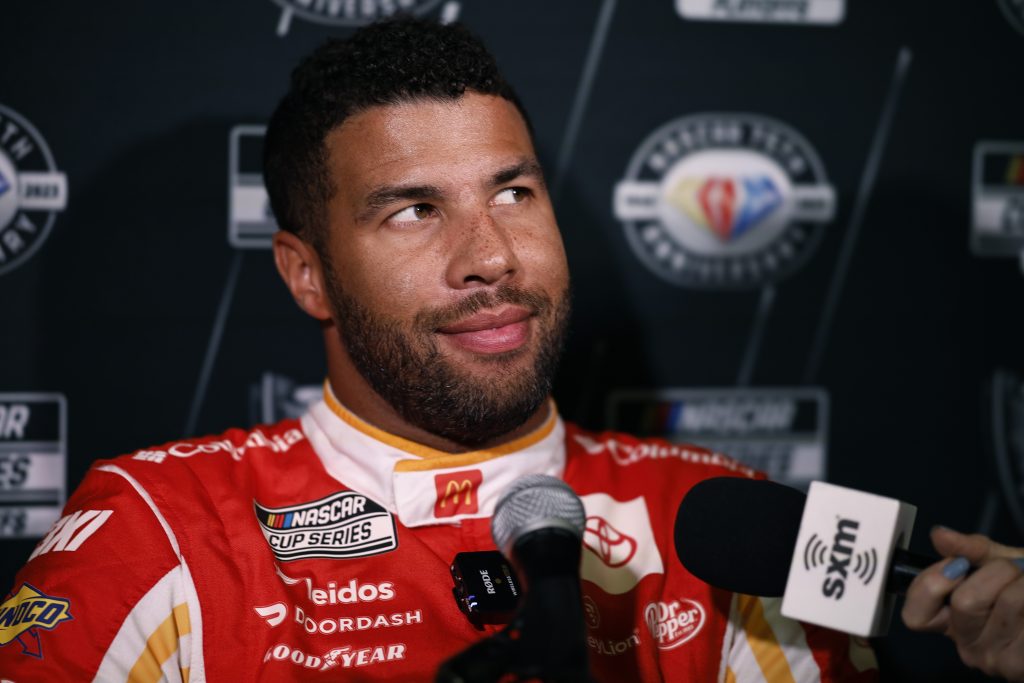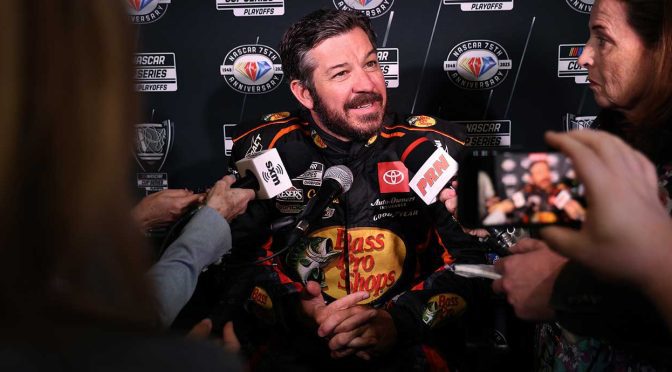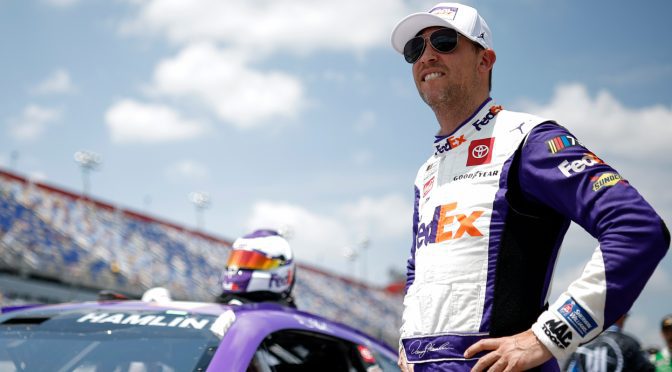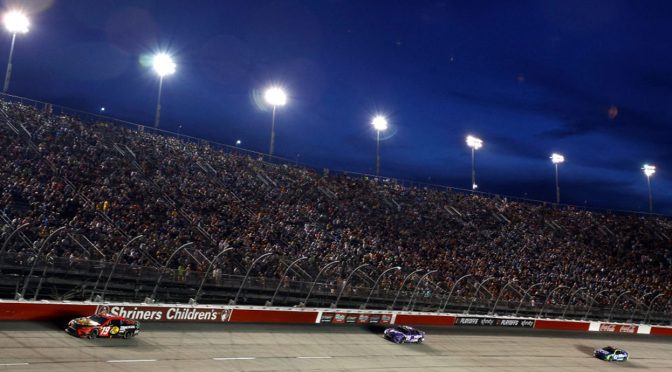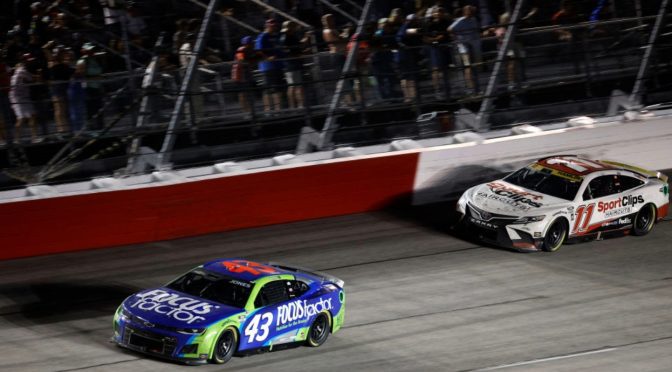
See above where your favorite driver will pit in Sunday’s All-Star Race in the NASCAR Cup Series at North Wilkesboro Speedway (8 p.m. ET, FS1, MRN, SiriusXM NASCAR Radio).
For the first time since 1996, it’s NASCAR race weekend at North Wilkesboro Speedway.
The NASCAR All-Star Race is back in the state of North Carolina and shifts to the 0.625-mile oval in Wilkes County at the historic short track, which welcomes back the Cup Series and its modern-day stars on Sunday night (8 ET, FS1, MRN, SiriusXM NASCAR Radio).
With the All-Star Race comes unique changes to the weekend format, at the forefront of which are a Pit Crew Challenge and heat races. The main goal, however, remains a simple, easy-to-follow setup that’s bound to excite throughout this special weekend.
• Lineups for the two heat races and the All-Star Open were determined by Friday’s Pit Crew Challenge, which featured each team performing a four-tire pit stop. The winning No. 54 Joe Gibbs Racing team of driver Ty Gibbs started Sunday’s All-Star Open from the pole position.
• The 21 teams locked into the All-Star Race were split into two heat races on Saturday night. Those who finished first, third, fifth and so on in the Pit Crew Challenge competed in the first heat race; those who finished second, fourth, sixth and so on competed in the second heat.
• The two 60-lap heats helped determine the starting positions in Sunday night’s $1 million main event. The results of the first heat set the inside row — first, third, fifth and so on — for the starting grid of the All-Star Race, while Heat 2 set the outside, even-numbered positions.
• The 16 drivers not yet locked into the main event fought through the 100-lap All-Star Open event to earn one of two transfer positions into the All-Star Race. The top two finishers advance to the All-Star Race. In addition, the Fan Vote winner also bumps from the Open into the All-Star Race. The award is granted to the driver with the most votes who did not already advance via the transfer positions.
Heat Race No. 1: Results
A switch to wet-weather tires before the race didn’t sway the field from attempting to put on their best during the 60-lap sprint to the finish. After Chase Elliott initially rose atop the field, Daniel Suárez vaulted ahead of the No. 9 Chevrolet on Lap 27 and held strong to hold off a resurgent Joey Logano to win the opening heat.
“I think we had more grip with the wets than we did with the drys,” Suárez said of the tire choice for his heat. “These tires, for some reason, they had so much forward drive … I feel like our car was pretty damn good.”
Finishing Spot
Car Number
Driver
1
99
Daniel Suárez
2
22
Joey Logano
3
14
Chase Briscoe
4
20
Christopher Bell
5
11
Denny Hamlin
6
12
Ryan Blaney
7
9
Chase Elliott
8
29
Kevin Harvick
9
2
Austin Cindric
10
47
Ricky Stenhouse Jr.
11
43
Erik Jones
Heat Race No. 2: Results
A perfect game might mainly refer to baseball or bowling, but in the case of the second heat race, it also applied as Buescher swept all 60 laps en route to the win. Contact with the wall bumped Kyle Larson back to an eighth-place finish.
“I liked our Fastenal Mustang on slicks — I was really happy with it,” Buescher said. “I didn’t want to put ‘rains’ on. I felt like it was still pretty dry out there. I guess it was starting to drizzle a little.”
Finishing Spot
Car Number
Driver
1
17
Chris Buescher
2
3
Austin Dillon
3
24
William Byron
4
6
Brad Keselowski
5
23
Bubba Wallace
6
19
Martin Truex Jr.
7
8
Kyle Busch
8
5
Kyle Larson
9
1
Ross Chastain
10
45
Tyler Reddick
All-Star Open: Results
Acting as a sub-in for an out-of-action Alex Bowman didn’t dissuade Josh Berry from capitalizing on contact between Ty Gibbs and Michael McDowell to seize the lead and hold it en route to winning the top Open spot for the All-Star Race. A rebound from Gibbs helped the No. 54 Toyota collect the final Open position. Gragson’s win in the Fan Vote, meanwhile, cemented the final berth.
Finishing Spot
Car Number
Driver
1
48
Josh Berry
2
54
Ty Gibbs
3
10
Aric Almirola
4
41
Ryan Preece
5
16
AJ Allmendinger
6
15
JJ Yeley
7
42
Noah Gragson
8
77
Ty Dillon
9
7
Corey LaJoie
10
78
Josh Bilicki
11
21
Harrison Burton
12
51
Ryan Newman
13
34
Michael McDowell
14
31
Justin Haley
15
38
Todd Gilliland
16
13
Chandler Smith
FULL STARTING LINEUP FOR ALL-STAR RACE (Sunday, 8 p.m. ET, FS1)
NORTH WILKESBORO, N.C. – Ty Majeski registered a hard-fought runner-up finish in Saturday afternoon’s Craftsman Truck Series race, unable to quite chase down a victorious Kyle Larson in overtime. He matched his best result of the season, but the atmosphere of a rejuvenated North Wilkesboro Speedway was one aspect that truly held his attention.
“I’m glad you brought that up. I mean, this place is packed. I don’t know that the Truck Series will see a better crowd than this all year,” said Majeski, who was barely 2 years old when the track held its last race. “So, good to see. Hopefully, we can go back to some cool places – Rockingham, here, of course, Milwaukee’s back on our schedule, we went back to IRP (Indianapolis Raceway Park) last year. That place is back, so hopefully, we see a pattern here and keep marching in this direction. It’s fun going to all these short tracks where this series belongs.”
A near-capacity crowd of some 30,000 filled the historic 0.625-mile track for the Tyson 250, the Truck Series’ first event here since 1996. The celebration marked the venue’s return to NASCAR’s national series rotation, and the hearty fans basked in the circuit’s rebirth.
Among them were the competitors, who battled each other and the rough, well-worn racing surface.
“This is one of the things that I don’t think anybody can complain about,” said 10th-finishing Grant Enfinger. “I think the race put on a great show, too. Very happy that they left this old surface, but to revitalize a historic track, it’s pretty, pretty special to be part of it. Had somewhat of an electric atmosphere, kind of like Eldora (Speedway) used to be for our Truck Series — only amped up a little bit from that. Pretty cool deal what they did.”
The event marked a bit of a history lesson for some of the series’ younger competitors. When Goodyear held a tire test for the truck tour here two months ago, all three of the participating drivers – Corey Heim, Carson Hocevar and Zane Smith — were not born at the time of the track’s closure. “I mean, it’s a bloomin’ travesty they left this place,” said Hocevar, who placed fourth.
Some of North Wilkesboro’s character was also new to the 30-year-old Larson, who didn’t know the track’s traditional post-race procedures for winners and their vehicles.
“I wasn’t watching races when I was 4 years old, either, so I didn’t know how Victory Lane worked,” Larson said. “I didn’t know that you ride this elevator up. That’s honestly probably the coolest Victory Lane I’ve ever been in.”
For the Truck Series regulars, the cool factor was only matched by what was likely the tour’s biggest attendance figure this year.
“This might be it right here,” Majeski said. “That’s pretty damn cool, so hopefully, we put on a good show.”
NORTH WILKESBORO, N.C. – Kyle Larson proved an admirable substitute on Saturday at North Wilkesboro Speedway.
Subbing for injured Alex Bowman — who had been scheduled to race the No. 7 Spire Motorsports Chevrolet — Larson led 138 of 252 laps in winning the Tyson 250 in overtime.
Larson is the first driver to win a NASCAR-sanctioned race at revitalized North Wilkesboro in 27 years. The victory was Larson’s third in 15 NASCAR Craftsman Truck Series starts.
At the end of the two-lap overtime, Larson beat ThorSport Racing’s Ty Majeski to the finish line by 0.974 seconds. Matt DiBenedetto ran third, followed by Carson Hocevar, Bubba Wallace and pole winner Corey Heim.
“It was a really fun track there, especially in the truck where you can use the apron and such at both ends,” said Larson, who was making his first Truck Series start of the season. “I had a good time. That was a lot of fun on the long runs.
“I wasn’t supposed to run. Unfortunately, Alex got hurt [in a sprint car accident], and I got the opportunity to run this.”
Larson made the most of his opportunity, dominating the action and charging from sixth after a Lap 228 restart where the first three cars in the running order stayed on the track during the 11th caution, and fourth-place Majeski gained track position with a two-tire pit stop.
On Lap 238, Larson passed Wallace for the lead and held it through one more caution and the overtime.
Thanks to pit strategy, Majeski salvaged the runner-up finish.
“Yeah, we just missed it today,” Majeski said. “Sometimes when you’re in the back with nothing to lose, you make gutsy calls, jumping on two tires there, and we were just able to hold off guys who put four tires on. So, a subpar day for us turned into a good finish.”
The race was the first in the series at North Wilkesboro since 1996 when the Craftsman Trucks ran at the 0.625-mile short track for the second time. Saturday’s renewal produced a record 12 cautions for 81 laps.
The harshest of on-track incidents came on Lap 201 when the truck of Tyler Ankrum was forced into the outside backstretch wall. As Ankrum slowed, Rajah Caruth’s No. 24 Chevrolet and the Fords of reigning series champion Zane Smith and Ben Rhodes suffered a chain-reaction collision that eliminated the three trailing trucks.
Before the wreck, Smith had suffered a pit road speeding penalty that sent him to the back of the field.
“Just a product of what happens when you get put back there,” said Smith, who started the race in the rear of the field because of three failed inspections and had worked his way into the top five before the speeding penalty.
The Truck Series will next trek to Charlotte Motor Speedway to race in the North Carolina Education Lottery 200 on May 26 (8:30 p.m. ET, FS1, MRN, SiriusXM NASCAR Radio).
Note: Post-race technical inspection concluded without issue in the NASCAR Craftsman Truck Series garage, confirming Larson as the race winner.
NORTH WILKESBORO, N.C. — When Dale Earnhardt won at North Wilkesboro Speedway on April 16, 1989, the left side of his black No. 3 Chevrolet showed evidence of battle scars and scrapes in true “Intimidator” form. The Goodyear logos were nearly worn clean off the left-front tire’s sidewall, but the rubber his Richard Childress Racing entry sported was still far from nondescript.
Earnhardt’s victory here 34 years ago in the First Union 400 was significant as the first win for Goodyear radials. The new tire design replaced the former bias-ply construction and proved to be a pivotal point in the “tire wars” era at the end of the 1980s.
The NASCAR Cup Series’ return to North Wilkesboro after a 27-year absence has kindled plenty of nostalgia ahead of Sunday’s All-Star Race (8 p.m. ET, FS1, MRN, SiriusXM NASCAR Radio). But it’s also stoked some fond memories for Greg Stucker, the tiremaker’s director of race tire sales.
“Obviously, we learned a lot going into that, and things have changed dramatically since then,” says Stucker, who joined Goodyear’s team in 1979. “But it was a pretty good introduction for the radial tire package, without a doubt. So that’s why North Wilkesboro kind of has a really soft spot in our heart.”
Goodyear had competition for the 1988 and the start of the ’89 season in the form of Hoosier Tires, led by president Bob Newton. The Indiana-based company took on its neighbors from Akron, but the resulting arms race for better on-track performance often came at the cost of durability. Teams often switched alliances depending on which tire was faster, and blowouts led to crashes, which carried far more peril in those days before SAFER barriers and HANS devices.
“That’s what eventually led to us being the sole supplier in 1997,” Stucker says. “I think Bill (France) Jr. said that tire wars are not a good thing for everybody. So it was, let’s move on.”
Goodyear helped to make that transition with the development of a racing radial tire, which has a centered construction around the crown of the tire versus the angled, overlapping ply structure of the bias-ply tires. Goodyear had planned their rollout for the ’89 Daytona 500, but the durability component hadn’t been perfected; Earnhardt and Ford rival Bill Elliott were involved in a pair of crashes before “The Great American Race,” and Goodyear reworked the design.
“We came here to test in preparation for the spring race and tested with Junior — imagine that. Terry Labonte drove for Junior Johnson because they obviously knew the track so well,” Stucker recalled of the test just a few weeks before the race. “And we came with what we thought was going to be the right setup.”
The team built up to 100-lap runs, eventually trying a configuration that eliminated rear stagger, placing a harder-compound right-side tire on the left-rear. The feedback was positive, and Stucker remembers the lap times being consistent and fast.
Despite some apprehension that the radials had less adjustability, Goodyear stayed with the setup once April arrived in North Wilkesboro. There was also skepticism from the Hoosier camp, which doubted that the radial design would work on heavy stock cars, especially at larger ovals.
That distrust was answered by Phil Holmer, Goodyear’s stock-car field manager at the time, who told the Associated Press before the North Wilkesboro race that April: “By the time the leaves turn color, we’ll be using them everywhere.”
The race was a forerunner to proving that point. Rusty Wallace won the pole position on Hoosiers, with his crew chief Barry Dodson favoring them after a North Wilkesboro win on those tires the previous fall. But many were undecided, even during the race weekend, and the 32-car field was a nearly even split – 17 starting on Goodyears and 15 on Hoosiers.
The great Tom Higgins of the Charlotte Observer wrote that the race’s results had potentially revolutionized the Cup Series, calling it a “radial rout.” Earnhardt led 296 laps, holding off Alan Kulwicki down the stretch. Wallace’s Hoosiers gave way, and by Lap 77, he had gone a lap down to early leader Darrell Waltrip on Goodyears. By Lap 110, all 31 cars that were still running had bolted on Goodyear rubber.
Goodyear continued to develop its radial design, phasing them in at larger tracks as the season went on. But North Wilkesboro was a turning point; Hoosier withdrew by the end of April and only made a brief return to NASCAR’s top series in 1994.
“There was really no specific reason that we chose North Wilkesboro other than it was the right time on the calendar, the right-size tire, the right-sized race track,” Stucker said. We decided to step into the short tracks, and then it progressed from there.”
Zack Albert | NASCAR Studios
The progression of the sport has made a full-circle trip back to North Wilkesboro for this weekend’s All-Star Race. The invitational event will be held on the same racing surface that Earnhardt won on; fresh asphalt was last placed on the 0.625-mile track in 1981.
The abrasive surface and tight confines, Stucker says, are expected to provide a tire-management challenge. Cup Series and Craftsman Truck Series teams tested here in March to get a feel for the considerable wear, and Goodyear officials scanned the surface to find a common connection with other established tracks – the comparison wound up being similar to Atlanta’s old pavement and current-day Darlington.
“We landed on the Richmond and Phoenix setup. That was our control,” Stucker says, noting that Goodyear went with more durability than the Martinsville configuration. “We tried softer, harder, left sides, right sides, and that just seemed to be in the sweet spot. All three drivers felt like that was a good, reasonable setup. The soft stuff was just way too soft. The hard stuff, it was just hard to get a hold of the race track.
“We were probably leaning that way anyway because obviously, we’re going to come here to fairly unknown race track for most of these guys, so at least we can give them a tire that they’re familiar with, that they’ve raced before. We felt like that was also a benefit.”
The last time Goodyear’s trucks were parked in the North Wilkesboro infield for a race weekend came in 1996 when the Cup Series last visited the North Carolina foothills. The return is being celebrated as a revival of stock-car racing’s roots. For Stucker and Co., it’s also a reminder of a key part of Goodyear’s racing history.
“If you look back on 1988, you know, we both crossed the line at times, right?” Stucker says. “I think we learned a lot, and we certainly figured out with a radial tire that the tire can be much more robust in a lot of ways than the bias tire was. I think we felt like that also gave us an edge.”
“I mean, this place had a ton of grip,” said Preece, who finished fourth in the modified event. “A lot of people will compare Myrtle Beach as one of those tracks we had on the East Coast that has no grip. If you decide to go, you’re just going to burn your stuff up, but it never had grip.
“This place, it has tons of grip. But you’re going to pay the price if you choose to go after it. So that’s what I thought was very unique about this race track. It just destroys tires. But at the same time, you can, if you choose to go. Hard. You can go hard.”
The hotly anticipated Pit Crew Challenge helped kick off the 2023 NASCAR All-Star Race festivities in the Cup Series’ long-awaited return to North Wilkesboro Speedway Friday evening.
Ty Gibbs and the No. 54 Joe Gibbs Racing Toyota team won the competition to score the pole for Sunday’s All-Star Open (5:30 p.m. ET, FS1) and pocket an extra $100,000 for the team.
Daniel Suárez and Chris Buescher leading their respective heat fields to the green Saturday evening as their teams posted the two fastest stops in the Pit Crew Challenge among those already locked into Sunday’s main event.
See where your favorite All-Star driver will start in the two heat races on Saturday night (7:30 p.m. ET, FS1, MRN, SiriusXM NASCAR Radio) and in Sunday’s All-Star Open.
NORTH WILKESBORO, N.C. — The pit crew of Ty Gibbs busted off a 13.012-second stop to win Friday night’s Pit Crew Challenge and the $100,000 winner-take-all prize that goes with it.
With his team’s victory, Gibbs will start on the pole for Sunday’s NASCAR All-Star Open as he tries to qualify for the NASCAR All-Star Race that follows (8 p.m. ET on FS1, MRN and SiriusXM NASCAR Radio).
Daniel Suárez’s No. 99 Trackhouse Racing Chevrolet team earned the pole position for the first of two Saturday night heat races (7 ET, FS1, MRN, SiriusXM NASCAR Radio) that will set the order for the All-Star Race. In a competition that included both All-Star and Open teams, Suarez is already qualified for the main event.
“This team has been through a lot this year,” said Gibbs’ veteran rear tire changer Mike Hicks. “Pulling this out here is a big confidence builder.”
Gibbs’ 13.012-second stop included the time it took for NASCAR Cup Series rookie to drive his No. 54 Joe Gibbs Racing Toyota into the pit stall and to exit after the work was complete. In addition to Hicks, Gibbs’ pit crew includes front changer Blake Houston, tire carrier Jacob Holmes, jackman Derrell Edwards and fueler Peyton Moore.
“It’s huge,” said JGR pit crew coach Brian Haaland. “These guys put in so much work that people don’t see. Most of the time when things go wrong, it gets highlighted. So it’s nice that they were able to perform in a really intense environment out there against all their peers and run the fastest pit stop.
“Ty did a fantastic job getting the car exactly where we needed it, and (crew chief) Chris (Gayle) with his mechanics gave us a little help on setup. It was a lot of extra work for those guys — it was a complete team effort today.”
Suárez’s team features front changer Josh Bush, rear changer Jerick Newsome, tire carrier Jeremy Kimbrough, jackman Josh Appleby and fueler Milan Rudanovic. Collectively, they orchestrated their stop in 13.297 seconds in a competition where pit crew performance sets the order for both the All-Star qualifying heats and for the All-Star Open.
Suarez’s crew edged the No. 17 RFK Racing Ford team of driver Chris Buescher, who will start on the pole in Saturday’s second heat after a stop in 13.381 seconds.
The competition was rife with mistakes, as the crews competed for the top prize money under huge pressure to perform at top speed. A five-second penalty for a loose wheel, for instance, cost Brad Keselowski the top starting spot in Heat 1. Keselowski’s team was second fastest overall at 13.044 seconds, but the penalty dropped him to 26th overall.
Chase Elliott’s team was fourth fastest at 13.577 seconds, earning the driver the second starting position in the first heat race. Hendrick Motorsports teammate Josh Berry’s crew was fifth at 13.677 seconds. Berry will start next to Gibbs in the Open.
Austin Dillon’s team was sixth fastest at 13.712 seconds, giving the driver of the No. 3 Richard Childress Racing Chevrolet the second starting spot in the second heat.
Twenty-one drivers already are eligible for the All-Star Race, either by winning a NASCAR Cup Series points race in 2022 or 2023, or as former Cup champions or former winners of the All-Star Race.
The top two finishers in the Open will advance to the main event, along with the winner of the Fan Vote.
Kyle Larson topped the leaderboard at 109.144 mph in Friday’s NASCAR Cup Series practice for the All-Star events at North Wilkesboro Speedway, the first official series laps at the .625-mile oval since 1996.
The 50-minute session served all Cup teams before Sunday’s exhibition races — the All-Star Open (5:30 p.m. ET, FS1, MRN, SiriusXM NASCAR Radio) and the All-Star Race (8 p.m. ET, FS1, MRN, SiriusXM).
Behind Larson’s No. 5 Hendrick Motorsports Chevrolet was Brad Keselowski in the No. 6 RFK Racing Ford at 108.408 mph. Completing the top five were Denny Hamlin in the No. 11 Joe Gibbs Racing Toyota at 108.204 mph, Chris Buescher in the No. 17 RFK Racing Ford at 108.064 mph, and Chase Briscoe in the No. 14 Stewart-Haas Racing Ford at 107.965 mph.
Series points leader Ross Chastain was 16th fastest with a speed of 107.056 mph in the No. 1 Trackhouse Racing Chevrolet. His teammate Daniel Suárez went for an early spin in the session, brushing the wall with the back end of his No. 99 Chevrolet. He suffered no significant damage but posted just the 32nd-fastest lap at 105.659 mph.
William Byron, the series’ most recent winner coming off his Darlington victory, was fastest of the bunch in 10-lap average speed at 106.458 mph in his No. 24 Hendrick Motorsports Chevrolet. Rounding out the top five in 10-lap averages were Hamlin (106.261 mph), Christopher Bell (106.205 mph), Buescher (106.188 mph) and Martin Truex Jr. (106.063 mph).
Long-run speed may prove critical in Sunday’s All-Star festivities. The 21 drivers locked into the All-Star Race will be split into two 60-lap heats on Saturday (7 p.m. ET, FS1, MRN, SiriusXM), with Heat Race 1 setting the inside row for Sunday’s main event while Heat Race 2 sets the outside row.
The All-Star Open will pit the 16 drivers not yet locked into the All-Star Race against each other for a 100-lap contest, while the big show — with a $1-million payout, mind you — lasts 200 laps.
Ryan Blaney, driver of the No. 12 Team Penske Ford, was fastest in 30-lap average speeds at 103.653 mph. Behind him were Tyler Reddick (103.425 mph), Ty Gibbs (103.391 mph), Aric Almirola (103.013 mph) and Joey Logano (102.890 mph).
Kevin Harvick, the 2014 Cup Series champion, returned to his famed No. 29 Friday at North Wilkesboro, harkening back to his days at Richard Childress Racing — specifically the white and red paint scheme he donned in his inaugural Cup Series win at Atlanta Motor Speedway in his rookie 2001 season. Now driving a Ford for Stewart-Haas Racing, Harvick was eighth-fastest in single-lap speed Friday at 107.790 mph.
The soaring vocals and riff-heavy guitars of Journey’s “Don’t Stop Believin’ ” blaring through the new public-address system at North Wilkesboro Speedway were almost too on the nose.
The community that had watched the historic race track slowly crumble with each passing drive on U.S. Highway 421 finally had its moment, more than a quarter-century after its most recent date with NASCAR’s major leagues. An open house last week felt like a congregational homecoming and a celebration for a long-overdue restoration of one of stock-car racing’s founding circuits.
The hills that cradle a NASCAR original are ringing again with the thunderous sound of racing, leading up to Sunday’s first running of the NASCAR All-Star Race at North Wilkesboro (8 p.m. ET, FS1, MRN, SiriusXM). It’s an unlikely resurrection for a track once presumed long gone, but a place that will infuse new life into an annual invitational event and the Wilkes County area of North Carolina that it calls home.
The track’s life has come full circle for a sport that has returned to the rustic, countryside authenticity of short-track racing. It’s also a direct line into the moonshining roots that prompted the formation of NASCAR some 75 years ago.
North Wilkesboro Speedway is breathing again, in large part thanks to the community that pushed for its return and is now cheering for the place itself and its future.
Here are the profiles of those who have made it happen and those who are cheering its return the loudest.
Aaron Burns | NWS Photo
The podcast protagonists
In late March of 2021, Speedway Motorsports President and CEO Marcus Smith took a seat across from Dale Earnhardt Jr. in front of live microphones. The two went way back, and their easy conversation about the Smith family’s portfolio of tracks was the fodder for a free-wheeling episode of the Dale Jr. Download podcast.
The chat seemed to be winding down when Earnhardt and co-host Mike Davis asked Smith about one or two things left on his list of topics. “North Wilkesboro,” Smith blurted out to the astonishment of his hosts. “I just want to let you know that we haven’t forgotten about North Wilkesboro. We haven’t given up on it.”
“What does that even mean?!” Earnhardt replied.
“It just means that I’m thinking, we’re working on it, no promises, but we have not forgotten about it,” Smith said. “That’s the big message.”
On a cold December day in 2019, the two had spent time with a modest handful of volunteers in clearing the 0.625-mile oval of the rampant weeds that had sprouted up through the dormant racing surface. The clean-up was meant to scan the track for iRacing, preserving it in pixel form. But this podcast proclamation was a glimmer of real-world hope.
“I know a lot of people just think that I don’t care, and that’s not true. I really do care, and if we can think of a way to do something there, we’re going to,” Smith said, adding, “There might be hope to do something there. And you never know.”
Nearly nine months passed when N.C. governor Roy Cooper signed a state budget proposal into law, allocating $18 million to Wilkes County for funding water, sewer and infrastructure improvements to the facility. A day later, Smith released a statement that read in part: “The goal will be to modernize the property so that it can host racing and special events again in the future.” At the same time came a subtle but significant change: North Wilkesboro Speedway joined the Speedway Motorsports masthead alongside the company’s established tracks.
Almost exactly one year ago, Cooper visited the track ahead of a proposed return of grassroots racing in August. Creature comforts were sparse for those events, but few seemed to mind. When Earnhardt participated in the final race of the month, a packed house bathed in an electric atmosphere — on a weeknight, no less.
Most everyone took notice, Smith included. “That was the turning point,” Smith said later. “That’s what made me and Dale say, ‘I think we can do this.’ ” Eight days later, plans for the All-Star Race to be held at North Wilkesboro were revealed.
“We had a ton of grace from the fans, and everybody had a blast,” Earnhardt Jr. said. “Everybody was just so happy to be there, and as soon as the cars started rolling, everybody was like, it was sort of this surreal moment where you’re thinking, ‘Man, I can’t believe that this is happening.’ And I was thinking that in the car and after the race, and I’m like, ‘I just can’t believe that we actually raced here, and that we had such a great turnout, and we had such great energy.’ ”
Smith acknowledged the long-held animosity that Wilkes residents carried toward his family in the days since his father, Hall of Famer Bruton Smith, and New Hampshire track owner Bob Bahre split ownership of the track in the mid-1990s and took North Wilkesboro’s Cup Series dates to new venues. Speedway Motorsports acquired full ownership in 2007, but the stalemate persisted.
Recent events have done plenty to heal that legacy.
“It’s because of the community that we’re here,” Smith told NASCAR.com at the track’s open house. “I mean, Dale Earnhardt Jr. and his big idea of preserving it digitally has exploded into a revival and restoration of a speedway that was forgotten. It was part of the lost speedways, it was dead and gone and left behind. And so it’s very special to see these faces here. You’ve got people here that weren’t even born when this place was last opened, and of course, people that have made many trips here. To be a part of reviving that history, it really turns the speedway into a time machine where people come back and remember days gone by, but also build on days ahead.”
Zack Albert | NASCAR Studios
The ‘doer’
Shortly before his death in 2007, NASCAR Hall of Famer Benny Parsons had left for his wife, Terri, a to-do list with ambitious goals. Number one was finishing some needed home-improvement projects. Second was opening a winery, a task that fellow vineyard owner and team owner Richard Childress had encouraged. “Start a vineyard, Benny. It’s easy,” Terri Parsons recalls him saying. “Come on, Richard. Are you kidding me?”
But item No. 3 was the most ambitious, the only one she says she didn’t accomplish right away and the one that became all-consuming: re-opening North Wilkesboro Speedway.
Representatives from the Wilkes County commissioners had enlisted Parsons’ help not long after her husband’s passing, knowing her background as a former director of tourism for the state of Florida and knowing that she was one of a few people with an open line of communication with Bruton Smith, the track’s owner. Parsons had helped acquire permission for a handful of film projects at the speedway — commercials, music videos and the like — but any overtures about revitalizing the facility were rebuffed.
Still, it opened the door for further communication, and Steven Wilson — who helped keep the conversation going with his Save the Speedway movement — urged her not to let the matter drop. Smith began to soften his stance, and his son Marcus was an even more eager listener.
“I said, ‘you do know you’re sitting on the goose that lays the golden egg, right?’ ” Parsons said, giving the younger Smith a vivid history lesson about the track’s instrumental role in the formation of NASCAR, offering proof that founder Bill France Sr., track owner Enoch Staley and a group of local moonshiners had made headway on organizing stock-car racing there — a forerunner to the famous Streamline Hotel meetings.
The next step was rallying local politicians, getting the right elected officials in place and encouraging them all to work together. Parsons’ time spent in the political arena helped present a unified front for meetings with the younger Smith. One such meeting took place just after sun-up at the track, with a group of county commissioners greeting Smith and Steve Swift, Speedway Motorsports’ VP of Operations and Development.
“God, but it’s the history of this place. The stories,” Parsons recalled Swift saying. “He said, look at the hair on my arms. The hairs on my arms are standing up, just being here. There’s something about this place.”
Shortly thereafter, Smith’s appearance on the Dale Jr. Download made one of the first public confirmations that motion at the track was a possibility. After the episode dropped, Parsons’ phone started buzzing from her Wilkes County trustees. Among them was Eddie Settle, a former county commissioner who is now a state senator. “He said to me, ‘Are you listening?’ I said, Yes, sir,” Parsons recalled. “And he said, ‘We need to show Marcus Smith some love. … That’s your wheelhouse. Think of something.’ ”
Less than 24 hours later, Parsons had an answer. Rather than tiptoe around the subject, she chose a direct approach. The resulting campaign simply stated “We Want You Back” in large block letters along with the track’s logo — an asset that she got permission to use through a backchannel. In short order, that message was on billboards along highways, banners in town and on yard signs along the county’s back roads — amplified through social media and the steady drumbeat of local voices.
The clean-up for iRacing was one step, and volunteer efforts within the community offered more help with the upkeep. The grassroots efforts were starting to take hold.
“(Earnhardt) Junior said, you know, maybe this place isn’t as far gone as you think it is, and he really came in and kicked the field goal,” Parsons says. “I sat all of our local people down and said, ‘Look, we each have a role to play in this. Check your egos at the door, because not one of us is more important than the other.’ ”
Seeing the speedway today — with all the care taken to rebuild the track into a modern facility while keeping the old-school touches — stirs Parsons’ emotions.
“What do I think? I mean, it’s daylight and dark,” she says. “Totally daylight and dark. I mean, I can’t go out there without crying.”
It’s why Parsons was wearing large, dark sunglasses to hide her eyes at the speedway’s open house — even with the sun starting to set behind the mountains. Speedway officials revealed that evening that the arcing seats through Turns 1 and 2 would be rechristened as the Benny Parsons Grandstand, and the family embraced beneath the unfurled banner.
Item No. 3 on that to-do list finally had its checkmark, some 17 years later.
“He was my best friend, and I was his best friend,” Terri Parsons said of her late husband. “And we were always together. So I look back now at that list, and him knowing me as well as he did, I wonder. All these years, I thought he made the list for him. I’m not too sure he didn’t make the list for me.”
Zack Albert | NASCAR Studios
The family legacy
Just a few minutes from the race track, Mike Staley opens the office section of his spacious garage. A desk, office chair and couch sit in the center, but it’s the walls and shelves that are filled with racing memorabilia that illustrate how much the speedway is part of his family’s fabric.
Staley was North Wilkesboro Speedway’s track president when it closed in September 1996, but the memories live on in his collection of artifacts. Among the framed keepsakes is another shot of the full-field photo of drivers from the last Cup Series race in September 1996, but with his family in the front row. More than one family member isn’t quite facing the camera at the moment the shutter snapped, catching a glimpse at Jeff Gordon — then a budding superstar and the eventual winner of the final race.
That moment was 50 years after the track was born, inspired by a trip that his father, Enoch Staley, took to see his first stock-car race in South Carolina in 1945. He returned to Wilkes County with the intent of bringing the sport to his home, joining Charlie Combs, Lawson Curry and John Mastin in building the place.
“Somebody had the land, somebody had the money and somebody had the equipment I guess as well,” Mike Staley says. One aspect of the initial construction remains part of the track’s DNA. When the money dried up, so did the ability to pay to have the track properly graded. To this day, the frontstretch runs downhill and back uphill on the back straightaway. “They went to work on it, and they expected 3,000 people and 10,000 showed up.”
Zack Albert | NASCAR Studios
The early successes helped the elder Staley become a closer business partner with NASCAR founder Bill France Sr. North Wilkesboro was the finale for the Cup Series’ first season in 1949, and when the schedule nearly doubled in length just two years later, the track became host to two races annually.
The track was a fixture that spanned the Cup Series circuit’s formative eras, including stages of considerable growth in the 1980s and ’90s. ESPN, then a fledgling network with the advent of cable television, was starved for programming during that time and North Wilkesboro’s events were a popular addition to its portfolio of racing coverage.
The industry’s growth in the 1990s signified change that would lead to the track’s final days. When France died in 1992, so did the sense of assurance that Staley’s track would keep its place on the schedule. Enoch Staley died three years later, and Mike Staley succeeded him as track president and chief operating officer.
The reach of the sport was expanding, and new tracks were springing up across the country, hungry for NASCAR events. Those factors, combined with rising purses demands, led the two co-owners to sell. The Combs family sold its half-interest in the track to Bruton Smith in June 1995, which brought a date to his new Texas Motor Speedway in Fort Worth. Six months later, the Staley family sold to Bob Bahre, who added a Cup Series date for his just-opened facility in Loudon, New Hampshire.
Zack Albert | NASCAR Studios
On the day of the open house, Staley was still wearing a polo shirt with the logo of New Hampshire International Speedway — the original name that Bahre gave it, before Smith purchased it and renamed it New Hampshire Motor Speedway. Bahre kept him involved with the New England track after their business deal was reached, and several pieces of memorabilia in his office reflect that — including a trophy with his father’s face etched in the glasswork.
But Staley’s heart and his home have stayed true to Wilkes County, where he’s felt the groundswell of public support for the track’s rebirth.
“I mean, I’ve seen more enthusiasm for the revival than I’ve ever saw,” Staley says. “Everybody many years ago kind of just took it for granted that it’s always going to be here. You know, you don’t miss your water until it’s gone, I guess.”
The other side of the Staley’s office has more to see — NASCAR Rule Books from decades past, promotional posters, and a concession stand menu from the track’s last race. But there are two key pieces in the rest of the garage — his father’s Chevrolet truck, restored in gleaming red, and the pristine Pontiac Firebird pace car from North Wilkesboro Speedway’s final season, still touting the Tyson Holly Farms 400 for September 29, 1996 on its doors.
Pontiac had provided the pace cars for promotional use, and Staley said their agreement meant a new vehicle each year. When the term was up for the 1996 season, he bought it to keep.
Staley took the vehicle out for North Wilkesboro’s open house, parking it on pit road just ahead of Dale Earnhardt Jr.’s No. 3 late model. The odometer indicated just 12,775 miles on the clock. Staley chuckles when asked how many of those came five-eighths of a mile at a time.
“What they’ve done down there is just unreal, is what they’ve done, and I’m glad,” Staley says. “It’s great because gradually, people like my dad and his brother Gwyn, and maybe Benny Parsons to a certain extent, people are kind of forgetting about them. But this will bring a lot of that back and put a spotlight on some of the pioneers and the charter members and the people that really laid the foundation for NASCAR, and Dad is one of those that laid the foundation.”
The storefront
Downtown Wilkesboro — the smaller sister town to the south — has a leisurely pulse, with a historic vibe to its Main Street. But there’s an energy inside The 50’s, a diner serving homestyle breakfast and lunch with an emphasis on fast, friendly service.
Keith Johnson is quick to greet you with a smile there most days except for Wednesday, which is his golf day. His mother opened the restaurant on March 1, 1990, and he took over nearly eight years later. But one thing that didn’t come with the transfer of ownership was an explanation of why it’s called The 50’s.
“Never have figured out why she named it that,” he says, mentioning the poodle skirts that some of the wait staff wore in its early years. “She just did.”
Zack Albert | NASCAR Studios
Johnson is quick with a laugh, and his facial expression when he does shows a familiar family bloodline. He is the nephew of Junior Johnson, the original Wilkes County Wildman, famed moonshiner and an inaugural member of the NASCAR Hall of Fame. His first trip to Daytona International Speedway came as a 2-year-old, but his first memory was a visit to his uncle’s race shop.
“The first car my dad ever set me in the seat and let me crank was the ’63 with the mystery motor,” Johnson says, referring to the classic No. 3 Chevrolet Impala with 427 cubic inches of power that set the fastest qualifying lap for that year’s Daytona 500.
The walls at The 50’s are covered with framed posters and prints — many documenting the life and times of Junior Johnson, mixed with plenty others touting the University of North Carolina’s sports accomplishments. Keith Johnson was along for the ride for his uncle’s time as a team owner, and he says he still charts those years by who their driver was and what car they were fielding.
“Whatever they told me to do,” he says about his team duties. “When I should have been doing what I should have been doing, I was messing around too much. That wasn’t nobody’s fault but mine, but it was fun back then.
“I liked the days when, we wouldn’t say it was cheating. We were …,” Johnson says before pausing, trying to think of kinder words to describe his uncle’s sometimes-illegal car innovations. “We invented a lot of things,” is what he settles on.
Keith Johnson remembers playing football as a youngster in the infield at North Wilkesboro Speedway during the races, eating lunches out of car trunks. “400 laps was 400 laps,” he says. “It wasn’t until you got older that you had to work and all that other stuff.” Those memories stayed with him, even after he watched the final Cup Series race in 1996.
“It was sort of sad that you knew that was the end,” Johnson says. “You know, we understood why they were moving, but you’re really getting away from what made NASCAR. It got away from the roots and all that stuff.”
Those roots are now being replanted, and the otherwise sleepy downtown is building its anticipation. Posted on the front windows at The 50’s are fliers with a schedule of events for Thursday’s parade of NASCAR haulers through the Main Street of both ‘boros.
“I’m just glad it’s back, and I hope they do more than just the one event,” Johnson says. “I’m looking forward to them turning the lights back on.”
The builder
Ronald Queen counts himself among a fortunate group who had a regular audience with Junior Johnson. Queen worked for Johnson’s racing team from its heyday to its closing in 1995, but he remained close — growing up three miles from North Wilkesboro Speedway.
“I tell everybody the same story. Working for him, when he instilled something in you to do, when he charged you with something to do, you did it,” Queen says. “You didn’t ask questions, you didn’t understand it at the time that he charged you with the task, but you did it anyhow, and then you saw the rewards afterwards. And this has been one of the things that he guided me to.”
Queen is now the operations director of the North Wilkesboro Speedway, a role that’s kept him especially busy in the months since the All-Star Race announcement. He’s a hard-working dynamo at 63 years old, with a shock of salt-and-pepper hair and a ready gift of gab, but his efforts to restore the track pre-date any official movement toward NASCAR’s return.
His talks with Johnson intensified in 2010, when an outside promoter briefly re-opened the track for regional touring-series races. Having the track back in action was a joy, but a short-lived one. The plan was for something more sustained. Johnson’s playbook was for Queen to team up with Terri Parsons — “you’re going to have to have her,” he said — and to mobilize local officials and politicians. Lastly, Queen recalls Johnson telling him: “You’re gonna have to get that boy’s attention — ‘that boy’ being Marcus.”
“How am I going to do that?” Queen remembers saying. “He said, you’ll find a way.”
Queen understood the power of social media, and he knew what impact a statement from Smith could hold. His word was relayed to Smith, and his assurance on the Dale Jr. Download that Wilkes County would not be forgotten soon became public. Queen can nearly recite it verbatim, two years later.
“I will say that got it to rolling a little better. The train was putting out a little more black smoke,” Queen says. “We never looked back after that.”
In August 2021 — one year before the grassroots revival races — Queen called two local fire chiefs to help spearhead a community clean-up effort at the track. He says that 150-plus volunteers showed up to assist, working for little more than a T-shirt, ballcap and a meal. Alex Key, a country music artist and Wilkesboro native, provided a free concert for those gathered. The finishing touch was a small, cloth backpack that read, “We Want You Back Track Attack.”
One of Queen’s last conversations with Johnson before his death in 2019 came as the two rode on a golf cart around his Wilkes County home, which Johnson was preparing to sell at auction. After showing Queen some of the property’s assets and what he needed doing, Johnson pulled up to a halt.
“We stopped and he took his finger and he went around a circle on the steering wheel,” Queen said. “And he said, ‘You know what I just done?’ I said, “No, Junior. I don’t have no idea. You went around that steering wheel.’ He said, ‘NASCAR is gonna have to run a full circle.’ And he said, ‘They’re gonna run that full circle. I’ll be gone, but they’ll run it, and they’re gonna come back home to roost. They’re going to want to see the roots of downhome racing and it’ll be back up there. There’s no way they can dig the roots out of the ground up there, because they’re embedded deep — since ’47. That’s what you’ve got to stand on and hold to, is because of the roots and what it means.’ ”
Zack Albert | NASCAR Studios
The moonshiner
Back in the late 1970s, wooden bleachers were added on North Wilkesboro Speedway’s backstretch, dubbed the Junior Johnson Grandstand. Enoch Staley invited a handful of close friends for a christening, like breaking a bottle of champagne across a ship’s bow. The spirits, though, had a Wilkes County connection, and a half-gallon jar of authentic moonshine did the job.
“It was probably some of my dad’s shine,” Brian Call says today from the Call Family Distillers Mash House in Wilkesboro, in between signing bottles of a big batch produced for the speedway’s reopening. Call makes the stuff legally now, but previous generations of the family produced untaxed liquor for years with deliveries made at high speed. His father, Willie Clay Call — nicknamed “The Uncatchable” and “The Bull” — was a close business associate of Johnson’s in those long-past years, and the NASCAR Hall of Famer kept him in good equipment.
“Dad would make moonshine and Junior would haul a lot of it,” Brian Call says. “Dad had hauled a bunch, but that kind of kept Junior in the racing business in the early days, and he evolved into a NASCAR owner and kind of got out of the moonshine business.
“Those guys had fast cars. One of my cousins let Dad out on the track when Fred Lorenzen was out there practicing and my dad was in one of his souped-up liquor cars Junior had fixed for him. It had a supercharger on it, and he ran Fred down and passed him out there on the track, and they pulled in the pits and Fred had to get out, go up and see what kind of motor they had in that thing. That’s pretty amazing hearing stories like that growing up.”
Brian Call lived within walking distance of the track, and those childhood years meant spending time in his aunt and uncle’s front yard watching the Cup Series haulers drive by on Speedway Road. It also meant spending restless afternoons before race weekends, watching the clock from his classroom at C.C. Wright Elementary. “My fondest memory is on a Friday when time trials were happening,” Call says, “sitting there looking out the window daydreaming waiting on my dad or somebody to pick me up so I could go watch Darrell Waltrip qualify.”
The return of racing to North Wilkesboro holds special meaning for the Call family. Zoom in close enough on the map of the track’s vicinity and the hyper-local community bears the name “Call, N.C.” Cousin Paul Call was a longtime speedway employee, serving as the track’s caretaker in the years after it closed.
“You can just see that sparkle in his eye, with racing coming back where it’s been gone for 26 years,” Brian Call says. “Businesses, what tickles me is to see everybody just filling the shelves back up in the grocery stores, and everybody just getting ready to get a little bit of the trickle effect of money coming back in.”
Call himself was doing brisk business on a Thursday afternoon before the start of the race weekend. A band played southern rock from a side stage, and customers bought memorabilia and sampled a drink called the “Raise Hell, Praise Dale” — a Wilkes County delicacy that mixes Call’s brand of whiskey with Sun Drop.
Zack Albert | NASCAR Studios
The Calls were serving cocktails more than a year ago when Marcus Smith visited the Wilkes chamber, and the family broached the idea of becoming the official moonshine for the speedway. We’ll see if we can’t make that happen, Smith said, and the deal eventually came to fruition.
The business has split time this week between its mash house operations and the race track’s new Checkered Past Speakeasy location, which is decorated with vintage memorabilia. Some of their liquor-hauling cars will be on display, with finely tuned motors that have Junior Johnson’s fingerprints under the hood. And the All-Star Race winner will receive a moonshine-themed trophy, a copper replica still that Call and his cousin, Chad Call, designed and built. “We cut the metal out by hand and soldered everything, so they’re kind of unique,” Brian Call says.
The Thursday afternoon bustle at the distillery was heightened by activity on the adjacent street. The long, straight road beside a riverside park was the staging area for the Cup Series haulers, just before their evening parade through town — an event that brought out many in the community to cheer racing’s return.
Brian Call’s childhood memories of watching those trucks roll by on Speedway Road just got a modern-day update.
“I always loved looking at the haulers as good as I do the race cars,” Call says. “It’s exciting. You know, I’m a local boy. I’ve been here my whole life and my family — my dad and grandpa — were all in the moonshine business. My grandpa and Junior’s daddy, they were in it together and make liquor together, and then their friendship went on to my dad and Junior Johnson. That passed on down. I just wish they were here to see it today.”
The neighbor
“I’m with NASCAR,” the introduction went.
“We want to say thank you,” Tina Poe replies.
“Oh, you know, I wish I could take any credit for all this,” I stammer out.
“That’s OK,” Poe says. “You can go back and tell ’em we said thank you.”
Poe is at the open house with her husband, Tim. As the two stand along pit road, she’s wearing a badge with North Wilkesboro branding that says “operations,” which speaks to how much volunteer work she’s assisted with. She also has a ballcap with the track’s logo, with the stitched-in words. “I’m Back.”
“We live at the end of the entrance,” Tina Poe says, noting their 33 years spent near the intersection of Speedway Lane and Old U.S. 421, and all the recent work that’s taken place just up the street. “It’s been kind of amazing, It’s been longed for, it’s been asked for and now all the whispers finally hit the right ears, and here we are. We had a dormant speedway, then we got a rose last year. Now we’ve got a blossoming rose bush. Welcome back to Wilkes County, where it started.”
Poe says volunteer work has been part of the backbone of the track’s resurgence, and her spirit of helping out goes back to the speedway’s previous life. Poe said her family helped park cars for the final seasons of racing at North Wilkesboro all the way up to 1996, and she remembers the feeling from those long-ago events well.
“You know, the fans were happy we had the race, but when you saw them leaving and they were backed up bumper to bumper by our house, I saw tears,” she says. “They knew back then, they thought that was the end, and the community thought it was over.”
It took 27 years, through the clean-up efforts, the podcast promise and the public show of support. And it became the spirit-lifter that the county needed.
“Ever since we had everything that happened last August, it’s just the morale of Wilkes County. We were all like …,” Poe says, as she slouches and hunches her shoulders to illustrate how previous years felt. “Now they’re standing up tall, their posture’s better, they’re happier people because we’ve got something. We’ve got the nostalgia that’s bringing NASCAR back.”
Poe gets more emphatic as she speaks. She’s attended community meetings about the track’s progress, and when the topic of potential objectors came up, Poe suggested any naysayers might be best advised to take vacation that week.
Talking about the “We Want You Back” campaign hits home, and she described its straightforward message as “in your face.” She remembers seeing the first billboard, then the banner on the Chamber of Commerce, and then the signs.
“It was just here, there and everywhere,” Poe says, soaking in the pit-road sun. “It was just, ‘It’s coming, it’s coming, it’s coming.’ When it started coming, you can’t keep me from being out here. Nope, nope. I’m going to be here. And I am here now.”
Zack Albert | NASCAR Studios
The community leader
Linda Cheek has been president of the Wilkes Chamber of Commerce for the last 25 years, moving back home after a brief stay in Chattanooga, where she worked in the car restoration business.
“The last two years have been the busiest of my 25 years,” she says from the shade of a new building overlooking the speedway’s fourth turn. “It really has.”
Cheek has been with the chamber long enough to remember the lean years shortly after the track had closed. The economic hit was severe. The money that NASCAR fans spent on tickets, food and lodging for two race weekends a year was significant, and the tourism supported countless jobs — not just in Wilkes County but in the surrounding area.
Count Cheek among the collaborators that Terri Parsons brought into her circle of trust. The two worked hand in hand to assemble the right people, to get local politicians aligned in working on the track and getting the message across. Everything clicked.
“First of all, I have a friend,” Cheek said of Parsons. “She’s a good friend, has been for a long time ever since she and Benny moved here and since I met her, but she’s a visionary. She’s a doer. Some people have vision, and they’re not doers. She’s one of those that has the vision and has the energy and can get things done if she believes in it and believes it’s the right thing to do. That’s what Terri does, and I’ve never seen anyone work so hard as she has for this.”
Part of that effort was collaboration on the “We Want You Back” campaign, and tourism funding was allocated toward signs and billboards bearing that message.
“I think what it did more than anything, it let the Smith family and Speedway Motorsports know that this community wanted them back, and that we were here to support every effort they did — whatever it was,” Cheek says. “We didn’t know what capacity it would be, didn’t even know if it’d be racing. We didn’t know that. We were tired of looking at this track deteriorate. … It was just letting them know that they had our support. We were here. We wanted it. We needed it.”
Smith was an invited speaker in January 2022 to the annual meeting of the Wilkes Chamber of Commerce, which celebrated its own 75th anniversary that year. A capacity crowd packed into Wilkes Community College, viewing conceptual images from Speedway Motorsports that reimagined the track’s rebirth for the first time.
Smith hinted at a return to racing at a grassroots level before a full renovation, mentioning the “real possibility” of events for the Craftsman Truck Series, but also for events outside of racing as a community venue.
“When he started talking, the energy in the room could be felt,” Cheek says. “There were about 300 people in the room, and it was just different. He had notes, he laid the notes down and spoke from the heart. And I thought, big things are getting ready to happen.”
Cheek was back at the track for the grassroots revival events last August, much as she was for the evening of North Wilkesboro’s open house. It felt like home, she said. The signs around her county now say, “We Got You Back.”
“I was standing out here and I don’t know what it is. It’s just about the atmosphere,” Cheek says. “In the evenings, it really glows. Have you been here in the evenings and seen the sunset? The mountain ranges that you can see, it’s just really beautiful. But it’s just an aura about it. It’s like a fairy tale coming true.”