Teddy Hodgdon as a child attended races at Stafford Speedway with his family. He remembers watching drivers like Mike Stefanik, Ted Christopher, Todd Szegedy, Tony Hirschman and Donny Lia battle for supremacy anytime the NASCAR Whelen Modified Tour came to town.
Those days, those races, those drivers and those moments left an undeniable mark. As Hodgdon grew older, he hoped he one day would get to make his own mark with NASCAR’s oldest division.
“I remember before I started racing when the Tour was at the Sizzler and the Fall Final, I was that little 4- or 5-year-old kid in the stands looking on in awe when cars came on the race track,” Hodgdon said. “That was my childhood dream, to race (Modifieds) and to eventually get to the (Modified Tour).”
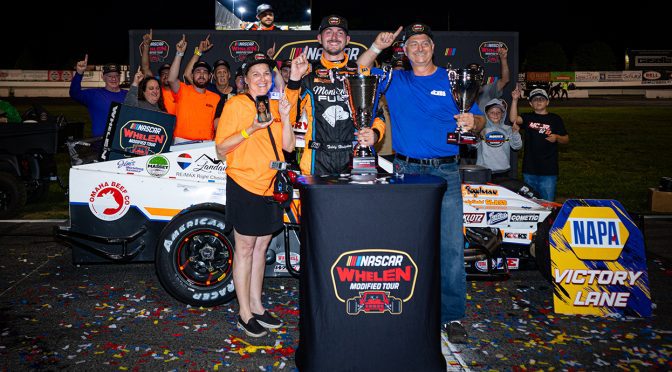
Hodgdon, now 25, can say he’s living his dream after his stunning victory in last Friday’s GAF 150 at Stafford. The triumph, which came in the Modified Tour’s first race at Stafford in five seasons, was Hodgdon’s first with the series during his rookie campaign.
The win was a landmark moment for a family that has worked tirelessly to achieve success at the highest levels of Modified racing.
“It’s definitely been a long time coming for this team,” Hodgdon said. “We’ve worked so hard, and we’ve put countless hours into making our race program better. We were never able to get right there. I knew coming in full time to the Tour this year was not going to be an easy feat, and I honestly didn’t really expect to win this year.”
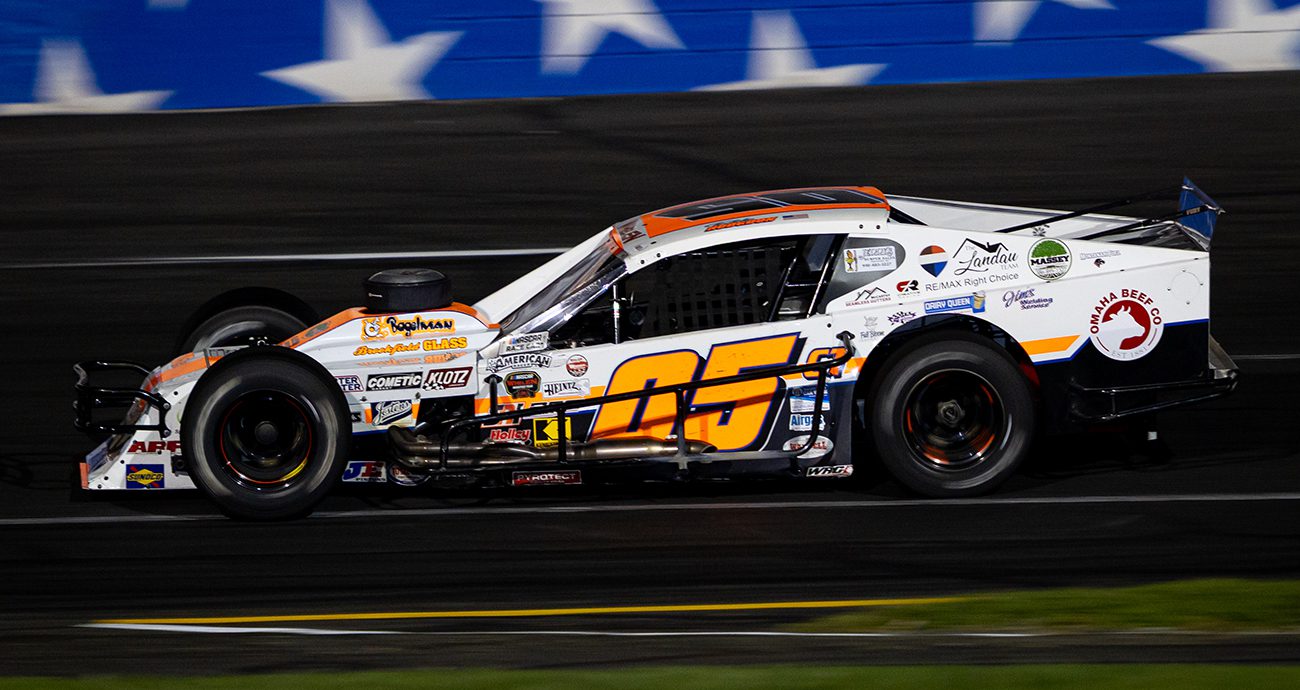
Teddy Hodgdon stormed from 23rd to win the GAF 150 at Stafford Speedway. It was just the 35th time in recorded Modified Tour history a race winner has started from 20th or worse. (Photo: Susan Wong/NASCAR)
Hodgdon was hardly a stranger to Stafford Speedway prior to last Friday’s race. Not only did he spend his childhood watching races there, but he also turned his first competitive laps at the half-mile asphalt oval in Stafford Springs, Connecticut.
The driver from nearby Danbury, Connecticut spent years sharpening his skills at Stafford, starting in Karts before eventually racing Modifieds. That culminated in Hodgdon capturing the 2019 SK Light Modified track championship at Stafford.
That was one mission accomplished. Next on the list was his dream of racing with the Modified Tour.
After competing in a handful of events last year, Hodgdon and his family made the leap to full-time status for 2026. The grind has been real, and the learning curve has been steep, but everything they did at the start of the season led them back to Stafford.
“I was at Martinsville last year when they announced the schedule, and when they said Stafford is coming back to the schedule this year, that was the biggest red circle that I marked on the calendar,” Hodgdon said. “I knew that was going to be the race to show up and do our best.
“The atmosphere there is second to none. I love seeing the stands packed. The way the Arute family and everyone at the track and NASCAR come together to make an event like that happen again … I think the Tour and Stafford missed the racing and the atmosphere that they bring together.”
Hodgdon’s No. 05 Modified was quick as soon as they unloaded it from the trailer at Stafford. He was fastest in the opening practice, but a poor qualifying forced him to start the 150-lap race 23rd.
“Qualifying has been our struggle this year,” Hodgdon said. “For some reason, we can’t get this thing to fire off on stickers. We went into Turn 1 on the fast lap, and the thing didn’t turn worth a crap. As soon I hit Turn 1 and we were in the third groove, I knew we were going to have a bad qualifying effort.
“It was so tight in qualifying that I just went back to what I had when I unloaded the trailer. I just told myself that if we were still bad there would probably be an early caution and we could come in and work on it. That didn’t really happen, but the thing took off like a rocket after that, anyway.”
Hodgdon quickly worked his way forward, reaching eighth by the time the second caution of the race waved on Lap 56. After pit stops, he restarted ninth and drove his way to the lead by Lap 91.
He briefly lost the lead after a bad restart with fewer than 15 laps left, but Hodgdon quickly reclaimed the lead from Matt Hirschman and drove to his first Modified Tour victory.
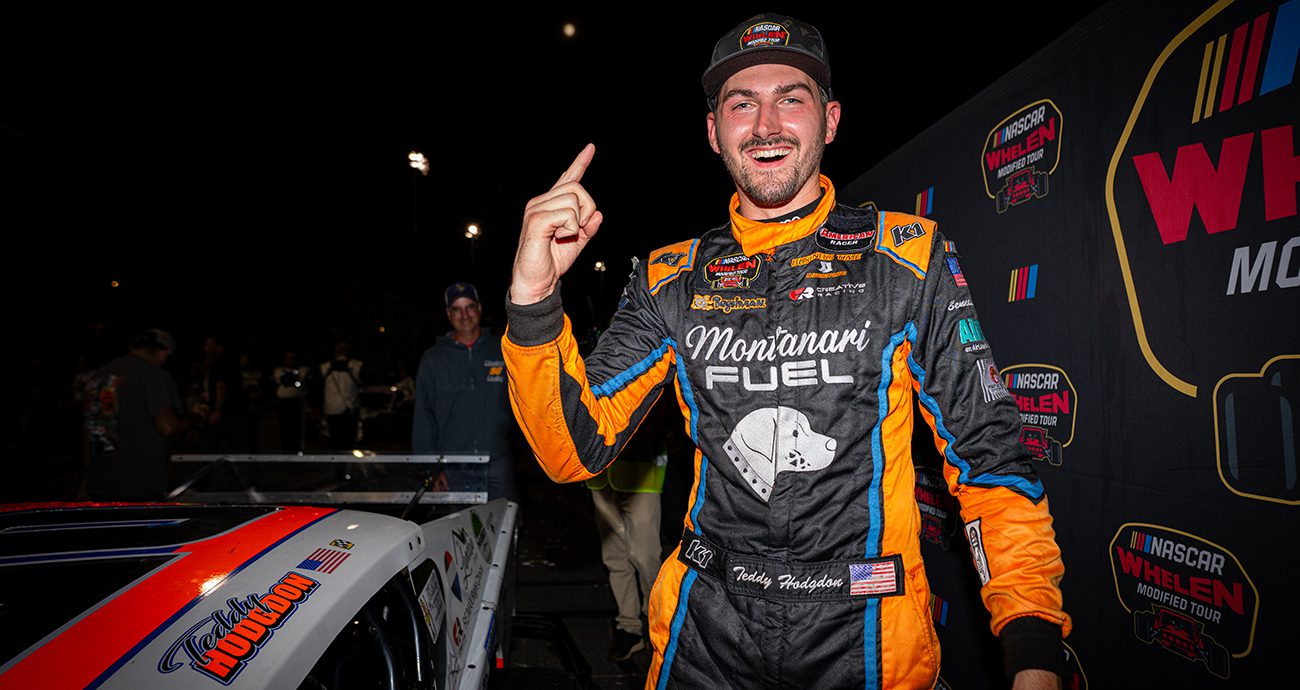
Teddy Hodgdon’s first Modified Tour victory came in his 18th start, which happened to come at his home track in Stafford Speedway. (Photo: Chris Dehney/NASCAR)
Hodgdon’s incredible drive to victory marked just the 35th time in recorded Modified Tour history that a race winner has started 20th or worse.
If there is such a thing as a statement victory, Hodgdon’s triumph at Stafford certainly qualifies.
“It’s just a testament to never giving up,” Hodgdon said. “You just keep your head down and keep moving. There were 150 laps. It’s a long race. It can go by quickly, but you have opportunities to make your way to the front, and if you have a car like that versus the rest of the field, you get a lot of confidence when you start picking guys off really quickly.
“That’s kind of what happened. Head down, lock in, and we made it happen.”
When the season began in February, Hodgdon’s main goal was to win the Heintz Performance Rookie of the Year Award. A win, Hodgdon said, seemed out of reach.
Now, as he prepares for Saturday’s Toyota Mod Classic 150 at Oswego Speedway (8 p.m. ET on FloRacing), Hodgdon can say he’s not just living his dream; he can say he’s exceeded it.
Of the more than 700 drivers who have competed with the series since 1985, only 84 can call themselves Modified Tour winners. That includes racers like Stefanik, Christopher, Szegedy, Hirschman, Lia and, now, Hodgdon.
He grew up watching racers make Modified Tour history at Stafford. Now Hodgdon is part of that history.
That’s something to write home about.
“That is my career-defining moment, winning that race,” Hodgdon said. “That will always have a special place in my heart.”
CHARLOTTE, N.C. — If it appears that defending NASCAR O’Reilly Auto Parts Series champion Jesse Love lacks momentum entering this year’s nine-race Chase presented by Mobil 1, don’t despair.
All it will take is a little bit of luck and some quality control to make him a contender for a second straight title.
Love won twice in 2025, bookending the season with victories in the Daytona International Speedway opener and the finale at Phoenix Raceway.
This year, he’s winless through 24 races, though that shouldn’t suggest a lack of speed in the No. 2 Richard Childress Racing Chevrolet. Love has led 383 laps this season versus 297 in 33 events last year.
“I’m not a ‘luck’ guy, right?” Love said Wednesday at Chase Media Day in the Charlotte Convention Center. “I think it’s a word that’s overused and just kind of thrown around as an excuse a lot.
“This year, with the speed that we’ve had and actually being able to show up and dominate races and have something silly happen … we’ve had a lot of bad luck this year. If we don’t have that in The (Chase), then we can win a championship. If we do continue to have that, then we’re not.”
Emblematic of Love’s season was the May 30 race at Nashville Superspeedway. Love led 87 laps from the pole before a loose wheel derailed his winning chances. He finished 16th in a car he described as “the best I’ve ever had.”
“For myself, I’m not worried about being able to perform at a high enough level to win a championship,” said Love, who will move up to the NASCAR Cup Series next year in the No. 21 Wood Brothers Racing Ford. “I know that I’m performing at that level right now.
“If we don’t have those bad things happen in The Chase, then we’re going to be fine.”
The O’Reilly Series Chase gets underway on Saturday with the Fleetio 200 at Darlington Raceway (7:30 p.m. ET, The CW, ESPN Unlimited, MRN Radio, SiriusXM NASCAR Radio).
Both the NASCAR Cup Series and O’Reilly Auto Parts Series open their respective Chases presented by Mobil 1 this weekend at the famed Darlington Raceway. Both series have 38 entries, meaning no drivers will fail to qualify. Single-car, single-lap qualifying will set the starting lineups for both races. See qualifying orders for the “Lady in Black.”
DAYTONA BEACH, Fla. — In celebration of The NASCAR Foundation’s 20th anniversary, the non-profit will host multiple events in New York City to honor two decades of serving racing communities across the United States and beyond.
The two-day celebration will kick off with The NASCAR Foundation Honors Gala at the Ziegfeld Ballroom on the evening of Tuesday, Sept. 8, hosted by the France family in collaboration with the evening’s Leadership Sponsors, including Brown & Brown, Kaulig Racing, Hendrick Motorsports and Next League. Various current and former NASCAR drivers, team owners and executives as well as special guests across the sports and entertainment industry will be in attendance.
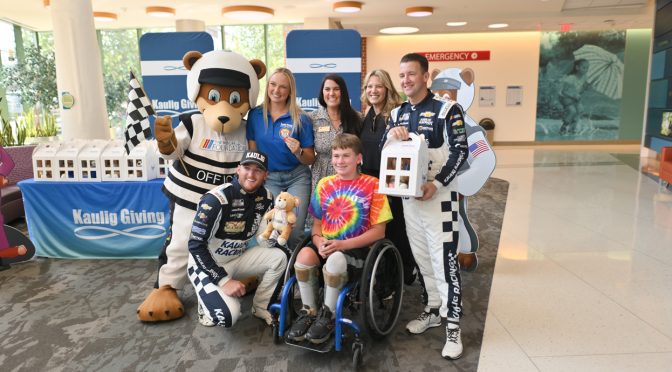
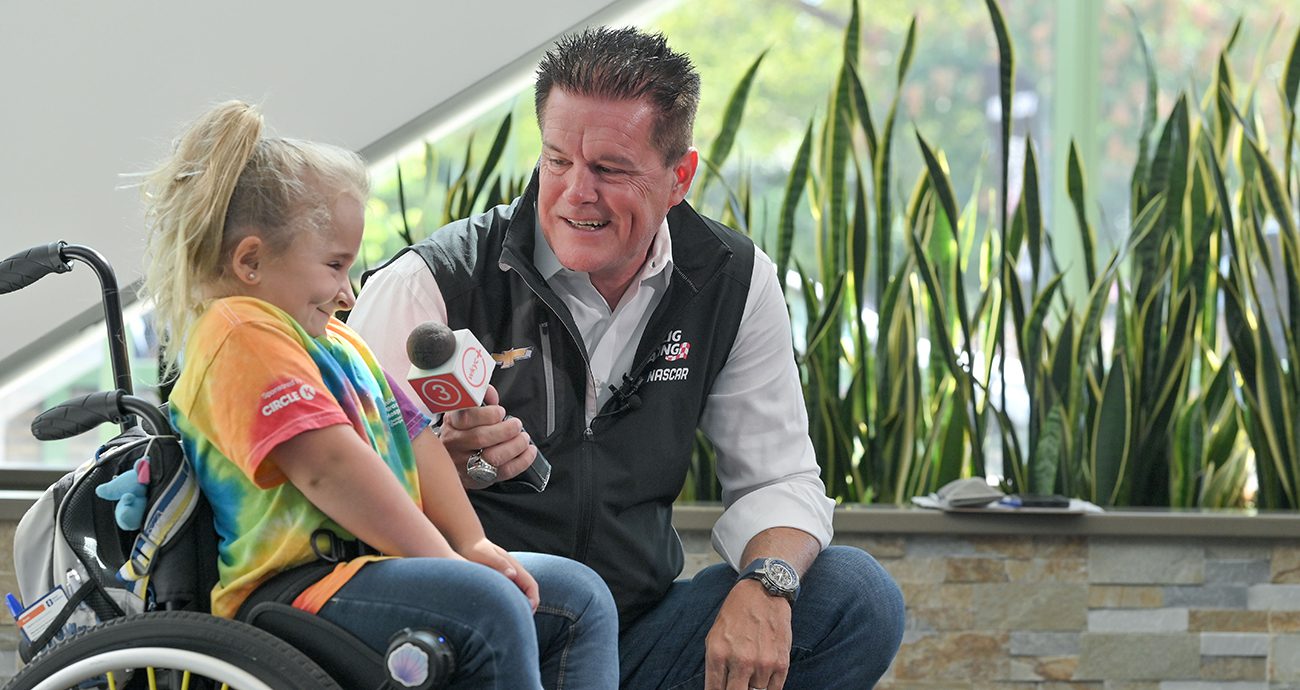
The celebrations will continue the following day on Wednesday, Sept. 9, with The Speedy Bear Brigade Powered by Kaulig Giving, where drivers and representatives from both The NASCAR Foundation and Kaulig Racing will deliver NASCAR-themed Teddy Bears to children at Hassenfeld Children’s Hospital at NYU Langone.
“For 20 years, The NASCAR Foundation has been proud to bring the NASCAR community together to make a meaningful difference in the lives of children and families,” said Nichole Krieger, vice president and executive director of The NASCAR Foundation. “This anniversary is a celebration of the incredible impact our supporters, partners, drivers and fans have helped us create, and we’re excited to mark this milestone in New York City while continuing to bring the spirit of NASCAR to children who need it most.”
The NASCAR Foundation Honors Gala will also honor the four finalists of the 16th annual Betty Jane France Humanitarian Award, with the winner being announced at the end of the evening’s celebrations and receiving a $100,000 donation from The NASCAR Foundation to further their philanthropic efforts. The award, named in honor of the foundation’s late founder and chairwoman Betty Jane France, recognizes inspiring NASCAR fans who volunteer for children’s causes across their regions.
Additionally, FOX Sports CEO Eric Shanks will be honored with the Champion for Children Award, recognizing an individual whose leadership, philanthropy and commitment to children have created meaningful opportunities and lasting impact for young people in our racing communities.
Much like Mrs. France, the recipient of the award embodies the ideals that every child deserves opportunity, the importance of giving back and a commitment to using their platform to make a meaningful difference in the lives of others.
Guests attending the gala spread a wide range of those within the industry and beyond, including current NASCAR drivers such as Joey Logano, Ross Chastain, AJ Allmendinger, Ty Dillon, Connor Zilisch and Jesse Love. Multiple NASCAR Legends and Hall of Famers are also set to attend, including NASCAR Champion and Hall of Famer Rusty Wallace as well as two-time Daytona 500 Champion and NASCAR/FOX Broadcaster Michael Waltrip.
Emmy and Tony Award winning actress and singer Kristin Chenoweth will also give a special performance at the Honors Gala, singing multiple songs from her impressive Broadway resume.
Following the Honors Gala, NASCAR Cup Series drivers AJ Allmendinger and Ty Dillon will join The NASCAR Foundation Vice President and Executive Director Nichole Krieger and NASCAR Owner and Founder of Kaulig Giving Matt Kaulig to deliver Speedy Bears to Hassenfeld Children’s Hospital at NYU Langone. The group will begin the day with a special presentation at the hospital, followed by visits to children, hand-delivering both smiles and the NASCAR-themed Speedy bears.
“The Speedy Bear Brigade is a special program because it gives us an opportunity to bring comfort and joy to children and families when they need it most,” said Matt Kaulig, NASCAR team owner and founder of Kaulig Giving. “We’re incredibly proud to have been part of the growth of this program and to help bring the NASCAR community together to reach more children each year. Seeing the smiles these bears bring is what makes Speedy Bear so meaningful to all of us.”
While 2026 marks 20 years of The NASCAR Foundation as a whole, it’s also the 10th anniversary of The Speedy Bear Brigade Powered by Kaulig Giving, celebrating a decade of delivering NASCAR-themed teddy bears to hospitals across all 50 states, as well as Mexico and Canada.
The NASCAR Foundation Honors Gala Red Carpet will begin at 6 p.m. ET on Tuesday, Sept. 8, with the event commencing at 7:30 p.m. Then, the festivities continue Wednesday, Sept. 9, with the Speedy Bear Brigade Powered by Kaulig Racing, all taking place in New York City.
Editor’s Note: This is Part II of a two-part series detailing the No. 7 JR Motorsports team in 2026.Read Part I here.
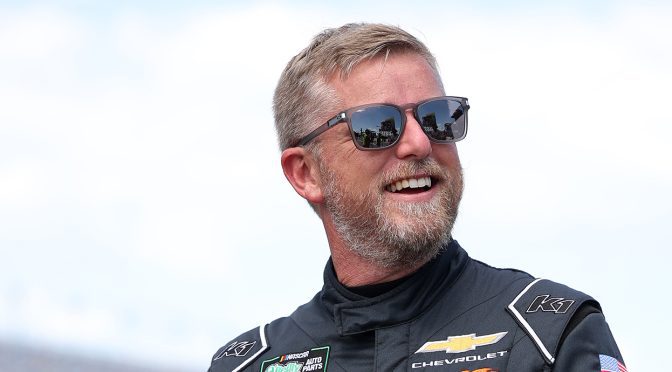
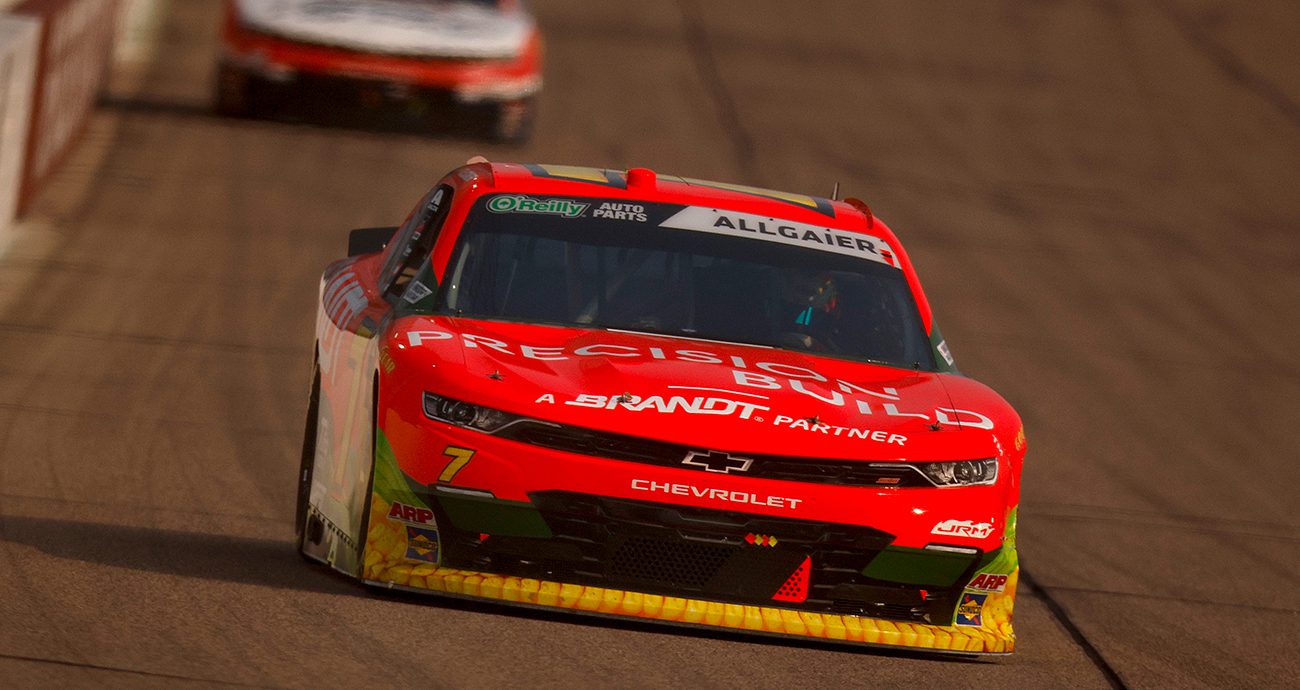
When Justin Allgaier learned The Chase was back, his eyes lit up, and that was before he began wondering how many championships he might have won over the past decade.
That thought ended quickly, however, when Allgaier and the No. 7 team started the 2026 campaign off with a scorching start, winning three of the opening seven races. By the 21st race of the season, he had already won a career-high six times.
“I’ve probably enjoyed myself the most this year because I’m in a better place mentally than I’ve ever been,” Allgaier told NASCAR.com. “It doesn’t necessarily make it any better. There are things that I’m experiencing through some of those years that were cooler moments. But I would say the high moments this year have been more consistent.”
The No. 7 team entered the season with a sizeable change, as Andrew Overstreet took over as crew chief with Jim Pohlman moving to the Cup Series with Richard Childress Racing. Allgaier vowed to himself that this would be his final season, always having the goal of departing NASCAR at 40 years old. He even purchased a home in his native Illinois.
Allgaier’s parents, Mike and Dorothy, don’t attend as many races as they used to. Eventually, the 2024 series champion will take over the family business – D&M Speed Shop. But those plans have been put on hold as he’s amid the best season of his career and JR Motorsports wants him back. Nothing has been signed, though.
“When JRM asked if I wanted to say and continue doing this, I would say what’s weird about it is, my reason for telling them I would consider it is the people around me,” Allgaier added. “When it came out that I was potentially going to retire, which wasn’t potential to me in my mind, it was pretty made up. There are so many people in my inner circle, but also my outer circle, like fans, folks from our partners that we have on race cars. A lot of people that wanted me to stay and continue doing it. That’s probably more so what I’m doing this for.
“I’ve accomplished everything that I could have ever imagined in this sport. I don’t ever want to get stale and show up just to show up. This isn’t about money. For me, it’s about making the most for the people that are around me and relying on that circle.”
With that uncertainty out of the way, Allgaier is focused on the task at hand. He enters The Chase with a 25-point buffer over JRM teammate Carson Kvapil, who has won two of the last three O’Reilly Auto Parts Series races.
But Allgaier is the favorite for the championship, banking wins at seven of the nine tracks in The Chase. Of the seven venues in the nine-race stretch that the series has already competed at this year, the No. 7 team won three of them. He locked up the No. 1 seed for The Chase with three races remaining in the regular season and ended the opening 24 events 229 markers clear of second.
Sean Gardner | Getty Images
“There’s not a race track in The Chase that doesn’t fit our wheelhouse,” Allgaier stated. “There’s not a track that I don’t think we can’t go dominate at. I know that sounds a little bit egotistical, but I feel like with the cars, the team that we have this year, I have not shown up to a track this year other than the road courses that I haven’t felt like we could go out and be the dominant car.”
Under the previous playoff format, Allgaier saw several opportunities at a championship slip away. But with the title now determined by points accumulated over nine races, his years of experience could give him an advantage.
“In most cases, he’s the guy that’s going to get the points and be smart about how he runs his races and maximizes his days. This series doesn’t have a ton of veterans that are like that,” Dale Earnhardt Jr. said in June after Allgaier was victorious at Pocono Raceway. “There are some young kids that are fast, crazy good, very talented, going to be successful and win tons of races. But I think Justin has an advantage because he’s got one in the bank.
“When you have a championship in your pocket, it makes you more dangerous. You are more settled, a little calmer, a little less irrational on the race track with restarts and things like that. I like where he is with his career and all his accomplishments and success that he’s had.”
Not a single one of the nine races scare Allgaier. He’s had a mixed relationship with superspeedway racing, but the JRM cars have been elite in the draft this season, with the No. 7 Chevrolet earning three finishes of sixth or better, including a win at EchoPark Speedway. He isn’t overlooking his competition, however, as there are multiple obstacles in the field.
“You could throw a dart anywhere on the board at anybody inside the top 14 right now and could be a massive threat, could win any of these races and could be a threat anywhere we go,” Allgaier noted. “There’s nobody I’m counting out. There are plenty of guys who have raw speed and they are going to go out and be successful.
“When it’s all said and done, we have to rely on what we do. I know this is going to sound odd; I’m not racing anybody else.”
There is a target on Allgaier’s back, though. With the longevity of the No. 7 team, he knows that he’s the standard of the series over the last decade. Everyone will be fighting to upset the veteran racer.
“I think with the way the regular season has gone, I think there are other teams that have used us as a benchmark,” Allgaier said. “There are plenty of guys that can get the job done. I just feel like we’ve done a better job of doing it over and over again.”
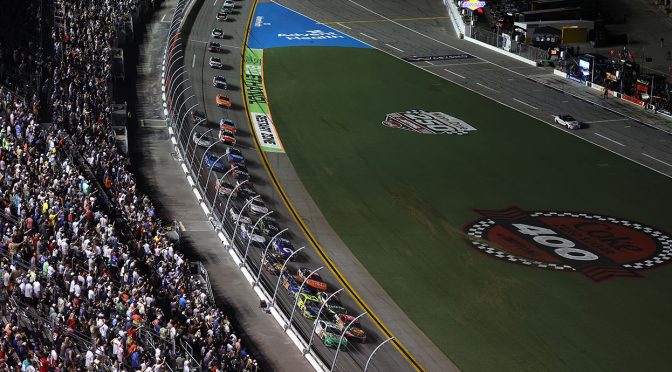
A red flag would have helped alleviate the lengthy caution that sent the NASCAR Cup Series race at Daytona International Speedway into overtime last Saturday.
The yellow flag for the Turn 4 crash involving Carson Hocevar and Erik Jones lasted nine laps. That went four laps past the scheduled distance and left many teams concerned about having enough fuel to reach the finish after circling for so long under the yellow flag.
“Hindsight being 20/20, we wish we had red-flagged it,” NASCAR vice president of racing communications Mike Forde said on the latest episode of the “Hauler Talk” podcast. “Our goal is always to get back to green as soon as possible. I think we felt that we would be able to clean it up faster than we did, and it really was the worst-case scenario.”
Forde said the wreck left oil against the outside wall on Daytona’s 31-degree banking, which made it unreachable with the vacuum truck that NASCAR normally uses for a cleanup. The process took longer with jet driers blowing off the Speedy Dry compound for absorbing fluids from the surface.
“Another problem we ran into is when you don’t red-flag it, the cars are still going by at speed,” Forde said. “So when you blow it down, the cars come back under caution, and they’re kind of kicking it back up and almost undoing the work that was already done. So that added some time as well.
“We had to lay down two layers of the Speedy Dry. The first one is just so that the blowers can get the traction to get up in that area, and then (a second layer) to actually clean up that area. So a lot of learnings for sure. It definitely took longer than we would have liked.”
Forde said a better solution would have been to apply the Speedy Dry by hand while the race was stopped.
“That was a lengthy topic of conversation in the debrief meetings because we want to be better, and that was one where we wish we could have that back,” Forde said. “We would have red-flagged it and done it better.”
Other topics covered by Forde and senior director of racing communications Amanda Ellis during the 68th episode of “Hauler Talk,” which explores competition issues in NASCAR:
— An evaluation of the new superspeedway rules package at Daytona and what’s ahead for its use at Talladega Superspeedway.
— What NASCAR safety officials learned in the aftermath of a heavy collision between the cars of Daniel Dye and Kyle Larson.
— The backstory of the “Does Everybody Hate Carson Hocevar?” release from NASCAR Communications.
Nate Ryan has written about NASCAR since 1996 while working at the San Bernardino Sun, Richmond Times-Dispatch, USA TODAY and for the past 10 years at NBC Sports Digital. He is a contributor to the “Hauler Talk” show on the NASCAR Podcast Network. He has also covered various other motorsports, including the IndyCar and IMSA series.
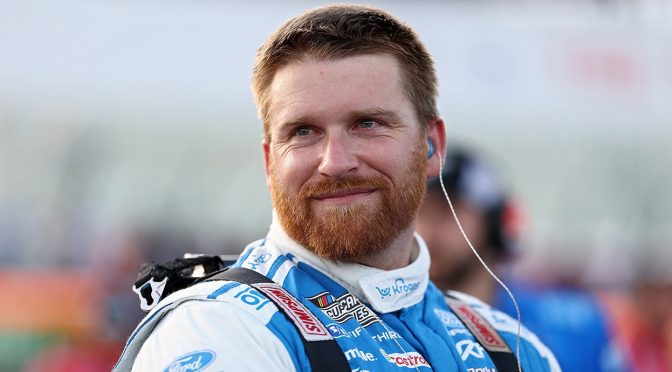
Brad Keselowski and Ryan Preece showed up early for their RFK Racing team’s scheduled press conference inside Daytona International Speedway over the weekend. After taking their seats on the podium to await their teammate Chris Buescher’s arrival — they jokingly made a $1 bet with one another as to the exact minute Buescher would enter the room.
And then, as if on cue, the door opened and Buescher quietly and unhurriedly walked in, taking his place on stage alongside the RFK pair with a minute to spare before their interview session started. Keselowski had taken the “under” on the timing and seemed to win the wager. Buescher just smiled.
Right on time. Ready to go.
“That’s just the Texas in him,” Preece grinned and said of his teammate. “He’s so laid back.”
That measured pace and even-tempered style are indicative of the 33-year-old Texan’s disposition, even if it seems at odds with someone enjoying success in a profession that rewards split-second decisions and controlled aggression.
Buescher’s perpetually modest “nothing to see here” demeanor is particularly intriguing, considering there actually is a whole lot to see here.
Two hours after that team press conference, Buescher put his No. 17 RFK Ford Mustang on the front row for the Coke Zero Sugar 400 regular-season finale — his best start ever at the sport’s most famous speedway, where he won the 2023 summer race in a dramatic overtime triumph.
Buescher is ranked 10th among the 16 championship hopefuls in the re-seeded Chase standings as the series heads to Darlington Raceway for Sunday’s Chase opener, the Cook Out Southern 500 (5 p.m. ET, USA Network, HBO Max, MRN Radio, SiriusXM NASCAR Radio).
For the third time in his 11-year career at this level, Buescher will have the opportunity to add a NASCAR Cup Series title to his 2015 NASCAR O’Reilly Auto Parts Series and 2012 ARCA Menards Series championship work.
It’s a quietly impressive resume — so quiet that many don’t realize how accomplished Buescher really is, and how far he has come based solely on talent and potential. He’s had to rely on skill and the willpower to succeed instead of family money, a famous pedigree or longtime sponsor pushing him through the ranks.
Hard work, exceptional talent and a crucial boost earned from some of racing’s most respected team owners along the way helped land his opportunity. What he did with that illustrates both his on-track ability and the amazing determination it took him to reach NASCAR’s premier level.
“We’re a little bit understated and that’s OK. That’s frequently been the case for me,’’ Buescher said. “I’ve been in an underdog situation a lot growing up and I’m kinda used to flying under the radar. We got results, won a lot of races and championships and didn’t have to scream from the mountaintops to prove it.”
Of the unlikely and often hard-knocks way he earned a spot in NASCAR’s big time, Buescher insists, “It helped me in a lot of ways; one was in race-track demeanor due simply to the fact we scratched and clawed through it a lot of years and for a long time I worked on my own race cars.’’
It’s also indicative of Buescher’s upbringing in football-crazed Prosper, Texas — about a 40-minute drive north of Dallas and with a population of only about 10,000 when Buescher was a youngster.
Unlike most of Prosper’s residents, Friday night high school football games weren’t a part of Buescher’s routine. And in fact, he can’t even recall going to a single game. The town has produced multiple Major League Baseball and National Football League stars. But Buescher’s interests shone under another set of equally bright lights: at the race track.
His home state’s passion for football aside, Buescher recalls hosting a Super Bowl party in early 2016 after purchasing his first home in the wake of that first NASCAR championship. Buescher smiled and said it may well have been the first NFL game he honestly watched from kickoff to the final whistle.
“The pathway there in Texas is definitely better paved for football,” Buescher conceded. “But my dad’s a hot-rodder, so I grew up around cars, working in the garage, you know, making sure I held the flashlight right for him. That was what our weekends when I was a kid looked like. We’d turn the NASCAR race on and go inside and watch. Then when a caution flag came out, we’d go out in the garage and work on the car for a little while more. That was what we did when we weren’t racing. But we were mostly on the run, racing a lot.”
Pressed for more details about his early life away from the track, the famously private Buescher shares that before he was old enough to drive legally, he was “all in” as a skateboarder — complete with the bowl haircut, always in a pair of Vans shoes that the style required.
“It was a phase,’’ he beamed. “But I had a good time. Growing up, that’s how I got around town was skateboarding. My best friend lived on basically the other city-limit line, so like a five- or six-mile skateboard ride over. Not smooth.”
Not smooth. But he got there, and in many ways it also describes Buescher’s more unorthodox arrival in NASCAR’s premier series.
He succeeded on natural talent combined with a fundamental willingness to learn and work hard. It drew attention, and he was able to capitalize on a shot when some pivotal people in the sport recognized his uncommon abilities and work ethic and took great steps to elevate that potential.
Buescher’s skill as a young teenager competing for his family-owned team in Legend Car races at Texas Motor Speedway and around the South was noticed early on by a pair of racing’s longtime version of talent scouts: Ken Ragan and Gary Roulo. Both were so impressed with Buescher that over the course of the next few years, they would even invite a teenaged Buescher to move in with them as he came up the ranks — living at times with the Ragan family in North Carolina and the Roulo family in Chicago — putting the young talent closer to opportunity.
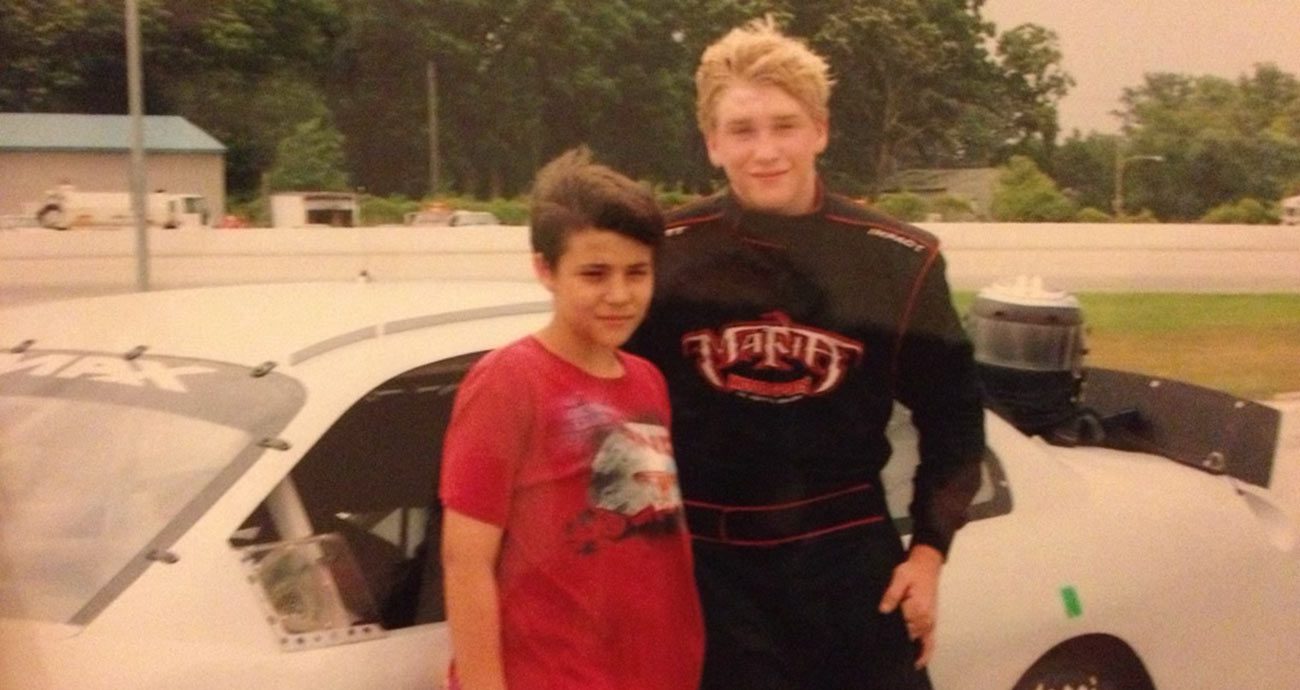
Chris Buescher, then 15, at his first ARCA test in 2008 with the Roulo Bros. team at Illiana Motor Speedway, with 12-year-old tire specialist David Roulo | Roulo Bros. Racing
Former NASCAR Cup Series and O’Reilly Series standout driver David Ragan remembers well when his father was helping guide the early portion of Buescher’s career and how it all helped shape the kind of person Buescher is now.
“The first thing when I think of Chris, I think of the humble, hard-working, kind of laid-back, old-school race car driver,’’ Ragan said. “He doesn’t get into the flashy, self-promoting era that we kind of live in now, where a lot of young guys and girls have to push hard to promote themselves. He’s a great race car driver and I think he’s one of the more under-the-radar guys from the outside,’’ Ragan said. “He’s a champion and a lot of people forget that [2015 O’Reilly Auto Parts Series] championship.
“He doesn’t tear up a lot of race cars and doesn’t have a lot of controversy around him. He’s the kind of guy that any team owner would love to have. We’re proud of what he’s grown and become. Certainly, my days at RFK and still working with Ford, we pull for him every weekend.”
Buescher also draws high praise from Roulo, whose renowned family-owned Roulo Brothers Racing team fielded ASA and ARCA Menards Series cars over decades for a long list of successful racers, from Butch Miller, Dick Trickle, Ken Schrader, David Green and Joe Ruttman to NASCAR Hall of Famers Mark Martin and Darrell Waltrip.
“Chris was focused, coachable but couldn’t run eight or nine laps without lap times falling off because he just wasn’t physically mature yet, just a small, skinny kid in the beginning,’’ Roulo recollected of working with a teenage Buescher.
He credits Ken Ragan for encouraging Buescher to hit the YMCA for daily workouts and still gets a kick recalling Buescher’s perpetually shy personality — noting that while dining out, restaurant servers would ask him to repeat his food order because he was so soft-spoken.
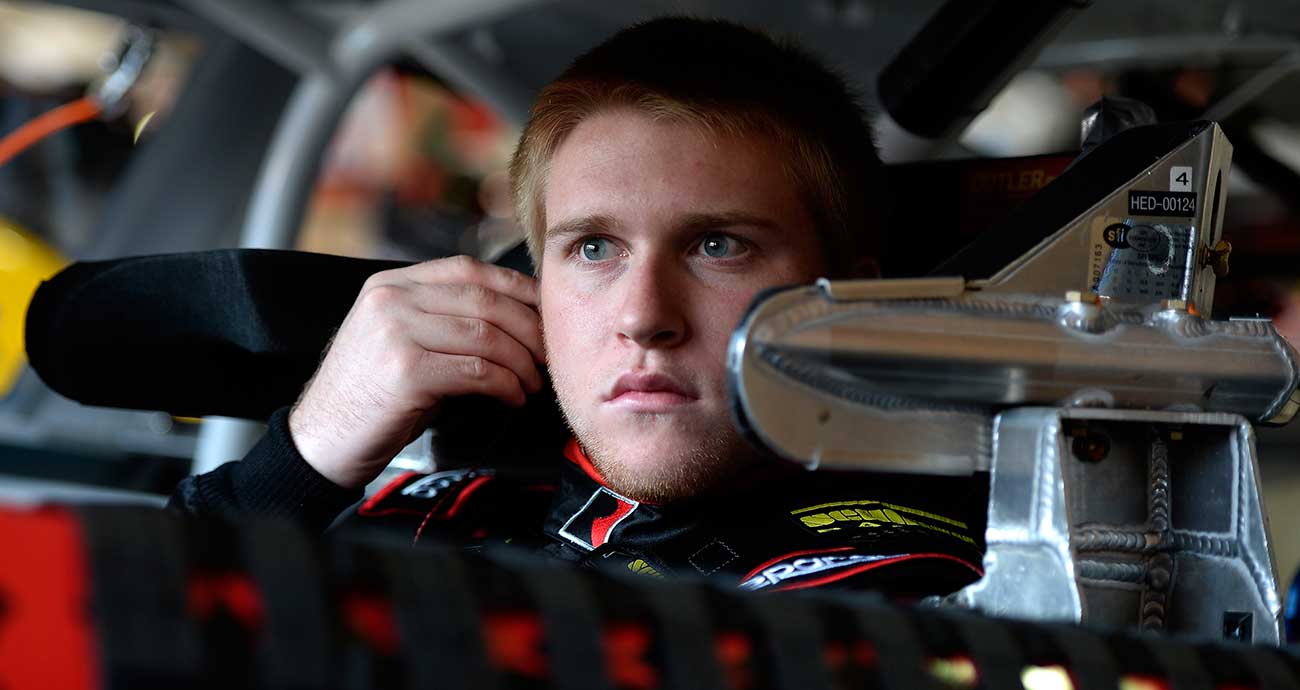
Kevork Djansezian | Getty Images
Buescher’s loudest statements were instead made behind the wheel. As with Ragan, Roulo was immediately impressed with Buescher enough to help secure him some starts and strengthen his relationship with Jack Roush, with whom he had a long history of helping develop drivers.
“Jack Roush had always told us, ‘You find the talent, and we’ll find a way to make it work,’ ” Roulo said, “and here we had the opportunity with a 15-year-old kid who’d never been in a big car before — only Legend Car racing prior to us. He didn’t have any bad habits. He was coachable, and he had talent. It was an opportunity to share everything we’d learned from this long list of established, winning race-car drivers. So it was an opportunity to translate that to him and go through different scenarios.’’
The results came quickly. Although Roulo had never fielded a full-season ARCA car with the same driver, he did so in 2011 with an 18-year-old Buescher. The team won three times and finished top five in an amazing 14 of the 19 races, finishing runner-up in the championship to Ty Dillon.
The next season, he won four times and had 16 top 10s, impressively claiming the 2012 ARCA title over veteran and multi-time series champ Frank Kimmel.
“I remember telling him even in those seasons that this is week by week,” Roulo said. “If we get tore up really bad or you do something stupid, we will have to park for a while. So every week, it was focus on taking care of equipment, taking care of tires, not wrecking race cars, not wrecking people on the race track, not getting involved in stupid stuff and being there at the end.
“That was part of the upbringing.”
And Buescher has learned well. After besting that crowded field of established veterans and talented young drivers in ARCA, he went on to do the same in what’s now called NASCAR’s O’Reilly Auto Parts Series with a huge opportunity driving for the Roush championship team. He scored his first top 10 in only his third start for Roush in a brief seven-race audition of sorts as a 20-year-old in 2013.
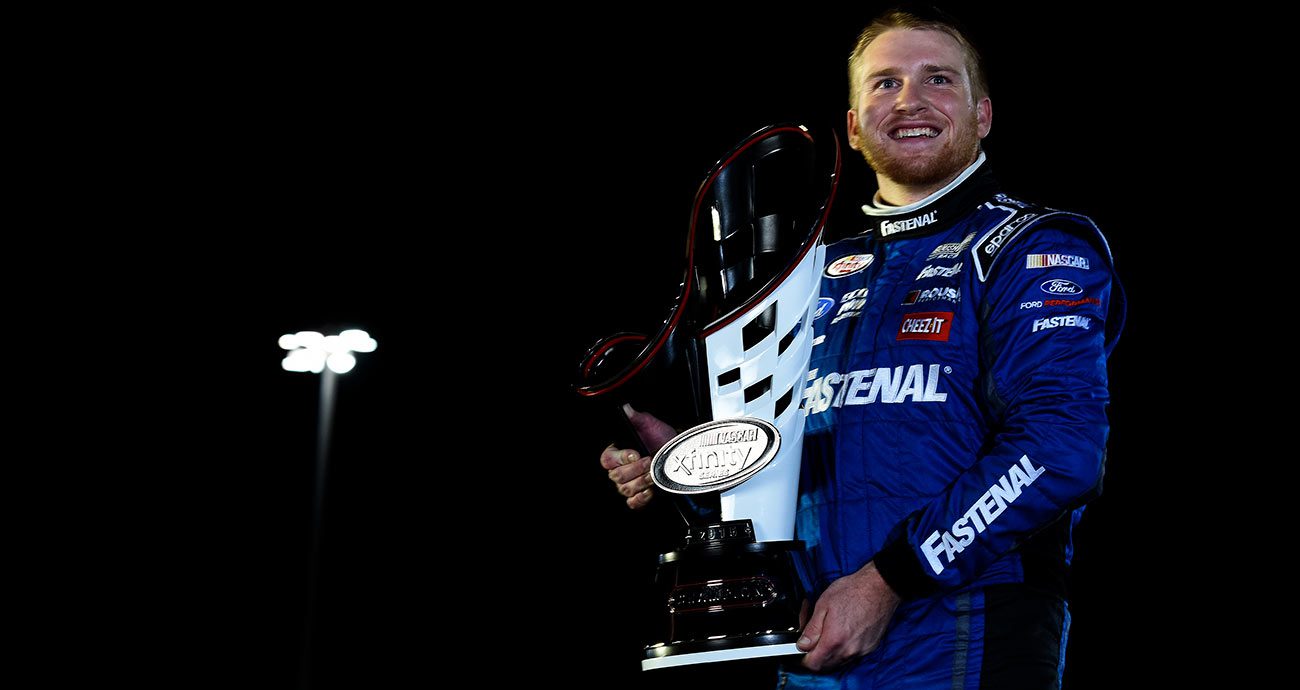
He answered that promise the next year in his first full-time season for Roush — fittingly hoisting his first O’Reilly Auto Parts Series trophy at the Mid-Ohio Sports Car Course and besting a field that included road-course specialists such as Alex Tagliani, a former Indianapolis 500 pole-sitter, and then sports-car regular Justin Marks, now a team owner with Trackhouse in the NASCAR Cup Series.
The next year, Buescher claimed the 2015 series championship over the likes of future NASCAR Cup Series champ Chase Elliott and future fellow O’Reilly Auto Parts Series champion Daniel Suárez.
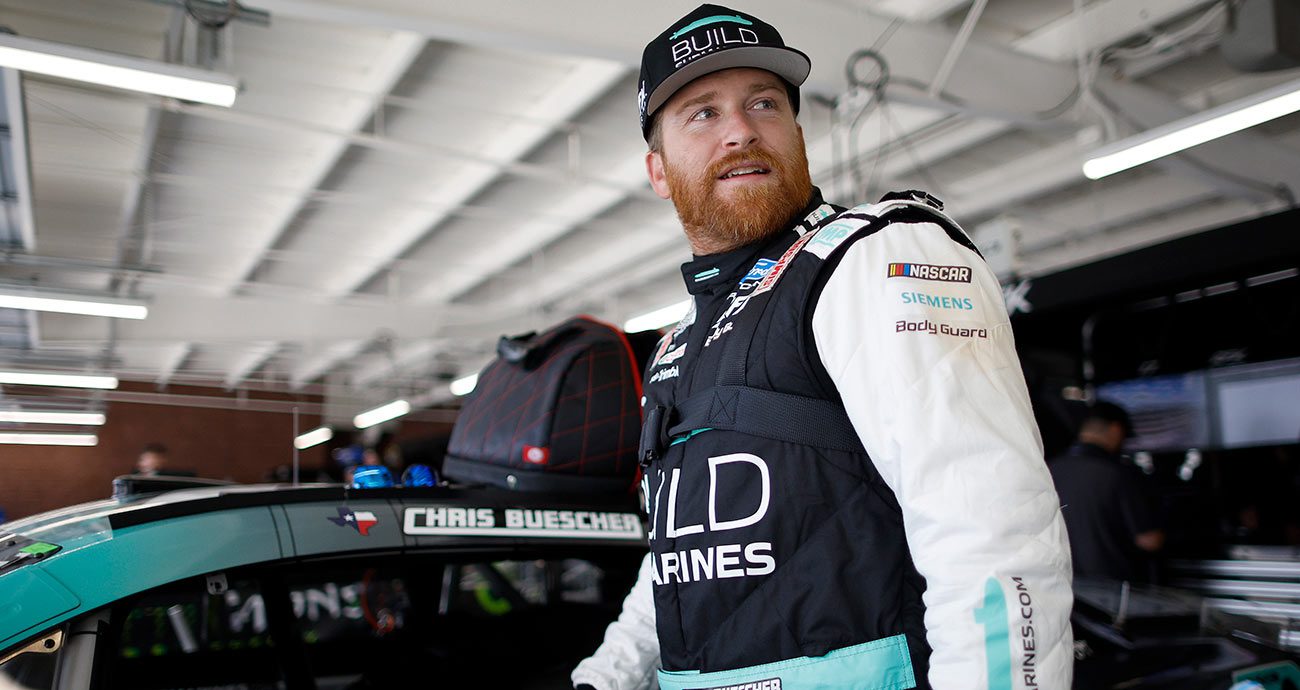
Getty Images
“When I think of great race-car drivers, the first thing that comes to mind is someone whose temperament is manageable and they can have a high racing IQ behind the wheel,” David Ragan said. “There’s a lot of drivers that can just go fast, but they make mistakes, pick the battles they don’t need to fight, and they’re not thinking about that final fuel run of the race, and if you sit down or hang out with Chris for a day, you’ll pick up that he listens a little more than he talks. He’s a little bit low-key, and I think he’s like that behind the wheel.
“His temperament off the track is a bit of an indicator of his decision-making behind the wheel, and I think ultimately that’s what separates the average race-car drivers from the great race-car drivers.”
It’s indicative of the steady, we-got-this vibe that Buescher — now a husband and father of two young children — gives off. Ask enough people in the NASCAR Cup Series garage to describe Buescher and the faces tend to light up, invariably preceding the praise.
“He is quiet,’’ Buescher’s longtime crew chief Scott Graves concedes. “But I’d say a lot of his success is the talent side and his approach to this. His demeanor certainly plays a large part. He works hard, stays out of trouble on track. Having to work on his own stuff a lot coming up, he knows if he wrecked it, he fixed it. I think he really gained a lot of appreciation for what goes into this and how hard it is to bring a competitive car to the track every week. He works hard to stay out of trouble. But he knows how to go fast, and that’s a good combination for us.’’
After scoring his first NASCAR Cup Series win at Pocono Raceway for Front Row Motorsports in his first full-time season (2016), Buescher spent the next three years at JTG-Daugherty Racing, earning his first two top fives with the team at Daytona’s races in 2018.
In 2020, Buescher moved back to RFK and has been there ever since — adding five more wins to his NASCAR Cup Series resume and this summer extending his contract with the team in a multi-year deal that will keep him a part of an organization that has been so impactful in his career and life.
Buescher recalls something Roush told him nearly two decades ago: “You’ll get out of it what you put into it.” It’s appropriately understated advice that has driven him ever since.
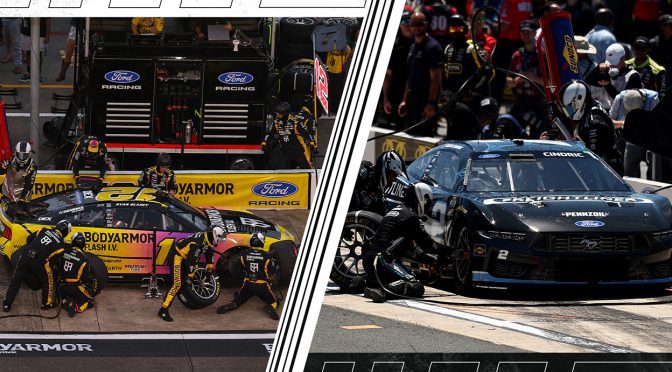
Team Penske has swapped the pit crews of its Nos. 2 and 12 teams driven by Austin Cindric and Ryan Blaney, respectively, before the start of The Chase presented by Mobil 1, a team spokesperson confirmed to NASCAR.com on Tuesday.
Blaney and the No. 12 team enter the NASCAR Cup Series Chase as the No. 2 seed, 25 points behind series leader Denny Hamlin. However, his pit crew through Daytona ranked just 32nd of 35 full-time teams, according to NASCAR Insights.
Cindric and the No. 2 team qualified for The Chase and enter as the No. 15 seed of 16, sitting 95 markers back of Hamlin ahead of Sunday’s Cook Out Southern 500 at Darlington Raceway (5 p.m. ET, USA Network, HBO Max, MRN Radio, SiriusXM NASCAR Radio). Cindric’s crew was the 10th-best crew in the series following Saturday’s regular-season finale at Daytona International Speedway.
That 10th-best crew now moves over to pit Blaney’s No. 12 Ford beginning at Darlington, featuring jackman Jourdan Osinskie, fueler Andrew Lackey, front tire changer Justin Armwood, rear changer Geoffrey Wall and tire carrier Jesse Mills.
Cindric will inherit jackman Graham Stoddard, fueler Chris Conklin, front changer Keiston France, rear changer Justin Fox and tire carrier Trevor Apsey to start the postseason.
This change marks the second major change to Blaney’s No. 12 crew this season. Team Penske made additional changes to the crew in April, adding Stoddard to the roster ahead of the NASCAR Cup Series race at Kansas Speedway. According to NASCAR Insights, the No. 12 crew has cost Blaney a series-worst 129 positions on the race track. The next-closest deficit is the No. 77 Spire Motorsports pit crew of Carson Hocevar, which has cost Hocevar 70 positions. Hocevar enters The Chase as the No. 12 seed.
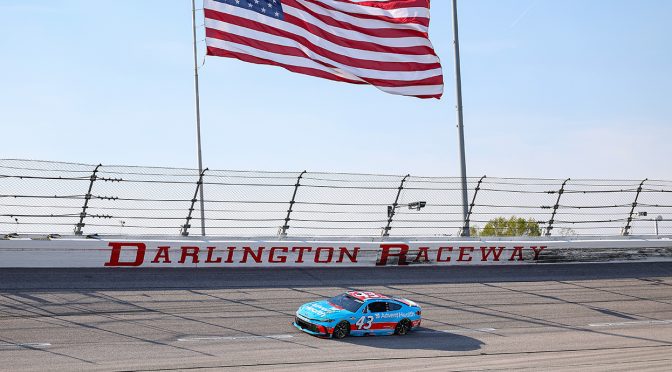
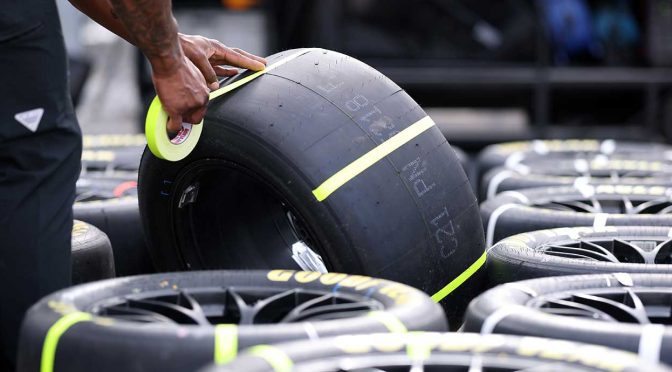
The NASCAR Cup Series teams that tackle the Cook Out Southern 500 this weekend will have the same Goodyear tire set-up from their last visit to Darlington Raceway, just with more of them.
The allotment grows to 15 total sets for Sunday’s opener to The Chase presented by Mobil 1 (5 p.m. ET, USA Network, HBO Max, MRN Radio, SiriusXM NASCAR Radio) at the rugged 1.366-mile South Carolina track, which is known for its treacherous layout and abrasive racing surface. Teams will have an additional set of tires for the extended practice, plus two more sets to accommodate the 100 miles of extra distance compared to the track’s Goodyear 400 in March.
“Darlington’s rough surface and egg-shaped layout make it a demanding track on tires,” said Justin Fantozzi, Goodyear’s Director of Racing for the Americas. “To account for the longer race distance, teams will have two additional sets of tires compared to the spring race, as well as the extra set for the new practice format. As we enter The Chase, giving teams a trusted tire package is even more important as they put everything on the line.”
The Cup Series tire configuration has been in action multiple times since the springtime trip to Darlington, most recently in July for the circuit’s return to Chicagoland Speedway.
The NASCAR O’Reilly Auto Parts Series also opens The Chase at Darlington with Saturday’s Fleetio 200 (7:30 p.m. ET, The CW, ESPN Unlimited, MRN Radio, SiriusXM NASCAR Radio). That series’ teams will have a right-side tire that’s making its Darlington Raceway debut, but was previously used at Charlotte Motor Speedway in May. The left-side tire is a familiar one, with its most recent usage at Iowa Speedway last month.
Tire allotment for each team competing this weekend:
Cup Series: 15 total sets — 12 new for the race, 2 for practice, 1 for qualifying, which transfers to the race. O’Reilly Auto Parts Series: 7 total sets — 4 new for the race, 2 for practice, 1 for qualifying, which transfers to the race.