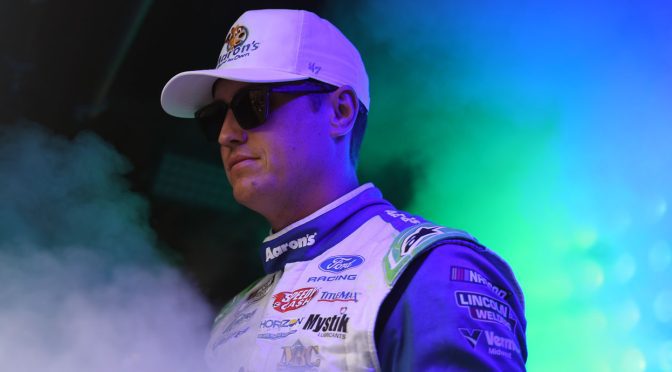
Zane Smith has been fined $50,000 following post-race contact with Carson Hocevar after Sunday’s NASCAR Cup Series race at Phoenix Raceway, NASCAR officials announced Tuesday.
Smith is penalized under Section 10.5.2.5a in the NASCAR Rule Book, which states that “any violations compromising Event or participant safety will be addressed on a case-by-case basis with the highest level of seriousness.” Additionally, NASCAR officials cited Section 4.4a in the rule book, which provides potential penalty options and guidelines of “general examples of behavior that may fall into certain Penalty levels.”
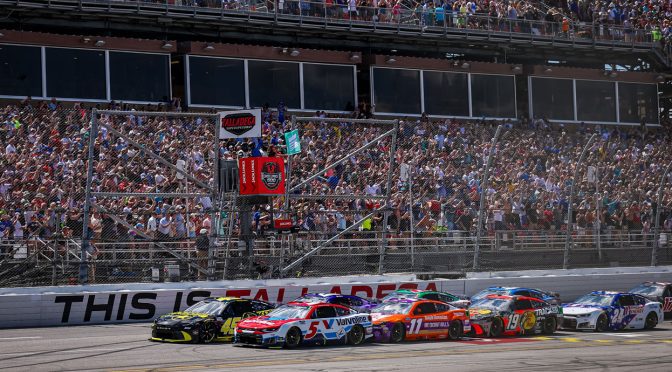
Smith rammed the back bumper of Hocevar’s No. 77 Spire Motorsports Chevrolet after the checkered flag in Sunday’s Freeway Insurance 500, expressing obvious displeasure with Hocevar for contact that was made during the race on Lap 296. After a late-race restart, Hocevar received contact from Ross Chastain entering Turn 3 in a battle around 10th place. That contact sent Hocevar up the track and into Smith’s No. 38 Front Row Motorsports Ford as well as Josh Berry’s No. 21 Wood Brothers Racing Ford.
Hocevar finished 12th, and Smith placed 15th. After crossing the start/finish line, Hocevar and others began their cool-down laps by rolling out of the throttle as is commonplace once the checkered flag is taken. Smith accelerated to the back bumper of Hocevar’s No. 77 car and slammed into the rear bumper of Hocevar’s car before following him down to pit lane.
The two drivers have a long-standing feud that led to contact during a July 5 race at Chicagoland Speedway. NASCAR officials met with both drivers at EchoPark Speedway one week later to discourage further on-track incidents, but that discussion did not lead to any mended fences between the two rivals.
Making his first appearance in The Chase presented by Mobil 1, Hocevar sits 11th in the points standings, 158 points back of series leader Kyle Larson entering Sunday’s race at Talladega Superspeedway (2 p.m. ET, NBC, HBO Max, MRN Radio, SiriusXM NASCAR Radio). Hocevar is the most recent Cup Series winner at Talladega. Smith sits 26th in the points standings heading to Talladega.
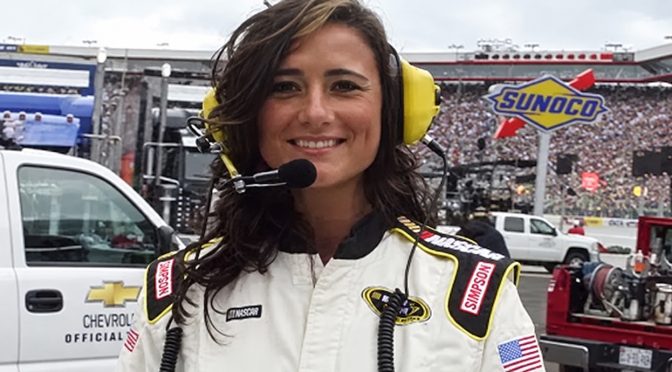
Driven by a deep passion for motorsports and a commitment to excellence, Brienne Davis’ legacy remains strong throughout the motorsports community. That same community still pays homage to the former NASCAR technical inspector, who died on April 8, 2008, at 28 years old as a result of a car accident.
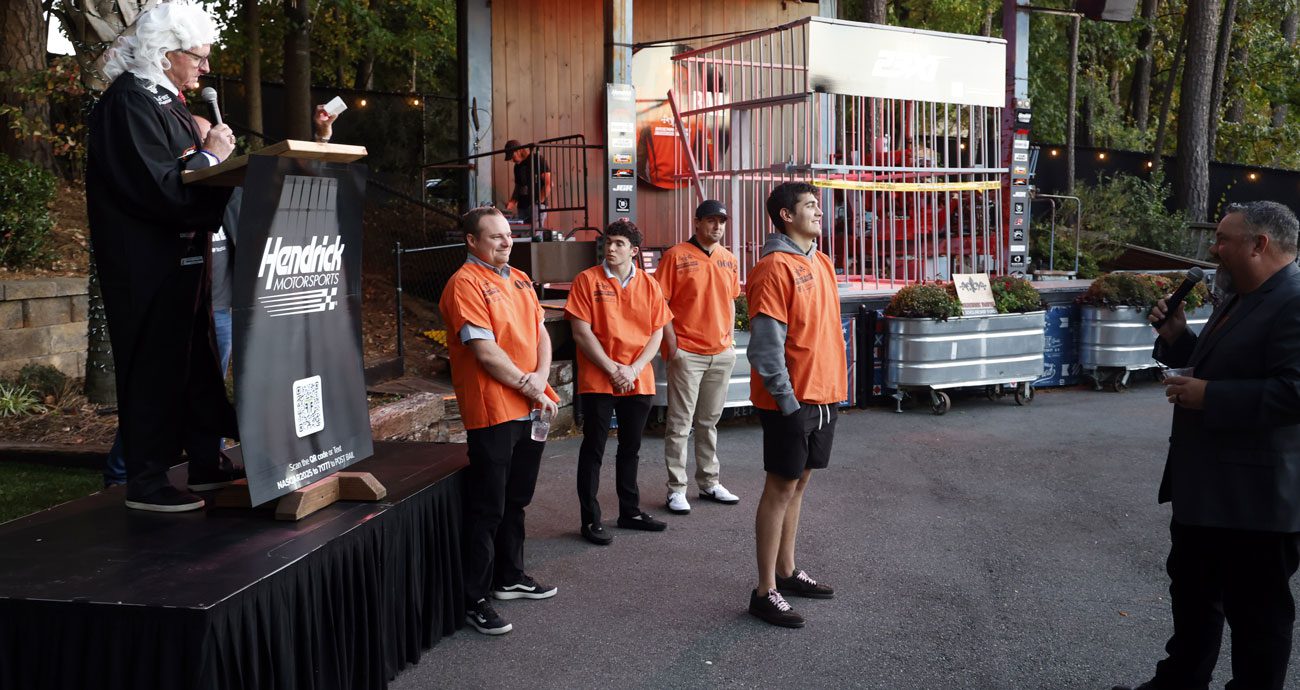
The fifth annual “Jail & Bail” charity event, scheduled for Oct. 27, will continue to honor her. Swapping the race track for a jail cell, 23 drivers, owners, crew chiefs and spotters — spanning from the NASCAR Cup Series to the ARCA Menards Series — will be “locked up” and challenged to raise bail, with proceeds supporting the Brienne Davis Memorial Scholarship, a pathway for women to pursue motorsports careers.
Determination and drive characterized Davis’ journey into the field.
“It’s veryimportantbecausethat’showshegotintotheindustry,” John Sacco, a NASCAR technical inspector who knew Davis, told NASCAR.com. “She went through school. She wrote a letter. She went to the UTI [Universal Technical Institute] in Texas, and when she was there, she told everybody she was going to work for Dale Earnhardt, and of course the boys laughed at her, told her no way, whatever. So about the time she finished school there, she wrote a letter to Tony Eury Sr. at DEI [Dale Earnhardt, Inc.] — it basically said, ‘I’ll do whatever you need me to do. This is my dream. I want to come there and work. I’ll do whatever. Nothing’s beneath me. Just let me know.’
“So the important part is that’s how she found a way to get here and how she made all that happen. So now we have women that apply for those scholarships; they have to write a letter about why they want to do it, what it means to them. That’s kind of how we connect it all together with her.”
Photo courtesy of John Sacco
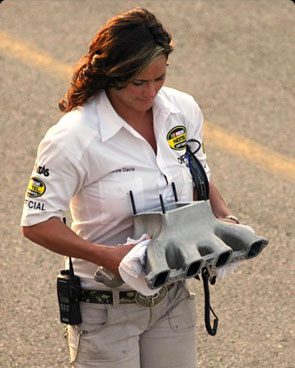
Davis relocated to North Carolina in 2002 as an engine builder for DEI. She then joined NASCAR in 2004 and traveled every race weekend as an engine inspector, examining carburetors and manifolds.
Sacco, 61, first met Davis while she worked at DEI. From DEI to NASCAR, Sacco described her headstrong persona and eagerness to learn as traits that made her excel.
From the drivers behind bars to the courtroom cast trying the cases, “Jail & Bail” helps fund the $10,000 Brienne Davis Memorial Scholarship. Fifty-three scholarships have been awarded since December 2008. The financial aid helps recipients pursue their dreams of entering the motorsports industry.
Administered by TechForce Foundation, the Brienne Davis Memorial Scholarship helps women pursue technical education and careers in motorsports. Aspiring technicians can learn more about scholarship opportunities and apply at TechForce.org.
Opportunities continue to grow. From female drivers paving the way on the track — such as Danica Patrick, Katherine Legge, Toni Breidinger and Dystany Spurlock — to female workers off the track, diversity and inclusion remain a focal point across the motorsports community.
“Whenyouseesomebodythatisathomeandthinks, ‘Man,Iwouldlovetodothat,butIdon’tknowhow.AndIcouldgototheseschools,thesetradeschools,andlearnatrade,buthowdoIgetthere?Idon’thavethemoney.’ So,whatitdoes is it justmakesitanavenueforthemtogetin,” Sacco said. “Obviously, it’s been so much easier all these years for males that worked on cars and came in and became a mechanic, stayed here for 30 years, or came in as an official, stayed here for that long time, and just hasn’t been as clear-cut of a path.”
Dale Earnhardt popularized (and Enzo Ferrari may have first said) the phrase, “second place is just the first loser.” Ricky Bobby’s twist was, “if you ain’t first, you’re last.”
Connor Hall, Mike Lichtfeld and Jeff Strunk, in addition to Tanner, were big winners on the Local Racing platform this season.
NASCAR’s point fund awards $35,000 in top 10 payout to each of the four Division I regions — West, Midwest, Northeast and Southeast — with $15,000 going to the winner. That’s how much Hall, Lichtfeld, Strunk and Tanner won for securing first place in their respective Region’s final standings.
That’s a great consolation for a driver like Hall, the two-time Local Racing Series national champ who finished the season just two points behind Tanner in this year’s national championship battle. The same goes for Lichtfeld, who finished the season third in the national title race, 16 points off Tanner.
Strunk, of course, won his region via tiebreaker over Samuel Charland. That’s a cool $8,000 bump over the $7,000 awarded to second place in the Northeast region.
Below are more details on how each Division I regional champion secured his payday, plus a breakdown of all the regional champions in Divisions II-V.
2026 Division I regional champions
Division I Southeast regional champion: Connor Hall
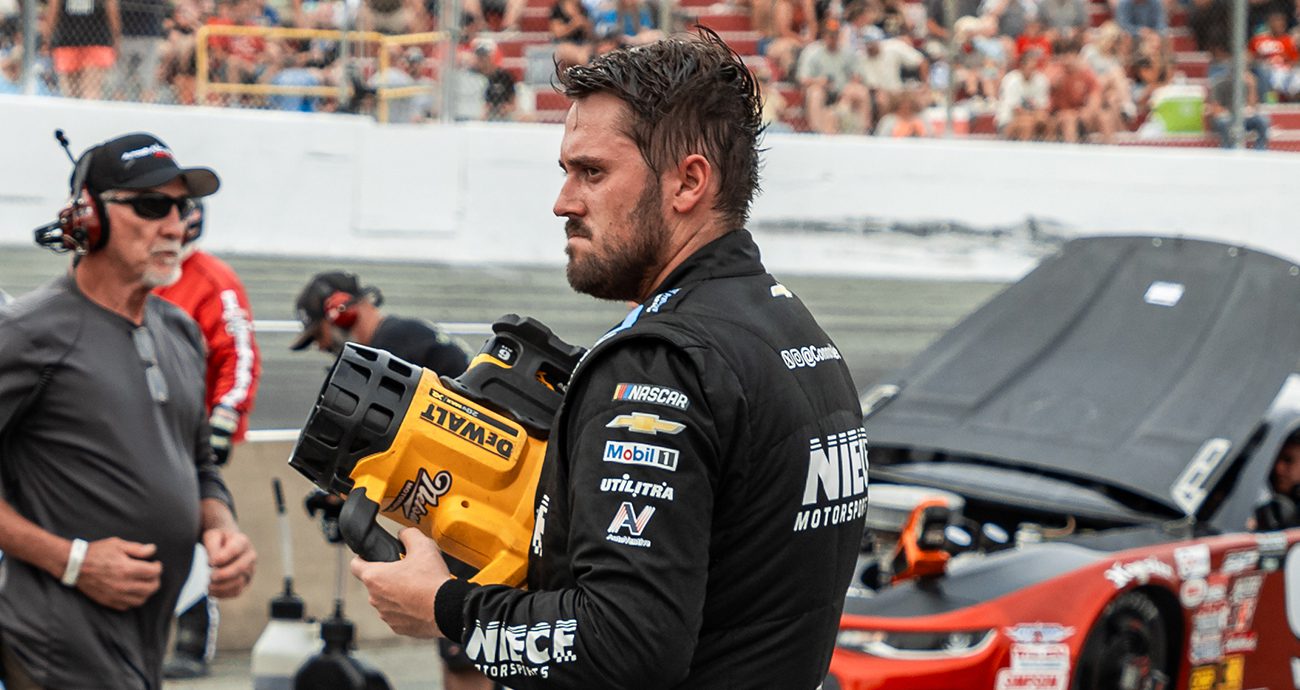
Connor Hall (Photo: Krista Jasso/NASCAR)
Connor Hall did just about everything he could in his effort to secure a third Division I national championship, especially considering the fact that he balanced a plethora of responsibilities with Niece Motorsports as a part-time driver in the NASCAR Craftsman Truck Series.
Hall made the most of the Late Model Stock Car races he did run, mostly at his home track of Langley Speedway in Hampton, Virginia. He scored 12 wins in 16 NASCAR points-paying features, plenty for him to secure the Southeast region championship over Bowman Gray Stadium’s Burt Myers and South Boston Speedway’s Trevor Ward.
As was the case when Hall won his pair of national titles, the success he found in 2026 for the most part came aboard his now-iconic, blue No. 77 affectionately known as “Smurf” with his band of local team members.
While Hall’s plans for 2027 are yet to be announced, whenever he shows up at a short track in that car with those guys, he will be among the favorites.
Division I Northeast regional champion: Jeff Strunk
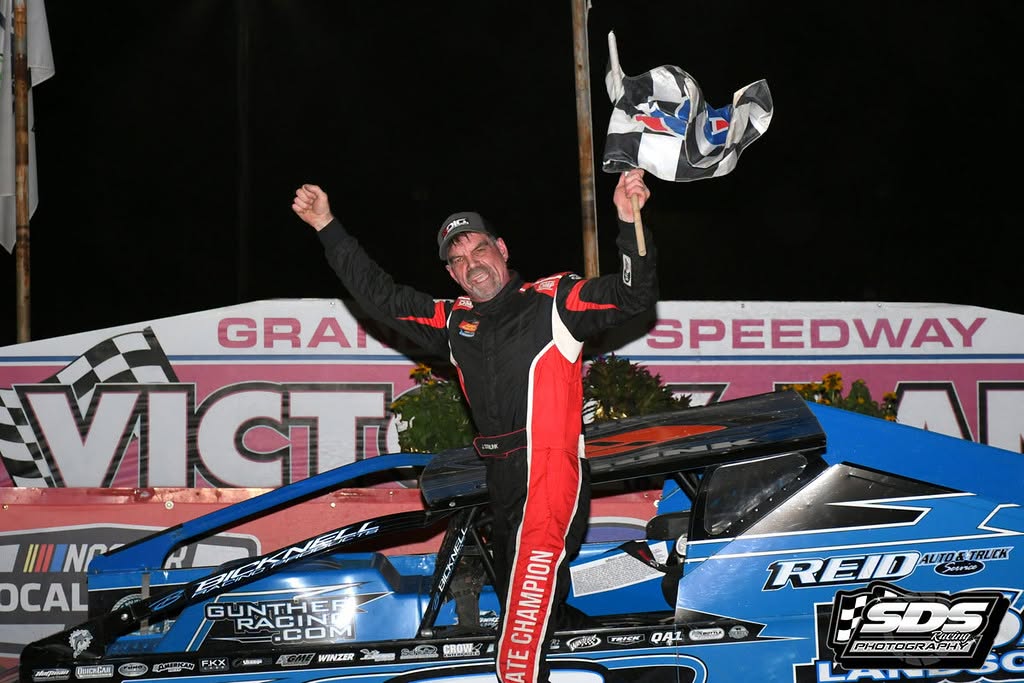
Jeff Strunk (Photo: SDS Racing Photography/Grandview Speedway/Facebook)
The battle for the NASCAR Local Racing Series Division I Northeast regional title came down to the last weekend of eligibility, with Jeff Strunk prevailing over Samuel Charland in a tiebreaker.
Strunk won three times in NASCAR-eligible events during the 2026 season, but he was always a frontrunner in Grandview Speedway’s Modified division. Although Strunk finished third in the Grandview track championship to Logan Watt and Eddie Strada, his consistency enabled him to win the war for the Northeast region.
A native of Bechtelsville, Pennsylvania, Strunk’s career has seen him compete in a variety of cars in the dirt racing discipline that include Dirt Modifieds, Big Block Modifieds and even a Dirt Late Model in the World of Outlaws.
Grandview has long been a home for Strunk, who has 11 Modified titles at the complex dating back to 2000. With momentum on his side following this championship, Strunk will seek to defend the accomplishment in 2027 all while attempting to dethrone Watt for his 12th Grandview Modified title.
Division I Midwest regional champion: Mike Lichtfeld
Mike Lichtfeld receives an award for winning the 2025 Dells Raceway Park track championship at the NASCAR Regional champions banquet at the Charlotte Convention Center on Nov. 21, 2025. (Photo: Jacob Kupferman/Getty Images)
Along with finishing third in the NASCAR Local Racing Series Division I national standings, Mike Lichtfeld also claimed a championship in the Midwest region.
Lichtfeld’s 2026 saw him split his time between LaCrosse Fairgrounds Speedway and Dells Raceway Park in Wisconsin. Between the two tracks, he amassed six NASCAR-eligible victories, all while taking home a track championship in Dells’ Late Model division by three points over Nick Nolden.
A long-time staple of short-track racing in the Midwest, Lichtfeld has competed across numerous tracks and sanctioning bodies during his career but is primarily known for his accolades at Dells. Lichtfeld earned his first Dells track title in 2007 with the track’s Pure Stock division and has now won the last five Late Model championships at the complex.
Lichtfeld has established a gold standard at Dells for other Midwest short track competitors to follow. He will look to add to his storied legacy next year with not only another Dells and Midwest regional crown, but potentially a Division I national championship, as well.
Division I West regional champion: Joey Tanner
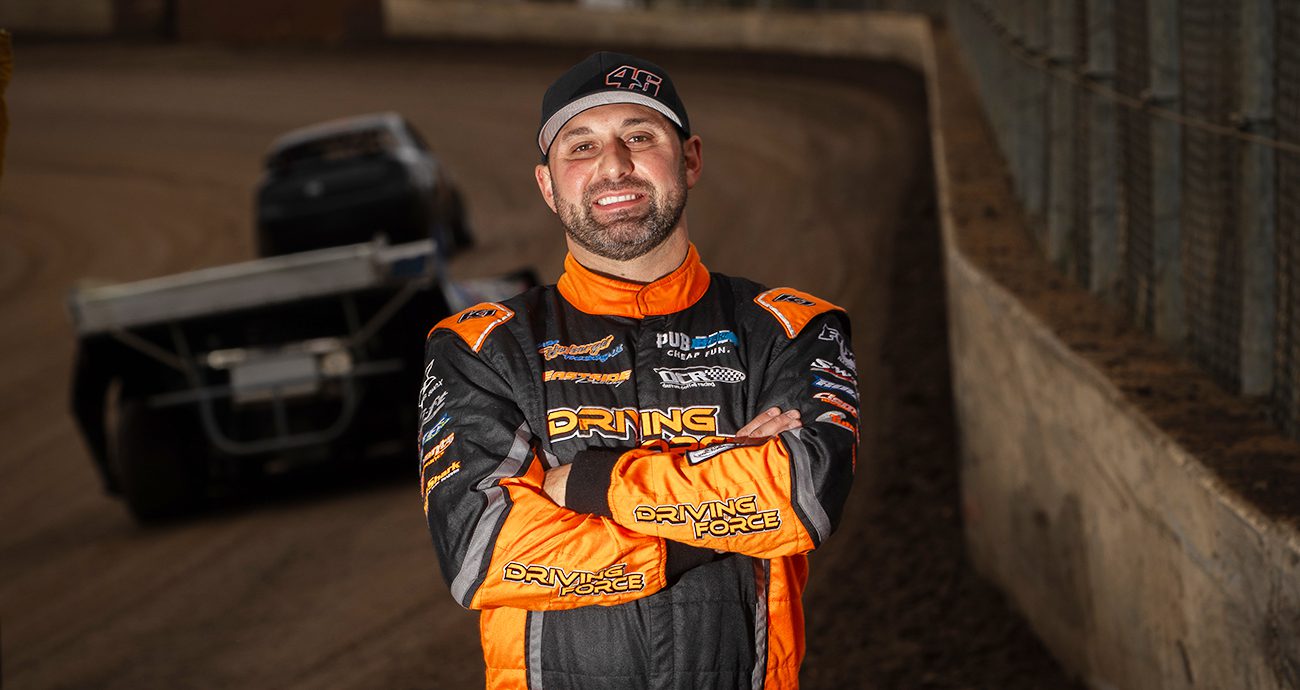
Joey Tanner (Photo: Ted Malinowski/NASCAR)
The effort Joey Tanner put in to earn the NASCAR Local Racing Series Division I national championship also allowed him to secure the West regional title.
Tanner was close to unstoppable at Oregon’s Willamette Speedway during the 2026 season. He earned 11 victories on the year at the track and never finished outside the top two in 14 features, which helped him formally lock up the West region by 130 points over Jeffrey Peterson despite a close fight with Connor Hall for the national title.
Before he became a NASCAR Local Racing Series Division I national and regional champion, Tanner attempted to find a footing in asphalt pavement racing, which included two starts in the ARCA Menards Series West. Now a seasoned dirt-track competitor, Tanner put his acquired experience to good use with yet another impressive campaign at Willamette.
Tanner became the first dirt-track competitor to win a national championship since Gary Webb in 2000. If he can maintain the efficiency he displayed in 2026, Tanner could very well keep the national title in the dirt discipline for years to come.
2026 Division II-V regional champions
Southeast region
Division II champion: Jacob Derrick
Derrick, a native of Hampton, Virginia, scored 11 wins in 19 NASCAR features to secure the Division II Southeast region title over Bowman Gray Stadium’s Zack Ore.
Division III champion: Brad Lewis
Lewis had a great year at his home track of Bowman Gray Stadium with five wins across 13 features this summer in the Street Stock division. He cleared second-place Connor Keaton in the regional title race by 64 points.
Division IV champion: Chuck Wall
Another Bowman Gray Stadium competitor, Wall did most of his damage in the track’s Stadium Stock division. He scored three wins in 18 features and won a points tiebreaker over Kevin Canter for the regional championship.
Division V champion: Jimmy Cooper
Cooper was a force in the UCAR division at North Carolina’s Caraway Speedway in 2026. He scored 10 wins in 16 NASCAR points paying-features on his way to the Division V regional title.
Northeast region
Division II champion: Jacob Nadeau
Nadeau, from Yamaska, Québec, raced seemingly everywhere in 2026. But in his 14 NASCAR points-paying features, he won three times and collected 12 top-five finishes, easily enough to secure the regional title.
Division III champion: John Carpenter
From Jackson, New Jersey, Carpenter had a huge season in the Factory Stocks division at Wall Stadium. He scored five wins in 14 NASCAR points-paying features.
Division IV champion: Scott Cestodio
Cestodio did his work in the Sport Truck class at Massachusetts’ Seekonk Speedway. The native of nearby Swansea scored a pair of wins and a top-10 finish in all 13 of his NASCAR points-paying features.
Division V champion: Michael Yeaton
Another driver who won his region via tiebreaker, Yeaton won five NASCAR features in 14 starts at Monadnock Speedway and Claremont Motorsports Park.
Midwest region
Division II champion: Tyler Rycenga
From Holland, Michigan, Rycenga competed in the Limited Late Model division at Berlin Raceway, where he racked up an impressive seven wins in 21 features, finishing outside the top three just twice.
Division III champion: Tim DeVos
The Division III national champion came from the Midwest region. DeVos dominated the Sportsman class at Berlin Raceway, scoring 12 wins in 21 features on his way to multiple championships in 2026.
Division IV champion: William Avila
The Division IV national champion also came from the Midwest region in 2026. Avila’s emotional season at multiple tracks featured 15 wins in 24 NASCAR points-paying features.
Division V champion: Austin Gammill
Once again, a national champion in 2026 hails from the Midwest region. Racing at both Arrowhead Speedway and Salina Highbanks Speedway in Oklahoma, Gammill racked up 11 wins in 24 features.
West region
Division II champion: Dakota Godard
Godard had a great season in the Street Stocks division at Oregon’s Willamette Speedway. In NASCAR competition alone, he scored eight wins in 15 features and finished outside the top five just once.
Division III champion: Jordan Stevens
Stevens was a force at Oregon’s Coos Bay Speedway in 2026. He won eight of his 15 NASCAR Division III points-paying starts and never finished outside the top 10 in those features.
Division IV champion: Mackenzie Deitz
From Monroe, Washington, Deitz comes from a long line of Figure 8 racers. That helps explain how she scored three wins and a top-10 finish in all 16 of her NASCAR points-paying features this season at Washington’s Evergreen Speedway and Oregon’s Willamette Speedway.
Division V champion: Brent Cave
A regular in the Super Stock class at Colorado National Speedway, Cave ran top five in all 13 of his NASCAR Division V points-paying features this season. Four of those results were victories.
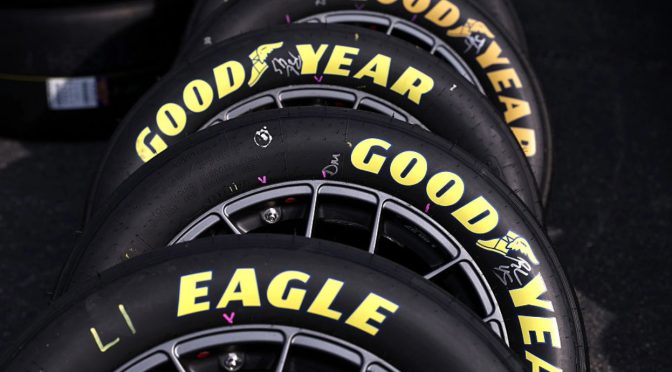
Goodyear will roll out new tire configurations for all three national series as The Chase presented by Mobil 1 rolls into Talladega Superspeedway this weekend.
The NASCAR Cup Series will utilize a new left-side tire construction, although the compound remains the same as previously used. The right-side tires remain completely the same as in previous Talladega and Daytona races since the beginning of last season. There is a wrinkle in the aero package for Sunday’s YellaWood 500 (2 p.m. ET, NBC, HBO Max, MRN Radio, SiriusXM NASCAR Radio), though, as NASCAR reduced the Next Gen spoiler to 3.5 inches (from the four-inch update at Daytona summer race) and tweaked the stages to match the spring race at Talladega (98-45-45). Cup Series cars previously ran seven-inch spoilers, most recently used at EchoPark in July.
“Our Goodyear Racing Eagle tires are built to withstand the high speeds and loads we see at superspeedways,” said Justin Fantozzi, Goodyear’s Director of Racing for the Americas. “The teams are familiar with our superspeedway tires and the updated construction will allow them to focus on their in-race strategies.”
The O’Reilly Auto Parts Series and Craftsman Truck Series will use a right-side tire with updated construction, while the left-side tire remains the same as previous superspeedway races. As is customary at tracks 1 mile in distance or longer, teams in both series will also run inner liners. Saturday’s O’Reilly Series race is set for 3:30 p.m. ET (The CW, ESPN Unlimited, MRN Radio, SiriusXM NASCAR Radio), with Friday’s Truck Series race scheduled for 4 p.m. ET (FS1, FOX One, NASCAR Racing Network Radio, SiriusXM NASCAR Radio).
Tire allotments for each team competing this weekend:
Cup Series: 7 total sets — 6 new sets for the race, 1 for qualifying, which transfers to the race.
O’Reilly Auto Parts Series: 4 total sets — 3 new sets for the race, 1 for qualifying, which transfers to the race.
Craftsman Truck Series: 4 total sets — 3 new sets for the race, 1 for qualifying, which transfers to the race.
NASCAR.com’s Pat DeCola ranks the 16 Cup Series drivers in The Chase presented by Mobil 1 after Tyler Reddick’s win at Phoenix Raceway and before Sunday’s race at Talladega Superspeedway (2 p.m. ET, NBC, HBO Max, MRN Radio, SiriusXM NASCAR Radio).
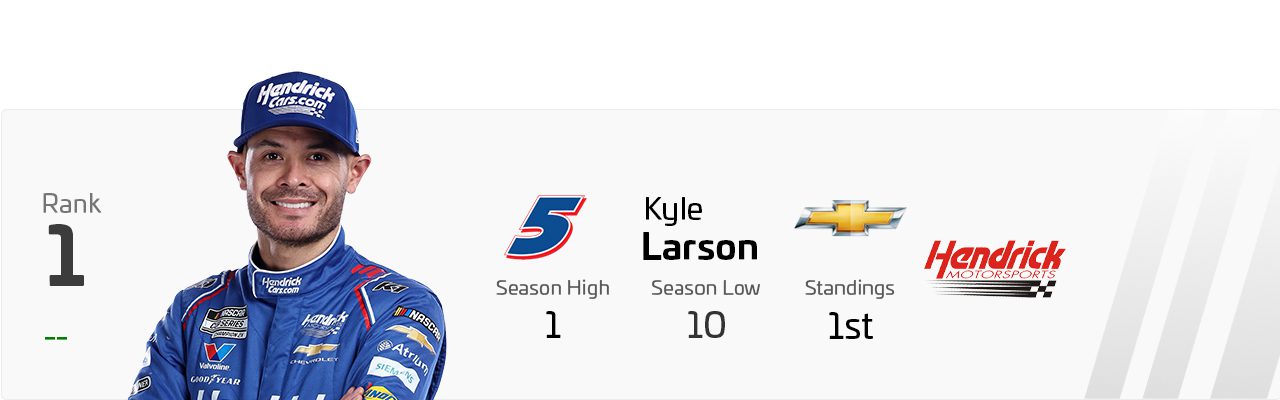
Analysis: Well, there goes the cushion. Six races of near-perfection built Larson a 49-point championship lead entering Phoenix, and one afternoon in the desert reduced it to five measly markers. Worse, this wasn’t a case of the No. 5 running up front until a tire failure ruined everything. Larson struggled from the jump; he qualified 22nd, scored no stage points, fell off the lead lap and was already looking at a miserable result before a right-front tire finally gave way and sent him into the wall, landing 34th. His worst Chase race by a mile, and one that suddenly makes the remarkable 2.8 average finish from the first six feel like ancient history. We’re keeping Larson atop the rankings because that larger body of work still matters (and it’s still his to lose), but the championship no longer looks anything close to secure. And now comes Talladega, where he finished 40th in April after getting swept up in the massive Lap 115 crash. If there’s a worse place to arrive with a five-point lead and a whole lot of uncertainty, it’s hard to imagine where.
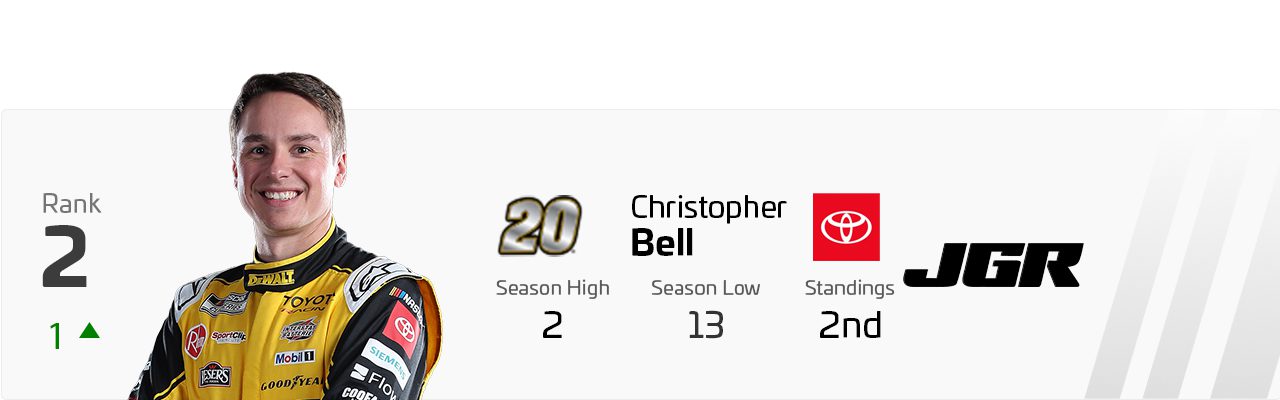
Analysis: Five points. That’s all that separates Bell from the championship lead after spending most of The Chase lurking just outside the spotlight while Larson seemingly ran away with the thing. Bell was excellent again at Phoenix, leading a race-high 85 laps, finishing third in both stages and coming home fourth. Add that to his near-miss against Briscoe at Charlotte Motor Speedway (where he lost by 0.029 seconds), and it’s becoming increasingly difficult to argue that anybody has consistently brought more speed these last few races. The wins haven’t followed, but the points certainly have. There’s an interesting Talladega wrinkle, too: Bell led a race-high 31 laps there in April before a final-lap crash left him 17th, another result that obscured how competitive the No. 20 actually was. He also finished eighth there last fall. Bell has spent much of 2026 looking capable of something enormous, and now the championship is practically sitting in front of him. The question is whether Talladega lets him reach for it.
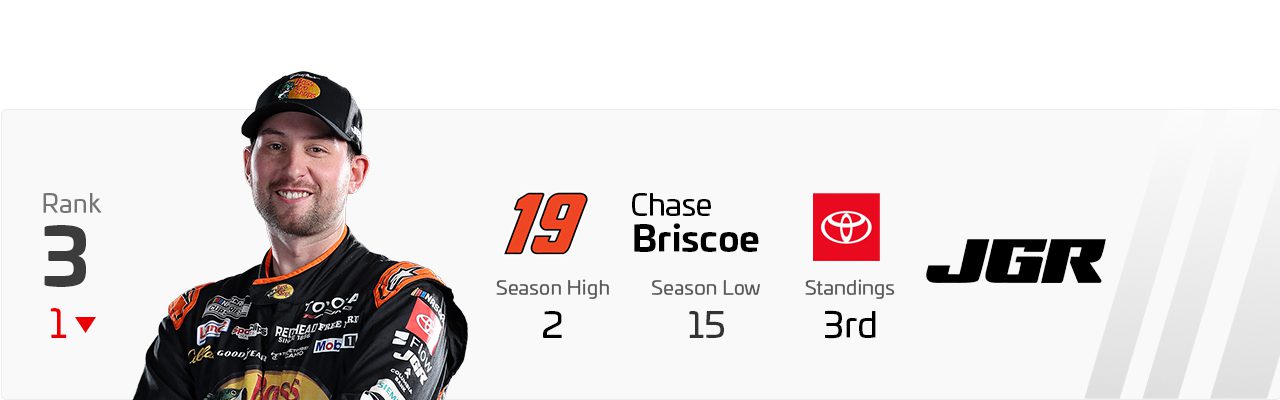
Analysis: The winning streak ended, but Briscoe somehow came away from Phoenix with another pretty significant reason to celebrate. He finished eighth after running up front, scoring 15 stage points and briefly controlling the lead on the final restart before Reddick charged through. Not exactly the follow-up to consecutive victories that makes headlines, but consider the larger picture: Briscoe has erased 99 points of Larson’s advantage over the last three races, and now he’s only 24 behind the championship leader with three remaining. That’s a remarkable reversal from where things stood before Las Vegas Motor Speedway, and the No. 19 still looks plenty capable of adding another win to the pile. Better yet, we’re heading back to Talladega, where Briscoe stole the fall race last year with a last-lap pass and a tremendous assist from teammate Ty Gibbs. The hottest stretch of Briscoe’s Cup career has turned him into a genuine championship threat. Now he gets another crack at the track where he made his title aspirations legitimate a year ago.
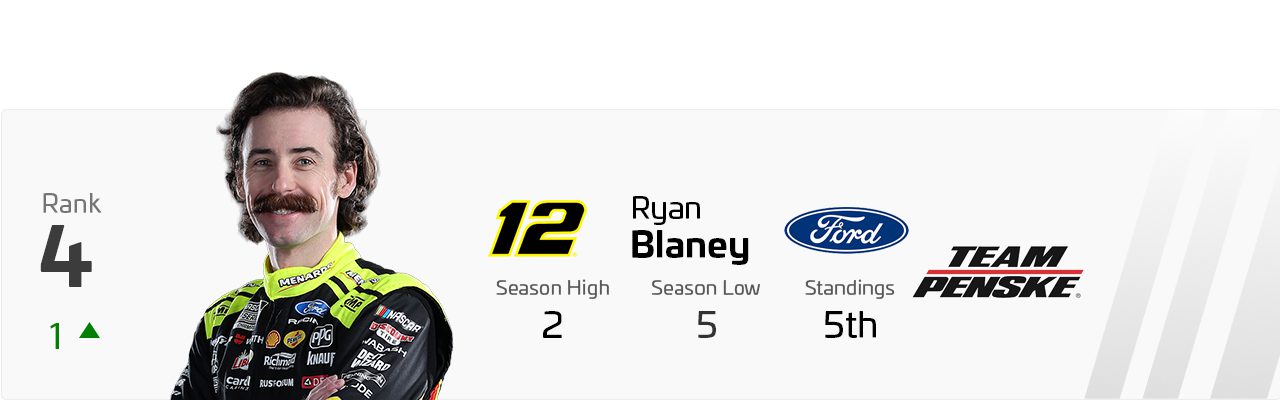
Analysis: Four consecutive top-five finishes, and they’re getting better: fifth, fifth, third, second. Blaney’s slow-burn Chase is becoming one of the more compelling developments in the championship fight, particularly given how badly the first few races went despite the speed being there. Phoenix was another strong afternoon, with the No. 12 starting from the pole, leading 51 laps and finishing runner-up to Reddick after another pit-road setback interrupted his day. A third consecutive Phoenix victory would’ve been nice, but second still helped erase 45 points of his championship deficit, leaving him just 40 behind Larson. That’s no longer a number requiring much imagination to overcome. Talladega? Blaney has won there three times, so this isn’t exactly unfamiliar territory. He was collected in April’s massive crash, but if we’re ranking championship contenders by the combination of speed, recent form and the ability to deliver under pressure, Blaney’s case has become awfully convincing.
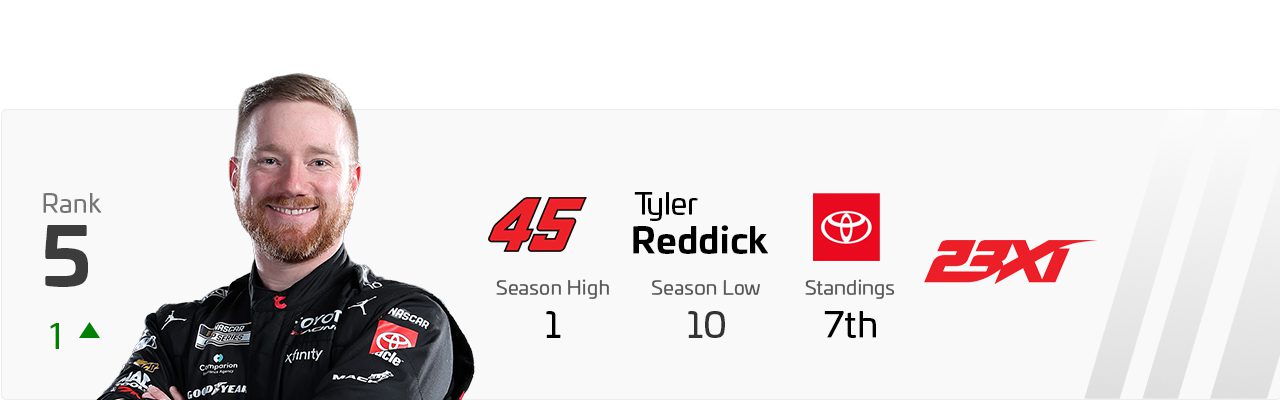
Analysis: Remember Reddick’s assessment of gaining five points after finishing third at Vegas? “Whoop-de-doo.” Phoenix ought to make him feel a little better. No. 45 finally returned to Victory Lane at Phoenix after going winless since April, making a bold four-wide move on the final restart before eventually taking the lead from Briscoe with 18 laps remaining. It was his sixth victory of 2026 and, much more importantly for the championship, helped cut his deficit to Larson from 114 points to 56. The No. 45 team spent much of the summer looking completely incapable of recreating its remarkable early-season form, but the last three races have changed that conversation considerably. Talladega isn’t exactly a bad place to try extending the comeback, either; Reddick won there in 2024 and was running well before getting caught in multiple incidents this April. The championship is still a long shot. It suddenly doesn’t feel like a lost cause, though.
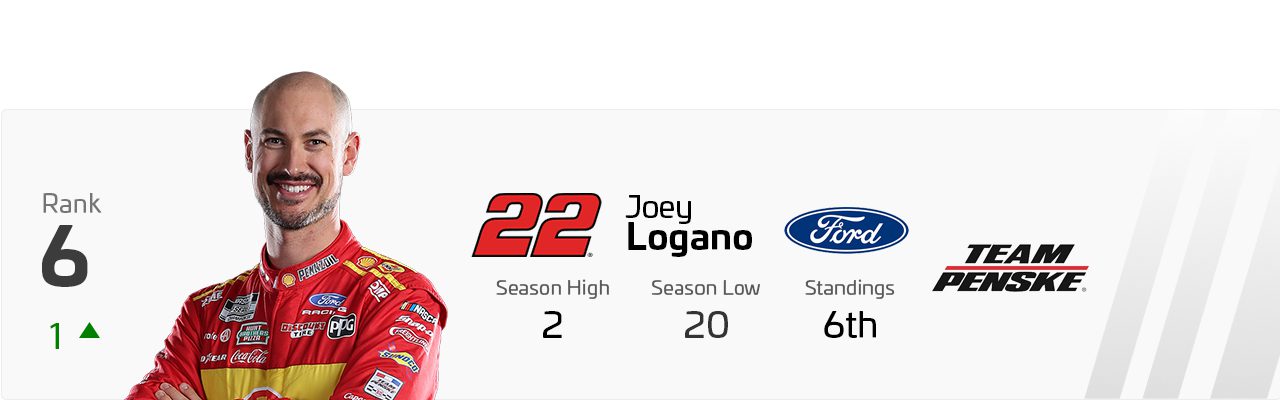
Analysis: Now that looked like the Joey Logano we’ve been expecting to see when the championship gets serious. He started alongside teammate Blaney on the front row at Phoenix, swept both stages, led 84 laps and appeared capable of taking the whole thing before a vibration and pit-road complications helped derail the winning opportunity. Sixth place certainly undersells that afternoon, but the 20 stage points did plenty of damage to Larson’s advantage on their own. Logano entered the weekend 92 points back and left down just 44, a remarkably successful result considering he didn’t even finish in the top five. It’s not difficult to envision another significant jump at Talladega, where he’s won three times, even if April’s visit ended with the No. 22 getting swallowed by the enormous multicar wreck. We spent a good portion of this season waiting for Logano to start behaving like a three-time champion again. The last few weeks suggest strongly that the wait might be over.
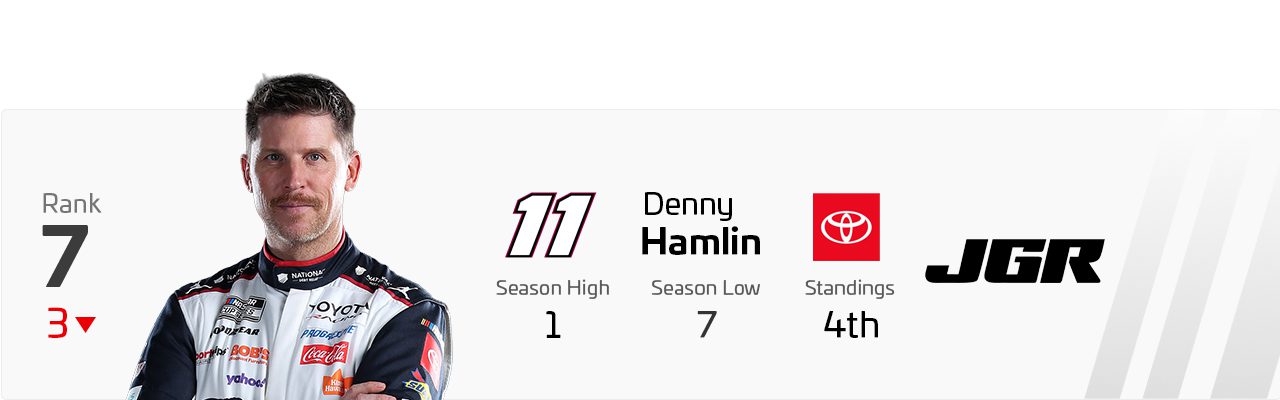
Analysis: Of all the drivers who needed to capitalize on Larson’s Phoenix disaster, Hamlin might have had the most frustrating afternoon of anybody. The No. 11 was running fourth when a right-rear tire went down with fewer than 100 laps remaining, forcing an unscheduled stop that became considerably more expensive when Hamlin was caught speeding on pit entry. That cost him the free pass when a caution followed shortly afterward, and a potentially excellent afternoon became 28th in a hurry. The particularly maddening part? He still gained 18 points on Larson, reducing his deficit to 31, but fell from second to fourth in the championship as the other contenders cashed in; not exactly the kind of progress Hamlin had in mind. The No. 11 remains one of the strongest cars in the field, and the regular-season standard is absolutely still in contention, but this is the shakiest his 2026 title hopes have felt to date.
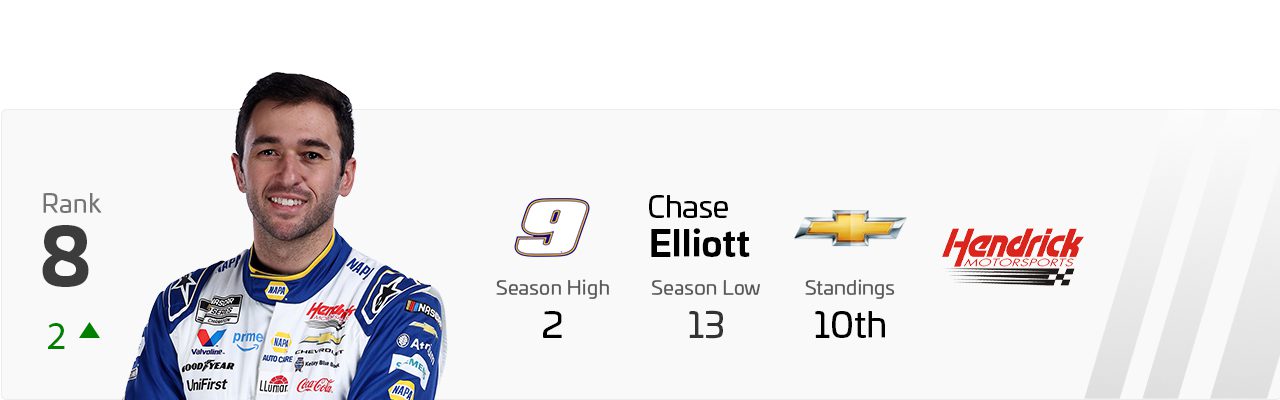
Analysis: Well, look who’s finally showing up near the front again. Elliott’s third-place finish at Phoenix was easily his best of The Chase and came after starting 16th, giving the No. 9 team its strongest afternoon in weeks. That doesn’t erase a postseason in which sustained momentum has been frustratingly elusive, but there’s something to be said for finding speed as the schedule starts running out. The problem, of course, is that Elliott remains 149 points behind Larson with only three races remaining, so the championship is still an awfully steep climb. Here’s where it gets interesting: Elliott finished fourth at Talladega in April and has won twice at the superspeedway, making Sunday one of his more inviting opportunities left on the schedule. He has spent much of this Chase watching his Hendrick teammate control the championship conversation, but Phoenix offered a reminder that the No. 9 can still be part of it, even if the larger math isn’t particularly encouraging.
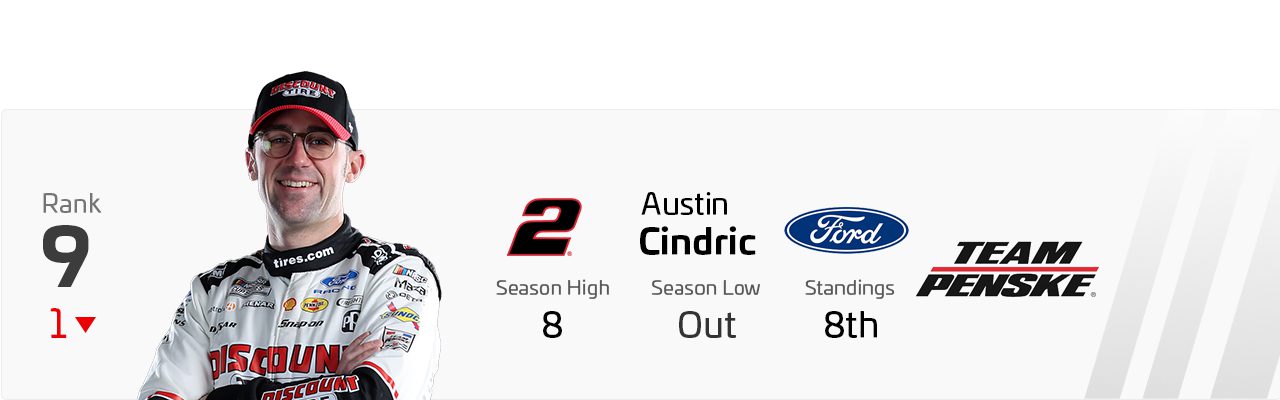
Analysis: Nineteenth at Phoenix wasn’t exactly the follow-up Cindric wanted after his promising intermediate-track stretch, and it leaves him 130 points behind Larson with three races to go. But this is where the schedule gets considerably more interesting for the No. 2. Remember, Cindric won at Talladega last spring, edging Ryan Preece in a 0.022-second finish, then returned this April and finished eighth. That’s some pretty useful recent history for a driver who spent much of 2026 looking for something to build on before the Kansas-Vegas breakthrough. Phoenix wasn’t good enough to extend that momentum, but it hardly erased what had come before it. And now the series returns to one of the few tracks where Cindric has already proven he knows how to finish the job. If the No. 2 is going to make one more significant appearance in the championship conversation, this would be a pretty appropriate place.
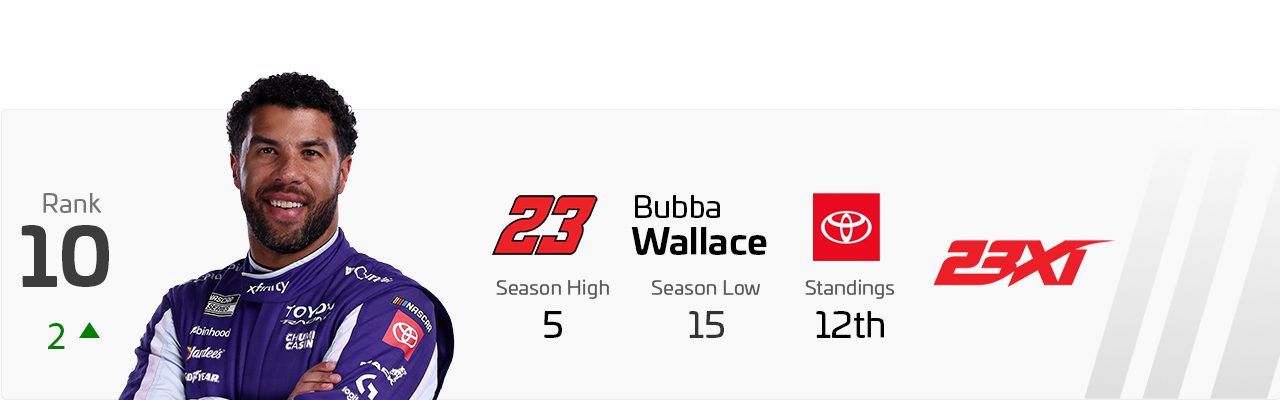
Analysis: There have to be less gut-punching ways to lose races than whatever Wallace has been experiencing lately. One week after getting collected in somebody else’s accident while running fifth at Charlotte, the No. 23 showed up at Phoenix looking capable of winning the whole thing. Wallace led 52 laps, took the lead late and had put together a genuinely impressive afternoon before a pit-road speeding penalty wrecked his chances during the final round of stops. Seventeenth was the eventual result, which obviously doesn’t illustrate the pace the car actually showed. The speed is undeniably there, and this rankings jump reflects it, but the championship deficit is now 162 points with three races remaining. Talladega offers another interesting complication: Wallace was leading there in April when a push from Ross Chastain triggered the massive 26-car crash that effectively ended his day. There’s no shortage of evidence that the No. 23 can run up front. The deficit is in afternoons that actually end that way.
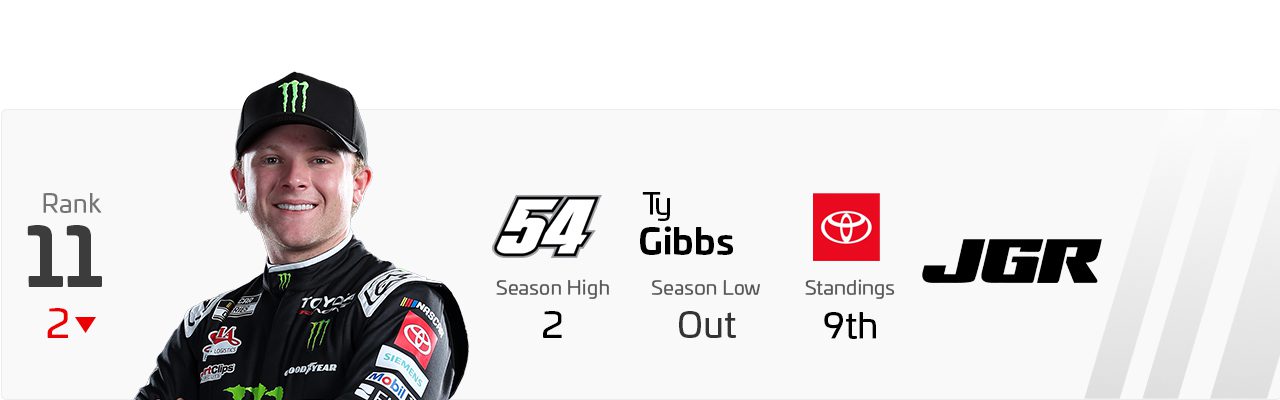
Analysis: Finally, a top 10. Gibbs started at the rear at Phoenix after an alternator change, worked his way back into contention and ultimately finished 10th, snapping a three-race stretch of 17th, 17th and 34th. It wasn’t the afternoon he needed to meaningfully change the championship picture, but after the way things have gone lately, stopping the bleeding is something. He’s still in rough shape compared to how he started The Chase, but Talladega comes with a particularly interesting bit of history for the No. 54. Gibbs finished third there last fall and supplied the crucial final-lap push that helped teammate Briscoe win the race. This April was much less cooperative, with damage from the massive Lap 115 wreck eventually sending him hard into the wall and leaving him 34th. Gibbs has spent most of 2026 establishing that he belongs among the sport’s strongest contenders, but the last few weeks have tested that argument rather severely. At least Phoenix gave him something better to build on.
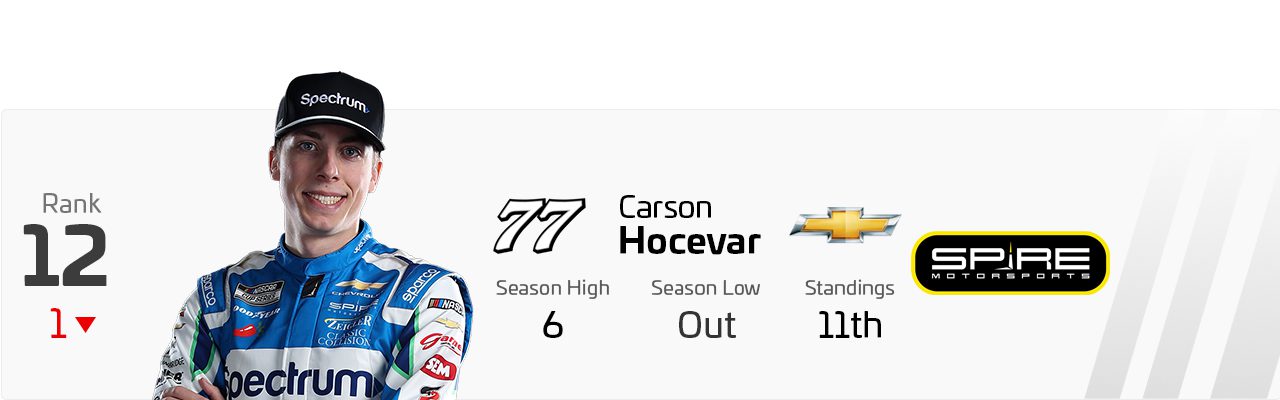
Analysis: If anybody in the lower half of these rankings has reason to be excited about the next stop, it’s probably Hocevar. Phoenix was relatively straightforward — from green flag to checkered flag, at least — with the No. 77 climbing from 28th to 12th, but now comes the place where he scored his first career Cup victory. And it wasn’t just some lucky superspeedway escape act, either. Hocevar led 19 of the final 37 laps, survived three late restarts and held off Chris Buescher by 0.114 seconds, a performance that was every bit as convincing as it was entertaining. Plenty has happened since April, of course, including a Chase that has been equal parts genuine speed and frustrating outcomes. He’s 158 points behind Larson, which isn’t exactly championship-friendly territory, but the confidence should be considerably higher than that number suggests. Talladega can undo an entire afternoon in about half a second. Hocevar already knows it can make a career just as quickly.
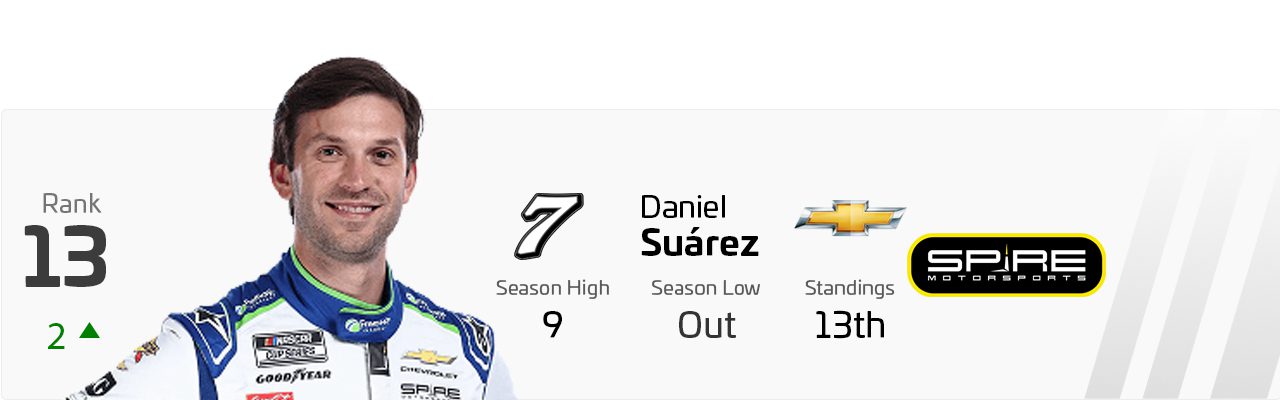
Analysis: The 13th/14th-place streak is officially over, and Suárez finally has something a little more interesting to show for himself. He finished seventh at Phoenix, his best result of The Chase, after working his way back through the field despite a pit-road speeding penalty that threatened to ruin the afternoon. That’s a meaningful improvement for a No. 7 team that has spent most of the postseason looking capable of surviving races without doing much to alter them. Of course, he’s still 188 points behind Larson, and we’re well past the point where a seventh-place finish can be mistaken for championship momentum. But this season has already demonstrated that Suárez can produce a spectacular result from seemingly nowhere, and Talladega certainly isn’t a place where conventional expectations mean much. His last two starts there both ended in 12th, but there’s at least a little reason to wonder whether something bigger could come.
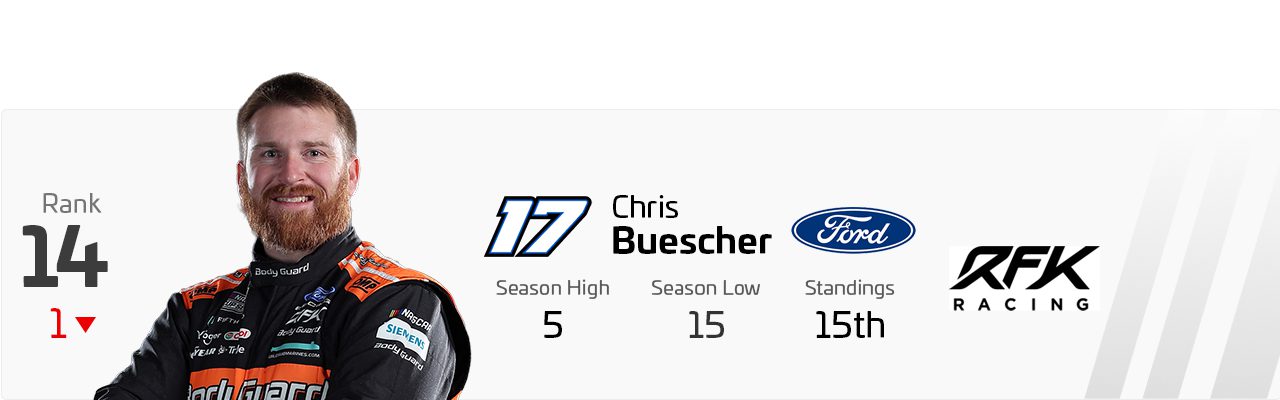
Analysis: Here’s the frustrating thing about Buescher coming into the weekend and being mostly out of title contention — we already know he can put together an excellent Talladega race. He did exactly that in April. The No. 17 led 22 laps, finished top four in both opening stages and came within 0.114 seconds of beating Hocevar for the victory. It was one of his strongest afternoons of 2026, and considerably more encouraging than the 22nd-place finish he just produced at Phoenix. Buescher has spent too much of The Chase hovering around the middle of the field, occasionally looking like something more is possible without actually delivering the result. Now he’s 204 points behind Larson and essentially out of meaningful championship contention without something extraordinary happening, even if he does win this weekend.
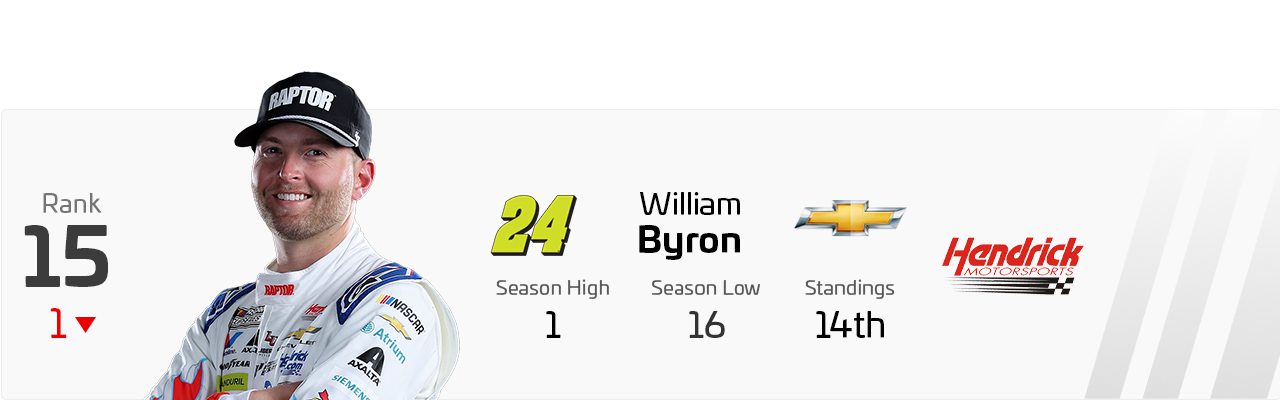
Analysis: Remember when Byron was quietly putting together one of the more encouraging Chase recoveries in the field? Four consecutive top 10s had started to repair the damage from his disastrous Darlington opener, only for Charlotte’s wreck to leave him 39th and Phoenix to follow with a thoroughly unremarkable 21st. The No. 24 did collect Stage 1 points in the desert, but little else about the afternoon suggested the turnaround was ready to resume. He’s now 190 points behind teammate Larson and suddenly looks a long way removed from the driver who spent portions of 2026 near the top of these rankings — and opened the year on top of them. Talladega wasn’t much kinder in April, when Byron was collected in the massive crash and finished 35th. There are still three races left for this championship-caliber team to find something worthwhile to take into 2027, but the title hopes are rapidly becoming something to file under “maybe next year.”
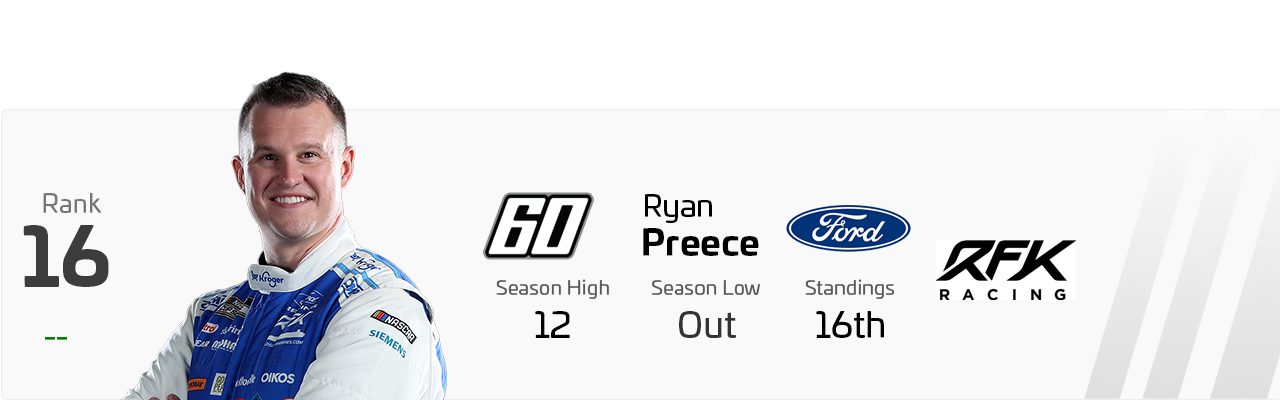
Analysis: There is at least one reason to feel better about Preece’s chances this week than his position at the bottom of these rankings might suggest — Talladega has been awfully close to giving him something special before. He crossed the finish line second there last spring, just 0.022 seconds behind Cindric, before a post-race disqualification erased the result. This April, Preece returned and won Stage 1, only to get caught in a final-lap crash and finish 18th. So the speed and drafting ability have been there, even if the payoffs haven’t always survived to the official results. Phoenix was another fairly anonymous afternoon — 18th, no stage points, not much to get excited about — and he’s now 211 points behind Larson with three races remaining. That’s obviously not a championship situation anybody would choose. But Preece already won the summer Daytona race, and the idea of him producing another superspeedway surprise isn’t particularly far-fetched anymore. If there’s one place left on the schedule where the No. 60 can turn this thing around and regain some ground, Talladega is probably it.
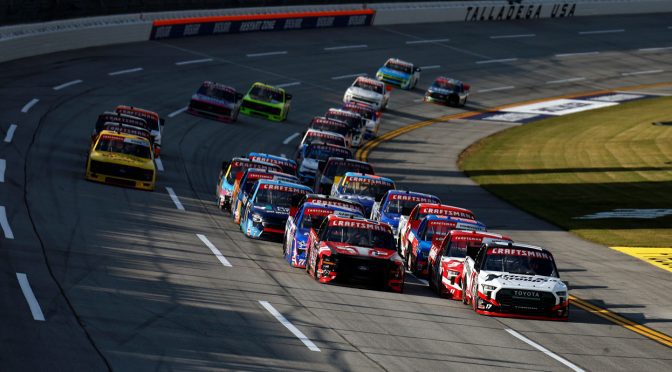
The NASCAR Craftsman Truck Series continues its Chase presented by Mobil 1, transitioning from Phoenix Raceway to Talladega Superspeedway for a Friday bout at the 2.66-mile track (4 p.m. ET, FS1, FOX One, NASCAR Racing Network Radio, SiriusXM NASCAR Radio).
The Love’s RV Stop 225 is the fifth of seven Chase races of the Truck campaign and the 23rd points-paying event overall. Gio Ruggiero is the defending Talladega winner.
Kaden Honeycutt, pilot of the No. 11 Tricon Garage Toyota, enters Talladega as the Chase leader, holding a 39-point lead over Layne Riggs and the No. 34 Front Row Motorsports camp following the No. 11’s Phoenix victory.
Thirty-eight race trucks are entered into this weekend’s event.
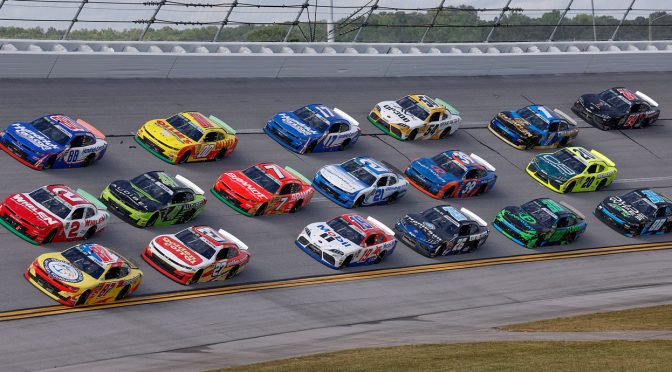
After a contest at Phoenix Raceway, the NASCAR O’Reilly Auto Parts Series treks eastward to tackle Talladega Superspeedway on Saturday (3:30 p.m. ET, The CW, ESPN Unlimited, MRN Radio, SiriusXM NASCAR Radio).
The Progress Group 250 will be the seventh of nine races making up this season’s Chase presented by Mobil 1 and the 31st points-paying event overall. Austin Hill is the defending Talladega fall winner.
Hill’s teammate — and fellow Chaser — Jesse Love claimed The Chase lead in the standings following his Phoenix victory. The No. 2 Richard Childress Racing pilot holds a 36-point edge over Justin Allgaier and the No. 7 JR Motorsports camp. The defending O’Reilly champion in Love will look to continue his Talladega prowess, with finishes of 10th or better — including a 2024 O’Reilly victory there — in five career races at the 2.66-mile track.
It’s time for superspeedway action in the NASCAR Cup Series, with the circuit next taking on the one-and-only Talladega Superspeedway on Sunday (2 p.m. ET, NBC, HBO Max, MRN Radio, SiriusXM NASCAR Radio).
The YellaWood 500 will be the eighth of 10 races encompassing this season’s Chase presented by Mobil 1 and the 34th points-paying event overall. Chase Briscoe is the defending fall winner.
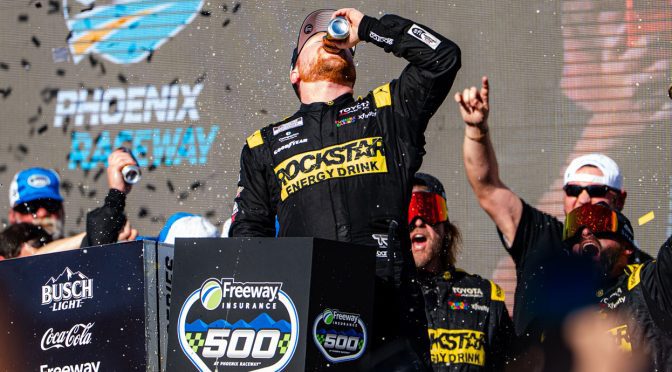
A chaotic contest at Phoenix Raceway resulted in Tyler Reddick and the No. 45 23XI Racing camp finding Victory Lane for the sixth time this season and the first time in The Chase. A 34th-place scuffle for Kyle Larson and the No. 5 Hendrick Motorsports team resulted in every other Chaser gaining ground on the defending Cup champion. Following Phoenix, six Chase drivers are within 56 points of Larson.
Tyler Reddick rose like a phoenix, scoring his sixth win of the season and first since April with a rousing victory at Phoenix Raceway. Suddenly, Reddick sits just 56 points behind series leader Kyle Larson after the standings significantly tightened in The Chase presented by Mobil 1.
Here’s where we stand in The Chase after the Freeway Insurance 500 at Phoenix and before Sunday’s YellaWood 500 at Talladega Superspeedway (2 p.m. ET, NBC, HBO Max, MRN Radio, SiriusXM NASCAR Radio).
Larson’s weekend began on the back foot after qualifying 22nd, but the pivotal moment came on Lap 283 when his No. 5 Chevrolet pounded the outside SAFER barrier in Turn 1 with a flat right-front tire. With zero stage points and a 34th-place finish, Larson walked away with just three points easily his worst finish all Chase long.
The other turning point in The Chase came on the ensuing restart at Lap 294, when Reddick restarted fifth and shot through the middle of a four-wide hole in Turns 1 and 2 to rocket into second place after a two-tire pit call by crew chief Billy Scott. That positioned Reddick perfectly to pounce on race leader Chase Briscoe and his older Goodyear Racing tires just one lap later, overtaking the lead and launching himself back into the championship picture with three races remaining.
The Chase Board
What once appeared to look like a Larson runaway has instantly become a seven-racer slugfest leaving the Arizona desert, with names like Christopher Bell, Chase Briscoe, Denny Hamlin and Tyler Reddick each eyeing their first NASCAR Cup Series championship while Larson, Ryan Blaney and Joey Logano look to collect another Bill France Cup trophy.
Larson’s opponents finally got what they were looking for — a bad day for the No. 5 Hendrick Motorsports team — and yet the two-time champion remains atop the leaderboard. Larson’s problem now, of course, is that his lead is down to just five points over Christopher Bell while everyone between Larson and Reddick in seventh is within a 56-point margin. The championship picture is wide open for the taking for any of those drivers with three chances left on the schedule.
The trouble Larson encountered allowed each of his 15 Chase competitors to close the gap on the No. 5 team. But the Chase driver who fell hardest in Sunday’s standings was perhaps who we thought may have been Larson’s biggest threat for the title — Hamlin. Hamlin gained 18 points on the gap to Larson’s lead, but the No. 11 team slid two spots to fourth in the standings, 31 points behind the defending champion after Hamlin’s day was derailed by a late flat tire that ultimately trapped him one lap down — an issue compounded by a simultaneous pit-road speeding penalty. Only four other drivers gained as many points or fewer on Larson as Hamlin: William Byron (18), Ryan Preece (16), Austin Cindric (15) and Chris Buescher (12).
Rank
Driver
Points behind
Gain/loss to leader
1
Kyle Larson
--
Lost 44
2
Christopher Bell
-5
Gained 46
3
Chase Briscoe
-24
Gained 41
4
Denny Hamlin
-31
Gained 18
5
Ryan Blaney
-40
Gained 45
6
Joey Logano
-44
Gained 48
7
Tyler Reddick
-56
Gained 58
8
Austin Cindric
-130
Gained 15
9
Ty Gibbs
-132
Gained 24
10
Chase Elliott
-149
Gained 36
11
Carson Hocevar
-158
Gained 22
12
Bubba Wallace
-162
Gained 23
13
Daniel Suárez
-188
Gained 27
14
William Byron
-190
Gained 18
15
Chris Buescher
-204
Gained 12
16
Ryan Preece
-211
Gained 16
Source: Racing Insights
Next Up
The only thing predictable about Sunday’s race at Talladega Superspeedway is that it will be unpredictable.
NASCAR returns to the 2.66-mile superspeedway with a 3.5-inch rear spoiler, half the size of the rear blade teams used in the spring during the series’ last visit to Alabama. With less rear downforce should come more maneuverability for drivers behind the wheel, providing drivers options to move throughout the drafting pack of cars during the 188-lap contest.
But with the tight confines of the draft come potentially big consequences — like the “Big One,” the infamous multicar pileup known to rear its head at superspeedways like Talladega. A mistake by one driver in the pack could instantly send the points standings into further disarray with such tight margins throughout the top half of The Chase field.
Larson is still looking for his first superspeedway victory. Briscoe, Hamlin, Blaney, Logano and Reddick have each won at Talladega — including three wins for Blaney. Other Chase drivers know the pathway to Talladega’s Victory Lane as well, like April victor Carson Hocevar, Austin Cindric, Chase Elliott and Bubba Wallace. But with a seven-car breakaway out front, stage points and race wins will dictate the pace of the final two Chase races to follow Talladega.
Jesse Bernhagen has been racing for more than 20 years, but he certainly felt like a rookie in 2026.
He’s used to driving with his dad serving as crew chief, which has been the case since he started racing at age 5. But this season, for the first time, Bernhagen served in both roles.
“This was the first year that I ran the show myself, and I did all the shop work on the car,” Bernhagen said. “Everything was me. That made it feel like a little bit of a rookie season. It made me feel a little bit more accomplished within it.”
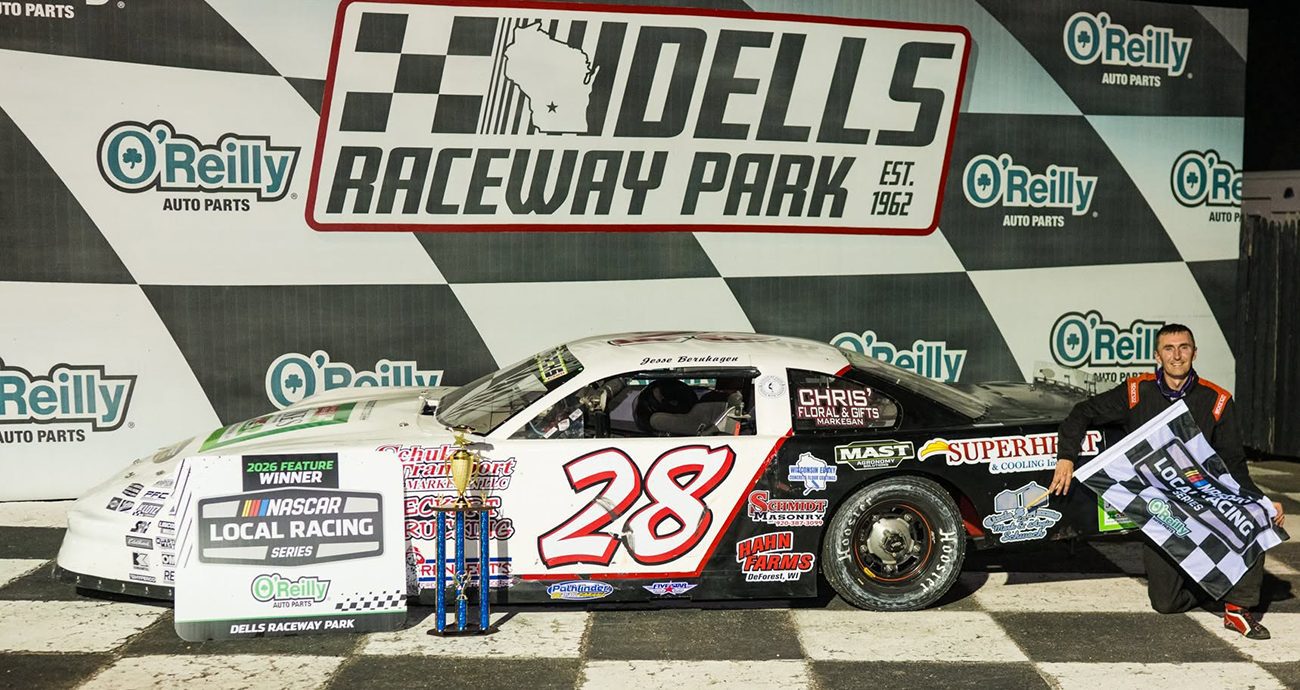
Bernhagen spent the year racing at Dells Raceway Park, a NASCAR Local Racing Series Powered by O’Reilly Auto Parts track in Juneau County, Wisconsin. In the track’s NASCAR Regional Gandrud Performance Late Model division, he finished with one win, 10 top fives and 15 top 10s in 17 races.
Bernhagen finished fourth in the final track point standings, sixth in Wisconsin’s NASCAR Division I points, ninth in the Midwest and 23rd in the nation.
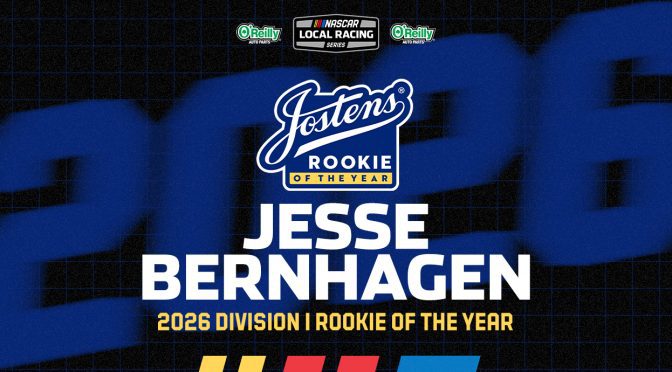
And since this was his first year holding a NASCAR license, Bernhagen secured the NASCAR Local Racing Series Division I Rookie of the Year award.
It’s his first time winning a national racing award.
(Photo: Dells Raceway Park/Facebook)
“I wanted it. I knew that we’d be eligible for it, and it was something that I was striving for all year,” he said. “The kid that we were racing out of Oklahoma was hard to beat. It was fun. I’ve never done a national point standings thing like this. It was super, super fun to watch other guys around the country and pay attention to what they were doing on a weekly basis.”
Bernhagen returned to Dells this season after racing at other tracks the last few years. Even though it was a bit of a down year by his usual standards – he won the track title at Dells in 2021 and has more than 50 feature wins in his career – it meant a lot for him to just be able to go back home.
“We really struggled on the new Hoosier D810 tire. It took me until probably late August until I felt like I had a good feel on the car,” he said. “It means a lot whenever you go home. There’s also higher expectations. So then when you’re running fifth and sixth at the start of the year I think frustration kind of grows, so once we finally broke through and won that race in July, it was like, okay, we can still do this. We’ve still got it, we’ve got to just keep working at it to make the car even better.”
It also, understandably, took Bernhagen time to get used to his new dual role as driver and crew chief.
“There’s so much more that goes into it when you’re thinking about the tires and you’re thinking about everything as I’m out there driving,” he said. “We’ve been doing it for forever, and I know what my dad does in that role, I know what the crew chief does. But when you get out of the car and now have to do all those things like get the tires mounted, stretch the tires, make sure that the air pressures are where you want them, constantly hem and haw in your head over if you want to put wedge in the car or not because you’re kind of predicting which way the tire is going to grow or shrink or whatever.
“It’s just a lot more happening inside your head during the race day when you’re doing both.”
Oftentimes on race days, Bernhagen would get so caught up in preparing the car he would forget to eat before strapping in. There were multiple times he had to remind himself to grab a quick bite before the race began.
Doing both jobs was stressful at times, but Bernhagen said it made him a better driver.
“It gave me a better understanding,” he said. “I wish I would have been doing it forever. It just gave me a better sense of control over what was going on, and then when we came to pit stops or between race adjustments when you had limited time, those were moments where I could make the calls on the race track. Not relay what was happening and then hope that he agreed. I was like, I know what I want to do. Talking to the crew guys, I know exactly what wrenches to tell them to grab and everything over the headsets and they can just be ready to go when the car stops.”
Bernhagen’s dad still helps on the car and keeps it at his house. He has other crew members who have been with him for several years. A number of them were once his students in the classroom. Bernhagen is a former social studies teacher and is now a middle school principal. He often tries to find students who are into cars and get them involved in the sport.
His career as a race-car driver isn’t something he likes to talk about much at school, and Bernhagen said he sometimes feels like Hannah Montana when his second career gets referenced.
“I think the kids don’t really understand it until they see it,” he said. “This year we had one of the teachers on my staff come to the July 11th race that we won, and she brought her kids. It’s always better when you win, but they’re automatically blown away by, Mr. Bernhagen drives a race car. Cool. Now when you go and watch it and you see cars beating fenders and guys passing each other and see the speed and everything up close, it just adds another element of how different it actually is. It’s a very unspoken thing during the school day, but I definitely work in a lot of life lessons that racing has taught me into when I talk with the kids and just trying to make them the best that they can be every day, too.
“Anything that we can do to get more people to the track is needed.”
Bernhagen reveled in the opportunity to come back home and race this season at the track where he made his name. He’s also proud to have a national award to add to his collection.
“At the end of the day, there are so many talented drivers out there that winning something at the national level takes a massive effort and takes a lot of hard work,” he said. “I think when you’re able to talk to potential partners and sponsors, and just people that are out in the community, and say we won this NASCAR national level recognition, I think that that speaks volumes to how cool it is, the things that we do on a weekend that we just feel are so run of the mill. Because we do it every weekend and we’ve been doing it forever, but when you’re able to add that extra take onto it, it just elevates things to a different level and makes you kind of sit back and appreciate what you do a little bit more.
“It was a cool year the closer that we got to it, and the more often that you’re able to say we are a NASCAR rookie of the year now, it just rings a little bit differently.”