NASCAR.com’s Pat DeCola ranks the 16 Cup Series drivers in The Chase presented by Mobil 1 after William Byron’s win at Martinsville Speedway and before Sunday’s race at Homestead-Miami Speedway (3 p.m. ET, NBC, HBO Max, MRN Radio, SiriusXM NASCAR Radio).

RELATED: Cup Series schedule | Cup Series standings
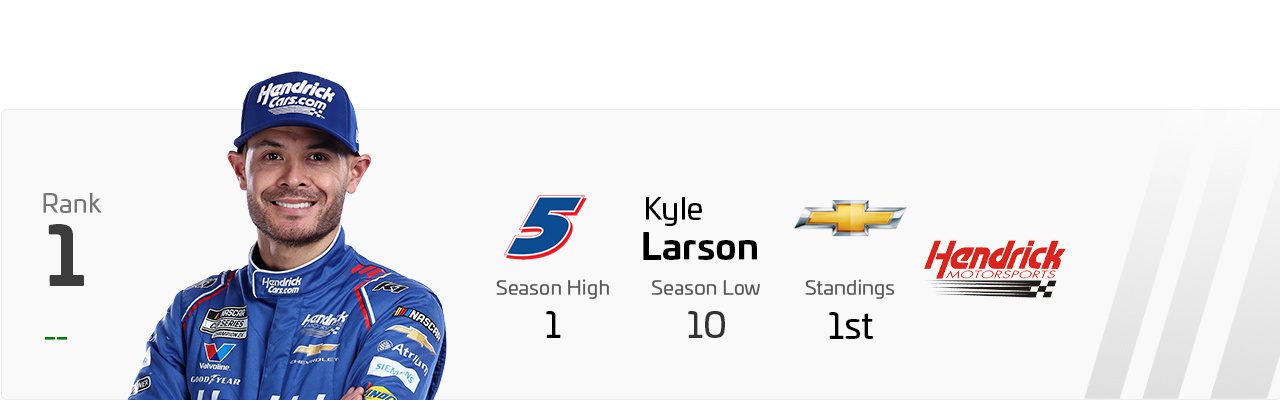
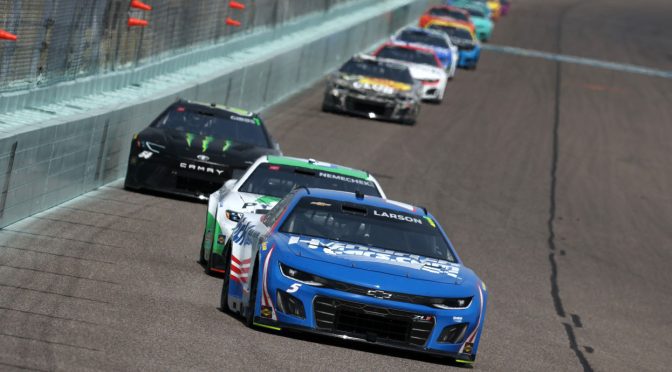
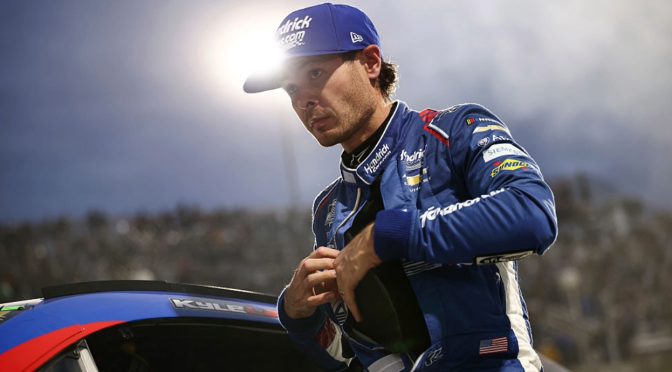
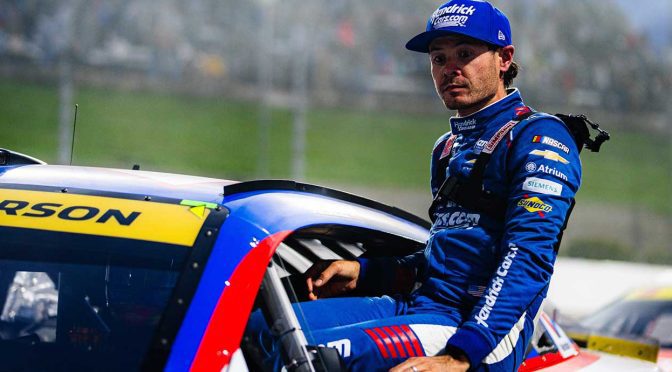
Analysis: Getting lapped by the teammate who eventually won the race isn’t exactly the ideal prelude to a championship celebration, but Larson still walked out of Martinsville feeling plenty good. Larson and crew chief Cliff Daniels gambled on staying out through Stage 1 at Martinsville, and William Byron promptly drove past the No. 5 on fresh tires. Larson eventually got his lap back, scratched out a ninth-place finish and watched the two drivers chasing him in points manage only sixth and 10th. It was hardly a convincing afternoon — NASCAR Insights rated him just 20th in speed — but the championship lead remains a commanding 67 points with one race left. The defending champion now returns to Homestead-Miami Speedway, where he won in March 2025, needing to score just nine points to clinch his third title regardless of what anybody else does. Quite the position for a driver who couldn’t buy a victory for 51 consecutive races earlier this season, and one of the greatest in-season turnarounds the sport’s ever seen.
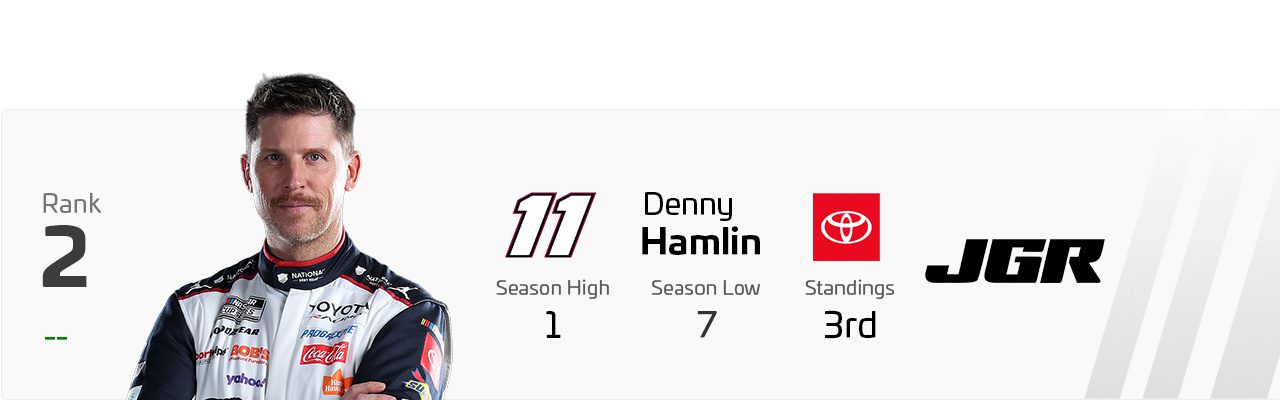
Analysis: Hamlin started on the pole at his best track, then made it all the way to Turn 3 on Lap 3 before things started going sideways. A missed shift surrendered the lead to teammate Ty Gibbs, and a strategy call to stay on old tires through the opening stage ultimately backfired as the No. 11 dropped through the field. Contact involving Joey Logano and Bell later sent Hamlin spinning, though he eventually recovered to finish sixth. After leading 292 laps there in the spring and entering Sunday with six Martinsville victories and the 5 car not at its best, this was about as disappointing a way to gain three points on Larson as one could imagine. Hamlin’s three Homestead wins are certainly a reason to expect him up front this weekend. They’re not, by themselves, a solution to a 70-point championship deficit.
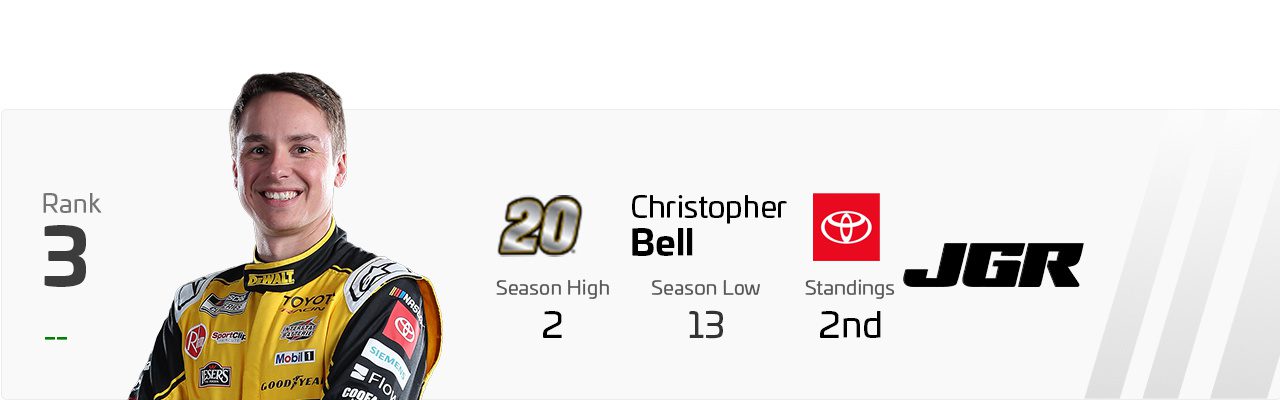
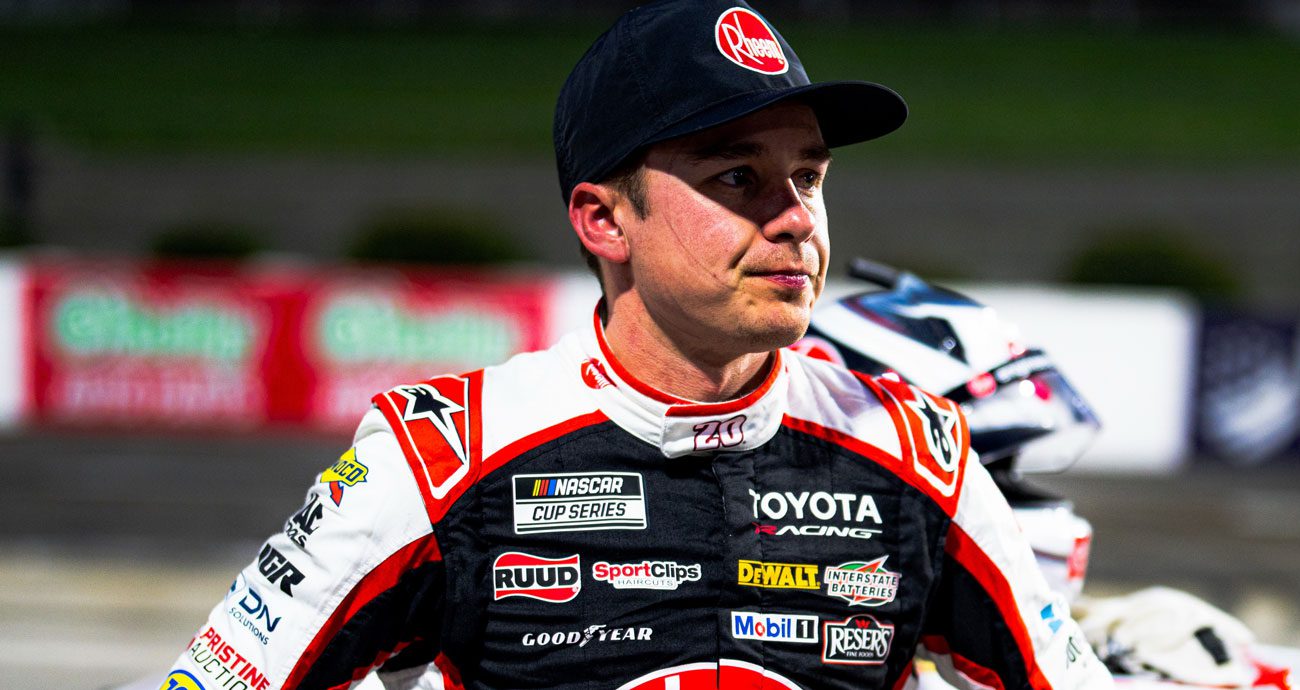
Analysis: Bell has managed to become Larson’s closest championship challenger while spending much of the past two weeks making life unnecessarily difficult for himself. The Talladega pit-road spin was bad enough, but Martinsville brought a speeding penalty during a green-flag stop, followed by an incident involving Logano and teammate Hamlin that sent both Joe Gibbs Racing cars spinning. Somehow, Bell still scored points in both stages, finished 10th and moved ahead of Hamlin into second in the standings. He won at Homestead in 2023, so there’s at least a reasonable track-history argument for the No. 20 making some noise Sunday. But considering he was only five points behind Larson entering Talladega, it’s a pretty remarkable development that Bell now finds himself 67 back with one shot remaining.
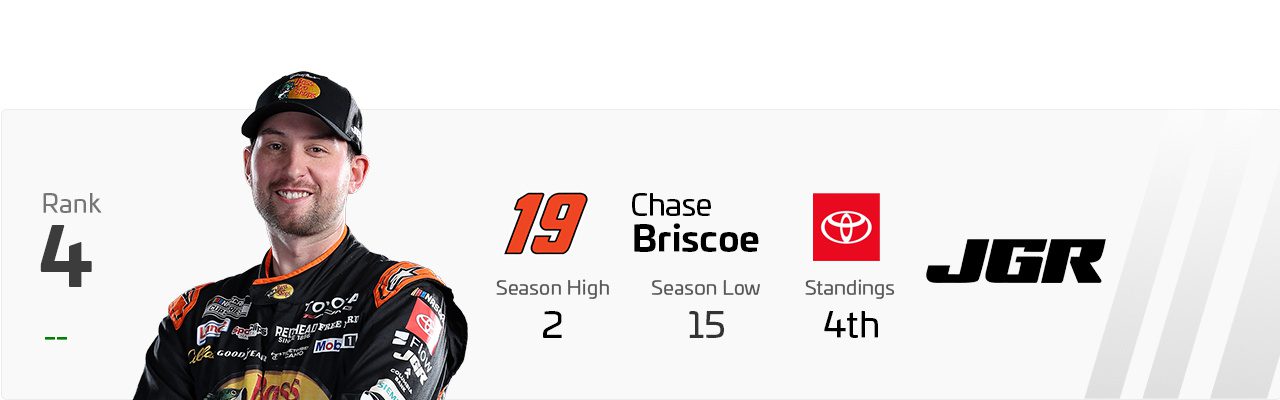
Analysis: Winning consecutive races at Las Vegas and Charlotte seemed like a pretty effective way to announce yourself as a serious championship contender. Briscoe did exactly that, yet he’ll arrive at Homestead mathematically eliminated after following those victories with 33rd at Talladega and 14th at Martinsville. The latter wasn’t particularly encouraging even without the misfortune that defined Talladega, with the No. 19 ranking 19th in speed despite another strong afternoon from the series’ top-rated pit crew. It’s been an undeniably impressive season for Briscoe, with three victories and a legitimate place among NASCAR’s elite, but the last two weeks have exposed just how difficult it is to sustain that kind of run. At least the accomplishments that preceded them aren’t going anywhere.
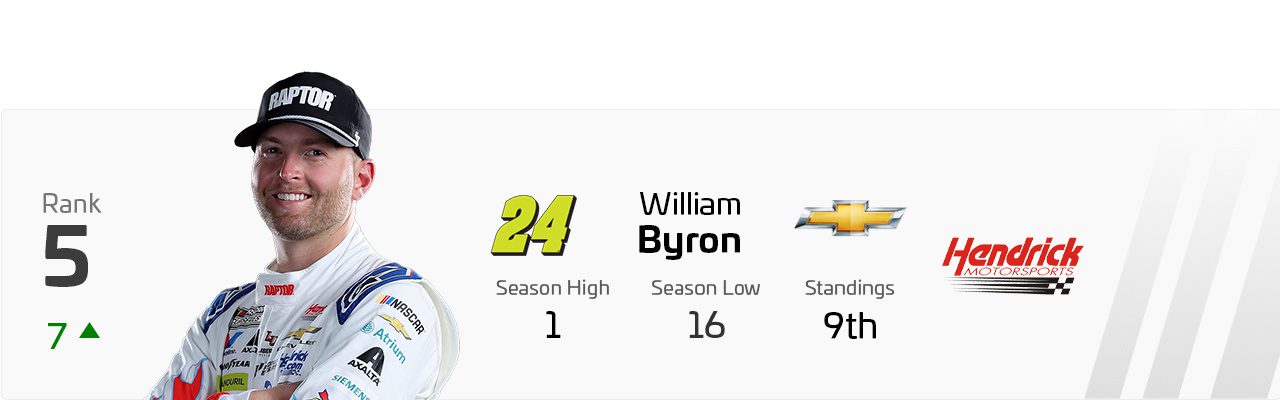

Analysis: By the time Martinsville reached Lap 303, Byron had led more laps Sunday than he had in the first 34 races of 2026 combined. He wasn’t even close to finished, either. After an early green-flag pit stop helped position the No. 24 to take control, Byron eventually led 362 of 500 laps, swept the stages and cruised to his fourth Martinsville victory, ending a 35-race winless drought dating to the same event last fall. His runner-up finish at Talladega and victory Sunday are now the two best results of a season that had been frustratingly ordinary by Byron’s standards. And while the championship is out of reach, the No. 24 certainly picked an interesting time to start looking like the dominant machine we’d expected to see all year. If nothing else, Homestead suddenly has another very credible contender for the trophy, and the arrow is still pointing up for 2027.
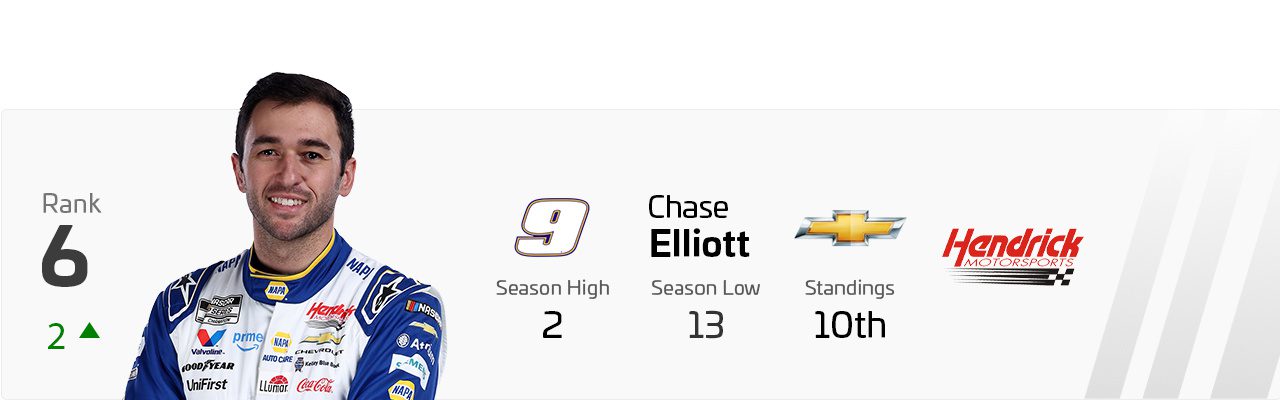

Analysis: Elliott has finished in the top four at Martinsville in six consecutive starts, including a victory this spring and Sunday’s runner-up. That’s a pretty tremendous stretch at one of the sport’s most demanding tracks, particularly considering how difficult it can be to pass there. He was second in speed Sunday, his pit crew ranked first and yet he still never led a lap. That’s what happens when your teammate has a car as thoroughly dominant as Byron’s was, and with No. 24’s consecutive-season win streak at stake. Elliott’s two-win season of his own has occasionally gotten lost in the larger Hendrick Motorsports conversation, especially with Larson about to collect another championship, but the No. 9 has hardly been an afterthought on the track lately.
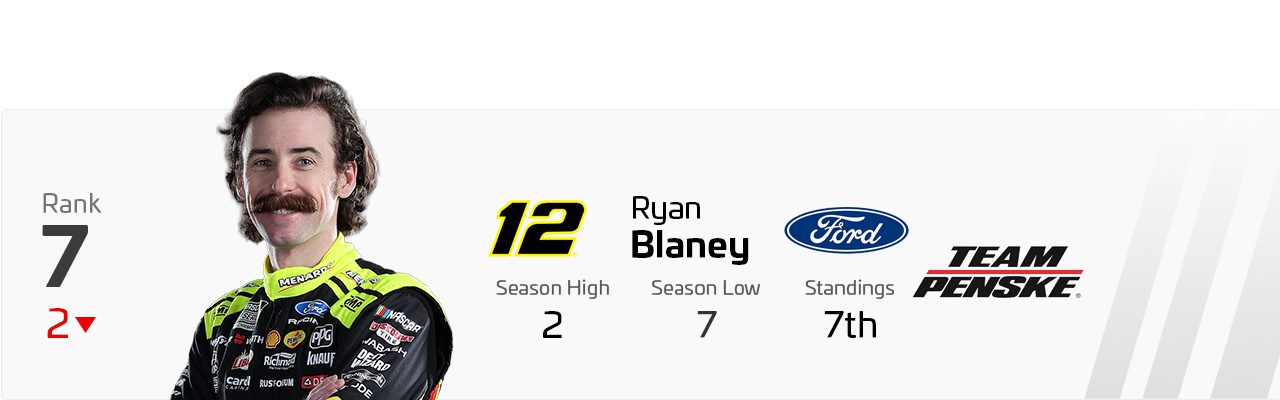
Analysis: Blaney was running eighth at Martinsville when he drove into the back of Josh Berry on Lap 252, heavily damaging the No. 12 and ultimately winding up 59 laps down in 35th. That followed a 38th-place finish at Talladega, a particularly miserable sequence for a driver who had strung together four consecutive top fives before the superspeedway trip. The absurd part is that NASCAR Insights still ranks Blaney first in season-long speed, passing and second in defense, and he’s no longer in title contention. And if that discrepancy seems familiar, Homestead in March 2025 was a bit of a microcosm of how much of this year went for him: Blaney led a race-high 124 laps before an engine failure ended his afternoon.
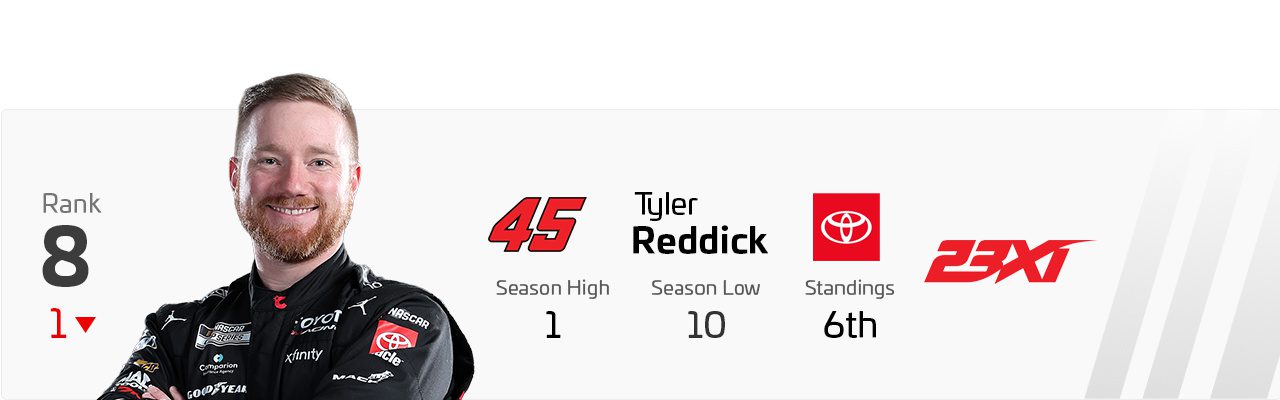

Analysis: Homestead is the site of one of the most spectacular moments of Reddick’s Cup career, when he passed Hamlin and Blaney on the final lap in 2024 to steal the victory and advance to the Championship 4. Two years later, he returns with six wins — more than anybody else this season — yet absolutely no chance of claiming the championship. That’s a pretty strange combination, though it accurately reflects a year in which the No. 45’s early dominance eventually gave way to a much less convincing second half before a minor Chase resurgence. His 12th-place finish at Martinsville wasn’t especially memorable, with the car ranking 16th in speed despite Reddick’s second-place passing rating. But if there’s one track where he might be able to conjure up something special to close on a good note, we’ve already seen what he can do at this one.
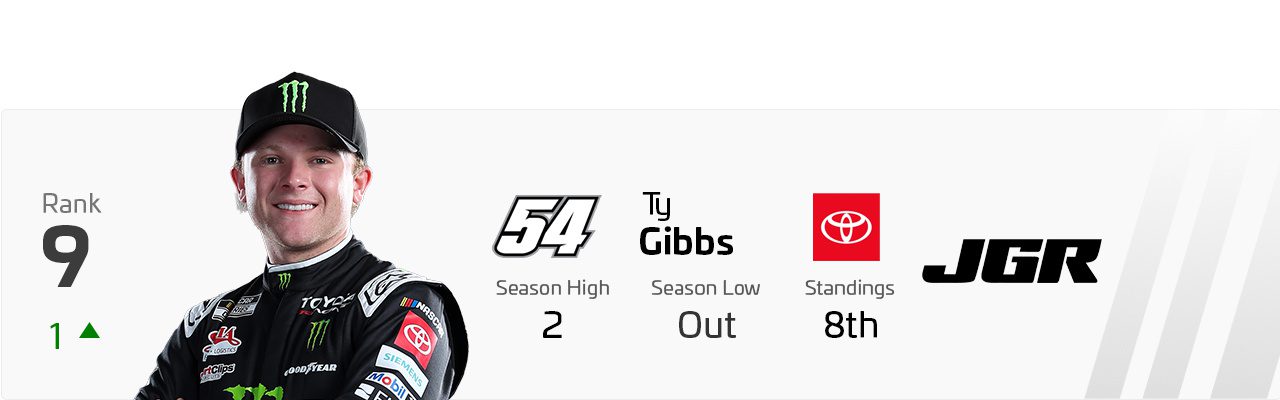

Analysis: While the championship attention at Joe Gibbs Racing remained primarily on Hamlin and Bell, it was Gibbs who delivered the organization’s best performance at Martinsville. He took advantage of Hamlin’s missed shift to grab the lead on Lap 3, paced the field for 44 circuits overall and scored 17 stage points before finishing third. NASCAR Insights rated him first in passing and third in speed, and his fourth-place finish there in March means he’s now recorded top fives in both Martinsville races this season. The two-trophy regular season established Gibbs as a legitimate Cup winner, but the past few months have certainly tested his consistency. Sunday, though, was a pretty convincing reminder that the No. 54 can be one of the best cars in the field on short tracks.
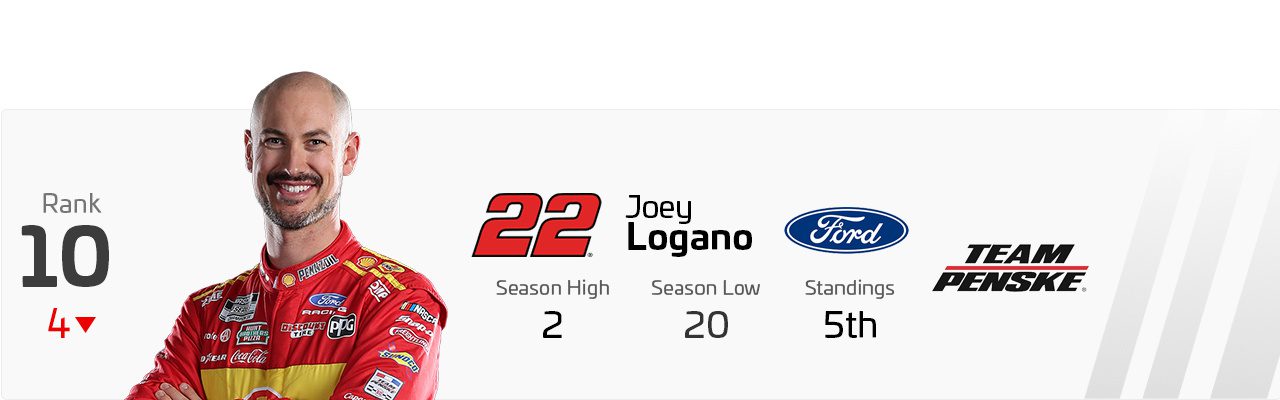

Analysis: Logano managed to get involved in a three-car spin, deal with a loose left-front wheel and leave pit road with a wedge wrench still in the window — all in the same Martinsville race. And this was just a week after flipping at Talladega. The particularly aggravating part for the three-time champion is that the car has been better than the results suggest but all the calamity took him out of contention. Logano ranked seventh in speed and first on restarts Sunday, was running third before the green-flag pit cycle that produced the wheel issue and ultimately finished 18th. Add in the Phoenix stage sweep and Talladega Stage 2 victory, and there’s plenty of evidence that Team Penske has found something recently. The execution, however, hasn’t been quite so convincing.
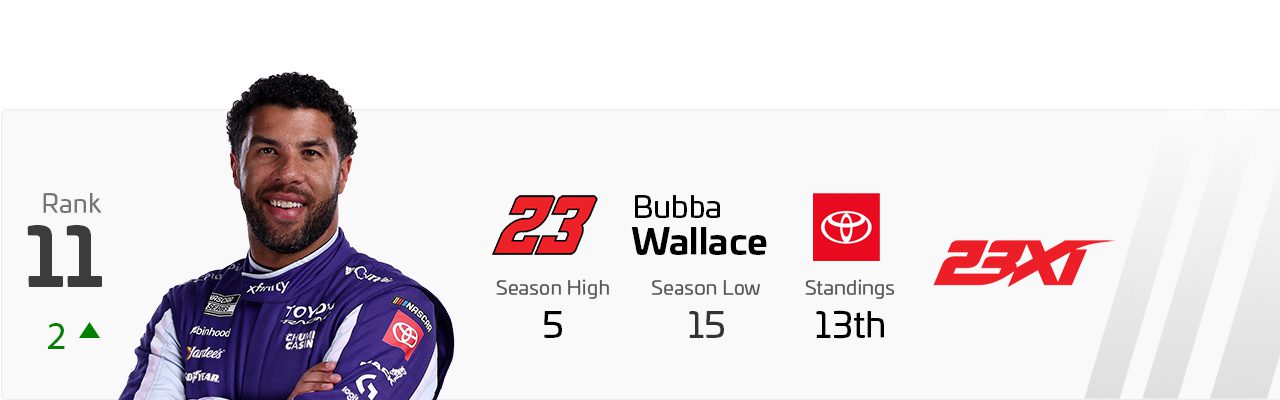
Analysis: One of the more encouraging details buried in Wallace’s recent results is that NASCAR Insights ranks him third in defense and ninth in speed for the season, which at this point is a tremendous sample size. His eighth-place finish at Martinsville offered a cleaner demonstration of that competitiveness after several races in which accidents or mistakes left the No. 23 with considerably less than it showed it was capable of. He also finished sixth in Stage 2 and had the fifth-rated pit crew Sunday. Homestead could be especially interesting: Wallace led 56 laps there in March 2025 before finishing third behind Larson and Alex Bowman. With the championship pressure gone and a car that has shown legitimate speed lately, he has an opportunity to finish 2026 on a much more satisfying note.
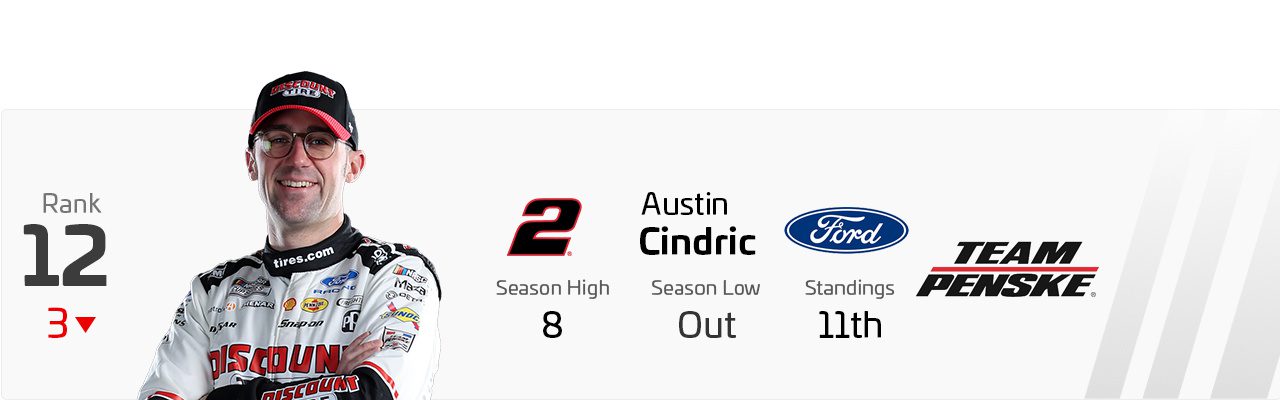
Analysis: Cindric’s Martinsville finishing position is almost completely disconnected from how the No. 2 actually performed. He qualified fourth, finished seventh in Stage 1 and ranked sixth in speed before contact with Carson Hocevar on Lap 210 badly damaged the front end and eventually sent him to the garage. The result was 36th, 278 laps down, following another wreck-marred afternoon at Talladega. After looking so strong at Kansas and Vegas, Cindric has now gone four consecutive races without a top 10. Not exactly the kind of return Team Penske had in mind for its late-season improvement, but Homestead’s worn-out intermediate layout offers one final opportunity to put that newfound speed to better use.
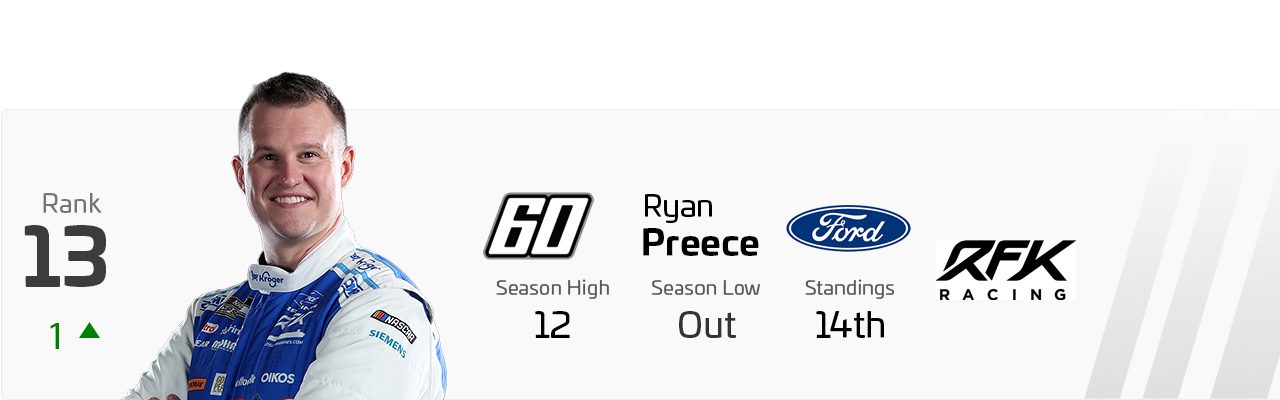
Analysis: For the second consecutive week, Preece was one of the more interesting drivers during the opening stage. He finished second in the first segment at Talladega after helping RFK Racing execute its unusual three-car breakaway, then led 41 laps and finished third in Stage 1 at Martinsville. Unfortunately, Sunday’s promising run ended when a right-rear wheel failure sent the No. 60 spinning from fifth on Lap 225. He eventually finished 23rd, with his pit crew ranking 36th of 37 teams for the afternoon. There was some genuine speed here, and Preece has been showing more of it than the recent finishes suggest. A broken wheel is a pretty lousy way to reward that progress, though.
Analysis: There’s a lot of talent in the No. 77, but Martinsville was another reminder that Hocevar and Co. still have plenty of sharpening up to do. A 16-second green-flag pit stop came from difficulty removing the right-rear wheel, and the afternoon also included a spin in Turn 4 and questionable contact with Cindric that badly damaged the No. 2. Hocevar finished 21st, following yet another super-encouraging Talladega run with a rather forgettable trip to Virginia. More concerning is the pit-road picture: 14 crew mistakes and 112 net positions lost this season — the second-worst total in the series. For a driver who’s already demonstrated winning ability, that’s an awful lot of ground to keep giving away.
Analysis: Talladega at least gave Buescher an interesting story to tell, with 53 laps led, a stage victory and that remarkable RFK Racing strategy before the late wreck ruined his afternoon, but Martinsville offered considerably less to discuss. He started 18th, finished 24th, scored no stage points and never looked particularly threatening despite ranking an above-average 13th in speed. His pit crew continues to perform exceptionally well, sitting fourth in the series for the season, but even that hasn’t been enough to produce the kind of results Buescher was regularly delivering earlier in the year. A sixth-place finish at Homestead in March 2025 is at least a more promising reference point for the finale.
Analysis: Only eight cars ranked worse than Suárez in speed at Martinsville, where the No. 7 started 24th, finished 28th and failed to score a stage point. There wasn’t a mechanical failure or a major accident to explain away the result, either. It was simply another afternoon without much competitive pace, continuing a Chase that has rarely resembled the season Suárez envisioned after a signature Coca-Cola 600 win in May. That victory was memorable enough to stand on its own, but the overall performance since then has been difficult to comprehend.
Dodge, readying to return to NASCAR Cup Series racing in the 2027 season, can boast a long list of some of the most successful drivers in stock car racing, despite a history that has been interrupted over the decades.

To name a handful: Richard Petty. David Pearson. Bobby Isaac. Lee Petty. Bill Elliott. Rusty Wallace. Bobby Allison. Brad Keselowski. Kurt Busch.

And Dale Earnhardt.

Yes, Dale Earnhardt.

RELATED: Dodge returns to Cup Series in 2027 with Kaulig Racing | History of Dodge in Cup Series

Although Earnhardt would make his mark — and his money — driving Chevrolets, his first start in a Cup race came May 25, 1975, in the World 600 at Charlotte Motor Speedway in a Dodge. It was a curious choice for a debut, the 600 being one of stock car racing’s most physically demanding races. But the car, a hand-me-down of sorts owned by Ed Negre, was available, and Earnhardt jumped. He finished 22nd, 45 laps behind winner Richard Petty (in a Dodge, by the way), and was so beaten down by the experience that he pitted once simply to get a drink of water.

Still, Earnhardt, at 24 years old, started one of the most successful careers in the sport in a Dodge.

Across the years, with a few pauses, the Dodge brand — from Coronets to Chargers to Road Runners to Intrepids — has been a standout in NASCAR circles. Dodge drivers scored Cup championships and race wins from the sport’s hardscrabble beginnings into the 21st century, although the car manufacturer’s history in NASCAR has been one of both major success and difficult departures. For big chunks of years and for numerous reasons, Dodge has been absent from NASCAR racing lanes.

The 2027 return to stock car racing’s top series follows by a quarter-century a similar decision to put Dodges in Cup in 2001, a move that ultimately gave the car builder its most recent Cup Series championship, scored by driver Brad Keselowski and Team Penske in 2012. After that title, the Penske organization switched to Ford for the 2013 season, and Dodge closed the garage doors on its Cup program again.

Keselowski scored the most recent Cup race win for Dodge on Sept. 30, 2012 at Dover Motor Speedway on his way to the series title.

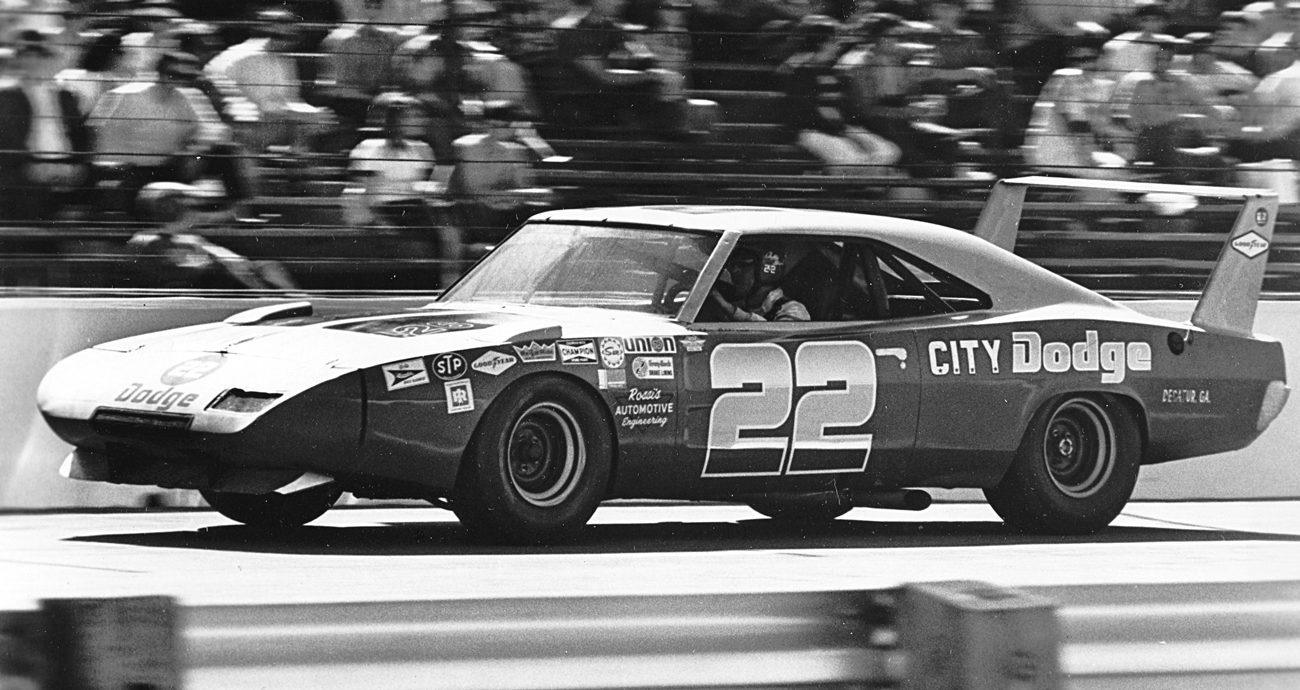
The most prominent Dodge pairing over the years was Petty Enterprises’ 1970s run with Richard Petty at the wheel of Chargers. Petty made the bright red and Petty blue Charger, which created a silhouette that defined the modern race car, a familiar presence with win after win across the country and Cup Series championships in 1974 and 1975. Although Petty’s years racing Chrysler products often placed him in Plymouths, he carried the Dodge insignia to success from big tracks to small.

As is the case with so many other records in NASCAR, Petty owns the most Dodge Cup driver titles with two. David Pearson, driving Cotton Owens Garage Dodges, won the car builder’s first driver title in 1966. Bobby Isaac won the championship in 1970 in the driver seats of very fast Nord Kraufkopf-owned, Harry Hyde-built Dodges, scoring 10 race wins on short tracks. Keselowski won the title in 2012 to end a 37-year stretch without a Dodge championship.

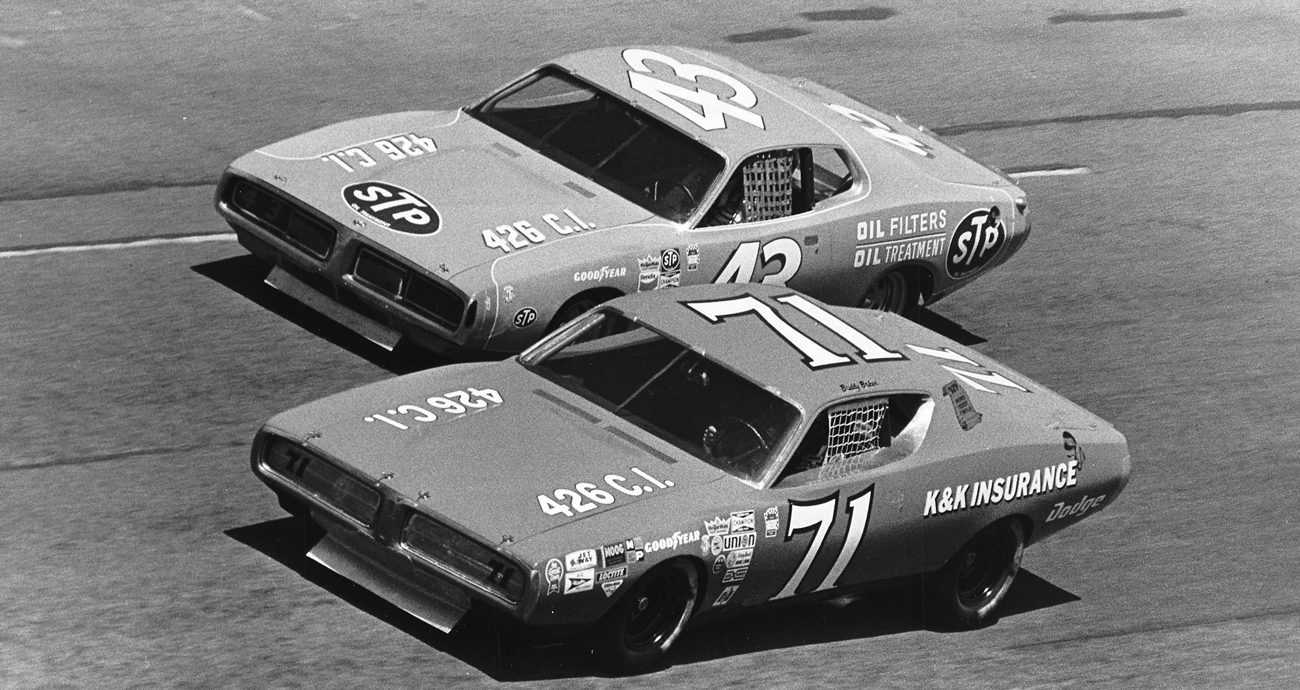
Richard Petty and Buddy Baker race alongside each other in Dodges in 1973 at Daytona International Speedway.
NASCAR Research & Archives Center | Getty Images

Lee Petty, Richard’s father and the patriarch of the Petty racing family, scored Dodge’s first Cup win Feb. 1, 1953 in the season-opening race at Palm Beach Speedway, a half-mile dirt track in West Palm Beach, Florida. Petty led 152 of 200 laps and won by two laps.

Lee Petty won the series championship in 1954, but that title was credited to Chrysler, not Dodge.

Pearson thus became Dodge’s first Cup champion in 1966, dominating the short tracks, scoring 15 victories and easily finishing atop the point standings. It was a hometown sort of championship, Pearson and team owner Cotton Owens both living in Spartanburg, South Carolina. The season underscored Pearson’s talents and was the next big step in a career that led to three Cup championships and 105 race wins.

In the 1960s, Chrysler’s racing program became a showcase for the manufacturer’s powerful Hemi engines. The introduction in 1964 of a monster Hemi contributed to engine wars that rattled NASCAR’s top series, dramatically increased speeds at the biggest tracks and kept engine builders working overtime to find more horsepower.

“That Hemi engine had a tremendous amount of torque,” said Dodge driver Dave Marcis. “If you could hook your car up and make the chassis work, the engine could accept anything you could give it. It would certainly move you forward. And if it wasn’t hooked up, you could damn sure spin the tires off of it, too.”

Dodge logged another major accomplishment in March 1970 when Buddy Baker drove a winged Dodge Charger Daytona at an average speed of 200.447 miles per hour in testing at the new 2.66-mile Talladega Superspeedway in Alabama. Baker’s lap was the first measured at more than 200 mph by a stock car on a closed course.

The Dodge Charger Daytona and its sister car, the Plymouth Superbird, are among the most famous, admired cars in NASCAR history. The cars had a needle nose and a huge, intimidating rear wing, and they flew through the air in impressive style. Race fans and car aficionados immediately wanted to own one.

“It was almost impossible to spin the thing out,” said Richard Petty, who drove the Superbird version. “It was so stable. It took us probably half a year to make it turn right. It was a fun car to drive, so much different from anything else. We had been running stock cars. This looked like a race car.”

The winged cars were so aerodynamically superior and race-track stable that they produced lap speeds at Darlington Raceway a full three seconds faster than the previous Dodge entries. The wings could be tilted at various angles. Eventually, the cars proved to be too fast, and NASCAR rules changes legislated them out of existence.

Bobby Allison drives a winged Dodge in 1970.

NASCAR Research & Archives Center | Getty ImagesMarcis enjoyed success in the Kraufkopf-Hyde Dodges in the 1975-76 seasons, winning races at Martinsville, Richmond, Talladega and Atlanta. Hyde, a longtime resident of NASCAR garages, was front and center with innovations and old-school knowledge that put more power in the bright red cars.

“In those days, the mechanics and crew chiefs had a tremendous amount of input into a race car as far as suspension, engine, everything,” Marcis said. “Harry put in all the time for that. I guess he just had an attitude, and he worked hard at trying to be up front and have the fastest race car. He used to go to bed at 6:30 at night, and he’d be the first one at the track the next day, working on the race car, trying to do something different, making the car a little faster in practice.”

Despite Petty’s run of success with the Charger model, his strength declined later in the 1970s with other Dodge models, eventually leading stock car racing’s king to abandon Dodge for Chevrolet in the middle of the 1978 season.

Dodge faded away again.

NASCAR enjoyed some of its best years in the 1990s, filling grandstands across the country and attracting impressive television viewership numbers. The sport’s rising popularity was among the factors that led to Dodge returning to NASCAR’s top series in 2001.

Daimler/Chrysler confirmed in October 1999 in media events in New York City and Talladega, Alabama, that it would return to NASCAR with its Dodge brand for the 2001 season.

Dodge’s rebound attracted some heavy hitters.

Richard Petty, with so many career connections to the manufacturer, brought his team along.

Ray Evernham, who had been ultra-successful as a crew chief for driver Jeff Gordon at Hendrick Motorsports, built a new team for the Dodge return and was named to manage the overall Dodge effort, calling it “the opportunity of a lifetime.”

Veteran driver and fan favorite Bill Elliott joined Evernham, the new team owner calling Elliott “the perfect guy to be the cornerstone of our new team.” Sterling Marlin, Ryan Newman and Kasey Kahne joined Dodge and won races. In 2008, Newman drove a Penske Dodge to victory in the Daytona 500. Team owners Roger Penske and Chip Ganassi joined the group, along with Bill Davis, whose team would handle much of the developmental work for Dodge.

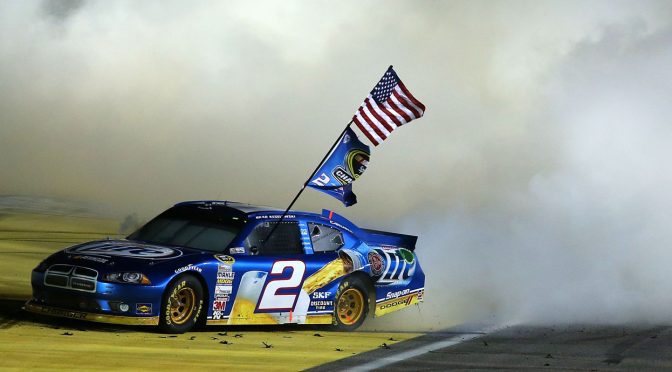
The 2012 season marked both the pinnacle and the end of the latest Dodge ride. Keselowski won races at Bristol, Talladega, Kentucky, Chicago and Dover and was either first or second in the point standings for the final 11 races of the year. He finished 15th in the season-ender at Homestead-Miami Speedway, good enough to win the championship.

Keselowski, one of the sport’s rising stars, enjoyed a bizarre sort of celebration, guzzling celebratory beers in Victory Lane even as Dodge was concluding its most recent ride with NASCAR.

Soon, the next chapter begins.

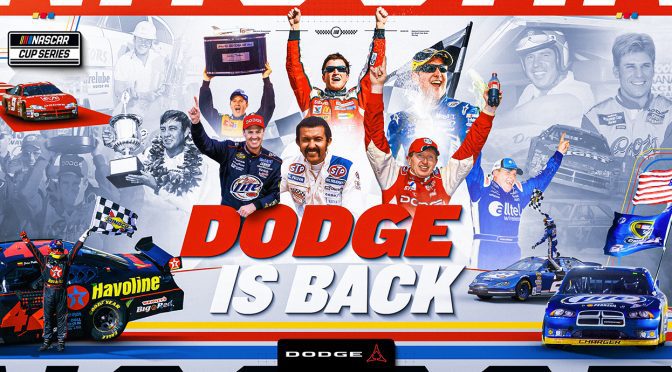
Dodge will return to the NASCAR Cup Series in 2027 with Kaulig Racing, the manufacturer announced Monday at the 2026 SEMA Show in Las Vegas.

The two-car team will field Dodge Chargers in the manufacturer’s reintroduction to NASCAR’s top level after a 14-year hiatus, following its departure after the 2012 campaign.

MORE: 2027 NASCAR Cup Series schedule

Brad Keselowski won the 2012 NASCAR Cup Series championship driving a Dodge Charger and earned the manufacturer its 217th and most recent win at the Cup level that fall at Dover Motor Speedway.

“Dodge’s return to the NASCAR Cup Series is a significant milestone for the sport,” NASCAR Chief Executive Officer Steve O’Donnell said. “This commitment speaks to Dodge’s belief in our sport and gives fans another reason to be excited about what’s ahead. The partnership between NASCAR, Tim Kuniskis and the entire team at Stellantis has been nothing short of phenomenal. They have a deep passion for NASCAR and its ability to showcase the world’s top brands, and we can’t wait to see Dodge on the race track for the Daytona 500 and beyond.”

John Probst, president of NASCAR Event Management, views Dodge’s re-entry to the sport as a signal both to the sport’s rising status as well as that of the automobile industry, particularly the Original Equipment Manufacturers (OEMs) currently in the sport as Dodge rejoins Chevrolet, Ford and Toyota.

“I think it shows not only the strength of the North American car market, but also the value that NASCAR plays with these OEMs in that market as the premier motorsports in North America,” Probst said in a Monday teleconference.

Dodge’s latest tenure in the Cup Series spanned from 2001 through 2012 with 57 victories over that time. Its return marked the first new manufacturer to enter NASCAR’s top ranks since 2007, when Toyota first entered the Cup Series. Stellantis, Dodge’s parent company, re-entered NASCAR in 2026 by partnering with Kaulig Racing in the NASCAR Craftsman Truck Series. The organization fielded five full-time trucks and featured stars like three-time Cup champion Tony Stewart, 2010 Daytona 500 and Brickyard 400 champion Jamie McMurray and 2008 Daytona 500 champion Ryan Newman behind the wheel.

Dodge has been on the fast track to returning to the NASCAR Cup Series — something Kuniskis, head of Stellantis North America’s American Brands, SRT Performance and Direct Connection division, has embraced in the high-octane world of racing.

“Everyone said it was impossible to get back in one year. We said, ‘watch this,’ ” Kuniskis said in a press release. “Sure, we could spend three years planning, testing and perfecting … or we could do all three in real time, on the track. It’s going to be exponentially harder this way. But slow has never been part of Dodge DNA. LFG.”

According to Stellantis, Kaulig Racing will serve as the anchor team to both Dodge and Ram, re-establishing “a factory-backed presence at the track” and creating a foundation for the next phase of the company’s commitment to American motorsports. Dodge SRT Racing will lead the manufacturer’s return to NASCAR. Dodge SRT Racing also oversees all the manufacturer’s North American racing efforts, including NASCAR, NHRA and elsewhere.

“This is a very exciting moment for (team CEO) Chris Rice and me,” Kaulig Racing owner Matt Kaulig said in a statement. “We launched Kaulig Racing a decade ago and have overcome so many challenges together, which makes it even more remarkable to be announced as the anchor team for Dodge’s return to the NASCAR Cup Series. What a monumental time to be a member of Kaulig Racing.

“We realize what a responsibility this opportunity presents to the men and women of Kaulig Racing, and we are ready to rise to the occasion. I am proud of the stability and support this partnership brings to our organization, which allows us to build a winning program for many years to come.”

To add a fourth manufacturer alongside Ford, Chevrolet and Toyota has been a priority for NASCAR executives. Knowing Dodge will rejoin the grid for Speedweeks in 2027 at Daytona International Speedway is an accomplishment that NASCAR’s Probst took pride in. But he also acknowledged the job is not done.

“It’s something that we’ve talked about for a long time, and sometimes we talk about it so much and it didn’t happen that you almost feel like you lose credibility at some point,” Probst told NASCAR.com. “But it’s certainly a proud moment for us, for our industry to welcome Dodge back. And I think that’s the key: Welcome them back. And I think that even through the process of looking at which OEM should we target, it was never a doubt that Dodge was always number one. Dodge belongs over here, and it’s good to welcome them back.”

The process to approve the body of Dodge’s NASCAR Cup Series entries was no different than current OEMs’ submissions for new body panels, Probst added. The difference for Dodge, however, is that there was no previous template to modify.

“When an existing OEM submits a new model or a brand-new OEM submits a brand-new car, that involves about an 18-month process of CFD testing and wind tunnel testing,” Probst said. “And then once they fit in the box of the performance characteristics, we then go one step further and we get the actual production panels for that car and make sure that with the actual production panels, they’re still in the box. So that’s this exact same process that we went through with this one.”

Probst said Dodge and NASCAR have passed the wind tunnel portion of testing and that production panels should come in the middle of November, a part of the process Probst anticipates being a routine checklist item rather than any cause for apprehension.

MORE: History of Dodge in NASCAR

Details surrounding the expected engine configuration for Kaulig’s Dodges were not revealed on Monday, but Probst stated, “The engine that they will run is compliant with our rule book,” opting to allow Kaulig and Dodge SRT Racing to announce its plans later.

While the plans to bring Dodge back to the NASCAR Cup Series appeared to materialize quickly, Probst explained a years-long process that led to Monday’s announcement.

“It certainly looks like that, but I can tell you that it’s been a lot of trips to Detroit with Steve O’Donnell, [Chief Operating Officer] Ben Kennedy, myself, trying to talk to all these OEMs and show them the strength of our sport,” Probst said. “But I think that also it shows that once an OEM makes the decision to get in, it really doesn’t have to take that long until they’re on the race track. So, I hope this is encouragement for some of the others that may be still looking to go ahead and just make the commitment because it can happen quicker than some of our OEMs have taken in the past.”

In a release, Stellantis stated that Kaulig Racing will announce its 2027 driver lineup at Homestead-Miami Speedway, where the NASCAR Cup Series championship will be awarded on Sunday (3 p.m. ET, NBC, HBO Max, MRN Radio, SiriusXM NASCAR Radio). Dodge will reveal the race car that Kaulig Racing will use to compete in the NASCAR Cup Series on Dec. 4 at the 2026 Snowball Derby at Five Flags Speedway in Pensacola, Florida, where the feature race is scheduled for Sunday, Dec. 6. Coverage of the reveal will be live-streamed on FloRacing and the NASCAR Channel.

Dodge will also hold “The Dodge Sno-Brawl,” an event in which celebrity drivers will race head-to-head in equally prepared Dodge Charger late-model stock cars with additional race details to be announced later.

Dodge is slated to make its first points-paying start in the NASCAR Cup Series since 2012 when the 2027 season begins with the 69th annual Daytona 500 on Sunday, Feb. 21 on FOX, HBO Max, MRN Radio and SiriusXM NASCAR Radio.

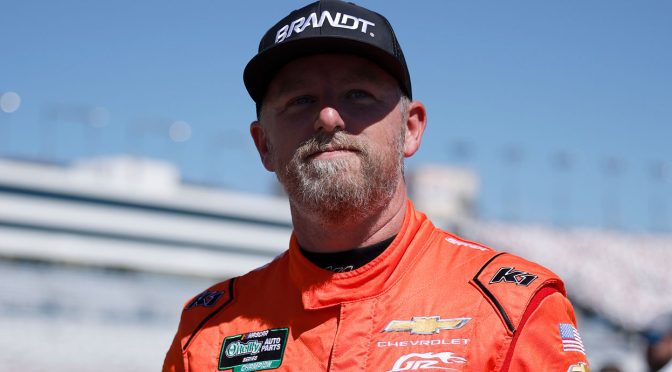
Justin Allgaier will return to JR Motorsports on a multiyear deal beginning in 2027 to continue driving the team’s No. 7 Chevrolet in the NASCAR O’Reilly Auto Parts Series, the team announced Monday evening on social media.

Allgaier, the 2024 series champion, is currently the series points leader and carries a 22-point lead into the 2026 season finale, seeking his second title at Homestead-Miami Speedway on Saturday (5 p.m. ET, The CW, ESPN Unlimited, MRN Radio, SiriusXM NASCAR Radio).

MORE: Homestead-Miami schedule | O’Reilly Chase standings

Allgaier had previously indicated the 2026 season would be his last behind the wheel with JR Motorsports, but that tone began to change late in the spring. Now, the perennial championship contender sets his sights further down the road.

“At the beginning of the year, I knew that it was the year I was going to retire,” Allgaier said in a video posted to JRM’s social media Monday night. “But … I wasn’t quite ready yet.”

Allgaier’s 34 career wins in the O’Reilly Auto Parts Series rank sixth all-time behind only Kyle Busch, Mark Martin, Kevin Harvick, Brad Keselowski and Carl Edwards. The 40-year-old Illinois native dominated the regular season in 2026, collecting a career-high six victories that earned him the No. 1 seed in The Chase presented by Mobil 1. Allgaier has won at least once each season since 2017, earning nine multi-win campaigns in that 10-season stretch.

Allgaier is one of five drivers mathematically eligible to win the championship Saturday at Homestead. Defending series champion Jesse Love sits 22 points behind Allgaier, with Corey Day 23 points back, Carson Kvapil 31 points back and Sheldon Creed 42 points back.

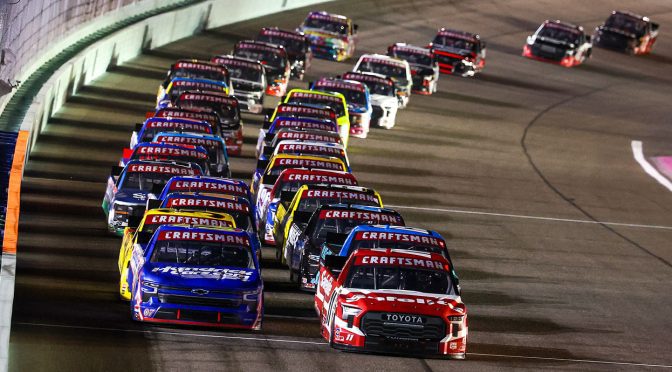
One last race. The NASCAR Craftsman Truck Series concludes its 2026 season at Homestead-Miami Speedway on Friday (7:30 p.m. ET, FS1, FOX One, NASCAR Racing Network Radio, SiriusXM NASCAR Radio).

The Craftsman Truck Series Championship Race will be the seventh and final race of The Chase presented by Mobil 1 and the 25th points-paying event of the season.

ENTRY LISTS: Cup Series | O’Reilly Auto Parts Series | Craftsman Truck Series

Following Chandler Smith’s Martinsville Speedway victory, only two Chase drivers remain in the title hunt: Kaden Honeycutt and Layne Riggs (minus-20). Both drivers are searching for their first career Truck Series championship crown.

Thirty-five race trucks are entered into Friday’s event.

MORE: Weekend schedule | How to watch NASCAR on FS1

View the entry list here:

The NASCAR O’Reilly Auto Parts Series transitions from the short-track Virginia confines of Martinsville Speedway to the intermediate high lines of Homestead-Miami Speedway on Saturday (5 p.m. ET, The CW, ESPN Unlimited, MRN Radio, SiriusXM NASCAR Radio).

The O’Reilly Auto Parts Series Championship Race will be the 2026 season finale and the ninth Chase presented by Mobil 1 contest overall. The 200-lap contest will be the season’s 33rd and final points-paying event. Justin Allgaier is the defending Homestead winner, doing so on March 22, 2025.

ENTRY LISTS: Cup Series | O’Reilly Auto Parts Series | Craftsman Truck Series

Following Carson Kvapil’s Martinsville victory, five O’Reilly Chasers mathematically remain in the 2026 championship hunt: Allgaier, Jesse Love (minus-22), Corey Day (minus-23), Kvapil (minus-31) and Sheldon Creed (minus-42). Allgaier and Love are each seeking their second O’Reilly title, with the latter aiming to become the first O’Reilly pilot since Tyler Reddick to capture back-to-back title triumphs (2018-2019). The remaining three drivers are looking to capture their first championship crown.

Thirty-eight race cars are entered into Saturday’s event.

MORE: Weekend schedule | How to watch NASCAR on The CW, ESPN Unlimited

View the O’Reilly entry list here:

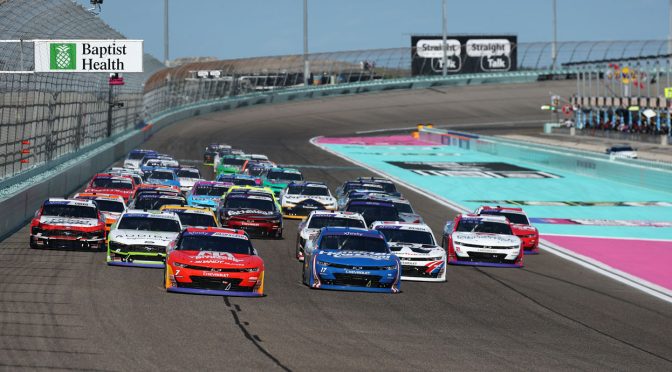
The season finale is here. The NASCAR Cup Series caps off its 2026 campaign with a trip to Homestead-Miami Speedway on Sunday (3 p.m. ET, NBC, HBO Max, MRN Radio, SiriusXM NASCAR Radio).

The NASCAR Cup Series Championship Race is the 10th and final Chase presented by Mobil 1 contest of the 2026 campaign and the 36th points-paying event overall. Kyle Larson is the defending Homestead winner, doing so on March 23, 2025.

ENTRY LISTS: Cup Series | O’Reilly Auto Parts Series | Craftsman Truck Series

Despite an “average day” at Martinsville Speedway, Larson enters Homestead with a 67-point lead in The Chase standings. Only two other drivers remain in title contention: Christopher Bell (minus-67) and Denny Hamlin (minus-70). Both Joe Gibbs Racing drivers will look to capture their first Cup Series championship, while Larson will look to clinch his third and become the first back-to-back title victor since Jimmie Johnson won five consecutive titles from 2006-2010.

As announced by the team Tuesday, Carson Hocevar will not drive the No. 77 Spire Motorsports Chevrolet due to on-track actions at Martinsville Speedway, and Justin Haley will drive the entry instead.

Forty race cars are entered into this weekend’s event.

MORE: Weekend schedule | How to watch NASCAR on NBC

View the Homestead entry list here:

It was a good day in southern Virginia for Hendrick Motorsports as William Byron ended a year-long drought, winning his first race since last year’s fall race at Martinsville Speedway, while teammate Kyle Larson inched one step closer to taking home his third Bill France Cup.

Here’s where we stand in The Chase presented by Mobil 1 after the Xfinity 500 at Martinsville and before the NASCAR Cup Series Championship Race at Homestead-Miami Speedway on Sunday (3 p.m. ET, NBC, HBO Max, MRN Radio, SiriusXM NASCAR Radio).

RELATED: Martinsville results | Cup Series standings

Chase Changer

The decision not to pit in the middle of the first stage severely limited Denny Hamlin’s chances to make significant gains on championship leader Kyle Larson. Entering Martinsville, Hamlin was 73 points down and seemed to get off to a good start after winning the pole Saturday, before things unraveled for the No. 11 Joe Gibbs Racing driver.

During the 130-lap opening stage, many teams split it in half and made a pit stop as Martinsville Chase race winner William Byron did by pitting on Lap 65. Hamlin, however, stayed on track and lost the lead to Ryan Preece on Lap 84. From there, the No. 11 Toyota faded down the running order as multiple drivers on fresh Goodyear tires sped past Hamlin. Larson, on the same strategy as Hamlin, also dropped like a rock in the running order. At the end of Stage 1, Hamlin fell to 17th. Larson was 23rd, one lap down. Both drivers missed out on stage points in both segments, while title rival Christopher Bell earned eight stage points in the first two stages.

Despite earning more stage points than his title rivals, Bell faced adversity of his own with a pit-road speeding penalty during Stage 2 before contact from Joey Logano sent him spinning into JGR teammate Denny Hamlin entering Turn 1 on Lap 216, bringing out the caution that helped Larson return to the lead lap. The top three Chase drivers battled back, with Hamlin finishing sixth, followed by Larson and Bell in ninth and 10th, respectively. Larson earned 28 points at Martinsville, while Hamlin only gained three points, leaving him at minus-70. Bell gained seven points to put him at minus-67 entering the season finale. With the No. 5 Hendrick Motorsports Chevrolet not at its best, Larson’s title rivals missed a golden opportunity to significantly narrow the gap heading into Homestead.

The Chase Board

Only seven Chase drivers remained mathematically eligible for the Cup Series championship entering “The Paperclip.” With many needing a clutch performance and Kyle Larson to struggle at the 11th hour, four more Chase drivers were eliminated from title contention after Martinsville.

Chase Briscoe had a quiet day at the Virginia short track, finishing 14th and losing five points to championship leader Larson, putting the No. 19 Joe Gibbs Racing Toyota driver 84 points back. While Logano’s contact with Christopher Bell — which also sent Denny Hamlin spinning — did not derail his race, everything started to trend downward after late-race issues on pit road en route to an 18th-place finish. This cost the No. 22 Team Penske driver three points to Larson. Ryan Blaney’s title hopes ended after contact with the rear of Josh Berry with eight laps remaining in Stage 2, as the No. 12 driver lost 26 points to Larson and finished 35th. Briscoe, Logano, Reddick and Blaney join Ty Gibbs, William Byron, Chase Elliott, Austin Cindric, Carson Hocevar, Bubba Wallace, Ryan Preece, Daniel Suárez and Chris Buescher as the 13 Chase drivers who will not have a shot at winning the championship at Homestead.

RankDriverPoints behindGained/lost to leader
1Kyle Larson--Lost 6
2Christopher Bell-67Gained 7
3Denny Hamlin-70Gained 3
4Chase Briscoe-84Lost 5
5Joey Logano-103Lost 3
6Tyler Reddick-125Gained 1
7Ryan Blaney-133Lost 26
8Ty Gibbs-160Gained 23
9William Byron-166Gained 48
10Chase Elliott-201Gained 17
11Austin Cindric-206Lost 23
12Carson Hocevar-210Lost 12
13Bubba Wallace-212Gained 6
14Ryan Preece-255Lost 6
15Daniel Suárez-259Lost 19
16Chris Buescher-270Lost 15

Source: Racing Insights

Next Up

While Kyle Larson did not clinch his third Cup Series championship at Martinsville, he is sitting in a pretty comfortable position entering this Sunday’s season finale at Homestead.

Leading Christopher Bell (minus-67) and Denny Hamlin (minus-70) in the standings by a sizable margin, Larson needs to score nine points at Homestead to lock up the title, regardless of what his rivals do. If Larson does not score stage points, a 28th-place finish will be good enough to claim the championship in South Florida.

The championship hopes for Bell and Hamlin are slim with one more race remaining, but it’s not over until it’s over. In order to have a realistic shot at blocking a layup from the No. 5 team, one of the Joe Gibbs Racing drivers will need to score maximum points, and Larson will need to have an early nightmare in Florida before the sun starts to set on the 2026 season Sunday.

MARTINSVILLE, Va. — In a season full of opportunities presented and opportunities realized, one more — the biggest of all — is right in front of Kyle Larson and his No. 5 Hendrick Motorsports team.

A muddled Sunday at Martinsville Speedway didn’t make his quest for a third NASCAR Cup Series championship a gimme, and Larson’s struggles kept him from sewing up the crown early. That said, Larson and Co. are that much closer to knitting the title race’s final stitch.

RELATED: Race results | At-track photos: Martinsville

Strategic slip-ups, ill-timed circumstances and short-track snags made for missed opportunities for the rest of his closest pursuers, sending Larson into next Sunday’s season-ending race at Homestead-Miami Speedway with a 67-point buffer over Christopher Bell and a 70-point gap on Denny Hamlin — the only drivers with a slim mathematical hope of surpassing him. Placing a lap down in ninth was more gritty and methodical than it was triumphant, but it gave Larson the survive-and-advance outcome he needed to keep his challengers at more than an arm’s length.

“The day could have been a lot worse, but yeah, I mean, it’s not locked up either, so there’s still definitely pressure there,” Larson said. “I don’t know if I should feel pressure, but I’m going to throughout the week.”

It’s telling that the second-worst performance of Larson’s otherwise dynamic run through The Chase presented by Mobil 1 was still a top-10 finish. Throughout the regular season, when Hendrick Motorsports slogged through a perceived slump and the defending champ’s losing streak crept closer to and eventually pushed north of 50, Larson expressed confidence that the organization would find its stride when it mattered most. The results so far have backed up that belief.

Larson’s confidence was tested early in Sunday’s Xfinity 500 at the historic track. His No. 5 Chevy labored to a 23rd-place result in the first stage, losing a lap to teammate William Byron’s dominant No. 24 car just before the green-checkered flag. No. 5 crew chief Cliff Daniels issued a mea culpa when a no-stop strategy soured, but a handful of rapid-fire caution periods in Stage 2 landed him on better footing.

“It was difficult to just kind of mentally not get beat down and frustrated and make a not-so-pleasant situation worse,” Larson said. “So yeah, I just kind of had to remind myself that we’ve got a lot of points, let’s just kind of grind our way through it and trust your team, which I had trust that we would get back on the right side of things if we could ever get to the lead lap. Then fortunately we did, and then yeah, just kind of inched our way forward through some strategy, really.”

The opportunities for Bell and Hamlin to cash in never quite materialized. The same Stage 1 strategy kept a fading Hamlin out of the early points, and a pinball collision with Joey Logano’s No. 22 Team Penske Ford sent both Bell and Hamlin spinning on the 214th of 500 laps. For much of the race’s second half, the advances made by Bell and Hamlin that netted each of them top-10 finishes (Hamlin sixth and Bell 10th) were matched nearly step by step by Larson.

“It was pretty simple from there,” Larson said, “and as long as I could see them, I felt comfortable that they were going to have an average day like myself.”

Average was enough Sunday at Martinsville, and even below average — barring a catastrophe — would suffice for Larson’s title hopes in this coming Sunday’s curtain-closer (3 p.m. ET, NBC, HBO Max, MRN Radio, SiriusXM NASCAR Radio). Even with the temptation to taste the fruits of a championship-caliber season before they ripen for sure, Daniels said he’s not allowing himself or the team to make that leap.

“At this point, I just think it’s going to be very in line for us to stay with the prep that we’ve already put in place,” Daniels said. “There’s so many good things that we’ve built to get us to this point for Homestead that we’ve got to see it through, and we’ve just got to give justice to all the hard work that’s put in by not counting it too early. You’ve still got to put your head down, prepare a good car, and go execute a solid weekend.”

MORE: Cup Series standings | Homestead weekend schedule

That said, Daniels says Homestead had been circled on the calendar ever since it was announced as the host site for this year’s final weekend. Plenty has changed since the 1.5-mile track last hosted the Cup Series in March 2025, but the knack for finding speed in the high line by skimming along the track’s outer wall seems to be an inherent Larson trait.

The suggestion that Larson, Daniels or the team might let up and take an extra-conservative tack to protect their lead, needing just a plus-nine gain next weekend to seal it, might fall into the conventional-wisdom category. Switching up that approach now, though, invites disruption to the standard operating procedures.

Daniels says altering that game plan would be a bigger risk, given the stakes and the timing. After all, there’s one more opportunity ahead.

“I learned a lesson a long time ago with Kyle that if we do anything to prepare to run 90%, you’re down on grip or you’re not as sharp as you need to be, and his comfort zone — especially at a place like Homestead or a place like Darlington, where you know on paper it’s worn-out pavement and you’ve got to take care of your tires and take care of your stuff — his comfort zone is still going 10 out of 10,” Daniels said. “So we’ve got to get everything we can for car prep, car potential, get the setup dialed in, and I don’t expect him to be off the wall at all. He’s going to be ripping the boards and be really fast doing it, and you know that’s what makes him so special. He’ll be comfortable in that zone.”

MARTINSVILLE, Va. – Denny Hamlin and Christopher Bell chipped into Kyle Larson’s point lead Sunday at Martinsville Speedway. The problem is they needed to level the gap instead and left dissatisfied.

Errant pit strategy in Stage 1 of the Xfinity 500 ultimately put Hamlin and the No. 11 Joe Gibbs Racing team behind from the jump, compounded by a mid-race spin and left-rear damage, leaving the veteran driver with a sixth-place finish, 70 points behind Larson heading to Homestead-Miami Speedway in the final race of The Chase presented by Mobil 1 on Nov. 8 (3 p.m. ET, NBC, HBO Max, MRN Radio, SiriusXM NASCAR Radio).

“I’d say it’s kind of the story of The Chase, where we just didn’t capitalize on the speed that we had,” Hamlin said.

RELATED: Race results | At-track photos: Martinsville

Crew chief Chris Gayle opted for a strategy that left Hamlin on track for all 130 laps of Stage 1, a strategy the No. 5 Hendrick Motorsports team implemented as well to shadow the No. 11 team. The majority of the field, however, chose to split the stage and pit midway through instead. Those fresher tires blew by cars like Hamlin’s and Larson’s, leaving Hamlin 17th at the end of the stage and Larson 23rd, one lap down.

“It came down to the first stage. That was an absolute killer for us,” Hamlin said. “Obviously, our strategy did not work out. Staying out, it just had no tires left, and obviously lost all of our track position, and then got to start Stage 2 at the tail because it was a caution that just was poorly timed for us.

“We just fought the track position. It took all day just to get it back, and then obviously the damage didn’t help at all either. So it’s just tough day, but it was kind of a microcosm of a bad last nine weeks.”

In a post-race interview, Gayle agreed Stage 1 made all the difference but explained the thought behind his decision, including comparisons to early race leader Ryan Preece in the No. 60 RFK Racing Ford.

“We knew it was a tiny bit faster to one-stop it probably the way it was, but you’re always wanting to know what (tire degradation) looks like during the race,” Gayle said. “And honestly, we thought we had deg pretty close to the 60 early on, and so you got to that point where there’s lots of caution protection by not pitting right there. So if you get a caution at any point in that time before the last 12 laps of that, 15 laps of that, we were going to be in good shape. And then it looked like our deg was OK.

“And then when some guys started passing us late, the deg just really fell off. Like I don’t know if the tire was gone or what — there was still rubber on them, but they were pretty worn after that. And so then our deg just fell off a lot more, and you were in that no-man’s land. Well, now you can’t come and pit because you’re really at the risk of (going) two down.

“So you had that window of optimum just before, or a tiny bit late optimum. And at that point, when we were looking at it, we still thought, OK, well, this is going to come out worst case P3 to P5 for us, and if we had a caution anywhere before that happens, we’ll be in an OK spot. And then when we fell off that hard at the end of the stage, it didn’t matter.”

That left Gayle “somber” by the time the checkered flag waved, with his No. 11 car 21 seconds behind race winner William Byron.

“Seventy points is hard to overcome at Homestead,” Gayle said. “Obviously, Stage 1 leaves a bitter taste in your mouth because I think the rest of the race, we played out pretty well and clawed back, but it doesn’t matter, right? Like you needed to effectively win today or it wasn’t going to necessarily matter a whole lot.”

Christopher Bell looks on after a NASCAR Cup Series race at Martinsville.
Alejandro Alvarez | NASCAR Digital Media

Christopher Bell, on the other hand, was on the right strategy from the jump with crew chief Adam Stevens. He never quite got all the way to the lead, but early speed surged the No. 20 Joe Gibbs Racing Toyota up the pylon and into the top five, appearing as a legitimate contender for the race win.

“At least (for) me inside the car, I think it fooled me to thinking I was better than I was,” Bell said. “And then yeah, once we restacked, I was kind of another pedestrian car.”

A series of unfortunate events at Lap 198 began to upend Bell’s day and led to a 10th-place finish, one lap down. Bell was on pit road at that time when Carson Hocevar spun exiting Turn 4, drawing the first caution flag for incident in Sunday’s event. Bell was able to remain on the lead lap, but Bell was penalized for speeding on pit road, forcing him to restart from the tail end of the field instead.

Just 10 laps after the restart, Bell received a bump from Joey Logano entering Turn 1 while Bell was also alongside Hamlin. That contact spun both Bell and Hamlin, putting Hamlin’s left-rear bumper into the wall. Both rallied from the incident for top-10 finishes, but Bell exits only slightly closer to Larson, 67 points back entering the season finale.

MORE: Logano makes contact that spins Bell, Hamlin

The numerous missed opportunities throughout the course of The Chase left Stevens feeling “terrible” after another disappointment at Martinsville.

“We just haven’t put together nine races, and I mean now we need lightning to strike two ways to get something out of it in Homestead,” Stevens told NASCAR.com. “We just haven’t had a clean nine races and weren’t our best today, but we were OK. But OK is not enough. When you stack a couple OKs on top of some of the not capitalizing on the good runs we’ve had, it just doesn’t add up to a championship.”

Bell agreed and points to mistakes long before Martinsville that cost them a far better chance opportunity of winning the NASCAR Cup Series championship next week at Homestead.

“Today we had a lot of positives, a lot of negatives, and it probably shook out where we should have,” Bell said. “We didn’t lose the championship by any means today. We lost the championship a couple of races earlier. Talladega was a big one. Gateway was a big one. The steering issue at Vegas was a big one. So yeah, we didn’t lose it today. We lost it earlier in the in The Chase.”

Hamlin and Bell did swap positions in the points standings on Sunday: Hamlin entered second, 73 points out while Bell was third, 74 points out; Bell leaves Martinsville second, 67 points behind Larson and Hamlin is third, 70 back. But the emotions before and after left a disappointing familiarity at their doorsteps as each pursue their first NASCAR Cup Series championship.

“I mean, felt like I did going into Martinsville,” Bell said. “We already know.”

“I mean it’s unrealistic for sure,” Hamlin said. “[The deficit] needed to be in the 40s — something like that — to be somewhat viable. But we’ll go there and do the dog-and-pony show mid-week and act like we can do it. But we just didn’t capitalize. Not a Chase we capitalized, and certainly did not execute to our best ability.”