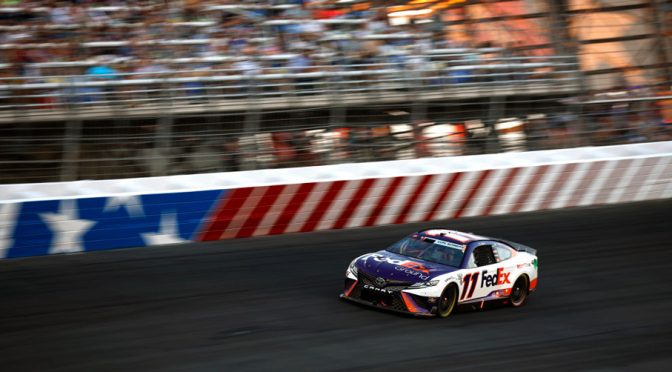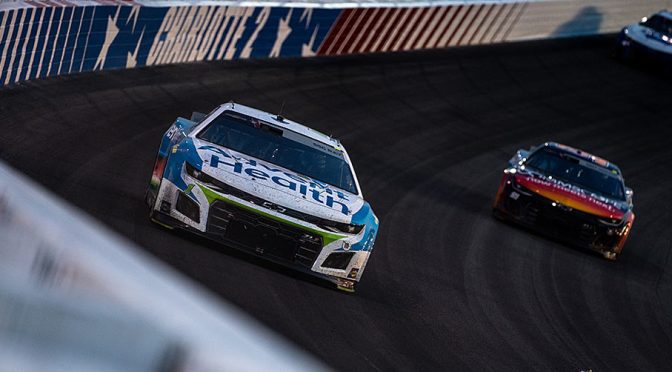
Even before Ross Chastain and Daniel Suárez ran 1-2 for wide swaths of Sunday’s Coca-Cola 600, their Trackhouse Racing team had already made one of the week’s biggest splashes with far-reaching implications.

The two drivers who dazzled at Charlotte Motor Speedway will soon have company under the Trackhouse banner for select Cup Series events. That news came in a dynamic 1-2 punch of its own last week with first the unveiling of PROJECT91, a part-time car designed as a NASCAR entry point for international drivers, and secondly the tapping of Kimi Raikkonen – the fast Finn who won the Formula One title in 2007 – just days later as its first appointee.

RELATED: Cup Series standings | PROJECT91 revealed

For Chastain and Suárez, the latest venture from team co-owner Justin Marks has the potential to make waves outside of the stock-car series’ traditional stateside audience.

“Dude, do we expect anything else from Justin Marks?” Chastain said before Cup Series qualifying last weekend. “I mean, my goodness, the guy goes and starts a two-car Cup team and immediately puts us all in position to win races and compete the first year together as what Trackhouse is now as a two-car team out of Concord (North Carolina). So it doesn’t surprise me when he first told me about it. It’s … OK, let’s do it. How can I help?”

Raikkonen, 42, has already dabbled in NASCAR with a double-duty weekend at Charlotte in 2011, finishing 15th in his Camping World Truck debut then following that with a 27th-place run in the Xfinity Series a day later. He’s best known, however, for his 21 Grand Prix victories, his brilliance with Ferrari during his title march and his super-stoic demeanor.

The opening of opportunities not just for Raikkonen but for the global motorsport’s community holds special meaning for Suárez, now in his second season with Trackhouse. The 30-year-old driver came to stock-car racing’s big leagues through the NASCAR Mexico Series in his home country. Now his team is striving to build a similar bridge for other international stars.

“It’s huge, man,” Suárez said. “I mentioned to someone just a little bit ago that I have always felt that here in NASCAR that I’m the only one that is a little bit different — where they come from, with having a different background, having to come from a different country with a different language. Right now, I don’t feel that way, but in the process, I felt different. You know, I felt like, ‘Man, I’m the only one that is coming from somewhere else.’

“And I feel like now I’m kind of feeling and seeing the similarities with PROJECT91 because Kimi — and it doesn’t matter who comes in the future that has a lot or a little experience that they come from different disciplines — they’re going to have those feelings, kind of like somebody that is coming from a different country or a different series or something like that. So it’s great. I’m really looking forward to work with PROJECT91 and to enjoy what they’re going to be able to accomplish.”

MORE: Trackhouse Racing team page

That eager feeling has proven to be infectious, reaching outside of the Trackhouse shop’s walls. Kaz Grala, the part-time pilot of choice for Floyd Mayweather’s The Money Team Racing outfit, said his No. 50 team hopes to compete in two or three more races this year. Grala has been pushing to make one of those Aug. 21 at Watkins Glen International, site of Raikkonen’s scheduled start.

“I thought that was the coolest thing ever,” Grala said, recalling his reaction to PROJECT91’s driver announcement. “I love Formula One. I’m a big fan, and Kimi has probably been my favorite personality in F1 for quite a few years now. So I think it’s awesome that he’s gonna come over and do a NASCAR race. So I’m hoping that I’m in that field because wouldn’t that be cool to be able to say you’ve raced against him.”

That enthusiasm has potential to stretch behind Raikkonen’s scheduled Cup Series debut. Trackhouse’s PROJECT91 reveal included hints that more surprises were in the works, creating tantalizing speculation about other big names who might take a turn behind the wheel.

“It’s insane that Kimi Raikkonen is going to be my teammate, and the sky’s the limit on who else could do it,” Chastain said. “You know, he’s opened it up to anybody, and it’s incredible to think that any winning race-car driver in the world could put together a program to come run with us, so I don’t know who to expect next.”
Last summer, NASCAR introduced its Competition Partner program, a platform that celebrates the automotive performance suppliers that are producing parts for the Next Gen car. The automotive suppliers play a significant role in the development and operation of the Next Gen car, and the early results on the track have been stellar.

The Next Gen car made its competitive debut at the Busch Light Clash at the L.A. Coliseum, followed by the iconic Daytona 500. The Next Gen car went from competing on a quarter-mile track inside a stadium to a 2.5-mile track at Daytona International Speedway, and it delivered on both occasions.

Brandon Thomas Inset Photo
Brandon Thomas, NASCAR Managing Director, Vehicle Systems, holds windshield air cockpit ventilation unit printed at Stratasys Direct Manufacturing.

The NASCAR Competition Partner program now includes 14 best-in-class automotive performance suppliers, including its eight newest members: Five Star Fabricating (Body parts), E3 Spark Plugs (ignition spark plugs), Hyperco (Coil Springs), Lincoln Electric (Welding equipment), Paoli (Pit air guns), Roush Yates Manufacturing Solutions (precision suspension machining), SKF Bearings (wheel bearings) and Stratysys (Windshield Air Ducts).

“The Next Gen car could not have been completed without the collaboration with NASCAR Competition Partners,” said John Probst, Senior Vice President, racing innovation, NASCAR.

As part of the program, NASCAR Competition Partners have the ability to promote and market the products that are in the Next Gen Car. This partnership allows automotive based performance companies to showcase their alliance with NASCAR to fans, customers, and the motorsports industry.

“The Next Gen car simply does not compete on the track each weekend without the support of incredible partnerships,” said Jeff Wohlschlaeger, Chief Sales Officer, NASCAR. “As the season continues, the car will endure the most rigorous schedule in motorsports. Our partners continue to provide their expertise and parts to help us optimize performance and put on a great show for our fans.”

As a competition partner, the eight new suppliers will utilize a newly designed Competition Program badge that can be used to promote and market their parts. Each part is NASCAR tested, NASCAR approved, and NASCAR tough. They join BBS wheels, Technique Chassis, SRI Performance, Cometic Gaskets, Mobil 1 and Goodyear to round out a robust Competition Program.

Brad Derry has six championships and more than 175 wins in his 18 years of racing. But there was always one victory that eluded him.

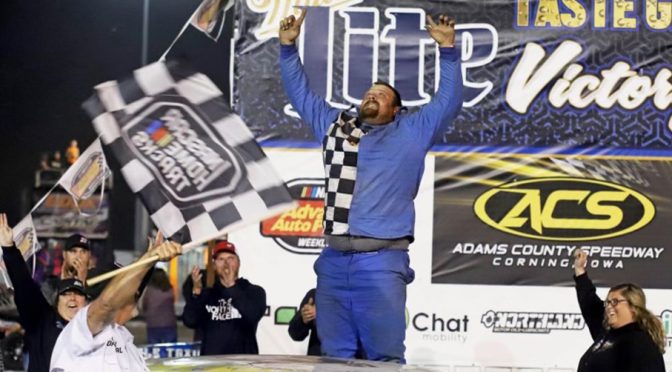
After years of trying, and more than one second place finish, Derry could never take the checkered flag at Adams County Speedway‘s annual Tradition race, the yearly season finale at the NASCAR-sanctioned track in Corning, Iowa.

Last October, Derry suited up in a different class than his usual Stock Car division, and in a car that was new to him but meaningful to many people in the stands and the pits at Adams County. The Hobby Stock car belonged to Jeremy Ribbey, a fan favorite who a month prior passed away unexpectedly.

One of Ribbey’s friends, Tyler Gray, asked Derry if he would like to race Ribbey’s car at the end of the season. Derry had known Ribbey through racing at Adams County and sharing an engine builder at Whitehead Machine Shop, the place Derry called “kind of the hub for all the Clarinda (Iowa) racers that raced Adams County Speedway.”

“Jeremy was always getting stuff fixed there and they were helping him out,” Derry said. “I’d give him a few pointers at times, even after I moved out of the hobby stocks. We’d just visit and talk.”

When Derry was first asked to drive Ribbey’s car, he had mixed emotions and had to take a few hours to think.

“He was a friend of all of ours in the local town,” Derry explained. “He was like a football coach, a baseball coach. He was a really, really well-to-do person in the community, a good influence on the kids. And I was just nervous because I was like, ‘What if you tear it up, or whatever?’

“His friend, Tyler Gray, said, ‘You’re not going to tear it up. Go out and win with it.’ So I said, ‘We’ll do our best.'”

The first time Derry ran the car was the final points night of the season last year at Adams County. He finished second.

The next race was the Tradition.

“I said, ‘Alright, we’re going to change some stuff,'” Derry said of his conversation with Gray ahead of the Tradition race. “He said, ‘What do you mean?’ I said, ‘First of all, we’re going to put a seat in there I can fit in,’ because I’m quite a bit bigger guy than Jeremy was.

“And all we did was put that seat in it and go.”

Derry remembers buckling into the car and said he was “nervous as could be” that night. He started last in his heat race but came through with a win, which meant, with a re-draw, he would start the feature in the middle of the pack.

“Tyler just told me to go out and win the thing,” Derry said. “I was thinking under my breath, ‘Yeah, right.'”

Ultimately, it didn’t matter where he started, because he made his way to the front pretty quickly and won the race.

“We led that thing and led it by quite a bit,” Derry said. “It was kind of a Cinderella story, to be honest. I never dreamed that we would have done that. But it worked out.”

Even thinking back on the race six months later, Derry still gets emotional thinking about putting that car in Victory Lane.

“It was kind of surreal,” he said. “We took the checkered flag, and it was like, this race has eluded me even back when I drove hobby stocks. I finished second in the Tradition race multiple times, in my stock car, as well. To be able to get in somebody else’s equipment that passed away and be able to win that thing was amazing. It was just a very overwhelming feeling.

“Of course I had tears coming out of my eyes, because it was for a special reason, and I’m just glad we could do that for his family. There was a bunch of his family there that night and a whole lot of friends and people that came down afterward, and it’s just a surreal moment. Probably the biggest win of my career, emotionally, for sure.”

RELATED: More about Adams County Speedway in Corning, Iowa

The racing community at Adams County is tight-knit, something Derry has seen in his nearly two decades of racing. He has been going to races at the track since he was in second grade and began driving himself when he was 16.

“I was helping a friend race, and pretty soon I was working on his car more than he was,” Derry explained. “So I said, ‘If I’m going to be doing this I might as well get my own car.’ So I did.

“I was sitting up there in the stands and the whole time, after a couple years I was thinking, ‘How am I ever going to afford this?’ But if you work hard enough, you can make your dreams come true.

“It was pretty cool. It was a rude awakening. Everyone can bleacher-race, but when you actually start doing it yourself there’s a lot more involved with it. … But there’s nothing like winning at your home track, in my opinion.”

Derry is back in the Adams County Stock Cars division this year, and he has done well so far. Even though he does not yet have a win, he has three top-five finishes in three races and currently leads in points.

His goal this year is to win a track championship at both Adams County and I-80 Speedway, a NASCAR-sanctioned track in Greenwood, Nebraska. Derry won the track championship at both tracks in 2015.

Ribbey’s car is also still on the track. With the same 12G number and wrap, Gray is racing it this year as a rookie. He has one top 10 in three races at Adams County so far.

“He’s got a pretty big following with people who have transitioned over from Jeremy to Tyler,” Derry said.

Racing has changed a bit for Derry since he started as a teenager. He now has three children who come to the track with him every week. But even with the changes, it’s still the same family atmosphere at his home track, and it’s not something he plans on giving up any time soon.

“We’ve raced two nights a week since 2008,” he said. “When you’re a one-man show, when you work on everything during the week yourself, it’s pretty hard to keep everything up and keep going.

“I’m just very blessed to be able to do what I’ve been doing for the last 18 years.”

Plus, he’ll always have that one special win that meant so much to him and so many others.

“There’s a picture out there somewhere when I first got out of the car and I pointed up to him,” Derry said. “I don’t know who’s got that picture, but I pointed up to the stars and told him that this one was for him, and celebrated accordingly.”

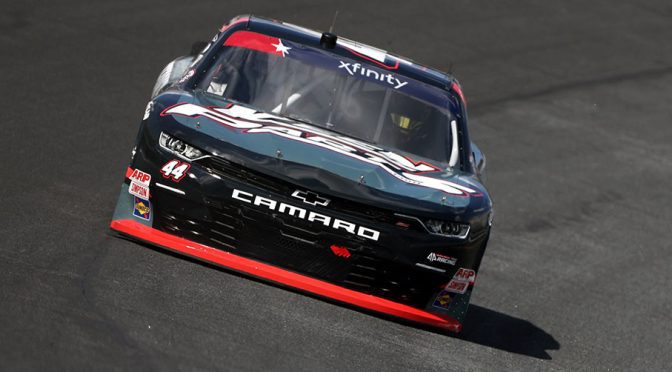
NASCAR officials penalized the No. 44 Alpha Prime Racing team Tuesday for a lug-nut violation discovered after Saturday’s Xfinity Series race at Charlotte Motor Speedway.

RELATED: Xfinity Series standings

Ryan Ellis drove the team’s No. 44 Chevrolet to a 13th-place finish in Saturday’s Alsco Uniforms 300, but the car was found with one unsecured lug in a post-race check. The infraction — covered under Section 8.8.10.4a (tires and wheels) in the NASCAR Rule Book — resulted in a $5,000 fine for crew chief Michael Brandt.

Also Tuesday, NASCAR officials announced two suspensions and a reinstatement related to behavioral penalties.

Michael Adair, listed in the NASCAR team roster portal as the hauler driver for the No. 43 Petty GMS Motorsports team, was suspended indefinitely for violations of Sections 4.1 (NASCAR Substance Abuse Policy) and 10.1 (General Procedure) in the Rule Book.

Kase Kallenbach has been suspended indefinitely for violating Section 4.4.e, which deals with NASCAR Member Code of Conduct Penalty Options and Guidelines. Kallenbach had been the crew chief for the No. 6 JD Motorsports Chevrolet for the first 12 Xfinity Series races this season. He was replaced as No. 6 crew chief by Alex Bird for last weekend’s race at Charlotte.

Jason Houghtaling, listed on team rosters as the crew chief of Jesse Iwuji Motorsports’ No. 34 entry for the first eight races of the season, has been reinstated and is eligible to return to all NASCAR activity, officials said. He had been suspended May 3 as part of a behavioral penalty under Sections 4.4.e of the Rule Book (NASCAR Member Code of Conduct).

The average rendition of the national anthem comes in at just shy of two minutes and offers a poignant moment of reflection for drivers and crew members alike. For those two minutes, the grandstands grow silent and the hustle of pit road comes to a near standstill, but for photographers and videographers, one of the most important moments of the evening is approaching faster than anything they’ll capture on the race track. Mch01549

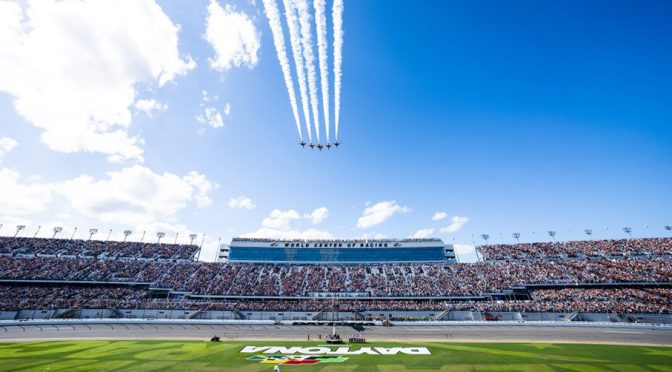
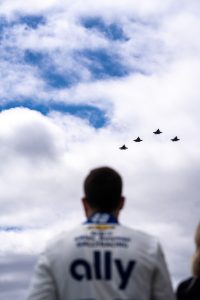
Cell phones raise, TV cameras zoom across the track, and photographers contort themselves to get the shot. Fans see the target of attention just over the horizon before anyone on pit road thanks to their elevated seating in the grandstands. The distortion caused by the heat of the exhaust is quickly replaced with plumes of smoke as everyone begins to hear a faint rumble. A time-honored tradition is flying toward the track at an extraordinary speed.

The flyover is here.

PHOTOS: Best flyover shots in recent years

With hundreds of miles of racing to cover, there are plenty of opportunities to capture a great photo, but the flyover only presents one. Planning to capture this sole moment begins hours before by checking an email inbox. The pre-race run of show is generally the same for every race and includes timing for recurring segments like the invocation, command to start engines and that two-minute block for the national anthem. In the fine print following the anthem is the key to the perfect flyover photo: directions. “Four F-16s, flying North to South, Turn 4 to Turn 1” tells photographers everything they need to start thinking of the composition that will make the final image.

Aaflyover

When a photo is worth a thousand words, it’s important to be deliberate in choosing what story is told. Does a perfect flyover photo focus on the atmosphere of the facility and showcase the fans in the stands? Does a perfect flyover photo focus instead on drivers and crews as they prepare for competition? With differing assignments across the field, the “perfect” photo can be a captured in a variety of different ways, but each one shares the sky-high planes in common.

Once a mental image of the real image is established, scenarios begin to run through photographers’ minds: What if it’s cloudy? What if it’s sunny? What if I can’t get to a location off the grid in time? Do my credentials work around the entire track? Will I be able to edit and send photos back in time before the green flag flies? An approach to the photo needs to be determined by the time driver introductions end and the crossover gates close. Grandstands or the grid, wherever photographers chooses is where they’ll stay until the cars begin to roll.

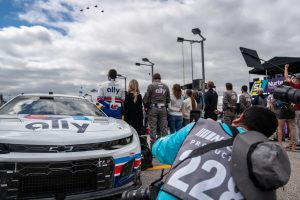
As teams form lines and drivers turn to face the flag, photographers begin to get in position. The words of the anthem serve as a timer, and with each passing verse, the opportunity to gather content dwindles. Unobstructed views of drivers, composed expressions and a clean background are difficult to find in the coordinated chaos of the pre-race grid, but again, for two minutes, they stand alone.

Candid gazes look into the sky where normally four black dots begin to grow. Fireworks shoot up during “the rocket’s red glare” and serve as a mental reminder all focus is now above the racing surface. With camera bodies dangling from both shoulders and belts lined with lenses, photographers twist into positions that put their driver in the same frame as the planes above. Nas08146

The lens focuses; the planes are sharp. Some cameras shoot more than 10 frames a second, and photographers utilize each one in hopes everything is perfectly positioned in at least one. Sounds of shutters actuating get drowned out by the roar overhead and eventually by the cheers in the stands. The planes are a mile past the stadium by the time the first image preview appears on the camera’s screen. A glimpse at what was captured is all that can be offered before security ushers non-essential personnel off of pit road. The cold side of the pit wall provides a space to review and transfer photos. Some photographers are hardwired into ethernet and can immediately send their photos back to editors off site, while others pull out SD card readers to transfer and edit photos right on their own cell phone.

Sliders get adjusted, horizons get corrected, and the result gets exported. Within a minute or two of the flyover, a photo is ready for publish. Time to race.

CONCORD, N.C. — In a move designed to strengthen his overall enterprise and support the growth of successful new business units, chairman and CEO Rick Hendrick has named four longtime senior executives to lead key areas within the organization. The new roles and responsibilities are effective immediately.

Hendrick Motorsports president and COO Marshall Carlson, who since 2005 has led the day-to-day operations of the 14-time NASCAR Cup Series champions, has been promoted to president of Hendrick Companies. In the expanded role, he will support all Hendrick-affiliated businesses and initiatives, including Hendrick Motorsports and Hendrick Automotive Group, which is the largest privately held network of car dealerships in the United States. Carlson will oversee a range of commercial initiatives such as the organization’s expanding work in contract manufacturing, product innovation and technology investment. He will report to Hendrick.

“You’d be hard-pressed to find a senior executive in sports who has achieved more over the last 17 years than Marshall,” Hendrick said. “His leadership has resulted in extraordinary performance on the racetrack, and it’s completely transformed the way our company does business. He’s accomplished it all while navigating our people through numerous changes as our sport and our team have evolved. The record speaks for itself. Marshall deserves tremendous credit, and I’m thrilled to continue working with him as he takes on an even larger role.”

To position Hendrick Motorsports for long-term success, executive vice president and general manager Jeff Andrews has been elevated to president and GM. The Fresno, California, native will assume day-to-day management of the winningest team in NASCAR Cup Series history and all of its business units, including competition, engine operations, manufacturing, marketing, and administration. Andrews will report to Hendrick Motorsports vice chairman Jeff Gordon.

“Jeff (Andrews) has been a pillar of our team for three decades and is one of the most respected people in racing,” Hendrick said. “He is a gifted leader and fierce competitor. Jeff’s ability to prioritize winning without sacrificing integrity or culture has been a hallmark of his career. He’s an enormous part of our past, present and future, and I couldn’t be prouder to see him carry us forward.”

In addition, Wayne Robbins, Hendrick Motorsports’ chief financial officer since 2019, will reassume his role as executive vice president and CFO of Hendrick Companies. Robbins, 64, joined Hendrick Companies as CFO in August 2013 after retiring from public accounting firm Dixon Hughes Goodman. His myriad responsibilities will include strategic financial planning, management of investments and oversight of the not-for-profit Hendrick Family Foundation. Robbins will work closely with Hendrick, Carlson and Greg Gach, president of Hendrick Automotive Group and vice chairman and CEO of Hendrick Companies.

Longtime executive Scott Lampe, who came to Hendrick Motorsports in 1999 and served as its CFO from 2005 until 2019, has returned to the team in the same role following more than two years working in private equity. He will guide accounting, human resources, information technology, facilities, operational excellence, and aviation. Lampe, 50, will report to Andrews.

“Wayne and Scott bring decades of institutional knowledge and brilliant financial minds to their leadership roles,” Carlson said. “Each has a reputation for adding long-term value to everything they’re involved with. On top of that, Wayne and Scott have established exceptional working relationships, both inside the organization and throughout the industries we touch. Their impact on our success cannot be overstated.”

Carlson, 49, joined the Hendrick organization in 1996 and has led Hendrick Motorsports’ day-to-day operations since January 2005, initially as general manager before being named president and COO in July 2010. During his tenure, the team won nine Cup-level championships and 155 points-paying races.

In recent years, Carlson has guided Hendrick Motorsports’ investments in technology and other capabilities that support contract manufacturing and product innovation. Notably, he launched the Hendrick organization’s burgeoning business in the defense sector that includes specialized work for clients to support government programs. The Charlotte, North Carolina, native holds a degree in business administration from the University of North Carolina at Chapel Hill.

Andrews, 57, joined Hendrick Motorsports in 1992 and has held a variety of senior leadership positions, including general manager (since September 2020), vice president of competition and director of engine operations. As executive vice president and general manager, he supervised all competition-related departments, including powertrain, manufacturing and racing operations, and supported the team’s technical relationship with manufacturer Chevrolet. He has been with Hendrick Motorsports for each of its NASCAR record 14 Cup Series championships.

“When I look across our entire organization, I see growth everywhere,” Hendrick said. “We’re fortunate to have incredibly talented servant leaders who ensure the performance of our core businesses. At the same time, they never stop looking ahead to identify ways to expand opportunities for our teammates and guarantee a thriving enterprise. I’m as engaged and energized as I’ve ever been, and I look forward to working with our people as we continue to do more together. Top to bottom, I can’t remember a point when we’ve been healthier than we are today.”

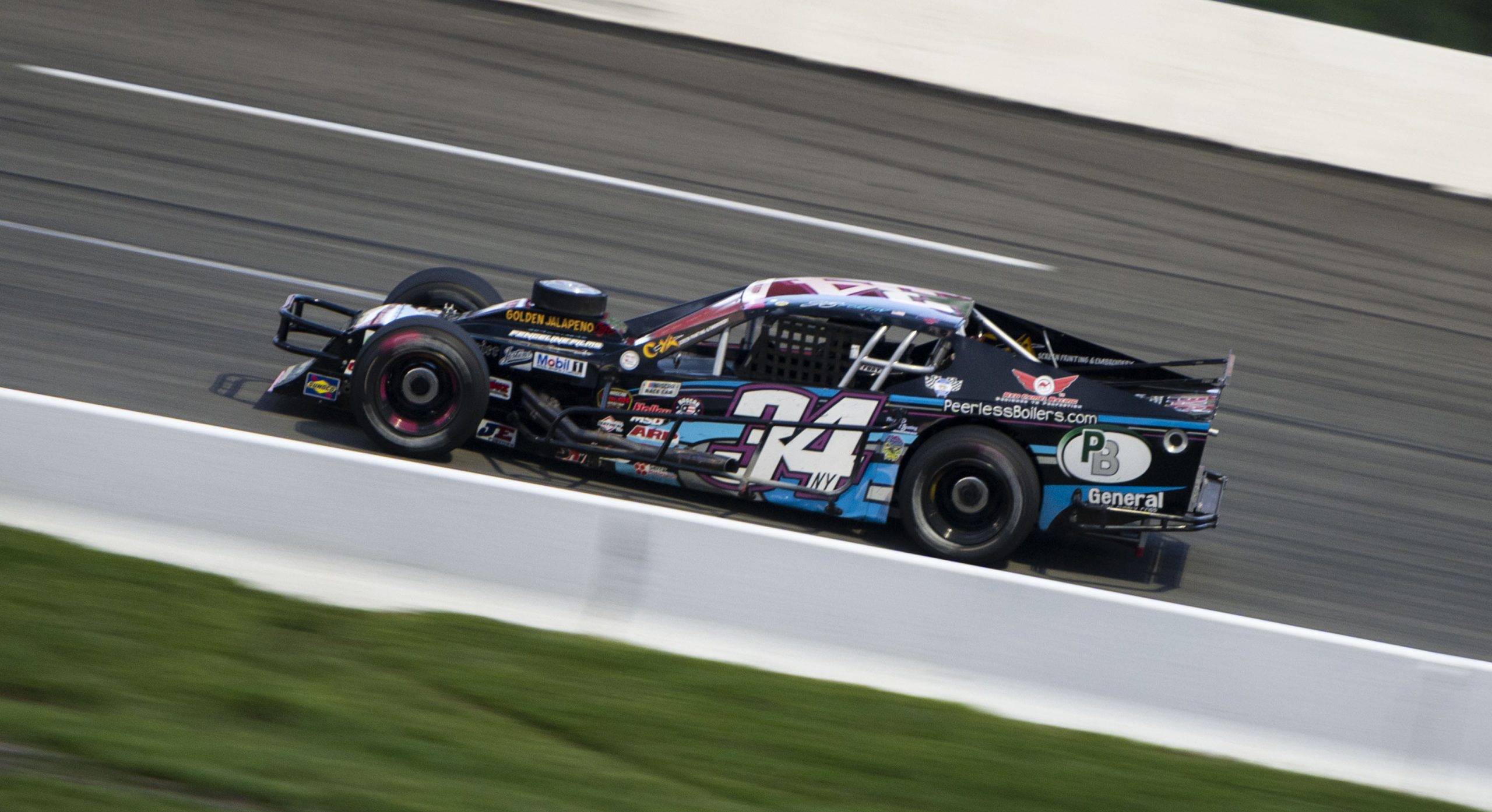
Tommy Baldwin Racing just keeps winning no matter who is driving the No. 7NY Modified.

After consecutive victories at New York’s Riverhead Raceway and New Hampshire’s Lee USA Speedway with Doug Coby at the wheel for the team owned by Tommy Baldwin Jr., the team turned to rookie Mike Christopher Jr. to keep its winning streak going during the Jennerstown Salutes 150 at Jennerstown Speedway on Saturday.

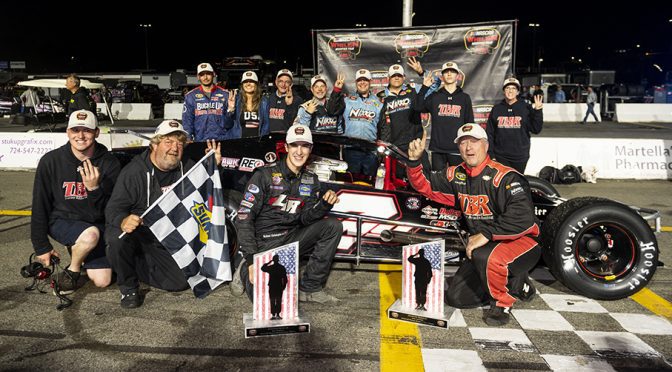
Christopher did exactly that, running down and passing Tyler Rypkema late in the 150-lap event to earn his first NASCAR Whelen Modified Tour victory in just his third Tour start.

RACE RESULTS: Jennerstown Salutes 150

The victory by Christopher added to his family’s legacy of success on the NASCAR Whelen Modified Tour. His uncle, the late Ted Christopher, won 42 races and the 2008 Tour championship during his legendary career before dying in a plane crash in 2017.

For Baldwin, whose father Tommy Baldwin Sr. was a Modified racing legend in his own right, the win by Christopher added to the already impressive season for Tommy Baldwin Racing.

Below are the key takeaways from Saturday’s Jennerstown Salutes 150, beginning with Christopher’s maiden NASCAR Whelen Modified Tour triumph.

A breakthrough performance for Mike Christopher Jr.

Mike Christopher Jr. was a long way from home Saturday night at Jennerstown Speedway, but the long trip was well worth it.

Christopher, who is from Wolcott, Connecticut, had to travel roughly seven hours to Jennerstown, Pennsylvania, to compete in the Jennerstown Salutes 150 at a track he’d never raced at before.

That didn’t seem to phase Christopher, who started eighth and methodically worked his way to the front of the field.

Christopher took the lead following a restart just shy of the 100 lap mark, but he lost the top spot to polesitter Tyler Rypkema a few laps later. The two then engaged in a tug of war for the final 50 laps, with Christopher rarely more than a few car lengths behind Rypkema.

After a move around the outside failed to pay dividends, Christopher made the race-winning pass in Turns 1 and 2 with 11 laps left. He took the checkered flag 1.7 seconds clear of Rypkema as the 23-year-old earned his first NASCAR Whelen Modified Tour victory.

While Saturday’s race was only his third start on the Tour, it was far from his third Modified race. He has been racing Modifieds for several seasons in the Northeast, earning victories at tracks like Stafford Motor Speedway and Thompson Speedway Motorsports Park.

The victory by Christopher helped Tommy Baldwin Racing further pad its lead at the top of the NASCAR Whelen Modified Tour car owner standings. The team now holds a 33-point advantage on the No. 16 team of Ron Silk after five of 16 scheduled races this season.

Rypkema leads the most laps but comes up short

Saturday very easily could have been Tyler Rypkema’s day.

Rypkema started the day off by going second fastest in practice and backed that up by winning his first NASCAR Whelen Modified Tour pole shortly thereafter.

His impressive performance continued into the race, with Rypkema leading more than 100 laps during the Jennerstown Salutes 150.

Unfortunately, Rypkema wasn’t able to keep his momentum going through the checkered flag, as Christopher was able to overtake him and score his first NASCAR Whelen Modified Tour victory.

Despite the disappointing end to an otherwise great race, Rypkema still kept his head held high after a runner-up finish.

“It’s a great day for us. We led a ton of laps. We’ve got a good notebook going again for here and a really solid finish,” Rypkema said.

The runner-up result was Rypkema’s third top-five finish in Tour competition and his second in as many starts so far this year. He finished fifth in the opener at Florida’s New Smyrna Speedway in February.

J.B. Fortin, driver of the #34, races during The Jennerstown Salutes 150 for the NASCAR Whelen Modified Tour at Jennerstown Speedway in Jennerstown, Pennsylvania on May 28, 2022. (Nate Smallwood/NASCAR)
J.B. Fortin, driver of the No. 34 Modified, races during the Jennerstown Salutes 150 for the NASCAR Whelen Modified Tour at Jennerstown Speedway on May 28, 2022. (Photo: Nate Smallwood/NASCAR)

J.B. Fortin turns in his best performance to date

An untimely caution cost J.B. Fortin a shot at a victory on May 21 at Lee USA Speedway. That caution also eventually led to a disappointing finish of eighth when he was running as high as second late in the race.

Fortin would not suffer the same sort of luck Saturday night at Jennerstown Speedway.

The driver from Holtsville, New York, was able to power his way to a third-place finish in the Jennerstown Salutes 150, his first top-five finish in NASCAR Whelen Modified Tour competition.

“We had a stout car from the beginning,” Fortin said. “On that long green flag run the car was coming to me. I thought we were going to have the win here, we just made a bad adjustment on the pit stop. I can’t thank my team enough. This is a killer car for me.

“It’s been a long way coming. At Lee we had a pretty good car. I think we could have won there.”

Prior to Saturday night, Fortin’s best finish with the NASCAR Whelen Modified Tour was a seventh-place run at New York’s Riverhead Raceway in 2019.

NOTES:

  • The battle for the NASCAR Whelen Modified Tour continues to be tight between four competitors. Ron Silk holds the lead by three points ahead of Tommy Catalano, with Jon McKennedy four points back of Silk in third. Eric Goodale sits fourth, only five points out of the championship lead.
  • Speaking of Ron Silk, he is the only driver to finish inside the top 10 in every race this season.
  • A torrid pace was set by the leaders during the Jennerstown Salutes 150. Of the 22 competitors that started the race, only six finished on the lead lap.
  • Despite qualifying second, Patrick Emerling struggled for speed during the 150-lap race at the 0.522-mile oval and eventually finished two laps off the pace in 13th.
  • The man many considered a likely contender to win Saturday’s race was Justin Bonsignore, but he was never in contention and finished eighth. Bonsignore had won two of the last three races at Jennerstown prior to Saturday night.
  • Andrew Krause earned his best NASCAR Whelen Modified Tour finish with a fourth-place result Saturday evening. Prior to the Jennerstown Salutes 150, his best Tour finish was a pair of sixth-place results at Thompson Speedway Motorsports Park.
  • Donny Lia was a late scratch for Saturday’s race and was replaced in the Boehler Racing Enterprises Ole Blue No. 3 by Riverhead Raceway polesitter Timmy Solomito. He qualified ninth and finished 14th.

Phoenix Raceway announced a double dose of news Tuesday, with both items centering on the November championship weekend in NASCAR’s top series.

First: The 2022 version has sold out of grandstand seating for the Cup Series championship race. Next: The 2023 finale will return to Phoenix Raceway for the fourth consecutive year.

RELATED: 2022 seating options

One of the sports world’s premier, fan-friendly venues, Phoenix first hosted championship weekend in 2020 during the throes of the COVID-19 pandemic. Chase Elliott won the title that year, and Kyle Larson capped a season for the ages in 2021 with his first premier series title — in front of a full house of fans.

Championships for the NASCAR Cup Series, NASCAR Xfinity Series, NASCAR Camping World Truck Series and ARCA Menards Series West will again compete for the title this year, and again in 2023.

Phoenix completed a $178 million renovation project designed to improve the fan experience, and one that included a reconfiguration for the track’s start/finish line, before hosting its first championship event in 2020.

“This historic achievement wouldn’t be possible without the outpouring of support the community and our fans continue to show for events at our facility,” said Phoenix Raceway President Julie Giese. “They continue to make Phoenix Raceway a must-visit sports and entertainment destination, and our dedicated team will continue their tireless efforts to deliver a championship-caliber experience that our race fans will remember for years to come.”

The 2023 NASCAR Championship Weekend is scheduled for Nov. 3-5 and will include championship races for the NASCAR Cup Series, NASCAR Xfinity Series, NASCAR Camping World Truck Series and ARCA Menards Series West.

Tickets go on sale at a later date. Stay up to date here.

CONCORD, N.C. — Never underestimate the power of an inspirational halftime speech.

A kitchen-sink array of early issues had turned Kyle Larson’s bid to repeat as Coca-Cola 600 champ into his own personal, hellish escape room in Sunday’s marathon at Charlotte Motor Speedway. “I think this has been the worst race of my life and we’re not even halfway,” Larson told his No. 5 Hendrick Motorsports team over the in-car communications as the race lurched toward its midpoint.

Crew chief Cliff Daniels sensed that his driver was losing morale, and he set a time limit on how much longer he’d allow it to go.

“I mean, it was nice that he warned me of the speech coming. And I had another 30-some-odd laps to pout,” Larson said post-race. “So that helped.”

RELATED: Coca-Cola 600 results | Cup Series standings

Somehow, some way, the No. 5 team recovered to lead significant portions of the fourth and final stage of the annual 600-miler, staying in front until Larson’s battle with a charging Chase Briscoe forced a race-extended caution period that threw the race into overtime disarray. Larson was turned crossways in the first overtime attempt, but still righted the car for a ninth-place finish.

That the team was even in that contending mix in the first place was a minor miracle. The list of first-half issues stretched as long as a pharmacy receipt. Larson started at the rear after a wall scrape in Saturday’s practice and was continually dealt cards that made it a too-familiar cellar.

A wall tap on Lap 53. A Stage 2 spin into the frontstretch turf. A fender on fire as he loped around the track after a wayward stop. And the championship-caliber pit crew that helped deliver Larson’s first title with a blazing four-tire stop in last fall’s finale? Suddenly, that same over-the-wall group was catching flak for three first-half penalties — two for equipment interference and one for removing equipment. A close call with Aric Almirola’s No. 10 Ford knocked a tire away, making another stop agonizingly long.

So when Lap 200 of a scheduled 400 clicked off, Daniels took his cue.

“In the first half, all I want you to remember is how good TV we made,” Daniels said on the radio. “We went from the back to the front more times than I can count. We hit the wall, we spun out, we literally caught on fire. We were also the most penalized team on pit road in the first half. All that means is that in the second half, already we’re going to be starting way better than what we started the first half. We’ve got to go execute right now, so I don’t know what the hell you’re worried about, but I’m fine, the team’s fine. Everybody down here is nodding their heads and giving a thumbs-up, so let’s go.”

It turned out to be the reset Larson and the team needed. Perhaps emboldened by Daniels’ rallying cry, the team’s second half in the season’s longest race was virtually error-free.

“I think we’ve all seen at the Next Gen races, everyone inevitably makes mistakes, right? And you’re talking good teams, good drivers, good crews … things just happen,” Daniels said post-race, after a long session to decompress inside the No. 5 hauler. “Guys go from the back to the front, from the front to the back and sometimes multiple times. There’s tire issues, there’s all these things. So in my mind, I’m like, OK, our car isn’t destroyed. I really don’t think it’s terrible if we get it out front, I’m sure it’d be better. I know him, right? If we get him out front, he’s gonna be awesome, because he always is. You know, this is the same pit crew that six months ago won the championship for us. So yes, we had a tough start to the day. But I have all the faith and trust in those guys.

“So it’s like, all right, hang on a minute. Yes, we’re three hours in. It feels like we’ve run a marathon, but we’re barely even halfway, if at all at that point. So like, hey, let’s chill out for a minute. Let’s think about this, and let’s go do what we’re capable of doing and being really good. So that was kind of my frame of mind internally. Yes, I was pissed off and frustrated and mad and sad and all over the place like everybody else was, but that really doesn’t do any good. … So you just gotta be tough. You’ve got to be there at the end. We talk about it every week.”

MORE: At-track photos: Charlotte

Larson led just one yellow-flag lap in the first half of the race, finishing nowhere near the money at the end of the first two stages. After the reset, Larson moved forward, easing into third at the conclusion of Stage 3, then leading 50 laps in the closing stage before overtime chaos ensued.

Jared C. Tilton | Getty Images

“I think a lot of it has to do with Cliff,” Larson said, noting the impact of the mid-race pep talk. “He’s just the best leader in the garage area, and I’m glad that we have him as part of our team. So yeah, he did a great job keeping me in the game, our pit crew in the game and gave us a shot to win.”

That same pit crew that had air-hose troubles and tires knocked everywhichaway in the 600’s first half had their own reset. In nearly each stop the No. 5 team made the rest of the way, the pit crew held serve or made net plusses, including a five-position gainer midway through the final stage.

When the front-runners pitted for fresh rubber for overtime, Larson’s crew delivered again on their end, giving him a narrow edge over challenger Ross Chastain’s No. 1 Chevy at the pit-exit line. It marked the final test of their pit-stop performance, but also their resolve after such a rocky ride early on.

“We have a very healthy mix of guys that are young and still have the fire of youth, but they are racers so they know the grit that it takes,” Daniels said. “We also have a good mix of guys that are really experienced and been doing it for a long time, so they don’t get rattled too easily by scenarios and situations. Trust me, we would prefer to do things a lot more polished up, but some days you just got to take your gloves off and get to work, and these guys know how to do that. I cannot compliment them enough. The road crew literally spent the last day and a half rebuilding our car. Yes, there was a lot of damage after the wall contacts in practice. So to rebuild a car, to have all this stuff happen today and even have a shot is a testament to them.

“I know, our pit crew may have got beat up a little, you know, publicly on the first couple of stops but they’re a tough bunch. And to me, what really shows that is in the midst of the struggles that we had to start the day, the last three pit stops of the race, we came in in the top three and left either on par or plus one. They did fantastic, and that’s how tough they are, right? Like, hey, we made mistakes, we screwed up, we had things happen, got knocked over and spun around and all these things and come back and execute great stops like they did fantastic. To your point, the backbone of the team is strong. It’s not any individual. It’s all the guys. And you know, of course Larson’s a badass, once you get him back out front and he talks things over in his mind, and he kind of resets himself, he’s great. So we’ve got a lot of strength. It sucks that we didn’t get a better finish, but a lot of good takeaways from the night.”

CONCORD, N.C. — Sunday night’s Coca-Cola 600 at Charlotte Motor Speedway started with Denny Hamlin out front and ended with Denny Hamlin out front.

What happened in between defied belief. And a driver who claimed to thrive in chaos proved to be a man of his word.

Hamlin won the longest race in NASCAR history — 619.5 miles — in two overtimes, beating Joe Gibbs Racing teammate Kyle Busch to the finish line by 0.014 seconds.

With the victory — the second this season and the 48th of his career — Hamlin now holds trophies in all three of NASCAR’s crown-jewel races: the Daytona 500, Coca-Cola 600 and Southern 500. Kevin Harvick is the only other active driver with all three titles.

RELATED: Official results | At-track photos

Hamlin’s victory spoiled what could have been one of the most astonishing comebacks in racing history. Kyle Larson started from the rear in a repaired car, suffered three pit-road penalties, a spin off Turn 4 and a fire in his pit stall but — miraculously — was leading the race on the next-to-last lap of regulation when Chase Briscoe spun underneath him while battling for the lead and caused the 17th caution of the night.

A wreck on the first attempt at overtime collected Larson’s No. 5 Chevrolet and scrambled the running order, leaving Hamlin in the lead on four fresh tires.

“The first half (of the race) was a struggle for all of us,” said Larson, who finished ninth. “I was especially frustrated with myself. To rebound from that and have a shot to win there late was something to be proud of. Our team fought really hard. Happy with that.

“Briscoe was really good, that long run there. Wish we would have just been a little bit better so he never would have got to me, ultimately spin.”

After the second overtime restart, Hamlin and Busch battled side-by-side until Hamlin pulled ahead on Lap 412 of 413, 13 laps beyond the scheduled distance. Busch rallied but couldn’t get back to Hamlin’s bumper.

“It’s so special,” Hamlin said. “It’s the last big one that’s not on my résumé. It meant so much.

“Man, we weren’t very good all day. Just got ourselves in the right place at the right time. What a battle there!”

Hamlin, however, was far from the likely winner as the race unfolded. Daniel Suárez arguably had the fastest car. His Trackhouse Racing teammate, Ross Chastain, led 153 laps — more than any other driver.

In the closing stages of regulation, it appeared for all the world Larson and Briscoe would decide the outcome between them, until Briscoe spun as he was attempting to pass the reigning NASCAR Cup Series champion to the inside.

But in the first attempt at overtime, Austin Dillon’s bold move on four fresh tires to Larson’s two went awry off Turn 4, damaging seven cars and setting up Hamlin’s win in the second overtime.

That was merely the concluding chapter in a five-hour thriller.

On a night that already had seen a surfeit of breathtaking action, Suárez’s Chevrolet turned sideways on Lap 346 after contact with Briscoe’s Ford and ignited a four-car wreck that ended with Chris Buescher’s Ford barrel-rolling five times through the frontstretch infield and landing on its roof.

Buescher climbed from his car uninjured, but a strong run for the Roush Fenway Keselowski driver ended abruptly. So did a remarkable run from Suárez, who had led four times for 38 laps, only to lose spots on every pit stop, with the cars of Hamlin and Joey Logano blocking his egress from pit road.

“I’m going to be a bit sore tomorrow,” Buescher said after an obligatory trip to the infield care center. “I haven’t been upside-down in a really long time. The team did a really nice job. We had great speed and had a chance at this thing, it just didn’t work out.”

The opening laps of the event were an omen of things to come.

How intense was the racing? Here’s a microcosm: The first lap ended in a dead heat, with Kurt Busch nosing ahead of Hamlin by less than one thousandth of a second. Racing side-by-side with Hamlin, Busch extended his lead to 0.004 seconds on Lap 2 — roughly six inches.

A determined Hamlin regained the top spot on Lap 3, but only by 0.011 seconds. The opening action set the tone for the entire race, which produced 31 lead changes among 13 different drivers.

But what happened at the front of the field was multiplied exponentially by aggressive, close-quarters racing throughout the pack.

On Lap 192 — eight laps short of the halfway point — the close-quarters competition ended badly. In the second turn after a restart following the 10th caution, Ryan Blaney’s No. 12 Ford hooked the apron with the left-front tire and spun sideways.

That misstep triggered a 13-car wreck that eliminated the contending cars of Blaney, Kurt Busch and William Byron.

“I was tucked up tight behind the 8 (Tyler Reddick), and he was kind of lower than I thought on the frontstretch and kind of ran through the turf, and then got to (Turn) 1 and jerked right,” Blaney said after the wreck. “I think he was up behind the 99 (Suárez) and thinking he was going hit the apron, and I didn’t have time to kind of get right, and I just kind of hit the apron and got me loose. I hate that other cars got tore up.”

That wreck wouldn’t be the last. By the end of the race, 17 of the 37 cars that started the event already sat in the garage in various states of disrepair.

Kevin Harvick soldiered to a third-place finish, followed by Briscoe and Christopher Bell. Tyler Reddick, Ricky Stenhouse Jr., Michael McDowell, Larson and Alex Bowman completed the top 10.

The NASCAR Cup Series’ next race is Sunday’s Enjoy Illinois 300 (3:30 p.m. ET, FS1, MRN, SiriusXM), the circuit’s first event at World Wide Technology Raceway outside of St. Louis.

Note: Inspection in the Cup Series garage is complete with no issues, confirming Hamlin as the race winner. The Nos. 4, 5, 8 and 20 will be going back to the R&D Center for further inspection.