CONCORD, N.C. — Pit-crew members’ muscle memory can remain intact for the Next Gen, mostly.

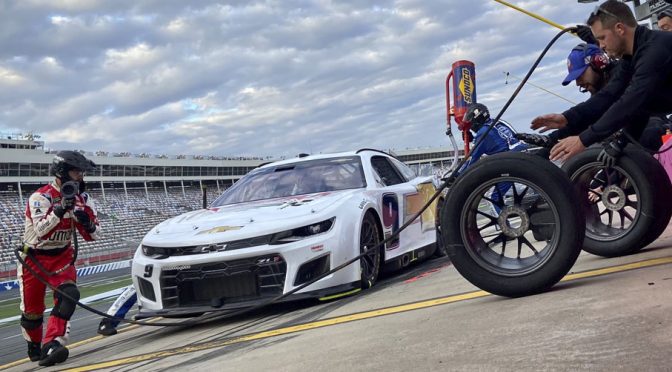
Instead of removing and fastening five lug nuts, tire changers will only have to worry about one per round. That will be the biggest difference with live stops in 2022. It changes the flow a little bit but helps with the overall speed. Image From Ios

“Most of us, we’re used to like a pop five times,” Josh Thomas, a front-tire changer for the No. 3 Richard Childress Racing Chevrolet, told NASCAR.com. “Other than that right now, it’s all the same — pulling tires, getting to the car quick, hitting that one lug nut. It’s not really retraining much because everything’s like tenths of seconds. Kind of like the same time as last year, might be a second faster.”

RELATED: Single lug, air gun explained | Watch drivers’ live pit stops

Teams had their first chance at Next Gen pit practice Thursday during the second day of testing at Charlotte Motor Speedway. NASCAR granted them an hour at the end of the eight-hour open-track session.

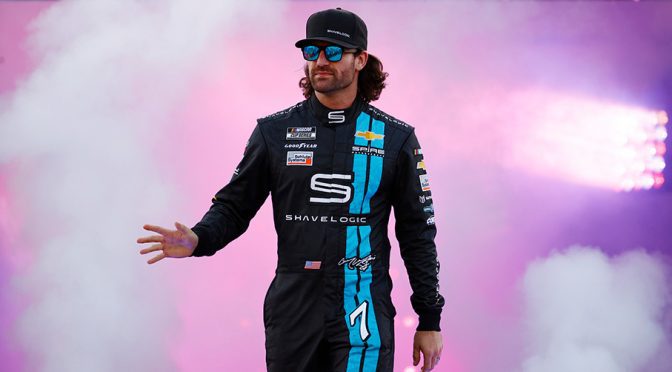
Of the 22 cars on site, 11 asked for a stall. Only four actually took advantage of the opportunity — the No. 3 Richard Childress Racing Chevrolet of Austin Dillon, the No. 7 Spire Motorsports Chevrolet of Corey LaJoie, the No. 9 Hendrick Motorsports Chevrolet of Chase Elliott and the No. 24 Hendrick Motorsports Chevrolet of William Byron. Internal team personnel did rotate.

“It seems like the guys are enjoying working with it,” Elliott said. “You’re not having five lug nuts to take off and put on in the garage area constantly and things of that nature. So, overall, I think it’s been a plus.”
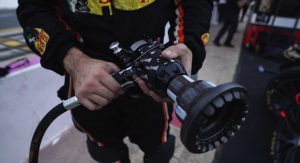
Pitstops Airgun WebThomas did note because of the single lug nut, the new air guns weigh more.

What doesn’t, though, are the tires. They are now 18 inches rather than 15. The wheel is also aluminum rather than steel.

“It helps our bodies,” Thomas said. “The tires aren’t as heavy. It helps us to get it off quicker. It’s an upgrade, we think, in our score.”

That’s one opinion. Odds are, there will be multiple and different viewpoints. That’s inevitable with change.

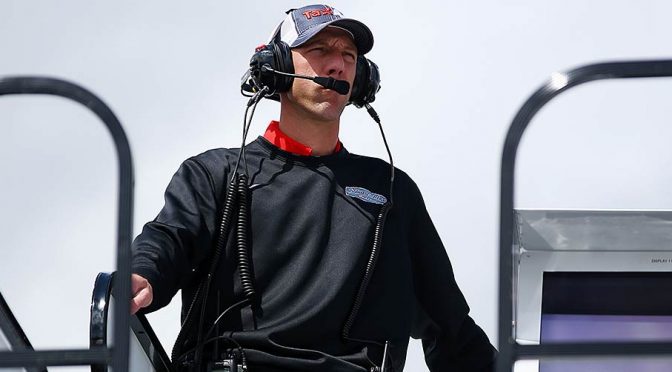
But Justin Alexander, crew chief of the No. 3 team, doesn’t expect his job to change all that much atop the pit box, either. Just learning and adapting what calls to make.

“Any adjustment you do to the car slows the stops down typically, and the more you adjust, the more the stops are slowed down,” he said. “It makes those things more critical. You’re obviously not gonna want to tune on the car, adjust on the car as much, but sometimes you have to.

“And it’ll make fuel flow — fueling the car will probably be the holdup at some point — critical if you’re trying to put two cans of fuel in.”

Teams are allowed to practice pit stops at their shops. Next Gen cars will make their competitive debut Feb. 6 in the 2022 Busch Light Clash at the Los Angeles Memorial Coliseum.

“It’s faster,” Thomas said. “Everything’s got to be quicker. Everyone’s got to be quicker on pit road. Whoever can figure out how to shave off two tenths, even one tenth of a second, that’s going to be tremendous.”
CONCORD, N.C. — It’s science, but it’s not complicated.

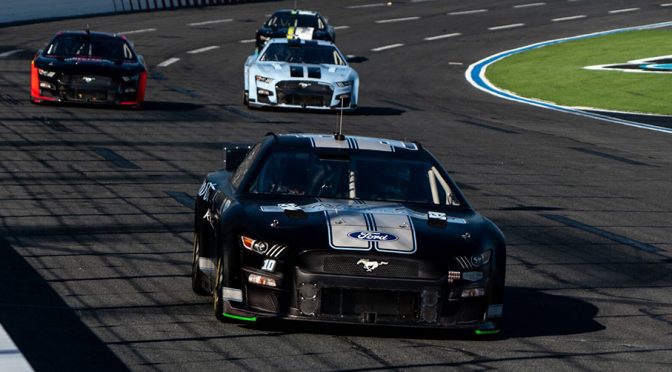
Most of the two-day Next Gen test that spanned Wednesday and Thursday saw cars run solo around Charlotte Motor Speedway. There were times when multiple cars were on track together, though it never came near the amount that would be seen during an actual race. And that’s OK because drivers can assume what will happen in pack racing.

“I mean, unless we defy physics, the guy out front is gonna have an advantage,” Chase Elliott said Thursday. “So, if somebody figures out how to defy physics, please let me know. I’d love to meet you. But until somebody figures that out, the front person is always gonna have an advantage. And I don’t think it matters how many aero ducts and parts and pieces we put on these things, it’s never going to give the guy in second an advantage over the guy out front.”

NEXT GEN TESTING: At-track photos | Unofficial speeds | Day 1 review

The important part of testing right now is learning the Next Gen ins and outs, and there’s a lot of that left to do. Simply put, it’s a different car. The basics need to be handled before a complete product is even close to ready.

Regardless, people outside of the garage want to know what live-action racing is going to look like.

“It’s not instant, it’s not instant gratification, it’s not posted and get the reward of it,” Ross Chastain said. “Like it’s gonna take some time. We’re building this thing. So, truly, I know as hard as it is in 2021 going into 2022 of this world, that question is not ready to be answered yet.”

Chastain actually ran laps behind another driver, too. His No. 1 Trackhouse Racing Chevrolet trailed William Byron’s No. 24 Hendrick Motorsports Chevrolet in Thursday’s first half of on-track work. The two traded spots. Chastain noted Byron had more success following than he personally did. Chastain felt tight in turns, but it was worse when behind Byron.

RELATED: Findings from Austin Dillon’s Day 1 wreck and repair

Teams later appeared to plan when to hit the track together.

“Whatever area of the corner you’re most vulnerable in is going to be more uncomfortable than it was when you were by yourself,” Elliott said. “That’s typically the case most everywhere we go in anything I’ve ever driven, so I don’t expect that to be much different.

“The other piece of that is, how many of these things do we want to tear up before we get to Daytona? Because I don’t think everybody has just an abundance of these cars and/or parts sitting around. So, we need to weigh out what’s important right now.”

Daytona International Speedway will host the 2022 points-paying season opener Feb. 20. There will be three exhibition events before then, two of which — Bluegreen Vacations Duel 1 and 2 — will be held in Daytona. Next Gen’s official debut, however, will be Feb. 6 in the Busch Light Clash at the Los Angeles Memorial Coliseum.

That’s when the real racing will begin.

“We know dirty air,” Chastain said. “Like dirty air existed since the second car got built in the world. So, we just have to do a better job. NASCAR knows that, and they’re working on it.”

Unofficial test speeds from organizational Next Gen testing for the NASCAR Cup Series on Nov. 17-18 at Charlotte Motor Speedway’s oval layout. Note that times are unofficial, with no technical inspection conducted before each session.

RELATED: Day 1 overview | Scenes from Next Gen test

Day 2

Position No. Driver Best Time Difference Best Speed Team
1 10 Aric Almirola 30.731 175.718 Stewart-Haas Racing
2 4 Kevin Harvick 30.757 -0.026 175.570 Stewart-Haas Racing
3 45 Kurt Busch 31.085 -0.354 173.717 23XI Racing
4 12 Ryan Blaney 31.158 -0.427 173.310 Team Penske
5 22 Joey Logano 31.166 -0.435 173.266 Team Penske
6 24 William Byron 31.193 -0.462 173.166 Hendrick Motorsports
7 6 Brad Keselowski 31.199 -0.468 173.082 RFK Racing
8 78 BJ McLeod 31.233 -0.502 172.894 Live Fast Motorsports
9 94 Ty Dillon 31.243 -0.512 172.839 GMS Racing
10 43 Erik Jones 31.260 -0.529 172.745 Richard Petty Motorsports
11 1 Ross Chastain 31.294 -0.563 172.557 Trackhouse Racing Team
12 9 Chase Elliott 31.309 -0.578 172.474 Hendrick Motorsports
13 7 Corey LaJoie 31.322 -0.591 172.403 Spire Motorsports
14 20 Drew Herring 31.329 -0.598 172.364 Joe Gibbs Racing
15 11 Denny Hamlin 31.336 -0.605 172.326 Joe Gibbs Racing
16 16 AJ Allmendinger 31.340 -0.609 172.304 Kaulig Racing
17 47 Ricky Stenhouse Jr. 31.346 -0.615 172.271 JTG Daugherty Racing
18 34 Michael McDowell 31.352 -0.621 172.238 Front Row Motorsports
19 3 Austin Dillon 31.432 -0.701 171.799 Richard Childress Racing
20 21 Austin Cindric 31.438 -0.707 171.767 Wood Brothers Racing
21 51 Cody Ware 31.595 -0.864 170.913 Petty Ware Racing
22 66 Timmy Hill 32.593 -1.862 165.680 Motorsports Business Management

Day 1

Position No. Driver Best Time Difference Best Speed Team
1 12 Ryan Blaney 31.179 173.193 Team Penske
2 6 Brad Keselowski 31.204 -0.025 173.055 RFK Racing
3 24 William Byron 31.231 -0.052 172.905 Hendrick Motorsports
4 43 Erik Jones 31.265 -0.086 172.717 Richard Petty Motorsports
5 94 Ty Dillon 31.288 -0.109 172.590 GMS Racing
6 4 Kevin Harvick 31.289 -0.110 172.585 Stewart-Haas Racing
7 45 Kurt Busch 31.294 -0.115 172.557 23XI Racing
8 16 Justin Haley 31.295 -0.116 172.552 Kaulig Racing
9 34 Michael McDowell 31.370 -0.191 172.139 Front Row Motorsports
10 11 Denny Hamlin 31.377 -0.198 172.101 Joe Gibbs Racing
11 22 Joey Logano 31.400 -0.221 171.975 Team Penske
12 7 Corey LaJoie 31.406 -0.227 171.942 Spire Motorsports
13 78 BJ McLeod 31.441 -0.262 171.750 Live Fast Motorsports
14 9 Chase Elliott 31.466 -0.287 171.614 Hendrick Motorsports
15 20 Christopher Bell 31.481 -0.302 171.532 Joe Gibbs Racing
16 10 Aric Almirola 31.505 -0.326 171.401 Stewart-Haas Racing
17 21 Harrison Burton 31.516 -0.337 171.342 Wood Brothers Racing
18 1 Ross Chastain 31.522 -0.343 171.309 Trackhouse Racing Team
19 47 Ricky Stenhouse Jr. 31.529 -0.350 171.271 JTG Daugherty Racing
20 51 Cody Ware 31.618 -0.439 170.789 Petty Ware Racing
21 3 Austin Dillon 31.633 -0.454 170.708 Richard Childress Racing
22 66 Timmy Hill 33.925 -2.746 159.175 Motorsports Business Management

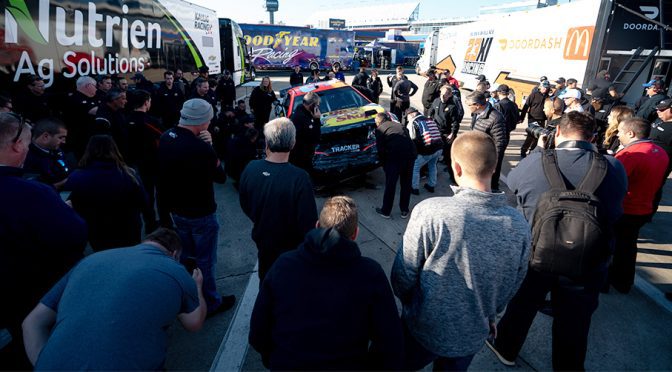
CONCORD, N.C. — Like bees swarming a hive, mechanics and engineers alike encircled Austin Dillon’s wrecked No. 3 Chevrolet once dropped off by the tow truck in the garage at Charlotte Motor Speedway. Personnel from multiple teams, manufacturers and NASCAR itself buzzed about with camera phones in hand, trying to pinpoint and capture areas of impact for further examination and evaluation. Everyone wanted intel.

That was the whole purpose of Wednesday’s Next Gen test, which will continue Thursday.

“When the incident happened, we actually left our spot in The Speedway Club and drove over there,” said John Probst, NASCAR’s senior vice president of racing innovation. “We talked to the first responders. They said (Dillon) was already out of the car. Then we went to see him in the infield care center. He had already been released before we could get there.

“So, yeah, it was a really good feeling knowing that the car performed as designed. Looking at the front bumper on it, looked like it crushed the way it was designed to do.”

VIDEO: John Probst breaks down Austin Dillon’s wreck response

Within the first 20 minutes of the 11-hour session that began at 9 a.m. ET, Dillon’s car hit the outside wall in Turn 2 before sliding down the track into the inside wall. The left front sustained the most damage, as the Next Gen’s composite body crumpled upon initial contact. NASCAR described the force as “an above-average impact” after analyzing data.

2021 Ad2 Aa
Alejandro Alvarez | NASCAR Digital Media

Dillon was present in the garage but not made available for interviews. He later posted an update on Instagram.

“Talking with him, he felt like it wasn’t anything different than what he’s felt in the past,” Probst said, “so I think that was certainly a good reference point.”

Dillon, entering his ninth full-time season with Richard Childress Racing, stopped by the empty No. 3 stall before going to see his Chevy almost 40 minutes after the on-track accident. He briefly chatted with reigning champion Kyle Larson and Hendrick Motorsports vice president of competition Chad Knaus. Dillon hung around for more than 10 minutes before he headed atop his hauler.

Larson and Knaus were just some of the many folks to wander by. When the car first arrived, drivers such as Denny Hamlin (a Toyota wheelman), Daniel Suarez (Chevrolet), Michael McDowell (Ford) and Ricky Stenhouse Jr. (Chevrolet) stopped by for examination. Hendrick crew chief Alan Gustafson took a look for fellow Chevy insight.

RELATED: Bookmark for Thursday’s live stream of Next Gen test

RCR actually had the ability to take the car back to its shop and rebuild the exact same one to continue testing. A crew left before 11 a.m. ET. The face of the vehicle had already been ripped off by the time it left – hood, bumper and any exterior all removed. Select impacted internal parts and pieces were also separated.

2021 Ad Aa
Alejandro Alvarez | NASCAR Digital Media

“One of the design criteria that we put into the car was to have the front clip be able to be replaced,” Probst said. “And they were able to do that this afternoon and that car is on the way back here or will be shortly.”

The car returned around 7 p.m. ET. Dillon was back on track with an hour to spare. All in all, RCR replaced the left-front quarter panel, the tail, front fascia, hood, splitter, front clip, engine and front suspension.

RELATED: Crew chief details work RCR crew did to get car back on track

Findings from Dillon’s car wreck and revival could potentially benefit the sport overall as Next Gen developments continue in preparation of its competitive debut Feb. 6 in the 2022 Busch Light Clash at the Los Angeles Memorial Coliseum.

“We don’t ever like to see them crash,” Probst said. “But we felt like the car performed very well.”

VIDEO: Watch Austin Dillon return to the track with wreck-fixed car

CONCORD, N.C. — NASCAR held the first portion of its two-day Next Gen organizational test Wednesday at Charlotte Motor Speedway.

There were 18 Cup Series organizations on site with 30 drivers. One- and two-car teams were allowed to field one entry, while three- and four-car teams were limited to two. That did require some drivers to take turns behind the wheel.

For example: Trackhouse Racing is a two-car team, so Daniel Suarez and Ross Chastain split time in the No. 1 Chevrolet. Stewart-Haas Racing is a four-car team, so Kevin Harvick and Chase Briscoe shared the No. 4 Ford, while Aric Almirola and Cole Custer took turns in the No. 10.

2021 Nextgen Aa2
Alejandro Alvarez | NASCAR Digital Media

“You saw a lot of the smaller teams actually up the leaderboard a good bit there,” said John Probst, NASCAR’s senior vice president of racing innovation. “I know not everybody’s coming here to put a lap time up. But you see the teams from front to back are a lot more prepared and they’re on the track right away. So, I feel like they’re learning very quickly and their level of preparation has gone way up, especially now that we’re done racing. They’re completely focused on the car at this point.

“The competition from front to back should be continuing to get better and better.”

RELATED: Unofficial speeds | Next Gen timeline | Test at Charlotte | Thursday’s live stream

The test session lasted from 9 a.m. ET to 8 p.m. ET with a one-hour break. Thursday will be a bit shorter, going from 8 a.m. ET to 5 p.m. ET. It will also stream live on NASCAR.com’s YouTube starting at 9 a.m. ET.

This two-day test marks the 16th overall since its first on Oct. 8-9, 2019 — production was delayed a season due to the COVID-19 pandemic. It’s the second organizational test; the first was earlier this year on Oct. 11-12 on Charlotte’s 2.32-mile road course rather than the 1.5-mile oval.

“I feel like there’s been good, steady progress with some of the gremlins in the steering, some of the gremlins in the transaxle and then just standard suspension settings,” said Kurt Busch, who has driven the Next Gen car before, but Wednesday marked his first on-track time with 23XI Racing. “Those are all getting a bit more scienced out. It was like we were on the moon before and now we’ve landed on planet Earth. And now it’s up to each team to individually tailor the cars to make themselves better.

“Then we have to see how the cars will do in traffic still, I still think that’s going to be an interesting game.”

PHOTOS: Experience the sights and scenes from Charlotte

There was no pack racing Wednesday, though the idea was tossed around for Thursday. The last hour of Thursday will be dedicated to pit practice, a Next Gen first. NASCAR will also make a spoiler change for Thursday’s stretch, cutting the spoiler from eight to seven inches; that is expected to add 30 horsepower and increase the speed of the cars.

2021 Nextgen Aa
Alejandro Alvarez | NASCAR Digital Medi

The Next Gen cars will make their competitive debut Feb. 6 in the 2022 Busch Light Clash at the Los Angeles Memorial Coliseum.

“This entire car from top to bottom — for everybody that’s working on it, for all the drivers, for everybody that’s building the parts and pieces — it’s a new challenge,” Alex Bowman said. “There are so many things on it different than what we had. It’s very challenging.

“The old car was really fun because how aggressively hard you could drive it. This car, you can’t drive it as hard I don’t feel like, or at least I’m not comfortable with it yet. But learning where those limits are — how hard you can or can’t drive it — is going to be a challenge. I’m enjoying trying to figure it out.”

VIDEO: Denny Hamlin spins on track | Ricky Stenhouse Jr. evaluates progress

CONCORD, N.C. — Brad Keselowski was referred to as “the spark” numerous times Tuesday during Roush Fenway Racing’s rebrand unveil at Charlotte Motor Speedway. If that’s the case, team owner Jack Roush kept the embers hot and burning over the years.

Together, they hope to recreate a full-fledged fire with what is now known as RFK Racing come the 2022 NASCAR Cup Series season.

“I think on the surface, when you look at them, you may not think that they are aligned and similar,” president Steve Newmark said. “But I think Chris Buescher characterized it best, I’ll share with you, when he said Brad Keselowski is more like Jack Roush than any other driver in the garage.”

RELATED: Roush Fenway Racing rebrands to RFK Racing | All of Roush Fenway’s wins by driver

Buescher is now Keselowski’s sole teammate. Keselowski and Roush announced their partnership back in July, and since the 2021 season concluded two weeks ago, they’re officially a duo. Keselowski is now the driver of the No. 6 Ford and a part owner of RFK Racing. Buescher will pilot the No. 17 car.

While Keselowski came into the organization prepped with ideas for change – for example, the recent facility updates – he has also perfectly fit into the mold Roush has built. Again, similar characteristics at play.

“They’re extremely cerebral,” Newmark said. “They are very detail-oriented and thoughtful. They are going to immerse themselves in everything. They don’t believe that hey, this stuff is below me. …

“(Brad) also recognizes that every person in the company matters. And that was always very important to Jack. He said, ‘Everybody contributes and we should treat everybody with respect regardless of where they are in the hierarchy.’ And I’ve seen that right away from Brad.”

Roush is 79 years old and held ownership in the Cup Series since 1988. Keselowski, now 37, had his first taste of Cup competition in 2008 and started full-time racing in 2010.

The head boss jokes he hasn’t made up his mind about the youngster yet.

“We are still circling one another,” Roush said. “Haven’t gotten the full measure of the size of the other dog.”

Meanwhile, Keselowski is well aware of who he has joined — a NASCAR Hall of Famer.

“I’ve got a lot of wins to catch up on,” Keselowski said. “He’s got, I think we said the other day, 300-plus NASCAR wins. I haven’t gotten to 100, I would like to get to 100 as a driver. But even if I do, I’ll still be 200 behind him. So, a lot of work to do.”

WATCH: Brad Keselowski talks about crew chief Matt McCall

Roush has tallied 325 NASCAR national series wins as an owner. That breaks down into 137 at the Cup Series level, 138 in the Xfinity Series and 50 in the Camping World Truck Series.

Keselowski holds 75 victories as a driver. He has won 35 races in the Cup Series, including one this past season, 39 in the Xfinity Series and one in the Camping World Truck Series. He does have prior Trucks ownership experience, where he added 11 wins.

“I’ll be able to back away some and to not go to all the races and not be the first one on top of the pit box and the last one in my car to go home as I’ve been in the past for most of my time,” Roush said. “I enjoy passing the baton to Brad. Steve questioned me if I was really willing to do that and I said, ‘Well, as long as I can keep one hand on it for a while, it will work for me.’ ”

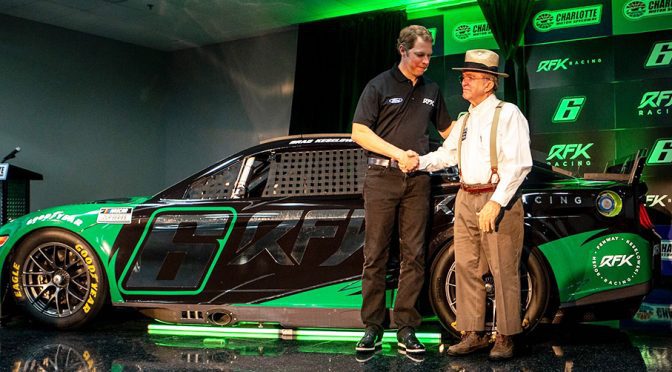
CONCORD, N.C. — Roush Fenway Racing made its new era of ownership official with a nod to its history Tuesday with the presentation of a new name for 2022 and beyond — Roush Fenway Keselowski Racing or RFK Racing for short.

The new branding formally adds part-owner Brad Keselowski to the team’s name, joining team founder and NASCAR Hall of Famer Jack Roush, plus Fenway Sports Group. The team name was announced Tuesday afternoon at Charlotte Motor Speedway, and it’s a nifty balance of new mixed with overtures to the team’s heritage.

“What do they say at weddings — something old, something new, something borrowed?” Keselowski said at the unveiling of the new-look car. The new came in the form of the name, logo and leadership structure; the old was part of the updated but retro-styled version of the team’s flagship No. 6.

The borrowed was Keselowski’s name above the door, presented in a typeface used by his previous team owner, Roger Penske. “I like the way it looks. I always did,” Keselowski said. “I thought it was really professional and clean.”

The addition of Keselowski to the organization’s ownership group was announced July 20. The former Cup Series champion will drive the team’s No. 6 Ford in the NASCAR Cup Series starting next year and will assume a leadership role in RFK Racing’s competition department.

RELATED:  Track all the Cup Series changes | 2022 schedule

Keselowski has already hit the ground running in just the second week since he closed the books on his successful 12-year run with Team Penske, a tenure that included his lone Cup Series title in 2012. Though Tuesday signaled a shift to a new era in the team’s history, RFK Racing president Steve Newmark said Keselowski emphasized preserving the organization’s legacy when making the move.

“Brad and I talked about it, he said we want this to be the perfect balance between paying homage to our history and our lineage and all the accomplishments that the team’s done, but also at the same time signifying that it is a new world order,” Newmark said. “That sounds very simple, when you just say it as a soundbite. It’s a lot harder to do when you start trying to incorporate that. So whether we got it exactly right, time will tell, but I think our intent is to really signify that this is kind of the next evolution the next step in our organization, but we’re not going to lose our roots.”

The 37-year-old driver has been involved in team ownership before, leading Brad Keselowski Racing in an effort that produced 11 Camping World Truck Series wins from 2008-2017. He’ll team alongside Chris Buescher on the two-driver roster and will be tasked with helping to rejuvenate an organization that last won on the Cup Series level in 2017.

RELATED: Keselowski speaks on impact of crew chief Matt McCall

Part of that charge, Newmark said, was to create almost a “Roush 3.0” — an allusion to the team’s evolution from Roush Racing for its 1988 NASCAR debut to Roush Fenway Racing ahead of the 2007 season to its third and current iteration with Tuesday’s re-brand.

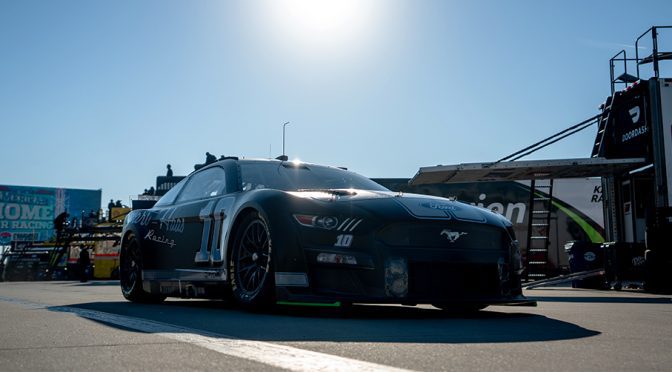
Keselowski will make the next step with his first time behind the wheel Wednesday in the first of two days of testing for the Next Gen car at the 1.5-mile Charlotte oval. Tuesday’s show car is the actual car that Keselowski will drive in the test, and though it’s all new for its 2022 debut, Roush approved of the number’s new-old look, refreshed for the team’s next chapter.

“I thought the 6 was too vertical,” Roush said of the previous version before turning his attention to the new style. “It still has a block shape, but it’s more dynamic in its skew, and I think that’s the way we should have done it in the first place. They didn’t ask me what to do about this, and the president I had at the time didn’t ask me about that configuration of the original 6 in 1988. But I think they got it right this time.”


2021nov16 Rfk Racing Reveal Brad Keselowski

NASCAR Cup Series driver Corey LaJoie and wife Kelly took to Twitter to announce that they are expecting another child next summer.

The Stacking Pennies star will now have a ‘party of 4’ after welcoming their first child, Levi Ronnie, in March 2020. LaJoie hosts the successful weekly podcast with special guests from motorsports and other industries, diving into all things NASCAR. New episodes of the show are released every Wednesday during the season, with select shows airing during the offseason.

LAJOIE’S LATEST: Three NASCAR champions join the show

On the track, LaJoie, a third-generation racer, drives the No. 7 Chevrolet Camaro for Spire Motorsports. He finished ninth in the 2021 Daytona 500 at Daytona International Speedway.

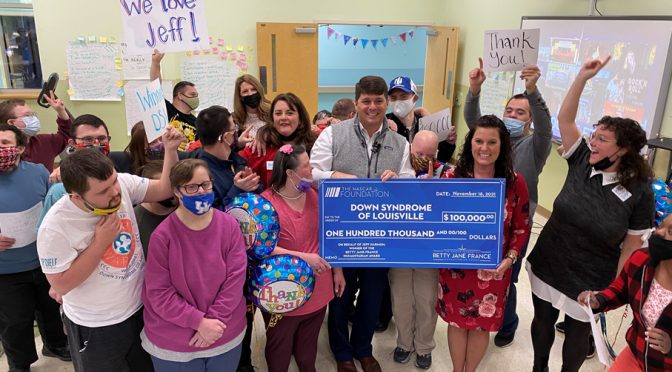
DAYTONA BEACH, Fla. — The NASCAR Foundation announced Louisville, Kentucky, native Jeff Harmon as the winner of the 11th annual presentation of the Betty Jane France Humanitarian Award during a live-streamed announcement on NASCAR’s YouTube channel Tuesday. As the award winner, Harmon secured $100,000 from The NASCAR Foundation to Down Syndrome of Louisville.

“I’m so excited and humbled to win this award”, said Jeff Harmon when he first received the news. “The other three finalists were all deserving as well, I’m blessed, what an honor. The $100,000 will go a long way in helping Down Syndrome of Louisville grow and expand to help even more kids. Thank you to The NASCAR Foundation and all who voted!”

RELATED: Rewatch the announcement on NASCAR’s YouTube channel

Harmon, who has served, supported, and uplifted Down Syndrome of Louisville and the surrounding communities for 18 years, earned the most online votes from a pool of volunteers, including: Erin Collins of the Dallas Hearing Foundation, Jaeleen Davis of Maggie’s Wigs 4 Kids of Michigan, and Beverly Hodson of Richie McFarland Children’s Center, all of whom have impacted a combined number of 6,330 kids through their continual service. Each of these organizations has each earned a $25,000 donation from The NASCAR Foundation in recognition of their nominated volunteers’ achievements.

“We’re very proud to present this award to Jeff Harmon, he has been doing extraordinary work for Down Syndrome of Louisville and exemplifies the values of Betty Jane France,” said Mike Helton, The NASCAR Foundation Chairman. “Our fans had a tough decision because all four are passionate people who devote hours of their time to help their respective organizations. We’re delighted to present this recognition to Jeff to honor the work he’s doing in the Louisville community.”

Throughout the 11 years of its existence, the Betty Jane France Award has highlighted 44 different individuals who have served and uplifted children in their local communities. The NASCAR Foundation, through this program, has acknowledged 622 years of combined service from these community heroes who have touched at least 374,763 children’s lives overall.

Harmon began his tenure volunteering for the Down Syndrome of Louisville (DSL) 18 years ago, when his son, Justin, was born with Down Syndrome. Serving in the capacity of coach and fundraiser, he logs around 20 hours per month with the organization. The organization serves as a support system for local families and individuals that have dealt with Down Syndrome.

Harmon and the DSL plan to use the $100,000 cash prize to help implement modern playground equipment and sensory room renovations, as well as launching satellite campuses to further support the Down Syndrome community.

Aside from his service, Harmon has been a committed lifelong fan of NASCAR, with his all-time favorite driver being Darrell Waltrip. The racing fan grew up racing modified stock cars with his family and friends, and now gets to share his love of the sport with his own family and children.

To learn more about The NASCAR Foundation’s programs, including the Betty Jane France Humanitarian Award and Speediatrics Children’s Fund, please visit NASCARfoundation.org.

23XI Racing announced a host of competition changes Tuesday, including the news Billy Scott will join its No. 45 team as crew chief for the 2022 NASCAR Cup Series season, rekindling a pairing with driver Kurt Busch.

The move puts Scott back atop the pit box full-time for the first time since the 2019 season. The 44-year-old Florida native spent two seasons with the former Michael Waltrip Racing team before a four-year stint (2016-19) with Stewart-Haas Racing. He was most recently head of race engineering for Richard Childress Racing.

RELATED: How Kurt Busch came to 23XI Racing | Reliving 23XI’s first win with Bubba Wallace

23XI also announced Robert “Bootie” Barker would return as crew chief for Bubba Wallace on the No. 23 Toyota team. Barker moved into the role last September and helped guide Wallace to his first Cup Series victory last season at Talladega Superspeedway.

“Bootie and I clicked from the start,” Wallace said in a 23XI news release. “He’s been a great addition to the No. 23 team and in just the short time he’s been the crew chief, he’s helped me on and off the track to be better every time I get in the car. To get the win together at Talladega, the first win for both of us, was really special. I’m excited to continue to build this team with Bootie and to see what we can accomplish together next season. I’m pumped to get the year started at the LA Coliseum and then head to Daytona for the Daytona 500.”

Barker and Scott will hold other roles in 23XI’s competition department, with Barker as senior setup engineer and Scott as senior race engineer. The team announced several other competition hires, including the addition of Dave Rogers, who helped Daniel Hemric claim his first Xfinity Series championship in 2021 as a crew chief for Joe Gibbs Racing. Rogers will serve as 23XI’s performance director.

Scott’s most successful campaign at SHR came during his one-year partnership with Busch, who notched one win and a career-best 22 top-10 finishes in 2018. Busch left Stewart-Haas for Chip Ganassi Racing the next year.

Busch was mum about his team’s crew-chief prospects for next year during an interview session on the eve of the Cup Series season finale at Phoenix Raceway. “We’re looking all over the place,” Busch said Nov. 6, “but I believe the crew chief that we’ll end up with will be a guy that you’ve heard of before and that is a winner in the Cup Series.” Ten days later, Busch was bullish about his prospects with Scott.

“The chemistry Billy and I had together a few years back at SHR was strong,” Busch said in Tuesday’s news release. “We raced smart and built solid consistency with each other. That showed with the results and the fun the team had together. Winning races is what it’s all about and our past experiences will help build the future at 23XI.”

23XI will expand its operations for 2022, adding a second team for its second season of Cup Series competition. NBA legend Michael Jordan joined driver Denny Hamlin in forming the organization, which debuted with driver Wallace in a single-car effort in the No. 23 Toyota this season.

Busch became a free agent once Chip Ganassi Racing announced its sale to Trackhouse Racing Team in June. The 2004 Cup Series champion just finished his 21st full-time season in NASCAR’s top division, and he comes to 23XI with a streak of scoring at least one win in his last eight seasons.

Scott was a longtime race engineer before transitioning to a crew-chief role in 2014. His only action atop the pit box last season came in two spot starts for Our Motorsports in the Xfinity Series, with Cup regular Austin Dillon behind the wheel.