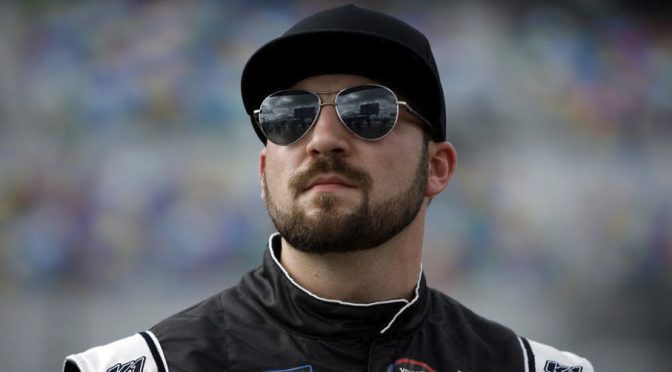
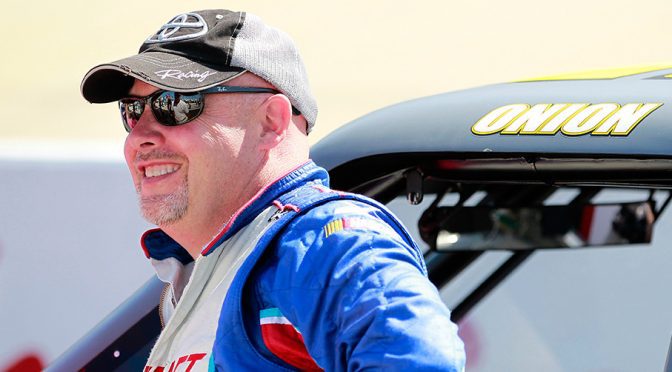
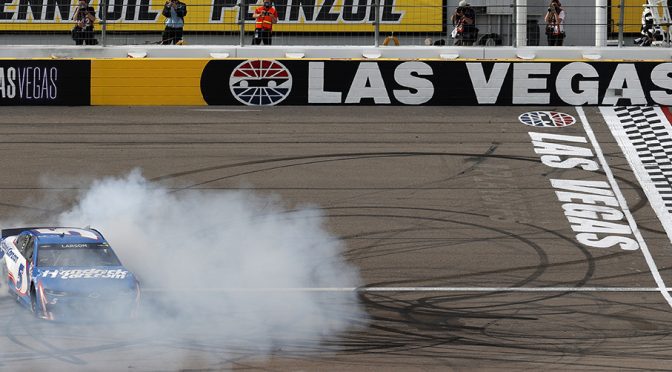
When a driver frequently moves from team to team, he’s often called a “journeyman.” Some may think of the term as derogatory, but Mike Bliss embraces the nickname.

And in the process, Bliss essentially holds an unofficial NASCAR record that likely will never be broken.

Before he retired after the 2016 season, the 56-year-old Milwaukie, Oregon, native developed a reputation that he would drive anything, anywhere and for anybody. As a result, Bliss wound up driving for 49 different teams during his 21-year career.

That’s not a mistake or typo: Bliss drove for 49 different teams. Some were for a race or two, others were for several seasons. Granted, there were a few organizations that may have been owned by the same individual, but the teams were on different NASCAR levels such as Cup, Xfinity and/or Trucks. Hence, one owner may have been counted two or even three times, but that was a rarity.

By checking one of the top statistical sources — Racing-Reference.Info — Bliss drove for 18 different Cup teams, 17 Xfinity teams and 14 Trucks teams. There’s even a YouTube video that breaks down Bliss’s career — although their counting is off: they have him running for only 39 teams.

“So I bounced around a lot, but I had a pretty good time,” Bliss said with a laugh.

He then added with another laugh, “Even I have a hard time believing it was that many (teams).”

While he drove in all three of NASCAR’s premier series, it was in the Camping World Truck Series where Bliss found his greatest success, earning 13 wins, highlighted by capturing the 2002 championship.

“I think at that point, it was the biggest achievement (in NASCAR), but before that I also won the USAC Silver Crown championship (1993) and that was pretty big,” Bliss said. “And there were also a lot of races in there that meant, I don’t want to say meant more than the championship, because I would say the championship was more of a success. But there were races that I won that were pretty special.”

Regardless of who he drove for, be it Joe Gibbs or James Finch, Bliss gave it all he had, no matter what.

********************************

Bliss unceremoniously retired after his final Xfinity Series start late in the 2016 season at Kentucky Speedway, driving just two laps before he pulled the car in the garage due to mechanical failure and earned a last-place DNF.

He was done.

He spent the next few years working for a sandblasting company and also doing some carpentry and touch-up work for a home builder in Atlanta and Charlotte.

“I tried to get out of racing,” Bliss said. “When I first got out, I tried various things, but it just didn’t work. And everything just kind of led me back to racing.

“You race all your life and you don’t know what else to do when it’s over. I struggled on trying to figure out what to do. I wanted to get away from racing, but I just couldn’t.”

Bliss also faced a Catch-22 situation. As much as he missed racing, he also didn’t miss one key element of racing, namely, the driving part. After doing some testing for several ARCA teams for the last few years, he came to a realization.

“I just didn’t have it, I just didn’t feel it anymore,” Bliss said. “What I do miss is a long time ago when I was competitive. I wasn’t (competitive) the last three or four years of my life in racing.”

Bliss got even more involved in somewhat of a comeback to racing — albeit not behind the wheel — at the beginning of this year when he went to work for Dale Earnhardt Jr.’s JR Motorsports late-model program.

But when 2020 USAC National Midget Championship winning team owner Chad Boat called Bliss in late April, offering him a job as a jack-of-all trades, Bliss couldn’t say no, especially since sprint cars and midget cars were his first racing love.

Bliss has become an integral part of Boat’s CB Industries operation, including driving the team hauler, working on race cars and whatever other duties that need to be done for the team’s USAC midget and sprint cars, as well as their POWRi teams.

Bliss doesn’t have an official title with the team, but jokingly calls himself a “vice principal,” similar to high-ranking “principals” in Formula One and IndyCar teams.

But some of Bliss’ duties are, well, below the pay grade of a usual team principal.

“I’m sitting here in front of a dryer in Placerville, California,” Bliss said with a laugh in our phone conversation. “We’re heading to a USAC Midget car race later this morning.”

Hey, it’s a job, and somebody has to do it, especially since the team is currently on a one-month West Coast swing. (Its final race of the season is Dec. 1 near St. Louis before heading home for the winter in North Carolina.)

“This is, you know, going back to kind of where I started,” Bliss said. “This is what I did do, raced midgets in the past when I was first coming up.”

********************************

Bliss is glad to be back in racing, albeit not behind the wheel. Still, he’s able to give the teams’ drivers the benefits of his experience, a great knack on how to set up a car and any other advice his nearly 40 years of racing might provide.

But he’s also still learning himself, as well. He’s seeing a side of racing he never really saw or gave much thought to when he was chasing checkered flags during his USAC and NASCAR days.

That is, how a crew member sees a race differently than how a driver might see it. The differences really are quite fascinating at times, Bliss said.

“It’s exciting, you understand now what the guys on the team, what it felt like to win a race and lose a race,” he said. “As a driver, you just get out and go, but you never really realize how much the whole crew feels good about what they’ve done.

“You understand the crew chief or the car chief or the tire guy, they take pride in everything they do. And I’m not saying when the driver lets them down or they lose a race or don’t feel like the driver put everything into it, you just totally see a different part of the racing.”

Bliss has learned so much in what has kind of become an apprenticeship of sorts with Boat’s USAC/POWRi operation that he offers up a good bit of advice to up-and-coming and even veteran NASCAR drivers.

“I think it’d be good for a driver to go backwards in life just once to see what it feels like (as a crew member),” he said. “I think that might make them a better driver.”

Bliss is still at an age where he potentially could get back into some type of race vehicle. He was asked if he might consider joining fellow former NASCAR drivers like Greg Biffle and Bobby Labonte in competing in the upcoming second season of Ray Evernham and Tony Stewart’s Superstar Racing Experience, which begins its second six-week season next June.

Bliss demurred.

“I don’t know if I would,” he said, before quipping, “My thing is I don’t want to get in a car again and like it. I don’t want to go back. I want to stay away.”

********************************

There’s no question Bliss’ most successful season was 2002, when he won the Truck Series championship, including earning five of his 13 career Truck Series wins.

And what a back story there is.

Xpress Racing had been caught cheating with one of its Xfinity Series cars (then known as the Busch Series) in mid-June 2001. Team owner Steve Coulter and driver Tim Sauter were each penalized, but crew chief Dave Fuge suffered the biggest hit: He was suspended indefinitely from the sport and fined $30,000.

The team promptly shut down and went up for sale within days of the punishment being handed down. But by the end of the season, Fuge had convinced Coulter — a successful trucking company owner — to return to the sport in 2002 and field a Truck Series team because operating costs were significantly lower, and with Bliss as the driver.

But, there were initial problems that left the team’s future in question.

“It started off the year that we weren’t going to run,” Bliss said. “We didn’t know. (Fuge) was suspended … and didn’t get reinstated until five races into the year. We didn’t know what we were doing, there was no plan, no plan to run the whole year. But we just started winning and finishing good, were leading the points and it just all came together. (Fuge) got his license back and we put everything all together. It was really pretty cool.”

Given the uncertainty the team faced at the beginning of the season, Bliss wasn’t totally convinced he had won the championship right away.

“Like everything else, it doesn’t really sink in until you get home or maybe a few days later, and then it all sinks in,” Bliss said. “I mean, it was really cool because there was no pressure, we didn’t know what we were doing, we were just kind of having fun.

“After it was all over, you want to do it again. But I moved on to the next year and an Xfinity car for Gibbs (Joe Gibbs Racing) and didn’t get a chance to come back and do the Truck again.”

Travis Kvapil replaced Bliss in the Xpress Motorsports Truck and won the championship in 2003. Fuge purchased the team and owned it from 2004-07. In 2009, Kyle Busch bought the team, forming the foundation for what would become Kyle Busch Motorsports.

********************************

Another of Bliss’ career highlights also came unexpectedly in 2004.

He was racing full-time in the Xfinity Series for JGR, but he and his team were given an opportunity to compete in four Cup races that season, as well.

On Sept. 11, 2004, Bliss wasn’t on anyone’s radar. He qualified 33rd and probably would have been lucky just to finish the race — likely at least a few laps down.

But he and his team surprised everyone, finishing fourth in a race that was won by Jeremy Mayfield. Dale Earnhardt Jr. finished second, followed by Jeff Gordon, Bliss and Mark Martin.

“That we finished (fourth) at Richmond was really cool,” Bliss said. “That was an achievement we didn’t expect to happen. But there were also several USAC wins that happened that were pretty cool, like it came down to the last lap and were pretty exciting.”

********************************

There also was an unexpected regret to his racing career, one Bliss still thinks about, especially when the month of May rolls around every year.

“When I was in USAC, that was about the time that the IRL (Indy Racing League, now known as IndyCar Series) was starting to form (eventually began in 1996),” Bliss said. “I had some chances to do that and I turned them down to go Truck racing.

“I always wish I would have ran Indy (the Indy 500) in an Indy car and never did. That’s one thing I really missed out on. I’m not saying I really wanted to do a whole, full open-wheel career. But Indy (the 500) was one thing that I kind of missed and not ran. I tested an Indy car a couple times (1994), but I just went Truck racing.”

Bliss also has one key regret when it comes to his time in NASCAR.

“I was driving a truck for Jack Roush in 1999 when I went to drive in Cup for A.J. Foyt in 2000,” Bliss said. “It’s not really a bad thing to go drive for a guy like Foyt, that’s what I thought, but it didn’t turn out.”

After finishing 33rd in the season-opening Daytona 500, Bliss failed to qualify in the next three races (Rockingham, Las Vegas and Atlanta) and was fired.

He eventually hooked up with team owner Jack Birmingham, driving 24 races the rest of that season (ultimately finished 39th). After competing in just one race each in the Xfinity and Truck Series in 2001, he bounced back to full-time competition in 2002, essentially going from zero to hero and Truck Series champion.

********************************

So there you have it, the story of Mike Bliss, NASCAR race-car driver.

Wait, scratch that, make that the story of Mike Bliss, journeyman NASCAR race-car driver.

“I never really thought about it (being called a journeyman),” Bliss said. “I just wanted to drive race cars. People would call me to drive ‘em and I just did it, you know? I look back and I wouldn’t want to have to do that (again), but I had to do it (then).”

*****************************

The Mike Bliss File:

* Age: 56

* Hometown: Milwaukie, Oregon

* Personal: Has been married to wife Sue for 33 years. The couple has one child, a daughter, Brittney, 21.

* Notable: Won the 1993 USAC Silver Crown championship. He likely would have continued running sprint cars and midgets but received an offer to drive in the NASCAR Camping World Truck Series in 1995, the series’ first year of operation, from team owner Jim Smith. Bliss would finish eighth in the standings. … Bliss likely would have won Rookie of the Year honors in 1995, but the series did not name a ROY that season.

Career highlights:

* NASCAR Cup Series career: 179 races, zero wins, one top-five and seven top-10 finishes. Best season finish: 28th (2005).

* NASCAR Xfinity Series career: 359 races, two wins, 29 top-five and 76 top-10 finishes. Also three poles. Best season finish: fifth (2004, 2008 and 2009).

* NASCAR Truck Series career: 206 races, 13 wins, 61 top-five, 109 top-10 finishes. Also 18 poles. Best season finish: won the championship (2002).

Veteran motorsports writer Jerry Bonkowski is writing a number of Where Are They Now? stories this year for NASCAR.com. Check out stories he has already done on Doug Richert, Brian Scott, Robby Gordon, Ricky Craven, Terry Labonte, Kenny Wallace, Trevor Bayne, Ken SchraderShawna RobinsonSam Hornish Jr.Bobby Labonte, Greg BiffleRicky RuddDarrell WaltripMark MartinMarcos Ambrose and Juan Pablo Montoya. Follow Jerry on Twitter @JerryBonkowski.

NASCAR announced significant Xfinity Series penalties on Monday for a pair of isolated infractions.

Owner/driver of the No. 74 Chevrolet Mike Harmon was assessed an L2 penalty for violating Section 5.1.a.c.d: Vehicle testing in the NASCAR Rule Book. He’ll incur a loss of 75 owner points and 75 driver championship points, to be applied in the 2022 season. NASCAR fined crew chief Ryan Bell $50,000 and suspended him from the next six championship points events, also to begin starting in 2022.

RELATED: Xfinity Series standings | Xfinity Series schedule

Earlier this month, Mike Harmon Racing posted images of the No. 74 car turning laps at Rockingham Speedway. Harmon competed in one Xfinity race in 2021, finishing 39th in October at Martinsville Speedway.

Separately, NASCAR indefinitely suspended driver Caesar Bacarella for violation of Sections 12.1; 19, substance abuse policy. Bacarella competed in five Xfinity races in 2021 behind the wheel of the No. 90 Chevrolet with a best finish of 12th in the season-opener at Daytona. Bacarella also co-owns Alpha Prime Racing.

CONCORD, N.C. — It felt like a first day of school for Trackhouse Racing employees, getting a first look at their new shop Monday morning.

Formally decked out in Chip Ganassi Racing red, the facility located in Concord, North Carolina, is now covered in blue as the organization, co-owned by Justin Marks and music superstar Pitbull, officially took over after its purchase back in June.

RELATED: Trackhouse Racing’s new shop in photos

Employees filed their way into the front entrance, taking time to gather together in the front lobby and listen to a welcome speech from Marks over breakfast. Pitbull also appeared in a video message, telling the employees how proud he is of their efforts while offering words of encouragement for next season.

Trackhouse’s pair of drivers, Daniel Suárez and Ross Chastain, were also on hand for the official unveiling. Suarez even raced executive vice president and general manager Ty Norris to the door when it was time to head into the shop floor.


View this post on Instagram


A post shared by Daniel Suárez (@daniel_suarezg)


“Now, it feels like home,” Suárez told NASCAR.com. “I knew something cool was going to happen to this place in the last week. Nobody saw this coming, I can guarantee you that. It looks very, very cool. Before, everything here was red. Now, almost everything is blue and it’s turning into blue slowly. It’s very, very nice to be part of this project. Just a year-and-a-half ago, all this was on paper and to know that today we are on this level, it’s pretty remarkable.”

Still in search for his first career Cup victory, Suárez ended his fifth full-time NASCAR Cup Series season with one top five and four top 10s, including a highest finish of fourth in the Bristol Dirt Race.

With the introduction of the Next Gen car for 2022, the 29-year-old driver didn’t have to think twice about continuing his run with Trackhouse.

“Justin always told me you have to trust me, I have a big mission for this,” Suarez said. “Ty Norris said the same thing. A lot of people thought I was a little bit crazy for taking a leap of faith for a second year in a row on a new team. My gut feeling was telling me this was the right place for me to be, not just for the short run but also for the long run and to grow together and be able to win races and championships.”

RELATED: Tracking the 2022 driver-crew chief lineups 

After racing a full year without a teammate, Suárez will now work alongside Chastain, who was brought into the fold after one season with Ganassi driving the No. 42 Chevrolet. Chastain will now drive the No. 1 Chevy, while Suárez will stick with the No. 99.

The welcome-home celebration was more of a welcome back for Chastain and other crew members who transferred over from Ganassi. But Chastain described a new energy in the air upon entry.

“It’s different,” Chastain said. “It’s more than a building, but it takes a building to be a home. We’ve got to have a place to work. This place has had a lot of race cars come in and out of it and a lot of people pour their careers and craftsmanships into race cars. We’re in the dawn of a new time with this car where it doesn’t take the amount of people. It’s not hand-fabricated and welded together. We’re buying a lot of it, so the group that’s going to appear to assemble it and to make these race cars better than the next, they have to be special because we’re all going to have the same tools as every other team in the sport.”

RELATED: ‘Kept a lot of 42 group’ at Trackhouse, says Ross Chastain

Both Suárez and Chastain have put a massive amount of faith in Marks and his plan, and rightly so. Marks hasn’t let off the throttle on his vision for Trackhouse’s future since his dream began, turning it into a reality on a timeline that is nothing short of impressive on one of motorsports’ biggest scales.

“This started as just an idea in my head and to see where we’ve gotten right now with it and as much as we’ve accomplished up to this point, it’s exciting but at the same time it really motivates me for the future and the opportunity that we have,” Marks said. “Seeing all these people in Trackhouse logos … I’m just ready to get to work.”

One of Marks’ various goals for Trackhouse is to create a work environment where his employees feel they have the best jobs in the sport. A new shop to complete that work is just the beginning of creating a family culture that’s capable of achieving unique things.

“It’s every day committing to the process of empowerment, accountability, recognizing that these people are truly the best at what they do and getting behind them and lifting them up and giving them all the tools to be successful,” Marks said. “That’s something that we will continue to do every day. But walking in here specifically and seeing all this … I mean, there’s been a race team in here for 20 years, but the air feels different today.”

One of the NASCAR Cup Series’ most iconic race teams, Wood Brothers Racing, took to social media Monday to unveil its new paint scheme for the 2022 Next Gen Ford Mustang and rookie driver Harrison Burton.

The cinematic reveal was created in iRacing and featured the storied No. 21 with gold chrome numbers on both sides of the car.

The team announced in July that Burton would be promoted from the Xfinity Series,  replacing Matt DiBenedetto after the veteran’s two years behind the wheel of the 21. Burton tallied four wins in a pair of full-time Xfinity seasons. He is the son of former Cup Series driver and current NBC Sports analyst Jeff Burton.

RELATED: 2022 Cup Series schedule | Season-opening 2022 Busch Light Clash explained

The paint scheme will make its on-track debut at the 2022 Busch Light Clash at The Coliseum in Los Angeles, California.

Which channels have NASCAR programming this week? We answer that and give the weekly NASCAR television listings here in the NASCAR TV schedule.

Note: All times are ET.

MORE: How to find NBCSN | Get the NBC Sports App | How to find FS1 | Get FOX Sports App

Tuesday, Nov. 23
1 p.m., IMSA Auto Racing — Michelin Pilot Challenge at Petit Le Mans, NBCSN/NBC Sports App
3 p.m., IMSA Auto Racing Special — Mazda MX-5 Cup: Road Atlanta, NBCSN/NBC Sports App
4 p.m., IMSA Auto Racing Special — Prototype Challenge: Road Atlanta, NBCSN/NBC Sports App

Thursday, Nov. 25
2 p.m., NASCAR Race Hub: 2021 Champion Season Review, FS1
7 p.m., NASCAR Race Hub: 2021 Champion Season Review, FS2 (re-air)

Friday, Nov. 26
6:30 a.m., NASCAR Race Hub: 2021 Champion Season Review, FS1 (re-air)

PLACERVILLE, Calif. — Kyle Larson has faithfully had a ladybug image tucked away on his race cars, a good-luck charm that’s followed him from childhood all the way to NASCAR’s top levels. How it got there is its own charming piece of racing lore.

Mike Larson, Kyle’s father, recounts a story about three-time Indianapolis 500 winner Johnny Rutherford. One race-day morning just before his third Indy win in 1980, “Lone Star J.R.” noticed that a ladybug had landed on him. Believing in the good fortune of the omen, Rutherford told his crew that the rest of the field was racing for second that day. He loaded in and drove his “Yellow Submarine” Chaparral to a convincing victory.

RELATED: Photos from Kyle Larson and Chase Elliott’s trip to California

Mike Larson liked the story so much that he once said that if his son ever got involved in racing that he’d include a ladybug somewhere in the paint job. Now here we are, his son a Cup Series champion and still carrying the charm on his cars and many of his T-shirts and other racing souvenirs.

The Larsons said they had a chance encounter with Rutherford at the Chili Bowl Nationals in Tulsa years ago, jumping at the opportunity to tell him how they had adopted his good-luck mascot as one of their own. Rutherford shared a laugh and wished them well, bringing the origin story full circle.

NASCAR announced practice and qualifying formats across all three national series for the 2022 season on Fridayincluding a look at how NASCAR Cup Series drivers will break in the Next Gen car.

The knockout-style format will vary for all three series depending on both track type and series, but on-track qualifying is scheduled for every event in the upcoming season. Friday’s news comes after nearly two seasons with race weekends largely held without practice or qualifying – a procedure born out of necessity to reduce travel days and on-site personnel while navigating the COVID-19 pandemic.

“NASCAR is excited to return practice and qualifying to its race weekends,” said Scott Miller, NASCAR senior vice president of competition. “We missed seeing cars and trucks on track all weekend long, and so did our fans. We worked closely with our broadcast partners, teams and racetracks to create an exciting, unique qualifying format, while keeping several of the efficiencies that helped our entire industry successfully navigate the pandemic.”

In a majority of Cup Series races, the field will be split into two groups and participate in a two-hour practice and qualifying event. Some events — six Cup, five Xfinity and eight Truck — will also be classified as “expanded weekends.”

An expanded weekend includes one stand-alone, 50-minute practice (and the warm-up/practice that typically will precede qualifying next year will be eliminated). Only these expanded weekends will feature a practice that is separate from qualifying. 

Read on for the full list of every event in 2022.

RELATED: Full timeline of Next Gen development | 2022 schedule

EXPANDED WEEKENDS

One 50-minute practice in addition to on-track qualifying

NASCAR Cup Series: Daytona 500, Atlanta, Bristol Dirt, WWT Raceway, Nashville, Phoenix-2

NASCAR Xfinity Series: Daytona, Atlanta, Portland, Nashville, Phoenix-2

NASCAR Camping World Truck Series: Daytona, Atlanta, Bristol Dirt, Knoxville, Sonoma, Mid-Ohio, Nashville, Phoenix-2

Note: It’s possible for an expanded weekend to apply to only one series. For example, at Sonoma, it will be an expanded weekend for the Truck Series and not the Cup Series.
 

NASCAR CUP SERIES

2022 Nascar Qualifying Ncs

One-lap qualifying format

Tracks: Atlanta*, Auto Club , Charlotte Oval , Darlington , WWT Raceway*, Kansas , Las Vegas , Miami, Michigan, Nashville*, New Hampshire , Phoenix*, Pocono , Texas

* denotes expanded weekend

Format

  • 15-minute warm-up/practice, separated into two groups
  • Qualifying Round 1 (Group A) – single car, 1 lap
    • Top five transfer to Final Round
  • Qualifying Round 1 (Group B) – single car, 1 lap
    • Top five transfer to Final Round
  • Qualifying Final Round – single car, 1 lap

Two-lap qualifying format

Tracks: Bristol-2, Dover, Martinsville, Richmond 

Format

  • 15-minute warm-up/practice separated into two groups
  • Qualifying Round 1 (Group A) – single car, 2 laps 
    • Top five transfer to Final Round
  • Qualifying Round 1 (Group B) – single car, 2 laps 
    • Top five transfer to Final Round
  • Qualifying Final Round – single car, 2 laps 

Superspeedway qualifying format

Tracks: Daytona 500*, Daytona-2, Talladega

* denotes expanded weekend

Format

  • Qualifying Round 1 – single car, 1 lap (all vehicles)  
    • Top 10 transfer to Final Round
  • Qualifying Final Round – single car, 1 lap

Road-course qualifying format

Tracks: Charlotte Roval, COTA, Indianapolis Road Course, Road America, Sonoma, Watkins Glen

Format

  • 20-minute warm-up/practice separated into two groups
  • Qualifying Round 1, Group A (15 minutes)
    • Top 5 transfer to Final Round
  • Qualifying Round 1, Group B  (15 minutes)
    • Top 5 transfer to Final Round
  • Qualifying Final Round  (10 minutes)

Dirt qualifying

Track: Bristol Dirt (also an expanded weekend)

Format

  • Two 50-minute practice sessions
  • Four qualifying races to determine the field and lineup for the main race; order based on random draw

NASCAR Xfinity Series
2022 Nascar Qualifying Nxs

One-lap qualifying format

Tracks: Atlanta-1*, Atlanta-2, Auto Club, Charlotte Oval, Darlington, Kansas, Las Vegas, Miami, Michigan, Nashville*, New Hampshire, Phoenix-1, Phoenix-2*, Pocono, Texas

* denotes expanded weekend

Format

  • 20-minute warm-up/practice for all cars
  • Qualifying (all cars) — single car, 1 lap

Two-lap qualifying

Tracks: Bristol-2, Dover, Martinsville, Richmond

Format

  • 20-minute practice/warm-up for all cars
  • Qualifying (all cars) – single car, 2 laps

Superspeedway qualifying

Tracks: Daytona-1*, Daytona-2, Talladega

* denotes expanded weekend

Format

  • Qualifying Round 1 – single car, 1 lap (all vehicles)  
    • Top 10 transfer to final round
  • Qualifying Final Round – single car, 1 lap

Road-course qualifying

Tracks: Charlotte Roval, COTA, Indianapolis Road Course, Portland*, Road America, Watkins Glen

* denotes expanded weekend

Format

  • 20-minute warm-up/practice – all cars
  • Qualifying Round 1, Group A (15 minutes)
    • Top five transfer to Final Round
  • Qualifying Round 1, Group B  (15 minutes) 
    • Top five transfer to Final Round
  • Qualifying Final Round  (10 minutes)

NASCAR Camping World Truck Series

2022 Nascar Qualifying Ncwts

One-lap qualifying

Tracks: Atlanta-1*, Atlanta-2, Charlotte Oval, Darlington, Kansas, Las Vegas, Miami, Nashville*, Phoenix-1, Phoenix-2*, Pocono, Texas

* denotes expanded weekend

Format

  • 20-minute warm-up/practice for all trucks
  • Qualifying (all trucks) – single truck, 1 lap

Two-lap qualifying

Tracks: Bristol-2, Dover, Martinsville, Richmond

Format

  • 20-min warm-up/practice for all trucks
  • Qualifying (all trucks) – single truck, 2 laps

Superspeedway qualifying

Tracks: Daytona-1*, Daytona-2, Talladega

Format 

  • Qualifying Round 1 – single car, 1 lap (all vehicles)
    • Top 10 transfer to final round
  • Qualifying Final Round – single car, 1 lap

Road-course qualifying

Tracks: COTA, Mid-Ohio*, Sonoma*

* denotes expanded weekend

Format

  • 20-minute warm-up/practice – all cars
  • Qualifying Round 1, Group A (15 minutes)
    • Top 5 transfer to Final Round
  • Qualifying Round 1, Group B  (15 minutes)
    • Top 5 transfer to Final Round
  • Qualifying Final Round (10 minutes)

Dirt qualifying

Tracks: Bristol Dirt, Knoxville

Format

  • Two 50-minute practice sessions
  • Four qualifying races determine the field and lineup for the main race, order based on random draw

CONCORD, N.C. — Pit-crew members’ muscle memory can remain intact for the Next Gen, mostly.

Instead of removing and fastening five lug nuts, tire changers will only have to worry about one per round. That will be the biggest difference with live stops in 2022. It changes the flow a little bit but helps with the overall speed. Image From Ios

“Most of us, we’re used to like a pop five times,” Josh Thomas, a front-tire changer for the No. 3 Richard Childress Racing Chevrolet, told NASCAR.com. “Other than that right now, it’s all the same — pulling tires, getting to the car quick, hitting that one lug nut. It’s not really retraining much because everything’s like tenths of seconds. Kind of like the same time as last year, might be a second faster.”

RELATED: Single lug, air gun explained | Watch drivers’ live pit stops

Teams had their first chance at Next Gen pit practice Thursday during the second day of testing at Charlotte Motor Speedway. NASCAR granted them an hour at the end of the eight-hour open-track session.

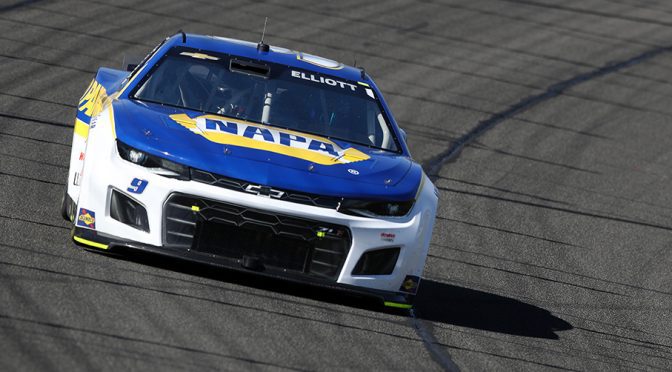
Of the 22 cars on site, 11 asked for a stall. Only four actually took advantage of the opportunity — the No. 3 Richard Childress Racing Chevrolet of Austin Dillon, the No. 7 Spire Motorsports Chevrolet of Corey LaJoie, the No. 9 Hendrick Motorsports Chevrolet of Chase Elliott and the No. 24 Hendrick Motorsports Chevrolet of William Byron. Internal team personnel did rotate.

“It seems like the guys are enjoying working with it,” Elliott said. “You’re not having five lug nuts to take off and put on in the garage area constantly and things of that nature. So, overall, I think it’s been a plus.”

Pitstops Airgun WebThomas did note because of the single lug nut, the new air guns weigh more.

What doesn’t, though, are the tires. They are now 18 inches rather than 15. The wheel is also aluminum rather than steel.

“It helps our bodies,” Thomas said. “The tires aren’t as heavy. It helps us to get it off quicker. It’s an upgrade, we think, in our score.”

That’s one opinion. Odds are, there will be multiple and different viewpoints. That’s inevitable with change.

But Justin Alexander, crew chief of the No. 3 team, doesn’t expect his job to change all that much atop the pit box, either. Just learning and adapting what calls to make.

“Any adjustment you do to the car slows the stops down typically, and the more you adjust, the more the stops are slowed down,” he said. “It makes those things more critical. You’re obviously not gonna want to tune on the car, adjust on the car as much, but sometimes you have to.

“And it’ll make fuel flow — fueling the car will probably be the holdup at some point — critical if you’re trying to put two cans of fuel in.”

Teams are allowed to practice pit stops at their shops. Next Gen cars will make their competitive debut Feb. 6 in the 2022 Busch Light Clash at the Los Angeles Memorial Coliseum.

“It’s faster,” Thomas said. “Everything’s got to be quicker. Everyone’s got to be quicker on pit road. Whoever can figure out how to shave off two tenths, even one tenth of a second, that’s going to be tremendous.”

CONCORD, N.C. — It’s science, but it’s not complicated.

Most of the two-day Next Gen test that spanned Wednesday and Thursday saw cars run solo around Charlotte Motor Speedway. There were times when multiple cars were on track together, though it never came near the amount that would be seen during an actual race. And that’s OK because drivers can assume what will happen in pack racing.

“I mean, unless we defy physics, the guy out front is gonna have an advantage,” Chase Elliott said Thursday. “So, if somebody figures out how to defy physics, please let me know. I’d love to meet you. But until somebody figures that out, the front person is always gonna have an advantage. And I don’t think it matters how many aero ducts and parts and pieces we put on these things, it’s never going to give the guy in second an advantage over the guy out front.”

NEXT GEN TESTING: At-track photos | Unofficial speeds | Day 1 review

The important part of testing right now is learning the Next Gen ins and outs, and there’s a lot of that left to do. Simply put, it’s a different car. The basics need to be handled before a complete product is even close to ready.

Regardless, people outside of the garage want to know what live-action racing is going to look like.

“It’s not instant, it’s not instant gratification, it’s not posted and get the reward of it,” Ross Chastain said. “Like it’s gonna take some time. We’re building this thing. So, truly, I know as hard as it is in 2021 going into 2022 of this world, that question is not ready to be answered yet.”

Chastain actually ran laps behind another driver, too. His No. 1 Trackhouse Racing Chevrolet trailed William Byron’s No. 24 Hendrick Motorsports Chevrolet in Thursday’s first half of on-track work. The two traded spots. Chastain noted Byron had more success following than he personally did. Chastain felt tight in turns, but it was worse when behind Byron.

RELATED: Findings from Austin Dillon’s Day 1 wreck and repair

Teams later appeared to plan when to hit the track together.

“Whatever area of the corner you’re most vulnerable in is going to be more uncomfortable than it was when you were by yourself,” Elliott said. “That’s typically the case most everywhere we go in anything I’ve ever driven, so I don’t expect that to be much different.

“The other piece of that is, how many of these things do we want to tear up before we get to Daytona? Because I don’t think everybody has just an abundance of these cars and/or parts sitting around. So, we need to weigh out what’s important right now.”

Daytona International Speedway will host the 2022 points-paying season opener Feb. 20. There will be three exhibition events before then, two of which — Bluegreen Vacations Duel 1 and 2 — will be held in Daytona. Next Gen’s official debut, however, will be Feb. 6 in the Busch Light Clash at the Los Angeles Memorial Coliseum.

That’s when the real racing will begin.

“We know dirty air,” Chastain said. “Like dirty air existed since the second car got built in the world. So, we just have to do a better job. NASCAR knows that, and they’re working on it.”

Unofficial test speeds from organizational Next Gen testing for the NASCAR Cup Series on Nov. 17-18 at Charlotte Motor Speedway’s oval layout. Note that times are unofficial, with no technical inspection conducted before each session.

RELATED: Day 1 overview | Scenes from Next Gen test

Day 2

Position No. Driver Best Time Difference Best Speed Team
1 10 Aric Almirola 30.731 175.718 Stewart-Haas Racing
2 4 Kevin Harvick 30.757 -0.026 175.570 Stewart-Haas Racing
3 45 Kurt Busch 31.085 -0.354 173.717 23XI Racing
4 12 Ryan Blaney 31.158 -0.427 173.310 Team Penske
5 22 Joey Logano 31.166 -0.435 173.266 Team Penske
6 24 William Byron 31.193 -0.462 173.166 Hendrick Motorsports
7 6 Brad Keselowski 31.199 -0.468 173.082 RFK Racing
8 78 BJ McLeod 31.233 -0.502 172.894 Live Fast Motorsports
9 94 Ty Dillon 31.243 -0.512 172.839 GMS Racing
10 43 Erik Jones 31.260 -0.529 172.745 Richard Petty Motorsports
11 1 Ross Chastain 31.294 -0.563 172.557 Trackhouse Racing Team
12 9 Chase Elliott 31.309 -0.578 172.474 Hendrick Motorsports
13 7 Corey LaJoie 31.322 -0.591 172.403 Spire Motorsports
14 20 Drew Herring 31.329 -0.598 172.364 Joe Gibbs Racing
15 11 Denny Hamlin 31.336 -0.605 172.326 Joe Gibbs Racing
16 16 AJ Allmendinger 31.340 -0.609 172.304 Kaulig Racing
17 47 Ricky Stenhouse Jr. 31.346 -0.615 172.271 JTG Daugherty Racing
18 34 Michael McDowell 31.352 -0.621 172.238 Front Row Motorsports
19 3 Austin Dillon 31.432 -0.701 171.799 Richard Childress Racing
20 21 Austin Cindric 31.438 -0.707 171.767 Wood Brothers Racing
21 51 Cody Ware 31.595 -0.864 170.913 Petty Ware Racing
22 66 Timmy Hill 32.593 -1.862 165.680 Motorsports Business Management

Day 1

Position No. Driver Best Time Difference Best Speed Team
1 12 Ryan Blaney 31.179 173.193 Team Penske
2 6 Brad Keselowski 31.204 -0.025 173.055 RFK Racing
3 24 William Byron 31.231 -0.052 172.905 Hendrick Motorsports
4 43 Erik Jones 31.265 -0.086 172.717 Richard Petty Motorsports
5 94 Ty Dillon 31.288 -0.109 172.590 GMS Racing
6 4 Kevin Harvick 31.289 -0.110 172.585 Stewart-Haas Racing
7 45 Kurt Busch 31.294 -0.115 172.557 23XI Racing
8 16 Justin Haley 31.295 -0.116 172.552 Kaulig Racing
9 34 Michael McDowell 31.370 -0.191 172.139 Front Row Motorsports
10 11 Denny Hamlin 31.377 -0.198 172.101 Joe Gibbs Racing
11 22 Joey Logano 31.400 -0.221 171.975 Team Penske
12 7 Corey LaJoie 31.406 -0.227 171.942 Spire Motorsports
13 78 BJ McLeod 31.441 -0.262 171.750 Live Fast Motorsports
14 9 Chase Elliott 31.466 -0.287 171.614 Hendrick Motorsports
15 20 Christopher Bell 31.481 -0.302 171.532 Joe Gibbs Racing
16 10 Aric Almirola 31.505 -0.326 171.401 Stewart-Haas Racing
17 21 Harrison Burton 31.516 -0.337 171.342 Wood Brothers Racing
18 1 Ross Chastain 31.522 -0.343 171.309 Trackhouse Racing Team
19 47 Ricky Stenhouse Jr. 31.529 -0.350 171.271 JTG Daugherty Racing
20 51 Cody Ware 31.618 -0.439 170.789 Petty Ware Racing
21 3 Austin Dillon 31.633 -0.454 170.708 Richard Childress Racing
22 66 Timmy Hill 33.925 -2.746 159.175 Motorsports Business Management