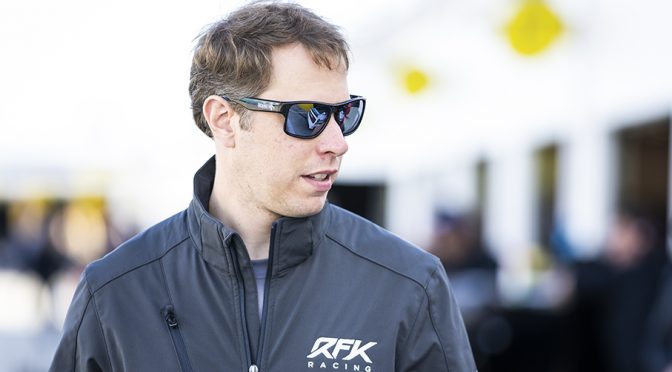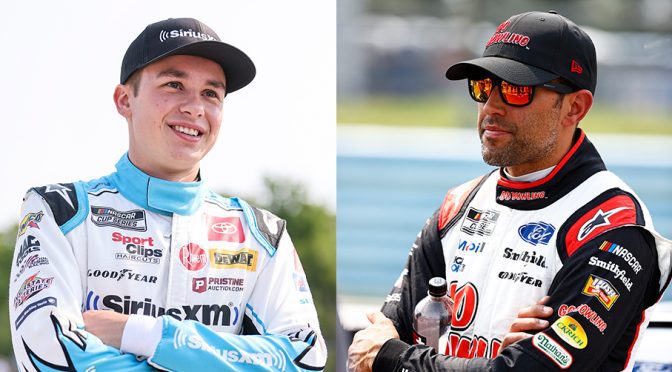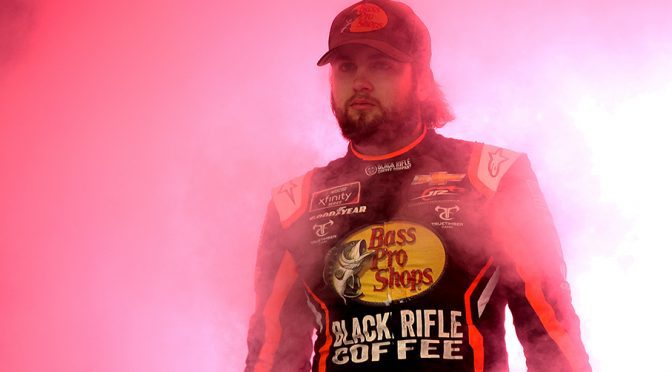
Ryan Blaney and Martin Truex Jr. are on the outside looking in for advancing to the Championship 4 entering the Xfinity 500 (2 p.m. ET on NBC/NBC Sports App/Peacock, MRN, SiriusXM NASCAR Radio) — the final race of the Round of 8 in the NASCAR Playoffs. Blaney sits one point out from advancing, while Truex is three points out on the provisional elimination line, so a strong points day could aid their effort to make the Championship 4.
Blaney has been one of the stronger performers in recent Martinsville races with four top fives in his last five starts there. In the lone finish outside the top five in that stretch, he won both stages and led 157 laps. After years of not closing the deal on short tracks, Truex has won three of the last four Martinsville races and has a run of six top-five finishes in his last eight starts there.
How does each driver stack up for a head-to-head matchup in Sunday’s race? We’re breaking down the key stats ahead of the elimination race.
*For the purposes of this chart, 2021 short-track races are defined as the two Richmond races, the Martinsville spring race and the Bristol playoff race on the traditional concrete surface.
Ryan Blaney
Category
Martin Truex Jr.
0
2021 short-track wins
2
9.0
2021 short-track average finish
3.5
154
2021 short-track points scored
189
13.5
2021 NASCAR Playoffs average finish
11.1
-1 to elimination line (5th in standings)
2021 NASCAR Playoffs standings spot
-3 to elimination line (6th in standings)
0
Martinsville wins
3
11th (won both stages)
2021 Martinsville spring result
1st
10.7 (in 11 starts)
Martinsville average finish (all time)
16.5 (in 31 starts)
4.8
Martinsville average finish (since 2019)
6.6
Blaney has five top-five finishes in his last seven Martinsville races — tied with Truex and Keselowski for the most in that stretch.
Notable stat to know
If you remove Truex’s 22nd-place finish last fall at Martinsville, he has a 4.8 average finish at the track since 2016.
The 2021 short-track stats favor Truex by a bit. That should come as no surprise as all four of Truex’s 2021 wins have come at tracks with the 750-horsepower package (Phoenix, Martinsville, Darlington and Richmond-2) while Blaney has won on a superspeedway (Daytona-2) and two tracks that utilized the 550-horsepower package (Atlanta and Michigan). The recent Martinsville stats, though, paint a tight picture between Truex and Blaney despite MTJ’s three wins in the last four races there. It’s not hard to imagine a scenario where these guys are running 1-2 late in the race with a playoff spot firmly on the line given their recent runs there. That would be a fun way for this matchup to play out on Sunday.
Check back on Friday as The Action Network’s PJ Walsh (@PJWalsh24) breaks down the same matchup and provides his betting insight for who and how to bet this matchup.
NASCAR track veteran Joe Fowler cited Michigan International Speedway as a “special” stop on the series circuit. Effective Wednesday, Fowler will oversee operations at the 2-mile track and surrounding facility as its new track president.
Fowler is a longtime executive at Kansas Speedway and, most recently, the senior director of marketing in the Midwest region, which includes overseeing marketing and promotional efforts across Kansas Speedway, Michigan International Speedway, Watkins Glen International and Iowa Speedway.
It was in that role in which Fowler spent some time in the “Wolverine State” and developed an appreciation for the track, the area and the fanbase.
“There are a number of things that make Michigan special,” Fowler told NASCAR.com. “It’s a great facility and it’s in a beautiful part of the state. Having spent some time at Michigan in August talking to fans, I learned that they’re a very passionate fanbase. They’re passionate about NASCAR and very passionate about the facility as well, and there’s a great team in place at MIS. I’m really excited to get to work with them.”
Fowler and his team played an integral role in driving attendance and creating a best-in-class experience – particularly upon the return of fans to venues in the COVID-19 era – across all race tracks in the region. Before his role in NASCAR’s Midwest region, Fowler served in multiple marketing and sales roles for more than 15 years at Kansas.
“Joe is a native Midwesterner, and his passion for providing the best experience for NASCAR fans runs as deep as his Midwest values and work ethic,” said Chip Wile, NASCAR’s senior vice president and chief track properties officer. “He has devoted nearly his entire career to promoting NASCAR and ensuring our loyal fans experience the best race day possible when they visit the race track. We look forward to an exciting next chapter at MIS under Joe’s leadership.”
Fowler will have some time to get settled into his role before NASCAR returns to Michigan in the 2022 season. The NASCAR Cup Series and NASCAR Xfinity Series will race there on Aug. 6-7.
“My top priority is going to be to come in and get myself more familiar with the facility and its operations and to get to know the staff better,” Fowler said. “I also will come in to listen to the fans and listen to the community. I want to be a big part of the community as well.
“The future looks really bright. I think as we look at the fan experience at Michigan, when fans come to the track we want to make it the best possible experience from the time they buy the ticket to the time they leave the track.”
Not long after Bubba Wallace got the call on his 23XI Racing team pit box that victory in the Talladega rain-soaked NASCAR Cup Series feature was his, the phone rang at Frank Scott’s house in Danville, Virginia. “I really felt like your dad was speaking to me in those final moments of the race,” Wallace told the third of Wendell Scott’s seven children, who was present for much of his father’s trailblazing stock car career.
“Bubba, he was talking to you,” Frank replied. “Do you know what he was saying?”
“No.”
“He was saying, Don’t worry. It’s gonna keep raining.”
In so many ways Wallace’s breakthrough at Talladega was the perfect storm. With it, he not only broke a 142-race winless streak that dates to his June 2017 Cup debut at Pocono, but the 28-year-old Mobile, Alabama, native became the first Black driver to register a Cup victory since Wendell Scott’s triumph at Jacksonville’s Speedway Park in 1963.
Frank’s son, Warrick, was at his father’s side for that epic telephone exchange and with him in front of the TV as the last laps of the YellaWood 500 ticked down. And weeks after that staggering result, the phone is still ringing. “It turned into a work responsibility,” Warrick said. “Been doing interviews, reading articles just to try and keep up, tweeting and Facebooking like crazy. You know, trying to run the race.”
Wallace’s historic ride in the No. 23 Toyota is as much a credit to his perseverance as it is to the pioneering efforts of Wendell Scott, whose bittersweet legacy as the Jackie Robinson of motorsports is still underappreciated somehow. He wasn’t just the first Black man to win a Cup Series race; he did it all. He raised the money and built the cars himself. What’s more, he primarily did this in the Jim Crow South. On a fair playing field, he surely would’ve registered more Cup victories than that one he nabbed in Jacksonville — which saw him battle it out with Richard Petty over the final 25 laps. But Scott didn’t get to bask in his accomplishment. While the prize went to second-place finisher Buck Baker in the end, Scott wouldn’t be officially credited with the victory for another two years.
After Scott’s passing in 1990 it took another decade before driver Bill Lester turned up in his wake. Then NASCAR launched Drive for Diversity, the now 17-year-old developmental onramp for young women and people of color. It was there, in 2010, that Wallace met the Scott family, learned of Wendell Scott’s legacy and picked up the torch. Seven years ago while driving in the NASCAR Camping World Truck Series, he paid tribute to the family by painting his truck in the colors of Scott’s car for the fall race at Martinsville and showed-out in style — grabbing the pole and the checkers as the family cheered him on from the pits.
As Wallace asserted himself as a force in the sport, things began to change. In 2015 Scott was inducted into the NASCAR Hall of Fame. Ahead of green flag at this year’s August Cup Series feature at Daytona, NASCAR President Steve Phelps presented Frank Scott with a custom trophy commemorating Wendell Scott’s Jacksonville victory, as Wallace joined the family on stage.
Brian Lawdermilk | Getty Images
When Wallace began his Cup career, it was hard not to seize on the significance of a Black man winning in The King’s Chevy. But the sight of the sport rallying around him and the No. 43 car at Talladega in 2020, in the wake of his brave stand against the Confederate flag, made for its own powerful picture of progress, too. What’s more, it made the bond between Wallace and the Scott family that much stronger.
“Having a connection to the family is awesome,” Wallace told me back in 2014, after that Martinsville win in Scott’s colors. “Wendell Jr. texts me nonstop, just keeping up with the races. The whole family has been very supportive. It’s been an honor to be so close with them and carry Wendell’s banner. To be the second winner since him or the first winner since Wendell Scott is huge. But at the same time it needs to be more than that.”
Yet for as groundbreaking as Wallace’s Cup victory at Talladega was, there remain some who are reluctant to give him due credit because the race was curtailed by rain. And to those skeptics Warrick Scott says simply, man, y’all don’t know racing.
“You gotta give him credit for his intellect, and his crew chief’s positioning,” he says. “It was rather strategic. If you put it in reverse and he finishes third or second or fourth, and another driver is making those steps to advance themselves because of the coming weather, the criticism would be if he had the right crew chief or right racing knowledge, then he would’ve known to bust his butt and get to the front of the pack because he maybe could win it. So you’ve got to give him credit.”
But for Scott, the thing that’s even cooler than Wallace bringing them along for the ride are the young Black drivers in the sport who are following in his wake now.
“I’m excited for Bubba, but I keep thinking about how excited I am for Rajah Caruth and Lavar Scott,” Warrick said of the two Drive for Diversity prospects who are already winning in late models. “In the near future we’ll be seeing a NASCAR race start, and Bubba won’t be the only African-American driver in the field. It could happen as early as next year. What if Bubba jumps down and does an Xfinity race, the same race that Rajah and Jesse Iwuji are in? Just like that. From Wendell Scott being inducted into the Hall of Fame to that watershed moment at Talladega.”
It just goes to show: There’s little moving forward without really taking the time to look back.
Andrew Lawrence is a freelance contributor at Car and Driver, The Guardian, Men’s Health and elsewhere. Formerly, he was the NASCAR beat writer at Sports Illustrated.
WINSTON-SALEM, N.C. — I was born during the first year of NASCAR’s so-called “modern era.” The Cup Series schedule went from 48 races in 1971 to 31 the next season, shedding some of the smaller bullrings of its formative years in search of larger speedways and a sense of refinement.
Do the math, dear reader, and yes, I am old — old enough to have seen unrestricted races at Daytona, events before the front and back straightaways traded places at Atlanta and Darlington, races at Bristol and Dover before they went concrete, Charlotte before it had lights. But in terms of being alive when the Cup Series still regularly visited Bowman Gray Stadium in my hometown, mark the calendar one year, one month and one week too late.
Tuesday changed that. How we got here is some strange wonder, the intersection of NASCAR’s brand-new Next Gen vehicle for the era ahead with a true stock-car throwback, one of the sport’s most original and enduring venues.
The heralded quarter-mile was used only for Goodyear tire testing in the closed morning session with Tony Stewart at the controls, then in afternoon shakedowns with single-car runs by Clint Bowyer and Dale Earnhardt Jr. It was hardly the full-contact, temper-fraying action that has given Bowman Gray its nickname of “The Madhouse,” but it was hard to wipe away the collective glee from hearing the new car’s raspy exhaust note rattling off the horseshoe-shaped bleachers that hug the track’s south turn and short straightaways.
“I grew up over here where the old fieldhouse was here and the who’s who of NASCAR were here and raced at this place,” said Burt Myers, a third-generation driver at the stadium and a 10-time champion in its featured Modified Division. “So for the new-age generation of NASCAR to be here today and to experience what we grew up with is pretty neat.”
Tuesday made it easy to wax romantic about the mixing of stock-car racing’s different generations, the Next Gen test mule barreling around inside the closely confining guardrails under sunny piedmont skies. Tuesday’s trio of drivers — all recently retired from full-time competition — got a taste of what the current crop of Cup Series talent will be wheeling next season.
Alejandro Alvarez | NASCAR Digital Media
The Next Gen model will have its own first run at competition in the Feb. 6 Clash at the Coliseum. Tuesday’s session at Bowman Gray helped to sort out the car on a flat quarter-mile, determining the proper tire combination for the Los Angeles exhibition.
In that regard, Tuesday served as more of a compulsory checklist before 2022’s preseason showcase in Los Angeles. But for Earnhardt, a sponge for soaking up NASCAR’s history and a longtime advocate for preserving it, the day’s events meant more.
“I definitely was coming here with a lot of excitement in my heart about my family’s connection to the race track,” said Earnhardt, whose grandfather, Ralph, won at the stadium four times in its earliest years. “And being able to check a box to say that I’ve been here, much less to be able to get some laps here, that was a pretty special thing for me personally.”
Interestingly enough, Bowman Gray’s removal from the premier-series schedule came just one year after R.J. Reynolds — the tobacco giant headquartered downtown, just a couple miles away — made its own major buy-in with naming rights for what would be called the Winston Cup Series. Weekly area tracks such as Greenville-Pickens, Hickory and South Boston were also phased out.
But Winston’s involvement in the sport extended to the grassroots level. Bowman Gray was among the tracks to receive both support and a splash of red-and-white paint on its guardrails, which not only promoted the cigarette brand’s colors but embellished the sense of speed as the alternating colors flashed by the speeding cars.
Tuesday, that rugged old fence — dinged and dented from years of rough-and-tumble racing — ringed NASCAR’s newest vehicle instead of the Modified, Sportsman, Street Stock and 4-cylinder Stadium Stock divisions from any given Saturday night during the spring and summer. Engineers hovered over laptops and dissected data in the same pit area that was a long-ago home to shade-tree mechanics and weekend racers who held day jobs in the town’s factories and nearby fields.
It’s still just $12 to get in, an admission price that’s inched upward through the years but remains a relative bargain for a Saturday night out. Count Bowyer among those who have plunked down a dozen bucks to get the full-on Madhouse experience with the Turn 4 rowdies.
“Just super-excited to get on this race track,” Bowyer said after his stint behind the wheel. “Again, every time I’m here, I’m up there in the beer garden having fun with everybody, my buddies that are from Winston-Salem. Love this race track, love the atmosphere and the fans. No different than any NASCAR track, but this is the oldest one. It all started in places just like that and it’s because of those fans that it’s still here today.
“The size of this race track, the closeness of the competition, the wall — out of Turn 4, look at that! It’s six feet far, when you’re up there in the beer garden, you can’t see. I know they always wreck right there, but now I know why. That wall jumps out and gets you.”
The atmosphere might have been more muted during Tuesday’s drive with those same grandstands empty, but the Next Gen appearance remained a spectacle. The stars, the car and the memorable setting were enough to draw curious townsfolk to the fieldhouse bleachers outside the Turn 3 gate on a weekday, all hoping to catch a glimpse.
Once NASCAR drivers go door to door in the Clash at the same historic venue where Carl Lewis won gold and the first Super Bowl was played, then “I’ve seen everything” might feel less hyperbolic. Seeing a Cup Series car at speed at Bowman Gray for the first time in 50 years on a random Tuesday should hold us till then.
See where your favorite driver will pit for Sunday’s Xfinity 500 at Martinsville Speedway (2 p.m. ET, NBC, NBC Sports App, MRN, SiriusXM NASCAR Radio).
Kyle Larson earned the Busch Pole Award for Sunday’s Xfinity 500 at Martinsville Speedway (2 p.m. ET on NBC/NBC Sports App/Peacock, MRN, SiriusXM NASCAR Radio), the final race of the NASCAR Cup Series Playoffs Round of 8.
Larson, winner of three straight races in the Cup Series, will start on pole for the 11th time in 2021 in the No. 5 Hendrick Motorsports Chevrolet.
Austin Cindric will start on pole in the No. 22 Team Penske Ford for Saturday’s NASCAR Xfinity Series Dead On Tools 250 (6 p.m. ET, NBCSN/NBC Sports App, MRN, SiriusXM NASCAR Radio), the final race in the Round of 8.
John Hunter Nemechek will start on pole in the No. 4 Kyle Busch Motorsports Toyota for Saturday’s NASCAR Camping World Truck Series United Rentals 200 (1 p.m. ET, FS1, MRN, SiriusXM NASCAR Radio), the final race in the Round of 8.
As NASCAR adapted to COVID-19 protocols last season, practice and qualifying were eliminated at a majority of national-series events to limit at-track time, exposure and to cut race weekend costs. To determine starting lineups, competition officials used grouped draws, added inversions for weekend doubleheaders, and eventually adopted a performance-metrics formula. That metrics format remains in place this season, drawing on performance from both individual races and season-long results.
NASCAR’s metrics formula for 2021 weighs:
25 percent: Driver’s finishing position from the previous race
25 percent: Car owner’s finishing position from the previous race
35 percent: Team owner points ranking
15 percent: Fastest lap from the previous race
See the full lineup for Sunday’s Cup Series race below.
Start pos.
Driver
Car #
Team
1
Kyle Larson
5
Hendrick Motorsports
2
Chase Elliott
9
Hendrick Motorsports
3
Denny Hamlin
11
Joe Gibbs Racing
4
Martin Truex Jr.
19
Joe Gibbs Racing
5
Joey Logano
22
Team Penske
6
Brad Keselowski
2
Team Penske
7
Kyle Busch
18
Joe Gibbs Racing
8
Ryan Blaney
12
Team Penske
9
Kevin Harvick
4
Stewart-Haas Racing
10
Kurt Busch
1
Chip Ganassi Racing
11
William Byron
24
Hendrick Motorsports
12
Christopher Bell
20
Joe Gibbs Racing
13
Alex Bowman
48
Hendrick Motorsports
14
Austin Dillon
3
Richard Childress Racing
15
Chris Buescher
17
Roush Fenway Racing
16
Ross Chastain
42
Chip Ganassi Racing
17
Bubba Wallace
23
23XI Racing
18
Tyler Reddick
8
Richard Childress Racing
19
Michael McDowell
34
Front Row Motorsports
20
Daniel Suarez
99
TrackHouse Racing
21
Matt DiBenedetto
21
Wood Brothers Racing
22
Chase Briscoe
14
Stewart-Haas Racing
23
Aric Almirola
10
Stewart-Haas Racing
24
Cole Custer
41
Stewart-Haas Racing
25
Ricky Stenhouse Jr.
47
JTG Daugherty Racing
26
Ryan Preece
37
JTG Daugherty Racing
27
Ryan Newman
6
Roush Fenway Racing
28
Erik Jones
43
Richard Petty Motorsports
29
Corey LaJoie
7
Spire Motorsports
30
BJ McLeod
78
Live Fast Motorsports
31
Cody Ware
51
Petty Ware Racing
32
Anthony Alfredo
38
Front Row Motorsports
33
Josh Bilicki
52
Rick Ware Racing
34
Joey Gase
53
Rick Ware Racing
35
Justin Haley
77
Spire Motorsports
36
Quin Houff
00
StarCom Racing
37
Garrett Smithley
15
Rick Ware Racing
38
Timmy Hill
66
Motorsports Business Management
Practice and qualifying are tentatively scheduled for eight Cup Series races this year. Just one race remains with Busch Pole Qualifying on the schedule — the season-ending championship race Nov. 7 at Phoenix Raceway.
WINSTON-SALEM, N.C. — Goodyear technicians and NASCAR officials gathered data and information Tuesday that will help determine the tire selection for next season’s Clash at the Coliseum. Accomplishing that came at the intersection of the Next Gen car of NASCAR’s future with a venerable track from the Cup Series’ past.
The 2022 vehicle turned laps Tuesday at historic Bowman Gray Stadium in an unofficial preliminary to the Feb. 6 exhibition race in Los Angeles. Goodyear and NASCAR invited three recently retired stars with their own old-school cred for the driving duties — Hall of Famer Tony Stewart for the tire testing in the morning session, and racers turned broadcasters Dale Earnhardt Jr. and Clint Bowyer for hot laps in the afternoon.
For all three drivers, it marked their first stints behind the wheel of the next Cup Series car, and the reviews were generally positive, with Earnhardt saying, “The car does everything better than anything I’ve ever drove in NASCAR.”
“This car does all the things that I was worried about, it does them all and it does them well,” he said. “I think this car is a great match for this track or any track whereas the car that we have now doesn’t work everywhere and is difficult in places like this. So I’m sold now. I was skeptical, but I think it’s going to work really well. The car gets around the corner. I thought the track would be too small for our cars and they just wouldn’t handle and drive well, but this is a totally different beast.”
Bowyer, who will be part of FOX Sports’ broadcasting crew for the Clash exhibition, said he was also swayed by the car’s responsiveness as he quickly got up to speed, sorting through the car’s new sequential shifter and adjusting to his seat and wheel positioning. He made laps under the watchful eye of longtime crew chief analyst Larry McReynolds, his broadcasting colleague.
“Very impressed with the grip level, the braking power, the tire that Goodyear chose for this,” Bowyer said. “I’m glad again that I got to come out here to Bowman Gray. I live in Winston, guys. I’ve been here a lot in the grandstands, up there in that beer garden more than any seat, but I wanted to come out here and turn some laps.”
Stewart had been to the stadium once before, attending the 2009 opener by tagging along with Bobby Hutchens — a longtime Modified driver who was then Stewart-Haas Racing’s competition director. Stewart’s appearance back then created a buzz in the Bowman Gray garage, fueling speculation that he might one day compete there. “Oh, yeah. I like running everywhere, places I’ve never been to,” Stewart told the Winston-Salem Journal then.
Zack Albert | NASCAR Digital Media
Stewart lent a hand to Hutchens’ crew that night, but Tuesday got his chance behind the wheel at the stadium. Goodyear officials tested two different tires at Bowman Gray — one that was previously tried at Martinsville Speedway in March, and another tire with a softer compound.
“Goodyear had a good plan coming into today, and I think they’re pretty happy with the results that they got,” said Stewart, who spun a pair of times in the track’s north turn without damage as he hustled the car around. “I think what they brought with the control set is probably a little harder than what they need. They brought a softer tire, and they were pretty happy with it, and I think that’s probably a combination of what they’ll bring out West.”
The Clash is scheduled to be held outside of Daytona International Speedway for the first time next year, taking place on a similar quarter-mile track to be built inside the L.A. Coliseum. The layout has yet to be made final, with competition officials noting that proposed versions range from a maximum of 5 degrees of banking to a flat, no-banking configuration.
The L.A. Coliseum boasts a remarkable history as a two-time Summer Olympics venue and the host to multiple professional and collegiate sports, but Bowman Gray holds its own in the realm of stock-car racing lore. NASCAR founder Bill France Sr. partnered with Alvin Hawkins to promote weekly racing there starting in 1949, and NASCAR Hall of Famer Tim Flock was its first track champion.
The NASCAR Cup Series ran 29 races there from 1958-1971, a span that included Richard Petty’s 100th win in 1969. But even when the Cup Series departed as the schedule was shortened and newer, larger venues were sought out, weekly racing continued. Bowman Gray held its 1,000th NASCAR-sanctioned race meet in 2015, and it remains a southern outpost for the Modified cars that are most popular on tracks in the northeast.
Bowman Gray Stadium ended its 72nd season of stock-car racing in August. City bonds have been allocated for improving the facility, and the Winston-Salem newspaper reported that the asphalt will be dismantled and replaced, starting next month. Nearby Winston-Salem State University wrapped up its home football schedule on the Bowman Gray turf last weekend. The field was still marked with yard lines and painted end zones for Tuesday’s test.
Tuesday, the sounds of the gridiron were replaced with the rumble of a full-bodied Cup Series car at Bowman Gray, and Earnhardt was beaming after wheeling it through the tight confines.
“They’ve got a great thing going on, so it’s fun to be able to come here,” Earnhardt said. “It’s really cool to be able to get some laps. It’s a very intimidating place. The guardrail, you’re racing around there, and that guardrail’s just chewed up, and it’s just daring you to hit it. It’s really intimidating. That, in itself, was a great experience for me, no matter what car I was driving today. It was awesome to come here and experience this place behind the wheel.”
NASCAR fined crew chief Adam Stevens $20,000 and suspended him from Sunday’s Cup Series race at Martinsville Speedway (2 p.m. ET, NBC) when the No. 20 Joe Gibbs Racing Toyota was found with two lug nuts not safe and secure after the playoff race at Kansas Speedway. Stevens was one of two crew chiefs suspended and the No. 20 was one of five cars fined when NASCAR released its penalty report on Tuesday.
The other Cup teams fined were the No. 14 Stewart-Haas Racing Ford driven by Chase Briscoe and the No. 22 Team Penske Ford driven by Joey Logano, each found with one lug nut not safe and secure in post-race inspection at Kansas. Those violations, detailed in Sections 10.9.10.4 of the NASCAR Rule Book, resulted in a $10,000 fine for each of the respective crew chiefs, Johnny Klausmeier and Paul Wolfe.
In the Xfinity Series, crew chief Kenneth Roettger, car chief Robert Anderson and crew member Drew Beason all drew four-race suspensions when the No. 23 Our Motorsports Chevrolet driven by Patrick Emerling dropped added ballast during the Kansas race.
NASCAR also fined Xfinity Series crew chiefs Jason Trinchere and Jeff Meendering each $5,000 when one lug nut was found not safe and secure for their cars during post-race inspection, the No. 16 Kaulig Racing Chevrolet driven by AJ Allmendinger and the No. 19 Joe Gibbs Racing Toyota driven by Brandon Jones.
Dale Earnhardt Jr. announced Tuesday his lone NASCAR Xfinity Series start of 2022 will come April 8 at Martinsville Speedway.
The news came in the latest episode of the Dale Jr. Download from his Dirty Mo Media production group and after a shakedown of the Cup Series’ Next Gen car for 2022 at historic Bowman Gray Stadium. Earnhardt retired from full-time Cup Series competition after the 2017 season. In each year since, he has entered one Xfinity Series race per season in a part-time effort with his JR Motorsports team.
His planned appearance next spring would mark his first Xfinity Series start at the 0.526-mile Virginia oval. The series returned to Martinsville last season after a nearly 14-year hiatus.
JR Motorsports announced Wednesday that Earnhardt will drive the No. 88 Hellmann’s Fridge Hunters Chevrolet at Martinsville. That sponsorship deal includes a renewal with Unilever’s brands for primary backing of JRM’s No. 7 Chevrolet and driver Justin Allgaier in six races next year.
Earnhardt notched the 23rd of his 26 career Cup Series victories in 2014 at Martinsville, claiming the track’s signature grandfather clock trophy. That win marked his last with crew chief Steve Letarte, who now works alongside Earnhardt as a fellow analyst with NBC Sports.
Since 2018, Earnhardt’s four Xfinity Series starts have produced three top-five finishes. He has competed in two one-off starts at Richmond Raceway (2018, 2021), plus single starts at Darlington Raceway (2019) and Homestead-Miami Speedway (2020).
Crew chief Phil Surgen announced his 2022 plans Monday, telling SiriusXM NASCAR Radio that he’ll join driver Ross Chastain in moving to Trackhouse Racing next year.
— SiriusXM NASCAR Radio (Ch. 90) (@SiriusXMNASCAR) October 26, 2021
Surgen is in his first full season as a Cup Series crew chief, pairing with Chastain on the No. 42 Chip Ganassi Racing Chevrolet team. He took that role midway through last season, working with Matt Kenseth for the final 16 races of 2020.
Trackhouse announced June 30 that it had acquired Ganassi’s NASCAR operation as part of its expansion to a two-car effort next season. It tapped Chastain as the driver for its newly formed No. 1 Chevrolet team on Aug. 3. He’ll be a teammate to Daniel Suarez, who currently drives the No. 99 Chevy for Trackhouse, which is rounding out its first Cup Series campaign.
Surgen has been with Chip Ganassi’s No. 42 team since 2016. He was previously a race engineer before his promotion to crew chief last season.
Chastain currently ranks 20th in the Cup Series standings with three top-five finishes this year. That includes a career-best second-place result in June at Nashville Superspeedway.