Unofficial test speeds from organizational Next Gen testing for the NASCAR Cup Series on Oct. 11-12 at Charlotte Motor Speedway’s road course. Note that times are unofficial, with no technical inspection conducted before each session.

Day 1

Pos. No. Driver(s) Best time
Diff. Best speed Make Team
1 4 Chase Briscoe 01:20.2 104.115 Frd SHR (black)
2 47 Ricky Stenhouse Jr. 01:21.3 -1.069 102.746 Chv JTG Daugherty Racing
3 12 Ryan Blaney 01:21.7 -1.497 102.208 Frd Penske
4 16 AJ Allmendinger 01:22.0 -1.803 101.826 Chv Kaulig Racing
5 8 Tyler Reddick 01:22.3 -2.05 101.521 Chv RCR
6 5 Kyle Larson / Chase Elliott 01:22.4 -2.212 101.321 Chv HMS
7 14 Cole Custer 01:22.5 -2.253 101.271 Frd SHR (blue)
8 7 Corey LaJoie 01:22.6 -2.426 101.059 Chv Spire Motorsports
9 21 Austin Cindric 01:22.7 -2.443 101.038 Frd Wood Brothers
10 22 Joey Logano 01:22.7 -2.506 100.961 Frd Penske
11 51 Joey Hand 01:22.7 -2.521 100.943 Frd Petty Ware
12 43 Erik Jones 01:22.8 -2.556 100.900 Chv RPM
13 27 Loris Hezemans 01:23.1 -2.901 100.481 Frd Team Hezeberg
14 0 Kaz Grala 01:23.3 -3.075 100.271 Chv StarCom
15 99 Daniel Suarez 01:23.4 -3.150 100.181 Chv Trackhouse
16 42 Ross Chastain 01:23.6 -3.347 99.945 Chv CGR
17 48 Alex Bowman 01:23.6 -3.369 99.919 Chv HMS
18 17 Chris Buescher 01:23.8 -3.552 99.700 Frd RFR
19 19 Martin Truex Jr. 01:24.1 -3.855 99.341 Tyt JGR
20 94 Ty Dillon 01:24.1 -3.924 99.260 Chv GMS
21 23 Bubba Wallace 01:24.2 -3.948 99.231 Tyt 23XI

Day 2

Pos. No. Driver(s) Best time Diff. Best speed Make Team Laps run
1 19 Denny Hamlin/ Martin Truex Jr. 01:18.6 106.296 Tyt JGR 72
2 8 Tyler Reddick 01:21.7 -3.169 102.175 Chv RCR 132
3 4 Kevin Harvick 01:22.0 -3.423 101.859 Frd SHR (black) 95
4 21 Austin Cindric 01:22.1 -3.498 101.766 Frd Wood Brothers 83
5 14 Aric Almirola 01:22.2 -3.579 101.665 Frd SHR (blue) 81
6 12 Ryan Blaney 01:22.2 -3.592 101.649 Frd Penske 97
7 51 Joey Hand 01:22.5 -3.898 101.272 Frd Petty Ware 105
8 22 Joey Logano 01:22.6 -4.037 101.102 Frd Penske 110
9 99 Daniel Suarez 01:22.6 -4.051 101.084 Chv Trackhouse 38
10 7 Corey LaJoie 01:22.6 -4.076 101.054 Chv Spire Motorsports 54
11 42 Ross Chastain 01:22.8 -4.200 100.902 Chv CGR 79
12 27 Jacques Villeneuve/Loris Hezemans 01:22.8 -4.238 100.856 Frd Team Hezeberg 78
13 47 Ricky Stenhouse Jr. 01:22.8 -4.251 100.840 Chv JTG Daugherty Racing 89
14 48 Alex Bowman 01:22.9 -4.317 100.760 Chv HMS 84
15 5 William Byron 01:22.9 -4.367 100.699 Chv HMS 69
16 16 Justin Haley 01:23.2 -4.609 100.406 Chv Kaulig Racing 23
17 0 Kaz Grala 01:23.3 -4.719 100.274 Chv StarCom 43
18 23 Bubba Wallace/Denny Hamlin 01:23.4 -4.798 100.179 Tyt 23XI 47
19 43 Erik Jones 01:23.5 -4.886 100.073 Chv RPM 53
20 17 Chris Buescher 01:23.6 -5.026 99.906 Frd RFR 77
21 94 Ty Dillon 01:24.0 -5.438 99.416 Chv GMS 50

CONCORD, N.C. — Early driving impressions from NASCAR Cup Series regulars are trickling in as two days of testing the 2022 Next Gen model wound to a close Tuesday at Charlotte Motor Speedway’s Roval.

Competition officials continued to tweak on some of the car’s challenges, working with teams to improve the model before its on-track debut in February, and teams and drivers absorbed their first chance to tune on the vehicle. Even with some issues still to be resolved, initial reviews tended toward the positive.

RELATED: Next Gen photos: Roval | Next Gen timeline

“It’s a great step to take for NASCAR for the foreseeable future,” said Spire Motorsports driver Corey LaJoie. “It’s a nice race car, a little bit heavy, NASCAR’s built some clips to build crush zones to mitigate some of that energy that’s going to be transferred to the driver in a crash, and those guys are taking it very serious overall with having a test go very smooth with a majority of the teams here. I think it’s been way more positives than negatives so far.”

Like the test’s opening day, the 21 assembled teams logged laps without major incident. Ricky Stenhouse Jr. and Bubba Wallace each looped their cars in relatively harmless solo spins, and Chris Buescher continued after scuffing the right-front fender on his No. 17 Roush Fenway Racing Ford in the first half of the day.

Among the impressions and topics discussed by drivers during the second day of Next Gen testing:

Steering vibrations continued to be a struggle for several teams, who reported some wear and design issues with parts in the steering rack. John Probst, NASCAR’s Senior Vice President of Racing Innovation, said that in some instances set-screws had backed out of their positions and that officials were working on a long-term fix. Some drivers suggested that the issue could not be resolved in the two-day window of this organizational test.

“Some guys have it all the time, some guys only have some of the time,” said Hendrick Motorsports’ Alex Bowman about the steering issue. “We’ve been on both sides of that. I think we’re on steering rack four or five, so we’re working really hard at trying to fix it. I think the advantage to having so many cars here and so many people here is that there’s a ton of smart people working on fixing it. So obviously, we all got to get that dialed in.”

Early impressions also suggest the competitive balance in the garage could make incremental shifts, with LaJoie among those hopeful that smaller organizations could gain on the Cup Series’ powerhouses. LaJoie’s No. 7 Chevy tester was eighth on the unofficial speed chart after Monday’s opening day.

“For us to have a competitive car right out of the jump at a road course where I’m a mid-pack guy at best,” LaJoie said, “for me to be able to acclimate to these cars quicker, get the most as I can out of the braking zone and figure out the sequential shifter, for me — like I tweeted last night — I’m super positive about the opportunities it presents a smaller team to close that gap with the bigger teams.”

MORE: Additional Next Gen tests set

Chalk some of the early potential for parity up to the elimination of wheel-hop with the car’s new independent suspension, bigger and more forgiving brakes, and the new sequential shifter. The driving characteristics are all-new, and the mastery of the old way of muscling a stock car around a road-course layout needs to be relearned — or un-learned — for the new vehicle.

“I feel like with the current car, there’s so many variables,” said William Byron, “so when you go into braking zones, you’ve got to feel your rear tires, you’ve got to match up the RPMs and make sure you get the downshift right, and if something in that sequence goes off, you’re off. So with this car, let’s just go as fast as you can in that braking zone, be as aggressive as you can and get the downshift done whenever you have time to.

“So I think it’s gonna make for a lot more aggressive passing, because I think guys are gonna dive-bomb and if you’re close to the guy, you’re going to obviously try to outbrake him.”

NASCAR continued to work on rectifying some previously reported issues with heat inside the cockpit, adding ducts and vents to some of the windshield and window areas in an effort to improve ventilation. Conditions were far warmer at the 2.32-mile Charlotte track on Tuesday after a cool, damp Monday, but still less oppressively hot than the Sept. 7-8 session at Daytona International Speedway.

“It’s hotter down there, but you’ve still got to get the things to where you know, you’re not cooking turkeys inside the race car,” said Team Penske’s Ryan Blaney. “So I think it’s close. I think they’ve done a good job of developing it, you know, that’s with all these tests the last few days and then you know the three, four tests we have coming up in the winter is trying to work some of the bugs out. I think it’s getting there.”

The Next Gen car’s growing similarity to some of the components used in sports-car racing prompted the question of whether Cup Series drivers might explore finding rides in IMSA’s season-opening Rolex 24 at Daytona or in other road-racing events next year. Bowman was among the stock-car crowd saying sign me up.

“I’d race a lawnmower, so yeah for sure, I’d love to run some sports car stuff,” Bowman said. “Looking at my racing skills, I don’t know a sports-car team that’d be like, ‘yeah let’s get him in our car,’ but … I think, you know, it’s way more similar to a sports car than anything we’ve ever had. So I definitely could see some crossovers there and some sports-car guys coming over for road-course season. Not that they weren’t already successful when they came over in the past, but being extremely successful right off the bat, because of how similar they are now.”

NASCAR penalized three teams in the Cup Series and one in the Xfinity Series for lug-nut violations after last weekend’s races at the Charlotte Motor Speedway Road Course.

RELATED: Playoff standings | Texas Motor Speedway schedule

One of those penalties resulted in the suspension of crew chief Ben Beshore for the No. 18 Joe Gibbs Racing team. NASCAR found two lug nuts not safe and secure on Kyle Busch’s Toyota Camry in post-race inspection, so Beshore will miss this weekend’s playoff race at Texas Motor Speedway and was fined $20,000. Race engineer Seth Chavka, 37, is listed as the crew chief on the team’s roster for Texas, replacing Beshore. Chavka was credited as the crew chief for Erik Jones’ fifth-place finish in the second spring race at Darlington in 2020 — his lone crew chief appearance in the Cup ranks.

The other Cup penalties were for one lug nut not safe and secure, also listed in Sections 10.9.10.4 of the NASCAR Rule Book. Those violations resulted in $10,000 fines for crew chief Chris Gabehart of the No. 11 Joe Gibbs Racing team and crew chief Scott Graves of the No. 17 Roush Fenway Racing team.

In the Xfinity Series, NASCAR gave a $5,000 fine to crew chief Alex Yontz of the No. 11 Kaulig Racing team for one lug nut not safe and secure.

CONCORD, N.C. — NASCAR teams wrapped up the first day of testing with the Next Gen car on Monday at Charlotte Motor Speedway’s Roval, getting a clearer view of what’s to come in the 2022 Cup Series. Part of that learning came from several hours of on-track shakedowns and part came from John Probst, NASCAR’s senior vice president of racing innovation.

RELATED: Next Gen photos: Roval | Next Gen timeline

Probst provided several updates about the Next Gen model’s progress during a midday availability, including news about the rules packages to be used next year. The update included briefings about what competition officials are working on with the car’s crashworthiness, its ability to disperse heat in the cockpit and reports of steering vibrations during testing.

“By and large, I would say we’re pretty pleased with what we see here,” Probst said. “We do have some guys working through steering, for sure. That’s something we’ll continue to work with them. It is something that they’re making some progress on right now, and it’s why we test, right? … This is the first time we’ve had this many cars run by the teams at the track. We had eight at Daytona, but here we have 21, so we’re going to find these little things here and there and that’s why we test.”

Monday’s session was completed without major incident on the 2.32-mile circuit, wrapping up eight minutes early because of increasing darkness in the course’s infield sections. Day 2 of testing began Tuesday at 9 a.m. ET, with the majority of the session scheduled to be live-streamed.

RELATED: Next Gen tire test planned for Bowman Gray | What they’re saying about Next Gen

Among the Next Gen topics discussed Monday:

NASCAR released two components to the 2022 rules package to teams on Oct. 1.

For road-course events, short tracks and ovals up to the size of Nashville and Darlington, teams will use a target engine output of 670 horsepower and a rear spoiler height of 4 inches — the same configuration teams tested with Monday. For intermediate-sized tracks, the horsepower target will be 550 with an 8-inch spoiler.

Probst said the 2022 rules package for the superspeedways at Daytona and Talladega has not been determined. The new car has been tested twice at the 2.5-mile Daytona oval — last December for single-car runs, and last month with eight cars to gather information in the aerodynamic draft.

Despite the reduction in horsepower from the current-generation car to the 2022 model, speeds were notably faster with Next Gen. Bigger tires, better brakes, cooler track conditions and potentially faster shifts with the car’s sequential gearbox all factored in.

Chase Briscoe turned the fastest lap on Monday’s speed chart at 104.115 mph at a time of 1 minute, 20.219 seconds — a figure that’s unofficial without technical inspection for the two-day test. That compares to the pole speed of 103.198 mph (1:20.901) set by William Byron the last time qualifying was held here in 2019, and the fastest lap from Sunday’s Bank of America Roval 400 –a 100.145 mph clocking by race winner Kyle Larson.

Probst provided updates based on the findings of a June 30 crash test at Talladega Superspeedway, where a Next Gen model was fitted with a test dummy and driven into a retaining wall by robotic means.

Competition officials cleared the chassis for distribution to teams July 19, but Probst said Monday that measures are being taken to reduce the rigidity of the front and rear frame sections (or “clips”), allowing them to better disperse energy in a crash impact.

2021 Oct12 Suarez Next Gen Main Image
Alejandro Alvarez | NASCAR Digital Media

“So for example on the front clip, what we’ve done there is taken existing crossmembers and put little football cuts, we call them, so basically drilled holes in the crossmember,” Probst said. “We modified, one of the lower legs have like a little kick-in, with the idea of allowing more deformation in a crash situation. The idea there is we’re trying to spread the deformation out over a longer period of time, and actually, when we’re trying to work on the rear it actually helps when you work on the front as well. So, if, if we’re able to spread out the load earlier in the crash, it actually helps later in the crash.”

Probst said he anticipated teams having new or retrofitted parts with those structural changes to the frame and suspension in place when teams return for an organizational test on Charlotte’s 1.5-mile oval Nov. 17-18. He also added that the changes are not expected to alter the car’s durability during close-contact racing.

“We were all pleased to continue moving forward with the test plan and releasing cars for testing. As we do, like I said, make a punch list of things that we would like to make better, not all of them related to the severity of the crash but sometimes just how things break and in the like. So we’ve implemented some of those changes to the clip, and to some of the suspension parts.”

RELATED: Rundown of teams testing at Charlotte Roval

Officials worked to address concerns about building heat inside the cockpit that arose during the most recent Next Gen test. Though Monday’s conditions — overcast and with temperatures barely breaking 70 degrees — didn’t mimic the late-summer swelter from Daytona, four teams took part in trying alternate cooling solutions.

Among those potential remedies were shorter exhaust pipes, which ended just before the door area — keeping the exhaust system from heating the area under the driver compartment. Probst said teams also tried out slots in the front and rear glass, plus added vents to improve air flow between the undertray and chassis.

Probst also addressed issues that teams reported with their cars’ steering, saying the competition department is learning more about the vibration.

“As of right this moment, and including all the testing that we’ve done, none of that has been a durability issue,” Probst said. “It’s been more of a case of like set screws not holding tension on torsion bars and things like that. But I feel like we’ll fix that, move on at some point here, especially now that we’ve had more teams involved.”

Probst also provided insights into potential additions to the Next Gen testing schedule, with the vehicle’s competition debut less than four months away. That included planned stops for tire testing at Bowman Gray Stadium’s quarter-mile, the dirt high banks of Wythe Raceway in Virginia and the reconfigured Atlanta Motor Speedway.

Four more organizational tests are in the works, to be added to the existing Next Gen test schedule.

Two cars — the No. 21 Wood Brothers Racing Ford driven by Austin Cindric and the No. 99 Trackhouse Racing Chevrolet driven by Daniel Suarez — featured chrome numbers or accents on their test cars’ paint schemes. A NASCAR spokesperson said reflective numbers will be allowed next season, but bound by certain parameters coming to the 2022 rule book and subject to approval by competition officials.

If ever there was a major test of the No. 5 Hendrick Motorsports team’s mettle, it happened Sunday afternoon at the Charlotte Motor Speedway Roval.

Kyle Larson and company entered the NASCAR Cup Series Bank of America Roval 400 as heavy favorites to advance to the Round of 8. The regular-season champion had six points-paying wins under his belt and has been as dominant as anyone at road courses this season. They had the power to control their own destiny. And then, they didn’t. Literally.

RELATED: Recap the wild Roval race

Early in the race, Larson relayed over the radio that his No. 5 Chevrolet was losing voltage — quickly. Teammate Alex Bowman, whose problem proved to be a separate issue in hindsight, voiced the same concern to add to the intensity.

FORT WORTH, TEXAS - JUNE 13: Crew chief Cliff Daniels looks on during during the NASCAR All-Star Race at Texas Motor Speedway on June 13, 2021 in Fort Worth, Texas. (Photo by Chris Graythen/Getty Images) | Getty Images
Chris Graythen | Getty Images

“Had a lot of different emotions throughout the middle portions of that race,” said Larson. “Thinking that this is so depressing and sad and crazy that I’m going to lose my shot at a championship because of an alternator issue.”

That issue — coupled with a bad day at Talladega Superspeedway — plummeted Larson below the elimination line by as many as 11 points in the live standings. For the first time in the 2021 playoffs, Larson’s title hopes were significantly in question.

But if there’s a will, there’s a way. And in crew chief Cliff Daniels’ mind, there were both.

“The guys did a great job to diagnose, and we had to come up with a plan on what to do to fix it,” said Daniels. “Had to think pretty fast on our feet. The tough part is, I try to operate with my gut feeling based on the information that’s right in front of me, the information we had that was very well-reviewed by me and Jesse (Saunders, car chief) and Steven (Legendre, engine tuner) for what we had to do. The pit crew was 100% onboard like we spelled out behind the pit box what our game plan was going to be. Made sense to do it the way we did.”

That spur-of-the-moment team meeting behind the pit box may have saved Larson’s championship hopes. After a caution came at the right time, the team was able to operate on the car and resolve the issue.

The No. 5 car rallied its way to the front of the field, overtaking Denny Hamlin on a late restart. The team never looked back en route to its series-high seventh checkered flag (not including the All-Star Race) this season.

RELATED: Playoff standings | Larson reacts to gutsy win

“I’m glad I’m through. I’m glad I somehow got five more points to take into the next round for sure,” said Larson. “I think you look at probably where had I been in the same … you eliminate four cars out of this round, I’m much closer to the (elimination) line going into Martinsville, if I have an average first race, a bad second race, then we’re in an extra stressful situation going into Martinsville.”

The stress of elimination can mostly subside for now, as Larson regains his lead atop the playoff leaderboard — jumping back out to 42 points above the elimination line after the Roval rollercoaster.

The NASCAR Cup Series Playoffs resume with the Round of 8 opener Sunday, Oct. 17 at Texas Motor Speedway for the Autotrader EchoPark Automotive 500 (2 p.m. ET, NBC, PRN, SiriusXM NASCAR Radio). Just three races remain before the Championship 4 at Phoenix Raceway.

CONCORD, N.C. — A top NASCAR official in charge of the Next Gen car’s development said that Goodyear tire tests are planned for two short tracks — historic Bowman Gray Stadium and Wythe Raceway’s half-mile dirt track.

RELATED: Next Gen test photos: Roval | Next Gen timeline

John Probst, NASCAR’s Senior Vice President of Racing Innovation, spelled out other details — some final, some in-progress — for remaining tests of the NASCAR Cup Series’ 2022 vehicle Monday. The news came during Day 1 of the Next Gen car’s first organizational session at the Charlotte Motor Speedway Roval.

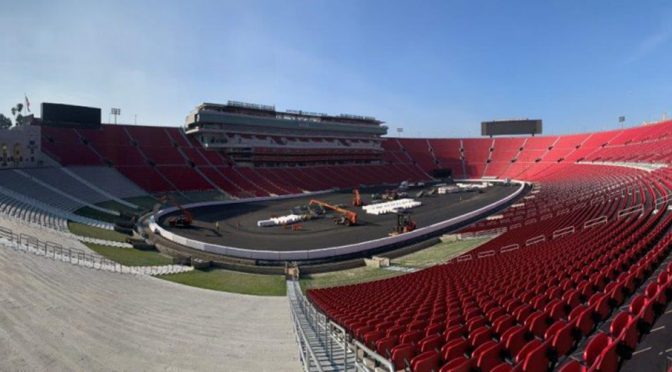
The tire test for the Next Gen car at Bowman Gray is intended to prep for the Feb. 6 Clash at the Coliseum exhibition, which will be held in Los Angeles at a similar quarter-mile paved layout. Dates for that test at the Winston-Salem, N.C., venue have not been confirmed, Probst said.

The Wythe Raceway test will be held on the high-banked half-mile dirt layout in Rural Retreat, Va., on Nov. 16. Camping World Trucks driver and dirt-track veteran Stewart Friesen will drive the Next Gen car there to prepare for Bristol Motor Speedway’s dirt-track event April 17. Probst said the selection of Friesen as the test driver was designed to prevent a Cup Series regular from getting a sneak preview of the Next Gen car’s performance on dirt.

An additional tire test is planned at a to-be-determined date for Atlanta Motor Speedway, which is undergoing a full repave and reconfiguration ahead of its two NASCAR race weekends next year.

Organizational tests had previously been announced for this week at the Roval, Nov. 17-18 at Charlotte’s oval layout, and Dec. 14-15 at Phoenix Raceway. Probst said an organizational test had also been established for Jan. 11-12 at Daytona International Speedway, in what could be considered a revival of the Preseason Thunder winter test days that last ran in 2014.

Probst said that three more organizational tests are likely to be scheduled, one at Martinsville Speedway, one at an intermediate-sized track (Las Vegas or Kansas, Probst indicated), and a third track also TBA — a road course, World Wide Technology Raceway at Gateway and Homestead-Miami Speedway among those under consideration. “So we’re working through those scenarios, but there’d only be four total — Daytona counting as one of them next year,” Probst said.

The prospects of seeing Cup Series cars at Bowman Gray for the first time in 50 years, even if only for testing, has the ring of nostalgia to it. The tight circuit known as “The Madhouse” is NASCAR’s first weekly track, having hosted events since 1949. NASCAR’s top division competed at Bowman Gray from 1958-1971, and founder Bill France Sr. was active in the promotion of its earliest race meets.

The proposed quarter-mile track at the Los Angeles Coliseum takes inspiration from Bowman Gray Stadium’s layout, a flat quarter-mile around a football field. But a tire test there prompts the question of whether a similar one-off event could one day happen with Cup Series cars at the Madhouse.

“That’s fascinating you say that, but that’s for another part of our company to work on. I would say that that is right now 100% in preparation for the Coliseum. I think that it’s not a case that we’re going there, I don’t expect it to go more than about four or five hours. We just want to go there, turn a bunch of laps just to make sure that the tires — when we’re going through formats for that event — I think that we just want to know, can we run 150 laps in a row, can we run 75 laps in a row?”

Probst also hinted that a special guest appearance was possible.

“I think I won’t ruin it, but I think we’ll have a pretty cool driver for that, too. It’ll be a good story. … It’s not finalized yet, but it’ll be pretty cool.”

CONCORD, N.C. — Road-course racing used to be a source of apprehension for Tyler Reddick. The skin-crawling thought of mixing in right turns among the left, and the NASCAR Cup Series schedule’s recent expansion to a half-dozen twisty circuits only heightened the phobia.

Recent road-course runs suggest the fears are starting to subside, evidenced by Reddick’s Sunday surge to a runner-up finish on the Charlotte Motor Speedway Roval. The Richard Childress Racing driver’s day was dotted by a pair of crucial miscues — one that left him nursing slight right-side damage early and another that had him playing damage control late with William Byron — but the outcome matched a Cup Series career-best result.

RELATED: Race results | Byron’s effort comes up short

Reddick started 29th after his crash the previous week at Talladega skewed his performance metrics for Sunday’s Roval lineup. A scrape of the wall during the race’s opening stage left him second-guessing what the car’s potential could have been as he tried in vain to chase down the No. 5 Chevrolet of eventual race winner Kyle Larson.

“It does leave a ‘what if’ in your mind,” Reddick said post-race. “It’s like if I hadn’t crashed this car early in the race, and almost ended our day, it should have been a little bit faster.”

But Reddick’s No. 8 Chevy has shown glimmers of improvement in road-racing environs this year. He also won the pole position in qualifying for the Cup Series’ inaugural race at the Circuit of The Americas in May. The organization’s overall betterment also rubbed off on RCR teammate Austin Dillon, who historically hasn’t counted road racing as a strong suit but resided among the top five for certain stretches Sunday before settling for 15th place.

All of those components have gone a long way toward reducing Reddick’s goosebumps.

“I tell you what, when he got over to RCR in 2019, man, there wasn’t anything he dreaded more than road racing,” said Randall Burnett, the No. 8 team’s crew chief. “That’s all Tyler Reddick there. He’s put in the work and the effort to get better at these places, and it just kind of shows the talent this kid’s got. He’s unbelievable and able to adapt to a lot of things. Put in a lot of effort this winter, and they’ve put a lot of effort in our road-course cars to make them better. … He’s putting everything together, and we’re going to have a handful next year.”

Reddick acknowledged the extra effort on RCR’s own behalf, but also tipped his cap to the technical alliance shared with Kaulig Racing and road-racing veteran AJ Allmendinger, an Xfinity Series title contender and Cup Series winner at the Indianapolis Motor Speedway road course this season.

“Our team worked really hard in the offseason to clean up and make better what was our worst type of racing,” said Reddick, who made his first postseason appearance this season but was eliminated in the Round of 16. “A year ago here, I was absolutely terrible and just dreading getting to it, but now with this car, we felt like we had the best shot to win. It’s just a shame to not take advantage of it.”

Reddick also had his regrets about contact with William Byron as their contest for position heated up with 19 laps to go. Reddick admitted that he “just flat-out made a mistake” as he raced in close quarters with Byron and Larson, and that his bump cost the former a shot at winning — his only means of advancing from the Round of 12.

“We hated that to happen. We were racing him hard, and we’ve raced those guys clean all year long,” Burnett said. “Tyler’s one of the cleanest drivers out there. By no means intentional, you’ve just got the 5 here on your door and the 24’s right in front of you, you’re kind of in the middle and you sail off in there and the 24 checks up just a tick before you’re ready to and stuff like that happens. Like I said, it’s unfortunate and kind of ruined their chances of maybe winning the race, but we’re here racing our guts out, too. We’re racing for our life, and at end of the day, wind up still second.

“Still got a little bit to learn. The guy in the 5 car’s pretty good, so still got to figure out a way to beat him, and we’ll go from there.”

A senior NASCAR official said members of the sanctioning body would speak with rivals Chase Elliott and Kevin Harvick in an effort to mitigate their feud that has escalated through the Cup Series Playoffs.

Scott Miller, NASCAR Senior Vice President of Competition, addressed the latest in a series of incidents between the two drivers during a Monday morning appearance on SiriusXM NASCAR Radio.

RELATED: Elliott advances after Harvick dust-up | Harvick wrecks late

“We definitely have something brewing between those two,” Miller told SiriusXM. “We spoke to them after the thing at Bristol and we’ll circle around, and I don’t know if we’ll have them together or talk to them individually to see where they are right now, but we don’t need that continuing on and we’ll do what we think is necessary to kind of get that one calmed down.”

The conflict between the two sparked up during the postseason’s Round of 16 finale at Bristol Motor Speedway, where late-race contact prompted Elliott to impede Harvick’s progress in the closing laps. That triggered a heated conversation on pit road and a later talk inside a team hauler.

The two drivers suggested days later that their differences remained unresolved. A mid-race bump from Harvick that sent Elliott’s No. 9 Chevrolet into a retaining wall during Sunday’s Bank of America Roval 400 confirmed that notion. Elliott rallied to keep his playoff hopes alive, and Harvick’s crash 11 laps from the end terminated his postseason eligibility.

Rick Hendrick, team owner for both Elliott and eventual Roval race winner Kyle Larson, suggested post-race that NASCAR officials intercede to soothe the tensions.

“Well, I think they’re the only ones that can really stop it,” Hendrick said. “I hope they do because the crew chiefs and everybody can do the best they can, but it’s up to the drivers themselves. I’ve been in this situation before. NASCAR can handle it.”

Monday, Miller said competition officials handle driver conflicts on a case-by-case basis, adding that he hoped to avoid any sort of harsh punishment.

“Every situation, it can’t be a blanket statement, right? Every situation is different,” Miller said. “Now we’ve had Bristol, which one felt slighted on, and obviously yesterday, which the other feels slighted on, so hopefully we can put a truce in place there. But we will just continue to monitor the situation and try not to let it get out of control. We don’t want to park anybody. We want all the fans to see the drivers that they came out to see, so that’ll try to be a last resort. If we keep seeing things, then we will absolutely have to take some sort of action there.”

CONCORD, N.C. — NASCAR’s Next Gen car is on track for a full two days of testing on the Charlotte Motor Speedway road course Monday and Tuesday, putting next year’s Cup Series model through its paces.

RELATED: Next Gen test photos | Test preview, entry list

The two-day session comes after the Bank of America Roval 400 weekend, and race winner Kyle Larson is among those participating. A total of 21 teams were on schedule to participate, getting their first chance to tune on the new model at the track in an organizational test.

What a sampling of drivers and a top NASCAR competition official said they anticipate from this week’s Next Gen test:

Ryan Blaney, No. 12 Team Penske Ford: “We’ll see. It’s nice to be able to test the Next Gen car the next two days for long days. I think it’ll be good. I ran that car at Texas earlier this year, and obviously coming to a road course, it’ll be way different in how it’s going to drive and really see what the braking performance is and the tire performance. Nice to jump in the day after we run this car. It’s like, ‘I can do this better here’ or ‘it does this worse here.’ Just kind of pick and choose when it’s fresh in your head. You’re not looking back months prior and be like, ‘I think this is better here.’ So I’m looking forward to it. I think it’ll be really nice to get behind that car, and it’s really nice to get more organizational tests here. We have this one, we have the Charlotte oval, we have Phoenix. I think it’s really good to try to just start getting laps in that car.”

Alex Bowman, No. 48 Hendrick Motorsports Chevrolet: “Hopefully, a whole lot of learning, right? I think there’s still a lot of question marks about the car that we want to learn. I think there’s things that NASCAR wants to learn, so we’re just going to hopefully dial it in. I’m excited to get two days at a road course of testing for me. I feel like I don’t have a lot of road course background, and it’s something that I can continue to improve on, so improving myself as a race car driver over the next two days will be a lot of fun.”

Kyle Larson, No. 5 Hendrick Motorsports Chevrolet: “I got fitted for a seat insert the last couple weeks, and mirrors and shifter and things like that, but I’ve never been in it on the ground, so I’m sure everything will look different once I’m on the ground. I’m excited to see how it drives, kind of going in with no expectations and take it slow and not wreck the car for the other guys.”

Joey Logano, No. 22 Team Penske Ford: “It’ll be a lot different, a lot to learn in a short amount of time. Not just for driver, crew chief and the engineers, but the mechanics to learn how to work on this car. Everything is different. The seat and the steering wheel are the same, but I think after that, it’s all different. So just a lot of things — the mirrors aren’t even the same. You’ve got plenty to look at and think about and talk about. You don’t have many tests and practice will be limited. We’ve just got to make the most out of that test to try to get ahead, right? It’s such an underdeveloped car right now — we don’t know what works and what doesn’t work, and we have to figure that stuff out pretty quickly. We don’t have a great starting point because we haven’t been here before, so you just have to start from the beginning.”

Martin Truex Jr., No. 19 Joe Gibbs Racing Toyota: “I think just trying to learn about the car, obviously there’s so much different about it than what we’ve ever raced, so there’s going to be a lot of learning. There’s going to be a lot of trying things, seeing where maybe our cars are compared to the other manufacturers, competition, etc. — all those things. Really just see where you’re at and see where you need to go. And then, something that I’ve heard a lot about is the heat. I didn’t have to deal with it when I drove it — it was really cold here. The way the car was put together was all different, and it wasn’t an issue. It’s really been a big issue this summer, a hot topic. We’ll see if the heat’s still an issue and if they were able to find any things to fix that.”

Scott Miller, NASCAR Senior Vice President of Competition (to SiriusXM NASCAR Radio): “We’ll just be over there working with the teams and looking for team feedback. This is the first time a lot of them have run their own cars, and it will be interesting, the particulars of each team’s feedback as to where some minor improvements could be made. Just looking at things like where we might need extra heat shielding, just all of those things that are little things that we’ll be soliciting individual team feedback on. We have a few teams working with us on some different airflows under the car and evacuating speed from out from under it. We have definitely some development work going on still, just really though, the teams getting miles on their stuff and what they’ve found and next steps moving forward.”

CONCORD, N.C. — Needing a win to advance in the playoffs, William Byron laid it all on the line.

Byron entered Sunday’s showdown 44 points below the Round of 12 elimination line and trying to advance to the Round of 8 for the first time in his career.

After starting 11th in the NASCAR Cup Series Bank of America Roval 400 at Charlotte Motor Speedway, Byron and crew chief Rudy Fugle flexed their muscles with a masterful combination of tire strategy and pure pace. Their valiant effort came up short with a heartbreaking finish, however.

RELATED: Playoff standings | Roval results

Byron began the day by finishing top 10 in Stage 1 and Stage 2, putting him in prime position to compete for the walk-off win in the final stage.

“Everything went almost according to plan,” said Fugle, leader of the No. 24 Hendrick Motorsports team. “The only thing that could have went better is if we didn’t get that one yellow where it bunched everybody back up and caused some chaos. It ended up getting us in an incident. We had the lead, we were stretching the lead and if it stays green, I don’t think anybody catches us.”

Byron charged his way to the front of the pack late to lead a race-high 28 laps before the game-changing yellow flag flew with just 21 laps remaining, setting up a pressure-packed restart.

“It was lookin’ like it was gonna be a really good day,” Byron said. “Even after the caution, it was looking like we were gonna have a shot to win.”

But after battling with teammate Kyle Larson, Denny Hamlin and Tyler Reddick to regain the lead, push came to shove and turned Byron’s day on its head.

Entering the backstretch chicane, Reddick got into the back of Byron, causing him to overshoot the curbing and surpass the track limits.

RELATED: Byron bumped out of the chicane

“I just passed the eight (Reddick) off Turn 8 and I guess he had the five (Larson) inside of him,” said Byron. “Just a lack of awareness.”

That on-track incident left Byron further back in the pack after serving a stop-and-go penalty — seemingly the final blow to the No.24 team’s playoff hopes after a myriad of earlier issues.

“We felt like this was one gonna be one of our best rounds,” Fugle said. “We’re great at the Roval, we’re generally great at Talladega but got in a wreck, and we were great at Las Vegas but we got a flat tire. It is what it is.”

Byron’s 11th-place finish in Sunday’s showdown confirms his Round of 12 exit from the NASCAR Playoffs for the second time in his career (2019). Now, the No. 24 crew is focusing on building momentum for the 2022 season and beyond.

“We’re building a championship-caliber team year in and year out,” Fugle said. “William is 23 years old. So, we’re gonna build a solid team around him that can compete for a championship on a regular basis.”