Monday, April 5 6 a.m., NASCAR Cup Series: 2010 Goody’s Fast Pain Relief 500 at Martinsville Speedway (re-air), FS2
9 a.m., NASCAR Cup Series: 2007 Goody’s Cool Orange 500 at Martinsville Speedway (re-air), FS2
6 p.m., NASCAR Race Hub, FS1
Tuesday, April 6 On MRN: 7 p.m., NASCAR Live
Wednesday, April 7 9 p.m., NASCAR Masters of the Clock: The Legend of Martinsville (re-air), FS2
10 p.m., NASCAR Auto Racing Classics: 2010 Goody’s Fast Pain Relief (re-air), FS2
Thursday, April 8 1 a.m., NASCAR Auto Racing Classics: 2007 Goody’s Cool Orange 500 (re-air), FS2 6 p.m., Dale Jr. Download, NBCSN
6 p.m., NASCAR Race Hub, FS1
On MRN:
8 p.m., NASCAR Whelen Modified Tour: Virginia is for Racing Lovers 200 at Martinsville Speedway
Friday, April 9
6 p.m., NASCAR Race Hub, FS1
7 p.m., NASCAR RaceDay: Xfinity Series at Martinsville Speedway, FS1
Saturday, April 10
6 a.m., NASCAR Race Hub: Best of Radioactive — Martinsville, FS1
6:30 a.m., Unrivaled: Earnhardt vs. Gordon (re-air), FS1
1 p.m., NASCAR Masters of the Clock: The Legend of Martinsville (re-air), FS1
7 p.m., NASCAR RaceDay: Cup Series at Martinsville Speedway, FS1
Sunday, April 11 7 a.m., NASCAR Masters of the Clock: The Legend of Martinsville (re-air), FS1
11 a.m., NASCAR Race Hub: Best of Radioactive — Martinsville (re-air), FS1
noon, NASCAR Xfinity Series: Cook Out 250 at Martinsville Speedway, FS1 (Canada: TSN2)
4 p.m., NASCAR Cup Series: Blue-Emu Maximum Pain Relief 500 at Martinsville Speedway, FS1 (Canada: TSN5)
5 p.m., NASCAR Race Hub: Best of Radioactive — Martinsville (re-air), FS2
On MRN:
noon, NASCAR Xfinity Series: Cook Out 250 at Martinsville Speedway
4 p.m., NASCAR Cup Series: Blue-Emu Maximum Pain Relief 500 at Martinsville Speedway
With the NASCAR Cup Series taking a week off, here’s a look back on the first seven races of the season and a look ahead to the next five races starting with Martinsville Speedway.
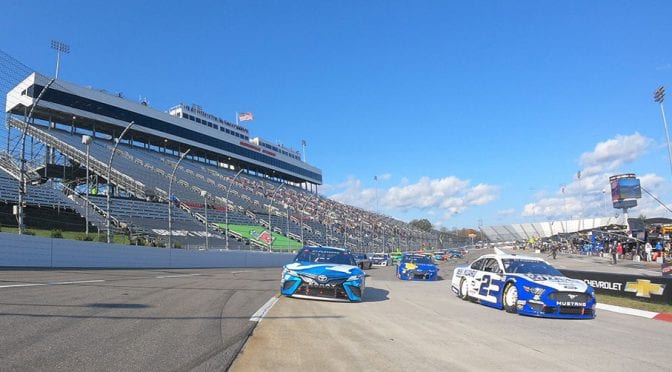
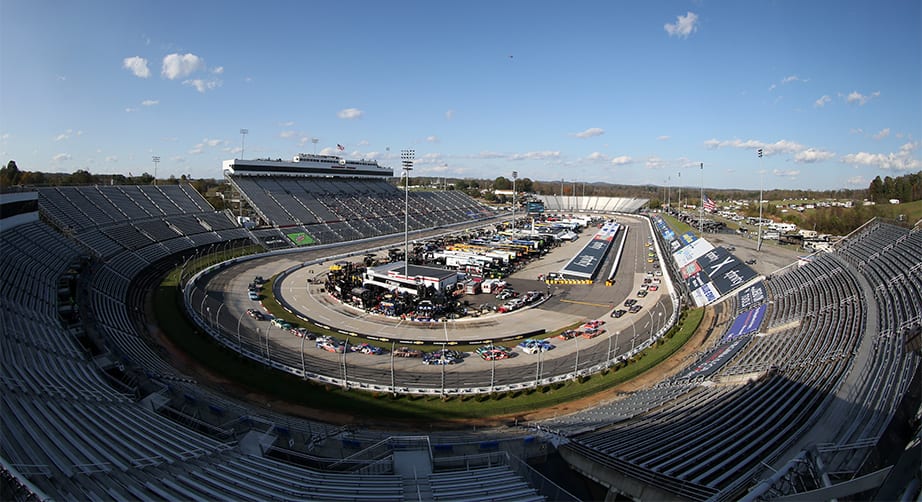
Where: Martinsville Speedway, a .526-mile oval in Martinsville, Virginia When: Sat., April 10 at 7:30 p.m. ET TV: FS1 Radio: MRN/SiriusXM NASCAR Radio
Looking ahead
Who do the stats favor in the next five races?
Martinsville
Defending race winner: Martin Truex Jr.
Best average finishes since 2019: Brad Keselowski (2.8), Ryan Blaney (3.2), Kurt Busch (8.0) and Martin Truex Jr. (8.0)
Active winners: Denny Hamlin (5), Brad Keselowski (2), Martin Truex Jr. (2), Kurt Busch (2), Kyle Busch (2), Kevin Harvick (1), Joey Logano (1), Chase Elliott (1) and Ryan Newman (1)
Richmond
Defending race winner: Spring race was not run due to COVID-19 pandemic; Brad Keselowski is the most recent winner here
Best average finishes since 2019: Martin Truex Jr. (1.3), Brad Keselowski (4.0), Joey Logano (5.3) and Kyle Busch (5.3)
Active winners: Kyle Busch (6), Kevin Harvick (3), Denny Hamlin (3), Brad Keselowski (2), Martin Truex Jr. (2), Kurt Busch (2), Joey Logano (2), Kyle Larson (1) and Ryan Newman (1)
Talladega
Defending race winner: Ryan Blaney
Best average finishes since 2019: Ryan Newman (9.8), Ryan Blaney (10.5), Ty Dillon (10.5) and Denny Hamlin (11.0)
Active winners: Brad Keselowski (5), Joey Logano (3), Denny Hamlin (2), Ryan Blaney (2), Kevin Harvick (1), Chase Elliott (1), Ricky Stenhouse Jr. (1), Kyle Busch (1) and Aric Almirola (1)
Kansas
Defending race winner: Denny Hamlin
Best average finishes since 2019: Alex Bowman (6.0), Chase Elliott (6.0), Brad Keselowski (6.5) and Kevin Harvick (7.0)
Active winners: Kevin Harvick (3), Denny Hamlin (3), Joey Logano (3), Brad Keselowski (2), Martin Truex Jr. (2), Chase Elliott (1), Kyle Busch (1) and Ryan Newman (1)
Darlington
Defending race winner: Kevin Harvick
Best average finishes since 2019: Kyle Larson (2.0; only 1 start), Kevin Harvick (2.2), Erik Jones (4.5), Brad Keselowski (8.2) and Kurt Busch (8.2)
Active winners: Kevin Harvick (3), Denny Hamlin (3), Erik Jones (1), Brad Keselowski (1), Martin Truex Jr. (1) and Kyle Busch (1)
Seven races, seven winners
James Gilbert | Getty Images
Recap the first seven races of the 2021 NASCAR Cup Series season.
• Michael McDowell earns first win in the Daytona 500 | Watch replay
• Christopher Bell wins on Daytona Road Course for first Cup win | Watch replay
• William Byron wins at Homestead-Miami | Watch replay
• Kyle Larson gets first win with Hendrick Motorsports at Las Vegas | Watch replay
• Martin Truex Jr. earns victory at Phoenix | Watch replay
• Ryan Blaney passes Kyle Larson in closing laps for win at Atlanta | Watch replay
• Joey Logano wins first race on Bristol dirt | Watch replay
We’re talking about playoffs
It’s never too early. A look ahead to the postseason.
• Betting odds for the 2021 NASCAR Cup Series championship | See the odds
• Playoff Watch: How the postseason looks after seven races | Read more
Modified stars were scattered throughout the field that day. In the race that day was Evans, in the midst of his fourth straight NASCAR Modified championship season and fifth overall. Jerry Cook joined Evans, along with Ray Hendrick, Maynard Troyer, brothers Geoff and Brett Bodine, Ron Bouchard and George Kent. Neil Bonnett was also in the lineup of 30 cars that started the race.
Geoff Bodine started on the pole and led 117 of the race’s 150 laps, but his right-rear tire went soft and both Evans and Bouchard began pressuring him. With 33 laps to go, Evans took the lead, Several laps later, Geoff Bodine spun in turn three as his tire continued to lose air, effectively taking him out of contention for the win. Bodine would end up settling for sixth.
The race came down to a duel between Evans and Bouchard, driving the No. 3 “Ole Blue” Modified. Bouchard, however, was never able to mount a strong charge on Evans. The final caution came out with four laps to go when Brett Bodine spun, also in turn three. The race ended under yellow, with Evans rolling to the win.
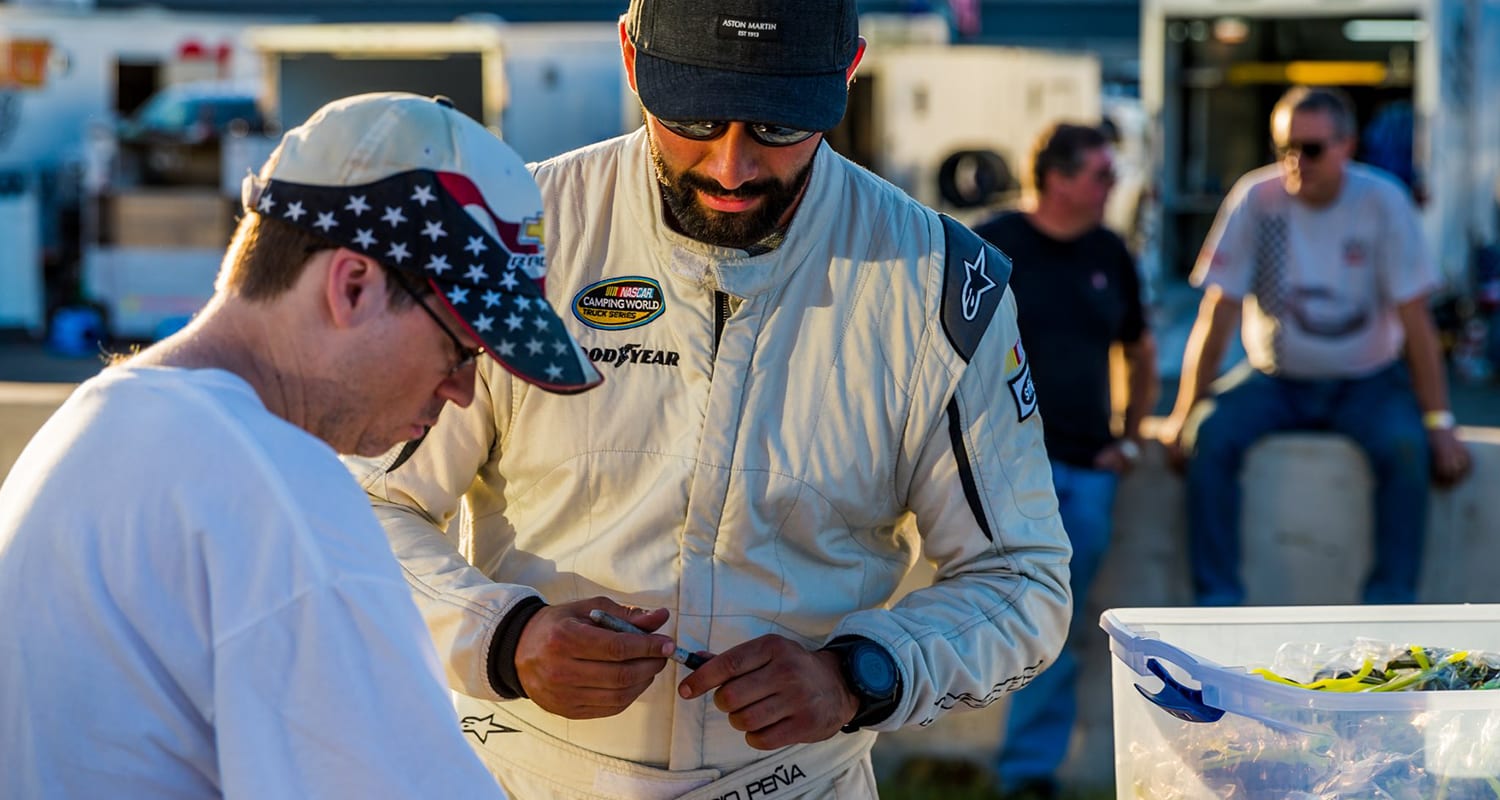
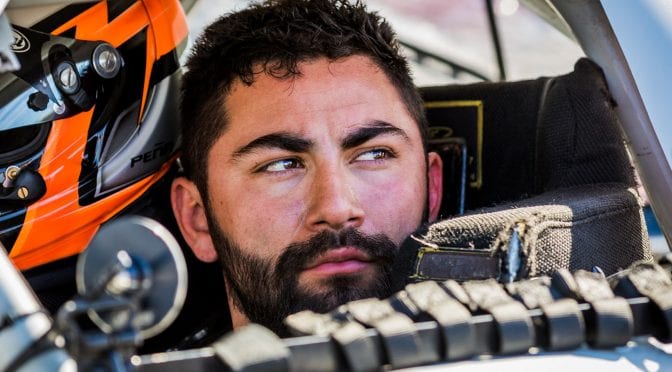
Racing has taken Sergio Peña places even he wouldn’t have expected.
After driving in the NASCAR Pro Series off and on for about five years, when that was over he still wanted to find a way to make driving a career.
Now, Peña’s day job consist partially of working as a security tactical driving instructor, training officials in the government, military, and “any 3-letter agency,” he said, on defense-level tactical driving before they deploy overseas or go to embassies around the world.
When he’s not in a police car or armored vehicle, Peña works as a performance driver, going to Formula 1 races in the U.S., Mexico, and Canada and doing hot laps for Aston Martin. He also works as a stunt driver, and recently did a shoot for the newest Fast & Furious movie.
While he may not be in racing full-time, Peña is still at a race track almost every day of the week.
“It’s been crazy,” Peña said of his new career. “Racing is all I’ve known my entire life, from go-karts starting at 6 years old and moving up the ranks.”
Peña starting racing in the K&N Pro Series, now known as the ARCA Menards Series, in 2010 with Rev Racing and the NASCAR Drive for Diversity Driver Development Program. He stayed with Rev on and off for three years, moving between the East and West Series.
He returned to the East Series in 2015, and got back into a late model with owner Sam Beaty.
“I never really thought NASCAR would be an option and getting the opportunity with D4D, and when all that was said and done, I didn’t quite finish college yet, I kind of went back and forth between a hundred different things,” he said. “And you hear the stories a hundred different times about drivers who didn’t quite make it to the top level, what happens next?
“I’ve been so fortunate to continue to use driving to pay my bills and stay active at race tracks Monday through Friday really. I’m at a race track almost every day of the week. Maybe not in a race car but in a police car or some type of armored vehicle. Regardless, it’s a great time.”
Peña still finds time to get into an actual race car on the weekends, with a new opportunity this year. He’s driven full-time at Dominion Raceway, a NASCAR-sanctioned .4-mile asphalt oval track in Thornburg, Virginia, the last two years, and plans to return when the track opens the season this weekend.
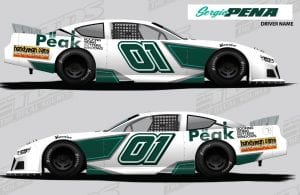
He’ll drive for owner Travis Byrd, who will also serve as his crew chief, in a brand new car built by chassis builder Forrest Reynolds. The team is sponsored by Peak Roofing Contractors, who Peña said “without them this wouldn’t be possible.”
Peña said the team will try to run for a track championship at Dominion, while also going for a NASCAR Advance Auto Parts Weekly Series Virginia state championship and, hopefully, a national title.
“Primarly, just a new team, a fresh start,” Peña said. “It’s a brand new car with one of the best chassis builders around in late models… As far as this year goes, everybody is going for it 100 percent.”
Beaty will also be involved. Peña and Beaty have been working together since Peña was in high school a decade ago, before he began with Rev Racing. Before beginning with the Drive For Diversity program, Peña didn’t have any oval or short track experience, having grown up with a road course background. Beaty was the one who helped him get accustomed to a totally different style of driving.
This year will be Beaty’s last in racing, so not only is Peña trying to win a championship for his new team, he’d also like to send his 78-year-old mentor out with a bang. He said this year, “It’s all for Sam.”
“That’s the goal. Obviously you think about trying to do the best for yourself and everyone, but especially for Sam,” he said. “With work and all, I’m not able to always be there to help with the car and I travel with work a lot. And this guy, just by himself as an upper 70-year-old man, single-handedly builds these cars, puts them together, and keeps me active in racing, the last five or six years especially.
“I owe the world to him. There’s no way I could actually repay him for the things he’s done for me throughout my career. And the fact that he still wants to be a part of it and keeps pushing, it’s incredible.”
Trying to make his way in racing the last few years hasn’t been easy for Peña. He said he was running old equipment, not testing or practicing, mostly just showing up and racing. While he said it was fun and he appreciated getting to stay involved in the sport, he feels like he finally has all the pieces in place for something different this year.
Mostly, he’s just thankful to get the chance to spend more time in a car with people who have meant so much to him throughout his career.
“I think as a racer, at least for me, I don’t picture life without racing. And there’s never going to be a day I ever give up on it,” he said. “It goes beyond just racing. It’s family, it’s friends, the relationships you build throughout all of this. It becomes your life. I just couldn’t imagine life without it, really.
“I’m 28 years old now, and not racing full time. I’m not getting paid to race or anything, but I’m still able to have my name on the door of a race car and race on Saturday nights. It’s just incredible for so many reasons.”
Dominion Raceway will open the season on Saturday with late models, modifieds, Virginia Racers, Dominion Stock, UCars, Dominion Any Car, and Mini Cups.
The last 30 years of Whelen Modified Tour action at Martinsville have provided short-track fans with all-time classics. Leading up to the Modified return to the track, here are selected some of the biggest and most important races in Martinsville history since 1990.
En route to the Tour championship that year, late-race heroics in the Hanes 150 on April 25 got Jeff Fuller his fourth win at Martinsville. Fuller led only five laps on the way to victory over Mike Stefanik — who had led 123 laps — and Jan Leaty. Satch Worley, who won a month earlier at Martinsville, finished fourth.
In the midst of a tight championship battle between Reggie Ruggiero and Jerry Marquis, fireworks changed the course of the Goody’s Body Pain 200 in the closing laps. First Jerry Marquis spun himself trying to pass Ruggiero for third, erasing Christopher’s sizable lead and setting up a late-race dash to the checkers. Then, with 10 to go, Ruggiero made contact with Christopher going for the lead.
Christopher went into the wall, while Ruggiero went on to the win.
Marquis would finish second in the penultimate race of the year, and clinch his championship at Connecticut’s Stafford Motor Speedway by a 36-point margin over Ruggiero.
Between 1989-2001, Jeff Fuller (four wins), Mike Ewanitsko (four wins), Mike Stefanik (four wins) and Reggie Ruggiero (three wins) dominated, with Satch Worley and Tony Hirschman Jr.
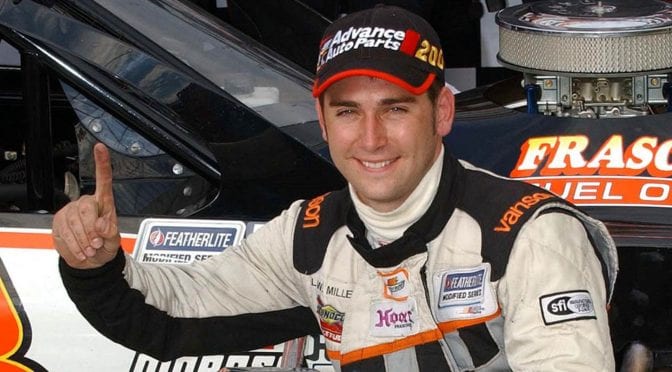
Then along came a 28-year-old from Dushore, Pennsylvania: LW Miller.
Miller, who had four career top 10s in 69 previous career starts, qualified seventh and led the final 50 laps en route to his first — and only career NASCAR Whelen Modified Tour victory. Miller’s win began a streak of eight different winners in eight Tour races at the track.
Miller went on to win the 2007 NASCAR Whelen Southern Modified Tour championship and is currently Director of Motorsports for JR Motorsports.
Ted Christopher finally got his Martinsville Speedway win in 2005. (Howie Hodge/NASCAR)
After a three-year absence from Martinsville, the Tour returned to the track under the lights for the first time on Labor Day weekend. It was Christopher who beat fellow Modified legend Mike Stefanik on a Saturday night to take his only win at Martinsville.
Christopher started on the pole and led 164 laps in the Made In American Whelen 300. It was the first of three straight tour wins in 2005 for Christopher.
John Blewett III, Eric Beers and Doug Coby rounded out the top 5. Brian Loftin was the highest finishing driver of the Whelen Southern Modified Tour, in its first year.
It appeared as if Burt Myers had picked up his first Whelen Modified Tour win when he crossed the finish line ahead of 17-year-old Ryan Preece in the Made In American Whelen 300, and make the North Carolina veteran the first Whelen Southern Modified Tour driver to win the combination event.
However, post-race inspection, however, would lead to a disqualification for Myers, and hand Preece his first victory on the Tour. Preece was driving the famed No. 3 ‘ole Blue.’ Preece joined Bugs Stevens in delivering a Martinsville win to Boehler Racing.
Matt Hirschman was credited with second, followed by Ruggiero, Christopher and Todd Szegedy.
Preece has gone on to win the2013 NASCAR Whelen Modified Tour title and finish tour runner-up four other times en route to his current ride in the the NASCAR Cup Series.
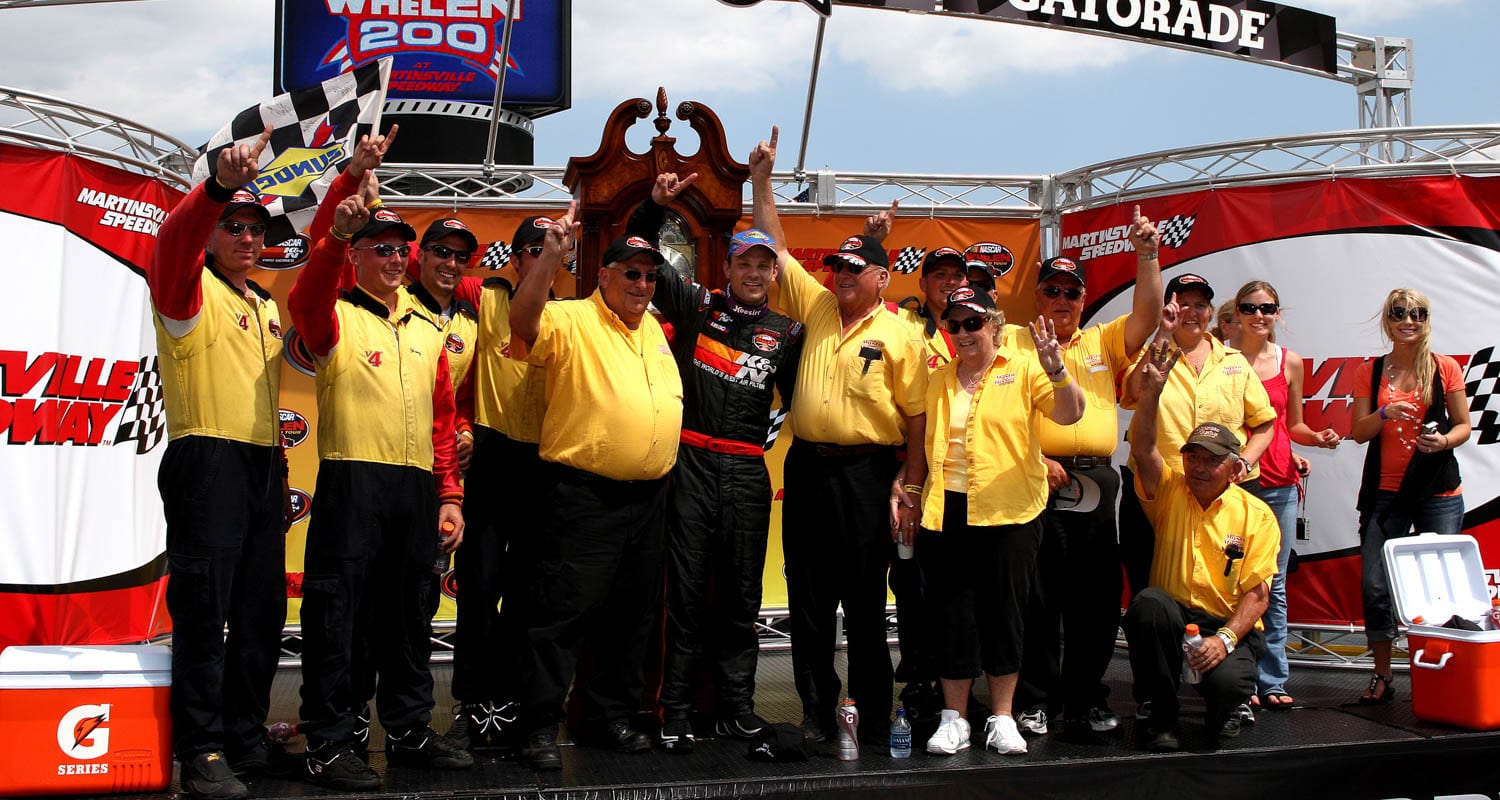
The win in the 2010 Made In America Whelen 300 was special for Bobby Santos III in a number of ways.
It was Santos’ third win in the first four races of the season, along with a runner-up finish, as he drove to his first NASCAR Whelen Modified Tour championship in his first full season driving for longtime Modified car owner Bob Garbarino. Santos joined Satch Worley (1992) and Donny Lia (2007) in winning at Martinsville for Garbarino.
To top it all off, Santos’ grandfather, Bobby Santos Jr., won the Cardinal Classic 250 NASCAR Modified Division event on Oct. 16, 1972.
Then 22-year-old rookie Justin Bonsignore finished second, followed by Szegedy, Stefanik and Myers.
Bobby Santos III, driver of the #4 “Mystic Missile” Dodge, and his team celebrate in victory lane after winning the NASCAR Whelen Modified Tour Made in America Whelen 200 at Martinsville Speedway on June 6, 2010 in Martinsville, Virginia.(Tom Whitmore/Getty Images for NASCAR)
Name: Jesse Current City: Shackle Island, Tennessee Member Since: 2020
Getting to KNOW Jesse: Q: How did you first become interested in NASCAR?
“I was bartending at a place where ALL the regulars loved racing. Learning how to talk the talk was crucial to earning their friendship and repeat business, not to mention tips! So I did my homework and sat down to watch the Daytona race in the summer of ’03, and I absolutely loved it. Life led onward from those salad days, but my NASCAR fandom is here to stay.”
Q: What is your favorite part about NASCAR?
;The marriage of man and machine. No other sport has such a premium on equipment. I love how a great driver in a bad car is irrelevant, and a great car with a weak driver is useless. But a great car plus a great driver is a beautiful thing on the track! I watch to see those combos go head-to-head every week.”
Q: What is your favorite NASCAR memory?
“Watching Parker Kligerman plant the checkers in the grass at Talladega after a Truck win in 2017. Wehad driven down from Nashville for that race, in no small part because kids get in free to Truck races.During the race, a plane landed beyond the backstretch, and I though [my son] would literally go crazy with joy. We still have a checkered flag blanket from that race, and he talks about the flag-plant every time we see PK on TV.”
Q: Do you have a favorite in any of the following categories?
Current Driver: “Aric Almirola.”
Past Driver: “Carl Edwards.”
Up and Coming Driver: “Ross Chastain.”
Track: “Watkins Glen International.”
Sponsor: “GoBowling.com. I love the races at the Glen, and I love that they sponsor a car or two in addition to getting naming rights. We went bowling at a little place in Watkins Glen where Denny Hamlin had bowled, and it’s a great memory.”
Q: What do you like to do in your free time?
“Do the crossword puzzle and listen to classical music.”
FROM ALL OF US AT NASCAR, WE THANK JESSE FOR HIS CONTINUED SUPPORT AND LOOK FORWARD TO HEARING FROM HIM IN 2021! Look for Jesse on the Official NASCAR Fan Council page on NASCAR.COM.
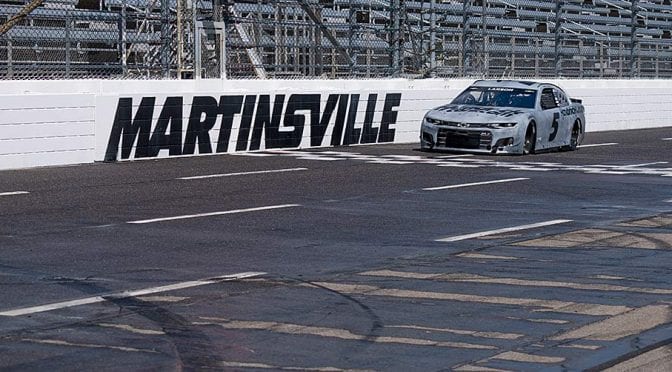
NASCAR’s feasibility test for wet-weather tires in a short-track setting went off as planned on a chilly Thursday at Martinsville Speedway, as drivers Chris Buescher and Kyle Larson made laps on the dampened paperclip layout.
Words such as “positive” and “promising” were among the descriptors used by NASCAR’s Senior Vice President of Racing Innovation John Probst, as the one-day session drew to a close. The test, he said, wasn’t a tipping point toward a full-fledged yes or no on going forward with wet-weather tires on shorter oval tracks in certain conditions, but it was key to gathering data and feedback for further assessment.
“We’re in evaluation right now,” Probst said Thursday afternoon. “I would say that we could have come in here today and had a complete disaster and walked away from it saying, ‘no, this can’t be done.’ I think what we learned today was positive for sure. I think that we just need a little bit of time to go through all the data to figure out what are the next best steps. I would say that we continue the journey, and it looks positive for now. Today could have ended it, but it certainly didn’t do that. I feel like everyone involved felt like it was a very positive test, but it’s still fresh and certainly a very, very good first step.”
The test culminated what’s been a busy on-track week heading into an idle weekend on the racing calendar. The NASCAR Cup Series and Camping World Truck Series held Monday races at Bristol Motor Speedway’s dirt layout after a weekend of rainy conditions, and officials arrived Tuesday at Martinsville for two days of testing for the Cup Series’ Next Gen car for 2022.
Thursday’s test, announced by the sanctioning body a day before, brought together Buescher’s Roush Fenway Racing No. 17 Ford team and Larson’s No. 5 Hendrick Motorsports Chevrolet outfit to try a number of different tire setups on damp pavement. NASCAR Executive Vice President and Chief Racing Development Officer Steve O’Donnell said Wednesday that the test’s goal was to explore ways to get back to racing sooner and hastening the drying process in inclement weather.
Tyson Winter | NASCAR Digital Media
After an initial shakedown of the two cars in the dry, a water truck doused the .526-mile oval as crews switched among dry-weather slicks, existing wet-weather tires for road courses, and different track-specific compounds from Goodyear that were grooved to transfer moisture away.
“We had some Sonoma compounds and then actually some Martinsville compounds that were carved to the tread profile that we’d anticipate the 18-inch tire (for the Next Gen car) would be molded to,” Probst said. “So we tested different compounds and different tread layout. Like I’ve said, we still have a lot of data to go through, but the one thing that’s pretty clear is, either of the treads versus a slick seems to dry the track much quicker.
“We’ve got to go through the driver feedback and some of the friction data to make concrete conclusions with respect to the treads and compounds, but I would say on a whole, the rain tires that we have today worked pretty well. If we decide that this is viable option for us this year, that is the most likely candidate just because we have those and those are in existence today. For now, it’s looking pretty positive but I caveat it all with we’ve got a lot of data to look through.”
Besides the data and observations, Probst said competition officials will also weigh the input from the drivers and the teams before deciding the next steps.
“I don’t really have much wet-weather experience, so it was kind of cool to figure that out,” Larson said. “Honestly didn’t drive way different. You could still slow down good, turn good. Drive-off was easy to spin your tires, but other than that, it was kind of fun to chase the grip throughout the portions where it would start drying. So it was pretty fun and yeah, I think they’ve got a pretty good product that we could honestly start racing with right away if we needed to on these short tracks.”
Said Probst: “First off, thanks to those guys for making the time to do the test. We’re going into an off weekend, so certainly the guys at Hendrick Motorsports and Roush Fenway Racing and their crews, this is a week that a lot of guys look forward to getting some time away, and they were nice enough to work with us through this project. Very positive feedback from both drivers, and very similar feedback from both drivers. Could definitely feel the differences in what we put on the car for them. … I think in general they — like everyone else there — were pleasantly surprised with what can be done on a wet track.”
Those first-blush reviews prompt questions about the timeline for a potential implementation. The NASCAR national-series schedule is off this weekend, but the next two stops for the circuit are at Martinsville (April 9-10) and Richmond Raceway (April 17-18) — two short tracks where rain tires could potentially be used in the right weather scenarios.
Probst mentioned, though, the time needed for Goodyear to make enough rain tires for every team, in addition to the evaluation period for competition officials. How the rain tires would fit into race procedures — whether officials would mandate wet-weather starts or leave tire options up to teams — would also need to be determined.
“It’s certainly ambitious,” Probst said. “… I’m not going to say it’s impossible, but there’s a lot of data we need to go through. We need to not only look at can it be done, but what tracks lie ahead, and there’s a whole lot of different variables that get brought into the mix, including the weather. … I wouldn’t say no, but I certainly wouldn’t sign us up for it either — just yet.”
NASCAR’s Thursday test of wet-weather tires in damp short-track conditions may have drawn the most intrigue heading into an off weekend for the national-series schedule, but another test that preceded it at Martinsville Speedway also represented a crucial step forward.
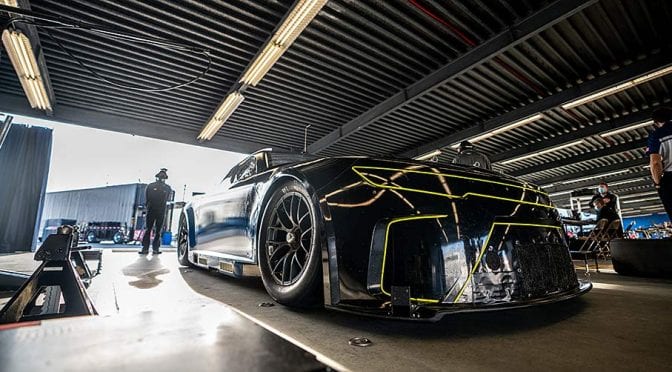
Chevrolet, Ford and Toyota — the sport’s three original equipment manufacturers (OEMs) — each brought prototypes of their Next Gen models for the 2022 Cup Series to the track for the first time this week. Cars were fitted with wheel-force transducers for data collection at the closed test, which ran Tuesday and part of Wednesday until rain halted the second session at the .526-mile track.
“That was the first test that was not NASCAR-led. That was led by the OEMs so it’s sort of the transition, if you will, of the car, continuing out of the development phase and now into the implementation phase with the teams,” NASCAR’s Senior Vice President of Racing Innovation John Probst said. “The OEMs are the last step in the process, and as far as them prepping the cars, the feedback was pretty positive. Obviously, there’s little things that we’re working on and we’ll continue to work on, but none of the cars missed any track time due to mechanical problems or anything. Some of the best feedback that we get is, ‘it’s a race car.’ ”
A mix of current and former drivers participated. Hendrick Motorsports’ Alex Bowman represented Chevrolet, veteran David Ragan drove Ford’s prototype, and test driver and spotter Drew Herring was on hand for Toyota.
All three Next Gen cars had the automaker-specific bodies that they’ll use in the model’s 2022 competition debut, but with busy, patterned wrap designs intended to obscure details of their appearance before their official public debut. Even with the car bodies somewhat cloaked by their paint schemes, Probst said he liked what he was able to see.
“With all of the branding now that the OEMs have put on those cars, we’re very happy with how that first test went,” Probst said. “Obviously the cars are heavily camouflaged right now, so it’s hard to see all of the detail that’s gone into it, but I think when the fans get the opportunity to see all of the production characteristics that have gone into these race cars, they’re going to be really happy with the end result.
“The first on-track test was a massive success from our perspective. The focus was on collecting data and making laps, and it wasn’t on trying to sort the car out. So I feel like from that perspective, it was a home run on our first test with the OEMs.”
It’s another part of the process for the Next Gen project, which was delayed by the outbreak of the COVID-19 pandemic a year ago. On-track testing resumed last August, and NASCAR officials announced in a preseason competition briefing Feb. 1 that the development stage of the car was complete.
What remains is more testing for Goodyear tire configurations, wheel-force data collection and organizational test sessions. A full unveiling of all three manufacturer-specific cars is set for late spring.
“I think it’s 100 percent still on schedule. We feel really comfortable with how the car’s performing and we continue to learn, but I would say now it’s smaller tweaks,” said Steve O’Donnell, NASCAR executive vice president and chief racing development officer. “The focus for the remainder of the year is getting more and more cars on track, more and more drivers out there getting a feel for how the car performs — not only on their own, but with some other cars out there on the track. That’ll be the focus as we continue throughout the year, and then parts and pieces will start to be distributed and we’ll be ready to roll for Daytona.”
We talk frequently in this space about professional and public bettors. The former, often called “sharp” bettors or “wiseguys,” are a small group – about 1-2% of bettors are considered sharp. These are people who earn a living betting on sports and whose opinions bookmakers respect. A bet from a sharp often prompts a bookmaker to change the odds.
Most of us fall into the latter group – public, or recreational, bettors.
Pros and the public tend to take different approaches to betting. Pros play the long game, betting very small edges to grind out a profit over time. Public bettors like to swing for the fences, risking a small amount of money for the chance at a big score.
When it comes to NASCAR, wiseguys typically play matchups (one driver to beat another), while public bettors take their shots in the outright market (betting on a driver to win the race) and parlays (bets that pay off at high odds if you are able hit multiple legs without a loss).
“The matchups are probably 90% sharp money, and scalpers and arbitrage players. The odds to win is probably 80% public,” said Ed Salmons, vice president of risk management at SuperBook USA. “So for the most part, (we) try to keep (our) own on the matchups – break even, win a little, lose a little – and all (our NASCAR) money is made in odds to win, group matchups, things like that.”
Added Johnny Avello, Director of Race and Sportsbook Operations at DraftKings, “People look for plusses (odds that allow bettors to profit more than they risk), big plusses. Guys will look for these real long shots to win a race, like Daniel Suarez or Erik Jones at 150-to-1. I notice we take a lot of action on those drivers.”
This strategy paid off for a few lucky bettors early in the season, with underdogs Michael McDowell (80-1 to win the Daytona 500), Christopher Bell (80-1 at the Daytona Road Course), and William Byron (30-1 at Homestead-Miami) winning the first three races.
Blake Phillips, a sharp NASCAR bettor, has noticed the daily fantasy craze has led some public bettors into matchups.
“I do think that a lot of recreational players pay attention to the matchups, too,” Phillips said. “There’s a lot of recreational players that do DFS, so they follow a lot of DFS people on Twitter – and I wouldn’t necessarily consider these people to be winning DFS players, just more recreational guys – and a lot of these Twitter followers have moved into the matchups (as well as the) outright markets, so there’s at least exposure to that. So I think your average recreational NASCAR bettor is focusing mostly on outrights but may dabble in some matchups and props here and there.”
Zack White, a professional bettor who counts NASCAR among his specialties, sees new opportunities opening in the sport as legal betting expands in the U.S.
“For a while, matchups and outrights were the only ways to bet each week. Only a few books took (NASCAR) action, and most either ignored it or put it up with small limits of $100 or $500,” White said. “But as legal gambling has expanded, you see these top-five markets and top-10 markets (where you bet a driver to finish in the top five or top 10), and groups, manufacturer to win, top team, top driver out of his team —a lot more proposition-style stuff. We just never saw that before. You can bet on stage winners now. That was not even a thing a few years ago. So it’s definitely evolving, there’s more ways to get down on it, and there’s definitely opportunities that keep popping up.”
Group matchups – props asking bettors to pick one driver to finish ahead of two or three others – attract both pros and public bettors, although their approach is still different. If a bookmaker slips up and misprices these props, sharps will pounce. Public bettors, on the other hand, look to parlay such bets, requiring them to pick the winner of multiple groups.
Salmons said about 90% of the money on group props at the SuperBook is parlayed action. “You bet a three-teamer with those at +280, plus three dollars (+300), it’s a big payday with just a little amount bet if you can hit it. It’s easier said than done though, obviously,” he said.
To exemplify Salmons’ point, if you played a $100 “three-teamer” in last week’s Food City Dirt Race using Tyler Reddick at +305 (to win a group that included Chase Briscoe, Austin Dillon and Stewart Friesen), Ricky Stenhouse Jr. at +270 (vs. Kyle Busch, Chase Elliott and Ryan Blaney) and Denny Hamlin +270 (vs. Kevin Harvick, Martin Truex Jr. and Mike Marlar), you would have collected $5,444.45 (plus your $100 investment).
But, as the Vegas veteran says, that’s easier said than done.
Marcus DiNitto is a writer and editor living in Charlotte, North Carolina. He has been covering sports for nearly two-and-a-half decades and sports betting for more than 10 years. His first NASCAR betting experience was in 1995 at North Wilkesboro Speedway, where he went 0-for-3 on his matchup picks. Read his articles and follow him on Twitter; do not bet his picks.
Dale Earnhardt Jr.’s career in NASCAR’s top circuit began in 1999 with a five-race audition for the big leagues. One year later, his winning ways in that series found a launching pad.
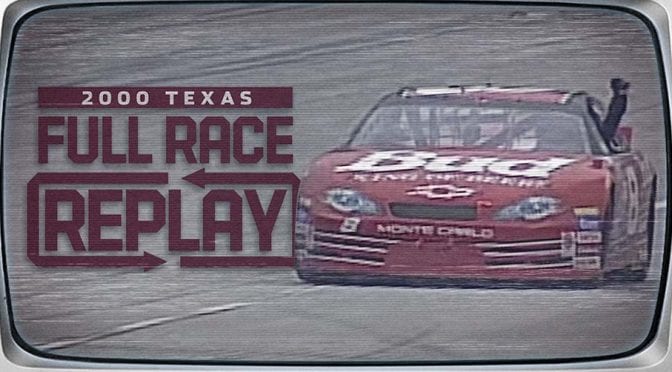
NASCAR.com rekindles those 20-year-ago memories Thursday with a full-race replay of the DirecTV 500 at Texas Motor Speedway from April 2, 2000. Earnhardt led a race-high 106 of the 334 laps for the first of his 26 victories in what is now called the NASCAR Cup Series.
Earnhardt outran runner-up Jeff Burton down the stretch and secured his first win in just his 12th Cup Series start. The feat touched off a special celebration in Victory Lane with his father, who owned his son’s No. 8 Chevrolet and came home seventh in his own iconic No. 3.
Earnhardt wound up winning twice in his first full season, adding a Richmond Raceway triumph later that spring. He finished second in the Sunoco Rookie of the Year hunt to the promising Matt Kenseth, who broke through in the Coca-Cola 600 that May.
Check out the scenes from Texas Motor Speedway and watch Dale Earnhardt Jr. notch his first Cup Series victorywith this Classic Race Replay of the 2000 DirecTV 500.
 He’ll drive for owner Travis Byrd, who will also serve as his crew chief, in a brand new car built by chassis builder Forrest Reynolds. The team is sponsored by Peak Roofing Contractors, who Peña said “without them this wouldn’t be possible.”