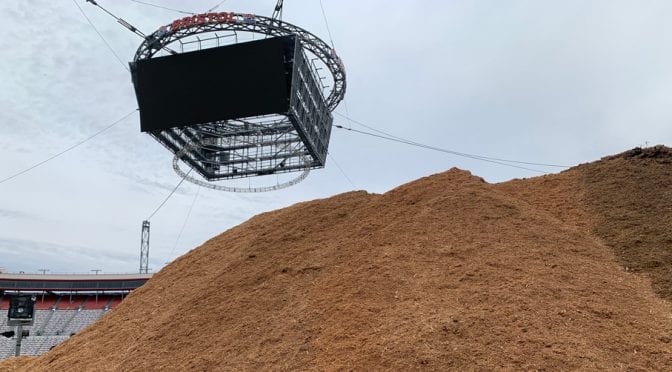
Scott Miller, NASCAR’s senior vice president of competition, said his department was on hand at Bristol Motor Speedway when the first shovelfuls of dirt landed this winter. Since then, the dirt has arrived by the truckloads to total roughly 20,000 cubic yards, and the trips to the Tennessee track have become more regular, up to once or twice weekly.

Preparations are humming along in Thunder Valley as the inaugural NASCAR dirt-track weekend at Bristol on March 26-28 nears reality. It will mark the first of two dirt races this season for the Camping World Truck Series but also signify a return to dirt-track roots for the premier Cup Series, which has run on paved tracks exclusively for the last 50 years.

The process of temporarily transforming the .533-mile bullring from a concrete surface to dirt has been a monumental project, overseen by Steve Swift — the senior vice president of operations and development for track owner Speedway Motorsports Inc. (SMI) — but managed in collaboration with NASCAR’s competition department. As a live camera mounted high above Turns 3 and 4 has documented in recent weeks, the track’s conversion is taking shape and in the final stages.

PHOTOS: See Bristol’s transformation to dirt | Qualifying rules, procedures revealed

“We’ve been keeping an eye on what’s going on and putting our two cents in where it needed to be, but yeah, we’ve been involved,” Miller said. “Steve Swift and his team up there have done a great job. Big project, and I feel like they’ve done a really, really good job getting it to the point where it is right now.”

The project has also involved the drivers who will participate in the event later this month. Competition officials have drawn on the expertise of drivers such as Chase Briscoe and Kyle Larson, who both have a rich background of racing on dirt.

In some ways, Miller said, that cooperation isn’t much different than the normal procedures for each race weekend. After the preseason Busch Clash exhibition last month on Daytona International Speedway’s road course, for example, Miller said drivers were consulted about how to prevent shortcuts on the backstretch chicane, which kicked up excess dirt onto the racing surface. Those discussions resulted in new-look curbing that was installed for the points-paying race on the circuit 12 days later.

“We met with five or six of them and got their opinions and went to work on how we could fix it,” Miller said. “Working with the drivers on different aspects of the racing, the race tracks, anything, is something that we do on a weekly basis, but we’ll certainly keep the dirt-track specialists in the loop at Bristol, but that’s the same as we do every weekend.”

RELATED: Daytona Road Course tweaks bus stop chicane

As scheduling fate would have it, Bristol’s dirt will get a real-world test run in racing conditions with the Bristol Dirt Nationals scheduled March 15-20, the weekend before NASCAR’s arrival. Competition will span eight divisions, and a handful of NASCAR standouts have already filed entries to get a sneak preview of the layout and mix it up alongside the grassroots racers in the field.

Larson and Kyle Busch are entered in the Super Late Model division, while fellow Cup Series regular Joey Logano and three-time Camping World Truck Series champ Matt Crafton are set to compete in the Open Modified class. But Miller said his department will also be on site to see what can be noted about the track’s characteristics and what, if anything, may need to be adjusted before the NASCAR race weekend.

“Absolutely, we will have a representative there to witness it all and really just see if there’s anything that we need to be on our toes about over the weekend, how the track comes in, or any learnings about operationally anything that we can get,” Miller said. “I think that when they announced that they were having those race prior to our weekend, I was really excited about it because it will give them a time to understand the dirt and the track prep, and us operationally seeing if there’s any problems with equipment moving around the infield or any of those things. We will certainly be up there observing and learning during those events.”

RELATED: A history of the NASCAR Cup Series on dirt

What might have seemed like a lark when the 2021 schedule was announced last September is now becoming more and more a reality. Those initial talks with Speedway Motorsports president and CEO Marcus Smith, FOX Sports executives and NASCAR organizers have created an uncommon first-time event that’s just more than three weeks from its dirt-slinging debut.

Count Miller among those with a vested interest in seeing it all unfold.

“I think ever since we started having success at the Eldora (Speedway) truck race and the dirt thing was kind of intriguing, there had been talk about bringing Cup to a dirt-track event,” Miller said. “A lot of little whispers here and there for a few years, but really and truly, FOX and SMI and NASCAR kind of got together and decided it was time to give it a try. The broadcasters are behind it, Marcus committed obviously a ton of time, effort and money into making it happen, so the timing was right. I expect it to be a really, really good show and we’ll see. It’s not too far away now.”
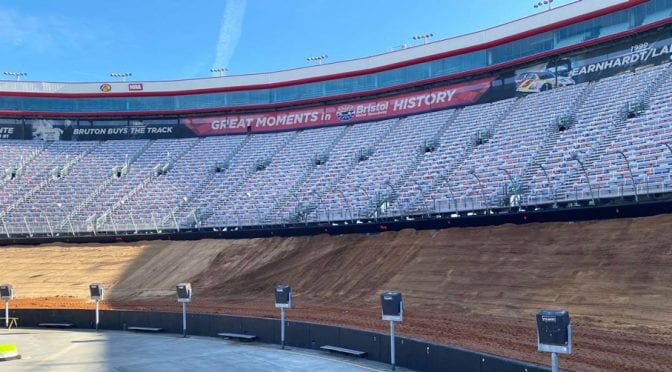
NASCAR officials unveiled the remaining details and procedures Wednesday for its inaugural dirt-track race weekend at Bristol Motor Speedway later this month, revealing that the starting lineups will be determined by the finishing order of qualifying heats and by the amount of positions gained in those preliminaries.

The Food City Dirt Race (Monday, March 29, 4 p.m. ET, FOX, PRN, SiriusXM NASCAR Radio) will mark the Cup Series’ first dirt-track event since 1970. The Camping World Truck Series introduced dirt-track racing to its schedule in 2013, starting a seven-year run at Eldora Speedway in Ohio, but the Pinty’s Truck Race on Dirt (Monday, March 29, Noon ET, FS1, MRN, SiriusXM NASCAR Radio) will mark a series debut on Bristol’s half-mile layout with dirt overlayed on the usual concrete surface.

RELATED: NASCAR schedule | Effort behind transforming Bristol | Bristol stats 

Scott Miller, NASCAR senior vice president of competition, had previously announced that heats would be used during Bristol’s dirt weekend — a carryover from Eldora’s qualifying format. The addition of a system of “passing points” as a qualifying heat incentive is a new wrinkle for NASCAR’s national series.

The decision to drop customary pole qualifying with time trials in favor of rewarding passing and strong finishes in heats, Miller said, was at least in part a nod to dirt-track tradition.

“Well, I think it’s special rules for obviously quite a different event than we’ve ever done in the Cup Series, but we really wanted to just kind of take a page out of the dirt-track racing playbook,” Miller said. “They do and use these type of procedures to set the field for their main events, so we thought it would be something different for us and interesting to implement for this one.”

PHOTOS: See Bristol Motor Speedway’s transformation to dirt

Here’s how that structure looks, plus other facets of the Bristol dirt inaugural that were announced Wednesday:

Starting lineup format

  • Each series will have four qualifying heats of 15 laps each. Heat field size will depend upon the size of the overall entry list. So, if there are 44 cars, there will be 11 cars in each heat race. Only green-flag laps will count. No overtime rule will be in effect, but free-pass and wave-around procedures will remain.
  • Qualifying heat assignments and starting positions will be determined by a random draw, conducted in order of current team owner points standings.
  • The starting lineup will be determined by a formula that weighs finishing position plus positions gained during each heat. Drivers finishing first in their heats earn 10 points, second place earns nine, third place earns eight and so forth. Additionally, drivers earn one passing point for each position gained in their heat; there are no points deductions or “negative points” for drivers who lose positions in their heats. Also, these points are merely used to calculate the starting lineup and do not count toward the championship standings.
  • Ties in these combined points totals will be broken by current team owner points.

Bristol Dirt Main

Pit-stop procedures

  • Teams will not be permitted to change tires, add fuel or work on their vehicles except during the breaks between stages. Exceptions will be made for vehicles involved in incidents.
  • Teams are not required to pit during stage breaks. Those that elect to stay on the track during stage intermissions will line up ahead of the cars/trucks that pit on the ensuing restart. There will be no race onto or off pit road, using a controlled pit-stop procedure similar to the previous format in Eldora events.

Explains Miller: “If we had green-flag stops or changed tires under yellow, that would get us to a competitive pit road. With dirt tires, dirt on concrete, who knows what the traction’s going to be like, having pit crews running around out there under those circumstances, running around in a not-clean pit box, we just felt was not something that we were going to do, and it would potentially create an unsafe environment, so we had to take the actual competitive element out of the pit stops for predominantly safety reasons.”

RELATED: A history of the NASCAR Cup Series on dirt

Stages and schedule

  • Stages for Monday’s Cup Series main will end at Lap 100, Lap 200, with 250 laps the scheduled full distance. Stage endings for Monday’s Truck Series feature are set for Lap 40, Lap 90 and Lap 150. None of the stage lengths are scheduled longer than a full fuel run for either series. There will also be competition cautions on Laps 50 and 150 in the Cup race.
  • Each series will hold two 50-minute practice sessions on Friday, March 26. Qualifying heats for both series are scheduled Saturday, March 27.

NASCAR officials announced before the season that a tentative number of eight Cup Series events would he conducted with practice and qualifying in 2021 as COVID-19 protocols continued to limit at-track exposure. Miller indicated that including Bristol’s dirt-track debut on that short list was nearly imperative.

“We really felt like it was,” Miller said. “Some of the drivers, obviously we have a few drivers with a lot of dirt experience. This is obviously going to be a different type of vehicle than your typical dirt-track race car, so that will be different. Some of the guys have been out running different stuff to get some experience on dirt that were brought up on asphalt, but it’s one of those things where there was no way that we could not have practice. I’m not sure how many yellow flags we’re going to have as it is, but if we wouldn’t have had practice, we probably would have had double the amount.”

Choose rule

The choose rule procedure of allowing teams/drivers to pick either the inside or outside line for restarts will not be in effect for Bristol dirt-track events. The rule is also not used at superspeedways (Daytona and Talladega) or at road-course events. The race leader — or “control car” in scoring tower parlance — will still select the inside or outside lane on the front row for restarts, as is the case for all NASCAR national-series events.

The specialized nature of dirt-track racing played a part in that determination, Miller said. But was the decision also partly due to the difficulty of painting and maintaining an orange “V” and box as the choose location on a high-traffic dirt surface?

“You know, that factored heavily into the equation,” Miller said with half a chuckle. “The start-finish line and the choose V were something we were going to have to work around, and we didn’t want to commit to something we were going to have trouble executing. We don’t like to do that, so we just kind of took the safe route and went back to no choose rule for this event.”

Future applications

One more dirt-track weekend remains on the 2021 NASCAR national-series calendar as the Camping World Trucks visit historic Knoxville (Iowa) Speedway for the first time on July 9. Miller said that barring a necessary post-Bristol tweak, he expects the same qualifying and race procedures to be in effect for that inaugural 200-lapper.

“I would think that unless we see something that we don’t like, we will probably continue on with that there,” Miller says. “The feedback that we’ve gotten from everybody that I’ve kind of worked with and socialized with on the team side about some of these items, everybody’s pretty excited about it. So we really feel confident that it’s going to work well.”

Richard Childress Racing unveiled its BetMGM wrapped paint schemes for this month.

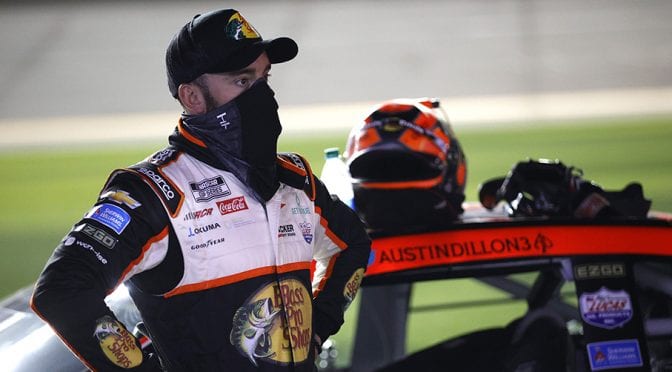
Austin Dillon’s No. 3 BetMGM Chevrolet will take to the track this weekend at Las Vegas Motor Speedway for the Pennzoil 400 presented by Jiffy Lube (Sunday at 3:30 p.m. ET on FOX, PRN and SiriusXM NASCAR Radio).

RELATED: Odds for Sunday’s race at Las Vegas | See where Austin Dillon, Tyler Reddick will line up

Tyler Reddick’s No. 8 BetMGM Chevrolet will be getting down and dirty for the Food City Dirt Race at Bristol Motor Speedway on March 28 (3:30 p.m. ET on FOX, PRN and SiriusXM NASCAR Radio).

BetMGM is an authorized gaming partner of NASCAR and the official sports betting operator for RCR.

We’ll be using this space, about twice each week, to provide you with sports betting content as it relates to NASCAR. We’ll educate you on the concepts, terminology and nuances of sports betting with the intention of helping create a more informed, responsible and enjoyable gambling experience for race fans.

With the circuit in Las Vegas this week, what better time to drop the green flag …

RELATED: Starting lineup for Sunday | Las Vegas betting odds from BetMGM

Before 2018, the year the Supreme Court struck down the law forbidding sports betting in all but four states, NASCAR races in Las Vegas were special. For races in their hometown, in addition to the Daytona 500, Vegas bookmakers would expand their wagering menus, posting multiple proposition bets (props) for race fans to gamble on. For most races, bettors could wager only on the race winner or on one driver to finish ahead of another in a matchup set by the bookmakers. But even before legalization, props such as number of cautions, the finishing positions of specific drivers, and the winning manufacturer were available for fans’ wagering pleasure when the NASCAR season opened in Daytona or the circuit stopped in Vegas.

Fast forward to today, when there’s legal sports betting in 20 states plus Washington, D.C., and there is no longer much unique, from a betting perspective at least, about NASCAR races in Las Vegas.

And this is wonderful for those of us who enjoy getting a few dollars down on a race. 

Thanks to legalization and the competition among sportsbooks it has inspired, now every race has a long list of betting options. Want to bet on Chase Elliott to finish in the top 3? You can do that. How about Kyle Busch to be the top Toyota car? Sure. Or whether the number on the winning car will be odd or even? Yes, you can bet on that, too.

“Vegas was our big race,” Johnny Avello, the longtime sportsbook director at The Wynn in Sin City before taking over bookmaking operations at DraftKings in 2018, said this week. “That race took the most handle and had the most action and all the other offerings and proposition bets we put up. Not the case with DraftKings (whose sportsbook is now live in 13 states). With DraftKings, the Las Vegas race doesn’t have to be the most popular because there are so many other races around the country, and we’re putting up a lot of content on each and every race because we have a lot of customers in a lot of states. It’s not about one race for us.”

This phenomenon is not unique to NASCAR. Open a betting app any day of the week and find plenty of ways to get involved on a regular-season NBA basketball game, a Champions League soccer match, or a PGA Tour golf tournament.

Indeed, props are not just for the Super Bowl anymore.

The NFL’s marquee game, of course, is where prop betting all started and has grown exponentially. Along with legalization, though, prop betting has expanded, and there’s no shortage of ways to wager, regardless of the sport or the size of the event.

“The Super Bowl was the big event, and that’s the event we would do multiple propositions bet on,” Avello said. “We would have a minimum of 400 or 500 different ways to bet the game, and that one game kind of took precedent over everything else in football. But now you can pull up a regular-season NFL game on Sunday morning, any game, and you’re going to find first touchdown scorer, first team to score, last team to score, all those Super Bowl offerings but on a regular-season basis. 

“We’ve expanded the menu on not only that but for every NASCAR race as well.”

Here’s just a sampling of offerings for Sunday’s Pennzoil 400 presented by Jiffy Lube from various sportsbooks around the country as of Wednesday morning:

Outright winner (BetMGM):
Martin Truex Jr. +600 (these odds mean a winning $100 bet would result in a $600 profit; +600 may also be expressed as 6/1)
Kevin Harvick +650
Brad Keselowski +650
Joey Logano +650
Denny Hamlin +900
Check out a full list of BetMGM’s odds to win here

To finish in Top 3 (Barstool Sportsbook):
Chase Elliott +235 (bet $100 to win $235)
Kyle Busch +375
William Byron +450

To finish in Top 10 (Barstool Sportsbook):
Kurt Busch -134 (bet $134 to win $100)
Bubba Wallace +285
Michael McDowell +375

Manufacturer of winning car (Barstool Sportsbook):
Ford +135
Chevrolet +170
Toyota +230

Car number of race winner (Barstool Sportsbook):
Even -139
Odd +105
Check out Barstool’s complete list of wagering opportunities for Sunday here.

Any driver to win both Stage 1 and 2 and win race (DraftKings):
Yes +650
No -1430 (not a fun one for most bettors, as a $1430 risk is required to cash $100)

Matchups, pick one driver to beat the other (SuperBook USA):
Harvick (-130) vs. Hamlin (+110)
Christopher Bell (-110) vs. Austin Dillon (-110)
Kyle Larson (-120) vs. Ryan Blaney (even-money or bet $100 to win $100).

Group matchup, pick one driver to finish first among a group of four (SuperBook USA):
Harvick +240
Hamlin +280
Elliott +280
Truex  Jr. +285

Over/under finishing positions (SuperBook USA):
Harvick 5.5
Larson 7.5
Bubba Wallace 17.5

Total cautions (SuperBook USA):
Over -120
Under +100 (or even-money)

Marcus DiNitto is a writer and editor living in Charlotte. He’s been covering sports betting for more than 10 years. His first NASCAR betting experience was in 1995 at North Wilkesboro Speedway, where he went 0-for-3 in his matchup picks. Read his articles; do not bet his picks.

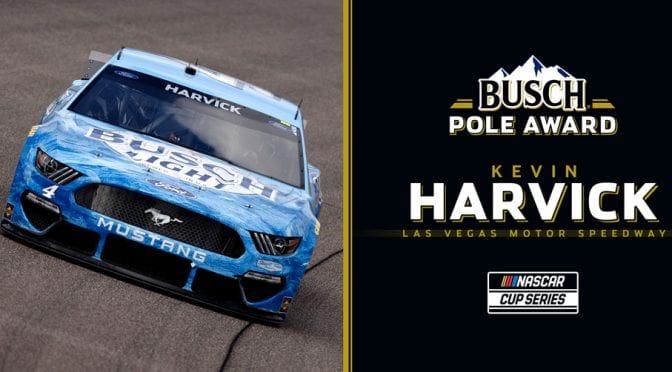
Kevin Harvick has won the Busch Pole Award for Sunday’s Pennzoil 400 presented by Jiffy Lube (3:30 p.m. ET, FOX, PRN, SiriusXM NASCAR Radio).

Harvick will start his No. 4 Stewart-Haas Racing Ford from the pole position with William Byron in the No. 24 Hendrick Motorsports Chevrolet sharing the front row in the field.

Additionally, Myatt Snider won the pole for Saturday’s Alsco Uniforms 300 (4:30 p.m. ET, FS1, PRN, SiriusXM NASCAR Radio) for the NASCAR Xfinity Series, and Ben Rhodes is on the pole for Friday’s Bucked Up 200 (9 p.m. ET, FS1, MRN, SiriusXM NASCAR Radio) in the NASCAR Camping World Truck Series.

RELATED: Las Vegas weekend schedule | 2021 Cup Series standings

As NASCAR adapted to COVID-19 protocols last season, practice and qualifying were eliminated at a majority of national-series events to limit at-track time, exposure and to cut race weekend costs. To determine starting lineups, competition officials used grouped draws, added inversions for weekend doubleheaders, and eventually adopted a performance-metrics formula. That metrics format remains in place this season, drawing on performance from both individual races and season-long results.

NASCAR’s metrics formula for 2021 weighs:

  • 25 percent: Driver’s finishing position from the previous race
  • 25 percent: Car owner’s finishing position from the previous race
  • 35 percent: Team owner points ranking
  • 15 percent: Fastest lap from the previous race

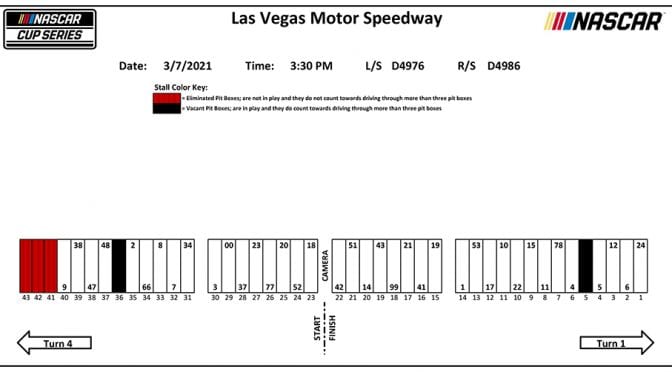
See the full lineup for Sunday’s Cup Series race below.

Start pos.
Driver Car # Team
1 Kevin Harvick 4 Stewart-Haas Racing
2 William Byron 24 Hendrick Motorsports
3 Kyle Larson 5 Hendrick Motorsports
4 Martin Truex Jr. 19 Joe Gibbs Racing
5 Michael McDowell 34 Front Row Motorsports
6 Denny Hamlin 11 Joe Gibbs Racing
7 Kurt Busch 1 Chip Ganassi Racing
8 Chase Elliott 9 Hendrick Motorsports
9 Alex Bowman 48 Hendrick Motorsports
10 Brad Keselowski 2 Team Penske
11 Tyler Reddick 8 Richard Childress Racing
12 Austin Dillon 3 Richard Childress Racing
13 Ryan Newman 6 Roush Fenway Racing
14 Kyle Busch 18 Joe Gibbs Racing
15 Joey Logano 22 Team Penske
16 Christopher Bell 20 Joe Gibbs Racing
17 Ricky Stenhouse Jr. 47 JTG Daugherty Racing
18 Chris Buescher 17 Roush Fenway Racing
19 Ryan Preece 37 JTG Daugherty Racing
20 Cole Custer 41 Stewart-Haas Racing
21 Ross Chastain 42 Chip Ganassi Racing
22 Daniel Suarez 99 Trackhouse Racing Team
23 Bubba Wallace 23 23XI Racing
24 Chase Briscoe 14 Stewart-Haas Racing
25 Justin Haley 77 Spire Motorsports
26 Ryan Blaney 12 Team Penske
27 Anthony Alfredo 38 Front Row Motorsports
28 Aric Almirola 10 Stewart-Haas Racing
29 Erik Jones 43 Richard Petty Motorsports
30 Matt DiBenedetto 21 Wood Brothers Racing
31 Garrett Smithley 53 Rick Ware Racing
32 Cody Ware 51 Petty Ware Racing
33 Corey LaJoie 7 Spire Motorsports
34 BJ McLeod 78 Live Fast Motorsports
35 Josh Bilicki 52 Rick Ware Racing
36 Quin Houff 00 StarCom Racing
37 Joey Gase 15 Rick Ware Racing
38 Timmy Hill 66 Motorsports Business Management

Practice and qualifying are tentatively scheduled for eight Cup Series races this year. Busch Pole Qualifying was held for the season-opening Daytona 500; the next race with time trials scheduled is the March 28 event at Bristol Motor Speedway’s dirt track.

NASCAR officials penalized six Cup Series teams and four Xfinity Series teams for lug-nut infractions during last weekend’s events at Homestead-Miami Speedway.

STANDINGS: Cup Series | Xfinity Series

Crew chiefs for each Cup Series team were fined $10,000 and Xfinity crew chiefs were docked $5,000 for violations of Section 10.9.10.4 in the NASCAR Rule Book, with each team found with one unsecured lug nut in a post-race check.

On the Cup Series side, officials penalized:

  • No. 8 Richard Childress Racing Chevrolet (crew chief Randall Burnett; driver Tyler Reddick)
  • No. 9 Hendrick Motorsports Chevrolet (crew chief Alan Gustafson; driver Chase Elliott)
  • No. 18 Joe Gibbs Racing Toyota (crew chief Ben Beshore; driver Kyle Busch)
  • No. 19 Joe Gibbs Racing Toyota (crew chief James Small; driver Martin Truex Jr.)
  • No. 41 Stewart-Haas Racing Ford (crew chief Mike Shiplett; driver Cole Custer)
  • No. 42 Chip Ganassi Racing Chevrolet (crew chief Phil Surgen; driver Ross Chastain)

In the Xfinity Series, penalized were:

  • No. 8 JR Motorsports Chevrolet (crew chief Taylor Moyer; driver Josh Berry)
  • No. 16 Kaulig Racing Chevrolet (crew chief Jason Trinchere; driver AJ Allmendinger)
  • No. 19 Joe Gibbs Racing Toyota (crew chief Jeff Meendering; driver Brandon Jones)
  • No. 51 Jeremy Clements Racing Chevrolet (crew chief Mark Setzer; driver Jeremy Clements)

A disqualification was assessed Saturday in the Xfinity Series after post-race inspection at the 1.5-mile track. The No. 23 Chevrolet driven by Tyler Reddick to an apparent second-place finish failed the rear height requirement and was dropped to last in the 40-car field.

While 2021 is a year that is hopefully more normal than 2020, one area that will be different in the NASCAR Whelen Modified Tour garage area will be at tech inspection.

Longtime Tour tech director Rick McCaughey announced his retirement at the end of the 2020 season. Moving into his spot will be Dave Farrell, who’s been working with Modifieds for over a decade.

A native of upstate New York, Farrell has been working racing tech for decades, from USAC to Legends cars. He jumped over to Modified racing in 2009. Now, he’s the Whelen Modified Tour tech director.

64574166 10216479461433060 7157837915345649664 N
Dave Farrell

It’s a process that’s been in the works for a couple of years. The last two seasons, Farrell worked alongside McCaughey, preparing for the day that McCaughey would hand him the reins. It gave Farrell the opportunity to ask questions and learn from one of the best in McCaughey on how to effectively officiate the garage area.

“[McCaughey] is just a wealth of knowledge from years ago,” Farrell said. “If you have a question on, ‘how do you approach doing this,’ he’d give me ideas and I just run with them.

“I tried to take as much over the last couple of years off his shoulders and go with it.”

After years of prep work, the support system in place around Farrell gives him faith that his team will be able to do its job in the garage area.

“Am I confident? I am. Will there be challenges? Absolutely, and hopefully, it’ll be a good thing… Having (McCaughey), (Tour director) Jimmy Wilson, (Touring Series Tech Director) Tony Glover, the accessibility to everybody is a wonderful thing.”

Farrell has been in touch with McCaughey repeatedly this offseason, always on the lookout for pointers.

“He always stay friendly,” Farrell said. “He’s a very, very good man.”

Disagreements between teams and tech are all too common. But Farrell has always looked at the long game in terms of what a good tech official means to any touring series.

“I think in the long run, teams, owners, drivers appreciate the fact of our thoroughness,” Farrell said. “That’s where we try to be at our best. To keep it fair.”

When Farrell’s first race as director finally arrives, it won’t look like Tour races of the past. And even though the stands won’t be packed come the season-opener at Martinsville in April, Farrell is just thankful to be at the track doing what he loves. After all, it wasn’t long ago that there wasn’t any racing at all.

“Getting back to normal will be a great thing,” Farrell said. “But you know what? As of right now, hey, thank you very much for opening up the facilities and giving some people a chance to go. That’s the way you have to look at it right now.

“I consider myself very fortunate to be on my way someplace, to participate, to officiate, and to watch a race.”

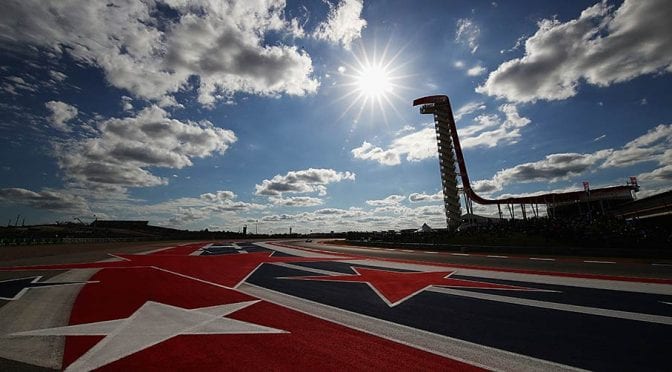
Three NASCAR Cup Series champions are scheduled to participate in a Goodyear tire test Tuesday at Circuit of the Americas in Austin, Texas.

Set to tackle the 3.41-mile track are defending series champ Chase Elliott in the No. 9 Hendrick Motorsports Chevrolet, plus 2017 title winner Martin Truex Jr. in the No. 19 Joe Gibbs Racing Toyota and 2012 champ Brad Keselowski in the No. 2 Team Penske Ford.

RELATED: 2021 Cup Series schedule

The test — which is closed to the public — will help NASCAR competition officials and Goodyear determine the final tire combination for NASCAR’s first weekend at the COTA track, scheduled May 21-23. All three national circuits will be in action, capped by the EchoPark Automotive Texas Grand Prix for the Cup Series on Sunday, May 23 (2:30 p.m. ET, FS1, PRN, SiriusXM).

The Tuesday session will mark the first time multiple NASCAR entries have lapped the Lone Star State road course, which opened in 2012. Three-time NASCAR champ Tony Stewart drove a No. 14 Stewart-Haas Racing Ford during an exhibition run at Circuit of the Americas in 2019.

Track officials determined last December that the 3.41-mile “long course” configuration would be used for every event during the NASCAR inaugural weekend.

Ryan “Rudy” Fugle reflects upon the last nine years of his racing career in a positive light, calling his long-held crew chief role at Kyle Busch Motorsports “an amazing job.” He says now that leaving the Camping World Truck Series and placing his career into transition mode would require the right scenario, an opportunity that checked the boxes for organization, owner, driver and team partners.

Fugle found that position when he signed with Hendrick Motorsports last October to work this season with driver William Byron, whom he once mentored at KBM. But there was another drawing card that enticed the 37-year-old crew chief.

“… I just wanted to prove that I could — to everyone, to myself, to everybody, that yeah, I could do it at this level,” said Fugle, in his first year atop the pit box in the NASCAR Cup Series. “So we want to do it a whole lot more.”

That call to rinse and repeat was part of Fugle’s ecstatic refrain over the team radio after recording his first Cup win with Rick Hendrick’s famed No. 24, watching Byron dominate the latter portions of Sunday’s Dixie Vodka 400 at Homestead-Miami Speedway. Fugle praised the work of his driver and his crew on the cool-down lap, but he also signaled that more was in the offing. “That’s how we race!” Fugle exclaimed. “… Get used to winning, boys.”

RELATED: Homestead-Miami results | Cup Series standings

Winning isn’t a new phenomenon for the Byron-Fugle combination, which produced a stellar seven-win campaign for KBM during their lone season together in 2016. Their reunion this year carried the not-so-veiled notion that their existing chemistry could be reformulated for Cup Series success.

Who knew the breaking-in period would be completed in such short order, especially with Fugle trying to learn his way around a new series with new cars, and a new organization with new colleagues just three races in. Credit goes at least in part to their seemingly effortless communication, both through Byron’s reliable feedback and Fugle’s decisions based on that input.

John K Harrelson
John K. Harrelson photo

“What helped us about the previous relationship was the fact that we’ve worked together before and I knew him,” Fugle says, “I knew how to push his buttons, I knew how to motivate him, and that helped buy me some time to learn these Cup cars that I don’t know yet, so I think that’s the biggest thing.”

Some of that encouragement in the closing laps was both familiar and comforting for the 23-year-old driver. With Byron nursing a lead that topped five seconds before eventual runner-up Tyler Reddick mounted a final charge, Fugle repeated “let it live” in his radio dispatches down the stretch, telling him not to press as he managed both lap-down traffic and the late-race challenge.

“That’s all it’s meaning, just not to push too hard,” Fugle said. “A lot of it comes from having such young drivers like I’ve been used to; they get the lead and they drive harder than they should. I don’t think William needed that, but it felt good to say it, so we kept going with it.”

Shades of 2016 all over again. “It’s helpful,” Byron said with a laugh.

Sunday’s win not only provided a measure of validation for the crew chief move, which dovetailed with predecessor Chad Knaus’ elevation to vice president of competition at Hendrick Motorsports, but it also gave the No. 24 group a virtual lock-in to the 16-driver postseason field and some early relief.

Byron’s first Cup Series win came in the clutch last year, a breakthrough victory in the regular-season finale at Daytona that sealed a long-teetering playoff berth. Win No. 2 pulled him from potential playoff limbo.

“I think I’ve spent kind of a lot of my Cup Series career kind of on the bubble of the playoffs and now I don’t have to worry about that,” Byron said. “It’s crazy; I’m going to take all that stuff in, and just got a great team, got an awesome crew chief. It’s going to be a fun year.”

MORE: McDowell leads early parade of parity

Fugle indicated he has no intent of relaxing with the Homestead victory laurels in hand. With an early trend this year of unique Cup Series winners beating longer pre-race odds, Fugle says he’s striving for firmer footing in the remote possibility that the postseason field becomes crowded with one-race winners. He’s also making sure the No. 24 team has title-caliber cred once the 10-race playoffs arrive in the fall.

The pieces may already be in place. The rest is a matter of getting used to winning and letting it live.

“First of all, with the weird winners we’ve had so far — and I don’t think we’re weird, but it kind of is a little bit weird — you have to be careful that you’re not going to get too many one-wins, so you want to keep attacking for that reason,” Fugle says. “Two is we want to learn how to be a winning race team. In the playoffs to win a championship, you have to win a lot of races, so we have to learn how to do that now and get used to that to be able to contend for a championship.

“We’re not a championship team yet, but over the next 20-some weeks we’re going to become one, so that’s what we’re going to do.”