To win a race in your rookie season is no small task. To win two puts you in an even more exclusive club.
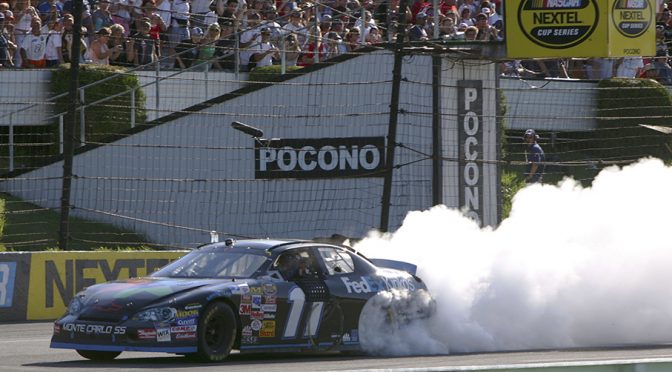
Denny Hamlin did just that in 2006, coming out of the gate swinging in his first full-time season in Joe Gibbs Racing’s now famed No. 11 car. He won the 2006 Busch Clash (then called the Budweiser Shootout), a non-points paying race historically run before the Daytona 500, and a few months later locked up a points-paying win at Pocono Raceway in the Pocono 500 in June.
Hamlin didn’t stop there. When the series returned more than a month later, Hamlin snagged yet another pole and the win, sweeping both Pocono weekends in the NASCAR Cup Series.
Relive both the Pocono 500 and the Pennsylvania 500 from Hamlin’s rookie season as the short-track racer from Virginia cemented his place in NASCAR’s highest level.
While the checkered flag waved on the 2019 season many weeks ago, the holidays have allowed the editorial team here at NASCAR.com to look back and reflect on our own personal favorite moments that this past season had to offer.
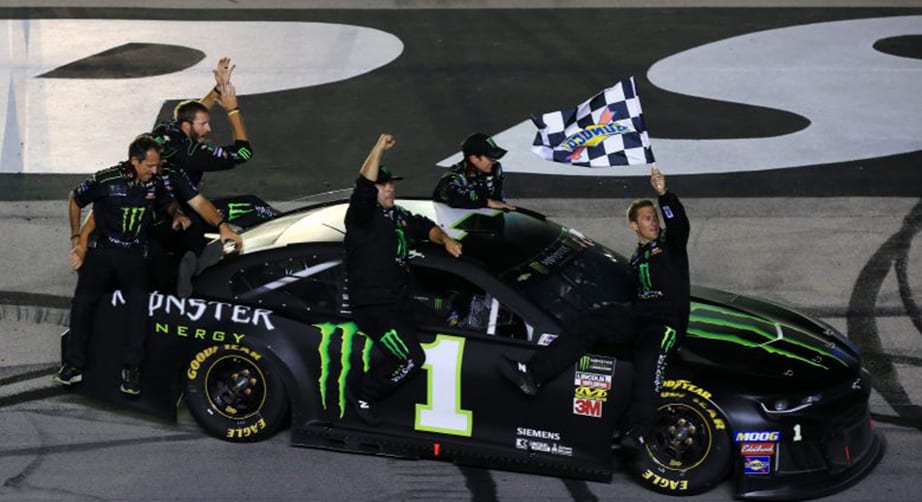
July 13, 2019: Rising above some honorable mentions, Kurt Busch’s victory at Kentucky Speedway in July deserves recognition for a pair of reasons, one being his dynamic battle with his brother, Kyle, in a dazzling two-lap shootout. The second enduring memory came in quick succession, with Chip Ganassi Racing’s No. 1 crew riding the car to Victory Lane in a celebration reminiscent of an earlier era.
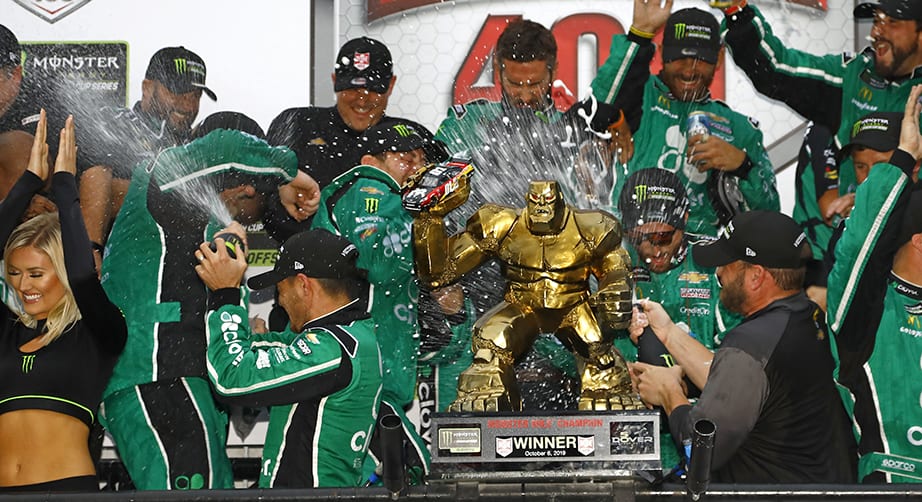
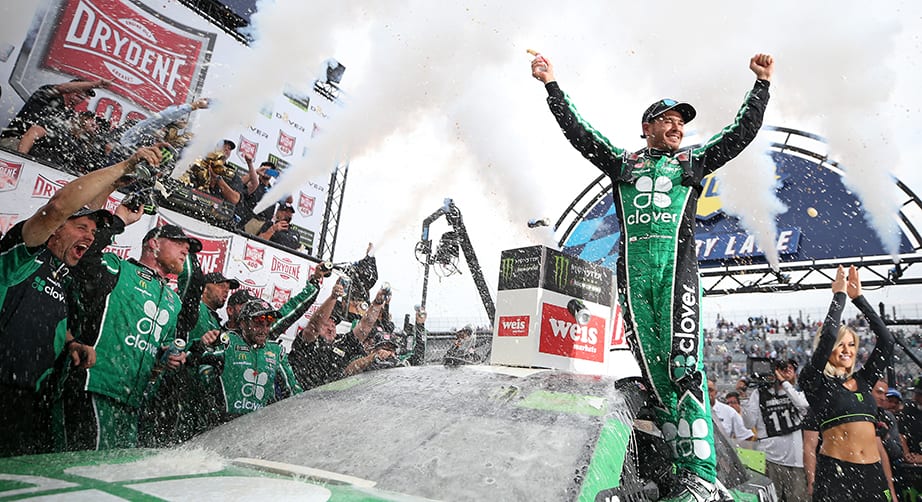
Oct. 6, 2019: Katelyn Larson’s Victory Lane shotgun.The more and more I thought about this, I just couldn’t shake the mental image of Mrs. L downing a tallboy with ease while celebrating her husband’s win at Dover International Speedway in the NASCAR Playoffs. It was everything a NASCAR Victory Lane should be and harkened back to the pomp and circumstance — and straight-up partying — of days past. To then go and top herself by doing it again at the NASCAR Awards just brought it to a whole new, memorable level.
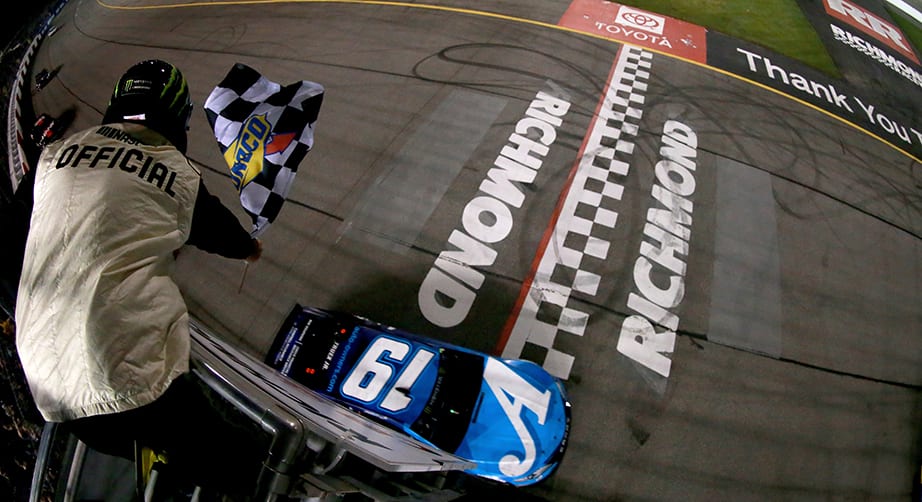
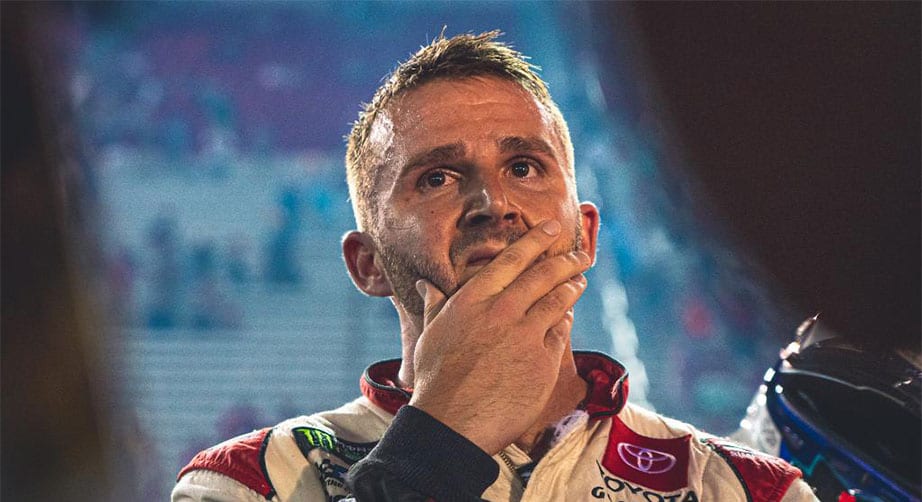
April 13, 2019: In recent years, Martin Truex Jr. had done everything but win on a short track. This was the one blemish on his resume and every year he seemed to get a little closer, but still he was 0-for-80 on short tracks coming into the Richmond Raceway spring race. On this night, Truex was not to be denied holding off foe Joey Logano and friend Clint Bowyer for the victory. Watching Truex keep Logano at bay was especially fun after the duo’s memorable Martinsville Speedway encounter the previous fall that was still fresh in everyone’s minds. Watching Truex exorcise those short-track demons was a long time coming, and he seemed relieved that those questions had been vanquished.
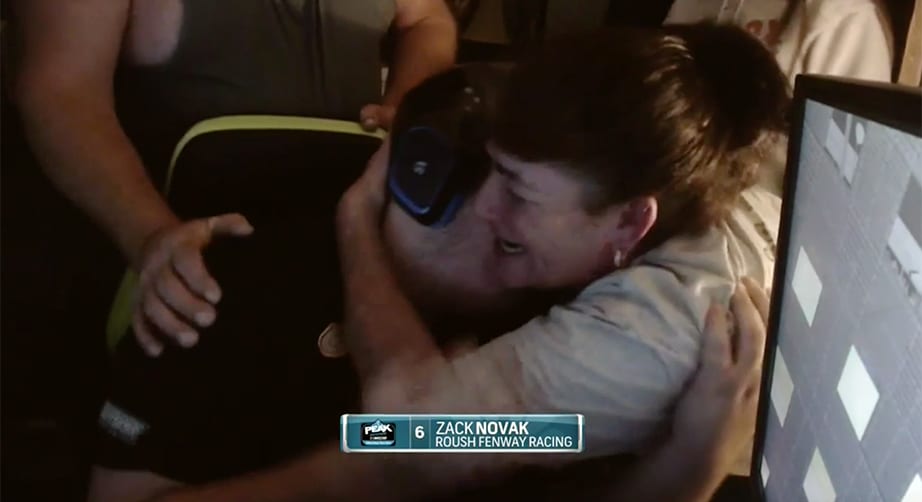
Oct. 10, 2019: My favorite moment of the season was on the virtual track when Zack Novak took the checkered flag to claim the eNASCAR iRacing World Championship Series title. From the intense-yet-clean racing between Novak and Keegan Leahy on the final lap to the Novak family bursting into Zack’s racing room on live national television to congratulate him, it was an unforgettable series of events and a true display of what esports means.
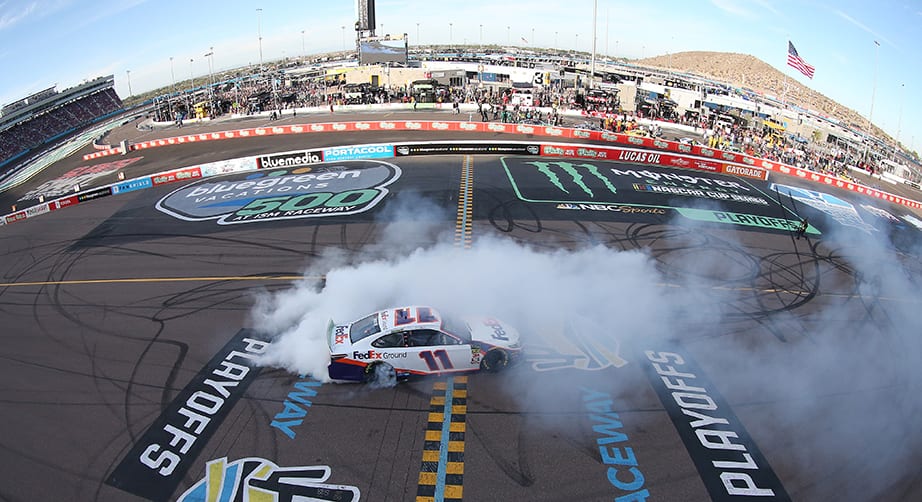
Nov. 10, 2019: For close to 10 years, Denny Hamlin was best known for coming up short in 2010, when he let Jimmie Johnson come away with the NASCAR Cup Series title. In 2019, Hamlin buried that reputation with a six-win season and a walk-off win at ISM Raceway, giving himself a shot to race Kyle Busch, Martin Truex Jr. and Kevin Harvick for the title. Although a large patch of tape on the nose of the car may have cost him this year, Hamlin’s clutch performance elevated his status from as a guy who lets big moments get away to a big bat who you can count on when you need a run late.
Oct. 6, 2019: Kyle Larson winning at Dover International Speedway during the NASCAR Playoffs was entertaining for multiple reasons. The victory snapped a 75-race winless streak for Larson and also granted him his first-ever Round of 8 berth. It then threw a loop for everybody else in the postseason field, especially reigning Cup champion Joey Logano (missed the green flag) and reigning race winner Chase Elliott (lasted only eight laps), since Larson entered the competition below the cutline and an elimination race was up next. Great chaos. Oh, and Katelyn Larson shotgunning in Victory Lane afterward was legendary.
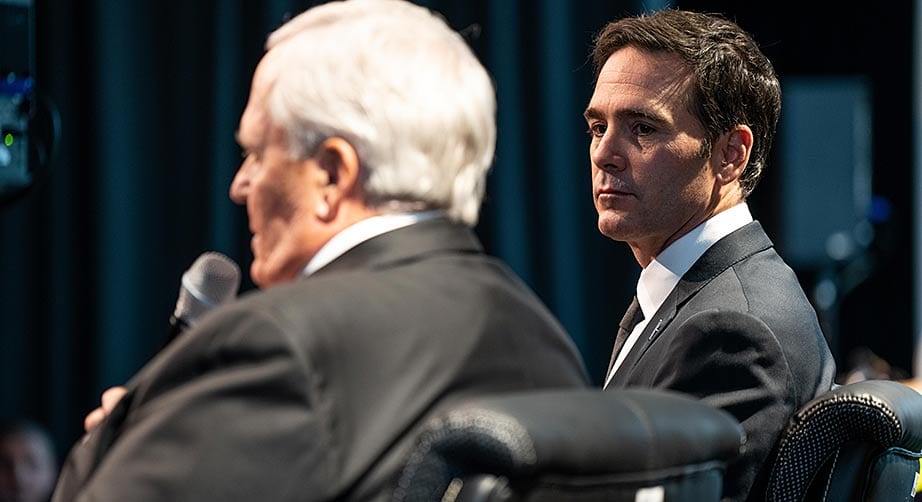
Nov. 21, 2019: While there are many moments from this season that come to mind, one day in particular sticks out to me more than the rest. Jimmie Johnson’s retirement press day may mean sadness for some because it’s announcing the end of an incredible career, but it also allowed us to appreciate one of the greatest to ever drive a stock car. We sometimes take for granted the talent we witness when we get to see and cover it every weekend, but seven NASCAR championships and 83 wins are feats not to be ignored. It wasn’t the actual announcement or another member of the old guard passing the torch, but the promise that we get one more year to appreciate the talent of the California champ.
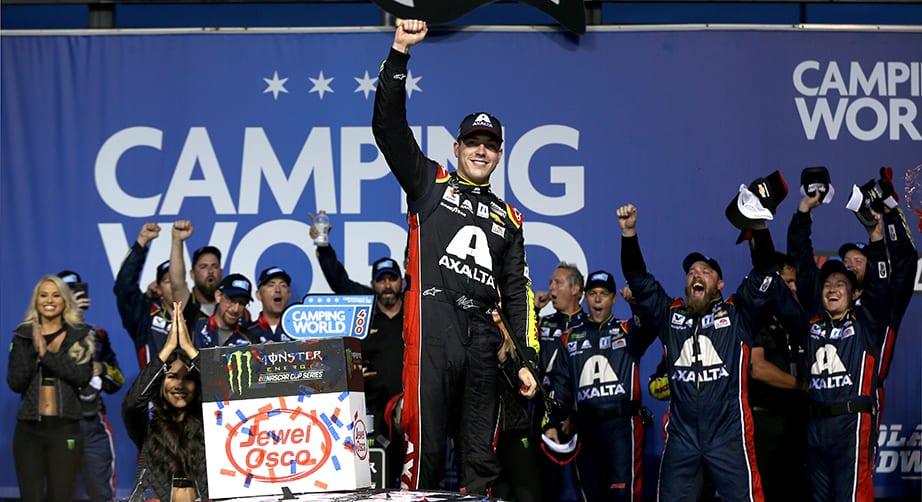
June 30, 2019: Alex Bowman’s first career NASCAR Cup Series victory at Chicagoland Speedway really sticks out as a top moment of the 2019 season. The thrill of watching Bowman battle it out with Kyle Larson in the closing laps had you on the edge of your seat. The road to claiming the No. 88 Hendrick Motorsports Chevrolet driver seat after Dale Earnhardt Jr.’s retirement wasn’t easy for the 26-year-old Arizona native, so to see all the hard work finally come to fruition was a cool moment for the sport. The victory was made more special as Bowman’s predecessor was on the NBC Sports broadcast to call his run to the checkered flag.
Aug. 17, 2019: I’m a person who doesn’t like it when players from opposing teams pal around after the game, exchanging jerseys (or phone numbers) or whatever. That’s why I am somewhat surprised that my favorite moment of the 2019 season was when Denny Hamlin apologized for outdueling Matt DiBenedetto to win the Bristol Night Race. It’s your responsibility as a competitor to go all-out for every win, but Hamlin’s feeling of regret in that moment was spot-on and totally understandable. It was just such a good battle down the stretch. As a fan, you wished DiBenedetto would hold on for the win, but you knew Hamlin would eventually get him – and he did with just 11 laps to go.
NASCAR’s weekly schedule makes it unique from a betting perspective. Odds typically open early in the week, go on and off the board multiple times for practice and qualifying, then finally open again for good the night before or morning of the race.
This is true for 35 points races on the 36-race schedule, with NASCAR’s premiere event, the Daytona 500, being the lone exception.
Because the “Great American Race” is the first event of each new NASCAR Cup Series season, oddsmakers can post odds weeks, and even months, in advance.
And since this race is the most popular NASCAR betting event of the season, sportsbooks are certainly incentivized to do so.
With 2020 Daytona 500 odds already available, here’s a 75-1 long shot I’m betting almost two months ahead of the “Great American Race.”
NASCAR loop data via FantasyRacingCheatSheet.com.
2020 Daytona 500 Betting Pick
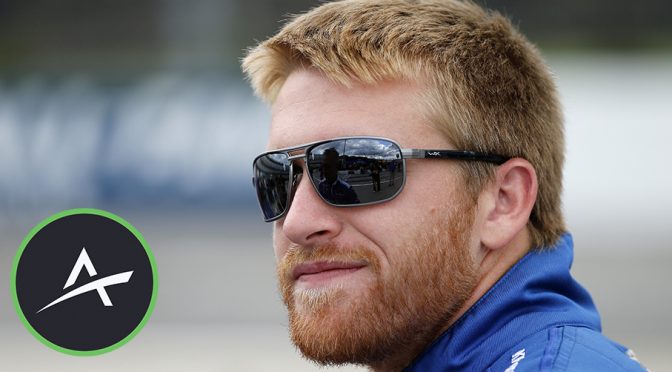
Chris Buescher (75-1) to win the Daytona 500
Taking Buescher right now is simply a value play because one sportsbook is not properly adjusting for his offseason move to Roush Fenway Racing (RFR).
After spending three NASCAR Cup seasons in JTG-Daughterty Racing’s No. 37 car, Buescher will move RFR’s No. 17, previously driven by Ricky Stenhouse Jr.
Stenhouse consistently over performed at the superspeedway races (Daytona and Talladega), scoring seven of his 15 career top-five finishes at these tracks, including his two victories.
It’s not exactly a secret, but this suggests that RFR’s superspeedway program is far and away better than any other track type for the team, and that continued in 2019 when the Cup Series ditched restrictor plates following the Daytona 500.
In those three superspeedway races with the new package (two at Talladega and one at Daytona), Stenhouse had the fifth-best average running position (10.7) and led the third-most laps (50).
In addition, Stenhouse’s RFR teammate, Ryan Newman, had the best average finish (4.7) at those three races.
Considering Newman’s average finish was 15.2 in all other races last season, it’s reasonable to conclude that RFR’s superspeedway equipment is just that good and results in over performance at Daytona and Talladega.
Now, there’s certainly an argument to be made that Stenhouse is simply a top-notch driver at these race tracks and I really can’t dispute that.
But, as always, value is dependent on price. Stenhouse was 18-1 on Daytona 500 morning last season. However, Buescher is currently 75-1 at FanDuel Sportsbook, a huge price for a driver in such good superspeedway equipment.
For reference, Buescher is 40-1 for the Daytona 500 at both the Westgate SuperBook in Las Vegas and DraftKings Sportsbook, and the new driver of No. 17 Ford closed at 80-1 at Westgate for the 2018 Daytona 500.
The upgrade from JTG-Daughterty Racing to Roush Fenway Racing in terms of superspeedway equipment is significant, and certainly worth more than a move from 80-1 (last year) to 75-1 (this year).
That said, I would not take the 40-1 odds available at other books. In fact, this has value to 70-1 to allow us to preserve as much bankroll as possible to use on more drivers going forward.
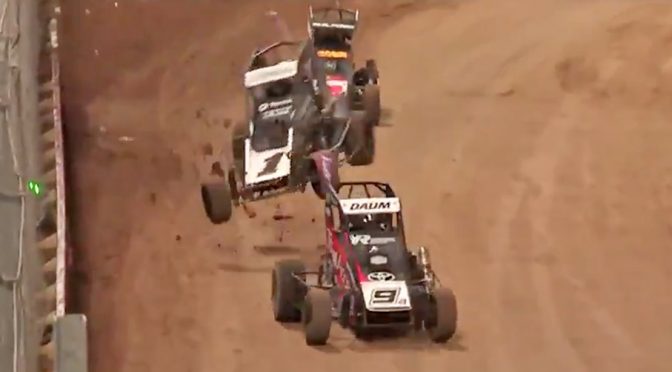
NASCAR Cup Series drivers Christopher Bell and Kyle Larson took a pair of heavy tumbles during dirt midget action at Western Springs Speedway in Auckland, New Zealand.
In Day 1 of the United Truck Parts International Midget Series, Larson finished second in the third heat race, winning the fifth heat as well as the first United States vs. New Zealand vs. Australia Test Race.
But the night quickly took a turn for Larson in another test race, losing control of his midget, hitting the outside retaining wall and flipping multiple times down the backstretch.
Larson later tweeted out his appreciation for the safety equipment in his midget that kept him secure, while also adding a little humor despite the disappointing result.
Had a bit of a tumble last night. Feeling surprisingly not too bad. That’s a huge thanks to @AraiAmericas, @SimpsonRacing Hybrid Pro and seat belts, @BUTLERBuilt, @Justin_insley King Chassis. Oh and my parents for making me drink lots of milk growing up. 👍🏼
The incidents eliminated both drivers from competing in the feature race later that evening.
The United Truck Parts International Midget Series is a five-event showdown between drivers from the United States, Australia and New Zealand, featuring the most talented dirt racing drivers from each country. The five races are held at three dirt tracks — Western Springs Speedway, Baypark Speedway and Huntly Speedway. The series finale will be held on Jan. 5 with the World 50 Lap Classic at Western Springs.
Both drivers will be back in action during the second round of the United Truck Parts International Midget Series at Baypark Speedway in the 40-lap Gold Cup event.
The holiday season is a perfect time to sit around the fireplace, reflect on childhood memories … and renew those ultra-competitive sibling rivalries.
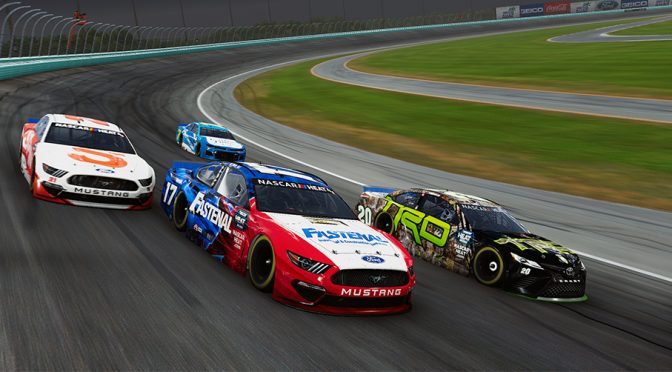
And what better way to settle the score than on the sticks like the good ol’ days? Fire up NASCAR Heat 4 on the family big screen and do your talking on the track.
Should you need help getting in the zone, we thought it would be fitting to relive some of the best moments from the 2019 eNASCAR Heat Pro League season:
Bump-n-run at Watkins Glen
Sibling rivalries are all about getting the last laugh – and that’s no different in racing. It’s not about who leads the first lap, or the most laps, but rather who leads the last.
wowTHATSgarbage did just that courtesy of a perfectly-executed bump and run at Watkins Glen earlier this year.
We all remember that time we FINALLY edged out our brother or sister; everything was right in the world. We saw a similar story line play out in the inaugural eNASCAR Heat Pro League season after JRMDohar broke through at Kansas Speedway to earn his first career eNHPL victory.
Younger brother vs. older – a tale as old as time.
At the opening race in Charlotte, the top pick in the draft quickly proved he was here to stay. 17-year-old Slade Gravitt went toe-to-toe with his older friend and rival THAbear95 and won, putting Wood Brothers Gaming in Victory Lane.
Exhibition race at Michigan produces thrilling finish
What would the inaugural season produce? How competitive would it be? The questions swirled entering the first year of the eNASCAR Heat Pro League – but those were quickly answered and the doubt was put to bed after this finish in the preseason exhibition race at Michigan.
Those are just a few of the memorable moments from a thrilling inaugural season and the list could go on and on, like Stewart-Haas Gaming capturing the title at ISM Raceway or the wild regular season finale at Daytona – but we know NASCAR Heat 4 is waiting for you.
Don’t have a copy yet? It’s a perfect last-minute gift or present for the new year. Visit NASCARHeat.com to buy the game for as low as $29.99.
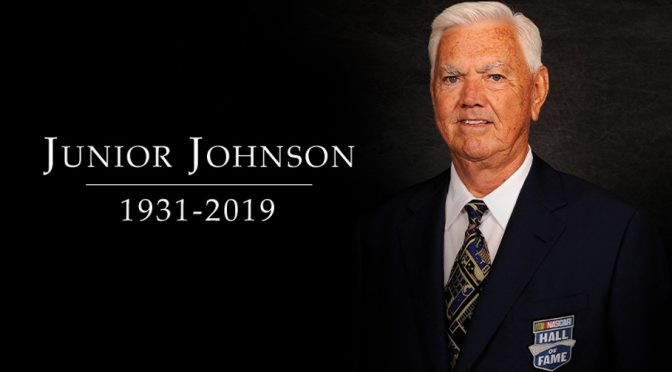
Editor’s note: This story originally ran in April of 2015. We’re bringing it back in its full original form to commemorate Johnson, who died Dec. 20 at age 88.
—
“James Dean in that Mercury ’49
Junior Johnson runnin’ thru the woods of Caroline
Even Burt Reynolds in that black Trans-Am
All gonna meet down at the Cadillac Ranch.”
— Cadillac Ranch, Bruce Springsteen
• • •
The hair is white (is there anyone still around that can remember when it wasn’t?) and it stands out in contrast against the sedan’s black interior and tinted windows.
Outside, young girls with gym bags slung over slender shoulders hurry past on the sidewalk with their parents in tow, headed to a weekend volleyball tournament, scarcely noticing, or perhaps not noticing at all, the gentleman in the passenger seat.
Fifty years ago, he was aptly described as the Last American Hero by author Tom Wolfe.
Today, at 83, Junior Johnson is a father and a husband and a successful businessman.
Dressed in tan slacks and a dark pullover, Johnson might be a passenger in the sedan, but he’s still in the driver’s seat of life.
He’s here, parked along a side street in uptown Charlotte on a sunny Sunday morning, and there, inside the glass and steel structure next door known as the NASCAR Hall of Fame.
One of the five inaugural members of the Hall back in 2010, Johnson is a stock car racing legend.
And legends can be in two places at once.
• • •
It’s a drive Johnson has made hundreds of times, one that runs through Winston-Salem, home of former series sponsor R.J. Reynolds, then shoots its way through the Walkertown community on the northeast side of the city before settling into the lazy up-and-down, chug-a-lug of a ride east toward Stokesdale.
U.S. 220, that four-lane stretch of highway that splits a sizeable south-central stretch of the Commonwealth of Virginia, lies just beyond. And to the north sits Martinsville, home to the oldest track still hosting NASCAR Cup Series races.
Johnson knows many of the roads, the highways and the less familiar tributaries that seem to trail off into nothingness. He knows them as well as he knows his own name.
“They’ll be ’bout ready to crank ’em up when we get there,” Johnson says as the sedan eases off the curb, away from the tall buildings and into the bright Carolina sunshine.
• • •
In 1965, Junior Johnson swept both races at his home track, North Wilkesboro Speedway, on the way to his best season.
He was only 35 and very much still in his prime when he decided he’d had enough, putting away that white open-faced helmet for the final time. He’d made just seven official starts that final season in ’66, ending with one last top-five at Rockingham, North Carolina in the fall.
“I wasn’t getting anything out of it,” Johnson says of walking away from a successful NASCAR driving career. “If my car didn’t tear up, there wasn’t anyone that could outrun me.”
By then he’d already won 50 times, as many as two-time champion Ned Jarrett and only slightly fewer than Lee Petty, who held what was then a NASCAR-record 54 career victories.
The NASCAR schedule in those days went on practically non-stop, a nearly eight-year stretch of 50 or more races each season and teams competing as often as three times a week.
Few ran the entire circuit, and Johnson’s name wasn’t on the list of those that did.
He had other things occupying his time and requiring his considerable driving talent. And there was that stretch in ’57 spent at the federal penitentiary in Chillicothe, Ohio, the result of a conviction for manufacturing moonshine.
Yeah, he ran from the law and yeah, he honed his driving skills hauling bootleg whiskey, first for his daddy and later for himself and others. But the seeds of Johnson’s driving abilities were planted long before he’d begun loading up case after case of the clear corn liquor and set off across the state.
“Well, I know I had … five or 10 years driving experience on them other boys,” he says now of his fellow racers.
“When I was about 10-12 years old, I could drive the (expletive) out of a car. ‘Cause my daddy would let me run these little ’39 Fords and stuff like that; he had up-to-date cars too where he’d haul liquor. I’d run from the house down about a mile to the highway; it was a dirt road, and I’d run it all day long.
“He wouldn’t say a thing to me. I’d just get in it, go down through there sideways and everything.”
Years later, talents cultivated in dirt outside his house and the switchback mountain roads across which he made numerous whiskey runs transferred seamlessly onto the race track.
NASCAR drivers of the day fell into two groups — those that went hell-bound for the front from the very start, and those who chose to pace themselves and their equipment, electing to try and outlast if not outrun their opponents.
Anyone that saw Johnson behind the wheel knew what to expect.
“Junior was wide open every lap,” Richard Petty, Lee’s son and NASCAR’s first seven-time champion, says. “It was one of those deals where if he brought the steering wheel back, he’d had a good day.
“He was one of those that when he drove there was no strategy except just to pass everybody in front of you. It didn’t make any difference if they were on the same lap, leading the race or 40 laps behind. He did everything he could to get by you.”
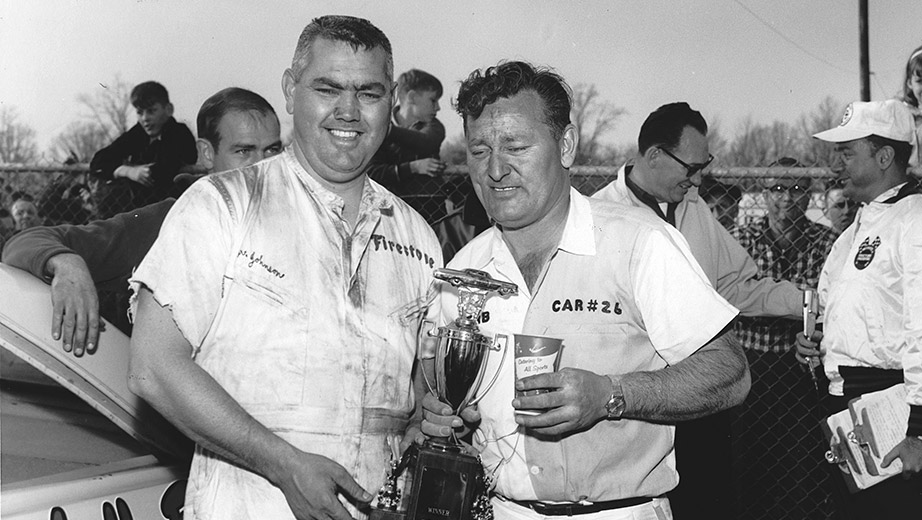
Junior Johnson and chief mechanic Herb Nab celebrate a 1965 win at Richmond, one of the first short-track races to be covered by ABC’s ‘Wide World of Sports.’
• • •
The end of a driving career didn’t mean the end of NASCAR for Johnson. Instead, he turned his attention to ownership, and by the time that had run its course, Johnson walked away as one of the most successful owners the sport had ever seen, with six championships, 132 victories and top 10s in more than half of his teams’ 1,000-plus starts.
Johnson hadn’t just built a team, he’d built a dynasty.
NASCAR Hall of Fame drivers Cale Yarborough, Darrell Waltrip and Bill Elliott were among those that drove for the Wilkes County based team.
“Up in Owensboro, when I was a little guy, I used to listen to the races on my transistor radio when I could get them,” Waltrip says. “There was always this guy named Junior Johnson from Ronda, North Carolina, driving a white ’63 Chevy, No. 3 with a 427 mystery engine in it.
“And I thought, ‘what a cool guy.’ I mean how much cooler can you be? A guy that drives a Chevy, which was kind of unique at the time, he had a 427 mystery engine. He was a moonshiner. He’d been in prison and here he is out here outrunning all of these guys.
“All the drivers in that era, whether it was LeeRoy Yarbrough, Cale (Yarborough) or any number of guys that drove his cars, they were legends in the sport. To think I had the opportunity to follow in their footsteps and drive for the great Junior Johnson, it was a thrill of a lifetime.”
• • •
Junior Johnson and Darrell Waltrip share a laugh in 1982, their second consecutive championship season.
The sedan eases off I-85, slipping unnoticed onto U.S. Route 52 north. Welcome, North Carolina, home of the Richard Childress Winery and RCR’s NASCAR headquarters are nearby.
Who was his best driver? Maybe that depends on whom you ask, or when you ask it.
Told that Waltrip has said Junior claimed he was his top driver (“He might hedge a little bit when it comes to Cale because he doesn’t want to hurt Cale’s feelings,” Waltrip explained), Johnson chuckles.
Maybe it was DW. Maybe it was Cale. Maybe Johnson didn’t want to hurt the feelings of either one.
“The one … I think was the best driver that ever drove a race car was LeeRoy (Yarbrough),” Johnson says. “Buddy, I tell you we could put it on anybody.”
Yarbrough won 10 times for Johnson, Cale 45 and Waltrip 43. There were others as well. Labonte, Bonnett, Spencer …
“He could put it on Cale or Darrell or any of ’em, just the most natural driver I ever seen,” Johnson says of Yarbrough. “If he needed to step it up, he could always step it up just a little bit more than they did.”
They were of different ages, different skill sets. But they all had one thing in common — all enjoyed some measure of success driving Johnson’s cars.
“You’ve got to remember, he won 50 races as a driver himself,” Waltrip says of Johnson. “He knew what he was doing as a driver. He understood drivers. When I first started driving for him, if I wasn’t getting the job done, if I wasn’t running as hard as he thought I should, he’d call me Cale on the radio and it would always make me mad. And that was always worth three-tenths (of a second) and he knew it.
“I knew when I got with Junior Johnson that it was a career changer.”
• • •
North now on U.S. 220, the Virginia state line is just ahead and a quick side-trip is necessary.
The building is nondescript, just another business set back off the highway. If anything stands out, it’s that nothing stands out.
Through the years, Johnson’s name has been attached to a variety of items — hams and ham products, for instance — but the best known by far is the one that landed him in the federal pen all those years ago.
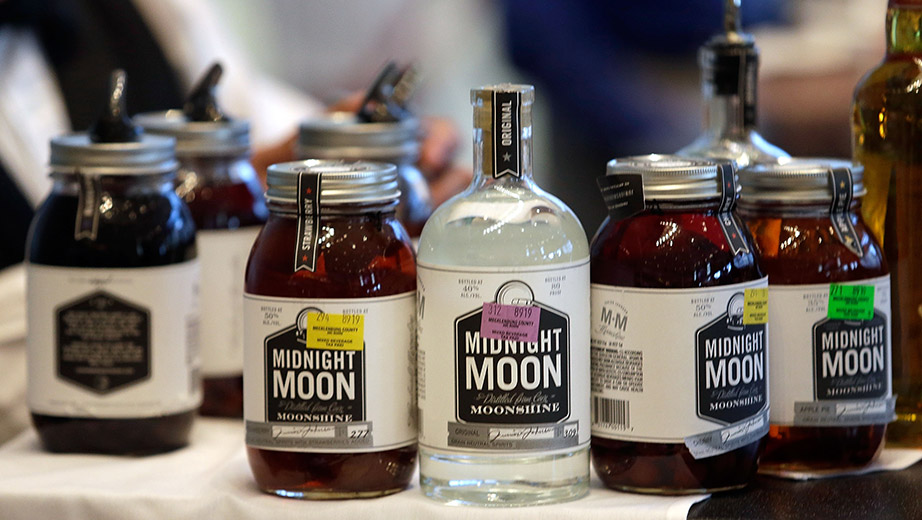
This is Piedmont Distillers, makers of Midnight Moon, a brand of legal moonshine (meaning it’s taxed by the government).
“He comes up about once a week,” says Joe Michalek, founder of the Madison, North Carolina-based company. “He’ll come up and have lunch, see how business is doing, hang out with the folks. It’s a real treat and an honor to have Junior around.”
Piedmont currently produces eight different flavors of the whiskey. One of the first to jump into the market, Piedmont launched in 2005 and quickly outgrew its original base of operations. In ’07, a deal was struck for the Midnight Moon brand and today the product is sold in all 50 states.
“It’s cleaned up a lot, but the recipe is exactly like my daddy’s,” Johnson says. “He’s the only one I ever knew that made corn whiskey. Everybody else made sugar whiskey. … Over time sugar will turn and get muddy. But corn won’t do that. It stays just like you fixed it.
“When we got into it, there wasn’t nobody on the corn side of it, and still ain’t much. They advertise a lot of stuff that ain’t what they say it is.”
Johnson, part-owner in the Piedmont operation, often makes promotional appearances for the company — he was in St. Louis and Branson, Missouri, earlier this year; more recently, he showed up at a local charity golf tournament in Charlotte.
“Running somewhere all the time,” he says as we head out the door and resume the trip to Martinsville.
• • •
The name of Junior Johnson’s modern moonshine hearkens back to his days running the alcohol through ‘the woods of Caroline,’ as Bruce Springsteen crooned in ‘Cadillac Ranch.’
Why Midnight Moon? Some smart marketing company’s idea?
No, the name is as original as the man himself.
“That’s when I’d get out and haul the liquor,” Johnson said of his bootlegging days. “I’d haul from about 11 o’clock until daylight. Midnight moon was what I’d run by.
“Used to, a lot of times at night you didn’t even have to have car lights. It was just like daylight the moon was so bright. Fog and smog and all that stuff got it now to where you have to turn your lights on at 6 o’clock.
“I’ve hauled a lot of liquor from where I lived to Lexington, Salisbury, Spencer and all in there. Sometimes I wouldn’t even turn on the dad-gum headlights. You could see the highway without them. That’s where midnight moon came from. I basically waited until midnight to haul my whiskey.”
• • •
The traffic is backed up for miles, and the delay means Johnson won’t make it to the speedway in time for the drivers’ meeting. No problem, he sat through enough of them in his day.
Fingers point and heads turn as Johnson is ferried from outside the tiny track into the crowded infield. Fans with hot passes want his autograph and those with cameras want their picture with the Hall of Famer. Johnson smiles and nods, pausing long enough to accommodate each of the requests.
• • •
Friends and neighbors Junior Johnson and Rick Hendrick meet up before the race.
“I’m getting tips,” says team owner Rick Hendrick. “We started running better when he moved in next door.”
Johnson smiles. Hendrick, owner of a four-team operation, has become a close friend, a confidant. When Junior cut his ties with Wilkes County, he landed next door to Hendrick in the affluent Quail Hollow community in Charlotte.
“We tell him about all the things we’re trying, and they’re things he’s already done 20 years ago,” Hendrick says.
Occasionally, Johnson can be found with Hendrick at the track; other times he may be visiting the vast Hendrick Motorsports complex, where the teams of Jimmie Johnson, Jeff Gordon, Dale Earnhardt Jr. and Kasey Kahne are housed.
Today, Johnson is in the media center, and Hendrick has stopped by to say hello to his friend.
“It’s been really amazing how our guys, from the ones that travel to those in the engine shop and other areas that get to talk to him about different things, about what they think about doing,” Hendrick says. “It really means a lot to our guys for him to be on the (pit) box and be around us; he’s such a legend. I never thought we’d be friends and neighbors; it’s turned out to be really cool.
“The thing that blows me away is how innovative he was back when no manufacturer, nobody else was doing things, he was thinking so far out of the box. I’m glad I didn’t race against him back then. I’m glad he retired.”
• • •
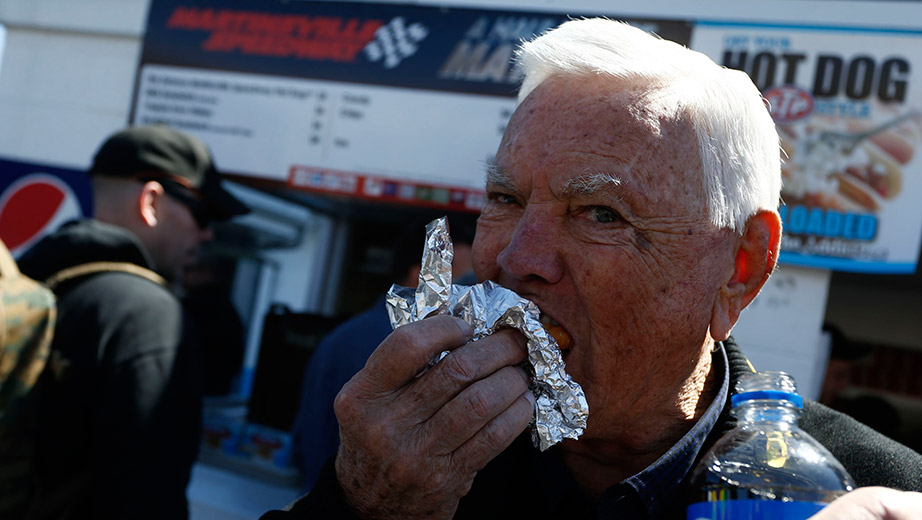
Junior Johnson enjoys a Martinsville hot dog.
With the pre-race festivities getting underway, Johnson’s ready to head upstairs to watch the start of the race from one of the suites that overlook the track.
But not before a stop at the infield concession stand.
“I used to eat about six of these things,” Johnson says, munching on a one of the track’s famous hot dogs.
Fans notice, crewmen smile and wave. Others, embarrassed but not enough to interrupt a man and his meal, ask if he has time for a picture. With hot dog in hand, Johnson once again accommodates the requests.
• • •
Junior Johnson wins the 1965 Old Dominion 500 at Martinsville, holding off fellow future NASCAR Hall of Famers Richard Petty, David Pearson and Ned Jarrett.
The black sedan glides out of the track and onto U.S. 220, southbound now and headed back toward Charlotte.
Johnson won at Martinsville twice as a driver, and several more times as an owner. But with no dog in the fight today, he’s ready to move on down the road.
Five decades. It’s been five decades since Wolfe pulled into the “lil’ ol’ beer joint” as Johnson calls it, looking for a story and discovering an icon.
“I had been to the race track testing or something, might have been getting ready for the race,” Johnson said as the tires sing on the concrete of the highway and the countryside passes outside the tinted windows. “He walks in and it’s about 90 degrees and he’s got a damn wool suit on. A brand-new wool suit. And I think to myself when I saw him get out, I said, ‘That’s a crazy son of a bitch. He don’t know the sun’s shining.’ “
It’s one of those “you had to be there” moments, Johnson recalling with clarity the arrival of the young city-slicker author come to find the bootleggin’ racing star in the backwoods of the Carolinas.
To hear Johnson tell it:
“He come in and said ‘I’m looking for Junior Johnson.’
“And I said ‘What do you want with him?’
“He said ‘I want to talk to him about a story.’
“I was eating a cheese cracker and drinking a drink; I took a couple more bites of that cheese cracker and I said ‘Where you from?’
“He said, ‘Why? Do I have an accent?’
“I said “I can’t hardly understand you.’
“I told him, I said, ‘I guess you’re talking to Junior Johnson.’
“He said, ‘Well I want to write a story on you and I’d like to talk to you.’
“I said ‘If you want to write a story, you better get it from somebody else, ’cause I ain’t gonna give it to you. ‘Cause you’d think I was bragging.’
“He never did ask me anything. He went and got his own deal.”
Wolfe was in and out of Wilkes County and the surrounding North Carolina hill country numerous times after that initial meeting. He traveled to locales a bit further out, trying to grasp the enormity of a sport and a man so many folks outside the southeast knew so very little about.
“He’d come in and stay four or five days and nights and leave, and folks would say, ‘Well, that son of a bitch is gone,’ ” Johnson says. “Then he’d show up again somewhere or another; somebody’d call and tell me he’d been talking to them. He got out there and got his information.”
“Junior Johnson is the Last American Hero. Yes!” appeared in the March 1965 edition of Esquire magazine. It is still considered by many to be one of the finest pieces of sports journalism ever written.
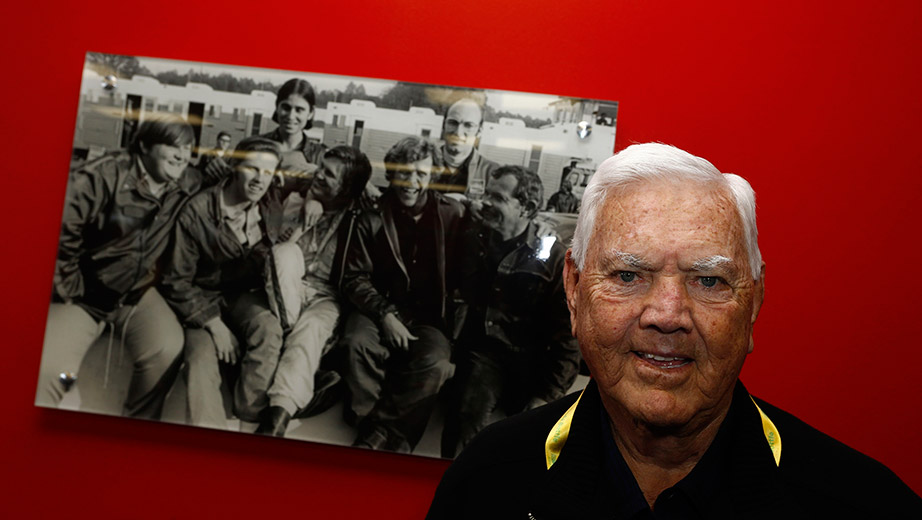
In the Martinsville Speedway media center, Junior Johnson poses next to a picture of Jeff Bridges, Gary Busey and other actors from the movie ‘Last American Hero’, which was shot at Martinsville.
• • •
NASCAR has changed tremendously since Wolfe penned his piece on Johnson and the burgeoning southern sport. It expanded, exploded, gained national attention, sponsorship from Fortune 500 companies and lucrative TV contracts.
Johnson divorced, remarried, had kids and moved from the country to the city. He walked away from racing, selling off his team in 1995, but maybe he never really cleansed it entirely from his system.
Deep down, they both remain the same. NASCAR’s still about fast cars and brave drivers, pushing the limits, and by the end of the day we’ll just see who’s best.
Johnson, full of confidence when Wolfe found him inside that country store, is just as sure of himself today.
But for now he’s just a passenger in a black sedan headed back down the highway.
“You want to listen to the rest of the race?” Johnson asks, reaching for the radio dial.
Moments later, the voice of the turn announcer is ratcheting up as another caution has slowed the action on the track.
Outside, the sedan’s tires continue to hum and the world slides by.
The motorsports world offered its remembrances after word spread of the passing of NASCAR legend Junior Johnson, who died Friday at age 88. Johnson leaves a legacy that spans stock-car racing’s moonshining roots to its modern era.
Words can not adequately express Junior’s impact on our sport and those of us fortunate enough to have known him, worked with him and called him a friend. Rest In Peace my friend. #ForeverLegendhttps://t.co/3YjVvxB78V
When I was a kid growing up in Owensboro, Ky I dreamed of meeting Jr Johnson, my dream came true, meet him, he became my boss and made me a champion, I loved that man, God Bless Jr and his family, You were the greatest! RIP
Every aspiring driver needs to know Junior Johnson’s story. RIP the true soul of NASCAR. Built cars to outrun the law. Then, only legends receive pardons from Presidents. pic.twitter.com/M8fbwthL2U
So many of us now, and so many yet to come will never truly understand what all Junior Johnson has done for the sport we all love….but we can all vow to do what we can to share the stories, and do our best to honor the legacy of “The Last American Hero”
“The Last American Hero” Can’t imagine the things that man got to experience in his lifetime. What an inspiration!!! Junior Johnson 🙏 pic.twitter.com/DdvMPaFD71
I’m SAD to learn that my mentor and friend JR Johnson has left us! Words can never express my feelings for him. He was truly a LEGEND and I had the HONOR to have shared the best time of my life being around him! RIP 🙏🏻 LAST AMERICAN HERO🏁 pic.twitter.com/wSxhTrSnKu
One of the most respected & coolest racers I ever had the pleasure to spend time with. NASCAR wouldn’t be what it is today without him. #RIPJuniorJohnsonhttps://t.co/Mg6oGCdHcA
Junior Johnson was one of the coolest people who ever lived. Innovator. Bootlegger. Man’s man. American badass of the highest order. The Last American Hero. One of the great pleasures of my career was sitting alongside him @NASCARHall voting days, and listening. Rest easy, sir. pic.twitter.com/RMKfAoi0Bl
North Carolina has lost a giant with the death of NASCAR legend Junior Johnson. I just got off the phone with his wife, Lisa, and our prayers are with her, his children, Robert and Meredith, and the entire family. – RC
No one outside the France family has been more instrumental to the growth of Nascar than #JuniorJohnson, who has passed at age 88. A superstar driver, then multi-championship team owner, he brought RJR/Winston to Nascar, vaulting the sport to national prominence.
No-one can ever be compared to Junior Johnson…nobody! Among the most identifiable names in Motorsports, most fascinating characters in all forms of entertainment, among the most abundant lives ever lived… There will never be a Life or Story quite like that of Junior Johnson🏁
Junior is a legend. He had an incredible influence on the sport and paved the way for many. Few have had such a positive role in our sport the way Junior did. https://t.co/slZMAy2Mv9
Junior Johnson, a stock-car racing giant whose career spanned the sport’s history from its moonshining roots to its modern era as a fierce, hard-nosed driver and an innovative mechanic and team owner, has died. He was 88.
Johnson’s passing was confirmed by the NASCAR Hall of Fame. He had been in declining health and entered hospice care earlier this week. His wife, Lisa, told The New York Times that Johnson had Alzheimer’s disease.
Johnson was inducted into the NASCAR Hall of Fame in its inaugural Class of 2010. He won 50 races in NASCAR’s top division — the most of any driver without a championship — and added 132 victories and six championships as a successful team owner for many legends of the sport. Johnson won the second running of the Daytona 500 in 1960, then added two more triumphs in the Great American Race as a car owner in 1969 and ’77.
His all-out style — honed from years of hauling illegal liquor at breakneck speeds through the North Carolina foothills — took a toll on his competitors and his own equipment, earning him a reputation as the hardest of the hard chargers. Johnson was also known as the Wilkes County Wildman and heralded as “The Last American Hero,” after a brilliant 1965 essay in Esquire by author Tom Wolfe.
“Junior Johnson truly was the ‘Last American Hero,’ ” NASCAR Chairman and CEO Jim France said in a statement. “From his early days running moonshine through the end of his life, Junior wholly embodied the NASCAR spirit. He was an inaugural NASCAR Hall of Famer, a nod to an extraordinary career as both a driver and team owner. Between his on-track accomplishments and his introduction of Winston to the sport, few have contributed to the success of NASCAR as Junior has. The entire NASCAR family is saddened by the loss of a true giant of our sport, and we offer our deepest condolences to Junior’s family and friends during this difficult time.”
Born Robert Glenn Johnson Jr. in 1931, he became known simply as “Junior” as the fourth of seven children. His North Carolina home was the small community of Ronda, not far from Ingle Hollow, just a short drive from the North Wilkesboro Speedway, one of NASCAR’s charter tracks.
RacingOne
Farming was a staple of the Johnson household, but so was the manufacture and high-speed transport of untaxed whiskey. Junior Johnson quickly became involved in both family businesses, sharpening his skills as a driver with his fearlessness in distributing liquor in hopped-up cars.
“The good whiskey runners were kind of cocky about it, like good race drivers,” Johnson told the Associated Press in 1991. “I guess I was pretty cocky.”
Legend has it that Johnson was never caught on the road. He was convicted of moonshining in 1956 after authorities staked out the family still. President Ronald Reagan pardoned him on Dec. 26, 1986. “No maybe about it. Best Christmas gift I ever got,” Johnson told the Atlanta Journal-Constitution in 2007. Johnson now sells moonshine legally under the Midnight Moon label.
Johnson’s earliest aspirations were first aimed at a different professional sport, but an accident cut those dreams short. “I’d probably have been a baseball pitcher if I hadn’t broken my arm when I was 14,” Johnson told the AP. “I broke it turning a farm tractor over on it, acting a fool.”
Johnson’s first stock-car event came by chance, according to North Wilkesboro Speedway founder Enoch Staley. At his brother’s encouragement, Johnson temporarily put his plow aside and threw on some shoes to compete at his home track, which was then dirt. “We had scheduled a modified race, but didn’t have enough cars to complete the field,” Staley told the Associated Press in 1965. “So we invited the Wilkes County fans out of the stands to enter passenger cars and Junior ran in a 1939 Ford. That’s how he got his start.”
Johnson’s first appearance in NASCAR’s top division was on an even bigger stage, in the 1953 Southern 500 at Darlington Raceway. He finished 38th in the 59-car field, but gave the garage an early glimpse at his toughness. After his No. 75 Oldsmobile pirouetted off a guard rail, Johnson exited his crumpled car unharmed but noticed that the engine was on fire. Johnson quickly opened the hood, removed his shirt and batted out the flames himself.
RacingOne
By the time Johnson made a full-fledged go at stock-car racing, he quickly established himself as a winner. He prevailed for the first time at Hickory Speedway on May 7, 1955, adding four more victories by the end of his rookie season.
“I was crazy, I think,” Johnson told NASCAR Productions in 2015. “I’ve never been scared in a race car, any other kind of car, because I thought I was a good enough driver to handle it. And I was.”
Johnson’s legend as a fierce competitor grew in the late 1950s into the ’60s, taking a major leap with his Daytona 500 triumph in 1960. “I’ve driven in a lot of races, but this is my first big victory,” Johnson told reporters after leading 67 of 200 laps and beating Bobby Johns for the win.
The significance of that win took on extra meaning with a discovery that is now superspeedway canon. During preliminary events at Daytona International Speedway, Johnson learned how to use the aerodynamic push and pull created by the air at high speeds. The technique of “drafting” was born, a tactic that Johnson initially kept to himself, later using it to help his year-old Chevrolet compete against the favored Pontiacs.
Johnson stayed tucked firmly behind Johns in the late going of that Daytona 500, the aero pull becoming so forceful that it popped the rear window from Johns’ car. Johns lost control on the backstretch, allowing Johnson to pull away and lead the final nine laps.
“Heck, his whole car came up off the ground, spun around and went down to the infield and I went on and won the race,” Johnson told Speed TV years later. “Everybody knew then by about the time the race was over with what I had done all day long was just drafted people, and that’s how I got to where I was at.”
Johnson accumulated wins for eight straight seasons into the 1960s, but never finished higher than sixth in the premier series standings, running only partial seasons throughout his career. His best season in terms of visits to Victory Lane came in his final campaign in 1965, when he won 13 of his 36 starts, including his final win as a driver at North Wilkesboro that October.
That same year, Johnson’s impact was chronicled in Wolfe’s groundbreaking article, “The Last American Hero is Junior Johnson. Yes!” The profile, a prime example of Wolfe’s brand of “new journalism,” introduced the country to Johnson’s stature as an everyman icon in his native Wilkes County and a “lead-footed chicken farmer” while capturing America’s growing love affair with the automobile. Wolfe colorfully heralded Johnson as “one of the last of those sports stars who is not just an ace at the game itself, but a hero a whole people or class of people can identify with.”
Rusty Jarrett | Getty Images
Nearly five and a half decades later, the article remains an iconic piece of sports journalism. Johnson and Wolfe were reunited in New York in 2015 for a short film produced by NASCAR Productions. Wolfe died May 14, 2018, also at age 88.
“I didn’t think that he would write the story that he wrote, but I thought it was an awesome story,” Johnson said. “Things change, people change, but you don’t want to ever forget how you were brought up. You’ll remember it as long as you live. That article did that.”
Even as his prominence grew, Johnson contemplated a transition from his driving days to team ownership. He entered just seven races in 1966, but began fielding cars that year for a host of young drivers, including an up-and-coming prospect named Bobby Isaac.
He was 35 at the time of his final race behind the wheel, ending his driving career while still in his prime.
“Racing has been good to me,” Johnson told the AP in November 1965 as his driving days wound down. “I want to make it clear that I am not quitting because I am too old to drive or am afraid of high-speed racing. I have accomplished about everything I had hoped to as a driver. Now I want to relax and enjoy life, but still be connected with the sport in a supervisory capacity.”
His ties to the sport endured for three more decades as a team owner, fielding cars for a host of future NASCAR Hall of Famers. Johnson’s plan for relaxation never quite hit its mark, though, as he remained heavily involved in running his team, even wielding a jack over the wall for pit-stop duty.
Cale Yarborough scored three consecutive championships from 1976-78 in Johnson’s familiar No. 11, winning 45 races over an especially prolific seven seasons together. When Yarborough opted to shift to a part-time racing schedule after the 1980 season, Johnson hired Darrell Waltrip and promptly won three more titles (1981, ’82, ’85) and 43 more races with the No. 11 in a six-season span.
RacingOne
Terry Labonte, Geoffrey Bodine and Bill Elliott also won in Johnson’s cars. His last victory came in September 1994, with Elliott winning the famed Southern 500 at Darlington over Dale Earnhardt. Johnson sold his operations to Brett Bodine at the end of the next season.
Johnson’s contributions to the sport lasted beyond his ownership days. NASCAR’s top tour continued as the Winston Cup Series until 2003, a long-running entitlement sponsorship deal that Johnson helped broker in the early 1970s.
R.J. Reynolds, faced with a ban on television advertising in 1971, needed a new outlet for its marketing dollars. Johnson, whose shops were based 45 miles away from RJR’s Winston-Salem headquarters, came calling but soon realized that its sponsorship reach was much greater than simply investing in a team.
“They told me they had millions of dollars to spend,” Johnson told Steve Waid for a 2016 article in Popular Speed. “Now, I wanted some of that. But it occurred to me that if I made a counter proposal, it could benefit NASCAR and everyone in racing — including me.” The business connection that followed ushered in a great period of growth in NASCAR, giving stock-car racing a healthy points fund and a greater foothold that expanded outside its Southern roots.
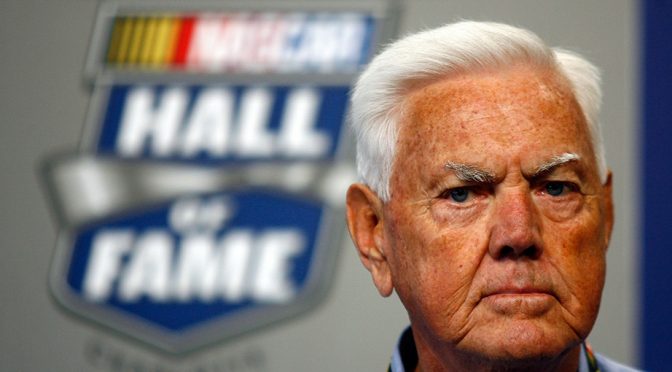
Johnson was enshrined in the NASCAR Hall of Fame in its first class in 2010, joining Bill France Sr. and Jr., Dale Earnhardt and Richard Petty as the inaugural inductees. He remained involved with the NASCAR Hall for years afterward and contributed an operational moonshine still as an exhibit for the museum’s Heritage Speedway section.
He was presented for induction by his son, Robert, on a night of stories about Johnson’s decades-long dedication to stock-car racing.
“We have lost one of NASCAR’s true pioneers, innovators, competitors and an incredible mechanical and business mind. And personally, I have lost one of my dearest friends,” said Winston Kelley, the NASCAR Hall of Fame’s executive director. :While we will miss Junior mightily, his legacy and memory will forever be remembered, preserved, celebrated and cherished at the NASCAR Hall of Fame and in the hearts and minds of race fans around the world. Please join us in remembering and celebrating Robert Glenn Johnson Jr.”
CONCORD, N.C. — The end of the 2019 racing season marks an anniversary of sorts in NASCAR’s competition department. Jay Fabian will hit a work milestone next month, completing one year as the director of stock-car racing’s premier series.
Fabian has brought an even-keeled touch to the position, but it’s also a hands-on manner with others that’s helped him navigate the Cup Series garage — even in a season that brought stricter deterrence systems with a new inspection model. It’s what he hopes will help steer the series in a major time of transition ahead in the coming years. And it’s an approach that has developed over his years as a team executive on the other side of the garage’s fence.
“That may have just been a bit of luck,” Fabian explained last week from the NASCAR Research & Development Center. “I have that relationship with a lot of people that I had worked with before. … If you don’t have that good relationship, you’re not going to be successful in any model. So now that I’m on this side, it’s me talking to the same people the same way about, ‘hey, you’ve got to fix this. We’re not OK with that.’
“Same way with in my life as a supervisor at a race team, if you don’t assemble a car correctly, you’re going to have failures and issues and you have to address it with those folks that, here’s what you’ve done wrong. It’s a little bit of the same approach, and you have to be the one doing it. I’ve always felt responsible for my job, so I’ve always stayed hands-on, whether it was building a car or whether it’s here. I think it’s super-important.”
For Fabian and the rest of the department at the R&D Center, the holiday break offers a welcome chance to rest and re-energize for the season ahead. There’s plenty to recharge for — ongoing tests and development to the Next Gen car that’s on target for 2021, potential tweaks for next season’s rules and procedures, a newly merged NASCAR that has absorbed International Speedway Corp. and a shaken-up schedule that’s likely to continue evolving.
Fabian’s prime challenge upon taking the job came with an accelerated post-race inspection model that carried tougher penalties, including the potential disqualification of race winners caught with significant rules violations. Such punishments were relatively scarce last season in NASCAR’s three national tours, but all 36 winning cars in the Cup Series were found in compliance with the rule book — a smooth outcome that Fabian said starts with cooperation with the teams.
Zack Albert | NASCAR Digital Media
“We didn’t have to spend much time fighting with them, so that went pretty well,” Fabian says. “That was less of a fight than I anticipated.”
That model is expected to return largely intact for 2020, but with the potential for more cars returning to the R&D Center so that competition officials can monitor them for trends — and also to enforce compliance with the expanded parts freeze for next year, instituted ahead of the 2021 arrival of the Next Gen model.
Any other potential rules and procedural alterations would be announced closer to the season-opening Speedweeks at Daytona International Speedway in February, but Fabian hinted that the structure of each race weekend is currently under review.
“We’ll see quite a bit of impound weekends,” Fabian says, referencing schedules where cars are garaged and not eligible for major changes between qualifying and the race start. “Historically, the enhanced schedule is when we would qualify and then inspect the next morning and then you’d (have offenders) start at the back — there shouldn’t be any of those, but we’ll still have plenty of two-day schedules. There will be some three-day schedules. I think there were actually some races toward the end of the year that those weekend schedules will be very similar to what you’ll see in 2020.”
Fabian and his group also are deeply involved with the development of the series Next Gen car, which completed its second on-track test Dec. 9-10 at ISM Raceway near Phoenix with Team Penske’s Joey Logano at the wheel. The same prototype underwent testing at Richmond in October, with driver Austin Dillon and the Richard Childress Racing crew that built it putting the model through its paces.
The most recent test brought teams together across manufacturer lines, with NASCAR officials working with Childress (Chevrolet) and Penske (Ford) personnel to learn more about the car’s characteristics.
“They gave comments on the car and some performance items that in my past, you would go to a test with subtle changes on a car and you would get more feedback than you would’ve on an entirely new car,” Fabian said, noting that officials on site worked with Logano to find the proper steering feel and responsiveness as they collected data. “I think they got that sorted, and I think everything that they’d gone through was pretty positive at the test. Comments are good, feedback is good. I think that (Logano) would’ve been content throughout the test at one point to line it up and race it, so that’s pretty good.”
The offseason and the spare moments of free time have given Fabian a chance to catch up on some extracurriculars, racing with his 13-year-old son, Brady, as much as his schedule allows. The younger Fabian has competed in quarter-midgets for roughly four years and is making the transition to dirt racing at Millbridge Speedway near Salisbury, North Carolina.
Brady Fabian prevailed in two classes in Huntsville, Alabama, over Thanksgiving weekend, actually collecting a small purse. “He thought it would be fair to split the winnings, so he got a racing economics lesson of how much it cost to get there,” Jay said with a laugh. “So when he figured out how much he owed me after we split the winnings, maybe we should just stay the way we have been.”
Fabian insists he hasn’t pushed his son’s racing endeavors, saying “the minute he says I don’t want to do this, I won’t be able to get rid of that stuff quick enough.” Brady frequently tags along with his father on Cup Series weekends, but the smaller-scale grassroots side has its own appeal — even though Fabian admits he sometimes bristles when the driver meetings and other scheduled events don’t go like big-league clockwork.
“At this job, we don’t win,” Fabian says, explaining that a job well done means not making waves or headlines. “We don’t come home hung over because we just won something. We try to put on a great race and not be involved in any of the stories of the weekend. It’s hard to throw your hands up and consider that a win, but in my life of racing, it’s still nice to be able to take your kid out and try to do the best you can to perform.”
Still, it begs the question: Does a ranking official trusted to enforce the rule book of stock-car racing’s top series ever show up at a youth event with an, ahem, innovative car that pushes boundaries?
“So there is always a potential that I’ll get thrown out because I don’t build my own engines, but as far as everything else on the car, I am 100 percent confident of my knowledge that there isn’t anything off,” Fabian smiles. “That would be pretty embarrassing to get thrown out of a quarter-midget race because my car’s illegal.”