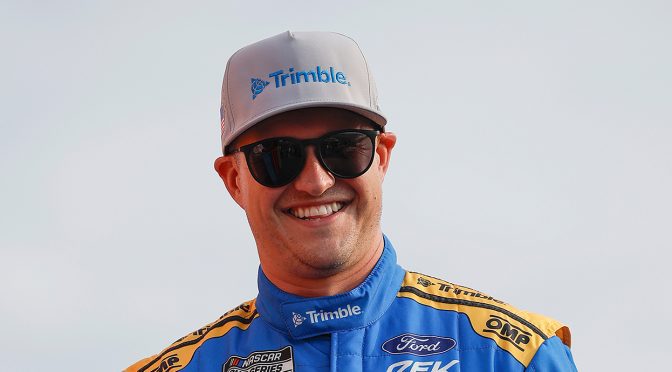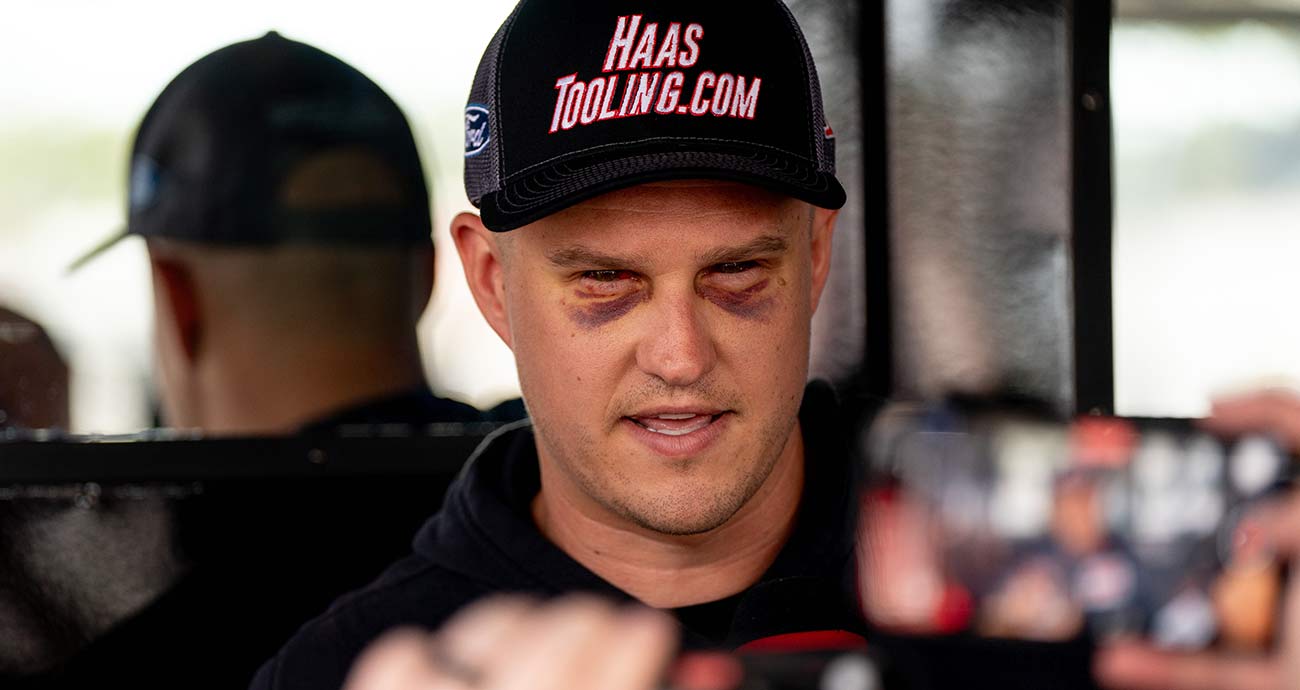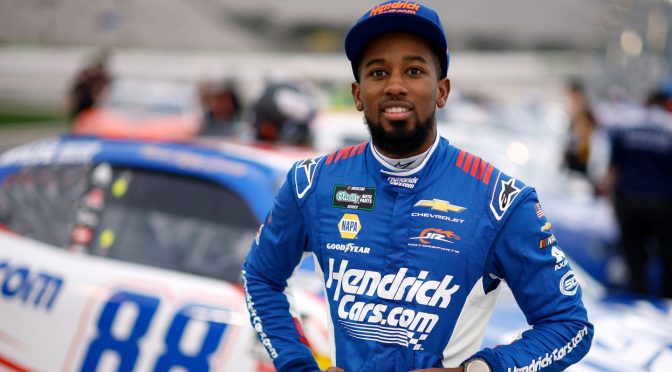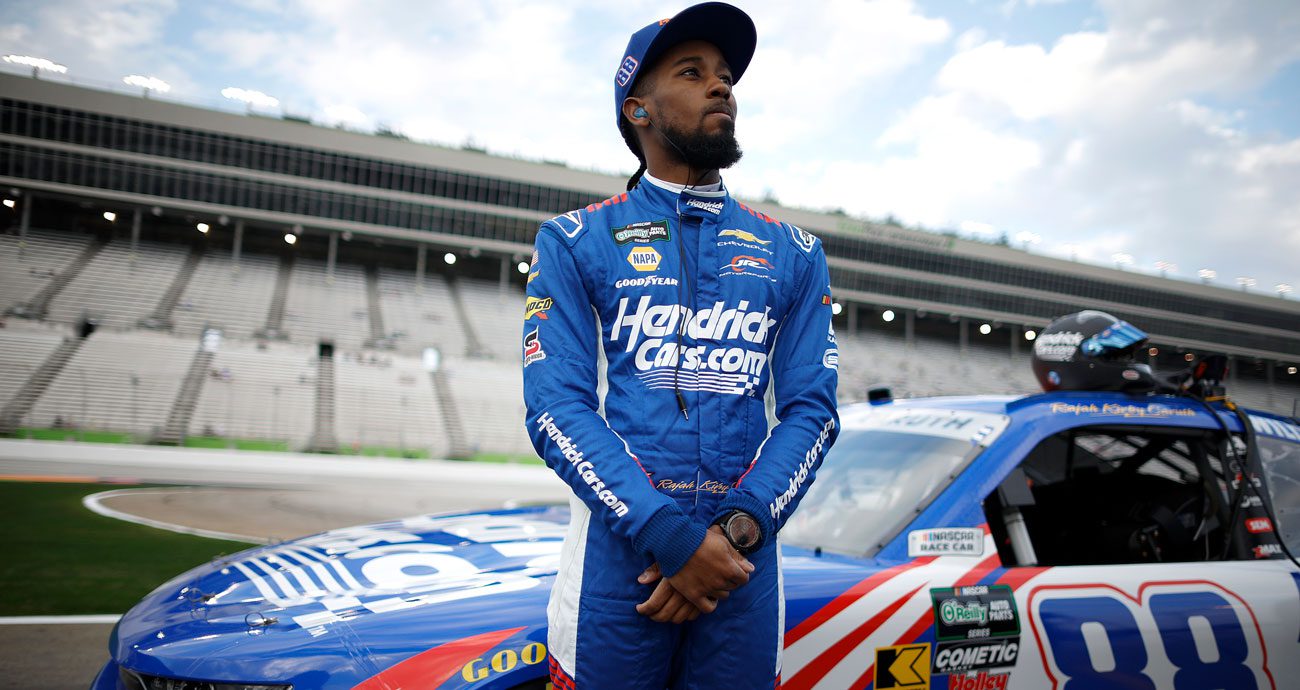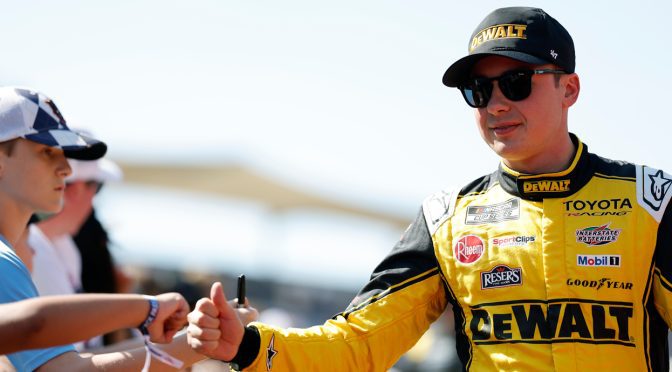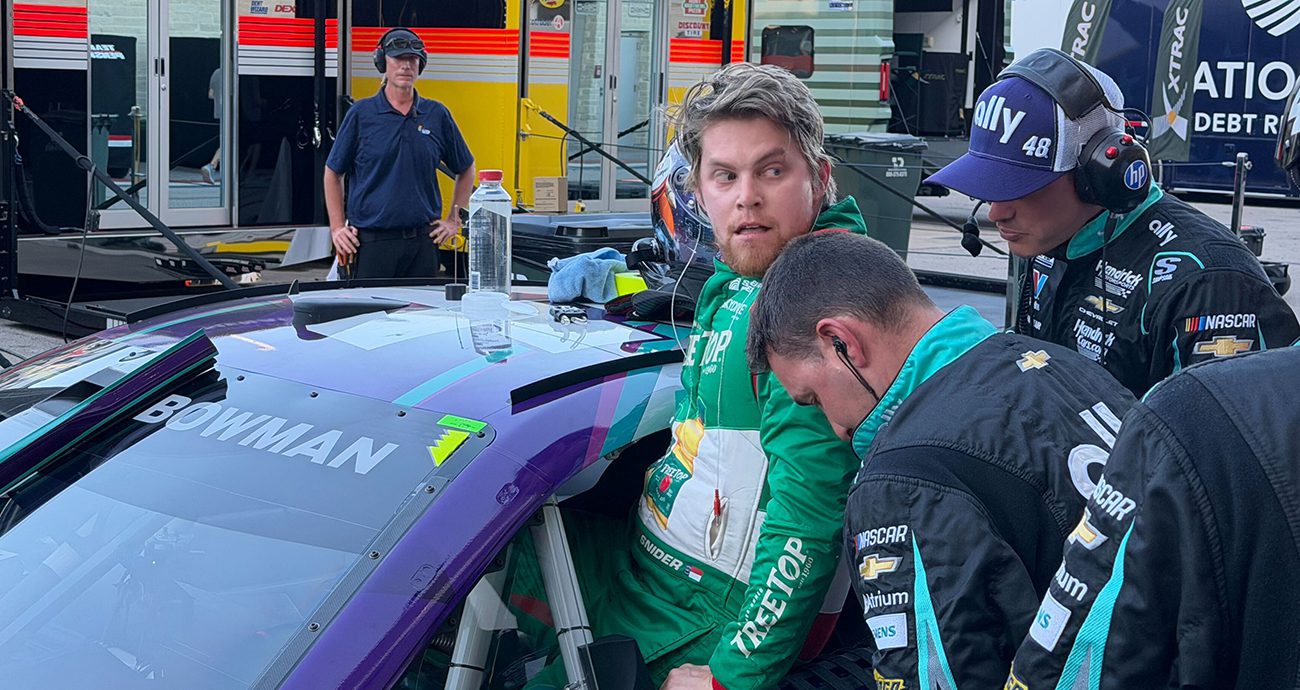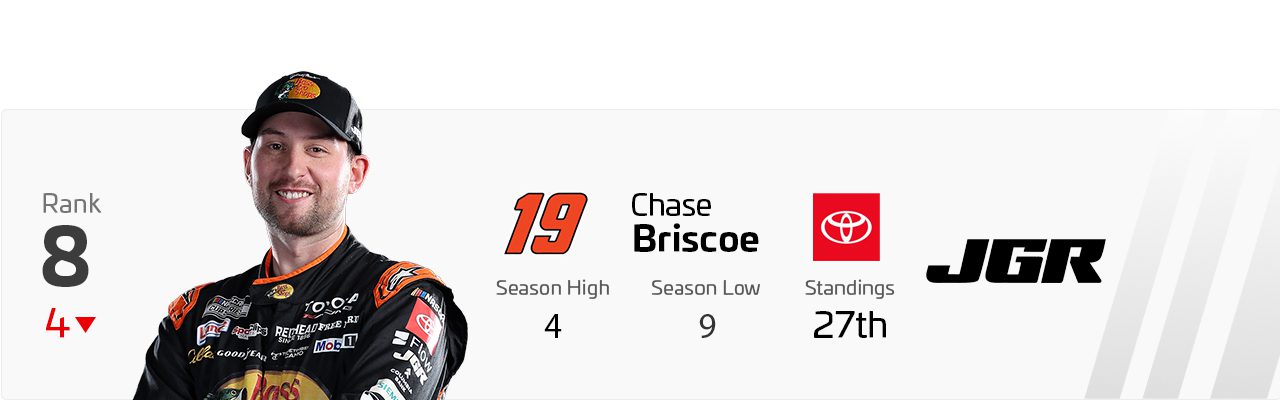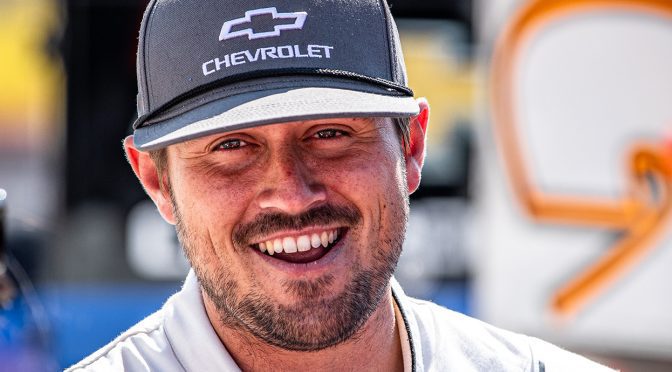
Chase Briscoe lined up a 10-foot birdie putt a few weeks ago at Rolling Hills Country Club in Monroe, North Carolina, southeast of Charlotte. As he crouched down to study the contour of the grass between his ball and the hole, Noah Gragson, his close friend, former teammate and source of nonstop amusement on the course, helped him choose his line.
“If you hit that dot right there,” Gragson said, marking with confidence a dot with the butt of his putter. “It’s going in.”
“That one?” Briscoe asked.
“No, that one.”
Briscoe flinched when he missed the putt by an inch.
“Did you hit the dot?” I asked.
“No,” Gragson said. “He wasn’t even close.”
“If I would have,” Briscoe said, “I would have made it.”
It sounds simple, right? Hit a ball to a spot just a few feet away, bask in the accompanying glory. What could go wrong?
I mean, besides everything. If it were easy, anyone could do it, and nobody would want to. Briscoe, driver of the Joe Gibbs Racing No. 19 Toyota in the NASCAR Cup Series, and Gragson, who pilots the No. 4 Front Row Motorsports Ford, can make a 3,400-pound race car do whatever they want. A 1.62-ounce dimpled white orb, not so much. And that drives them a little crazy.
Nothing generates more fake misery than golf. You can play absolutely terribly, be teeth-grindingly angry at yourself for hours on end, be half-tempted to throw your clubs into the pond, vow 37 times to never play this fool sport again, and yet when someone asks how your day was, you’ll say awesome and proclaim that a bad day on the golf course is better than a good day at work.
The better you get at golf, the more miserable it makes you, because your expectations go up faster than your ability to reach them. Racing is like that, too: Once you win, not winning is way more annoying. You’ve proved you can do it, so why can’t you do it all the time?
Golf might be more insufferable for NASCAR drivers than “normal” people because they are uncommonly gifted, uncommonly competitive and uncommonly successful. The sport humbles them because on the track, they are indisputably world-class athletes, the best of the best of the best, and on the course, they are decidedly not.
So why do they subject themselves to such frustration? The maddening challenge to command the ball draws Briscoe and Gragson (and every other driver who plays) to golf. They play because their competitive natures drive them to improve, and in golf, it’s really hard to do so, and thus more rewarding when they do, even if the only reward of getting better is deeper knowledge of how bad they still are.
They play because of the joy they find in the striving.
And they play because they laugh a lot on the course.

Long drives, fast drives, and what they have in common
Golf is seemingly everywhere in NASCAR lately. Austin Dillon AND his dad both got holes in one in the same round last week, and Instagram posts about that seemingly impossible accomplishment generated thousands of likes. NASCAR Xfinity Series drivers Connor Zilisch, Daniel Dye and Jesse Love have a YouTube channel devoted to the sport. And during the week of the final race of the first playoff round, Hendrick Motorsports set up a putt-putt course in their office and made Instagram videos of their four drivers playing it while wearing their fire suits.
This is a continuation of a decades-long trend. 23XI, the team co-founded by Denny Hamlin and Michael Jordan, owes its existence to conversations between the two on golf courses. Hall of Famer Dale Jarrett was a scratch golfer during his driving days and remains one of the best golfers in the industry, if not the best. In 2005, Jarrett, Elliott Sadler, Jamie McMurray, Michael Waltrip and Rusty Wallace competed in a made-for-TV event on The Golf Channel.
Even though they’ve been paired up for decades, NASCAR and golf still seem like an unlikely match. Golf smells like freshly cut heaven, is quiet and peaceful and played on an endless green expanse. Fans get shushed for talking above a whisper. NASCAR smells like oil and rubber (also heaven), is loud and harrowing and played on a narrow asphalt strip. Fans yell themselves hoarse, and still nobody hears a dang thing anybody says.
NASCAR drivers make uncountable thousands of split-second decisions in a race, and just about any of them could lead to serious injury or a torn-up race car or both. Golfers make “only” dozens of decisions in a round, have plenty of time to ponder them, and the worst possible consequence is a ball in the drink.
But dig below the surface, and the two sports have a lot in common.
In both sports, you need to be able to think ahead to be in the right position at the right time. If you want a great Turn 3, you set that up with a great back straightaway, which you set up with a great exit off Turn 2. In the same way, if you want to make a short birdie putt, you set that up with a great approach, which you set up with a great tee shot.
Both sports reward your ability (and punish your inability) to concentrate for a long time; a bad 18th hole can wreck a good round just like a bad final run can wreck a good race.
Josh Wise, a former driver (and former golfer) who helps drivers maximize their performance as owner of Wise Optimization, puts his drivers in athletic/competitive scenarios across a wide range of activities, from paddleboarding to yoga to pickleball, because doing so teases out traits that otherwise might go unnoticed.
Drivers golf for the same reason (though not, by any means, ONLY that reason). “If I had to pick something as a performance advisor (for drivers to learn from golf),” Wise said, “it would, hands down, be the ability to quiet the mind for a critical moment.”
Now, having said all that, nobody grabs their clubs and heads to the course with even the faintest notion that what happens there matters at all in the race car.
The value of golf for drivers is simpler … and more complicated … than that. They play not because it will improve their performance on the track but because playing brings them joy.
And that makes them better race car drivers.

“‘Dude, I hate this Chase Briscoe guy.’ And now we’re best of friends.”
Golfing with Gragson and Briscoe was like golfing inside a buddy movie. They encouraged and teased each other in equal measure.
I split my time between their carts. When I rode with Briscoe, Gragson would be on the green while we were still lining up our shots in the fairway.
Gragson parked the cart a couple of times within a foot of the ball, the nose just in front of it. Not in the way, but close enough that I could see the cart when I looked down at my ball. I couldn’t swing with the cart right there. It distracted me too much.
He parked like that at his ball, too, only Gragson wasn’t distracted at all. I guess if you drive 180-plus mph inches from speeding race cars on all sides for three hours every Sunday, hitting a golf ball a foot from a parked golf cart on a sunny Thursday afternoon is no big deal.
You can tell a lot about friends by how they react when the other hits a good shot. Briscoe muscled a shot straight down the middle, long and high and true, and Gragson bellowed loud enough for us to hear him half a fairway away. “When my boy Chase hits a bomb, I’m going to scream,” he said.
A few holes later, Gragson striped his drive down the center.

Briscoe hit next.
“How’d you do?” Gragson asked.
“Flew 70 yards past you,” Briscoe said.
He was only exaggerating by about 40. “Noah’s the king of (trash)-talking,” Briscoe says. “So, it’s fun when you can give it back to him.”
Their friendship almost ended before it started. On the first lap of the first NASCAR national series race they ever ran together — the Craftsman Truck Series race in 2017 at Daytona International Speedway — Briscoe tried to bump draft Gragson and wrecked him instead.
“I didn’t know what I was doing,” Briscoe says.
“Neither did I,” Gragson replies.
Briscoe dumped Gragson accidentally again in a race shortly thereafter. I asked Gragson’s reaction to those encounters as we walked off a green. “‘Dude, I hate this Chase Briscoe guy,'” he said. “And now we’re best of friends.”
And unlikely friends at that. Gragson is a single, strutting Las Vegas native who, as an up-and-coming star in the Xfinity Series, threw punches, traded barbs and was so excited to win that he threw up the contents of his stomach right there on the track.
Briscoe, on the other hand, is Indiana wholesome through and through, the married father of three who exudes earnestness. By his own unsolicited admission, nothing about his pre-NASCAR career foretells the success he has had. But hope is a powerful thing: Even with his modest resume, he moved to Charlotte, slept on Christopher Bell’s couch and did menial jobs in the sport to chase his chance.
And when he caught it, he excelled, progressing to Cup in 2021. This year, his first driving for Joe Gibbs Racing, he is in the championship hunt for the first time. He has won twice and set career highs in every category. Through 31 races, he’s led 808 laps — that’s 283 more than in the rest of his career combined.
Their friendship sprouted when they became teammates at Stewart-Haas Racing in 2024 and blossomed on the golf course. Briscoe leans on his friendship with Gragson to escape the pressure of being a big-time athlete with a big-time team and big-time responsibilities at home as the father of three young children. He relishes the chance to have adult conversations.
And Gragson plays funcle to Briscoe’s three small children. He delights in buying obnoxiously loud gifts that kids love and parents hate. His latest offering, he told me as Chase chipped out of earshot, is a deejay game he can’t wait for Chase and Marissa (Chase’s wife) to loathe. Gragson fully expects payback when he has kids.
We cut our round short at 16 holes so they both could get to the tee-ball practice of Briscoe’s 4-year-old.
“Do you think I’ll distract him?” Gragson asked.
“He’s 4,” Briscoe said. “Everything distracts him.”
Gragson, especially, if golf was any indication.
“PARTY HOLE!” he said on one green and demanded we all line up putts and hit them at the same time. “Three … two … one!”

They hit everything but the pace car
Drivers play a sport for a living and play other sports for fun. Sometimes they are dangerous. Tony Stewart broke his back in a dune buggy crash. Denny Hamlin has torn both of his ACLs playing basketball. Chase Elliott fractured his tibia while snowboarding.
Whenever something like that happens, team owners, sponsors and fans debate what activities drivers should participate in. Perhaps golf is a popular hobby among drivers because nobody ever gets hurt doing it. …
Except, of course, for Jimmie Johnson, a seven-time champion, Hall of Famer and team owner. Fresh off his first championship in 2006, he showed up for preseason events in 2007 with his arm in a cast. He told the media he fell off a golf cart. That was true. What he didn’t say is that he was on top of it, not inside of it, when he fell.
Johnson and other NASCAR drivers play the sport for the camaraderie, for the fun, for the laughs, and to get away from the constant pressure to perform so they can forget, for a few hours, that their livelihood rises and falls with their ability to always, always, always push their car right up to the edge and stay there for hours on end without blinking or flinching or making any mistakes, ever.

The stress of that is suffocating.
And then they go play golf and get nearly as wound up on the course as they do at the race track.
Golf is both a relief from and source of stress. Johnson plays more now that he’s an owner than he did as a driver. No word on whether he rides inside the cart these days. Asked by a golf reporter this summer which is more stressful, protecting a lead on the last lap at Daytona or standing over a 10-foot putt on the 18th with his personal best score on the line, Johnson said, “without question, 10-foot putt.”
There’s an old saying that a good goal is always just out of your reach, and while that’s true in golf, it’s also annoying as hell when coming up short means SPLASH! As Hamlin, who helped run a now-defunct golf league among drivers and industry insiders, once said: “We try to pull off shots that pros make, and we get pissed off when we don’t get it done.”
And they get pissed off when they blow easy shots, too. Gragson chipped his ball back and forth halfway across creation, and Briscoe stifled a laugh because there’s nothing funnier than your friend being pissed off at golf.
Briscoe: “How many clubs have you broken?”
Gragson: “Three.”
He meant in his life, not that sun-drenched September day.
“It’s the only sport I know of where you can put countless hours in,” Briscoe said, “and still suck at it.”
I filled my notebook with quotes like that from both. And after playing with them, I can say, um, how to put it, sometimes they proved those quotes accurate … and often they didn’t.
They both have the great hand-eye coordination you would expect from professional race-car drivers. They both have smooth, easy swings befitting a lifetime of playing sports. Fluidity, balance, weight-shifting — all crucial for golf, all ever-present in their swings.
This is a small sample size, but I suspect overall their decision-making leans toward going for it rather than laying up, which I say because they are race car drivers AND because before Briscoe tried to squeeze a shot between two trees, he turned to me and said it would either turn out awesome or smack the tree and come right back at him. (It slithered through.)
They have the tools to score low; they just need to learn to use them consistently. The only thing keeping them from becoming good golfers is playing more.
And doing so would only show them how much better they could still get.