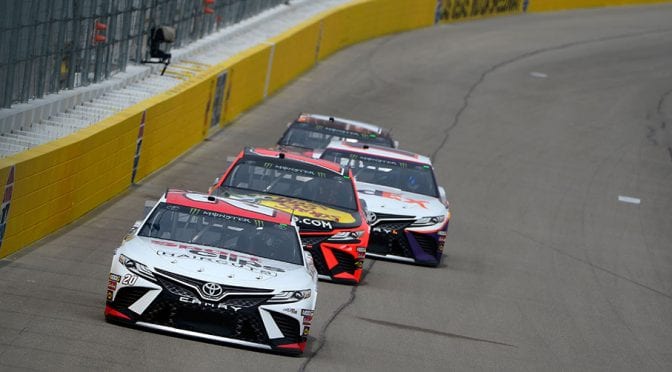
The MLS Chicago Fire won’t be the only thing sporting flames this weekend in the Windy City. That’s because Martin Truex Jr., Kyle Busch and the rest of the Monster Energy NASCAR Cup Series are headed to town for a showdown at Chicagoland Speedway in the Camping World 400 (Sunday, 3 p.m. ET, NBCSN).
And when it comes to putting down laps along with some really big stats, good luck finding two athletes who are perched higher atop their game than the two Joe Gibbs Racing teammates.
For Truex, the last eight races have constituted quite a run including a unique combination of four wins — coming at short tracks (Richmond and Dover), in a test of endurance (the Coca-Cola 600) and at arguably the most challenging road course (Sonoma). His 504 laps led in the past eight races are nearly double that of any other driver, according to Racing Insights.
Meanwhile, for Busch, he is the only driver who has matched Truex’s four wins this season. He is also the only driver with more wins since the start of the 2015 season: 26 to Truex’s 21. Here’s a side-by-side comparison of the two that shows just how big this duo has been in the first part of the 2019 season.
Big 2 anyone?
Driver
Truex Jr.
Busch
Wins
4
4
Seconds
2
2
Top five
7
10
Top 10
10
15
Laps led
518
766
Avg. finish
10.81
6
Stage wins
2
5
Playoff points
22
25
Adding fuel to the fire is the fact that these drivers are responsible for the past three victories at Chicagoland, with Busch the defending race winner and Truex coming away with the wins in 2016 and 2017. We’ll see what happens this weekend.
Now for the rest of the rundown for Chicagoland:
TRACK
Chicagoland Speedway is a 1.5-mile D-shaped tri-oval speedway located in Joliet, Illinois. Banking is 18 degrees in the turns, 11 degrees on the frontstretch and 5 degrees on the backstretch. The first Monster Energy Series race was in 2001 and won by Kevin Harvick.
TIRES
Goodyear held a tire test in May at Chicagoland Speedway, the results of which led to a right-side tire that provides more grip to help cars potentially get a bigger run on lead cars, according to the manufacturer. Drivers participating in that test included Brad Keselowski, Ryan Newman and Paul Menard.
Each Monster Energy Series team will get three sets of Goodyear Eagle Speedway Radials for practice, one set for qualifying and nine sets for the race (eight race sets plus one set transferred from qualifying or practice).
RULES
The Chicagoland race will feature the 2019 base rules package that has been run at other 1.5-mile tracks this season with an engine that has a tapered spacer and expected horsepower of about 550. Cars will have aero ducts this weekend as well.
Of note: They’re back! NBC that is. This is the kickoff event for NBC’s coverage of NASCAR this season and also includes the NASCAR Xfinity Series race Saturday at 3:30. Join Rick Allen, Dale Earnhardt Jr., Jeff Burton, Steve Letarte and a cast of others for another exciting racing season on NBC and its affiliates. Meanwhile, FOX Sports will continue to cover the Gander Outdoors Truck Series with Friday night’s race airing at 9 p.m. ET on FS1. | NBC team fired up for new season
DAYTONA BEACH, Fla. — NASCAR Salutes Refreshed by Coca-Cola, (#NASCARSalutes) a continued effort to show appreciation for the United States Armed Forces, concludes with two full weekends of military appreciation at Chicagoland Speedway and Daytona International Speedway, where a NASCAR Xfinity Series windshield header salute to military units and installations will take place during the Circle K Firecracker 250 Powered by Coca-Cola.
“For NASCAR as an industry, it’s a privilege to honor the military men and women who protect our country’s freedom,” said Jill Gregory, NASCAR executive vice president and chief marketing officer. “As we culminate NASCAR Salutes in Chicago and Daytona Beach, we remain humbled by the opportunity to recognize our military community and thank service members for the sacrifices made on our behalf.”
Through the NASCAR Salutes Refreshed by Coca-Cola race weekends, “Future” will be the celebrated theme during the Chicagoland Speedway Camping World 400 race weekend alongside the 10th anniversary of NASCAR Troops to the Track hosted by Coca-Cola, a season-long initiative that pays tribute to the men and women of the U.S. Armed Forces by inviting service members from local military installations to a VIP race day experience. At Chicagoland Speedway, NASCAR Official Partners Comcast, MACK and SiriusXM will provide a behind-the-scenes look at their work in the sport and veteran-hiring efforts, showcasing opportunities within the industry as they consider their future transitions to civilian life.
For the NASCAR Xfinity Series race at Chicagoland Speedway, a patriotic red, white and blue Comcast NBCUniversal “Salute to Service” paint scheme will adorn Jeffrey Earnhardt’s No. 81 Xtreme Concepts Racing Toyota Supra and raise awareness of Comcast’s military community hiring efforts. Comcast NBCUniversal is committed to hiring 21,000 military community members — veterans, National Guard and reserve members, and military spouses by the end of 2021.
Camping World, parent company of NASCAR Gander Outdoors Truck Series entitlement partner and sponsor of the Chicagoland Speedway race weekend, provided more than 2,500 tickets to the military community for the race weekend. Additionally, local service members with their families will receive grandstand tickets and access to NASCAR Xfinity Series race day activities on behalf of Comcast.
As part of the NASCAR Salutes Refreshed by Coca-Cola “Patriotism”-themed weekend at Daytona International Speedway, NASCAR Xfinity Series drivers will bear the names of active military units and installations on their race car windshields during the Circle K Firecracker 250 Powered by Coca-Cola on July 5 (7:30 p.m. ET on NBCSN, MRN and SiriusXM NASCAR Radio). The 3rd Infantry Division, 33rd Fighter Wing, and aircraft carrier USS Dwight D. Eisenhower (CVN 69) are among the groups from all five branches of the U.S. Armed Forces that will replace the Xfinity header on NASCAR Xfinity Series race cars for the fourth-consecutive year.
NASCAR Xfinity Series teams were given the opportunity to identify a unit or installation to honor for the Circle K Firecracker 250 Powered by Coca-Cola, while NASCAR worked with Comcast’s Military and Veteran Affairs team to match units with the remaining teams for the tribute. Many teams have connections to the units being honored on their cars, such as Cole Custer’s team, who will honor the 1st Security Force Assistance Brigade stationed at Fort Benning, Georgia, where crew chief Mike Shiplett’s family member serves. The Joe Gibbs Racing No. 19 team will honor the 39th Infantry Brigade Combat Team, Arkansas National Guard, where driver Brandon Jones’ cousin serves.
New for the NASCAR Salutes Refreshed by Coca-Cola race weekend at Daytona International Speedway is a free Coca-Cola fan element in the midway where a local Publix chef will offer food samples, Coca-Cola products and the opportunity to write a “thank you” message to the military community. A VIP section is available for military members and their families by showing their military ID.
For the 11th consecutive year, Daytona International Speedway will honor two Medal of Honor recipients throughout the race weekend. Honorees include Retired U.S. Army Command Sergeant Major Gary Littrell (Vietnam) and U.S. Army Staff Sergeant Ronald Shurer II (Afghanistan). Retired U.S. Army Colonel Hal Kushner, a Daytona Beach resident who served in Vietnam and was held as a prisoner of war for more than five years, will drive the Honorary Pace Truck for the 61st annual Coke Zero Sugar 400 on Saturday, July 6 at Daytona International Speedway (7:30 p.m. ET on NBC, MRN and SiriusXM NASCAR Radio).
In addition, all active, veteran and retired military members and their families will have access to a Midway suite within the Daytona facility on Saturday where they can take a break from the busy day of activities to cool off and enjoy complimentary Coca-Cola products and snacks. The suite will be accessible from 3 p.m. through the end of Stage 1 of the Coke Zero Sugar 400. Throughout the day, various special guests will visit the suite and participate in Q&A sessions including Monster Energy NASCAR Cup Series driver Bubba Wallace at 4:45 p.m ET.
Tickets to NASCAR national series events are available at NASCAR.com/tickets.
This weekend’s Camping World 400 at Chicagoland Speedway (3 p.m. ET on NBCSN, MRN and SiriusXM NASCAR Radio) marks the return of NBC to the broadcast booth, providing insider scoop for the remainder of the season including the playoffs and the finale at Homestead-Miami Speedway.
The NBC Sports crew of Jeff Burton, Steve Letarte and Dale Earnhardt Jr. is back in action with Rick Allen in the booth, Marty Snider, Dave Burns, Kelli Stavast and Parker Kligerman on pit road while Krista Voda, Kyle Petty, Dale Jarrett and Nate Ryan set the stage for each race weekend.
Earnhardt made his first appearance as an NBC analyst last season during the network’s debut at Chicagoland and did not disappoint.
The race ended with Dale Jr. yelling ‘Slide job!’ in the booth as Kyle Busch and Kyle Larson bumped and battled on the last lap for the victory, with Busch ultimately taking home the checkered flag. That moment became almost iconic throughout the NASCAR world for the remainder of the season.
“Well, when I was hollering slide job, I was yelling it at Rick Allen, I wasn’t talking to the audience as much as I was Rick,” Earnhardt explained. “So, when we’re in the booth, when it’s great, I think is when it’s us four having a conversation with each other and we’re just talking racing and about what we’re seeing. In that moment, I’m hollering at Rick, ‘Hey, here comes a slide job!’
“Rick is tasked with calling the final lap of the race and I was just like, ‘Hey buddy, look what I see, this is what I see.'”
Burton, Letarte and Allen have years of experience announcing from the booth and used their knowledge to help rookie Dale Jr. get acclimated.
“It was a tribute to Rick (Allen) and Jeff (Burton) and Steve (Letarte) getting me that comfortable that quickly,” Earnhardt said. “I’m really a shy guy and a bit of an introvert, to be honest, and they worked really hard as a group of three guys, to help me get comfortable as fast as I could. We had a lot of mock broadcasts last year that helped me a ton. We talked a lot, communicated together a lot and they all went out of their way to help me get comfortable quickly.”
Don’t let Dale’s natural persona in the booth fool you, though. The retired driver claims that it wasn’t always smooth sailing from that debut broadcast.
“Not every broadcast got better after that, from my point of view, from what I was doing in the booth,” Earnhardt said. “I remember one race, in particular, at Pocono, in the first stage, we got done and I told them, I said, ‘I was awful, I couldn’t figure out when to speak.’ And they’re like, ‘Look, get aggressive. We’re not going to hold your hand here and stop talking so you can come in here and say what you need to say. You’ve got to work your way into this conversation.’ ”
NBC’s coverage last season included the first race for the inaugural Charlotte Roval, where Jimmie Johnson crashed into leader Martin Truex Jr. in the final chicane, handing Ryan Blaney the victory from the third position. The close battle within the Championship 4 provided compelling story lines and the crowning of a new champion in Joey Logano.
Executive Producer Sam Flood is looking forward to the next 20 weeks and continuing to give the fans what they want week in and week out, while incorporating new ideas and promotions in the booth. He also gave FOX Sports a nod for its increase in ratings throughout the first half of the season.
“We’re going to keep having fun and mixing it up,” Flood said. “Steve Letarte told me when we were first talking about Dale Jr., he said, ‘Dale likes to be challenged, if it’s just kind of make the donuts and the pattern stays the same, he’s not going to be as engaged.’ ”
“But, we engaged the heck out of him last year and I think we learned something, that we’re better when we’ve got challenges with new techniques and new groupings.”
Dale Jr.’s booth co-hosts enjoyed what he brought to the broadcast last season and the group is just as excited, if not more, to get this season going.
“I am so fired up about getting back going,” Burton said. “We have a good time together; we just love what we do. If I could have a race right now, I would.”
CHARLOTTE, N.C. — The Bojangles’ Southern 500 has become the red carpet of NASCAR. No one wants to show up on the worst dressed list.
David Ragan may have secured a spot on the best dressed for NASCAR’s most historic weekends and one of its oldest tracks. Ragan’s No. 38 Front Row Motorsports Ford will throw back to David Pearson’s 1969 Championship Ford Torino Cobra prepared by Holman-Moody. The title was Pearson’s third and final one in the premier series.
“When you think about Darlington, if you think about any driver you think about David Pearson right off the top. He’s from South Carolina,” Ragan said after the look was unveiled on Wednesday at the NASCAR Hall of Fame. “He was dominant at that place and the throwback weekend is honoring all of those people that made a big impact in our sport.”
Pearson notched 10 wins at Darlington Raceway and won the Southern 500 three times in his career.
Ragan’s paint scheme will feature Shriners Hospitals for Children, an organization that Ragan has been affiliated with since 2012. Pearson, a NASCAR Hall of Famer, was also a Shriner.
Being so closely tied to the Shriners gives Ragan some extra incentive to avoid the famous “Darlington stripe” and bring his No. 38 Ford Mustang home in one piece.
“Darlington is such a narrow track,” Ragan said. “You don’t have much wiggle room, you have to run right against the wall to make speed. You don’t have room to slip and slide and get loose and correct yourself. The wall finds you really quick.
“It’s a tough night but it’s very rewarding when you can have a good run at Darlington. You feel like you have earned it.”
The Bojangles’ Southern 500 is scheduled for Sunday, Sept. 1 at 6 p.m. ET on NBCSN, MRN, SiriusXM NASCAR Radio.
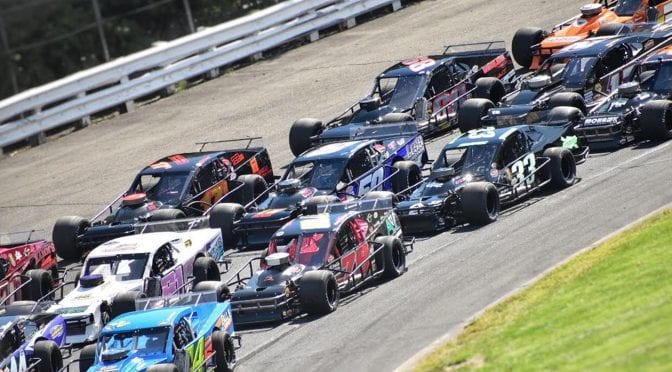
STAFFORD, Conn. — Teams and drivers are busy preparing for the 6th Annual NAPA Auto Parts SK 5K 100 lap SK Modified event, scheduled for Friday, June 28. In 5 year‘s time, the $5,000 to win event has become the event every driver wants to add to their resume. The event, which has been won by 5 different drivers including last year‘s SK Modified track champion Ronnie Williams, historically has been one of the best races of the season and with posted awards over $34,000, the 2019 event is no different.
We caught up with a few of the SK Modified drivers to get their thoughts on the event:
Glen Reen — #17 Avery Construction Chevrolet NAPA SK 5K Stats Starts: 3 Best Finish: 5th (2014) Average Finish: 7.7
“I‘m looking forward to the 5k. We‘ve got Dan‘s [Avery] car put back together so it‘ll be fun to have us both back racing at the same time. I‘ve missed that. There is no better place to race than Stafford and that‘s why people show up to Stafford. I‘ll put Stafford‘s SK‘s up against any single weekly division anywhere in the country and I‘d bet it‘s harder to win an SK race at Stafford than anywhere else. It‘s awesome to have a track like Stafford with the Arute family putting their time and effort into the weekly show and having a huge event like the SK 5k with great sponsors like NAPA Auto Parts and Doug Dunleavy. I think it‘s going to be a great time for the racers and the fans who come to watch the race.”
Eric Berndt — #54 Cos‘ Central Auto Chevrolet NAPA SK 5K Stats Starts: 5 Best Finish: 4th (2018) Average Finish: 9.0
“We have a good car we just need to get some more consistency in it. The car has been fast and if everything works out we should be there at the end. That‘s the game plan but this is racing and anything can happen. This race is great. Doug Dunleavy has been a big supporter of short track racing, it‘s awesome to have someone like that supporting us as well as Stafford kicking in for a big payday race. This race shows that they appreciate us and are willing to put money up for us to put a show on. We‘re definitely appreciative of both parties and hopefully we can have a good race for ourselves and put on a great show for all the race fans.”
Ronnie Williams — #50 Les‘s Auto Center Ford Starts: 5 Best Finish: 1st (2018) Average Finish: 7.4
“We‘re looking forward the 5k. That‘s the race that we always circle on the calendar and the #50 team has been pretty good at that race the last 2 years winning with Chase [Dowling] two years ago and myself last year. We‘re looking forward to getting back to that race and I think we have a fast car, we‘ve just had some crap luck this year. Hopefully we can get our season turned around at that race. Stafford always does an amazing job and having someone like Doug Dunleavy putting up the Gambler‘s Challenge is great. Seeing the graphic that Stafford posted on Facebook about the SK 5k, it‘s a lot of money over the years and we‘re not really used to racing for that kind of money. It‘s always a lot of fun racing for the extra money, the big trophies, and the big check at the end of the night.”
Todd Owen — #81 Cooker Construction Chevrolet Starts: 5 Best Finish: 4th (2017) Average Finish: 12.0
“The NAPA SK 5k is an awesome race that Stafford, NAPA, and Doug Dunleavy put on. It‘s a nice long distance race where I can be patient, stay out of trouble and be smart. We hope to be in contention at the end of the race.”
Keith Rocco — #88 Wheelers Auto Chevrolet Starts: 5 Best Finish: 2nd (2015 & 2018) Average Finish: 4.0
“I‘m looking forward to the 5k. We‘ve been so consistent the last couple years but we‘ve come up a little short. Hopefully this year we can wrap it up. We try hard to run good in this race every year and it would be great to get the monkey off our back and finally get a NAPA SK 5k win. It‘s really cool for all the racers to have the opportunity to take advantage of the Gambler‘s Challenge bonus that Doug Dunleavy puts up for us and we all look forward to the big payday. We‘re really looking forward to the race.”
Discount tickets for the June 28 NAPA Auto Parts SK 5K are now available at your local NAPA Auto Parts Store. Tickets include a pre-race barbeque on the Stafford midway. Full list of participating NAPA stores is available by clicking the PARTICIPATING NAPA STORES link found at the top of the www.staffordspeedway.com homepage.
The 6th Annual NAPA Auto Parts SK 5K is set for Friday, June 28. Tickets for the NAPA SK 5K are available and on sale now at the Speedway Box Office. Tickets are priced at $30.00 for adult general admission tickets, $5.00 for kids ages 6-14, and kids 5 and under are admitted free of charge when accompanied by an adult. Reserved seating is priced at $32.00 for all ages. All ticket prices include 10% CT Admission Tax. Stafford Speedway offers free parking with free overnight parking for self-contained RV‘s available. There will also be a barbeque taking place on the midway with some great food available to race fans for only $10.
For more information, contact the Stafford Motor Speedway track office at 860-684-2783 or visit us on the web at www.staffordspeedway.com.
Prior to the season the Monster Energy NASCAR Cup Series introduced a new aero package designed to encourage more passing and make the racing more exciting.
Because of this, much of the historical data NASCAR bettors typically use to identify value became much less predictive, which therefore made betting on this year’s early-season races more challenging.
However, now that we’re entering the dog days of summer, there is finally a decent sample of races to analyze from this season that can help us project which drivers will perform well (and poorly) going forward.
In fact, this weekend’s Camping World 400 will take place at Chicagoland Speedway, a 1.5-mile racetrack. Why is this important?
The Monster Energy Series has already visited five 1.5-mile tracks (Atlanta, Las Vegas, Texas, Kansas and Charlotte), giving us a nice base of data to analyze.
And after looking at the results from those five races, one head-to-head driver matchup is already popping as one being grossly mis-priced by oddsmakers.
Ricky Stenhouse Jr. (-110) over Austin Dillon
I just don’t get this matchup. Stenhouse has dominated Dillon at 1.5-mile racetracks this season, yet oddsmakers at the Westgate SuperBook in Las Vegas have priced it as a pick’em.
Not only is Stenhouse’s average finish of 11.2 significantly better than Dillon’s 21.2 at these five tracks, but Ricky’s average running position of 11.6 (compared to Austin’s 17.4) shows that the Roush Fenway Racing driver isn’t just lucking into good finishes, but he’s consistently running up front at each of these races.
There’s plenty of value to warrant taking Stenhouse right now, and I’ll consider betting it again should Dillon qualify better and reopen as a favorite on race day.
Joe Gibbs Racing is off to one of the hottest starts in Monster Energy NASCAR Cup Series history — a start on pace with the historic opening run from Hendrick Motorsports during the 2007 season.
Through 16 races, JGR drivers have reached Victory Lane a combined total of 10 times, placing them in a tie for second-most wins all time in that span — Hendrick Motorsports (2007) and Peter DePaolo Racing (1957) also reached the 10-win mark. Only the Carl Kiekhaefer Racing team has bested that total, winning 12 out of the first 16 races during the 1956 season.
During the 2007 Hendrick Motorsports run, eventual 2007 Monster Energy Series champion Jimmie Johnson and teammate Jeff Gordon each picked up four wins through 16 races — a number that both Kyle Busch and Martin Truex Jr. have matched this season. Kyle Busch and Casey Mears also raced their way to early-season victories in 2007 for Hendrick Motorsports, while Denny Hamlin picked up two more checkered flags for JGR this year at Daytona and Texas.
The 2007 Hendrick Motorsports team set new marks with 24 top fives and 36 top 10s through the first 16 races. They ended that season with 18 wins and still hold the current record for most wins by a team in a single season in the modern era. With a strong start to the 2019 season, JGR has secured 28 top fives and 42 top 10s, breaking the decade-old records for most all-time in each category and is on pace to match the record 18 wins.
Truex picked up his fourth victory of the 2019 campaign Sunday at Sonoma, solidifying the JGR duo with the Hendrick pairing as the only two sets of teammates to have at least four wins apiece in the first 16 races in Monster Energy Series history. Busch last won at Pocono and secured victories at Bristol, Auto Club and Phoenix earlier in the year.
With a quartet of race wins already in his pocket, Truex is only trending upward in the “rivalry” with Busch. Truex has come out on top of the field in four of the last eight races, leading a series-high 504 laps over that span. No other driver has more than a single victory in that time frame.
As the series heads to Chicagoland Speedway for Sunday’s Camping World 400 (3 p.m. ET, NBCSN, MRN, SiriusXM NASCAR Radio), history is trending toward another JGR celebration. The last four Monster Energy Series races at the track have been won by Busch (2018), Truex (2017, ’16) and Hamlin (2015).
Editor’s Note: This story was originally published on Aug. 12, 2017. In our Driver by Number series, Irvan was named as the driver of the No. 36.
Ernie Irvan keeps all the trophies from his Monster Energy NASCAR Cup Series career in a display case. He and his family are moving this weekend from Charlotte, North Carolina, to Ocala, Florida, and he recently packed the trophies to prepare for the movers’ arrival.
He won the Daytona 500, the night race at Bristol and both road courses. He won at Talladega, the longest track in the sport, and at Martinsville, the shortest. He won 15 Cup races in all, and as he grabbed each trophy, memories of the circumstances behind each win came back.
“When I was packing them all up, I saw the one at Sears Point. You think of what happened at Sears Point. You see one at Watkins Glen, and think about what happened at Watkins Glen,” Irvan says. “Whenever you’re sitting there, you always reminisce.”
When he picked up the Michigan trophy — his 15th and final win, 20 years ago this summer — the memories were particularly powerful. And not just because it was the last Cup race he ever won, but because of brutal crashes before and after that win and the life-saving maneuvers of a doctor who arrived at his car. Without that doctor and helicopter on site, he says, he would have died at the track and never gotten that final win.
“All the things put together, it was just kind of a miracle,” he says.
THREE WEEKS GONE
The mid-1990s were a brutally difficult time for NASCAR. On April 1, 1993, defending champion Alan Kulwicki died in a plane crash. On July 13, 1993, Davey Allison died in a helicopter crash. In February 1994, Neil Bonnett and Rodney Orr died in separate practices for the Daytona 500.
When Ernie Irvan joined Robert Yates Racing in late 1993 to replace Allison, he had long been considered a fiercely competitive and extremely talented driver. When he won his third race in the Yates car in the 10th race of the 1994 season, he appeared poised to take the next step and win a championship.
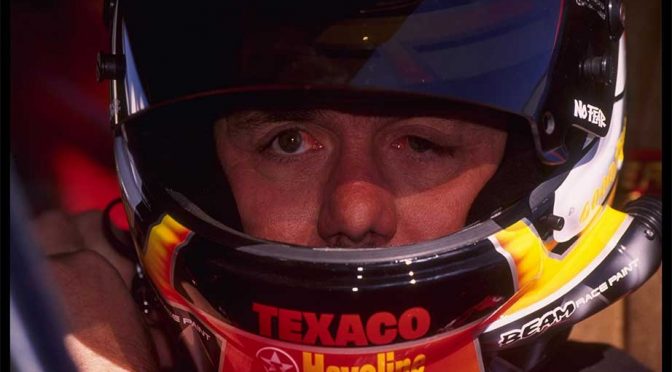
“It was just instant success, instant speed,” says Doug Yates, RYR’s chief engine builder and son of owner Robert Yates. “It was a perfect driver for our No. 28 Texaco Havoline Ford. We couldn’t ask for anybody better to succeed Davey Allison.”
With a new team, Ernie Irvan looked like a title contender in 1994 until his wreck at Michigan. | RacingOne
Through the first 20 races of 1994, Irvan had three wins and 13 top fives. He had been first or second in points every week of the season. It looked like he and Dale Earnhardt would have a season-long battle for the championship. Superstardom awaited.
The Friday of the August Michigan race, Irvan, Doug Yates and their wives played Monopoly in Robert Yates’ motorhome parked inside Michigan International Speedway. Throughout the game, Irvan made side deals. He accumulated first great wealth, then a bunch of hotels. Soon he stacked bills high in front of him and everybody else was out of money. He beat them all.
But he has a confession to make: “I was cheating really bad.”
Doug Yates laughs when he hears this … and confirms the outcome, if not the cheating. But he wouldn’t be surprised. Whatever Irvan did — cards, Monopoly, racing, pickup basketball — he did whatever he had to do to win.
That game of Monopoly is Irvan’s last memory for three weeks.
During practice the next morning, Irvan’s Ford Thunderbird cut a tire and slammed into the wall. He was bleeding badly and says now he would have died right there in the car if Dr. John Maino, who had been stationed nearby, hadn’t arrived so quickly. Irvan was in danger of drowning in his own blood, so Maino performed an emergency tracheotomy inside the car — he cut a slit in Irvan’s throat and inserted a tube to allow him to breathe. Irvan says he would have died without that. He was on a helicopter just 23 minutes later and flown to a hospital in Ann Arbor.
Irvan suffered a traumatic brain injury, skull fracture and chest injuries. Doctors gave him a 10 percent chance to live. “When something serious happens, an eeriness comes over the garage. It becomes very quiet. This was one of those situations,” says Dale Jarrett, who drove for Joe Gibbs Racing at the time. “As we got more information, about just how serious an accident it was, our attention turned to hoping that Ernie was going to be OK. Many of us have been through blown tires, this was one of the severe cases of what can happen.”
‘WASN’T A PRETTY DEAL’
Marc Reno had been friends with Irvan for years. They had raced together and lived next door to each other when they were trying to launch their racing careers. Reno was working at the time for an XFINITY Series team and by coincidence, his hauler had been parked next to Irvan’s in the XFINITY garage that weekend.
After a dispute about tires that weekend at Michigan, Reno’s team opted to leave instead of race. Reno had just gotten home to Florida when he heard about the wreck. He immediately flew back to Michigan. “I was in on a good part of the doctors’ meetings and stuff when they told him he had a 10 or 15 percent chance of living — if he made it 48 hours,” Reno says. “It wasn’t a pretty deal.”
Reno says he flew back and forth to Michigan 10 times to be by Irvan’s side. It was unsettling to see his friend lying in the hospital bed. On one visit, he counted 21 tubes running into Irvan.
George Tiedemann photo
Irvan remembers waking up 20 days after the wreck wondering where he was. The TV was on, and he says he saw someone else — it turned out to be Kenny Wallace — driving his No. 28 car. He couldn’t talk, so he used hand gestures to ask questions. His wife, Kim, explained to him what had happened.
Irvan’s rehab was long and extensive. But he returned to the race car in late 1995, competing in three races for Robert Yates Racing and finishing sixth, 40th and seventh. Jarrett had replaced him; when Irvan came back, RYR expanded to a two-car team.
In 1996, Irvan won at Loudon in his 19th race back and again at Richmond a few months later. “It was just miraculous, really, that he could even be back driving a race car after everything he had been through,” says Jarrett, who won the 1999 championship for RYR and is now a NASCAR analyst on NBC. “He had such a near-death experience, and here he was performing at a high-level once again.”
The wreck left Irvan with lingering vision issues, so he raced with a patch over one eye. “He was as good or better as anybody with one eye,” Doug Yates says. “This guy is the most talented and toughest guy I’ve been around. It was truly amazing.”
‘WILL TO LIVE, COMPETE’
As the 1997 season approached, Larry McReynolds had left as Irvan’s crew chief and RYR was looking for a replacement. Reno went to the Robert Yates Racing office in Charlotte for an interview for the position. When he got back out to his car after the interview, he discovered somebody had broken into it and stolen all of his family’s Christmas presents, which had been in the trunk. But he got the job.
As the season started, the cars Reno built and Irvan drove were fast, but they both say they let a few wins get away. “I remember in 1997 thinking, ‘God, he is fast,’ ” says Kyle Petty, who drove for a team he owned that season and is now a NASCAR analyst on NBC . “He was back as a contender.”
At Michigan for the June race, Irvan and Reno must have had high expectations. Though Irvan had never won there, he had finished in the top five the two previous races. Throughout practice, Reno experimented with the car’s setup. “We started putting bigger rear springs on the car, getting the back of the car up in the air. And it would go faster and faster and faster,” he says. “Every time we would go up 50 pounds, it would just go faster.”
Irvan started 20th on June 15, 1997. He took the lead for the first time on Lap 163 (of 200) and led for 12 laps. He resumed the top spot on Lap 180. He started to cry with 10 laps to go.
“There were some tears shed in the pits as well,” says Doug Yates. “Any time you’re leading the race at the end, your stomach is in knots. The anticipation is building. Take all that and multiply it by 10, 100 or 1,000 because of everything that went on. It was a pretty special moment. It was a great day.”
As he took the white flag, Irvan thought about his wreck from three years before. He looked at the wall that nearly killed him as he zoomed past it. “I’m thinking, ‘Man, I’ve got to get through the corner, because that was the corner I crashed in,’ ” he says. “But everything went smooth.”
After he pulled to a stop in Victory Lane, his wife, Kim, leaned in to kiss him. “The first thing I thought of is, ‘I finally conquered this place. It didn’t get me, I got them,’ ” he says.
He climbed out of the car and was greeted by pit road reporter Mike Joy, then of CBS. Irvan seemed to have his emotions in check — he talked about sponsors and bad luck so far that year and getting a win in Ford Motor Company’s backyard. Joy asked Kim Irvan a question on live TV about the win being big for the family, and she was so speechless by what had just happened that she barely squeaked out an answer.
Joy, who now does play by play for FOX’s NASCAR coverage, compares Irvan’s win to Kevin Harvick’s win for Richard Childress Racing three weeks after Dale Earnhardt died and Jeff Gordon’s win in the first race at the Brickyard and last career win at Martinsville.
“It felt RIGHT,” Joy says via email. “Fitting, redemption, validation, relief, all yes. Historic? Moreso now than then.”
Ernie Irvan had to watch someone else (Kenny Wallace) drive his car for the rest of the 1994 season. | RacingOne
In the years since, Irvan’s win has come to represent what Irvan’s friends love about him — toughness, resilience and speed. “The victory at Michigan in ’97 really just closed a chapter on everything that happened that day in Michigan, all of the hard work and effort and will to live and will to compete again that Ernie had,” Doug Yates says. “That was gratifying for him, of course. But it was also gratifying for my dad and myself and everybody on the team. It gave some closure to that tough day that we had there in 1994. This was really a guy fighting for his life and fighting to do what he loved and validating he was one of the best ever to sit in a NASCAR race car.”
WRECKED, THEN RECOVERY
On Aug. 20, 1999, five years to the day after the wreck that almost killed him, Irvan had another bad wreck at Michigan. “He spun out and hit driver’s side flat against the wall,” Reno says. “His helmet had a dent in it from the roll bar, like an inch and three quarter. It looked like someone took a pipe and hit him with it.”
The impact knocked Irvan unconscious, and he was transported again to a hospital. While his injuries were less dramatic than the first Michigan wreck, they proved to be career ending.
After retiring, Irvan started the Race2Safety Foundation and ran it for a few years to promote head injury awareness. One of the foundation’s major fund-raising events was a track walk at Michigan, at which donors could walk a lap around the track that nearly killed him … then gave him one of the most memorable wins in NASCAR history … then ended his career.
As the Monster Energy NASCAR Cup Series races on Sunday at Michigan, Irvan will move into his new home in Florida. Somewhere deep in his moving truck will be that Michigan trophy. When he takes it out of the box and puts it up in his new trophy room, he will think again of those three incredible days at Michigan — two terrible wrecks sandwiched around an unbelievable win.
The strongest emotion he will feel is gratitude. Long ago, he decided to see his Michigan glass as half full instead of half empty. Yes, he got hurt, badly. But he prefers to be thankful there was a doctor positioned in the turn and thankful the track had a helicopter on standby during practice.
Take either one of those away, and he would have died in the seat of his No. 28 Thunderbird.
“I was very lucky because they had everything they needed to save my life,” he says.
Editor’s Note: This story originally was published on March 26, 2015. Scott was inducted into the NASCAR Hall of Fame in 2015. In our Driver by Number series, Scott was selected as the driver for the No. 34.
SUTHERLIN, Va. — Perhaps he heard about it in the newspaper, buried in the WBTM “Radio Ramblin’s” community notebook on Page 11. The radio station’s call letters stood for “World’s Best Tobacco Market” or “World’s Biggest Textile Mill,” depending on which of the town’s primary industries was closest to your heart.
So it may not have been a big deal for most, sitting below the paper’s fold, after the news about celebrations planned for Dan River Mills’ 75th anniversary, below how many TV sets Vaughan Supply sold the previous week, and underneath flashy ads for cowboy westerns at the Rialto Theatre on Main Street.
“Danville has a new speedway,” began the three-sentence brief in The Bee on June 8, 1957 — a development that merited mention after well-wishes for recent high school grads and tips for frying bacon in the sweeping, ellipsis-heavy column.
Whether Wendell Scott read about the new facility in broadsheet print or heard about it through the murmurs from the promising racing scene in south central Virginia, no one can say for sure. But the news certainly had Scott’s attention. James Arness might’ve been the star of the shoot-’em-up picture show in town, but Scott was bent on making a name for himself, too.
So on the eve of the first race at the tight dirt track west of town, Wendell Scott — with his sons in tow as his de facto pit crew — pulled off Highway 58, making a slight detour from their route to a Saturday show at nearby South Boston Speedway to survey the new bullring. They looked over the fence to see a snug, quarter-mile layout of rich clay carved into a thicket of Virginia pines and oaks. But Scott saw something else in the new Danville Speedway — a vision of dollar signs at the pay window.
Danville Speedway today. (Photo by Zack Albert)
“We walked up there and what’d Daddy say?” Wendell Scott Jr. recalled, sharing in re-telling the story with his brother, Franklin. “He said, ‘I’m going to win that damn race tomorrow.’ “
Scott did, backing up his guarantee and adding to the legend that would propel him from regional hotshot to a regular in stock-car racing’s big leagues to an eventual place in the NASCAR Hall of Fame.
“You can keep it or leave it,” Scott Jr. said, showing some reluctance to quote his father’s mild profanity, “but that was how adamant he was. … He won it just like he said it.”
‘WHAT ARE THE ODDS OF THAT?’
Knock on the door at the stately brick house on top of the hillside and Raymond Burdette greets you with a firm handshake. From his front porch, you can see rolling blue hills stretching into North Carolina on a clear day. Head around back and there’s a perfect blend of serenity and racing history.
“There’s some good memories down there,” Burdette, a mobile mechanic for Lorillard Tobacco Company, says from his front stoop.
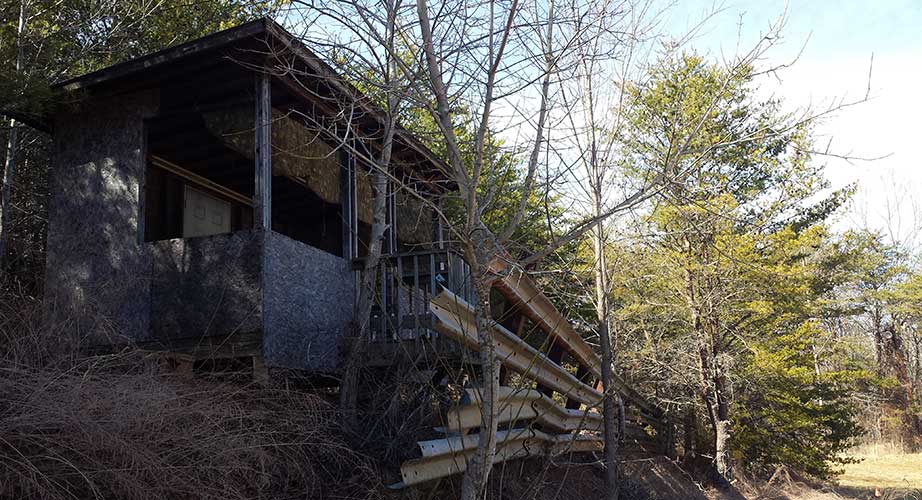
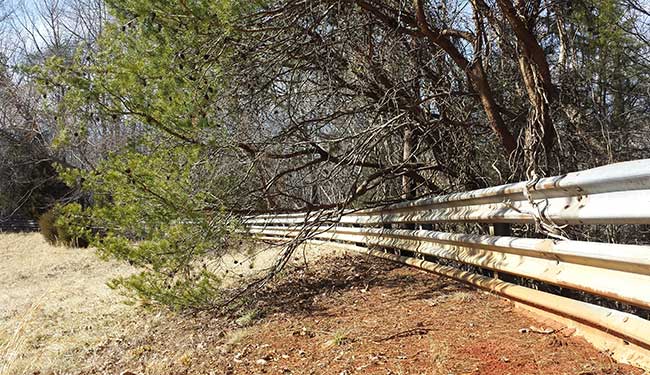
Have a look around? Raymond obliges, leading the way to the farm gate and unhooking the rusty latch to swing the door open. The tire tracks lead down the hill to the jersey barriers that formed the lanes for the pit entrance and exit, just off what used to be Turn 4. Walk through and set foot on the former racing surface and the track opens up, revealing the banked turns still encircling the weed-choked infield, the well-worn metal guardrails ringing the place and the ramshackle flagstand overseeing it all. The small, waferboard building is no longer a home base for race officials, but now serves as a capable deer stand for Burdette during hunting season. The grandstands are long since gone, but the lights that brought night racing to the speedway in the early 1990s still stand sentry over the remnants.
The break in the Turn 4 guardrails isn’t far from where Raymond first set eyes on the track on April 27, 1969. The date, barely three months before the Apollo 11 moon landing, is significant. Though this plot of land has given him a lifetime of warm memories, his first interaction with the speedway was a haunting one, prompting a full-circle story that Burdette opens by saying, “Now what’re the odds of this?”
Danville Speedway today. (Photo by Zack Albert)
That spring Sunday, a 10-year-old Raymond joined his older brother, Benny, and a friend in sneaking through the woods into the back side of the track, which was also called 58 Speedway in its on-again, off-again life span. They paid no admission, but the three youngsters still saw more than they had bargained for. In the fourth lap of the 50-lap feature for sportsman cars, Jack East — a veteran driver from Greensboro, N.C. — rolled over twice after his ’56 Ford lost a tire in the south turn. He was pronounced dead at a local hospital, succumbing to severe head injuries.
“There weren’t any regulations back then. His seatbelt came loose from the floor, his head went out, virtually cut his head off,” Raymond said, noting that it was the track’s only fatality to the best of his memory.
Raymond remembers drivers passing their helmets in the grandstand during the track’s next meet to collect donations for the East family. The speedway ceased operations not long after the accident, laying dormant for more than two decades. That’s where Raymond comes back into the picture to complete the circle.
His family bought the 3.8 acres that included the speedway in 1986. After hearing urgings from race fans and competitors in the community, Raymond brought the track back to life in 1992 — some 23 years after his first and only visit during the track’s first incarnation.
“I end up buying it years later. You tell me what the odds of that are, buddy,” Burdette, now 56, says with a laugh. “But I haven’t ever won the lottery, now.”
A TRAIL BLAZER AND A GENTLEMAN
With his family’s pedigree in the grading and excavation business, it’s only natural that Bert Sellers would have a hand in the speedway’s history. His father and uncle are credited with helping to build the track and were part of the four or five people — depending on whom you ask — among the original ownership group.
Sellers, 59, was a toddler when the track first opened, but he clearly knows the legacy, especially the one that Scott left with it. No matter where his travels have taken him, Scott’s name always seems to come up once his roots as a Danville native begin to show.
“They don’t ask me about the cotton mills, they don’t ask about other people that came from Danville,” Bert says, “it’s ‘do you know Wendell Scott?’ “
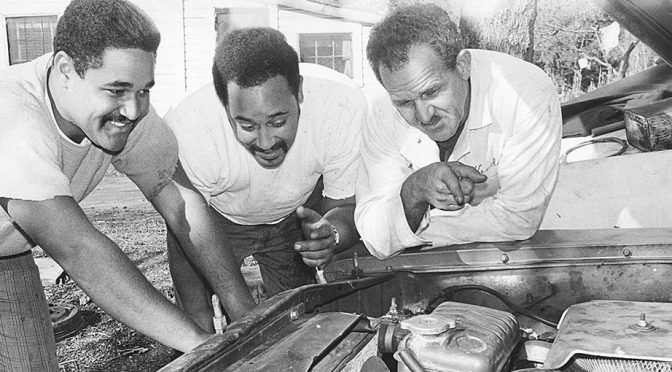
For locals, Scott stood out not only as the lone African-American driver in a primarily white sport but for his resilience. While Scott accepted assistance from his fellow competitors in the form of auto parts or advice, he remained largely a self-made man as a car owner, driver and mechanic all in one.
Both Sellers and Burdette recounted the story of Scott’s car rolling onto its roof during a race in the 1950s at the speedway. He crawled out unhurt, then politely asked Sellers’ father, Hubert, if he could adjust the brakes while the car was conveniently upside-down. Scott’s request was no joke. Within moments, he produced an old brake spoon tool needed to adjust the drum brakes, all while the wrecker crew waited to right the car — something Bert called “about the most uncommon thing in the world.”
“But during a race, for a driver to get out and adjust his brakes while his car was upside down, I guess will give some insight into how he operated,” he added. “He did it all himself, and did it at the most opportune times. When the need arose, he took care of it.”
His well-documented fight against the racial prejudices of the South during that time has posthumously shaped Scott as a hard-nosed driver with a fierce streak of independence. The uphill climb against rampant discrimination may have defined Scott’s career, but Sellers said a compassionate demeanor resided under that tough veneer.
In the track’s earliest days, promoters would occasionally hold women-only “powder-puff derbies” in an effort to drum up business. Bert’s mother drove in one of those novelty races, but a crash left her with a cut on her elbow that required stitches at a local hospital. As she recovered at home later that evening, Wendell Scott was among the first well-wishers to knock on the family’s door to check up on her.
“He had a good side to him that doesn’t get written about enough, about how humble he was and what a gentleman he was,” Bert says. “… There’s a lot of things, you hear the humorous side of it, but he had a good side to him and his family stuck behind him. A sign of a good man sometimes is how close his family will stick with him, and his family always stuck mighty close to him. I think that represented his character as much as anything.”
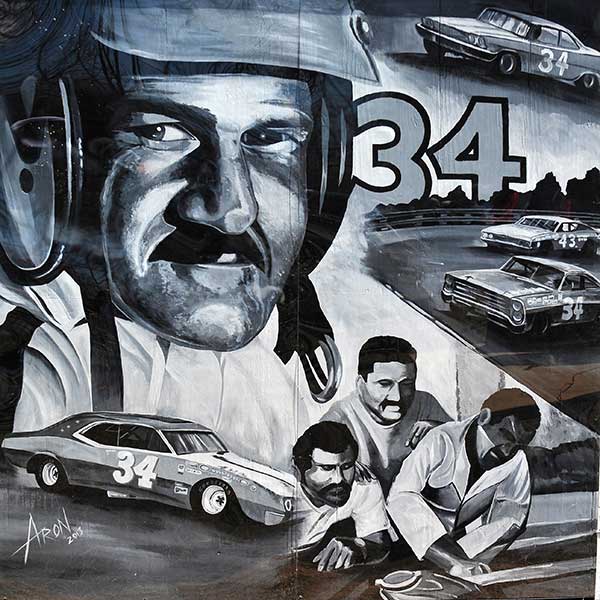
That spirit was a guiding factor in Scott’s 2015 induction into the NASCAR Hall of Fame as a trail blazer, the lone African-American winner in its premier series’ history. The ripple effect of Scott’s long-awaited honor was felt nationally, but the epicenter came in Danville, where historical markers and a panoramic mural commemorate his life and career.
A mural in Danville, Virginia, celebrates Wendell Scott’s racing achievements.
“His character kind of became bigger than life. Everybody felt like he deserved it,” Sellers says. “… The general consensus was with everybody in this area that they were glad to see him go in the Hall of Fame, and the people that knew him knew that he represented our area very well.”
Bert Sellers stayed involved in racing and then some. The bug didn’t skip a generation with his son, Peyton, who won the 2005 national championship in NASCAR Whelen All-American Series competition and locked up his second South Boston Speedway championship last season.
Peyton Sellers still calls Danville home, operating a successful race-car manufacturing business barely five miles away from the ghost track’s footprint. When NASCAR representatives came calling to celebrate the his national title nearly 10 years ago, a highlight of their visit was a lap around Danville Speedway’s dusty remains.
MEMORIES AND KEEPSAKES REMAIN
The rumble of racing engines has been silent at the track for more than 20 years now. Danville Speedway’s comeback lasted just three seasons (1992-94), ending when Raymond grew increasingly nervous about the rising cost of insuring the place.
An out-of-control car lifted and clipped the flagstand one season, a near-disaster that prompted him to double down on guardrails, adding a third and fourth row of retaining fence on the frontstretch. When an errant tire bounded over the first-turn embankment, landed beside a spectator area and eventually came to rest against a Toyota pickup in the parking lot, Raymond knew his days as a race track owner were almost done.
“I was never the same,” Raymond said. “That one wheel could’ve killed two or three people. We ran it one more season, and I’m like, ‘I can’t stand no more of this. We’re going to lose everything we got.’ “
But there’s still a twinge in Burdette’s voice that shows he still has the itch when he stands on the frontstretch, looks off into Turn 1 and talks about the old days running his outlaw track.
The late-winter afternoon is so peaceful that you have to imagine the sights and sounds of wedge-shaped dirt late models, hustling in a power-slide through the banked corners.
“Them cats was crazy, God knows they were. They were wild,” Raymond says, reinforcing the slogan that souvenir programs touted in its comeback season — If you can’t sling ’em, don’t bring ’em.
The fond memories remain down here, not just for Burdette, but for Sellers, the Scott family and the rest of the Danville community. Raymond clings to the staple-bound program — signed by members of the Scott family — from Oct. 18, 1992, the night of the track’s Wendell Scott tribute race. Bert Sellers still has 8-millimeter color film footage from the track’s first stint that he had converted to VHS tape, but “I guess now that’s obsolete,” he says. “I need to have it put on a disk now.”
Keepsakes remain, but the track sits idle against the advancing march of nature. Erosion has taken its toll on the banking and the mangled guardrails, and trees now sprout from the low-lying land where a small pond once stood, between the third and fourth turns.
“Dirt racing seems to be coming back in this area some,” Bert says with a slight glimmer of hope, “but I think that track’s seen its day now.”
Mother Nature may be winning that race, taking back the man-made playground and making the odds of another comeback that much slimmer. But the reigning champion just off Highway 58 is racing folklore, an enduring legacy behind the latched farm gate that all started with Wendell Scott’s called shot on the eve of opening day in 1957.
Chase Elliott unveiled a new-look patriotic paint scheme on the No. 9 Hendrick Motorsports Chevrolet set to hit the track for the Coke Zero Sugar 400 at Daytona International Speedway on July 6 (7:30 p.m. ET, NBC, MRN, SiriusXM NASCAR Radio).
The race is the final one of the NASCAR Salutes program, which honors all who have served in the United States armed forces. The program intended to express respect, appreciation and reverence for those who have served the nation in the past and present kicked off with the Coca-Cola 600 on Memorial Day weekend, and concludes the Fourth of July weekend.
Elliott, 23 years old, has one win in the Monster Energy NASCAR Cup Series this year, coming at Talladega Superspeedway.

 Glen Reen — #17 Avery Construction Chevrolet
 Eric Berndt — #54 Cos‘ Central Auto Chevrolet
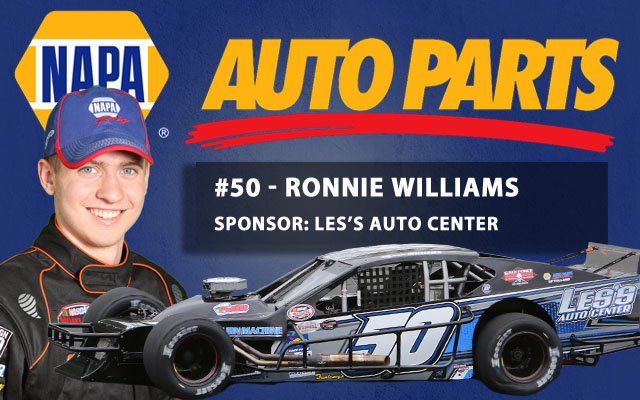 Ronnie Williams — #50 Les‘s Auto Center Ford
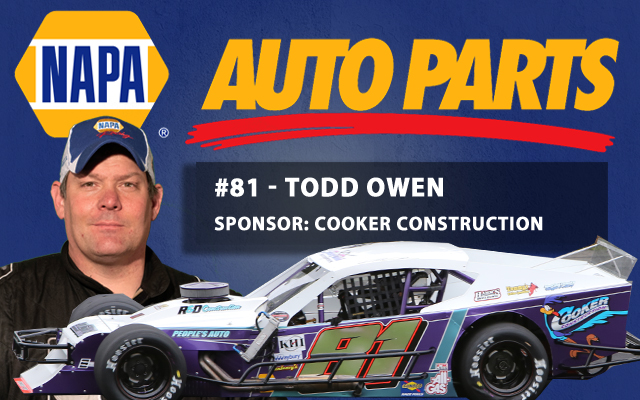 Todd Owen — #81 Cooker Construction Chevrolet
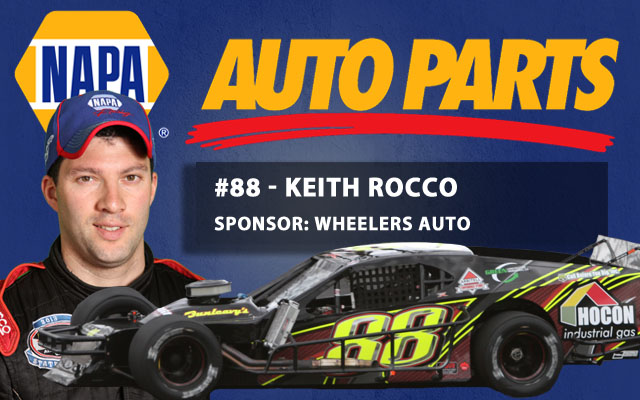 Keith Rocco — #88 Wheelers Auto Chevrolet