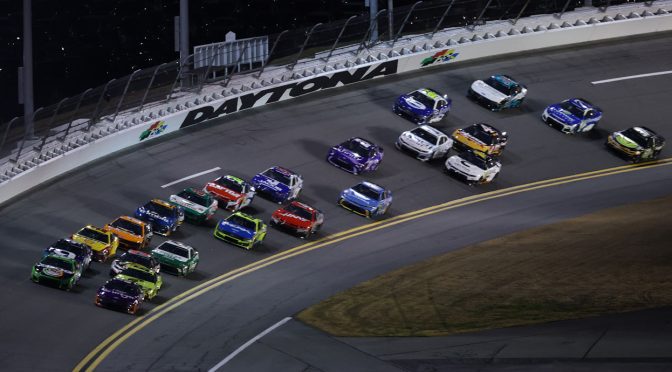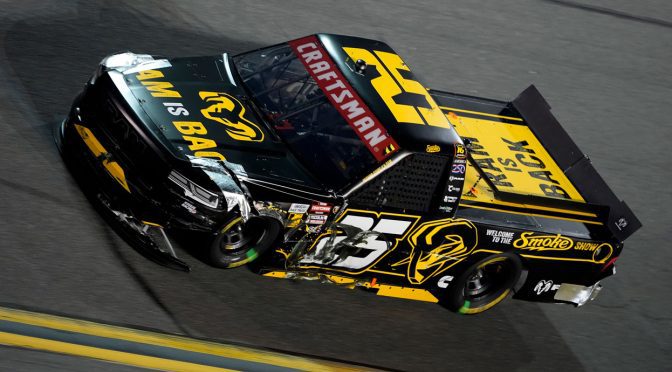
DAYTONA BEACH, Fla. — Tony Stewart was just getting going in Friday’s NASCAR Craftsman Truck Series opener at Daytona International Speedway when trouble landed in his lap.
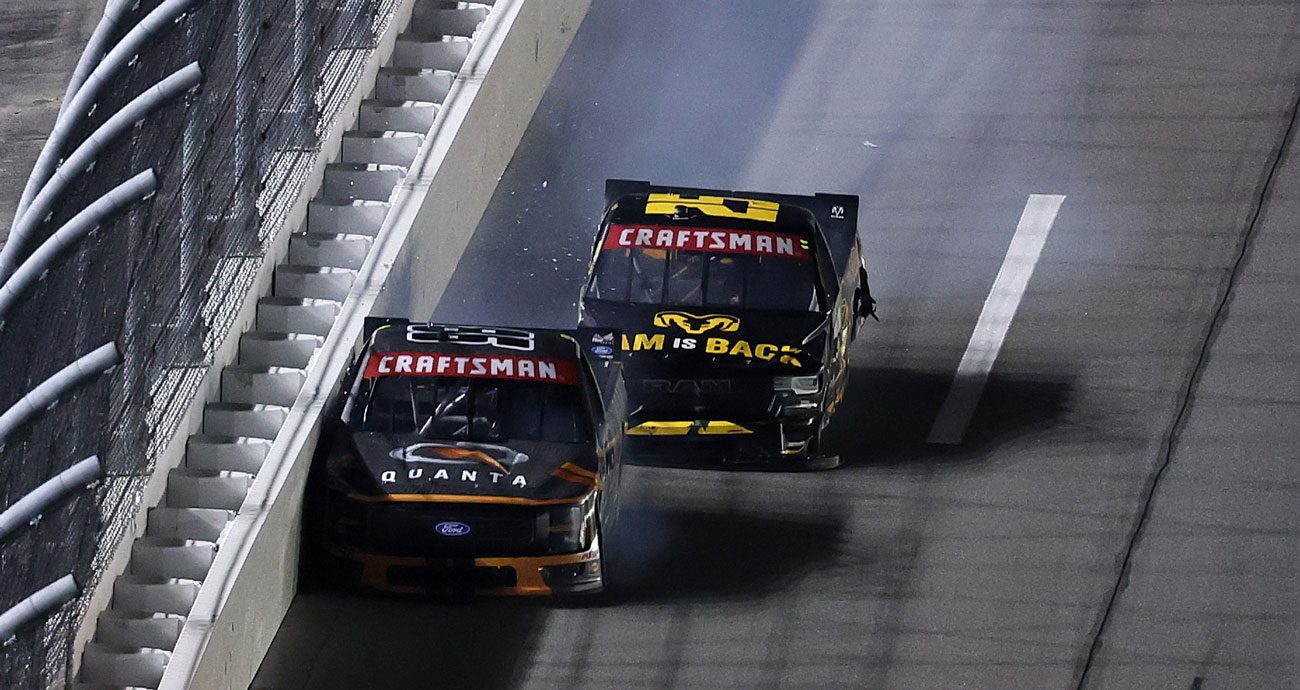
Jake Garcia’s No. 98 Ford broke loose exiting Turn 4 at Lap 36 of 100 in the Fresh From Florida 250. Garcia couldn’t save his truck before slamming into Stewart’s No. 25 Kaulig Racing Ram, squeezing the NASCAR Hall of Famer into the wall. Damage to both sides of the truck and its suspension ultimately ended Smoke’s long-awaited return to NASCAR competition.
RELATED: Race results | At-track photos: Daytona
Stewart, 54, last appeared in NASCAR back in November 2016 racing in the Cup Series’ finale. His most recent truck race? June 2005 at Dover Motor Speedway. Stewart never made a charge toward the front Friday night, needing additional adjustments on his No. 25 Ram to feel more secure in the draft. But it is safe to say Smoke enjoyed what time he did get back in the pack.
“It was fun to come back here,” Stewart said after being evaluated and released from the infield care center. “It’s fun to watch the style these kids run. I mean, you could tell the guys that their trucks felt good right out of the gate, and they were aggressive. And it’s like, man, I wish I had the confidence to do that. But it was getting more fun when the balance was getting closer to where we needed it to be.”
Stewart’s return came in a showcase for Ram in the manufacturer’s comeback to NASCAR for the first time since 2012, latching onto Kaulig Racing to build a five-truck team together. That effort came with a thrash inside the shop that left Stewart, who previously owned the now-shuttered Stewart-Haas Racing Cup and O’Reilly Auto Parts Series teams, impressed with Kaulig’s effort just to get to Daytona.
“I thought the effort that Kaulig Racing made coming down here was unbelievable,” Stewart said. “I mean, I remember when we did the first seat fit, they didn’t even have body panels to put on the truck, and they were 3D printing body panels so they could go to the (wind) tunnel just to get a baseline of where they needed to be. So to see where they went in such a short amount of time and get five competitive trucks down here … we weren’t out to lunch by any means. But when they’ve never had a truck in the Truck Series, you’re going to go through a night like tonight where you’re going to have to make some big swings to get the balance.”
In the race’s opening run, Stewart’s truck was so loose he believed he was on the verge of spinning on Lap 2. Air pressure and track bar adjustments during the first pit stop didn’t help, Stewart said, but a wedge adjustment on their second stop made a noticeable impact that turned Stewart back in the right direction.
“We probably needed that much of an adjustment again,” Stewart said. “At least that time, with that, I could kind of tug on the wheel a little more and feel like I had more control on my truck and felt like I could get up in the mix without feeling too worried about it. I knew we needed to make another adjustment, so I wasn’t trying to get carried away and get crazy. But felt comfortable being three-wide on the top there. Didn’t feel like we were putting ourselves in jeopardy.
“The hard thing is I’m not really sure what happened that got us there, but we just ended up on the wrong end of that stick.”
The ultimate takeaway from Stewart’s brief return to stock-car glory is that he enjoyed his experience, evidenced by a chirp on his radio mid-race: “This is way more fun than what we did [Thursday], I will admit that.” What impressed him most, perhaps, was his teammate Justin Haley, who seemed to be able to move through the pack at will, learning what his truck was capable of early and stashing notes for later. When later came, Haley was third entering NASCAR Overtime but was collected in a spin coming to the final lap and finished 22nd.
“It’s always fun when you can actually do what you want to do as a driver behind the wheel,” Stewart said post-race. “And you know, we definitely were gaining. I mean, you think about it, Kaulig doesn’t have any notes for a truck here. Justin does a really good job of — I would watch him and watch him make some moves, and then he would kind of cycle himself back, and he’s just trying to see what he could get away with. I never even got to the part where I felt like I could hustle it that hard.”
Slowing down isn’t in Stewart’s vocabulary. He will return to the NHRA this year, where he will compete in Top Fuel dragsters once again after winning Rookie of the Year honors in 2024 and the regular-season title in 2025.
But is yet another NASCAR return in the cards? When his Daytona endeavor came to an end, crew chief Alex Yontz radioed: “Hopefully you might wanna do this again sometime.”
“Yeah, I’d say there’s a pretty good shot of that,” Stewart replied.
So you’re saying there’s a chance?
“I mean, I signed up for a one-off,” Stewart said at the care center. “That’s where we’re at so far.”
The NASCAR Craftsman Truck Series season continues at 1:30 p.m. ET on Feb. 21 at EchoPark Speedway (FS1, NASCAR Racing Network Radio, SiriusXM NASCAR Radio).