A Gathering in Remembrance will be held on Friday, Jan. 16, to honor the lives lost in the Dec. 18 plane crash in Statesville, North Carolina, including NASCAR great Greg Biffle.
The memorial, open to the public, is set for 11 a.m. ET at the Bojangles Coliseum in Charlotte, North Carolina, where Biffle, wife Cristina, daughter Emma and son Ryder, as well as Dennis Dutton, his son, Jack, and Craig Wadsworth, will be remembered. Fans unable to attend the gathering in person can watch the ceremonies via live stream on NASCAR.com, Facebook, YouTube and The NASCAR Channel to pay respects to those who were lost.
Biffle, the 2000 NASCAR Craftsman Truck Series champion and 2002 NASCAR O’Reilly Auto Parts Series champion, was named as one of NASCAR’s 75 Greatest Drivers in 2023. The Vancouver, Washington native was a 19-time winner in NASCAR Cup Series competition, earning all 19 victories while driving the No. 16 Ford for team owner Jack Roush.
Biffle was honored as the 2024 NMPA Myers Brothers Award winner for his outstanding rescue and aid efforts in Western North Carolina in the aftermath of Hurricane Helene.
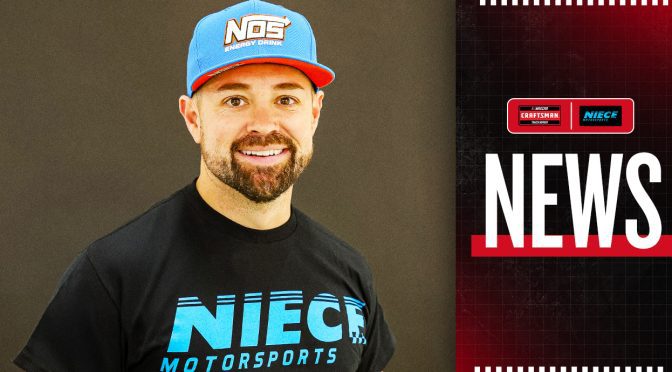
Ricky Stenhouse Jr. will make his NASCAR Craftsman Truck Series debut driving the No. 45 Chevrolet for Niece Motorsports at Daytona International Speedway, the team announced Wednesday.
Stenhouse, the 2023 Daytona 500 winner and two-time NASCAR O’Reilly Auto Parts Series champion, has never made a Truck Series start despite competing in NASCAR’s national series since 2009. The Mississippi native will compete in each of the first two truck races of 2026 for Niece, driving the No. 45 J.F. Electric Chevrolet at both Daytona and EchoPark Speedway.
“I’ve always wanted to run a truck, but never had the opportunity to put something together,” Stenhouse Jr. said in a release. “When Cody (Efaw, Niece’s CEO) called me, I definitely had a lot of interest to see what all they have been building here at Niece Motorsports, especially looking at their level of competition. With it being at Daytona, obviously winning the 500 was awesome, and I’d love to win a Truck Series race there, too. I’ve always wanted to race a truck, but I wanted it to be competitive — and this checks all of those boxes.”
Stenhouse has won four Cup Series races and eight O’Reilly Auto Parts Series races across a combined 582 starts. All four of his Cup victories have come on superspeedways — two at Daytona and two at Talladega Superspeedway.
“We are all very excited to welcome Ricky Stenhouse Jr. to our team for his first time racing in the Truck Series,” Efaw said. “I’ve known Ricky for several years now dating back to our time at Roush (now RFK Racing), and he’s always been a natural on superspeedways. I believe he will have a true shot at contending for the win at both Daytona and Atlanta.”
J.F. Electric CEO and chairman Greg Fowler became part of Niece Motorsports’ new ownership group in 2025 along with Josh Morris, CEO of DQS Solutions & Staffing.
“Josh Morris and I are thrilled to welcome Ricky Stenhouse Jr. to Niece Motorsports for his NASCAR Craftsman Truck Series debut at Daytona,” Fowler said. “There’s no bigger stage for a debut than Daytona, and we believe Ricky gives our team a real opportunity to contend for the win. We’d love nothing more than to be celebrating together in Victory Lane at the end of the race.”
The Fresh from Florida 250 begins the 2026 truck season at Daytona on Friday, Feb. 13 at 7:30 p.m. ET on FS1, NRN Radio and SiriusXM NASCAR Radio.
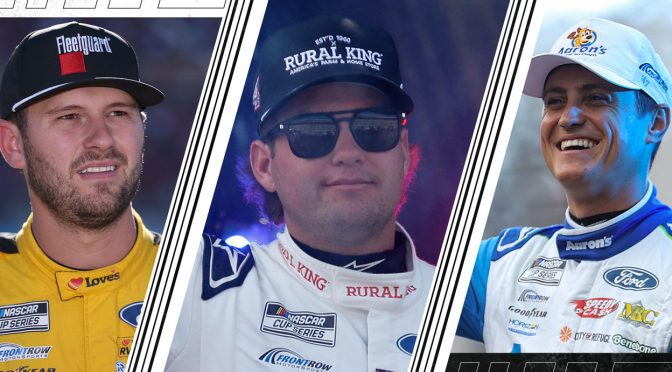
Team outlook: Continuity will be key to improvement in 2026 for Front Row, which turns the page after a year of transition. FRM entered last season with two new faces in Gragson and Smith, who joined forces with Gilliland as the organization expanded to a three-car outfit. Results were mixed, with just three top-five finishes (one for each driver) over the course of the year, but the foundation of the team’s lineup is mostly intact, as are aspirations of returning to the postseason after a two-season drought.
NOAH GRAGSON, NO. 4 FORD
Experience: 2 full-time seasons in NASCAR Cup Series; 111 starts 2025 stats: 34th in final Cup Series standings; 0 wins, 1 top five, 3 top 10s, 0 poles, 7 laps led
Driver outlook: Gragson is back for a second season in the No. 4 Ford, but with a new face atop the team’s pit box. Longtime race engineer Grant Hutchens will take the helm from Drew Blickensderfer, starting his first full-time crew chief role in the Cup Series. He’ll be working toward establishing a better performance baseline with the 27-year-old Gragson, who absorbed eight crash-related DNFs last year, a contributing factor to his total of just 16 lead-lap results in 2025 — next-to-last among Cup Series full-timers. His brightest spot last season was a fourth-place effort at Talladega in April; expect the superspeedways to be a place for potential positives until the pairing builds chemistry.
TODD GILLILAND, NO. 34 FORD
Experience: 4 full-time seasons in NASCAR Cup Series; 144 starts 2025 stats: 27th in final Cup Series standings; 0 wins, 1 top five, 5 top 10s, 0 poles, 23 laps led
Driver outlook: Gilliland enters 2026 again as the most-tenured driver at Front Row, though he’s the youngest of the trio at just 25 years old. His most recent campaign represented steps forward in some ways (a career-best 20.8 average finish, plus a career-high second place at Talladega in October), but steps back in others (a five-spot drop in the final Cup Series standings and leading 107 fewer laps than the year before). Achieving his own performance upswing and assuming a leadership role will be crucial for the team’s composure.
ZANE SMITH, NO. 38 FORD
Experience: 2 full-time seasons in NASCAR Cup Series; 81 starts 2025 stats: 28th in final Cup Series standings; 0 wins, 1 top five, 5 top 10s, 1 pole, 22 laps led
Driver outlook: Smith’s first career pole position (at Talladega in April) stands as a highlight from last year, but so does a third-place finish at Bristol and top 10s at Phoenix, Michigan and Atlanta. The Cup Series progress has been measured so far for Smith, who delivered a Craftsman Truck Series championship to Front Row in 2022 and returned to the organization’s Cup side last season. Finding more gains on those first-year highlights — in whatever increment, and on an array of track types — will be a necessity for the No. 38 team.
NORTH WILKESBORO, N.C. — The quiet of NASCAR winter just received a rumbling bit of offseason thaw.
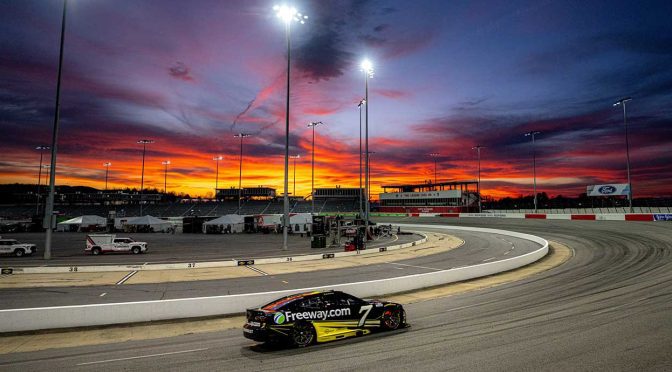
A one-day organizational test provided that much-needed jolt Tuesday at North Wilkesboro Speedway, where Cup Series teams got back on track for their first unofficial laps of 2026. The sound of engines echoing through the Brushy Mountains that surround the revered 0.625-mile oval was a familiar signal of the approaching season, but also a nod toward the NASCAR-mandated horsepower bump for a majority of tracks this year.
Fifteen teams — one from each chartered Cup Series organization — participated Tuesday as NASCAR competition officials deployed a handful of setup configurations to draw a bead on the series’ short-track balance. The day’s constant was a 750-horsepower baseline, an increase from the 670 target engine output on road courses and tracks measuring less than 1.5 miles in recent seasons. The switch was a well-received rules wrinkle, based on the earliest impressions.
“The more horsepower, the better, yes,” said Hyak Motorsports veteran Ricky Stenhouse Jr. “I think if we can continue in that direction … Goodyear’s continuing to do a good job of bringing us tires that wear out, and they’re continuing to evolve that. I think all of us, drivers and teams, are on board with that. So you pair that with NASCAR adding horsepower, I think everybody in the garage has been on board, but I think everything’s going the right direction to get us even better racing.”
The prep session comes ahead of the Cup Series’ return to North Wilkesboro for the Window World 450 on July 19 (7 p.m. ET, TNT Sports, HBO Max, PRN Radio, SiriusXM NASCAR Radio). The historic track has hosted the non-points All-Star Race the last three seasons, but this year’s 450-lap event will mark the circuit’s first points-paying meet since 1996, when the Cup Series’ original 48-year run here ended.
Tuesday’s test initially was set for a 9 a.m. to 5 p.m. ET window, but competition officials extended the on-track time by two hours into the evening after working through a list of proposed rules and configurations. NASCAR tested — both individually and in multiple combinations — different settings with the rear suspension/camber, a softer tire compound and some minor aerodynamic adjustments.
Weather conditions warmed in the afternoon sun, but were still far cooler than what’s expected when the Cup Series makes its midsummer return. The wintertime chill increased the grip level, which offset the potential finesse that drivers might need to manage the horsepower boost. A far different effect is anticipated come July.
“I don’t see the power hurting the entertainment factor of the race, and hopefully it allows us to have to pedal the cars at some point throughout a run,” Hendrick Motorsports’ Chase Elliott said. “There’s a lot of grip out there today, I feel like, but even by the end of 40 laps, there’s a good bit of fall-off, even for the temperatures that we have today. So I would have to imagine you come back here in the summer months … certainly it’ll be warmer than it is today, and kind of combine that with more cars being on the track, I do think there’ll be some wear. Then obviously the power will impact that another step as well. So I feel like the tire changes that Goodyear made last year were some really good steps in the right direction, and hopefully we just kind of keep inching up on making these long runs more of a challenge.”
The rare test day also presented an opportunity for new team, driver and crew chief pairings to get better acquainted in an at-track setting. Four of the 15 participating teams Tuesday were breaking in new combos — Kyle Busch and new crew chief Jim Pohlman at Richard Childress Racing, Erik Jones with newly appointed crew chief Justin Alexander at Legacy Motor Club, Ross Chastain and crew chief Brandon McSwain at Trackhouse, and new driver Daniel Suárez joining Spire Motorsports and incumbent crew chief Ryan Sparks.
For Suárez — the lone new driver in a new place at Tuesday’s test — he was pleased to have a familiar voice with spotter Frankie Kimmel going with him to Spire’s No. 7 team. The rest of the “getting to know you” session, he said, was an all-new experience.
“It’s been super-productive for us, just to learn from each other, learn to communicate, learn about the car,” Suárez said. “I already have a list of items that I want to improve, because what you see in the car in the shop is one thing. When you have the opportunity to make some laps, it’s a whole new perspective. So with everything being new for me, I already have my list of items to improve once we get back to the shop, but the main thing also is the communication, just to make sure that we’re on the same page.”
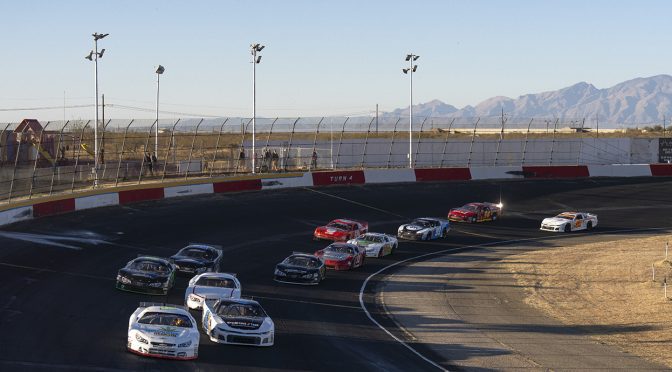
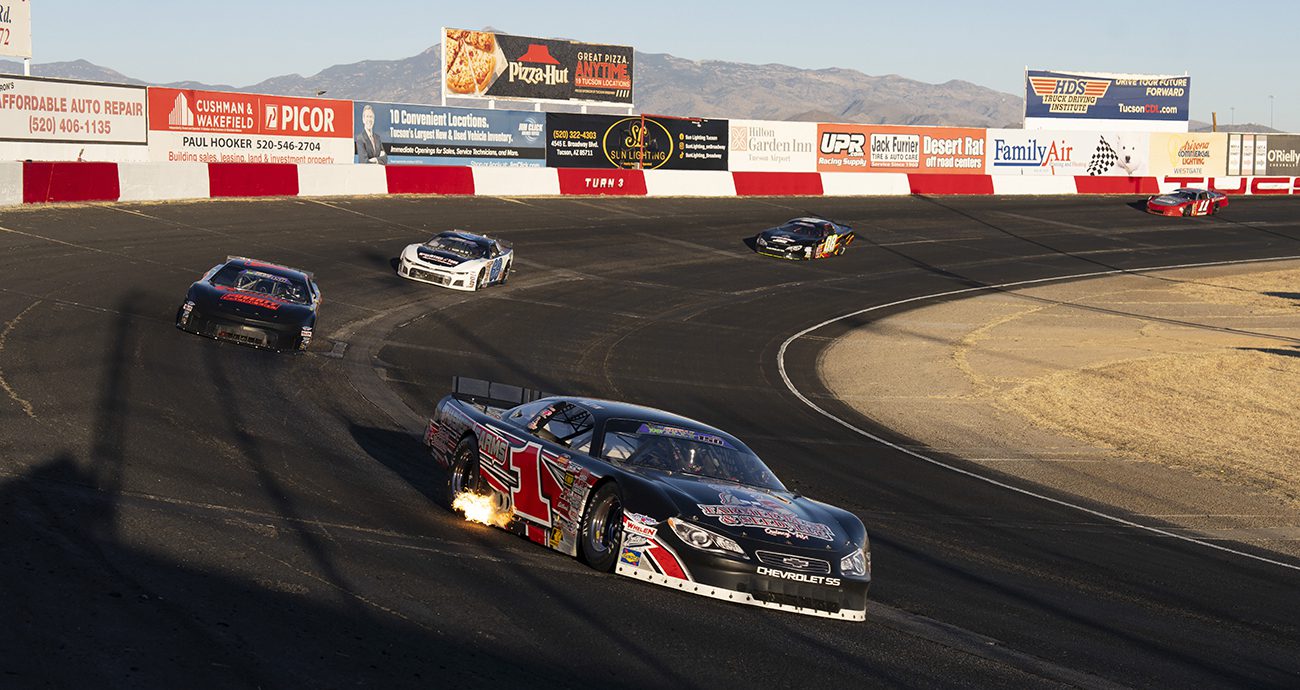
Tucson Speedway’s annual New Year tradition has officially arrived with the running of the 2026 Chilly Willy.
The event at the 3/8-mile asphalt oval in Tucson, Arizona annually draws more than 100 entries for multiple divisions of racing. The inaugural Chilly Willy was held in 2014, with Dustin Ash taking home top honors in the event that has become one of the West Coast’s most popular early season races.
This season, a $20,000 payday awaits the winner of Sunday’s Super Late Model finale. The prize will surely draw the attention of some of the West Coast’s top Super Late Model aces.
While Super Late Models will headline the 2026 edition of the Chilly Willy, they’re not the only class on the schedule this weekend. The CARS Tour West Pro Late Models will launch their season Saturday with a 125-lap main event. Legend cars will also be in action during all three days of racing beginning Friday.
Below is everything you need to know for Tucson Speedway’s season-opening Chilly Willy.
The prestigious Chilly Willy at Tucson Speedway is now entering its 13th year. (Photo: Rebecca Noble/NASCAR)
What TV channel is the Chilly Willy on in 2026?
All racing action from the 2026 Chilly Willy at Tucson Speedway can be viewed live on FloRacing, the official streaming home of all NASCAR Regional properties.
The Chilly Willy will not be shown on a traditional television network.
Below is the complete broadcast schedule for Chilly Willy coverage on FloRacing.
A busy racing docket for the Chilly Willy begins Friday evening with on-track action for all three divisions, including features for the Super Late Models and Legends as well as qualifying and the Last Chance Qualifier race for the CARS Tour West Pro Late Models.
The Chilly Willy starting grid will begin to take shape Saturday with qualifying followed by a pair of 50-lap qualifying races. The two fastest drivers from Chilly Willy qualifying will lock into Sunday’s 150-lap Chilly Willy main event, with all other drivers required to race their way into the Chilly Willy via the qualifying races. The top-10 finishers of both qualifying races will lock into the Chilly Willy.
Saturday will also include the 125-lap CARS Tour West Pro Late Model main event, which will feature 2014 NASCAR Cup Series champion Kevin Harvick and his son Keelan, as well as NASCAR O’Reilly Auto Parts Series driver William Sawalich.
The last chance to qualify for the Chilly Willy 150 field will take place Sunday when all remaining drivers compete in a Last Chance Qualifier, with the top six finishers punching their tickets to the main event. The Chilly Willy 150 field will consist of 32 or fewer starters, including four promoters choice positions.
Legend cars will also be in action with multiple 50-lap features Sunday.
Below is the complete weekend schedule for the 2026 Chilly Willy at Tucson Speedway.
(All times MT)
Friday, Jan. 16
Time
Event
8 a.m.
Registration/Pit Gates Open
8:30 a.m. – 3 p.m.
Tech Open
8:30 a.m. – Close
Tire Barn Open
10 a.m.
Mandatory Driver & Spotter Meeting
11 a.m. – 3 p.m.
Practice
4 p.m.
Front Gates Open
4 p.m.
Qualifying (Super Late Models / Pro Late Models / Legends)
5:55 p.m.
Opening Ceremonies
6 p.m.
50 Lap Super Late Model Feature(s)/25 Lap Legends Feature(s)/Pro Late Model LCQ
Saturday, Jan. 17
Time
Event
8 a.m.
Registration/Pit Gates Open
8:30 a.m. – 1 p.m.
Tech Open
8:30 a.m. – Close
Tire Barn Open
9 a.m.
Mandatory Driver & Spotter Meeting
10 a.m. – 12 p.m.
Practice
1 p.m.
Front Gates Open
1 p.m.
Super Late Model Qualifying
Followed by…
Legend Car Qualifying
1:55 p.m.
Opening Ceremonies
2 p.m.
Legends Heat Races & Features
Followed by…
Super Late Model Qualifying Duals (50 Laps)
4 p.m.
CARS Tour West Pro Late Model Feature (125 Laps)
Sunday, Jan. 18
Time
Event
8:30 a.m.
Registration/Pit Gates Open
9:30 a.m. – 1 p.m.
Tech Open
9:30 a.m. – Close
Tire Barn Open
10:30 a.m.
Mandatory Driver & Spotter Meeting
11:30 a.m. – 12:30 p.m.
Practice
12 p.m.
Front Gates Open
12:55 p.m.
Opening Ceremonies
1 p.m.
Super Late Model Last Chance Qualifier
Followed by…
Legends Main Events (50 Laps)
Followed by…
Intermission
Followed by…
Chilly Willy 150
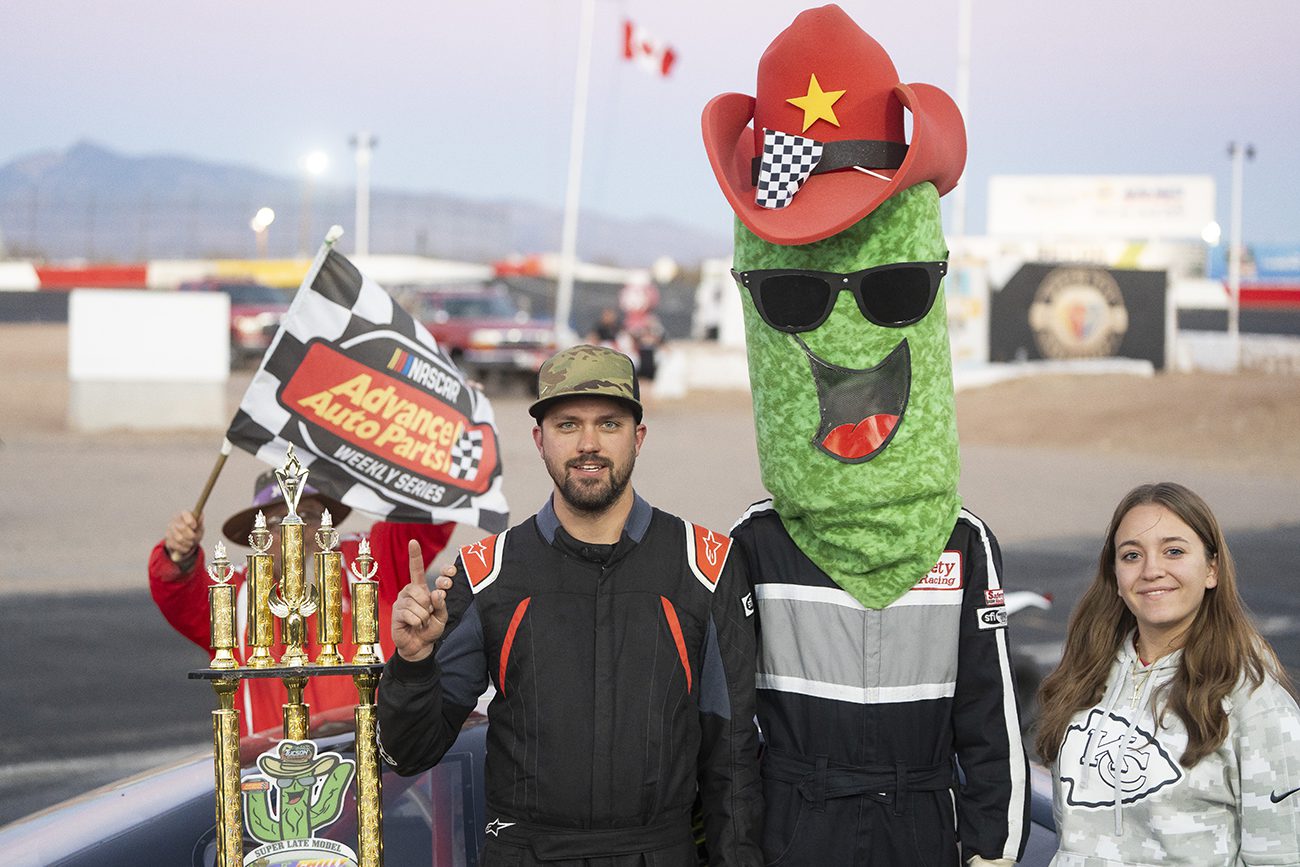
Jace Hansen is the defending winner of the Chilly Willy 150. (Photo: Rebecca Noble/NASCAR)
Entry list
The current entry list for the 2026 Chilly Willy stands at 36 Super Late Models.
Headlining the group of Super Late Models making the trip to Tucson Speedway is defending Chilly Willy winner Jace Hansen, who will be traveling from his home in Colorado to compete at Tucson. Hansen will attempt to become the first back-to-back Chilly Willy since Preston Peltier from 2022-23.
Kole Raz, who won the Chilly Willy in 2024, is back in search of his second victory in the event. Michael Scott, a Chilly Willy winner in 2019, is also entered. Dylan Jones, the defending Super Late Model track champion at Tucson, is entered, as is Colorado National Speedway track champion Brett Yackey and his brother Bruce Yackey.
Other notable entrants include Gabe Brown, who is making the trip from his home in New Hampshire, West Series race winners Johnny Borneman III and Kody Vanderwal and Washington’s Kasey Kleyn, among others.
CONCORD, N.C. — Crowning a NASCAR champion will look different in 2026 than it did last season, and yet it will be strikingly familiar.
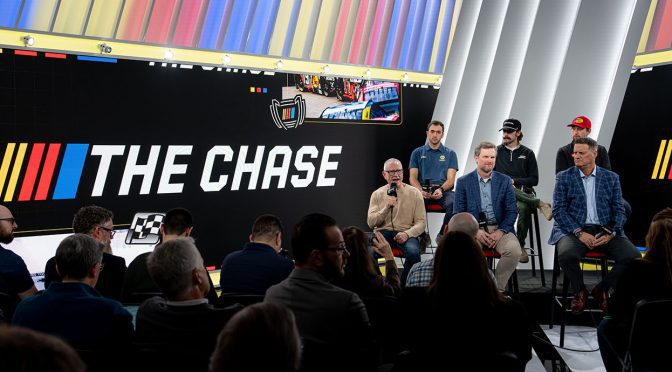
The Chase returns to NASCAR in the new year, the sanctioning body unveiled Monday at the NASCAR Productions Facility in Concord, North Carolina. Sixteen drivers will vie for championship glory over the final 10 races of the campaign. There will be no eliminations nor any automatic berths granted to race winners; only points will determine the champions of the NASCAR Cup Series, NASCAR O’Reilly Auto Parts Series and NASCAR Craftsman Truck Series moving forward.
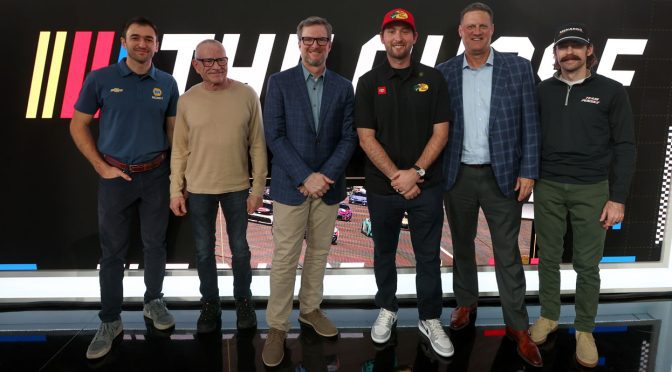
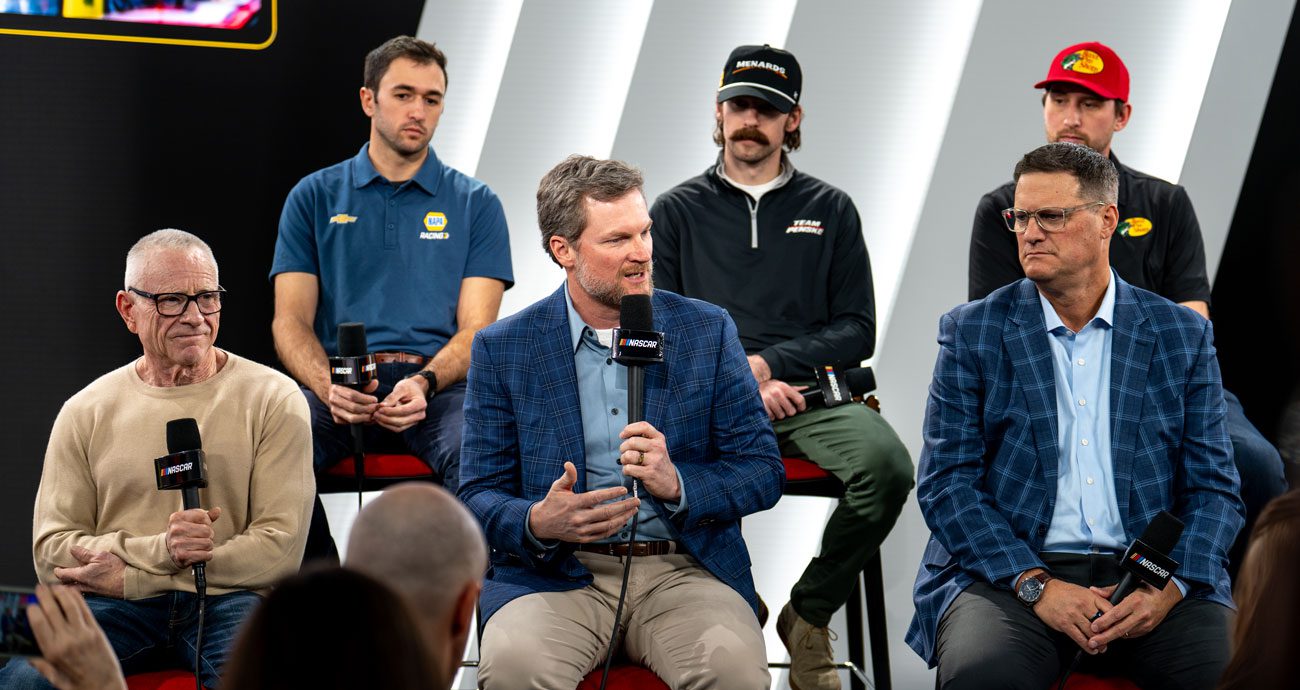
NASCAR Hall of Famers Mark Martin and Dale Earnhardt Jr. joined Chase Briscoe and Cup champions Chase Elliott and Ryan Blaney to unveil the new format alongside NASCAR President Steve O’Donnell Monday afternoon.
After a 12-year run of elimination racing that boiled the championship battle down to the final race, Martin beamed with support of NASCAR’s new direction.
“Everyone wins with this format,” Martin said. “Everyone. The fans win. They were heard. They win. The drivers, the teams win. NASCAR wins. Everybody wins.”
The inaugural iteration of The Chase format was used from 2004 through 2013, beginning with a 10-driver field in 2004 before expanding to 12 drivers in 2007, with all positions locked in based on points through the 26-race regular season. From 2011 through 2013, the final two berths in the 12-driver field were awarded to the two winningest drivers ranked 11th through 20th.
But in 2014, the sport shifted to a new system entirely — win a regular-season race as a full-time racer, and you were locked into the playoffs. Then, the task was surviving three rounds of eliminations, with four drivers left vying for the title in a one-race showdown — best finisher wins the championship.
After Monday’s announcement, all that matters are points: Accumulate the most points, and you will find yourself on the path toward winning a title.
“It makes it simpler for our fans to follow,” Earnhardt Jr. said. “I’m a fan of the sport, and now I’m compelled to plug in every single week because I know there’s a long-form objective for my driver to accomplish to be able to give himself the opportunity to win the championship. And so even though my driver may have success early on in the season, it does not assure him success in the postseason. So with the way that they’re going to stack the bonus points and everything else, it’s critical that these drivers have success every single week. Every single race, every single lap will have more importance. I think that’s fun for the driver to have a more clear objective now to get to the championship and easier for our fans to follow.”
Alejandro Alvarez | NASCAR Digital Media
Martin made The Chase four times, with Earnhardt Jr. qualifying six times. Neither claimed the Cup Series championship in their pursuits, but they both lauded the merits of chasing a title organically. Both voiced support for a system that reverted back to a full-season points format with no playoff reset, but they also agreed The Chase was the best possible step forward for the sport.
“I think that this is the most perfect compromise that you could ever ask for,” Martin said. “It’s going to require our 2026 champion to be lightning fast and incredibly consistent, and that’s what we can all get behind. I’m really excited. I think it’s fantastic. And I just appeal to all the race fans, but especially the classic fans who say to me, ‘I don’t watch anymore.’ I say we need you. Come on back. We’re headed in the right direction. Come back and join with us, and we’ll keep making progress.”
The Chase coming back to NASCAR is the result of a process that neared 18 months of work, all headed by Tim Clark, NASCAR’s executive vice president, chief brand officer. Clark assembled a wide-ranging group of industry representatives from former drivers to current drivers and media representatives to form a committee that oversaw potential alterations to NASCAR’s championship format. The outcome of that committee’s work resulted in unified support Monday of NASCAR’s new direction — one with an already familiar road map, with help from drivers who competed under the original Chase format, the elimination-style playoffs and even those who partook in both.
Ultimately, Clark tipped his hat to Denny Hamlin, a runner-up in the 2025 title run, for his contributions to the playoff committee throughout the course of last season.
“I’ll call out Denny Hamlin in particular,” Clark said. “Denny shared some anecdotes through these conversations that were really impactful, that were real-time in the season. Conversations were happening in 2025, and he was referencing races and the playoff format in 2025. To be able to have that level of input from our competitors, especially at such a high level, and someone that’s been around this sport and competed at such a high level for such a long time, that is unbelievable feedback to have. And to be able to get that perspective balance with Dale Jr. or Kevin Harvick or Mark Martin, I mean, you couldn’t ask for anything better.”
Elliott, the 2020 Cup Series champion and driver of the No. 9 Hendrick Motorsports Chevrolet, strongly endorsed Monday’s announcement. Although he won the title in an elimination-style format, the 21-time Cup Series winner favors a format that rewards consistency week in and week out — exactly what The Chase demands. Elliott is fairly selective when to offer an opinion, often sticking to the belief that if it doesn’t make him faster on Sundays, he has no use for it. The championship format, however, was a matter too important for him to sit on the sidelines without offering input that could better the sport in the long term.
“I’m a fan, and that’s all I’ve really ever known, to be honest,” said Elliott, the eight-time reigning most popular driver and son of 1988 champion Bill Elliott. “So when I don’t say anything, it’s not because I don’t care. It’s just sometimes, you feel like that you can be spinning your wheels some days, and it’s a distraction of me doing whatever job that it is I’m looking at right now. But certainly from my perspective on this, this is something I can genuinely get behind and support and speak up about and me not be sitting here lying to you while I’m doing it.
“Proud of the change. Proud of everybody being able to come together. There’s a lot of folks that deserve a lot of credit for this, so let’s celebrate it because I think this is a good step for us. And I think there’ll be some extremely exciting moments throughout the year, and whoever ends up coming out on top, let’s celebrate who won a little more and complain a little less.”
Elliott’s belief in the system illustrates one of Earnhardt Jr.’s core priorities when it came to finding the right solution as NASCAR looked to pivot from its one-race title format.
“I said this in the first meeting in Daytona — the one thing that I think we need to prioritize is, how do we get this to really matter to the driver?” Earnhardt said. “This is the person that’s trying to win the championship. It’s important for fans, important for broadcasters. It’s important to me that we like it, right? But who is it mostly important to, and who values the overall outcome the most? That’s the driver. How do we get the driver to think this is the greatest way to do it? And how do we get that championship trophy and that accomplishment to be the most important thing they’ll ever do in their life in a professional sense? If we get that, the fans, the broadcaster, the media, everybody else follows, right? Everything else goes with it.”
Enthusiasm is plentiful heading into NASCAR’s next chapter. With that comes the close of another, with the elimination-style championship hunt now over after a 12-year run. The lessons learned from that decade-plus era, O’Donnell said, have helped shape the sport’s future.
“I think the legacy [of the elimination format] is certainly it taught us a lot, certainly changed how we even look at racing and winning,” O’Donnell told NASCAR.com. “It changed the dialogue within the industry of that ‘great points day,’ but I think it got us to where we are today, which is a great thing also. We rewarded legitimate champions under all those seasons that everyone knew the rules and went after it, but it also helped us get back to, I think, what feels right for the sport going forward, which is The Chase format, 26 and 10. So its legacy will be something that helped us continue to focus on our drivers, continue to focus on storylines and continue to focus on winning and how important that is to create not only champions but future stars in the sport.”
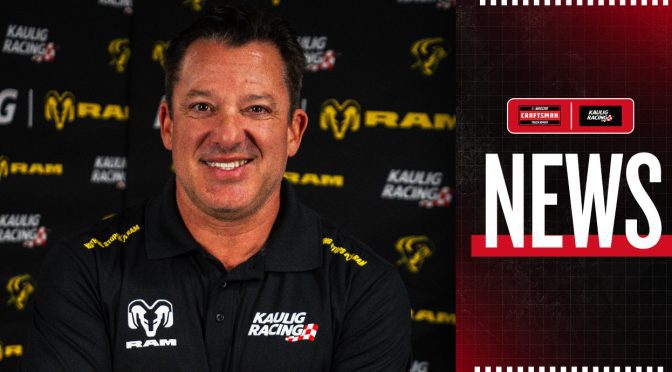
Kaulig Racing is kicking off its Free Agent Driver Program in style in the NASCAR Craftsman Truck Series by naming three-time Cup Series champion Tony Stewart as the first driver in the No. 25 Ram Trucks entry for the Feb. 13 season opener at Daytona International Speedway.
The announcement was made on Tuesday and came as season preparations were well underway for Kaulig Racing, which is partnering with RAM to field five Truck Series entries this season. Daniel Dye (No. 10), Brenden “Butterbean” Queen (No. 12) and Justin Haley (No. 16) are driving full-time for the team, with a fourth truck (the No. 25) going to a rotation of free-agent drivers like Stewart and the fifth (No. 14) being driven by the winner of the “Race for the Seat” reality TV series.
The Hall of Famer Stewart hasn’t driven in a NASCAR national series race since 2016 in the Cup Series with Stewart-Haas Racing. His participation comes on the heels of NASCAR revealing that The Chase championship format is back, a system in which Stewart won two of his three championships.
“I’ve raced just about everything with four wheels at Daytona, but never a truck. So when a seat in the new Ram was offered up for their first race back in NASCAR, I didn’t hesitate,” Stewart said in a team release. “Ram’s Free Agent program is another great way for me to stay sharp and have a little fun.”
Stewart has started six times in the Truck Series across five seasons from 1996-2005 and won twice, in 2002 and 2003 at Richmond Raceway, in the No. 33 Chevrolet for Andy Petree Racing. Daytona has been home to plenty of success for Stewart, including four points-paying Cup wins, seven O’Reilly Auto Parts Series victories, three exhibition Clash wins and three Duel at Daytona qualifying races for the Daytona 500.
Kaulig’s entrance to the Truck Series delivers Ram back to the series for the first time in over a decade, last winning with Ryan Blaney in 2012. To return with Stewart, who won the 2025 Top Fuel regular-season championship driving for Dodge in NHRA drag racing, Ram brings back a familiar winner to NASCAR competition to start 2026 with a splash.
“We’re not just returning to the track; we’re rewriting the playbook,” Tim Kuniskis, Head of American Brands, SRT Performance, NA Marketing and Retail Strategy at Stellantis, said in a release. “Bringing Tony in as the first Free Agent will generate a crazy amount of excitement, which is exactly why we created the program — allowing fans to watch an all-time favorite driver get back into the seat, but this time, it’s a Ram truck. This is about honoring a legacy. Tony represents grit, determination, and the spirit of racing — pure adrenaline for the fans.”
The Truck Series gets underway this season with the Fresh From Florida 250 at 7:30 p.m. ET on Friday, Feb. 13 at Daytona International Speedway (FS1, NASCAR Racing Network Radio, SiriusXM NASCAR Radio).
Editor’s note: Today’s Legacy Motor Club preview continues NASCAR.com’s countdown of team previews for the 2026 Cup Series season.
LEGACY MOTOR CLUB
Manufacturer: Toyota Engine: Toyota Racing Development Driver-crew chief pairings: John Hunter Nemechek-Travis Mack (No. 42); Erik Jones-Justin Alexander (No. 43)
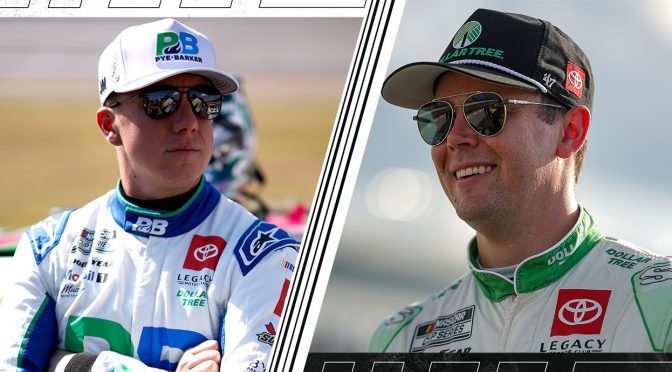
Team outlook: As Legacy Motor Club begins its third year as a Toyota team, it has continued to evolve both in leadership roles and performance on track. The 2025 season produced the best overall statistical showings for the team’s two full-time drivers in Jones and Nemechek. Two team drivers scored top-10 finishes in the same race three times last season — a significant sign of progress. Team owner, seven-time NASCAR Cup Series champion and NASCAR Hall of Famer Jimmie Johnson — who will again compete in a handful of selected races — earned one of Legacy’s best showings of the season with a third-place effort in the season-opening Daytona 500. The mark was matched later by Jones at Darlington Raceway during the Southern 500. Expectations are raised for the 2026 season, with both Jones and Nemechek hoping to seriously contend for wins and take a true step toward Legacy’s first championship bid.
JOHN HUNTER NEMECHEK, NO. 42 TOYOTA
Experience: 3 full-time seasons in NASCAR Cup Series; 113 starts 2025 stats: 25th in final Cup Series standings; 0 wins, 2 top fives, 8 top 10s, 0 poles, 37 laps led
Driver outlook: The talented second-generation NASCAR standout is coming off his best season in the Cup Series statistically. In his first full year with crew chief Travis Mack leading the team, Nemechek’s eight top-10 efforts doubled his previous best total, and the 28-year-old earned the first two top-five finishes of his career. His fifth-place showing in the season-opening Daytona 500 set the tone, and a fourth-place finish in another landmark event, September’s Southern 500, was a career high mark. It all points to important progress — for the team and for Nemechek, who has contended for championships previously in the O’Reilly Auto Parts Series and Craftsman Truck Series. The 37 laps he led in 2025 were also a career high mark and speak well for the team’s potential after only one season of the Nemechek-Mack duo. Four times last year, they put together back-to-back top 10s, showing the kind of consistency they hope to improve upon in 2026. With his 25th-place finish in the title run a personal best, hoisting that first winner’s trophy in the Cup Series is a legitimate goal for this highly-capable driver and team.
Experience: 9 full-time seasons in NASCAR Cup Series; 325 starts 2025 stats: 24th in final Cup Series standings; 0 wins, 4 top fives, 5 top 10s, 0 poles, 11 laps led
Driver outlook: While he did not win a race,Jones improved statistically over 2024, finishing four positions higher in the championship (24) and raising his top-five (four) and top-10 (five) finishes relative to the year prior. Jones’ 11 laps led (coming in only two races), however, were uncharacteristic as a three-time Cup Series winner (with the most recent coming in 2022 at Darlington) and former Craftsman Truck Series champion. The 29-year-old holds high expectations and hopes, however, that a new crew chief this season in Justin Alexander will help deliver sooner rather than later. Huge victories in the Daytona 500 (2018) and Coca-Cola 500 (2017) are on a successful resume for Alexander, who moves to Legacy from Richard Childress Racing.
A feeling of déjà vu settled into the SageNet Center on Monday evening during the opening night of competition for the 40th annual Chili Bowl Nationals powered by NOS Energy Drink.
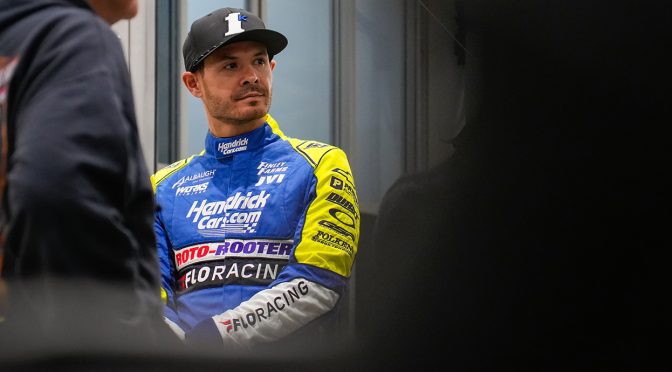
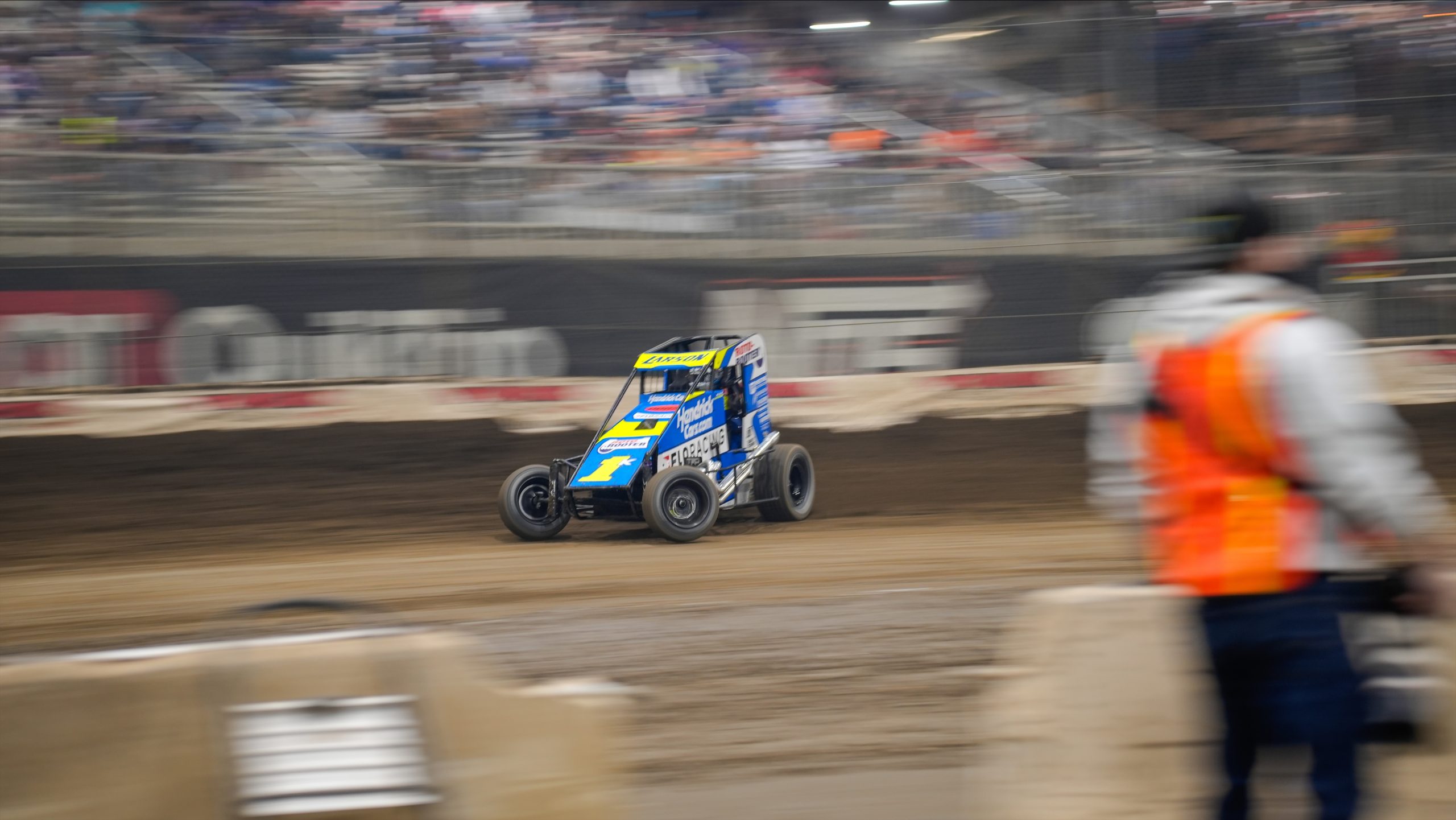
For the second consecutive year, Kyle Larson stormed from fourth to first to win the first preliminary feature of the week and lock himself into Saturday’s 55-lap championship feature for Midget car racing’s biggest event.
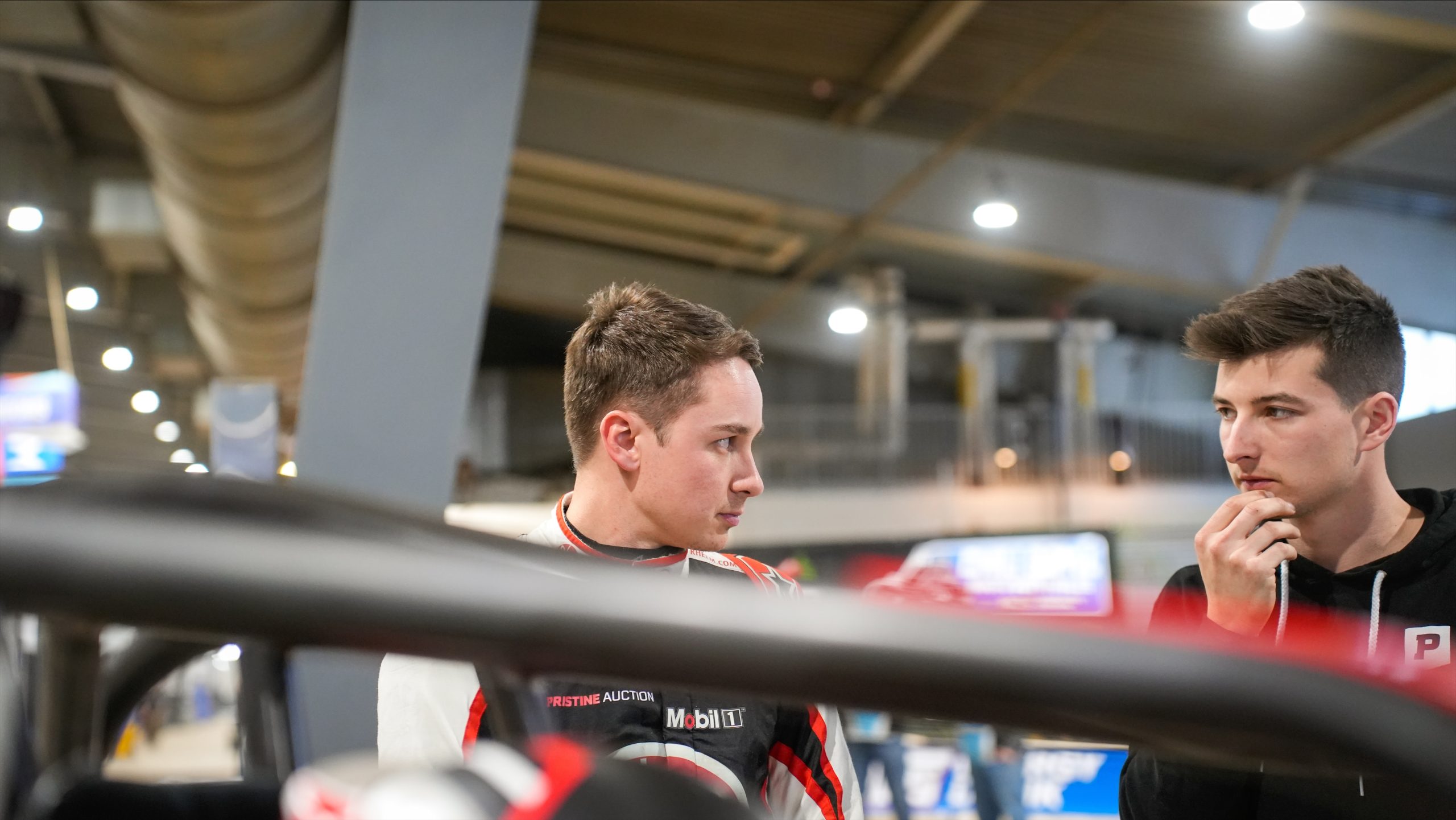
As if that wasn’t enough to cultivate the feeling of déjà vu, earlier in the evening, Christopher Bell rolled to a his second straight victory in the annual O’Reilly Auto Parts Race of Champions.
It’s like Larson and Bell know a thing or two about racing inside the SageNet Center. After all, they both have won the Chili Bowl three times.
Larson started fourth in Monday’s 30-lap preliminary feature and was leading by the 10th circuit, though he faced constant pressure from Briggs Danner and Cannon McIntosh.
A few mid-race cautions, including one that was the result of contact between Larson and the lapped car of Gaige Weldon, provided Larson with the clean race track he needed to punch his ticket directly into Saturday’s championship feature.
“My car felt good, and I was making decent decisions in traffic,” Larson said. “Then one lapper (Weldon) tried to rip back around me and then lane changed into (Turn) 3 and I tagged him. It kind of calmed the race down.
“It’s good to be back in position for Saturday.”
Kyle Larson (Photo: Bobby Pastelak/NASCAR)
One year ago, Larson used a Monday night preliminary feature win to catapult himself to his third Chili Bowl victory.
“It’s definitely a ways away,” Larson said of a repeat title. “I think if we can get a good draw for the Pole Shuffle like we did last year and put ourselves on the front row or second row, we’ll have a good shot.”
Bell kicked off his Chili Bowl Nationals with a flag-to-flag victory in the annual running of the O’Reilly Auto Parts Race of Champions, an invite-only event featuring racing champions from across the motorsports world.
The driver of the No. 20 Toyota for Joe Gibbs Racing in the NASCAR Cup Series qualified first and started from the pole for the 25-lap feature after drawing a 0 for the invert.
He dominated the event despite brief challenges from eventual runner-up Shane Golobic to secure his fourth Race of Champions victory and first as an owner-driver.
“This makes everything a whole lot more stressful,” Bell said after securing his first Midget car win inside the SageNet Center in his own equipment. “I was about ready to puke before the race. I was like, ‘Is it right? Is it wrong? What are we doing?’
“I think it just makes the triumph so much more rewarding.”
Christopher Bell pictured on opening night of the Chili Bowl (Photo: Bobby Pastelak/NASCAR)
Perhaps more important for Bell than winning the Race of Champions was the valuable track time on the always-tricky, temporary quarter-mile clay oval built specifically for this event each season.
Bell believes the eventual champion of the 40th Chili Bowl Nationals will be one of the drivers who competed in the Race of Champions on Monday night. He just hopes it’s him.
“The Race of Champions is the cream of the crop,” Bell said. “It certainly feels like the Chili Bowl winner is going to come out of this race. It feels good to be on top. We’ll see. There is a lot of racing to unfold.”
The 40th running of the Chili Bowl Nationals presented by NOS Energy Drink continues Tuesday night. Action kicks off at 5 p.m. ET with complete coverage available live on FloRacing.
After more than a decade with an elimination-style playoff system, NASCAR’s championship format has busted the bracket and cut to The Chase.
NASCAR will return to a postseason Chase in all three national series in 2026, implementing a championship procedure that rewards full-season consistency and introducing a new points model that stokes the emphasis on race wins.
The format, announced Monday afternoon at the NASCAR Productions Facility, closes the elimination era and the one-race championship system that had been in place since 2014 for the Cup Series and since 2016 for the O’Reilly Auto Parts Series and Craftsman Truck Series. The new method for deciding those three championships takes a page from stock-car racing’s history and its first postseason system, but with modifications that chart its course for the future.
“The biggest thing was looking at who we wanted to be as a sport going forward, and that included really a focus on our core fan base and who had been with us for a long, long time and gotten the sport to where it was. So we wanted our future format to reflect that,” NASCAR president Steve O’Donnell said. “A lot of things you’re going to see and how we talked to the fans, from an overall NASCAR standpoint, was going to really embrace that hardcore fan, and so we felt like the format needed to absolutely reflect that.”
The new format uses the framework of the system that was in place from 2004-2013 in the Cup Series, but with several key enhancements.
The field sizes for The Chase in each series remain the same — the top 16 drivers in the Cup Series, 12 in O’Reilly and 10 in Trucks — but all drivers qualify based on regular-season points. The “win-and-you’re-in” rule that provided regular-season winners with automatic playoff berths is no more.
Race winners now collect 55 points, a 15-point increase over the previous points system. Points awards for all other positions and stage results remain the same, but bankable playoff points are no longer part of the format.
Points will be reset for each series’ Chase field with a 25-point premium awarded to the regular-season champion. Top seeds will start The Chase with 2,100 points, 2,075 for the second seed and 2,065 for the third, with a five-point drop for each seed after.
The Cup Series’ Chase spans the final 10 races of the season, with nine Chase races for the O’Reilly Auto Parts Series and seven in the Craftsman Truck Series.
The driver with the most points at the end of the season will be the series champion.
O’Donnell said “everything was on the table” when the new format was taking shape, and options ranged from modifying the elimination system, to adopting Chase-style procedures, to running a full 36-race points contest without playoffs. A playoff committee made up of industry stakeholders and partners — and led by NASCAR executive vice president and chief brand officer Tim Clark — met regularly last year to discuss the format, and opinions were split about the direction.
What emerged, O’Donnell said, was a happy medium that he hopes satisfies all corners of the sport, foremost fans.
“As discussions continued to flow about what we wanted to do, the core elements were we wanted it to be something the fans would embrace, we wanted it to reward consistency throughout all of the 36 races, but it was also really important for winning to matter. We didn’t want that to go away,” O’Donnell said. “So how do you marry all of those together, and where we landed, we think, is the best of both worlds, that it has that element of every race matters, all 36 races matter, but you’re also able to include The Chase and our form of a playoff, so to speak.
“But going back to The Chase, it was unique to NASCAR. It’s something we believe the fans will embrace. It’s 10 races, with every race mattering and still being very simple to explain to the fans. One set of points, easy to explain, and the best driver at the end of 36 races is ultimately going to win the championship if they can perform for those final 10 races.”
Sean Gardner | Getty Images
Last year’s championship races drew intense scrutiny after the checkered flag fell at Phoenix Raceway. Just one of the three title favorites — Truck Series champ Corey Heim — prevailed, and he needed a daring move on an overtime restart to secure the crown. Fellow season-long dominators Denny Hamlin (Cup Series) and Connor Zilisch (O’Reilly Series) finished as runners-up in their respective series after coming up short in the winner-take-all finales.
O’Donnell said those championship outcomes didn’t necessarily prompt the format change for this season, since the discussion process had begun long before last fall’s finales. Instead, he said the weekend seemed to confirm that the timing was right for a new direction.
“If anything, I’ll use myself personally, I was someone who thought we had to go away from the one-race championship,” O’Donnell said, “but when you looked at the (Truck Series) race on Friday night, if Corey Heim hadn’t have won, he’d be like, ‘Oh my gosh, what’s happening?’ But the dramatic fashion he won in, had everyone looking at each other and saying, ‘Wow, that was pretty wild. It was pretty cool.’ If anything, it kind of reintroduced that a little bit, but at the end of the day, really looking at where do you want to be in totality with all the things that could happen in a one-race, a four-race (final), whatever that may be, it just felt like the industry and everyone was really ready for us to make it as simple as possible, definitely reward winning, but have something to be able to be easily explained and that the industry could feel like this is where we want to be.”
Simplification, O’Donnell said, was a focal point of the committee’s work.
“Not only to newer fans but even the fans who follow the sport, I think, had a difficulty at times,” O’Donnell said, “and so one of the core elements that was part of the committee that Tim led was, can you explain this if you got on an elevator and you had 20 floors to explain it to somebody, how does it work? And we wanted to make sure we could do that, and we feel like we’re able to do that with one points system. You reset for the final 10 (races), but the points remain the same, and it’s pretty easy to understand that if you’re leading the points at the end, you’re our champion.”
The new 55-point payday for race wins marks the first major revision to the NASCAR points system since 2017, when stage points became part of the race procedures. It also marks a departure from the previous format’s primary single-race bonus, the automatic playoff berths that accompanied a trip to Victory Lane.
While that system yielded multiple clutch performances in must-win moments, it also, on occasion, incentivized overly aggressive driving and provided playoff spots for drivers deep in the standings who were able to produce a season-saving victory. A 55-point payout, O’Donnell said, should provide motivation that fuels both race-weekend and season-long goals.
“I think when you looked at the ‘win-and-you’re-in,’ it would be hard to argue that it didn’t change the way the drivers raced,” O’Donnell said. “So we did not want to lose, going into Turn 4, we don’t want someone blatantly taking someone out, right, but a bump-and-run, an aggressive move, is part of what NASCAR is all about. So how do you keep that element? And so by adding 15 points, we thought that that would be enough of an incentive, hopefully, to continue to really push that winning narrative.
“One of the things with win-and-in that we didn’t think about that ultimately happened was we wanted every race to matter, and that didn’t happen with win-and-in, right? You saw someone who could win that first playoff race and then kind of say, ‘OK, I’ll see you in a couple weeks,’ and that’s not something we want to deliver for the fans. So we felt like more points to the win, but you still have got to be there every race and hopefully you’re going for those wins for 36 races in a row.”
The Chase will officially return when the postseason begins for all three series in September. With the O’Reilly Auto Parts Series expanding to a nine-race postseason, The Chase will begin for both that circuit and the Cup Series on Labor Day weekend at Darlington Raceway; the Truck Series Chase will open two weeks later at Bristol Motor Speedway. “It was the goal and a little bit of luck, candidly,” O’Donnell said, indicating that competition officials will aim to sync those three Chase schedules even more closely in future seasons.
O’Donnell said the overall goal couldn’t have been possible without the cooperation of the playoff committee, which drew contributors from a wide cross-section of the NASCAR industry. He said their passion for the sport and the desire to make it better were pivotal.
“I think what I would say about the playoff committee is, first and foremost, an appreciation for the time they committed,” O’Donnell said. “They don’t have to do that, it’s not part of their day job, but they all took the time to do it from all walks of life — OEMs, drivers, teams, tracks — and all had a position going in, and I would say that position probably changed for most people, including myself, during the process.
“So that’s what collaboration is all about, is taking the best ideas, formulating those, beating those up as a group, coming back and making sure you’re right, and we certainly took a long time to get here, but we did that because we wanted to land at a place that some would say, ‘Well, you’ve been there in the past.’ Yes, we have, but we’ve tweaked it, and I think it’s in a really strong position and something I believe that the fans should embrace, we hope that they’ll embrace, but I know our industry is going to be behind.”