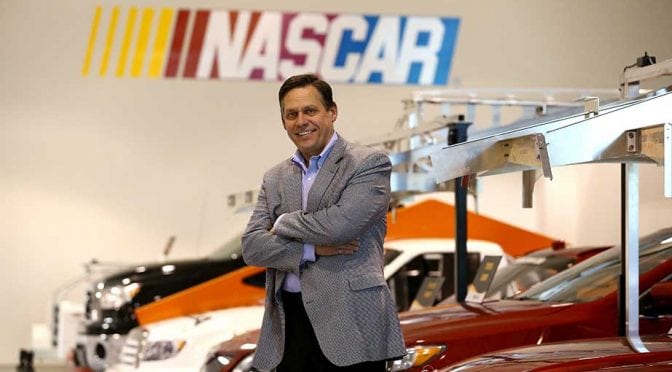
DAYTONA BEACH, Fla. (May 31, 2018) – NASCAR today announced that Gene Stefanyshyn will lead the sport’s international efforts as Senior Vice President and Chief International Officer, John Probst has been promoted to Vice President, Innovation and Racing Development, John Bobo has been promoted to Vice President, Racing Operations, and Scott Prime has been promoted to Vice President, Strategic Development.

Stefanyshyn will be responsible for developing the racing product and brand across NASCAR’s international series in Canada, Mexico and Europe, as well as prospective new markets abroad. Stefanyshyn joined NASCAR in 2013 and has led efforts to innovate across all competition platforms. Prior to NASCAR, Stefanyshyn worked internationally in the automotive industry and brings extensive international business experience to the role. Stefanyshyn will continue to report into Steve O’Donnell, Executive Vice President and Chief Racing Development Officer.

“Gene’s experience leading our strategic work and industry collaboration on innovating and improving our competition product, along with his prior international working experience, make him an ideal fit for the next phase of our international efforts,” said O’Donnell. “We are excited about the future direction of our international racing portfolio and are looking forward to Gene’s leadership across this growing platform.”

Probst will step into the key leadership role Stefanyshyn held the past five years and will be responsible for leading the sport’s efforts to continue to deliver strong racing at all levels of competition, as well as integrating innovation and technology across the sport’s at-track operations. Probst joined NASCAR in 2016 after over two decades of industry experience, including time with Ford Motor Company, Red Bull Racing and Chip Ganassi Racing. Probst will remain based out of the NASCAR R&D Center in Concord and will report directly into O’Donnell.

“John was instrumental in the development of our new inspection process, incorporating best in class technology and technology partners into one of our most important competition operations,” said O’Donnell. “Integrating new, relevant technology into our operations and innovating our racing product are strategic priorities for us and John is well suited to continue the important leadership of this area.”

Bobo will oversee racing operations across all national, touring and weekly series, as well as managing the American Medical Response (AMR) relationship and the sport’s drug testing program. Bobo joined NASCAR in 2010 after two-decades of previous high-level experience in private, government and non-profit sectors. Most notably, he served as a state prosecutor, chief drug & alcohol policy advisor to the U.S. Secretary of Transportation and later head of U.S. DOT’s Research and Innovative Technology Administration. Bobo will remain based out of the NASCAR’s Daytona Beach, Florida headquarters and will report directly into O’Donnell.

“John brings leadership experience to our operations at the racetrack,” said O’Donnell. “His ability to develop smart, working solutions to difficult problems has set John apart – he’s a true professional that brings a steady hand in leading our racing operations.”

Prime will oversee key strategic initiatives and development of key new business platforms for the sport, as well as managing the industry council framework across the sport’s main stakeholders. Prime joined NASCAR in 2015 after a decade-long career driving strategy at McKinsey & Company, the National Basketball Association and Mercer Management Consulting. Prime will remain based out of NASCAR’s New York offices and will report directly into Steve Phelps, Chief Operating Officer.

“Scott has made significant contributions to the sport through his leadership on key initiatives such as the team owner charter framework and the industry’s esports strategy,” said Phelps. “His strategic approach to complex business issues will benefit our industry as we look to grow our sport smartly, working together to strengthen operations across all parties while unlocking opportunities to bring our sport closer to our fans everywhere.”

So many apologies in the delay since my previous blog. Things have been insane here at the house. Basically over the previous nine months, mom’s belly has gotten larger and people gave her presents because of it. I don’t get humans.

And dad — oh my gosh, dad. I literally have not seen him this excited since the time he went to Costco and saw that giant jug of mayonnaise for sale. He’s been on cloud nine. That’s cloud 63 for dogs, BTW.

So anyways, for several weeks, mom and dad sat around the house. He was nervous, she was getting annoyed. Not like Dale-just-ate-my-gelato-and-then-fled-to-South-Korea-annoyed like she was earlier in the year, but annoyed. (That incident is worth its own blog altogether. I about texted Dale and suggested he take up asylum in the American embassy until Whole Foods restocked that shizz.)

She would look at her belly and say, “We can’t wait to meet you! Come on!” I’ve never looked at my belly and spoken to it. That’s so weird. Granted I’ve barked at my own fart from time to time, but this was just light years beyond the pale.

RELATED: Dale, Amy Earnhardt welcome baby

So one night when I’m out having my evening cigar and vodka gimlet with the bison, we put our heads together and come up with some possibilities to explain their weird behavior.

1. Maybe dad is nervous because he has another one of those eBay auctions going and he’s currently the highest bidder on a discarded plate of tater tots once eaten by Reb Wickersham or whatever the hell else he hoards in his newfound copious free time.

2. Maybe talking to your own belly is like the most recent new-age hippie shizz that people do like what Danica Patrick was doing when she was charging crystals and all that weirdo Gwyneth-Paltrow-whatever.

3. Dad is just acting nervous because he is going to be in the TV booth for NASCAR on NBC in the very near future. Granted I’ve watched races with him at home and he’s really good at yelling at the TV so I’m sure he’ll be good at calling races. Maybe his sentences will be punctuated with the occasional “HOT DAMN!” and “BOY HOWDY!” like they are at home.

4. That gorgeous new room they put in the house with all the pink draperies and that really nice open-top dog cage is all mine for being a very good boy all these years. (NOTE: I’M TOLD IT IS CALLED A ‘CRIB’)

So we go about our business and then suddenly one day out of nowhere they’re all like “It’s time!” and they just leave. They run out the door like me after a jerky truck. And they’re just gone. No explanation. No, “Hey, while we’re gone Gus is in charge.” Nothing.

MORE: Dale Jr. documents fatherhood, shares week one stories

So OK, when your parents suddenly leave the house, what do you do? THROW A RAGER, THAT’S WHAT. I book a DJ and begin filling the swimming pool with Gravy Train. Calling my homeys. It’s like the start of Snoop Dogg’s “Gin & Juice” video. I try to get Migos to come by. Like, we’re getting turnt AF tonight.

Then I look out the window. Junebug, the bison and various deer start gathering beneath the treehouse like it’s Pride Rock and and one of the deer starts singing the opening lines to “Circle Of Life,” I’m like ‘OK, why am I always the last to know things around here?’ Do you have any idea how pissed off Migos gets when you gotta cancel on them? Hint: A lot. Thanks, dad. Whatever the hell you’re doing caused me to set Clint Bowyer’s flamethrower to the bridge between myself and MIGOS.

FREAKIN’ MIGOS. Whatever.

So suddenly I see them rolling down the driveway. They pull up and get out of the car. And they’re like, ecstatic and carrying something wrapped in a blanket that I’m really hoping is maybe a honeybaked ham because I’m hungry and I haven’t eaten since I had to cancel on Migos.

It’s not a ham. It’s a small human. The smallest human I have ever seen. And I’ve hung out with Justin Allgaier at the shop.

It’s a tiny girl named Isla, but they tell me the “s” is silent so whenever I bark her name I make sure not to pronounce it.

When they first got me the first thing they had me do was poop in Martin Truex Jr.’s motorcoach. They haven’t done that with her yet. Not to my knowledge, at least.

She seems to sleep most of the day. Now THIS I am all about. Her and I already have something in common. Except she has this weird swing device they put her in when she wants to sleep. I have tried climbing into it to try it out when she isn’t using it, and I knock the thing over. I’m like the size of Chewbacca now. I feel like Andre The Giant trying to climb into a soap dish.

Anyways, we’re getting along great right now. And I’m told that soon she’ll be sitting in something called a “high chair” when she’s eating food and likely dropping like 85 percent of it on the ground so basically every day gonna be like my birthday. Nah, really, she’s cool, even if she doesn’t really know any tricks yet aside from crying and getting a butt-ton of likes on Instagram.

Anyways, off to hopefully mend fences with Migos. Until next time.

 — Gus

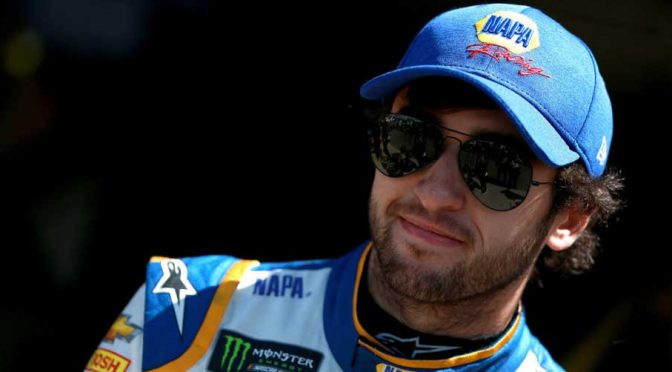
Chase Elliott ranks 11th in overall speed through 12 Monster Energy NASCAR Cup Series races, but just 19th in laps led. He averages a finish eight positions better in races with less than the normal amount of restarts than he does in races with an excessive number. Hendrick Motorsports is experiencing a down season, yes, but the organization’s struggles don’t fully explain away its fastest driver’s troubles.

Elliott’s restarting might be the pain point in question. His 26.1 percent retention from the non-preferred groove ranks 19th among drivers with at least 10 attempts and represents a 32.2 percent drop from his clip last year. This cost him 39 positions across the initial one-third of the season.

RELATED: Four drivers closing in on wins

Ultimately, this is an area that will require attention and may improve as the season rolls forward; however, a more immediate fix is on the horizon.

Two of Elliott’s best tracks, based on average finish, will soon surface on the schedule. Michigan (in four career starts, his average finish is 3.5) and Chicagoland (a 2.5-place average in two starts) can provide relief. Elliott has an affinity for these facilities, and more importantly, these tracks host three races during a 10-race span that featured less than the average number of restarts in 2017. In fact, nine of the next 10 races (Daytona is the exception) fit this profile.

What better way to alleviate Elliott’s problem with restarts than by mitigating the number of restarts?

PHOTOS: Chase Elliott through the years

Omitting restarts, Elliott is Hendrick’s most productive results-getter this season, ranking the highest of its four drivers in Production in Equal Equipment Rating. Elliott ranks eighth in the series overall, third among winless drivers (after Denny Hamlin and Kyle Larson) and holds the lowest percentage of laps completed inside the top 15 (64.2 percent) among the top 11 in PEER.

His car’s 11th-place ranking in speed is down from his sixth-place ranking last season, part of an organization-wide drop that’s also plagued seven-time series champion Jimmie Johnson, whose No. 48 Chevrolet dropped from ninth to 12th.

Beyond Elliott, here are three more drivers with brighter days ahead.

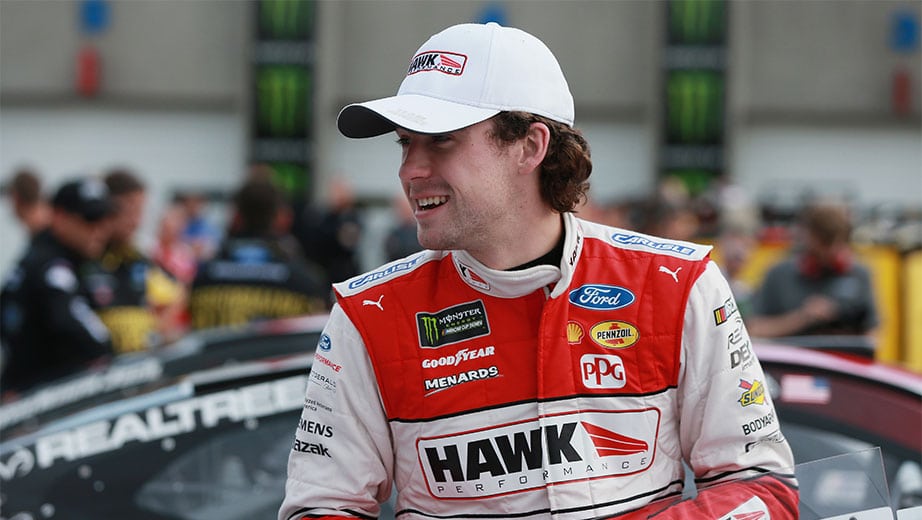
Ryan Blaney smiling in the garage
Sean Gardner | Getty Images

Ryan Blaney

Blaney led 118 laps in the Daytona 500 and crashed on what should have been the final lap. He led 100 laps at Bristol and crashed on Lap 119. He led 54 laps at Kansas and crashed on Lap 249. He had the seventh-fastest car in the Coca-Cola 600 until it erupted in flames, the result of an engine failure.

As far as circumstances within his control go, Blaney’s 0.54 per-race crash rate is the third highest in the series, trailing only Jamie McMurray (0.62) and Trevor Bayne (0.55). This paints Blaney as an excessive crasher, but a quick look at his crash history indicates an aberration; in three seasons at the Monster Energy Series level, only one of them saw him amass a crash rate higher than the series average. In 13 NASCAR Xfinity Series races last season, he didn’t crash at all. His crash rate should dissipate as the season progresses, allowing for more finishes indicative of his performance.

PHOTOS: Relive Blaney’s Pocono win

Blaney has been fantastic on restarts. Among drivers with at least 10 restart attempts from the non-preferred groove, his 61.5 percent retention rate ranks as the third best, while his 29 positions earned via preferred groove restarts are the fifth-highest total by any driver. His long-run passing presents a challenge; that issue, though, isn’t typically a race-ender when considering his average starting spot (9.5) falls inside the top 10 (he started fifth or better in six of the first 13 races), regularly providing him strong initial track position.

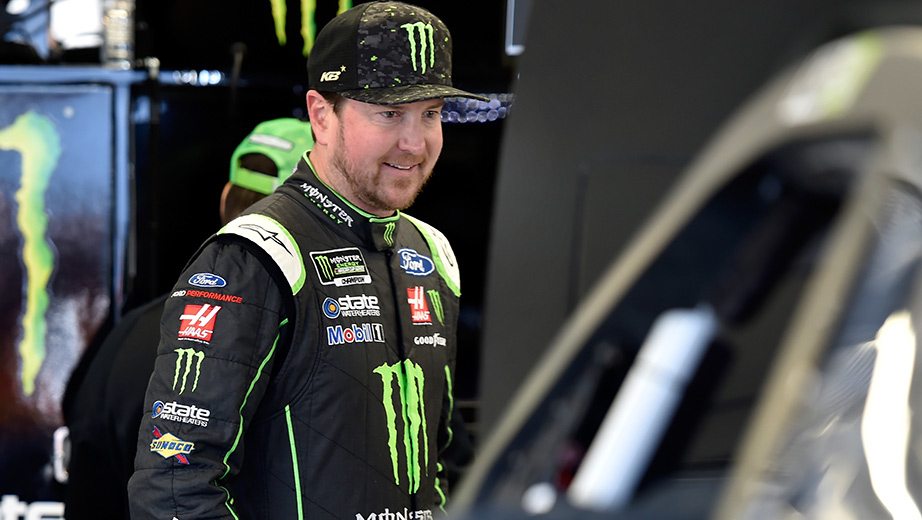
Kurt Busch in the garage.
David Becker | Getty Images

Kurt Busch

Busch’s No. 41 Stewart-Haas Racing Ford ranks as the fourth fastest in the Monster Energy Series. More importantly, it ranks as the fourth fastest in the final quarter of a race. In both respects, his is the fastest car without a victory.

It’s perplexing, as his peripheral numbers suggest he’s a threat to traffic inside the restart window. He ranks first in position retention on non-preferred groove restarts (68.2 percent) and third in retention from the preferred groove (91.3), leading to 43 positions gained. While his passing outside the restart window has been sub-par — he scored positive adjusted pass differentials in just three races — his results haven’t reflected the problem; his average finish is actually better in races with less than the average amount of restarts (12.4) than it is with eight or more (13.6) and 10 or more (15.0).

One would assume a race might eventually break in his favor, and the summer schedule provides some opportunities.

Kentucky (12.9), Sonoma (14.1) and Pocono (14.2) represent three of Busch’s five best race tracks based on career average finish and comprise four of the next eight races. Interestingly, none of these tracks hosted races that featured more than the series-average number of restarts last year. In a peculiar twist, the races that suit Busch best aren’t the ones that put his best driving attribute — restarts — to full use.

Considering the weird disconnect between his effort and results so far in 2018, this twist feels at home with Busch. He’s good, his team is good and, somehow, they must to do something beyond their repertoire’s brilliance to prove it.

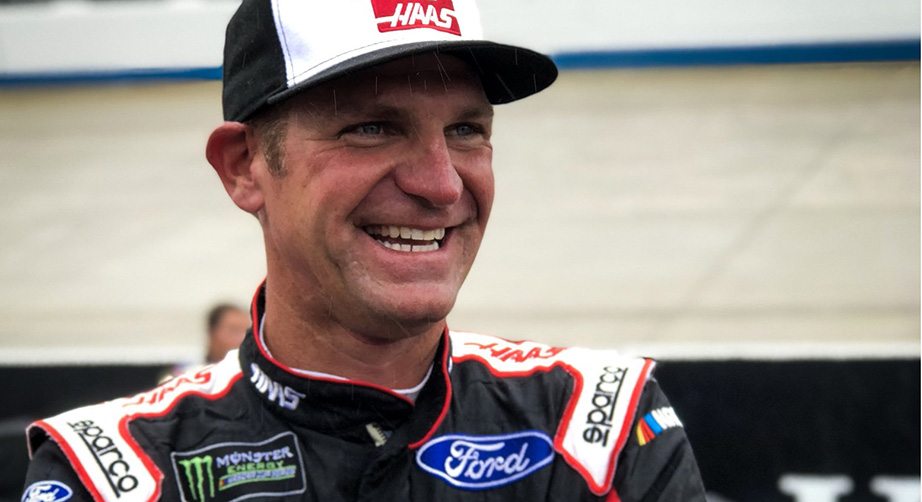
Clint Bowyer smiles on pit road at Dover.
NASCAR Digital Media

Clint Bowyer

Bowyer’s 10.8-place average finish through Charlotte would suffice as the best of his career if it were to hold for the remainder of the season, and his victory at Martinsville secured him a playoff spot. Still, results could’ve been better as the 39-year-old driver has drawn some unlucky lane assignments during late-race restarts.

He restarted from inside the top 14 a total of seven times during “red zone” situations, or the final one-tenth of a race. On five of those occasions, he drew the non-preferred groove. He lost one spot with 21 laps to go while running ninth at Bristol, while Aric Almirola, restarting 10th and to Bowyer’s outside, gained three positions. Bowyer rallied to finish eighth, but Almirola, ranked 23rd in the series for position retention on preferred groove restarts, went on to score a sixth-place finish, propelled by fortunate placement on the final restart of the race.

PHOTOS: Bowyer through the years

There was a 79 percent difference in restart retention percentage between the outside and inside rows at Bristol.

Bowyer’s poor luck didn’t end there. He drew the non-preferred groove on all three red zone restarts at Richmond, and despite gaining a spot on the Lap 379 restart, his progress was stymied when he lost three spots, while restarting sixth, during an overtime attempt. He finished ninth; had he restarted seventh instead of sixth, his chances of retention would’ve been 50 percent greater.

Eventually, lane distribution should normalize for him as the season unfolds, but an average finish this good despite 71 percent of his red zone restarts emanating from the non-preferred groove is a testament to his team’s strength heading into the summer months.

David Smith is the Founder of MotorsportsAnalytics.com. Follow him on Twitter at @DavidSmithMA.

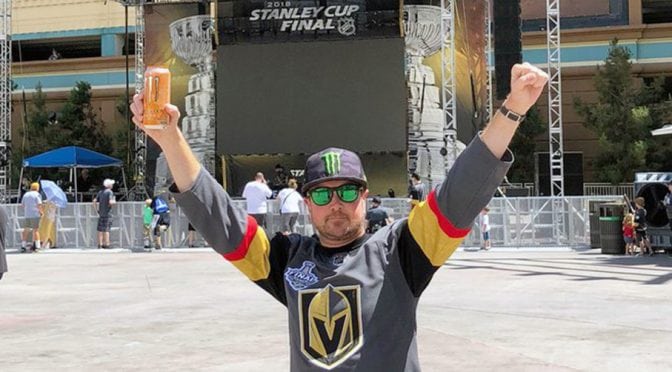
For most of Kurt Busch’s life, his hometown of Las Vegas was devoid of any major league professional sports.

So when, at the age of 39, you finally get to root for a hometown franchise — and it somehow makes the Stanley Cup Finals in its first year of existence — you get super, super hyped, apparently.

I mean, who can blame him?

The 2017-18 expansion team Vegas Golden Knights, based on the history of basically every expansion team ever, should have no business being in the playoffs, much less battling for the Stanley Cup — but they are. It’s one of the best overall sports stories of the century thus far, win or lose.

So, of course, Busch is pumped up.

We’re happy for Busch (though his antics didn’t spark a win for the team, as it lost to the Washington Capitals, 3-2.)

And we’re even happier that all of this has resulted in this great, new “Super Hype Kurt” meme.


NASCAR has updated its qualifying procedures for the NASCAR Camping World Truck Series to use team owner points as the primary basis for awarding provisional starting berths when more than the maximum 32 trucks are entered in a given race.

The change shifts from the current system of using qualifying attempts as the main determining factor in assigning provisional starting spots. The procedural update, which was to be communicated to teams Wednesday afternoon, is scheduled to go into effect for the series’ July 12 race at Kentucky Speedway.

Brad Moran, the Camping World Truck Series’ managing director, said the change was intended to emphasize teams’ performance over their number of starts. The update aims to eliminate barriers to participation for start-up and part-time teams by creating performance-based incentives within the provisional system.

“Back in the day, it probably made a lot of sense,” Moran said, “but where we’re at today with the new NT1 engine and new teams wanting to participate and wanting to grow, it didn’t give them that opportunity unless they came to every single race, and we want to put the best field in front of the fans and put the best race on we can. For the last couple years, we’ve seen that unfortunately some quality trucks went home and we want to try to avoid that if possible.”

The rules update will also affect how the series sets the starting lineup in the event of inclement weather.

Currently, positions 1-26 are set by team owner points, with the remaining six spots going to former driver and owner champions, driver and owner race winners (if not otherwise qualified) and team owner race attempts. In the new format, owner points will determine positions 1-25, with the 26th and 27th spots going to the fastest two drivers from combined practices. The remaining positions will go to eligible former champions and winners as with the current process, but with owner points having priority over attempts in the criteria.

“The weather portion, you get a lot of good teams that come with sponsorship and buy all their tires and they’re there to really participate and try to win the race,” Moran says. “Basically they would spend all that money and the way it was structured, if that weather came and it rained that they had no opportunity to make the show, so that was really spending good money for bad. That was obviously keeping some people home and looking at weather and looking at the forecast and so on. …

“So, really if you have six new trucks show up for any particular event, they know if we get on track for even one practice session, they know they have an opportunity to make that show if they’re the fastest two of the six, where really they had no opportunity in the past.”

Moran said NASCAR competition officials have moved forward with the rules bulletin to get a head-start on full-season implementation in the Camping World Truck Series for 2019. Four races are scheduled over a five-week span to give teams time to adjust before the rules debut at Kentucky in July.

“They’ve put big efforts into this part of the year and we want that to continue, so we didn’t want to flip a switch on,” Moran said. “We felt it would be fair to the industry to give it a runway and not make it too long a runway because it was an initiative that we wanted to do, because we feel it’s going to improve the look of the series and the quality of our series.”

No, Brad Keselowski doesn’t get hot as the temperature rises, but it may look that way. The late spring and summer portion of the Monster Energy NASCAR Cup Series schedule is chock-full of tracks that suit Keselowski well, to the point that his talent and ability appear seasonal.

Based on average finish, Keselowski’s four best tracks are Chicagoland (9.2), New Hampshire (9.8), Pocono (10.5) and Watkins Glen (10.8). As it so happens, these four facilities host five races between this weekend and the beginning of August.

Additionally, Daytona, where Keselowski claimed victory in the 2016 July race and led at least one lap in four of the last five races, adorns the schedule. So does Kentucky, where he won three times, including once after its 2016 repaving, and Michigan, the Rochester Hills native’s home track, on which he’s led at least two laps in 10 of the last 12 races.

The summer of 2018 quite possibly could become the Summer of Brad.

RELATED: Who’s next to win at every track?

This portion of the schedule can’t get here soon enough for him. Keselowski is over eight positions better (an 11.5-place average) in races with less than the normal amount of restarts than he is in events with an excessive number (19.6). At first blush, this seems to indicate sub-optimal restart performance, but that’s not the case; he holds top-10 position retention rates from both grooves. Unfortunately for him, he’s been caught in the chaos of the most chaotic races, crashing at Daytona, Texas and Bristol, but the need for good fortune will likely minimize in the coming months.

Of the next 10 races on the schedule, only one (Daytona) had more than the average number of restarts in 2017. Races heavy on green-flag runs (and light on cautions) tend to produce good Keselowski outings, and practically all the upcoming tracks are ones for which he has an affinity. Furthermore, Keselowski recorded positive pass differentials last year on all track types save for short tracks, a track style without representation on the schedule until Bristol on Aug. 18.

These next two months likely will comprise the point in the year when Keselowski’s 2018 season is best defined. He won’t be alone in that regard.

Kyle Larson on pit road
Josh Hedges | Getty Images

Kyle Larson

Larson’s Chip Ganassi Racing entry ranks as the 10th fastest in the series, though it sits third on the cumulative speed chart for 1.5-mile tracks specifically. It seems the bigger the track, the faster he gets. Omitting Daytona and Talladega, a pair of tracks over 2.5 miles in length that restrict horsepower, Michigan, hosting a pair of events on June 10 and Aug. 12, is as big and fast as they get.

With its wide surface and competitive high line, the 2-mile track appears built for the innovative Larson, winner of the last three Michigan races. Winless this season, this track type — represented in three of his five career wins — provides a welcome sight.

Outside of Michigan, Chicagoland (July 1) and Kentucky (July 14) might provide ample opportunity for Larson to showcase his penchant for efficient passing. There was no better passer on 1.5-mile tracks in 2017 than Larson, who provided his team 192 positions beyond the expectation of a driver with his average running position; 47 of those came solely from last year’s runner-up run at Kentucky.

Denny Hamlin looks on from his car after practice.
Robert Laberge | Getty Images

Denny Hamlin

Hamlin is a four-time winner at Pocono (June 3 and July 29), three-time winner at New Hampshire (July 22) and two-time winner at Michigan, not to mention one of the series’ most adept restrictor-plate racers. Despite owning the third-best finishing average in the series (9.7), he’s in need of a spark. After accumulating positive pass differentials in the first seven non-restrictor plate races of the year — an improvement over his past three seasons — he’s hit a rough patch recently, scoring negative differentials in each of the last three events.

Oddly, his passing swoon might not factor at the aforementioned tracks. In all six races at Pocono, New Hampshire and Michigan in 2017, the winners failed to record passing efficiencies better than expected from cars with their average running position. There are other ways, outside of passing, to accrue track position. In three of those races, the winner started from the pole. In the August race at Michigan, winner Kyle Larson gained 16 positions through green-flag pit cycles.

Hamlin’s 7.2-place average starting spot for his career at Pocono is his best across all tracks. In the instance he doesn’t start near the front of the field, crew chief Mike Wheeler has his back. Wheeler has committed the No. 11 team to a consistent long-pitting strategy during green-flag pit cycles this season in bids to acquire large scores of track position; his pitting late in cycles 25 percent of the time is the biggest such percentage among crew chiefs.

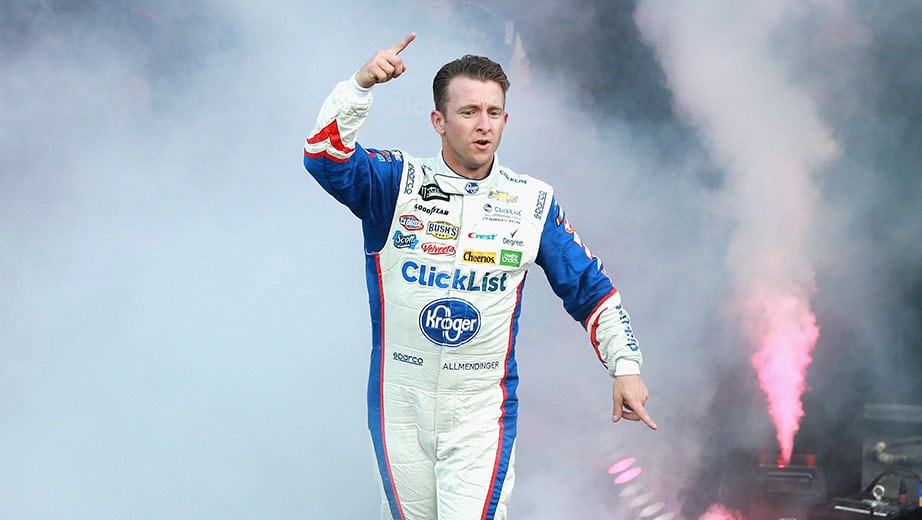
AJ Allmendinger during driver intros
Sean Gardner | Getty Images

AJ Allmendinger

Allmendinger, when inside the first seven rows, is one of the best restarters in NASCAR, having ranked sixth, third and ninth in each of the last three years in position retention from the non-preferred groove. However, with a yearlong average running position no better than 19.7 during that timeframe, JTG Daugherty Racing hasn’t adequately put its driver’s best skill to use. Lucky for the No. 47 team, its track position challenges disappear once race weekends at Sonoma (June 24) and Watkins Glen (Aug. 5) emerge.

Since joining JTG Daugherty, Allmendinger qualified fifth or better — including a pole in 2015 — in each of his four starts at Sonoma. He qualified ninth or better in each of his last seven career starts at the Glen, winning one pole.

His results in eight road-course starts with JTG Daugherty belie his effort. Due to an assortment of maladies, he finished better than 35th just once at Sonoma despite leading at least one lap in each start. He won at Watkins Glen in 2014, and based on average finish (9.3), it’s easily his best track; however, he was shut out from the lead in each of his last two starts there.

Additionally, Allmendinger is a highly efficient passer on the 2-mile tracks of Pocono and Michigan. He ranked second in surplus passing value on the track type last season, accumulating 71 positions beyond the expectation of a driver with his average running position.

David Smith is the Founder of MotorsportsAnalytics.com. Follow him on Twitter at@DavidSmithMA.

MORE: Driver stats pages 

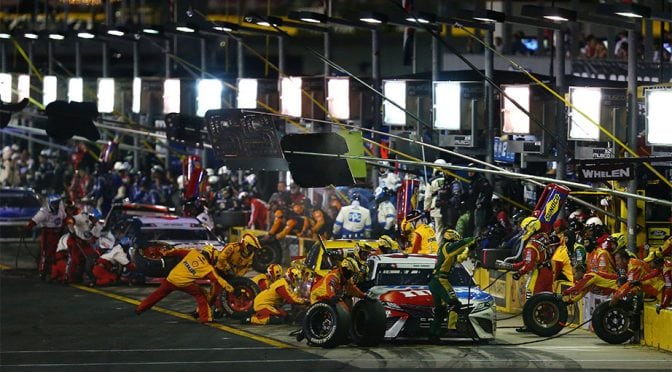
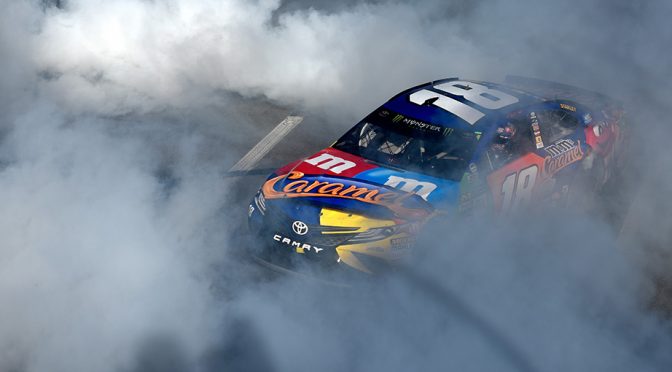
Pit road performance was crucial during Sunday’s Coca-Cola 600, the longest race of the year. As we detailed yesterday, race winner Kyle Busch had an exceptional performance from his No. 18 team, a large factor in his win.

Fans now have the ability to get in-depth data on every pit stop from the previous weekend’s race. Use the program below to explore a team’s set of pit stops — use the arrows to toggle between drivers (Aric Almirola is the default), or even races, and explore pit stop times, flag state and how many tires a team took on every stop.

Pit road stats: Charlotte

      Numbers mean plenty when it comes to building out your Fantasy Live teams each week. NASCAR.com will examine the stats outlook for each track in advance to help give you an edge as you set your lineups and bonus picks ahead of the race weekend.

      Don’t forget to check back on NASCAR.com for additional insight from fantasy expert RJ Kraft, and watch Fantasy Fastlane with Jessica Ruffin and NBC Sports’ Steve Letarte for even more advice.

      RELATED: Play Fantasy Live now | How the new Fantasy Live works | Driver stats

      Top five average running position (per loop data from 2005 to present):

      Driver Average Running Position
      Erik Jones 8.312
      Chase Elliott 10.072
      Denny Hamlin 10.786
      Kurt Busch 10.888
      Daniel Suarez 11.703

      Top five in stage points earned at Pocono in 2017:

      Driver Stage points Stage wins
      Kyle Busch 29 2
      Brad Keselowski 28 0
      Kevin Harvick 24 0
      Kyle Larson 19 1
      Martin Truex Jr. 17 0

      *22 different drivers earned stage points at Pocono in 2017

      Top five in points earned at Pocono in 2017:

      Driver Race points Race win
      Kyle Busch 97 1
      Kevin Harvick 94 0
      Brad Keselowski 92 0
      Martin Truex Jr. 82 0
      Kurt Busch 71 0

      Most laps led in 2017 races at Pocono:

      Driver Laps led
      Kyle Busch 174
      Martin Truex Jr. 36
      Erik Jones 24
      Denny Hamlin 19
      Brad Keselowski 17

      Average starting position for last 10 winners: 8.2, only two of the last 10 winners have started outside the top 10

      Active drivers to win pole: Kyle Busch (4), Jimmie Johnson (3), Denny Hamlin (3), Kurt Busch (2), Kasey Kahne (2), Ryan Newman (2), Joey Logano (2), Brad Keselowski (1), Kyle Larson (1), Martin Truex Jr. (1), Jamie McMurray (1)

      Active drivers to win at Pocono: Denny Hamlin (4), Kurt Busch (3), Jimmie Johnson (3), Kasey Kahne (2), Kyle Busch (1), Brad Keselowski (1), Chris Buescher (1), Joey Logano (1), Martin Truex Jr. (1), Ryan Blaney (1), Ryan Newman (1), Matt Kenseth (1)

      Most recent pole winner: Kyle Busch, July of 2017

      Last time pole-sitter won here: Kyle Busch, July of 2017

      Where stage winners started from: First (twice), seven (twice)

      Winning manufacturers of last 10 races: Chevrolet-6, Ford-2, Toyota-2

      Three penalties across the Monster Energy NASCAR Cup Series and NASCAR Xfinity Series were handed down following a weekend of racing at Charlotte Motor Speedway.

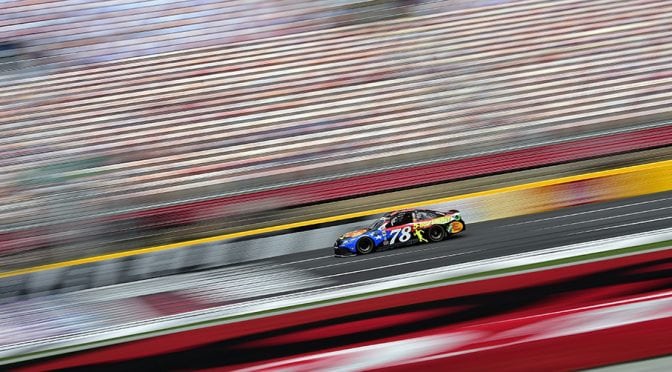
      In the Monster Energy Series, the No. 78 Furniture Row Racing team of Martin Truex Jr. was found to have one unsecured lug nut during post-race inspection following Sunday night’s Coca-Cola 600 at the 1.5-mile track. Per the rule book, crew chief Cole Pearn has been assessed a $10,000 fine for the infraction. Truex finished second in the race.

      RELATED: Full schedule for Pocono

      In the Xfinity Series, the No. 20 Joe Gibbs Racing team of Christopher Bell received an L1-level penalty for failing post-race height measurements after finishing second in Saturday’s Alsco 300. The measurements were outside NASCAR allowed tolerances, resulting in a one-race suspension for crew chief Jason Ratcliff in Saturday’s race at Pocono Raceway (1 p.m. ET, FS1) and a $10,000 fine. The infraction also results in a loss of 10 driver points and 10 owner points.

      The No. 8 B.J. McLeod Motorsports team of Tommy Joe Martins had two lug nuts unsecured in post-race inspection. Crew chief Keith Wolfe has been fined $10,000 and suspended from Saturday’s Xfinity Series race.

      The Monster Energy NASCAR Cup Series will be in action on Sunday for the Pocono 400 at Pocono Raceway (2 p.m. ET, FS1, MRN, SiriusXM NASCAR Radio).

      Watch: 2017 Coca-Cola 600 winner Austin Dillon took some laps around Charlotte Motor Speedway before hitting the track Sunday night.

      Unfortunately for Dillon, he didn’t defend his win after cutting a tire early in the race — something unpredictable that’s tough to simulate in iRacing. …

      NASCAR America on NBC Sports often utilizes an iRacing-equipped simulator setup, usually piloted by experienced iRacer Parker Kligerman. Here’s some behind-the-scenes footage of when Kyle Petty makes (well, attempts) some laps for the show, captured by iRacer Adam DeBlasio.

      At one point while making laps, Petty says, “I’ve got to get me one of these.” We agree.

      NASCAR PEAK ANTIFREEZE IRACING SERIES UPDATE

      Do you like photo finishes? Don’t answer that. Yes you do.

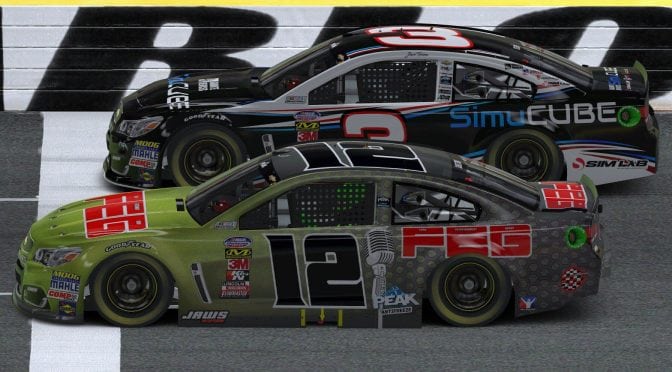
      Nick Shelton edged Jarl Teien by 0.007 seconds at the line to score his first NASCAR PEAK Antifreeze iRacing Series victory.

      As our Race 7 Power Rankings noted, Shelton showed speed at 1.5-mile tracks this season, finishing third at Las Vegas, third at Kansas, and now, first at Charlotte. The win lifted the Slip Angle Motorsports driver to fourth in the championship standings after Ryan Luza missed his second consecutive race.

      The series heads to Michigan International Speedway June 12 for the eighth race of the season. Michael Conti outdueled Zack Novak for the win in last year’s race.

      IRACING PAINT SCHEMES OF THE WEEK

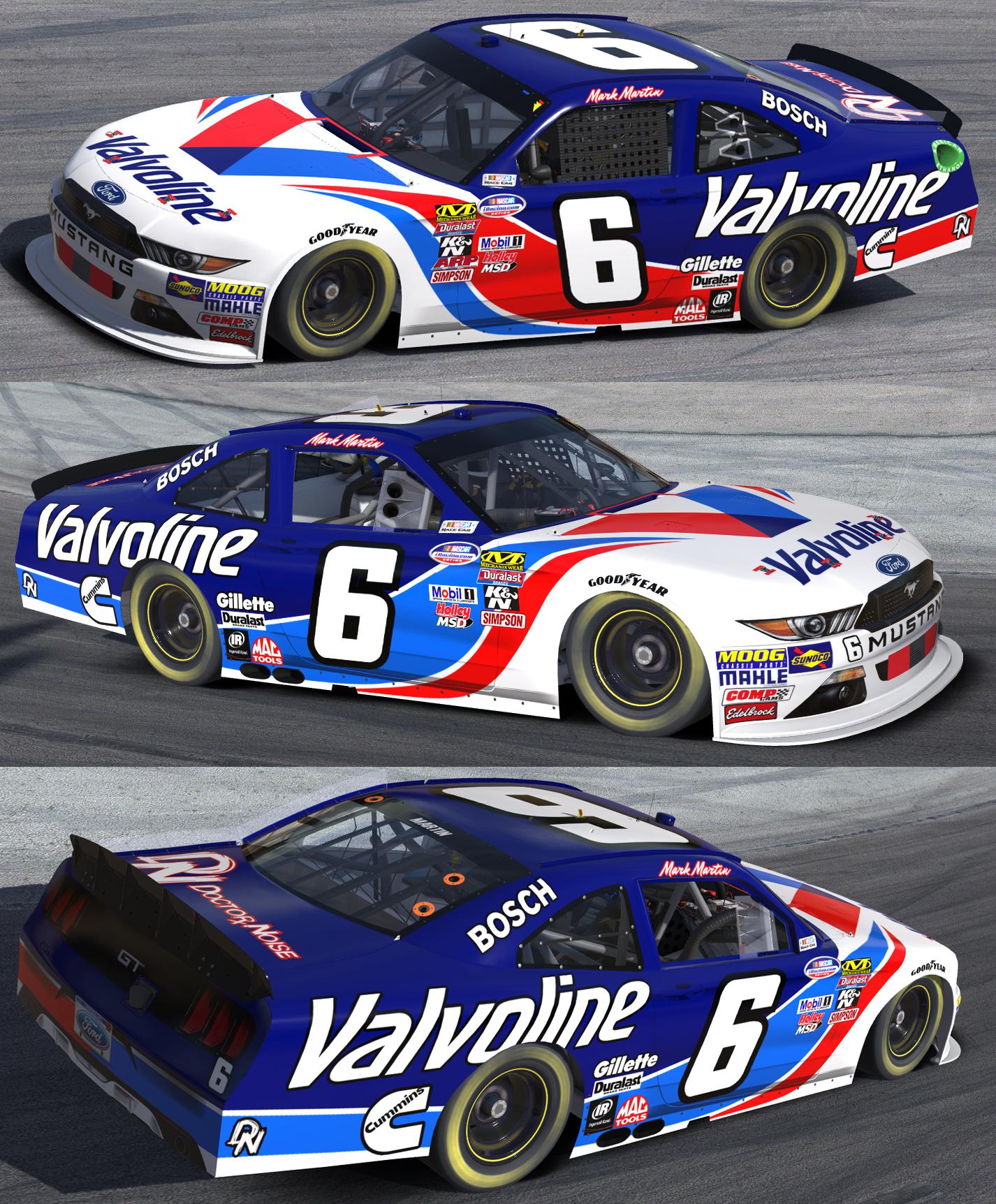
      Bill Martin reinterpreted Mark Martin’s 1996 Monster Energy NASCAR Cup Series paint scheme for the NASCAR Xfinity Series Ford Mustang.

      Mark Martin No. 6 paint scheme for iRacing
      Credit: Bill Martin

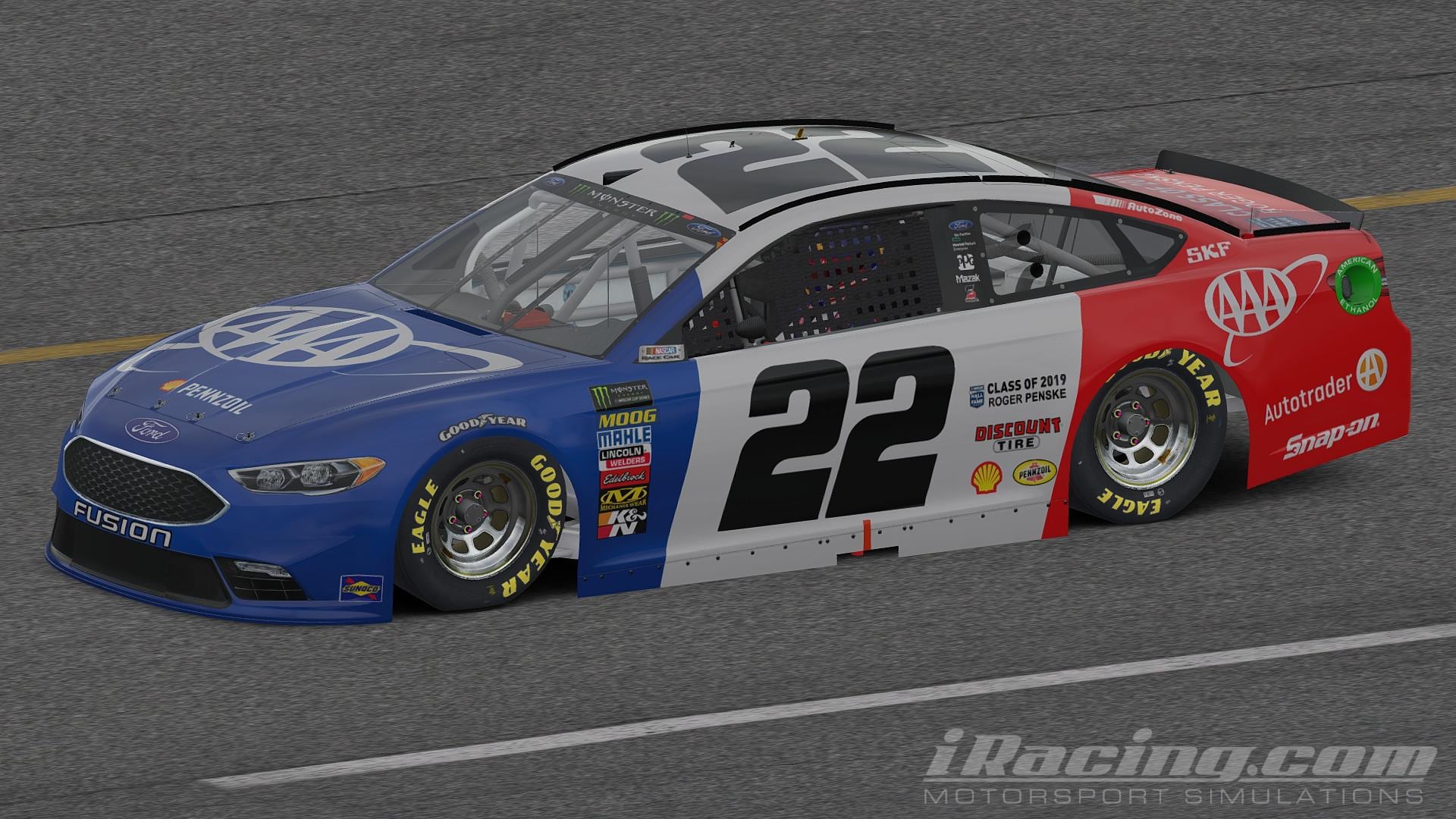
      To honor Roger Penske’s induction into the 2019 NASCAR Hall of Fame class, Scott Pierchorowicz created a throwback paint scheme on a modern car.

      Team Penske throwback car for iRacing
      Credit: Scott Pierchorowicz

      DON’T TRY THIS AT HOME

      Even NASCAR PEAK Antifreeze iRacing Series drivers make mistakes sometimes — like this week, when Michael Conti confused the shifting pattern of his iRacing car with the one on his street car, resulting in his No. 5 car going for a wild spin through the grass at Charlotte Motor Speedway.

      It’s OK, Michael. Better to make the wrong shift in your virtual car than in your Camaro.