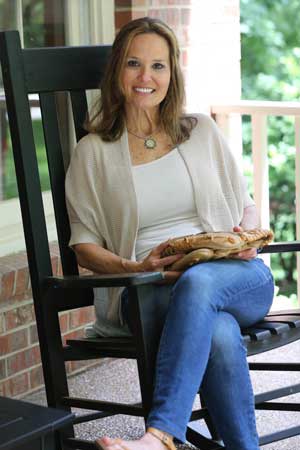
Liz Allison chose not to go to the NASCAR Hall of Fame on Voting Day in May this year. Instead, she opted to watch on TV right along with other stock-car racing fans.
When NASCAR Chairman & CEO Brian France uttered Davey Allison’s name among this year’s five selections, the sense of relief took over as she fell to her knees and cried.
“That was the biggest,” Liz Allison said. “I felt like I could breathe.”
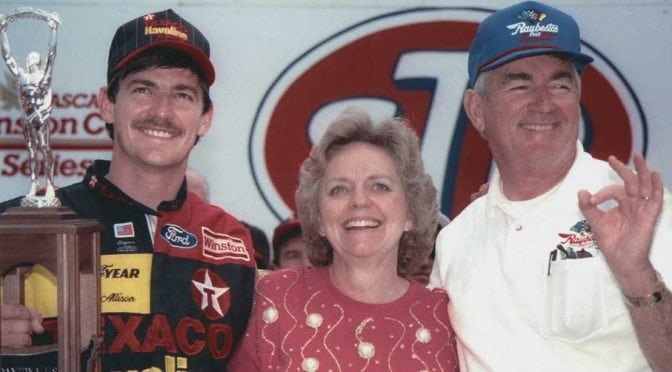
Her late husband’s legacy will live on next winter upon his induction into the NASCAR Hall of Fame’s Class of 2019. For Liz, the recognition of Davey’s accomplishments stands as a special honor, but the lasting impact of having his memory endure in the sport’s shrine serves as an even greater comfort.
“He will never be forgotten, and that’s been my biggest fear is that he would be forgotten, is that people wouldn’t remember him,” Liz Allison said. “They wouldn’t remember the driver that he was, the competitor that he was but the person that he was. They won’t remember.
“They won’t remember that he played a part, that he made an impact on the sport. He is a part of why the sport is the way it is today. And that everybody in that garage area, every driver, they could take the Davey Allison course of how to be a fan favorite and they would do really well. None of that will ever be forgotten now. That’s just the biggest sense of relief.”
One of Liz Allison’s first phone calls went to her daughter, Krista Allison Sheinfeld, who described the emotions as “just pure joy.” For Krista and her brother Robbie, the announcement meant that two generations of Allisons would forever be linked in the Hall (their grandfather, Bobby, Davey’s father, was inducted as part of the Class of 2011).
“I think it is so cool to know that he left something behind that will last forever, that is there for people to see for decades,” said Sheinfeld. “And that he’s in there with my grandpa now, I think that is such a cool connection, that he and his dad are both in the Hall of Fame together. I know it just means so much to all of us that he’s going in this year.”
Said Robbie Allison: “I’ve always felt, like he continues to be remembered after all these years, that there’s this sense of immortality about him. Now, he really is immortal. He’s in the Hall of Fame. He’s an integral piece of NASCAR’s history, and he earned it, he deserved it, and we could not be happier or more proud.”
It was the number Davey Allison made famous on tracks around the country, piloting the No. 28 to all 19 of his premier series victories before passing away following a tragic helicopter crash in 1993.
For his daughter Krista Allison Sheinfeld, it’s more than a number.
The number 28 has yet to disappear for Sheinfeld following the days, months and years since the accident on that somber summer day. In fact, it’s become something more.
Scott Hunter | NASCAR Productions
“I see 28s all over the place, non-stop,” she said. “When I’m going through something, when I’m having a happy time, I just see 28s on … I look at the clock and it’s 12:28 and then I look at my phone and I’m at 28 percent. And I bought a car recently and there were two 28s in the final price tag.”
Having lost her father at a young age, the struggles that have come since haven’t always been the easiest to handle. However, the memories of her father don’t come with as much heartache as they once did.
Yet, 25 years have yet to drown out the emotions that certain days evoke for the Allison family.
“My dad’s birthday and the day that he passed, every year, are really hard for me,” Sheinfeld said. “Everyone handles things in a different way. I tend to handle things where I just want to be by myself. I don’t really want to talk about it that day and that’s just how I handle it. So those days are rough, but you get past them.”
When Sheinfeld goes back to her normal routine, she feels her father is sending her reminders in his own way.
Reminders that life moves on in the most beautiful ways.
“It’s always for me when I see those 28s. It’s almost a little sign that he’s there and he’s telling me it’s OK or that was the good choice or, ‘I’m here to help you.’ It’s kind of a gut feeling that I get from those little 28 signs everywhere,” said Sheinfeld, age 28.
It wasn’t a flashy pickup line, but that’s what Davey Allison said when he first met Liz Allison before a race at Summerville Speedway in South Carolina on a low-country, steamy August night.
It was so hot, Liz Allison admits she almost backed out from a friend’s invitation. But the friend, who was dating one of the competitors, promised an exciting time since some NASCAR greats were in town before their premier series race at Darlington.
Dale Earnhardt and Rusty Wallace were two of the drivers expected to be on hand, so after some coaxing, Liz relented and threw on a T-shirt, some shorts and flip-flops to head out for the race.
When she got to the track, Liz was sitting in the back of a pickup truck before the races got underway when a man who was not exactly dressed for the weather conditions hopped up into the truck and uttered that line.
“I thought, ‘Wow, that’s kind of forward,’ ” Liz Allison said.“He had on black corduroys and a long-sleeved shirt. I thought, ‘Who in the world is this crazy guy with these corduroys on and this long-sleeved shirt when it’s steaming hot here in South Carolina?’
“He started talking to me, and then it was time for him to race, so they asked if he was ready to go. He said, ‘Hey, will you hold my hat for me?’ ”
Liz did not recognized the man, but after several fans came by asking about how Davey qualified at Darlington, she began to get the picture.
“When he came back over, we started talking again and I realized that he was Davey and that’s why these people were asking me where he qualified,” Liz Allison said.
“It was just a short meeting. He jumped on top of the pickup truck, we talked for a few minutes, he raced, he came back for a minute and grabbed his hat back and asked if he could have my phone number. …
“So, I thought, ‘Well now, I won’t hear from him. He won’t call.’ And he did call. He called the next day and so, that’s when I really got to know him. … That was in August and I didn’t see him again until November, so there were a lot of phone calls, and so that’s how I got to know him. We just kind of sparked this friendship over the telephone.”
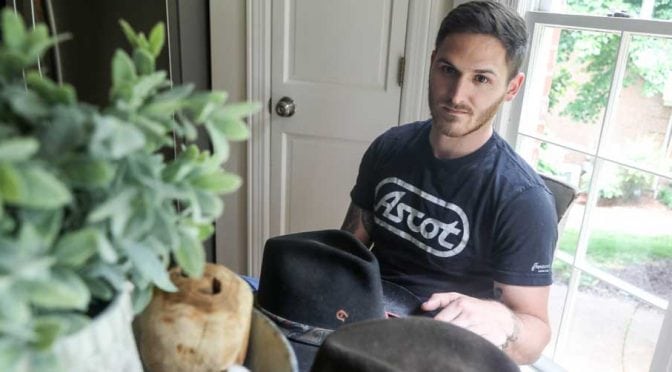
A little boy driving his Matchbox cars is a scene probably played out thousands of times a day in living rooms all across the country. But when you’re Robbie Allison, son of Davey Allison, moments like these are meant to be cherished.
So it was this past Memorial Day weekend when Robbie’s son Theo was playing in front of the TV while the Coca-Cola 600 blared in the background.
“That’s the first sound that Theo started making, the ‘Rrrrrr-rrrrrr (of the cars),’ ” Robbie Allison said. “He gets glued to it. Our granddad (Bobby Allison) said that dad started making car noises when he was 9 months old. But my son was 4 months old, so I always tell my granddad … Theo’s got dad beat.”
And just like that the four generations of Allison men have shared a connection.
For Robbie, finding those connections is invaluable.
“My son’s 18 months old now, and so I constantly think about, this was about the age I was when he passed away,” Robbie Allison said. “Just seeing my relationship with my son, and that bond, has really allowed me, internally, to get to know my own dad better in that experience. It’s a life-long journey, for sure.”
What’s just as important is spending as much time as possible with Theo, something Robbie didn’t get the opportunity to do with his own dad.
“My son and I are really attached to each other, and I try to spend every moment away from work, every moment that I can with him,” Robbie Allison said. “I see that if I get home after he falls asleep, the next day he’s that much happier to see me. You can see, at 18 months, there’s that bond. He knows who his mom is, he knows who his dad is, and he misses us when we’re gone.
“I think back on me being 23 months old and losing my dad, and thinking of what I must have gone through as a young child, as a toddler, knowing that you’re missing that role that you’ve gotten to know, and that you’ve come to rely on, and had this unexplainable bond with, and then to miss that piece,” Robbie added. “It’s weird to think about that from the outside looking in, and then take a step back and realize you’re thinking about yourself.
“It’s me that I’m kind of analyzing in that situation, and it makes me that much more motivated to be as active of a father as I can. And to just do whatever I can for my son. Give him the best life, the best father/son relationship he could possibly have.”
Come January, Davey Allison will hold a place in NASCAR’s Hall of Fame as a member of the Class of 2019.
Consider that the late driver’s second home, as Allison has resided in fans’ hearts for three decades.
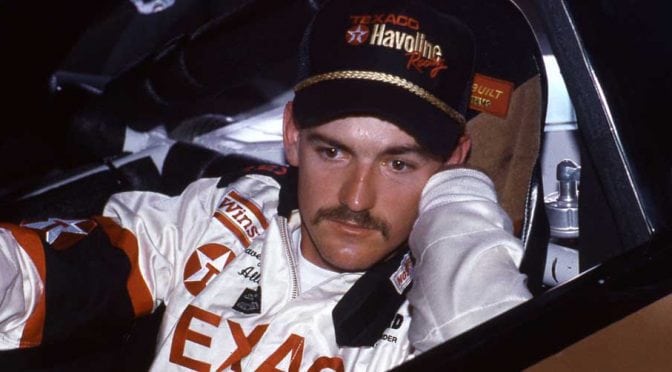
Bursting onto the scene full time in 1987, Allison rocketed to Rookie of the Year with two wins and a career high five poles. The son of NASCAR Hall of Fame driver Bobby Allison, it didn’t take much success to achieve fan-favorite status, but Davey over-delivered.
Allison continued to excel into his early 30s, winning 10.6 percent of his remaining races, his star power increasing by the lap.
RacingOne
Allison had his career and life tragically cut short in 1993 at the age of 32, however, leaving the NASCAR family to mourn. To the fans, the loss was especially heartbreaking.
The love he and his devotees had for each other was deep and mutual.
“I think the reason fans connected so much is because he did go so out of his way and they could see it,” said Krista Allison Sheinfeld, Davey’s daughter. “They could see his genuine friendliness and his genuine care for his fans. He knew they were the reason he had a job outside of obviously his driving talent, but you don’t get very far without fans.”
Following his Hall of Fame nomination this past May, Bobby Allison said that after Davey died, “the mailman delivered 1,300,000 pieces of mail to my house in five weeks.”
1.3 million.
“The thing that most people seem to hold on to was when they met him in person,” Allison’s son, Robbie, said. “That’s the thing I hear more often than anything else is, ‘Oh, I met your dad at Pocono, I met your dad at New Hampshire, I met your dad at Talladega. He stopped. He looked me in the eye as he smiled at me. He shook my hand. He talked to me. He signed autographs for six hours after a race.’
“It was always him making time and treating everybody with humility and respect. They saw that he was genuine and he was real and he was humble, but he wouldn’t give up an inch on the track.”
With Allison set to be enshrined, fans who weren’t able to meet the down-to-earth kid from Hueytown, Alabama, before his passing will get a chance to soak in Allison’s legend.
The 19-time winner would’ve loved to see people relive his career.
“He loved the fans. Oh my god, he loved the fans,” Allison’s widow, Liz, said. “He loved the energy that they brought to the sport and loved … listen, he loved that people knew who he was. He loved that he was an Allison. He loved that he had a part of making the sport what it is today. So, I don’t think there was anything that he didn’t love about it.”
And there wasn’t anything fans didn’t love about him.
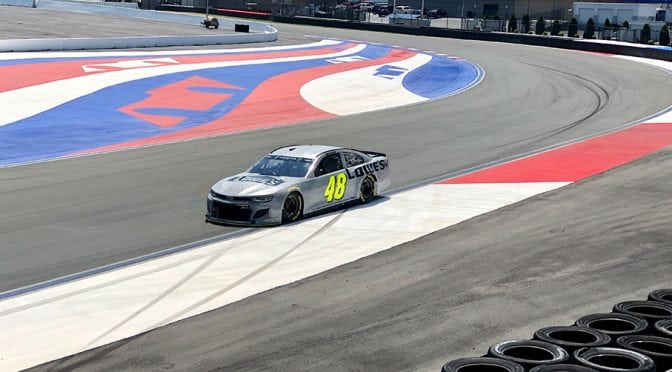
CONCORD, N.C. — Sixteen Monster Energy NASCAR Cup Series teams took part Tuesday in the first of two test sessions on the Charlotte Motor Speedway road course ahead of the Bank of America ROVAL 400 on Sept. 30.
Drivers got a look at the updated layout after the track unveiled it and the race distance for the Bank of America ROVAL 400, the first road course race that will be featured in the NASCAR Playoffs. The 400-kilometer, 109-lap event will be the longest road-course race in NASCAR, with a track length of 2.28 miles and 17 turns.
There was much to be learned and many takeaways drivers were buzzing about throughout the session. A slight change to the curbing of the backstretch chicane was made during the morning session, which extended the test to 6 p.m. instead of the originally scheduled 9-5 stint.
“How many different opportunities we have to bust our butt around this race track,” noted Jimmie Johnson, driver of the No. 48 Hendrick Motorsports Chevrolet. “It’s very demanding. There are some blind corners, which are fun. A lot of surface changes, as you can imagine. There’s parking lots and an existing road course in here and we’re coming in and out of parking lots and on the old road course and different sections, so the road itself is pretty rough.
“You’ve got to be on your toes. There’s a big penalty if you err on the side of too much aggression.”
Ryan Newman, driver of the No. 31 Richard Childress Racing Chevrolet, picked up on what spots will be most critical for the race.
“The places that you can gain and lose the most time are the places that you’re going really, really fast or really, really slow,” Newman said. “Trying to get those things as clean as you possibly can is probably the most important part. The infield part of the course is a challenge, don’t get me wrong, but I don’t think there is as much time to be made there as some of the fast or stop-and-go stuff.”
Bubba Wallace slammed into the tire barriers heading into the entrance of Turn 1 just after 10 a.m. After incurring heavy damage on the No. 43 Richard Petty Motorsports Chevrolet and with no backup car available, Wallace and the crew packed up early and were unable to continue.
Chase Elliott also found trouble early in the session after the No. 9 Hendrick Motorsports Chevrolet had a mechanical issue. The team was able to make a quick fix and return to the track for the rest of the test.
Michael McDowell looped it during the late afternoon session, spinning the No. 34 Front Row Motorsports Ford off-course, but continued.
The next test session for Monster Energy Series drivers will be July 17 from 9 a.m. to 5 p.m. ET, and fans are welcome to to attend the event.
Below are the drivers who participated in Tuesday’s session, along with those who will test July 17:
July 10: Chris Buescher; Kurt Busch; Chase Elliott; Denny Hamlin; Kevin Harvick; Jimmie Johnson; Kasey Kahne; Brad Keselowski; Kyle Larson; Michael McDowell; Paul Menard; Ryan Newman; Ricky Stenhouse Jr.; Daniel Suarez; Martin Truex Jr.; Bubba Wallace.
July 17: A.J. Allmendinger; Aric Almirola; Trevor Bayne; Ryan Blaney; Alex Bowman; Clint Bowyer; Chris Buescher; Kyle Busch; William Byron; Austin Dillon; Ty Dillon; Erik Jones; Joey Logano; Jamie McMurray.
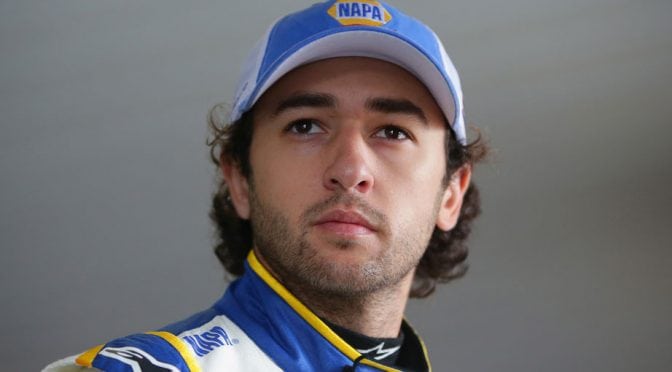
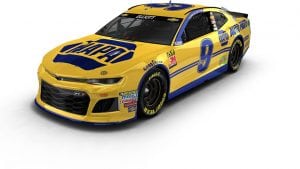
Chase Elliott unveiled his special paint scheme for the Monster Energy NASCAR Cup Series’ annual throwback race at Darlington Raceway at the Hendrick Motorsports shop on Tuesday.
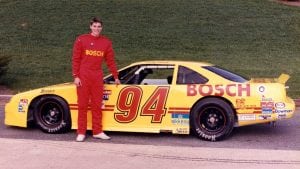
The blue-and-yellow scheme on his No. 9 Chevrolet is a nod to Elliott’s late cousin Casey Elliott, who ran a similar look in a variety of colors in the NASCAR Southeast Pro Series and two races in the Xfinity Series in 1993. Casey Elliott passed away in 1996 at the of age 21 from bone cancer, 47 days after his cousin Chase was born.
Chase Elliott, along with father and Hall of Fame driver Bill Elliott and Casey’s father and renowned engine builder Ernie Elliott, were on hand for the official unveil at the team’s campus. It was an idea the younger Elliott dreamt up during a production shoot last season and worked with Casey’s sisters to make it happen.
“I had the idea last year and unfortunately we already had other plans. … He was 94, so I might draw a 4 next to the 9 when we get there,” Elliott told NASCAR.com with a smile after the reveal. “… Our family has some pretty rich history in racing. Been doing it for a long time and it’s an honor to still be doing it and try to carry it forward and do my part there.
“I never got the chance to get to know Casey, but I always heard my fair share of stories and certainly always heard he was a good guy and I know everyone liked him and the biggest thing was how much everybody missed him. And I think that kind of showed the true story of what kind of person he was.”
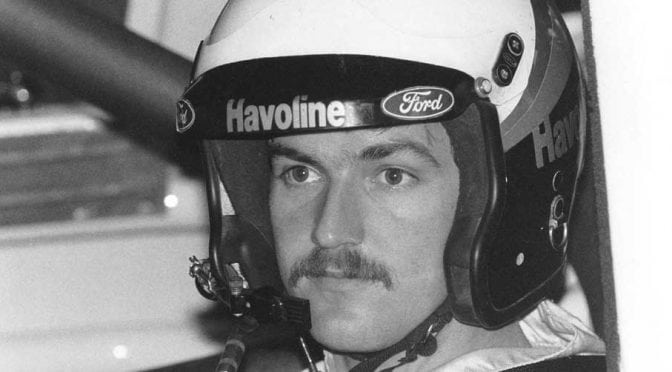
Born into a racing family, Casey Elliott’s longtime dream came to fruition when he began racing in NASCAR’s Southeast Pro Series. He earned the pole position in his official series debut in 1992 at Lanier National Speedway, finishing second and earned eight top-10 finishes in his two-year career in the series.
He was set to begin racing full time in the Busch Grand National Series in 1994, when he received his bone cancer diagnosis that disallowed him from racing. Following that, Elliott became involved motorsports ministry Motor Racing Outreach until his death on Jan. 14, 1996.
“It’s a tough thing to bring up in a lot of ways because it was a tough time for everybody back then,” Chase Elliott said on the ideation for the scheme. “Just wanted to make sure I did it the right way and try to bring it as positive as a manner as I could and hopefully go to the race track and do the same there.”
For the the No. 9 Hendrick Motorsports driver, the paint scheme is a way to honor his cousin and share his story, which is one that not everyone knows.
Courtesy: Hendrick Motorsports
“We’ve done my dad’s throwbacks the past couple years and obviously everybody knows him and knows his history in racing, but not everybody knows about Casey and his history in racing,” Chase Elliott said. “He was off to a great start before he got sick and was racing what is now the Xfinity Series and was doing a good job at it. Could have had an opportunity to move on and be racing in Cup. …
“Honor him is the biggest thing. Because I didn’t have a chance to get to know him, I felt like this was a cool thing to do. Just make people aware that there was another Elliott that was coming along racing that had a great shot to go do things and unfortunately ended too soon.”
Bill Elliott and Ernie Elliott saw the scheme for the first time Tuesday as they pulled back the black cover off the No. 9 to unveil the tribute to Casey Elliott.
With the photo of Casey’s No. 94 projected behind him, Bill Elliott smiled when he reminisced on his nephew.
“Casey was always kind of playing jokes,” he told NASCAR.com. “But he had an old Ranger pick-up that had a tag on the front that said ‘who knows, who cares.’ And that was kind of the way he lived. I could tell you story after story of the things that kind of we went through, going to the races and following him around the race track and the things that Casey did. And hell, even helping me back in the 80s, back when we were racing a lot. You’d see him in the garage trying to help not only Ernie, but myself. …
“He was just such a good kid and he had such a good outlook on life and he’ll always be remembered.”
For Ernie Elliott, having Chase run a scheme that honors his son is “special,” for more than just sentimental reasons. He hopes it brings awareness – and in turn, helps advance research – for the disease that took his son away.
“He was a really good kid,” he said. “Really loved racing and that’s what he wanted to do. Things just didn’t work that direction – you never know where life’s going to take you. … Hopefully a lot of good will come out of it. …
“I think the more important thing is … the honor of recognizing (him) this way but also the fact of what he went through the last couple years of his life and bringing that to life because cancer research needs to go at a fast pace than what it’s going today. It is considerably better than what it was 25 years ago, but there’s still more that can be done. And to be able to do this, hopefully that brings some emphasis to those programs, that they can be properly funded or funded better than what they are right now.”
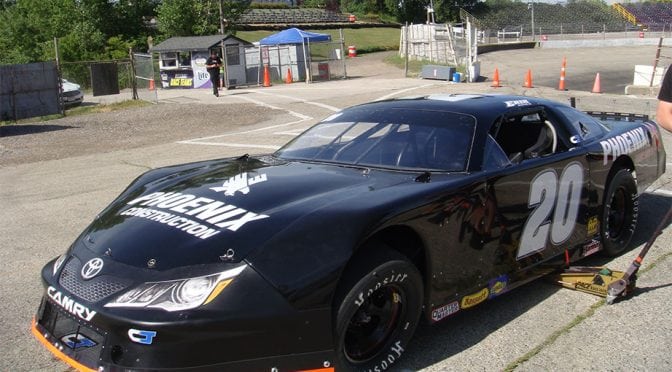
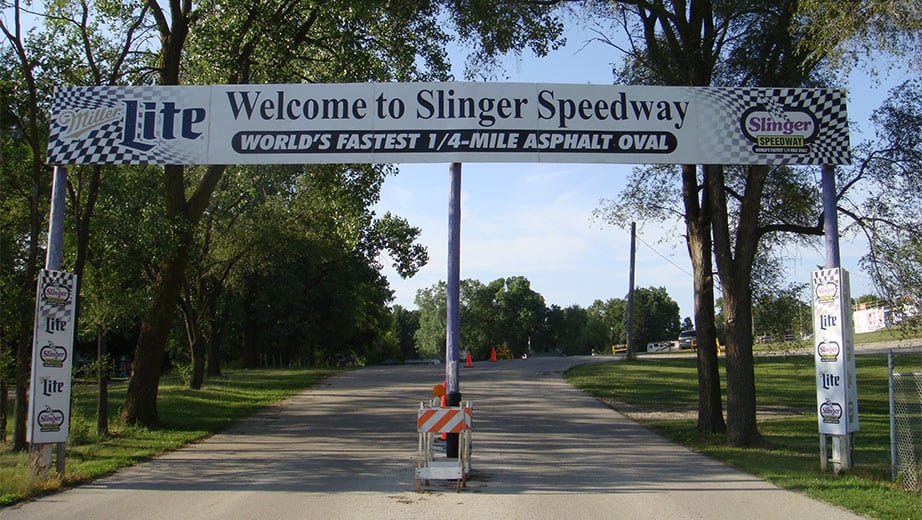
SLINGER, Wisc. — The car is a No. 20 Toyota, though this is not Daytona International Speedway, where Erik Jones drove that same manufacturer-number combo to victory in the Coke Zero Sugar 400 on Saturday. This is actually the Wisconsin heartland, at Slinger Speedway, where Jones will be driving a No. 20 Toyota super late model in the Slinger Nationals Tuesday night.
Twelve hours after edging Martin Truex Jr. to win his first career Monster Energy NASCAR Cup Series win, Jones was on a plane Sunday morning flying to Wisconsin. Going right from NASCAR’s signature speedway to a quarter-mile oval for a $10,000-to-win race may seem like an unusual way to celebrate one’s first win at NASCAR’s top level.
Photo credit | Jordan Bianchi
Yet, Jones wouldn’t have it any other way.
“It is funny how it worked out,” Jones told NASCAR.com. “Getting my first win at Daytona then coming up here I thought was kinda neat to go right back to racing and do something special.
“Honestly, it’s pretty cool that I have a shot to win a couple of different races within a few days. It gives me a chance to get back to my roots; this was what I grew up doing.”
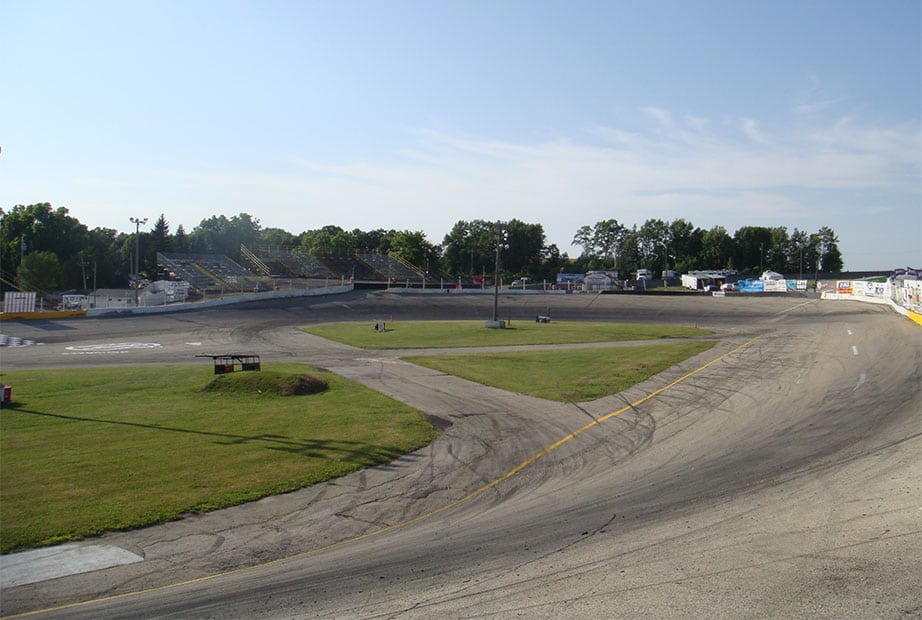
This passion is why Jones is at Slinger, a quintessential bullring where lap times are so quick the track’s slogan “The world’s fastest quarter-mile” is more than just a catchy marketing phrase. The Nationals also happen to be one of the more prestigious super late model races in the country, featuring a list of previous winners that includes Matt Kenseth, Kyle Busch, Alan Kulwicki and Mark Martin.
Photo credit | Jordan Bianchi
Jones, however, has not visited Slinger’s Victory Lane, making it is one of the few prominent short-track races he hasn’t won. His robust short-track résumé includes three wins in the Winchester (Ind.) 400 and two in the Snowball Derby held in Pensacola, Fla. And he nearly added a Slinger Nationals trophy to his collection in 2016, but a spirited battle with then-Joe Gibbs Racing teammate Matt Kenseth did not go in Jones’ favor.
After several laps that featured multiple instances of contact between them as they raced for the lead, Kenseth got the better when he nudged Jones out of the groove in Turn 2 on the final lap. Jones saved his car, though he couldn’t rally to catch Kenseth, who won for a seventh time.
How the race ended created some tension between Jones and Kenseth, and even though they were JGR teammates it would be a few months before the two spoke — “about anything,” Jones said. Eventually the ice was broken and any hard feelings subsided.
“We just both disagreed with each other,” Jones said. “I disagreed with what happened, he disagreed with how I had raced him before that. But once we talked about it, we were fine. We started laughing about it.”
Jones didn’t contest last year’s edition, but returns Tuesday seeking the win that slipped away two years ago. Among those he’ll be competing against are defending champion and current Camping World Truck Series points leader Johnny Sauter, and Roush Fenway Racing Xfinity Series driver Ty Majeski.
“I thought we had a really good car in 2016, and Matt had a really good car as well,” Jones said. “I wouldn’t say redemption is the right word, but I feel like I gave one away a bit in that race. So I’m back to get the win I feel like I should’ve had then.”
The transition from racing at Daytona on Saturday to practicing at Slinger on Sunday was not seamless, and Jones admits it took some time to acclimate himself. Speeds at Daytona flirt with 200 mph — Chase Elliot’s pole-winning lap was 194 mph — whereas it only takes 11 seconds for the best cars to navigate a Slinger lap.
“It’s a lot different, no doubt,” Jones said. “Getting readjusted to these cars and what you need to do to be fast, it took a couple runs to get used to Slinger. It’s a tough track; so tight and technical. It’s hard to get back in the groove of things.”
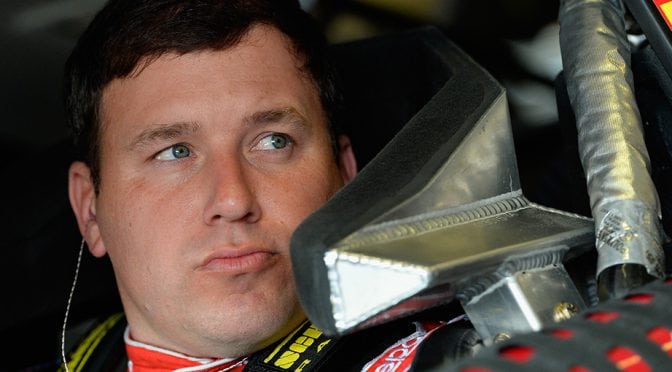
CONCORD, N.C. – Jordan Anderson couldn’t pass up the opportunity to allow his hero to run the race truck he owns in the NASCAR Camping World Truck Series.
Jordan Anderson Racing announced Tuesday that Monster Energy NASCAR Cup Series driver Ryan Newman will drive the team’s No. 3 Chevrolet Silverado at half-mile Eldora Speedway.
Anderson, accompanied by Newman, made the announcement during the Charlotte Motor Speedway road course test, unveiling the paint scheme the Daytona 500 champion will run in the Eldora Dirt Derby on Wednesday, July 18 (9 p.m. ET, FS1, MRN, SiriusXM NASCAR Radio).
“For Ryan to be a part of this, it not only brings his wealth of knowledge to the table, but his experience, his credibility and everything he has done in this sport,” Anderson said following the official announcement. “On top of that, he’s the guy that I looked up to as a kid. We first met out here (Charlotte Motor Speedway) in 2001. I ran a bandelero out here on pole night and he was running the Alltel car. It seems like yesterday, but it was a long time ago.
“It’s cool to have things come full circle for a guy that I looked up to and really tried to emulate my racing career after his where I went to college and did everything.”
Newman said running the NASCAR Camping World Truck Series’ only event on dirt just seemed like the right fit.
“It just made sense for us to do it,” Newman said. “It’s a great opportunity for him. It’s a great opportunity for me, for VRX eSports, for Chevrolet. It all lines up. It’s important for us to have the right partners to go up there and have some fun.”
Newman has competed in the Eldora event once before, finishing third in the inaugural race in 2013.
“It’s going back home. It’s going back dirt racing,” he added. “I enjoy all of that. I have a lot of friends and family up in that area. But ultimately, it’s just a good experience. It’s a lot of fun. I’m glad NASCAR has put a truck race on the dirt.”
According to Anderson, there was also one catch to Newman agreeing to the offer.
“I think the coolest thing is when Ryan and I made the deal, he said there’s one thing that you have to make sure you let me do – I want to come to the shop and work on the race truck,” Anderson said. “He said I’m not going to do the deal unless you let me do that. He said I want to be hands on and get the set up dialed in. So, to have him in the shop with us doing that stuff has been really cool.”
Although Anderson will drop the driver role to focus on the owner side of the business for one race, he is very appreciative that Newman wanted to partner up with a smaller team at Eldora to have more of an input into the truck’s setup.
“I was a little nervous at first, but he’s a super laid-back guy and super smart,” Anderson added. “He knows a lot more than I could have ever imagined. To have him helping us out and wrenching on the truck is really cool.”
After an engine issue forced Anderson out of the event on Lap 5 in 2016, he was looking forward to giving it another shot. But the deal with Newman was just too good to pass up from many perspectives.
“I definitely wanted some redemption there,” said Anderson. “But when Ryan and I started talking and thinking about not only what this meant for me as an owner, but for Jordan Anderson Racing as a team, for the guys that work for me, for the sponsors that help us grow this team — the health of this team and how well it does is good for everybody.
“The fact that everything came together the way it did and the pieces came together with a guy like Ryan, with his history and is place in the sport and the kind of driver and person he is, is really special.”
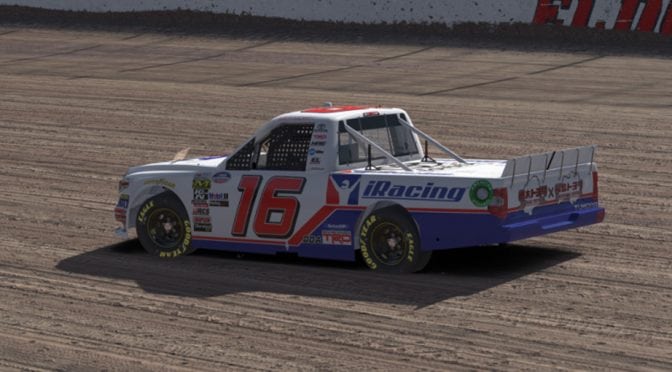
MOORESVILLE, N.C. — Hattori Racing officials are pleased to announce iRacing, the leader in online sim racing, will sponsor Brett Moffitt’s No. 16 Toyota Tundra at Eldora Speedway on July 18th. As part of iRacing’s 10th anniversary, the partnership with HRE and Moffitt, a three-time race winner in the NASCAR Camping World Truck Series (NCWTS) this season, keeps the Grimes, Iowa native and former IMCA dirt modified driver in contention for the 2018 championship.
“To have this support from iRacing to step up and partner with this race team is really special,” Moffitt said. “I have some dirt experience running modifieds back in Iowa, but have never run a truck on dirt, so racing at Eldora on iRacing is definitely going to be a benefit. It’s pretty cool to be part of iRacing’s 10-year anniversary. I was just a teenager when iRacing first went live to the public and I joined right away. I raced online a ton for a few years and really enjoyed the racing and community aspects of iRacing. It will be fun to get back in it again with the fans to see how far they have come and to experience running the Toyota Tundra at Eldora before we race there later this month.”
iRacing, the leader in online racing since launching its complete racing service in August 2008, allows real world racers like Moffitt, and everyday fans to compete, online, from their home PC, in racing disciplines including NASCAR, IMSA, World of Outlaws and USAC, IndyCar, rallycross and more.
In addition to using iRacing’s digital, laser-scanned version of the Earl Baltes-built Eldora Speedway to prepare for his first start in the Eldora Dirt Derby, Moffitt will also race against fellow iRacers in hosted sessions at Eldora in advance of the NCWTS’ showcase on dirt.
“We have been following the NASCAR Camping World series all season and have seen stories in Autoweek by Matt Weaver and listened to Michael Waltrip on the TV broadcasts – talking about the need for Moffitt to compete in every race of the season in order to qualify for the playoffs – despite having won several races already,” iRacing Executive Vice President and Executive Producer Steve Myers said. “We have a history of helping aspiring drivers from the online racing world find opportunities in real world cars and this felt like something we almost had to do – support a racer who really deserves a shot but needs a little help getting to the finish line.”
Moffitt currently sits third in the NCWTS championship standings and holds the second position on the Playoff Grid after 11 races. Moffitt will pilot the No. 16 iRacing Toyota Tundra in his first ever start at Eldora Speedway on Wednesday, July 18th in the Eldora Dirt Derby, live on FOX Sports 1 at 9:00 p.m. ET.
To learn more about iRacing and take advantage of their special offers, visit www.iRacing.com.



 Born into a racing family, Casey Elliott’s longtime dream came to fruition when he began racing in NASCAR’s Southeast Pro Series. He earned the pole position in his official series debut in 1992 at Lanier National Speedway, finishing second and earned eight top-10 finishes in his two-year career in the series.