RELATED: Untold stories of Earnhardt’s ’98 win | The meaning of a penny

A few days after the 1979 Daytona 500, Donnie Allison’s wife, Pat, called him to the phone.

“Hello?” Allison said.

He didn’t recognize the voice on the other end of the line, and the caller didn’t identify himself, saying simply, “They have a film that shows the wreck. Make ’em show it to you.”

“Who is this?” Allison insisted.

“They have a film that shows the wreck,” the voice repeated. “Make ’em show it to you.”

Click. The line went dead.

The wreck in question — and its aftermath — put NASCAR racing on the map. On the doorstep of what would have been a career-defining victory in the 1979 edition of the Great American Race, Allison saw his winning chances evaporate in a last-lap wreck with Cale Yarborough, as the drivers were dueling for the lead on the backstretch.

With Allison and Yarborough out of commission on the infield grass, Richard Petty came from a half-lap down to win the Daytona 500, the first NASCAR event that featured live flag-to-flag coverage on television.

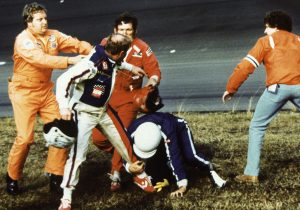
As Petty rode to Victory Lane with his crewmen draped over his car, Yarborough and the Allison brothers —Donnie and Bobby — brawled near the backstretch.

Track emergency workers try to break up a fight between Cale Yarborough, Donnie Allison and Bobby Allison. | ISC Images & Archives via Getty Image

To this day, Yarborough contends that Allison ran him onto the infield grass as Yarborough was attempting to pass for the lead. Allison, understandably, sees it differently.

“I don’t care what anybody says, Cale Yarborough or anyone else, that SOB wrecked me,” Allison said in January, on the night he was inducted into the National Motorsports Press Association Hall of Fame. “No question.”

“You don’t wreck somebody from the front. The guy in the back lifts the gas if he doesn’t have somewhere to go. I didn’t run him in the apron. He ran himself in the apron.”

Initially, NASCAR saw the wreck the same way Yarborough did. All three drivers were fined $6,000 for the fist fight, but the Allisons were placed on probation.

“Bill France Jr. came over to me, and he said, ‘Now, Donnie, you should have let him have the apron.’ I said, ‘Billy, I didn’t put him in the apron—he put his damn self in the apron. He hit me in the back first.’

France disagreed. “The film doesn’t show that,” he said.

“I don’t give a damn what that film shows you,” Allison replied. “I’m telling you what happened.”

The probation didn’t sit well with Bobby Allison.

“Bobby was infuriated, so he appealed it,” Donnie said.

The appeal was scheduled between races at a Red Roof Inn in Atlanta. The day before the hearing, Donnie got the mysterious phone call.

NASCAR executives Les Richter and Bill Gazaway were among those hearing the appeal. Gazaway asked Bobby to wait in a room across the hall while Donnie viewed five different films of the wreck.

The third film showed the initial contact between the right front of Yarborough’s car and the left rear of Allison’s.

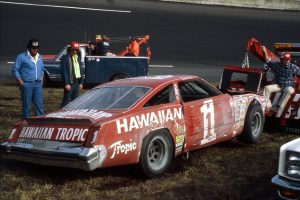
Donnie Allison’s car sits just off the track following a last-lap crash in the Daytona 500 NASCAR Cup race at Daytona International Speedway. | ISC Images & Archives via Getty Images

“The first contact, it went on by, and I said, ‘Can you back it up in slow motion until I tell you to stop,” Donnie recalls. “I’ll never ever forget what happened if I live to be 200 years old. Les Richter popped out of his chair and said, ‘Why in the hell haven’t we seen that film?’

“End of appeal. Bobby never came back into that room. We met in the hall. They put Cale on probation.”

The combatants were able to recoup their fine money at a rate of $1,000 per race for five races—for maintaining good behavior. Donnie got all but $1,000 of his money back. Bobby claims NASCAR still owes him $2,000. But Donnie isn’t sure Bobby didn’t get repaid.

“He said he didn’t,” Donnie said. “I think he did. He’ll tell you a story about a lot of things, but you better watch it.”

One thing is certain. The phone call remains a mystery.

“Till today, I don’t know who it is,” Donnie said.

One other thing is certain. Regardless of the circumstances and the truth about the details, NASCAR wouldn’t be what it is today without the wreck in the 1979 Daytona 500 and the fight that followed. That’s a point of view the Allisons and Yarborough can agree on.

Germain Racing and longtime primary sponsor GEICO announced on Friday a sponsorship extension through at least the 2020 season. It extends a relationship that has spanned more than a decade, with Ty Dillon the latest beneficiary of GEICO’s support in the No. 13 Chevrolet.

“We have been honored to represent GEICO for the last decade,” Germain Racing team owner Bob Germain Jr. said in a team release. “That is, in and of itself, a huge accomplishment and we appreciate their belief in our organization. We are excited to continue improving our team’s performance, and GEICO’s loyalty and support are the keys to any success we achieve. Carrying the GEICO name and the Gecko on the hood of our race car and on the chest of our uniforms is a source of pride and we are committed to representing them well.”

Dillon enters his second full-time season with Germain Racing, an organization that appeared to have new life breathed into it last year with the arrival of the confident 25-year-old.

RELATED: Germain Racing 2018 preview

With the rookie Dillon at the helm, the No. 13 team logged eight top-15 finishes last year. The highlight came at Dover in the spring, when the team was aggressive late in the race and stayed out following a caution on Lap 332 (of a scheduled 400). Dillon restarted first, then actually pulled away from the field a bit despite being on older tires.

He led for 27 laps, positioning himself for a big at a victory before ultimately finishing 14th after an end-of-race wreck.

Dillon was calm and confident earlier this year during the preseason media tour, too, eloquently discussing the NASCAR landscape and his place in it.

Among the highlights:

• “I want to race for Germain Racing and GEICO my whole career and win races and championships and build my own brand like Kobe Bryant and the (Los Angeles) Lakers.”

• “I think it’s a great opportunity. I know what I have to offer.”

• “You look at Furniture Row and that’s the gold standard right now for teams like ours. We’ve got to do it in our own way and use our resources the right way, but I think that’s kind of the approach that we’re taking. The opportunity is there.”

DAYTONA BEACH, Fla. — Team Penske crew chief Paul Wolfe was far more upbeat Friday morning in the Daytona International Speedway garage, less than 12 hours removed from a qualifying race crash that KO’d Brad Keselowski’s primary No. 2 Ford for the Daytona 500.

“It’s a new day, right?” Wolfe said.

Friday was, and Wolfe & Co. went back to work sorting out their backup car in hopes of sustaining their role as a favorite for Sunday’s Great American Race (2:30 p.m. ET, FOX, MRN, SiriusXM). Keselowski will be seeking his first Daytona 500 triumph, forging on with a chassis that has race-winning pedigree; he guided the chassis — since reskinned — to victory last October at Talladega Superspeedway.

MORE: Daytona 500 starting lineup | Which drivers master the draft?

Keselowski and Wolfe have already experienced brilliant highs and troublesome lows in the brief span of Speedweeks. The No. 2 team prevailed in the Advance Auto Parts Clash exhibition last Sunday, but made contact with Jamie McMurray and the outside retaining wall in Thursday night’s Can-Am Duels race, forcing the team to the rear of the 40-car field for Sunday’s main event. 

“A little frustrating last night for a couple reasons,” Wolfe said Friday morning. “One, obviously, that race pays points now, and it’s frustrating not to get those points there early on. From a car standpoint, I mean, all our cars I feel good about, so it doesn’t bother me going to a backup car, but I think losing those points last night are valuable; and then just the starting position for Sunday.

“I’m confident in what we have. I mean, obviously we’ve shown really good speed — all the Penske cars have — and it’s just frustrating we weren’t able to make it happen.”

Keselowski will be one of eight drivers dropping to the back of the pack during pace laps for the 500, the penalty for deploying reserve cars after qualifying. Austin Dillon, Aric Almirola, William Byron, Matt DiBenedetto, Kyle Larson, Jimmie Johnson and David Gilliland are the others.

But an encouraging point from Thursday’s Can-Am Duels qualifiers was Team Penske’s ability to work together in the aerodynamic draft, a tactic the organization hopes to replicate Sunday, Wolfe said. And the veteran crew chief is also taking heart that the backup No. 2 Ford has been just as meticulously prepared as the primary. 

“I can’t really say that there was one (car) that was put a whole lot more time into than the other, so that’s where I say from that standpoint, we have confidence that this car will be as capable as what we raced in the Clash and what we had last night,” Wolfe said. “We’ll take our time today and get everything dialed back in, get the setup where we want it and there’s no reason we still can’t win this thing Sunday.”

RELATED: Daytona 500 lineup | Cars to start from rear

DAYTONA BEACH, Fla. — In years past, drivers could answer the lingering question of identifying the best restrictor-plate racer in the sport with a single word: Junior.


When it comes to that debate now, Dale Earnhardt Jr.’s retirement opens the door like the well-timed development of a third line at Daytona International Speedway.


An informal poll on the topic among drivers yielded a shaky constant of Brad Keselowski and Denny Hamlin taking that mantle as masters of the draft, and it makes sense.


Keselowski has six restrictor-plate victories, including five at Talladega. Hamlin has two, including winning the closest-ever Daytona 500 finish two years ago. Both have shown a sophistication in racing through the draft and running up front in recent years, which is underscored by their showing during Speedweeks so far.


“I look at Brad (Keselowski) and Denny (Hamlin) as being the top two guys,” Joe Gibbs Racing driver Kyle Busch explained earlier this week. “I think the speed of (Ricky) Stenhouse’s car was pretty important last year. He did a good job with it, won some races. But I got to look at Brad and Denny, the things they do, as the guys you kind of watch, see if you can mimic, emulate some of the stuff they have going on in order to get yourself through the pack and up toward the front.”


MAJORITY, NOT UNANIMOUS


Most drivers echoed the sentiment that Keselowski and Hamlin are above the pack at plate tracks, but it wasn’t unanimous.


Team Penske’s Ryan Blaney, in his first year with the Penske organization, mentioned Keselowski and teammate Joey Logano.


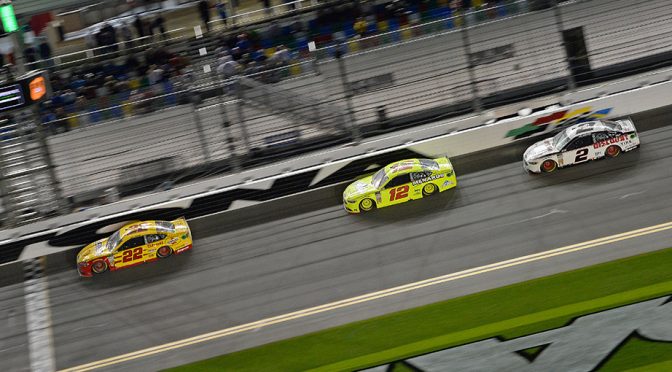
Logano tabbed Keselowski and Blaney. No playing favorites here, either. The Nos. 2, 12 and 22 Team Penske Fords ran 1-2-3 for the majority of the opening Can-Am Duel race, with Blaney winning and Logano finishing third.


MORE: Blaney, Elliott take Can-Am Duels


There were others, though.


Keselowski nominated Kevin Harvick specifically, another Ford driver. Harvick, in turn, said Keselowski and Logano.


Kyle Larson’s name was floated. So, too, was Stenhouse Jr., who won once at both Daytona and Talladega in 2017.


“I think the Fords have the fastest cars in the race usually, when you look at the past restrictor-plate races,” said Harvick, whose Stewart-Haas Racing team transitioned to Fords last year. “At some point, it’s gonna be a Ford and usually the Hendrick (Motorsports) cars qualify fast and then they can’t handle, and by the end of the race there’s a Ford up in the front racing for the win.”


THE FAVORITES

The drivers and the data both point toward a Team Penske driver winning the 60th running of the “Great American Race” on Sunday. Attitudes from the Penske camp varied when pressed.


The question following Can-Am Duel race No. 1: Is there any reason to believe a Team Penske car won’t win the Daytona 500?


The answers:

Ryan Blaney: “There’s plenty of reason. There are 37 other cars. Yeah, we’re super strong right now.  It’s really cool to be probably the best team right now I’d say this whole week. But you never know what can happen. … I wouldn’t disagree that we might be the favorite team right now just because of the speed we’ve shown, but you never know what can happen.”


Joey Logano: “No reason to believe that, no. We’re going to make it happen.”

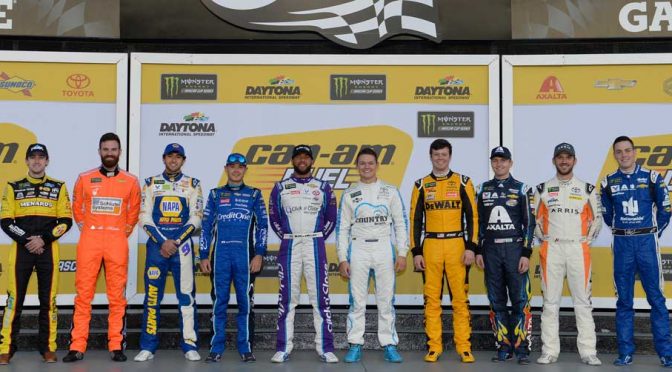
DAYTONA BEACH, Fla. — Before Thursday’s Can-Am Duel qualifying races at Daytona, 10 drivers gathered in Victory Lane for a special photo.

Chase Elliott, Kyle Larson, Daniel Suarez, Darrell Wallace Jr., Erik Jones, Ryan Blaney, William Byron, Alex Bowman, Gray Gaulding and Corey LaJoie, along with Matt DiBenedetto, all come from different teams and backgrounds. But they all share one attribute — they are graduates of the NASCAR Next program.

The NASCAR Next program selects a group of up-and-coming young drivers each year who all share a goal to compete in the Monster Energy NASCAR Cup Series one day. Sunday’s Daytona 500 40-car field includes the above 11 NASCAR Next graduates.

“We’ve all grown up a whole heck of a lot from probably the first picture that you guys have on file,” 2012 Class member LaJoie said. “… To be in that group, (with) Larson, Chase and Blaney and all these guys that are having a ton of success … it’s cool to be in the same picture with those guys.”

With an average driver age of 34.2, the 2018 Daytona 500 field is the second youngest field in the history of the “Great American Race.” Of the 40 drivers, 17 are under the age 30. For reference, the average age of the 1992 Daytona 500 field was 38.6.

The changing field represents the changing field of the sport, as more younger drivers have made their way into the Monster Energy Series.

“It’s changing a lot,” said Jones, Class of 2014. “It’s been a big change. You see guys getting started younger and younger. I think you’re just now getting to that crop of guys that really started at 6, 7, 8 years old racing and got into NASCAR at a young age, too. So you’re seeing the veterans kind of move out and the young guys come in.

“It’s a neat time in the sport really, to see that kind of influx of new talent and new guys. Just a cool time to be a part of it. “I raced with so many of these guys growing up in Late Models and early on in Trucks and Xfinity. To all be together now in the Cup level is a pretty special thing.”

Practice 4 results

Daniel Suarez topped the speed chart in Friday’s second Monster Energy NASCAR Cup Series practice for the Daytona 500 after leading in the day’s opening session, as well. He also gained quite a bit of speed, up to 203.179 mph in the latter session.

Suarez took the No. 19 Joe Gibbs Racing Toyota up to 199.840 mph in the day’s first practice, which was the third Monster Energy Series practice overall for Sunday’s race (2:30 p.m. ET, FOX, MRN, SiriusXM NASCAR Radio).

Ryan Newman was second-fastest at 202.945 mph in the No. 31 Richard Childress Racing Chevrolet. Michael McDowell (202.867 mph), AJ Allmendinger (202.739 mph) and Kyle Busch (202.689 mph) completed the top five on the leaderboard.

Only 29 of the 40 Daytona 500 entries made laps in Friday’s second practice session.

Practice 3 results

Daniel Suarez led Friday’s first Monster Energy NASCAR Cup Series practice session for the Daytona 500 with a top speed of 199.840 mph in the No. 19 Joe Gibbs Racing Toyota.

Teammate Denny Hamlin was second on the speed chart at Daytona International Speedway, topping out the No. 11 Toyota at 199.743 mph. Fellow Toyota driver and series defending champion Martin Truex Jr. was third at 199.694 mph.

David Ragan was fourth-quickest in the No. 38 Ford (199.650 mph), and Danica Patrick’s 199.406 mph in the No. 7 Chevrolet rounded out the top five.

Daytona 500 polesitter Alex Bowman was 18th-fastest at 196.721 mph in the first of two Friday practice sessions.

After a wild night of racing Thursday in the Can-Am Duels with several wrecks, Friday’s early practice laps were the first in backup cars for the No. 2 of Brad Keselowski, No. 3 of Austin Dillon, No. 10 of Aric Almirola, No. 24 of William Byron, No. 42 of Kyle Larson and No. 48 of Jimmie Johnson. Matt DiBenedetto and David Gilliland, who also went to backup cars, did not make any practice laps in the session.

Chase Elliott and Ryan Blaney, winners of the Can-Am Duels, kept their speeds at the lower end of the practice charts Friday.

Seven cars had a 15-minute practice hold for being late to inspection: No. 7 of Danica Patrick, No. 23 of Gray Gaulding, No. 34 of Michael McDowell, No. 38 of David Ragan, No. 47 of AJ Allmendinger, No. 62 of Brendan Gaughan and No. 66 of Mark Thompson.

RELATED: Practice 1 results | Practice 2 results

Editor’s note: This is the 13th in a series of 14 team previews on NASCAR.com. Next up: Furniture Row Racing on Feb. 17. A list of team previews already published is at the bottom of this story.

Joe Gibbs Racing

Manufacturer: Toyota

Engine: Toyota Racing Development (TRD)

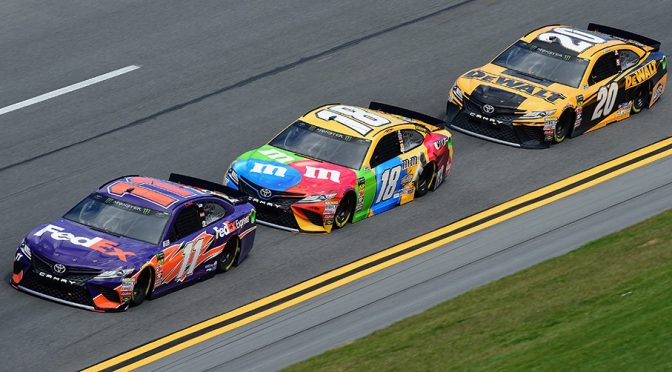
Drivers: Denny Hamlin, No. 11; Kyle Busch, No. 18; Daniel Suarez, No. 19; Erik Jones, No. 20

Crew chief: Mike Wheeler (Hamlin), Adam Stevens (Busch), Scott Graves (Suarez), Chris Gayle (Jones)

2017 standings: Busch, 2nd in final standings (reached Championship 4); Hamlin, 6th (eliminated in Round of 8); Jones, 19th (did not reach the Playoffs driving for Furniture Row Racing); Suarez, 20th (did not reach the Playoffs); Matt Kenseth, 7th (eliminated in Round of 12 driving No. 20 car)

What’s new: After running his rookie Monster Energy Series campaign with Furniture Row Racing last year, sophomore driver Erik Jones takes over the No. 20 Toyota, a seat filled by Kenseth since 2013. Jones also brings company as Chris Gayle moves over from FRR to serve as crew chief.

What to watch: How quickly sophomore sensations Jones and Suarez win their first career race (and yes, it’s WHEN, not IF). Both are poised to have breakout seasons. Between veteran leadership of Busch and Hamlin, along with new, talented blood, JGR is going to be one tough organization to beat (again) in 2018.

Key question(s): Can Jones and Suarez break into Victory Lane for the first time? Can Toyota pick up where they left off last year, or will the new Chevrolet Camaro ZL1 give the JGR Camrys a run for their money? Also, can Busch win at Charlotte Motor Speedway to have a win at every race track on the Monster Energy Series circuit?

DRIVERS 

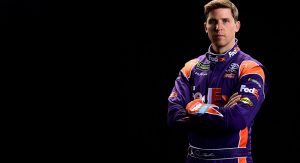
Denny Hamlin, No. 11 FedEx Toyota Camry: It was a very steady season for Hamlin in 2017 — a pair of victories, 15 top fives and 22 top-10 finishes. An average finish of 11.6 was also a career-best for Hamlin. But in a world where race victories and stage wins mean the most, consistency only gets a driver so far.

Jared C. Tilton | Getty Images

Hamlin has come heartbreakingly close to winning a championship on multiple occasions, but sealing the deal has been a tall task. If he can cook up more consistent finishes and sprinkle in a few more race/stage wins, it will have all the makings for a Championship 4 recipe.

Surely, starting on the Daytona 500 front row is a nice jumpstart.

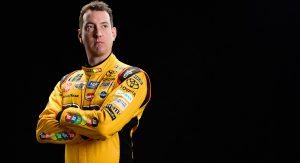
Kyle Busch, No. 18 M&M’s Toyota Camry: When .681 seconds separates you from a second Monster Energy Series championship, you’re going to have a chip on your shoulder. That’s exactly the case for “Rowdy” this season. We know Busch doesn’t need any more fuel for his fire to win, but coming thatclose to another title just allows the blaze to burn even brighter.

Jared C. Tilton | Getty Images

Coming off a stellar five-win season, Busch hopes for more of the same in 2018.

I don’t think we would be any worse,” he said. “I would like to think we’d be better. We kind of started out the season a little bit on the slower side, if you will, last year with our new car. We were kind of behind the 8‑ball a little bit maybe, and as the season kind of progressed, we learned what things our car liked and what we needed to do in order to make ourselves better and more competitive, and we were able to do those things and got it to where we were pretty fast there obviously and peaked later in the season. Hopefully we can start out our year this year a little stronger than we did last year.”

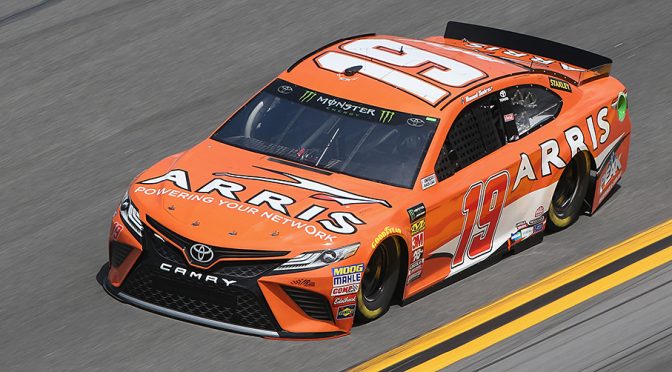
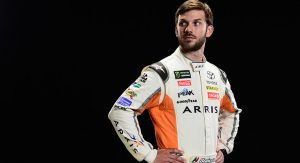
Daniel Suarez, No. 19 Arris Toyota Camry: With one top five and 12 top-10 finishes in his rookie season, Suarez proved success at NASCAR’s highest level is imminent. But, those numbers weren’t good enough for him.

Jared C. Tilton | Getty Images

“That’s not the rookie season that everyone wants, but sometimes that’s what makes you tougher,” Suarez said. “I feel like that can teach me a lot of things to prepare myself better for this year, and I feel like we are going to show that on the racetrack.”

The 26-year-old needs to take his performance to the next level by minimizing mistakes and taking advantage of every opportunity. Between his prowess and strong Toyota power, Suarez has all the potential to notch his first career win and become the first Mexican-born driver to win a Monster Energy Series race.

Suarez recorded his career-best third-place finish at Watkins Glen in 2017, so breaking into Victory Lane could very well come on a road course.

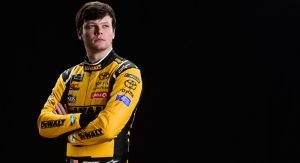
Erik Jones, No. 20 DeWalt Toyota Camry: Taking over a big-time Monster Energy Series ride after a champion held the seat is a tall task, but if anyone can handle it, it’s Erik Jones.

Jones will fill the No. 20 Toyota following Matt Kenseth’s five-year run with the organization. With one year of racing at the top level already under his belt, the 2017 Sunoco Rookie of the Year knows what to expect.

Jared C. Tilton | Getty Images

The 21-year-old driver earned five top fives and 14 top-10 finishes last season. All signs point to Jones building on those numbers and breaking into the win column in 2018 — sooner rather than later.

“There were a lot of unknowns last year at this point for myself, at least, going into a new series with a new team, a new group of guys,” Jones said. “It was just a lot of things that were really unsettled and weren’t really all figured out yet. At least having everybody in place, knowing Chris (Gayle) and knowing the Cup Series one year better than I did last is definitely an advantage. I have a better feel for the cars and everything to expect there and what’s going to be week in and week out and how the season kind of rolls and progresses.”

PREVIOUS TEAM PREVIEWS

Feb. 1: Front Row Motorsports
Feb. 2: Richard Petty Motorsports
Feb. 3: Leavine Family Racing
Feb. 5: JTG Daugherty Racing

Feb. 6: Germain Racing
Feb. 7: Roush Fenway Racing
Feb. 8: Richard Childress Racing
Feb. 9: Wood Brothers Racing
Feb. 12: Chip Ganassi Racing
Feb. 13: Hendrick Motorsports
Feb. 14: Team Penske
Feb. 15: Stewart-Haas Racing

DAYTONA BEACH, Fla. — Now out from behind the wheel, Ben Kennedy — the newly named NASCAR Camping World Truck Series General Manager — will return to working behind the scenes to ensure his family’s strong legacy of competition and excitement continues to thrill for decades to come.

Kennedy has won a NASCAR Camping World Truck Series race and competed in the series Playoffs. Now the 25-year-old is ready to hang up his driver’s suit, roll up his sleeves and serve as an executive in the sport he loves.

His interest in guiding the future of NASCAR comes naturally and authentically — after all, he is the great-grandson of NASCAR’s founder and the son of International Speedway Corporation’s Chief Executive Officer.

RELATED: Ben Kennedy named to Truck Series leadership position

His decision to accept the important new position in the Truck Series is an opportunity to pursue a passion all his own — relying on experiences as a racer, a lifetime observing his family lead the sport and a positive dose of fresh perspective.

“I had opportunities to continue racing but I guess I’ve always been thinking about it,’’ Kennedy said of taking an administrative position in the family business. “I think for myself personally, and my long-term growth that made the most sense. I thought, ‘Let’s jump in now and hit the ground running.’ ”

Not only does he show great motivation and interest in his new endeavor, but also Kennedy comes with credentials that both race fans and race drivers can appreciate. He has worked in the family business for a lot of his life already – legitimate and diverse jobs putting in long hours as a track worker, a competitor and also interacting with fans. Learning from the ground up, just as his relatives have done before him.

“I worked at the Daytona 500 Experience,’’ Kennedy said. “I did that for two or three years just after high school during the summer. And I did a couple other summer internships at the track. I’ve literally done everything from helping park cars for the Coke Zero 400 to making signs for the old flag stand, to trash duty, to even working the sewage truck — a little bit of everything.’’

By the time he graduated from the University of Florida in 2014, Kennedy had already embarked on a full-time racing career in the Camping World Truck Series. He won Sunoco Rookie of the Year honors in 2014 and dramatically won at the notoriously tough Bristol Motor Speedway in August, 2016 — one of 10 top-10 finishes in 23 races that season that also earned him a Playoff position.

RELATED: Ben Kennedy brings new perspective to management role

Last year, Kennedy ran a half-season in the NASCAR Xfinity Series, scoring his best finish (fourth place) on a superspeedway (Talladega) his family built nearly 50 years ago.

“It’s definitely fresh for me and hopefully a new perspective I can bring to the table,’’ Kennedy said of his new role. “Hopefully I can add value. I’ve been on the driver’s side. I’ve been on the team side. And I’ve negotiated on either side of the table.

“I think getting behind the wheel and driving a race car is one element to it, but there are so many other elements that come to it, as well, from partnership sales to managing a team to budgeting.

“There are all sorts of things that come not only from being on the driver’s side but from being on the team owner’s side too, so hopefully I can add value to that piece of it.’’

Judging by the positive reception Kennedy already has received in his new role, it appears all expectations are high.

Last weekend he and other NASCAR executives held a news conference to more formally introduce the new leadership and discuss what to expect from the series, which begins the 2018 season Friday under the lights with the NextEra Energy Resources 250 (7:30 p.m. ET on FOX, MRN, SiriusXM NASCAR Radio).

Kennedy sat among sanctioning body executives including Steve O’Donnell (Executive Vice President and Chief Racing Development Officer), Elton Sawyer (Vice President of Officiating and Technical Inspection), Brad Moran (Managing Director, NASCAR Camping World Truck Series) and Jeff Wohlschlaeger (Managing Director, NASCAR Series Marketing). He aptly handled all the questions directed to him – smiling and looking quite at ease addressing the press, now in a buttoned-up dress shirt instead of a fire suit.

Monster Energy NASCAR Cup Series driver Brad Keselowski tweeted a photo of the news conference, saying of Kennedy, “Call me crazy, but I think this may be the biggest story of the off-season.”

The response that post received on social media was also encouraging to Kennedy.

“He’s got a solid, confident attitude,’’ a fan said of Kennedy in response to Keselowski.

It’s exactly the kind of high expectation that buoys Kennedy’s decision to continue to work in the family business – now as an executive, ready to lead and shape and embolden. An opportunity to put his own signature on the sport he loves.

“There’s never really been a GM of the Truck Series, so I can go and focus on the big picture of what’s going on in the trucks and what the future will be,’’ Kennedy said.

“It’s kind of tricky because there’s no rule book (for this position) or someone to talk to that might say, ‘Oh yeah, we’ve done this in the past.’ But at the same time, it also gives me the opportunity to open more doors and try more things — just because it’s never been done before.

“In a sense, I’m trying to write my own book, just trying to figure out the right way to do it.”

DAYTONA BEACH, Fla. — Like so many passionate fans of auto racing, NASCAR president Brent Dewar specifically remembers the time he first fell in love with the sport.

As a young boy growing up near Vancouver, British Columbia, he secured rare early-morning access to the family television away from his siblings. He caught an episode of ABC’s Wide World of Sports that highlighted Corvette racing and he was hooked — never realizing that one day he would not only lead Corvette’s parent company, Chevrolet, but then take on his current position as NASCAR President.

“My father wasn’t a car guy, but it was my friends who took me to the local track and I fell in love with racing — just the sheer visceral speed and sound was incredible to me,” Dewar recalled as the sound of Monster Energy NASCAR Cup cars roared by on the Daytona International Speedway below.

“I literally became a fan of racing before I was old enough to drive.’’

Named NASCAR President last July, Dewar now has the opportunity to guide and shape one of the most popular forms of motorsports in the world. He is eager to keep the competition exciting, promote its competitors, actively engage through social media and stay dedicated to keeping this sport relevant.

“I understood the significance but in many ways I didn’t until I saw the outpouring of support and the people who were in the position before me, and it is obviously very humbling,’’ Dewar said. “It allowed me to change my role to be more forward facing and that’s what Brian, and Lesa and Jim France asked me to do. You’ll see that since July — I’ve come more to the front whether it’s directly interacting with the fans or being more visible. And that’s part of the role of president.”

“It’s been one, humbling to get the job and two, a big responsibility. And I don’t take that lightly.’’

RELATED: Lifelong love of cars, racing fueled Dewar’s drive to President of NASCAR

That authentic, lifelong fondness for the sport certainly helps to shape Dewar’s role. He is eagerly guiding and overseeing the sport flourish in new times with new generations of fans.

Dewar is eagerly anticipating a renewed competitive emphasis on stage racing this year after defending champion Martin Truex Jr. so aptly showed the difference it can make, and Dewar expects great interest in how teams handle a handful of important variables — from adjusting to a new ride-height rule to seizing the importance of qualifying.

They are all competitive factors Dewar is enthusiastically embracing – keeping the fans engaged and energized, the race teams motivated, and of course, the corporate sponsors excited.

“The most important thing, I think, is the ability of bringing together drivers and teams and manufacturers and sponsors and the competition with the business side,’’ Dewar said. “You’ll hear the word ‘collaboration’ and it’s a mantra we set forth three or four years ago to continue down the path.

“Probably the hardest part of my job is communicating and making sure all the stakeholders are on the same page. And that’s why we created all the councils. We started with the driver’s council, team owners, manufacturers, track councils to give them a forum to be able to interact with us.

“It’s definitely better. It’s our responsibility to make those pieces come together and that’s a big part of my job.”

Creating that positive synergy may not always be easy, but continuing to press toward that goal is an absolute must as far as Dewar is concerned.

“It’s easier to just be in a vacuum and make decisions,’’ he said smiling. “The challenge is you may not make the right one. So we base things on what’s right for the fan because everything is fan-centric for us at NASCAR.

“The next thing is making sure the competition on the track is a level playing field, and of course we focus on safety because we want our athletes to be safe. So we balance it between those three things and it all comes together in a commercial package, but we put the competition first and all our commercial partners understand that.’’

With a mix of up-and-comers such as Kyle Larson, Chase Elliott, Ryan Blaney, William Byron, Daniel Suarez, Erik Jones, Darrell Wallace, Jr. and Daytona 500 polesitter Alex Bowman; to the veterans such as Martin Truex Jr., Jimmie Johnson, Kyle Busch, Denny Hamlin, Kevin Harvick, Joey Logano and Brad Keselowski, Dewar is excited about the possibilities of new rivalries and, more simply, watching the young drivers dice it up with the champion veterans. It’s a no-lose situation for the sport and its fans as Dewar enthusiastically sees it.

“They aren’t just good drivers, they’re really good personalities and I think the fans are going to see that this year,’’ Dewar said of the young class of competitors. “They’re going to see that rivalry build. There’s only 40 seats and any given Sunday there’s probably 30 people that can legitimately win.  We haven’t always had that and I think it’s been building to this point. I think for the season we’re excited about it.”

Dewar brings a fresh and genuine perspective to NASCAR. He understands close competition, captive personalities and business opportunity. And he likes that fans, racers and businesses can find all that in the modern day NASCAR product.

“I think probably that I’m a fan first,’’ Dewar said. “Most people know that I come from the automotive side — that I spent 30 years at an auto company, which was a great opportunity. I love cars.

“But I became a race fan before I became a fan of automobiles.’’

Dewar’s face brightens when he talks about his efforts to prioritize fan engagement. It’s not everyday that the president of a major sport follows you on social media, like Twitter.

But Dewar figures he follows thousands of fans all in an effort to better understand the progress and status of the sport he leads.

“I’ve always been active on social media and what we do with NASCAR and what I did when I was with the automotive companies is I truly believe you have to find your voice,’’ Dewar said.

And Dewar said he’s not afraid to engage with people on social media, even if the person may have a negative opinion. And who knows? A lively, heartfelt debate may help change that view.

“My first objective with social media is to connect with the fans,’’ he said. “That’s my primary objective and I accelerated that when I became president.

“One, I want to engage directly with the fans, with no filters. And I will engage them directly, which is interesting in a lot of ways. They are surprised that I follow them.’’

He laughs, explaining his tactic and using the pop star Rihanna as an example. She has 80 million followers.

“I do the reverse,’’ he said. “I follow a lot of people. I want to see how the fans are engaging. I don’t want them to think I’m stalking them because I’m not, but I actually go through the day and look at what fans say and follow them. If I see NASCAR in their header, I’ll check to see how they are interacting.

“I’m not just looking for the people who are happy about NASCAR, I want fan engagement.”

Dewar says on average he spends up to two hours a day tracking the pulse of the sport on social media.

With so many people in the NASCAR garage engaged with fans — including recent retirees such as the 15-time Most Popular Driver Dale Earnhardt Jr. and four-time Cup champion Jeff Gordon — NASCAR is easily one of the most fan-centric among major sports.

More often, however, social media is the timely outlet to discuss hot topics on the track.

“Stage racing is overwhelmingly embraced by our fans,’’ Dewar offered as an example. “Some fans don’t like it, but they are a smaller, vocal group so I engage with them as well.

“They just say all fans hate it and I just say it’s just not true,’’ he said smiling. “I have the data. That’s the luxury of the data.”

RELATED: NASCAR President Dewar talks NASCAR Playoffs, driver council, more

That feedback is a crucial component to NASCAR’s every day guidance — keeping the sport in touch with fans and allowing for productive debate.

“We increased our fan council from 12,000 to 25,000, it’s incredible,’’ Dewar said.  “We have data and insight that are remarkable from the fans.  Every week they give us qualitative and quantitative feedback and every week we plow through the data. We are very deep in research analytics, it probably would rival any sport.”

As the season officially begins with the Sunday’s Daytona 500, Dewar says he couldn’t be more excited or more optimistic about the sport’s direction and vibe.

Expectations are high.

From the competition level between the young, drivers to the great quest of seven-time Johnson, who is one season trophy away from NASCAR history.

From the compelling strategies of stage racing to the interesting personalities behind the wheel and behind the wrench — there is an unmistakable level of interest for the 2018 season.

As he began to sum up all the many reasons NASCAR fans should feel engaged and optimistic, Dewar paused and broke into a wide smile.

“There’s a lot of things we’re excited about for this year,’’ he said. “Let’s go racing!”