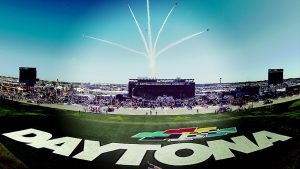
DAYTONA BEACH, Fla. — The recent history of Daytona International Speedway’s dramatic designs in the tri-oval grass began with what Andrew Gurtis calls a “happy accident.” During the 2000 running of the Rolex 24, a sports car spun off the course, scraping up a swath of the lush, green turf.
With the rest of Speedweeks soon approaching, it was repair mode for Gurtis, now Daytona’s VP of Operations, his team and the grounds crew.
“Our groundskeeper at the time, Sam Newpher, had thrown down some seed that he still had in the barn and it came up and it was a different color,” Gurtis recalled. “If we had down annual rye, this was perennial rye, and with that we got two tones and knew at that point that we could do a two-tone pattern.”
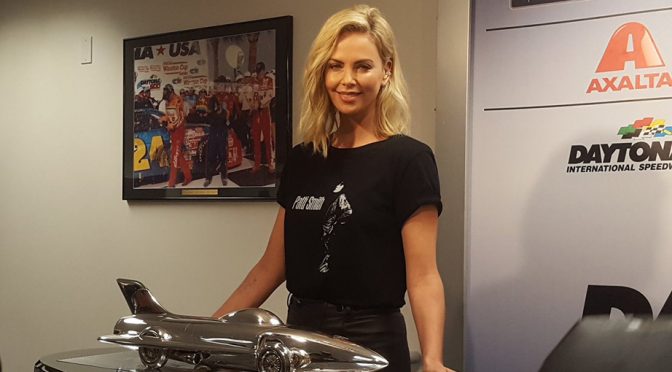
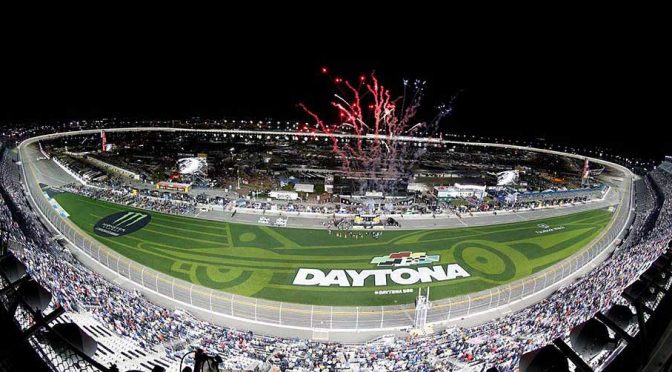
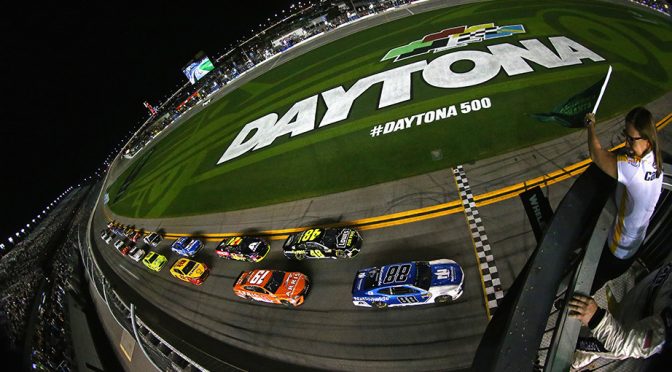
That design has evolved into this year’s elegant rendering of the General Motors Firebird 1 that tops the Harley J. Earl Trophy for the 60th running of the Daytona 500 (2:30 p.m. ET, FOX, MRN, SiriusXM). The design was chosen in a vote by fans and has served as a four-acre centerpiece along the frontstretch.
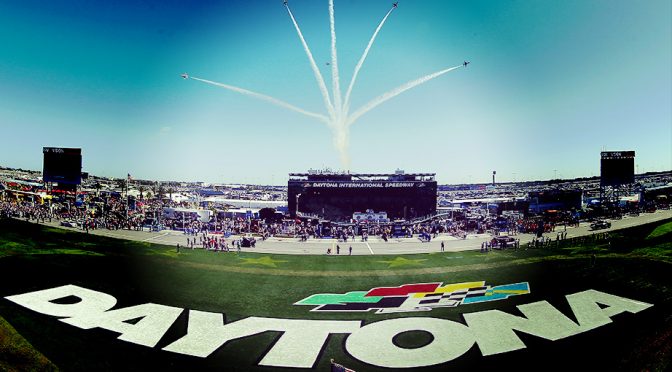
Getting the pattern off the ground — quite literally — has been a collaboration between the Speedway’s operations staff and TruGreen, which also assists in the care of other vegetation around the track’s extensive campus. The track also partners with Missouri Turf and Paint, which imprints logos on the frontstretch grass, including the Monster Energy NASCAR Cup Series logo, the track’s brand mark and a promotion for Facebook Watch’s docu-series this week with Bubba Wallace.
The preparations for making the design come to life actually began near the end of last season. The grounds team typically aerates the ball field area in the second week of November, with an overseed on Thanksgiving weekend. Ten days later, a fertilizer and fungicide treatment are applied. The whole process is repeated in late March to early April to prepare for the Coke Zero 400 weekend near Independence Day.
TruGreen has partnered with several other NASCAR facilities, but their handiwork has also been on display at stadiums for Major League Baseball, the NFL and at Churchill Downs, home of the Kentucky Derby.
“I want to stress is it’s us coming alongside them and really working under their direction,” says Brent Armstrong, vice president of commercial sales at TruGreen. “They’re the heroes. They’re the ones who make it shine and we just come alongside and hopefully make their jobs a little easier.”
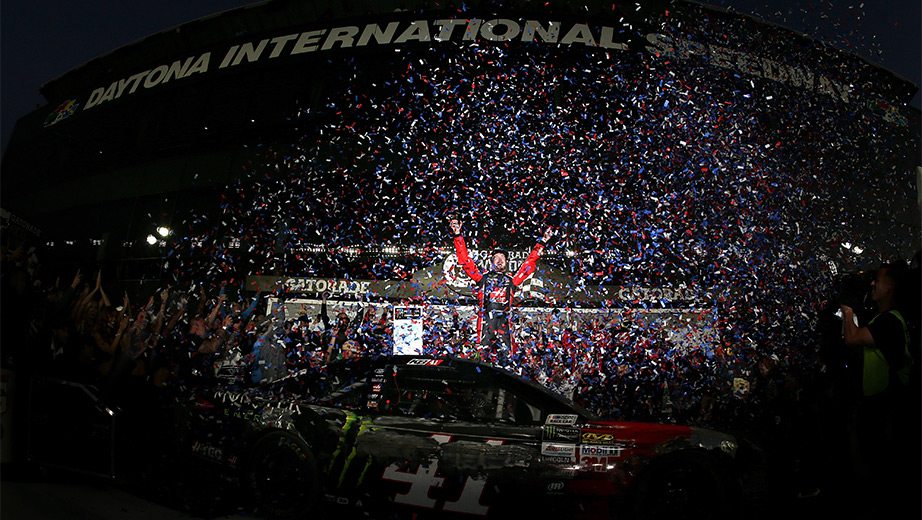
There might be some pressure to creating an eye-popping effect for such a prominent area in NASCAR’s biggest race, but grounds superintendent Jason Griffeth and his crew have had fun with it. When Kurt Busch won last year’s Daytona 500 and carved donuts into the infield, a large patch of turf landed on his car’s hood. That patch stayed put, all the way to the No. 41 Ford’s display in Daytona’s museum. A humorous video shows Griffeth watering and trimming the grass in the day’s after Busch’s 500 win.
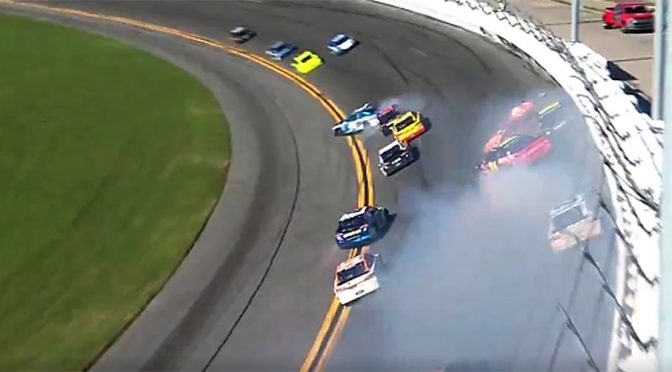
But Griffeth and Co. have also shown the ability to act quickly during the more chaotic portions of Speedweeks, when wrecks or spins have blemished the pristine turf. For that, Daytona has a contingency plan in place.
“We do have what we refer to as the sod retention area,” Gurtis says. “Both types of grass — annual and perennial rye — are growing on the backstretch in an area that most of the general public doesn’t have access to, and if there were a major gouge or somebody really plowed up a significant portion of it, we are able to cut up that sod and transplant it and get back to looking good for the next race day.”
Newpher, the former DIS groundskeeper, helped recruit Griffeth through his connections to Major League Baseball. Griffeth’s resume includes tenure with the Boston Red Sox in caring for Fenway Park’s grass, so he’s familiar with hallowed ground in the world of sports.
“There’s an enormous amount of effort that goes into executing the creativity, and that’s where Jason and the Ops team at Daytona really are the best in the business,” Gurtis says. “That shows up if you get down close on the ball field, you can see the care. That doesn’t just happen — not only the level of detail, but then the color behind it. The color enhances how it shows up on television, the color enhances how it shows up in still photography, and it’s an amazing job that they’ve done executing on the creativity. It doesn’t just happen.
“We work with a lot of them, but there are very few folks in the U.S. who could’ve pulled off what Jason and his team pulled off.”