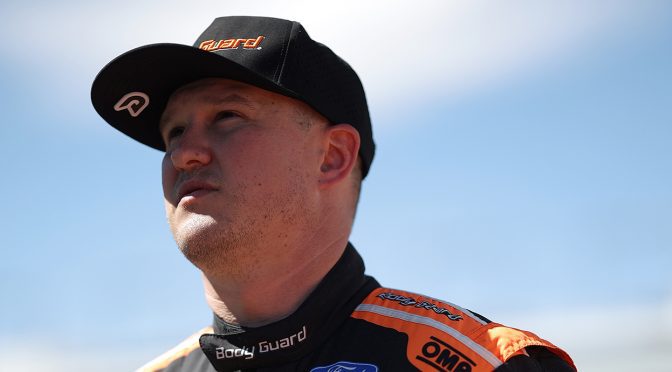
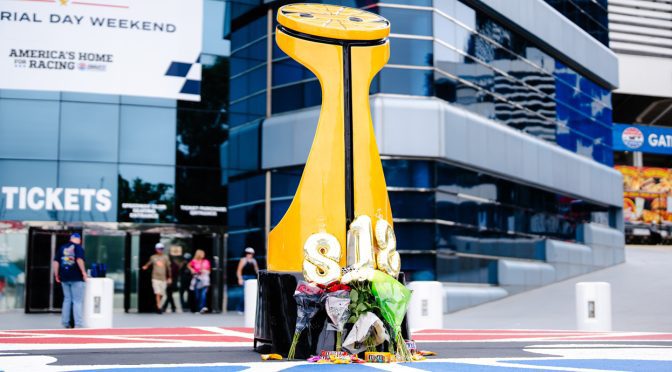
“This one is for Kyle,” Daniel Suárez said through the rain and tears as he celebrated winning the Coca-Cola 600 on Sunday. “If it wasn’t for Kyle, I wasn’t going to be an [O’Reilly Auto Parts Series] champion. I wasn’t going to have my shot in the Cup Series, and to be able to win this race for him is unbelievable.”
Suárez can trace back many connections to Busch, who died at age 41 last week. Not only were the two friends and former teammates at Joe Gibbs Racing, but Suárez’s first full season in a NASCAR national series, 2015, was spent driving for JGR in the O’Reilly Auto Parts Series and Kyle Busch Motorsports in the Craftsman Truck Series.
After winning at Charlotte, Suárez credited the mentorship he received from Busch with making him a better driver. “Back in 2015, Kyle and I used to be on the phone every single week,” he said. “Because he was helping me, trying to understand what I needed to look for, trying to understand the race track.”
“He didn’t have to help me. … He didn’t have to help this Mexican kid who could barely speak English,” Suárez said. “He was a real legend of the sport, and he took the time every single week to help me. For me, that spoke very highly of not who he is as a driver, [but] who he is as a person. And most people didn’t know that side of him. I got to know that side of him.”
Among those in the current Cup Series garage, though, Suárez wasn’t alone in seeing that side of Busch.
In the days since his death, much has (rightly) been made about Kyle Busch’s greatness as a driver. All of the wins — 63 in Cup (ninth-most all-time) and 234 across all national series (by far the most in history) — and the talent, the run-ins and the hilarious quotes. Busch was a one-of-a-kind, larger-than-life personality and performer whose individual impact will be irreplaceable.
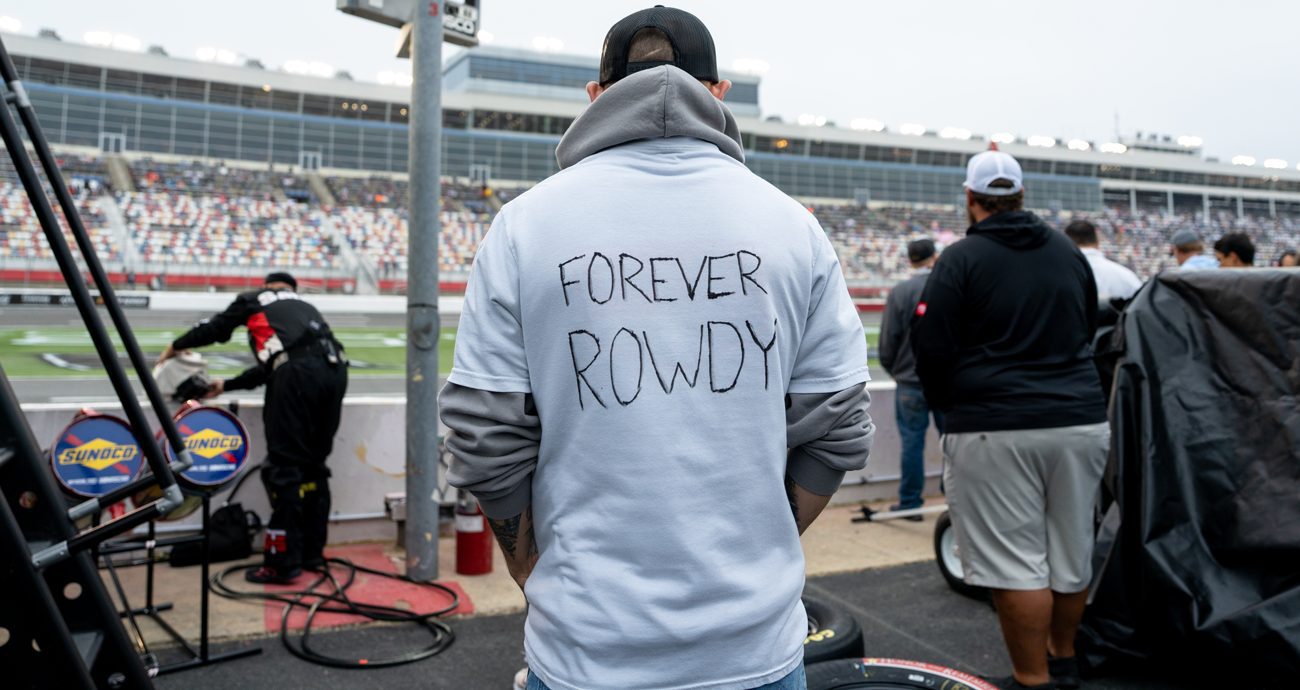
But just as irreplaceable as part of Busch’s legacy is what he did as a team owner. It was clear from the number of KBM hats worn in tribute around the garage this past weekend at Charlotte that Busch’s team left its fingerprints all over the modern Cup Series. And the numbers make that fact even clearer.
From its start in the Truck Series during the early 2010s, Kyle Busch Motorsports has seen the influence of its alumni base grow by leaps and bounds over the past 15-plus years. So far this season, 27.2% of all Cup Series starts have been made by drivers (other than Kyle Busch) who drove for KBM in either the O’Reilly, Trucks or ARCA Menards Series, including 22% by drivers who effectively broke through after driving for KBM — those who’d made fewer than 10 career Cup starts before their KBM debut. And while the share of wins for KBM alumni and pipeline drivers is down to start 2026 — Tyler Reddick (a non-KBM alumnus) winning so many races will do that — last season saw 38.9% (!) of all Cup Series wins belong to former KBM drivers, including 22.2% for pipeline alumni for the fourth consecutive season. (That was an average of eight wins per season in a 36-race schedule, for four years running.)
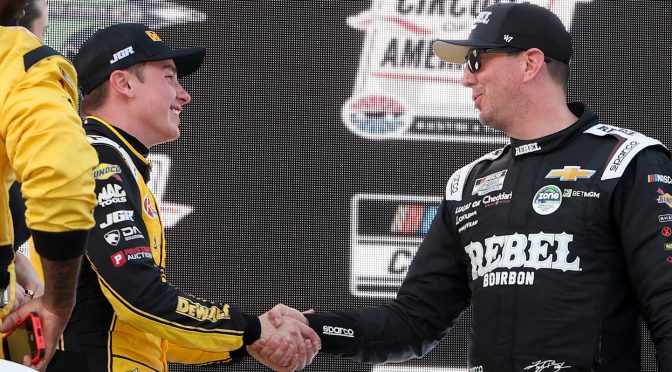
Suárez provided the latest entry in that category this season, while last year saw additions by William Byron, Christopher Bell and Bubba Wallace. (The overall total was also padded by plenty of wins by Denny Hamlin via his five career KBM starts in the Trucks.) Before that, the KBM tally saw contributions from Harrison Burton, Erik Jones, Kasey Kahne, and even other all-time greats like Martin Truex Jr., Greg Biffle and Kyle’s brother, Hall of Famer Kurt Busch.
And remember, these stats all exclude Kyle Busch himself — so nothing is boosted by his own 47 wins since 2010, which rank third-most in Cup behind only Hamlin and Kevin Harvick.
Overall, the best post-KBM career in Cup belongs to Hamlin, which makes sense — he’s one of the defining drivers of the 2010s and 2020s. (Though, in a testament to Busch’s greatness, Hamlin hasn’t quite passed Busch yet on the all-time Cup wins list even after posting some of his best seasons recently amidst Busch’s late-career slump.) But among those who came up in the KBM pipeline, Byron and Bell have established themselves as perennial title contenders — we flagged both as potential first-time champs in preseason — while Jones, Wallace, Suárez, Noah Gragson, Todd Gilliland and many more (including the talented Corey Heim) have either tasted success in Cup or could find the winner’s circle someday. Obviously, Busch will (and should) always be remembered first for what he did behind the wheel, because few drivers in NASCAR history ever did more. But KBM ensured that his impact didn’t stop when he climbed out of the car. Even now that he is gone, Busch’s legacy will keep showing up in the drivers he taught, the careers he launched and the Cup Series garage he helped shape — with roughly a third of all cars in the field in any given week, and nearly half of all winners, like Suárez on Sunday, being able to say they trace back some part of their story to the team that Rowdy built.
NASCAR officials issued a pair of penalties Wednesday evening — one in the Cup Series and one in the O’Reilly Auto Parts Series — the sanctioning body announced following this weekend’s races at Charlotte Motor Speedway.
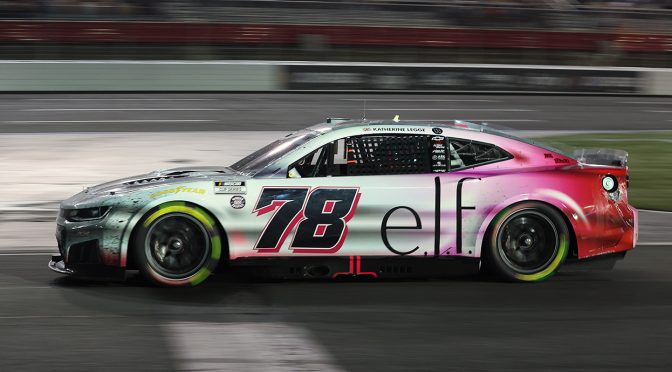
In the Cup Series, No. 78 Chevrolet crew members Ian Schulz and Deiontae Jones have been banned for the next two championship events, running through Michigan International Speedway, after the detachment of Katherine Legge’s right-front wheel in the Coca-Cola 600. The wheel fell off at the beginning of Stage 3, causing a caution and violating Sections 8.8.10.4.A&D of the NASCAR Rule Book.
Additionally, Ross Chastain’s winning No. 9 Chevrolet in the O’Reilly Auto Parts Series was found to have multiple lug nuts not safe and secure, resulting in a one-race suspension for crew member Michael Roberts and a $5,000 fine for the team. It violated Sections 8.8.10.4a & 10.5.2.5g of the NASCAR Rule Book.
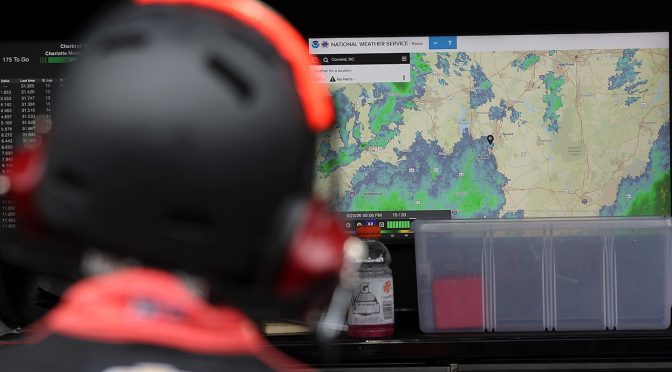
After inclement weather impacted the top three national series last weekend at Charlotte Motor Speedway, NASCAR addressed its decisions and policies on the latest “Hauler Talk” podcast.
NASCAR Vice President of Racing Communications Mike Forde explained why lightning strikes don’t always result in 30-minute holds. NASCAR kept a yellow flag for lightning toward the end of the Coca-Cola 600 out for only a few minutes after officials determined the storm was moving away from the region.
Forde said NASCAR race control receives text messages for lightning strikes within 20 miles of the track and typically stops races for a 30-minute hold when there’s a strike within eight miles.
“There is a caveat there, however,” Forde said. “More often than not, the lightning is either coming toward us or kind of hovering in that eight miles. But there are times, and typically it kind of happens in the background even before it gets to eight miles, we’re on the phone with our weather partners. And if our meteorologist partners say, ‘Hey, look, the lightning did hit within eight miles, however, it is moving away from the race track. There is no danger to any of the fans in the stands, the officials on the ground, the crew members, the television partners,’ then we can continue racing.”
Forde said NASCAR threw the yellow during that conversation with the meteorological experts.
“Better safe than sorry,” he said. “After a pretty quick conversation, our partners at The Weather Company said, ‘No, this is moving northwest, away from the race track. You’re not going to have to worry about this lightning strike.’ We were able to get back to green-flag racing. So, certainly a unique situation, but not a rule change for the Coca-Cola 600. It has happened before, maybe not to this extent where there was a caution, and then we immediately have gone back to green, but it has happened in the background.”
NASCAR has used the lightning hold policy since a fan died at Pocono Raceway in 2012. Forde said tweaks were made a few years ago to account for lightning moving out of the area. During their weekly Tuesday debrief, NASCAR officials discussed whether there were better ways to walk the line between throwing a caution and waiting to assess the situation.
After weather delayed the Craftsman Truck Series race at Charlotte from Friday night to Sunday morning, NASCAR put the race under an adverse conditions policy that made noon the race’s end time. Senior Director of Racing Communications Amanda Ellis explained during “Hauler Talk” that NASCAR based the decision on the preparation required for the pre-race ceremonies and concert before the Coca-Cola 600, which started around 6:30 p.m.
“There are also just a lot of elements from the military side because of the significance of the weekend,” Ellis said. “And so ultimately, with everything that was in play and knowing what needed to be done, we wanted to make sure that the fans received all the things that they were essentially promised when they purchased those tickets.”
In the event of a postponement to Sunday, FOX had already agreed earlier in the week to move up the start time from 10:30 to 10 a.m. Forde said the network didn’t request a noon end time for the truck race on FS1 because the Indy 500 started at 12:45 p.m. on FOX.
“They were supportive of whatever we wanted to do,” Forde said. “They did not put their thumb on the scale.”
On Saturday night, NASCAR called the delayed O’Reilly Auto Parts Series race just past halfway after the field ran the final 18 laps under caution. Forde said that was partly because an oil cleanup after an earlier crash delayed crews from clearing the track.
“We kind of burned probably five laps during that cleanup session,” he said. “That was pretty unnecessary. We probably would have been back to green a little bit faster. When we finally got the track cleaned up and were ready to go, rain started. It was Murphy’s Law.”
Forde said a grim weather forecast over the holiday weekend demanded that NASCAR try to complete at least one race Saturday.
“We couldn’t go into Sunday with three races not complete,” he said. “We weren’t going to be able to run a tripleheader on Sunday. Running a doubleheader was kind of a tall task.”
Other topics covered by Forde and Ellis during the 55th episode of “Hauler Talk,” which explores competition issues in NASCAR:
— The backstory of the Kyle Busch tributes before the Coca-Cola 600
— The status of Busch’s NASCAR Hall of Fame candidacy
— Why Christopher Bell drew a penalty in the pits for a misplaced tire
— An update on the Ryan Preece penalty appeal hearing
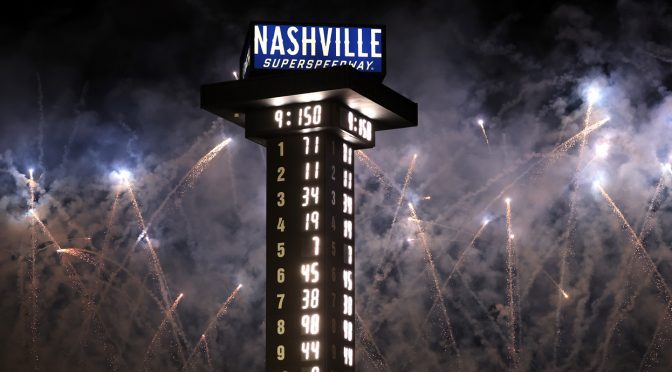
— A preview of Nashville Superspeedway
Click on the embed below to listen, or search for “Hauler Talk” wherever you download podcasts to hear it on your phone, tablet or mobile device.
Nate Ryan has written about NASCAR since 1996 while working at the San Bernardino Sun, Richmond Times-Dispatch, USA TODAY and for the past 10 years at NBC Sports Digital. He is a contributor to the “Hauler Talk” show on the NASCAR Podcast Network. He also has covered various other motorsports, including the IndyCar and IMSA series.
In his youth, he was a self-described motor head who was so infatuated with cars that he began working on them before he was old enough to go in the pits at most Northeastern speedways.
Working on race cars eventually turned into driving them. In 1970, when he was 18, he began racing in the Figure 8 division at Long Island’s Riverhead Raceway. He had no way to know it at the time, but that turned out to be the start of a legendary career that saw him win six championships at the track between 1971 and 1995.
That’s why Howe, now 74, will be honored Saturday prior to the running of the NASCAR Whelen Modified Tour Miller Lite Salutes Don Howe 200 (8 p.m. ET on FloRacing).
The event, held each summer at Riverhead, honors a driver from the region who enjoyed significant success at Riverhead and elsewhere. Previous honorees include Mike Ewanitsko, Wayne Anderson and Steve Park.
“John Ellwood (Riverhead Raceway General Manager) called me and presented that to me and asked if I’d be interested in that,” Howe said. “At first I was kind of shocked, because I thought, ‘Wow, this is a big honor so to speak as far as my racing career goes.’ I was always kind of lowkey and a quiet guy who was behind the scenes more. I didn’t make a big deal over what I had accomplished and things like that.
“It was surprising at first, but then I got more time to think about it and the way my career has gone, and I said, ‘Well, it wasn’t that bad after all.’”
Howe’s success at Riverhead spanned three decades. It all started in the 1970s thanks to a relationship with legendary Long Island car owner Carl Zeh.
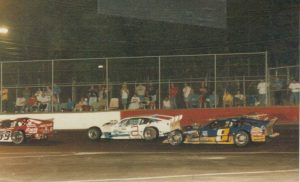
Don Howe (2) battles alongside Reggie Ruggiero during a NASCAR Whelen Modified Tour event at Riverhead Raceway in 1994. (Photo: Courtesy Riverhead Raceway)
“I got involved with a driver named Frank Curtis, so I started working on his car,” Howe recalled. “I started working on his car, and he raced for a few years, and then he sold the car. I happened to go with Frank Curtis’ brother-in-law, Carl Zeh; he had a car they were racing at the time, and Jim Malone was the driver of their car. So, I went down with that team and started working on their car.
“I worked on it for a few years, and then I traded a ’57 Chevy street car for a ’57 Chevy Figure 8 car, and I started racing Figure 8s in 1970. I did pretty well with that, and I got the bug, so to speak. I was Rookie of the Year that year. Then I built my own ’57 Chevy and raced in the Figure 8s the following year and won the championship.”
Howe then transitioned to the Modified class with a hand-me-down Modified that had been driven by Jim Malone, a two-time Riverhead Modified champion.
Howe raced in the Modified division for the first time in 1972 with Malone’s former car before building his own Pinto Modified for the 1973 season; he used that car to win his first Riverhead Modified championship.
He captured another title in 1984 while still driving for Zeh. He also captured the final Modified championship at Islip Speedway that same season.
“I was with Carl Zeh and the Malone team for quite awhile,” Howe recalled. “I raced with Carl for a good 25 years, I guess it was.”
Fast forward to the 1990s, and Howe was still as competitive as ever. After his lengthy relationship with Zeh came to an end, he began working for a new team owner.
“I gave it up for about a year and was working on a car owned by Joe Bertuccio,” Howe explained. “He owned the car, and a friend of mine was driving it. He parted ways with his driver and asked me if I’d like to drive it, so I went back racing again.”
The pairing struck gold between 1993-95, winning three consecutive Riverhead Modified championships. Howe is one of just three drivers to win three consecutive Modified titles at Riverhead, joining Charlie Jarzombek and John Beatty Jr. on that exclusive list.
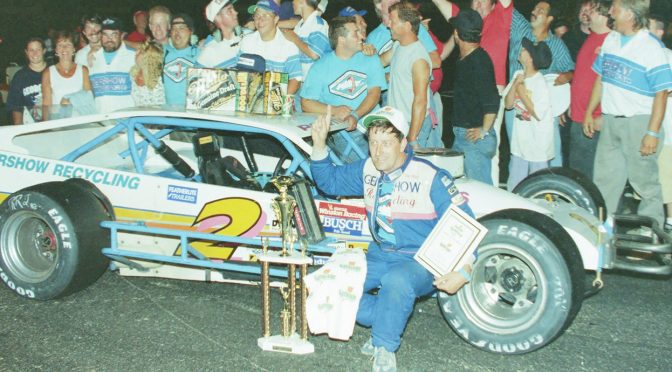
Don Howe (2) won five Riverhead Raceway Modified titles along with a Figure 8 title during a career that lasted three decades. (Photo: Courtesy Riverhead Raceway)
It was during that time when Howe won the only NASCAR Whelen Modified Tour event of his career, the 1994 Miller Genuine Draft 201 at Riverhead. The drivers he beat that day included Reggie Ruggiero, Wayne Anderson, Tony Hirschman, Jeff and Rick Fuller, Tim Connolly, Tom Baldwin and Mike Ewanitsko, among many others.
“It was strange the way that race went down,” Howe recalled. “Somebody had dumped something on the track; I don’t remember where I was running position-wise at the time. I had spun, so seeing as I was starting in the rear, I went into the pits.
“My crew chief was an excellent tire changer. We jacked the car up and changed both of my rear tires, and I was able to get out of the pits without losing a lap. I think that’s what won me that race. It was probably midpoint of the race, and then once everybody else had pitted, that put toward the front.”
Howe stepped away from driving after four years with Bertuccio, but he keeps finding his way back. After another brief comeback driving for Bertuccio a few years later, Howe now competes in the Eddie Partridge Vintage All Stars division at Riverhead.
The car he drives in that class is the same car he won track championships at Riverhead and Islip with in 1984. The car, a chassis built by NASCAR Hall of Famer Richie Evans and Billy Nacewicz, was meticulously restored by Howe after being tracked down by Bertuccio.
“I brought the car home, and I did all the work on it in my own garage,” Howe said. “I worked on it for probably close to a year, because the car was a mess. I restored it. Corwith’s Auto Body was a big sponsor of mine the whole time I was with Carl Zeh, so I had Corwith’s do all the paint work on it. It’s not a car that was wrapped; it was painted like we used to do in the old days. I took the car back up to Joe’s shop, and they put the power train in for me. Then it came back to me, and I’ve had it ever since.”
Howe, still a tenacious competitor at 74 years young, plans to bring his restored hot rod to Riverhead this Saturday so he can chase a victory in the Vintage All Stars class on the same night the track is honoring him.
A win, Howe thinks, isn’t out of the question.
“I’ve thought about that. I’ve got some stiff competition in the vintage series now,” Howe said. “It’s going to be harder to do that. We actually raced last week, and I finished second. You know as well as anybody how a race goes. That’s racing, you know?”
The National Motorsports Appeals Panel upheld behavioral penalties against driver Ryan Preece, ruling after a Wednesday appeals hearing to keep the original punishment intact for his actions in the NASCAR Cup Series race at Texas Motor Speedway.
After hearing the testimony, the three-member panel affirmed and upheld the original penalty assessed by NASCAR for Preece’s rough driving as he competed for position with Ty Gibbs during the May 3 Würth 400 presented by Liqui Moly at the Fort Worth track.
In reaching the above decision, the panel provided the following explanation: “Although not a unanimous decision, NASCAR and RFK Racing presented competing interpretations of common data. Neither side clearly proved their point, but Mr. Preece’s comments showed that he chose to not cut his competitor any breaks.”
The Appeals Panel members for this hearing were Tom DeLoach, Dixon Johnston and Lake Speed.
“RFK Racing is extremely disappointed in today’s ruling by the National Motorsports Appeals Panel,” RFK Racing said in a statement on X. “We stand by Ryan Preece and believe our argument was fair, sound and without question.
“We appreciate the forum provided by NASCAR to both provide detailed evidence and defend our stance through thoughtful data and digital evidence.”
Competition officials levied a $50,000 fine and a 25-point deduction in the Cup Series driver points after the violation of Sections 4.3 and 4.4A in the NASCAR Rule Book (member conduct guidelines). After Wednesday’s hearing, that penalty stands. Preece and his RFK Racing team have the option of filing a final appeal.
Gibbs’ No. 54 Toyota crashed after close-quarters racing with Preece’s No. 60 Ford on the 101st of 267 laps at Texas. Another run-in between the two drivers led up to that final battle, prompting Preece to hint at on-track retribution – a factor that NASCAR Vice President of Racing Communications Mike Forde said weighed into the decision to issue a penalty.
Post-race, Preece said in part: “I was not going to cut him a break because in the past, him and I have had problems. So I’ve got a little bit of a short fuse with him and I, with how we’re racing.” In a pre-race availability the next weekend at Watkins Glen International, Preece said helooked forward to having his voice heard in the appeals process.
Preece ranks 16th in the Cup Series standings after crashing out of the Coca-Cola 600, provisionally holding the final position in The Chase postseason picture.
The NASCAR Cup Series, NASCAR O’Reilly Auto Parts Series and NASCAR Craftsman Truck Series head to Tennessee for stock-car racing’s annual visit to Nashville Superspeedway. It’s the fifth consecutive tripleheader weekend for NASCAR’s three national series, culminating with the Cracker Barrel 400 on Sunday (7 p.m. ET, Prime Video, HBO Max, PRN Radio, SiriusXM NASCAR Radio). Below are the qualifying orders for all three series.
Cup Series
Single-car qualifying will occur at 5:40 p.m. ET on Saturday, with practice earlier in the day at 4:30 p.m. ET (Prime Video).
POSITION
NUMBER
DRIVER
METRIC
GROUP
1
88
Connor Zilisch #
37.5
1
2
66
* Chad Finchum(i)
36.9
1
3
2
Austin Cindric
31.7
1
4
1
Ross Chastain
31.4
1
5
51
Cody Ware
30.4
1
6
21
Josh Berry
29.9
1
7
3
Austin Dillon
29.9
1
8
19
Chase Briscoe
28.6
1
9
10
Ty Dillon
27.4
1
10
9
Chase Elliott
27.4
1
11
60
Ryan Preece
27.3
1
12
42
John Hunter Nemechek
26.9
1
13
4
Noah Gragson
26.1
1
14
33
Austin Hill(i)
26.1
1
15
67
* Corey Heim(i)
24.4
1
16
35
Riley Herbst
23.1
1
17
17
Chris Buescher
23.1
1
18
34
Todd Gilliland
21.8
1
19
41
Cole Custer
21.7
1
20
48
Alex Bowman
20.9
2
21
23
Bubba Wallace
19.3
2
22
77
Carson Hocevar
18.8
2
23
16
AJ Allmendinger
18.3
2
24
47
Ricky Stenhouse Jr.
16.5
2
25
71
Michael McDowell
15.8
2
26
43
Erik Jones
15.7
2
27
6
Brad Keselowski
13.8
2
28
38
Zane Smith
13.3
2
29
97
Shane van Gisbergen
12.2
2
30
22
Joey Logano
11.0
2
31
24
William Byron
9.9
2
32
12
Ryan Blaney
5.8
2
33
54
Ty Gibbs
5.4
2
34
5
Kyle Larson
5.3
2
35
20
Christopher Bell
3.8
2
36
7
Daniel Suárez
3.7
2
37
45
Tyler Reddick
3.1
2
38
11
Denny Hamlin
2.7
2
O’Reilly Auto Parts Series
Single-car qualifying will occur at 3:05 p.m. ET on Saturday, with practice earlier in the day at 2 p.m. ET (The CW App).
POSITION
NUMBER
DRIVER
METRIC
1
33
Cleetus McFarland
42.2
2
38
JJ Yeley
35.8
3
35
Dawson Cram
35.4
4
24
Harrison Burton
34.1
5
41
Sam Mayer
29.1
6
19
Brent Crews #
28.6
7
42
Logan Bearden
28.4
8
51
Jeremy Clements
27.0
9
55
Joey Gase
26.6
10
20
Brandon Jones
26.6
11
07
Josh Bilicki
26.5
12
54
Taylor Gray
25.9
13
02
Ryan Ellis
25.5
14
32
Rajah Caruth
25.0
15
00
Sheldon Creed
24.2
16
44
Brennan Poole
24.0
17
153
David Starr
23.9
18
31
Blaine Perkins
23.7
19
28
Kyle Sieg
22.6
20
27
Jeb Burton
22.0
21
45
Lavar Scott #
20.6
22
7
Justin Allgaier
20.6
23
48
Patrick Staropoli #
20.4
24
92
Leland Honeyman Jr (i)
20.1
25
87
Austin Green
19.6
26
26
Dean Thompson
15.5
27
96
Anthony Alfredo
15.4
28
91
Mason Maggio
14.4
29
0
Garrett Smithley
12.8
30
99
Parker Retzlaff
11.7
31
8
Sammy Smith
10.7
32
39
Ryan Sieg
9.7
33
88
Kyle Larson(i)
7.6
34
18
William Sawalich
6.4
35
1
Carson Kvapil
5.4
36
17
Corey Day
5.0
37
21
Austin Hill
4.5
38
2
Jesse Love
2.3
Craftsman Truck Series
Single-truck qualifying will occur at 5:05 p.m. ET on Friday, with practice earlier in the day at 4 p.m. ET (joined at 4:30 p.m. ET on FS1).
POSITION
NUMBER
DRIVER
METRIC
1
20
Daniel Dye
41.9
2
69
Jonathan Shafer
41.0
3
27
Toni Breidinger
40.1
4
93
Caleb Costner
39.8
5
2
Clayton Green
35.1
6
14
Mini Tyrrell
31.9
7
81
Kris Wright
30.7
8
22
Josh Reaume
30.1
9
12
Brenden Queen
28.4
10
13
Cole Butcher
27.3
11
76
Spencer Boyd
27.1
12
88
Ty Majeski
26.4
13
33
Frankie Muniz
26.1
14
7
Rajah Caruth(i)
25.4
15
52
Stewart Friesen
23.6
16
26
Dawson Sutton
23.2
17
38
Chandler Smith
23.1
18
45
Ross Chastain(i)
22.7
19
25
Carson Ferguson
21.6
20
44
Andrés Pérez
20.5
21
62
Parker Retzlaff(i)
20.3
22
18
Tyler Ankrum
19.1
23
9
Grant Enfinger
17.8
24
16
Justin Haley
17.6
25
42
Tyler Reif
17.3
26
4
Stefan Parsons
15.0
27
10
Corey LaJoie
13.2
28
98
Jake Garcia
13.0
29
19
Daniel Hemric
12.2
30
15
Tanner Gray
11.9
31
5
William Sawalich(i)
10.6
32
1
Brandon Jones(i)
6.1
33
99
Ben Rhodes
5.8
34
91
Christian Eckes
5.7
35
17
Gio Ruggiero
5.3
36
77
Jesse Love(i)
4.8
37
11
Kaden Honeycutt
1.7
38
34
Layne Riggs
1.3
* Required to qualify on time # denotes series rookie (i) denotes ineligible for driver points
The NASCAR O’Reilly Auto Parts Series will race near the Music City in Saturday’s Sports Illustrated Resorts 250 at Nashville Superspeedway (7:30 p.m. ET, The CW, PRN Radio, SiriusXM NASCAR Radio).
This will be the 16th points-paying race of the 2026 O’Reilly Series season as drivers take on the 1.33-mile track in Lebanon, Tennessee.
NASCAR Cup Series full-timer Kyle Larson will drive the No. 88 JR Motorsports Chevrolet. Larson has piloted the No. 88 Chevy in four races this season, collecting two wins.
Thirty-eight cars are entered into this weekend’s event.
The NASCAR Cup Series will race near the Music City in Sunday’s Cracker Barrel 400 at Nashville Superspeedway (7 p.m. ET, Prime Video, HBO Max, PRN Radio, SiriusXM NASCAR Radio).
This will be the 14th points-paying race of the 2026 Cup Series season as drivers take on the 1.33-mile track in Lebanon, Tennessee.
Corey Heim will drive the No 67 23XI Racing Toyota. The event will be Heim’s fifth in NASCAR’s premier series this season, with a season-best 15th-place result at Kansas Speedway in April.
Thirty-eight cars are entered into this weekend’s event.
The NASCAR Craftsman Truck Series will race near the Music City in Friday’s Allegiance 200 at Nashville Superspeedway (8 p.m. ET, FS1, NASCAR Racing Network Radio, SiriusXM NASCAR Radio).
This will be the 11th points-paying race of the 2026 Truck Series season as drivers take on the 1.33-mile track in Lebanon, Tennessee.
Five full-time NASCAR O’Reilly Auto Parts Series drivers — Brandon Jones (No. 1), William Sawalich (No. 5), Rajah Caruth (No. 7), Parker Retzlaff (No. 62) and Jesse Love (No. 77) will compete in the event. NASCAR Cup Series full-timer Ross Chastain will also compete in the event, piloting the No. 45 Niece Motorsports Chevrolet.
Thirty-eight trucks are entered into this weekend’s event.
CONCORD, N.C. — Darnette Vickers stood outside Charlotte Motor Speedway’s garage area Saturday wearing a brown Kyle Busch hoodie and a sodden look of sorrow. “He was my guy,” she said, the reason she fell in love with NASCAR, the reason she is spending her retirement chasing the sport in her RV for 11 races a year.
Busch became famous and better yet infamous driving the M&M’s car. Vickers worked for Mars Inc. (which makes M&M’s) for 38 years, and she met Kyle and his mom, Gaye, when they toured the facility two decades ago. She took a break from her job coloring M&M’s to meet them, which is just about perfect: She made M&M’s colorful and became a devotee of a driver who made NASCAR colorful.
Vickers and Gaye hit it off, and their friendship has grown through Kyle’s two championships, his marriage, the births of his two children, and now, his death.
Vickers learned the crushing news when Gaye called to tell her on Thursday. “I was bawling like a baby,” she says. “I couldn’t grasp it at all.”
Vickers’ heart was broken for Busch’s wife, Samantha; his children, Brexton and Lennix; his parents, Tom and Gaye; his brother, Kurt; and the sport she loves so much. That grief brought her to the race track, where she stood waiting, watching, mourning, just outside the metal fence that separates the garage area from the campground.
She had driven from her home in New Jersey to Charlotte in search of healing, relief from the pain. She hoped, no, she knew, she’d find it within the NASCAR community. To get it, there was something she needed to give, something she needed to get, and something she needed to share.
Photo courtesy of Darnette Vickers
Love your enemies
At its best, most fascinating, most entertaining, the NASCAR industry is a traveling circus crossed with Lollapalooza, all set at a family reunion where half the people dislike the other half. There is nothing like it in the sports world, or even the broader culture, an insular nation with its own ethics (race him like he races you, the opposite of the Golden Rule), its own language (loose, tight, whoa’d up, etc.) and its own cultural standards (wrecking someone to win is wrong; unless you really want to win, then it’s fine).
The drivers can see each other as arch enemies. The stakes feel massive, and within the context of this self-contained NASCAR bubble, they are. It’s a zero-sum game. One driver wins, and all the rest lose. Millions of dollars hang in the balance. They fight for speed, they fight for sponsors, they fight for trophies and they fight because they get on each other’s nerves … all while living right next door to each other 38 weeks a year. If “normal” neighbors fought like that, one of them would move away. But in NASCAR, they move together.
And yet somehow, when tragedy strikes — as it has repeatedly in the last 13 months, with the sudden deaths of Hendrick Motorsports’ Jon Edwards, Denny Hamlin’s father, Dennis, Greg Biffle and Busch — NASCAR stops being a cutthroat sport and becomes a heartfelt community.
“It’s bad when you can’t get away from it. It’s good when you’ve got that to lean on,” says driver and team owner Brad Keselowski, who learned that lesson firsthand when his daughter had a life-threatening illness and the sport rallied around him. “There’s more support here just in terms of life than there is in other sports because of that community.”
Keselowski first saw the sport’s family dynamic through his relationship with his own brother, Brian. They fought like, well, like brothers. “Wait a minute,” Brad says. “At home, away from the race track, we’re damn near enemies, adversaries. But when someone else is mad at me, you’re going to defend me? It’s hard to rationalize.”
Hard, yes, and also beautiful.
Alejandro Alvarez | NASCAR Digital Media
That dichotomy provides a powerful source of comfort in NASCAR, a fact magnified this weekend. These drivers who just last weekend were trying to rip each other’s guts out were now hugging each other’s necks. “Life’s fragile. The people who you think are evil” — and here Keselowski laughed, as he doesn’t mean that word, not really, except he kind of does — “you find out they’re not.”
Jeff Burton, the former driver and current TV analyst who was elected to the NASCAR Hall of Fame last week, says being in the NASCAR community requires “a split personality.”
Burton said after Busch’s death several rough, tough “unbelievable bad asses” told him ‘I love you.’
“And I’ve said it to them, too,” he added.
Only the NASCAR garage fosters that kind of relationship.
“If you don’t have that mentality of I have to destroy you, you can’t exist,” Burton says. “But you have to find a way to take the helmet off, take the crew uniform off, and have compassion and care for someone. It’s very hard to do both.”
Sometimes the disdain is real.
Always the love is.
This weekend proved it.
Stories live on
At its best, most fascinating, most entertaining, NASCAR fandom is a traveling circus crossed with a high school beer bash crossed with a campground whose owners have completely given up on enforcing the rules because nobody follows them. Quiet hours are 2 p.m. until 2:01 p.m. unless you want to be loud then, too, in which case go ahead.
Like the driver community, the fan community comprises a unique, self-contained world. A neighborhood forms, disappears and reforms the next week as fans travel from race to race, just as the drivers do. The stakes are lower, of course, but NASCAR has thrived for 78 years because fan passion is real. Fans root for their heroes and rail against villains and share food, beer and laughs with fans of both.
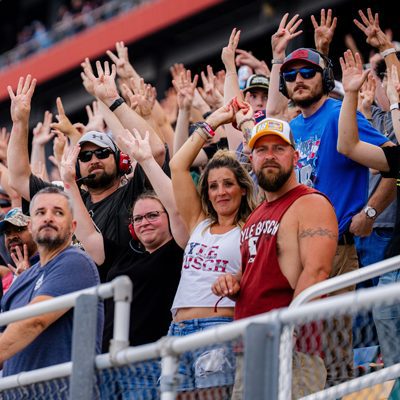
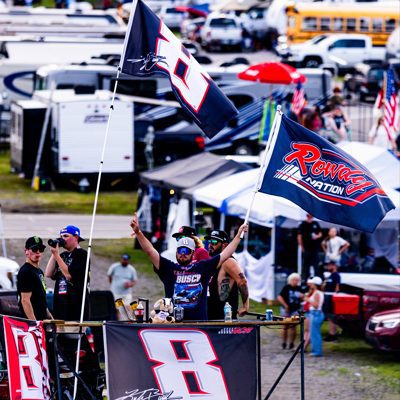
And this week, all across the Charlotte Motor Speedway campground, they shared stories — stories about Kyle Busch and why they loved him, hated him and loved to hate him.
A Kyle Busch flag flew overhead as Steve Gordon cut and salted cantaloupe outside his refurbished 1969 school bus, painted white, in the same site near Turn 3 that he has occupied since the 1990s. He loved Busch because he loved Dale Earnhardt first, and it wasn’t lost on him that Busch’s loss is perhaps the biggest and most unexpected since Earnhardt.
In addition to tragic deaths, they had this in common: You always needed to know where each was on the track. If Busch was leading, you’d watch because a post-race victory bow and a zinger of a quote were coming. It was even better if he was deep in the field because he’d slice his way forward, part ballet dancer, part MMA fighter, and then the bow would be more dramatic, and the quote would be a double zinger.
Between Steve, his wife, Leslie, and their daughter, they own 40 Kyle Busch T-shirts. Leslie Gordon was shocked, crushed and confused when their daughter called to tell her the news. She’ll miss the way he pissed the whole of NASCAR off, and she’ll miss being delighted hearing people gripe about him. “I loved it when everybody booed Kyle,” she says. “That pumped me up. I was like, YEAH! Because they knew he was going to kick their ass.”
Ethan Smith for NASCAR Digital Media
Over near Turn 4, Dominic Elliott stood under a Kyle Busch flag flying over his motorhome. He grew into his Busch fandom as Busch grew as a man and father. Elliott was there when Greg Moore died in 1999 at California Speedway, he was there when Dan Wheldon died in 2011 at Las Vegas Motor Speedway and he lives in Statesville, North Carolina, and saw the smoke from Biffle’s fatal plane crash in December.
Elliott never considered not coming to the race. He, his wife and daughter instead wanted to be around people who love what they love. “It’s the only way to heal,” he said.
That healing came through stories. Grief makes you cry, grief makes you angry, and grief makes you laugh, and the stories about Busch make you do all three. He was lightning in a fire suit, a beast of a driver who fans loved and hated and for the same reasons: He was smirky, cocky, strutting and you were never quite sure when Kyle stopped and his alter ego Rowdy started or if they were really the same guy. He could slice you with a scalpel or pummel you with a sledgehammer, and either way he’d bow and you’d lose.
Vickers was eager to share her Busch stories. “First,” she said, “let me show you something.”
She pulled out her phone and scrolled through pictures. She skipped over one of her hugging Busch on stage after his first championship, kept going by another of her hugging him on stage after his second championship, zoomed right on by any number of pictures of them in any number of places.
Finally, she found the one she was looking for and held it up.
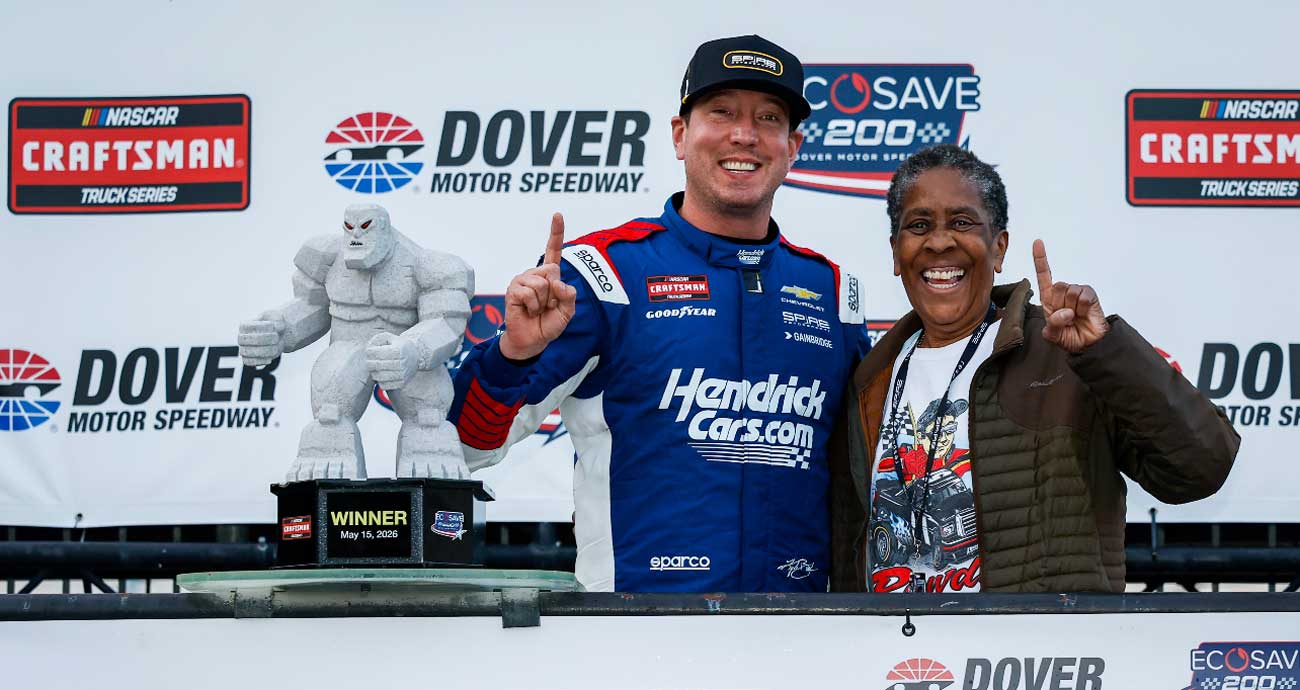
Taken two Friday nights ago, it showed her and Busch smiling broadly together in Victory Lane at Dover after the last of Busch’s unapproachable record of 234 national series wins.
Oh, the love Vickers has for the story behind that photo, and every other one on her phone. And, oh, how they make her sad to tell. Vickers’ stories about Busch sustain her now, and team owners, drivers, and other fans said the same thing.
In the garage and the campground, these stories were passed around all weekend, as if by sharing them the tellers could laugh at the memories instead of cry about the fact that there won’t be any more.
Daniel Suárez, whose Coca Cola 600 win was an emotional high point of the weekend, told one about an ass-chewing he received when he raced a truck owned by Busch. Team owner Joe Gibbs, for whom Busch won both of his championships, told of watching Busch grow as a man, husband and father and of what a pain Busch could be. NASCAR CEO Steve O’Donnell told one about Busch mocking NASCAR for making him go (unnecessarily, he thought) to the infield care center. He sprawled on a cart like a chalk outline. “I was mad at the time, but I look back, and that was damn funny,” O’Donnell said, a quote that just about everybody could have ended their stories with.
The stories will be told and retold today, tomorrow, and if conversations this weekend were any indication, for decades to come.
That’s what happens with legends.
Alejandro Alvarez | NASCAR Digital Media
The power of shared suffering
Only people we love can hurt us like this.
Ryan Blaney wore shock like a mask he couldn’t take off. William Byron said he didn’t want to get out of bed Saturday morning. Chase Briscoe drove to the track in an emotional fog as thick as the clouds that covered the track.
Like Vickers, Elliott and the Gordons, the drivers didn’t know what to do with their grief. They didn’t know how to process it, they couldn’t make sense of the dual facts that Kyle Busch won a Craftsman Truck Series race last Friday in Dover and tragically died the following Thursday.
It didn’t feel real in the garage.
It didn’t feel real in the campground.
The grief of drivers in the garage ran parallel to the grief of fans in the campground, just as their lives run parallel as they caravan from track to track. They were alone and yet together, telling the same stories, feeling the same fears, choking on the same emotions, separated only by the metal fence.
But as Darnette Vickers waited outside that metal fence, those parallel griefs converged, inched closer together, until they wrapped around each other like strands in a rope.
These two communities that rely on each other for their existence now rely on each other for healing.
Noah Gragson emerged from behind the metal fence riding a two-wheeled motorized scooter. Someone sitting on a golf cart mimed the motion to do a wheelie, and Gragson obliged by lifting up, leaning back and zooming away.
Vickers caught Gragson’s eye. She had met and befriended him when he drove for Kyle Busch Motorsports. He stopped his scooter next to her, leaned forward and wrapped his arms around her in a deep, full-bodied, heads-on-each-others-shoulders hug. They pulled back, looked each other in the eye, spoke for a minute, and hugged again.
Then Bubba Wallace, another former KBM driver, came out of the garage area. He signed a few autographs, and when he saw Vickers, he embraced her. She heaved as she rested her chin on his shoulder. He looked stricken as he held her tight.
They split up to stand at attention for the national anthem.
When it was over, they hugged more.
She walked away as if unburdened of a heavy weight, even if just momentarily, even if it would soon reattach itself to her. Maybe it would weigh a little less the next time, and still less the time after that.
She came to Charlotte Motor Speedway to give those hugs, to get hugged, to share her grief.
“The thing that saves me are the people that you saw me hug,” she says. “It also saves me that I have tons of beautiful memories from Kyle. In life, that’s what you want. People who know you, love you, care about you and want to help you heal as best you can.”
In the garage and the campground, she was surrounded by those people. Only people we love, who share our suffering, can heal us like this.
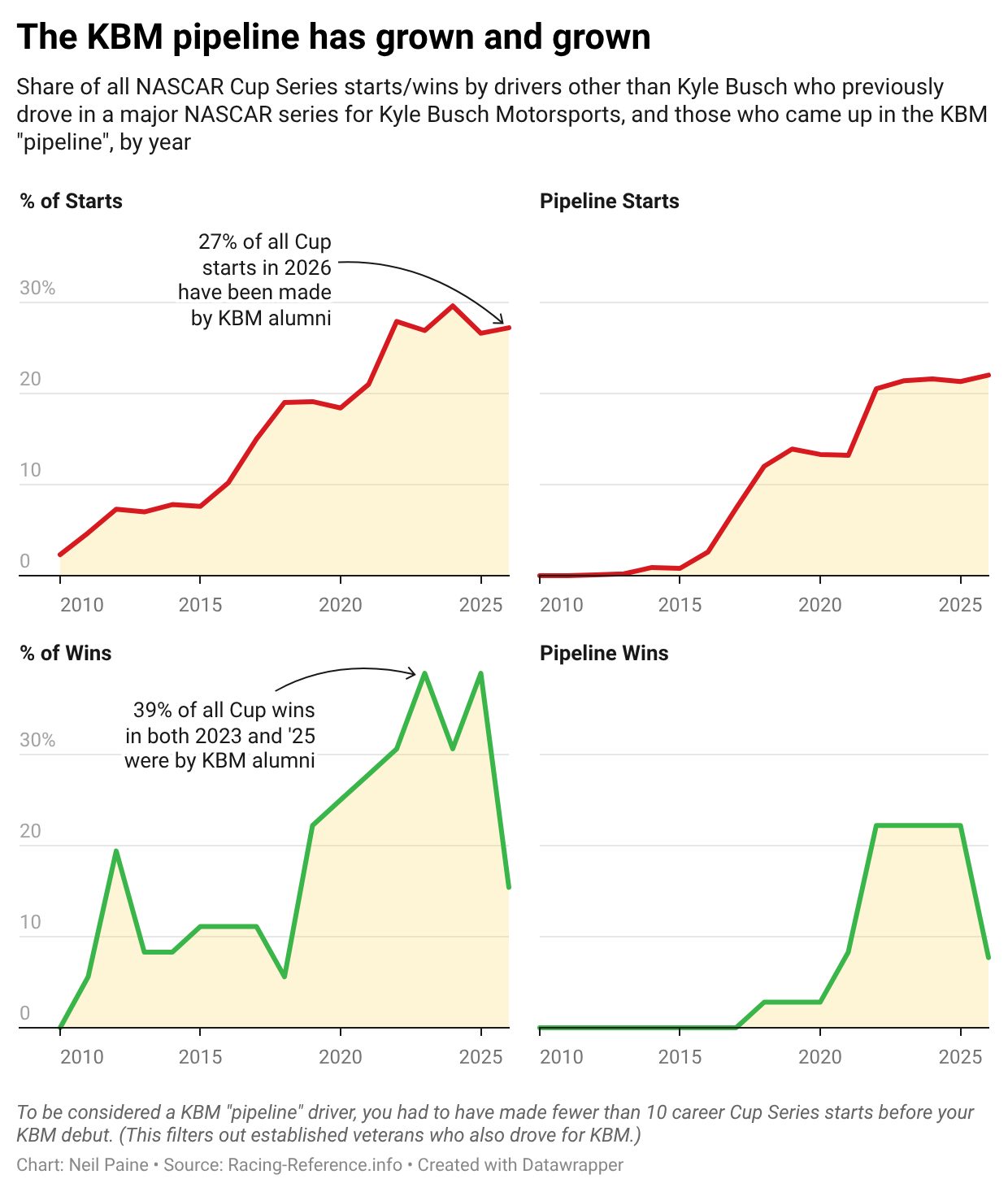 And while the share of wins for KBM alumni and pipeline drivers is down to start 2026 — Tyler Reddick (a non-KBM alumnus) winning so many races will do that — last season saw 38.9% (!) of all Cup Series wins belong to former KBM drivers, including 22.2% for pipeline alumni for the fourth consecutive season. (That was an average of eight wins per season in a 36-race schedule, for four years running.)
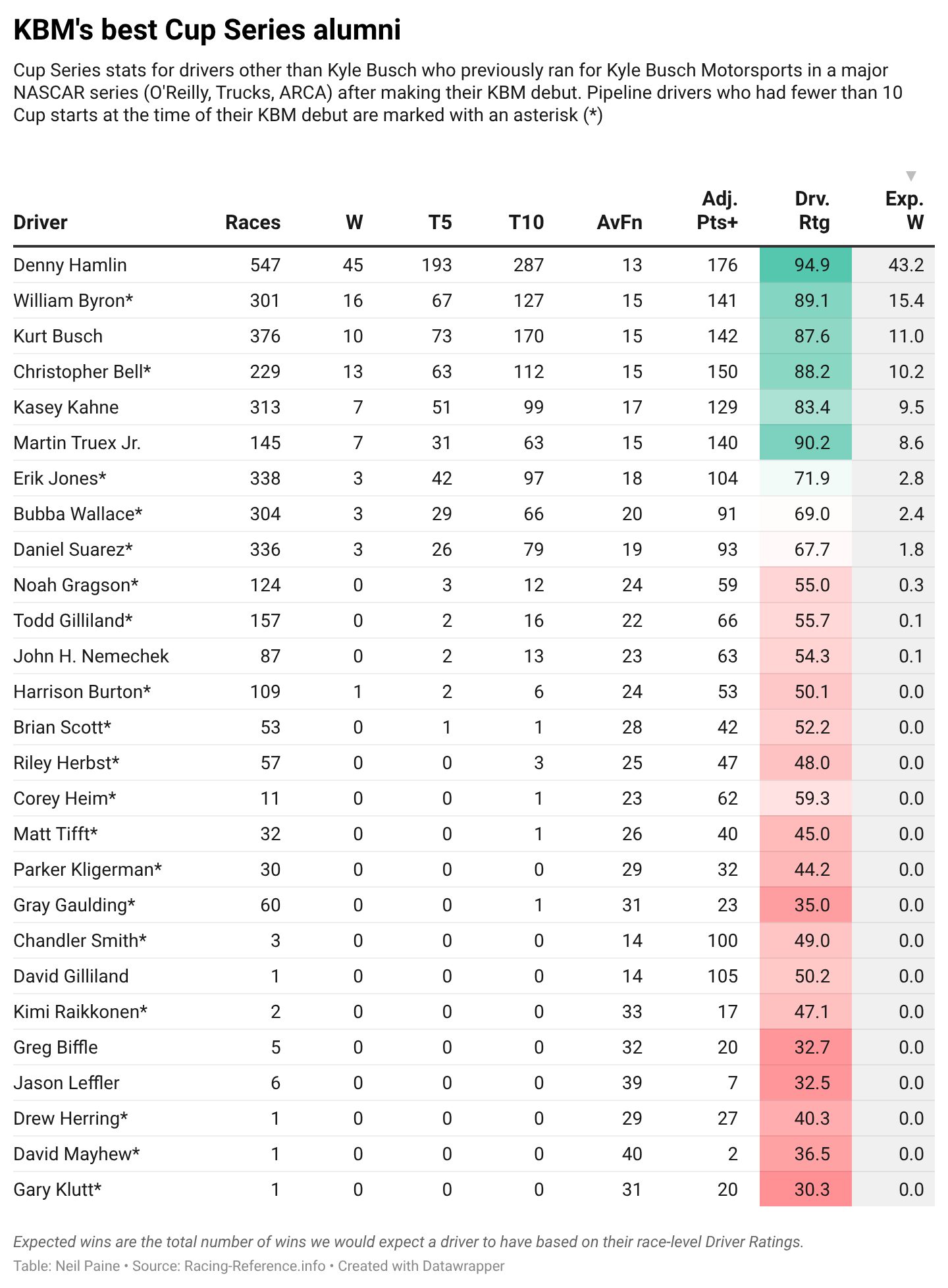 Obviously, Busch will (and should) always be remembered first for what he did behind the wheel, because few drivers in NASCAR history ever did more. But KBM ensured that his impact didn’t stop when he climbed out of the car. Even now that he is gone, Busch’s legacy will keep showing up in the drivers he taught, the careers he launched and the Cup Series garage he helped shape — with roughly a third of all cars in the field in any given week, and nearly half of all winners, like Suárez on Sunday, being able to say they trace back some part of their story to the team that Rowdy built.