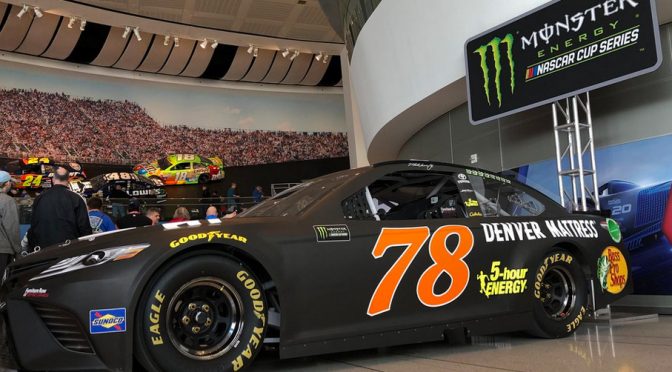
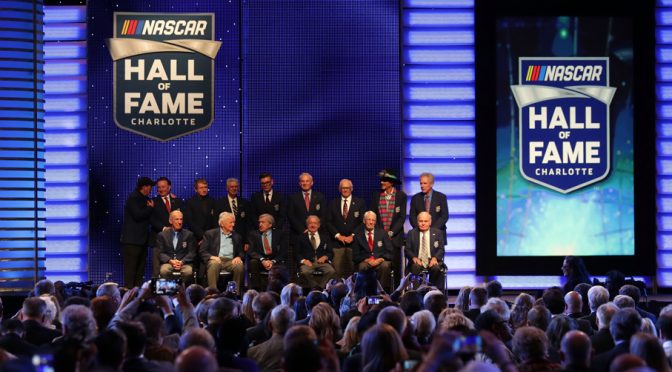
NASCAR Fan Appreciation Day was held Jan. 20, 2018 with one of the many perks being free admission on a first-come, first-served basis to the NASCAR Hall of Fame in Charlotte, North Carolina. Here are some snapshots of the day’s events via social media:
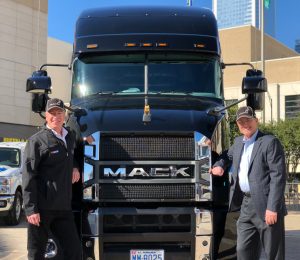
Mack Trucks VP of Marketing John Walsh (left) and NASCAR VP Elton Sawyer pose in front of the Mack Anthem. Mack Trucks is the Official Hauler of NASCAR.
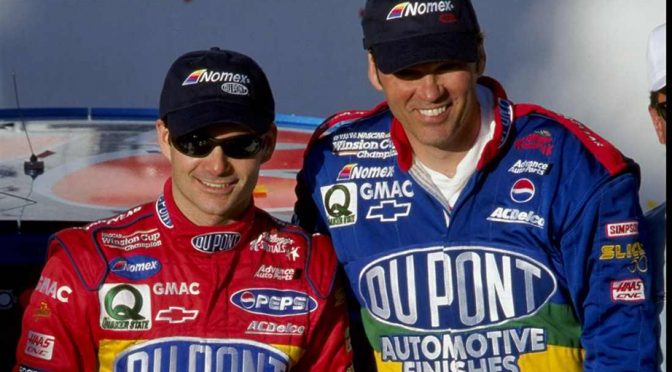
CHARLOTTE, N.C. — It took one test at Charlotte Motor Speedway in 1990 for Ray Evernham and Jeff Gordon to form a connection that would eventually become legendary.
No one could have foreseen exactly what the iconic duo would do in NASCAR that day, as Gordon took the track with Evernham watching.
But they knew there was something there.
“I came home from that test and I just said, ‘You’re not going to believe this guy,’ ” Gordon said. “ ‘This guy Ray Evernham, he had a clipboard and he’s writing down every word that I say’ … I didn’t know anything about springs or shocks – I mean, I was racing sprint cars and midgets. And he said, ‘well, it should do this.’ And I went in the corner and it did it. And I was like, ‘Oh my gosh, this guy’s a genius’ … We clicked immediately.”
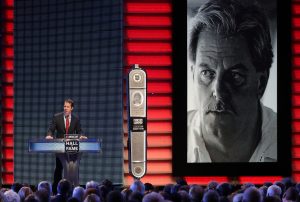
The memories came flooding back into the walls of the Charlotte Convention Center on Friday evening, as five renowned figures were inducted into the 2018 NASCAR Hall of Fame. Introduced by his son Ray J., Gordon and Ben Kennedy, it was an emotional moment for Evernham, who joked that he had hoped he could get through his speech without crying, as that was “normally Jeff’s deal.”
“It’s really been incredibly hard to describe because I’ve tried to tell people it’s like a fire hose of emotion,” Evernham said. “Normally when something happens, it’s one or two emotions, but just about everything you could possibly feel, whether that’s happiness or sadness or pride or humbleness, it happens because when you start racing like I did and like Jeff did, you never really expect to get there – you dream about it and you work hard to get there and the whole time you’re doing it, you never really think you could make a mark in the sport that will get you at this level.
“I can tell you that it still really blows me away, to stand up on top of that stage and look at the banner and look at the people sitting there in front of me and I turn around and people are on their feet, clapping their hands. It’s very surreal, it’s like being in a movie.
“I thought, now I know how Rocky felt,” he said with a smile. “I can tell you it’s the greatest moment of my career.”
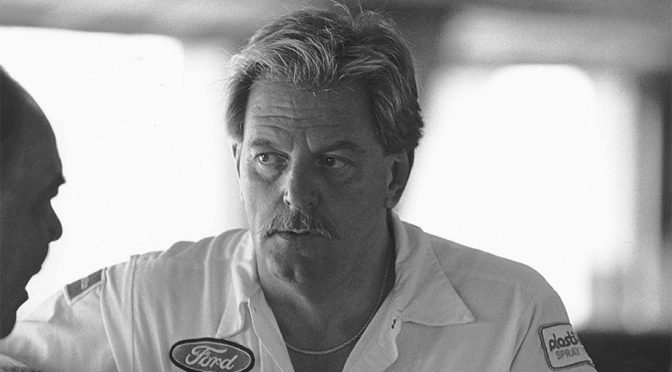
His career is certainly one filled with great moments; Evernham won three championships and 47 races with a young Gordon before forming his own Monster Energy NASCAR Cup Series team, where he helped bring Dodge back into the sport. He also revolutionized the modern pit stop as a choreographed routine using skilled athletes. Dubbed the Rainbow Warriors, those pit crew members – made up of future crew chiefs Steve Letarte and Chad Knaus – forever changed the makeup of pit road in their colorful fire suits.
They were competitive, they were talented and they were groundbreaking. And they were steered by Evernham.
“At the time, we weren’t really trying to be great, we were really just trying to win races; win, win, win, win,” said Andy Papathanassiou, who was the Rainbow Warriors’ pit crew coach during Evernham’s tenure and currently serves as the director of human performance at Hendrick Motorsports. “And once we got rolling, our biggest competition was ourselves. And that was something that Ray always preached – it wasn’t about going after this team or that team. It was about doing the best that we could do … All the great leaders and all the great coaches always turn it inside to where teams are just competing against themselves and bringing out the best in each other and that’s what Ray did with us.”
Evernham’s influence, however, went beyond the race track. He and Gordon became close and remain friends to this day. The pair was even laughing and joking with one another on Friday as they fielded questions from the media following the ceremony.
“He’s buying,” Gordon said, grinning at the promise of post-ceremony drinks.
Evernham came into Gordon’s life at a time when no one knew his name; he simply was this young driver from California with a thin mustache and crazy talent for racing. Evernham helped make him a champion, and he also made him a leader.
“There’s just no words to describe it,” Gordon said. “And honestly, when we separated and he started his own team and I stayed at Hendrick, I never realized what an impact he made until then … But I realized years later what he taught me as a leader. He was a very strong, powerful leader that had their attention. I mean, they could be down and out and he had this way of bringing them up. And I didn’t have to be a leader; I had Ray. I just drove the car … So, I probably took that for granted a little bit, too. But when he left, it kind of shifted and more people started looking at me … so I had to step up. It made me a better person, a better race car driver, it made me appreciate him a lot more.
“Listen, we can have the great debate forever if Ray and I could have stayed together, what would we have gone on to do? And I think about that every once in a while because I know we would have won more races. I think we would have won more championships. But at the same time, I couldn’t be more proud of what he did as an owner, I’m proud of what I did as a driver, but I’m even more proud of who we are as friends today because of that ride that we went on.”
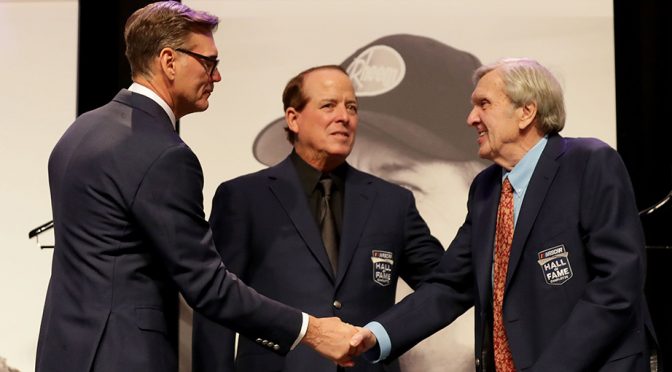
The ride they went on is one that will now be forever enshrined in the NASCAR Hall of Fame, as Evernham accepted his iconic blue jacket in front of many NASCAR’s greats.
“The Rainbow Warriors. Man, they’re the greatest ever,” Evernham said during his speech.
But so was he; he was an innovator, a strategist and a visionary.
CHARLOTTE, N.C. — Robert Yates left us too early. Too early to see his NASCAR Hall of Fame ring or the blue jacket given to inductees, succumbing to cancer last October after a brave fight against the disease. His presence, though, was felt everywhere Friday night.
With an emotional reading of the acceptance speech he wrote before his passing, Robert Yates’ message of appreciation brought a reverent high point to a stirring Hall of Fame induction Friday at the Charlotte Convention Center.
Fellow Hall of Famer Dale Jarrett, one of his star drivers, narrated Yates’ essay over a video montage of his accomplishments, leaving the Crown Ballroom assembly in stone silence. They joined generations of Yates family members in a tearful remembrance of the magnificent life of the master engine builder and team owner, who died at age 74, just months after learning he was selected as the Class of 2018’s top vote-getter.
Doug Yates, his son, had been offered a preview of his father’s speech Friday morning. He chose to wait, saying he wouldn’t be able to stand the bundle of emotion for all those hours leading up to the ceremony.
“To have Dale deliver it, it was just a special, special day,” Doug Yates said. “I can’t wait to go watch it again because, to be honest, my heart was about to jump out of my chest. I was trying not to cry. I need to go watch it again because it was really just something I’m trying to get through and be strong. But I’m really proud.”
Brad Keselowski inducts Robert Yates.
Robert Yates’ enshrinement concluded a vibrant night of recognition for one of the NASCAR Hall of Fame’s most eclectic classes, from all walks of the sport, with pioneer Red Byron, Truck Series record-breaker Ron Hornaday Jr., broadcaster extraordinaire Ken Squier and innovator Ray Evernham.
The moment was one of many memorable glimpses in a night of All-Star moments, with the sport’s current standouts intertwined with stock-car racing royalty. Dale Earnhardt Jr. exchanging after-dinner greetings with 92-year-old Glen Wood. The reigning NASCAR champion, Martin Truex Jr., introducing the first in: Byron.
Then there was the emotion. Byron’s grandson, Samual, pumping and raising his first on the stage, nearly 70 years after the World War II veteran captured the Strictly Stock title, the forerunner to the Monster Energy NASCAR Cup Series crown.
There was Hornaday, matching that fist pump upon first donning his blue Hall of Fame jacket, then working the room at dinner to greet well-wishers. He completed the ensemble before his speech with a matching NASCAR Hall of Fame hat, getting a final sprucing up of his collar and tie by Kevin Harvick, his former protégé. Once properly primped, his excitement was barely contained by the 40,000-square-foot ballroom.
There was the soothing voice of Squier, a familiar sound broadcast into so many living rooms during a great period of growth for NASCAR. “I hope that you’ll take that message along that this sport is so special, so unique, and so beautiful in so many ways,” Squier said, telling stories until he said he was all out, leaving the crowd longing for more.
There was Evernham, making an eloquent, gracious entry into the NASCAR shrine, making a catalogue of thank-yous to all the people who influenced his career as a driver, mechanic, master crew chief and a team owner. Jeff Gordon, who drove Evernham’s cars to three championships, did the honors of introduction. Next year, the first year that Gordon becomes eligible for induction, Evernham may be able to return the favor.
In the end, there was Yates and the groundswell of support for the popular man who fielded title winners and Daytona 500 champions with his know-how of mechanics and horsepower, but who also preferred to build relationships on handshakes and his word.
Such a shade-tree contract brought Jarrett to Robert Yates Racing, and it did the job until the real thing came along. Friday night, the driver and owner were linked again through a moving final note of appreciation.
The statistics and records Yates established in his career speak to his expertise. His spirit, however, was crystalized by a solemn speech.
“It was just typical my dad,” Yates said. “He’s going to hit on every point and give other people the credit. It was just so well done and I’m so proud of him.”
Editor’s note: NASCAR Hall of Fame Class of 2018 Inductee Robert Yates died Oct. 2, 2017, following a lengthy battle with liver cancer. Yates wrote his Hall of Fame speech before his passing, and portions of it were played on video during his Jan. 19 induction. The entirety of his speech is below and unedited.
When I started in racing this was not the goal. Now don’t get me wrong, you’re not getting this jacket off my back anytime soon, but what I mean is that all I wanted to do throughout my career was win races. I would always say, “I don’t race for the money. I race to win.” For me, that’s what it’s always been about, but to be included with Ray Evernham, Ron Hornaday Jr., Ken Squier and Red Byron as part of this year’s induction class is a true honor.
So, I want to thank Winston Kelley and his staff at the NASCAR Hall of Fame, and members of the voting committee for making this such a special time in my life.
I also want to thank Bill France Jr. He loaded me up with wisdom through the years and while some of our conversations were tough, he taught me things about this sport that were invaluable.
And Edsel Ford and Ford Motor Company for all their support through the years. When you get to know people like Edsel, you realize that you’re always part of the Ford family and that means a lot.
There are a lot of other people I want to thank tonight because this isn’t really about me, it’s about those who pushed me in the right direction and gave me the opportunity to do something I love.
I’ll begin with Jay Kepley. He was my service station manager at Western Carolina Tractor and I was a 24-year-old heavy equipment mechanic. He heard that Holman Moody wanted to interview me for a position, but I wasn’t sure I wanted to do it. Then he told me, “Robert, if you don’t go and interview for that job, I’ll kick your butt.”
So, I went to Holman Moody and met Jack Sullivan, who was Fred Lorenzen’s crew chief and was in charge of the engine shop. He showed me around the shop and told me what I would be doing, so I took the job.
That turned out to be the best education I could ever ask for. I learned about engines and got the experience to work on things like the BOSS 429. We worked day and night, but if it wasn’t for people like Jack Sullivan, John Holman and Ralph Moody, I wouldn’t have developed the skills I needed to be successful.
RacingOne
We all know that Junior Johnson is a man of few words. I’ll never forget, we were at Charlotte Motor Speedway one day while I was still at Holman Moody and he looked me straight in the eye and said, “Robert, I’ve got to have you.” So, we worked out a deal where he basically allowed me to run my own shop, and nobody appreciated what I did during that time more than him, so Junior, thank you.
I got the chance to learn what it was like to run a race team in 1976 when I took over as general manager for DiGard Racing. I got to work with Hall of Famers like Darrell Waltrip and Bobby Allison, and had 10 great years there.
I got out of the sport briefly to work on alternative fuels, but started my own engine shop in the mid-eighties. We were doing pretty good and then one day I got a phone call from Lee Morse at Ford. He said, “Waddell Wilson is leaving to go to Hendrick and Harry Ranier needs somebody. He wants you.” At the same time Rick Hendrick wanted me, so on the way to meet Harry I got a phone call from Gary Nelson, who was working for Rick at the time and knew what was going on. He told me not to make any decision with Harry because Rick wanted to talk with me.
So, I walk into the meeting with Harry and Robert Lundy and they wanted me to come and run their place. They said I could keep the engine shop, but I wanted to think it over. Then they said, “Look, we’re gonna offer you this one time. When you walk out the door it’s over.” So I decided to take the job. Rick, you’ve done all right since then, so I hope you forgive me.
But that decision ultimately led to the opportunity to buy the team two years later, and I’ll never forget the two men who helped me the most during that time.
When Harry told me he was going to have to sell, I spent a lot of time trying to find people who might be interested in buying it. Well, one day Davey Allison and I were sitting on the wall at Charlotte and I said, ‘Davey, I don’t know what I’m going to do. I’m looking for people to help, but haven’t had any luck.’ And Davey said, “Why don’t you buy it?”
So I had that thought going through my head and then a few days later I was at Richmond talking with Leonard Wood. I told him what was going on and that I wasn’t sure I could do it. He looked at me and said, “You may only get this chance one time. Don’t let it slip away. Do it or else you’ll regret it the rest of your life.” That had a huge effect on me and motivated me to find a way to make the deal, so Leonard, thank you.
I mentioned the Allisons and they have been a big part of my life. I won a championship with Bobby in 1983 at DiGard, and then got to work with Davey, who was always so positive. When I bought the team, I knew other people wanted to hire him, so we talked about it and he said to me, “Robert, ‘I’ll always work for you. You don’t ever have to worry about me.”
Davey was top-notch from the get-go. He was a fast learner and he and Bobby were like family. Losing Davey was painful. We shed a lot of tears and didn’t know how we would move on, but we did. There was a lot of uncertainty, but Texaco assured me they would stick with us. They were a great partner and I cherish that relationship to this day.
RacingOne
One person who played a big role at that time was Larry McReynolds. You need strong leaders in times of adversity and he was that guy for us. We hired Ernie Irvan and became championship contenders. Thank you Larry for all you did and for being the glue that kept us together.
As NASCAR started to move to more multi-car teams, Ford approached me about running the Quality Care car in 1995. The first thing I said is if you run second to Earnhardt, you’ve lost the race. You’ve got to beat Earnhardt. I never liked the idea of two cars. Dale Sr. and I always talked about how until they make two places for cars in Victory Lane, you only need one. So, I wasn’t fond of running a second team, but it worked out good.
We hired Dale Jarrett as the driver and cut the deal at the Raceway Grill outside Darlington Raceway. We shook hands right there and didn’t actually sign a contract for several months. Todd Parrott came on as crew chief and everything just clicked. We won the Daytona 500 in 1996 in our first race together and then won the championship in 1999. It was a special time in my life with a special group of people, so to you Dale, Todd and everyone who worked at Robert Yates Racing, or in our engine shop, you have my deepest appreciation.
We continued to win races, after our championship, in our Ford cars but our biggest contribution may have been introducing the Big Brown Truck. UPS joined us as a primary sponsor and they were just great people to work with, so I want to recognize and thank them as well.
After being retired from racing for five years, I was asked by NASCAR to help build the Spec Engine Program and ensure weekly racers have affordable and competitive engines. I put retirement on hold, dusted off my tools and equipment. Thank you NASCAR for partnering with me to make this a successful program and to my Robert Yates Racing Engines team for continuing to share my engine building passion.
I’m extremely blessed to have my assistant, Kristi Jones. She grew up NASCAR racing, has the ability to say NO when I need to hear it and provides legal savvy in all of the businesses. You mean a lot to me and our family.
This sport is nothing without the people in the grandstands, so thank you for your continued passion and support, and thank you for making NASCAR the great sport it is today.
To this point I’ve talked about some of the people who have made a difference in my career, but none of that would have been possible if it wasn’t for the people who made a difference in my life – my family.
I was born right here in Charlotte and was the youngest of nine children.
My brothers and sisters were all good students, but I didn’t care about going to school. I was the only kid in my family that didn’t make straight A’s.
That’s when my sister, Martha Brady, stepped in. I moved from Charlotte to Wake Forest and lived with her. She told me what classes I was going to take and when I got home from school she made me study. That was the first time I studied and made straight A’s. She was a foreign missionary doing home mission work on me, and it worked.
My sister, Doris Roberts, talked to me about going to Wilson Tech and that was the best two years of school I ever had. I loved physics and geometry. So if it wasn’t for my two sisters, I don’t know where I’d be today.
Another person I want to thank is my twin brother, Richard Yates. He’s been a big part of my life and I love him dearly.
My children, Doug and Amy, along with my grandkids – Lane, Christian, Olivia, Sophia, Ethan, Nicholas, Brody & Caroline.
When I was working for Junior I would take Doug to the shop sometimes. He was still in diapers, but the floor was clean, so I would put him down there and he would sort out nuts and bolts. I mean, he could sort them out and put them all in the right bin, so right then I knew he was destined for a career in racing. Little did I know that would include working side-by-side with him for 20 years. Doug, you’ve earned everything you’ve ever gotten in life, and I couldn’t be prouder of the man you are today. I love you.
I used to give Amy rides on my dirt bike when she was only two years old. She would sit in front of me and laugh and hold the handle bars and say, “Faster dad, faster.” And when I would come home every night for supper, she would crawl on my lap and I had to give her 30 minutes. Once I gave her 30 minutes, she was ready to go to bed. She’s a great mom to her four kids and the sweetest daughter a dad could ever ask for. Amy, you’re my baby doll and I love you.
Doug and Amy have given Carolyn and I eight wonderful grandkids. Your futures are bright and I love each of you dearly.
It’s been 51 years since I took a four-day leave from the Army and made the best decision of my life – I married Carolyn. I warned her that if we got married I’d be a mechanic, but she’s been by my side ever since and has supported me every step of the way. I worked all hours of the day and night, but she never called to say, ‘Get home.’ She let me work. She worked, too. She ran our souvenir business, but the most important work she did was raising Doug and Amy. Carolyn, I don’t know where the time has gone, but it seems like yesterday we were in a one-bedroom apartment trying to make ends meet. You’re the light of my life. You’ve always been there for me, particularly this past year your devotion reminded me of our vows “in sickness and in health”, and I love you.
Another person who has always been there for me is my creator. I never prayed to win a race, I just prayed for the wisdom to help me make good decisions. He’s always been there and never failed me. He didn’t always give me what I asked for, but He gave me more than I deserved.
So, once again, thank you for this great honor. Good night and God Bless.
CHARLOTTE, N.C. – The distinguished NASCAR Hall of Fame class of 2018 includes a formidable array of eclectic talent: NASCAR’s first champion, arguably the sport’s most innovative crew chief, racing’s most recognizable voice, the Camping World Truck Series’ all-time leading winner and a revered engine-builder-turned car owner.
The first member of the 2018 class inducted on Friday night at the NASCAR Hall of Fame, Red Byron, was a man of many “firsts.” He won NASCAR’s first sanctioned race on the Daytona Beach Road Course in 1948. That same year, he claimed NASCAR’s first season-long championship – in the NASCAR Modified Division.
A year later, Byron won the inaugural championship in NASCAR’s Strictly Stock Division, which later would evolve into the current Monster Energy NASCAR Cup Series. In his title season, Byron drove for team owner Raymond Parks, a fellow NASCAR Hall of Fame member.
Byron competed for the last time in NASCAR racing in 1951, and though he died in 1960, he left an indelible impression as the sport’s first champion.
As 2017 Monster Energy NASCAR Cup Series champion Martin Truex Jr. put it during his introduction of Byron, “He set the foundation for the rare few who capture the most coveted prize in motorsports, a championship at NASCAR’s highest level.”
Dale Earnhardt Jr, who is about to embark on a broadcasting career with NBC Sports, introduced the second inductee, Ken Squier, the 1970 co-founder of the Motor Racing Network. It was Squier who called the watershed 1979 Daytona 500 – the race that put NASCAR on the map – for CBS television.
“He made watching a race an introspective portrait of our own journey,” Earnhardt said of the legendary broadcaster. “And tonight, fittingly, the NASCAR Hall of Fame becomes part of his journey.”
In fact, it was also Squier who coined the nickname “Great American Race” for NASCAR’s most prestigious event, a moniker that has endured.
“This is always a thank-you time speech,” Squier said with his usual wry humor. “Some of us are inconceivably lucky to call these folks friends. I think we all call them heroes. And I’m feeling like an odd duck in a fancy flock of geese, let me tell you.”
Kevin Harvick, who spent his formative days in NASCAR racing sleeping on Ron Hornaday Jr.’s couch, introduced his mentor and friend as the third new member of the NASCAR Hall of Fame.
A competitor in the NASCAR Camping World Truck Series since its inception in 1995, Hornaday posted a remarkable record, winning a series-best 51 races and an unparalleled four series championships.
Former NASCAR Camping World Truck Series director Wayne Auton provided a touching tribute to Hornaday in his induction speech.
“More than being in a Hall of Fame, you really need to be in a Hall of Fame of people because of the way you care for everybody,” Auton said to Hornaday. “You let people sleep on your couch that you didn’t even know, and look where they’re at today, and now you are in the Hall of Fame.
“Instead of Ron Hornaday, champion, you’re now Ron Hornaday, NASCAR Hall of Famer. And it’s been an honor to get to see all those records you’ve broken, but it’s more of an honor to call you a friend.”
Hornaday exulted in the moment.
“This is for every short track racer that ever had a dream, ever had a heart, ever believed in anything that you can believe in – this is it,” Hornaday said. “Hall of Fame, and what a class I’m in with.”
The induction of three-time champion crew chief Ray Evernham was the proud duty of Evernham’s son Ray J Evernham and four-time Monster Energy NASCAR Cup Series champion Jeff Gordon.
As a testament to Evernham’s work ethic, Gordon spoke of his first championship and the lackluster final race of that 1995 season.
“We didn’t perform very well,” Gordon said of the finale in Atlanta. “But we did win the championship. And to tell you what kind of person Ray Evernham was, I think he enjoyed that championship for maybe a split second before he started thinking about what was wrong with that race car.
“And he showed up at the shop the next morning, the day after we won that championship, to figure out what was wrong with that race car. And he found it.”
Evernham, who revolutionized the sport’s approach to pit crew performance, credited Gordon with a large part of his Hall of Fame resume. But Gordon wasn’t the only one.
“I think that’s when you look back at your career you realize there’s so many people that helped you, whether they taught you something or gave you a few bucks, a pat on the back or a vote of confidence,” said Evernham, who teamed with Gordon to win 47 Cup races.
The most emotional moment of the evening accompanied the posthumous induction of team owner and engine builder Robert Yates, who, stricken with cancer, wrote a message for the special occasion before his death on Oct. 2.
Dale Jarrett, who claimed the 1999 championship driving for Yates, read and recorded the message Yates left for the NASCAR community to hear. Edsel B. Ford II, a member of the board of directors for Ford Motor Company inducted the champion car owner.
“When I started in racing, this was not the goal,” Yates said through Jarrett. “All I wanted to do throughout my career was win races. I would always say, ‘I don’t race for the money, I race to win.’ For me, that’s what it’s always been about, but to be part of this year’s induction class is a true honor. There are a lot of other people I want to thank because this isn’t really about me; it’s about those who gave me the opportunity to do something I love.”
NASCAR Chairman and CEO Brian France and International Speedway Corporation CEO Lesa France Kennedy accepted the Landmark Award for Outstanding Contributions to NASCAR on behalf of their uncle, James C. “Jim” France.
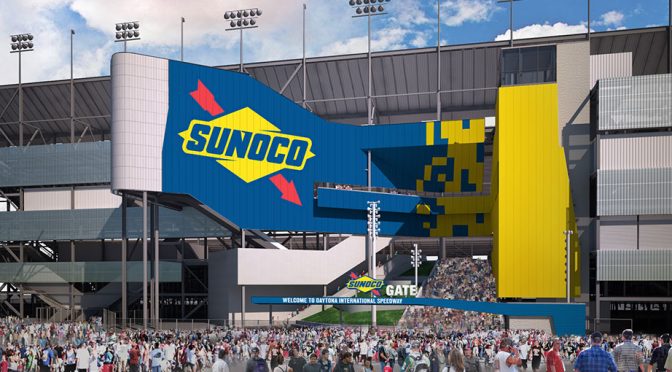
Chairman of the Board of ISC, Jim France most recently spearheaded the $400-million Daytona Rising project that transformed Daytona International Speedway into the world’s first motorsports stadium.
“The Landmark Award was designed to recognize people behind the scenes who you may not see often but make a big difference, and that’s exactly what my uncle has done through my whole career,” Brian France said.
“And the most important thing he’s done that I would tell you tonight is make sure our family stays going in one direction helping grow NASCAR in a good, smart way, and I have the utmost respect. So it’s really proud for me and my sister and the rest of his family to recognize my Uncle Jim for the Landmark Award tonight.”
At the NASCAR Hall of Fame dinner that preceded the induction ceremonies, veteran motorsports writer Norma “Dusty” Brandel was honored with the Squier-Hall Award for Media Excellence. Brandel, from Glendale, California, was the first female reporter to cover the sport.
Asked if she thought in 1972 that she would ever be the recipient of NASCAR’s most distinguished media award, Brandel said, “No. Never. I think I’m going to cry.”
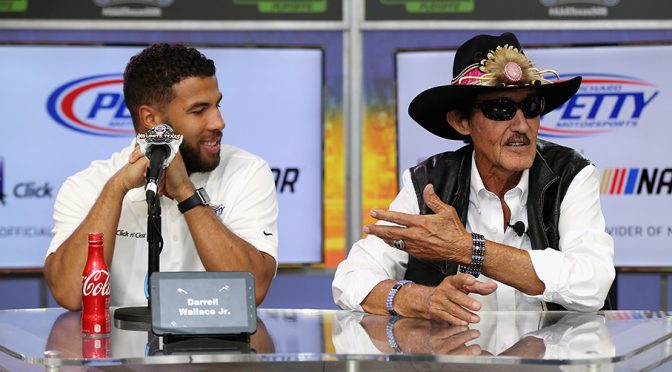
There are many perks to racing for “The King,” but at the top of the list is driving the iconic No. 43 that Richard Petty drove to a record seven championships.
Darrell Wallace Jr., who is set to compete in his first full-time Monster Energy NASCAR Cup Series season with Richard Petty Motorsports, showed off his No. 43 STP Chevrolet Camaro ZL1 for 2018.
An ode to the rich history of the illustrious car number and longtime sponsor, the new paint scheme features the famous red-and-Petty blue colors that will be a sight to see on the racetrack this upcoming season.
STATESVILLE, N.C. — Online lighting retailer 1000Bulbs.com will return to the No. 38 Ford Fusion in 2018, partnering with driver David Ragan for four Monster Energy NASCAR Cup Series races. The Garland, Texas-based company agreed to the multi-race deal after Front Row Motorsports introduced it to the NASCAR landscape in November, when 1000Bulbs.com sponsored Ragan’s team at Phoenix International Raceway.
On the 2018 schedule, 1000Bulbs.com will join the No. 38 team for races at Auto Club Speedway (March), Texas Motor Speedway (April), Dover International Speedway (October) and Homestead-Miami Speedway (November).
The Internet-based lighting retailer offers LED bulbs, commercial fixtures, Christmas lights, lighting controls and other lighting products. Founded in 1996, 1000Bulbs.com has grown from two to 250 employees and today sells nearly a half million dollars a day in light bulbs and fixtures, with founder Kim Pedersen earning the 2010 Ernst & Young Entrepreneur of the Year award along the way.
Ragan visited the 1000Bulbs.com headquarters in November, met company employees and learned about the organization’s marketing initiatives and goals. The driver and race team will now work to connect the retailer with fans and business partners throughout the NASCAR industry.
“Kim and his staff are smart business people, and they know a good opportunity when they see one,” Ragan said. “I’m thrilled that they saw the value of our sport, and working with Front Row Motorsports in particular, when they partnered with us for a race last fall in Phoenix and decided to get more involved this year.”
“We’re excited to continue our journey in NASCAR during 2018,” said Pedersen. “We couldn’t ask for a better partner in Front Row Motorsports, or a better brand ambassador than David Ragan.”
The No. 38 1000Bulbs.com Ford will make its 2018 on-track debut at Auto Club Speedway in Fontana, Calif., on March 18. The Auto Club 400 will air live on FOX.
Barbour Named Crew Chief
Seth Barbour will lead Ragan’s No. 38 team in 2018. Barbour has been named crew chief for the team after serving in the same role for Front Row Motorsports’ No. 34 team in 2017. Barbour and Ragan previously worked together when Barbour was an engineer on Ragan’s No. 6 Roush Fenway Racing team.
DAYTONA BEACH, Fla. – Exactly one month from today, the green flag will wave over what is expected to be the youngest DAYTONA 500 field in NASCAR history. And today, NASCAR announced an update to the Sunoco Rookie of the Year points structure in all three national series, placing a brighter spotlight on some of those young stars.
Beginning this season, the Sunoco Rookie of the Year point system will mirror the points structure that awards the season-long championship, including stage points and playoff points, with the eventual Sunoco Rookie of the Year earning the most points throughout the season.
As is the case with the season-long points structure, a race win will earn a Sunoco Rookie 40 points and five playoff points. A second-place finish will earn a Sunoco Rookie 35 points; a third-place finish nets 34 points, and so on. A Sunoco Rookie who wins a stage will earn 10 points and one playoff point.
“The focus on our rising stars has never been stronger and simplifying the Sunoco Rookie of the Year system made perfect sense,” said Jim Cassidy, NASCAR senior vice president of racing operations. “Our fans track closely the progress of our young drivers and matching the Sunoco Rookie of the Year points structure with the championship points will help them follow this prestigious program and award more closely than ever before.”
The new Sunoco Rookie of the Year guidelines will take effect in all three NASCAR national series – the Monster Energy NASCAR Cup Series, NASCAR Xfinity Series and NASCAR Camping World Truck Series.
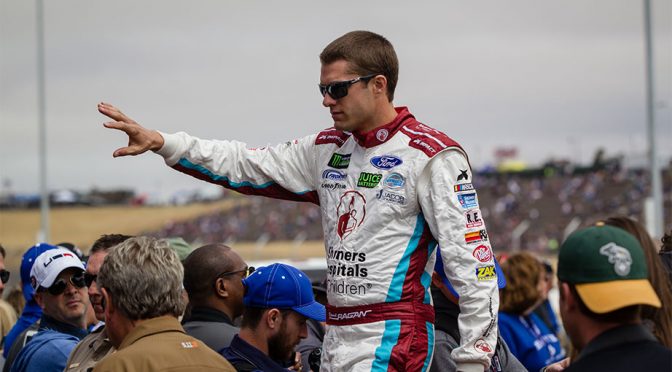
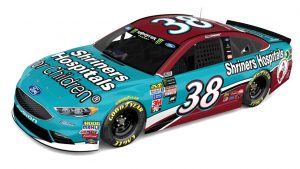
From the moment David Ragan first spent time at a Tampa-area Shriners Hospitals for Children in 2007, the work and sense of community have left an indelible mark and impact on the Monster Energy NASCAR Cup Series driver.
That impact continues today as Shriners Hospitals for Children will be the primary sponsor for three of Ragan’s races in 2018. Shriners Hospitals for Children served as a primary sponsor for three races of Ragan’s in 2017, one in 2016 and one in 2012.
“When I visited the hospital, I saw the young kids and that their quality of life was being improved greatly by the hospitals,” Ragan told NASCAR.com. “I thought that I could use my platform as a race car driver to help raise some awareness and help educate people on what the hospitals are all about. That’s what I’ve been able to do and have some fun with it over the last 10 years.”
Ragan was even inducted into the Shriners International fraternity in 2012, serves as its NASCAR ambassador, rode on a Rose Bowl float for the organization in 2016 and was involved in negotiating this deal himself.
“David has been a tremendous ambassador for both Shriners Hospitals for Children and Shriners International,” Gary Bergenske, chairman of the Board of Directors for Shriners Hospitals for Children, said in a team release. “Our partnership with David and Front Row Motorsports has increased awareness for our health care system and the work we do for our patients.”
Courtesy of Front Row Motorsports
Shriners Hospitals for Children will adorn Ragan’s No. 38 Front Row Motorsports Ford for the spring race at Dover (May 6) and the summer races at Daytona (July 7) and Bristol (Aug. 18). The 32-year-old father of two said the reason for those particular races is simple.
“We try to put them (the primary sponsored races) in markets that there is a hospital nearby or there is a large presence of members of the Shriners fraternity nearby,” Ragan explained.
“The Dover race — they have a big hospital in Philadelphia. The Daytona race– there is a hospital in Tampa, but there is also the annual Imperial Session — an annual meeting with all the Shriners all around the world will be in Daytona the week after the Fourth of July. Bristol — they have a lot of patients and family for the Greenville, South Carolina, hospital. The tracks are close by to the hospital so we can invite some patients and their families out.”
The at-track visits Ragan hosts provided a sense of normalcy and fun that the Georgia native is more than happy to be a part of.
“Inviting some of the patients out to the race track shows them that they can still come out, have some fun and live a normal life like other young kids their age,” Ragan said.
Sporting the Shriners paint scheme last July at Daytona, Ragan came close to his third Monster Energy NASCAR Cup Series win. He finished sixth (his best finish of the season) and was on the front row for the final restart of the race on Lap 162.
“That would be really special to win in the Shriners paint scheme,” Ragan revealed. “I feel like when I’m driving that car not only am I representing my team and Ford Motor Company, but I feel like all the patients and the staff and the Shriners all around North America are pulling for me and are kind of riding shotgun.”
Shriners Hospitals for Children have provided life-changing care to more than 1.3 million children over the past 95 years. At 22 locations in North America, the doctors and staff work to transform lives through specialized care to children with orthopedic conditions, spinal cord injuries, burns and cleft lip and palate. All care and services are provided regardless of the families’ ability to pay.
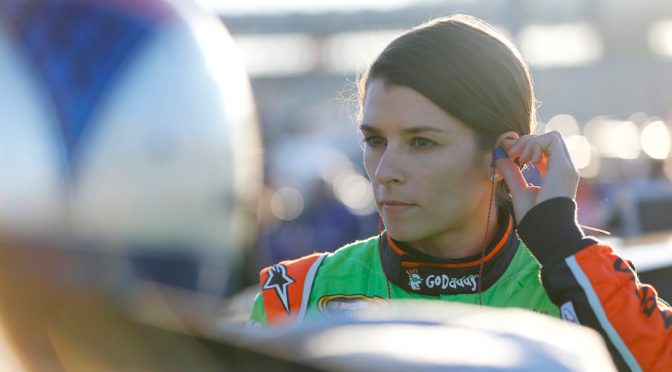
DAYTONA BEACH, Fla. — Regarding it as “the ultimate fit,” Danica Patrick announced Thursday that GoDaddy would be sponsoring her cars in the Daytona 500 and the Indianapolis 500 this year – the “Danica Double” send-off to her historic career competing in big-time auto racing.
Fittingly, Patrick will take her final bow on NASCAR’s and IndyCar’s biggest stages and her most renowned sponsor, “GoDaddy,” will provide the primary funding for her farewell.
“First and foremost, GoDaddy is such an appropriate fit, a great fit,’’ Patrick told the NASCAR Wire Service shortly after her news was released.
“It’s so exciting as we have so much history together but also because I feel like people were starting to wonder what was going on. And there were some points in time where I was a little frustrated too, but it’s nice to be able to announce something.’’
Patrick still hasn’t revealed which teams she will be driving for in either of the races, but did confirm news will be coming shortly about her Daytona 500 plans. Patrick drove for Stewart-Haas Racing all five of her full-time Monster Energy NASCAR Cup Series seasons from 2013-1017.
“We are getting close on that stuff and we need to be, right?’’ Patrick said. “We’re on track in the next couple weeks.’’
In the meantime, Patrick, 35, said she’s been overwhelmed by the positive response not only in anticipation of her final two races, but now with the news her car will carry GoDaddy livery.
“It’s absolutely (appropriate),’’ she said. “They have been the biggest brand along with my brands. They have been my biggest sponsor, they’ve done the Super Bowl commercials, the most everything.
“Of course on track, one of those big moments was being on pole for the Daytona 500. That was a really big deal and starting next to Jeff Gordon. That was pretty cool. Even just the announcement of moving from IndyCar to NASCAR was a big deal. They’ve been a huge part of my life, not just my career.’’
Patrick is the only woman to have led laps both in the Daytona 500 (nine) and the Indy 500 (29) – two of the world’s most renowned races. She won the pole for the 2013 Daytona 500 and finished eighth.
She has six top-10s in seven Indy 500 starts with a best of third place in 2009. Both those career highlight races were in GoDaddy livery.
“You could say, ‘we’re getting the band back together,’’’ GoDaddy Chief Marking officer Barb Rechterman said of the company’s alliance with Patrick.
“It makes sense in that our goals are so well-aligned. She’s passionate, tenacious and creative just like so many of our customers who are also looking to leverage the power of the internet and turn their ‘side hustle’ into a full-time business.
“Danica absolutely epitomizes the heart of our GoDaddy customers. We love it.’’
Patrick recently released a book, “Pretty Intense,” launched a clothing line named “Warrior,” and has her own California vineyard, “Somnium” — Latin for the word, “dream.” She has also been named one of TIME Magazine’s “Most Influential People” and her appearance in 13 GoDaddy Super Bowl commercials is most all-time among celebrities.
“It was the first thought in my mind of who would be the most perfect fit so I’m grateful it fits,’’ Patrick said of partnering again with GoDaddy. “It’s really amazing how perfectly aligned the brands are from where we’ve come from, to where we are now, and the whole process in between.
“We’ve always been on the same page brand-wise and evolution-wise.