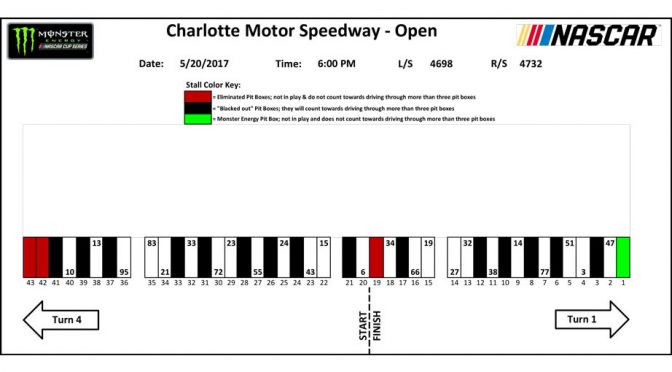
See the pit stall assignments for the Monster Open (Sat., May 20, 6 p.m. ET, FS1)
CHARLOTTE, N.C. — In what is believed to be an unprecedented move in national sports broadcasting, FOX Sports announced today that its live broadcast of the June 10 NASCAR XFINITY Series race from Pocono Raceway (1 p.m. ET on FOX) will be called entirely by active Monster Energy NASCAR Cup Series drivers. The race broadcast is thought to be the first time a nationally televised live sporting event has featured an on-air team comprised strictly of athletes actively competing in that sport.
Kevin Harvick, the 2014 NASCAR premier series and two-time NASCAR XFINITY Series champion, serves as the play-by-play announcer for FOX Sports at Pocono alongside analysts Joey Logano (2015 Daytona 500 champion and a part of four NASCAR XFINITY Series owners championships) and Clint Bowyer (2008 NASCAR XFINITY Series champion).
Ryan Blaney, (2014 NASCAR Camping World Truck Series Most Popular Driver), Erik Jones (2015 NASCAR Camping World Truck Series champion) and Ricky Stenhouse Jr. (two-time NASCAR XFINITY Series champion) cover pit road, while Danica Patrick (2013 Daytona 500 pole champion and first female to lead a NASCAR race under green) and Denny Hamlin (2016 Daytona 500 champion) host FOX race coverage from the Hollywood Hotel mobile studio.
“This is something FOX Sports has talked about doing for a long time,” said John Entz, FOX Sports President & Executive Producer, Production. “Several of these competitors already have joined us in the NASCAR XFINITY Series booth and done a heck of a job, and we see a lot of promise in the newcomers. Regardless of their TV experience, we have one goal for all — go out and have a blast. As long as no one sets fire to the FOX Sports booth or pulls the plug that knocks us off the air, the drivers have free rein.“
Harvick, Bowyer, Hamlin, Logano and Patrick have served as driver analysts for FOX Sports’ coverage of the NASCAR XFINITY Series at some point since the network began rotating prominent Monster Energy NASCAR Cup Series drivers in the booth beginning with the 2015 season. Additionally, Blaney and Stenhouse have contributed as driver analysts on FS1’s NASCAR RACE HUB, the sport’s most-watched daily NASCAR news and information program. Pocono marks Jones’ debut as part of a national race broadcast.
Still slated to offer analysis in the FOX Sports NASCAR XFINITY Series booth in 2017, alongside regular FOX Sports broadcasters Adam Alexander and Michael Waltrip, are Bowyer at Charlotte on May 27 (1 p.m. ET on FS1) and Logano at Dover on June 3 (1 p.m. ET on FS1).
“Pocono definitely is going to be different, but I am looking forward to the challenge and the fun it’s going to be for everyone,” said Pam Milller, NASCAR XFINITY Series race producer for FOX Sports. “For the most part, this group has broadcasting experience, so the goal will be to keep the telecast moving between all the personalities and making sure every driver’s unique views and personal experiences come through on the air. We want the viewer to feel like they are sitting with a group of friends having a racing conversation. These friends just happen to compete on the track each week.”
Chase Elliott and Jamie McMurray made their FOX NASCAR booth debuts earlier this season, in addition to two appearances by Brad Keselowski. Logano helped call the Richmond race, while Harvick offered analysis at Daytona, Phoenix, Bristol and Talladega, as well as the NASCAR Camping World Truck Series stop at Martinsville. Harvick also is scheduled as an analyst for the upcoming Truck Series races at Eldora Speedway and Talladega Superspeedway.
In appreciation of the drivers’ participation, FOX Sports will make a donation to each driver’s individual foundation or charity of choice.
RELATED: Watch the wreck | Almirola likely to miss 8-12 weeks
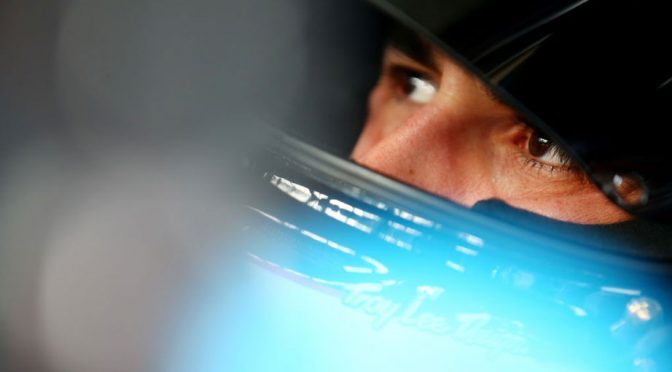
CONCORD, N.C. — Richard Petty Motorsports indicated Friday morning that it does not have definitive long-term plans for replacing driver Aric Almirola as he recovers from a broken back. For now, the team’s fill-in driver doesn’t either.
The team named veteran Regan Smith as interim driver for this weekend’s events for the Monster Energy NASCAR All-Star Race. But Almirola said Friday he’s expected to miss 8-12 weeks for a full recovery from the injuries he suffered in a crash last weekend at Kansas Speedway, creating a longer-term vacancy in the historic No. 43 Ford.
RPM executive Brian Moffitt said his initial concerns were with Almirola and his family, but that he eventually met with their driver, team owner Richard Petty and crew chief Drew Blickensderfer to produce a list of potential fill-in candidates. The group settled on Smith, but only for the non-points All-Star exhibition.
“We’re still working through that with our partners,” Moffitt said, “so as soon as we know for the future, we’ll be letting you guys know that. But right now, we’re thrilled that Regan’s in the car for this weekend.”
Smith was at the track Friday, meeting with reporters outside the Richard Petty Motorsports hauler in a crisp, white firesuit with the logo of team sponsor Smithfield Foods. Like Moffitt, Smith was mum about further opportunities with the No. 43 operation.
“I’m focused on this weekend right now and we’re going to do the best we can for their partners and for their team this weekend and see how things progress going forward,” Smith said, “but I’m gonna focus on this weekend and do a good job for them this weekend.”
Smith, who competes full-time in the NASCAR Camping World Truck Series, is a veteran of 211 starts in NASCAR’s premier division. The 33-year-old driver’s lone big-league victory came in the 2011 Southern 500 at Darlington Raceway.
Smith last competed full-time in the series in 2016, but has gained a reputation in recent years as a go-to substitute. His duties have included short stints in place of Tony Stewart, Kurt Busch, Kyle Larson and Dale Earnhardt Jr., oftentimes being called on to stand in with short notice.
This go-around, Smith had a much longer lead time in getting acclimated with the No. 43 bunch, but driving an unfamiliar car has become a familiar situation for him.
“I’ve learned I’ve got a hell of a polo shirt collection at this point,” Smith said with a smile about his growing supply of team apparel. “I don’t know if there are any crew members in the garage that have been with more teams than I have. I guess the first time you do it, and I mentioned earlier, that they’re all different and all unique in their own way.”
RELATED: Almirola involved in wreck at Kansas
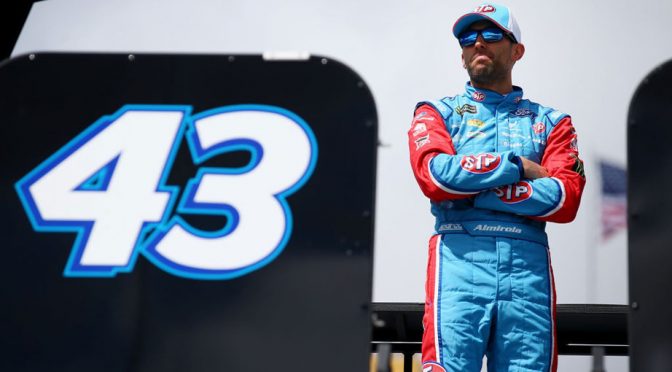
Speaking for the first time since a frightening accident at Kansas Speedway last weekend, Monster Energy NASCAR Cup Series driver Aric Almirola revealed he waited a day, while still resting in his hospital bed, to watch video footage of his wreck — a wreck he says will sideline him for at least two months.
Almirola’s No. 43 Richard Petty Motorsports Ford smacked the already wrecked cars of Joey Logano and Danica Patrick with 68 laps remaining in the Go Bowling 400, bringing out a red flag. Emergency crews carefully cut Almirola out of his car, and the 33-year-old driver was airlifted to a nearby hospital for evaluation.
Almirola said he expects to miss 8-12 weeks of Monster Energy Series competition while recovering from a fracture of his T5 vertebrae suffered in the accident.
Regan Smith was tabbed to drive the iconic No. 43 Smithfield Foods Ford for Almirola this weekend.
In good spirits, his body still sore, Almirola spoke with NASCAR.com before a press conference Friday morning at Charlotte Motor Speedway, site of Saturday night’s Monster Energy All-Star Race.
RELATED: More on Regan Smith in the No. 43
Although Almirola recalls details of the accident, watching replays of the crash in the days since have both amazed the veteran and made him thankful for the safety of his car.
“I wanted to see it, but I didn’t want to see it that night,” Almirola said. “I watched the replay so I could see it for myself and I wanted to see it so I had a better understanding. Everything happened so fast in the moment, so I was pretty sure how it went down, but not exact of all the details. When you go back and watch the replay it kind of clarified all things. The thing I was most amazed with was how high my car got off the ground.”
Almirola said he thinks he ran over water and oil left from the wrecked Logano and Patrick cars in Turn 2 of the 1.5-mile track, and that essentially diminished any hope of steering away and avoiding the pile-up. NASCAR currently is conducting a thorough review of the entire incident, including a sit-down dialogue with Almirola for his perspective. The car was immediately taken to the Research & Development Center in Concord, North Carolina.
“It didn’t slow down, it didn’t turn, it didn’t do anything,” Almirola said. “I just slid right into the wreck. There was nothing I could do. It was the most helpless feeling because I saw the wreck. I braced because I knew it was coming and as soon as I made impact with Joey’s car it felt like someone put a knife in my back.
“And when I went up in the air and came back down it felt like someone took that knife and just twisted it in my back. And I got a really bad burning sensation in my back.”
Almirola immediately knew he was injured.
“That’s why I dropped the window net so fast and took the steering wheel off,” he said. “When I threw it forward, I was in a lot of pain with my back already and that made it worse extending my hands out in front of me. I looked around and saw I wasn’t on fire that the burning sensation in my back was an enormous amount of pain.
“So I just sat there and waited for the medical team to help get me out. I knew I wasn’t going to be able to get out on my own power. I was in way too much pain. I think they did a good job of getting me out of there the best way they could and made sure they stabilized my spine and didn’t do any further damage.”
RELATED: Almirola on extrication: ‘They did a great job’
Nearly a week out from the accident, Almirola says he still is in some pain, although it is much more manageable. Because of the location of the injury — essentially between his shoulder blades — it hurts often in doing the most ordinary of things.
For the time being, doctors said he can’t pick up anything weighing more than five pounds, which is especially troubling for a father of a 3-year old and 4-year-old who are accustomed to spontaneous rides on dad’s hip.
Almirola said because his injury doesn’t require bandages or a cast or something easily associated with injury, it’s hard for his children to understand he’s been hurt.
However, the 2014 Daytona Coke Zero 400 winner says he is grateful for the opportunity to recover and return to work considering the impact he experienced.
“I’ve been racing since I was 8 years old and I crashed plenty of times in a go-kart,” Almirola said. “I’ve crashed plenty of times in a late model coming up and racing in Florida. I’ve been in wrecks in the (Camping World) Truck Series, the XFINITY Series and the Cup series … and that one Saturday was by far the most violent.”
RELATED: Drivers wish Almirola well
Doctors told Almirola that his high level of fitness training should be a huge benefit in recovering from this serious back injury. A former baseball standout in high school, Almirola always has been one of NASCAR’s most fit competitors.
“The doctor told me the very first day he saw me, ‘obviously you’re in good shape. You take good care of your body and you’re in good health, you’re lean. Your body should do a fantastic job of healing itself.’
“That’s still no guarantee, though. He said I had a 90 percent chance of healing really quickly with no need for surgery. But 90 percent also means I have a 1 in 10 chance I won’t heal properly and I could need surgery.”
“Really, I’m just supposed to give it a break. I’m doing everything I can do.”
Almirola said he is so grateful to everyone who has reached out to him in the days following the accident and spends hours responding to the kind text messages and phone calls from all those expressing their care.
“I’ve been very moved and touched by the amount of people who have reached out and come by to visit and expressed their concerns and cares,” Almirola said. “The doctors and neurosurgeon in Charlotte have written me a prescription to go and sit in a chair at the beach. They want me to lay low the next couple weeks.
“I told my wife Janice I wouldn’t do anything to jeopardize my long-term health. I’ve got a beautiful family and I want to be able to run around outside and throw the baseball with Alex and I want to go to father-daughter dances with Abby and I’m not going to do anything to jeopardize that.”
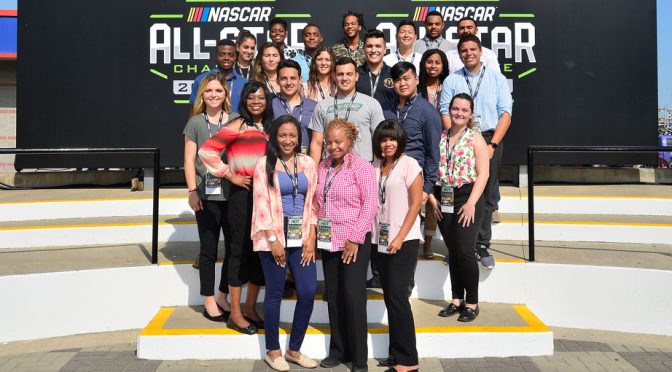
DAYTONA BEACH, Fla. — The 2017 NASCAR Diversity Internship Program (NDIP) welcomed 26 of the brightest students from across the country seeking to learn about the motorsports industry during the Monster Energy All-Star Race weekend at Charlotte Motor Speedway in Concord, North Carolina.
This year, 14 former NDIP interns currently working in the industry full-time will help mentor the students throughout the 10-week, paid internship. Mentors include Brandon Thompson, senior director of NASCAR touring series; Lauren Houston, manager of NASCAR Multicultural Development; Pedro Mojica, Richard Petty Motorsports engineer; and Jusan Hamilton, manager of NASCAR racing operations and event management. Hamilton made history earlier this year by becoming the first African-American to serve as a race director for a NASCAR national series event.
“For nearly 20 years, the NASCAR Diversity internship program has provided talented students with hands-on experience in the motorsports industry,” said Jim Cassidy, NASCAR senior vice president of racing operations. “The program has also helped NASCAR identify future leaders in the industry and continues to serve as an important part of our efforts to promote diversity and inclusion in the workplace.”
In its 18th year, NDIP has introduced hundreds of students from diverse backgrounds to professional opportunities in NASCAR. The program has also served as a pipeline for identifying and hiring top talent across the motorsports industry. In addition to NASCAR, 2017 interns will be working at NASCAR partner companies including Rev Racing, Roush Fenway Racing, Pocono Raceway, Toyota, and the International Speedway Corporation.
The 2017 NDIP class began its NASCAR experience with an orientation session at the NASCAR Research and Development Center in Concord. The group visited the NASCAR Hall of Fame in Charlotte and the NASCAR Production Studio, as well as the race shop for Rev Racing, which fields cars for the NASCAR Drive for Diversity program.
The class also put its own racing skills to the test at Victory Lane Karting. In addition, the interns met with key stakeholders in the NASCAR industry including Monster Energy NASCAR Cup Series crew members, drivers, and NASCAR executives.
For many, attending the NASCAR Camping World Truck Series race, Monster Energy Open and Monster Energy All-Star Race from Charlotte Motor Speedway this weekend will be their first live NASCAR experience.
Throughout the internship, the students will contribute to the industry and gain experience working in marketing, engineering, public relations, licensing, diversity and public affairs. They will also learn from leading NASCAR executives in weekly lunch-and-learn sessions and networking events with professionals across the industry.
The NASCAR Diversity Internship program offers diverse students an opportunity to work in one of the largest professional sports industries in the United States. Each year, the internships are available to college sophomores, juniors, seniors and graduate students across the country. To be eligible, students must be in good standing with their school and community and have a minimum 3.0 GPA.
The 2017 NDIP class includes the following students from colleges and universities across the nation:
| Name | Department/Organization | University |
| Alex Alvarado | NASCAR Public Affairs | University of Central Florida |
| Alton Peques | NASCAR Marketing, Media Research | University of North Carolina at Chapel Hill |
| Ashleigh Young | NASCAR Creative Design | University of Southern Mississippi |
| Bria Dixon | NASCAR Weekly and Touring | Virginia Tech |
| Cabrell Cooper | NASCAR Productions Engineering | Delaware State University |
| Cambric Moye | Toyota, Logistics | University of North Carolina at Greensboro |
| Carter Allen | NASCAR Brand Platforms Marketing | Arizona State University |
| Catherine Rivera-Chardon | Pocono Raceway | Penn State University |
| Dejah Gilliam | NASCAR Integrated Marketing Communications | Syracuse University |
| Federico Morales | NASCAR Finance | Georgia State University |
| Glen Charlton | NASCAR Digital | University of Maryland |
| Greg Carty | Roush Fenway Racing | Old Dominion University |
| Jorge Jones | NASCAR Integrated Marketing Communications | University of the Incarnate Word |
| Kenneth Lee | The NASCAR Foundation | Tuskegee University |
| Kevin Lee | Toyota, Information Systems | University of Texas Dallas |
| Kim Brian Fadul | NASCAR Digital Media | North Carolina State University |
| Lillian Hermina | NASCAR Industry Services | University of North Carolina at Chapel Hill |
| Monica Matias | ISC Public Affairs | University of Central Florida |
| Natalia Mendoza | NASCAR Green Innovation | Wake Forest University |
| Precious Makuyana | ISC Legal | Florida A&M University |
| Ronald Alexander | ISC Partnership Marketing | Winston-Salem State University |
| Sandra Prieto | NASCAR Member Services | University of Miami |
| Sarah Torres | ISC Finance | Penn State University |
| Shawn Meachem | Rev Racing | Johnson C. Smith University |
| Tylar Williams | NASCAR Human Resources | Texas A&M College Station |
| Zane Smith | Toyota Engineering | Southern Methodist University |
RELATED: Every All-Star Race winner in NASCAR history
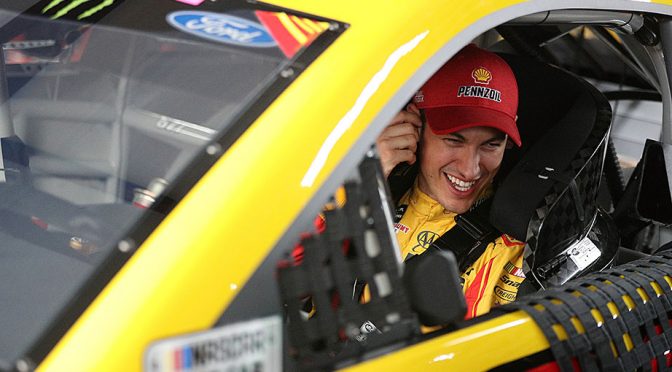
NASCAR steps outside of its 36-event schedule of points-paying races just twice a year — once for the season-opening Clash at Daytona and again for its mid-May invitational, the Monster Energy NASCAR All-Star Race. Scan back through the recent record books and one name jumps out as the current defending winner of both — Joey Logano.
Theorizing about a common denominator takes a leap of faith, that Logano particularly thrives under the no-points, no-pressure structure, that his Team Penske No. 22 team collectively loosens its top button for a free-wheeling “casual Friday” approach to events that don’t count toward the season-long championship.
Sure, no points are at stake. But according to Logano, the business is very much as usual.
“Honestly for our team, we don’t race any different,” Logano said Thursday after a visit to the NASCAR Hall of Fame, helping support a local charity through his foundation. “We’re just an aggressive race team and we don’t really think a whole bunch about points. We’d like to sometimes, especially with the stage racing now, but we race aggressive all the time. If there’s a trophy there, we’re going to win it whether there’s points or not.
“It just happens to be that we were able to win the Clash and then the All-Star Race last year, so I think that might just be a little bit of a coincidence because we don’t really do anything different or race more aggressively or anything like that to win those races.”
Logano returns as the reigning champ of Saturday’s Monster Energy All-Star Race (8 p.m. ET, FS1, MRN, SiriusXM) at Charlotte Motor Speedway. Getting the upper hand in a fierce late-race battle with Kyle Larson last year helped deliver his first All-Star victory in nine tries.
“When you hear the All-Star Race — or ‘All-Star’ in any sport — it’s a special thing to be involved in,” Logano said. “And you can imagine that winning and that feeling and what it was like, it’s definitely one of those wins that you want to check off on your bucket list and to be able to say you’ve won the All-Star Race. And that was a cool thing to be able to do.
“It was an eventful race, just like every All-Star Race. There’s so many crazy things that can happen and will happen this week.”
Based on the wild-card wrinkles added to the invitational’s format, Logano’s prediction of All-Star oddities carries some high probability. Among the new facets for this year’s procedures are an elimination that whittles the field to 10 cars for the final 10-lap segment and the availability of one set of softer “option” tires for each team.
RELATED: Inside the 2017 All-Star format
The green-lettered option tires offer premium grip with the trade-off of rapid wear. And then there’s the question of when teams opt to use them, since there’s a rear-of-the-field mandate if option tires are mounted for use in the final segment. “It’s going to throw a loop into it for sure,” Logano said.
With format hurdles comes strategy, and Logano will have crew chief Todd Gordon back atop his pit box from a two-race suspension to crunch through potential race scenarios. While Logano indicated some pre-race planning was involved in attacking the intricacies of the All-Star format, there’s also an element of leaving that duty in Gordon’s able hands.
“It’s a little bit of both. Todd’s a lot smarter than me, and I realize that and I’m happy for that,” Logano said with a smile. “It’s a good thing. But we’re able to talk a little bit back and forth and saying, ‘hey, do you think you can pass this many cars in this many laps if you’re this much faster. Is there room to pass these cars and is our car going to be good enough to be able to do this or this.’ All that strategy will change after practice, after qualifying and you kind of get a feel for where you’re at with things.
“Once you get a hold of that stuff, then you might have a little bit closer to the strategy you’re going to race in your mind once you start the race, and then we’ll just kind of go for it from there. If we feel like we need to change, that’s up to them. I’ll let them figure that out. I don’t tell them how to call a race or how to set up a car, and he doesn’t tell me how to drive. So we just kind of figure it out together.”
With some math and special one-off procedures involved, Logano may need some in-race refreshers along the way. Format tweaks are as annual as the event itself. Revolving stage distances, pit-road options, eliminations and average-finish calculations have been part of the fun in years past.
Asked about potentially crafting a dream All-Star format, the 26-year-old driver demurred. No points, no pressure might still be in effect, but when it comes to playing rule-maker for a day, Logano adds a no, thank you.
“Honestly, I don’t care. As long as I know what the rules are, it’s the same for everybody,” Logano says. “It doesn’t make a difference. As soon as they’re written down and that’s what they are, those are the rules you play by and may the best team win. It’s pretty simple.”
RELATED: Every All-Star Race winner in NASCAR history | Race results
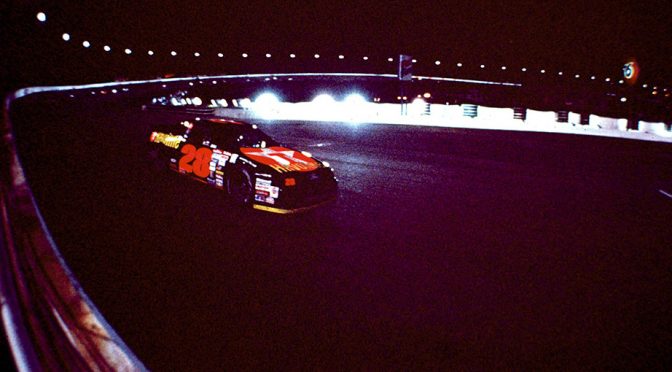
It was billed, appropriately enough, as “One Hot Night” and the 1992 running of the Monster Energy NASCAR Cup Series All-Star Race at Charlotte Motor Speedway proved to be just that.
Saturday night’s race (8 p.m. ET, FS1, MRN, SiriusXM NASCAR Radio) marks the 25-year anniversary of the “One Hot Night” spectacle, and in spite of the passage of time, it remains one of the most memorable races in the history of the event.
“I will say this – it lived up to every bit of the hype,” former driver Kyle Petty said. “Like few things in sports do. Rarely do things live up to the hype that you throw at them.”
Petty was a key player in the ’92 race. Along with fellow racer Davey Allison. And Dale Earnhardt, then a two-time winner of the 70-lap, three-segment event (he went on to have three wins in the All-Star Race overall) that paid no points but plenty of money.
“We witnessed in the amount of time we’ve been here some really great races, incredible races, everywhere,” Petty said. “But they don’t stick with you like this race sticks with you. For some reason this race sticks with fans different than other races. Whether it was the first night race, whether it was Earnhardt spinning and Davey wrecking, whether it was all the hype that led up to it.”
Officially it was known as The Winston. But with his typical promoter’s flair, CMS president Humpy Wheeler dubbed the event “One Hot Night” long before the first car hit the track.
Wheeler could not have been more correct in his assessment of the evening’s activities.
NIGHT VISION
The annual all-star race, funded by series sponsor RJ Reynolds, was in its eighth year and had already provided its share of memorable moments.
RELATED: Counting down the top moments in All-Star Race history
“You had (Darrell) Waltrip blowing up the engine on the start/finish line of the last lap of the first The Winston (in 1985),” said Dennis Dawson, who was senior manager of the NASCAR Winston Cup Series program for Sports Marketing Enterprises and RJR at the time.
“You had Darrell and Rusty (Wallace) coming through Turns 3 and 4 and Darrell getting spun, Rusty crossing the finish line and Darrell saying he hoped Rusty choked on the money (in ’89).”
And there was the memorable “pass in the grass” involving Earnhardt and Bill Elliott in ’87.
“So it had already created a buzz,” Dawson said.
RELATED: Relive the ‘Pass in the Grass’
The ’92 edition brought something new to the table – racing under the lights.
NASCAR’s top division had run points races at night before ’92. Bristol’s popular August race had been held under the lights since 1978; Richmond had been hosting night races since the early ’90s; and Nashville, before it came off the schedule, held night races for several years.
But the series had never competed under the glare of lights on anything other than a short track.

“It was crazy to think you could light this place,” Petty recalled. “You grew up running short tracks; a half-mile with a light pole here and a light pole here and a light pole here. And it goes from light to dark, to light to dark to light to dark. And that’s OK at 70 miles an hour. But at 170-180 mph? I remember when they said ‘we’re going to do it with lights and mirrors.’ I’m like ‘smoke and mirrors maybe.'”
In a last-ditch effort to keep the race at Charlotte, Wheeler had promised RJR officials that he would light the 1.5-mile track for the event, allowing it to be run later in the evening and on Saturday instead of Sunday.
“Humpy did pitch the thought of doing that, without having a clue how to do it,” Dawson said. “That part is true.”
RJR officials met with Wheeler and folks from MUSCO Lighting, a company out of Iowa that had been providing lighting solutions for outdoor sporting events.
There was skepticism and concern. But it went deeper than just whether the track could be safely lit for racing.
“It had never been done to that magnitude to start with,” Dawson said. “But lighting the outside and taking care of the fans was just as important as taking care of the drivers, the crew guys on pit road, the safety guys. The lighting thing was a big deal all the way around.
“But we knew that if they could get the job done that it was going to elevate the event.”
Mike Joy, anchoring the TNN broadcast in the booth that night along with analysts Buddy Baker and Neil Bonnett, said TV and competitors had different concerns. The broadcast partner needed enough light “to have a quality show,” Joy, now the lead announcer for NASCAR on FOX, said. “And we were afraid if we did that, if the lights were that bright, there would be too much glare for the drivers to see. We all went in pretty worried, but we all got more than we hoped for.”
RELATED: Results for every All-Star Race run
A SLAM BANG FINISH

Allison started the 70-lap race on the pole and won the first 30-lap segment. When fans voted to invert the field for the second segment, his No. 28 Robert Yates Racing Ford restarted from the rear of the field. Petty, with crew chief Robin Pemberton calling the race from pit road, won the second segment.
All that remained was a 10-lap shootout with Petty, Earnhardt and Allison among those in front for the restart.
With the air temperature dropping, track conditions continued to change.
“Track surfaces need to be hot and they need to change throughout the day for old-timers like us that know what you have to work on,” Pemberton said. “… When you can run five hours and the track temperature is within five degrees and it’s 87 degrees or whatever it happens to be, it doesn’t add that element of the track changing, grip level changing, you’ve got to keep up with the car, other strategies other than just two or four tires.”
Larry McReynolds, crew chief for Allison said not keeping up with those conditions stymied his driver heading into the final segment.
“I didn’t do a good job of getting aggressive and keeping up with this changing track,” McReynolds said. “We had no notebook. The only night notebook we had was Bristol, which was not relative to anything. So we knew the track was going to change based on the temps, but I think with the changing track, more cars, more rubber (on the track), I didn’t do a good job of getting aggressive enough.
“But when you dominate the first segment, come through the field from dead last to fifth or sixth in (segment) No. 2, you’re a little bit hesitant (to make changes).”
The final 10-lap segment opened with Petty checking out on the field, building a sizable lead before Darrell Waltrip’s spin on the frontstretch brought out the caution.
When they restarted with seven laps remaining, it was Petty out front, Earnhardt second and Allison third. But not for long.
Earnhardt grabbed the lead on Lap 64 and a pass by Allison dropped Petty to third.
A lap later, Petty was second and closing. When they rocketed out of Turn 2 for the final time, Petty shot under the menacing black No. 3, and promptly was nearly forced off the track as Earnhardt ran him low.
Allison, meanwhile, had built up a head of steam and was closing rapidly.
“The crowd was already standing but they got loud as the car were going down the back straightaway,” Dawson said. “And then just a few seconds later the tone changed. I looked over toward Turn 3 just trying to see the race track and I guess there was a spot between two motorhomes – I could see Earnhardt sideways and smoke boiling off the tires. Then we all ran around to the front of Victory Lane to see what was going on and there was Kyle and Davey coming down through there side by side.”
RELATED: An All-Star team for the All-Star Race
Earnhardt and Petty had both driven deep into Turn 3 and only one car stuck – Petty’s No. 42. Earnhardt spun up the track, Petty slowed briefly, and Allison shot back into the picture.
“You could tell by the fans’ reactions. You could hear it when I thought they were going down the back straightaway, you could hear it when I thought they were somewhere around Turn 3; It was so loud that we always took headsets to Victory Lane,” Dawson said. “Because the crowd would get loud. It was pretty intense.”
There were no TV monitors on pit boxes to follow the action and no oversized TV screen on the backstretch. McReynolds was unsure of what was unfolding.
Until the leaders came storming off the fourth turn.
“When they came off four, I said ‘I know who’s gonna win this drag race – Robert Yates,'” McReynolds said of the team owner and legendary engine builder.
Allison did, but just barely. Racing side-by-side to the line, he nosed out Petty for his second consecutive All-Star win. But contact between the two sent his car careening into the outside wall as he took the checkered flag.
Briefly knocked unconscious, the race winner was quickly removed from his car and transported to a local hospital where he was diagnosed with a concussion and bruised lung.
Only a few Victory Lane photos were snapped; none included the winning driver or his car.
“No. 1 was Davey being OK. That was a huge deal,” Dawson said. “They got Davey out of the car and sent him off in the helicopter. They put the car on a wrecker and they tried backing that race car into Victory Lane to have a Victory Lane celebration.”
Dawson, Yates and T. Wayne Robertson, the head of Sports Marketing Enterprise, RJR’s sports marketing arm quickly squashed that idea.
“Because there was not going to be a celebration that night,” Dawson said. “We had a driver that was semi-conscious. And his well-being was a whole lot more important than Winston trying to get a big deal out of a Victory Lane.
“Victory Lane is a big deal to us, but not that night.”
THE AFTERMATH
There was no rivalry born out of the last-lap incidents – Earnhardt, not surprisingly, was angry about losing but not about how he had been raced. The teams of Allison and Petty bore no grudges.
“We weren’t arguing with each other,” Petty said. “Nobody was mad. There was no story. A week later it was a non-story. For the race fans, the only story was what a great race that was. The story was the race. Not what we did, not what the teams did, not what anybody did. The story was can Davey come back this week from those injuries?”
“I can say from the time I got to the hospital, there was never a negative word toward Kyle or between the 42 and the 28,” said McReynolds. “It never even crossed our minds.”
In fact, Petty even offered to drive Allison’s XFINITY (then Busch) Series car in the following week’s race “just to shut everybody up,” Petty said. But manufacturer alignments – Petty drove a Pontiac, Allison a Ford – nixed that plan.
McReynolds was left with an injured driver – although Allison was back behind the wheel the following week – and a short supply of race cars.
Tim Brewer, crew chief for Bill Elliott and the Junior Johnson & Associates team, stepped in and offered the team an intermediate car.
McReynolds said Brewer told him, “You can just keep it as long as you want. Use it if you want to.
“The whole month of June, we hauled a Budweiser car in the front of that hauler with a Texaco Havoline decal stuck in the window in case we had to use it,” he said.
RELATED: Talladega ties run deep with Alabama Gang
Allison won twice more that year — giving him five victories plus the All-Star win on the season — before falling short of the title in the season-ending race at Atlanta. He died the following season when the helicopter he was piloting crashed at Talladega Superspeedway.
Earnhardt went on to win two more championships and cement his status as an icon before his death on the final lap of the Daytona 500 in 2001.
RELATED: An oral history look at Dale Earnhardt’s final win
“By Davey not being here and Dale not being here now, that adds to it,” Petty said of the race. “Because that’s a moment. That changes how you perceive this race as you look back at it.
“If we were all three sitting here laughing about it and complaining about it, then you may view it differently. You wouldn’t view it in that nostalgic tone as much as you do now. But it definitely lived up to the hype for sure.”
RELATED: Drivers offer well wishes for Almirola
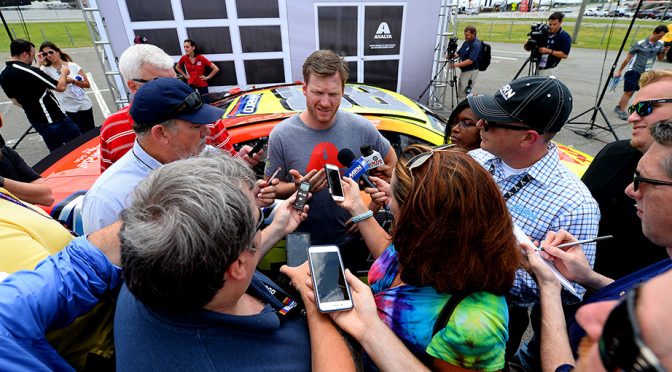
CONCORD, N.C. — Following a sponsorship announcement with Maaco for this weekend’s Monster Energy NASCAR All-Star Race at Charlotte Motor Speedway (Saturday, 8 p.m. ET, FS1, MRN, SiriusXM NASCAR Radio), Dale Earnhardt Jr. said he had spoken with Aric Almirola on Wednesday evening about the three-car crash that occurred during the Go Bowling 400.
“I talked to Aric (Wednesday) night and he said when his car went up in the air both rear springs fell out of the car, so the car came back down and hit the frame,” Earnhardt said. “He said it was the highest-recorded g-force vertically that they’d ever seen. And I can imagine that if the car slams down on the chassis.”
MORE: See how the wreck unfolded | Smith to drive Monster Energy Open
Almirola, 33, suffered a fracture of the T5 vertebra following the incident. How long he will be out of the car has not been announced. Richard Petty Motorsports officials have announced that former series driver Regan Smith will pilot the team’s No. 43 Ford in this weekend’s Monster Energy Open qualifying race.
“They can look at why that happens and how to fix that so that when the car lands it doesn’t land directly on the frame,” Earnhardt said of NASCAR’s post-race safety evaluation. “Because there’s no breakaway or cushion at that point to the driver. He’s bolted to the frame. They’ll look at all the things that happened in the series of events that happened during that accident to find ways to help guys that are in that situation again.”
RELATED: Almirola’s car taken to the R&D Center for further look
Almirola, RPM CEO Brian Moffitt and Bill Heisel, director of OrthoCarolina Motorsports, are scheduled to meet with the media Friday to discuss Almirola’s injury, rehabilitation and the team’s plans moving forward. The press conference will be streamed live on NASCAR.com. You can watch that here.
The wreck occurred on Lap 199 of the 267-lap race and began when Joey Logano (Team Penske Ford) made contact with Danica Patrick (Stewart-Haas Racing Ford) in Turn 1. Patrick’s car slammed nose-first into the wall and caught fire; Logano’s Ford also hit the wall hard and the two were still sliding up against the wall when Almirola’s car piled into the left front of Logano.
Both Logano and Patrick were visibly shaken, but neither was injured. Almirola, however, had to be removed from his car by rescue personnel after safety workers cut away the roof of his car.
The race was stopped for nearly 28 minutes while rescue personnel attended to the drivers and workers cleared the track of debris.
“That was an incredibly terrible accident,” Earnhardt said. “Danica was extremely lucky as were the other two drivers.”
Earnhardt, NASCAR’s most popular driver, will step away from competing in the Monster Energy NASCAR Cup Series after this season. He missed the final half of 2016 due to a concussion. He also missed two races in 2012 for a similar injury. The Hendrick Motorsports driver is well-versed in NASCAR’s safety protocol.
“Having talked to NASCAR a lot over the last couple of years I really feel good about how proactive they are; they have specific individuals that that’s their job every day, to science this stuff out and be looking at ways to improve,” he said. “We never used to have that. It used to be more what the teams could do and what the drivers wanted to do and you did most of that safety advancing behind the closed doors of the shop. Now we have people within the industry that they have on payroll that that’s their job. So that makes me feel very comfortable.”
As for what the future holds for his fellow driver, Earnhardt said he offered no words of advice. Almirola competed for Earnhardt’s JR Motorsports team in 2010-11 in the NASCAR XFINITY Series.
“Aric’s really sharp. He knows he needs to take care of himself,” Earnhardt said. “The doctors told him how lucky he was, how easily that could have went the other way … had he gotten some spinal cord damage, how easily that could have happened for him. He’s well aware and he won’t be rushing back to put himself in any kind of danger going forward.
“But it’s a tough situation for him. He certainly doesn’t want to give up his opportunity and lose his place in the sport as a driver and I can understand. I’m certain he has concerns in the back of his mind even though he knows he needs to take care of himself. But he loves driving; he wants that opportunity when he gets well.”
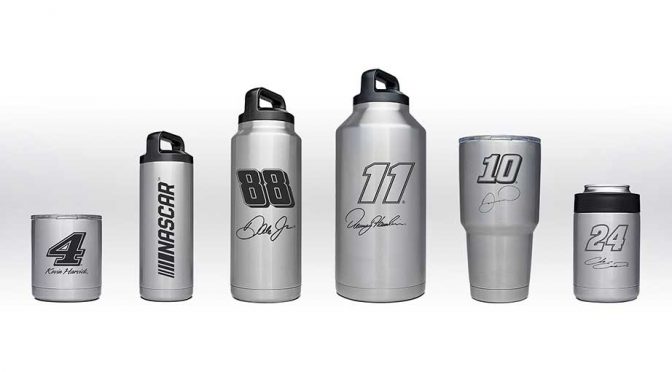
DAYTONA BEACH, Fla. — NASCAR, NASCAR Team Properties, and YETI announced Thursday, during the NASCAR Fuel For Business Council® meetings in Charlotte, North Carolina, multi-year agreements, which introduced the YETI brand as the “Official Outdoor Partner of NASCAR®.”
Each of YETI’s iconic products fall within the outdoor category, including premium stainless steel drinkware, premium coolers, and premium soft-sided coolers. NASCAR Team Properties and YETI have developed a variety of NASCAR and team-licensed product, the first line of which is available now on YETI.com and YETICustomShop.com.
“YETI is a dynamic and wildly popular brand that will be a welcomed addition to our industry and fans,” said NASCAR Executive Vice President and Chief Global Sales and Marketing Officer, Steve Phelps. “There continues to be great momentum surrounding our business as evidenced by nearly 10 new brands entering the sport at the Official level this year.”
YETI joins NASCAR’s diverse portfolio of Official Partners, which includes some of the most recognizable brands in the world. With an industry that is constantly on the move and comprised of outdoor enthusiasts, NASCAR drivers, teams and fans pair naturally with YETI’s premium coolers and drinkware. According to a recent independent study from Simmons Research, NASCAR fans are more than 40 percent more likely than non-fans to participate in at least one outdoor activity, such as fishing and camping.
“YETI is honored to officially be a part of the NASCAR family,” said YETI CEO, Matt Reintjes. “We’re proud to be associated with the many influential brands that partner with NASCAR. From the drivers and teams, to the fans and fellow sponsors, the sport is built around passion, and because of that common ground we feel that this partnership is an ideal fit for our brand.”
As part of this partnership, YETI joins the NASCAR Fuel for Business Council, which brings together an exclusive group of nearly 55 Official NASCAR Partners. This business-to-business environment offers opportunities for many FORTUNE 500 companies to work together to address specific corporate needs.
The Monster Energy NASCAR Cup Series™ season will continue with the Monster Energy All-Star Race and Monster Energy Open on May 20 at Charlotte Motor Speedway, airing live on FS1 starting at 6 p.m. ET. The races can also be heard on MRN and SiriusXM NASCAR Radio Channel 90.
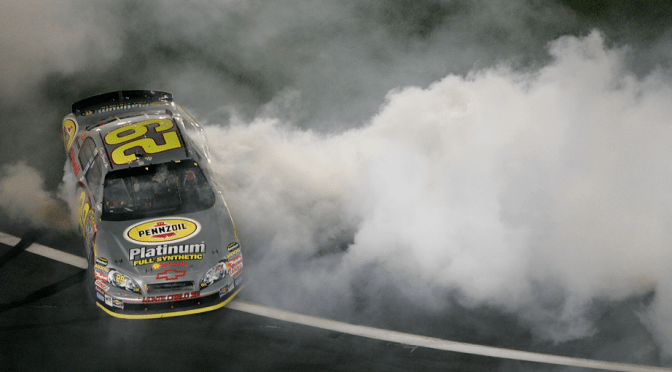
This weekend’s running of the Monster Energy All-Star Race is an anniversary for Chevrolet and many of the teams aligned with the automaker.
Ten years ago, Chevrolet scored its first victory with the R07 engine, a new piece designed to replace the outdated, although still formidable, SB2.
Kevin Harvick, driving the No. 29 Chevrolet for Richard Childress Racing, won the event, known then as the Nextel All-Star Challenge, at Charlotte Motor Speedway.
Success in a points-paying event wasn’t far behind — the first points win for a team using the R07 came a week later when former Hendrick Motorsports driver Casey Mears captured the Coca-Cola 600 at CMS.
Chevrolet teams won 23 races the previous year, the first season of a five-year title run for Jimmie Johnson. In ’07, with teams transitioning to the R07, eight of the manufacturer’s 26 wins came with the new engine under the hood.
“We had two things occurring in the 2007 season; Chevrolet had new engine hardware approved in the R07 and the second was we were rolling out the Car of Tomorrow,” Doug Duchardt, general manger for HMS, told NASCAR.com. “So as the season began we started thinking about how we wanted to combine those two. We knew the R07 had more power potential so we focused on getting those engines into the previous car, the non-COT races, because those were more intermediate races.”
The COT debuted that year at Bristol and was run on all tracks under 1 mile, as well as Darlington (1.366 mile), road course races at Sonoma and Watkins Glen, and the fall stop at Talladega.
“We felt like that while there was an advantage obviously to have more power, that if you were at a Richmond or Bristol or Martinsville, that’s not as big as say Charlotte,” Duchardt said. “So at the beginning of the year we focused on getting that rolled out for the intermediate tracks.
“As we started running them and saw the potential in the engine, we thought it was going to take longer to roll out. But the thing I remember is … when we first started running them everyone knew what the potential gain was. We put the carrot out there to the engine shop of, ‘We’d like to have this rolled across all of our programs by the 600.’ We thought it was a stretch to get there. And when we put that vision out there, that goal, it was amazing how everyone focused on that and worked to achieve it.”
With Toyota teams arriving on the Monster Energy NASCAR Cup Series level that season, other OEMs had been given new parameters on which to build their engines to keep a level playing field.
“It was really just a matter of seeing the writing on the wall, the limitations of the architecture of the SB2 and knowing that we were going to have to keep up with something that had more capability that really drove us in that direction,” said Pat Suhy, Chevrolet Racing NASCAR group manager.
“We didn’t just look at them and say, ‘Oh crap!’ We knew architecturally that the SB2 was challenged. And we had evolved designs of a small block before Toyota showed up. But them showing up with their part is what I think kind of forced NASCAR’s hand, if you will, to let the other OEMs do significant architectural changes to our stuff in order not to be left behind.”
Heading into Saturday night’s race (8 p.m. ET, FS1, MRN, SiriusXM NASCAR), the R07 has powered drivers to 156 victories in NASCAR’s elite division.
That first victory, Suhy said, was “huge.”
“Because there’s always buyer’s remorse, right? You get this new engine and, ‘Man, it’s got to be at least as (good as) the old one. I hope it’s better.’ We had a few teething pains at the very beginning. Getting the first win under your belt, it’s like with anything, you breathe a sigh of relief and say, ‘Good, now we can get on.’ Not question if it’s as good; let’s make it better now.”
Likewise, getting the win in the 600 the following weekend, Duchardt said, was special.
“I always say the engine guys have it a little easier because we had a real simple and accurate way to measure the performance of the engine, and it’s on the dynamometer,” he said. “So we could understand the power, the torque, the fuel efficiency of the engine. So we knew by every measure that this was as good or better in every aspect. If you weren’t having success with it, it wasn’t because it was an inferior product to your previous one, it was because of other reasons.
“Once we saw that it was a better product than the SB2, then we had confidence in it moving forward. The fact that we won that race was just icing on the cake.
“I think it was Casey’s only win so that was really special, it was the National Guard car, Memorial Day … If you add all that in and the work to be ready for it, it was a special day all around.”