RELATED: Full race results | Chase Grid
BRUCE: About that JGR strategy … | NASCAR: JGR did not violate rules

Love it. Hate it. Understand it. Disagree with it.

The strategy play by Joe Gibbs to have three of his four cars — the three that were in solid shape based on points of Kyle Busch, Carl Edwards and Matt Kenseth — ride around in the back for the Chase for the NASCAR Sprint Cup Round of 12 finale at Talladega Superspeedway to avoid any potential calamity has brought out a variety of opinions.


Denny Hamlin, who needed a strong finish to advance, spent most of the day at the front without the benefit of his teammates drafting with him. Hamlin finished third and advanced to the Round of 8 on a tiebreaker over Austin Dillon. That propelled all four JGR cars into the Round of 8, just as mastermind Joe Gibbs drew it up.


Was it cunning? Sure. Was it gamesmanship? Yes. Was it risky? Potentially. Was it within the rules? Absolutely. 

Nothing done Sunday was against NASCAR rules. NASCAR executive Steve O’Donnell said in a Monday morning appearance on SiriusXM NASCAR Radio that the strategy did not violate any rule.

“In this case, we look at the strategy decision that the team made, and they executed it,” O’Donnell said. ” … In this case, that wouldn’t be something that we look at that violated that rule.”

Kenseth, Busch and Edwards stood second through fourth in the standings entering Talladega. In the past two years of elimination races, the driver who was second in the standings entering the race ended up eliminated when the dust settled at Talladega. Coincidentally, both times it was a JGR car; Busch in 2014 and Hamlin in 2015.

RELATED: History shows second in points far from secure at Talladega

Perhaps with that history in mind, Gibbs was committed to the team’s strategy play.

“Everybody talked it over, crew chiefs and everything,” Gibbs said Sunday. “I think it was just a strategy we needed to start off with and really depended on how it would go.”

Ironically, that loophole will effectively be closed up with Talladega moving to the middle race of the Round of 12 in 2017.

All Gibbs and JGR did was a find an edge in the rules. Some will cry foul, others say it’s a sandbag move and others might even heap praise and call it genius. But there is no denying it worked. On the level, the move itself was smart and legal.


Given JGR’s dominance of late — the organization has 21 wins in the past 52 races and Kyle Busch won the 2015 Sprint Cup championship — you could argue that the four-car organization is NASCAR’s version of the NFL’s New England Patriots — disliked for its success and for its ability to find a way to take advantage of nearly every potentially advantageous situation.

ALL THEIR WINS: Busch | Kenseth | Edwards | Hamlin

Bill Belichick, the Patriots coach, is known as an innovator, someone who pushes the envelope in an effort to find a competitive advantage or loophole that will aid his team. Much as Gibbs did at Talladega.

Consider: In a 2015 playoff game against the Baltimore Ravens, the Patriots used a unique offensive formation on several plays that essentially caused confusion among the Ravens defense as to who was an eligible receiver and who was ineligible. Running back Shane Vereen lined up as the slot receiver on several plays, but was ineligible. Adding to the confusion was that the Patriots essentially only had four offensive linemen on the field, instead of the usual five. You can see that broken down a bit further here by CBSSports.com. The formation helped lead the Patriots on a touchdown drive in what was ultimately a 35-31 win for New England. 

That formation has since been deemed ineligible by the league. Yet at the time, it was perfectly legal according to the rule book, and the Patriots found and took advantage of it. The victory over the Ravens began New England’s march to a fourth Super Bowl title in 14 years for the duo of Belichick and quarterback Tom Brady.

Even in early part of the 2016 season, the Patriots worked around a new NFL rule. Starting this year, kickoffs that result in touchbacks will see the ball placed at the 25-yard line and eliminate kickoff coverage out of the equation. Yet, several teams have elected to have their kickers boot balls high and just short of the end zone to allow for coverage teams to get down the field and stop returners short of 25-yard line. Perfectly within the rules since a returned kick is more than likely to result in worse field position than a touchback.

Even before his stint as a head coach, Belichick was a defensive savant, serving as the defensive coordinator for two Super Bowl titles with the New York Giants, which came during one of Gibbs’ two stints as the head coach of the division rival Washington Redskins. In Super Bowl XXV, he called a defensive effort that slowed down one of the league’s most high-powered offenses in the Buffalo Bills in New York’s 20-19 win. As a defensive coach, he drilled his players on normal offensive signals teams would use to help them diagnose plays before they were run, as this New York Daily News article details. He over-prepares, using every little advantage he can find.

Maybe it roots from Joe Gibbs’ ties to football, but that is exactly what Gibbs did Sunday. He weighed the percentages, the numbers and the odds and knew it was in the team’s collective best interest to adopt a ride-around strategy rather than race up front.

Does that make JGR evil? No. It makes the team smart for finding a way to continue the path toward the main goal of a championship. And if the season ends in a championship for one of the team’s drivers, there will be no doubt.
RELATED: Full race results | Chase Grid
BRUCE: About that JGR strategy … | NASCAR: JGR did not violate rules

Love it. Hate it. Understand it. Disagree with it.

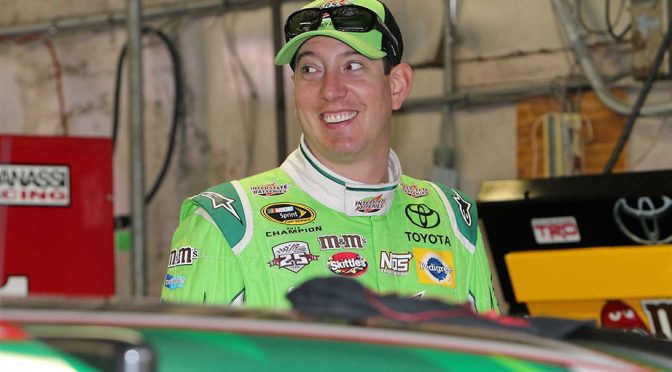
The strategy play by Joe Gibbs to have three of his four cars — the three that were in solid shape based on points of Kyle Busch, Carl Edwards and Matt Kenseth — ride around in the back for the Chase for the NASCAR Sprint Cup Round of 12 finale at Talladega Superspeedway to avoid any potential calamity has brought out a variety of opinions.


Denny Hamlin, who needed a strong finish to advance, spent most of the day at the front without the benefit of his teammates drafting with him. Hamlin finished third and advanced to the Round of 8 on a tiebreaker over Austin Dillon. That propelled all four JGR cars into the Round of 8, just as mastermind Joe Gibbs drew it up.


Was it cunning? Sure. Was it gamesmanship? Yes. Was it risky? Potentially. Was it within the rules? Absolutely. 

Nothing done Sunday was against NASCAR rules. NASCAR executive Steve O’Donnell said in a Monday morning appearance on SiriusXM NASCAR Radio that the strategy did not violate any rule.

“In this case, we look at the strategy decision that the team made, and they executed it,” O’Donnell said. ” … In this case, that wouldn’t be something that we look at that violated that rule.”

Kenseth, Busch and Edwards stood second through fourth in the standings entering Talladega. In the past two years of elimination races, the driver who was second in the standings entering the race ended up eliminated when the dust settled at Talladega. Coincidentally, both times it was a JGR car; Busch in 2014 and Hamlin in 2015.

RELATED: History shows second in points far from secure at Talladega

Perhaps with that history in mind, Gibbs was committed to the team’s strategy play.

“Everybody talked it over, crew chiefs and everything,” Gibbs said Sunday. “I think it was just a strategy we needed to start off with and really depended on how it would go.”

Ironically, that loophole will effectively be closed up with Talladega moving to the middle race of the Round of 12 in 2017.

All Gibbs and JGR did was a find an edge in the rules. Some will cry foul, others say it’s a sandbag move and others might even heap praise and call it genius. But there is no denying it worked. On the level, the move itself was smart and legal.


Given JGR’s dominance of late — the organization has 21 wins in the past 52 races and Kyle Busch won the 2015 Sprint Cup championship — you could argue that the four-car organization is NASCAR’s version of the NFL’s New England Patriots — disliked for its success and for its ability to find a way to take advantage of nearly every potentially advantageous situation.

ALL THEIR WINS: Busch | Kenseth | Edwards | Hamlin

Bill Belichick, the Patriots coach, is known as an innovator, someone who pushes the envelope in an effort to find a competitive advantage or loophole that will aid his team. Much as Gibbs did at Talladega.

Consider: In a 2015 playoff game against the Baltimore Ravens, the Patriots used a unique offensive formation on several plays that essentially caused confusion among the Ravens defense as to who was an eligible receiver and who was ineligible. Running back Shane Vereen lined up as the slot receiver on several plays, but was ineligible. Adding to the confusion was that the Patriots essentially only had four offensive linemen on the field, instead of the usual five. You can see that broken down a bit further here by CBSSports.com. The formation helped lead the Patriots on a touchdown drive in what was ultimately a 35-31 win for New England. 

That formation has since been deemed ineligible by the league. Yet at the time, it was perfectly legal according to the rule book, and the Patriots found and took advantage of it. The victory over the Ravens began New England’s march to a fourth Super Bowl title in 14 years for the duo of Belichick and quarterback Tom Brady.

Even in early part of the 2016 season, the Patriots worked around a new NFL rule. Starting this year, kickoffs that result in touchbacks will see the ball placed at the 25-yard line and eliminate kickoff coverage out of the equation. Yet, several teams have elected to have their kickers boot balls high and just short of the end zone to allow for coverage teams to get down the field and stop returners short of 25-yard line. Perfectly within the rules since a returned kick is more than likely to result in worse field position than a touchback.

Even before his stint as a head coach, Belichick was a defensive savant, serving as the defensive coordinator for two Super Bowl titles with the New York Giants, which came during one of Gibbs’ two stints as the head coach of the division rival Washington Redskins. In Super Bowl XXV, he called a defensive effort that slowed down one of the league’s most high-powered offenses in the Buffalo Bills in New York’s 20-19 win. As a defensive coach, he drilled his players on normal offensive signals teams would use to help them diagnose plays before they were run, as this New York Daily News article details. He over-prepares, using every little advantage he can find.

Maybe it roots from Joe Gibbs’ ties to football, but that is exactly what Gibbs did Sunday. He weighed the percentages, the numbers and the odds and knew it was in the team’s collective best interest to adopt a ride-around strategy rather than race up front.

Does that make JGR evil? No. It makes the team smart for finding a way to continue the path toward the main goal of a championship. And if the season ends in a championship for one of the team’s drivers, there will be no doubt.
RELATED: Full race results | Chase Grid
BRUCE: About that JGR strategy … | NASCAR: JGR did not violate rules

Love it. Hate it. Understand it. Disagree with it.

The strategy play by Joe Gibbs to have three of his four cars — the three that were in solid shape based on points of Kyle Busch, Carl Edwards and Matt Kenseth — ride around in the back for the Chase for the NASCAR Sprint Cup Round of 12 finale at Talladega Superspeedway to avoid any potential calamity has brought out a variety of opinions.


Denny Hamlin, who needed a strong finish to advance, spent most of the day at the front without the benefit of his teammates drafting with him. Hamlin finished third and advanced to the Round of 8 on a tiebreaker over Austin Dillon. That propelled all four JGR cars into the Round of 8, just as mastermind Joe Gibbs drew it up.


Was it cunning? Sure. Was it gamesmanship? Yes. Was it risky? Potentially. Was it within the rules? Absolutely. 

Nothing done Sunday was against NASCAR rules. NASCAR executive Steve O’Donnell said in a Monday morning appearance on SiriusXM NASCAR Radio that the strategy did not violate any rule.

“In this case, we look at the strategy decision that the team made, and they executed it,” O’Donnell said. ” … In this case, that wouldn’t be something that we look at that violated that rule.”

Kenseth, Busch and Edwards stood second through fourth in the standings entering Talladega. In the past two years of elimination races, the driver who was second in the standings entering the race ended up eliminated when the dust settled at Talladega. Coincidentally, both times it was a JGR car; Busch in 2014 and Hamlin in 2015.

RELATED: History shows second in points far from secure at Talladega

Perhaps with that history in mind, Gibbs was committed to the team’s strategy play.

“Everybody talked it over, crew chiefs and everything,” Gibbs said Sunday. “I think it was just a strategy we needed to start off with and really depended on how it would go.”

Ironically, that loophole will effectively be closed up with Talladega moving to the middle race of the Round of 12 in 2017.

All Gibbs and JGR did was a find an edge in the rules. Some will cry foul, others say it’s a sandbag move and others might even heap praise and call it genius. But there is no denying it worked. On the level, the move itself was smart and legal.


Given JGR’s dominance of late — the organization has 21 wins in the past 52 races and Kyle Busch won the 2015 Sprint Cup championship — you could argue that the four-car organization is NASCAR’s version of the NFL’s New England Patriots — disliked for its success and for its ability to find a way to take advantage of nearly every potentially advantageous situation.

ALL THEIR WINS: Busch | Kenseth | Edwards | Hamlin

Bill Belichick, the Patriots coach, is known as an innovator, someone who pushes the envelope in an effort to find a competitive advantage or loophole that will aid his team. Much as Gibbs did at Talladega.

Consider: In a 2015 playoff game against the Baltimore Ravens, the Patriots used a unique offensive formation on several plays that essentially caused confusion among the Ravens defense as to who was an eligible receiver and who was ineligible. Running back Shane Vereen lined up as the slot receiver on several plays, but was ineligible. Adding to the confusion was that the Patriots essentially only had four offensive linemen on the field, instead of the usual five. You can see that broken down a bit further here by CBSSports.com. The formation helped lead the Patriots on a touchdown drive in what was ultimately a 35-31 win for New England. 

That formation has since been deemed ineligible by the league. Yet at the time, it was perfectly legal according to the rule book, and the Patriots found and took advantage of it. The victory over the Ravens began New England’s march to a fourth Super Bowl title in 14 years for the duo of Belichick and quarterback Tom Brady.

Even in early part of the 2016 season, the Patriots worked around a new NFL rule. Starting this year, kickoffs that result in touchbacks will see the ball placed at the 25-yard line and eliminate kickoff coverage out of the equation. Yet, several teams have elected to have their kickers boot balls high and just short of the end zone to allow for coverage teams to get down the field and stop returners short of 25-yard line. Perfectly within the rules since a returned kick is more than likely to result in worse field position than a touchback.

Even before his stint as a head coach, Belichick was a defensive savant, serving as the defensive coordinator for two Super Bowl titles with the New York Giants, which came during one of Gibbs’ two stints as the head coach of the division rival Washington Redskins. In Super Bowl XXV, he called a defensive effort that slowed down one of the league’s most high-powered offenses in the Buffalo Bills in New York’s 20-19 win. As a defensive coach, he drilled his players on normal offensive signals teams would use to help them diagnose plays before they were run, as this New York Daily News article details. He over-prepares, using every little advantage he can find.

Maybe it roots from Joe Gibbs’ ties to football, but that is exactly what Gibbs did Sunday. He weighed the percentages, the numbers and the odds and knew it was in the team’s collective best interest to adopt a ride-around strategy rather than race up front.

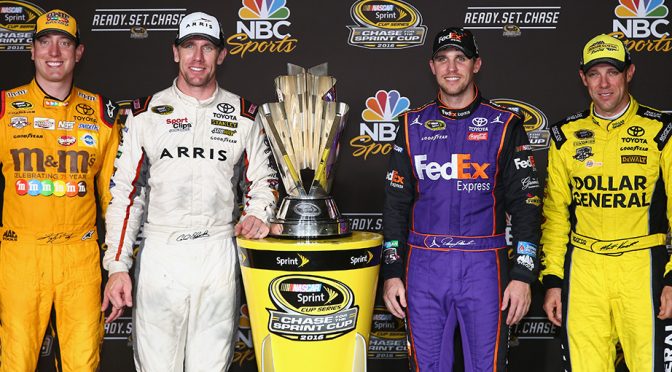
Does that make JGR evil? No. It makes the team smart for finding a way to continue the path toward the main goal of a championship. And if the season ends in a championship for one of the team’s drivers, there will be no doubt.
Editor’s note: The views expressed in this column are solely those of the author.

RELATED: Results | Chase Grid | NASCAR: JGR didn’t violate 100 percent rule

TALLADEGA, Ala. — NASCAR held a Sprint Cup Series race Sunday at Talladega Superspeedway, but somebody forgot to tell three of the four teams for Joe Gibbs Racing.

For Kyle Busch, Carl Edwards and Matt Kenseth, this wasn’t a race. It was an inconvenience.

The Hellmann’s 500 featured a 40-car starting field. Only 37 rolled off with hopes of a win or at least a good showing. The JGR trio had absolutely no intentions of trying to win. Or run up front.

I understand why it was done, but I don’t agree with it.

I understand they were thinking big picture, as in championship.


RELATED: O’Donnell discusses JGR and 100 percent rule

None of the three had a win, automatically earning themselves a spot in the Round of 8. Any mishap at Talladega could sink their title hopes. And past restrictor-plate races this year had produced mixed results.


All three finished in the top 15 in the Daytona 500; Busch added runner-up finishes at Talladega in the spring and Daytona in July. But Kenseth and Edwards were knocked out of contention in the other two and maybe that was enough.


But for the three JGR teams to ride around in the back of the field all day? I’d feel embarrassed to collect a paycheck for that one. Donate it to charity. Let some good come of it.


It was clear from the start that going to the back was the gameplan. Kenseth had qualified third, Edwards 13th and Busch 14th on the previous day. Why did they even bother? Before the green flag had dropped they began falling back through the field, taking up residence in the rear.


RELATED: Hamlin edges in, JGR strategy pays off


It’s not the first time teams have used such tactics. There have been many occasions in the past when teams have dropped back early in the race in an attempt to avoid getting caught in the type of multi-car crashes that are so common at the 2.66-mile track.


But on most occasions, those moves are only temporary. As the end of the race has neared, those teams would begin inching their way forward, working together in hopes of getting to the front unscathed and allowing them to battle for the win.


Sometimes it paid off; sometimes it didn’t.


How was this any different? It was different because there was no intention of going forward, just going.


Racing at Daytona and Talladega has evolved more than at any other track the series visits each year. For years, drivers could “slingshot” their way past another competitor thanks to the draft; the lead spot wasn’t the preferred position in the final laps of a race. As it became more difficult to pass without the aid of another, pack drafting was the norm, with one line of cars getting a run on another and the lineup shuffling several times each lap.


Remember tandem drafting? One car literally pushing another around the track, the front car having almost no control and the rear car no clue what was ahead?


Thankfully, those days are no more.


RELATED: NASCAR discusses JGR, 100 percent rule


There have been times in the past, both before the Chase and even after it was implemented, when drivers had enough of a points cushion that finishing in a particular position guaranteed advancement or a title. That was back in the “it was a good points day” era and I thought we had moved past that.


You can argue that what the JGR teams did was a product of the Chase. There is simply too great a risk for too little reward, particularly at a place as dangerous as Talladega.

Denny Hamlin, the one JGR driver that did actually race, sided with his teammates, saying that the three had “built their (points) cushion.


“They’ve done their jobs well the first two (races),” he said. “They had the liberty to do that. So they played it smart. It’s all about (the) championship, it’s not about coming out here and winning Talladega for those guys.”


Perhaps it would have been different if the three had been in a situation where they had little chance of winning because their cars weren’t competitive. Under such circumstances, it would have been their only choice.


But those weren’t the circumstances.


To their credit, none of the three seemed particularly pleased with having to ride around in the back all day. Kenseth said it “goes against everything you want to do as a race car driver.”


Busch called it “frustrating.” Edwards said it was “stressful.”


The upside, if you’re a JGR fan, is that all four teams now move on to the next round.


Where, hopefully, riding around in the back won’t be an option.

RELATED: Full race results | Series standings | Chase Grid


Breaking down the full field for the Hellmann’s 500 at Talladega Superspeedway:


1. Joey Logano, No. 22 Ford, Team Penske. Not even dragging his jack around for one lap could keep Logano out of Victory Lane. Logano grabbed the lead five laps after the engine of teammate Brad Keselowski‘s dominant No. 2 car expired and he didn’t let it go, leading the final 45 laps. Grade: A


2. Brian Scott, No. 44 Ford, Richard Petty Motorsports. In his 49th start, Scott snagged the best finish of his career — and first top 10 — with a brilliant run. It also was the best finish for RPM since Marcos Ambrose placed second at Watkins Glen more than two years ago. Grade: A+


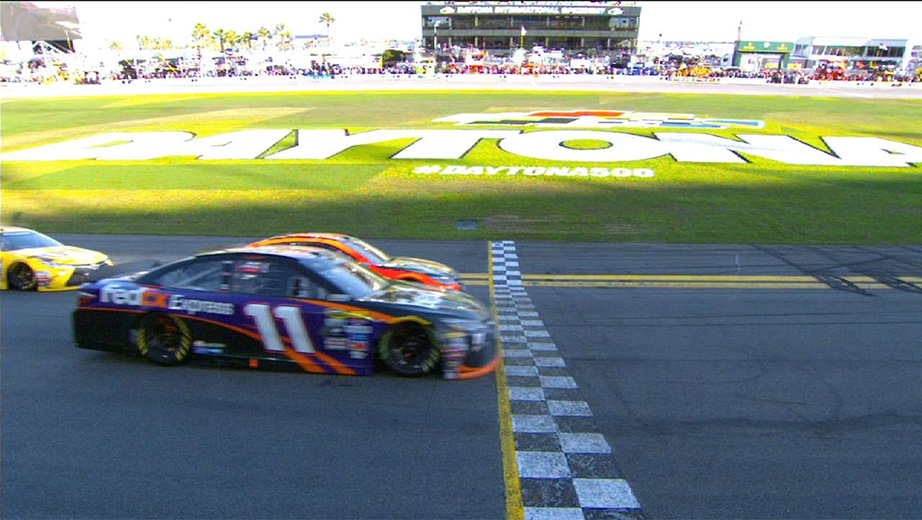
3. Denny Hamlin, No. 11 Toyota, Joe Gibbs Racing. Hamlin was penalized for speeding on pit road (again) and advanced to the next round of the Chase by the slimmest of margins (about two feet). Hamlin didn’t make it easy on himself, but he’s moving on — and his No. 1 track, Martinsville, is up next. Grade: A


4. Kurt Busch, No. 41 Chevrolet, Stewart-Haas Racing. Steady Busch flew under the radar into the Round of 8. Well, until his postrace dust-up with teammate Kevin Harvick. Grade: A


5. Ricky Stenhouse Jr., No. 17 Ford, Roush Fenway Racing. Stenhouse’s fourth top 10 in seven starts at Talladega is also his sixth this season, a personal best. In addition, it was his fourth top five this season, one more than in his previous three full-time seasons combined. Grade: A


6. Kyle Larson, No. 42 Chevrolet, Chip Ganassi Racing. Larson posted his best finish at Talladega since finishing ninth in his first race there in May 2014. Grade: A


7. Kevin Harvick, No. 4 Chevrolet, Stewart-Haas Racing. Harvick was running behind Joey Logano on Logano’s “jack lap” and caught a huge break when the jack remained attached to Logano’s car and didn’t fly into him. Grade: A


8. Aric Almirola, No. 43 Ford, Richard Petty Motorsports. Finally! Almirola’s streak of starts without a top-10 finish ends at a career-high 32. Grade: A


9. Austin Dillon, No. 3 Chevrolet, Richard Childress Racing. How close was Dillon to advancing in the Chase? The difference was the one point Denny Hamlin earned by finishing .006 seconds ahead of Kurt Busch. Grade: A


10. AJ Allmendinger, No. 47 Chevrolet, JTG Daugherty Racing. Allmendinger posts back-to-back top-10 finishes for the third time this season despite having an average running position Sunday of 25.8. Grade: A-


11. Ryan Blaney, No. 21 Ford, Wood Brothers Racing. Blaney ran with the leaders all afternoon, and his 7.6 average running position was third best. He also led laps for the second time this season. Grade: A


12. Chase Elliott, No. 24 Chevrolet, Hendrick Motorsports. Elliott needed a win to advance in the Chase and did everything he could — his average running position of 7.3 was second to Kurt Busch‘s 6.9 — but he was hemmed in at the end and couldn’t challenge the front-runners. Grade: A


13. Paul Menard, No. 27 Chevrolet, Richard Childress Racing. Menard posted his best finish since his last top 10, in July at Indianapolis. Grade: B


14. Ryan Newman, No. 31 Chevrolet, Richard Childress Racing. Newman, whose average running position of 27.3 was highest among drivers finishing in the top 20, ran one lap in the top 15 — his last. Grade: B-


15. Greg Biffle, No. 16 Ford, Roush Fenway Racing. Biffle was strong early and led 13 laps, but his day took a negative turn when he brought out the second caution on Lap 114. A coming-together with Jeffrey Earnhardt and Casey Mears sent all three cars into the inside wall. Grade: C


16. Michael McDowell, No. 95 Chevrolet, Circle Sport-Leavine Family Racing. Three of McDowell’s five best finishes this season have been on restrictor-plate tracks (10th and 15th at Daytona). Grade: A


17. Trevor Bayne, No. 6 Ford, Roush Fenway Racing. Bayne was two cars behind Kasey Kahne when Kahne spun on Lap 182. Bayne was able to check up and avoid running into the back of Jamie McMurray. Grade: B-


18. Clint Bowyer, No. 15 Chevrolet, HScott Motorsports. In a season of small victories, Bowyer posted his 10th top-20 finish of the season. Grade: B-


19. Jamie McMurray, No. 1 Chevrolet, Chip Ganassi Racing. McMurray’s day was saved when he didn’t plow into Kasey Kahne‘s spinning car immediately in front of him on Lap 182. Grade: B-


20. Danica Patrick, No. 10 Chevrolet, Stewart-Haas Racing. Patrick now has finished 20th to 24th in half of this year’s races (16 of 32). Grade: C


21. Landon Cassill, No. 38 Ford, Front Row Motorsports. Cassill made a great save with 20 laps to go when his car went veering down the track after he tried to fill a gap in front of David Ragan and received a nudge from behind. Grade: B


22. Chris Buescher, No. 34 Ford, Front Row Motorsports. That Buescher finished the race is the story here. He had DNFs for crashes in the season’s first three restrictor-plate races. Grade: B


23. Jimmie Johnson, No. 48 Chevrolet, Hendrick Motorsports. Johnson did his best to help teammate Chase Elliott, but in the end, wherever the No. 48 finished was never an issue. Johnson’s ticket into the next round of the Chase was punched two weeks ago. Grade: S (for Smart, Safe and Satisfactory)


24. David Ragan, No. 23 Toyota, BK Racing. Ragan posted his best finish at Talladega since finishing sixth in the fall race three years ago. Grade: C


25. Regan Smith, No. 7 Chevrolet, Tommy Baldwin Racing. Smith posted his second-best finish in restrictor-plate races this season. He finished eighth in the Daytona 500. Grade: C


26. Ryan Reed, No. 99 Ford, Roush Fenway Racing. Nice Sprint Cup debut for the 23-year-old. Grade: B-


27. Matt DiBenedetto, No. 93 Toyota, BK Racing. Great effort by DiBenedetto, who raced even though he was in the throes of food poisoning. Grade: C+


28. Matt Kenseth, No. 20 Toyota, Joe Gibbs Racing. If you are going to be critical of what Gibbs drivers Kenseth, Carl Edwards and Kyle Busch did Sunday — playing it safe by driving together in the back of the field — would you have been critical of any of the three if they had mixed it up in the peloton, crashed and failed to advance in the Chase? You can’t have it both ways. Grade: S (as in See Jimmie Johnson)


29. Carl Edwards, No. 19 Toyota, Joe Gibbs Racing. Ibid. Grade: S


30. Kyle Busch, No. 18 Toyota, Joe Gibbs Racing. Op cit. Grade: S


31. Bobby Labonte, No. 32 Ford, GO FAS Racing. Our TBJT (Throw Back to Junior Theme) Latin bibliography references end with Labonte, who completed his four-race, restrictor-plate run for the second consecutive year the same way he began the season – with a 31st-place finish. Grade: C-


32. Tony Stewart, No. 14 Chevrolet, Stewart-Haas Racing. Driver Tony’s 70th superspeedway restrictor-plate race finished quietly. Can’t say the same for Owner Tony. Grade: D


33. Michael Annett, No. 46 Chevrolet, HScott Motorsports. Annett stayed out during green-flag pit stops and led six laps, one fewer than he led in his first 101 Sprint Cup starts. Grade: C+


34. Jeffrey Earnhardt, No. 83 Toyota, BK Racing. Earnhardt’s Lap 114 tangle with Greg Biffle also collected Casey Mears. Despite significant damage, Earnhardt posted the first lead-lap finish of his career (20 starts). Grade: C


35. Kasey Kahne, No. 5 Chevrolet, Hendrick Motorsports. Kahne went for a spin on Lap 182, and his run of good finishes — six top 10s in his previous seven races — spun out, too. Grade: D


36. Alex Bowman, No. 88 Chevrolet, Hendrick Motorsports. Bowman’s tweet said it all: “3rd with 5 to go and we finish 36th … damn speedway racing.” Grade: D


37. Reed Sorenson, No. 55 Chevrolet, Premium Motorsports. Sorenson finished 13 laps off the pace in his first start at Talladega in two years. Grade: F


38. Brad Keselowski, No. 2 Ford, Team Penske. Keselowski had the dominant car and led a race-high 90 laps, but he held the point for too long after debris blocked part of his grill. A slick, orchestrated move with Ryan Blaney removed the debris, but it was too late. Moments later, his engine started smoking and his day, and championship hopes, came to an end on Lap 145. Grade: F


39. Casey Mears, No. 13 Chevrolet, Germain Racing. Racing can be so cruel. For the second time in three weeks, something bad happened to Mears for no other reason than he was in the wrong place at the wrong time. This time, he was two lanes below Greg Biffle and having a beautiful day when Biffle turned into Jeffrey Earnhardt and also collected Mears. The three slammed into the inside wall, but only Mears could not continue and was gone after 113 laps. Two weeks ago, Mears received a “U” grade for Unfortunate. This week? Based on his grade at Charlotte — and if you caught all four clues — you know the answer. Grade: U2


40. Martin Truex Jr., No. 78 Toyota, Furniture Row Racing. When Truex’s engine blew on Lap 42, his championship hopes ended as well. It’s a shame Truex won’t be able to contend for the championship, but we haven’t heard the last of Truex this season. Finishing with the most victories would be huge. Grade: F

NASCAR Executive Vice President and Chief Racing Development Officer Steve O’Donnell, appearing on “The Morning Drive” on SiriusXM NASCAR Radio on Monday, said he did not expect the sanctioning body to take action against Joe Gibbs Racing for its strategy of dropping three cars to the back of the pack during Sunday’s Chase elimination race at Talladega Superspeedway.

O’Donnell said employing that strategy did not constitute a violation of NASCAR’s 100 percent rule.

“I would say that they do not fall into that,” O’Donnell said when asked about the 100 percent rule. “The spirit of that rule is really to prevent somebody from intentionally allowing another teammate to do something that would not be really within the spirit of the rules of the race.

“In this case, we look at the strategy decision that the team made, and they executed it. … In this case, that wouldn’t be something that we look at that violated that rule.”

O’Donnell also reiterated previous comments from Senior Vice President of Competition Scott Miller, saying he did not anticipate action against the No. 78 Furniture Row Racing Toyota team of Martin Truex Jr. for a part (left-front jack bolt) confiscated during pre-qualifying inspection. Truex went on to win the Coors Light Pole Award, but engine problems during Sunday’s race prevented him from advancing in the Chase.

RELATED: Part confiscated in pre-qualifying inspection from No. 78 car

“It was a part that we took. We just want to take it back to the (NASCAR) R&D Center and just do a little more research where we’ve got a little more time to look at it,” O’Donnell said. “I think that Scott Miller went on and talked about it, we don’t anticipate something big around points (penalties), but we just want to make sure when we go back and take a look at that part, what we can learn and if there’s anything to react to, we will.”


Nor did O’Donnell anticipate action against the Nos. 11, 18 and 20 Joe Gibbs Racing Toyotas of Denny HamlinKyle Busch and Matt Kenseth, who were asked to go back through qualifying inspection Saturday when NASCAR noticed an issue with the right-rear quarter panels around the deck lid area. The cars were pulled out of line and the issue corrected before they passed through tech.


“I think our reaction there is the penalty that’s in place is really that five-minute clock,” O’Donnell said, referring to the time limit on fixing issues discovered in the qualifying line. “So if we find something, the car has to go back through inspection and the penalty that we’ve put in place is in-race. And we feel like that’s severe enough if a team is not able to fix that part or piece that we found and was not able to qualify, that’s the penalty that’s in place for that violation.”

All three of those JGR cars, along with teammate Carl Edwards, advanced to the Round of 8, which O’Donnell said was a top-flight field of drivers who have all won a race this season. In response to Truex and Brad Keselowski (tied for season-best four wins) not advancing past Sunday, O’Donnell said the current playoff system rewards teams that get hot much like other sports.

“You’ve got to compete at the highest level through those last 10 races and sometimes things happen in sports,” O’Donnell said. “We’re seeing a quality field of eight drivers who have all won races heading into the Chase, which I believe is a first for this round and for this amount of time. Really excited to see who’s going to get hot or continue to stay hot through the remainder of the races.”

RELATED: Full race results | Standings | Chase Grid
SHOP: Chase gear


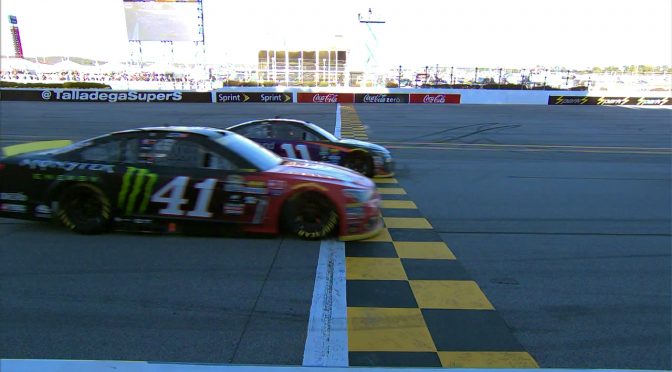
Denny Hamlin got the nose of his No. 11 Joe Gibbs Racing Toyota out just in front of Kurt Busch‘s No. 41 Stewart-Haas Racing Chevrolet for a third-place finish in Sunday’s Chase for the NASCAR Sprint Cup Round of 12 finale — by a mere 0.006 seconds.

Had he finished behind Busch, Hamlin would’ve been eliminated from the Chase — and his day would’ve been much, much worse.


“It was tough all day,” Hamlin said after the race. “Really the first true, good Chase fortune I’ve had in 11 years. … I felt this was the best-case scenario for us.”


Anybody else got a case of deja vu right now?


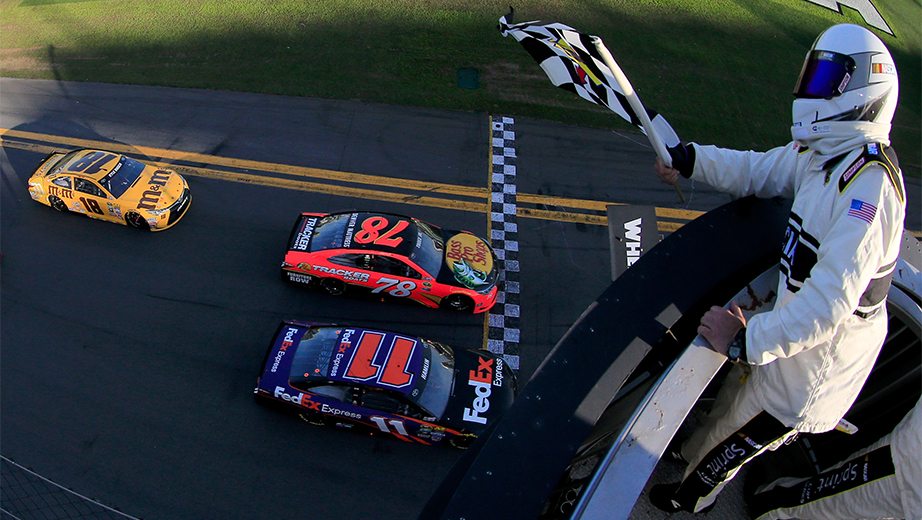
Hamlin opened the season with a very similar finish — for the win, too — when he edged out Furniture Row Racing driver Martin Truex Jr. at the finish line of the Daytona 500 by 0.010 seconds.


RELATED: Hamlin wins thrilling Daytona 500


Talladega and Daytona: two similar finishes, two afternoons that could’ve been drastically different for Hamlin had the game of inches not fallen in his favor.

RELATED: Full race results | Standings | Chase Grid
SHOP: Chase gear

TALLADEGA, Ala. — This one hurt more.

This one had the ring of finality to it. An expiration date: 10/23/16.

For the second week in a row, Brad Keselowski found himself and his No. 2 Team Penske team in the garage much sooner than expected.

Sunday’s Hellmann’s 500 was still underway, but for Keselowski, his day was done. Worse yet, his shot at advancing to the third round of NASCAR’s Chase for the Sprint Cup had ended. Title hopes were silenced.

The outcome was a shame, but fast cars aren’t always winning cars.

Few could outrun the No. 2 Ford on the track; Keselowski appeared to be the only driver able to work his way effortlessly through the field, although, to be precise, he spent very little time having to do so. For 88 of the first 141 laps, the 2012 series champion and winner of two of the last four Sprint Cup races here at Talladega Superspeedway was the driver to beat.

But a double dose of trash on the grill of his Ford proved to be fatal. Smoke began trailing the white and blue entry on Lap 144 of the 192-lap race. Engine temperatures rose as title hopes sank.

He finished 38th for the second week in a row and ended the day 12th in points. Only the top eight advance to continue to battle for the championship.

Climbing from his car and making his way into the shade of a nearby garage stall, Keselowski was quickly surrounded by reporters. The autopsy on his car was still on-going. Thus, he said, he didn’t know the source of the problem.

“I’m not an engine guy, but the car was really strong and we definitely kept finding debris,” he said.

“I thought I got it cooled off and only got it slightly over (heated), but I don’t know.”

Keselowski may not have been a Chase favorite coming into the 10-race playoff, but his team had been solid throughout the first round (three top-five finishes), and opened this latest segment with a seventh at Charlotte. But Kansas, where a crash ended his day, combined with Sunday’s setback proved to be too much.

If misery does indeed love company, Keselowski had his share. Martin Truex Jr., one of the early Chase favorites, was also knocked out early due to engine issues. The No. 78 Furniture Row Racing Toyota lasted only 41 laps before his day, and his Chase, were done.

MORE: Truex Jr.’s Chase hopes dashed

Austin Dillon? The Richard Childress Racing driver needed help to advance, and in the end he didn’t get it. A furious finish by Denny Hamlin left the two tied in points for the final spot and Hamlin got the nod based on a tiebreaker.

“It just wasn’t our day today,” a disheartened Dillon said after finishing ninth.

But it was that kind of day at Talladega. The threat of a big, grinding multicar crash kept Chasers such as the Joe Gibbs Racing trio of Matt Kenseth, Kyle Busch and Carl Edwards running in the back of the pack all afternoon in an effort to stay out of the eye of the storm.

But the storm really never made landfall. It was good racing, close racing, and relatively clean racing, slowed for the most part by a pair of three-car incidents that seemed tame in comparison to the mayhem that usually unfolds here.

That may not be a bad thing, but that probably doesn’t make Keselowski, Truex or Dillon feel any better.

Out is out and done is done. The Chase moves on without them.

RELATED: Race results | Chase Grid


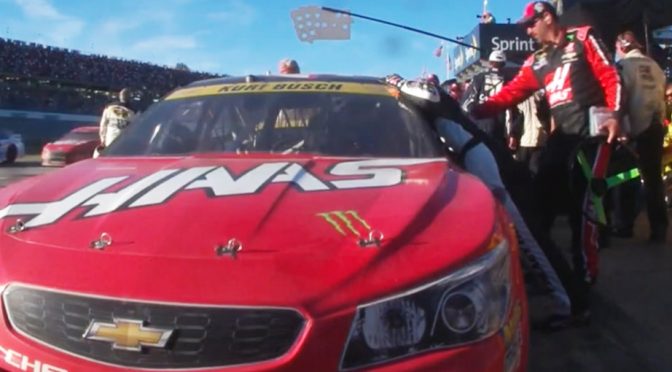
TALLADEGA, Ala. — A misunderstanding between Stewart-Haas Racing teammates Kevin Harvick and Kurt Busch ended with a confrontation on Talladega Superspeedway pit road following Sunday’s Hellmann’s 500.


Busch finished fourth and Harvick finished seventh. After they parked their cars on pit road, Harvick walked over to Busch, who was still sitting in his race car, leaned inside and had words with his teammate after delivering a jab inside the window.


“He [Busch] cleaned the side of our car out after the checkered flag,” Harvick said afterward. “I don’t understand that.”


Harvick said his car “didn’t have a scratch on it” until the cool-down lap contact with Busch. Asked if Busch gave Harvick an explanation for the incident, Harvick said only, “Not really.”


Busch was also asked his view of the situation during a pit-road interview with NBCSN later.


“He has a misunderstanding of the call at the end of the race,” Busch said. “He’ll understand it and I’m sure he’ll clear it up in his interview. For us, we’re great teammates, we’re doing good together and we have to work together to beat all these other teams out there. And he knows that.”