RELATED: PEAK becomes title sponsor of Mexico Series
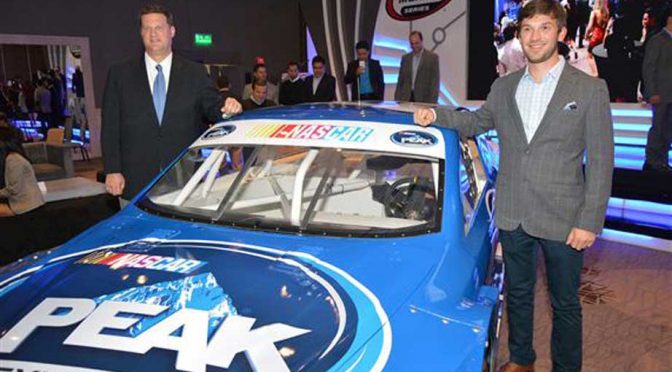
NASCAR announced a multi-year agreement with Old World Industries (OWI) to make PEAK title sponsor of the NASCAR Mexico Series, which will run a full slate of races in 2017 and ensuing seasons.
The NASCAR PEAK Mexico Series will kick off with an exhibition race on Dec. 3-4 in Mexico City. Its 10th season will begin in 2017 with a full championship schedule that will be announced at a later date.
“The NASCAR PEAK Mexico Series is a place where young drivers are honing their skills and competing for a championship against the toughest competition in Latin America,” said Steve O’Donnell, NASCAR executive vice president and chief racing development officer. “The series drives interest in stock car racing in Mexico, while cultivating talented drivers and pit crew members who aspire to compete at the NASCAR national series level.”
NASCAR XFINITY Series star Daniel Suárez — the first Mexican-born driver to win a NASCAR national series race, earn a national series Sunoco Rookie of the Year award and lead a national series in points — developed his talents in the NASCAR PEAK Mexico Series. Suárez is currently competing for the NASCAR XFINITY Series championship in its inaugural Chase playoff. Another young talent the NASCAR PEAK Mexico Series has fostered is Ruben Garcia Jr., an alumnus of the NASCAR Next initiative that highlights the sport’s top up-and-coming drivers. Both Suárez and Garcia are also alums of the NASCAR Drive for Diversity program.
“Without (the NASCAR PEAK Mexico Series), I wouldn’t be here right now,” Suárez said. “Really, road course racing in Mexico has been popular for many years, but in the last 10 years, with the NASCAR Mexico Series, a lot of drivers have had the opportunity to choose a different path, to choose stock car racing. I was one of those drivers and it felt like the right decision. Because of that, I was able to learn everything, how to race on ovals, how to race in a stock car. After that, I got my first opportunity in the U.S.”
As part of OWI’s deal, PEAK becomes an official NASCAR partner. The NASCAR bar mark will be featured on select PEAK products, including PEAK Antifreeze & Coolant (Official Antifreeze/Coolant of NASCAR) and PEAK Windshield Washer Fluid and Wipers (Official Washer Fluid and Wiper Blade of NASCAR), BlueDEF Diesel Exhaust Fluid and Equipment (Official Diesel Exhaust Fluid of NASCAR and Official Diesel Exhaust Fluid Equipment of NASCAR) and Herculiner Truck & Bed Liners (Official Roll-On and Spray-On Bed Liner of NASCAR).
PEAK has been involved in NASCAR since the 1990s. This season, it served as a season-long associate sponsor of Clint Bowyer‘s No. 15 Chevrolet. PEAK is the title sponsor of NASCAR’s eSports partner iRacing.com, which aided in developing current NASCAR Camping World Trucks Series points leader William Byron.
“Old World Industries products have been a recognized part of the racing industry for decades, and we’re proud to help bring NASCAR to the passionate fans in Mexico and the U.S. for years to come,” said Bryan Emrich, chief marketing officer at Old World Industries. “Whether in the garage or on the track, we’ll continue to deliver quality products that auto enthusiasts can count on.”
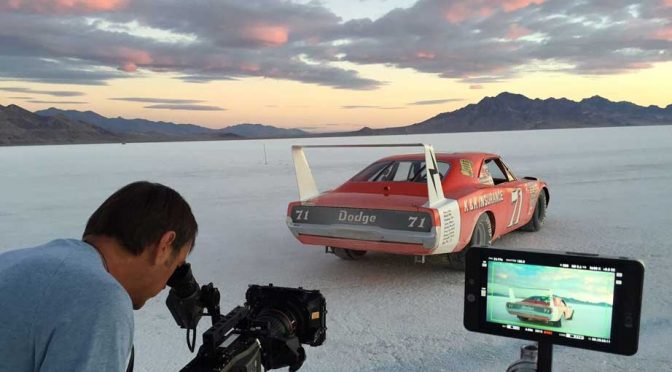
DAYTONA BEACH, Fla. and CHARLOTTE, N.C. — FS1 and NASCAR Productions will present the second season of the acclaimed documentary series Beyond the Wheel as part of FS1’s NASCAR RACE HUB. Created to depict the sport’s most pivotal moments and compelling narratives, the short films focus on influential characters — both past and present — and the unique stories that have shaped NASCAR as a sport since its inception. The first film premieres on Wednesday, Oct. 26 at 6 p.m. ET during NASCAR RACE HUB on FS1.
The second season of the documentary short film series is comprised of the following:
· Bonneville 71 details how NASCAR Hall of Fame driver Bobby Isaac set 28 land speed records with a banned Dodge Charger Daytona on the Bonneville Salt Flats in 1971, accompanied only by his crew members, a USAC official and a Chrysler engineer. Using the authentic No. 71 K&K Charger and featuring interviews with original crew members Buddy Parrott and Ken Troutt, the documentary pays homage to Isaac’s historical runs by revisiting the Salt Flats to shoot all-new footage down a 10-mile straightaway. A remarkable story of innovation, the short film depicts Isaac’s desire and dedication to always test the limits of speed, no matter the barriers.
· Sueños de NASCAR follows NASCAR XFINITY Series driver Daniel Suárez from his roots in Monterrey, Mexico, to his rise in one of the sport’s top series through the NASCAR Drive for Diversity program. As Suárez returns home to visit family and friends, the film explores his place in Mexican racing culture, how the country has embraced stock car racing, and the impact of Mexican drivers on the future of the sport. Illustrating the young driver as a source of inspiration, the documentary also examines Suárez’s success as the first Mexican-born driver to win a NASCAR national series race and his current pursuit of the NASCAR XFINITY Series championship.
· Miracle at Daytona — The Tiny Lund Story recounts how DeWayne “Tiny” Lund risked his life to rescue fellow driver, Marvin Panch, from his burning Maserati at Daytona International Speedway before going on to win the 1963 Daytona 500 just days later. The true story of a journeyman driver who was one of the most likeable characters of his era, Lund was also awarded the Carnegie Hero’s Medal for his selfless bravery in what became one of the greatest Daytona 500 stories of all time.
The second film in the series featuring Daniel Suárez will premiere on Nov. 9 at 6 p.m. ET, while the original special on Tiny Lund will air in early 2017. Each documentary will also be available on FOX Sports GO and FOXSports.com following its premiere.
RELATED: See the Chase grid | Chase Bubble Watch
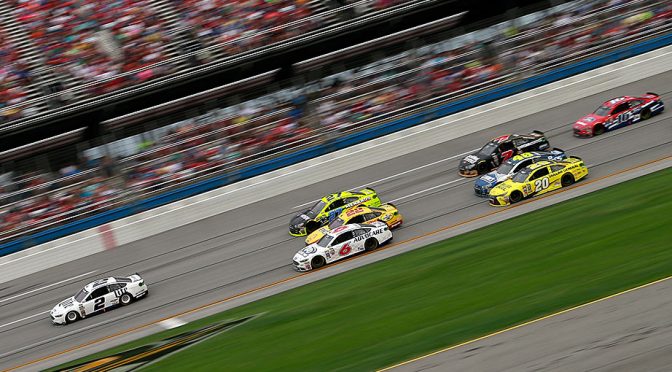
The Chase for the NASCAR Sprint Cup postseason is making the turn for home — five races down and five to go. This weekend’s stop on the 10-race ride is among the most pivotal of them all, Sunday’s Alabama 500 (2 p.m. ET, NBCSN, MRN, SiriusXM) at Talladega Superspeedway.
With the playoff field about to be cut from 12 drivers to a final eight, our Holly Cain and Zack Albert tackle pressing topics ahead of a true Chase wildcard:
***
Halfway through the Chase, Kevin Harvick and Martin Truex Jr. have each won twice, leaving Jimmie Johnson as the only other race winner in the postseason’s first five races. Will the champion be one of these three or is there still room for a Chase dark horse?
Cain: It is highly likely that the champion will come from among these three drivers, who have not only won lately but set the bar this year. With half the Chase remaining, someone else may — and needs to — step up, figuring it would be Brad Keselowski or Joey Logano or one of the four remaining Toyota drivers who have led the way. No dark horse here.
Albert: There’s time left, but that clock — not to be confused with the Camping World Truck Series’ caution clock — is ticking more urgently. Harvick, Truex and Johnson may be the main Chase triumvirate so far, but I’m holding the door open for a Keselowski-led Penske effort or another Joe Gibbs Racing entry to stage a Round of 12 rally, starting at Talladega.
Next year, a schedule shake-up for the Chase’s Round of 12 will have Kansas trading places with Talladega to be the three-race series’ elimination event. Do you favor the move or was the Charlotte-Kansas-Talladega progression a suitable schedule?
Cain: Depending on whom you talk to, Talladega settling the third-round Chase grid was either a huge opportunity or a crazy wild card. Everyone goes into the unpredictable Talladega race feeling like either he/she has a big opportunity or scant chance to emerge. That makes for a heightened excitement level, but the question is whether this type of race should solidify the next round of elimination. Cases can be made either way, but I think the switch-up is a good idea.
Albert: Talladega races are heart-clenching enough as it is — whether it’s in the regular season in May, in the playoffs in October or a 20-lap offseason trophy dash for funsies (just a suggestion). Making the schedule shift may slightly reduce spectator palpitations, but the track loses little in stature as the middle event in a three-race series. A more conventional venue such as Kansas makes more sense as the host of an elimination race.
The Chase’s current bottom four: Austin Dillon, Denny Hamlin, Brad Keselowski, Chase Elliott. Of those four, who is best positioned to take out the math and guesswork and emerge with a season-saving Talladega win?
Cain: I truly see any and all four of these with the possibility of point-climbing their way up to Chase advancement. Among them, it’s hardest to argue with Keselowski’s Talladega resume. He already has two restrictor-plate wins at Daytona in July and at Talladega in the spring. He has lots of good Alabama juju — scoring his first-ever Cup win at Talladega in 2009 and amassing four total wins there. He’s finished in the top five in three of his last trips to the track.
Albert: With such a stacked quartet in the Chase basement, this is a tough one. All four drivers have the backing of teams with standout superspeedway programs, and Keselowski has evolved into one of the sport’s best at the large, fast ovals where horsepower is restricted. While still imagining some No. 3 magic for Dillon or a No. 24 breakthrough for Elliott, Daytona 500 winner Denny Hamlin gets the slight nod from these parts in a plate-track pick ’em.
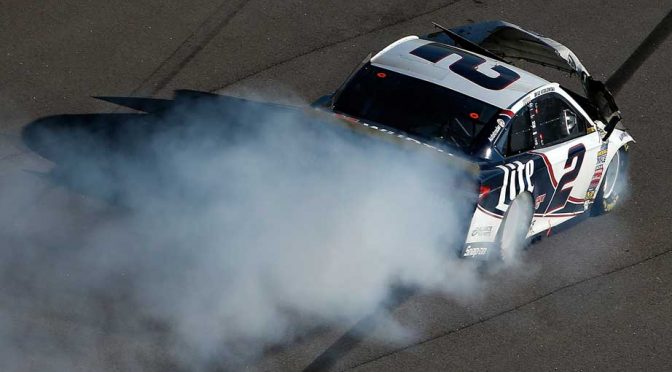
RELATED: Keselowski’s Chase chances take hit after Hamlin contact
Despite the specializing of today’s pit crew members to be bigger, stronger and faster, they still need the ability and skill to help during a wreck situation.
The points are tight this year and every position counts. Teams that can get their driver back on the track after a wreck have a chance to gain a few more points during a race weekend, and that could be the difference between advancing or going home.
And it’s not always a major crash that crews have to be ready for. This past weekend in Kansas, both Chase Elliott and Denny Hamlin had issues that could be fixed on the track, and their pit crews were called on to help. Simple stuff like a flat tire or nose damage can cause all kind of trouble, and it’s up to the pit crew to fix it and keep the laps lost to a minimum.
So you might be asking, isn’t that the job of the mechanics? Yes, yes it is. In most cases the best people to be working on a car are the mechanics. No pit crew member will argue that. The mechanics in NASCAR are some of the best in the world, and working under pressure is what they do best.
So if the issue is bad enough to bring the car behind the wall, then mechanics usually handle the job. When it comes to doing repairs on pit road and trying not to lose a lap, having a pit crew that can pit and then fix saves time. And pit crews practice these situations just like they would a four-tire change.
Heading to Talladega there are many teams on the bubble. You never know when advancing or not comes down to just a few points, and those are the points that can be saved by savvy pit crew members and great mechanics.
For more pit crew news, visit PitTalks.com.
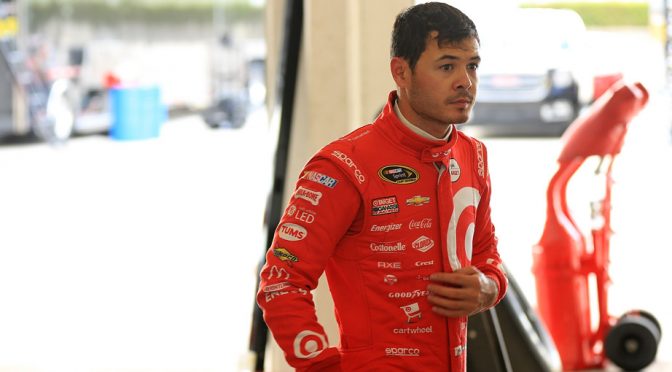
HOMESTEAD, Fla. — Kyle Larson is hopeful his fast performance in Tuesday’s rain-interrupted NASCAR Sprint Cup Series test at Homestead-Miami Speedway will be a harbinger of good things to come when the series returns to the track for the Nov. 20 season finale.
The 24-year-old, who was eliminated after the opening round of this year’s Chase for the NASCAR Sprint Cup playoffs, would have preferred that his test session work contribute to deciding the Sprint Cup championship later at Homestead. But he will gladly go for the track trophy instead this year.
“Homestead is probably my favorite track for racing the trucks and XFINITY series and for Cup, it’s my second favorite to Bristol,” said Larson, who has a win here in the XFINITY Series.
“I always enjoy coming here and running really close to the wall. It’s a real race track where I feel like driver can make up a lot. You always have to have a good car but I feel like the driver can have an impact here.”
Larson’s No. 42 Target Chevrolet paced the field in the morning session at the 1.5-mile track, just ahead of fellow Chevy driver Chase Elliott, who sits 25 points back from the cutoff as the series heads to the Talladega eliminator this weekend. Ryan Blaney was third fastest in the opening session.
Elliott led Larson in the afternoon session, which was extended two hours because of the rainy weather, lasting till 7 p.m. Larson, Kurt Busch, Carl Edwards and Austin Dillon rounded out the top five on the speed charts in the afternoon session.
Many of the teams here were specifically non-specific in their goals for the two-day test, guarding their objectives and the pursuit of them.
Ford driver Brad Keselowski was less circumspect and certainly less technical in explaining his team’s intent this week.
“It’s always a little complicated to explain,” he said smiling. “We’re always working on them, always making them better and we’ve come up with a couple things and we try to validate them on track.
“We put them through all these engineering tests with all these fancy computer simulations telling us if it’s going to work or not work. And we get pretty confident it’s going to work, but like to backstop check it. We’re going through a lot of things we’ve been doing with the proper implementation of all these gizmos to check things you’re allowed to use in testing. Just validating the parts and pieces.”
Veteran Carl Edwards said he just likes to get laps here in advance of the series crowning its champion and that his Joe Gibbs Racing Team welcomed the opportunity to try new things.
“We’re just working on a bunch of different things,” Edwards said. “This sport is evolving so quickly and all of the teams are pushing. I talked to (crew chief) Dave (Rogers) this morning and all the Chase contenders are up there and fast. We’re working on a bunch of different things.”
Some teams, most notably, Martin Truex Jr.’s Furniture Row Racing team opted not to use the Homestead test — something Edwards said he understood as well.
RELATED: Truex, No. 78 team to pass on Homestead test
“One of the things that can happen is you can come test and be too confident in what you find out,” Edwards said. “We’re just kind of going through some things and really having fun.. …Even if we don’t gain anything huge for the car, we’re having a good time.”
The series is set to conduct another full-day test at Homestead on Wednesday.
RELATED: See the Chase grid | Chase Bubble Watch
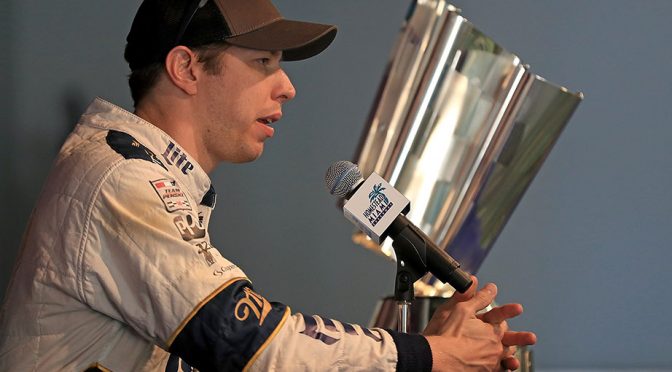
HOMESTEAD, Fla. — Brad Keselowski downplayed any sense of panic or urgency in his Chase for the NASCAR Sprint Cup hopes during a Tuesday test session at Homestead-Miami Speedway.
Judging by the easygoing body language and quiet assurance he brought to a lunchtime question-and-answer period, Keselowski seemed calm and ready for the big race at Talladega Superspeedway this weekend.
The Hellmann’s 500 (Sunday, 2 p.m. ET, NBCSN, MRN, SiriusXM NASCAR Radio) will decide which eight of the current 12 Chase-eligible drivers will advance to the next round of the championship. And Keselowski is ranked 11th heading into the race. He trails his Penske Racing teammate Joey Logano by seven points. Logano sits in the eighth place cut-off position now, tied in points with Austin Dillon.
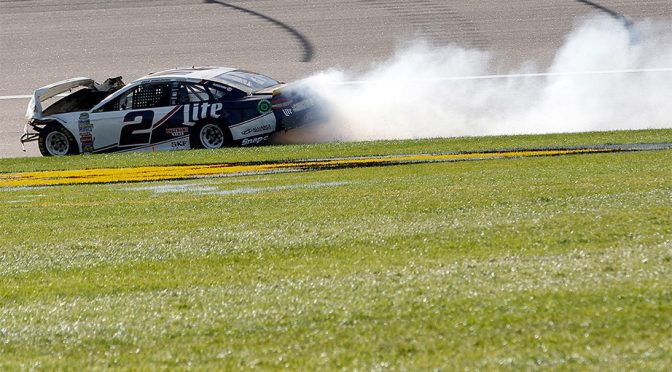
Keselowski had a string of seven top-10 finishes end Sunday at Kansas. His No. 2 Miller Lite Ford was hit by Denny Hamlin and Keselowski ended up finishing a season-low 38th-place.
MORE: Frame-by-frame of the Keselowski, Hamlin wreck
“I haven’t honestly thought very much about it,” Keselowski told reporters Tuesday. “I took Monday off and cleared my head. We came here this morning and all I thought about was how I could be the fastest here in Homestead.
“I want to do the best I can at Talladega, but I like to live day-to-day.”
Later, however, the 2012 Sprint Cup Series champion and restrictor-plate guru smiled and conceded about his chances at Talladega, “There are worse places.”
MORE: Keselowski: ‘We will win Talladega’
“I feel kinda quiet and confident and when you have those moments, if you have to talk about it, it’s like you have to sell yourself,” Keselowski said. “I don’t feel like I have to sell myself.”
That’s in part because Keselowski has a reassuring track record on the Talladega high banks.
Many would place the 32-year-old among the tops on the list of restrictor-plate talents. He certainly tops the series this year — with victories this spring at Talladega and this summer at Daytona Beach.
He has four career victories at Talladega — including his first career Sprint Cup win in 2009. And he won this October race to stave off Chase elimination back in 2014.
“Tactics change, cars change and I’m a few years older so I’ve probably changed, too,” Keselowski said. “I think any success at the Cup level no matter what track, the keys are doing everything right. You have to have a great team, you have to make the right moves, and the strategies have to change and you have to have a little bit of good fortune. I don’t think there is one key.
“That track, I’ve been very fortunate to win at a handful of times and each time there was probably one moment that was more important than another moment and they aren’t shared between the races.”
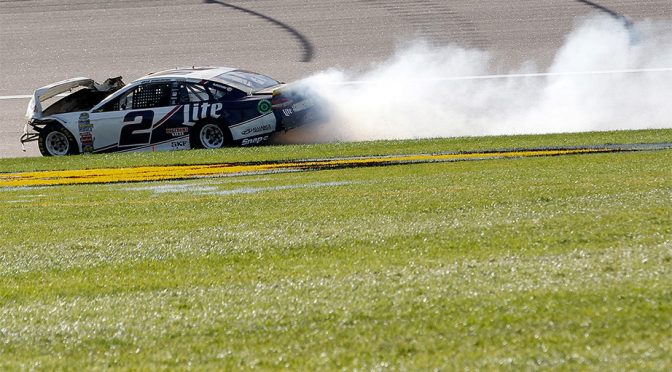
RELATED: Current Chase Grid | Driver standings
Sunday’s race at Talladega Superspeedway will shrink the Chase for the NASCAR Sprint Cup field from 12 drivers to eight. Jimmie Johnson and Kevin Harvick are already locked into the Round of 8 with victories at Charlotte and Kansas, respectively, which leaves 10 drivers battling for six spots. Here’s a look at how drivers can clinch spots in the next round.
Tune in to the Alabama 500 (2 p.m. ET, NBCSN, MRN, SiriusXM NASCAR Radio) to see who advances and who is eliminated. Of the drivers below, a win would automatically advance them into the next round. Otherwise …
• Matt Kenseth: Would clinch with 13 points (28th and no laps led, 29th and led at least one lap, 30th and led most laps) and a new winner. If there is a repeat winner, would clinch with 11 points.
• Kyle Busch: Would clinch with 15 points (26th and no laps led, 27th and led at least one lap, 28th and led most laps) and a new winner. If there is a repeat winner, would clinch with 14 points.
• Carl Edwards: Would clinch with 18 points (23rd and no laps led, 24th and led at least one lap, 25th and led most laps) and a new winner. If there is a repeat winner, would clinch with 16 points.
• Kurt Busch: Would clinch with 25 points (16th and no laps led, 17th and led at least one lap, 18th and led most laps) and a new winner. If there is a repeat winner, would clinch with 24 points.
• Martin Truex Jr.: Would clinch with 29 points (12th and no laps led, 13th and led at least one lap, 14th and led most laps) and a new winner. If there is a repeat winner, would clinch with 28 points.
• Joey Logano: If there is a repeat winner, would clinch with 41 Points (2nd and led most laps).
• Austin Dillon: If there is a repeat winner, would clinch with 41 points (2nd and led most laps).
• Denny Hamlin: Could clinch on points with help, but does not control his own destiny without a win.
• Brad Keselowski: Could clinch on points with help, but does not control his own destiny without a win.
• Chase Elliott: Could clinch on points with help, but does not control his own destiny without a win.
RELATED: Current Chase Grid | Driver standings
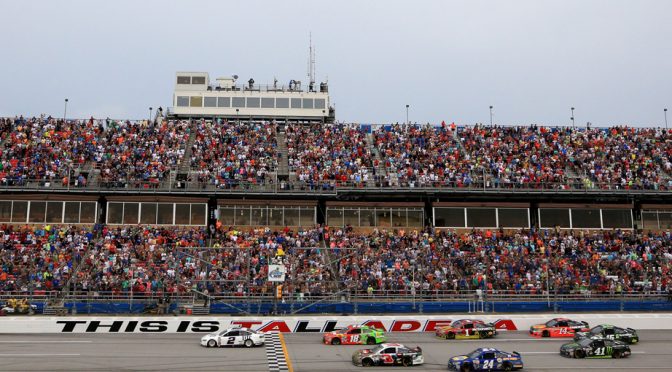
Sunday’s race at Talladega Superspeedway will shrink the Chase for the NASCAR Sprint Cup field from 12 drivers to eight. Jimmie Johnson and Kevin Harvick are already locked into the Round of 8 with victories at Charlotte and Kansas, respectively, which leaves 10 drivers battling for six spots. Here’s a look at how drivers can clinch spots in the next round.
Tune in to the Alabama 500 (2 p.m. ET, NBCSN, MRN, SiriusXM NASCAR Radio) to see who advances and who is eliminated. Of the drivers below, a win would automatically advance them into the next round. Otherwise …
• Matt Kenseth: Would clinch with 13 points (28th and no laps led, 29th and led at least one lap, 30th and led most laps) and a new winner. If there is a repeat winner, would clinch with 11 points.
• Kyle Busch: Would clinch with 15 points (26th and no laps led, 27th and led at least one lap, 28th and led most laps) and a new winner. If there is a repeat winner, would clinch with 14 points.
• Carl Edwards: Would clinch with 18 points (23rd and no laps led, 24th and led at least one lap, 25th and led most laps) and a new winner. If there is a repeat winner, would clinch with 16 points.
• Kurt Busch: Would clinch with 25 points (16th and no laps led, 17th and led at least one lap, 18th and led most laps) and a new winner. If there is a repeat winner, would clinch with 24 points.
• Martin Truex Jr.: Would clinch with 29 points (12th and no laps led, 13th and led at least one lap, 14th and led most laps) and a new winner. If there is a repeat winner, would clinch with 28 points.
• Joey Logano: If there is a repeat winner, would clinch with 41 Points (2nd and led most laps).
• Austin Dillon: If there is a repeat winner, would clinch with 41 points (2nd and led most laps).
• Denny Hamlin: Could clinch on points with help, but does not control his own destiny without a win.
• Brad Keselowski: Could clinch on points with help, but does not control his own destiny without a win.
• Chase Elliott: Could clinch on points with help, but does not control his own destiny without a win.
Chat with fans this weekend during the NASCAR action Talladega Superspeedway.