The 2014 season finale at Homestead-Miami Speedway was one of the most anticipated races in NASCAR history, the culmination of the sport’s widely anticipated new Chase for the NASCAR Sprint Cup format. Already that year, the Chase had been the wildest in history, with drivers fighting after races at Charlotte and Texas, and Ryan Newman wrecking Kyle Larson on the last lap at Phoenix to bully his way into the four-driver finale.
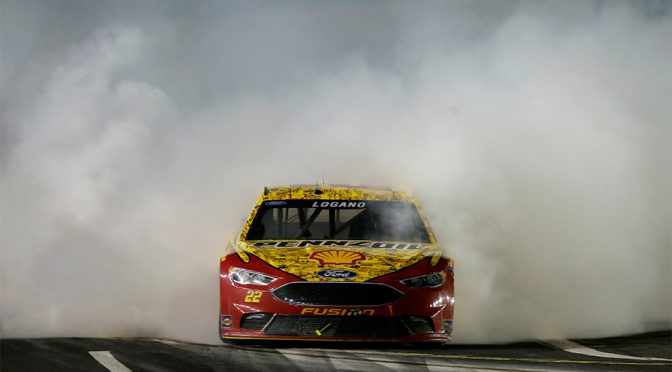
The final race pitted Kevin Harvick against Newman, Joey Logano and Denny Hamlin in the first-ever, best-finisher-wins-the-Sprint-Cup format. Harvick had already had the most dominant season of his career and set personal records in poles, laps led and earnings — all of which would be diminished, if not forgotten, if he didn’t win the championship. He was the favorite, but in a high-stakes, one-race, do-or-die format, nobody knew what to expect, Harvick included.
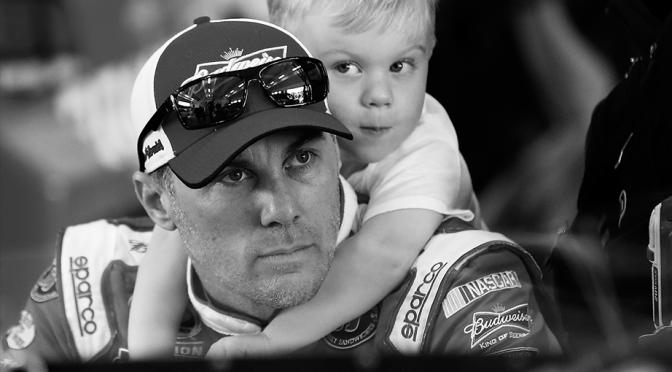
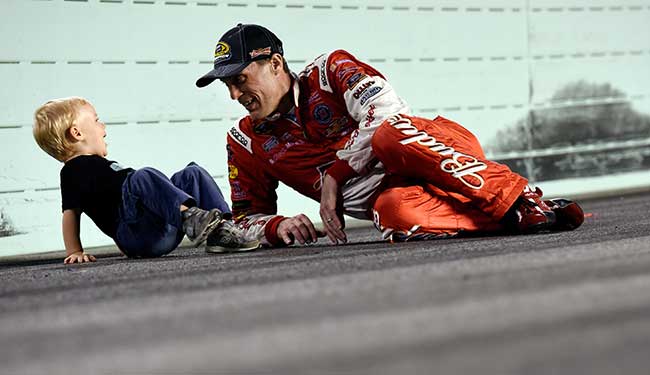
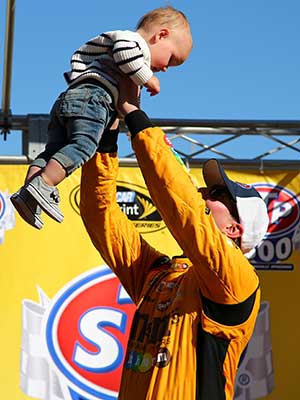
Leading up to the race, he examined problems that could crop up and strived to eliminate as many of them as he could. He thought back to the season finale the year before. His son, Keelan, was 1 1/2 at the time and had cried all night long. It’s hard enough to sleep in a house with a racket like that. In the 40-foot motorhome in which Harvick sleeps at the race track, it was impossible. Harvick got, at most, two hours of sleep that night. He managed to overcome his exhaustion enough to finish 10th. But he knew that a sleep-deprived 10th wouldn’t be good enough to win the 2014 championship.
On the eve of the season finale in 2014, Keelan was 2 1/2 and thus less likely to spend the whole night crying, but Harvick took no chances. He rented a separate motorhome for Keelan to sleep in and parked it near his own motorhome in the infield. If Keelan screamed for hours, Harvick would be oblivious. Harvick slept better that night than he had any other night that week, woke up refreshed, then won the race and the championship.
There is irony in the fact Harvick made sure Keelan didn’t keep him from winning the championship because many NASCAR observers — including even Harvick himself — believe the arrival of Keelan helped Harvick get to that position in the first place.
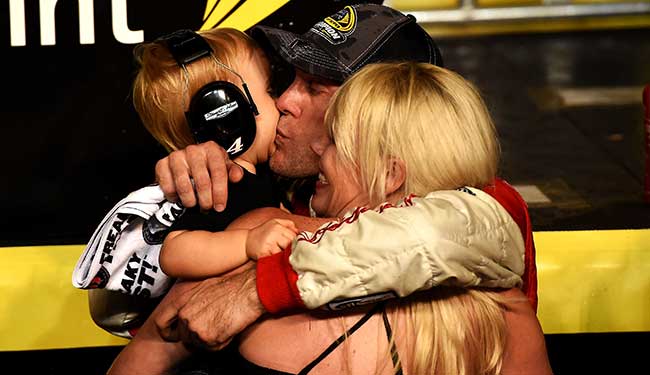
Because of Keelan, Harvick and his wife, DeLana, sold the race teams they owned, moved to Charlotte and dramatically simplified their lives, all so they could focus on being better parents. The upturned life has unleashed a calmer, cooler Harvick, one who is still fiery and competitive but less likely to lose his temper. The on-track results have been obvious. Keelan was born in Harvick’s 12th season, 2012. In the three full seasons since, Harvick has set or tied career bests in every major statistical category and has been the sport’s most dominant driver. He led more laps in those three seasons than he did in the previous 12 combined.
Of course, there is far more to Harvick’s emergence than the fact he’s a father now. His Stewart-Haas Racing Chevrolets are among the best in the sport, and his crew chief, Rodney Childers, is among the most respected leaders in the garage. But Harvick’s surge also sheds light on the issue of fatherhood and racing that has been front and center in NASCAR over the last nine years. Since 2007, 16 Sprint Cup drivers have become fathers while also racing full time. More than two dozen children have been born into NASCAR households during that span.
Every time a driver has a first child, questions about his performance start. Will he be able to manage his new life? Will the distractions of fatherhood slow him down?
Drivers are nothing if not great compartmentalists. They believe they can turn off the world when they turn on the engine. They believe the birth of a child can change every single solitary thing about their lives, except for what happens inside that 850-horsepower machine.
The statistics suggest otherwise.
‘Something that’s bigger than you’
We conducted an analysis of the results of 16 drivers whose wives or girlfriends gave birth to a driver’s first child in recent seasons, starting with Jeff Gordon (2007) and ending with Brad Keselowski (2015).
The average driver saw a decline in finish of 1.6 spots per race in the first six races after the birth of his first child relative to his average finish in the previous 10. Relative to his career average, the drop was 1.25. That’s enough to be the difference between making the Chase and missing it, advancing during the Chase and being eliminated, or winning the championship and losing it.
This is a touchy issue for drivers. None of them want to admit that becoming a father made him slow, even over a short time frame. Harvick was the only driver to acknowledge a direct connection between results and fatherhood. Most drivers said becoming a father made no difference in their performance, better or worse, short term or long. But former drivers, crew chiefs and team officials all say it does — and almost laugh at drivers who say otherwise, in an “of course it does!” way.
“It’s what I call the blind obvious,” says Darrell Waltrip, the analyst on FOX, three-time champion and father of two. Drivers are selfish creatures of habit, Waltrip says, and their every waking moment is focused on their careers. Then they become fathers, and making the car fast is no longer the most important thing in their lives.
“There’s no way you could be performing at peak, I don’t think,” says Marshall Carlson, the president of Hendrick Motorsports. “Right after having a baby, shoot, I was probably lucky to keep my job. My first baby, I was falling asleep all the time.”
A driver’s schedule usually centers on the driver only. When he becomes a father, it caters to a baby and his or her penchant for spitting up, crying and pooping whenever he or she pleases, and sleeping almost never.
Instead of thinking about changing tires, drivers are thinking about changing diapers. Instead of worrying about passing drivers, they’re worrying about pacifiers. That makes a difference, even if the driver himself is the only one who can’t see it.
“It is a major distraction, to be blunt and non-politically correct,” says Steve Letarte, who was Gordon’s crew chief in 2007 and now is an analyst on NBC (and father of two). “Having a child for anyone, in any professional career, is a distraction. Now it is a blessing, it’s the best part of most people’s lives, to have their children. But there’s no way, as a competitor, from a purely competitive standpoint, to not say it’s distracting.”
The most talked-about distraction is the hardest to prove — that a new dad will suffer from a creeping sense of mortality. Consumed with worry about orphaning his child, he will lift, even if ever so slightly, when he barrels three-wide into Turn 3.
There is research to support the idea that fatherhood mellows a man. A 19-year study by researchers at Oregon State and the University of Houston published in Journal of Marriage and Family found a marked decline in high-risk behavior by men after they become fathers.
Many drivers argue the opposite happens: The desire to win for the child, and make him or her proud, forces a driver to push himself harder. “You now have something that’s bigger than you, for which you want to win,” says former driver Jeff Burton, a father of two and now an analyst on NBC Sports. “When you race for something that’s bigger than you, I promise you, you do not bring less to the table.”
Burton loves to discuss this topic, loves to argue about it, and he insists that normal standards don’t apply to drivers. “There’s some sort of a switch — and I’m talking about the best race car drivers — that turns common sense off,” Burton says. “You don’t get in that race car on a Sunday afternoon thinking, ‘I’m going to get hurt.’ You get in that race car thinking, ‘I’m going to win this damn race, and when I do, I’m going to take a picture with me and my kids in Victory Lane.’ “
That’s a popular sentiment, one echoed by many drivers. But Victory Lane has proved elusive for new fathers. Of the 16 drivers in the analysis, only Kyle Busch won within the first 11 races after becoming a father, and he did it four times in nine races.
Before Gordon became a father in June of 2007, he had won four of the previous 10 races. He didn’t win again for 15 races. Denny Hamlin won five times in 2012. His daughter was born a month before the start of the 2013 season. Hamlin won only once that year — the final race of the season. His Joe Gibbs Racing teammates won a combined 11. Hamlin missed four races due to injury, and his average finish in 32 races that season was 21.0, the worst of his career by far. He said the baby had nothing to do with it. “It really doesn’t change anything,” he says. “When I’m in the car, I’m so focused on what I’m doing, there’s nothing outside that enters your mind.”
Championships have proven even harder to win than races for new dads. The worst seven-race stretch of six-time champion Jimmie Johnson‘s career started the week before his first child was born in July of 2010. After back-to-back wins, Johnson finished 31st, 25th, 22nd, 10th, 28th, 12th and 35th for an average finish of 23.3. His average finish in the other 29 races that season: 9.5.
Johnson recovered from that worst-ever stretch, as is the hallmark of his career, and he won his fifth straight championship. In doing so, he became the first driver in the modern era (dating to 1972) to win a championship in the same year he became a father.
In last year’s NASCAR XFINITY Series opener, Kyle Busch crashed and broke his right leg and left foot. His wife, Samantha, was pregnant at the time. Busch focused his recovery efforts on being able to walk into the hospital room when his son was born. He succeeded — he was standing by his wife’s side when Brexton was born on May 18.
While Busch’s goal for healing was to greet his newborn son, it had the added benefit of making him stronger both mentally and physically when he got back in the race car shortly after Brexton’s birth. “I do believe that probably transpired to helping me be better behind the wheel and being more ready sooner,” he says.
Busch qualified as one of the four drivers for last year’s finale at Homestead. Much like Harvick the year before, he was on the brink of a career- and life-altering first championship. Also much like Harvick, Busch wanted to make sure Brexton, then 6 months old and an inconsistent sleeper, didn’t keep him up all night by crying. He sent Brexton to stay at a hotel with his nanny, who also is the wife of his motorhome driver.
Busch smiles and says he was so wound up about the final race he tossed and turned for an hour anyway. Like Harvick, he won the race and the championship.
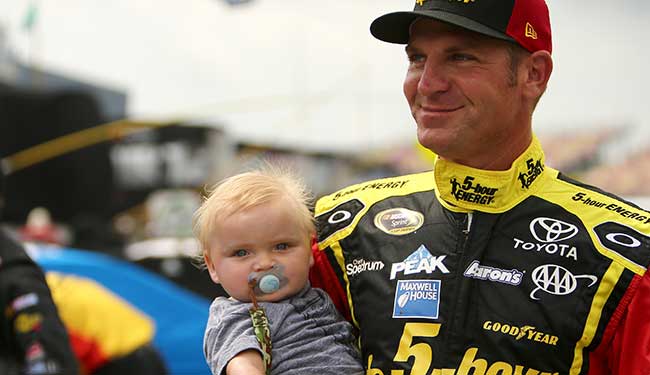
Cash wasn’t a good sleeper, as Clint Bowyer will attest, but the driver had a few tricks to get enough sleep — likely to the chagrin of wife Lorra.
While Harvick and Busch went to great lengths to ensure good night’s sleep, other drivers concoct more conventional schemes to deal with crying babies. “Sometimes — not saying I’ve ever done this — in the middle of the night you hear screaming — sometimes, periodically, the first thought is to open one eyelid and see if (my wife) is up yet,” says Clint Bowyer, whose first child, son Cash, was born in October of 2014. “And if she’s not — not that I’ve ever done this — possibly a little bit of a leg tap and see if they come to, and if they don’t, damn it, I guess it’s my turn. Not that I’ve ever done that.”
Cash was not a good sleeper, so Bowyer has plenty of experience with that … or would if he ever did it, which he hasn’t. “Sleeping, for me, has always been a premium,” Bowyer says. “When you’re tired, I’ve never been able to do very good. It’s not necessarily in a race car, just in general.”
Still, Bowyer says Cash’s arrival didn’t have any effect on how he drove that season for Michael Waltrip Racing. That season was bad overall for MWR, Bowyer included. His average finish in the 29 races before Cash was born was 16.2. In the seven races after, it was 21.0. In 2014, he had six finishes of 38th or worse — the same amount he had in the previous six seasons combined.
The fact some drivers struggle in the weeks after becoming fathers seems to line up with emerging research on sleep deprivation, fatherhood and work. Researchers in Australia studied the work safety of 221 men in the first 12 weeks after they became fathers and concluded, “(daytime sleepiness) during early fatherhood poses a potential risk for work and public safety.”
The vast majority of men in the study — 85.4 percent — got fewer than six hours of sleep per night, far below the minimum threshold of seven hours before the effects of sleep deprivation start to appear. They were 14 percent more likely to report a near-miss accident at work as compared to their non-father counterparts. And none of those guys race 3,400-pound stock cars for a living.
The last time Jeff Gordon finished dead last in his storied career was at Texas in 2008, when he crashed and completed just 124 of 339 laps. Gordon described it as a virtual perfect storm of badness. He wasn’t all that great at Texas to begin with, on top of that his car wasn’t any good, and it happened to coincide with the first time he took his first child, who was then 9 1/2 months old, to the track.
“I’m showing up to the race track trying to hold my eyes open because I’m sleep-deprived because she was up crying at 3 in the morning,” Gordon told reporters in June 2009. “I knew my car was not where I wanted it to be, and I knew that Texas was a challenging track for me already, and I had the worst day that I could ever imagine, and it was because I didn’t get any sleep.”
‘Life was better’
It’s not just the race that requires the drivers’ attention. New fathers also must suffer through endless meetings about camber and shocks and setups and who knows what else. That is, assuming a driver shows up for those meetings. A study in the Journal of Family Economic Issues found “a significant decline” in the amount of hours spent at work by men aged 25-29 who become new fathers.
Drivers don’t skip races or blow off practices after becoming fathers, but they do start looking at their watches if a post-practice breakdown session runs long and the opportunity to coo at Junior or Juniorette awaits. And their willingness to show up for appearances or meetings during the week goes down if it cuts into their ability to take their kids to school or pick them up after.
Still, some in the sport suggest the time away from racing could be a good thing for drivers because it gives them something else to think about other than why their cars are so slow.
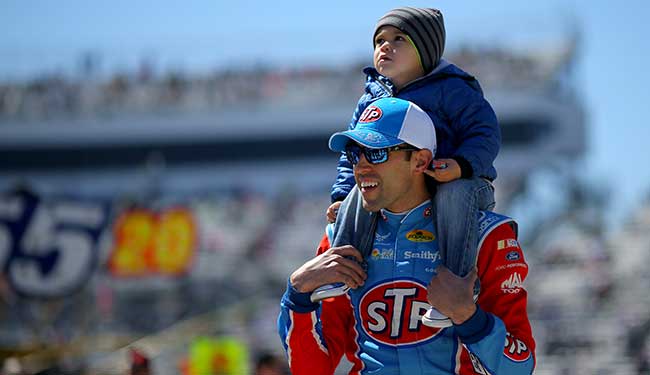
Aric Almirola was as prepared as any race car driver can be to become a first-time father. In 2010, while Almirola was a full-time driver in the NASCAR Camping World Truck Series and part-time driver in the XFINITY and Sprint Cup series, he also served as a surrogate for Johnson as the birth of Johnson’s first child approached. Almirola practiced Johnson’s No. 48 car, sat in on debriefs and watched races from the top of Johnson’s pit box — all in case Johnson was called away to be with his wife, Chandra, for their daughter’s birth.
In 2012, Almirola was a rookie in the Sprint Cup Series driving for Richard Petty Motorsports. His wife, Janice, was pregnant with their first child, a son they named Alex. As the date neared, Almirola leaned on Johnson and other drivers for advice about the intersection of fatherhood and racing. They told him he had no idea what he was in for, and after Alex was born, Almirola learned they were right. “Pre-kid, your whole life revolves around racing,” Almirola says. “When I had kids, that definitely changed.”
Almirola discovered quickly that his obsession with racing had limits. “Todd (Parrott, his crew chief) had my undivided attention while I was in the race car and after I got out of the race car for a finite amount of time,” Almirola says. “Once I went back to the motorhome, (I was) certainly not really thinking about the race car or practice or even thinking about upcoming qualifying or anything else. … The very first thing I’d do would be to FaceTime with Janice, and I’d want to see Alex. I’d want to see how he was doing. I was completely engulfed and focused on what was going on with my family at home.”
Before Alex’s birth in early September, Almirola’s rookie season had gone poorly. He had already burned through one crew chief and wasn’t doing any better with the second. In the 11 races before his son was born, Almirola’s average finish was 23.6 with zero top-15 finishes. If things had kept going like that, Almirola says now, he doubts he’d still be in NASCAR. He knows he wouldn’t be racing at the Sprint Cup level.
But things didn’t keep going like that. After Alex was born, Almirola’s average finish in the final 11 races jumped by 6.6 spots to 17.0, and he had four top-15s. He attributes the improvement “absolutely 100 percent” to the fact his third crew chief of the season, Todd Parrott, started the second race after Alex was born.
Parrott built Almirola fast race cars, and the two bonded over conversations about their families. Alex’s first race was Talladega, when he was 36 days old. Almirola drove from Charlotte to Talladega. Parrott rode shotgun with him, with Alex snug in a car seat in the back. “All of a sudden I’ve got fast race cars. I’m a new dad. I’m coming home with better results, and I’ve got a family at home,” Almirola says. “Life was better.”
Slowing down, for the kid’s sake
Justin Allgaier admits he consciously makes different, more conservative decisions when he drives … only he means in a street car.
Allgaier’s wife, Ashley, went into labor on a Tuesday evening, Aug. 6, 2013. All day Wednesday, no baby. Finally, at 6 a.m. Thursday, Harper Grace took life’s green flag and entered the world. Harper’s proud father tweeted a picture of her at 10:09 a.m. His crew chief, Scott Zipadelli, jokingly tweeted back: “Congratulations on Gods amazing gift to you! OK so now tht we got tht outa the way, plane leaves at 3:30! Hurry”
Allgaier gave Harper the first bath of her life, then left to catch a flight to a race at Watkins Glen in the XFINITY Series, in which he was competing full time. “That was the hardest thing I’ve ever done, was to leave that hospital and go,” he says.
With visions of a 5-pound, 11-ounce, 18.5 inches long baby dancing in his head, Allgaier qualified sixth for the race and finished seventh. That began a six-race stretch in which his worst finish was 12th. In the previous six races, he had finished better than 12th only once.
He says he’s the same Allgaier in the race car and a different Allgaier in a passenger car.
“When I have Harper, I have trouble figuring out what to do, how to be safe, how to not put myself in bad positions,” he says. “But not in a race car. That’s the part I don’t understand.”