Practice 3 | Results


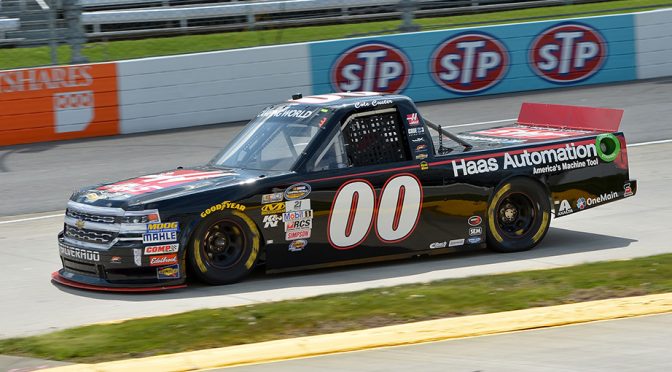
Cole Custer topped the leaderboard in Friday’s final NASCAR Camping World Truck Series practice at Martinsville Speedway at 95.694 mph in the No. 00 JR Motorsports Chevrolet.


Right behind Custer was John Hunter Nemechek in the No. 8 NEMCO Motorsports Chevrolet at 95.511 mph.


Rounding out the top five on the leaderboard were Ben Rhodes in the No. 41 ThorSport Racing Toyota, Kyle Busch in the No. 18 Kyle Busch Motorsports Toyota and Spencer Gallagher in the No. 23 GMS Racing Chevrolet.


Series points leader Parker Kligerman was 17th-fastest with a speed of 93.599 mph in the No. 92 RBR Motorsports Ford.


The Camping World Truck Series returns to the track Saturday at 11:15 a.m. ET for Keystone Light Pole Qualifying (FS1).


Practice 2 | Results


Ben Rhodes topped the leaderboard in Friday’s second NASCAR Camping World Truck Series practice at Martinsville Speedway at 95.448 mph in the No. 41 ThorSport Racing Toyota.


Right behind Rhodes was William Byron in the No. 9 Kyle Busch Motorsports Toyota at 95.367 mph.


Rounding out the top five on the leaderboard were Cole Custer in the No. 00 JR Motorsports Chevrolet, Tyler Reddick in the No. 29 Brad Keselowski Racing Ford and Spencer Gallagher in the No. 23 GMS Racing Chevrolet.


Series points leader Parker Kligerman was 15th-fastest with a speed of 94.115 mph in the No. 92 RBR Motorsports Ford.


The practice’s only caution came out when Natalie Decker spun her No. 14 Chevrolet. 


Practice 1 | Results


William Byron topped the leaderboard in Friday’s first Camping World Truck Series practice at Martinsville Speedway at 95.309 mph in the No. 9 Kyle Busch Motorsports Toyota.

Right behind him was Timothy Peters in the No. 17 Red Horse Racing Toyota.

Rounding out the top five were Kyle Busch (No. 18 Kyle Busch Motorsports Toyota), Johnny Sauter (No. 21 GMS Racing Chevrolet) and Cole Custer (No. 00 JR Motorsports Chevrolet).

Series points leader Parker Kligerman was 21st-fastest with a speed of 92.619 mph in the No. 92 RBR Motorsports Ford.


Daniel Hemric (8th, 93.915 mph) and Brad Keselowski Racing teammate Tyler Reddick (14th, 93.451 mph) had trouble keeping their Fords going once on the track, but recovered after teams got a chance to work on them.

RELATED: Larson sidelined after hard hit at Auto Club


MARTINSVILLE, Va. — Kyle Larson says he feels no ill effects from a heavy crash two weeks ago at Auto Club Speedway, despite soreness in his upper body and legs that lingered for a handful of days after the impact.


Larson declared himself fit Friday in advance of Sunday’s STP 500 (1 p.m. ET, FS1, MRN, SiriusXM) at Martinsville Speedway, where he’s running double duty this weekend in the NASCAR Sprint Cup and Camping World Truck Series.


“Yeah, I feel fine,” said Larson, who opted out of an extracurricular sprint-car race in his home state of California last week to rest up and heal. “I was only sore for just a few days. I’m pretty surprised I healed up as quick as I did. I was definitely pretty sore right after it and the next day, but then I got a lot better. Went and saw a chiropractor and after that, I was pretty good.”


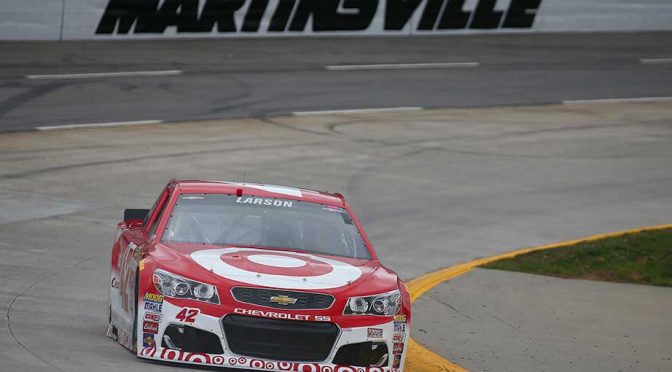
Missing Martinsville this weekend wasn’t a serious concern for Larson, but last year told a different story. The Chip Ganassi Racing driver fainted as he wrapped up a Saturday afternoon autograph session last March, then sat out the historic track’s spring event the next day as a precaution, watching from a hospital bed as fill-in driver Regan Smith wheeled his No. 42 Chevrolet.


“I remember, I got through the whole thing and right at the end, I was just talking to a fan and kind of just got light-headed and passed out,” Larson said. “It was pretty weird, but it took me a little bit afterward to be able to remember the time from when I passed out to when I got to the care center.”


Further evaluation, including a battery of tests from a Charlotte-area neurologist, pointed toward dehydration as the cause of Larson’s fainting spell. But it also raised the issue of driver health and pre-race medical certification for NASCAR’s participants.


That matter came under further scrutiny this week with Dale Earnhardt Jr.’s announcement that he would donate his brain for medical research of sports trauma upon his passing. Larson welcomed the decision, saying the impact of helping the study of brain injuries could have a reach far beyond the world of motor sports.


“Any extra data you can get is great for us, great for the sport,” Larson said. “We wreck a few times a year, we’re not getting hit in the head as much as football players, but concussions still happen in our form of racing. For him to donate his brain hopefully may help and make every sport better.”


Larson has more on his plate schedule-wise this weekend, joining GMS Racing to make his first career Truck Series start at the .526-mile bullring. But Larson said the decision to double-dip wasn’t completely designed to make up for lost time last year.


“I think it’s more so just because I’ve run here, this is my third year now and I still feel like this is probably the track where I run the worst at,” said Larson, who has fared no better than a 19th-place finish in four Sprint Cup tries here. He’ll start 17th in Sunday’s 500-lapper.


“So to just be able to get more laps, I think helps a lot. So far today, I feel like it’s helped. I was able to practice the truck before Cup practice, which helps get your rhythm. Hopefully it helps keep my rhythm before qualifying because normally you have such a big break before qualifying. In the race (Saturday), it’ll just help my rhythm and help me understand how to pass better.”

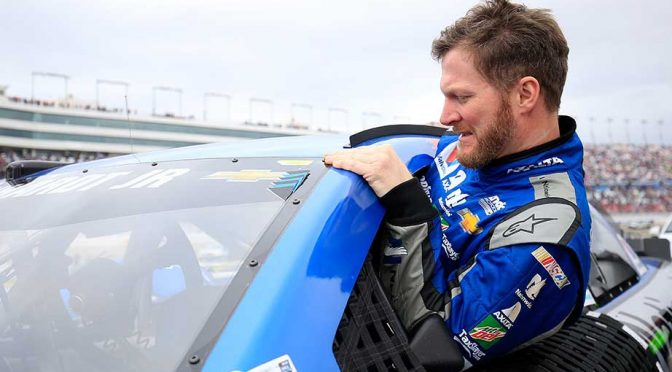
MARTINSVILLE, Va. — With a simple, conversational tweet this week, Dale Earnhardt Jr. let his 1.39 million followers — and many others through the message’s social spread — know that he would donate his brain for scientific research upon his passing.
 
Earnhardt Jr. didn’t expect the informal mention over social media during Easter weekend to become national news, part of a growing focus on professional sports and brain injuries. But Friday at Martinsville Speedway, he shed light on how and why his pledge merits such personal importance.
 
“I was a donor already for many years, as my driver’s license would attest. It seemed like a reasonable thing to do for me,” Earnhardt said from the .526-mile track, site of the sixth race of the NASCAR Sprint Cup Series season. “Anything that I can do to help others, but hopefully the science has advanced far beyond where it is today and they don’t need it.
 
“It was something that I didn’t have to ask myself whether I wanted to do it or not. Going through that process in 2012 I learned so much and have so much respect for the work that those doctors are doing and really were inspired by some of the athletes that have pledged their brains before me.”
 
That process was Earnhardt’s own brush with brain trauma four years ago, when two concussions within a six-week span sidelined him for two races. That inspiration came from seeing other professional athletes — former professional soccer player Brandi Chastain and former members of the NFL’s Oakland Raiders among them — make similar pledges in recent weeks.
 
But the 41-year-old driver did more than simply verbalize his commitment, also taking steps to contact the Concussion Legacy Foundation and the Boston University center for CTE (Chronic Traumatic Encephalopathy) research, leading partners in the study of brain injuries among athletes.
 
“There will be a card in your pocket that you carry like your driver’s license,” Earnhardt said of his donor identification. “Your family can refuse. Nothing is binding so it’s really just a promise in a way. You share that information with your family so they are aware and when this comes up if you happen to pass untimely or what have you if this comes up someone will contact them.”
 
Concussions in motorsports became a more vibrant talking point after Team Penske‘s Will Power missed the IndyCar season opener three weeks ago, diagnosed with concussion-like symptoms on race-day morning. But further tests showed no evidence of a concussion and that Power suffered from dizziness, nausea and headaches related to an inner-ear infection.
 
Penske officials said that Power would have been too ill to drive in either case, but the timing of the diagnosis and protocols drew a sharp response from Brad Keselowski, a Penske driver on the NASCAR side of the operation. Asked if better at-track testing was needed, Earnhardt welcomed the discussion but voiced his approval of NASCAR’s concussion-related procedures, which include the ImPACT Test and other examinations to determine neurocognitive baselines.
 
“I see the argument in reverse. Most concussions are self-diagnosed and as a driver I think the real purpose of the conversation should be to help drivers, football players, whoever it is to understand that it’s OK to self-diagnosis and go get help. I feel very good about the protocols that are in place. …
 
“Concussions are like snowflakes. There are no two concussions that are the same. Each one deals with certain parts of the body and to be able to use that impact test helps you understand how to treat that particular concussion. I think the protocols and the advances that we have made in trying to protect ourselves are great things. I’m excited about what NASCAR has done. They have really taken this head on. They are talking to the right people. They are talking and involving themselves with the right folks to get the best information to be able to protect the drivers the best way they can. … It will just get better the same way everything else in the sport progresses.”
 
Earnhardt said he hoped to visit the organization and its brain bank in Boston when the series makes one of its next stops at New Hampshire Motor Speedway, taking the opportunity to learn more about the process and the partnership’s research. He also said he hopes that should he be blessed with a long life, medical advancements over the coming decades will make his commitment to the institution unnecessary.
 
Friday, Earnhardt’s words spoke to the underlying heft behind his off-the-cuff tweet, one that’s prompted influential conversations that reach beyond his personal decision.
 
“I just was in the moment of conversation and that is sometimes the comfort that you find yourself in on Twitter sometimes and I didn’t expect it to turn into the story it did,” Earnhardt said, “but by all means if it raises more awareness and inspires people to donate their brains and pledge their brains. They don’t need just athletes. They need everybody.
 
“I’m going to give up all the organs that are worth anything when it’s over with. They can have it all.”

RELATED: Full starting lineup

MARTINSVILLE, Va. – The third time was the charm for Joey Logano.


Then again, so were the first and second.


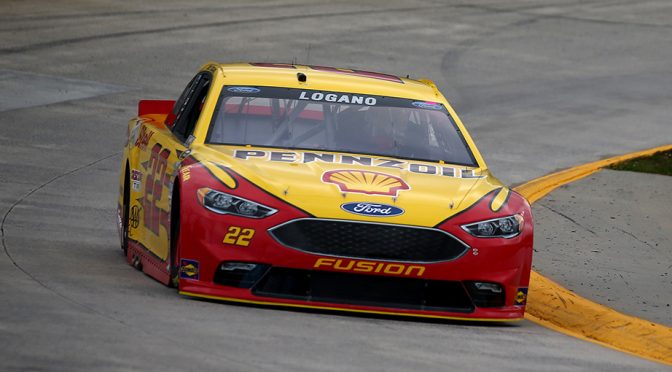
The driver of the No. 22 Team Penske Ford dominated qualifying for Sunday’s STP 500 (1 p.m. ET on FS1), topping the speed chart in all three sessions of Friday’s knockout qualifying at Martinsville Speedway.


The Coors Light Pole Award was the third straight for Logano at the .526-mile paperclip-shaped short track, marking the first time a driver has won three consecutive poles at Martinsville since Jeff Gordon accomplished the feat in 2003-2004.


Navigating the speedway in 19.513 seconds (97.043 mph), Logano claimed the top starting in a NASCAR Sprint Cup Series race for the 15th time in his career.


Logano, who was taken out of last year’s Chase race when Matt Kenseth drove him into the Turn 1 wall, also is the third driver to sweep all three rounds in time trials since the group qualifying format was instituted at the start of the 2014 season.


“I couldn’t be more proud of these guys,” Logano said of his team. “I say all the time that Martinsville is the most important track to start up front, and that’s when you’ve got to come here and really show what you’ve got.


“This is a nice little fire for us to get going. We’ve had a good season so far, but you want to break through and get some wins, and this pole is definitely going to help with some momentum.”


Logano edged outside front-row starter Kasey Kahne (97.033 mph) by .002 seconds. The driver of the No. 5 Hendrick Motorsports Chevrolet hadn’t enjoyed a top-five position on the grid since last October’s Chase race at Talladega.


“It feels good,” Kahne said. “The car was really fast, this Great Clips Chevrolet. The guys did a nice job in practice and in qualifying. I just kept getting better with my laps. We didn’t make any adjustments. The car is fine. Just let me get my laps a little better. So we did that, and it was close.


“Joey just barely got us. But it is definitely a good starting spot. That was one of my goals today was to help out on pit road (by earning second pit selection). Pit road is huge here. We have the best pit crew for stops, than anyone, in my opinion. And if I can help them on pit road, myself, and get a better spot, I think all that will be beneficial on Sunday.”


Brian Vickers, who led Friday’s opening practice at Martinsville, qualified third at 96.864 mph. Paul Menard (96.854 mph) was fourth, followed by Ryan Newman (96.736 mph) and AJ Allmendinger (96.676 mph).


Vickers was the only Stewart-Haas Racing driver to advance past the first round. Kevin Harvick and Kurt Busch, both former winners at the track, will start 19th and 23rd, respectively.


Denny Hamlin — reigning race winner and one of the pre-race favorites — earned the eighth starting spot, but eight-time Martinsville winner Jimmie Johnson wasn’t as fortunate. The six-time Sprint Cup champion squeaked into the second round by .007 seconds over Carl Edwards but couldn’t improve beyond the 24th-place starting position.


The two leading drivers in the Sunoco Rookie of the Year battle, however, both made the top 12. Chase Elliott will take the green flag from in 10th, with Ryan Blaney right behind him in 12th, as the Wood Brothers Racing team returns to Martinsville for the first time since 2011.


Dale Earnhardt Jr. experienced brake issues and qualified 21st.

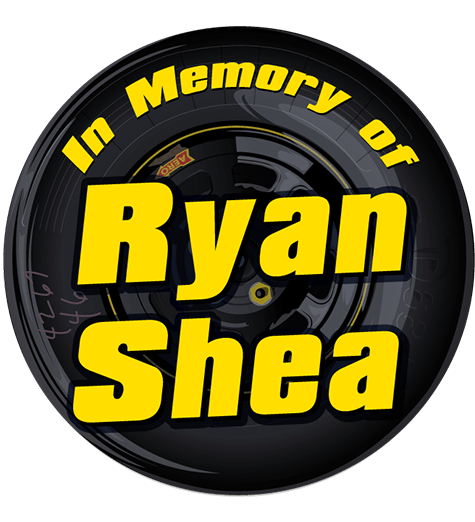
Ryan Shea, car chief for the Chip Ganassi Racing No. 42 Chevrolet in the NASCAR XFINITY Series, died Wednesday night at his home in Troutman, North Carolina, according to the team. He was 34.


“It is a sad day for our team as we mourn the untimely loss of Ryan,” team owner Chip Ganassi said in a team release. “Ryan was a dedicated worker and a great friend to those on our team, as well as others in the garage. Our hearts go out to Ryan’s family and friends during this difficult time.”


Shea had previously worked at Michael Waltrip Racing before joining CGR in 2015. Kyle Larson and Justin Marks have been behind the wheel of the No. 42 this season.


“Ryan was a tremendous asset to Chip Ganassi Racing and the No. 42 team and will be sorely missed,” said crew chief Mike Shiplett. “My thoughts go out to his wife, children, family and friends in this time of mourning.”


Chip Ganassi Racing will communicate further details regarding funeral arrangements and memorials as they become available.


A GoFundMe page has been established to take donations for Ryan’s family — go here to see it. Also, CGR cars will have a special decal on their Chevrolets this weekend.


The NASCAR community collectively offered its condolences to the team and the Shea family on Twitter:

RELATED: Smith, wife welcome baby boy


Regan Smith
and wife Megan are expanding their family as the driver tweeted out and also mentioned on FS1’s RaceHub that the couple is expecting their second child later this year.


In February of 2015, the Smiths welcomed son Rhett into the world.

The 2016 calendar year has already been an eventful one for Smith, who landed behind the wheel of the No. 7 Tommy Baldwin Racing Chevrolet in the NASCAR Sprint Cup Series just weeks before the season kicked off in Daytona.


Entering Sunday’s STP 500 at Martinsville (1 p.m. ET, FS1, MRN, SiriusXM NASCAR Radio), Smith is 23rd in the point standings.

RELATED: See where Stenhouse ranks in the standings

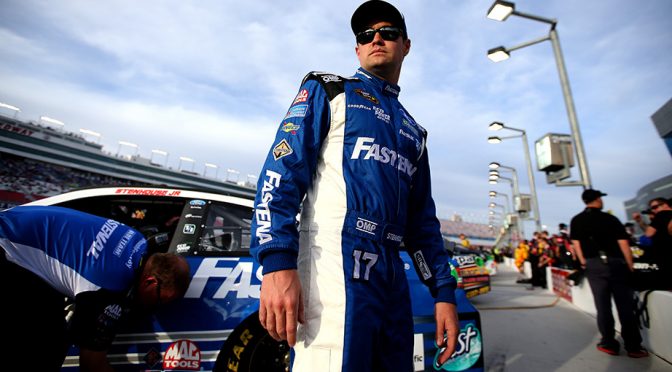
CONCORD, N.C. — If there’s a tipping point that illustrates how far Ricky Stenhouse Jr. has developed in his NASCAR career, it’s one that traces back to the spring of 2010.
 
Stenhouse had begun his rookie NASCAR Nationwide (now XFINITY) Series season by crashing out of five of the first 12 races. On the 12th, at Charlotte, he doubled down on his early magnetic tendencies for running into walls or other competitors, demolishing one car in pre-race practice and exiting the race in another crack-up after just eight laps.
 
By then, team owner Jack Roush had had enough.
 
“It just added up,” Stenhouse says now. “That’s the thing that Jack wanted to really focus on — it wasn’t that crash, it was the other ones before that. You’re going to get caught up in wrecks and you’re going to have issues that are out of your control, but he wanted to focus on the ones that were in my control.”
 
With the cumulative effects of bringing Stenhouse’s wrecked cars back from the track wearing him down, Roush benched his young driver, putting him to work in the shop, helping to fix the damage in a very literal sense.
 
“I cut up cars, a lot of chassis,” Stenhouse says, pointing from his spot in the lobby of Roush Fenway Racing‘s museum to one of the buildings on the team’s spacious campus where he got his hands dirty. “I did some bodywork. I made quarterpanels and stacked ’em up on shelves so that when the guys were ready to build a car, they had a quarterpanel ready to go.”
 
The benefits of such a hands-on character-building experience had the desired effect. Stenhouse went without a crash-related DNF the rest of the season. One year later, he was hoisting the first of two consecutive NASCAR Nationwide Series championship trophies.
 
Six years removed from those humble beginnings, Stenhouse is a fourth-year vet in NASCAR’s premier division, still driving for Roush and still aiming to help the organization back to prominence. He comes off the Sprint Cup tour’s idle weekend buoyed by a fifth-place finish at Auto Club Speedway and improved performance elsewhere in the season’s early going.
 
It’s been a journey of transformation from crash-prone rookie to established veteran, the latest step in a path forged by those early morning arrivals at the shop in 2010.

RELATED: Stenhouse helps team fix car at Martinsville

Personnel matters
 
Roush Fenway Racing‘s rebuilding process has been long in the making. The team hasn’t won since 2014, enduring its worst NASCAR season in its 28-year existence last year.
 
The downturn in performance led to plenty of personnel moves across the organization, but one team was largely, purposely kept intact — the No. 17 Ford with Stenhouse and crew chief Nick Sandler. The decision meant that for the first time in his Sprint Cup career, the Mississippi native wouldn’t be starting a season with a new crew chief.
 
“There was a conscious decision to keep that team together and I think that spoke a lot about how our team worked and the people that we had,” Sandler said. “We sort of felt that was an important thing, that everyone had enough faith in that group to keep us all together and that we really needed to perform this year.”
 
With their roles established, Stenhouse and Sandler set about improving their communication in the hopes that, in turn, their performance would gain traction. Helping matters was Sandler getting more familiar atop the pit box in managing race-day operations.
 
“There were a lot of times last year where I was worried about race strategy and how we were going to do things throughout the race and I would catch myself not staying as focused as I needed to in the car about driving the car and I’d make a mistake,” Stenhouse says “… There were just so many things that added up at the beginning of the year last year that came from trying to do too much from inside the car. I think it’s really helped me a lot and him to have more confidence in the calls that he makes, the changes that he makes on the race car as well.”
 
Last season marked Sandler’s first as a crew chief, but his history with Roush Fenway runs deep. He joined the organization as a shock specialist in 2006 and served as a team engineer under veteran wrench Jimmy Fennig, helping him transition to managing the team’s weekend and race-day calls.
 
“The comfort level is growing,” said Sandler. “I don’t know that you ever get completely comfortable in that role. It seems like it’s always a different challenge every week.”

RELATED: Roush seeks to make big gains in 2016

Moving forward
 
Stenhouse has registered just one top-five finish each season since joining the Cup Series full-time in 2013. Making the top-five in California the first of more to come will require the No. 17 team to continue a trend — turning last year’s struggle spots into strong suits.
 
“I think when you look at the progress between last year at those tracks versus now, I think it’s a big jump,” Stenhouse says, admitting that his team is playing the optimism cautiously. After all, it’s a five-race stretch in a season of 36, and a part of a larger rejuvenation effort within Roush Fenway’s corporate confines.
 
“This is the first offseason where the cars have gotten even better from where we ended,” Stenhouse said. “So I think everything that we’ve done hiring-wise and in management roles and different positions, I think is in the right direction and the pieces that they’re working on are the correct pieces. Still a lot of fine-tuning left to do and a lot of progress still to be made, but I do think that we’ve made some progress through last year through the offseason and it’s paying off.”
 
Roush Fenway’s three-driver lineup of Stenhouse, Greg Biffle and Trevor Bayne remained intact for 2016, but other personnel realignments — combined with a new technical alliance with fellow Ford affiliate Front Row Motorsports — have also begun to take root.
 
“We’ve done some changes in terms of (car) building on the technical side, making better cars, and then we’ve also culturally there’s been a little bit of a change here, too,” Sandler says. “That’s all been positive. I think that we’re — company-wide — we realize that we have a long uphill battle to get back where we’re contending the way we should and the way we have. We sort of stepped back and laid a really good foundation for that last year and it’s taking some time to start to seed.”

RELATED: Early returns have Roush Fenway trending up
 
Positive growth
 
While Roush Fenway Racing aims for its own rebirth, the 28-year-old Stenhouse has made his own strides in on-track maturity. That growth has spanned both of NASCAR’s top two national series, with each experience leaving its own impression.
 
The common bond has been communication.
 
“On the driving side, I think I grew in the Nationwide Series to a point, but then coming over to the Cup side, I kind of had to grow in different ways as far as the work ethic that I had to put back into talking to my engineers a lot more and talking to my crew chief a lot more,” Stenhouse said. “It kind of came a little bit easier in Nationwide once I figured out what I needed to do driving-wise. The cars were fast and I just showed up and drove and it was really good, but now we spend a lot of time during the week talking about things to be better for throughout the weekend.”
 
Since those earliest days, finding the fine line between being fast and out of control has been a delicate dance for Stenhouse, who too often rumpled sheet metal as he explored those limits early in his career.
 
It’s why trading in his fire suit to work in the shop was a difficult but necessary step in his development. Stenhouse sat atop the pit box during his 2010 benching to show his support, but he also bonded more deeply with his crew as he helped rebuild Roush’s cars in the shop.
 
“I think it speaks a little bit about Ricky,” Sandler said. “He’s got a lot of talent and a lot of desire. In those days, he had good performance and then some times he overachieved, and I think learning that balance is something that young drivers have to experience.”
 
Stenhouse said he’s occasionally had flashbacks to his shop experience when he’s endured rough stretches, the most recent one coming just last year. The reminders of those long work days that started bright and early at 6:30 a.m., have also helped remind him not only to keep his focus but of how far he’s come.
 
“If I look at it year-wise, it’s like, ‘Man, that was a long time ago,’ ” Stenhouse says. “It was one of those times that you’ll never forget and you’ll always have the stories. I think those are the stories that people like to hear.”
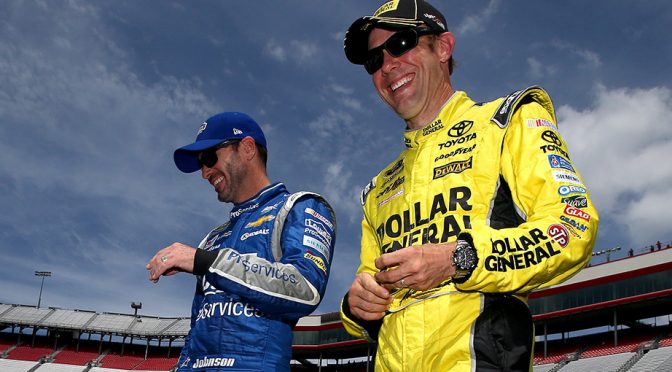
It wasn’t the first time that Jimmie Johnson and Matt Kenseth have been drafting partners. The two have won their fair share of races on NASCAR’s restrictor-plate tracks, where the nuance of aerodynamics and slipstreams is of crucial importance.


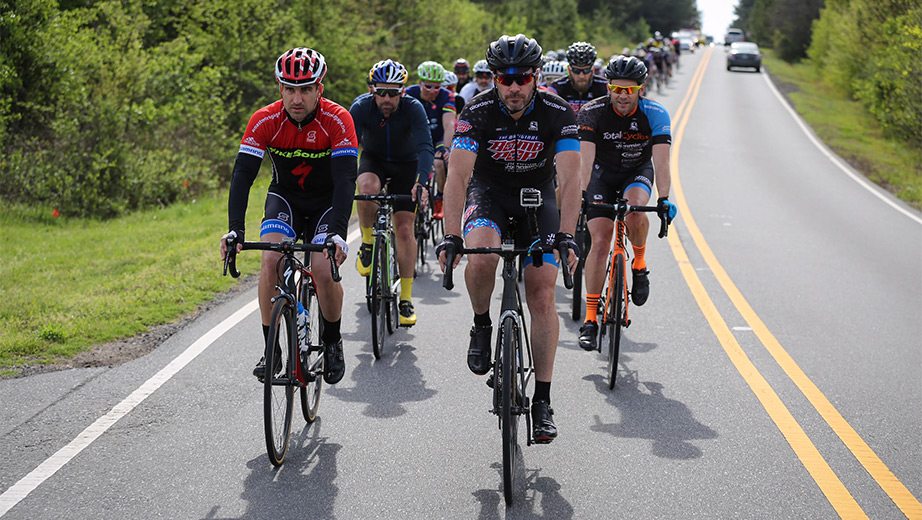
Wednesday, though, the pair worked a different sort of draft as part of a full-fledged peloton of cyclists on a 130-mile trip from Asheville, North Carolina to Charlotte, with each logging personal bests for distance. The event was the first leg of the four-day Ride On Atlanta, a 400-mile trek designed to raise awareness and funding for the non-profit PeopleForBikes organization.


Though Wednesday’s ride represented the extreme end of the pendulum for their road biking exploits, Johnson and Kenseth have been increasingly involved in running together on two wheels. Most Tuesdays, the two can be found bounding around Charlotte-area trails on mountain bikes, sharpening their physical and mental skills.

(Photo courtesy of Meg McMahon for PeopleForBikes)


“What I like about mountain biking is that when you’re really, really tired, you’ve still got to pay a lot of attention because there’s still going to be a rock or a root or a jump or an obstacle of some sort,” Kenseth said. “To me, it kind of relates to racing a little bit because when you’re most tired, you still have to pay attention and be on your toes and do all that.


“And you’re out in the woods. You’re not going to get hit by a car. You might hit a tree, but the tree’s not going to hit you. You might hit it.”


Johnson, whose skills as an avid triathlete are well established, said Kenseth has been a quick study as a relative newcomer to the biking scene. Johnson’s previous distance record was a 100-mile journey he took for his 40th birthday last September; Kenseth’s personal best was an approximately 60-mile ride with Johnson in the Daytona area this February.


A review of Johnson’s bike telemetry at day’s end showed 130.4 miles — “definitely the high score,” he said — more than 7 hours, 21 minutes of rolling time, an average of 17.6 mph. Johnson said that he and Kenseth were understandably a tad nervous about Wednesday’s distance, but that — much like his trail-riding prowess — Kenseth matched him pedal for pedal.


“I’ve been impressed with his bike-handling skills,” Johnson said. “I’ve taken race car drivers on mountain bike rides and they’re scared for their lives, like they’re just going to wreck at any point. Growing up in Wisconsin, (Kenseth) had dirt bikes, he raced snowmobiles — he has a very good sense of where he is on the bike.”


On race weekends, Johnson can often be found running or biking along speedway grounds in the early morning hours or after the garage’s closing time. His running routine hasn’t made its way to Kenseth, who claims his wife, Katie, is the runner of the family.


But Kenseth said his renewed devotion to fitness involving handlebars is just part of trying to be better behind the wheel.


“Just trying to stay in better shape. As you get older, it’s not easier, it’s always harder so I feel like you’ve got to work harder at it,” Kenseth said. “I think the more physically fit you are, the more mentally fit you are as well. I think it all kind of goes hand in hand.”

RELATED: Watch the incident between Kenseth, Logano


CHARLOTTE, N.C. — If the biggest lightning-rod moment of the 2015 season had somehow slipped through Matt Kenseth‘s memory banks, he wouldn’t have to search far for a reminder of what went down at Martinsville Speedway last fall with rival Joey Logano.


The historic race track has used the replays of Kenseth’s intentional crash of Logano last November in television commercials promoting Sunday’s STP 500 (1 p.m. ET, FS1, MRN, SiriusXM NASCAR Radio). But even if Kenseth hasn’t been tuning in, he said the incident has also endured with fans, who continue to broach the topic in casual conversation.


“Every week. People bring it up pretty much every week,” Kenseth said. “All winter.”


Kenseth, speaking Wednesday after joining Jimmie Johnson on a 130-mile charity bicycle ride from Asheville, North Carolina, to Charlotte, drew a two-race suspension from NASCAR last season after bouncing Logano from victory contention in the most recent race at the historic .526-mile track. The two drivers said this offseason that they’d prefer to put their incident in the past, but returning to the site for the first time since last year’s confrontation has made it unavoidable.


Martinsville Speedway president Clay Campbell defended using the footage in the track’s promotional campaigns, telling reporters Tuesday: “Yeah, it stirred up controversy, but what do people want me to show, the pace lap?”


Kenseth said he could see merits to both points of view.


“I mean, yes and no. If it’s so bad you get suspended from it, it seems like if it’s maybe that bad of an act, then maybe it shouldn’t be used to profit from, because I certainly didn’t profit from it,” Kenseth said with a deadpan smirk. “On the other hand, the fans … a lot of people come to see controversy and action and wrecks. I mean, that’s what the fans love.


” … I don’t know. I understand. If I’m a promoter, I’d do the same thing obviously. They’re trying to put people in the stands, and the people loved it that were in the stands, the action and the controversy. So I can’t blame them there, but yeah, it does seem kind of — I don’t know what the right word is — not what I would expect, I guess, if it was really that bad of an act.”


Martinsville is one of five tracks where Kenseth has never won. One factor that may help him fill the void this weekend is the return of a familiar face to the spotters’ stand in Chris “Crazy” Osborne.


Osborne, sidelined with multiple injuries in an automobile crash Dec. 17, will be working the team radio for the Joe Gibbs Racing No. 20 Toyota for the first time this season. Lorin Ranier and Curtis Markham spotted for Kenseth in the interim.


RELATED: Osborne talks accident, return


“I’m glad that he’s feeling better and he’ll be back, so we definitely missed him for sure,” Kenseth said of Osborne, who also spots for Daniel Suarez in the NASCAR XFINITY Series and NASCAR Camping World Truck Series. “Curtis did a good job filling in and so did Lorin, but it’s just not the same when you get a guy you’re used to giving you certain kind of information and communicating with the crew chief.


“All that working together and understanding each other, he’s the guy you talk to most of the time, so it’s hard to unplug him and just plug someone else in that late in the game for sure.”

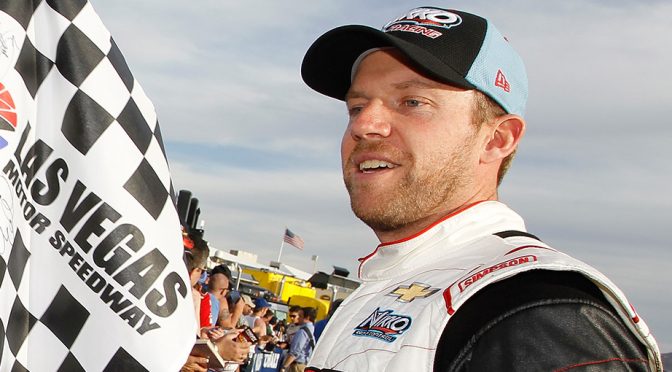
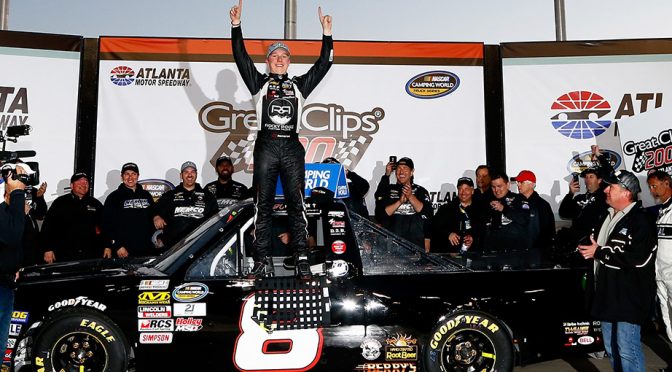
When the NASCAR Camping World Truck Series rolls into Martinsville Speedway for this Saturday’s Alpha Energy Solutions 250 (2:30 p.m. ET, FS1, MRN, SiriusXM NASCAR Radio), John Hunter Nemechek will arrive as the series’ most recent winner.
 
It’s coming up on a five-week break for Nemechek and his fellow racers, more than a month since he pulled into the winner’s circle at Atlanta Motor Speedway for his second career victory.
 
The win sets up the 18-year-old to be in position to participate in this year’s inaugural NASCAR Camping World Truck Series Chase. Similar to the Sprint Cup Series’ Chase format, eight drivers will compete for the title, attempting to advance through two elimination rounds to reach the championship-determining event at Homestead-Miami Speedway where four will vie for the title.

RELATED: Truck Series Chase 101
 
That Nemechek is already in position to begin considering Chase scenarios is nothing short of remarkable – the son of former Sprint Cup driver Joe Nemechek had only 30 career starts in the series heading into the 2016 season.
 
That his NEMCO Motorsports team has been able to compete against larger, more established organizations in spite of its limited resources is no less amazing.
 
There’s no questioning Nemechek’s talent – he has finished in the top five in roughly one third of his starts and has 17 career top-10 results. His first win came last season at Chicagoland Speedway.
 
The inability to test slows progress, but it’s something each team must deal with today. Nemechek said it helps that he is surrounded by so much experience on his team.
 
“I have two of the most veteran (people) here in Dad and (crew chief) Gere Kennon,” he said. “They like to do stuff the old way, old school; all their experience and knowledge I’ve learned from.
 
“Dad has taught me everything he’s learned in a 20-year period in a 3-4 year period. That’s sped up my learning curve. Then bringing Gere on board, he’s taught me a lot about these trucks; he’s been in the sport forever.”
 
The elder Nemechek won four times during a 20-plus year career at the premier series level. He also won 16 times in what is now the XFINITY Series, and was that division’s champion in 1992.
 
Kennon’s racing resume includes title-winning runs with two-time series champion Sam Ard in what is now known as the NASCAR XFINITY Series, as well successful stints with Brett Bodine and Ron Hornaday in the that series. Kennon was also a chassis specialist for Roush Racing before moving into a crew chief role in the mid-‘90s for team owner Butch Mock and driver Morgan Shepherd in the premier series ranks.
 
NEMCO Motorsports is a single-team, family-owned organization with roughly a dozen employees and limited funding. The group hired its first engineer this season.
 
They might get out-spent, but they won’t be out-worked. They might be out-engineered, but not out-smarted.
 
“To be competitive in this series, it takes a few million dollars,” Joe Nemechek said. ” … It’s hard to round that up on a weekly basis.”
 
Funding from Fone Fuel and Berry’s Bullets has been a big help, he said, but added that his group is “making hundreds and hundreds of calls every week.
 
“I know what we spend in this deal, and we’re probably spending half of what the big teams are. But it’s too hard; you just can’t keep doing that and have success. At some point all your people get burned out; it’s tough.”
 
Parker Kligerman has driven to the top of the points standings after teaming with the small Ricky Benton Racing organization. Nemechek sits third, behind Kligerman and Brad Keselowski Racing’s Daniel Hemric.

RELATED: Hemric finds perfect home | Dual roles lead to success for Kligerman
 
He has five starts at Martinsville, more than at any other track hosting the series, and finished second there in last season’s fall event.
 
“It means a lot to be able to come back to the race track where I made my (series) debut,” Nemechek said during the track’s recent media day event. “I’ve improved a lot since then.
 
“Also to finish second here (last fall), we’ve improved on our finishes every time we’ve been here over the past two and a half years so if we can keep doing that and just improve it by one (position) this year, we’ll be good.”