Five races into the 2016 season and we’ve hit a break in the action, so it’s time to evaluate a few stats and compare to last year.

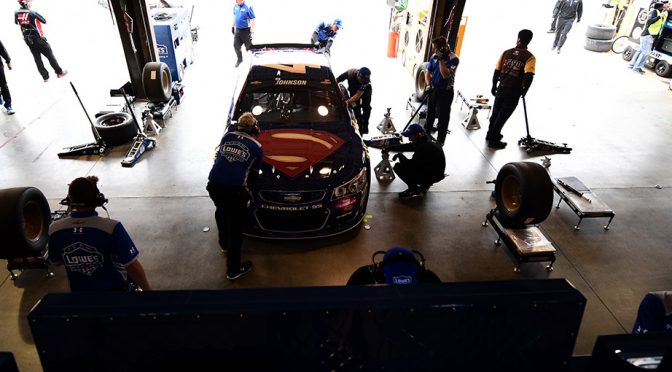
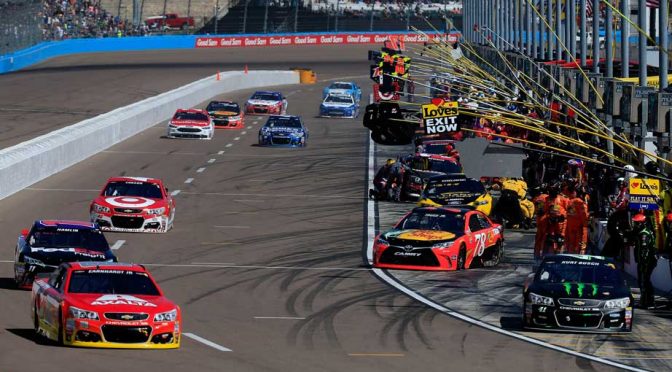
Through the first five races of 2015 there were a total of 137 pit road penalties, compared to 93 this year. However, the percentage of penalties on pit crews has actually increased.

During 2015, there were 36 penalties (26 percent) on pit crews at this point in the season, but this year there have been 28 (30 percent). That marks a four-percent increase of penalties on pit crews.

What’s being called this year compared to last season?

In 2015, there were 13 (over-the-wall-too-soon) penalties and 19 (tire-not-in-control) penalties. This year, there have been 15 and 11, respectively.

For more pit crew news, visit PitTalks.com.

RELATED: Watch live stream here | Inside look on official NASCAR inspection


From 8-11 a.m. ET on Wednesday, NASCAR.com will live stream the post-race inspection process.


The three-hour look takes you behind the scenes as NASCAR officials inspect NASCAR Sprint Cup Series vehicles following Sunday’s Auto Club 400 at Auto Club Speedway.


The cars being inspected this week are: the No. 48 Chevrolet of Jimmie Johnson (won Sunday’s race) and the No. 4 Chevrolet of Kevin Harvick (finished second in Sunday’s race). There was no random car selected this week.


For more information on what the inspection process entails, click here.

The off week could not have come at a better time for NASCAR Sprint Cup Series driver David Ragan.

The 30-year-old Georgia native and his wife, Jacquelyn, welcomed a baby girl into the world.

Meredith Leigh Ragan was born on Tuesday morning, March 22, at 2:45 a.m. ET at seven pounds, three ounces and 19 inches long, according to a spokesperson for the driver. Their first daughter, Julia, was born in June of 2014.


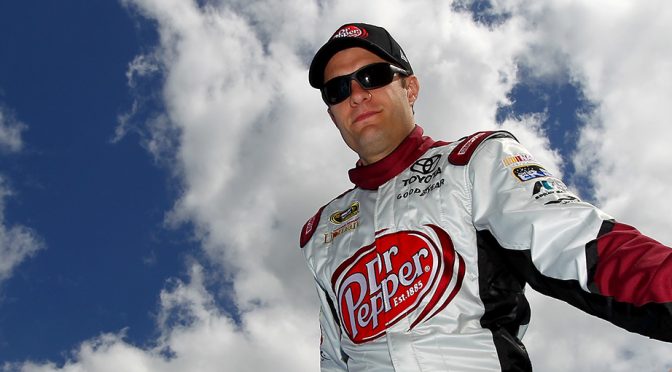
A second child is not the only change for Ragan this year. He is in his first season with BK Racing, driving the No. 23 Toyota for the two-car team. Last weekend’s race at Auto Club resulted in his best finish with the team in the season’s first five races, a 22nd-place finish.

https://www.nascar.com/drivers/jimmie-johnson/
2
Hendrick Motorsports

It only took "Six-Time" five races to pick up two wins, and, if his performance thus far is any indiaction, he certainly won’t be stopping at just two. Oh, and guess who the current all-time winner is at Martinsville? Bingo.


MORE: Johnson swoops in to win Fontana

https://www.nascar.com/drivers/kyle-busch/
-1
Joe Gibbs Racing

Here’s one driver who is certainly glad to be leaving California, but Martinsville might not offer him much respite. "Rowdy" has never won at "The Paperclip."


MORE: Tire issues plague Busch

One hundred and forty two laps led — en route to a second-place finish. At some point, all of these "close-but-no-cigar" finishes are going to get to Harvick, where he’ll either collapse or run off one heck of a winning streak. We’d bet on the latter.

https://www.nascar.com/drivers/denny-hamlin/
0
Joe Gibbs Racing

Coming off a great run at Auto Club, the Virginia native Hamlin is also the defending winner of the spring Martinsville race.

Logano certainly isn’t making many friends on the race track — but that’s not the point of racing. Good finishes and wins are, and he’ll pick up plenty of those in 2016.


MORE: Truex, Logano at odds at Fontana

Several top-notch drivers just seem to not have a handle on Martinsville, a difficult track. Count Edwards (zero wins, no top-10s since 2011) among them.

https://www.nascar.com/drivers/brad-keselowski/
1
Team Penske

Three of Keselowski’s last four races at Martinsville resulted in finishes of 38th, 31st and 32nd. The other, in last year’s spring race, was a runner-up result. 

https://www.nascar.com/drivers/dale-earnhardt-jr/
-1
Hendrick Motorsports

After a tough — but in the end, rewarding — effort at Auto Club, Earnhardt will look for his second win at Martinsville. You know what goes great with a grandfather clock? Another one.

https://www.nascar.com/drivers/chase-elliott/
4
Hendrick Motorsports

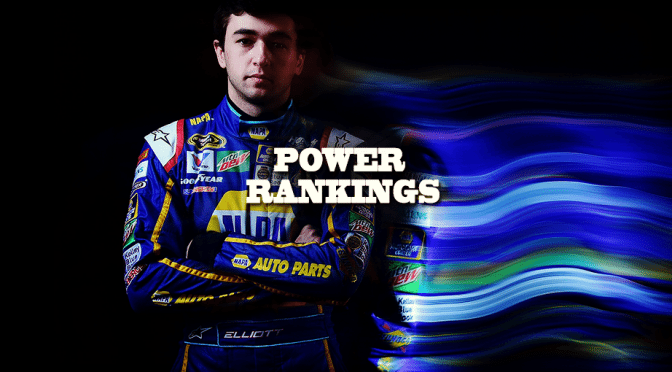
Without knowing Elliott’s age and rookie status, one might think he was a veteran running in the top three late at Auto Club. This won’t be the last time this season he’ll do that, and it could come as soon as Martinsville, where he’ll make his second Cup start. 

The No. 41 group never got things together at any point during Auto Club weekend, and seemed to lose any of the speed it had in the season’s first four races. That may continue at Martinsville, where the vet has only five top-10s — in 31 starts.


MORE: No. 41 slammed by Junior

Truex will certainly cross Joey Logano off his Christmas card list, but he has bigger things to worry about. The 78 team’s finishes have degraded in each race since losing the Daytona 500 by mere inches.


MORE: Logano has ‘no excuse’ for Truex incident

https://www.nascar.com/drivers/austin-dillon/
0
Richard Childress Racing

Auto Club’s pole-winner wound up having a race to forget, but Martinsville will be a good heat check for the young driver. He’s yet to finish in the top 10 there.

All eyes will be on the 20 car at Martinsville, with so many questions. Will he get back on track in 2016? Will he finally pick up his first grandfather clock? Wait — was there some other reason?


MORE: Takeaways — what’s wrong with Kenseth?

Blaney was on pace for a great finish at Auto Club before a tire issue derailed his race in the closing laps. None of his 23 career starts have come at Martinsville, so it’ll be interesting to see how he fares.

 
https://www.nascar.com/drivers/ricky-stenhouse-jr/
4
Roush Fenway Racing

With his Auto Club finish, Ricky matched his season totals in top-five finishes from each of his full-time Cup campaigns. We’re not entirely ready to say he is Chase-bound, but the improvement is undeniable.

Almirola has yet to find the top 10, but he did only have seven in his Chase year of 2014. Plus, his average finish is much better this year (17.0) compared to then (21.4).

We’re glad Larson is OK after a major blow with the wall at Auto Club, but he’s quickly building himself quite a hole in the standings.


MORE: Larson sidelined after hard hit

Easily Hendrick’s fourth-best car right now, Kahne and the No. 5 team just haven’t been able to put it together to the point that they have just one top 10 in their last nine races, dating back to last season.


MORE: Danica, Kahne wreck at Fontana

Jamie McMurray earned just his first top-10 of the season at Auto Club, but on the whole his finishes haven’t been terrible. If he can maintain finishes in the 15-20 range, he’ll most likely be Chase-bound for the second year in a row, but we’ll see.

Newman has zero top-10s this year. They aren’t the benchmark for everything — i.e. he was involved in a crash at Phoenix — but the No. 31 team isn’t turning any heads.

RELATED: Full race results | Updated series standings | Chase Grid

Below is a breakdown of how the full 43-car field fared at Auto Club Speedway:

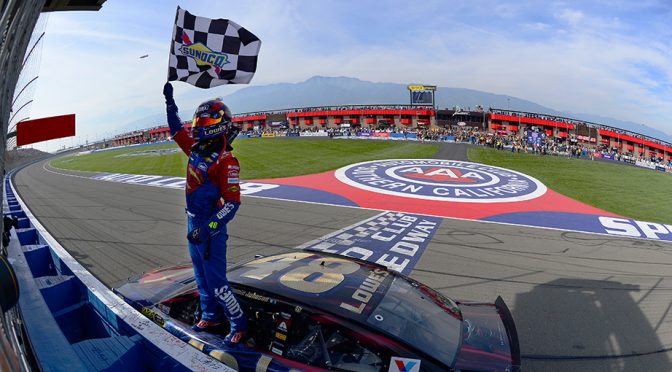
1. Jimmie Johnson, No. 48 Chevrolet, Hendrick Motorsports. “Superman” had his cape tugged on throughout the day, but when it mattered most, the six-time champion took the lead from Kevin Harvick late to earn his 77th career win and surpass Dale Earnhardt on the all-time win list. Grade: A+

2. Kevin Harvick, No. 4 Chevrolet, Stewart-Haas Racing. Despite an unscheduled stop on Lap 71, Harvick had the best car in the field and led a race-high 142 laps. As the race was pushed into overtime, Harvick could not keep “Superman” Jimmie Johnson at bay. Grade: A+

3. Denny Hamlin, No. 11 Toyota, Joe Gibbs Racing. Hamlin was hit with two pit road penalties, had issues with his radio, but overcame it all. As the race entered overtime, Hamlin restarted in the lead on the outside lane, but did not get a great push on the green. As the action spanned out, Hamlin slipped to third. Grade: A-

4. Joey Logano, No. 22 Ford, Team Penske. Logano led the way for Team Penske and quietly worked his way to the lead with 37 laps to go in the scheduled 200-lap event. He had a close call with Martin Truex Jr., causing damage to the No. 78 and leading to words with Truex after the race. Grade: A-

5. Ricky Stenhouse Jr., No. 17 Ford, Roush Fenway Racing. After being fast on Fridays and Saturdays throughout the first four weeks, Stenhouse and the crew finally put it together on Sunday. Stenhouse earned his first top-five finish in almost a year. Grade: A+

6. Chase Elliott, No. 24 Chevrolet, Hendrick Motorsports. Another impressive outing for the rookie driver, as he was a factor at the front of the field for the majority of the afternoon. Grade: A

7. Carl Edwards, No. 19 Toyota, Joe Gibbs Racing. Running toward the front of the field for much of the day, Edwards was hit with a pit road speeding penalty under the fourth caution. Edwards was a contender late in the going, but faded with worn tires in the final 10 laps. Grade: B+

8. AJ Allmendinger, No. 47 Chevrolet, JTG Daugherty Racing. ‘Dinger started 11th and was inside the top 10 early on, but had an unscheduled stop on Lap 72. Along with Harvick, this put him on a different sequence than the leaders. He recovered for his first top 10 of the season. Grade: A-

9. Brad Keselowski, No. 2 Ford, Team Penske. The Paul Wolfe-led team had a tire violation on the second caution of the day, but Keselowski rebounded to finish inside the top 10. Grade: B+

10. Jamie McMurray, No. 1 Chevrolet, Chip Ganassi Racing with Felix Sabates. McMurray had a solid weekend all around, starting 10th, finishing 10th and earning his best finish of the year. Grade: A

11. Dale Earnhardt Jr., No. 88 Chevrolet, Hendrick Motorsports. The “Dark Knight” ran into adversity early after contact with Kurt Busch. Earnhardt fell to 27th before the 15th lap of the race. He got back on the lead lap with the free pass on Lap 156 and worked his way almost back to the top 10. Grade: B+

12. Brian Scott, No. 44 Ford, Richard Petty Motorsports. The RPM driver had a strong day after recovering from going a lap down early. Scott and the team never gave up and knocked on the door of the top 10. Grade: B+

13. Brian Vickers, No. 14 Chevrolet, Stewart-Haas Racing. On Lap 25, Vickers caught the outside wall and was forced to pit road with damage. He was able to recover and earn a top-15 finish. Grade: B+

14. Ryan Newman, No. 31 Chevrolet, Richard Childress Racing. The crew worked on the handling of the No. 31 car throughout the race, but went the wrong direction on the final stop of the day after running in the top 10. Grade: B

15. Paul Menard, No. 27 Chevrolet, Richard Childress Racing. Menard was too fast exiting pit road on Lap 84 and went a lap down. He took the wave around to get back on the lead lap and climbed back to 15th. Grade: B-

16. Landon Cassill, No. 38 Ford, Front Row Motorsports. Earning his best finish of the season, Cassill worked his way up from the 34th starting spot and nearly finished inside the top 15. Grade: B+

17. Casey Mears, No. 13 Chevrolet, Germain Racing. A spark on the left rear tire caused a fire on the No. 13 during the fourth caution of the day, but no one was injured. The team recovered and earned its second top 20 of the season. Grade: B-

18. Clint Bowyer, No. 15 Chevrolet, HScott Motorsports. Running in the top 25, Bowyer had a flat left rear under the third yellow of the day. In addition, the team was over the wall too soon dropping him to 28th on the restart on Lap 115. Still, after a rough start to 2016, Bowyer earned his best finish of the year. Grade: C+

19. Matt Kenseth, No. 20 Toyota, Joe Gibbs Racing. One of the best cars in the field early, Kenseth was in the top five and contending for the lead by Lap 60. However, Kenseth’s day came apart on pit road with a speeding penalty and another penalty for an uncontrolled tire. Grade: C

20. Trevor Bayne, No. 6 Ford, Roush Fenway Racing. Bayne hit the wall a few times and rode the blue SAFER barrier to bring out the caution at Lap 108. Grade: C

21. Aric Almirola, No. 43 Ford, Richard Petty Motorsports. Almirola admitted Sunday’s finish was “disappointing,” as they fought the handling of the car much of the day. Grade: C

22. David Ragan, No. 23 Toyota, BK Racing. After starting 35th, Ragan went a lap down, but took the wave around to get back on the lead lap by the end of the day. Grade: C+

23. Regan Smith, No. 7 Chevrolet, Tommy Baldwin Racing. Smith narrowly avoided Danica Patrick’s wildly spinning car, which would have been disastrous for the Tommy Baldwin Racing driver. Grade: C

24. Austin Dillon, No. 3 Chevrolet, Richard Childress Racing. After starting on the pole and winning the XFINITY Series race in dramatic fashion, Dillon had a lackluster day in the No. 3 Chevrolet. Grade: C-

25. Kyle Busch, No. 18 Toyota, Joe Gibbs Racing. Coming off a rough finish to the day on Saturday, Busch hit pit road early on Lap 20 with a vibration after contact with the wall. He fell to 35th, one lap down, but recovered to contend for the win late. Chasing Harvick for the lead, Busch lost a tire and hit the outside wall on Lap 199 and heavily damaged the car. Grade: B-

26. Cole Whitt, No. 98 Chevrolet, Premium Motorsports. Whitt started 36th, but moved up throughout the day to earn the best finish of his season so far. Grade: C+

27. Matt DiBenedetto, No. 83 Toyota, BK Racing. A penalty for removing equipment brought DiBenedetto back to pit road under green. He later bounced the car off the wall. Grade: C-

28. Kasey Kahne, No. 5 Chevrolet, Hendrick Motorsports.  A melted bead on the left rear brought Kahne to pit road early and put him a lap down. He was also called to the NASCAR hauler after the race for his contact with Danica Patrick. Grade: F

29. Michael Annett, No. 46 Chevrolet, HScott Motorsports. Starting 38th, Annett took the wave around to get back on the lead lap and climbed to 29th by the time the checked flag flew. Grade: C

30. Kurt Busch, No. 41 Chevrolet, Stewart-Haas Racing. In a backup car after hitting the wall in practice, Busch suffered damage early after contact with Dale Jr., fell to 36th and pitted on Lap 17 with smoke in the car. A rough weekend for the No. 41 bunch. Grade: C

31. Michael McDowell, No. 95 Chevrolet, Circle Sport-Leavine Family Racing. McDowell finished one spot ahead of where he started and was the last car on the lead lap. Grade: C

32. Martin Truex Jr., No. 78 Toyota, Furniture Row Racing. Truex had one of the strongest cars all day, but as his tires went away with 50 laps to go he had a close call with Joey Logano, which put the No. 78 into the wall. Truex was also hit with a pit road speeding penalty on Lap 154. Grade: B-

33. Chris Buescher, No. 34 Ford, Front Row Motorsports. Buescher got into the wall early and damaged the right side of the car, which was disappointing after starting 16th. Grade: C-
 
34. Jeffrey Earnhardt, No. 32 Ford, Go Fas Racing. Earnhardt started shotgun on the field and finished five laps down, but still made gains on the day. Grade: C-

35. Ryan Blaney, No. 21 Ford, Wood Brothers Racing. After an appearance on “American Idol,” Blaney ran in the top 10 early, but faded into the top 20 in the closing stages of the race. He caught the wall with late and ended the West Coast swing on a sour note. Grade: C-

36. Josh Wise, No. 30 Chevrolet, The Motorsports Group. Wise gained one spot on the day, but that was in large part to the troubles of others ahead of him. Grade: D.

37. Greg Biffle, No. 16 Ford, Roush Fenway Racing. With less than 70 laps to go, the motor began to go sour on Biffle’s car. He brought the car to the garage with just over 50 laps to go. Grade: D

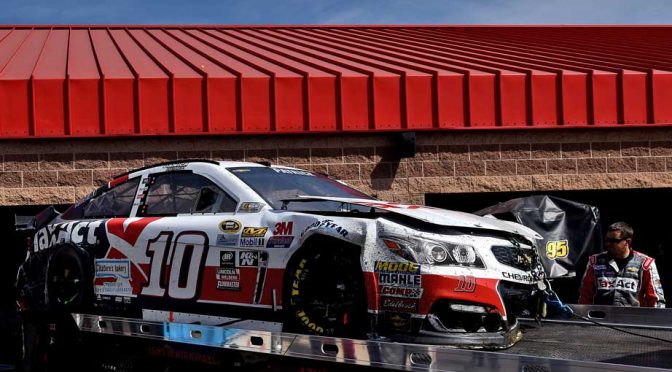
38. Danica Patrick, No. 10 Chevrolet, Stewart-Haas Racing. Patrick was running 18th when she was hit from the right rear by Kasey Kahne. Her car made hard contact with the outside wall, bringing out the fourth caution of the day. Grade: B

39. Kyle Larson, No 42 Chevrolet, Chip Ganassi Racing with Felix Sabates. After struggling with the handling, the left rear tire went down and Larson took a wild ride that ended in a head-on hit hard into the inside wall, lifting the car into the air. Thankfully for the SAFER barrier, Larson walked away unharmed. Grade: C

MORE: Larson goes on wild ride
RELATED: Full race results | See all the winners of 2016

How many more wins? How many more championships? Jimmie Johnson admits he doesn’t know.
 
Who can know such a thing?
 
Who can know when there will be no more dominating performances, no more late-race charges, or the occasional last-lap surprise?
 
Who can possibly know?
 
As NASCAR’s premier series settles in for a one-week hiatus before resuming in early April, Johnson hasn’t a clue as to what lies ahead, only that he is prepared to meet it head on.
 
The Hendrick Motorsports driver won yet again on Sunday, victory No. 77 coming in the Auto Club 400 at Auto Club Speedway.
 
The number, like most everything else Johnson does, is notable. He is no longer tied with the legendary Dale Earnhardt in career wins, but now ahead of the seven-time champion in that particular category. He no longer shares seventh place on the series’ all-time win list, but is sole owner of the position.
 
Five of the six ahead of him in career wins are members of the NASCAR Hall of Fame, and a sixth, former teammate Jeff Gordon, will be an overwhelming selection when the time comes.
 
Johnson, father of two, turns 41 later this year. He has been competing full-time in NASCAR’s Sprint Cup Series since 2002 and he has never, ever won fewer than two races in a single season. Sunday’s victory was his second of 2016 and the season is only five races old. That he will win again before this season’s completed isn’t guaranteed, but it’s extremely likely.
 
Cale Yarborough sits just ahead with 83 career victories; then Darrell Waltrip and Bobby Allison (84). Gordon walked away with 93 checkered flags, while only David Pearson (105) and Richard Petty (200) ended their respective careers with triple-digit wins.

RELATED: Where Johnson stands in NASCAR history
 
Just how far can Johnson go?
 
“I feel like physically and mentally I’m the best that I’ve ever been in my career,” Johnson said Sunday evening. “I’m in a great space and really enjoying going to the race shop, going to the race track, working with my team.”
 
And that, he said, “tells me it makes me want to stick around and do this for a lot of years.”
 
Such an outlook might not strike fear into the competition, but it certainly should make them sit up and take note.
 
Physically, he’s in the best shape of his life — he said he biked some 200 miles during the days leading up to Sunday’s race and that’s only part of the routine that enables him to compete at such a high level each and every weekend.
 
Other factors – the car and crew chief and pit crew – are just as important, and when they mesh just so, as they have done so often and for so long, trips to Victory Lane often follow.
 
Chad Knaus, crew chief for 75 of Johnson’s 77 victories, doesn’t know how long his driver can continue knocking off wins or how far up the list he can climb. It’s counterproductive to consider such things, Knaus said.
 
“If you start shooting (for) goals like that, you can’t do it,” the veteran crew chief said. “The thing you have to do, from my standpoint, is we have to worry about going to Martinsville and trying to win that race first. We have to worry about practicing well, qualifying well, winning that race. Then we have to do the same thing going to Texas, then so on and so forth throughout the rest of the season.”
 
Case in point: Gordon was 30 when he won his fourth championship in 2001. That success spawned the “Drive for Five” slogan.
 
While Gordon continued to win races, 35 in fact, his championship total never changed. He ended his racing career last season still a four-time champion.
 
Johnson’s most recent title came in 2013. There may be more in his future. There may not. Who can know?
 
“There are no guarantees about when you’re going to win and have success,” Johnson acknowledged. “I’ve been very, very fortunate to win 77 of these things, which blows my mind.
 
“It’s easy to look at trends and say we win X (races) a year, but at some point that stops; that stops for everybody. I don’t know when that point is for me. I certainly hope it’s not soon.”

RELATED: Full race results | Recap the race in three minutes

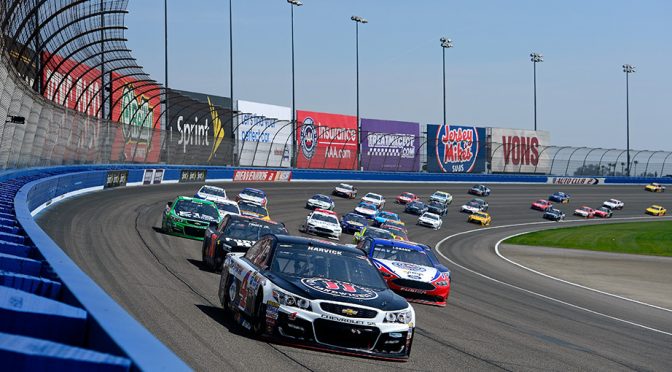
FONTANA, Calif. — It was a race that saw one driver lead nearly three-fourths of the laps run, yet Sunday’s Auto Club 400 provided some of the most entertaining racing of the 2016 season for NASCAR’s Sprint Cup Series.
 
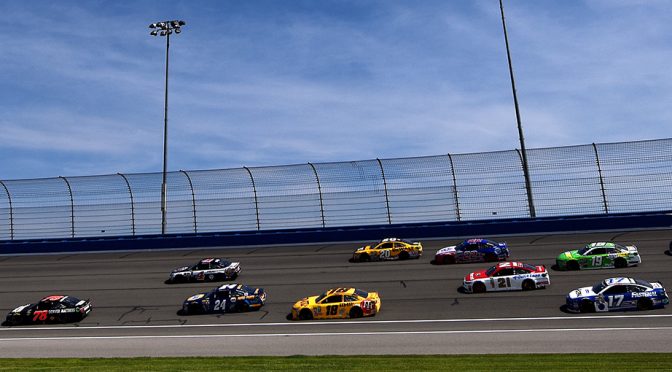
Even with the dominant performance of Kevin Harvick, who led 142 of the race’s 205-lap total, there were green-flag passes for the lead and multi-car battles for position throughout the field.
 
In previous years, restarts had often provided the most excitement in the series, but once the field settled in, green-flag passing, particularly up front, had often been more difficult. Now, armed with a low-downforce aerodynamic package and forced to manage tires that wear appreciably during the course of a run, drivers find themselves having much more of an impact.
 
“Great racing; low downforce is obviously the way to go,” said Joe Gibbs Racing driver Denny Hamlin on the heels of his third-place finish Sunday. “This package is obviously something that we can build on and I can’t wait until we take another chunk of downforce out of these things.
 
“Really you’re going to see some great racing. I love what we’ve seen so far and hopefully we’re going to build on it.”
 
Hamlin isn’t the only driver to raise the subject of removing additional downforce. Others also say they believe taking more off the cars would continue to improve the product.
 
Not so fast says Steve O’Donnell, NASCAR’s Executive Vice President and Chief Racing Development Officer.
 
“This is our rules package,” O’Donnell said following Sunday’s race at Auto Club Speedway. “Some teams do say that (and) some teams like where it is today. For us, we’re only five races in so we’re satisfied with where the rules package is today; you’ll see us continue that throughout the year and as we get toward looking at 2017 and look at any levers we want to pull, we’ll do that together with everyone. But for now this is where we’re at and we’ll keep tweaking on it and allowing Goodyear to come up with that tire each and every race will be big.”
 
Matching up the tires to the rules package has been crucial. Tire failures did crop up during Sunday’s race and at least one driver, Kyle Larson (Chip Ganassi Racing with Felix Sabates), suffered a hard crash when the left-rear tire on his No. 42 Chevrolet failed. Larson was not injured.

RELATED: Larson goes for wild ride | Frame-by-frame of incident
 
“Both the 42 (of Larson) and the 34 (Chris Buescher) were left rears that were over-stressed for whatever reason, whether air pressure or camber or both,” Greg Stucker, Goodyear’s director of racing, said Sunday. “We’ve seen signs of it all through the day up and down pit road but I think people are managing it when they see it. Every crew chief gets down off the box and looks at left-side tires; they know what they can do and what they can’t, I think.”
 
There were no surprises in the area of tire wear, according to Stucker.

WATCH: Stucker explains how to read a tire

“You know where they were during practice; we expected that they were going to be pushing it,” he said. “A couple of guys hit pit road and thought they might have had an issue and they didn’t. Might have been some early signs but think everyone was just being cautious.”
 
The rules package and tire builds haven’t been the only reasons for NASCAR’s most recent competitive turn. Each track where the package has been utilized has been unique — Auto Club is a wide, worn 2-mile layout; a week ago the series raced on the 1-mile of Phoenix International Raceway. It debuted at Atlanta, a rough, tough 1.5-mile track before moving to Las Vegas, another mile-and-a-half but one not nearly so worn.
 
In the meantime, teams have worked to regain the lost downforce, using whatever means available.
 
“Our job as teams is to build the best race car we possibly can,” said Chad Knaus, crew chief for Sunday’s race-winning driver Jimmie Johnson. “We want to build the most downforce, we want to build the most mechanical grip (and) we want to build the most horsepower. He who does that wins, period. That’s how it works, right?
 
“We have to try to do that on all levels. … We’re going to do that to the best of our ability 100 percent.”
 
It’s been an impressive start for the series, competitively speaking, with four different winners in five races. Two races featured razor-thin .010-second winning margins (although one came in the season-opening Daytona 500 where the low downforce package was not used).
 
No one is giddy, but most are optimistic about what the future holds.
 
“I think overall, when we look at the start of the season, we said we would kind of get through the West Coast swing and take a look at it,” O’Donnell said. “But we still feel like … certainly it’s going in the right direction.”

MORE: About the Women In NASCAR series | Meet the Women in NASCAR
RELATED: Lesa France Kennedy: Advancing NASCAR with her own vision

Quite literally as long as there has been NASCAR, there have been women leading the way in various outlets in roles both formal and behind and scenes.  Their leadership has affected the sport and benefitted participants on a number of levels.


These women represent the executive level of the sport, where they have created strong, necessary initiatives, served as valuable liaisons and led the way for NASCAR’s presence as a major American sport.

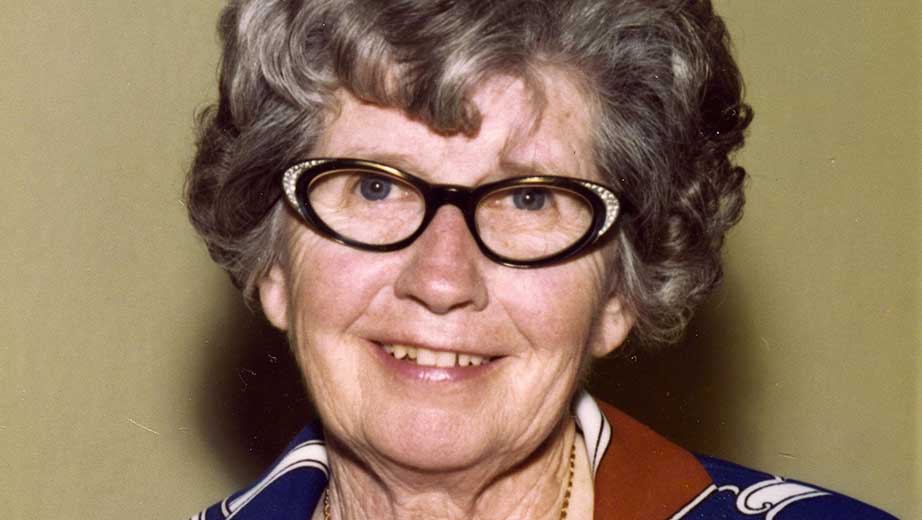
Anne B. France


Clearly a supporter of NASCAR from the very beginning, France worked alongside her husband and NASCAR founder Bill France Sr. She handled the financial obligations and paperwork while her husband first organized and promoted the sport.

In fact, Mrs. France was the first secretary and treasurer of NASCAR and later held the same positions with International Speedway Corporation. Additionally she ran the Daytona International Speedway ticket office and worked tirelessly at these important endeavors right up until her death in 1992.

Betty Jane France


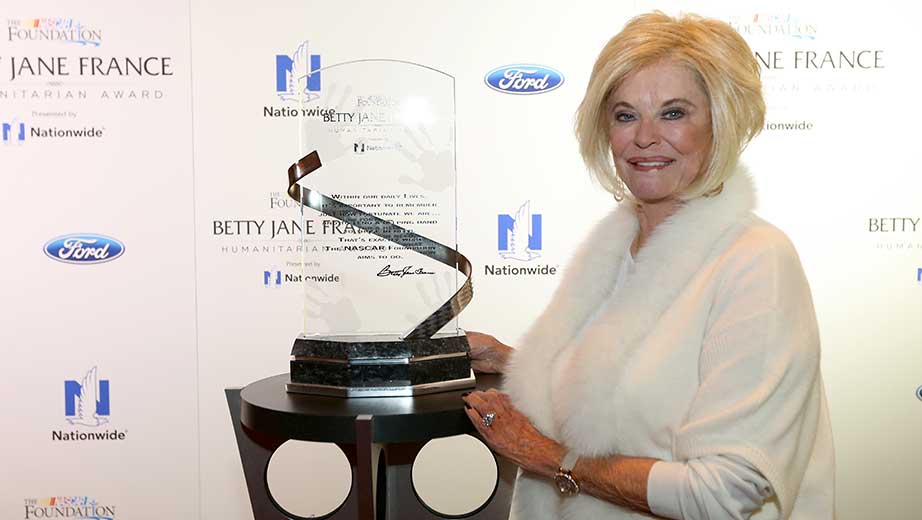
So much of modern NASCAR’s charitable efforts are because of the hard work and dedication to the sport from Betty Jane France, the widow of the late Bill France Jr.

Her generous spirit and commitment to raising money for healthcare facilities – particularly for children – has set the standard for generosity and can-do in the sport.


She has received multiple awards and recognition for her great work including the 2003 Halifax Medical Center Foundation’s Spirit Award. And she is the chairwoman for The NASCAR Foundation, which was founded in 2004. The Betty Jane France Humanitarian Award was created in her honor in 2011 and each year she formally announces the winner, which is another wonderful volunteer following in her generous spirit.


MORE: The NASCAR Foundation | Betty Jane France Humanitarian Award

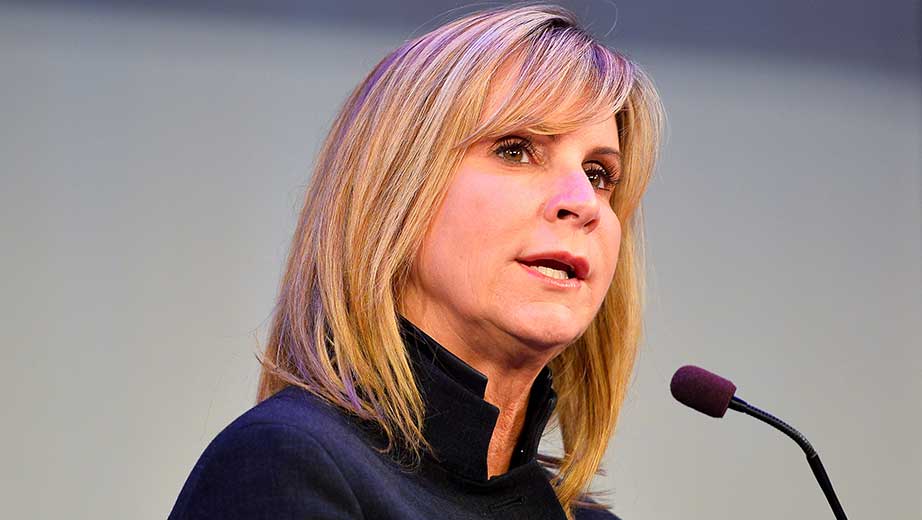
Jill Gregory


A recognizable and inspiring woman, Jill Gregory currently leads the NASCAR Marketing and Industry Services sectors – overseeing some of the sport’s most vital initiatives.


Her experience in all facets of NASCAR make her a valuable asset and an inspiration to so many. She has been the driving force behind the sport’s successful and varied marketing campaigns and was a key member of the group that developed the new Chase for the NASCAR Sprint Cup format in 2014. 

RELATED: Photos of women in NASCAR | About the series

MORE: Women have been leaders in NASCAR since the beginning


DAYTONA BEACH, Fla. — The newly christened, mightily impressive stadium-like presence of Daytona International Speedway across the street seemed to gleam in the floor-to-ceiling window that dominates Lesa France Kennedy’s office.

The sun shone brightly this day as lines of cars on the road below made their way into the race track in a slow parade-like formation to enjoy 2016 NASCAR Speedweeks. It was a fitting backdrop for a conversation with Kennedy, the International Speedway Corporation CEO and the executive ultimately in charge of — among other things — the $400 million Daytona Rising project that is a cornerstone of modernity, vision and fan luxury in the sport started by her grandfather Bill France Sr., fostered by her father Bill Jr. and now led by her uncle Jim, brother Brian and herself.


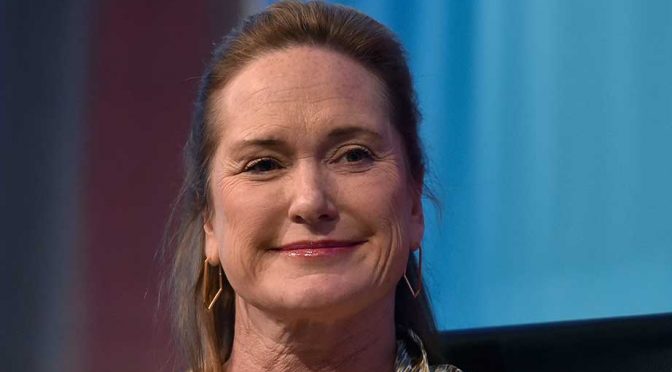
Kennedy, 54, is the vice chairperson of both the ISC and NASCAR board of directors and in December, she was recognized as “The Most Powerful Woman in Sports” for 2015 by Forbes Magazine. She is also undoubtedly the single most influential woman in NASCAR.

RELATED: Kennedy earns honor from Forbes


And while she has excelled in what is traditionally a very male world, Kennedy doesn’t classify herself as being the exception to the rule. She grew up in the family business and has ultimately helped guide and maintain the company’s high-profile existence.


“First of all, I was surprised,” a humble Kennedy said of the Forbes recognition. “But I think it really plays to how NASCAR has been elevated. I looked at it as recognition of how NASCAR is doing and also the project with Daytona Rising. It’s pretty special.”

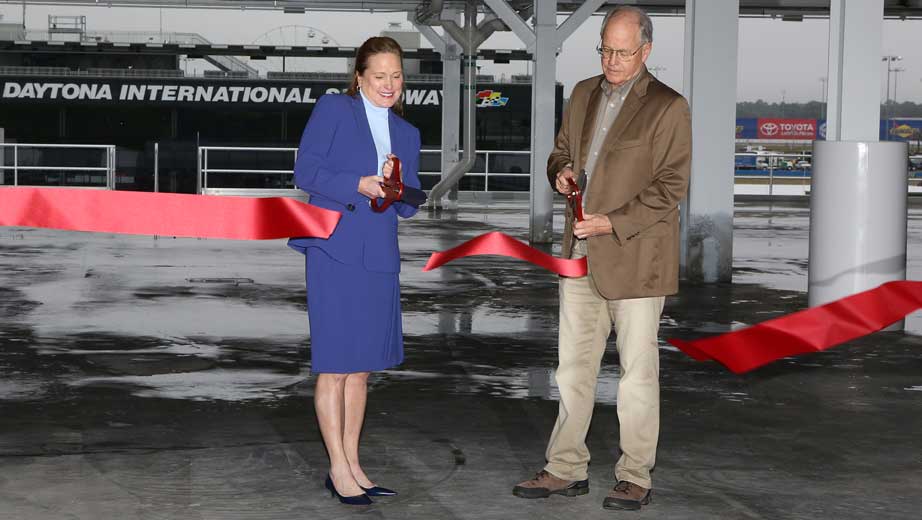
Lesa France Kennedy and Jim France cut the ceremonial ribbon at Daytona International Speedway in January.


Just as the project she is overseeing is unique, so is Kennedy among the sports world in general. But yet it feels more like second nature to her.


In this position she has the unique and invaluable background of running one of the family businesses, which also happens to be a world-renowned contribution in sports. And her ability to plan and predict has been a cherished contribution.


“Having worked with Lesa on Daytona was not new,” Daytona International Speedway President Joie Chitwood III said of the recently completed Daytona project. “Lesa was part of the ownership group and management committee that I reported to when we built Chicagoland Speedway 15 years ago. So even back then, Lesa’s vision, her attention to the fan experience, meant driving this sport forward and introducing NASCAR to a new market like Chicago and then 15 years later renovating and re-imagine fan experience and relevance of Daytona.


“Obviously she sees the big picture and that has not changed in the 15 years I’ve known her.”


RELATED: Daytona rises even higher from beach sand | Daytona through the years


Kennedy’s role as visionary is evident. The plans weren’t necessarily to go into the “family business.” But after earning two degrees (economics and psychology) at Duke University — and spending many summers working in the sport as a teenager selling tickets and concessions — Kennedy knew her passion and commitment remained in Daytona Beach. This sport is in her blood.


“When I went up to school, I was really open-minded, had some different ideas and really wanted to explore,” she said. “After college, I talked about getting back into the family business, talked to my parents and talked to my grandmother and it was a great opportunity so I came back and haven’t really looked back since then.


“I love travel and I love showing people new experiences so I could have seen something in that realm, but at the same time, I feel like that’s what we are doing here. One of my favorite things to do is show people for the very first time if they haven’t seen a NASCAR event to show them what it’s like and if they haven’t had that experience when you do, it’s just so rewarding. Nine times out of 10 they come back and that’s always a very rewarding moment for me.”


Kennedy’s uncle, NASCAR Vice Chairman and ISC Chairman of the Board Jim France is not the least bit surprised by her success. They work together daily, and his high expectations of Kennedy have been exceeded along the way.  They are very much in sync and he takes particular pride in Kennedy’s ability to correctly anticipate pursuits.


“She’s got a good vision, like my dad had,” Jim France said. “Her commitment to take Daytona International Speedway to the next level and the future with our new stadium facility is a testament to her.


“She was the one who pushed that whole project to come together.


“She worked for my mom in the ticket department early on when she was in high school,” he added with a smile, “She and Brian have always had a little ‘friendly’ competition going on and it’s worked for both.”

RELATED: Ribbon-cutting ushers in new era for Daytona


Not too surprisingly, family has been a primary and sustained element in Kennedy’s life.


“I think Brian would tell you this, too, my dad made us, I suppose, walk the walk,” she said smiling, “He was supportive but a lot of times if you were having challenges at work and went to him, he would be like ‘Figure it out.’


“Behind the scenes he was very supportive, but at the same time, he told us, ‘go make your case.’ He wouldn’t solve a problem but he’d be there a sounding board and maybe give you some suggestions and ask if you thought about it a different way, but he really left it in your hands to solve it.”


While she profusely acknowledges the guidance of her father and uncle, she is also deeply grateful for the influence of her mother and grandmother. She has found the balance of all the strong personalities and drive to be a source of inspiration.


“You also have to give credit where it’s due and both my grandmother and my mom were trailblazers,” Kennedy explained. “And I think they paved a really nice path, too, and were really encouraging and enthusiastic about it. I was always very intrigued by what my dad was doing, too, so I was I think very fortunate to have the balance of both. It was an interesting time, but I love the way it’s evolved.”


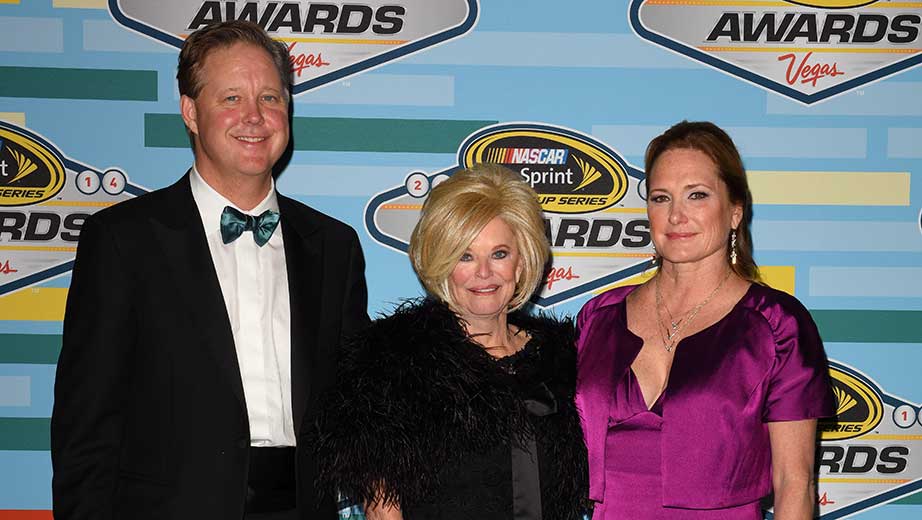
Her mother Betty Jane France continues to contribute to the sport as the founder and chairwoman emeritus of The NASCAR Foundation and having that strong contributory area as a key element of the company has been important.


“I think my mom had a very different perspective and was a perfect complement to what my dad was doing,” Kennedy said. “You know he saw it from the business aspect and what it would take as far as operations and the next level in terms of elevating the sport.


“My mom saw a whole different side of it and has a unique ability to read people. She’s really the epitome of Southern hospitality as well. And I think that was a really inviting atmosphere for newcomers to the sport and then as we moved along, she had a great ability with relationships and bringing people in and making them feel comfortable. So between the two of them, it was a perfect match, both personally but for the sport as well.”

RELATED: Learn more about the Betty Jane France Humanitarian Award


The evolution has also included Kennedy’s role as mother. Her son, Ben Kennedy , is a full-time competitor in the NASCAR Camping World Truck Series — and started from the pole position in his first race at the family’s Daytona track.


Following in the great tradition of service that her parents began, Kennedy ensured that her child also spent time learning the family business — Ben had to park cars, sell tickets and hot dogs and now, he is learning the business of NASCAR in a most unique way by competing in it.


“First of all, my husband and I had a pretty good balance with all that,” Kennedy recalled. “We would have some help as well, but Ben traveled a lot and became a race fan at an early age. The summers we were usually at a race track on the weekends and the holidays. We had the opportunity to take him to a lot of places with us. And over time, he’s had the ability to evolve and his own race experiences with being a driver. He’s having a good time with it.


“And it truly is a family sport for us. What I really enjoy, though, is the part of the business he is learning is so different from where I started and was working on. He’s given me a different perspective. Just watching him put his team together and some of the challenges he is facing have given me a deeper appreciation of what all goes into the competition portion of the sport.”


While still clearly preferring to speak about her company’s achievements instead of her personal recognition, there is a definite sense that Kennedy is proud to have — like her family before her — set an example, to have been a visionary.

After a weekend full of passionate moments at Auto Club Speedway, this week’s NASCAR competition meeting might run a little longer than most.
 
NASCAR Executive Vice President and Chief Racing Development Officer Steve O’Donnell indicated that officials at the NASCAR Research & Development Center would evaluate a handful of on- and off-track incidents this week. O’Donnell’s remarks came Monday morning on one of his regular appearances on SiriusXM NASCAR Radio’s “Morning Drive” program with hosts Mike Bagley and Pete Pistone.
 
Among the ground that O’Donnell said would be covered was a high-profile incident with Kasey Kahne and Danica Patrick. Shortly past the halfway point of Sunday’s Auto Club 400, the two drivers made contact with Kahne’s car hooking Patrick into a severe, nose-first crash on the 2-mile track’s frontstretch.

Though Kahne was apologetic in his radio communications and post-race comments, NASCAR mandated that Kahne and crew chief Keith Rodden visit the NASCAR Sprint Cup Series hauler for a post-race consultation. Monday, O’Donnell said the reason for the summons was to head off any escalating tensions between the two drivers, alluding to last year’s blow-up with Matt Kenseth and Joey Logano and the desire to prevent a repeat.
 
“I think what we learned really from last year is where there’s an incident, we look at something that could’ve potentially been avoidable, we’re going to bring folks in,” O’Donnell told SiriusXM. “There was obviously some emotion after the incident and some displeasure from Danica, so we wanted to bring in Kasey and find out what his perspective was. …
 
“From our perspective, it was just getting his viewpoint of the accident, what happened. It was a good discussion. We’ll certainly follow up with both of them to make sure everything’s OK heading into Martinsville, but just part of the weekly dialogue we want to have with the competitors and an incident where we want to raise a few questions and make sure we’re on the same page with the competitors.”
 
O’Donnell also said NASCAR officials would review Patrick’s actions after she emerged from her crumpled Stewart-Haas Racing No. 10 Chevrolet. After exiting the heap, Patrick diverted from her path to the ambulance and walked toward the racing surface to make a gesture of exasperation toward Kahne’s passing car.
 
In the on-track incident procedure section (10.4.2.1) of the 2016 NASCAR Rule Book, drivers are instructed to proceed to the ambulance or safety vehicle “as directed by safety personnel or a NASCAR Official.” The section also states that “At no time should a driver or crew member(s) approach any portion of the racing surface or apron” or another moving vehicle.
 
“That’s one of the things we will be reviewing is what happened there, and that’s part of having all the videotape that we want to take some time,” O’Donnell said. “The race, as you guys know, there’s a lot going on during a race and coming back from the West Coast, we’ve got to take the time to evaluate all that.”
 
The Kahne-Patrick conflict wasn’t the only altercation that will be under review. Joey Logano’s tight battle with Martin Truex Jr. at the race’s three-quarter pole yielded a brush with the wall for Truex while Logano pressed on for a top-five finish.
 
Logano and Truex had a pointed but civil conversation on pit road after the race, but Cole Pearn, Truex’s crew chief with the Furniture Row Racing No. 78 team, blasted Logano with a scathing personal insult on Twitter in the aftermath. While O’Donnell applauded the spirit that drivers and crew typically share on social media, he said there were limits in terms of decency.
 
“We certainly want to be liberal in terms of allowing drivers, competitors to express their opinion, but there is absolutely a line,” O’Donnell said. “We’ve got that set out in our behavioral guidelines. I saw that as well and it’s another one we’re going to have to take a look at. There was an apology sent, which I thought was necessary, and that is an area that everyone in the garage knows there’s a line you can’t cross.
 
“Each and every week, we look at that but for the most part, we want to be as liberal as possible because we like the emotion, first of all we like the interaction with race fans, which is mostly positive. I think our drivers and industry do a tremendous job on social media, but everything has to be reviewed and that’s part of what we have to do as a sport.”
 
O’Donnell said there was plenty to review on the NASCAR XFINITY Series side as well, most of it the result of a wild final lap to Saturday’s 300-miler. With Kyle Busch poised to pounce on his fourth consecutive XFINITY win, his No. 18 ride frayed a tire and dropped debris on the track. He kept chugging at reduced pace toward the finish, but no caution flag emerged. Instead of freezing the field and potentially handing him the victory, Busch was eventually passed by race winner Austin Dillon within sight of the checkered flag.
 
O’Donnell defended the decision to keep the race under green-flag conditions, saying, “we’ve discussed this a number of times on the show what our goal is with any race is, if we can finish under green, we’re going to make every effort to do that and if we have to react in terms of a driver needing some immediate safety attention or equipment dispatched, we’ll also not hesitate to throw the caution.”
 
The final-lap scramble also prompted the hypothetical question of whether Busch would be given the victory if his car’s trouble was the reason for a yellow flag.
 
“Great question and it would depend on the reason for the caution,” O’Donnell said. “In this case, if it was for debris on the race track and Kyle was able to maintain pace and was leading at the time, yeah he would be declared the race winner. Where he wouldn’t is if he was the cause of the caution in terms of his vehicle and we’ve got to cause it, but if it’s for debris on the track, which is a tough call to make and maintain pace, he would’ve been declared the winner.”
 
Busch finished second, then hastily left the track without comment to the media, but not before issuing a sarcastic blast toward NASCAR officiating over his team radio. O’Donnell said this, too, would be evaluated.

RELATED: NASCAR to review Busch’s comments | Hear what he said post-race
 
“First, I’ll say I applaud Kyle’s passion because at the end of the day, the guy wants to win and he’s not happy when he doesn’t, so you always want to see that,” O’Donnell said. “Little disappointed, sure, in terms of the post-race comments and certainly the media obligations. Yeah, we’ll review everything. That’s part of what we have to do. We’ll look at video of any incident, audio and certainly post-race. We’ll do that as we get back from the West Coast and meet this week and see what — if anything — we’ve got to do.”
 
On a more positive note, O’Donnell said the passionate moments and compelling racing — helped in part by NASCAR’s reduced-downforce rules package for 2016 and the track’s well-work surface — have helped make Auto Club a destination race on the Sprint Cup schedule. The event also provided a successful capper to the three-race West Coast Swing as the series heads into a race idle weekend for the Easter holiday.
 
“We used to look going into some intermediate tracks, even California, you look at a couple years ago heading into Auto Club Speedway the Monday prior and there wouldn’t be anticipation. And I think that storyline has really changed,” O’Donnell said. “People look forward to going to that race. With that is higher expectations, but that’s OK. I think coming out of the race, you’re seeing emotion like you only saw coming out of really a short track and that’s the ultimate goal is to produce more moments during a race, have the passion, you’re seeing all with the build-up all the way to the Chase.
 
“Every race matters, every moment matters, so a lot of passion from the drivers and certainly a lot of momentum as we head into Martinsville and the off week this weekend.”

RELATED: Low downforce, tire wear lead to entertaining race at Fontana