RELATED: NASCAR reveals race start times for 2016 season


PRINTABLE SCHEDULES: Cup | NXS | NCWTS


NASCAR released the start times and TV/radio schedule for the 2016 season in all three national series on Tuesday, the culmination of a large-scale cooperative effort between the sanctioning body and its broadcast partners.
 
The release comes with relatively few alterations from 2015. The NASCAR Sprint Cup and XFINITY Series schedules remain split between FOX and its family of networks from February through June, with NBC and its affiliates taking over from July to season’s end. The Camping World Truck Series will be broadcast almost exclusively on FOX Sports 1, with the annual race at Talladega Superspeedway again airing on FOX.
 
The broadcast schedule deviates in August because of NBC’s coverage of the Summer Olympics in Rio de Janeiro. Watkins Glen’s Sprint Cup race Aug. 7 is set to shift to USA Network, with the previous day’s XFINITY event moving to CNBC. Two other XFINITY races (Mid-Ohio, Bristol) will also transfer to USA Network.
 
Among the other highlights:
 
— The season-opening Daytona 500 (Feb. 21, 1 p.m. ET, FOX, MRN, SiriusXM) keeps the same start time as last year for The Great American Race.
 
— The season-ending Ford Ecoboost 400 Sprint Cup finale on Nov. 20 will move its start time up a half-hour to 2:30 p.m. ET. The 300-mile XFINITY finale the previous day will start 45 minutes later, at 3:30 p.m. ET.
 
Richmond International Raceway will switch to a daytime event for its April 23-24 race weekend. The Saturday XFINITY event will start at 12:30 p.m. ET, and the Sunday Sprint Cup race will start at 1 p.m. ET.
 
— The Oct. 1 race for the Camping World Truck Series at Las Vegas Motor Speedway moves up 90 minutes from last year to 8:30 p.m. ET.
 
Atlanta Motor Speedway has rearranged the start times for its Feb. 27 XFINITY/Truck doubleheader. The XFINITY race is scheduled to start at 1:30 p.m. ET, a half-hour earlier than 2015. The Camping World Truck Series event at the 1.54-mile track will follow at 4:30 p.m. ET, an hour earlier than last year’s start.

RELATED: See full slate of schedule times for 2016 season

RELATED: NASCAR community reacts to Barney Hall’s passing

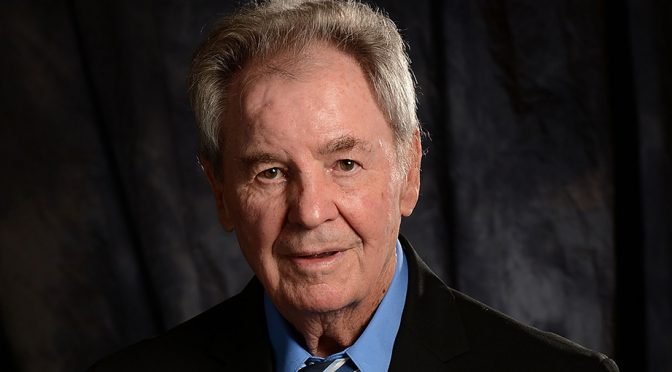
Barney Hall, whose soothing voice delivered stock-car racing broadcasts over radio airwaves for 54 years, died Tuesday from complications after a recent medical operation. He was 83.

Hall was a fixture with Motor Racing Network (MRN) since its inception in 1970. His longevity and connection to racing fans with his unique brand of storytelling earned Hall a place in the NASCAR Hall of Fame in 2012, when the shrine created the annual Squier-Hall Award for NASCAR Media Excellence, honoring Hall alongside legendary TV broadcaster Ken Squier.

MORE: The story behind the Squier-Hall Award | Squier, Hall recognized

 
“I learned a long time ago, listen to the fans,” Hall told NASCAR.com in the days before his final broadcast in 2014. “If you do what makes them happy, you’re pretty much OK. If not, ain’t nobody happy.”
 
NASCAR Chairman and CEO Brian France said of Hall following news of his passing: “The entire NASCAR family extends its condolences to the family, friends and fans of Barney Hall, a NASCAR broadcasting giant for more than 50 years. Barney’s impeccable delivery and incredible storytelling skills left an indelible mark on the sport that he so clearly loved. His legacy remains through an honor that rightly carries his name — the Squier-Hall Award for NASCAR Media Excellence. It will remain a constant reminder of the skill and passion that Barney brought to his work.”

Seven-time NASCAR champion Richard Petty said this about Hall: “He defined calling the races over the radio and he was the best at what he did in his field for a long, long time. He was there loudly during some of our greatest times and there silently during others. He was our voice and our friend. He will be missed.
 
“Our thoughts and prayers are with Barney and his family at this time.” 

Hall’s radio career began during his four years of active duty in the United States Navy. After his military service, he returned to his hometown of Elkin, North Carolina, as a disc jockey for local station WIFM.

RELATED: Barney Hall through the years

 
Hall transitioned to calling on-track action, joining his first broadcast of the Daytona 500 in 1960 and was the first public address announcer at Bristol Motor Speedway when it opened one year later.
 
Hall began his career with MRN as a reporter calling the action from the turns. As NASCAR grew from a regional sport to having a wider national reach, Hall moved to the booth and his recognizable voice resonated with a larger audience.
 
“Whether you met him or not, you felt like you knew him,” said Winston Kelley, executive director of the NASCAR Hall of Fame and a colleague of Hall’s at MRN. “His easy, conversational delivery made you feel like you were listening to one of your closest friends or relatives tell you a story — the story of the very NASCAR race he was describing. He could paint a picture that would make Picasso or Rembrandt proud and tell a story that would awe Hemingway or Twain.
 
“He was not just a trusted voice to listeners and race fans, he became what many believe is the most trusted journalist in NASCAR by the sport’s competitors for decades.”
 
Hall made his final broadcast in July 2014 at Daytona International Speedway, calling Aric Almirola‘s first NASCAR Sprint Cup Series victory in the track’s rain-shortened summer race. He received a standing ovation in the pre-race drivers’ and crew chiefs’ meeting.
 
“To have been in this stuff for 54 years, I’ve gotten to know everybody at one time or another,” said Hall, who received the Bill France Award of Excellence in 2007. “It’s a pretty good feeling to go in that garage and hear somebody at some point go, ‘Hey, Barney Hall, how you doing?’ That makes you feel good. It really, really does.”
 
Hall is survived by his companion of 35 years, Karen Carrier, who was by Hall’s side as he passed away.

Editor’s note: This story was published in 2016.


TULSA, Okla. — Justin Allgaier drove his race car to his hauler after being eliminated at the Chili Bowl one Saturday years ago and was met by his questioning father. His dad wanted to know what had happened out on the race track. Justin had driven a conservative race, never challenging for position, and allowing, it appeared, other cars to pass him without putting up much of a fight. He had missed transferring to the next race by one spot. With even a little bit of aggression, Justin would have certainly finished higher and gone on to the next race. What, his dad wanted to know, had happened?

Still in the cockpit, Justin explained to his dad that the steering was out. To prove it, he spun the wheel. The tires stayed locked, pointed straight ahead. His dad was baffled then, and he remains so today. The question changed from why had Justin driven such a timid race to how had he driven at all?

The Allgaiers set up their midget car to drive in a circle if he holds the wheel straight. They hang the body closer to the left-side tires and use smaller tires on the left than on the right — a configuration for the Chili Bowl’s quarter-mile banked track.

In the 10-lap race, Allgaier was involved in an accident on the first lap. As he pulled away from the wreck, he realized the steering was broken. He also discovered that if he feathered the brake and the throttle just right, he could circumnavigate the track anyway.

For the final nine laps, Allgaier did exactly that. He didn’t do well, not by a long shot. But he did well enough that his dad did not know he had no steering until he said so. All of which leaves still one more question — why did Allgaier stay in a race in which the steering didn’t work?

“Because it’s the Chili Bowl,” Allgaier said.

• • •

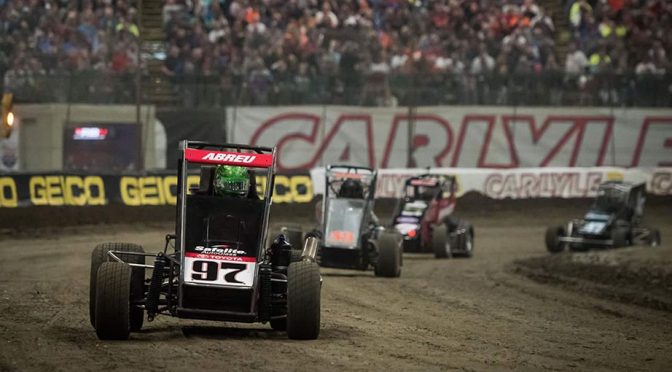
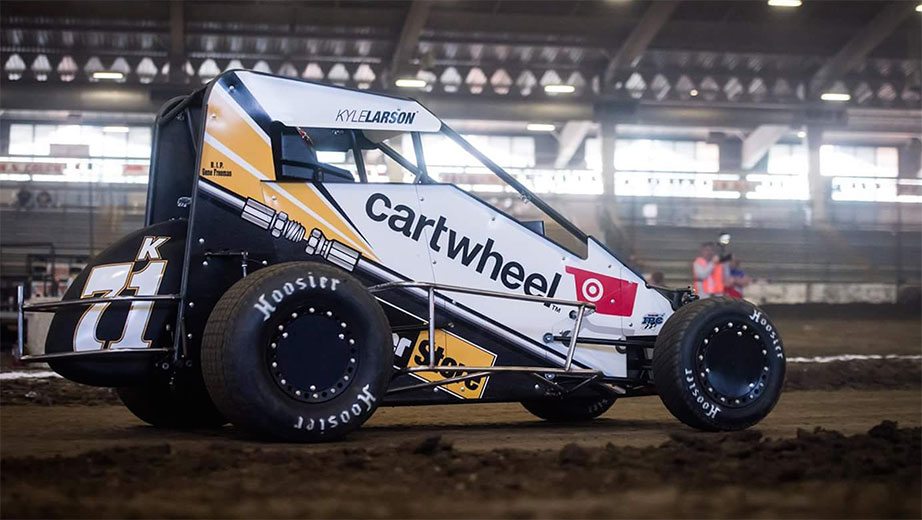
Ah, the Chili Bowl, a mud-spitting, temper-raising, white-knuckled thrill ride, a weeklong racing extravaganza unlike anything else in the motorsports world, an event so chock full of Americana weirdness from the green flag to the checkered flag that people who have been attending and racing in it for years struggle to conjure the words necessary to describe it. “You can’t even explain it to someone who has never been here,” said Rico Abreu, who has won the event two years in a row. “It’s something the naked eye has to see.”

With races at night (as God intended), on dirt (same) and indoors (not so much), the Chili Bowl is the Super Bowl, Lollapalooza, a carnival and a frat party all held at once inside a jet engine that spits out a fine mist of Oklahoma mud.

The Chili Bowl is simultaneously the best-kept secret in racing while having thousands of rabid fans and hundreds of drivers who swear they will never miss the annual pilgrimage to Tulsa. Allgaier and Abreu were among at least seven full-time drivers from NASCAR’s top three series to race in this year’s Chili Bowl. I attended the event intent on finding out why so many NASCAR drivers would travel to Tulsa, Oklahoma, in the middle of January to race indoors on a dirt track for a paycheck that would not cover the cost of the trip.

I came away wondering why so few NASCAR drivers were there.

• • •

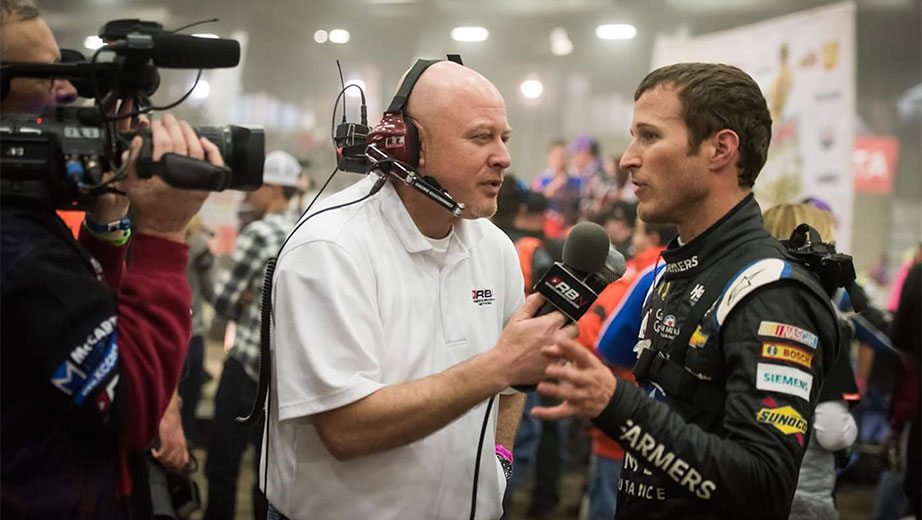
When Kasey Kahne was 12, he was a huge dirt racing fan who was trying, with no success, to talk his parents into letting him race. He fared better talking them into taking him to races. After a year of Kahne’s pleading, his dad relented and took him to the Chili Bowl in 1994. “It was the best vacation you could have as a 12-year-old who wanted to race,” Kahne said.

Kahne’s strongest memories are of walking around the pit area staring at the cars. He was too shy to talk to any of the drivers, but he imagined himself climbing into one of their cars and wheeling it around the track. He cheered as Andy Hillenburg, one of his favorite drivers, won. Hillenburg took the checkered flag after a thrilling three-wide battle that remains one of the event’s iconic moments, in part because Hillenburg is from nearby Broken Arrow, Oklahoma, and in part because the track is really not wide enough to accommodate three-wide racing.

As Kahne told this story at this year’s Chili Bowl (Jan. 12-16), he looked around the 448,400-square foot Tulsa Expo Center. Dozens of kids, with the same looks on their faces Kahne described having in 1994, wandered from car to car. Fifty feet to Kahne’s right stood the grandstands, and beyond that the race track. To his left was the garage area, which looks like a NASCAR garage area, only smaller and indoors.

Also, there was a bulldog wearing a tutu and a ribbon in her hair and posing for pictures.

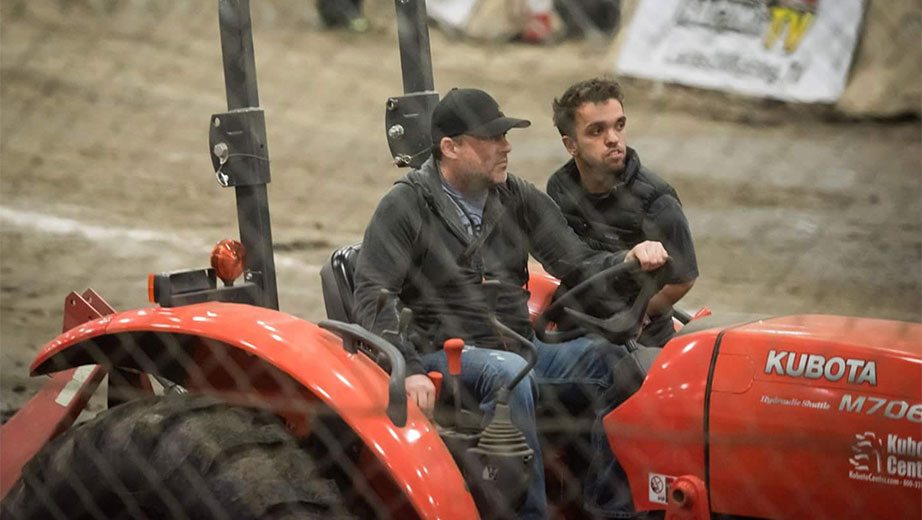
Among the many reasons NASCAR drivers return to the Chili Bowl year after year is a yearning for the simpler racing days of their youth. That’s particularly true of Tony Stewart , who loves the Chili Bowl like a kindergarten teacher loves children. A two-time winner of the event, Stewart has spent the last two years working track maintenance. And while that role landed him in controversy this year, his love for the event has not waned.

Don’t mistake the fondness for days gone by for indifference about modern-day Chili Bowl results. The drivers have neither moved on from the event nor outgrown it. This year’s Chili Bowl featured a record 335 drivers from 34 states and five countries. And they all wanted to win the “the Golden Driller,” the trophy modeled after the 76-foot tall, 43,500-pound statue of an oil man that stands outside the Expo Center.

J.J. Yeley has competed in 21 of the 30 Chili Bowls and attended seven more as a fan. He holds the record for passes in a single day and has finished second, third, fifth and ninth but never first. “Getting close is one of those things that keeps you coming back,” he said. “Having a bad week, like I’m having now, is one of those things that keeps you coming back.”

Asked if he’d rather win a Sprint Cup race or a Golden Driller, Allgaier paused for a long time and finally said they were equally difficult to win. Stewart said in a pre-race press conference that winning the Chili Bowl was bigger than winning the IndyCar championship. Abreu, who will drive full-time for ThorSport Racing this season in the NASCAR Camping World Truck Series, said that until he wins either the Daytona 500 or the Indianapolis 500, his two Chili Bowl wins will be the biggest of his career.
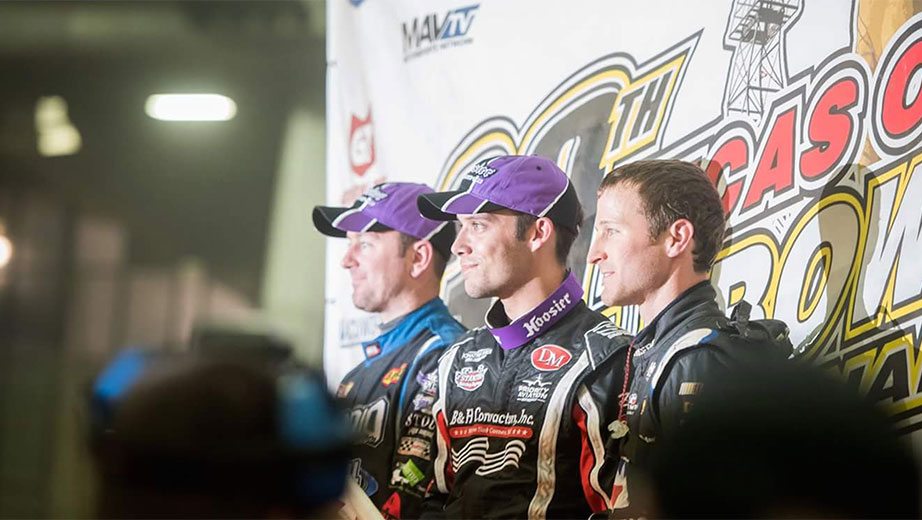
Kasey Kahne on the Chili Bowl: “It was the best vacation you could have as a 12-year-old.”  (Photo: Dylan Duvall)

On Saturday, Allgaier spent several minutes affixing a GoPro camera to his car. He loves racing video and wanted to get his just right, so he moved the camera around until he found the perfect vantage point. When he finally found an angle he liked — from up and to the right of where his head would be — he accidentally dropped the camera into his cockpit. It landed near his foot pedals. To retrieve it, he crawled headfirst through the opening at the top of his car.

His feet shot out of the top as he reached toward the brake and gas. Considering Allgaier once drove the car with no steering, I half-wondered if he was practicing for his next trick. A fan watching this unlikely scene apparently thought the same thing. Channeling what he would be thinking if he were Allgaier, the man said, “Hold my beer: Watch this.”

Allgaier couldn’t hear that, but he would have been proud to become part of the spectacle because the spectacle is part of what he loves about the Chili Bowl. “You can start at 7 in the morning, and end at 6 in the morning, and still not see everything there is to see,” he said.

As if on cue, a man wearing a red and green checkered suit, with Christmas trees in the checkers, walked by. He looked ridiculous, which is to say, he fit right in.

“Why would you wear that?” I asked.

“Why wouldn’t you wear that?” Allgaier answered.

Allgaier favors racing shirts. He estimates he has owned 100 different Chili Bowl driver T-shirts over the years and wore an Abreu shirt earlier in the week.

A few haulers down from Allgaier, a boy sat in the back of a racing trailer on Thursday and played with a fishing pole. At the end of his line he affixed a $100 bill. He cast it into the walkway and let it sit there. Every minute or two, somebody bent over to try to pick it up, at which point the boy yanked it away.

A previous fisherman apparently landed the big one: “I may have (fallen for it) the first time I saw it,” Kahne said with a smile. “It’s pretty funny to watch throughout an afternoon when people are doing that.”

I heard a story about a driver who kept a prosthetic arm in his car and threw it out when he needed a caution (that was years ago). I heard about drivers’ girlfriends getting in a bar fight (that was this year). I watched as a NASCAR driver’s wife and a former NASCAR-driver-turned-team-owner shouted f-bombs at each other (that was Wednesday.)

Three men walked around together posing for pictures. One was dressed as the Stay Puft marshmallow man from the movie “Ghostbusters.” Another was dressed as a Ghostbuster. The third was dressed as Cousin Eddie from Christmas Vacation, recreating the scene in which he bids Chevy Chase’s character good morning and points out that the bathroom of his RV is full.

During a somber rendition of the national anthem, played by a trombonist wearing the Chili Bowl’s trademark (by which I mean garish) red, white and blue shirt, a pickup truck circled the track. In the bed of the pickup was Abreu. He was holding an American flag and surrounded by Hooters girls.

• • •

Some consider midget cars more fun to drive than stock cars, in large part because the driver matters more. The combination of a short track and the way the cars slide on dirt means a good driver can manhandle a bad car to the front. At the Chili Bowl, there are two distinct grooves: the bottom, which rewards precision, and the top, which rewards aggression.

Kyle Larson’s fondest racing memory at the Chili Bowl came when he spun out in the middle of a race in 2013. That’s an odd thing to remember so proudly, but then again, the Chili Bowl is an odd race.

Larson simply drove too hard and lost control of the car, and thus ended a heated battle with Sammy and Kevin Swindell, the father-son duo who have won the event a combined nine times. Larson had traded the lead with Kevin before spinning. “I remember when I spun out, looking to the crowd,” Larson said. “The place gave me a standing ovation, which was something I’ll never forget. The place went crazy.”

The Swindells’ success makes them hated, of course, because race fans root like crazy for their drivers to be successful and then turn on them when they are. On Saturday this year, Allgaier accidentally ran into the back of Sammy Swindell’s car on the final lap of the D main, which caused Swindell to spin to a stop and then watch helplessly as the rest of the field zoomed by. The crowd roared its approval, even though Allgaier hadn’t done it on purpose, as he had nothing to gain and everything to lose by hitting Swindell. Allgaier was already comfortably in a transfer position, and making contact with another driver would only put himself in danger of spinning himself out.

But fans never let the facts dissuade them when fisticuffs might be in the offing. Within minutes, dozens of fans crowded around Allgaier’s hauler in anticipation that Swindell would confront him there. The area was so crowded with people hoping to see a fight that they might have prevented one — Swindell could not have gotten there even if he wanted to. Instead, Allgaier went to Swindell’s trailer to apologize.

• • •

The greatest sign of NASCAR drivers’ affinity for the Chili Bowl is that they all keep coming back, even though the race makes them sick — literally. The illness that besets drivers and fans the week after the event is so common that it has a name: the Chili Bowl Flu. Symptoms include headaches, nausea and a general feeling of terribleness. “It’s worse than the flu,” Ricky Stenhouse Jr. said.

If the symptoms of the “Chili Bowl Flu” sound suspiciously like the symptoms of a hangover, well, yeah. But it’s not only the alcohol. The three basic food groups during the Chili Bowl are deep-fried this, deep-fried that and deep-fried everything else. Yeley’s ears ring for three days after the Chili Bowl ends, the result of endless laps turned by cars that sound like Flight of the Bumblebee played by Metallica in an echo chamber. And there are nearly 700 dump trucks worth of clay on the racetrack. On Sunday morning, I felt like I had aspirated 699 of them.

The Chili Bowl Flu is such a predictable staple of the experience that drivers have concocted ways to try to avoid it. Larson stuffs himself full of vitamins. Abreu takes vitamins, too, and washes his hands obsessively. Stenhouse drank so much DayQuil and NyQuil during the week that he joked the medicine should be one of his sponsors.

And all of that misery is part of the fun. Only with the Chili Bowl can the fact that attending it makes you sick be viewed as a marketing tool.

“It’s virtually a party with a race,” Yeley said. “Not the other way around.”
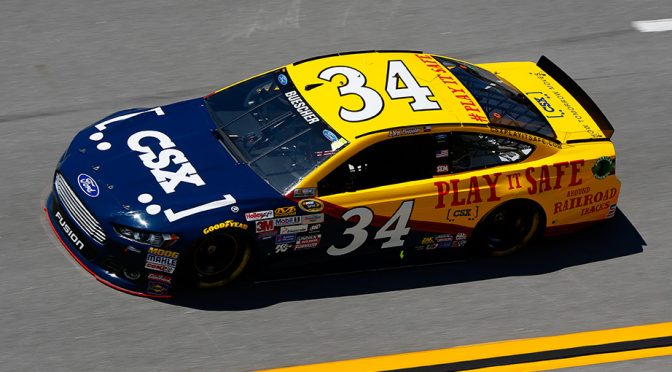
STATESVILLE, N.C. (Jan. 26, 2016) – NASCAR Sprint Cup Series rookie Chris Buescher will promote railroad safety with CSX in 2016, with the transportation company returning its “Play It Safe” messaging to the Front Row Motorsports No. 34 Ford Fusion for a fourth consecutive season.
 
The 2015 XFINITY Series Champion and 2016 Sprint Cup Series Rookie of the Year candidate will serve as an ambassador to 18- to 34-year-old males among NASCAR’s fan base, the demographic mostly likely to be involved in a train collision and the targeted audience of CSX’s safety campaign. Buescher will drive the CSX “Play It Safe” Ford for eight races, including events at Atlanta Motor Speedway, Watkins Glen International and the fall race at Richmond International Raceway.
 
“I got to work with CSX a little bit last year when I drove the No. 34, and I really respect what they’re doing with their NASCAR program,” the 23-year-old driver said. “It’s all about safety and spreading the message to race fans. If we can reach people and prevent even one collision, it’ll be a successful campaign.”
 
CSX, a Jacksonville, Florida-based railroad, has partnered with Front Row Motorsports for the past three Sprint Cup Series seasons to spread the message to “Play It Safe” around railroad tracks and to “Brake for Trains.”

“We are thrilled to have a champion driver like Chris Buescher in the CSX ‘Play It Safe’ car in our fourth season with Front Row Motorsports,” said John Claybrooks, CSX Director, Brand and Marketing Communications. “They both understand our cause and safety message as we strive to keep people safe around railroad tracks.”
 
As one of the nation’s leading transportation suppliers, with a network covering 21,000 miles of railroad tracks in 23 states, CSX is committed to educating the public on railroad safety in the communities it serves. 
 
“At CSX, safety is a way of life, and our NASCAR sponsorship continues to help CSX promote railroad safety education across our network,” says Jim Marks, CSX Vice President of Safety. “We can reach a large, key demographic to remind race fans to not stop, walk or play on the tracks or near crossings and encourage them to use safe driving practices at railroad crossings.”

Buescher and the Sprint Cup Series field will first hit the track for the Can-Am Duels, the qualifying races for the Daytona 500, on Thursday, Feb. 18, at Daytona International Speedway. The “Great American Race” is scheduled for Sunday, Feb. 21, at 1 p.m. ET and will air on FOX.

RELATED: Complete schedule for Rolex 24 at Daytona


The highly anticipated 54th Rolex 24 At Daytona will be held Jan. 30-31 at Daytona International Speedway, as 54 drivers will face off in a 24-hour endurance battle on the superspeedway’s 3.56-mile road course. This also marks the debut of Daytona Rising, a $400 million renovation project of the track that began in 2014. 

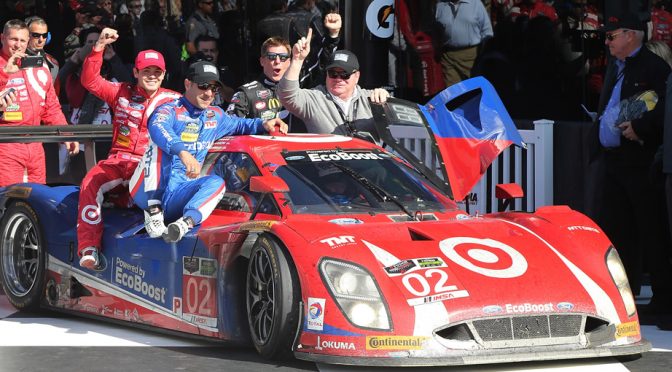
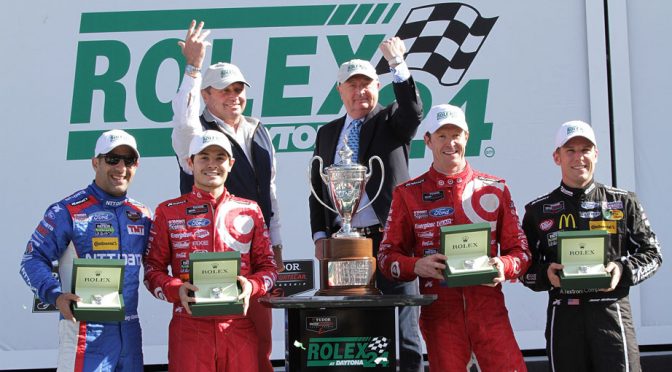
NASCAR Sprint Cup Series wheelmen Jamie McMurray and Kyle Larson, along with IndyCar’s Scott Dixon and Tony Kanaan, won the Prototype event last season for Chip Ganassi Racing and will team up again this year. Sprint Cup veteran AJ Allmendinger is also scheduled to compete.

When does it take place?

The race begins at 2:40 p.m. ET on Saturday, Jan 30 and concludes on Sunday, Jan. 31 at 2:40 p.m. ET, giving it the name “24 Hours of Daytona.”

How does it work?

Each team is comprised of four drivers and no drivers are allowed to be in a car for more than four hours during a six-hour time frame. However, each driver must drive for at least four hours and 30 minutes throughout the 24-hour period. Crew chiefs and crew members will also rotate throughout the event.

When the 24-hour time span concludes, the team that has wheeled the most miles in each class of cars – Prototype, Prototype Challenge, GT Daytona, GT Le Mans – will win their respective divisions.

How to watch?

Tune into FS1 and FS2 for the majority of the coverage. Fans can also stream FOX Sports Go online for the entire 24-hour period.

RELATED: Driver Tracker | Offseason moves


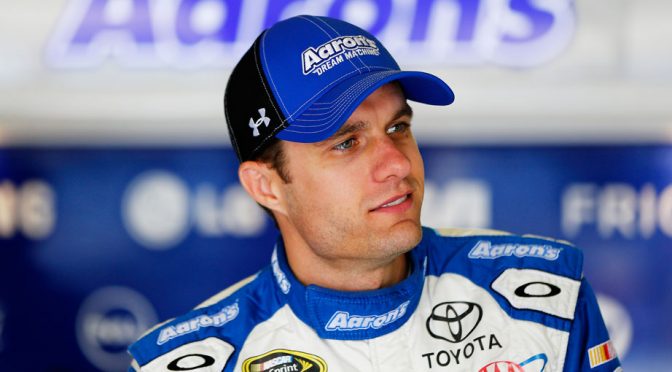
David Ragan
has landed a ride with BK Racing for the 2016 NASCAR Sprint Cup Series. The team announced the news Monday afternoon after the veteran driver had confirmed his move to FOX5 in Atlanta earlier in the day.

Ragan will pilot the No. 23 Toyota for the team, which will field two full-time entries in 2016. Ragan told SiriusXM NASCAR Radio’s Dave Moody that Patrick Donahue will be his crew chief. Earlier in the day, BK Racing announced that Matt DiBenedetto would drive the No. 83 Toyota with Gene Nead as the crew chief.

“I’m happy to be part of something that has so much growth potential,” Ragan said in a team release. “(Team owner) Ron (Devine) has steadily built his program over the last five years.

“He’s made an even greater commitment in 2016 with new cars, equipment and additional personnel. I feel that we’ll be in a position to bring the team to the next level. I’m looking forward to the season.”

Ragan will carry sponsorship from Dr. Pepper for multiple races in 2016 and the soft drink will also be an associate sponsor on the team’s cars throughout the season. Additional sponsorship for the No. 23 team will be announced over the coming weeks, according to the team release.

Jeb Burton finished out the 2015 season in the No. 23 Toyota and indicated on Twitter that he is working on his 2016 plans.

Last season, Ragan started all 36 races in the sport’s top series, but was a super-sub of sorts. He started the year in the No. 34 Ford for Front Row Motorsports but after one race shifted over to the No. 18 Toyota of Joe Gibbs Racing to fill in for the injured Kyle Busch for nine races. He then finished out the season’s last 26 races driving for Michael Waltrip Racing in the No. 55 Toyota. In 2015, Ragan recorded one top 10 and finished 27th in the point standings.

In his Sprint Cup career, Ragan has two wins in 326 starts over 10 years. His last win came in May of 2013 at Talladega Superspeedway for Front Row and was also the organization’s first — and, to date, only — Cup win.

“We’re very excited to have a driver of David’s caliber join our team,” Devine said in a team release. “In addition to being a race winner, I feel that his input and leadership qualities will benefit the team on many levels. Our entire organization is energized to work with him.”

The Rolex 24 is back at Daytona International Speedway for the 24-hour race. Check out the full schedule below. All times are ET.


WEDNESDAY, JAN. 27:

ON TRACK

— 12:30-1:15 p.m.: Practice 1 – Ferrari Challenge
— 1:30-2:30 p.m.: Practice 1 – Continental Tire Challenge
— 2:45-3:30 p.m.: Practice 2 – Ferrari Challenge
— 3:45-4:45 p.m.: Practice 2 – Continental Tire Challenge


THURSDAY, JAN. 28:

ON TRACK

— 9:25-10:25 a.m.: Practice 1 – WeatherTech Championship
— 10:45-11:30 a.m.: Practice 3 – Ferrari Challenge
— 11:45 a.m.-12:15 p.m.: Practice 3 – Continental Tire Challenge
— 1:20-1:50 p.m.: Practice 2 – WeatherTech Championship

— 2:10-2:25 p.m.: Qualifying – Continental Tire Challenge (ST)

— 2:40-2:55 p.m.: Qualifying – Continental Tire Challenge (GS)

— 3:10-3:40 p.m.: Qualifying – Ferrari Challenge

— 4-4:15 p.m.: Qualifying – WeatherTech Championship (GTD)

— 4:25-4:40 p.m.: Qualifying – WeatherTech Championship (GTLM)

— 4:50-5:05 p.m.: Qualifying – WeatherTech Championship (PC)

— 5:15-5:30 p.m.: Qualifying – WeatherTech Championship (P) 

— 6:30-8 p.m.: Practice 3 – WeatherTech Championship


FRIDAY, JAN. 29:

ON TRACK

— 9-9:30 a.m.: Qualifying 2 – Ferrari Challenge
— 9:45-10:05 a.m.: Practice 4 – Continental Tire Challenge
— 10:25-11:25 a.m.: Practice 4 – WeatherTech Championship
— 11:45 a.m.-12:30 p.m.: Race 1 – Ferrari Challenge

— 1:45-4:15 p.m.: Race – Continental Tire Challenge 


SATURDAY, JAN. 30:

ON TRACK

— 9:30-10:15 a.m.: Race 2 – Ferrari Challenge

— 2:45-11:59 p.m.: Race – The 54th Rolex 24 at Daytona, FS1 from 2-4 p.m.; FS2 from 4-10 p.m.; IMSA at 10 p.m.


SUNDAY, JAN. 31:

ON TRACK

— 12 a.m.-2:40 p.m.: Race – The 54th Rolex 24 at Daytona, FS1 from 7-10:30 a.m.; FS2 from 10:30 a.m.-1 p.m.; FS1 at 1 p.m.

Sunday saw two intense NFL playoff games in a pair of conference championships to decide which teams would be playing in Super Bowl 50, and NASCAR Nation was watching.


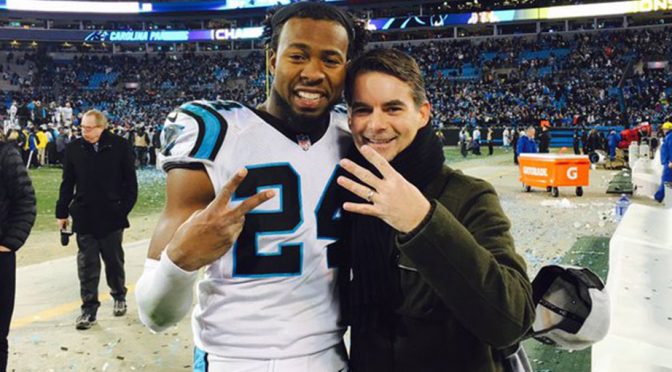
In the end, the Denver Broncos just barely squeezed by the defending Super Bowl champion New England Patriots, 20-18, while the Carolina Panthers – who call NASCAR’s racing hub, Charlotte, home – rolled over the Arizona Cardinals, 49-15.


The Broncos and Panthers will meet on February 7 at Levi’s Stadium in Santa Clara, California and will surely have drivers tuning in yet again, as many support the hometown Black and Blue, but a few others are fans of the team from the Mile High State.


Follow along below to see the roller coaster day drivers had while watching a thrilling day of gridiron action.

Before the Rolex 24, there is Roar Before the 24 — the three-day practice session in advance of the grueling 24-hour race, which takes place this weekend at Daytona International Speedway.


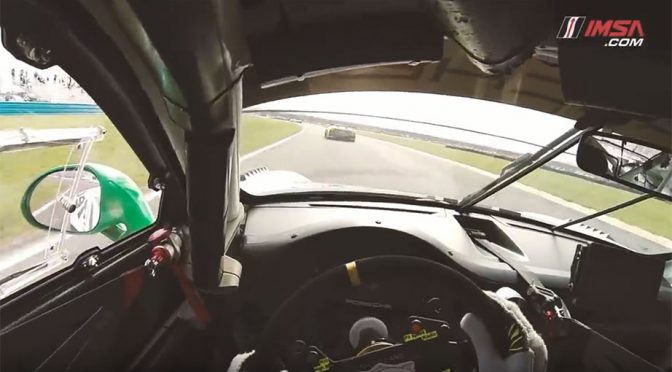
IMSA cameras were rolling when the sports cars, along with NASCAR drivers Jamie McMurray and AJ Allmendinger, took the track from Jan. 8-10.


In the Sights and Sounds video below, you’ll see the road course through in-car cameras, get an up-close look at a driver swap and even see what the track looks like blanketed in fog.


RELATED: See who’s on the move for 2016

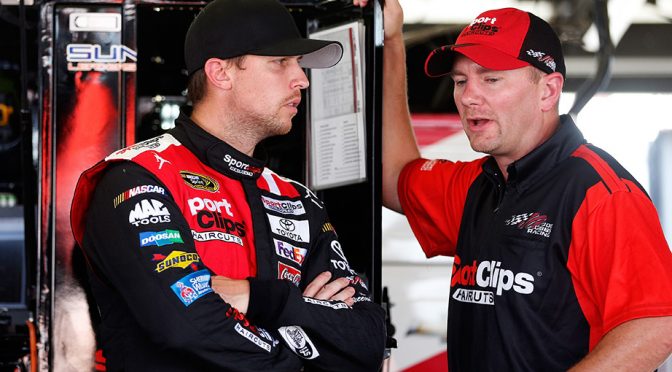
Denny Hamlin enters the NASCAR Sprint Cup season with his third crew chief in three years, the result of a second straight go-round of offseason shuffling at Joe Gibbs Racing.
 
Before last season, Dave Rogers replaced Darian Grubb, who left the No. 11 Toyota team to become Carl Edwards‘ crew chief. This offseason, Mike Wheeler was promoted to replace Rogers, who followed form, leaving the No. 11 to become Edwards’ crew chief.
 
This time, Hamlin’s certain he has his go-to guy.
 
“Carl can’t have this one,” Hamlin said with a laugh during last week’s Charlotte Motor Speedway Media Tour. “That’s how I’m confident.”
 
Joking aside, Hamlin said he always knew he’d one day be paired with his longtime lead engineer, making what the driver called a “handshake deal” long ago. With Wheeler now headed toward his first full season as a Sprint Cup crew chief after making strides in the NASCAR XFINITY Series, the two have come full circle.
 
“He’s been with me in some capacity throughout my career, so he’s my guy,” Hamlin said. “He’s going to be my guy until I retire, there’s no doubt about that. This is what we’ve built towards, this has been in the workings for a very, very long time. From our standpoint, I thought that he’d be in XFINITY a little bit longer, but when he chose to move up, obviously I didn’t want to loan him to anybody else for another year so we made the switch. I think that it’s good for me. Everyone’s kind of got who they want now and everything should be good.”
 
Wheeler has just six Sprint Cup races atop the pit box, serving as interim crew chief for Hamlin during Grubb’s suspension for a technical infraction in 2014. The No. 11 team finished in the top 10 in half those races before Grubb returned to lead Hamlin to the championship round in the Chase for the NASCAR Sprint Cup playoffs.
 
Wheeler dipped down to the XFINITY Series last season, adeptly calling the shots for a rotation of eight different drivers — including Hamlin. The result was a stellar campaign for the No. 20 team, which netted four victories and eight pole positions. Hamlin accounted for three of those wins and four of those poles.
 
When the time came for team owner Joe Gibbs to make changes to keep up with the competition, the venerable coach followed a similar pattern of promoting from within. It paid huge dividends last year with former XFINITY crew chief Adam Stevens lifting Kyle Busch to his first Sprint Cup crown.

RELATED: Busch, Hamlin could be at ‘odds’ over Super Bowl bet
 
“The wild thing now is all four of our Cup guys came from XFINITY for us,” Gibbs said of his organization’s crew chief lineup. “I think what happens there is our Cup guys get to work with them, racing XFINITY, and they develop that relationship. That’s like Adam and Kyle. I think Wheels has always gotten along great with Denny. They’ve always kind of wanted to be together, and so Wheels was willing to go back down to XFINITY last year and did a great job for us down there. We kind of felt like it was a natural deal.”
 
Contending for championships has also come naturally for Hamlin, but despite numerous close calls, his title cupboard remains bare. Last year may have been the flukiest near-miss of all, when a faulty roof hatch — and later, a crash in a green-white-checkered restart — stemmed his progress at an elimination race at Talladega Superspeedway.
 
Hamlin has won at least one race in each of his 10 full seasons in NASCAR’s premier series. The goose egg in the championship column? Hamlin said he thought that void would have been filled long ago.
 
“Oh, no doubt. I thought I’d have one within the first three years of my Cup career and just things didn’t work out for whatever reason,” Hamlin said. “And I look back at all the Chases that I’ve been part of and it comes down to I’m still in it with one race, two races to go and it’s just something bananas happens and it takes me out. Eventually, that wave has got to turn in your favor.”
 
Hamlin hopes Wheeler is a part of that wave, one that includes a welcome return to crew chief stability. Hamlin also hopes for continuity in JGR’s recent upswing, which produced 14 Sprint Cup wins, a championship from Busch, and Chase eligibility for all four of its drivers last season.
 
“It’s as good as it can get,” Hamlin said. “I mean, we all work really, really well together. All the drivers have great chemistry, the crew chiefs have great chemistry. There’s just no reason why we can’t duplicate the same amount of wins and a championship for JGR, so really there’s nothing standing in our way with that.”