RELATED: Hamlin undergoes successful knee surgery


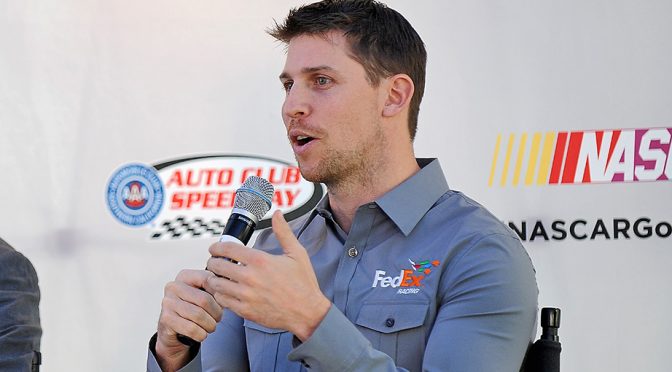
Just two weeks until the 2016 Sprint Cup Series season kicks off at Daytona International Speedway and Denny Hamlin is ready to power through the pain to earn his first Daytona 500 win. 


The Joe Gibbs Racing driver underwent successful surgery at the end of the 2015 season to repair his anterior cruciate ligament, which he tore while playing basketball, and seems to be recovering swimmingly.


“Even in the last week, (my knee) has been quite a bit better,” Hamlin said during a teleconference on Wednesday. “The biggest thing is my range of motion hasn’t been very good. … I think it’s amazing how far we’ve gotten in rehab to getting this thing better. I’m very confident that in two weeks it’s going to be a non-issue on track.”


Despite his range of motion issue, the Toyota driver is still confident in his upcoming start in the “Great American Race.” When asked about when he hopes to claim his first Daytona 500 win, his response: “It’s coming.”


Hamlin’s best finish of 10 starts in the Daytona 500 was second-place in 2014. JGR teammates Kyle Busch and Carl Edwards are still seeking their first Daytona 500 victories, as well.

RELATED: NASCAR Goes West Sweepstakes | WATCH: Live stream


Join NASCAR Wednesday from 2-3:30 p.m. ET for West Coast Media Day with a live stream of all the events.


Starting March 6 — and going until March 20 — the NASCAR Sprint Cup Series and NASCAR XFINITY Series head to Las Vegas Motor Speedway to begin the two-week stretch on the west coast aptly titled “NASCAR Goes West.”

The drivers who will be in attendance during the media day are Denny Hamlin, Brad Keselowski, Aric Almirola and Kurt Busch.

Following LVMS, teams will race at Phoenix International Raceway and Auto Club Speedway.

First, let’s get something straight. Yes, we know that taking the new 2016 postseason format and applying it to the 2015 NASCAR Camping World Truck Series results to show who would have been the champion last year in an elimination format isn’t scientific. Obviously, drivers would have raced differently.


We get it. This isn’t exact. It is, however, fun.


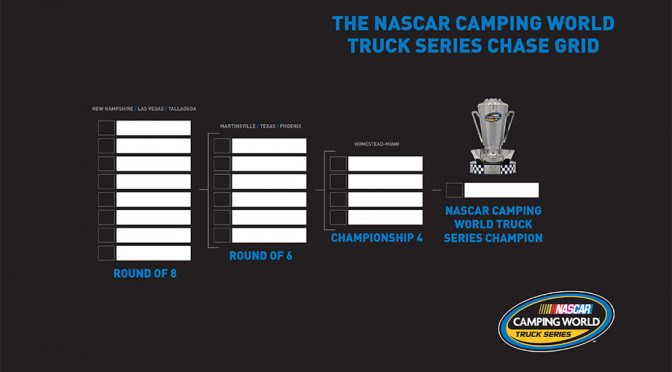
The NASCAR Camping World Truck Series Chase will send eight drivers into a seven-race postseason, and the field will get whittled from eight to six and then from six to four for the season finale at Homestead.
 
If you need a refresher on the rules, go here.
 
So, who would have won the championship last year if the new format was in place? So glad you asked.


RELATED: How NXS title would have turned out | Who benefits from changes?

THE FIELD
 
Three drivers would have clinched their berths with victories in the first 16 races — Tyler Reddick (Daytona, Dover), Matt Crafton (Atlanta, Kansas, Texas-1, Kentucky) and Erik Jones (Iowa, Canadian Tire Motorsport Park).


Five drivers would have clinched their berths by virtue of points: Johnny Sauter, Daniel Hemric, Cameron Hayley, Timothy Peters and John Wes Townley. Townley would have earned the eighth and final spot by 12 points over Spencer Gallagher.

Cole Custer (Gateway), Christopher Bell (Eldora) and John Hunter Nemechek (Chicagoland) all won races running for Truck Series points, but would not be eligible for the postseason since they did not attempt to qualify for every race.


The points heading into the first postseason race at New Hampshire would have looked like this:

Initial postseason standings

Rank Driver Points
1 Matt Crafton 2,012
t-2. Tyler Reddick 2,006
t-2. Erik Jones 2,006
t-4. Johnny Sauter 2,000
t-4. Daniel Hemric 2,000
t-4. Cameron Hayley 2,000
t-4. Timothy Peters 2,000
t-4. John Wes Townley 2,000

ROUND OF 8

The two drivers eliminated after the opening three races would have been Daniel Hemric and Cameron Hayley.


John Wes Townley‘s win at Las Vegas would’ve automatically clinched a spot in the Round of 6. Timothy Peters‘ win at Talladega would’ve automatically clinched a spot for the Round of 6.
 
ROUND OF 6

The two drivers eliminated after the round’s three races would have been Johnny Sauter and John Wes Townley.


Matt Crafton (Martinsville-2), Erik Jones (Texas-2) and Timothy Peters (Phoenix) would have automatically clinched berths in the Championship Round with victories in the Round of 6.
 
CHAMPIONSHIP ROUND

With a title field of Matt Crafton, Erik Jones (real 2015 champion), Timothy Peters and Tyler Reddick, Crafton won the season finale at Homestead-Miami Speedway.


That was the highest finish among the championship-eligible drivers, so Matt Crafton would have been the 2015 NASCAR Camping World Truck Series champion.

NASCAR Sprint Cup Series teams will adjust to a new innovation wrinkle this season, making use of a digital dashboard display that will replace long-used analog gauges. True to the competitive spirit in the NASCAR garage, one team might have a leg up on the rest.

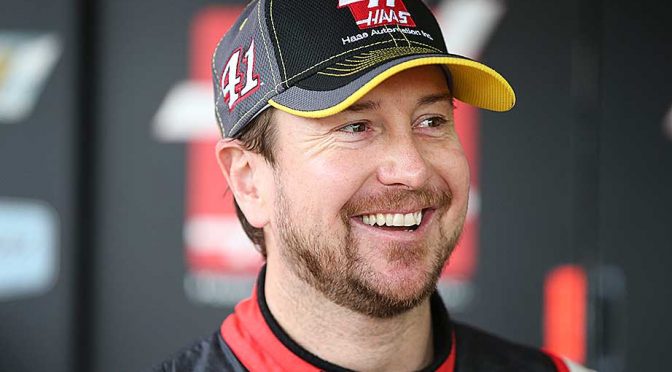
Stewart-Haas Racing was the first to apply the technology in actual race conditions, deploying the digital display in Kurt Busch‘s No. 41 Chevrolet last September at Darlington Raceway.

For the No. 41 team to blaze the trail created an interesting juxtaposition at the South Carolina track. Here was one of NASCAR’s most tech-savvy teams making an early embrace of one of the sport’s newest technological leaps, but hosting the coming-out party at stock-car racing’s oldest superspeedway with one of the most old-school crew chiefs in Tony Gibson leading the charge.

“We got on it,” Gibson said last week during NASCAR’s annual Charlotte Motor Speedway Media Tour. “… We didn’t want to go to Daytona and have, ‘What have we got? How does the layout want to be in this dash?’ So we worked out all the bugs in ours before the end of the year. Kurt had his own layout and what he wanted to see, and he knows how to run it. We had to move some things around, work some bugs out like everybody else.”

Other teams followed suit, taking advantage of last season’s breaking-in phase as an audition for a NASCAR-mandated rules change in 2016. A quick canvass of drivers and crew chiefs during last week’s media tour revealed that some teams still have some fine-tuning to do before cars hit the track for opening Sprint Unlimited practice Feb. 12 at Daytona International Speedway.

If the pattern of Stewart-Haas being ahead of the game in the offseason sounds familiar, it should. In a pivotal December 2013 test session with the new driver/crew chief pairing of Kevin Harvick and Rodney Childers, SHR’s No. 4 team was the class of the field in quickly adapting to the next season’s rules package — a transition that eventually netted the 2014 Sprint Cup championship.

“Anything new, you have to put time into it and understand it, and I’m thankful to have that opportunity with Stewart-Haas to have the engineering department, to have a dedicated guy who’s working with McLaren on the software and to be able to find new things,” Busch said. “Even with us running it last year at Darlington and then the next time I tested it in January, so many new chapters, categories and things were opened up for us to look at.

“I’m just glad that I feel like we’ve done our homework and put our time invested into it to where we won’t have problems with it and we’re going to succeed with it and not have it be an issue or a distraction on race weekends.”

The next step for teams beyond making sure the system works: Getting the most out of the information. The existing settings — tachometer; voltage; water and oil temperatures; oil, water and fuel pressures — will all be accessible, but delivered on one of 16 different preset displays. Teams will be able to drill down and customize each preset based on driver preferences.

The first full-field implementation of the digital display is just weeks away, but NASCAR competition officials say the new system has room to grow. Tire-pressure sensors have been tested ahead of a 2017 rollout, with the potential to help teams make educated decisions about air pressure and other adjustments during pit stops.

Tire sensors aren’t yet approved for competition, but Sprint Cup Series director Richard Buck says he’s hopeful for other advancements in distributing the dashboard data beyond drivers and teams.

“The exciting part about it is the possibilities of the future,” Buck said. “… Integrating it with the fans, integrating it with (the media), the data that we have on race cars available to us and be able to tailor that and get it out to the fans. That’s what makes it exciting to me.”

COLUMBIA, S.C. (Wednesday, Jan. 27) — The Columbia Metropolitan CVB and the Columbia Regional Sports Council are pleased to announce a partnership with Bolen Motorsports and Jordan Anderson, a NASCAR Camping World Truck Series driver and Columbia, SC native. Anderson finished 19th in points last year in his first year within the Camping World Truck Series.


The announcement was made on Wednesday, Jan. 27 at the NASCAR Hall of Fame in Charlotte, NC.


Anderson’s approach to his career reflects the culture and hallmark traits of his hometown. Like Columbia, SC, Anderson has shown a tremendous amount of grit and determination to get to where he is today.


“Growing up as a kid in Columbia, my dream was to always compete in the upper ranks of NASCAR,” says Anderson. “From turning my first laps in a Go-Kart around my elementary school to working on my Dirt Late Model in my parents backyard — the reason I’ve had the opportunities to progress through the ranks from the dirt tracks to Daytona is thanks to the support of the people in Columbia and the everyday life lessons learned there.”


Unlike most racing teams who have a robust crew, Anderson’s team was made up of himself, a crew chief and one other person in 2015. He has procured his own sponsorships, managed his own public relations, worked on his truck and hauled it to and from races each week.


Last season saw no shortage of obstacles to overcome, from his trailer breaking down en route to Chicagoland Speedway to a last-minute opportunity to race in Canada which meant an expedited passport via Atlanta, a 17-hour solo drive to Canada and a lengthy delay at the border with customs. Nothing came easy for Anderson in 2015, but the hard work and personal perseverance made the season all the more rewarding.


“His story, coupled with his professional demeanor and Columbia being his hometown, really made us stop and consider the possibility of a partnership,” says Bill Ellen, president and CEO of the Midlands Authority for Conventions, Sports & Tourism, the umbrella organization for the CVB and Sports Council. “The more we talked with him and the more we came to understand the loyalty of his fans, the more we wanted to link forces.”


Kelly Barbrey, VP of sales and marketing for the Authority, agrees. “Jordan has an impressive number of engaged social media followers across the country. His fans, along with the NASCAR Camping World Truck Series fan base, overlap with our geographical target market. Partnering with Jordan and Bolen Motorsports allows us to capture a diverse and niche market of racing enthusiasts while championing our homegrown talent at the same time,” says Barbrey. “The truck and team’s racing suits will prominently feature our brand. He’s truly a moving billboard that intersects several of our key markets.”


Jordan’s determination garnered team owner Jeff Bolen’s attention several years ago. They had a common passion for the sport and both were raised in Columbia, a city that holds a special place in NASCAR history.


“We knew from the beginning that we had an opportunity to grow Columbia’s NASCAR legacy with Jordan,” says Bolen.


Their passion for Columbia happened to align perfectly with the CVB and Sports Council’s goals.


“The fact that we both call Columbia our hometown creates the perfect opportunity to promote the city and culture that we love. It is very humbling to have the support of the CVB and Sports Council,” remarks Bolen. “It allows all of us the ability to embark on a truly authentic and genuine partnership.”


Anderson agrees, “We want to help continue fostering the growth and development of local business in Columbia while giving residents and visitors an emotional connection to a sport that has such deep roots within the city.”


In addition, Ellen and Barbrey see several opportunities to collaborate with Bolen Motorsports and Anderson to help increase convention and sporting event business in Columbia.


“This is an industry based on relationships. People plan meetings and conventions with destination representatives that they know and trust. Many of our target planners live and work in the same geographic area as our leisure visitor, which happens to overlap with NASCAR country,” states Ellen.


“Entertaining potential and existing clients is a key component of our sales strategy. Now we’re able to do that at the track, giving the clients a new and memorable experience. Not to mention, the duration of the race gives us the time to have longer, more meaningful conversations than we would at say, an industry tradeshow.”


“This is more than a traditional sales and marketing campaign,” adds Barbrey. “You couldn’t dream up a more perfect fit between Jordan and our organization. Columbia is flourishing. New restaurants and shops are opening every month in districts throughout the region. This didn’t just happen. It was the result of coordinated and purposeful efforts by both the private and public sector. And, frankly, a lot of perseverance and hard work. That is Jordan’s career, too. He is smart, well-spoken and very business-savvy. He makes thoughtful, intentional decisions in both his sponsorship procurement and racing strategies. But make no mistake, he has the grit and tenacity to overcome hardships and achieve great success, which mirrors his hometown perfectly. We couldn’t be more proud to be a part of this with him.”
RELATED: See the rings, jackets for the Class of 2016

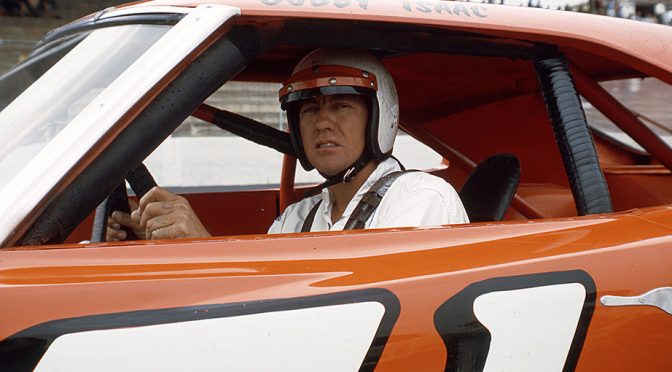
Of the five newest members inducted into the NASCAR Hall of Fame, the career of the late Bobby Isaac was perhaps the most unusual.
 
Isaac was inducted Saturday, along with fellow drivers Terry Labonte, Jerry Cook, Curtis Turner and track owner Bruton Smith.
 
Isaac, who died in 1977 after suffering a heart attack, won the NASCAR premier series championship in 1970, driving for team owner Nord Krauskopf and with the help of noted crew chief Harry Hyde.
 
It was a perfect combination of talent and ingenuity — the team won 31 races during a three-year span from 1968-70.
 
Isaac wound up with 37 victories in a career that spanned just 15 years at the top level. He won 49 poles, a mark that today remains 10th best for the series.

WATCH THE SPEECHES: Isaac’s family | Jerry Cook | Curtis Turner’s daughter | Bruton Smith | Labonte’s speech

According to reports, he also abruptly quit racing for a time when, in the middle of an event, he heard a voice tell him to get out of the car.
 
It’s an often-told story, particularly when NASCAR’s top series prepares to head to Talladega Superspeedway, site of Isaac’s early departure.
 
“Well, obviously I wasn’t there with him in the car when that happened,” Patsy Isaac, who was married to the driver at the time, said Saturday following his induction into the NASCAR Hall of Fame. “But I will tell you that as soon as he got out of the car and was able to get to a telephone, because we didn’t have cell phones then, he called me and he repeated to me exactly what happened to him in the car.
 
“And he said, a voice told him that he needed to get out of the car, and so he radioed to (owner) Bud Moore. He said, ‘find somebody to fill in the car. I’ve got to get out.'”
 
The race was the Talladega 500, the 20th stop of the ’73 season and the second of two annual races at the 2.66-mile superspeedway. Isaac was three years removed from his championship, and had been hired to drive owner Moore’s No. 15 Ford. He had finished second to Richard Petty in that year’s Daytona 500, and placed in the top 10 in five other races.
 
The race seemed cursed from the outset — fellow Catawba County native Larry Smith was killed when his Mercury struck the wall barely 15 laps into the event.
 
With the race nearly halfway complete, Isaac pulled into the pits during a caution period and unexpectedly climbed out of the car. Coo Coo Marlin, father of two-time Daytona 500 winner Sterling Marlin, relieved Isaac and eventually finished 13th.
 
Dick Brooks won the race. It was the only premier series victory of Brooks’ career.
 
“I don’t know what that experience was,” Patsy Isaac said of her husband’s incident. “I don’t know if he felt it, it was an intuition or if it was actually a verbal voice. I don’t know that, but I know that it impacted him enough that he was not going to stay in the race car.”
 
What she does know, though, is what she told Isaac when he called.
 
“I said, ‘come home.’ That was fine with me,” she said.
 
“He had always said that it was not because someone had gotten killed earlier in the race, and that person was from Catawba County, and he knew them. That’s all I can tell you is what he told me.”
 
Isaac attempted to resume his racing career the following year although he made just 19 premier series starts during the next three seasons.
 
Eventually, he turned his attention to the local short tracks where he had begun his racing career. On August 13, 1977, he was competing in a Late Model Sportsman event at Hickory Speedway when he pulled into the pits, climbed from his car and collapsed.
 
Transported to a local hospital, Isaac, 45, died the following morning.

NASCAR officials don’t expect any changes in the way restart zones are policed this season, saying that they felt comfortable with the process that was put into place during the latter portion of 2015.

It will, however, be the first use of the new larger zones for the majority of the facilities.

Fourteen tracks hosting NASCAR Sprint Cup Series races this season are expected to have the larger restart zones in place for the first time, including Daytona International Speedway, site of the season-opening Daytona 500 scheduled for Feb. 21.

Restart zones are located prior to the start/finish line and indicate where the race leader, or control car, is allowed to accelerate when the race is either beginning or coming out of a caution period.

Officials lengthened the zones last season at several tracks following complaints and concerns from competitors about the “gamesmanship” being played in the areas.

By extending the zone, the race leader enjoyed a larger window of opportunity to control the start or restart of the race and lessened the likelihood of another driver gaining an advantage.

Beginning with the opening race of last year’s Chase for the NASCAR Sprint Cup at Chicagoland Speedway, NASCAR stationed an official inside the track near the zone, and added a high definition camera to provide evidence should a start or restart be called into question.

Two weeks after that move, officials announced that restart zone areas would be expanded for the remaining Chase events, beginning at Dover International Speedway where the restart zone at the 1-mile facility was increased from 70 feet to 140 feet.

“The cameras that we did employ there (in the restart zones), those were monitored in the PRO System as well as up in the tower,” Sprint Cup Series Managing Director Richard Buck said. “We were pretty pleased towards the last part of the year with the (changes). In checking with the drivers, they felt it got to the point where it was a level playing field for everybody.”

The rules concerning starts and restarts were not impacted by the changes. The race leader, or control car, still must maintain caution car speed and cannot exceed that speed before passing the double red lines that mark the beginning of the restart zone.

If the leader has not accelerated by the time he or she reaches the single red line, designating the end of the zone, the starter in the flagstand will start the race.

A driver other than the race leader can be the first to the start/finish line, as long as the initial pass did not occur within the restart zone.

The majority of the areas that were expanded last season were extended from the original area forward, toward the start/finish line. Buck said the only track to expand the zone back toward the fourth turn was Phoenix.

“If we had moved it (toward the start/finish line) at Phoenix, the drivers almost wouldn’t be able to look out of the race car to see the green flag (wave),” Buck said.

“We’ll physically go take a look at the race track, take a look at the logistics and see what makes sense. The majority of them, (extending) toward the start/finish line, doubling it, worked out very well so I expect that’s what you’ll see.”

RELATED: Barney Hall passes away at age 83 | Hall honored prior to final race

Legendary NASCAR broadcaster Barney Hall passed away Tuesday at the age of 83 from complications after a recent medical operation. Hall was known as “The Voice of NASCAR” and was a fixture for Motor Racing Network’s coverage of the sport.

His unique brand of storytelling earned Hall a place in the NASCAR Hall of Fame in 2012, when the shrine created the annual Squier-Hall Award for NASCAR Media Excellence, honoring Hall alongside legendary TV broadcaster Ken Squier.

MORE: The story behind the Squier-Hall Award | Squier, Hall recognized for media excellence

Shortly after news of Hall’s passing surfaced, drivers such as Dale Earnhardt Jr., Brad Keselowski, Chase Elliott and many more took to Twitter to pay tribute.

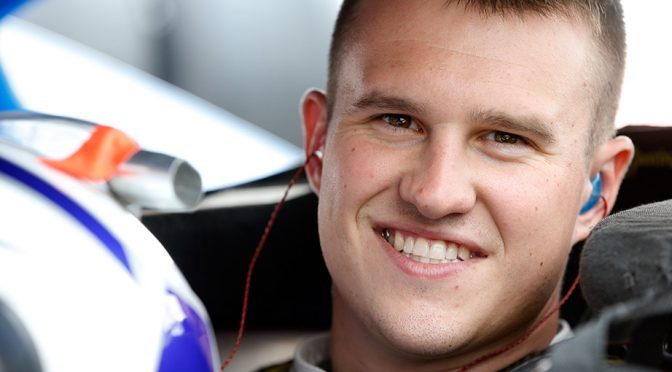
JD Motorsports announced its plans for a three-car effort in the NASCAR XFINITY Series this season, bringing Modified standout Ryan Preece into the fold to join Ross Chastain on its full-time driver roster.


Preece, a NASCAR Next alum who has finished either first or second in the Whelen Modified Tour standings the last four years, will take over the No. 01 Chevrolet. Preece, 25, has three career XFINITY starts and five Sprint Cup Series appearances. Landon Cassill was the primary driver of the No. 01 last year.


Chastain, 23, returns to the JD Motorsports No. 4 Chevrolet for his second XFINITY season. In his rookie campaign last year, Chastain wound up 15th in the driver standings with four top-10 finishes.


Eric McClure will take the wheel of the third JDM entry — the No. 0 Chevrolet — for the season-opening PowerShares QQQ 300 (3:30 p.m. ET, FS1, MRN/SiriusXM) at Daytona International Speedway with sponsorship from longtime backer Reynolds Wrap. McClure, 37, drove for team owner Johnny Davis in his first full XFINITY season in 2007.


According to a release provided by the team, the team is seeking driver/sponsor combinations for the No. 0 car beyond Daytona. Harrison Rhodes was the team’s primary driver of the No. 0 last season.


“Everything is lining up well,” Davis said in the team release. “We expect to have three strong teams when we get things started next month in Daytona. We should be astronomically better than last year. We’re better prepared, and we have more resources.”


The team also announced its crew chief lineup for 2016. Bryan Berry will work with Chastain, Zach McGowan will pair with Preece, and Todd Myers will call the shots for McClure and the remaining drivers in the No. 0.

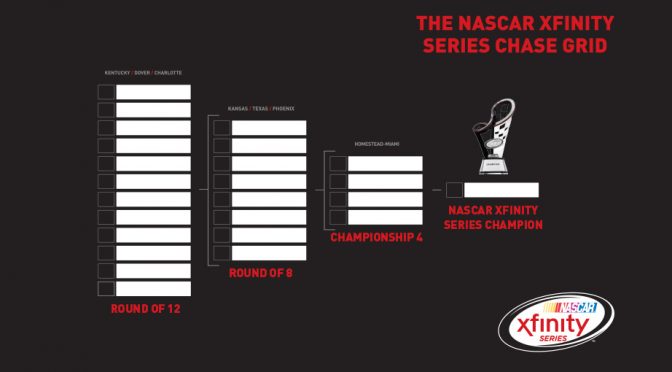
First, let’s get something straight. Yes, we know that taking the new 2016 postseason format and applying it to the 2015 NASCAR XFINITY Series results to show who would have been the champion last year in an elimination format isn’t scientific. Obviously, drivers — namely Chris Buescher, who had a large points lead late in the season — would have raced differently.
 
We get it. This isn’t exact. It is, however, fun.
 
Starting in 2016 the NASCAR XFINITY Series Chase will send 12 drivers into a seven-race postseason, and the field will get whittled from 12 to eight and then eight to four for the season finale at Homestead.
 
If you need a refresher on the rules, go here.
 
For the purpose of this exercise, we did not take into consideration the Dash 4 Cash winners getting a Chase berth, because there weren’t heat races last year, and that’s a game-changer.
 
So, who would have won the championship last year if the new format was in place? So glad you asked.


RELATED: How Truck Series title would have been | Who benefits?

THE FIELD
 
Four drivers would have clinched berths with victories in the 26 regular-season races — Ryan Reed (Daytona-1), Chris Buescher (Iowa-1, Dover-1), Regan Smith (Mid-Ohio) and Chase Elliott (Richmond-2).
 
Eight drivers would have clinched their berths by virtue of points: Ty Dillon, Elliott Sadler, Darrell Wallace Jr., Daniel Suarez, Brian Scott, Brendan Gaughan, Jeremy Clements and Ross Chastain. Chastain would have earned the 12th and final spot by two points over J.J. Yeley. Ryan Blaney, who ran for XFINITY points in 2015, would not be eligible for the postseason despite his win (Iowa-2) since he did not attempt to qualify for all the races.
 
The points heading into the first postseason race at Kentucky would have looked like this:

Initial postseason standings

Rank Driver Points
1 Chris Buescher 2,006
t-2. Chase Elliott 2,003
t-2. Regan Smith 2,003
t-2. Ryan Reed 2,003
t-5. Ty Dillon 2,000
t-5. Elliott Sadler 2,000
t-5. Darrell Wallace Jr. 2,000
t-5. Daniel Suarez 2,000
t-5. Brian Scott 2,000
t-5. Brendan Gaughan 2,000
t-5. Jeremy Clements 2,000
t-5. Ross Chastain 2,000

ROUND OF 12

The four drivers eliminated after the opening three races (Kentucky, Dover, Charlotte) would have been Brian Scott, Ryan Reed, Jeremy Clements and Ross Chastain.
 
Regan Smith‘s win at Dover would’ve automatically clinched a spot in the Round of 8.
 
Gaughan would have finished in eighth place, finishing the round 10 points ahead of Reed for the final transfer spot.
 
ROUND OF 8

The four drivers eliminated after the round’s three races (Kansas, Texas, Phoenix) would have been Chris Buescher (real 2015 champion), Elliott Sadler, Darrell Wallace Jr. and Brendan Gaughan.
 
Ty Dillon would have finished the round with the most points. Chase Elliott would have been the final driver to advance to the championship race at Homestead.
 
CHAMPIONSHIP ROUND

With a title field of Ty Dillon, Chase Elliott, Regan Smith and Daniel Suarez, Suarez finished in sixth-place at Homestead-Miami Speedway.
 
That was the highest finish among the championship-eligible drivers, so Daniel Suarez would have been the 2015 NASCAR XFINITY Series champion.