RELATED: See the full lineup


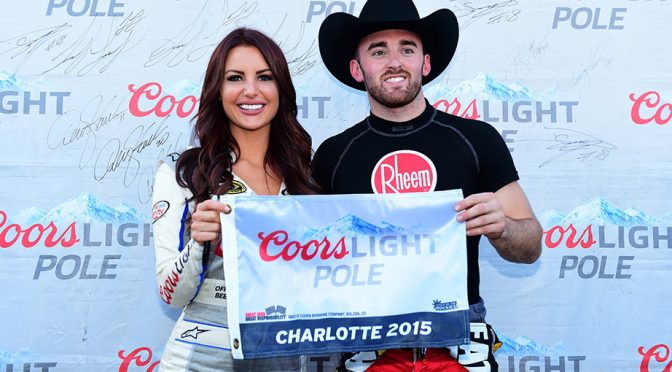
Austin Dillon ruled qualifying for the NASCAR XFINITY Series on Friday afternoon, securing the Coors Light Pole Award at Charlotte Motor Speedway.

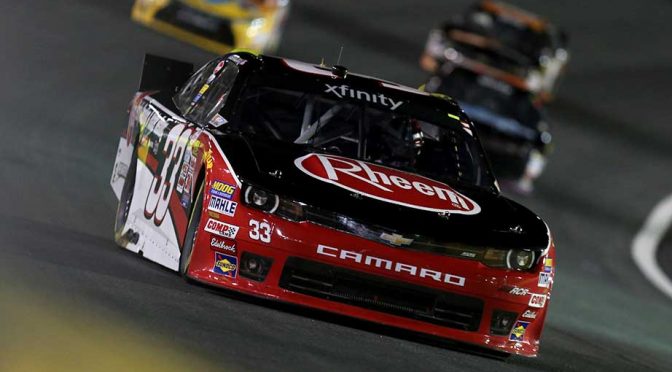
Dillon drove the Richard Childress Racing No. 33 Chevrolet to a fast lap of 183.524 mph on the 1.5-mile track. Dillon will start first in Friday night’s Drive for the Cure 300 Presented by Blue Cross and Blue Shield of North Carolina (8 p.m. ET, NBCSN, PRN, SiriusXM) after claiming his sixth pole position of the season and the 16th of his XFINITY Series career.

Fellow Sprint Cup Series regular Kasey Kahne will start the JR Motorsports No. 88 Chevy alongside Dillon after posting the second-fastest lap at 183.150 mph. Erik Jones was third-best with series points leader Chris Buescher fourth and Kyle Busch completing the top five.

Defending race winner Brad Keselowski was among the drivers failing to advance to the final round of qualifying, posting the 13th-fastest time. Defending series champion Chase Elliott was 17th-fastest, also missing out on the final cut.

Buescher enters the 29th of 33 races this season with a 24-point lead over Elliott and a 36-point advantage over Regan Smith, last week’s winner and the 12th-fastest qualifier.

Cale Conley brought out an early stoppage in the first round of qualifying with a long spin out of Turn 2. Conley’s No. 14 Toyota made slight contact with the inside retaining wall on the backstretch before he was able to limp back to the XFINITY Series garage.

RELATED: Practice 2 results | Final practice results


Kyle Busch led the way in a brotherly 1-2 punch atop final NASCAR Sprint Cup Series practice Friday night at Charlotte Motor Speedway.


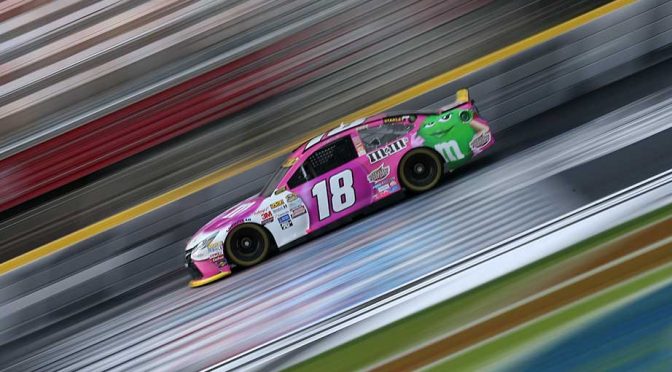
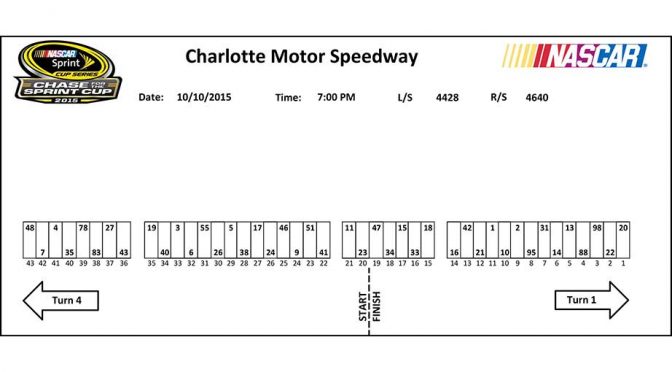
Busch landed a fast lap of 189.354 mph in the Joe Gibbs Racing No. 18 Toyota in the 50-minute session, the final tune-up for Saturday night’s Bank of America 500 (7 p.m. ET, NBC, PRN, SiriusXM). He’ll start second to JGR teammate Matt Kenseth, the Coors Light Pole Award winner, in the fourth race of the Chase for the NASCAR Sprint Cup playoffs.


Brother Kurt Busch was second-fastest at 188.996 mph in the Stewart-Haas Racing No. 41 Chevrolet, backing up his fast time from second practice. The elder Busch was also fastest in the 10-lap average category, edging Jimmie Johnson over the longer run.


Joey Logano wound up third-fastest, turning a lap at 188.508 mph in the Team Penske No. 22 Ford. Chevrolet drivers Ryan Newman (188.488 mph) and Dale Earnhardt Jr. (188.311) completed the top five.


Much like Friday’s earlier practice, the leaderboard was dominated by Chase-eligible drivers, who swept the top six spots. Kenseth was the furthest down the speed chart in 25th, battling through a tire rub after a slight scrape of the outside retaining wall.


Defending series champ and defending race winner Kevin Harvick managed the 12th-fastest lap, improving upon his 25th-best lap in the Friday’s earlier session.


Kurt Busch shows way in Friday’s first practice


Kurt Busch
rocketed to the top of the NASCAR Sprint Cup Series leaderboard Friday, topping second practice Friday at Charlotte Motor Speedway.

Busch, driving the Stewart-Haas Racing No. 41 Chevrolet, clocked a fast lap of 188.772 mph on the 1.5-mile track. He also logged the third-most laps (45) of any driver in the 55-minute session in preparation for Saturday night’s Bank of America 500 (7 p.m. ET, NBC, PRN, SiriusXM), the fourth event in the 10-race Chase for the NASCAR Sprint Cup playoffs. Only teammate Tony Stewart (49) and Kyle Busch (48) turned more laps.

Carl Edwards, the winner of the Coca-Cola 600 at Charlotte in May, was second-fastest at 18.620 mph in the Joe Gibbs Racing No. 19 Toyota. Ryan Newman claimed the third-best lap (187.630 mph) in the Richard Childress Racing No. 31 Chevrolet.


Martin Truex Jr. and Joey Logano completed the top five as Chase drivers swept the first eight spots on the practice leaderboard.


Jimmie Johnson, eliminated from title contention in last weekend’s Challenger Round finale at Dover, was fastest of the non-Chasers at ninth overall on the speed charts. His Hendrick Motorsports No. 48 Chevrolet was fastest in the five-lap average and 10-lap average categories, offering optimism for Johnson & Co. in terms of long-term speed.


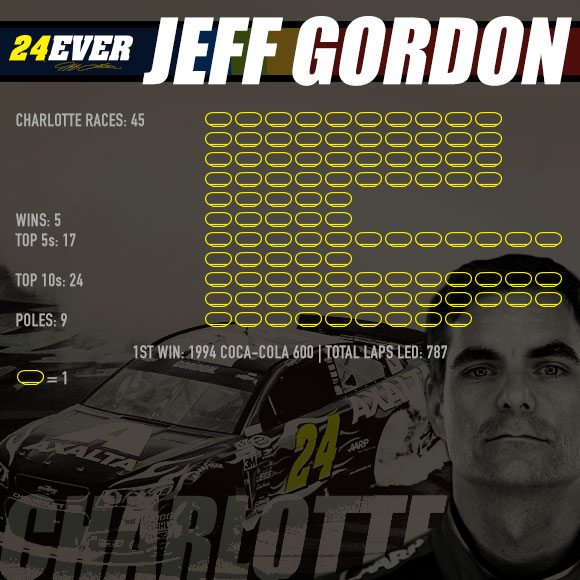
Kevin Harvick, defending Sprint Cup Series champion and defending race winner, was 26th-fastest overall with the second-slowest lap among the remaining 12 Chase-eligible drivers. Jeff Gordon, prepping for what likely will be his final Charlotte Motor Speedway start, was slowest of the Chase drivers, 32nd overall.


Matt Kenseth, the Coors Light Pole Award winner in Thursday qualifying, was also well down the leaderboard in 22nd overall.

RELATED: Complete results from Charlotte

CONCORD, N.C. – Where Charlotte Motor Speedway is concerned, Austin Dillon doesn’t mind being a creature of habit.
 
After experienced veterans Kyle Busch and Kasey Kahne knocked themselves out of contention on Lap 151 of Friday night’s Drive for the Cure 300 NASCAR XFINITY Series race at the 1.5-mile track, Dillon streaked away from Erik Jones to win by 2.809 seconds over the Joe Gibbs Racing driver.
 
With the victory, Dillon completed a season sweep at Charlotte, both wins coming from the pole position. The triumph was Dillon’s fourth of the season in the XFINITY Series and the sixth of his career.
 
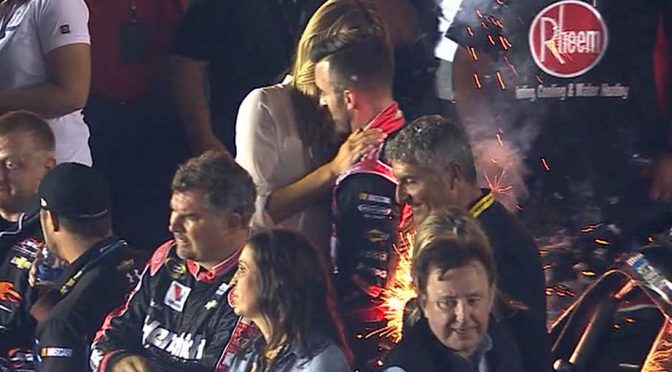
Dillon’s closest call came not on the track, but during the pre-race ceremony. A fireball from one of the skyrockets used to liven up the proceedings dropped out of the evening sky and singed Dillon’s firesuit.
 
“I was actually praying, and the fireworks hit me in the back,” Dillon said. “I didn’t know if it was a sign from God or what. But it got me going right there with a firework in the butt.”
 
Now that he’s completed a season sweep in the XFINITY Series, Dillon will go for a weekend sweep on Saturday night, but he’ll have to win his first NASCAR Sprint Cup Series race to achieve it.
 
“We going to do our best (on Saturday) to do the same thing we did tonight,” Dillon said.
 
Brad Keselowski ran third, followed by Daniel Suarez and Regan Smith. Chris Buescher came home seventh and extended his series lead to 26 points over defending champion Chase Elliott, who finished ninth.
 
Busch lost several positions after a Lap 147 restart, and he and Kahne raced aggressively for third place — with repeated side-by-side contact between the two cars, before Busch pulled ahead. But Kahne drove hard into Turn 3 on Lap 151, tapping Busch’s Toyota twice and sending it up into the outside wall.
 
Kahne’s Chevrolet also sustained damage in the incident, but he managed to finish 12th. Busch took his car to the garage on Lap 154 and retired from the race in 31st-place.
 
“Kyle got mad because he got into it with his teammate (Jones) off Turn 2 on the start,” Kahne said after the race. “That shuffled him back to where I was, and I’m racing to try to get by him.”
 
By Kahne’s account, the hard racing soon escalated.
 
“He started beating on me down the back and on the front, and I overdrove Turn 3 and got into him,” Kahne said.
 
Busch was not available to comment after exiting his car.
 
Before the incident, Busch had led a race-high 102 laps, taking over the all-time lead in the series at Charlotte with 1,288 laps led. Mark Martin was the previous record holder with 1,257.

RELATED: Kahne-Busch incidents through the years


CONCORD, N.C.—It looked like Kyle Busch would drive away to a victory in Friday’s NASCAR XFINITY Series Drive for the Cure 300 at Charlotte Motor Speedway.


But after leading 102 laps, Busch lost a top-two position on Lap 147 to race winner Austin Dillon and Joe Gibbs Racing teammate Erik Jones. Busch dropped back to third and was racing JR Motorsports and fellow NASCAR Sprint Cup Series driver Kasey Kahne for the position.

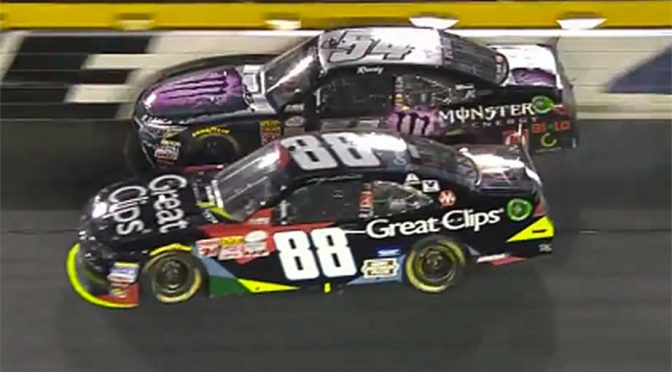
Then on Lap 151, Busch and Kahne made contact in Turn 4 that sent “Rowdy” into the wall and brought out the third and final caution of the race. Kahne appeared to make contact with Busch’s back bumper, which sent him up the track and into the wall. There had been more contact before that while the two were racing side-by-side over several laps. 

The Lap 151 contact was costly for both drivers, hurting either of their chances at a win, but the damage was worse for Busch, who suffered heavy damage to the right side of his No. 54 Toyota.

That led Busch to say over the radio, “The most obvious dump I’ve ever seen.”

Busch brought his wounded machine to the garage, where he ended the night 47 laps down and with a 31st-place finish. 

Kahne, who finished 12th, was not quite sure why Busch was beating on his car before the accident, but he did offer up his perspective.

“Kyle got mad because he got into it with his teammate on Turn 2 on the start and it shuffled him back to where I was,” Kahne said after the race. 

“I’m racing to try and get by where he was. He’s down on me in the corners and I’m against him on the straightaways just doing normal stuff and then he starts beating on me down the back and in the front. 

“I overdrove Turn 3, got into him. I don’t know why he started beating on me other than I think he was frustrated because his teammate kind of used him up a little bit and then got away from him in Turn 2.”

With both drivers regulars in the sport’s top series, does Kahne expect there to be payback Saturday night?

“I would hope not,” Kahne said. “I don’t know why he would want to have that battle. What, he wrecked me five times a couple years ago? Put me in a bad position for those two years when he was doing that. I don’t think he wants that battle on Sundays.”

And while both drivers will be back on track Saturday night in the Sprint Cup Series Bank of America 500 (7 p.m. ET, NBC, PRN, SiriusXM), the two will likely not be on track in the XFINITY Series until next month at Phoenix International Raceway. Kahne is slated to be in the No. 88 Chevrolet for JR Motorsports that weekend, while Busch has been making regular starts in the No. 54 Toyota over the past several months.

Over the years, Kahne and Busch have been involved in several wrecks with each other, notably and most recently at Pocono in June of 2014 as well as at Darlington in May of 2013. The duo even made a bet on Super Bowl XLVIII; after Kahne’s beloved Seattle Seahawks beat Busch’s favorite team, the Denver Broncos, Busch had to wear Seahawks gear en route to 2014 Daytona Speedweeks.


Busch was not available for comment after the race, but his wife Samantha tweeted the following.


RELATED: Dillon celebrates amid fireworks at Charlotte


CONCORD, N.C.—Pre-race ceremonies for the NASCAR XFINITY Series Drive for the Cure 300 at Charlotte Motor Speedway had a scary moment for Austin Dillon.
 
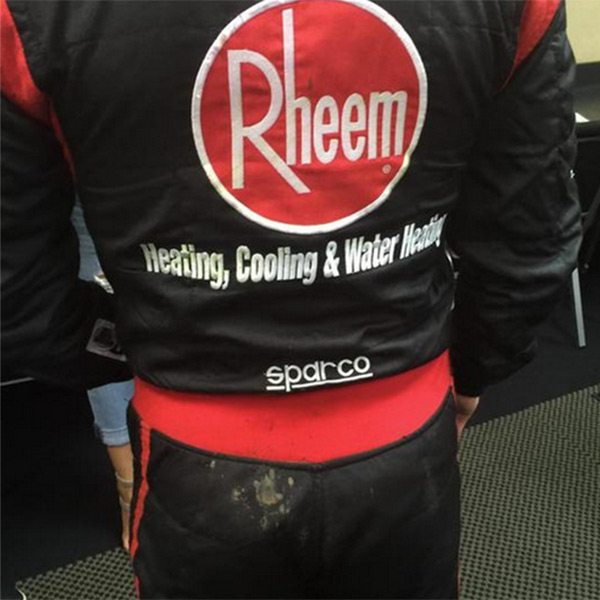
A firework came down next to the pole sitter and his girlfriend, Whitney Ward. The firework landed on Dillon’s backside and burnt the back of his fire suit, NBCSN reported before the race got underway.

By the way the driver of No. 33 Richard Childress Racing Chevrolet drove on this night, he seemed fine. He led 61 laps en route to completing a season sweep of the Charlotte XFINITY Series events in 2015, while also scoring his fourth XFINITY win of the year in just his 16th start.

“I was praying with my girlfriend and I think it was a sign from God,” Dillon said after the race. “He said, ‘your getting ready to have a good night or something.’ Get your butt in gear.”

Dillon said it hurt a little bit and showed off his burnt fire suit in the media center.


Dillon’s crew chief, Danny Stockman Jr. said that the whole thing didn’t seem real.

“To be honest with you, it was looking at a movie screen and seeing all the light crashing right in front of you,” Stockman said. “I thought it was not real for a second. Then, it kind of went in between the door and Austin’s butt. It burnt his fire suit up. It burnt the wrap on the car. They tell kids don’t play with fireworks for a reason.”

Stockman admitted to also being concerned about possible damage to the car from the firework.

“As it fell it hit the left front side skirt and went underneath the car. As hot as whatever is coming off that firework is, it could have burned something underneath there. We checked it out and it was good. Pretty wild.”

RELATED: See the full Chase Grid


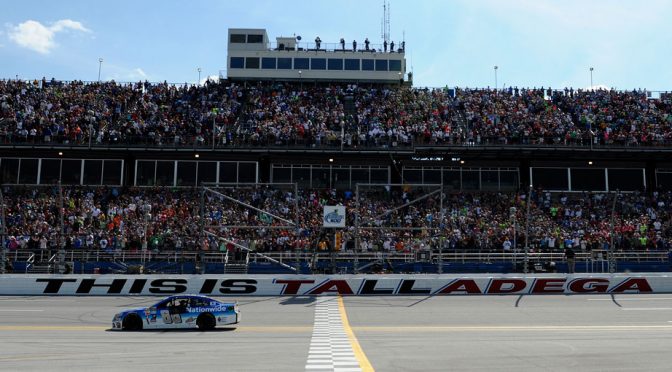
Entering the Contender Round of the Chase for the NASCAR Sprint Cup, something looms over the remaining 12 drivers in the sport’s championship battle — massive Talladega Superspeedway.


Yes, the NASCAR Sprint Cup Series is at Charlotte Motor Speedway for Saturday’s Bank of America 500 (7 p.m. ET, NBC, PRN, SiriusXM NASCAR Radio) and from there the series moves to Kansas Speedway for the Hollywood Casino 400. Yet the 2.66-mile track, which hosts the CampingWorld.com 500 on Oct. 25, is firmly on the minds of all the competitors even though it’s two weeks away.


“I think this round is probably the most stressful because of Talladega,” Martin Truex Jr. told reporters earlier this week at Contender Round Media Day at the NASCAR Hall of Fame. “I think everybody is really putting a lot of pressure on themselves to do good in these first two and try to get a win so you don’t have to worry about Talladega.”


And Truex is not the only driver who feels that way.


“Yeah, nobody wants to go to Talladega ‑‑ even if you’re Dale Earnhardt Jr. and you feel like you’re the most dominant car on those restrictor-plate tracks, and we’ve been, I think, as dominant as he has been just without the victories, I still don’t want to go there and have to be in the top 10,” four-time series champion Jeff Gordon said during media day. “You know, it’s just one of those tracks where there’s too many variables that can reach out and grab you.”


Carl Edwards simplified the approach even more, saying that he looked at the Contender Round as a “two-race series” instead of three races because of the uncertainty with Talladega. The two-time 2015 winner predicted drivers would be going even harder to try to get a win at Charlotte or Kansas to secure a spot in the Eliminator Round of eight drivers.


“If you have a shot, if you can see the win at one of these next two races, you are going to see just some really tough racing for that win because nobody wants to go to Talladega with the uncertainty,” Edwards said on Thursday at Charlotte Motor Speedway. “There’s going to be a lot of nerves at Talladega.”


Last year Kansas hosted the opening race of the Contender Round. That event saw Jimmie Johnson and Dale Earnhardt Jr. find trouble they ultimately could not recover from, while Brad Keselowski had to score a walk-off win at ‘Dega to overcome his Kansas trouble.


But simply navigating the opening two races of the Contender Round doesn’t make drivers immune to Talladega trouble, either. Kyle Busch scored top-five finishes at Kansas and Charlotte in 2014 before being caught up in a 10-car wreck at the Alabama track that sent him to a 40th-place finish and ultimately knocked him out of the Chase — something that wasn’t lost on the Joe Gibbs Racing driver this week.


“Last year we played it right, we were the top point total scorer of the first two rounds and we were seeded the highest guy without a win and we went to Talladega and we sure learned how to throw that away,” Busch said. “I think what we can do a better job of instead of being one of the only guys to race at the back of the pack and get ourselves caught up in something that none of the other Chasers were involved in, is race with all the rest of the Chasers and if they all get caught up in a wreck and we do too then hopefully our point total will all be lower, but all the same instead of me just being the only guy down at the bottom of the totem pole.”


The value of winning early in a round of the Chase is raised to an even higher level in the Contender Round with the uncertainty of Talladega on the horizon.


“When you look at Charlotte and Kansas — the first two races of this round — they’re super-important,” Joey Logano said. “If you can win, you’re going to be sleeping a lot better at night.”

CHARLOTTE, N.C. — There’s the winged sprint car, the midget entry and the Silver Crown machine. The rainbow-colored Chevrolets are on the other side of the room, separated by years and a handful of small tables adorned with No. 24 racing memorabilia.
 
But the car that catches his eye is the white Pontiac stock car. It’s the No. 67 and other than the Outback Steakhouse logo across the hood, it’s vanilla plain by today’s standards.
 
Jeff Gordon, a four-time NASCAR premier series champion, hasn’t seen this car in probably two decades or more. But it was one of the few that helped kick-start his stock car racing career.
 
“That’s where I got my very first start,” Gordon, 44, tells the crowd during Wednesday’s opening of “24: A Tribute to Jeff Gordon” at the NASCAR Hall of Fame.
 
Racing folks know Jeff Gordon the NASCAR star. They know the Hendrick Motorsports driver that, paired with crew chief Ray Evernham, was a force in the series throughout the 1990s. But before he was champion, before he began piling up wins (he’s at 92 and counting), he was Jeff Gordon the former open-wheel racer who wanted to try his hand in stock cars.
 
And the No. 67 was where it all began.
 
“There are some incredible stories that belong to that car,” said Gordon. “But most importantly was I sat on the outside front row at Rockingham in that car and the rest is kind of history. That’s what led to the phone call from (team owner) Bill Davis which … led to the phone call from Rick Hendrick and here we are today.”
 
Impressed with Gordon’s efforts during a stint at the Buck Baker Driving School, team owner Hugh Connerty offered the youngster a chance to drive his car in what’s now the XFINITY Series. That took place in 1990.
 
Gordon made three attempts, failing to qualify at Charlotte Motor Speedway and Martinsville Speedway. In between, at Rockingham, he qualified the car on the outside of the front row.
 
“Unfortunately I have the kind of memory that goes immediately to I remember wrecking on Lap 23,” said Gordon. “We actually tried to run at Charlotte first; qualifying got rained out. We were pretty fast. I knew the car had good speed in it. Then we went to Rockingham and I knew it had good speed in it that day, but we weren’t anywhere close to thinking we were going to be on the outside front row. Laid down a great lap and I think everyone was surprised.
 
“Even today if you really think about it, if somebody comes along and they’re not in one of the top cars or with one of the top teams out there, you’ve not heard a lot about them, and all of a sudden they wind up on the front row, it’s going to draw your attention and you’re going to wonder who this person is.
 
“For me I was fortunate that wrecking on Lap 23 didn’t take away from being on the front row. I just remember getting some huge phone calls after that. I didn’t realize how big it was as the time, I knew I was excited that we were on the front row, but I had no idea what it was going to do for my career.”
 
The exhibit, which features nine cars raced by Gordon during his career, is scheduled to run through Jan. 10 at the NASCAR Hall of Fame.

At least four NASCAR drivers have crashed hard into walls not protected by SAFER (Steel and Foam Energy Reduction) barriers this season, with two sustaining injuries that required medical treatment.

Camping World Truck Series driver Austin Theriault was the most recent victim, as the Brad Keselowski Racing driver suffered a 10 percent compression fracture of the lower back after crashing during the Oct. 3 Rhino Linings 350 at Las Vegas Motor Speedway.

Theriault’s No. 29 Ford struck the wall nose-first in approximately the same spot hit by Erik Jones (Joe Gibbs Racing) earlier this year during an XFINITY Series event. Jones was not injured as a result of his crash.

Tuesday, team owner and 2012 Sprint Cup champion Brad Keselowski said he had not seen Theriault, “but I spoke to him and I know he’s going through all those stages with the protocol you have to go through for NASCAR. Until that’s done, I think it would be a little premature for me to say anything as to how he’s doing.”

Keselowski, whose organization fields two full-time trucks, said he is hopeful his driver will be “ready to go” when the series heads to Talladega Superspeedway in two weeks.

On Thursday, Talladega officials announced “significant safety enhancements … will be in place” before the track’s Oct. 23-25 race weekend.
 
In a statement posted on the track’s web site, officials said “we have installed more than 8,000 linear feet of (SAFER) Barrier in 2015. We are covering the entire outside and interior retaining walls of the 2.66-mile facility.”

The fact that another driver hit in an unprotected area at a track, Keselowski said, does make him cringe, “but then I get back in the race car and say ‘What are my options?’

“As a team owner I have no ability to affect chance on the tracks, and as a driver I’m consistently told how lucky I am to have a spot as a race car driver and I need to shut up and driver the car.

“There are no options available for me to remedy the situation, so I move on to things I can affect change on.”

Steve O’Donnell, Executive Vice President and Chief racing Development Officer for NASCAR, told NASCAR.com on Monday that the installation of SAFER barriers and other safety enhancements is “something that we’ve been very diligent about.

“We were very vocal coming out of Daytona (in February),” he said. “We’ve worked with each of the facilities to have an aggressive plan in place for the SAFER barriers. In this case we’ve already had those conversations with Las Vegas and you’ll see some changes heading into the 2016 season.

“It was very unfortunate … but the tracks have made some big investments in terms of from the first race to the second and I expect that to happen again as we look at Las Vegas and heading into the Cup weekend for 2016.”

Las Vegas Motor Speedway officials, contacted this week, said that plans are in place to have SAFER barrier installed in the area of the Theriault and Jones crashes before next season and that those plans were in place before this most recent incident.

JGR driver Kyle Busch suffered a broken right leg and fractures to his left foot when he hit the inside wall nearest to Turn 1 during the season-opening XFINITY Series event at Daytona International Speedway in February. Busch, who competes full-time in the Sprint Cup Series, missed the season’s first 11 races while recuperating.

DIS president Joie Chitwood said that SAFER barrier should have been in place where the Busch accident occurred, but added after the incident, “we’re going to fix that” and that the energy-absorbing barrier would be installed “on every inch at this property.”

By the time the Sprint Cup and XFINITY Series returned to the 2.5-mile track in July, additional barriers had been put in place beyond the exit of pit road (where the Busch impact took place), along the entire backstretch and at the entrance to pit road beyond Turn 4.

More than 20,000 square feet of grass areas inside the track, between the racing surface and interior walls, was paved as well.

“My thing about it is they do need to work faster,” Busch said of additional SAFER barrier being installed at facilities. “I know there’s a plan, but there’s no reason why some of these race tracks — like Bristol for instance had (SAFER barrier on) the walls on the straightaway” before this year’s spring events at the track.

“And at a place like (Las) Vegas, it’s been eight months and … they don’t have (SAFER) walls. It’s frustrating sometimes.

“I’ve said it before and I’ll say it again … we’ll figure out how to crash in the stupidest ways in the weirdest spots and get hurt. That Austin (Theriault) crash, that was so weird and never should have happened, but it did. We all need to stop playing God and protect as much as we can protect and let the rest take care of itself.”

Fellow Sprint Cup driver Jeff Gordon was not injured when he crashed at Atlanta Motor Speedway, a week after Busch’s wreck, hitting a portion of the backstretch wall not covered with SAFER materials.

Incidents such as Theriault’s “points out how important it is to have every single wall covered at these race tracks,” Gordon, a four-time Sprint Cup Series champion, said.

“You know, for whatever reason, somewhere along the way somebody said ‘we can put it here and we don’t need it here’ and that just proved that it doesn’t matter what stats show. … These incidents can happen at any time,” said Gordon.

According to AMS officials, additional SAFER barrier will be installed in January of 2016 along the outer wall on the front and backstretch as well as portions of the inside wall and in the turns.