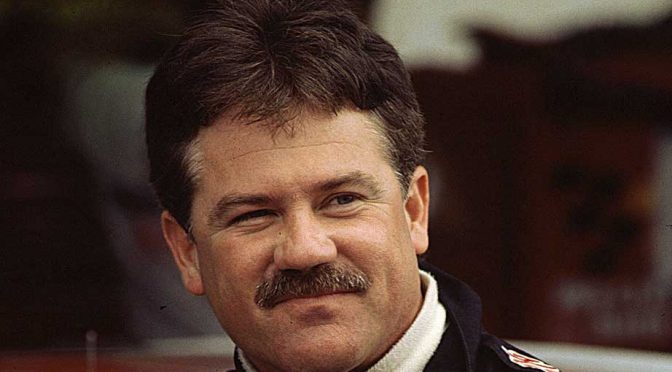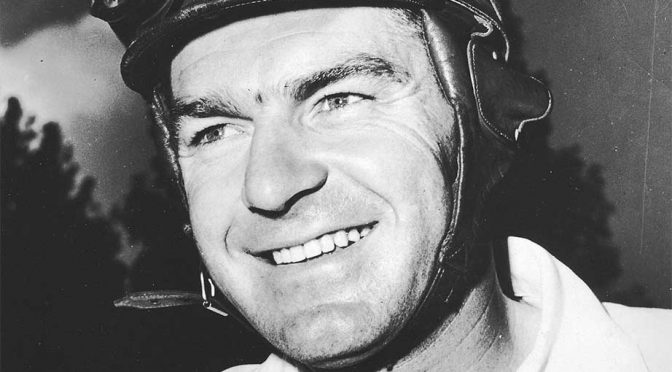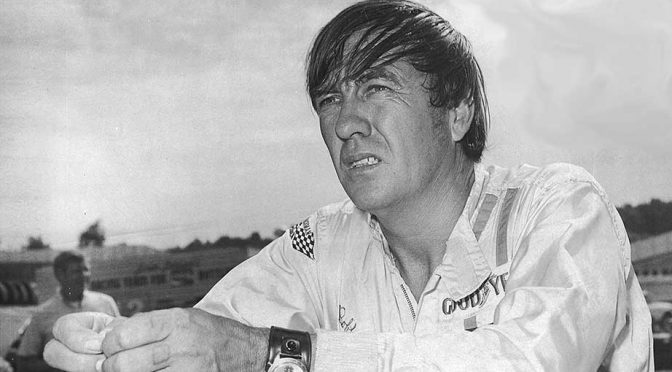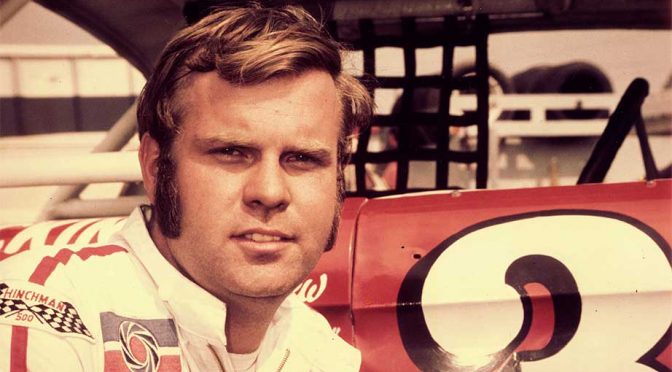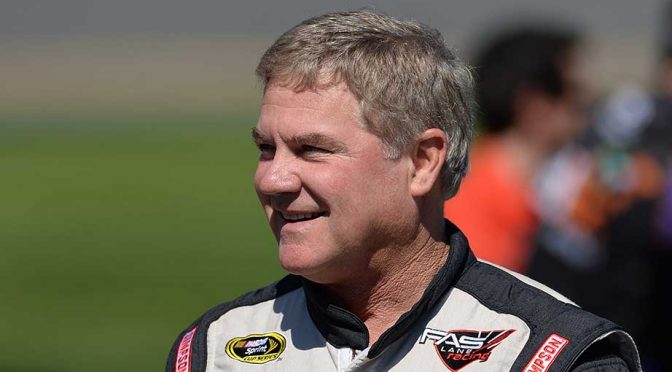
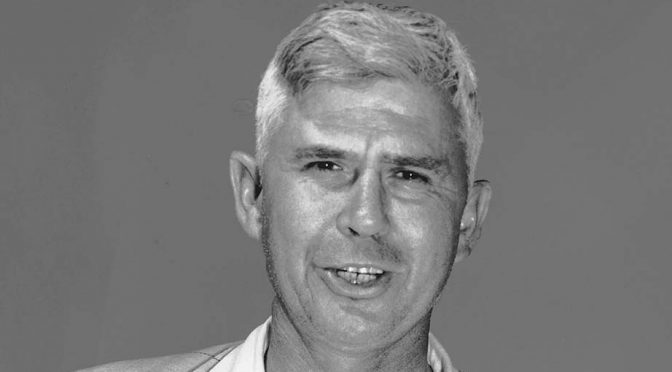
Terry Labonte voted into NASCAR’s Hall of Fame on Wednesday

RELATED: See all seven Hall of Fame classes | Bruton Smith gets nod from Brian France

CHARLOTTE, N.C. – A year ago, Terry Labonte postponed a trip overseas to attend the announcement for the 2015 class of the NASCAR Hall of Fame.

But the two-time premier series champion wasn’t one of the five selected for induction.

FULL SERIES COVERAGE

Latest news
Standings
Schedule

Wednesday, Labonte, 58, was in a hotel room in Dallas, Texas, when the 2016 class was unveiled. And this time, Labonte’s name was one of the five called.

Labonte, Speedway Motorsports founder O. Bruton Smith, Modified champion Jerry Cook, 17-time race winner Curtis Turner and 1970 premier series champion Bobby Isaac will officially be inducted into the Hall Jan. 22, 2016.

Reached by phone after the announcement, Labonte said he and his son Justin, "and a couple of other guys are out here in Dallas on a project we’ve been working on. … We had just got back to the room, sitting down watching TV."

Shortly thereafter, the Corpus Christi native said said his cell phone "started blowing up." Congratulations began pouring in.

"I said, ‘oh wow, I just got selected to the NASCAR Hall of Fame,’" Labonte said. "(Justin) said ‘Oh cool. Is it on TV?’

"I said ‘I don’t know,’ so he started flipping the channels looking for it."

It’s no surprise to those who know Labonte that his reaction seemed somewhat understated. It’s the same unassuming attitude that marked a NASCAR career that lasted nearly four decades.

Labonte made his first premier series start in 1978 for car owner Billy Hagan, and up until he hung up his helmet for good last season, his approach never wavered. No fuss, no frills. Just show up and get the job done.

His championship titles came 12 years apart, one won with Hagan in 1984 and the second with successful team owner Rick Hendrick and Hendrick Motorsports in ‘96. He won 22 points races, and on a variety of track layouts – short track, intermediate, road course and the bigger venues of Pocono (2.5-miles) and Talladega (2.66 miles).

MORE: Hall of Fame Class of 2016 revealed | Our writers’ predictions and ballot

His 890 career starts is third highest among drivers in the series while his 655 consecutive starts was the most by any driver until it was surpassed in 2005. It was a run of such magnitude that earned him the nickname "The Iron Man."

Labonte’s consecutive starts streak had ended five seasons earlier, in 2000, when a particularly hard crash at Pocono Raceway left him with an inner ear injury.

Forced to take himself out of the car the following week at Indianapolis Motor Speedway, a distraught Labonte went on to miss the road course race at Watkins Glen a week later before finally returning to competition at Michigan.

"When you start out racing, it’s not one of your goals you set," Labonte said of his selection to the Hall. "You set out to do as good as you can every weekend and try to win races and win championships.

"To be selected to something like this is really, really an unbelievable bonus, something you never really expected or looked forward to, I don’t think. So it’s really quite an honor."

Video from two of Labonte’s victories are among the most often replayed when the series travels to Bristol Motor Speedway, where he earned two of his 22 victories.

In the 1995 night race at BMS, contact from Dale Earnhardt as the two raced toward the checkered flag sent Labonte’s No. 5 Chevrolet nose first into the wall – but only after it had crossed the finish line for the win.

The 1999 night race also featured Labonte and Earnhardt dueling for the win, with Labonte taking the lead at the white flag. As the two cars entered Turn 2, a nudge from Earnhardt once again sent Labonte’s Chevrolet spinning. This time, however, there was no recovery.

"Didn’t mean to turn him around; I meant to rattle his cage though," Earnhardt said in Victory Lane.

"I don’t think I ever had a cross word with Terry, not that I can remember, for anything," 2015 NASCAR Hall of Fame inductee Bill Elliott said Wednesday. "We always raced and respected each other and went on down the road.

"I can’t think of a single time ever. I don’t know of anybody that could say that. Except when he backed into Earnhardt at Bristol that time."

Labonte was the second driver to win at least one race in all three of NASCAR’s national series – Sprint Cup, XFINITY and Camping World Truck Series.

"Obviously this is a really proud day for the Labonte family," Bobby Labonte, Terry’s younger brother and the 2000 Sprint Cup champion said in a statement issued by his Breaking Limits public relations firm.

"I think back to when we were kids racing quarter midgets, and I always wanted to do what Terry was doing and be like him. He kind of blazed the trail as he advanced through different series, and I was fortunate to follow in his footsteps. 

"I never would’ve thought way back then that we’d both grow up to be Sprint Cup champions and now one of us in in the NASCAR Hall of Fame. It’s a pretty special day."

The younger Labonte won the season-ending race at Atlanta in ’96 as his brother, who finished fifth, wrapped up his second championship.

While Terry Labonte‘s championships came 12 years apart, his final victory came 23 years after his first. Both came in the Southern 500 at Darlington (South Carolina) Raceway.

"You think bout how you started and who the people were … that helped you get started in the early part of your career," he said. "Winning your first race and the championship and then later I was able to drive for Rick Hendrick, the great team at Hendrick Motorsports and all the people that helped me win the second championship.

"It’s just really a lot of people that really were kind of part of this over the years that kind of help to get you where you’re at.

"It’s hard for me to imagine, really, to be in the same class as some of those people that are in there because some of them I really looked up to over the years when I was growing up that did so much for our sport."
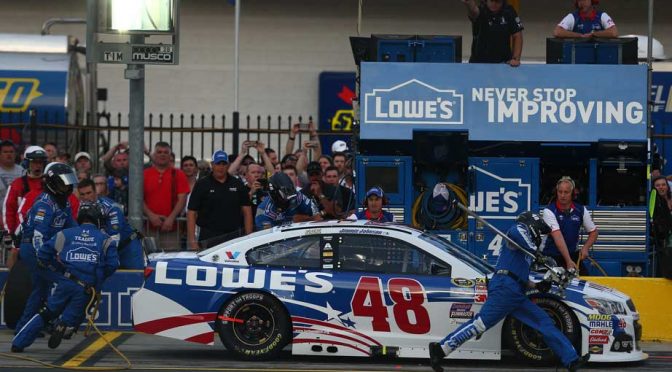
Written warning from NASCAR implies 48 team’s infraction was minor

NASCAR officials gave no details concerning the decision to not penalize the Hendrick Motorsports No. 48 team following Saturday night’s Sprint All-Star Race at Charlotte Motor Speedway, only noting on Tuesday that the team had been issued a written warning.

FULL SERIES COVERAGE

Latest news
Standings
Schedule

Following the annual non-points race, it was announced that officials were reviewing a "potential infraction by a crewman of the 48 team" for modifying the side skirt of the white and blue Chevrolet driven by six-time series champion Jimmie Johnson.
 
Chad Knaus, crew chief for Johnson, said earlier this week that he didn’t consider the issue "a big deal," noting that the crew had attempted to repair damage to the right side of the car after Johnson made contact with the wall during the race.
 
NASCAR began policing the altering of side skirts, located in front of the rear tires, after teams began routinely manipulating the pieces in an effort to gain an aerodynamic advantage last season.
 
According to the NASCAR Sprint Cup Series rulebook, written warnings fall under P1 level infractions in the NASCAR Deterrence System, and generally relate to the most minor of infractions.
 
Rule 12.5.3.1.a states, "While the warning is primarily for the information of the member or team affected, NASCAR will also advise the garage that a warning has been issued to that member or team. However, NASCAR will generally not specify or detail the infraction publicly unless it pertains to something new or unforeseen that the rest of the garage would benefit by knowing. Warnings are not appealable."
 
Multiple warnings could result in the loss of practice time or other activities related to pre-race preparations.
 
Earlier this year, the SHR No. 10 team, with driver Danica Patrick, was also issued a warning, and information detailing that infraction was made public. Patrick’s team received a warning for an unapproved left-side driver heat shield discovered during opening-day inspection at Daytona International Speedway.
 
The cars of race winner Denny Hamlin (Joe Gibbs Racing) and runner-up Kevin Harvick (Stewart-Haas Racing) were taken to the NASCAR Research & Development Center following Saturday night’s race. Tuesday, NASCAR said those entries had passed the final post-race inspection.
 
Helmets for crewmen remain required but unregulated

 
Nearly every piece of clothing and safety equipment used by crewmen going over the wall to service a car during a race must meet certain safety standards.
 
One of the only items not required by NASCAR to meet certain SFI specifications are the helmets worn by crewmen.
 
"You have to look at where we started," Robin Pemberton, Vice President of Competition and Racing Development, said last week. "The helmets were basically for contact and things of that nature, not fires. … Possibly there will be some development for some purpose (specific) helmets for crew guys.
 
"As long as you have the (head) sock on … most helmets don’t have fire retardant lines in them anyway."
 
Over-the-wall crewmen have been required to wear helmets since the start of the 2002 season. For most, the style of helmet worn depends on their duties once they cross pit wall.
 
"You need to have good vision and they want coverage — they don’t want lug nuts hitting them in the mouth," Pemberton said. "It’s morphed in several different ways. Some guys like a three-quarter helmet, some like a shorter helmet; it’s kind of their preference. … I think (the teams are) searching for better ways and other ways to protect their crew guys."
 
Among the changes in safety apparel NASCAR will implement beginning June 4 was the notation that fueler aprons "must be worn on the outside of uniform."
 
While that might seem like an unusual requirement, it is an issue that has been raised previously, according to Pemberton.
 
"We’ve had different situations … in an odd pit stop strategy you may have had a rear tire carrier or someone like that assist with the fueling process," he said, and occasionally the apron would be worn inside the uniform to keep it from interfering in the crewman’s other duties during the stop.
 
However, NASCAR officials can’t tell if the crewman is in compliance without being able to see the apron, thus the change.

Landmark Award, Class of 2016

Laughs.

Born: May 10, 1909
Died: Feb. 4, 1996
Hometown: Darlington, South Carolina

Those were the only responses elicited by Harold Brasington when he showed members of his Darlington, South Carolina community plans to build a superspeedway in the small southern farm town.

But Brasington had the last laugh.

The South Carolina businessman, who believed in Bill France’s fledgling NASCAR business, created the sanctioning body’s first superspeedway — a one-of-a-kind egg-shaped oval, paved on an old cotton and peanut field.

Expecting 10,000 fans to show up at Darlington Raceway’s first competition on Labor Day of 1950, 25,000 spectators showed up for the inaugural Southern 500 — NASCAR’s first 500-mile race.

A mega-event was born.

Darlington’s success inspired Brasington to extend his reach north — to North Carolina. He employed his track building and promoting expertise, helping in the creation of Charlotte Motor Speedway and building North Carolina Motor Speedway in Rockingham, North Carolina.

NASCAR Hall of Fame, Class of 2016

Terry Labonte is a two-nickname NASCAR star. Early in his career he was known as the “Iceman” for his coolness under pressure.  But his demeanor belied his determination. Later in his career he became known as the sport’s “Iron Man” thanks to 655 consecutive starts in NASCAR’s premier series, a record which stood until 2002.

Born: Nov. 16, 1958
Hometown:
Corpus Christi, Texas

Championships (2)
Premier:
1984, ’96 (driver)

Premier Series Stats
Competed:
1978-2014
Starts:
890
Wins:
22
Poles:
27

Winning two premier series championships, in 1984 and ’96, is impressive; the 12-year gap distinguishes Labonte further. No other driver has won his first two championships that far apart and Labonte is one of only six drivers to have won premier series championships in two decades.

Labonte’s stellar career is tucked between perfect bookends — his two Southern 50 wins, in 1980 and 2003. His 361 top-10 finishes ranks 10th all time.

In 1998, Labonte was named one of NASCAR’s 50 Greatest Drivers.

NASCAR Hall of Fame, Class of 2016

O. Bruton Smith, executive chairman of Speedway Motorsports Inc., bought his first race car at the age of 17 and a year later promoted his first stock car race in Midland, North Carolina. Smith’s early endeavors included operating the National Stock Car Racing Association — seen as an early competitor to NASCAR — and building Charlotte Motor Speedway.

Born: March 3, 1927
Hometown:
Oakboro, N.C.

CMS became the foundation of Speedway Motorsports Inc., which currently owns eight NASCAR tracks hosting 12 NASCAR Sprint Cup Series events, the NASCAR Sprint All-Star Race and additional high-profile motorsports activities.

Smith took SMI public in 1995 to become the first motorsports company to be traded at the New York Stock Exchange. Smith is founder of Sonic Automotive, a group of several hundred auto dealerships across the United States.

Smith is active in child-related causes with his philanthropic foundation Speedway Children’s Charities.  He was inducted into the North Carolina Business Hall of Fame and National Motorsports Press Association’s Hall of Fame, both in 2006; and the International Motorsports Hall of Fame in 2007.

NASCAR Hall of Fame, Class of 2016

Called by some the “Babe Ruth of stock car racing,” Curtis Turner was among the fastest and most colorful competitors in the early years of NASCAR premier series racing.

Born: April 12, 1924
Died: October 4, 1970
Hometown:
Roanoke, Va.

Premier Series Stats
Competed:
1949-68
Starts:
184
Wins:
17
Poles:
16

Turner competed in NASCAR’s first "Strictly Stock" race in 1949 in Charlotte and was the only driver to win a NASCAR premier series race in a Nash. He posted his first of 17 career victories in only his fourth start on Sept. 11, 1949, at Langhorne (Pennsylvania) Speedway.

Although many of Turner’s victories came on short tracks and dirt ovals — much of his career pre-dated NASCAR’s superspeedway era — he won the 1956 Southern 500 at Darlington Raceway and the first American 500 at Rockingham Speedway in 1965. He remains the only series driver to win two consecutive races from the pole leading every lap.

Turner drove for many legendary NASCAR owners including the Wood Brothers, Junior Johnson, Smokey Yunick and Holman-Moody.

He also won 38 of 79 races in which he competed in the NASCAR Convertible Division.

Turner was named one of NASCAR’s 50 Greatest Drivers in 1998.


NASCAR Sprint Cup Series Statistics

Year Age Races Win Top 5 Top 10 Pole Laps Led AvSt AvFn RAF Miles LLF
1949 25 6 of 8 1 1 4 1 564 78 3.0 12.2 6 410.6 1
1950 26 16 of 19 4 7 7 4 1626 1110 4.3 14.6 12 1416.6 5
1951 27 12 of 41 3 3 5 0 1164 513 11.3 16.3 5 986.0 3
1952 28 7 of 34 0 1 1 0 500 12 15.1 27.0 1 328.4 0
1953 29 19 of 37 1 3 5 3 1396 191 3.1 14.8 13 1360.3 1
1954 30 10 of 37 1 7 8 1 1678 277 6.6 6.5 9 1490.6 3
1955 31 9 of 45 0 4 4 0 928 14 8.6 19.2 5 822.4 2
1956 32 13 of 56 1 4 5 0 1967 466 9.9 16.5 6 1428.3 2
1957 33 10 of 53 0 2 4 1 1397 109 8.8 13.0 7 1310.2 2
1958 34 17 of 51 3 8 10 1 3068 827 11.0 10.4 11 2423.5 6
1959 35 10 of 44 2 4 4 1 1293 438 15.2 12.2 5 1174.9 4
1960 36 9 of 44 0 0 1 1 1090 106 16.6 22.7 2 1699.6 0
1961 37 8 of 52 0 1 2 0 1182 162 10.0 22.8 3 1255.4 1
1965 41 7 of 55 1 3 3 0 1360 256 5.9 19.0 3 1312.0 2
1966 42 21 of 49 0 5 6 2 3698 385 7.0 18.8 7 4211.1 3
1967 43 4 of 49 0 0 0 1 241 6 8.5 31.0 0 522.3 0
1968 44 6 of 49 0 1 4 0 1448 0 7.7 8.8 4 1554.5 0
17 years    184 17 54 73 16 24600 4950 9.0 16.8 99 23706.7 35

NASCAR Hall of Fame, Class of 2016

Bobby Isaac knew one speed: Fast.

Born: August 1, 1932
Died: August 14, 1977
Hometown:
Catawba, North Carolina

Championship
Premier:
1970

Premier Series Stats
Competed: 1961-76
Starts:
309
Wins:
37
Poles:
49

His uncanny skill at qualifying a race car proves that. His 49 career poles ranks 10th all-time. Maybe more impressive: Isaac captured 19 poles in 1969, which still stands as the record for poles in a single season. Only 38 drivers have 19 or more poles in their entire career.

Isaac began racing in NASCAR’s premier series in 1961. He finished runner-up in the series standings in 1968 behind NASCAR Hall of Famer David Pearson. In 1969, he finished sixth in the standings after posting 17 wins and those 19 poles.

In his breakthrough season, 1970, Isaac won the championship posting 11 victories, 32 top-fives and 38 top-10s in 47 starts.

A year later, in September 1971, he set 28 world-class records on the Bonneville Salt Flats in his Dodge. Many of his records exist to this day.

Isaac won 37 races in NASCAR’s top series, ranking him 19th on the all-time wins list. In 1998, Isaac was named one NASCAR’s 50 Greatest Drivers.


NASCAR Sprint Cup Series Statistics

Year Age Races Win Top 5 Top 10 Pole Laps Led Rank AvSt AvFn RAF Miles LLF
1961 29 1 of 52 0 0 0 0 2 0 15.0 18.0 0 3.0 0
1963 31 27 of 55 0 3 7 0 4991 30 11.3 14.6 12 4352.8 1
1964 32 20 of 62 1 5 7 0 3163 134 8.5 14.5 7 3411.6 3
1965 33 4 of 55 0 1 1 1 699 183 5.5 22.3 1 478.8 0
1966 34 9 of 49 0 2 3 0 1387 21 10.8 20.1 3 1386.9 2
1967 35 12 of 49 0 3 5 0 2625 65 11.6 15.3 7 3931.3 0
1968 36 49 of 49 3 27 36 3 12947 1384 5.7 8.1 38 9459.8 10
1969 37 50 of 54 17 29 33 19 12308 5053 3.6 10.0 31 9530.6 22
1970 38 47 of 48 11 32 38 13 12726 3179 3.3 6.8 38 11458.6 17
1971 39 25 of 48 4 16 17 4 6856 1753 4.1 10.8 17 7710.6 7
1972 40 27 of 31 1 10 10 9 5636 1325 3.4 19.3 11 6975.0 5
1973 41 19 of 28 0 5 6 0 4177 62 6.7 20.2 8 4648.2 0
1974 42 11 of 30 0 1 5 0 1907 11 11.7 20.4 5 2490.1 0
1975 43 6 of 30 0 0 1 0 1101 0 51 12.7 26.8 1 1213.6 0
1976 44 2 of 30 0 0 1 0 512 0 116 23.5 22.0 1 539.5 0
15 years 309 37 134 170 49 71037 13200 6.3 12.9 180 67590.4 67


NASCAR Hall of Fame, Class of 2016

Jerry Cook made his name in modifieds, winning six NASCAR Modified championships, including four consecutively from 1974-77. All the while, he was vying with another driver from his hometown of Rome, New York, nine-time champion and NASCAR Hall of Famer Richie Evans, for supremacy in NASCAR’s open-wheel realm. The rivalry was homegrown — and intense.

Born: June 20, 1943
Hometown:
Rome, New York

Championships (6)
Modified: 1971, ’72, ’74, ’75, ’76, ’77

Modified Series Stats
Competed:
1963-82
Starts:
1,474
Wins:
342
Poles:
26

Modified racing is NASCAR’s oldest form of competition — the staple of the very first NASCAR season in 1948. Cook has said the cars’ appeal was based on that history and the fact that the racing is unique within NASCAR.

After retiring from racing in 1982, Cook stayed with the sport and helped shape the series known today as the NASCAR Whelen Modified Tour. Cook served as the series’ director when it began in 1985 and remains with NASCAR as competition administrator.

In 1998, he was named one of NASCAR’s 50 Greatest Drivers.

Three bold predictions for the Class of 2016 induction

RELATED: Class of 2016 revealed | NASCAR news release about the inductees

With seemingly every Voting Day that goes into the history books, the process for selecting each class of five NASCAR Hall of Fame inductees becomes more and more difficult. NASCAR trimmed the list of nominees from 25 to 20 two years ago, but that hasn’t made the procedure any easier.

Strong cases can be made for all 20 nominees, all worthy candidates in their own right. That’s what makes predicting this year’s five akin to picking winning lottery numbers from a hopper of ping-pong balls.

With fearless abandon, three NASCAR.com staff writers reveal their Hall of Fame predictions. Kenny Bruce’s selections represent his actual ballot as a member of the 58-person NASCAR Hall of Fame voting panel; selections from Holly Cain and Zack Albert represent mock ballots.

KENNY BRUCE

Red Byron: He may have only won two Strictly Stock races, but Bryon was the very first champion (1949) in what is today’s Sprint Cup Series. This will be the seventh class named to the Hall. It’s time Byron, winner of the ’48 Modified title as well, got his due.

Terry Labonte: The only driver among the nominees with multiple premier series titles not in the Hall, Labonte ended his career with 22 victories and 42 runner-up finishes. His 361 top-10s is 10th all-time while his 890 career starts trail only two other drivers — Richard Petty and Ricky Rudd — and he won on just about every type of track configuration.

Robert Yates: One of the sport’s premier engine builders, Yates’ engines powered Hall of Famer Bobby Allison to the title in 1983 while as an owner his teams won 57 races, including three Daytona 500s and the 1999 title with driver and Hall of Fame member Dale Jarrett.

Jerry Cook: Won four consecutive titles, and six overall, in NASCAR’s Modified Division. By the end of his 20-year career behind the wheel, Cook had amassed 342 wins. Few were as successful, and one — Richie Evans — is already in the Hall.

Curtis Turner: Most folks that saw Turner behind the wheel would tell you he was one of the most talented drivers ever to compete in NASCAR. While he never ran full-time, he won 17 times in the premier series, and 38 races in NASCAR’s convertible division.

MORE: See all seven NASCAR Hall of Fame classes 

HOLLY CAIN

Raymond Parks: NASCAR’s first championship car owner is a significant part of the sport’s history and one of the original group that met at Daytona Beach’s Streamline Hotel to found the sanctioning body. Although previous Hall of Fame inductees may have accumulated heftier statistics, it’s time Parks joins NASCAR’s other trailblazers and we celebrate his contribution.

Rick Hendrick: A 14-time championship owner in NASCAR’s three national series, Hendrick’s time has come to be recognized for his contributions over decades. His manner of fielding Cup teams has changed the sport’s landscape both off the track and on the track.

Terry Labonte: The only multi-time Cup champion on the ballot, the quiet but talented and focused Labonte was never fully appreciated for his accomplishments. He won titles in two of the toughest eras of competition racing against the new and old guard of the sport’s elite.

Bruton Smith: One of the sport’s biggest personalities, Smith’s conglomeration of speedways from Bristol, Tennessee, to Sonoma, California, to NASCAR’s home track Charlotte Motor Speedway, along with his emphasis on promotion has served as a strong foundation a bustling model of success. 

Ray Evernham: In my eyes, Hall of Fame class inductees should represent different roles in the sport, and Evernham certainly has proven himself worthy of such distinction. His contributions are prolific and diverse. He not only led Jeff Gordon to three championships as crew chief, but also his work with the team and, in particular, his innovation on pit stops, transformed the Cup Series. He went on to become a successful team owner, guiding Dodge’s return to NASCAR and has proven himself adept as a television commentator as well.  

ZACK ALBERT

Curtis Turner: A case where charisma goes further than stats, the swashbuckling Turner captivated crowds and rose to stardom at a time of dramatic growth for the sport, becoming the first NASCAR driver to grace the cover of Sports Illustrated. Induction for Turner would surely prompt many spirited stories about his hard-partying lifestyle and interpretive approach to aviation, but it would also validate a major truth — the larger-than-life man who called everyone "Pops" could flat-out drive.

Mark Martin: Very few drivers can claim sustained excellence in parts of four decades at NASCAR’s top level. Even fewer have 96 victories in NASCAR national series to their credit. While the knock on Martin might be that he never claimed a championship ring at NASCAR’s top level, the driver who finished second five times in the premier series standings is most deserving of his Hall of Fame coronation.

Terry Labonte: In the previous three NASCAR Hall of Fame ballots, the voting panel has elected one individual with more current ties to the sport. With Martin and Labonte this year, there’s room for two. Labonte’s accomplishments as the sport’s Ironman and Iceman all in one, plus his pair of premier-series championships, deserve Hall recognition sooner rather than later.

Red Byron: The breadth of Byron’s accomplishments in stock-car racing are fleeting, but his ground-breaking contributions as NASCAR’s first champion of the Strictly Stock (now Sprint Cup) and Modified divisions merit strong consideration. That Byron achieved as much as he did after suffering a severe leg injury in World War II makes his Hall credentials even more remarkable.

Rick Hendrick: Perhaps there’s some hesitation to voting in a team owner whose contributions to stock-car racing history are far from complete, but skimming over Hendrick’s 200-plus victories and 11 championships in NASCAR’s premier series would be an oversight. Hendrick, a savvy businessman away from the track, changed the model for how modern stock-car racing teams are built.