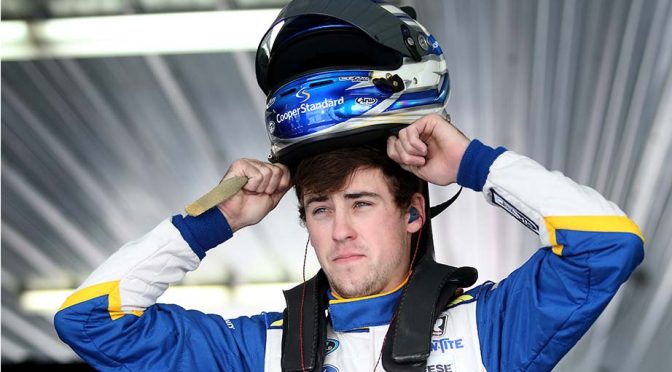
Blaney maintains points lead over ThorSport duo

Related: Camping World Truck Series standings

The NASCAR Camping World Truck Series has become known for late-race restarts with trucks fanning out to seven and eight-wide heading into Turn 1. In Saturday’s Pocono Mountains 150, the final restart was the difference between first and second in the points standings at the halfway mark of the season.

When the trucks came back to the start/finish line for the green-white-checkered finale, points leader Ryan Blaney was eighth and defending champion Matt Crafton was fifth. As they ran, Blaney and Crafton were tied atop the standings.

In the outside line in front of Blaney, Crafton’s ThorSport teammate Johnny Sauter pushed leader Austin Dillon to move first and move faster than the inside line. It dropped Crafton to 14th at the line and 12 points back of Blaney, who finished fifth. Sauter earned a runner-up position, moving up to second in the standings, seven behind Blaney.

FULL SERIES COVERAGE

Latest news
Standings
Schedule

"For me, it’s the most nerve-racking restarts of the whole year," Sauter said. "I don’t know why that is. Daytona and Talladega don’t even compare to this because there’s so much opportunity for people to fan out.

"… basically on a restart here, my mentality is I don’t care what’s going on behind me. I’m not looking in the mirror. I’m going to keep pushing until I can’t push no more the guy in front of me."

Blaney agreed with Sauter and felt fortunate to be in the outside line at the end while Crafton was on the inside.

"It’s hard to keep your spot if you’re up there," Blaney said. "If you’re not making moves, then you’re losing spots. I might not have been an aggressive as I needed to be, but I thought we were plenty smart about it.

"And luckily I was eighth and our line went right there. I was really fortunate about that so just being in the right line at the right time, and we got lucky and it paid off for us."

After the 11th race of the season, Blaney holds the advantage heading into the second half of the season while Crafton attempts to become the first driver to repeat as a Truck champion.

The 2013 Pocono race winner, Blaney wasn’t able to defend his title, but he was happy with extending his lead.

"We’re happy that we stretched the points," Blaney said. "Even on the long run, I thought the 3 (Dillon) was a little bit better than us. (Kyle) Larson was definitely better than us until he had problems, but I thought we would have been a top-three truck. We were all day.

"You know that this race always comes down to a bunch of restarts at the end. We just didn’t have our truck quite good enough to be good those first two laps, but you’ve got to be happy whenever you stretch the lead out."

While happy with the lead, Blaney isn’t points racing as he seeks a third consecutive season with at least one win in the Truck Series.

"You always keep your eye on the big picture, but at the same time, I want to win in the truck and bring Ford back to Victory Lane," Blaney said. "To me, it’s a little too early to be totally a points mindset, but it’s always in the back of your mind."

Sauter is searching for a victory, too. Eleven races without a win to start a year is his longest drought since his first full-time season in the Truck Series in 2009 when he went to Victory Lane in the 20th race at Las Vegas.

"This is the deepest we’ve gone into a season without a win I think in the last four years," Sauter said. "Today is a step in the right direction. Hopefully it’s momentum for us for sure. We’ve had speed at a lot of places, especially on the long run stuff."

The series heads to Michigan International Speedway in two weeks, and it’ll be a special weekend for Blaney as well as a chance at redemption after a 32nd and last-place finish in last year’s race. His sponsor and team owner’s charity are sponsoring the Careers for Veterans 200 Presented by The Cooper Standard Foundation and Brad Keselowski‘s Checkered Flag Foundation.

"I’m really excited to go back (to Michigan), especially with Cooper Standard sponsoring the race. We’ve got the Careers for Veterans truck back on. It’s the last time we’ll run it, and I’m really excited for that.

"We didn’t have a good run at Michigan last year. We got wrecked on the first lap. Being such a big event, hopefully we’ll have a good showing out there, and it’s going to be really cool to be in Ford’s backyard and Cooper Standard’s backyard. It’s definitely going to be a big race for us."

MORE:

READ: Latest
NASCAR news

WATCH: Latest
NASCAR video

PLAY: NASCAR
Fantasy Live

FOLLOW LIVE: Get
RaceView

From wrecks to fights to fantastic finishes, Watkins Glen has seen it all

RELATED: Play NASCAR Fantasy Live | Sign up for RaceView today

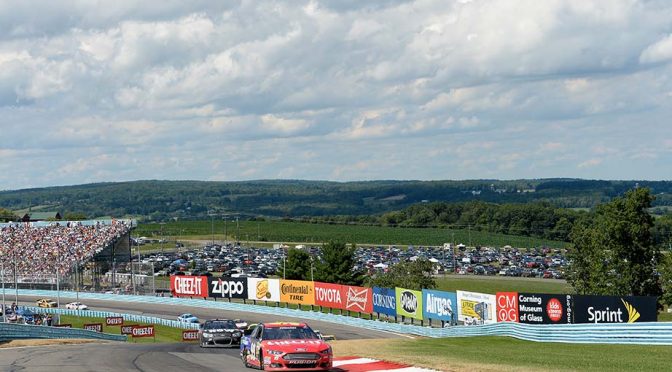
Tight corners, fast straightaways, heightened tensions and frayed nerves. Welcome to Watkins Glen International, the road course that drives like a superspeedway, and a layout which often leaves drivers fuming — or even feuding — in its wake.

It’s been that way ever since 1986, when NASCAR returned to the upstate New York track and created a race that has become a summertime staple on the shores of Seneca Lake. Those blue guardrails, that nefarious first corner, and drivers stuck in the kitty litter — sometimes blaming one another — have become part of NASCAR lore. And then there’s the setting, a historic hilltop facility that’s hosted virtually every major series in the world of motorsports at one time or another, which only adds to the atmosphere.

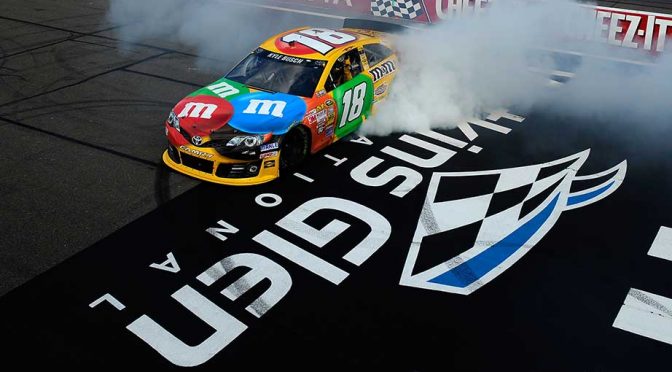
Indeed, despite its relatively short time on the NASCAR schedule, Watkins Glen has seen a little bit of everything. Last season, when Kyle Busch overcame a spate of wrecks, a few late restarts and a hard-charging Brad Keselowski to prevail at the finish, was no different. There will undoubtedly be more memorable moments created Sunday, when the NASCAR Sprint Cup Series returns once again to this speedway masquerading as a road course. Until then, here are the top 10.

FULL SERIES COVERAGE

Latest news
Standings
Schedule

10. A first and a fight: 2000
It was a perfect storyline — Steve Park, a native of Long Island, earning his first victory in NASCAR’s premier series at a track in his home state. Driving for Dale Earnhardt, Park dominated the race but needed to hold off Mark Martin at the end. And yet Park’s victory was somewhat overshadowed by shenanigans in the garage area, where Tony Stewart and Jeff Gordon hurled four-letter accusations at one another after making contact earlier in the race. "I owe you one now, buddy," an angry Gordon declared as he was restrained by crewmen, including a young Steve Letarte. Gordon would settle things the next year by winning the race.

9. NASCAR’s return: 1986
The world’s foremost stock-car circuit first came to Watkins Glen in 1957, just one year after the course opened, and Buck Baker won the inaugural race. It returned after a six-year hiatus, with Billy Wade and Marvin Panch winning in successive seasons before the departing again, this time for 20 years. But it returned in a big way in 1986, when road-course ace Tim Richmond earned what would prove his lone victory at the New York track. Richmond led the final 12 laps to hold off Darrell Waltrip, and NASCAR found a permanent foothold in the Finger Lakes region which endures to this day.

8. Ringers can wait: 1999
Road-course ringers may have descended on NASCAR events in force throughout the 1990s and early 2000s, but specialists haven’t scored a victory at the sport’s top level since Mark Donohue scored the first triumph for Roger Penske at Riverside in 1972. But one certainly had a chance at Watkins Glen in 1999, when Canadian road-race ace Ron Fellows lined up second behind Gordon on the final restart with two laps remaining. But this was back in the day when Jeff Gordon was unstoppable on road courses, and the reigning series champ jumped out to a big lead off the restart and went on to win. The ringers, meanwhile, still wait.

7. ‘Little scaredy cat’: 2011
Boris Said is a nice guy who has taught dozens of NASCAR drivers how to road race, even at the expense of his own career. But after a rain-postponed Monday race in 2011, he was enraged at Greg Biffle, and he wasn’t afraid to say it. "He’s the most unprofessional little scaredy cat I’ve ever seen in my life," he told ESPN after confronting Biffle in the garage. "Somebody text me his address. I’ll go see him at his house … and show him what he really needs. He needs a frigging whooping, and I’m going to give it to him." Marcos Ambrose won that day to record his first victory at the sport’s top level, but once again the focus was in the garage.

6. Into the wall: 2000
We can laugh about it now, because the driver involved not only walked away, but went on to win six championships (and counting) at NASCAR’s highest level. But at the time, it was pretty harrowing — Jimmie Johnson‘s car in what’s now the NASCAR Nationwide Series losing its brakes off a corner, bounding into the air, and skidding along the grass at nearly full speed. It slammed head-on into a barrier coated with large blocks of protective foam. Johnson emerged, stood on top of the car, and raised his arms in triumph and relief. Later, he bought a few pieces of that foam and the car, which he restored and has sitting in his garage.

5. Montoya vs. Ambrose: 2010
Now, this was a battle of heavyweights: former Formula 1 driver Juan Pablo Montoya and former V8 Supercar driver Ambrose, the two foremost road-racing transplants of their day, going at it for the lead midway through the 2010 event. Ambrose tried again and again to get by, Montoya again and again shut the door. Ambrose finally muscled past, but he couldn’t hold on — he suffered a long pit stop, then radioed he had a flat tire, and ended up third while Montoya claimed his second victory at NASCAR’s top level. But while it lasted, the duel between the two world-class road racers was a good as Watkins Glen can deliver.

4. Gordon vs. Stewart: 2007
The two best all-time from a NASCAR standpoint, Gordon and Stewart had another epic confrontation at the Glen in 2007, but this time they kept it to the race track. Gordon, going for his fifth career victory and trying to snap a skid at the track that remains to this day, wheel-hopped in Turn 1 with less then two laps remaining, and spun around while in the lead. It was a rare mistake from the four-time champion, who had led the previous 29 laps. And it opened the door for second-place Stewart, who charged through and held off Carl Edwards for his fourth victory in his last six starts at Watkins Glen. Two years later, Stewart added a track-record fifth.

3. Harvick vs. Montoya: 2007
In that same 2007 event, two other drivers got a little physical with one another outside Turn 1. Kevin Harvick and Juan Pablo Montoya were running fifth and sixth when they tangled off a restart in an accident that also collected Jeff Burton. The two cars came to rest with their noses pointed at one another, and soon the drivers were doing the same. "Let’s see if they’re going to fight," ESPN analyst Rusty Wallace said. They didn’t go that far — but there was an awful lot of shoving, particularly from Montoya, until officials intervened. Tensions carried over into the garage, where JPM’s team complained about Harvick’s crew working on the car under a red flag. Just another Sunday at Watkins Glen.

2. Broken but not beaten: 1996
Dale Earnhardt never won at Watkins Glen — his lone road-course victory came at Sonoma in 1995 — but he turned in one of the more courageous performances of his career at the New York track in 1996. Two weeks after fracturing his sternum in a crash at Talladega, and one week after needing a relief driver at Indianapolis, Earnhardt decided to race at the Glen despite medical advice to the contrary. In great pain and working the steering wheel partly with his knees because use of his arms was so limited, the Intimidator won the pole with a track record time, and then went on to finish sixth in the race. He had a relief driver on standby — but he never needed him.

1. A fantastic finish: 2012
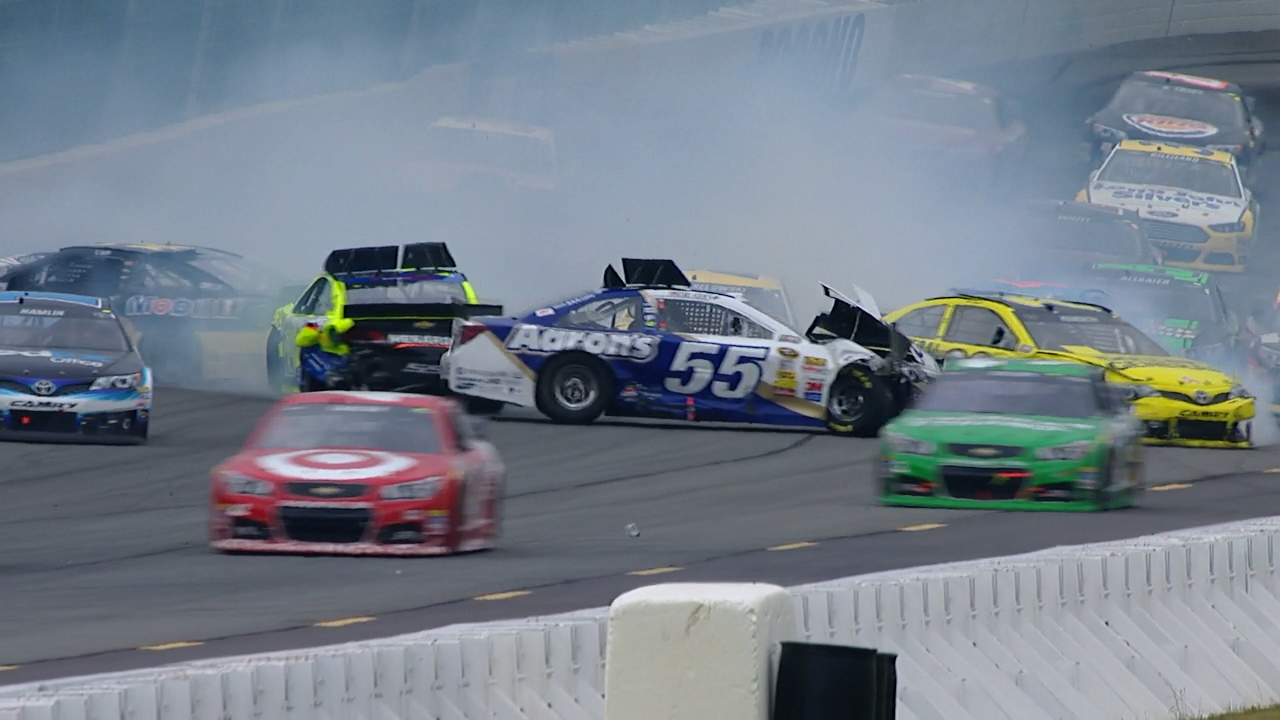
Somewhat appropriately, the greatest NASCAR moment at Watkins Glen isn’t a crash or an argument or a scuffle. It’s simply one of the best finishes you’ll ever see anywhere, three drivers slipping and sliding on a slick race track, with the lead on the final lap in the balance. Kyle Busch, Brad Keselowski and Marcos Ambrose were 1-2-3 at the white flag, but Busch drifted way wide through Turn 1 and came down into Keselowski, sending the No. 18 car spinning. It came down to Keselowski and Ambrose, both cars blasting over rumble strips and through grassy cutoffs as an awestruck crowd looked on.

The end was just epic — Ambrose put the bumper to Keselowski once, twice, and finally got by, but the Australian drifted sideways through a late corner and the Penske driver pulled even again. Approaching the final turn they were nearly door-to-door, but Ambrose pushed Keselowski high up the race track, and the champion-to-be fishtailed as he entered the final turn. Finally Ambrose was clear, and everyone exhaled and celebrated following a fantastic finish that was everything NASCAR is supposed to be.

MORE:

READ: Latest
NASCAR news

WATCH: Latest
NASCAR video

PLAY: NASCAR
Fantasy Live

FOLLOW LIVE: Get
RaceView

Crew chief leaving amid success is rare

RELATED: Junior wins at Pocono | Ives to be Dale Jr.’s crew chief in 2015
MORE: Play NASCAR Fantasy Live | Sign up for RaceView today

Crew chief changes almost always occur because something is wrong. The car isn’t performing as well as expected. The relationship between the driver and the person on the pit box is strained. The race team is torn apart by tension. The vast majority of the time, a crew chief change is an attempt to remedy some underlying problem which is ultimately having a negative impact on performance.

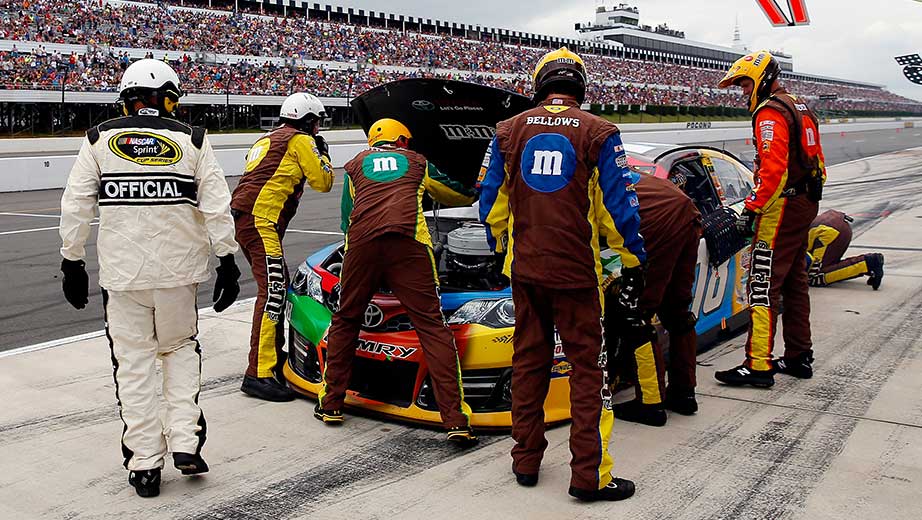
All of which makes this looming transfer of power on Hendrick Motorsports‘ No. 88 program so interesting. Dale Earnhardt Jr. is in the midst of his best season in a decade, looking ever more like a championship threat in the wake of Sunday’s victory at Pocono Raceway, his third of the year. This team isn’t struggling — it’s firing on every possible cylinder, and powered by the relationship between a driver and a crew chief who often seem of a single mind.

And yet, that relationship has an expiration date, given that crew chief Steve Letarte is stepping down after this season to pursue a second career as a television analyst. It’s a laudable, inarguable move by a dad and a husband who clearly has his life priorities in order, as bittersweet as it might seem to Earnhardt and members of his fan base. But it’s also a rather rare occurrence, a crew chief leaving when things are going this well, and it doesn’t leave much historical precedence to predict how Earnhardt and Greg Ives may fare together in 2015.

FULL SERIES COVERAGE

Latest news
Standings
Schedule

No question, all the signs are positive — as a longtime engineer for Jimmie Johnson and now a crew chief for Chase Elliott in the NASCAR Nationwide Series, Ives comes from the same 48/88 shop which has built not one but two powerhouse programs, and he’s well-known to Earnhardt given his time at both Hendrick and JR Motorsports. The familiarity and the relationships are clearly there — although you could have said the same thing about Matt Kenseth and Chip Bolin when the latter took over Roush’s traditionally strong No. 17 program prior to the 2008 campaign.

The parallels aren’t exact, but you still have a team on very good footing — Kenseth had won at least one race in each of the previous six seasons, won a championship in 2003, and pushed Johnson to the wire for the title in 2006 — and a crew chief leaving for the right reasons. Robbie Reiser and Kenseth seemed joined at the hip, even more so than Earnhardt and Letarte are today, given that the two Wisconsinites came up racing together on short tracks across the upper Midwest. When the call came for Reiser to move up to general manager, he couldn’t say no. His replacement was a natural one — Bolin, the No. 17 team’s engineer through all those winning campaigns, would simply slide over one seat on the box.

All the ingredients were in place for a seamless transition — except, it wasn’t. Kenseth went winless for the first time since 2001, finished an uncharacteristic 11th in final points, and at the end of the season all parties agreed that Bolin was better suited as an engineer. Drew Blickensderfer came aboard and oversaw a Daytona 500 victory, but Kenseth — a very hands-on driver when it comes to the makeup of his race team — would go through two more crew chief changes over the next year and a half before returning to form with another guy from Wisconsin, in this case Jimmy Fennig.

Now, what does all that portend for Earnhardt and Ives? Nothing, really, except to suggest that even what seem to be the best of arrangements can go sideways on occasion. Hendrick is in a better position now than Roush was then, Ives will have more experience calling races than Bolin did, and Earnhardt will have all the resources of NASCAR’s best team at his disposal. But Kenseth is as good as they come, and if he can struggle (relatively speaking) in a situation where all the history and all the personal relationships would suggest otherwise, then anyone can.

The index case for this kind of breakup might be found back at the Hendrick shop itself — although one very different from the facility we know today, before the glass and steel showpieces and the pit crew workout area on the main lawn. After 47 victories and on the heels of back-to-back championship seasons, Ray Evernham left Jeff Gordon‘s program with seven races remaining in the 1999 campaign to lay the groundwork for his own team, which would spearhead Dodge’s return to the sport. Gordon hardly missed a beat, winning twice more that season with interim signal-called Brian Whitesell, three the next year with Evernham’s successor Robbie Loomis, and then added a fourth title in 2001.

Indeed, Gordon wrote the textbook on how to move on after losing a successful crew chief, and could surely serve as a font of advice for his teammate Earnhardt. But that particular situation is a prickly application to today, given that the cars and the inspection processes and even the sport were all so different back then. And for all their success together, Gordon and Evernham had probably run their course. Gordon was no longer a young driver by that time, but a mature competitor with his own ideas, and in less need of such a rigid crew chief. Had Evernham not left, an inevitable separation was probably coming nonetheless.

That is certainly not the case with Earnhardt and Letarte, who look like they could keep going for years together if circumstances were different. And recent NASCAR history is full of evidence of how a new crew chief can reinvigorate a driver, from Kenseth and Jason Ratcliff last season at Joe Gibbs Racing, to Kevin Harvick and Rodney Childers this season at Stewart-Haas Racing, to Dave Rogers taking over Kyle Busch‘s program late in the 2009 season to Letarte pairing with Gordon late in the 2005 campaign. Given the state of his program at present, Earnhardt doesn’t need someone to spark that invigoration — he needs someone to keep it going.

Beginning in 2015, that task falls to Ives, who would appear to have all the tools to make it happen — a strong relationship with Earnhardt, experience atop the box, enough time remaining in this season to familiarize himself with his future driver’s preferences, and undoubtedly fast cars. From a personnel standpoint, this is the perfect move for a team that right now is stronger than Kenseth’s was in 2008, more cohesive than Gordon’s was in 1999, and part of a larger organization more potent than anything NASCAR has seen since the heyday of Petty Enterprises. This should work. This will work.

And yet until Ives is on the box making calls for the No. 88 team, the unknowns will linger. Joey Logano took a step forward after crew chief Greg Zipadelli left to become competition director at Stewart-Haas, winning a race with Ratcliff and positioning himself for his current ride with Team Penske.

Then there was Bobby Labonte, who along with Jimmy Makar built one of the preeminent teams of its time, winning 19 races and a title in an eight-year stretch. Makar left to become JGR’s director of racing operations, Labonte won twice the following season with Michael McSwain — and never won again.

Such a prediction for Earnhardt would be dire and unfounded, given all he’s shown over the past two seasons. Regardless of who the crew chief is, the No. 88 team appears too strong to do anything put continue on its current trajectory. But in racing, simulations are one thing. Everything changes when the car hits the track for real.

MORE:

READ: Latest
NASCAR news

WATCH: Latest
NASCAR video

PLAY: NASCAR
Fantasy Live

FOLLOW LIVE: Get
RaceView

Rick Hendrick discusses the future of Nationwide Series phenom

RELATED: Play NASCAR Fantasy Live | Sign up for RaceView today

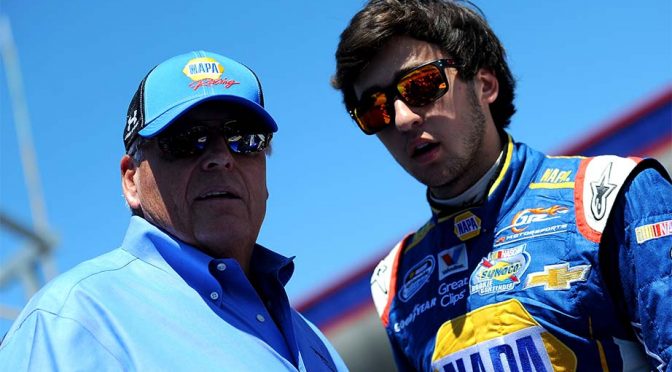
Rick Hendrick’s plan for NASCAR Nationwide Series phenom Chase Elliott evidently entails a few NASCAR Sprint Cup Series starts next season, the champion car owner said Wednesday in an interview on SiriusXM NASCAR Radio.

The 18-year-old Elliott tops the Nationwide Series standings and leads all series regulars with three race victories. Dale Earnhardt Jr., co-owner of his JR Motorsports race team, has said that Elliott is likely to run another full season on NASCAR’s No. 2 circuit next year. Hendrick, also a co-owner at JRM, sounded as if a few premier series starts will also be sprinkled into that mix.

FULL SERIES COVERAGE

Latest news
Standings
Schedule

A test session in which Elliott tested the cars of Hendrick Motorsports champion drivers Jimmie Johnson and Jeff Gordon convinced the team owner the youngster was ready, even before he took the Nationwide circuit by storm.

"We haven’t arrived at a decision for sure, but I think you’ll probably see him run a few races next year," Hendrick told the satellite radio network. "Before he ever won a Nationwide race, I watched him test Jimmie’s car and Jeff’s car at Nashville, and Jimmie and Jeff both commented to me, ‘This kid is super smooth and super fast. He takes care of his equipment, and he doesn’t get in a jam.’

"I said before he ever ran a race, I would put him in a 600-mile race at Charlotte and think he’d finish in the top 15, top 10, because he’s so smart," Hendrick added. "He just understands the car and takes care of it. I think he’s going to do a super job whenever the time comes. I think we’ll surely, probably the second half of next year, we’ll probably see him in some races."

Although Hendrick currently fields four full-time cars, the maximum for one organization as allowed by NASCAR, rules do permit teams to run an additional vehicle on a limited slate for prospective rookie drivers.

Elliott’s crew chief, Greg Ives, will move to Sprint Cup next season to oversee Earnhardt’s program. During the announcement of that move last week, Earnhardt said Hendrick had "a great plan" for Elliott, who will have a new crew chief for his Nationwide program in 2015.

"Mr. Hendrick has a great plan for Chase going forward that we all believe in, and those particulars will be filtering out and announced whenever they’re ready to be announced. But now’s not the time," Earnhardt said then.

"But we definitely have a lot of things that we’re very, very excited about for Chase. We feel like he’s got a great opportunity, not only in (2015) to have a great, successful season with whomever’s his crew chief, but also this year with Greg and what they have remaining this year. I’m excited to get that information out there, and will do that when the time comes."

MORE:

READ: Latest
NASCAR news

WATCH: Latest
NASCAR video

PLAY: NASCAR
Fantasy Live

FOLLOW LIVE: Get
RaceView

Four drivers have potential to clinch with a second win

MORE: Current Chase standings | Series standings
RELATED: Full coverage of the Chase for the NASCAR Sprint Cup format changes | Official news release | Changes explained | Chase Facts and FAQ

Drivers with multiple wins and who cannot fall out of the top 30 in points have clinched a spot in the Chase for the NASCAR Sprint Cup, assuming they attempt to qualify for the remaining races. After Pocono, seven fit that category: Dale Earnhardt Jr., Brad Keselowski, Jeff Gordon, Jimmie Johnson, Carl Edwards, Joey Logano and Kevin Harvick.

FULL SERIES COVERAGE

Latest news
Standings
Schedule

If there is a repeat 2014 winner this weekend, any driver with one win and a locked-up top 30 spot will clinch a spot in the Chase. Potentials: Kyle Busch, Denny Hamlin, Aric Almirola and Kurt Busch.

If there is a new winner, a good bit of math will come into play post-race. Kyle Busch, the highest ranked of the one-win drivers, could potentially lock up a spot with only one win (though it would be difficult).

If Matt Kenseth, who has clinched a top-30 spot, wins, he could be high enough in points to clinch a spot, even though it would be his first win. The same applies to Ryan Newman and Clint Bowyer.

For Kenseth, Newman and Bowyer, a win would clinch them if they have enough points to guarantee a points position ahead of the lowest ranked winner after Richmond.

After Watkins Glen, the clinching driver must be 193 points ahead of 31st place.

MORE:

READ: Latest
NASCAR news

WATCH: Latest
NASCAR video

PLAY: NASCAR
Fantasy Live

FOLLOW LIVE: Get
RaceView

At home or on the go, keep tabs on Cup and Nationwide races this weekend

RELATED: Play NASCAR Fantasy Live | Sign up for RaceView today

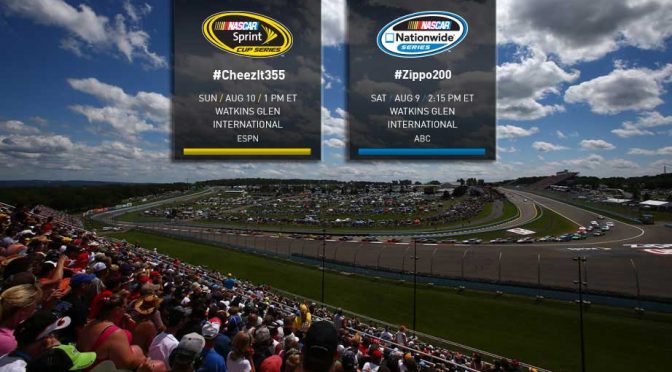
This weekend brings the NASCAR Sprint Cup Series and NASCAR Nationwide Series to Watkins Glen International.

The Sprint Cup Series Cheez-It 355 at the Glen is on Sunday, Aug. 10, at 1 p.m. ET with coverage on ESPN.

The Nationwide Series ZIPPO 200 at the Glen is on Saturday, Aug. 9, at 2:15 p.m. ET with coverage on ABC.

For more information on track times, press conferences and GarageCam, you can check out this weekend’s schedule. For TV times see this week’s TV schedule.

We know you may not have the time to watch the race action without any interruptions, so if you’re on the go, here’s how to keep up at Watkins Glen.

NASCAR.com’s live Sprint Cup Series leaderboard and Nationwide Series leaderboard update in real-time and offer constant text updates of lead changes, cautions, strategies, strong runs and everything in between. On the go? Download the NASCAR Mobile app to follow the leaderboards live from your device.

NASCAR Sprint Cup Series RaceBuddy is back on NASCAR.com and NASCAR Mobile. Get 10 live high-definition feeds, including views of pit road and battle cams.

Lap-by-Lap will keep you caught up even if you can take a peek here and there. Check in now and then to read back through all the laps you’ve missed, or keep an eye on the feed for real-time race updates.

We’ll also send race updates via Twitter through the official @NASCAR and @NASCARStats handles.

Haven’t tried RaceView yet? If you sign up, you’ll get virtualized video of cars on the track from various angles and hear what your favorite team is saying over the radio. Use it as a second screen or as your only screen. Just want to scan the radios? You can have that too with RaceView Audio. On a mobile device? Get RaceView Mobile here.

If you want to be more involved in the on-track action, you can manage your fantasy team on NASCAR.com and follow your team’s performance in NASCAR Fantasy Live. Mobile users can also download NASCAR Connect, a game from OneUp Sports that allows users to play other fans with race predictions, for some off-track competition while drivers battle it out on the track.

Live Press Pass streams will keep the NASCAR action rolling even after the winner goes in and out of Victory Lane. Catch interviews with the top finishers immediately following the checkered flag for the Sprint Cup Series and Nationwide Series, and stay tuned to NASCAR.com throughout the week for the latest news.

MORE:

READ: Latest
NASCAR news

WATCH: Latest
NASCAR video

PLAY: NASCAR
Fantasy Live

FOLLOW LIVE: Get
RaceView

Labor Day Weekend race will be the Oral-B USA 500

RELATED: Play NASCAR Fantasy Live | Sign up for RaceView today

Only 16 drivers will have a chance to brush with destiny once the Chase for the Sprint Cup field locks in early September, but they’ll have a chance to brush something else a week prior at Atlanta Motor Speedway — their teeth.

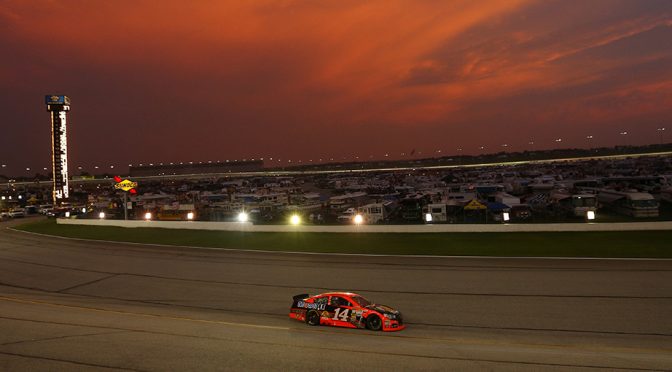
Oral-B has been named the title sponsor of the NASCAR Sprint Cup Series race on Aug. 31 at the 1.5-mile facility and the event will be named the Oral-B USA 500.

FULL SERIES COVERAGE

Latest news
Standings
Schedule

The Oral-B USA 500 will cap the Labor Day Weekend races at AMS, including the Great Clips 300 to benefit Feed the Children, the Nationwide Series event scheduled for Aug 30. The Oral-B USA 500 is the second to last race before the Chase for the Sprint Cup begins, offering drivers one of two last opportunities to secure a win and lock up a berth in the Chase.

"We are thrilled to welcome Oral-B to the Atlanta Motor Speedway family of business partners," said Ed Clark, president of Atlanta Motor Speedway in a track release. "Labor Day weekend is a great opportunity to highlight American workers and showcase an all-American brand which has remained committed to the American worker for more than 50 years."

Oral-B decided to sponsor the Labor Day Weekend race as a celebration of its commitment to supporting American jobs. Opened in 1958, the Oral-B Iowa City plant remains the largest toothbrush factory in the world, where more than 470 employees make 1 million manual toothbrushes every day that engineer healthier smiles.

Fans are encouraged to support the effort by joining the #OralBUSA conversation.

MORE:

READ: Latest
NASCAR news

WATCH: Latest
NASCAR video

PLAY: NASCAR
Fantasy Live

FOLLOW LIVE: Get
RaceView

Chat with fans while following the action

RELATED: Play NASCAR Fantasy Live | Sign up for RaceView today

MORE:

READ: Latest
NASCAR news

WATCH: Latest
NASCAR video

PLAY: NASCAR
Fantasy Live

FOLLOW LIVE: Get
RaceView

Examining the NASCAR drivers who have rallied from injuries

RELATED: Play NASCAR Fantasy Live | Sign up for RaceView today

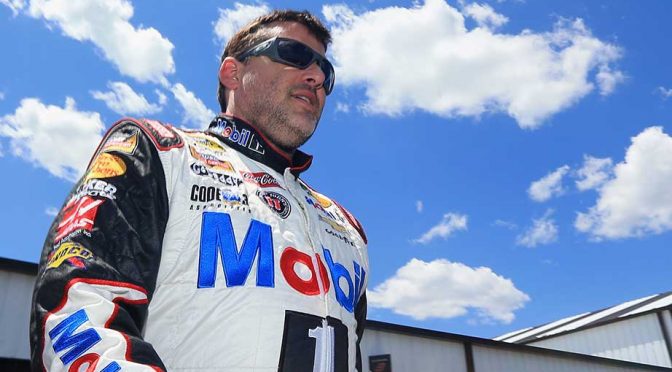
His points standing is precarious and his status for the upcoming Chase for the NASCAR Sprint Cup is tenuous at best, but given where he was one year ago, this season has to already be considered something of a success for Tony Stewart. After suffering a compound fracture of his right leg that proved much worse than most originally thought — and required a painful rehabilitation process that forced him out of the car for the second half of last season — the three-time champion has returned to start every race this year.

From a performance standpoint, no question Stewart is still trying to regain his footing — but that was also an issue a season ago, even before he crashed in a sprint car at Southern Iowa Speedway last Aug. 5. Although "Smoke" has yet to win this season and his 19th-place ranking in the points doesn’t bode well for his Chase hopes, it’s hard to blame all that on his injury and recovery given what we’ve seen from the No. 14 team since early last year.

With five races still remaining in the regular season, though — including tracks like Watkins Glen and Atlanta, where he’s traditionally been very strong — there’s still time for Stewart to make a big move and secure the playoff berth that would cap his return. Either way, given the extent of the physical damage and the length of time that he missed, Stewart’s comeback has already earned a place on the list of the most impressive injury comebacks that NASCAR has ever seen. This sport has no shortage of drivers who were able to turn pain into perseverance.

FULL SERIES COVERAGE

Latest news
Standings
Schedule

Richard Petty

Year: 1970
Injury: Dislocated shoulder
Where: Crash during race at Darlington
Comeback: Perhaps the most harrowing moment of the King’s career came when he slammed into the inside wall at Darlington, resulting in a series of flips that left the No. 43 car on its roof. Spilling out the window were Petty’s left arm and the red rag he often kept in his mouth, leading everyone to fear the worst. Amazingly, the worst of it was a dislocated left shoulder which forced Petty to miss the next five races — the only time in his career he sat out due to injury — and led to the development of the window net. Petty went on to win 14 more times that year, but finished fourth in a title race claimed by Bobby Isaac.

Ricky Rudd

Year: 1984
Injury: Concussion
Where: Crash during exhibition race at Daytona
Comeback: In one of the more harrowing accidents you’ll see anywhere, Rudd’s car went sideways off Turn 4, sailed into the air, and then flipped and rolled too many times to count during what is now known as the Sprint Unlimited. He spent a night in the hospital but was back at the track the next day. His eyes were so swollen he had to tape them open, but he still finished seventh in the Daytona 500. The following week at Richmond, he won.

Darrell Waltrip

Year: 1990
Injury: Broken leg
Where: Crash during practice at Daytona
Comeback: The most serious crash of Waltrip’s career occurred when Terry Labonte spun to spark a pileup that sent Dave Marcis slamming into D.W.’s car. The three-time champion was hospitalized with a broken left leg, and doctors repaired the fractured femur with a metal plate measuring 18 inches long. Waltrip amazingly missed just six races, returned to finish third at Richmond, and won twice the following season. The incident and its aftermath also helped to soften a driver whose "Jaws" persona had become among the most polarizing in the sport.

Davey Allison

Year: 1992
Injury: Broken arm
Where: Crash during race at Pocono
Comeback: Allison had already weathered a hard crash en route to winning that year’s all-star exhibition, which sent him to the hospital with a concussion. Four weeks later at Pocono, he made contact with Waltrip in traffic, sending his car through a series of violent flips. Allison suffered another concussion, as well as a broken right arm and wrist. The next week at Talladega he tried to use Velcro to affix his arm to the steering wheel, but still ended up turning his car over to a relief driver. He did the same the next week, but returned in full with a fifth-place result at Michigan, and won later that year in Phoenix.

Ernie Irvan

Year: 1994
Injury: Brain trauma
Where: Crash during practice at Michigan
Comeback: Perhaps the most triumphant return from injury in NASCAR history, Irvan was a serious championship contender when he lost a tire and slammed into the wall at Michigan. Originally given just a 10 percent chance of survival, Irvan recovered but missed the rest of the 1994 season and virtually all of ’95. But by the following year he was back to form, and Irvan won three more times before another hard crash at Michigan forced a premature end to his career.

Bill Elliott

Year: 1996
Injury: Broken leg
Where: Crash during race at Talladega
Comeback: Elliott’s car went airborne on the Talladega backstretch and nosed down into the infield grass, leaving the driver with a broken left leg. Million Dollar Bill underwent surgery the next morning in Birmingham and missed the next five races, and upon returning managed just three top-10 finishes the rest of the year. He emerged as a regular contender again the following season, but that painful 1996 campaign still came during a six-year winless skid that Elliott wouldn’t snap until Homestead in 2001.

Dale Earnhardt

Year: 1996
Injury: Broken sternum
Where: Crash during race at Talladega
Comeback: It was difficult for him to breathe, and he couldn’t raise his left arm. His sternum had been broken and dislocated, the bottom half sticking up about an inch beyond the site of the fracture. Dale Earnhardt had suffered the injury in a brutal crash at Talladega, and had made six laps the next week at Indianapolis before turning his car over to a relief driver. Against all medical advice, he wanted to race at Watkins Glen. With the kind of injury that last year forced then-NASCAR Nationwide Series driver Michael Annett to miss two months, Earnhardt won the pole with a track-record time and finished sixth in the race.

Ricky Craven

Year: 1997
Injury: Concussion
Where: Crash during practice at Texas
Comeback: Craven’s crash in Fort Worth was the most prominent in a series of hits that forced the driver to miss two races in the 1997 campaign. The real aftereffects of his head injury didn’t manifest themselves until the following season, when Craven sat out 22 starts as he battled post-concussion syndrome. Upon returning he won the pole at his home track in New Hampshire, and even though the layoff cost him his ride with Hendrick Motorsports, he still went on to claim two victories in NASCAR’s top series.

Tony Stewart

Year: 2006
Injury: Broken scapula
Where: Crash during race at Charlotte
Comeback: Given what he’s endured lately, this one seems far less serious — though that surely didn’t lessen the pain in 2006, when Stewart cut a tire and slammed the wall at Charlotte hard enough to fracture his right scapula. Although the injury needed six weeks to heal, Stewart started the next race at Dover before turning his car over to Ricky Rudd at the first caution, 37 laps into the event. The following week at Pocono, Stewart drove the car to a third-place finish. Three weeks later at Daytona, he was back in Victory Lane.

Dale Earnhardt Jr.

Year: 2012
Injury: Concussion
Where: Crash during race at Talladega
Comeback: Earnhardt was seventh in the Chase standings when he was involved in a large multicar pileup at Talladega that resulted in his second concussion that season, following a previous one suffered in an accident during a test at Kansas. The aftereffects led him to miss the next two races, at Charlotte and Kansas, and the layoff dropped him to 12th in final points. But Earnhardt scored top-10s in two of his final three starts that season, laying the groundwork for a strong 2013.

Denny Hamlin

Year: 2013
Injury: Fractured vertebra
Where: Crash during race at Auto Club Speedway
Comeback: Hamlin’s feud with Joey Logano reached a fever pitch on the final lap at Fontana, when the two rivals wrecked one another going for the win. Hamlin slammed into an inside wall, and was airlifted to the hospital with a broken vertebra in his back. The injury forced him to miss all of four races and most of a fifth, which he started before turning his car over to a relief driver. Hamlin’s comeback began in earnest with a runner-up finish at Darlington, and although he missed the Chase for the first time in his career, he closed the season with a victory at Homestead.

MORE:

READ: Latest
NASCAR news

WATCH: Latest
NASCAR video

PLAY: NASCAR
Fantasy Live

FOLLOW LIVE: Get
RaceView

Results have lacked since injury, but passion for racing remains unwavering

RELATED: Play NASCAR Fantasy Live | Sign up for RaceView today

All grit and fire behind the wheel of a race car, Tony Stewart has a sentimental side, too, and that was evident this week as he traveled to Oskaloosa, Iowa on Monday night to watch the very sprint car race that he was severely injured competing in one year ago.

Stewart told NASCAR.com he even made a point to go to the place on the half-mile dirt track where his car landed and paramedics responded to the three-time NASCAR Sprint Cup Series champ, who had suffered a broken right tibia and fibula in the crash.

"That was a big deal to me,” Stewart said Tuesday — a year to the day since his accident.

"I told everyone after our competition meeting (at Stewart-Haas Racing) yesterday that I was going out to Iowa for my anniversary."

FULL SERIES COVERAGE

Latest news
Standings
Schedule

Stewart will remain in Iowa before heading to Watkins Glen for the NASCAR race weekend, a place where he is the all-time winningest driver with five victories. He’ll spend much of the week trackside for the Knoxville (Iowa) Nationals — sprint car racing’s version of the Daytona 500, which will be held later this week.

On Wednesday, Stewart will race a go-kart against fellow NASCAR Sprint Cup Series drivers Jeff Gordon, Kasey Kahne and Kyle Larson as well as more than 50 race fans who have donated to Kick-It, a program of the Jeff Gordon Children Foundation. The karting event will be held in conjunction with the Tony Stewart Kick-It Cup.

And it all comes on the heels of a triumphant and storybook return to sprint car competition three weeks ago when he won the first sprint car race he entered since suffering the 2013 season-ending injuries last summer.

While Stewart was obviously elated with his victorious comeback, he has also insisted all along that there has never been a precise timetable to get back in the saddle. Or for much else.

Instead, he has discovered that his recovery has been as much about the unchartered journey as the ultimate destination. And much of that trek has been inward and insightful.

"You don’t know what to expect because it’s been a longer process than I thought; I mean it took me until December early January to realize how severe (the injury) was and what was involved,” Stewart said earlier this summer, his tone quiet and reflective.

"Anytime you go through something like this the first time you don’t really know what to expect. There’s nothing to compare it to, don’t know how long it’s supposed to take (to feel better).

"The biggest thing when you go through something like this, is you realize who your true friends are, you realize who really cares about you. The great thing was there were a lot of people who really care."

Then he added with a smile, "Some people cared more than I thought they did and some who didn’t care as much as I thought they did.

"You find out the racing community, as big as it is, is still very small. People from all forms of racing were calling to check on us. When you’re hurt and need that little boost it really helps."

When Stewart showed up at Daytona International Speedway for the season-opening Daytona 500 in February, he conceded he wasn’t at 100 percent yet, but certainly well enough to be competitive.

Through the first six months of the season, Stewart’s stamina, toughness, edge and even judgment have been examined with each race result and interview opportunity.

There will be those that question his recovery considering he hasn’t secured a spot in the NASCAR Chase for the Sprint Cup postseason yet with only five races remaining to set the 16-driver field. The driver with the longest current winning streak — 15 straight seasons — is winless and ranked 19th in the championship standings, not high enough yet to earn a Chase bid by virtue of points position.

When not a victim of poor fortune — he has been wrecked out of all three restrictor plate races and last week at Pocono —  Stewart has been competitive, even if not the odds-on front-runner quite yet.

But no one is better than Stewart at this week’s venue in upstate New York and how fitting it would it be for him to come full circle on his recovery at a road course.

The expression "live and learn" sounds trite, but that’s exactly what Stewart has done this past year. His sprint car accident taught the sport ways to improve safety there.

And despite the tough and painful recovery, never once during the last 12 months has Stewart’s passion for racing wavered.

Hoisting a trophy this weekend — one year after such a serious injury — would be the ultimate way to mark this particular milestone in a certain-to-be Hall of Fame career that will be defined more by how Stewart forged ahead not by what could have held him back.

MORE:

READ: Latest
NASCAR news

WATCH: Latest
NASCAR video

PLAY: NASCAR
Fantasy Live

FOLLOW LIVE: Get
RaceView