Defaulted payment from sponsor forces ‘especially painful’ decision

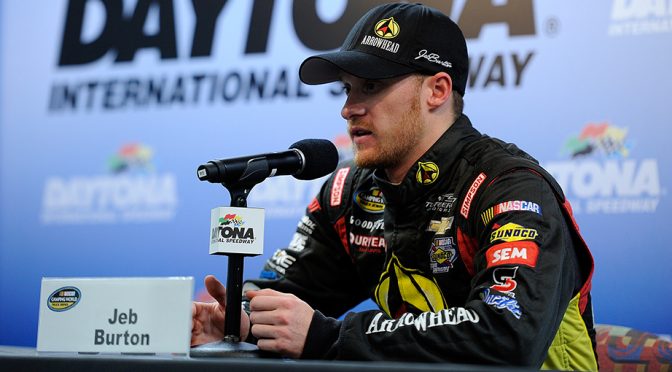
Jeb Burton figured he’d be spending the last few weeks before Daytona preparing for the Camping World Truck Series opener. He had no idea he’d instead be making telephone calls, searching for a sponsor just to get him there.

Yet that was the cruel reality Friday, when Turner Scott Motorsports announced that the sponsor of its No. 4 truck had defaulted on payments, and as a result Burton’s program would not be fielded full-time. Turner Scott said the default by Arrowhead electronic cigarettes would also force the team to lay off as much as 20 percent of its staff.

FULL SERIES COVERAGE

View all articles
View all videos
View all photos

The news was crushing to Burton, the 21-year-old son of former Daytona 500 winner Ward Burton. The younger Burton finished fifth in Truck Series points last season, and was positioned to be a leading contender for the championship in 2014.

"It’s just hard for my family and I," Burton told NASCAR.com by telephone Friday evening. "Racing is kind of my whole life, and to have it kind of taken from me because of something I don’t have any control over is devastating to my family and I. We’ve just got to keep going forward, and hopefully I’ll get an opportunity to get back on the race track."

Toward that end, Burton said he and his father have been "calling and calling" potential sponsors. "We’ve been close to some things, but nothing’s come together," he added. "We’ve just got to keep digging there."

The loss of the No. 4 team leaves rookie Ben Kennedy as the lone full-time Truck Series driver in the Turner Scott stable. The organization will also field a part-time team with Brandon Jones and other drivers to be named later, as well as two full-time Nationwide Series programs involving Kyle Larson and another driver still to be announced.

"The breakout success of Jeb Burton and the entire No. 4 team in 2013 makes these decisions especially painful," team co-owner Harry Scott Jr. said in a statement. "However, we will do everything we can to put Jeb on the race track with our organization going forward. He is a great talent and has a great career ahead of him. Despite this setback, Turner Scott Motorsports remains strong overall and will compete for championships in both the NASCAR Nationwide Series and the NASCAR Camping World Truck Series. We are extremely proud of the talent of our workforce here at TSM, and it is very difficult for us to lose anyone within our organization. We understand the way that this affects the lives of everyone involved, and we will do our best to assist in placement elsewhere in the sport."

Friday, Burton said he wasn’t certain what Turner Scott had in mind as far as a potential part-time schedule, or whether he’d be in the season opener Feb. 21 at Daytona if his current situation remains unchanged. "Right now I feel like something has to come together, because I have not been told if I will be in Daytona or not," Burton said. "I need to find a sponsor."

According to Turner Scott, the situation stems from Arrowhead’s "unfortunate and untimely failure to make a critical payment" to the team. Burton, who won one race and earned seven poles in his rookie campaign of 2013, received the bad news earlier this week and has been working the phones ever since.

"I just hate it for my race team and my family," he said. "I thought we had a great team, and I thought we could go win the championship this year. Maybe something will come together and we can still do it, but as of right now, it’s not looking too good."

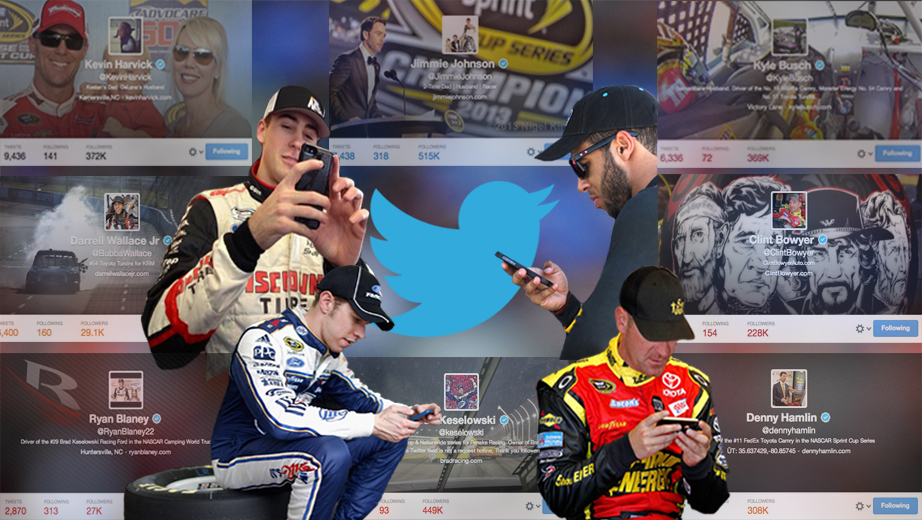
Burton’s plight met with plenty of sympathy on Twitter, where the likes of Larson, Brad Keselowski, and JR Motorsports co-owner Kelley Earnhardt Miller all voiced their support. And yet, the disappointment was evident in the driver’s voice. "I just want to race," Burton said, and over the next few weeks he plans to prepare as if he’s still going to Daytona — even though right now, he’s not certain if he is or not.

"Our sport sometimes isn’t fair, like any sport isn’t," he said. "We’ve got to find those sponsor dollars to get on the race track, that’s what it seems to me right now. I feel like my family and I can represent a company really well, and I think I can do a good job on the race track and off the race track for a company. I’ve just got to find a company that wants to sponsor me, so I can try to do a good job for them."

MORE:

READ: Expansion, eliminations
highlight Chase changes

WATCH: Brian France breaks
down Chase changes

READ: Coors Light qualifying
changes announced

WATCH: Qualifying: One-on-one
with Robin Pemberton

Front Row Motorsports — a small team with a win in 2013 — sees many levels of benefits

RELATED: Full coverage of postseason format changes

CHARLOTTE, N.C. — While expectations are high that the newly introduced Chase for the NASCAR Sprint Cup championship format will create excitement, suspense and that "Game 7 moment" NASCAR has so diligently pursued, there is another element of the new system that is creating buzz for small and mid-pack teams.

Because a single race win is now a ticket into the Chase, the chances are better that a small team or historically underdog operation could qualify for NASCAR’s playoffs by putting together one great triumph.

Not only does that create a competitive opportunity, it’s good news economically for those teams.

"It’s a huge difference going to a sponsor and saying that with a good year we could be in the top 25 in points versus now if we can win a race we’ll be in the Chase," said Bob Jenkins, team owner of Front Row Motorsports, one of the sport’s smaller teams which stunned the field with a one-two finish at Talladega.

But that victory now takes on a broader meaning — it shows the team can win, when that’s all it will take to be a part of the upcoming postseason.

"As much as this gives every team a chance, it gives every sponsor a chance for visibility," Jenkins said. "It will be way easier to sell that."

And that is an intended consequence, according to NASCAR’s Chief Marketing Officer Steve Phelps.

"We think it’s a great opportunity from a sponsor’s standpoint, obviously going from 12 to 16 teams, you’re expanding the field and the sponsors we’ve spoken to are thrilled," Phelps said following Thursday’s announcement. "From a team’s perspective the primary sponsors are thrilled, the team owners and drivers are happy for what this means for sponsors.

"It would be great to have someone who isn’t even thought of (as a championship contender) win his or her way into our Chase and, from there, who knows what happens."

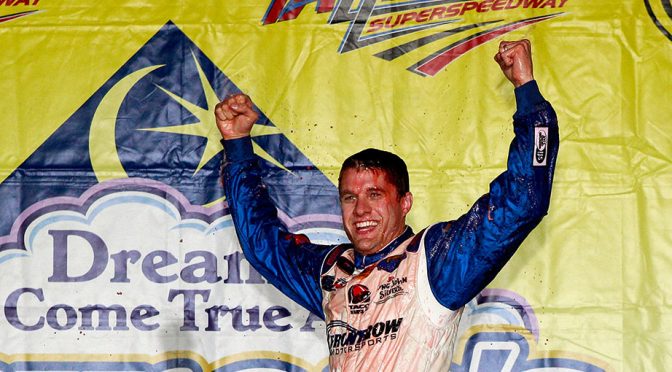
That’s the attitude for driver David Ragan, who won the Talladega race for Front Row Motorsports. He is adamant that the new championship system evens the playing field in an unprecedented way, calling it the ultimate "game-changer."

"We live on instant news, want every football game to come to a time-expired field goal, or every baseball game going to bottom of the ninth and a team coming from behind to win," Ragan said. "This is kinda setting up those types of finishes. I love the traditional points where all 36 races count toward your championship but this will produce excitement every single year."

Front Row teammate David Gilliland, who finished second at Talladega, sees the advantages of a larger Chase field on a number of levels — not the least of which is a different approach to preparation.

"Making the Chase was never in our immediate goals, it’s a goal of each of us to one day be in the Chase and fighting for a championship but we’re a small team building and getting better each year," Gilliland explained. "Now a team like us, it shows we could be there and have a chance. It’s a huge shot in the arm for our team.

"It’s opened up a whole other opportunity for us. We had a meeting Tuesday, for example, and talked about tracks we’re going to test at and we’re going to test at some of the tracks we feel are our strongest and we have the best chance to go out and win a race. It’s definitely changed our approach."

And perhaps for the first time since joining the big league ownership ranks, Jenkins said he sees real opportunity to be on the same footing with the larger, more established teams.

"If we can figure out a way to win a race, I’d like to see what we could do," Jenkins said. "It could change your whole mindset, especially if we win one early in the year knowing you’re probably going to be in the Chase, you invest in ways that would make you more competitive. You never know.

"In the past we looked at places we may have struggled so we wouldn’t test. Now it’s a whole different paradigm. You want to go and be ‘Jack the Bear.’ "

And it’s never been more possible.

MORE:

READ: Expansion, eliminations
highlight Chase changes

WATCH: Brian France breaks
down Chase changes

READ: Coors Light qualifying
changes announced

WATCH: Qualifying: One-on-one
with Robin Pemberton

NASCAR will not knock out a Chase prospect if they miss a race for medical reasons

MORE: Official news release | Changes explained | Chase Facts and FAQ | Social buzzBracket (PDF)
RELATED: Full coverage of the Chase for the NASCAR Sprint Cup format changes

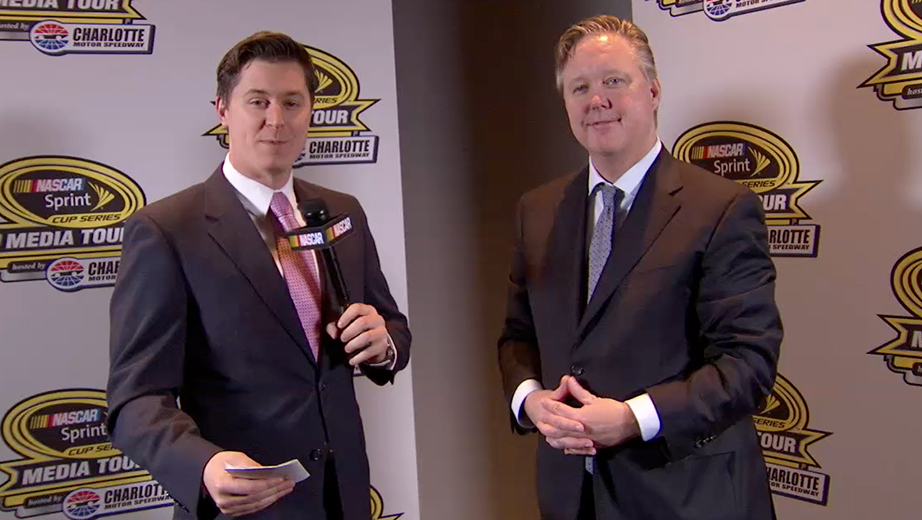
CHARLOTTE, N.C. – NASCAR Chairman and CEO Brian France said he doesn’t expect the new Chase for the NASCAR Sprint Cup championship format to result in changes to the schedule for the 10-race program. 

The 2014 Chase will begin at Chicagoland Speedway and end once again at Homestead-Miami Speedway, with stops at New Hampshire, Dover, Kansas, Charlotte, Talladega, Martinsville, Texas and Phoenix in between.

“We have those conversations (about the schedule) now,” France told NASCAR.com, after announcing a major overhaul of the 10-race format. “But we like consistency in our schedule, traditionally.

“And we also believe that the Homestead-Miami track, and the drivers will tell you this, it’s probably their favorite mile-and-a-half track to drive. It allows them to put on an unbelievable event, (there is a) lot of passing in that event. 

“We’ll see in the future, but I’d be surprised if we moved (the site of the final race) around.” 

While NASCAR is unveiling a new rules package to be used at intermediate tracks, and a new qualifying format this season, France said the time was right to make the changes to the Chase format.

The program, which debuted in 2004, has undergone minor changes in the past, but nothing like those that will be in play for 2014 and beyond. 

The field of qualified drivers has been increased from 12 to 16; each of the three elimination-style rounds will trim the field by four teams, leaving four drivers to battle for the championship in the final event. 

A re-setting of points through the rounds will mean that the teams that continue to advance will begin each round all square. 

“We actually had a lot of discussion about changing too many different things,” said France. “But we are changing them in such a way that delivers on what the fans have told us they want. So the idea to wait on something that we could give them (now) … we just thought that wasn’t the right thing to do. We should give them what the future is now.” 

NASCAR President Mike Helton said much of the feedback from individual teams centered on possible scenarios that could occur under the new format.

“And a lot of those scenarios exist today,” he said. 

“We presented from a business side why we felt like this move was important to us and what it meant for the good of the sport across the board. That’s why it’s good to be out on the street with it; now we can start answering some of those questions.

“One thing we have learned – we can go through tens of thousands of scenarios and work through them, we know there’s one out there we haven’t thought of yet. We know that for certain.” 

One concern voiced early was how NASCAR would react to an injury that resulted in a driver missing one or more races. One of the eligibility requirements is that a driver attempt to qualify for all 26 races leading up to the Chase. Joe Gibbs Racing’s Denny Hamlin missed four races this past season as a result of an early-season injury. 

Steve O’Donnell, senior vice president of racing operations for NASCAR, said the sanctioning body has a provision to deal with such a possibility, the EIRI (Except In Rare Instances) clause.

“An example would be you go to Atlanta and are in the top 30 (in points), and you’ve got five wins,” O’Donnell said. “You go out to Saturday’s practice, hit the wall and are diagnosed with a concussion. 

“The neurologist says you’re out for Atlanta and you’re out for Richmond. We would make a determination at that point that based on the criteria if that driver was eligible we would make the call to keep them in. We’re not going to knock someone out just for missing a race when it’s based on a medical reason.”

Another eligibility requirement is that a driver be in the top-30 in points after 26 races. 

“There is good competition throughout the garage and it keeps getting deeper,” said Robin Pemberton, vice president of competition and racing innovation. “I think 30 seemed to be a pretty good number for us when we looked at where people are that could win races. It’s deep enough in the field that we think that should cover everybody.” 

Drivers that win a race or races deserve the opportunity to compete in the Chase, O’Donnell said, and how far they advance will depend on how competitive the team can be. 

Officials aren’t concerned with a driver making the Chase, or winning the title, that isn’t seen as deserving based on how his team faired during the course of the year. 

“If he qualified for the Chase and was able to beat the best other 15 drivers, he deserves to be the champion,” O’Donnell said. 

“Tony Stewart, in the (2011) Chase, was ready to get out of the car at I think it was Chicago, said ‘I don’t deserve to be here’ and went on one of the best runs we’ve seen. I’ve never seen a fan question ‘Is Tony Stewart a legitimate champion?’ Yes he is and that’s what we see going forward.” 

And, as Pemberton noted, “You’ve still got to beat the best of the best. 

“There are 16 guys out there and they all have the same idea, and that’s getting to Homestead and winning the championship,” he said. “I don’t see anybody giving a thumbs down on anybody that makes the Chase through wins.” 

Helton said the hope is that the new format will “create a lot of interest” among fans, “get people to watch it and decide what they think about it. 

“And that’s a good start,” he said. 

“But we believe it will create a level of excitement to continue to grow the sport. Not overnight, not instantaneously, not huge to start with, but it will grow the attention paid and give the sport a lift.”

MORE:

READ: Expansion, eliminations
highlight Chase changes

WATCH: Brian France breaks
down Chase changes

READ: Coors Light qualifying
changes announced

WATCH: Qualifying: One-on-one
with Robin Pemberton

Possibility exists that driver could miss a race for valid medical reason and still win title

RELATED: Full coverage of the Chase for the NASCAR Sprint Cup changes

CHARLOTTE, N.C. — Ricky Rudd once famously taped his swollen eyes open so he could keep racing after an airborne crash at Daytona in 1984. Davey Allison once used Velcro to affix his broken right arm to the steering wheel after a nasty crash at Pocono in 1992. Dale Earnhardt won the pole in 1996 at Watkins Glen despite a dislocated sternum that made it difficult for him to breathe or raise his arms. Tony Stewart started a race at Dover with a broken shoulder blade in 2006.

Drivers with championship aspirations in NASCAR’s top division have long pushed themselves through tremendous physical adversity, knowing that skipping even a single points event would mean the end of their title hopes. Now that era is over, thanks to one caveat of the revamped Chase for the NASCAR Sprint Cup format unveiled Thursday. Beginning this season, the possibility exists that a driver could miss a race due to a valid medical reason — and still hoist the big trophy after the last event of the year.

"Yes, it is a major change," said Robin Pemberton, NASCAR’s vice president for competition. "But where we are with this new format, and in light of everything else that we’ve done, we felt compelled that if we have a medical reason, we can excuse a driver for a period of time based on a medical reason. Now, they still have to get in, they still have to compete, and all these things. But yes, this is different than the way we’ve looked at things in the past."

For decades, such a thing was unthinkable, given that the sport’s emphasis on consistency over all else demanded a driver be in the seat every week. Two seasons ago, Dale Earnhardt Jr.‘s title hopes ended when he missed two races because of concussions. Last year, Denny Hamlin missed the Chase after sitting out most of five races with a broken bone in his back. Competitors have sometimes faced the dilemma of hiding or soft-pedaling their injury status for fear of being pulled from the car on doctor’s orders.

Now, with the Chase field being comprised almost exclusively of race winners and the points standard for eligibility being lowered to the top 30, there exists the possibility that a driver could sit out one or more races with a medically valid reason, and still make the playoff because he won a event before the Chase began. Under that criteria, Hamlin could have still made the playoff despite his injury layoff last year, had he won a Sprint Cup race before the playoff field was set in early September at Richmond.

"I think it’s huge that that opportunity is there," said new NASCAR Hall of Fame member and former series champion Dale Jarrett. "It is time that a driver has that opportunity, that he doesn’t have to force himself to be in a race car when he shouldn’t be there — he shouldn’t be there for his own good, and he shouldn’t be there because of the other competitors. But he’s still going to have a chance to come back and win the championship. This is going to be scrutinized, and (NASCAR) is going to be on top of this. It’s not like they’re going to say, ‘I’m not feeling well, and I don’t need to be there.’ It’s going to have to be a pretty big deal."

Under normal circumstances, a driver must attempt to qualify for every Sprint Cup race in order to be eligible for the new 16-person Chase. But "there is a medical exemption that could be made," NASCAR President Mike Helton said, although the condition involved would have to be a serious one. Steve O’Donnell, NASCAR’s senior vice president for racing operations, specifically mentioned the scenario of a Chase-qualified driver suffering a concussion and being advised by doctors to stay out of the car for one or two weeks.

"We would make that exception on that," O’Donnell said. "I’m not going to speculate, but it would have to be something pretty severe, with clearance form a doctor that we’d look at." Even so, such a scenario would be "a very rare instance," he added, and as usual NASCAR officials would follow the recommendation of doctors involved.

"I think that’s pretty clear right now, how can you define if someone can race or not," O’Donnell said. "I think someone who has the flu, I think they race today. We wouldn’t expect that to be any different. We’re not going to get in the weeds in terms of what-ifs. But we’re pretty clear — if it’s something severe that we need to seek a doctor’s advice (for), which we do today, we’ll rely on that medical professional to make that call for us."

And yet, even the slight possibility of a driver being able to sit out a race and still contend for the championship marks a sea change in NASCAR. O’Donnell said there was no specific instance that spurred the move, only that it was "just the right thing to do." The change comes on the heels of mandatory baseline precognitive testing, implemented prior to this season to better help assess and diagnose the effects of potential concussions.

"We’re seeing all forms of sports change, from baseball to football, and it’s time that we did something here," Jarrett said. "Because of all sports, you don’t need to be competing (injured) when you’re sitting in a race car, because it’s a hazard to yourself and to others. I love that the opportunity is going to be there. It’s going to be up to (NASCAR’s) discretion, and you may have to be there at a time where you really don’t want to be, but for the most part, the driver is going to get the benefit of the doubt in a situation like that, and I love the idea that can happen now."

All of which perhaps means an end to the stories of broken or battered drivers strapping themselves into the race car with injuries that would leave most people home in bed.

"It’s a new day, it’s a new time, and we make changes for a lot of different reasons," Pemberton said. "And as you see, whether it’s a medical reason, whether we’re changing qualifying, or we have the Chase, it was time to look at some of those things."

MORE:

WATCH: NASCAR ’14 trailer:
Stewart’s comeback

READ: Kurt Busch compares
new, old teams

READ: Twitter crew:
Favorite NASCAR follows

READ: Top 10
rookie campaigns

Gibbs driver eager to erase subpar 2013, return to contending form

CHARLOTTE, N.C. — For Denny Hamlin, the crash was only the beginning. Then there was the injury, and the lingering discomfort, all followed by a wave of self-doubt.

It all combined to sink Hamlin’s 2013 season, a campaign marred by a broken back vertebra suffered in a final-lap crash at Auto Club Speedway, which in turn forced him to miss the Chase for the NASCAR Sprint Cup for the first time in his career. But it was worse than that — not only did he miss all of four races and most of a fifth, but when he came back he was still hurting, and that pain had such a negative effect on performance that the Joe Gibbs Racing driver wondered if he had lost it.

"I crashed going for the lead, and next thing you know, I come back and  — what happened?" he asked Thursday, on the final day of the NASCAR Sprint Media Tour presented by Charlotte Motor Speedway. Now, though, he can look at all of it in retrospect. These days Hamlin is the winner of the most recent race he competed in, feeling better physically than perhaps he has ever, and convinced this coming season will bring a return to the elite status his injury forced him to temporarily leave behind.

"My outlook is so much more positive," said Hamlin, who despite missing the Chase won last year’s finale at Homestead-Miami Speedway to keep alive his streak of winning at least one race in each of his full-time seasons.

"Obviously, if we had finished the year struggling and not won Homestead … we would have some big questions going into 2014, on whether it was the physical aspect that was keeping us competitive, or was it mental aspect. Sometimes as a driver you wonder — have I just lost it? We quickly saw that we didn’t just lose it. It was more of a physical thing. When I felt better, we ran better. So as good as I feel now, I don’t see any reason why we can’t be right back where we were on top."

Getting to that point, though, wasn’t easy. Late last year, well after his return, the 23-time race winner was clearly still in pain. "Running (21st) at Richmond was inexcusable. I never should have been in the car at Richmond, as bad as I felt," he said.

Hamlin was considering offseason back surgery, and all the unknowns that presents, when he finally discovered an injection therapy that numbed his back enough so he could get into the gym and rehabilitate it. That treatment, he said, directly relates to his improved runs at the end of last season, capped by the victory at Homestead.

"Once we found these injection treatments with about a month to go in the season, that bought me time in the gym," he said. "Where before, even when I went, I just couldn’t do any of the exercises to do rehab or get stronger, because I was in just so much pain. … It’s numbed me up for so long now, it’s bought me time to get stronger, and now I’ve weaned off them and I feel better physically than I have probably ever as far as my back is concerned."

Hamlin said he’s put in more than 140 hours in the gym to get where he’s at now, a long way from the days when Gibbs held a teleconference with five different spinal specialists — "the most expensive phone call in NASCAR history," the team owner called it — to determine an initial course of treatment. Those on his No. 11 team have no doubts about the driver’s ability to get back to the top.

"None on my part," crew chief Darian Grubb said. "Seeing him and seeing the excitement in his eye, hearing him talk and the inflection in his voice, you can tell he’s ready to go. He’s come in the shop every week working with the guys, and he’s been really involved with the team. And the Homestead aspect really helped that, because now he can come in with a smile on his face. He doesn’t feel like the Denny downer coming in — man, we haven’t pulled off a win this year, it’s been a terrible season. We capped it off right. We came up short in our championship goals for the organization, but we did out part trying to do everything we could do."

The changes, though, are more than physical for Hamlin, who had established himself as JGR’s most consistent championship contender prior to Matt Kenseth‘s arrival last season.

"I think last year, for him, sitting out those races and then everything that happened to him … I think it gave him a burning desire to get back in there," Gibbs said. "To get that last win, that was about as emotional as I’ve seen him. So I think he went into the offseason on a high. Sometimes when you’re away from something like that, you realize how much you miss it. I think that was the case with Denny."

Grubb can see it, too. "I really feel like it gave him more of an appreciation of what it is he gets to do for a living every day," the crew chief said of his driver’s injury and subsequent layoff.

"After being with him in the hospital and how emotional that was, having to come back and sit on the pit box for those four races he sat out, it was an incredible growing experience for him to realize, man, what I get to do is a privilege. And he’s done everything better that I can see as far as eating right and taking care of himself. And he’s pushing the team guys to do the same thing, because we’re in the same grind … and taking care of yourself will pay dividends when it comes down to fighting for the Chase."

Hamlin will admit, before his injury, the success seemed to come easy. While he said he never took anything for granted, his team knocked out the race wins and Chase berth with such regularity, there was no reason to think they wouldn’t just keep on coming. Last season’s saga made him realize that nothing is guaranteed.

"It was just so easy. For us, (winning) had been easy," he said. "We’d make the Chase with no sweat every single year, and then  next thing you know you have a year where you really, really, truly struggle, it makes you appreciate the process it took to get there and what it takes to maintain staying at that level. So I had to go back to work. Not just watching different data and things like that, but on me. Getting back in the gym and making sure I’m as healthy as I can possibly be for 2014. I’ve put in my hours. Many, many hours. I won’t be the weak link when it comes to our performance this year."

MORE:

WATCH: NASCAR ’14 trailer:
Stewart’s comeback

READ: Kurt Busch compares
new, old teams

READ: Twitter crew:
Favorite NASCAR follows

READ: Top 10
rookie campaigns

Four-time Cup champion Gordon on new format: ‘I love it, I really do’

RELATED: Full coverage of Chase for the NASCAR Sprint Cup format change

CHARLOTTE, N.C. – Only a few hours after NASCAR Chairman and CEO Brian France unveiled the new 2014 Chase for the NASCAR Sprint Cup championship format, two of the sport’s greatest champions were in the NASCAR Hall of Fame unveiling their latest ride and offering a review on the big news.

After unveiling a new, yet decidedly retro paint scheme for his No. 24 Axalta Chevrolet, Jeff Gordon and team owner Rick Hendrick shared their thoughts on NASCAR’s elimination Chase format that makes winning races essential and a winner-take-all event to decide the ultimate championship.

"I love it, I really do," the four-time Cup champ Gordon said. "I think we have to go through a season and it’s going to work better for some and not for others. I think it’s still truly going to benefit the best team and the best team will win the championship or at least be in position to win the championship.

"Sometimes it comes down to one race and that track might favor a certain driver or favor a certain team. So that’s going to have its challenges. It will force the team that’s been the best all year to step up their game."

Hendrick, a 11-time Cup championship owner, said this change will take a little getting used to. But then again, he conceded he wasn’t completely in favor of the Chase format when it was introduced in 2004. Six championships for his driver Jimmie Johnson in the last eight seasons, however, has helped win him over.

Hendrick said he agrees with France that the risk for the sport is not being open to change, not willing to evolve and be open-minded.

"It’s the fear of the unknown," Hendrick said recalling an article he read recently about why businesses fail.

"Another one of the reasons was people feel like ‘well, it’s worked this way for all these years, why change it?’ …

"But I think Jeff’s excited about it, and Jimmie’s like, ‘OK, yeah.’ I think that’s the way all of our guys have been. As soon as we digest it, we start figuring out what we’ve got to do."

Both Gordon and Hendrick raised the topic of having so much on the line in the season finale. After three rounds of eliminations, four drivers will vie for the title at Homestead-Miami Speedway with the top finisher among them that day hoisting the Sprint Cup.

"I think the nervous part I have is just that last race, you’re in that top four and you’ve had a heck of a season," Hendrick explained, acknowledging that last race finish could trump the season’s summary.

"But to get to the top four, you have to have had a great season. The more I’m thinking through it and looking at it, the more comfortable I’m getting.

"There have been times when the Chase played to my favor; the way I look at it, if it’s better for the sport, if the fans like it, then I’m all for it. Because that’s what we need to do to make our sport grow."

Gordon agreed and really seemed to embrace the challenge this new format presents.

"You’re not going to hear, ‘well, I just got a good points day out of it, I finished 12th, or I’m not going to take this extra chance on restart,’" Gordon said. "We’re always pushing hard to win but never are you going to see us push this hard as we will this year.

"I think the fans have a lot to think about now, but at the end of the season they’re going to go, ‘wow, this was amazing.’"

MORE:

WATCH: NASCAR ’14 trailer:
Stewart’s comeback

READ: Kurt Busch compares
new, old teams

READ: Twitter crew:
Favorite NASCAR follows

READ: Top 10
rookie campaigns

Eliminated Chase drivers will battle for as high as fifth place in final standings

MORE: Full coverage of the Chase for the NASCAR Sprint Cup format change

CHARLOTTE, N.C. – In announcing a historic and groundbreaking shift in championship format, NASCAR Chairman and CEO Brian France repeatedly stressed his confidence and optimism that a winner-takes-all scenario will best resonate with fans and motivate teams.

According to the new system, 16 drivers will make the Chase for the NASCAR Sprint Cup – all the regular season race winners (as long as the driver is in the top-30 in in points) and the regular season points leader (should that driver not have a victory). If more than 16 drivers have a win in the regular season, only those highest in the standings would advance to the Chase. If fewer than 16 drivers have a win in the regular season, the remaining Chase spots will be based on point standings.

The 10-race Chase will be divided into three three-race segments eliminating four drivers after each segment and leaving four to decide the title in the Homestead finale. But what happens to the Chase drivers once they have been eliminated?

"We’ve got a great suggestion on that in our driver‑owner meetings by Kevin Harvick, as a matter of fact, who talked about that," France explained. "We had it originally where if you fell out in the first round, you were going to finish no better than 13th. We changed that. So you’ll run now really for fifth place."

Drivers who don’t advance to the next round will have their point totals reset to the Chase-start base of 2,000 points (with any regular-season wins bonus points), plus the additional points they’ve earned during the Chase. A regular season win is worth three bonus points.

This actually ensures more drivers in the championship picture while maintaining proper motivation for those eliminated to settle fifth through 16th place. The top-10 drivers are recognized at the year-end Awards Ceremony.

"Winning races is still important and that’s whether you’re inside the Chase or outside of it. .. for your sponsors, for prize money, for lots of reasons," France said. 

And that’s the mindset NASCAR is betting fans will appreciate. It certainly has gotten rave reviews from inside the industry.

Speedway Motorsports Inc. President Marcus Smith called the new system, "probably the best thing to happen in NASCAR in the last 10 years and I’m genuinely looking forward to seeing how the increased incentive to win plays out on race day."

MORE:

WATCH: NASCAR ’14 trailer:
Stewart’s comeback

READ: Kurt Busch compares
new, old teams

READ: Twitter crew:
Favorite NASCAR follows

READ: Top 10
rookie campaigns

NASCAR and Rev Racing select six promising drivers for academy-style program

RELATED: NASCAR Home Tracks

DAYTONA BEACH, Fla. (Jan. 30, 2014) – NASCAR Drive for Diversity (D4D), the leading youth development program for multicultural and female drivers, will head into the 2014 season with one of the most well-rounded and accomplished rosters in program history.

The 2014 class is led by Daniel Suarez, who contended for two NASCAR touring series championships last year, and Ryan Gifford, who is coming off a successful 2013 that saw him earn his first NASCAR win and make his NASCAR national series debut. They will be joined by a group of talented newcomers looking to make their mark in the NASCAR K&N Pro Series and NASCAR Whelen All-American Series.

"NASCAR is committed to providing training, competition experience and mentoring to drivers who without a doubt demonstrate the potential to compete at the highest levels of our sport through the academy-style program," said Marcus Jadotte, NASCAR vice president of public affairs and multicultural development. "We look forward to another successful racing season with the Drive for Diversity team."

In addition to Suarez and Gifford, Sergio Peña returns to the program in which he earned three wins and finished fifth in NASCAR K&N Pro Series East points in 2011. They’ll be joined in the K&N Pro Series ranks by Jay Beasley. Beasley won the 2013 NASCAR Whelen All-American Series Super Late Model track championship at The Bullring at Las Vegas Motor Speedway and the series’ Nevada championship.

Devon Amos, who drove with Rev Racing’s Legends program last year, and Paige Decker will compete for the team in Late Models in the NASCAR Whelen All-American Series.

"Our goal is to keep building upon our successes with every new class we select," said Max Siegel, CEO of Rev Racing. "We are excited with the momentum built in 2013 with several D4D career milestones. This year’s class has a tough job ahead of them and we look forward to providing them with all the tools necessary to reach individual and collective successes across the board."

D4D saw one the strongest pool of applicants the program has ever seen this year. Nearly 100 drivers, representing 14 states and Mexico, applied for an opportunity to try out for a spot with Rev Racing at the annual Combine – a three-day tryout where drivers’ undergo physical assessments and are evaluated on on-track abilities by executives across the industry.

In 2013, D4D saw the impressive rise of graduates Kyle Larson and Darrell Wallace Jr.

Wallace became the first African-American to win a national series victory in nearly 50 years at Martinsville in the NASCAR Camping World Truck Series. And Larson, whose meteoric rise through the ranks solidified D4D as a driving powerhouse for developmental athletes at NASCAR, earned the Sunoco Rookie of the Year Award in the NASCAR Nationwide Series as well as became the first D4D participant to secure a full-time ride in the NASCAR Sprint Cup Series for Chip Ganassi Racing with Felix Sabates. Larson was also the first D4D driver to secure a national series victory.

Rev Racing drivers in the NASCAR K&N Pro Series include:

Daniel Suárez: The Monterrey, Mexico, native is a member of the NASCAR Next program and joins Rev Racing for the second season. The 22-year-old finished third in the 2013 NASCAR K&N Pro Series East championship standings and was the championship runner-up in the NASCAR Mexico Toyota Series in 2013. He recorded his first NASCAR K&N Pro Series East win last July at Columbus (Ohio) Motor Speedway.

Ryan Gifford: Another member of the NASCAR Next program, the 24-year-old from Winchester, Tenn., garnered his first NASCAR K&N Pro Series East win last season at Richmond (Va.) International Raceway. In 2010 at Martinsville (Va.) Speedway, he became the first African-American driver to win a NASCAR K&N Pro Series East pole position. Additionally, he made his NASCAR Nationwide Series debut last August at Iowa Speedway, finishing ninth driving for Richard Childress Racing.

Jay Beasley: This 21-year-old from Las Vegas won the NASCAR Whelen All-American Series Super Late Model track championship at The Bullring at Las Vegas Motor Speedway and the series’ Nevada championship on the strength of eight victories in 14 starts. He also earned the 2013 Wendell Scott Trailblazer Award as a result of his early success on the track.

Sergio Peña: With three career NASCAR K&N Pro Series East wins to his credit, the 21-year-old from Winchester, Va., has a pair of top-10 finishes in points for 2011-12 while collecting 19 top 10s in 39 NASCAR K&N Pro Series East career starts.

Drivers competing in the NASCAR Whelen All-American Series include:

Paige Decker: From Eagle River, Wis., the 20-year-old driver competed in her Super Late Model at tracks throughout the Midwest.

Devon Amos: Competing mostly in a Legends car in 2013, the 22-year-old from Rio Rancho, N.M., scored a seventh-place finish in his stock car debut last summer at Hickory (N.C.) Motor Speedway.

The NASCAR K&N Pro Series East kicks off its 2014 season at New Smyrna (Fla.) Speedway on Sunday, Feb. 16. Two days later, on Tuesday, Feb. 18, the UNOH Battle At The Beach will take place on the .37-mile short track situated on the Superstretch at Daytona International Speedway. The NASCAR Whelen All-American Series drivers will compete primarily at Hickory Motor Speedway, where the season is scheduled to get underway on March 8.

MORE:

WATCH: NASCAR ’14 trailer:
Stewart’s comeback

READ: Kurt Busch compares
new, old teams

READ: Twitter crew:
Favorite NASCAR follows

READ: Top 10
rookie campaigns

Round-by-Round and Chase for the NASCAR Sprint Cup Grid explanations

RELATED: Full coverage of the Chase for the NASCAR Sprint Cup format change

Q. Does this new Chase format emphasize winning?

A. Absolutely. The easiest way to make the new Chase for the NASCAR Sprint Cup is to win. And winning is also the fastest way to advance in the Chase and become one of the four drivers competing in the NASCAR Sprint Cup Championship at Homestead-Miami Speedway.

Q. How will the Chase Grid drivers be selected?

A. Positions 1-15 on the Chase Grid will be determined by the drivers with the greatest number of NASCAR Sprint Cup Series wins after the first 26 races. The 16th position is reserved for the points leader if he/she does not have a win.

Q. How will the Chase Grid be seeded?

A. All drivers will have their points total reset to 2,000 points. Drivers receive 3 additional bonus points for each win during the first 26 races.

Q. Is there a minimum points standing that a driver who records a win during the first 26 races must achieve to make the Chase Grid?

A. Yes. A driver must be in the Top 30 in the NASCAR Sprint Cup Series points following the first 26 races AND have attempted to qualify for all of the first 26 races.

Q. What if a driver is prevented from competing in one or more of the first 26 races due to injury or illness?

A. NASCAR, for rare instances, can waive the requirement of attempting to qualify for all of the first 26 races as long as the driver is in the Top 30 in points.

Q. Which races are the "advancement" races?

A. Once the field is reset after the 26th event, there are "advancement" races following the 29th event (Dover); 32nd event (Talladega); and 35th event (Phoenix). There will be four drivers competing for the NASCAR Sprint Cup Championship at Homestead-Miami Speedway.

Q. Will lap leader bonus points still be applied?

A. In all but the final race, bonus points for laps led will still be awarded in the Challenger, Contender and Eliminator Rounds. However, at the NASCAR Sprint Cup Championship, the four drivers will start the race tied and there will be no bonus points for laps led, etc. The highest finisher among that group will be the champion.

Q. What happens to a Chase Grid driver’s points if he/she doesn’t advance to the next round of the Chase?

A. Drivers who don’t advance to the next round will have their point totals reset to the Chase-start base of 2,000 (with any regular-season wins bonus points), plus the additional points they’ve earned during the Chase. 

MORE:

WATCH: NASCAR ’14 trailer:
Stewart’s comeback

READ: Kurt Busch compares
new, old teams

READ: Twitter crew:
Favorite NASCAR follows

READ: Top 10
rookie campaign

s

16-driver Chase Grid introduced; four-driver first-to-the-finish finale unveiled

MORE: Full coverage of the Chase for the NASCAR Sprint Cup format change

DAYTONA BEACH, Fla. (Jan. 30, 2014) – NASCAR announced a new championship format today that will put greater emphasis on winning races all season long, expands the current Chase for the NASCAR Sprint Cup field to 16 drivers, and implements a new round-by-round advancement format that ultimately will reward a battle-tested, worthy champion.

“We have arrived at a format that makes every race matter even more, diminishes points racing, puts a premium on winning races and concludes with a best-of-the-best, first-to-the-finish line showdown race – all of which is exactly what fans want,” said Brian France, NASCAR chairman and CEO. “We have looked at a number of concepts for the last three years through fan research, models and simulations, and also maintained extensive dialogue with our drivers, teams and partners. The new Chase for the NASCAR Sprint Cup will be thrilling, easy to understand and help drive our sport’s competition to a whole new level.”

Changes announced by France to the championship format include:
–    A victory in the first 26 races likely will guarantee a driver a berth in the 10-race Chase for the NASCAR Sprint Cup — a change that will put an unprecedented premium on winning a NASCAR Sprint Cup Series race all season long
–    Expanding the Chase field from 12 to 16 drivers, with those drivers advancing to what now will be known as the NASCAR Sprint Cup Series Chase Grid
–    The number of championship drivers in contention for the NASCAR Sprint Cup championship will decrease after every three Chase races, from 16 to start in the Chase Grid; 12 after Chase race No. 3; eight after Chase race No. 6; and four after Chase race No. 9
–    The first three races of the Chase (27-29) will be known as the Challenger Round; races 30-32 will be known as the Contender Round; races 33-35 will be the Eliminator Round and race No. 36 will be the NASCAR Sprint Cup Championship
–    A win by a championship-eligible driver in any Chase race automatically clinches the winning driver a spot in the next Chase round
–    Four drivers will enter the NASCAR Sprint Cup Championship with a chance for the Cup, with the highest finisher among those four capturing the prestigious NASCAR Sprint Cup Series title.

Eligibility for the Chase for the NASCAR Sprint Cup

The top 15 drivers with the most wins over the first 26 races will earn a spot in the Chase Grid — provided they have finished in the top 30 in points and attempted to qualify for every race (except in rare instances). The 16th Chase position will go to the points leader after race No. 26, if he/she does not have victory. In the event that there are 16 or more different winners over 26 races, the only winless driver who can earn a Chase Grid spot would be the points leader after 26 races.

If there are fewer than 16 different winners in the first 26 races, the remaining Chase Grid positions will go to those winless drivers highest in points. If there are 16 or more different winners in the first 26 races, the ties will first be broken by number of wins, followed by NASCAR Sprint Cup Series driver points.

As was implemented in 2011, prior to the start of the Chase, all Chase Grid drivers will have their points adjusted to 2,000, with three additional bonus points added to their total for each win in the first 26 races.

Advancement Model during Chase for the NASCAR Sprint Cup
After the third Chase race, the Chase Grid will be left with 12 drivers. After the sixth Chase race, the field will drop to eight drivers, and following the ninth Chase race, only four drivers will remain in championship contention for the NASCAR Sprint Cup championship.

The first round (races 27-29) will be called the "Challenger Round." If a driver in the Chase Grid wins a Challenger Round race, the driver automatically advances and his/her points will be reset to 3,000. Only the top 12 in points after the Challenger Round remain in championship contention, and all will then have their points reset to 3,000.

The second round (races 30-32) will be called the "Contender Round." Likewise, if a driver in the top 12 in points wins a race in the Contender Round, the driver automatically advances and his/her points will reset to 4,000. Only the top eight in points after the Contender Round remain in championship contention, and all then will have their points reset to 4,000.

The third round (races 33-35) will be called the "Eliminator Round." If a driver in the top eight in points wins a race in the Eliminator Round, the driver automatically advances and his/her points will reset to 5,000. The top four in points after the Eliminator Round remain in championship contention, and all then will have their points reset to 5,000.

Additionally, as drivers are eliminated from the Rounds, their points total will be readjusted to the normal points format in sync with all other drivers in the field no longer in contention for the championship. This will allow all drivers not in contention for the NASCAR Sprint Cup championship to continue to race for the best possible season-long standing, with fifth place ultimately still up for grabs at the season finale.

Four-Driver, First-to-the-Finish Championship Finale

The 36th and final race of the season will be the "NASCAR Sprint Cup Championship." Simply stated, the highest finisher in the Championship race among the remaining four eligible drivers will win the NASCAR Sprint Cup Series title.

Bonus points for laps led or previous race wins will not apply in the season finale, so the official finishing position alone will decide the champion.

Note: All rules outlined above also apply to the NASCAR Sprint Cup Series owner championship structure.

For more details on the new championship format, please visit NASCARMedia.com for a Fact Sheet / FAQs or visit NASCAR.com.

MORE:

WATCH: NASCAR ’14 trailer:
Stewart’s comeback

READ: Kurt Busch compares
new, old teams

READ: Twitter crew:
Favorite NASCAR follows

READ: Top 10
rookie campaigns