Founder slowly ceding authority to others within team

CHARLOTTE, N.C. — Where’s Jack?

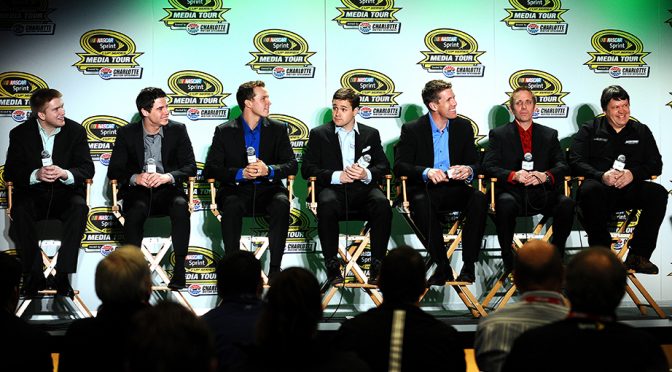
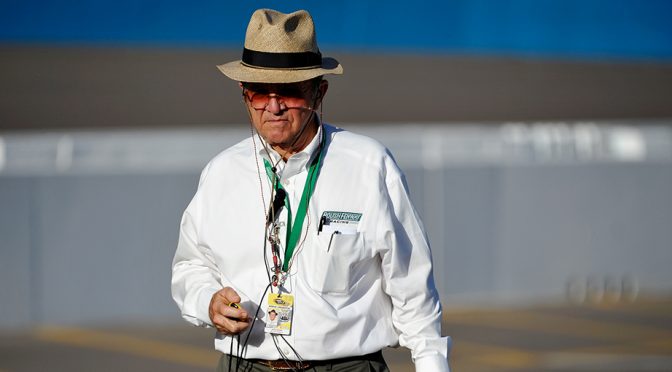
That was the question being asked Wednesday morning, as Roush Fenway Racing team members assembled for their visit with the NASCAR Sprint Media Tour with their namesake leader noticeably absent. A Roush event without Jack Roush, that famous fedora pulled down over his forehead? It felt like seeing a race car without tires. Or a steering wheel. Or an engine.

"I haven’t seen Jack since Homestead," driver Greg Biffle said, referring to last season’s finale. Turned out, the team’s 71-year-old founder was absent Wednesday because he had been whisked away to a surprise Disney vacation plotted by his grandchildren.

"I guess he checked out," general manager Robbie Reiser added.

Please. The biggest running joke at Roush Fenway Racing these days is about how Jack isn’t around anymore. It’s probably even told in those weekly 6:30 a.m. meetings — the ones Roush still sits in on.

"He’s there all the damn time. I’m not kidding," team president Steve Newmark said. And yet, there is a transition unfolding these days over at Roush, though it’s far more subtle than the team’s omnipresent owner simply checking out and heading for Florida. Roush still lives, eats, and breathes racing seven days a week, as his schedule will attest. But his absence Wednesday was another small sign of how he’s gradually ceding power to others within his organization, loosening the reins on what was once an absolute dictatorship.

This coming season as in others past, Roush will still be at the track for the course of an event weekend. He’ll still be at the team’s facility in Concord, N.C., for meetings on Monday and Tuesday, still fly home to Michigan on Wednesday, still be back at the track again the next weekend. He’ll still be in meetings, still be a presence, still be a voice. But in what’s one part succession plan and one part a nod to others better equipped to handle emerging technology, final authority no longer rests with the man whose name is on the sign outside.

"Our whole company is going through that adjustment," Reiser said. "We’ve had Jack as our main decision-maker, main decider, main director if you want to call it that, for a lot of years. When that format starts to change, all the people who are in other roles have to understand that. I think it’s taken all of us time to understand that Jack was trying to do something different, and allow us to go out and run the place, and that’s kind of where we are. I’ve been slow at the switch to understand that. Real slow at the switch, because it is Jack’s company and his name’s on the door, and it’s tough to say, ‘OK, here are the keys, and you guys go run this thing.’ It’s been tough for me to understand that."

The process has been unfolding over the past five years as Roush has turned more control of competition matters over to Reiser, who won a Sprint Cup Series championship as Matt Kenseth‘s crew chief before shifting into the GM role. When somebody needed to take a hard look at Roush’s competition department after Biffle finished ninth, Carl Edwards 13th and Ricky Stenhouse Jr. 19th last season, it was Reiser who did the looking. When it came time to pull the trigger on a flurry of crew chief changes intended to spur improvement in 2014, it was Reiser who had the final say. Those are decisions Roush used to make, and Roush alone, and now they’re being made by others.

"Those are Robbie decisions with input from the drivers, Jack and myself," Newmark said. "But (Reiser) is the one driving that boat."

And getting more comfortable at the helm.

"I think as a company, you’ve got to have somebody at the final rung of the ladder to say, ‘Hey, this is what we’re going to do today.’ And we’ve always had Jack do that, for so many years," Reiser said at the Media Tour, which is presented by Charlotte Motor Speedway. "And now (Roush) is kind of changing that role to be more of a consultant for us than the guy who decides every day. And I’ve been kind of put in that seat to make those decisions, and I haven’t done them fast enough, and I haven’t understood it early enough for where we are. But today I understand it."

To Biffle, who has been with Roush longer than any of the team’s current drivers, this shift is not unlike engineers using computers to make setup decisions once dictated by the driver’s right foot and rear end.

"That decision-making hasn’t necessarily been taken away, there’s just less of it," he said. "So you need to empower your engineers to pick the best brakes. Don’t let me pick the best brakes. Let science pick the best brakes. With that, kind of the guard has changed a little bit. I wouldn’t say Jack’s stepped back, but Jack’s kind of empowered the important people who can make the right decisions."

Of course, some of this has fed a perception that Roush — who founded the team in 1988 — is completely out of the picture, an idea that makes his drivers roll their eyes.

"It’s been a joke, because Jack’s been at every meeting. Everything," Biffle said. "He’s so into us winning and competing in 2014. He’s been at all of it. This (media event) is the first thing he’s been gone for, and I’m sure it was a tough decision for him."

There is, though, a change taking place. In addition to relinquishing some control, Newmark said Roush these days fashions himself more of a mentor and teacher, and lets others play the heavy with people who step out of line or don’t perform up to expectations.

"He doesn’t like to be the bad guy now. He wants to be the good guy," the team president said. A kinder, gentler Jack Roush? Edwards, who has driven for the owner for a decade now, has witnessed the transition firsthand.

"The way he described it to me was, ‘Look, I’m just coming around to tinker and comment and take it for what it’s worth.’ He’s letting other people do the jobs that he did," Edwards said. "And I think in the end, it’s going to be very good. Now, don’t get me wrong — if we’re sitting in a meeting, he still comes in there, and if he has something to say or he wants things to be done a certain way, they get done that way. But just in the 10 years or so that I’ve been there, it’s 180 degrees different. It’s not a dictatorship like it used to be. It’s a much warmer, calmer Jack."

Why? "He probably sees the future, and the future is going to require people to step into the roles that he’s done," Edwards added. "It’s smart, and it’s pretty humble on his part to be able to do that. Especially since it’s his place. It’s Roush Fenway Racing. So I don’t know how he’s done it, but he’s doing a good job of it. Seems like he’s having a lot of fun."

MORE:

WATCH: NASCAR ’14 trailer:
Stewart’s comeback

READ: Kurt Busch compares
new, old teams

READ: Twitter crew:
Favorite NASCAR follows

READ: Top 10
rookie campaigns

Five legends honored in ceremony in Charlotte

MORE: Petty, Ingram took unexpected routes | Jarrett’s father-son bond deepens | Flock, Roberts honored

CHARLOTTE, N.C. – Completing the circle for two families; honoring one of the most charismatic drivers NASCAR racing has ever known; recognizing one of the true pioneers of motorsports; and enshrining one of the great short-track racers of all time … that was the crux of Wednesday night’s NASCAR Hall of Fame induction ceremony at the Charlotte Convention Center Crown Ballroom.

Engine builder Maurice Petty joined father Lee Petty, brother Richard Petty and cousin and Petty Enterprises crew chief Dale Inman as a member of the NASCAR Hall of Fame’s, as part of the fifth class of five inductees.

"It’s the only hall of fame that has a full team," Richard Petty quipped during a media session with reporters Wednesday morning.

Dale Jarrett, 1999 Cup champion, joined his father, two-time champion Ned Jarrett in the hall, comprising the second father-son combination to be enshrined. 

Coincidentally, Ned Jarrett called 2014 inductee Glenn "Fireball" Roberts "the first real superstar" in NASCAR racing. Roberts won 33 races at NASCAR’s highest level, including at least one per year from 1956 through 1964 before his life was cut short as a result of injuries suffered in a crash at Charlotte in May 1964.

The late Tim Flock was a two-time champion from the early days of NASCAR racing. Flock, who posted 39 career victories, won his first title in 1952, driving the No. 91 Hudson owned by Ted Chester. In 1955, he earned his second title behind the wheel of owner/crew chief Carl Kiekhaefer’s Chrysler.

Jack Ingram was the king of the short tracks. In 1982, at age 45, after considerable success in NASCAR’s Late Model Sportsman division, Ingram won the first NASCAR Nationwide Series (then Busch Series) championship and followed that with another title in 1985. His 31 victories stood as a record for the series until Mark Martin surpassed it.

Richard Petty provided an emotional induction of his brother Maurice.

"I’m so excited to be able to put my brother in the Hall of Fame with my father and with my cousin," Petty said. "I mean, that’s a full team. Very few hall of famers can brag about that."

"It’s an honor and a privilege for me to be inducted into the NASCAR Hall of Fame," said Maurice Petty, whose engines powered the winners of more than 200 races in NASCAR’s foremost series. 

"Who would have thought growing up that there would be guys, four of us, out of a small, rural country community (Level Cross, N.C.) that would be in a North Carolina Hall of Fame?"

After an introduction from four-time NASCAR Sprint Cup Series champion Jeff Gordon, veteran crew chief Waddell Wilson inducted Roberts, with grandson Matt McDaniel accepting the ring awarded to each member of the NASCAR Hall of Fame. 

"The King, The Intimidator, The Rapid Roman," Gordon said in introducing Roberts. "There have been many great nicknames in the history of NASCAR, and tonight we honor another: Fireball. 

"This lightning quick legend dominated the high banks of Daytona with seven victories, including the 1962 Daytona 500. Tonight Fireball Roberts takes his place among the pantheon of NASCAR greats in the NASCAR Hall of Fame."

McDaniel gave the audience a different view of his illustrious grandfather, pointing to Roberts’ pursuits outside of racing: classical music, duck hunting and the sport of jai alai. But racing was truly in Roberts’ blood.

"We are proud that our grandfather … is being honored by NASCAR, the organization that set the scene for a life well-lived," McDaniel said.

"Thank you to all of those on the nominating committee and voting panel. I’m sure our grandfather would be pleased to know that he was part of such a wonderful class of inductees."

Six-time Sprint Cup champion Jimmie Johnson introduced Ingram, the "Iron Man" who won three Late Model Sportsman championships before the advent of the Busch Series.

"I paid attention to what he did, because he was one of the masters," Martin said in a video highlighting Ingram’s accomplishments.

Eighteen-time Sprint Cup winner Harry Gant handled the induction of his friend and former rival.

"I’m honored to be here tonight beyond words," Ingram said. "This is a major lifetime achievement for me. While I’ve won driving the car, I had plenty of help and support along the way – otherwise I wouldn’t be here tonight. 

"First, I would like to thank my family, my dear wife Aline. She was my rock, always there in late nights, early mornings, throughout the good and bad, and I cannot express how thankful I am to her."

Former Charlotte Motor Speedway president H.A. "Humpy" Wheeler inducted Tim Flock, with Flock’s widow, Frances Flock accepting the honor.

"Boy, this is like being at the Super Bowl of racing tonight," she said, before recounting that Flock raced with a "co-driver," a Rhesus monkey named "Jocko Flocko."

"Everyone loved Jocko," Frances Flock said. "But one day in 1953, at Raleigh, North Carolina, Jocko got loose, and Tim had to pull in the pits to put Jocko out of the car. He came in third that day, and the extra pit stop to remove Jocko from the car cost him a big sum of money that day."

Tony Stewart, sidelined last year with a broken leg, the result of a Sprint Car accident Aug. 5 in Iowa, walked to the stage to introduce Jarrett, a "big-race" driver who won 32 times during his career, three times in the Daytona 500 and twice in the Brickyard 400. 

The induction honors were performed by Jarrett’s friend, country music superstar Blake Shelton, who recalled his own father’s passion for the sport.

"I watched him shove old women and children aside at Talladega to shake the hands of his favorite drivers: Dale Earnhardt Jr., Richard Petty, and this man right here, Dale Jarrett," Shelton said. "As years went on, Dale and I crossed paths many times, and although my dad’s health began to keep him from traveling, he loved hearing all the stories about the time I spent with Dale.

"I didn’t tell him everything."

Jarrett recognized his champion father as his primary source of inspiration.

"My father …  and now fellow hall of famer," Jarrett said. "That has a nice ring to it, doesn’t it, Dad? My dad has been everything a son would want his father to be: successful, a leader by example, a teacher you can believe in, and always there to support me. 

"My Dad was and still is today my hero. That’s what really makes this night so very special. I’m joining my father in the NASCAR Hall of Fame."

At the induction dinner that preceded the ceremony, legendary broadcaster Chris Economaki was named the third Squier-Hall Award recipient for NASCAR media excellence.

The long-time editor, publisher and columnist for National Speed Sport News died in 2012 at age 91.

"Chris Economaki dedicated his life to covering motorsports, and his exceptional talent for storytelling brought NASCAR to millions of readers and viewers for more than 60 years," NASCAR Chairman and CEO Brian France said.

"Though we all miss seeing him at the race track every week, we’re proud that Chris’ legacy will continue to live through this well-deserved award."

MORE:

WATCH: NASCAR ’14 trailer:
Stewart’s comeback

READ: Kurt Busch compares
new, old teams

READ: Twitter crew:
Favorite NASCAR follows

READ: Top 10
rookie campaigns

1999 Cup champion inducted into NASCAR Hall of Fame by country star Blake Shelton

MORE: Five inducted | Petty, Ingram took unexpected routes | Flock, Roberts remembered

CHARLOTTE, N.C.  – On a night that celebrated some of NASCAR’s most interesting and iconic characters – the late Fireball Roberts, the feisty Jack Ingram, the legend Maurice Petty and Tim Flock, who raced with a monkey in his car – it was a heartfelt tribute between son and father that left the biggest impression on this NASCAR Hall of Fame evening.

After accepting his Hall of Fame ring from friend and country music superstar Blake Shelton, 2014 Hall of Fame inductee Dale Jarrett, 57, spoke about his father, fellow Hall of Famer, Ned Jarrett, with tears in his eyes and his voice cracking with emotion.

In a sense, the 1999 Cup champion and 32-race winner Jarrett said, his induction and success was the ultimate form of payback to his father, whom he calls his "hero" and his family, whom he thanked for all their sacrifices.

"There’s not a lot our parents will take as payment for everything they did for us, but in a small way, this is something I can give them," said Jarrett, on what was a decidedly father-and-son evening — from Shelton’s moving induction speech talking about his own father to Jarrett’s earnest tribute to his dad.

"It’s a tough act to live up to when your dad is Ned Jarrett or Dale Earnhardt or Richard Petty," Jarrett said.

They are the fourth father-son combination in the Hall of Fame’s five classes (also Bill France Sr. and Jr.; Lee and Richard Petty and Lee and Maurice Petty) and the only living pair. In fact, Ned Jarrett is the first father to witness his son’s NASCAR Hall of Fame induction.

"We all like to see our children do well, this is the ultimate," said Ned Jarrett, who famously and emotionally called Dale’s 1993 Daytona 500 victory from the CBS broadcast booth.

It was a theme initiated by Shelton, who spoke about his own father’s love of NASCAR and what the sport — and Jarrett specifically — had meant to his dad.

"Over the years, I’ve been lucky enough to witness in person some really cool things hanging around you people," said Shelton, nodding to Jarrett standing on stage next to him. "And the best part is back in the day I got to bring my dad along with me. … I watched him shove old women and children aside at Talladega to shake the hands of his favorite drivers.

"As years went on, Dale and I crossed paths many time and although my dad’s health began to keep him from traveling, he loved hearing all the stories about the time I spent with Dale.

"And even though I know he was beyond proud of my accomplishments in music, he just couldn’t get over the fact that I got to spend time with guys like Clint Bowyer and Elliott Sadler and most of all, Dale Jarrett.

"And man what I’d give if he could have seen the old boys standing around talking about what was the biggest flower arrangement at his funeral. Not because it was so big but because it came from Dale Jarrett. I hope you drivers realize the kind of impact you have on the lives of everyday, hard-working people, people like my dad."

Jarrett is the rare competitor that was as popular among his competitors as he was with fans — and now is fondly embraced by television audiences through his work broadcasting races for ESPN.

But his easygoing demeanor and likable personality also belies a competitive fire that drove Jarrett to the heights of NASCAR accomplishment.

Listening to the video introduction and career highlight reel, even those that followed the sport closely may have not realized Jarrett was 34 years old when he scored his first NASCAR premier series win (1991 at Michigan).

"It started for me in 1977, same year that a future Hall of Famer that you just saw a few minutes ago began his driving car, that would be Jeff Gordon," Jarrett said, adding with a grin, "He was five and I was 20, but we started in the same year.

If Jarrett was a late bloomer of sorts, he quickly made up for it and helped many of the sport’s biggest names establish themselves as well. His 1993 win at Daytona was the first victory for Joe Gibbs Racing and his 1999 Cup championship the first for Robert Yates Racing.

Jarrett was equally magnanimous to his former team owners but saved his most heartfelt gratitude for his family. Four of Jarrett’s children were in attendance and helped voice the highlight video that was introduced by three-time Cup champion Tony Stewart.

Despite going through many rewrites of his speech and rehearsing it multiple times, Jarrett said, "I honestly started a little bit to get really emotional when Tony Stewart walked out on the stage.

"I’m a huge fan of Tony Stewart, he is one of my best friends in the world," Jarrett said. "To know that he took the time to come here and say some very nice things and be a part of it meant a lot to me, and that kind of got me started on a downhill slide because I knew getting to my family part was probably going to be very difficult getting through that part.

"I knew it was going to be difficult to look at my dad during that, so I couldn’t look over there much.

"My dad just talked about how proud you are of your kids, and I understand that feeling.  I’ve had kids that I’ve watched play sports and do things and Jason always drove cars, and just to watch him do that, my girls compete on the basketball and soccer fields and gymnastics and everything and then my youngest son Zach, who’s getting ready to start his baseball career here at UNC Charlotte, you just get so proud.  I’m very appreciative of that.

"But," Jarrett said. "I also know as a child and a 57‑year‑old one right now that there’s not a lot that we can do that our parents will take for payment back for everything that they did for us in our lives to help us along our way, to give us that guidance that’s needed. 

"But to have the opportunity on a night like this, for them to be here, be alive and be here and see it all happen means the world to me."

MORE:

WATCH: NASCAR ’14 trailer:
Stewart’s comeback

READ: Kurt Busch compares
new, old teams

READ: Twitter crew:
Favorite NASCAR follows

READ: Top 10
rookie campaigns

Team already eying advantages in possible new playoff format

CHARLOTTE, N.C. — With their leader, Jack Roush, on a rare Disney vacation, the Roush Fenway Racing team took the stage Wednesday for its turn in the NASCAR Sprint Media Tour, upbeat about the upcoming season and ready to embrace change for itself and the sport.

Without a championship for the past nine years, the team is preparing to get on track and redirect its results. As with most drivers during the four days of media interview sessions, this group also had strong opinions about recent changes to qualifying and about possible major restructuring of the championship format.

Roush President Steve Newmark said that although team executives have been trying for decades to get the renowned workaholic Roush to take some time off, it took an ambush Disney vacation from his grandkids to finally sway Roush to follow through.

"We thought about having him Skype with us with his Mickey Mouse ears on," Newmark joked.

Instead, Newmark handled the statistical analysis Roush typically rendered, telling the media his team won three races, qualified two of its three cars (Carl Edwards and Greg Biffle) for the Chase and won Sunoco Rookie of the Year honors with its third driver, Ricky Stenhouse Jr.

"Although I think we recognize that for some teams those would be good statistics and might be a banner year and would be considered a successful year, but, in fact, for us, those are not the statistics by which we measure our performance," Newmark said. "Instead, I’ll tell you the very simple numbers by which we measure our performance, and those are nine, 13, and 19.  That’s where we came in in the Cup standings last year, and I can tell you that if you went to Roush Fenway, walked the halls, and talked to any employee regardless of where they are on the organization chart that they would tell you that that result is actually not acceptable."

Besides the snow blanketing the Southeast and causing a big of havoc on Wednesday in downtown Charlotte, the biggest buzz during the third day of the annual four-day Media Tour centered on possible changes to the Chase for the NASCAR Sprint Cup and how NASCAR crowns its champion.

No official details or announcements have been issued. However, it’s expected to be discussed in NASCAR Chairman Brian France’s annual State of the Sport address to media on Thursday.

A lot of scenarios have been floated, but the prevalent thinking is that a new system would put a significant emphasis on winning races and provide for an elimination-type format during the 10-race Chase.

The Roush Fenway drivers acknowledged they had heard several possibilities, and for the veteran Edwards, it is as much a situation of getting used to "change" itself as it is favoring one format over another.

"I think we just have to make sure whatever structure we use doesn’t have an unintended consequence or diminish the champion’s achievement," said Edwards, who led the 2013 standings at the end of the regular season, but finished 13th in the Chase.

"You don’t want to win 35 races and then have a blown tire in the final race and not win the championship, that would seem kind of an odd juxtaposition as to how we crown champions.

"The only thing that makes this hard is we’re not starting from a clean slate," Edwards explained. "What we’re doing is saying that from 1955 or whenever the points system started we’ve gone for basically 50 years with a system and built the sport around that.

"I admire NASCAR for having the guts to say, ‘Hey we’re going to make this better.’ But that’s the shift that’s hard. The change. Not whether it’s right or wrong, but that it’s a change.

"You guys know, I want the cars to drive just like they did in 1980. I’m that guy, no downforce, I’m an old school guy. But I have to admit if this goes the way NASCAR sees it going, it could be extremely exciting. It could be amazing."

The longer Edwards spoke to reporters, the more he seemed to reconcile the idea of a Homestead winner-take-all scenario that is among those being floated.

Roush Fords have won seven of 15 Homestead races — including wins by Biffle three times and Edwards twice.

"I don’t think any team has a better record at Homestead," Edwards said smiling. "I guess I should be really fighting for that. I think if every season was determined by who won Homestead, we’d have some championships right now. That’s something we know as a team, there’s an advantage for us."

While Edwards said he understands why NASCAR wants to re-emphasize victory, he also stressed that technical modifications to the car will increase the on-track product and feels that’s an easy starting position — something NASCAR has already indicated will be an evolving element.

"No one strives for consistency," Edwards said. "You race your guts out and if you can’t win you have to be smart and get the best finish you can. It’s only going to benefit the sport to make winning much more important. That’s a motivator.

"You can’t take the top-15 drivers and make them race any harder for wins. So any format we race under, I can’t try harder. Everybody’s already doing that. What we have to focus on as a sport is making sure the cars can race well.

"That’s the key. To me, that means taking downforce away, making tires softer, taking away aerodynamics. Then no matter what format we have we’ll have guys racing each other door-to-door, nose-to-tail bumping into one another."

But above all, "Whatever it is that we do, I hope we stick with it for a long time because I think that gives it credibility inherently to not have something changing all the time," Edwards said.

"That’s sports though. At the end of the day, no professional sport seems to be set up to crown the best person over the whole year. It’s an elimination process that culminates in a champion. There’s probably a good reason for that.

"You’ve got to perform when the pressure it on. And this will change things a lot. It changes the way you race."

"And," Edwards said emphatically, "I still haven’t sat down with NASCAR. I’ve got to be clear, the whole reason we’re all here and I have a job is that NASCAR’s done a really good job since 1948 of making this sport entertaining to a whole lot of people."

MORE:

WATCH: NASCAR ’14 trailer:
Stewart’s comeback

READ: Kurt Busch compares
new, old teams

READ: Twitter crew:
Favorite NASCAR follows

READ: Top 10
rookie campaigns

Nationwide Series veteran will drive No. 35 for Front Row Motorsports at season-opener

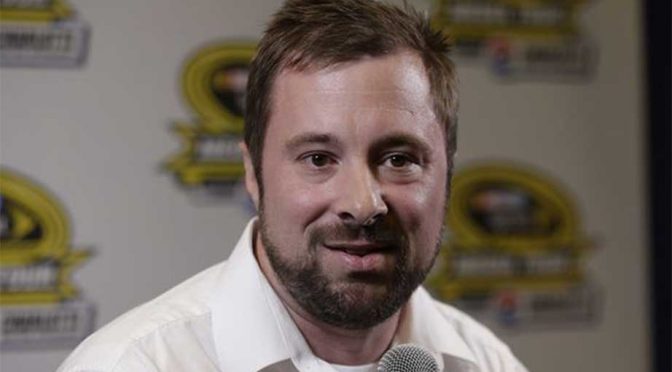
Editor’s note: Photo via Charlotte Motor Speedway/HHP

Eric McClure will drive the No. 35 Ford Fusion for Front Row Motorsports at the Daytona 500 and attempt to qualify for the Great American Race, the team announced Wednesday.

The No. 35 car will carry the primary sponsorship of Hefty/Reynolds Wrap for the one-race slate.

"This is an exciting time for me and certainly for our sponsoring brands as well," McClure said in a team release. "In our sport, and for my family, there is nothing greater than the Daytona 500 and this opportunity will enhance our program in a unique way.

"Front Row and I have a history together; they have always represented their partners and ours in a professional manner. They are very strong on the superspeedways and I enjoy this type of racing more than any other. Racing in the Daytona 500 has always been a dream of mine and I look forward to getting to Daytona, working with the team, and trying to achieve this goal."

McClure has run three NASCAR Sprint Cup Series races in his career. This will be his first Cup event at Daytona, and his first attempt at a Cup race since 2006.

McClure, 35, is a veteran of 226 races in the NASCAR Nationwide Series and posted his first career top-10 finish in last year’s season-opening Nationwide Series race at Daytona.

MORE:

WATCH: NASCAR ’14 trailer:
Stewart’s comeback

READ: Kurt Busch compares
new, old teams

READ: Twitter crew:
Favorite NASCAR follows

READ: Top 10
rookie campaigns

Despite continuity with Cup drivers and crew chiefs, organization shakes up its pit crews

RELATED: Team Penske preview | Driver profiles: Brad Keselowski | Joey Logano

CHARLOTTE, N.C. — Team Penske made one thing clear in their preview of the 2014 NASCAR season: Keeping the organization intact was a priority. It’s the reason the word "continuity" was used eight times Wednesday afternoon by the team’s drivers and officials during their 18-minute presentation on the Sprint Media Tour.
 
While the most prominent faces remain the same — in keeping with the continuity theme — it’s the behind-the-scenes areas where the team has taken a more aggressive approach, all in the name of bettering finishes of eighth and 14th in the NASCAR Sprint Cup Series standings last year. The changes include a shuffling of pit-crew personnel for both full-time teams, an expanded role for star-in-the-making Ryan Blaney, and the offseason addition of a former college wrestling coach who has Joey Logano — involved in a handful of physical altercations last season — ready to take the mat.
 
"I’ve got some new wrestling moves," Logano joked. "So I’m ready if something happens this year like last year."

Grappling aside, the team retains the core of Logano, working with crew chief Todd Gordon in the No. 22 Ford, and 2012 Sprint Cup champion Brad Keselowski and crew chief Paul Wolfe on the team’s flagship No. 2 — marking the first carryover of driver-crew chief pairings in 10 years, according to team president Tim Cindric. It’s a stark contrast to the previous offseason, when team owner Roger Penske brought in a new driver in Logano, a new manufacturer in Ford and had to adapt to the new sixth-generation stock car for NASCAR’s premier series.
 
With those key components locked up into 2014 and beyond, this offseason meant a top-to-bottom look at assessing its shortcomings. A big part of that focus centered on improvement in over-the-wall execution, including changing almost half of the crew members between the two Sprint Cup teams, according to Cindric.
 
"The pit crew stuff brought in a whole new approach and almost essentially gutted the culture of our pit department in the last month," Keselowski said. "It’s been a rapid turnaround. I feel like we’re going to go from being an average pit crew to the best on pit road, and that’s our goal. Hopefully, that’ll happen in a year’s time, but maybe it’ll take a bit longer, but we know the effort is there and the approach is there."
 
A pivotal piece to the pit-crew puzzle was the offseason hiring of Jim Beichner, the wrestling coach for 18 successful seasons at the University at Buffalo. The addition of Beichner as a true athletics director has brought structure to the team’s fitness regimen, and Logano said he’s already seen a shift in attitude among his crew.
 
For Penske, it was a new approach, but a necessary step.
 
"I think when you start with continuity, you talk about drivers, you talk about crew chiefs, you talk about team managers … so when we look up and down the management side and the key players, they’re there," Penske said. "Then you look down further in the organization and you say, ‘where were we strong and where were we weak?’ I think many times, the media said that our pit crew didn’t execute the way they should. So we read our press clippings, quite honestly, and it said we need to be better.

"So we said, let’s not say we just hire someone, what we really did was go out to get someone who’s an athletic director, someone that worked with young people, built teams, won championships and brought Jim Beichner on, and I think that’s going to make a difference."
 
The team’s young core of Keselowski, 29, and Logano, 23, gets younger with expanded driving duties for the 20-year-old Blaney. Last season’s Sunoco Rookie of the Year in the NASCAR Camping World Truck Series is scheduled to make his Sprint Cup debut with two races (Kansas in May, Talladega in October), race a 15-event schedule for Penske in the NASCAR Nationwide Series and a full truck season for Keselowski’s team.
 
It’s just another facet to the significant, behind-the-scenes changes underneath the high-profile continuity.
 
"We’re committed to making this work," Wolfe said, "so you can’t be afraid to make change if that’s one of your weaknesses and that’s what we feel like we did this offseason."

MORE:

WATCH: NASCAR ’14 trailer:
Stewart’s comeback

READ: Kurt Busch compares
new, old teams

READ: Twitter crew:
Favorite NASCAR follows

READ: Top 10
rookie campaigns

Both drivers inducted posthumously into the NASCAR Hall of Fame

MORE: Five inducted | Petty, Ingram took unexpected routes | Jarrett’s father-son bond deepens

CHARLOTTE, N.C. – Tim Flock, one of three brothers that competed in NASCAR’s first "Strictly Stock" race in 1949, and who went on to become a two-time series champion, was paid the sanctioning body’s highest honor Wednesday night when he was inducted in the NASCAR Hall of Fame.
 
Glenn "Fireball" Roberts, a winner of 33 races and called "the first superstar our sport had" by Hall of Fame member Ned Jarrett, joined Flock in the 2014 class.
 
Also inducted were 1999 Cup champ Dale Jarrett, two-time NASCAR Busch (now Nationwide) Series champ Jack Ingram and legendary engine builder Maurice Petty.

Junior Johnson, an inaugural inductee and championship-winning car owner, raced against both Flock and Roberts.
 
"Fireball wasn’t afraid of anything," Johnson said. "He drove the car like he was always in control and knew what he was doing. But he was all-out; he would want to lead every lap.
 
"Tim was the guy who was more of a finesse driver. He waited until he had to do something to win and then here he would come.”
 
But above all, Johnson said, “Both of them were just great people.
 
"You’d never meet any two people any better than Tim and Fireball."
 
Flock, who won titles in 1952 and 1955, won 39 times in 187 starts during what was a relatively short, 13-year career. His 18-win season in ’55 while paired with team owner Carl Kiekhaefer was the benchmark for single-season victories until Richard Petty eclipsed the mark a dozen years later, winning 27 times.
 
Flock scored his first victory in his seventh start, approximately a year after making his debut and it also came at Charlotte Speedway, a three-quarter mile dirt track.
 
In 1998, Flock was named one of NASCAR’s 50 greatest drivers.
 
Brothers Fonty and Bob, along with sister Ethel, also competed in NASCAR.
 
Roberts had the name, and the talent, to draw attention to the fledgling series in the sport’s early days. Although he didn’t run for the series championship, Roberts often dominated those in which he did compete.
 
In ’56, he posted 22 top-10 finished in 33 starts; in ’58 he won six times in only 10 starts. He won some of the sport’s premier events – the Daytona 500 and Southern 500 among them – as well as those held on less well-known venues.
 
"Tim was better, I think, than Fireball on dirt, but Fireball won a lot of dirt races, too," Johnson said. "Fireball, he was a good as anybody.
 
"I raced against both of them a lot; I won my share and they won their share. It was a lot of who had the best car that day, and who had the luck too."
 
Roberts died in 1964, a few weeks after being involved in a fiery crash at Charlotte Motor Speedway.
 
His grandson, Matt McDaniel, spoke on behalf of the Roberts family during the induction ceremony.
 
"He was considered a Renaissance man," McDaniel said, with his crew cut, cleanly-shaved face (and) well-dressed appearance.
 
"He attended college where he studied mechanical and aeronautical engineering, leading to a love of flying airplanes. …
 
"Our grandfather never won a championship, not because he didn’t have the talent or a car capable of winning. He never ran a full season in the NASCAR Grand National Division. He did, however, finish in the top five in points three times with a career-best runner-up performance during his rookie year of 1950."
 
Like Flock, Roberts was also named one of NASCAR’s 50 greatest drivers in 1998.

MORE:

WATCH: NASCAR ’14 trailer:
Stewart’s comeback

READ: Kurt Busch compares
new, old teams

READ: Twitter crew:
Favorite NASCAR follows

READ: Top 10
rookie campaigns

Social campaign a nod to fallen son of team owner

CHARLOTTE, N.C. — The rise of social media’s popularity, particularly the Twitter networking platform, has played well with Jimmie Johnson‘s run of championships.

As his charge to the title has played out during the course of recent seasons, Johnson’s use of hashtags, a combination of the # symbol followed by keywords or topics, has been very much in evidence.

There was #5time following his fifth consecutive NASCAR Sprint Cup Series championship in 2010. That was followed by #6pack, which appeared during his drive to a sixth title this past season.

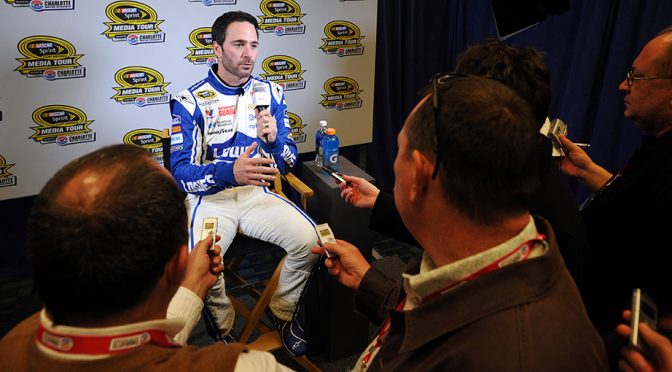
During Tuesday’s Hendrick Motorsports portion of the Sprint Media Tour, presented by Charlotte Motor Speedway, Johnson explained the origins of his latest hashtag — #se7en.

"Out of memory of Ricky Hendrick, I went with #se7en," Johnson said. The numeral and the peculiar way it was written "was something that was really important to (Ricky). … He would spell it out that way and had it in a variety of ways."

Hendrick, son of team owner Rick Hendrick, was one of 10 people killed in a plane crash in October of 2004. He had made 22 starts in what is now the NASCAR Nationwide Series before stepping out of the car and turning his attention to ownership in the series.

"When we were at the Hendrick Christmas party in December, his favorite band O.A.R. was playing and the whole moment kind of came to a head," Johnson said. "(We were) up front at the stage, singing away. Mr. Hendrick, Linda (Hendrick) … the whole family and everybody’s there reliving Ricky moments, just talking about him and watching his favorite band play.

"I left there thinking ‘This is it, it’s got to be se7en, the way he used it and wrote it.’ So that’s going to be the hashtag."

MORE:

WATCH: NASCAR ’14 trailer:
Stewart’s comeback

READ: Kurt Busch compares
new, old teams

READ: Twitter crew:
Favorite NASCAR follows

READ: Top 10
rookie campaigns

Catch up with what drivers and Hall of Fame inductees are buzzing about 

MORE:

WATCH: NASCAR ’14 trailer:
Stewart’s comeback

READ: Kurt Busch compares
new, old teams

READ: Twitter crew:
Favorite NASCAR follows

READ: Top 10
rookie campaigns

Catch up with what your favorite drivers and teams have been buzzing about

MORE:

WATCH: NASCAR ’14 trailer:
Stewart’s comeback

READ: Kurt Busch compares
new, old teams

READ: Twitter crew:
Favorite NASCAR follows

READ: Top 10
rookie campaigns