HAMPTON, Ga. — For some drivers in the NASCAR Cup Series garage, Sunday’s playoff opener at Atlanta Motor Speedway is the first step on the road that leads to championship glory as 16 of the sport’s best battle over the next 10 weeks for the Bill France Cup.
For others, the mindset shifts as they look to help their fellow teammates case the trophy at the season finale at Phoenix Raceway in November.
Trackhouse Racing’s Ross Chastain is focused on being the ultimate team player as his teammate Daniel Suárez looks to chase the race team’s first championship in NASCAR national series competition.
“If there is an opportunity to push the No. 99, make a hole for him, do anything to help the No. 99, absolutely we are all in,” Chastain said Saturday at Atlanta Motor Speedway, site of Sunday’s race (3 p.m. ET, USA Network, PRN Radio, SiriusXM NASCAR Radio). “That starts with building the race cars at the shop, picking tire pressures, settings and setups.
“Daniel and I have our differences in the way we drive, and our teams have their differences in how they operate, but my crew chief made it clear to (Matt Swiderski), I’ve made it clear to Daniel and our leadership group at Trackhouse. The No. 1 team will help however we can.”
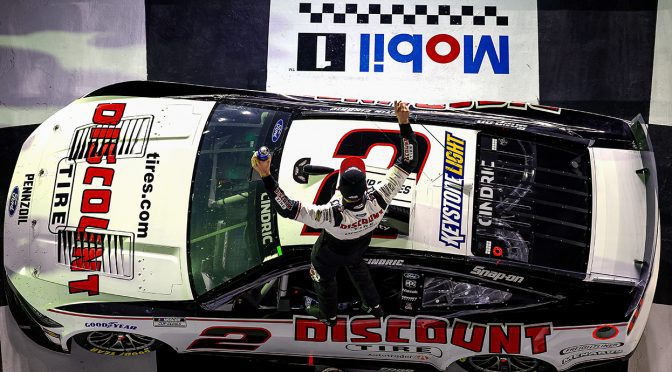
The same sentiment can be echoed across the street from the team’s shop in Concord, North Carolina, where RFK Racing also calls home, as Chris Buescher’s No. 17 missed out on the postseason festivities after a new winner was crowned at Darlington’s Southern 500 with Chase Briscoe taking the checkered flag. Though he still has aspirations to collect his first win of the season, Buescher says he’ll provide assistance for his title-eligible teammate and car owner, Brad Keselowski, in the 10 races that remain.
“It’s not so much of a mindset shift for us,” Buescher told media members following his qualifying run at Atlanta Motor Speedway. “We come to tracks like (Atlanta) and that’s what has made us so good at superspeedway races. The fact that we have been working so well together and can constantly grab stage points and be in the hunt for winning these things as long as we can stay out of trouble.
“It has been pretty typical with how we look at these sort of things. I obviously know if we can do anything throughout these playoffs to help the No. 6, without hurting yourself. I’m certainly aware of it and we will do what we can.”
For 23XI Racing, it is the thrill of victory and the agony of defeat, felt simultaneously as Tyler Reddick and the No. 45 Toyota team delivered the team’s first Regular Season Championship while Bubba Wallace’s No. 23 team came up just short of racing for the ultimate prize at the end of the season.
As Wallace still processes what missing the 2024 postseason looks like, he is proud and eager to help his 23XI teammate in Reddick chase his first Cup Series title.
“It’s big for our team, putting down the ‘sob’ hat for a minute and putting on the ‘pumped and excited for the future,’ being able to win a Regular Season Championship in four years for a team is big,” Wallace stated. “Having people in the right place where it matters, having Tyler coming in, I knew from day one he would be fast and competitive and get the job done.
“On the outside looking in, it sucks, but at the same time, you’re happy for the team, and I can say that confidently, without blowing smoke. It’s cool to see how everyone is coming together to get to where we are.”
These drivers will look to keep the momentum progressing forward for their respective teams in the Cup Series playoffs as they kick off the 2024 postseason with Atlanta’s 400-mile event on Sunday.
HAMPTON, Ga. — In Saturday’s NASCAR Cup Series time trials, Michael McDowell reaffirmed his mastery of qualifying on drafting tracks, winning the pole for Sunday’s Quaker State 400 available at Walmart at Atlanta Motor Speedway, the first race in the Cup Series Playoffs (3 p.m. ET on USA, PRN and SiriusXM NASCAR Radio).
McDowell posted one of only two sub-31-second laps in the final round (30.926 seconds), touring the 1.54-mile speedway at 179.267 mph. He edged defending series champion Ryan Blaney (178.844 mph) for the top starting spot by 0.073 seconds.
McDowell was one of three non-playoff drivers who qualified in the top four. His Front Row Motorsports teammate Todd Gilliland was third at 178.770 mph, followed by Stewart-Haas Racing’s Josh Berry at 178.453 mph, as Ford drivers claimed the first five starting spots for Sunday’s race.
The Busch Light Pole Award was McDowell’s fifth of the season, second at Atlanta and fourth straight on a track that uses the superspeedway competition package. All five of McDowell’s career poles have come this year.
“I’m just so proud of everyone at Front Row [Motorsports],” McDowell said. “I knew we had a shot based on Daytona (where McDowell won the pole two races ago), and we sat on the pole here earlier.
“One thing I think we’ve done really well, we led a lot of laps and our car drove really well… sometimes you’ll trim them out and get a lot of speed, and when you get into the race, it’ll be just a handful. I don’t feel like we’re compromising anything going into the race with the speed that we have.”
Blaney was the fastest of six playoff drivers who qualified in the top 10. Austin Cindric earned the fifth starting spot, followed by Kyle Larson in the fastest Chevrolet (178.367 mph) and Ford driver Joey Logano.
Non-playoff driver Austin Dillon will start eighth, followed by playoff drivers William Byron and Chase Briscoe.
Notably absent from the final round were Toyota drivers. Of the five playoff drivers in Camrys, Ty Gibbs was the top qualifier in 20th. Martin Truex Jr. will start 22nd, Tyler Reddick 23rd, Christopher Bell 26th and Denny Hamlin 38th.
Hamlin was more than two seconds off the pole-winning pace in the first round with what appeared to be an engine issue.
“The engine made a funny noise when we were warming it up on pit road,” Hamlin radioed to his crew.
“They see a few red flags certainly, so they’ll dig into it tonight and get it fixed for tomorrow,” Hamlin told NBC Sports. “It means we start last and then we’ll just battle to the front. Our Mavis Camry I’m sure is going to be pretty good tomorrow. We feel good about what we brought. It’s just, we’ve got to get it to the finish.”
Other playoff drivers qualified as follows: Alex Bowman 11th, Harrison Burton 12th, Chase Elliott 16th, Brad Keselowski 19th and most recent Atlanta winner Daniel Suárez 30th.
Paul Goldsmith, who was as richly talented when racing stock cars as he was riding motorcycles, has died. He was 98.
Goldsmith won the last NASCAR premier-series race held on the Daytona Beach and road course in 1958. He also won the prestigious Daytona 200 motorcycle race in 1953, one of his five American Motorcyclist Association (AMA) national victories. The versatile Goldsmith also made six starts in the Indianapolis 500, finishing fifth in 1959 and a career-best third the following year.
Goldsmith notched nine wins and eight pole positions in what is now the NASCAR Cup Series. His success came primarily while connected to two legendary car owners — Smokey Yunick and Ray Nichels. It was Yunick — who ran the legendary “Best Damn Garage in Town” in Daytona Beach — who connected with him during Daytona’s motorcycle events and entered him in his first NASCAR races in 1956.
Goldsmith netted his first win in his eighth premier-series start that year, prevailing in an epic 300-miler to tame the dangerous and famed Langhorne Speedway in Pennsylvania. He had the rare distinction of also winning a motorcycle event at the circular Langhorne track.
“Paul Goldsmith had more natural talent than any driver I ever had anything to do with,” Yunick was quoted as saying in Peter Golenbock’s 1993 book, American Zoom. “He’s a very, very quiet, likable guy … good manners. A very, very fast race driver and had extremely quick reflexes. Inside of three or four races, he was as good as there was.”
Goldsmith was born in Parkersburg, West Virginia, but moved with his family to Detroit during his teenage years. His motorcycle racing career began there, and he soon graduated from the barnstorming county-fair circuit to the AMA grand national ranks.
In AMA competition, Goldsmith recorded his first national win at the Milwaukee Mile in 1952. A year later, he netted his largest two-wheel triumph in the Daytona 200, ending a 13-year drought for Harley-Davidson in the event, riding a bike prepared in part by Yunick. Goldsmith balanced his racing career with a full-time job at the Chrysler factory in Detroit.
“I guess I was pretty businesslike compared to a lot of the guys back then,” Goldsmith told the AMA in his later years. “There was very little glamour in racing in those days. We all slept in our cars. It was tough, but we all had a great time as well.”
His distinction as the final winner on the Daytona shores and road circuit signaled the end of an era, with the 2.5-mile Daytona International Speedway the next year in 1959. Goldsmith led all 39 laps from the pole position in Yunick’s No. 3 Pontiac, but he fought off intense pressure from Hall of Famer Curtis Turner to win by five car lengths.
“It was difficult to get a car set up for both the beach and the highway,” Goldsmith told Autoweek in 2021. “And the highway was rough. The car wouldn’t handle unless you had the right suspension. Smokey helped me with that quite a bit. We went out on a back road there about four miles north of Daytona and worked on different shocks, tire pressures and suspensions. That’s where we learned how to do it. And I had raced motorcycles there, so that helped.”
Goldsmith also claimed 26 victories in the U.S. Auto Club (USAC) Stock Car Championship, a rival series to NASCAR’s top division. He was the series’ champion in consecutive years — 1961-62 — but later challenged USAC in court for rules that barred drivers from alternating between the two sanctioning bodies.
Though Goldsmith listed St. Clair Shores, Michigan as his hometown during his racing career and later lived in Indiana, he briefly claimed residence in Mexico City as a way to exploit a loophole in American auto racing bylaws, which relaxed suspensions against international drivers.
His focus shifted more toward NASCAR in 1964 through his partnership with Nichels. Goldsmith claimed his final three NASCAR Cup Series wins in the 1966 season — claiming a victory in a Daytona 500 qualifying race (which counted as an official win during that time), then prevailing at Rockingham and Bristol. He never competed in more than half of the races during a given season, but the 1966 campaign brought his highest finish in the final standings — fifth.
Getty Images
By 1969, Goldsmith had begun to grow weary of the demands of the racing circuit, telling the great Benny Phillips of the High Point (North Carolina) Enterprise in August that he intended to phase himself out of the cockpit. “I can’t simply say I’m quitting,” he said. “If I was quitting outright, I’d be off to some island resort instead of hanging around these race tracks. But I’ll put it this way, you’ll see me at fewer and fewer races in the future.”
One week later, Goldsmith competed in his final race. The engine of his No. 99 Dodge expired just minutes after he had taken the lead at Michigan International Speedway. “I’d just got tired of it, the traveling, being home two days a week if I was lucky,” Goldsmith told the Munster (Indiana) Times in 1998. “I was leading in that race, the engine blew and I said this is the last engine I’m gonna blow, and I quit.”
As a footnote to Goldsmith’s retirement, Nichels tapped Charlie Glotzbach as his successor. In the next race Nichels entered, Glotzbach joined the driver boycott of the inaugural Cup Series race at Talladega Superspeedway. Nichels replaced Glotzbach with Richard Brickhouse, who claimed the first Talladega 500 in the No. 99 entry for his only big-league win.
Goldsmith filed to make his retirement official on Jan. 11, 1970, taking a front-office position as general manager of Nichels’ engineering group. He also left a legacy of innovation, credited with developing the water-circulating forerunner to the modern cool-suit technology and also an experimental warning system that featured a flashing caution light inside his race car.
His post-racing career was filled with numerous business interests, including a concentration on aviation. Goldsmith — known as one of the first drivers to fly his own private plane to each race — founded an aircraft engine business, trained pilots and owned a small airport in Griffith, Indiana. He also owned several Burger King franchises in the Indianapolis area and two Thoroughbred horse ranches in Florida.
Goldsmith returned to the shores of Daytona for a promotional appearance in August 2020, reuniting with one of his former cars on the beach and taking a lap around the 2.5-mile track with then-Daytona track president Chip Wile behind the wheel.
“He’s run at Indy. He drove for Smokey, who thought Goldsmith was the best driver he ever had because he knew more about a car than anybody,” said NASCAR historian Buz McKim. “He was a natural engineer. He is an aviator and raced Pikes Peak. Literally, anything with wheels and an engine, he was in to win.”
Goldsmith was recognized by induction into the AMA Motorcycle Hall of Fame in 1999, the Motorsports Hall of Fame of America in 2008 and the Indianapolis Motor Speedway Hall of Fame in 2016.
NASCAR.com’s 36 for 36 continues at Atlanta Motor Speedway.
With 36 races and 36 full-time Charter cars, our players select one car per race, but there’s a simple twist: once they’ve made the pick, they can’t choose that car again for the rest of the 36-race season. Yes, that means every car will be selected exactly once … a survivor pool, by another name.
Follow along weekly as our panel of pickers — Dustin Albino from Jayski, along with Steve Luvender and Cameron Richardson from NASCAR.com — embarks on a season-long journey to think like strategists and prove their picking prowess.
We’ll also feature a fourth “community” 36 for 36 pick each week, as decided by fan vote on the r/NASCAR subreddit. Can the collective vote topple our trio of full-timers?
Current Standings:
Steve Luvender: 667
r/NASCAR Community: -63
Dustin Albino: -83
Cameron Richardson: -123
Race 27 of 36: Atlanta
Welcome to the playoffs! Well, not for 36 for 36, which is a season-long challenge. Last week’s regular-season finale at Darlington wasn’t a stellar outing for our pickers. Erik Jones delivered just 13 points for Cameron Richardson and the r/NASCAR community, while William Byron’s late crash netted picker Dustin Albino 17 points — mostly from stage points. Steve Luvender extended his points lead with 32 more points resulting from Ross Chastain’s top-five finish.
Now, an Atlanta race as a playoff opener is bound for unpredictability. How will our pickers handle the challenge?
Jayski’s Dustin Albino: No. 47, Ricky Stenhouse Jr.
Dustin’s pick last week:No. 24, William Byron (17 points) Total season points: 584 (third place)
Dustin: Man, I’m sure glad summer is wrapping up soon. Aside from a Zane Smith top 10 at Michigan, it’s been a brutal few months of picks here. Most recently, William Byron had a top-five car all night at Darlington and was collected in a late wreck. But hey, that’s racing. This weekend, I’m rolling with Stenhouse, who has consecutive top-10 finishes at Atlanta and is a three-time winner on drafting tracks. While playoff drivers will be focused on points, the No. 47 team has one goal: win.
NASCAR.com’s Steve Luvender: No. 7, Corey LaJoie
Steve’s pick last week: No. 1, Ross Chastain (32 points) Total season points: 667 (first place)
Steve: Corey LaJoie won’t drive the No. 7 car in the Cup Series next year, and he hasn’t yet announced his plans for 2025. Given his past success at the superspeedway-configured Atlanta Motor Speedway, this could be one of LaJoie’s last chances for a victory driving for Spire Motorsports. It’s a lot of pressure, but it may be the race of his career.
Cameron’s pick last week:No. 43, Erik Jones (13 points) Total season points:544 (fourth place)
Cameron:There are two drafting tracks in the playoffs and Corey LaJoie could be a legitimate threat to win either of them. LaJoie owns two top fives at Atlanta and nearly broke through for this maiden Cup win in 2022 before contact with Chase Elliott on the final lap sent the No. 7 driver spinning. LaJoie could also take advantage of playoff drivers wanting to be more conservative early on and put the No. 7 up front early to nab stage points. Ten races to go and a healthy 100-plus point gap to make up for the lead. Wish me luck.
r/NASCAR Community: No. 38, Todd Gilliland
r/NASCAR’s pick last week:No. 43, Erik Jones (13 points)
Total season points: 604 (second place)
It’s Todd Time for the NASCAR subreddit! The community voted Driver No. 38 to get the job done in Atlanta. Here’s what Redditors had to say in this week’s voting thread:
u/FridgusDomin8or: “I say we go Todd this weekend. Usually qualifies up front (and runs up front) on these drafting style tracks and I don’t really see any better tracks to use him at — he and this team really seem to specialize on the drafting tracks.”
u/Extreme-Bite-9123: “Todd this week. He’s been really fast at the plates this year, and it’s our best shot at a good day with him.”
u/Dont-Hate-The-8: “This is tough. This is the best place to use Todd, but it’s the best place to use a few drivers. I say we go JHN here, because the 38 has shown far more speed on other tracks.”
(Narrator: But they did not go with John Hunter Nemechek.)
Check back next week to see how our pickers fared as the season-long 36 for 36 journey continues.
And, if you’ve got a competitive itch beyond meticulously managing your Fantasy Live lineup each week, feel free to save or print your own 36 for 36 sheet and see if you can beat our pickers and the Reddit community!
Throughout the 2024 NASCAR season, Ken Martin, director of historical content for the sanctioning body, will offer his suggestions on which historical races fans should watch from the NASCAR Classics library in preparation for each upcoming race weekend.
Martin has worked exclusively for NASCAR since 2008 but has been involved with the sport since 1982, overseeing various projects. He has worked in the broadcast booth for hundreds of races, assisting the broadcast team with different tasks. This includes calculating the “points as they run” for the historic 1992 finale, the Hooters 500 at Atlanta Motor Speedway.
The following suggestions are Ken’s picks to watch before this Sunday’s Quaker State 400 at Atlanta Motor Speedway.
The 1980 NASCAR Cup Series champion seemed poised to continue his dominance after asserting his name as a championship threat but that was not immediately the case. Earnhardt bounced around after leaving the Rod Osterlund owned team he won the title with before finding a permanent home with Richard Childress in 1984.
His new home at Richard Childress Racing proved to be the correct move, as Earnhardt finished fourth in points in 1984 and won two races. Both of those numbers were his best since his championship season in 1980.
Unfortunately, the 1985 season saw mechanical issues plague the still-fast Childress team. Earnhardt failed to finish nine of the first 20 races but still finished the season with four victories. The rest of the Cup Series was on notice that if the budding superstar and team could put things together, 1986 could be dominated by Earnhardt.
The season-opening Daytona 500 seemed like more of the same for Earnhardt, as his fast No. 3 Chevrolet led 34 laps but ran out of fuel at the end, leaving him with a 14th-place finish. What followed was a torrid stretch that saw him finish outside of the top 10 just once until the start of July, cementing himself at the top of the series standings.
He continued at the top of the standings as the season progressed, arriving at Atlanta with the chance to clinch with Riverside still remaining on the schedule.
Everything seemingly went right for Earnhardt at Atlanta and he officially clinched his second series title when Darrell Waltrip blew an engine less than 100 laps into the race.
It didn’t slow Earnhardt down, as he went on to lead 162 of the race’s 328 laps en route to his fifth victory of the season. Richard Petty finished second, an entire lap behind Earnhardt.
It seemed like everything aligned to ensure that the 1992 NASCAR Cup Series season finale at Atlanta would go down as one of the most memorable races of all-time. That was before the green flag even waved.
The amount of storylines were immaculate, some of which were not even known for a handful of years after the event itself.
Richard Petty was set to wrap up his legendary career, with the race at Atlanta being the final stop of his “Fan Appreciation Tour.” The entire weekend saw eyes on Petty, including Alabama holding a concert honoring Petty the night before the race at the Georgia Dome.
Beyond Petty’s impending retirement, the race for the championship was tighter than ever. Six drivers were mathematically eligible to win the championship, with Davey Allison leading the way coming into the event after winning the previous week at Phoenix.
Allison was in the middle of a tough season, both on and off the track, so his resilience to even be in the hunt for the title was impressive. He was injured at Bristol in April. He won The Winston at Charlotte but by crashing across the line and ending the night in the hospital. July saw Allison’s car fly through the air at Pocono, leaving Allison with multiple injuries including a concussion and a broken arm. To top it all off, his brother Clifford tragically passed away in a practice crash at Michigan. Allison put his emotions aside and brought his car home with a fifth-place finish. It almost seemed inevitable that nothing could conquer Allison’s quest at capturing the Cup.
Alan Kulwicki, who owned the No. 7 car that he raced, sat 30 points behind Allison. Bill Elliott was 40 points behind in third, while Harry Gant, Kyle Petty and Mark Martin all were still capable of capturing the title, depending what happened to the other contenders.
On top of everything, the race marked the Cup Series debut of an up-and-coming Xfinity Series driver, Jeff Gordon. The impact of Gordon’s debut would not truly be felt for years but was noted during the broadcast.
When the green flag waved, things couldn’t have gone worse for Petty or Allison. Petty was involved in a multi-car accident on the 95th lap, which resulted in his car erupting into flames. He was not injured in the crash but it seemed like it might mark the end of his career, with his car looking all-but destroyed.
As the laps passed by, Allison looked like he was in control of his own destiny. That was until an accident involving Ernie Irvan saw Allison’s title hopes disappear when he slammed into Irvan’s No. 4 car.
The race for the title came down to Elliott and Kulwicki, with the title coming down to the final set of green flag pit-stops. Kulwicki took advantage of those stops, putting him in position to capture the title. Elliott took the checkered flag but Kulwicki led 103 laps to Elliott’s 102, giving Kulwicki the title by 10 points.
Little did the Labonte family know but the 1996 season finale would go down as quite possible the biggest day in their already successful family’s racing history.
Terry Labonte, the 1984 NASCAR Cup Series champion, found a bit of a career rejuvenation by signing to drive the No. 5 car for Rick Hendrick starting with the 1994 season. He visited Victory Lane three times that year, his first victories since 1989.
The next season saw Labonte win three more races in 1995, which was an incredible feat since Labonte had never plateaued above two victories throughout his first 15 seasons. He finished sixth in points, while his teammate Jeff Gordon captured the series title.
Labonte’s season in 1996 started rather uneventfully, despite winning from the pole at North Wilkesboro in the spring. As the races passed by, Labonte and the No. 5 team became stronger, notching eight straight top-seven finishes through the halfway point of the season. This put Labonte on top of the season standings.
He continued throughout the season with his consistency, setting himself up to race for the championship at Atlanta. He entered the race with a 47-point advantage over his teammate Gordon and a 99-point lead over third-place driver Dale Jarrett.
His brother Bobby Labonte, the 1991 Xfinity Series champion, was in his second season driving the No. 18 car for Joe Gibbs Racing. He won the first four races of his career in that car, one that seemingly found speed towards the end of the 1996 season. Bobby Labonte didn’t have the finishes to back it up but he won the pole at Dover, Charlotte, Phoenix and Atlanta, giving him four poles over the final seven races of the season. It was a needed momentum boost for the No. 18 team.
The championship contenders hoped to finish their strong seasons by hoisting the Cup and backed it up in qualifying. Gordon qualified behind Bobby in second, while Terry followed in third and Jarrett was fifth.
The four drivers were the cars to beat on the final Sunday of the season, as they stayed up front throughout the race. In true storybook fashion, it was both of the Labontes coming out on top. Bobby led a race-high 147 laps for the fifth victory of his career, while Terry’s fifth-place finish was enough to finish 37 points ahead of Gordon to capture his second title. The two drivers celebrated on the track together with a victory lap and later took pictures together in Victory Lane.
The green flag drops on the 10-race NASCAR Cup playoffs at Atlanta Motor Speedway on Sunday, but the bulk of betting action in the championship futures market will come after the Quaker State 400.
Ed Salmons, vice president of risk management at the Westgate SuperBook, estimates that, based on past years, 75% of this season’s NASCAR futures handle has yet to show up.
The wait-and-see mentality is particularly understandable this year, as some drivers near the top of the oddsboard are likely to get bounced from the playoffs before the Round of 8. After the drafting style racing in Atlanta, contenders must survive the Watkins Glen road course and the Bristol short track in the Round of 16, then Kansas Speedway, another superspeedway at Talladega and the Charlotte Motor Speedway road course in the Round of 12. There’s plenty of uncertainty lurking in that six-race stretch.
“I think everyone (is at risk),” Salmons told NASCAR.com this week. “Obviously, the playoff points that you bring forward will be huge, but I think you’re going to get a guy or two you wouldn’t think of making it that will run really well or win a race. I mean, Harrison Burton could win Atlanta, who knows?
“In that first set of six, you’re going to have some stuff going on that you wouldn’t expect.”
Unexpected results may not only save bettors from early heartbreak, they may also create value on the odds board as the playoffs progress.
“I do think more value will arise the further we get into the playoffs in large part due to the schedule,” Jim Sannes, a quantitative NASCAR analyst and bettor, said in a direct message.
That value could show up right after Sunday’s race.
“With the opener being in Atlanta, one of the contenders is going to have issues, which will likely lead to their odds lengthening,” continued Sannes, managing editor of digital media at FanDuel Research. “We could see something similar in Talladega. It might be risky to buy low on someone with two more chaotic races lurking in this round, but as long as that risk is mitigated by lengthened odds, I’m receptive to the idea.”
2024 NASCAR Cup championship odds: Buzz around Reddick, Bell
Tyler Reddick is a bit of an outlier on the futures board. The champion has come from either the Hendrick, Gibbs or Penske garages in six straight years and eight of the last nine, and Reddick is the only driver not from one of those teams priced at 10-to-1 odds or shorter ahead of Atlanta.
In fact, the No. 45 Toyota is among the championship favorites, residing in the neighborhood of Kyle Larson, Christopher Bell and Denny Hamlin.
Here are the odds from three top sportsbooks for all 16 contenders to win the title.
Drivers
SuperBook
DraftKings
BetMGM
Kyle Larson
+400
+380
+375
Christopher Bell
+450
+450
+500
Denny Hamlin
+500
+400
+400
Tyler Reddick
+500
+550
+600
William Byron
+800
+700
+800
Ryan Blaney
+800
+800
+900
Chase Elliott
+1000
+1100
+1100
Joey Logano
+2500
+1800
+2000
Brad Keselowski
+2500
+2000
+2000
Martin Truex Jr.
+2500
+1800
+1600
Ty Gibbs
+3000
+3500
+4000
Alex Bowman
+6000
+4000
+5000
Daniel Suárez
+20000
+12000
+20000
Chase Briscoe
+20000
+10000
+15000
Austin Cindric
+30000
+12000
+20000
Harrison Burton
+500000
+20000
+500000
“He’s probably been the most consistent driver all year,” Salmons said of Reddick. “He doesn’t have the wins that some of the other guys have (tied for 5th with two wins), but it seems like he runs top five almost every week (leads the series with 11 top-fives and 18 top-10s). He certainly seems to fit the profile (of a Cup champion).”
“That’s a team that’s normally in past years made a lot of silly mistakes that have hurt him, and they seemingly eliminated that this year, or at least they have so far.”
The championship, of course, will ultimately be decided at Phoenix Raceway on Nov. 10. Yes, he’ll have to traverse a diverse set of nine layouts to make the final four, but the eventual champ has to run well, and probably even win, on the one-mile track in the desert.
Sannes doesn’t model NASCAR futures markets quantitatively, but he agrees that bettors should put significant weight on Phoenix as they’re handicapping the championship.
“In this current format, the eventual champions have all been drivers who have been good at the track where the Championship Race was eventually held,” Sannes said. “That’s why I’d love to get a bit of a discount at some point on Christopher Bell, given how lethal he has been on short, flat tracks this year. He’s the first driver whose odds I’ll check after the superspeedways and entering the Round of 8, before the schedule sets up for tracks that suit him well.”
A Bell title would mean a loss for the SuperBook. There’s been more money bet on the No. 20 to win it all than any other driver, per Salmons.
While he’ll price Phoenix more heavily into his championship odds as the field is trimmed, Salmons said, “I think Phoenix has always factored in, and I think that’s why Bell got so much money — because he’s so good at Phoenix.”
How they’re betting ‘em
Here’s a snapshot of the NASCAR Cup championship futures books at BetMGM and the Westgate:
• Kyle Busch is BetMGM’s largest liability. With the No. 8 missing the playoff cut, the sportsbook is safe.
• Austin Cindric represents the SuperBook’s largest potential loss. “I’ll live with it,” Salmons quipped.
• Hamlin is the SuperBook’s second largest liability, followed by Bell. Salmons has booked 83 futures tickets on Hamlin; the next driver in terms of ticket count has 19. … Hamlin is third on BetMGM’s liability list.
• Kyle Larson has drawn the most bets (12.3%) and the highest handle (15.6%) at BetMGM, and is the book’s second largest liability. Not so at the Westgate. “We’re in a really good spot” on Larson, Salmons said.
• Salmons also mentioned Reddick and Blaney as winners for the house.
The NASCAR playoffs are finally upon us, and it’s officially an all-out sprint from here to the Cup Series championship for the 16 drivers whose title hopes are still alive.
To help sort out who has the edge amidst all the postseason madness — as well as what each driver needs most in the playoffs — let’s turn once again to our race simulation system. As a refresher, this method looks at a driver’s previous performance (both overall and at each specific track type) to estimate their probability of finishing in each spot each race, then uses those numbers to simulate the playoffs 10,000 times, tracking how often every playoff participant advances at each stage of the postseason and, ultimately, wins the championship.
Here’s the overall big picture of the championship from those 10,000 simulations:
Unsurprisingly, Kyle Larson is the championship favorite, as befits the best driver in the world. But it’s worth pointing out that, in the vast majority of simulations (78 percent), Larson didn’t win his second career Cup Series title. Most of the time when that happened, the crown went to either Tyler Reddick, Christopher Bell, William Byron or Denny Hamlin … but they still left some daylight for the rest of the playoff field to make their own bids. So let’s run through each playoff driver’s path to victory, with a focus on which races have the biggest impact on their odds of becoming a champion.
Kyle Larson
What he needs in the Round of 16: Keep the ship steady.
With a 35-point cushion in the playoff standings and a greater than 95 percent chance of making the Round of 12, Larson is in good shape as long as he cranks out some decent finishes at Atlanta, Watkins Glen and Bristol. In simulations where he finishes 30th or better in two of the three races in Round 1, Larson advances 99 percent of the time — and even in sims where he has just one finish of 30th or better out of the three races, he has an 84 percent chance of moving on. The only thing to really avoid is finishing 31st or worse in every race of the round, which would give Larson just a 19 percent chance to advance. Keep an eye on Bristol in particular for one of the sport’s top short-track racers: Larson’s average finish of 14.5 at the Last Great Colosseum in simulations where he advances falls to 34.6 in the sims where he doesn’t.
Looking ahead: As the king of the intermediates, Larson has to take care of business at Kansas in the Round of 12 and Las Vegas in the Round of 8 — both places where he’s won multiple times before. In simulations where he’s active in the third round, Larson’s championship odds rise to 29 percent when he finishes top 10 at Las Vegas, but fall to 17 percent when he finishes 31st or worse.
Tyler Reddick
What he needs in the Round of 16: Take full advantage of the road course.
Similar to Larson, Reddick — who won the Regular Season Championship — mainly needs to keep the disasters to a minimum if he wants to advance out of Round 1. He makes the second round 95 percent of the time when he finishes 30th or better in two of the next three races, and 61 percent of the time even if he does it once, but three finishes of 31st or worse would give Reddick just a 3 percent chance of advancing. Reddick’s biggest pivot-point in the first round is Watkins Glen, which isn’t surprising for arguably the top road-course driver in the sport (certainly among full-timers). Reddick has a field-high 11 percent chance of winning there on Sept. 15, and a 40 percent chance of finishing in the top five.
Looking ahead: Reddick will get another chance to show off his road-racing skills at the Charlotte Roval in Round 2, but the most pivotal race along his path to the Championship 4 comes in the third round at Homestead-Miami — a place he’s never won before, but has three top fives in four career starts. When Reddick advances to the Round of 8 and finishes top 10 at Homestead, he wins the championship 25 percent of the time (versus just 12 percent when he finishes 21st or worse).
Christopher Bell
What he needs in the Round of 16: Keep running strong at Bristol.
There’s a case to be made that Bell has been the best all-around driver in the Cup Series, in terms of his versatility across every type of track. He’s the only full-time driver with an Adjusted Points+ Index at least 60 percent better than the Cup Series average at ovals, short tracks, road courses and drafting tracks. So it’s hard to nail down a particular place as a make-or-break track for Bell. But if we had to pick one, Bristol seems to carry extra importance in the simulations — Bell’s odds of advancing out of the Round of 16 rise to 99.7 percent when he has a top-10 finish there, while they fall to 84.3 percent when he finishes 31st or worse. And Bell has to like those odds; he’s been among the top 10 in each of his past three Bristol outings.
Looking ahead: If he makes the Round of 8, Bell should circle Martinsville on the calendar. In the simulations where he’s still active in the title hunt by then, he has a 22 percent chance of winning the championship when he nabs a top 10 there, literally double his chances when he finishes outside the top 30 (11 percent). And both scenarios could happen, given how all over the place Bell has been at the Paperclip in his career.
William Byron
What he needs in the Round of 16: Capitalize at The Glen and don’t mess up Bristol.
Because Byron won at Daytona (the ultimate drafting track) earlier this year and has won multiple times at Atlanta since its reconfiguration, we might think the opening race of the playoffs is the most important to Byron’s chances of moving on. However, pack racing being what it is at Atlanta now, Byron has better odds among the favorites at Bristol and The Glen (where he is an underrated road-course ace). In simulations where Byron had a top 10 at either track, he had a 99 percent chance to advance to the Round of 12, compared with 72 percent when he finished outside the top 30 at either track (and 35 percent when disaster struck at both races). Byron can survive a chaotic day at Atlanta, but he needs to run well at the other two tracks to feel good about his path to the second round.
Looking ahead: Title-wise, Byron’s highest-leverage track along the road to the Championship 4 is Martinsville in the Round of 8. If he’s still in the title hunt by then, his odds of winning the Cup Series crown are 19 percent when he finishes in the top 10, but they’re only 8 percent when he finishes outside the top 20. But Byron also has to get there first, which is where the Roval comes in during the Round of 12. In sims where Byron is still active that round, his odds of advancing to the Round of 8 are 95 percent when he finishes top 10 at Charlotte, but only 56 percent when he finishes 31st or worse there.
Jared C. Tilton | Getty Images
Denny Hamlin
What he needs in the Round of 16: Dominate at Bristol, baby!
Still seeking that first championship, Hamlin hits the Round of 16 ranked sixth in the standings after closing the regular season with finishes either in the top 10 or 30th or worse in each of his last seven races. Now he’s looking at a first-round slate that isn’t exactly the most favorable for him — starting with a drafting track and a road course, both track types where Hamlin has been surprisingly mediocre recently. This season, he had an Adjusted Pts+ index 56 percent worse than average at road/street courses and 68 percent worse at plate/drafting tracks, which explains why Hamlin’s early advancement odds are the lowest (82 percent) out of the top seven on our list of favorites. However, Hamlin’s saving grace in Round 1 is Bristol, where he’s the second-leading active winner with four victories. In our simulations, Hamlin advances 94 percent of the time when he finishes 20th or better at Bristol, but only 53 percent of the time when he finishes outside the top 30.
Looking ahead: Faced with a similar breakdown of track types in the second round (an oval, a plate track and a road course), Hamlin needs a strong showing at Kansas to stabilize his chances of advancing to the Round of 8. And then, Martinsville is the most important race for his Championship 4 fate; assuming he is active in the playoffs by then, Hamlin wins the title 21 percent of the time when he goes top 10 at the historic half-mile track where he’s a five-time winner, versus just 9 percent when he’s outside the top 20.
Chase Elliott
What he needs in the Round of 16: Tap into that old road-course magic.
With 85 percent advancement odds overall, Elliott falls into the group that mainly needs to avoid catastrophe in the Round of 16. If he has one or fewer races where he finishes 31st or worse this round, Elliott has a 92 percent chance of advancing; if he has two or more of those, his odds of advancing drop to 31 percent. But the most important place to watch the No. 9 might be Watkins Glen, where his odds of advancing are 97 percent when he finishes in the top 10 and just 61 percent when he falls outside the top 30. Once upon a time, Elliott was NASCAR’s premier road-course driver, but he hasn’t won at one of those since Road America in July 2021. Now would be a good time for him to revisit the form that gave him his first career Cup Series win at The Glen back in 2018.
Looking ahead: Similarly, a successful Elliott title run usually sees him take advantage of the Roval in Round 2, even if it runs somewhat differently than other road courses. When he’s still active in the Round of 12, Elliott has an average finish of 12.5 at Charlotte in simulations where he advances again, versus 24.5 in the sims where he doesn’t. And Homestead is a pivotal race in the Round of 8; Elliott wins the title 16 percent of the time when he scores a top 10 there, versus just 6 percent when he finishes 21st or worse.
Ryan Blaney
What he needs in the Round of 16: End his recent slump.
Blaney is the last of the group of drivers on our list with at least an 80 percent chance to get out of Round 1 (and, relatedly, at least a five percent chance of winning the championship). After a midseason heater that saw him win twice and finish in the top 11 seven times in eight races, he’s gone cold over the past three races with a trio of finishes 18th or worse. Another three straight mediocre races (say, 21st or worse) would give him just an 11 percent chance of advancing to Round 2. But by the same token, keeping those finishes to a minimum would help Blaney keep cruising: In simulations where he scores one or more top 20s in the next three races, he advances 90 percent of the time.
Looking ahead: As a relatively balanced driver by track type, Blaney doesn’t offer a huge number of make-or-break tracks where he absolutely has to do well or else his championship hopes evaporate. However, it’s always worth watching him at Talladega, where he’s a three-time winner — including the race that stamped his ticket to the Round of 8 last year. In simulations where he’s still active next round, Blaney wins the title 10 percent of the time when he finishes top 10 there, versus just five percent when he drops outside the top 20.
Brad Keselowski
What he needs in the Round of 16: Get a top 10 (or two).
Keselowski is on slightly shakier ground than the drivers above, with a greater than one-in-four chance of not advancing past Round 1. However, he can remedy that fairly easily with a strong finish (or two) at any of the playoffs’ opening three tracks. In simulations where Brad K. scores one top 10, he advances 83 percent of the time, and when he has a pair of those finishes, he moves on 99.9 percent of the time. Combine that with his 92 percent advancement odds if he finishes 30th or better each race, and Keselowski doesn’t have a terrible formula for advancement.
Looking ahead: By championship odds, the most important track in Keselowski’s quest for a second career title (and first since 2012) is Las Vegas in the Round of 8. He’s been great on ovals this year, and he has a 14 percent chance of winning the championship conditional on a top 10 there, versus just a four percent chance when he finishes 21st or worse. And of course, don’t discount the importance of Talladega in the Round of 12 for this six-time winner at NASCAR’s most feared track.
Sean Gardner | Getty Images
Joey Logano
What he needs in the Round of 16: Get the most out of Bristol.
Logano has a version of the same dilemma as Denny above: He’s been pretty subpar on both road courses (21 percent worse than average) and drafting tracks (66 percent worse) this season, but really good on short tracks (68 percent better), so his Round of 16 chances hinge on getting points at Bristol. When Joey finishes in the top 10 there, his odds of advancing rise to 92 percent, from 71 percent overall; when he finishes outside the top 30, those odds fall to 41 percent. While he also needs to do well at Atlanta and Watkins Glen — his odds of advancing are 45 percent if he has a disastrous finish at either of those tracks, too — a good run at Bristol would do wonders for Logano’s hopes of sticking around in the playoffs.
Looking ahead: We always think of Phoenix as a huge advantage for Logano in the current format, with the place he’s won at three times playing host to the title-clinching race. But getting there proved to be a problem last season. And the make-or-break tracks to determine that after Round 1 this year are, of course, the short track at Martinsville in the Round of 8, plus the trio of ovals where he’s won before: Kansas (3 times), Las Vegas (3 times) and Homestead (once).
Martin Truex Jr.
What he needs in the Round of 16: Cut out the terrible finishes.
A year after being crowned regular season champ, Truex entered his last playoffs as a full-time driver by backing his way in. The 2017 Cup Series champion finished no better than 24th in any of his last five races, including a second-to-last placement at Darlington in a race that determined who made the postseason cut. Needless to say, Truex must turn this trend around ASAP. In simulations where he has two or more finishes of the same ilk (24th or worse) in the next three races, Truex advances just 19 percent of the time. But the good news is that he can be in decent shape by avoiding those bad runs. In sims where he had only one of these poor finishes or fewer, he advanced 81 percent of the time — including 97 percent when he was better than 24th each race.
Looking ahead: Truex had a good season on the short tracks (48 percent better than average), so Martinsville is a race to circle in the Round of 8, and the championship vibes remain strong at Homestead. But to get there with his chances intact, he’s going to have to do well at the Roval; Truex advances out of the Round of 12 at a 75 percent clip when he finishes top 10 at Charlotte, versus just 27 percent when he finishes outside the top 20.
Alex Bowman
What he needs in the Round of 16: Bowl them over at The Glen.
It sometimes gets lost that Bowman is a really good road-racer. He owns one of the best average finishes at road courses of any active driver (14.4), and he has never been below-average by adjusted Pts+ index on road courses since joining Hendrick Motorsports full-time in 2018. This year, he won at the Chicago Street Course — his first career road/street victory — and was the Cup Series’ best regular driver on that track type, with a 261 adjusted Pts+ index. So of course Watkins Glen stands out as an important track for Bowman’s chances of advancing. In simulations where he has a top 10 at The Glen, Bowman moves on 91 percent of the time; when he finishes in the 20s, that number falls to 54 percent, and dips further to 42 percent when he drops outside the top 30.
Looking ahead: Along the same lines, the Charlotte Roval is huge for Bowman in the Round of 12. His average finish there when he advances to the Round of 8 is 11.4, versus 22.0 when he doesn’t advance. And in the Round of 8, Bowman is a threat at Las Vegas — where he won in 2022 and would see his title odds boost to 7 percent with a top 10 this year.
Ty Gibbs
What he needs in the Round of 16: Steady road-racing — and maybe a bonus at Atlanta.
Gibbs is similar to Bowman in his road-racing acumen, with six top 10s — and only two finishes outside the top 12 — in nine road-course starts since 2023. So Watkins Glen will clearly be on Gibbs’ radar this round: His advancement odds jump to 87 percent with a top 10 at The Glen, versus 32 percent if he finishes outside the top 30. However, Atlanta offers Gibbs an even greater chance to help his odds of moving on. In the simulations where he finishes top 10 there, Gibbs makes the second round 89 percent of the time. (Granted, that figure also drops to 41 percent when he finishes outside the top 30.)
Looking ahead: Naturally, the Roval will also be a big part of Gibbs’ playoff playbook, just like with Bowman. Gibbs was third behind Bowman and Reddick in adjusted Pts+ index on road/street courses this season, an impressive 109 percent better than the Cup Series average. And then keep an eye on Gibbs at Homestead if his chances are still alive by then — a top 10 would boost his title odds to eight percent conditional on making it to the Round of 8.
Daniel Suárez
What he needs in the Round of 16: Rediscover his consistency.
Sitting 11th in the playoff standings, hovering right above the elimination line by a point, Suárez can’t really afford many — if any — bad finishes from this point. If he has two or more finishes outside the top 20, he advances to the next round only 29 percent of the time; if he has one or more finish outside the top 30, he advances 41 percent of the time. Basically, Suárez can’t have any clunkers, and he would also benefit greatly by a high finish or two. (In simulations where he scores at least one top 10 in the next three races, he advances 86 percent of the time.) The issue is whether Suárez can really count on that kind of thing after a regular season where he only had one stretch with consecutive top-10 finishes.
Looking ahead: The only track type where Suárez has been above-average over the past two seasons is at plate/drafting tracks, so Talladega is a key site for him in the second round. In the simulations where he made the Round of 8, Suárez had an average finish of 13.7 at ‘Dega, versus 23.6 in the sims where he was eliminated.
Jared C. Tilton | Getty Images
Chase Briscoe
What he needs in the Round of 16: Find his short-track skills.
A week removed from a playoff-clinching victory at Darlington, Briscoe immediately finds himself in rough shape with just a 60 percent chance to move on — second-worst among all playoff drivers. The problem is that none of the first-round tracks is especially well-suited to Briscoe, who was below average this season at road, short and drafting tracks. He was good on ovals (28 percent above average), to be sure, but the next oval on the calendar is Kansas in the Round of 12. The good news for Briscoe is that he was a lot better at short tracks (62 percent better than average) just a season ago, and he’ll need to tap into that here. In simulations where he advances, Briscoe finishes at an average of 14.8 there, versus 24.1 when he doesn’t. And when he scores a top 10, his odds of making the next round rise to 87 percent.
Looking ahead: Things get better for Briscoe if he’s able to make it past the first round, as the schedule features more ovals where he has done better this season. When he finishes top 10 at Kansas, he has a 72 percent of advancing to the Round of 8.
Austin Cindric
What he needs in the Round of 16: Play to his strengths.
Cindric had a 79 adjusted Pts+ index during the regular season versus 106 for Briscoe — but Cindric has better odds of making it out of the Round of 16 (62 percent versus 60) because the track selection lines up better with his history. Throughout his career, Cindric has been far better at drafting tracks and road courses than at ovals and short tracks, so he’ll get a couple of bites at the apple in Round 1 to try to take advantage of his strengths. If Cindric finishes in the top 10 at either Atlanta or Watkins Glen, his odds of making the second round rise to 89 percent, and leap further to 97 percent if he can place among the top 15 at both tracks. The odds of that happening are only 16 percent, but it’s an example of how Cindric might be able to keep his title bid going despite an up-and-down season.
Looking ahead: The odds get a lot longer for Cindric after the Round of 16, but if he does make it through he’ll get another boost at Talladega (plate track) and the Charlotte Roval (road course). In the simulations where Cindric advances through the first round and finishes top 10 at both Talladega and the Roval, he would have a 98 percent chance to make the Round of 8.
Harrison Burton
What he needs in the Round of 16: Drive the wheels off the No. 21.
With an adjusted Pts+ index of 55 during the regular season — meaning he was 45 percent worse than the average Cup Series driver — Burton supplanted Chris Buescher from 2016 as the worst playoff driver of the 16-car postseason era. His odds of advancing from the Round of 16 (44 percent) are an order of magnitude worse than anyone else in the field. But that doesn’t mean it’s impossible for him to move on … he just needs to have a string of uncharacteristically strong finishes. For instance, if Burton finishes top 10 at Atlanta, he would instantly see his odds of advancing rise to 79 percent. Doing the same instead at Bristol or Watkins Glen would see even greater rises (to 81 or 82 percent, respectively). While it couldn’t be paired with two other horrible finishes, a strong run at one of the next three races would at least give Burton a solid chance to move on.
Looking ahead: Since Burton has such vanishingly small odds of advancing more than a round or so, much less winning the championship, I thought it might be fun to look at what happened in the three simulations (out of 10,000) in which he did win the title.
In Sim No. 110, Burton won at Watkins Glen while Byron and Blaney were both eliminated in Round 1, then Hamlin and Elliott followed suit in Round 2 as Burton finished 16th at Kansas and 15th at Talladega. Burton made the Championship 4 over Bowman, Truex and Keselowski with an eighth-place run at Martinsville. Finally, he placed second at Phoenix as the rest of the contenders (Bell, Gibbs and Larson) finished outside the top 16.
Sim No. 2,961 was less chaotic at first than Sim 110, as each of the top nine regular-season drivers advanced, but it also saw Briscoe, Burton and Bowman advancing (at the expense of Logano, Suárez and Truex), thanks in part to Burton finishing third at Bristol. Blaney and Keselowski dropped off in Round 2 as Burton won his way forward at Talladega; the Round of 8 saw a shakeup with Byron, Hamlin and Elliott eliminated as Burton held steady with finishes of 18th, 12th and 15th. In the championship race, Larson and Reddick ran outside the top 10, but Burton outdueled Bell (who was third) to finish second and claim the title.
Finally, in Sim No. 7,558, Keselowski was the only member of the top 12 in pre-playoff points to exit in Round 1, opening the door for Burton with his seventh-place finish at Atlanta. There were some shockers in Round 2 as Bell, Reddick and Hamlin all fell by the wayside, but Burton finished 13th at Kansas and eighth at Talladega to move on. At the precipice of the Championship 4, Burton overcame a 24th-place finish at Vegas with a pair of top 10s at Homestead and Martinsville, and Byron dropped off following a trio of finishes outside the top 25. And in the title race, disaster struck Blaney, Elliott and Larson — none finished higher than 36th — leaving room for Burton to place 12th for the championship.
Clearly, a lot of fantastical things (though statistically possible ones, in 10,000 alternate universes) needed to happen in order for him to win the title. But yes, Harrison Burton: I’m telling you there’s a chance. Now let’s see if any of those simulated universes — or the other 9,997, for that matter — end up playing out when the real cars hit the track.
CHARLOTTE, N.C. — The complexion of the NASCAR Cup Series Playoffs field this season features a wide cross-section of experience and backgrounds, but it also includes a handful of drivers who made the most of opportunistic regular-season wins to clinch postseason tickets that otherwise might have been out of reach.
Perhaps no one knows this more than Chase Briscoe, who swooped in for a dramatic, season-saving win in last Sunday’s Cook Out Southern 500 at Darlington Raceway, impeccably timing his first victory of the Cup Series campaign to reach the postseason for the second time in his career. The last time that happened in 2022, Briscoe felt like his No. 14 Stewart-Haas Racing team was lightly regarded as a title contender. So when his name and the label of “underdog” are breathed in the same sentence, he takes it more as motivation than a slight.
“I love being the underdog. I feel like I’ve been the underdog my whole career, and I love feeling like my back is up against the wall,” Briscoe says. “So yeah, I love when people doubt us, don’t think we can do it. It definitely fires me up, motivates me. The last time we were in the playoffs, everybody said we’d be the first team out, and we were four laps away from making the final four. So I know what our team’s capable of, I know what I’m capable of. When everything is executed perfectly, there’s no reason why we can’t be the ones holding up the trophy at the end.”
Briscoe earned his spot among the 16 drivers holding court Wednesday at NASCAR Cup Series Playoffs Media Day, just four days before the 10-race postseason opens with Sunday’s Quaker State 400 (3 p.m. ET, USA, NBC Sports App, PRN, SiriusXM) at Atlanta Motor Speedway. But he’s also one of four drivers who finished the regular season outside the top 16 in the Cup Series standings before the points were reseeded. Briscoe was 17th before the playoffs re-rack, with Daniel Suárez 18th, Austin Cindric 19th and Harrison Burton 34th.
All four propelled their teams onto the playoff grid with victories, perhaps none more timely than Briscoe’s mad Darlington dash to the checkered flag. The Southern 500 win was a rallying moment for the Stewart-Haas Racing organization, which will cease its Cup Series operations at season’s end but now has a title shot to pursue in its final 10 races.
Briscoe compared his season to the unlikely college basketball run of North Carolina State, which defied the odds in winning the ACC Tournament then plowing through the March Madness brackets for a Final Four appearance this year. For a motorsports-centric comparison, the 29-year-old driver has taken a page from team co-owner Tony Stewart, who reached the 2011 playoffs on a winless skid, but then strung together five wins in 10 weeks to claim his third Cup championship.
“It’s been really cool, just the dynamic at the shop, right?” Briscoe said. “If a Stewart-Haas car didn’t win Sunday night, Tuesday morning when everybody came in after Labor Day, it would have probably been the the gloomiest, darkest shop in the entire industry, and now we’re probably the most electric, fired-up shop — at least the most fired up I’ve ever seen Stewart-Haas.”
“I feel like it’s one of those things that we all internally feel like we can honestly go win the championship, and that’s crazy probably coming from a guy that wasn’t even in the playoffs till two days ago, but I think internally, everybody believes it. We’ve seen Tony do it in 2011 and we’re kind of going with that same mindset of, ‘we can win the Southern 500, why can’t we win more?’ ”
Suárez finished one spot behind Briscoe in the standings before reseeding, and he returns to the site of his playoff-clinching win at Atlanta, where he fended off both Ryan Blaney and Kyle Busch in a brilliant, three-wide photo finish in February. His postseason fate was secured, but the performance level lagged for Suárez and his No. 99 Trackhouse Racing team through the spring.
Suárez re-signed with the team last month, but reiterated that both sides were eager to turn the on-track tide. A swing of three consecutive top-10 runs near the end of the regular season helped provide a small measure of optimism.
“We found some stuff in the last couple months,” Suárez said. “A few months ago in May, we were struggling very bad. I believe that we’ve definitely gotten the right direction. With that being said, we are not winning races yet. We still have work to do. Right now, we can compete consistently in the top 10, but we know that to make it to the Championship 4, that’s not going to be enough. We have to continue to push and continue to learn.”
Jacob Kupferman | Getty Images
On-track performance aside, it’s been a whirlwind year for Suárez, who won races in NASCAR’s Mexico- and Brazil-based series, got married, achieved dual citizenship, and helped to usher in the Cup Series’ international move to his home country next year in Mexico City.
“Just very, very blessed and very fortunate with a lot of amazing things that have happened to myself this year, winning races, in my personal life, in my professional life, over NASCAR closing the deal to go to Mexico City,” Suárez said. “That’s a dream. For me, that’s been one of my dreams since I came to America, so a lot of amazing things. I’m very, very grateful. I’m very lucky to be in this position. With that being said, on the competition side, you always want more. It doesn’t matter if I have had five wins or 10 wins or one win. You always want more, and we have to continue to work. The next 10 weeks are the most important 10 weeks of the year, and I’m planning on giving everything we’ve got to give it a heck of a run.”
Cindric’s playoff path came by virtue of his victory at World Wide Technology Raceway, and he was the first of three Team Penske drivers to clinch playoff berths in the month of June. That was only his second top-five finish in the regular season, but his campaign starts anew this weekend.
“Honest, I don’t really feel a ton of pressure. I feel like we’re playing with house money,” Cindric said. “The points reset, we’re right in the middle of everything. We’re seeded 10th, two points to the good. I couldn’t really ask for more, based on the season we’ve had. So I’m excited for it. It’s a great opportunity, and anything from here, I feel like is a bonus, and I’m not saying that just to sound content, like we have an opportunity to go all the way, and that’s exciting.”
Cindric joked that he had set two personal goals at the start of the year — qualifying for the playoffs and breaking 100 in his golf game. He said Wednesday that he’s 1-for-2 so far, shooting a 101 just two weeks ago, but that he sees similarities in his approach to both sports.
“I feel like both my golf game and my playoffs, my mentality to get to the next step is to have limited mistakes,” Cindric says. “I feel like the first two rounds of the playoffs are all about not taking yourself out of it. I feel like if you get to the Round of 8, that’s where you’ve got to find the next gear. That’s where you’ve got to try and win a race to expect to be in the Championship 4. It’s no different than with my golf game. I have the ability to make contact with the ball and make the damn thing go straight. Just every once in a while, I’ll take a chunk of earth out before I ever even touch the ball.”
No one might resemble the underdog mentality more than Burton, who rose from below the top-30 mark in Cup Series points into playoff eligibility with his stunning drive to victory at Daytona in the regular season’s next-to-last race. That win was his first, and the 100th for the venerable Wood Brothers Racing No. 21 team.
Burton and the Wood Brothers will part ways at the end of the season, and Josh Berry will step in for the No. 21 Ford team in 2025. But the 23-year-old driver has ambitions to finish out his three-year tenure strong, and he doesn’t bristle when tagged with an underdog designation.
“If I was not a part of this team, I would say the same thing, right?” said Burton, who will make his 100th Cup Series start Sunday at Atlanta. “I mean, you can’t help but look at where we were in points, look at how our season had gone, look at the fact that I was on my way out of my job. They were making changes because the performance wasn’t there — and I love them, they love me as a person, but we didn’t perform the way we needed to. But now, we have this great opportunity to reset all that. We have a great opportunity to kind of be born again, and it’s like, ‘OK, whole new season right here. Let’s go.’ That is a rare opportunity in sports — a rare opportunity in life, really — to get to do that. So I’m going to make the most of that. I know my race team is making the most of it.
“I was at the shop on the way here, and I got to go there for a little bit and those guys are just fired up, and that’s so fun. It’s so fun to be a part of a team that’s fighting for something like we are. We’re going to use that energy in a positive way.”
With the playoff field set, the hunt for the Bill France Cup is officially on and it all starts Sunday with the Quaker State 400 Available at Walmart at Atlanta Motor Speedway (3 p.m. ET, USA, PRN Radio, SiriusXM NASCAR Radio, NBC Sports App).
With so much talk about the first round being a “wild-card” round, the trend of underdogs finding Victory Lane in the last few weeks could continue. Plus, last time the Cup circuit was in Atlanta, it was nothing short of spectacular. The question is: what kind of encore do we get after the last showing in the Peach State?
Racing Insights sees the cream rising to the top in the Round of 16 opener, with seven playoff drivers in the projected top 10. Reigning champ Ryan Blaney is picked as the early winner. Given he fell short of a win by just 0.003 seconds back in February, it’s not a shock to see him as a favorite. Plus, his numbers on drafting tracks speak for themselves. On average, Blaney has scored 42 points per race at Atlanta since the reconfiguration, which is the most among playoff drivers. He also has scored the third most points on drafting tracks this season (116), behind William Byron (129) and Austin Cindric (135).
The next 10 races promise to be a postseason rarity in NASCAR history, and if the last two regular-season races are any telling of what we can expect in Atlanta, it’s going to be madness.
DRIVERS TO WATCH
WILLIAM BYRON: It’s been quiet since Byron rattled off three wins in the season’s first eight races, but the No. 24 can come alive this weekend. The 2024 Daytona 500 champ is a two-time Atlanta winner with four career drafting track wins.
BRAD KESELOWSKI: Speaking of drafting track wins, here’s a driver with seven of them. Keselowski was involved in the big wreck on Lap 2 last time out but notched a pair of top 10s in the two Atlanta races before that.
DANIEL SUÁREZ: The Trackhouse Racing stunned everyone, going three-wide to earn his playoff bid in a mesmerizing finish. Suárez is no stranger to finding speed at Atlanta. He’s finished first and second in the last two races there and has three top fives at the track since its reconfiguration — tied for most.
JOEY LOGANO: It was last year’s Atlanta spring race that Logano won the pole and led 140 laps en route to a win. He should be in the mix this week as he will no doubt want to make up for his early exit in last year’s playoffs and challenge for a third title.
AUSTIN CINDRIC: Really, all of Team Penske should be on watch this weekend. Let’s not forget the organization won half the races during the eight-week stretch from Cindric’s breakthrough win at World Wide Technology Raceway to the Brickyard 400 as it gained steam over the summer. Cindric also led 32 laps en route to a fourth-place effort last time at Atlanta.
RACING INSIGHTS’ PROJECTIONS FOR THE QUAKER STATE 400
Racing Insights’ advanced statistical formula includes current track, current track type, recent performance, team data and pit-crew data to arrive at a projected winner and full race results.