TALLADEGA, Ala. — NASCAR announced a series of key leadership moves Saturday morning, naming Steve O’Donnell as its Chief Executive Officer and tapping Ben Kennedy as Chief Operating Officer.

Jim France will step away from the CEO role he has held since 2018, but remain as NASCAR Chairman. The move makes O’Donnell the first chief executive outside of the France family in the organization’s 78-year history.

It’s the second major appointment in nearly a year for O’Donnell, who has spent 30-plus years in guiding NASCAR’s marketing and later competition departments, and was named president on March 31, 2025. From the lounge of the NASCAR officials’ hauler, parked in the Talladega Superspeedway garage for this weekend’s races, O’Donnell expressed his gratitude to Jim France, Lesa France Kennedy and the board of executives for the opportunity, but he also said he plans to take a measured approach early on as he rounds into the role with long-term growth as a priority.

“I think it would be a bit presumptuous of me to come in right away and say, ‘here’s the plan,’ ” O’Donnell told NASCAR.com. “What I’m going to do is go out and do a lot of listening, especially the first 90 days. We’ve got so many talented people in the industry — team owners, drivers, track, sponsors, even our own internal personnel that I want to go have some conversations with about what do they see and what are the opportunities? I think the great news is, we’ve got an unbelievable foundation, right? We’ve got a great broadcast deal. We’ve got charters in place, a strong schedule. So all those nuts and bolts are there, and it’s really taking that and looking at how do we make NASCAR an absolute must-have sport in the future.”

MORE: Drivers weigh in on NASCAR’s moves

O’Donnell says he’s seen plenty in his tenure as president, from a challenging offseason to the well-received adoption of a new version of The Chase as a postseason format. The 57-year-old executive says he’s tried to embrace the new developments as opportunities, learning from them and encouraging the sport’s stakeholders to work together. That unifying message has come with O’Donnell’s hope for “getting a little bit more fun back in the sport” — a feeling that he hopes trickles down from drivers to fans.

Though the current season is just a quarter of the way through heading into Sunday’s Jack Link’s 500 (3 p.m. ET, FOX, HBO Max, MRN Radio, SiriusXM NASCAR Radio) at Talladega, O’Donnell says he senses some of those initiatives taking hold as he looks forward.

“There’s certainly things we can always improve on, but for me, I look at this season as the start of that foundation, of kind of that next generation of NASCAR, and that foundation is really solid,” O’Donnell said. “So I think it gives us the opportunity right now to go talk about the future. From time to time, we get stuck in kind of the day to day, and I think we all recognize right now that we have a really good thing that we can build on, but let’s talk about what does it look like five years from now and make those changes, because it’s going to take time. We’re going to need everyone to be aligned, and so now’s the time to say, all right, we’ve got a good thing going here in the first quarter. Let’s get through this year, let’s not take anything for granted, but let’s really think about where we want to be in 2030 and beyond.”

France took the helm on an interim basis in the middle of the 2018 season from his nephew, Brian, and was installed as chairman and CEO full-time the next year. It has been an eventful tenure, one that included guiding the sport through the global COVID-19 pandemic, negotiating a blockbuster new deal for media rights, making an agreement final on team charters after a drawn-out legal dispute and expanding the sport into dynamic new circuits and markets.

The 81-year-old’s management style has been regarded as quiet and unassuming, but with assured strength out of the public eye. At the heart of it has been France’s passion for a wide variety of motorsports — from stock cars to sports cars to motorcycle competition — and the racer mindset that’s been both a lifelong trait and a steadying hand.

“Jim came in at a time when this sport really needed it,” O’Donnell said, “and I can speak for myself on the competition side that we were struggling a little bit in terms of having someone who understood that aspect of the sport, could be a voice to help maybe back up some of the things we wanted to do, and Jim was just credibility right away. When he came in and spent the time at the track, he was always there and had conversations. He would certainly challenge you on certain decisions you made, but incredibly supportive of everything we did, and I think his goal coming in was to get the right people in place, get a great television partnership in place, get through the charters, and then really have the people to see the sport continue to grow.

“He’s still going to be involved, obviously, but for me, personally, he’s a guy who behind the scenes always listens, but always knew what was going on and does not get nearly enough credit for everything he puts into the sport.”

O’Donnell said France’s scaling-back of his executive duties was a matter of well-suited timing.

“I think when you look at it, it was more always the plan of, ‘Here’s what he wanted to get accomplished,’ and part of that was also, do we have the leadership team that can continue to bring us to where he saw things going?” O’Donnell said. “Ben’s really stepped up as well, and I think he looked at this and said hey, now’s a good time for me to continue to be part of the sport, but also spend time with my family, and also be involved in the sport and IMSA and everything else. He’s got a ton of interest, but I think it was just perfect timing across the board for us.”

Kennedy shifts into his latest role after serving as NASCAR executive vice president and chief venue & racing innovation officer. Though just 34 years old, Kennedy has a rich history with the sport dating through his youth to his driving days in the Craftsman Truck Series, a circuit he later managed. In the years since, he’s been a key figure in creating new strategies and initiatives, especially with launching the debuts of bold, new events on the racing schedule.

O’Donnell said he anticipates Kennedy’s role to expand further into the competition world and that his reach will grow to include more parts of the racing industry. He added that Kennedy has already been a reliable asset both to him and the company, confirming what he’d gathered from his earliest impressions of him as a manager.

“I think when you look at Ben, he’s done everything,” O’Donnell said. “He’s grown up in the sport, he’s driven, he owns race teams, he’s worked at tracks, but when he first started working for us, worked with me in competition and we put him in charge of the Truck Series, and I think anyone wondered, like, how’s he going to do? And we said one of the biggest challenges we have is the relationship with owners, and we need to go out and talk to them. In three days, he had talked to every single truck owner, had a plan, and it told me right away that this guy’s all-in, and he cares, and he has great style, and he’s continued to do that.”

NASCAR remains a family business, one that’s had firm leadership from “Big” Bill Sr., to Bill Jr., to Brian to Jim. For those counting, that’s a line of CEO succession that now goes France, France, France, France, O’Donnell. “Incredibly humbling,” is how O’Donnell puts it, and though he’s still trying to grasp the magnitude of the moment, his vision for the sport’s future stays true.

“It’s something that I want to make sure that this sport is left in a better place than when I started, and the work is certainly not done,” O’Donnell says. “I think we’ve got a huge opportunity to build upon the foundation.”

TALLADEGA, Ala. — Dance partners must be in lockstep with every movement, in sync for Saturday’s O’Reilly Auto Parts Series race at Talladega Superspeedway (4 p.m. ET, The CW, MRN Radio, SiriusXM NASCAR Radio). For Richard Childress Racing teammates Austin Hill and Jesse Love to accomplish that in the draft, they needed to settle their differences from last weekend at Kansas Speedway.

During Stage 1 of last Saturday’s race at Kansas, Love pinched the No. 21 RCR Chevrolet in Turn 4, causing Hill to whip loose and spin. Subsequent contact from William Sawalich ended Hill’s just 37 circuits into the 200-lap race.

Initially, Love considered the incident just “racing really hard,” but after meeting with his teammate during the week, Love found a new perspective on the moment.

RELATED: O’Reilly Series standings | Talladega schedule

“The week went really great,” Love said during a Friday media availability at Talladega. “I actually learned a lot talking to him. I kind of gained a whole new respect for Austin. He really sat down and explained some things to me that I really listened to, and quite honestly, I needed to come out on the better end of this and learn from it. I made a mistake with how I reacted to us racing, and I could have done one of two things, right? Either do nothing about it and let it fester, or take ownership of it. Obviously, I have to make it right by him, but most importantly, learn from him, learn from the people around me and be better because of it.”

Dumbfounded” by the incident exiting the Kansas infield care center, Hill stressed the importance of putting aside differences while working in the same shop, no matter which track was next on the circuit.

“We could have been going to Texas next week instead of it being Talladega, and we definitely needed to work it out and have a conversation just to see where his mindset was, where my mindset was and just kind of understand each other where we were at on things,” Hill explained. “I’m not gonna sit here and beat a dead horse. It was a positive conversation.”

The two drivers have proven to be the best on superspeedways in recent years. Hill is the all-time wins leader on drafting tracks in the O’Reilly Series (11) while Love owns victories at both Daytona International Speedway and Talladega.

Even with Love and Hill running well together in the draft, Hill added that he’s felt he can win on his own, whether Love is in the picture as a drafting partner or not.

“I think we definitely need each other, but without sounding too arrogant, there’s been a lot of races that I’ve been able to win here or at Daytona, and feel like I didn’t have any help, maybe because Jesse had damage, or he was wrecked out, or whatever, and I had to go do it on my own,” Hill said. “It does make it a lot easier, though, when you have the 2 car around you just because he has a lot of speed in his car and I have a lot of speed in my 21 car. Hopefully, him and I can be around each other all day, work together, and then last lap, we just both go for it and see who gets it done.”

Kansas was a learning moment for two of the O’Reilly Series’ most assertive competitors, and with points at a premium in The Chase format, racing well together is vital for both in their respective championship pursuits.

“Honestly, I learned a lot from me and Austin’s conversation,” Love said. “But I don’t think that I can use the cop out of ‘we were just racing hard.’ There was a mistake and a mindset on my part that was wrong, and that’s what I learned from it.”

“To me, actions speak louder than the words,” Hill said. “The words that were said were correct and we had an awesome conversation. Now, we just got to go do it on the race track and show everyone that we can be good teammates with each other.”

jesse love and austin hill at echopark speedway
Sean Gardner | Getty Images

When Dale Earnhardt Jr. pushed Jimmie Johnson to a victory at Talladega Superspeedway in 2011, he certainly didn’t realize the perks that came with it.

On the final lap of the Aaron’s 499, the Hendrick Motorsports teammates were paired up tandem-style for a finish that went into the record books. Johnson and Earnhardt ran fifth and sixth coming out of Turn 4, when suddenly, the racing icons got a massive run through the tri-oval. They dove to the bottom underneath Richard Childress Racing’s Clint Bowyer and Kevin Harvick on the top, and fellow Hendrick drivers Jeff Gordon and Mark Martin in the middle.

RELATED: Talladega weekend schedule | Hendrick Motorsports website

With Earnhardt pushing as hard as he could, he and Johnson had just enough momentum for the No. 48 driver to reach the checkered flag 0.002 seconds before Bowyer could, tying Kurt Busch and Ricky Craven (Darlington, 2003) for the closest finish in NASCAR Cup Series history at the time.

“Junior and I get disconnected [entering Turn 3], we had such a run, I didn’t know where to go with the run,” Johnson explained. “Fortunately, we get reconnected, and just wondering where’s an opening going to come from. And [the other four cars] start racing each other on the high side and give us that lane on the bottom, and I have no idea if we’re going to get there. But Junior’s pushing, pushing, pushing.

“That was just such a wild form of racing. We were working on different iterations and how we communicate with the car that’s pushing with you, how the spotters work. Of course, through Hendrick cars, we were trying to team up … we had an agreement that coming to the checkered, if we’re nose-to-tail, we’re going to race but in a pack like that, and the goal was to get a Hendrick car to Victory Lane.”

While Johnson basked in the winning sun, he credited the win to Earnhardt, who crossed the line fourth.

“The evolution of the way Dale Jr. thinks about things – I felt like we had the best scenario with our spotters, the way they were giving us information, the way we could communicate to one another, and we really perfected this style of racing,” Johnson explained. “I give all the credit, most of the credit, to Junior, and just the way he was thinking was out of the norm.”

Before Johnson drove to Victory Lane, he sought out Earnhardt and gave him the checkered flag. And as another gift, he sent a large sum of beer to the Earnhardt residence.

“I think it was 50 cases of beer to his house in thanks,” Johnson chuckled. “I will accept these, but let’s not consider that the fee. He wanted me to push him to a win.”

Sunday’s annual springtime battle at Talladega is scheduled for 3 p.m. ET (FOX, HBO Max, MRN Radio, SiriusXM NASCAR Radio).

When the Cup Series heads to Talladega Superspeedway, fantasy players can really have their pick of the litter. The best superspeedway competitors often find their way to the front, but it doesn’t mean they are guaranteed to finish there. It allows you to think outside the box and put drivers in your lineup who might not be there on a frequent basis. It also saves some of the frontrunners for other venues you know they will be strong at.

Returning to Fastlane this year is my weekly NASCAR 36 for 36 pick, where you can come play along. It’s a season-long points battle introduced in 2024 where strategy is the primary emphasis. With 36 chartered cars and 36 races on the 2026 schedule, players can choose each car once for the duration of the season.

RELATED: NASCAR Fantasy Live hub | Play 36 for 36 

MUST START

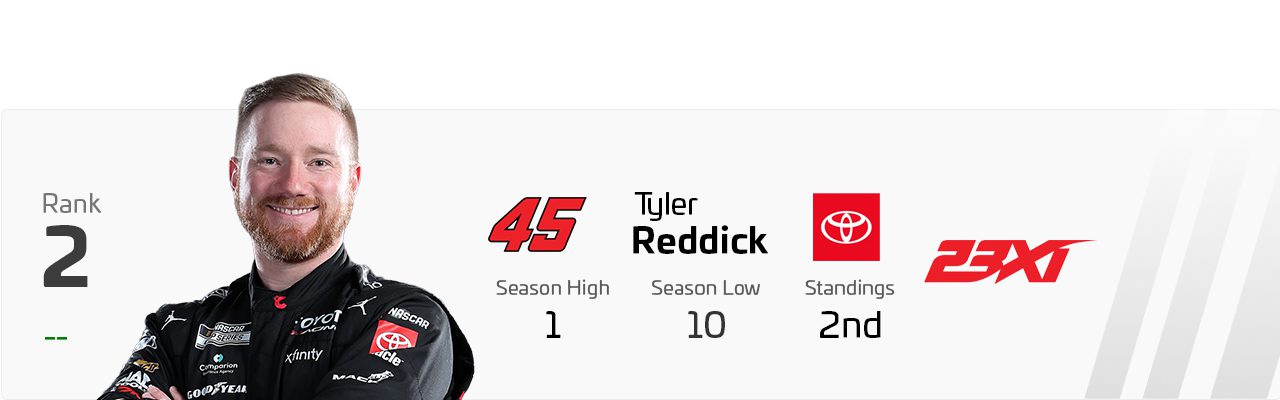
Driver: Tyler Reddick, No. 45 23XI Racing Toyota
Selections remaining: 7
Comment: Reddick has been off to a scorching start in 2026, becoming just the fourth driver to win five of the opening nine races in a single season. He kickstarted the campaign with consecutive drafting-track triumphs, and he could become the first driver since Dale Earnhardt in 1990 to win three straight drafting races.

Driver: Brad Keselowski, No. 6 RFK Racing Ford
Selections remaining: 8
Comment: With six Talladega victories, Keselowski is the best driver of his generation to compete at the 2.66-mile venue. Since his last victory here five years ago, the 2012 champion has three runner-up finishes in the last nine races.

Driver: Bubba Wallace, No. 23 23XI Racing Toyota
Selections remaining: 7
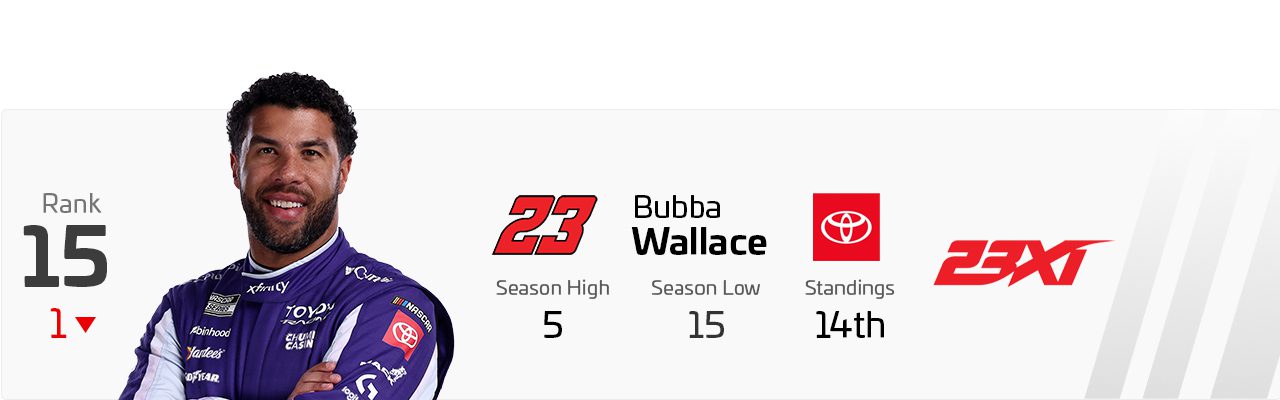
Comment: Wallace nearly secured his second Talladega victory last fall, leading at the white flag. He enters the weekend with three straight top-10 finishes here. He leads the series with nine top-10 finishes at drafting tracks since the start of 2024.

Brad Keselowski on the grid during practice for the NASCAR Cup Series race at Kansas Speedway on April 18, 2026 in Kansas City, Kansas.
David Jensen | Getty Images

DRIVERS TO AVOID

Driver: Kyle Busch, No. 8 Richard Childress Racing Chevrolet
Selections remaining: 10
Comment: Don’t kick a man when he’s down, but Talladega has been a tough place for Busch historically. One of his three victories with RCR came here in 2023. But in the other five visits to Alabama driving the No. 8 car, he’s placed 19th or worse each time.

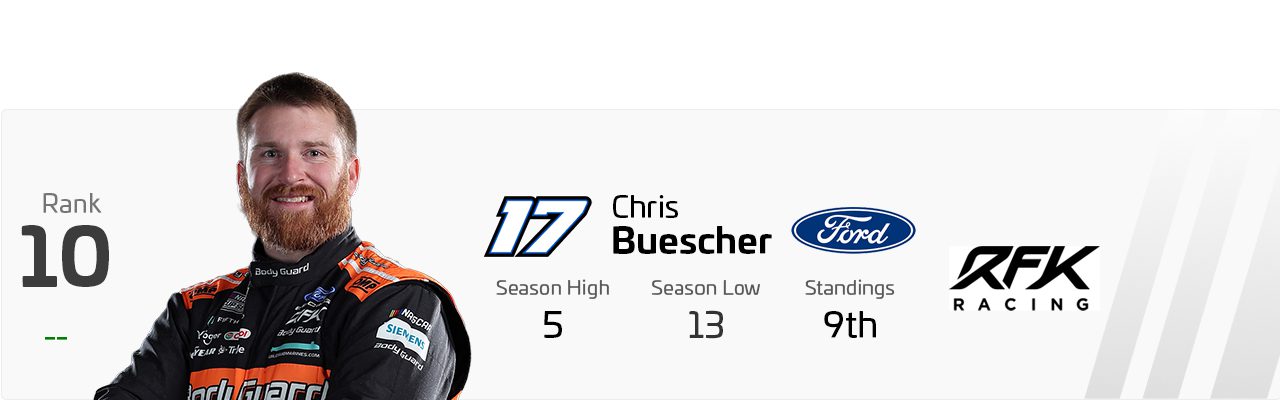
Driver: Chris Buescher, No. 17 RFK Racing Ford
Selections remaining: 9
Comment: Among some of Buescher’s competitors, he is regarded as one of the best superspeedway drivers currently in the field. However, his Talladega numbers leave a lot to be desired. He has a trio of top-10 finishes in 21 attempts, with just one finish better than 17th (third) in eight Next Gen starts.

Kyle Busch during practice for the NASCAR Cup race on April 11, 2026, at Bristol Motor Speedway in Bristol, Tennessee.
Matt Kelley | Getty Images

SLEEPERS OF THE WEEK

Driver: Todd Gilliland, No. 34 Front Row Motorsports Ford
Selections remaining: 9
Comment: With four top-10 finishes in eight Talladega starts, Gilliland has been sneaky good here since debuting in Cup. He nearly captured the checkered flag last fall, finishing runner-up to Chase Briscoe. His 13.1 average finish ranks second best of any track on the circuit (Indianapolis Motor Speedway).

Driver: Zane Smith, No. 38 Front Row Motorsports Ford
Selections remaining: 10
Comment: Keeping it in the Front Row family, Smith has been “Steady Eddie” recently at drafting tracks. The No. 38 car won the first stage of the season in the Daytona 500 and crossed the finish line in sixth. Overall, he has four top-10 finishes in the last five drafting races.

Todd Gilliland signs autographs for NASCAR fans before the NASCAR Cup Series race at Daytona International Speedway on February 14, 2026 in Daytona Beach, Florida.
Patrick McDermott | Getty Images

FEATURED MATCHUPS

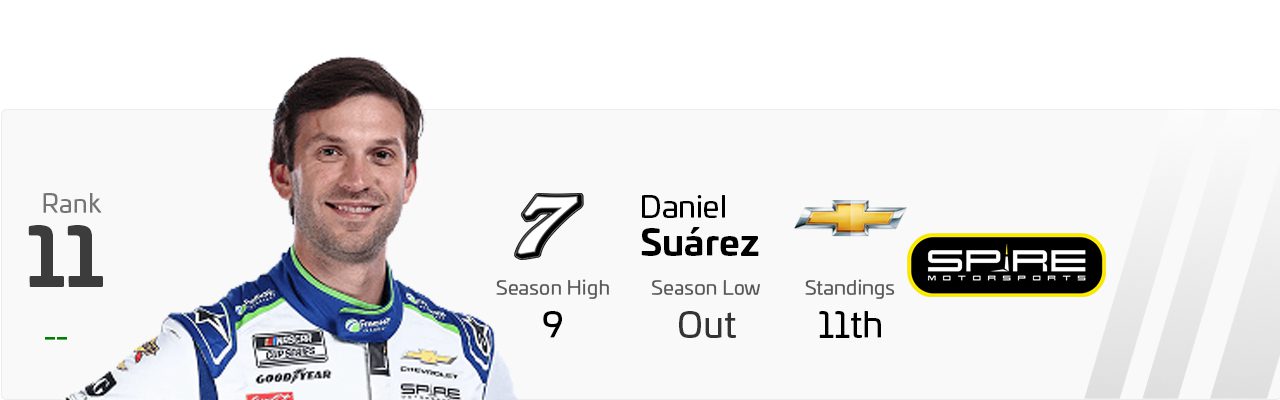
Daniel Suárez vs. Ryan Preece
Pick: Preece
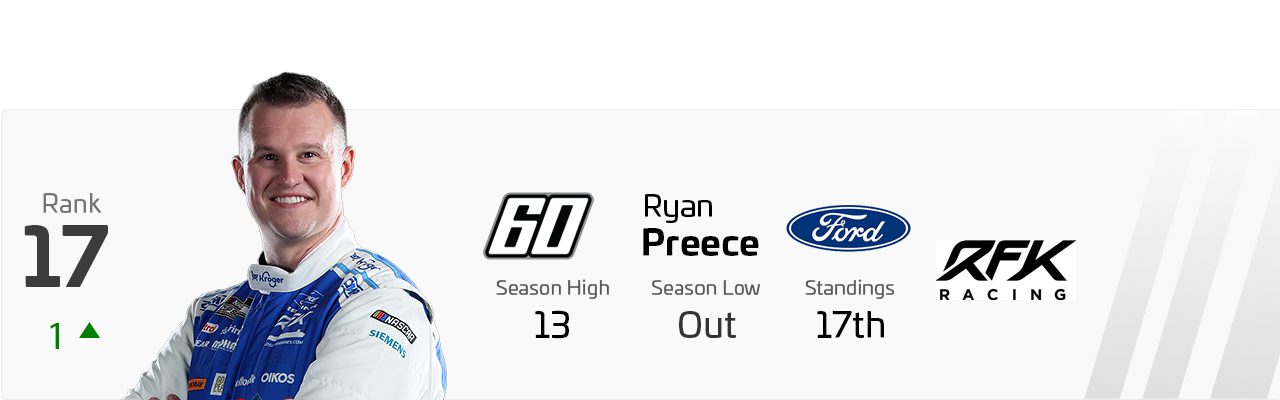
Comment: Suárez’s recent resume of four finishes of 10th or better in the last seven Talladega races is noteworthy. However, the Ford camp tends to have a plan and stick with it at superspeedways. Preece nearly won this race last year but was later disqualified in post-race inspection.

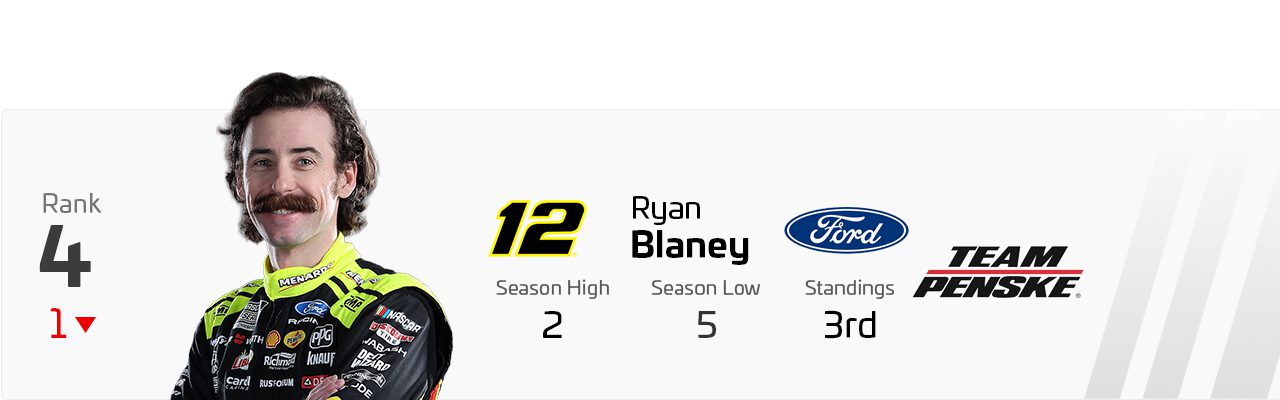
Tyler Reddick vs. Ryan Blaney
Pick: Reddick
Comment: Three Talladega victories for Blaney is hard to bet against, but it seems foolish to disregard any matchup Reddick is part of. He tallied the most points at superspeedways in 2025, and he has a 40-point buffer through two races in 2026.

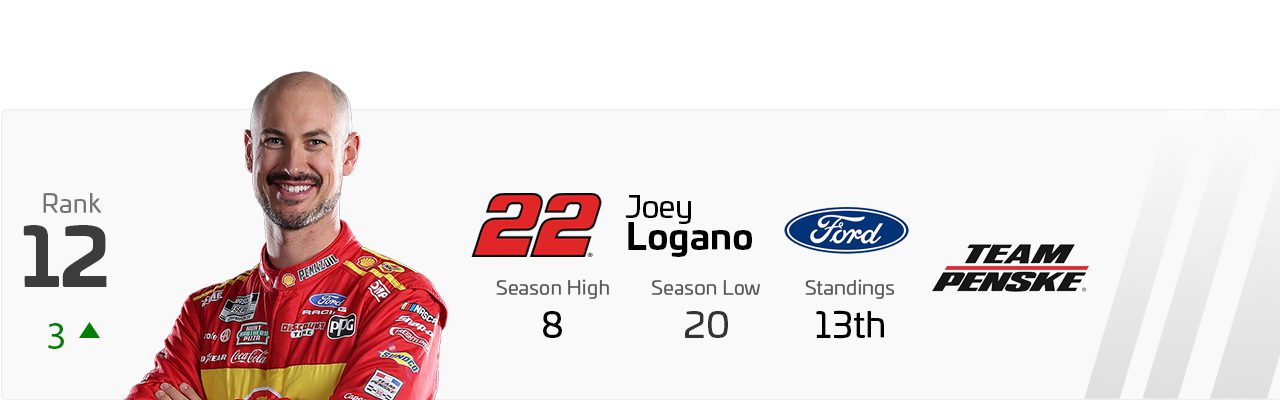
Austin Cindric vs. Joey Logano
Pick: Cindric
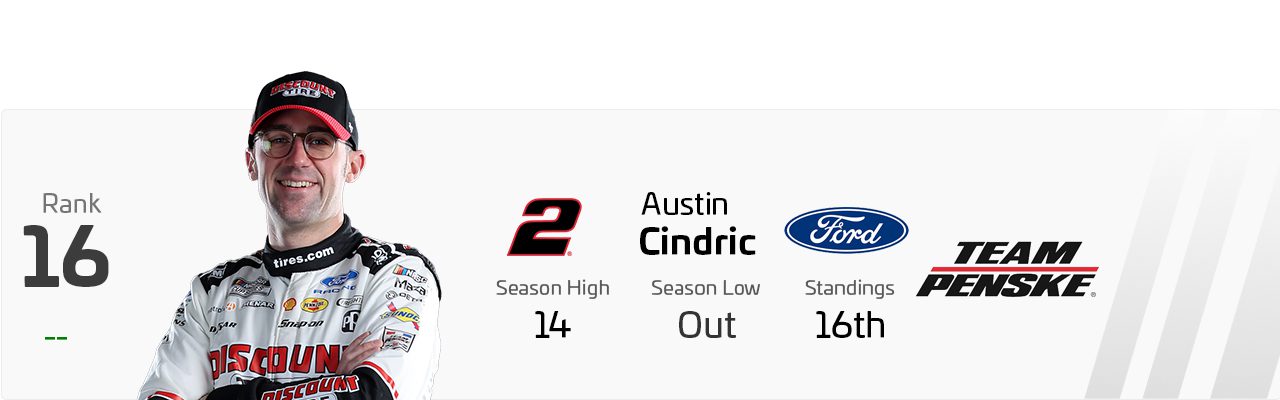
Comment: Logano has led laps in 20 straight drafting-style races, the longest streak of all time. But the finishes are not up to par, with one top 10 in the last 13 Talladega races (eight straight outside the top 15). Cindric won here last April and is arguably the best superspeedway competitor of the Next Gen era.

Bubba Wallace vs. Chris Buescher
Pick: Wallace
Comment: From above, you can tell where I’m leaning here. Wallace has top 10s in five of the last seven superspeedway events to Buescher’s three top 10s in the last five tries. The No. 17 car was swept up in accidents during both Talladega races in 2025 while Wallace had top 10s in each.

MY LINEUP

Starting five: Tyler Reddick, Brad Keselowski, Bubba Wallace, Austin Cindric, Ricky Stenhouse Jr.
Garage pick: Todd Gilliland

36 FOR 36

Pick: Ty Dillon, No. 10 Kaulig Racing Chevrolet
Comment: Races at superspeedways are a prime opportunity to take a driver off the beaten path. Through 14 Talladega starts, Dillon has an average finish of 16.9, his best among all tracks. He finished a career-best third here in 2020 with Germain Racing.

Saturday afternoon’s Ag-Pro 300 at Talladega (4 p.m. ET, The CW, MRN Radio, SiriusXM NASCAR Radio) is the third of the NASCAR O’Reilly Auto Parts Series’ four Dash 4 Cash races, with the highest finisher among the four qualified drivers claiming a $100,000 bonus check.

Haas Factory Team’s Sheldon Creed (No. 00 Chevrolet), Richard Childress Racing’s Jesse Love (No. 2 Chevrolet), JR Motorsports’ Justin Allgaier (No. 7 Chevrolet) and last week’s Kansas winner Taylor Gray (No. 54 Joe Gibbs Racing Toyota) will compete for the big money this weekend.

RELATED: Talladega weekend schedule | O’Reilly Series standings

It is Allgaier’s record 26th time being eligible for the Dash 4 Cash bonus, and conversely, Gray’s first. The 2024 series champ Allgaier leads all drivers, having captured the award eight times in his career.

It’s been a stellar start for the veteran, whose three victories and eight top-five showings through the opening 10 races are tops in the field. He’s on a streak of seven straight top-five finishes and is the only driver in the series to earn stage points in every single race stage this season.

And for the effort. … Allgaier holds a staggering 131-point lead over Creed atop the championship standings. He’s nearly 200 points up on fifth place – 196 points ahead of JGR’s Brandon Jones.

Love, who sits third in the championship, 149 off Allgaier’s blistering pace, holds the mark for most laps led this season (224) and has proven himself especially good on the big tracks, such as Talladega, where in 2024 he scored his first series victory.

He’s started from the front row in all four of his Talladega starts – winning pole position the last three races – and he’s four-for-four in top-10 finishes at the sport’s biggest track, leading an impressive 125 laps in that span.

Both Allgaier and Love know they will have to beat Love’s RCR teammate, Austin Hill, for a trophy shot. Hill has won the last two O’Reilly Auto Parts Series races at ‘Dega, holding off another two-time Talladega winner Jeb Burton in last spring’s race.

MORE: Dash 4 Cash hub

“Anything can happen at Talladega,” said Allgaier, whose best Talladega finish is runner-up (2016).  “It’s such an unpredictable style of racing. Thankfully, JR Motorsports has always brought great cars to the superspeedways, and I know that we will have another one on Saturday.

“Hopefully we can keep our nose clean all race long, work well with our teammates and be in position to fight for both the win and the Dash 4 Cash bonus.”

Kennametal Pole Qualifying is set for Friday at 5:30 p.m. ET (The CW App).

NEW YORK (April 23, 2026) — Today, Prime Video announced a May 21 premiere date for “Kyle Larson vs. The Double,” a feature-length documentary from Imagine Documentaries, Markay Media and NASCAR Studios that captures two-time NASCAR Cup Series champion Kyle Larson’s two-year quest to complete one of auto racing’s most demanding challenges. Directed by Emmy and Peabody Award-winning filmmaker Cynthia Hill, the documentary will premiere exclusively on Prime Video in more than 240 countries and territories worldwide. “Kyle Larson vs. The Double” is the latest addition to the Prime membership. Prime members in the U.S. enjoy savings, convenience, and entertainment, all in a single membership.

“This documentary really shows what goes into trying to complete The Double, not just on race day, but in the weeks and months leading up to it,” Larson said. “I’ve always felt like people watch us race, but they don’t see what it takes to get there. Having cameras around for two years gives a real look at my life – the preparation, the pressure, the travel and the balance between racing and family. There are moments fans have never seen before, and I think it really captures how hard it is to do what we do and chase something big.”

MORE: How to watch NASCAR on Prime | Buy Coca-Cola 600 tickets!

In motorsports, there are feats so audacious they border on impossible. For Kyle Larson, that feat was The Double — an attempt to complete two of auto racing’s crown jewel events in a single day: the legendary Indianapolis 500 and NASCAR’s grueling Coca-Cola 600, a combined 1,100 miles of racing across two different cities, two fundamentally different cars and two of the most demanding tracks in the world. But the film goes beyond the attempt itself, offering a personal look at Larson’s life and career — the mindset, the sacrifices, and the people around him who make it possible. It also shows the true scale of what it takes. The logistical challenge of The Double is staggering — racing 500 miles at Indianapolis Motor Speedway, then flying from Indiana to North Carolina to climb into a stock car and complete NASCAR’s longest event at Charlotte Motor Speedway, all while managing the extreme physical toll of heat, dehydration, G-forces and mental exhaustion. Only a handful of drivers have ever dared to attempt it, but in 2024 and 2025, Larson pushed himself to the absolute limit in pursuit of one of racing’s most elusive accomplishments.

Sometimes the most compelling stories in sports aren’t about crossing the finish line — they’re about the sheer will and determination it takes to compete at the highest level. “Kyle Larson vs. The Double” captures something rare: a story that departs from the typical sports narratives and instead finds meaning in the relentless pursuit of overcoming multiple challenges on and off the track. Through Larson’s two-year journey, the documentary reveals what it looks like when an elite competitor refuses to accept limitations — the training, the sacrifice, the physical and emotional toll, and the drive to attempt something that tests your limits not once, but twice, despite knowing the odds.

Directed by Emmy and Peabody Award-winning filmmaker Cynthia Hill, “Kyle Larson vs. The Double” is a Markay Media and Imagine Documentaries production, in association with NASCAR Studios, Hendrick Motorsports and Penske Entertainment. “Kyle Larson vs. The Double” is executive produced by Ron Howard, Brian Grazer, Sara Bernstein, Meredith Kaulfers, Justin Wilkes of Imagine Documentaries, Jeff Gordon of Hendrick Motorsports and Tim Clark and John Dahl of NASCAR Studios. Cynthia Hill and Sandra Katherine Davidson serve as producers.

NASCAR on Prime returns for its second season of exclusive coverage on Sunday, May 24 at 6 p.m. ET with the Coca-Cola 600 at Charlotte Motor Speedway, the first of five consecutive NASCAR Cup Series races. Fans in the U.S. will be able to watch NASCAR live at home or on the go, and across hundreds of compatible devices, streaming from the web or using the Prime Video app on smartphones, tablets, set-top boxes, game consoles and connected TVs.

DAYTONA BEACH, FLA. (April 23, 2026) – Kubota Tractor Corporation and NASCAR® today announced a new multiyear partnership beginning with the 2026 NASCAR season. The partnership establishes Kubota as an Official Partner of NASCAR, including the Official Tractor of NASCAR, Official Construction Equipment Partner of NASCAR, Official Compact Equipment Partner of NASCAR and Official Utility Vehicle of NASCAR. Kubota will also serve as the official partner in the same categories for the upcoming NASCAR San Diego Weekend.

“We’re proud to further align the Kubota brand with one of the most recognized sports organizations in the country, building on the successes of our sponsorship with Trackhouse Racing and Ross Chastain,” said Alex Woods, President, Kubota Tractor Corporation. “Kubota equipment is built for customers who demand quality, durability and high productivity. NASCAR is built on engineering excellence, speed and sustained high performance under pressure. Together, we represent two organizations that are part of the fabric of American life, connected by hardworking people and loyal communities that rely on equipment purpose-built for the job – on or off the race track.”

As part of the agreement, Kubota equipment will be integrated into NASCAR track operations at select venues, supporting track preparation and facility needs. The partnership provides visible, real-world applications that reinforce Kubota’s reputation for durability and reliability in demanding environments.

“Kubota’s commitment to the people who power our communities — from farmers and builders to the men and women who have served our country — aligns seamlessly with NASCAR’s fan base and values,” said Craig Stimmel, NASCAR SVP and Chief Commercial Officer. “Including a presence at the NASCAR San Diego Weekend adds even greater meaning, as we celebrate veterans in a setting that reflects service, resilience and pride. From integrating Kubota equipment into our operations to creating impactful moments for fans and veteran honorees alike, this collaboration is built on shared purpose and real-world performance.”

Kubota has maintained a presence in NASCAR through its partnership with Trackhouse Racing since 2022 and continues to build on that involvement through this new multiyear agreement.

Kubota to Sponsor NASCAR San Diego Weekend and Honor Veterans

As part of the agreement, Kubota will sponsor NASCAR San Diego Weekend presented by Anduril at Naval Base Coronado from June 19–21 and will play an integrated role throughout the weekend, serving as the Official Tractor, Construction Equipment, Compact Equipment and Utility Vehicle partner for NASCAR San Diego Race Weekend.

Kubota’s presence during the weekend will also highlight the company’s ongoing commitment to supporting U.S. military veterans. As part of the weekend’s activities, Kubota will host a special ceremony prior to the Sunday NASCAR Cup Series race to recognize the five recipients of its 2026 Geared to Give program. During the ceremony, the farmer veterans will be presented with the keys to new Kubota equipment in front of race attendees.

RELATED: Buy San Diego tickets now!

Each recipient and one guest will attend the race weekend as Kubota’s invited guests, which will include access to Kubota’s suite to watch the race and a meet-and-greet with Ross Chastain and the Trackhouse Racing team.

Since 2015, Kubota has partnered with the Farmer Veteran Coalition on a multi-million-dollar program that includes veteran grants, organizational support and equipment to help farmer veterans transition into careers in agriculture. Kubota also supports the Boot Campaign, a national nonprofit dedicated to supporting the health and well-being of military veterans and their families.

Kubota equipment will also be displayed in the fan zone throughout the weekend, where fans can learn more about the company’s veteran-focused initiatives, including Geared to Give and its partnership with Boot Campaign.

Over the course of the partnership, Kubota will collaborate with NASCAR to engage fans at tracks nationwide and across digital and broadcast platforms, while continuing to invest in American communities in support of the veterans, farmers, builders, landscapers and landowners who rely on Kubota equipment every day.

Just when the rest of the NASCAR Cup Series thought it could avoid Tyler Reddick setting up camp yet again in Victory Lane, well, he continued to make it his own personal stomping grounds. This time, it was after an incredible effort to outlast Denny Hamlin and beat Kyle Larson on a NASCAR Overtime restart at Kansas, tracking down and passing the guy who has owned that track at times over the past few years. As has often been the case to start this season, none of that mattered — the No. 45 car was going to find a way to win regardless.

It’s been that kind of year for Reddick. When he won for a fourth time in the season’s first six races last month, we asked: How many victories could Reddick end up with by the end of the schedule — and where might this season rank in the all-time annals? Now, he’s given us no choice but to revisit both questions, because the man simply cannot stop winning races.

On Sunday, he became one of just four drivers — joining Dale Earnhardt, Cale Yarborough and Richard Petty (basically a who’s-who of NASCAR GOATs) — to claim at least five wins in the first nine races of a Cup season:

Chart comparing Reddick's wins, top-fives and average finish in the first nine races to the best starts in history from 1972-2026.

At his current pace, Reddick would finish the year with 20 wins, which would be unlike anything we’ve seen in the Cup Series’ modern era — since 1972, nobody has more than the 13 victories recorded by Petty in 1975 and Jeff Gordon in 1998. As amazing as Reddick has been thus far, that’s still fairly far-fetched to imagine. But he still might reach some incredibly rarified levels of winning by the end of the 2026 schedule.

If he wins the rest of the year at the same pace as Petty from 1975, Reddick would end up with 16.7 wins by season’s end. Replicate Gordon’s per-race pace from 1998, and he’d finish with 15.6. Just keep pace with the winningest seasons since the introduction of the Car of Tomorrow in 2007 — Jimmie Johnson in 2007 and Larson in 2021 — and he still finishes with 12.5. Reddick would even flirt with 10 wins — sitting on pace for 9.6 — if he replicates what Larson and Hamlin did (six wins in 35 races) at different times over the past few years.

Of course, that does require Reddick to keep winning at a rate far beyond what he did before this season. To find five wins in his previous resume, you’d need to go back 103 races … or 11.4 times as many as it took him to get the next five. If he merely reverts to his form with 23XI Racing from 2023-25, he’d win just 1.3 additional races this year to end up at 6.3 — possibly setting a new Next Gen Car-era record for checkered flags, but nothing splashier than that.

The truth of what we might expect out of Reddick from here, a quarter of the way through the 2026 schedule, is probably somewhere in between his comparatively modest pre-2026 output and the Gordonesque highs of full seasons we haven’t seen in three decades (and four car chassis ago).

With that in mind, let’s update our projection from last month, which estimated Reddick’s chances to win each remaining race on the schedule by combining his own recent record at each track type with the typical win rates for a driver in the top 10 in the standings since 2022. This time, we’ll include the additional races that transpired since, but we’ll also take it upon ourselves to make a slight adjustment — anchoring to the typical win percentages for top-five drivers instead of top-10 ones, since it would take a massive collapse for Reddick to fall out of that category in the standings at this point.Bar chart showing the percentage chance of what Tyler Reddick's win total will be by the end of the 2026 season.

After making our revisions, Reddick now has a 96% chance of winning at least one more race this year and an 81% chance of winning at least two more. According to these simulations, he will most likely grab three more — finishing the season with eight wins — though there’s a 37% chance he wins at least nine and an 18% probability he breaks double-digits, which is 4.5 times the chance he had when we ran our original numbers a month ago.

In 2.4% of simulations, Reddick had 12 or more wins — matching Darrell Waltrip in 1981 and ’82 — and exactly 1% of the time, he at least tied Gordon and Petty’s modern record of 13, breaking it 0.4% of the time.

Would that be the greatest season in Cup Series history? Possibly. But a lot would also depend on what Reddick does in the other 19 races he doesn’t win — and how dominant he is in his wins as well.

For all of his winning, Reddick currently has an average Driver Rating of 110.2 this season — which, while easily leading all 2026 drivers (Denny Hamlin is second at 105.6), would not be the highest of the Loop Data era (since 2005). Kevin Harvick posted a 118.9 average in 2018, and Martin Truex Jr.’s epic 2017 campaign saw him produce a 116.1. In fact, nine other full seasons since 2005 came in with a better average rating than the first quarter of Reddick’s 2026 season:Chart showing the most dominant seasons in NASCAR Cup Series history by driving rating, with official ratings since 2005 and Neil Paine's estimated ratings since 1972.

And that’s without even getting into all of those dominant pre-2005 seasons by drivers like Petty, Yarborough, Earnhardt, Bobby Allison and David Pearson. I’ve been playing around with a method to estimate Driver Ratings for earlier seasons using machine learning, and those estimates yield average ratings in the 120s for years like Allison’s 10-win 1972 campaign and Earnhardt’s 11-win 1987. The sport has changed enormously since that earlier era, so it’s hard to say what Reddick would have done in the 1970s — or what Petty and Earnhardt would do in Gen-7 equipment. But in terms of measuring pure dominance, Reddick’s 2026 still has a ways to go to be the undisputed greatest season in history, even if he keeps driving the way he has been to start the year.

Having said that, winning is the point of racing. And Reddick has certainly done a lot of that this season — practically as much as we’ve seen from anyone in the first nine races on the calendar. Because of that, he’s put himself in a position to hit win tallies we weren’t sure we’d see after NASCAR’s modern pivot toward a spec-component car philosophy, redefining the standards around what a special season looks like right now in the process.

NASCAR completed a two-day Goodyear tire test at Chicagoland Speedway on Tuesday and Wednesday in preparation for the sport’s return to the 1.5-mile facility just outside Chicago, Illinois, during Independence Day weekend.

Representatives from all three Cup Series manufacturers took part in the test: Ryan Blaney (Ford), Kyle Larson (Chevrolet) and Denny Hamlin, while Justin Allgaier (Chevrolet) and Brandon Jones (Toyota) put down laps for the O’Reilly Auto Parts Series.

The test marked the first time Chicagoland had seen cars on track since 2019.

RELATED: Buy Chicagoland tickets now!

“You’ve raced so much between then and now that I didn’t really remember a whole lot of the track other than just the big bump in one and some bumps in [Turns] 3 and 4, and those are all still there,” Larson told media at the track. “It’s just cool. It’s really fast. A lot faster pace than what I remember the old car being here. We’re on the throttle quite a bit, but it’s also not as hot as what it was the last times we were here. It’ll be hot when we come back, so the pace should slow down.”

Larson had quite the history at Chicagoland. Before piloting the No. 5 Hendrick Motorsports, he was on the short end of two dramatic finishes in the most recent Cup races at the oval, finishing runner-up to Kyle Busch in 2018 and now-Hendrick teammate Alex Bowman in the last Chicagoland event in 2019.

Larson said he reviewed some of those highlights to get a sense of how to approach the test.

“I was more just trying to get out of it seeing what lines we were running, which we could run kind of everywhere,” Larson said. “I didn’t really remember that. You could run all lanes. It’s aged and gotten rougher, I’m sure, since then. The bumps in [Turns] 3 and 4 are really, really rough. So I don’t know how much we’ll be able to move. I’m sure eventually we’ll move around, but it’s hard right now as the pace is so fast to move around and commit. The little bit I’ve moved up just a few times in 3 and 4, like one lane, I’ve bottomed out. So it’s pretty sketchy. Just trying to find lanes that you think your car can maybe go through will be beneficial.”

Blaney, originally from the Midwest, was fond of Chicagoland before it came off the schedule and added the importance of NASCAR continuing to race near a major metropolitan area like Chicago.

“One of the neatest things about this place, I thought the surface was at a really good point of like, very well aged, to where we’re going to use the whole race track,” Blaney said. “Tire falloff is going to be pretty big, especially when we come back in the summer. So we’re going to be able to use everything of the race track, which is good, but that’s always nice when you have mile-and-a-halfs that are wide. I just remember it puts on really good races, and the curved backstretch is different, but I have a lot of fun memories about this place.

“I was personally hurt a little bit when this place got taken off the calendar. It was nice for a few years to go to the streets of Chicago, but it’s nice that we still have a race in Illinois here, close to Chicago, close to the city. I was just happy that this track came back because I thought it always did a great job and draws a good crowd and puts on a good race too.”

Seven years removed from action, but Chicagoland is more than ready to host the coveted Fourth of July weekend on the NASCAR calendar, and the roar of Cup Series and O’Reilly Series cars will inject the racing spirit back into Joliet, Illinois.

“It looks great,” Larson said. “The track surface itself, I think, too, is in a better place than I expected it to be. I’m sure they have had to pull weeds and things like that. But yeah, it looks good. I think it’s a completely raceable facility and I’m excited to get here in a couple months.”

CONCORD, N.C. — There’s an old phrase in NASCAR that Darrell Waltrip often floated when broadcasting a race: “coopetition.”

Cooperation meets competition. We’re still battling each other, but let’s not hold each other up either.

Plenty has changed in NASCAR over the last 25 years, but Ricky Stenhouse Jr. and Denny Hamlin rehashed that old gentlemen’s agreement during Sunday’s Cup Series race at Kansas Speedway.

MORE: Talladega schedule | Cup standings

Hamlin was leading as Stage 1 drew to a close, lapping past Stenhouse’s No. 47 Hyak Motorsports Chevrolet. In tow was Todd Gilliland, whose No. 34 Front Row Motorsports Ford kept pace with Hamlin but was also one lap in arrears. Ever conscious of the race’s dynamics, Hamlin keyed in to what was playing out.

The first car one lap down at the time of the caution flag gets a free pass to get back onto the lead lap, formerly referred to as the “lucky dog award.” With Gilliland hot on Hamlin’s tail and his friend Stenhouse in need of a favor, Hamlin threw Stenhouse a bone:

“Let him (Gilliland) know I’m going to give it to him,” Hamlin said. “I’m going to give it to him so I can give Ricky the lucky dog.”

And thus, as the three exited Turn 4 on the final lap of Stage 1, Gilliland scooted past Hamlin to remain on the lead lap, and Hamlin took the green-checkered flag to win Stage 1, all while Stenhouse was able to slot into position as the first car one lap down and receive the free pass to begin Stage 2 on the lead lap.

“When I got into the sport, I mean, I would say everybody raced that way,” Stenhouse explained Wednesday at the NASCAR Productions Facility. “Now that a lot (of drivers) have retired since I started in this sport, a lot of that has gone away. But Denny’s one of those guys that he’s always looking at the long game. And we’re buddies, but he knows that, if things come around, that I will help him out given the opportunity.

“Do I want to get lapped by Denny all the time? No, but if he’s leading the race and I can help him out, I will, just because he looks out for me as well. Those are the things that have always been part of NASCAR since I got into the sport that have definitely gone away for the most part.”

That portion of driver etiquette largely fell out of vogue over time. Prior to 2003, protocol was to race back to the yellow flag at the start/finish line rather than freezing the field at the time of caution. As such, leaders would often lay over to allow nearby lapped traffic to get back onto the lead lap before taking the yellow flag. That went away in the fall of 2003 when the running order was frozen at the time of caution, but drivers still exercised discretion at certain points of the race: If you’re faster than me now, go ahead — but I expect the favor returned when the shoe’s on the other foot.

The sport became more cutthroat over the years with things like stage points and playoff berths on the line at the cost of a single position on track. But some drivers, like Stenhouse and Hamlin, still find that balance on any given Sunday.

“We’re friends off the track, but we also have a lot of respect for each other,” Stenhouse said. “I know that there’s people that are like, ‘Hey, you can’t have friends at the race track. You want to go beat them.’ But they clearly didn’t grow up playing sports in the backyard with your friends. You wanted to beat and kill everybody that you could because we’re competitive. Denny and I playing golf together, we’re friends, but I want to beat him really bad. So you can have friends and be out on the race track no problem. I mean, I grew up again wanting to win everything that I played because I’m super competitive. And I know Denny’s the same way.”

It all comes full circle at a track like Talladega Superspeedway, where the Cup Series will race on Sunday (3 p.m. ET, FOX, HBO Max, MRN Radio, SiriusXM NASCAR Radio). Drivers rely on pushes from their competitors to stay in the draft and work toward the front of the field, forcing the competition to fraternize in an effort to mutually benefit each other.

“He’s not gonna let me win Talladega,” Stenhouse laughed. “I’ve actually drafted a lot with Denny and some of those guys. Especially before he started 23XI, (Toyota) had four cars and we were sometimes the odd man out in our group, and so we would pit with them very often and had good success with that. They needed more numbers and there was times that that definitely benefited us. So it just kind of depends on where you shake out on the race track. … But yeah, I mean, you have people that give you favors for sure at all different race tracks.”

Ricky Stenhouse Jr. and Denny Hamlin race in the NASCAR Cup Series.
Jeff Curry | Getty Images