In honor of NASCAR’s 75th anniversary, NASCAR will celebrate the 75 Greatest Drivers throughout its history.

Naming the 75 Greatest Drivers is a continuation of the popular program established in 1998 recognizing the 50 Greatest Drivers for NASCAR’s golden anniversary. The 50 Greatest Drivers form the foundation of the 75 Greatest Drivers — there are 25 new names added to the list first established 25 years ago.

The names were revealed with roughly one addition per day, five per week leading up to Throwback Weekend at Darlington Raceway, where the entire group of 75 will be honored.

Read on to reacquaint yourself with the original 50 Greatest Drivers, plus the newest members of the elite list and celebrate all of their accomplishments on the track.

NEW ADDITIONS
(Listed by most recent addition first)

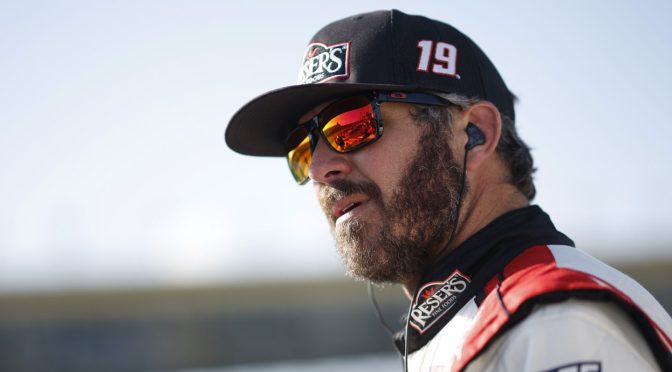
Jimmie Johnson: One of the sport’s three seven-time Cup Series champions, Johnson etched his name into the ranks of NASCAR legends with 83 career wins — good for sixth on the all-time list. The first five of his championships came consecutively in a streak of unprecedented dominance from 2006-10. Johnson won the Daytona 500 twice (2006, 2013) and added four wins in each the Coca-Cola 600, Brickyard 400 and the NASCAR All-Star Race.

Matt Kenseth: A champion in the last season before NASCAR’s playoff era, Kenseth was honored with election to the NASCAR Hall of Fame’s Class of 2023. His credentials were among his generation’s best, with 39 Cup Series victories that included two Daytona 500 triumphs (2009, 2012), plus his first Cup win in the Coca-Cola 600 in 2000.

Joey Logano: One of just two active drivers with multiple Cup Series championships, Logano found his way to the Cup Series as a teenaged prospect with plenty of promise. He’s since made good on the expectations, with 32 Cup Series wins and the title in both 2018 and 2022. Logano is also a 30-time winner in the Xfinity Series, a figure that slots him in seventh place on that circuit’s all-time win list.

Kevin Harvick: The recognition on the list of NASCAR’s 75 Greatest Drivers comes in Harvick’s final season of Cup Series competition. After being called up to the Cup Series ranks after the death of Dale Earnhardt, Harvick assembled a career of sustained excellence, with 60 Cup Series wins, the 2014 title and the 2007 Daytona 500. He was also the 2001 and 2006 champion in the Xfinity Series, where he won 47 times.

Kurt Busch: The first champion of the Cup Series’ playoff era, Busch established a long career with wins in 19 of his 22 seasons as a Cup regular. Among those 34 victories were a Daytona 500 triumph (2017) and a Coca-Cola 600 win (2010). Busch also added nine victories combined in the Xfinity and Craftsman Truck Series.

Kyle Busch: Known also by his nickname of “Rowdy,” the younger of the Busch brothers has amassed more than 200 NASCAR national-series victories and counting in his career. Kyle Busch has registered 62 Cup Series wins with two championships (2015, 2019), and ranks atop the record books as the all-time wins leader in both the Xfinity Series and Craftsman Truck Series. He has also won in each of his 19 full-time Cup Series seasons.

Sam Ard: A standout on the former Late Model Sportsman circuit, Ard continued his tradition of winning once the tour was elevated to a NASCAR national series in 1982. Ard scored 22 wins in three years of competition in what is now called the Xfinity Series, rolling to the championship in consecutive years in 1983-84. After a head injury at the close of the ’84 season ended his driving career, Ard remained in the sport as a team owner. Jeff Burton’s first victory came in an Ard Motorsports car.

Larry Phillips: A short-track terror in the bullrings of the Midwest, Missouri’s Larry Phillips won a record five national championships in what is now known as the NASCAR Advance Auto Parts Weekly Series. Full records documenting his success are incomplete, but Phillips won a remarkable 220 of his 289 NASCAR-sanctioned starts from 1989-96, a winning clip of 76.1 percent that included 13 track championships in three states.

Brad Keselowski: A veteran stalwart who recently branched into Cup Series team ownership, Keselowski makes the 75 Greatest list with a long record of success. The Michigan native made waves as an Xfinity Series prospect and that tour’s champion in 2010, then carried that momentum into Cup, where he has won 35 races and the 2012 title. His 39 Xfinity wins also rank fourth all-time in that series.

Martin Truex Jr.: Truex’s brilliance as a two-time Xfinity Series champion in 2004-05 foretold a stellar Cup Series career to come. He has delivered so far at NASCAR’s top level with 32 victories, eight of which arrived in his march to the Cup Series crown in 2017. His resume includes a pair of wins in the Coca-Cola 600 and one in the Southern 500.

Bobby Labonte: NASCAR’s Greatest Drivers list now has room for two Labontes. Younger brother Bobby earned his recognition as the 2000 Cup Series champion and a victor in 21 Cup races. That portfolio includes three crown-jewel triumphs – a Coca-Cola 600, a Southern 500 and a Brickyard 400. He is also a 10-time winner in the Xfinity Series, claiming that tour’s championship in 1991.

Dale Earnhardt Jr.: An ambassador for the sport behind the wheel, and as a broadcaster and historian, Dale Earnhardt Jr. joins his father on the list of NASCAR’s 75 Greatest Drivers. Earnhardt won 26 times in his Cup Series tenure, using his knack for superspeedways to prevail twice in the Daytona 500 (2004, 2014) and collect six wins at Talladega. He also was a two-time champion in the Xfinity Series, winning titles in back-to-back years in 1998-99.

A graphic that displays Dale Earnhardt Jr. as part of the 75 Greatest Drivers list

Jeff Burton: The Virginia native built his reputation not just with his on-track performance, but as a leading voice in the NASCAR garage. His racing cred had its own merit. After claiming Rookie of the Year honors in a crowded 1994 class, Burton went on to score 21 Cup Series victories that included two Coca-Cola 600 triumphs and a win in the Southern 500. He added 27 victories in Xfinity Series competition.

Ron Hornaday Jr.: A NASCAR Hall of Famer who made his home in the Craftsman Truck Series, Hornaday corralled a record four championships in the tailgate tour. The California native won 51 times in the Truck Series, including an unmatched run of five consecutive victories during the march to his last title in 2009.

Carl Edwards: The popular Missouri native was a 28-time winner in Cup Series competition, and he punctuated each triumph with a signature backflip from his winning car. Edwards also enjoyed several dominant years in the Xfinity Series, securing the 2007 championship and finishing as the circuit’s runner-up on four occasions.

Chase Elliott: Following in his father’s [Bill] footsteps, Chase has put together quite the resume through a decade in NASCAR’s national series. After winning the Xfinity title in 2014, he moved up to Hendrick Motorsports carrying the banner of two iconic numbers in the No. 24 and No. 9. He’s tallied 18 wins, including the biggest one of his career when he took the checkered flag at Phoenix in 2020 to win his first Cup Series championship.

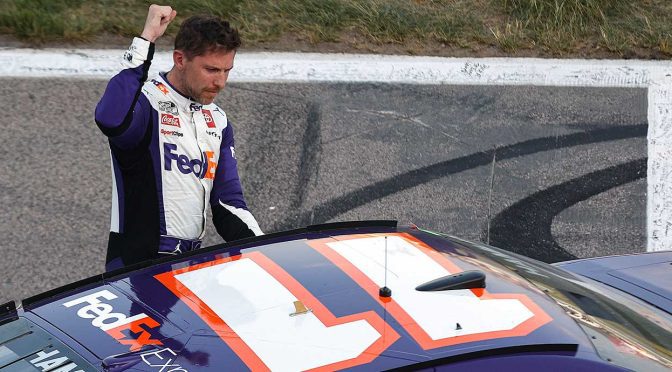
Denny Hamlin: After fulfilling his childhood goal of driving for Coach Joe Gibbs, Hamlin compiled a list of major accomplishments in his stock-car racing career. The Virginia native has three Daytona 500 triumphs among his 49 Cup Series victories and has added crown-jewel wins in the Southern 500 three times and the Coca-Cola 600 once.

Ryan Newman: The “Rocketman” earned his nickname with a reputation for scorching qualifying laps, posting 51 pole positions in his career — a mark that ranks ninth all-time in Cup Series history. Newman’s 18 Cup wins had their own distinction, with the 2008 Daytona 500 and the 2013 Brickyard 400 on his list of accolades. He found five of those victories after starting in the No. 1 spot.

Sterling Marlin: The Tennessee campaigner found his greatest success on NASCAR’s superspeedways, netting his first two Cup Series wins in the Daytona 500 in 1994-95. In total, Marlin gathered 10 wins at some of stock-car racing’s fastest and most historic tracks, adding two wins each at Talladega and Darlington. He was also known for his longevity, making 748 Cup starts in 33 seasons.

Sterling Marlin NASCAR 75 Greatest Drivers graphic

Greg Biffle: All three NASCAR national series were ripe for winning for Biffle, who snared 19 Cup Series victories in 14-plus years in the sport’s top division. He also won 20 times in the Xfinity Series and 17 times in Craftsman Trucks, notching the championship in each of those circuits on his way up the NASCAR ladder. Biffle drove nearly the entirety of his career for Hall of Famer Jack Roush, and two Darlington wins were among his career accomplishments.

Kyle Larson: A chart-topping talent, Larson makes the 75 Greatest list as the 2021 Cup Series champion and a 21-time winner in NASCAR’s top circuit. The California native has excelled on dirt tracks and has managed to make the most of his time on pavement. He has won in all three NASCAR national series, and he added a title in what is now called the ARCA Menards Series East in 2012.

Randy LaJoie: LaJoie competed in all three NASCAR national tours, but found his greatest success in what is now called the Xfinity Series. His two Xfinity championships came in consecutive years (1996-97), and three of his 15 career wins came in the prestigious season opener at Daytona International Speedway. LaJoie also claimed the 1985 title in the former Busch North circuit.

Mike Stefanik: A versatile driver who made a name for himself as a Modified Tour standout, Stefanik became a NASCAR Hall of Famer in the 2021 class. The Rhode Island campaigner won seven championships in Modified competition and added two more in the former Busch North Series. He was also Rookie of the Year in the Craftsman Truck Series in 1999.

Kasey Kahne: The popular Washington native turned his promise as a top prospect into a 15-year Cup Series career that produced 18 victories. Kahne was named the series’ Rookie of the Year in 2004 and went on to notch three triumphs in the crown-jewel Coca-Cola 600.

Tony Stewart: A three-time Cup Series champion who has found stock-car success behind the wheel and as a team owner, Stewart joins the 75th-anniversary roster with 49 Cup wins — 15th on the all-time list. Stewart won Cup Series titles for Joe Gibbs in 2002 and 2005, then added the 2011 crown on a tiebreaker while driving for his own Stewart-Haas Racing team.

ORIGINAL 50

* Listed in alphabetical order

Bobby Allison: A longtime resident of Hueytown, Alabama, Allison has become one of NASCAR’s most beloved former competitors. He is cherished by millions of fans who remember his long list of accomplishments, which include his 1983 championship season, three (1978, 1982, 1988) Daytona 500 victories, two NASCAR Modified Division championships in 1964 and 1965, two NASCAR Modified Special Division titles in 1962 and 1963 and a 1972 season when he won 10 races, had 12 second-place efforts, 11 poles and finished second to Richard Petty in the series championship standings.

Davey Allison: The son of NASCAR Hall of Famer Bobby Allison grew up more interested in football, but could not escape the racing bug. Allison continued the family’s legacy, compiling two wins, five poles and nine top fives in his full-season debut to capture 1987 Cup Series Rookie of the Year. Allison won 19 races and 14 poles, including the 1992 Daytona 500, before his death in a helicopter accident in 1993.

Headshot of NASCAR Driver Davey Allison

Buck Baker: Baker established himself as one of NASCAR’s early greats, becoming the first driver to win consecutive NASCAR Cup Series championships. That repeat performance in 1956-1957 was the meat of an incredible four-year span; in 1955 and 1958 Baker finished as the series championship runner-up. Baker also won races in NASCAR’s Modified, Speedway and Grand American series, but his legend was made in NASCAR’s Cup series.

Buddy Baker: In 1980, Buddy Baker won the Daytona 500 with an average race speed of 177.602 mph — a track record that still stands. In 1970, Baker became the first driver to eclipse the 200-mph mark on a closed course while testing at Talladega Superspeedway. Although he didn’t win at the 2.66-mile superspeedway in 1970, Baker won there four times throughout his career. He had 19 wins in the Cup Series, then made a successful transition to the television booth.

Geoff Bodine: This 18-time Cup Series winner could do it all behind the wheel. His Cup victory? The iconic Daytona 500 in 1986. Bodine also won the 1982 Cup Rookie of the Year and previously set a Guinness Record with 55 wins in one season (1978 Modified). One of the best Modified racers of all time is also one of the best well-rounded drivers in sport history.

Neil Bonnett: Another 18-time Cup Series winner, Bonnett — a member of the famed Alabama Gang — won consecutive Coca-Cola 600s in 1982 and 83. His life was cut short in 1994 when he was killed in an accident at Daytona.

Red Byron: In addition to winning NASCAR’s first race in 1948, Byron went on to win NASCAR’s first season championship — in the NASCAR Modified Division. The following year he won the first-ever NASCAR Strictly Stock Division (now NASCAR Cup Series) title. The Strictly Stock Division schedule had eight races; Byron won two of them. Wounded in World War II, he drove with a special brace attached to the clutch pedal to assist his injured left leg — making his accomplishments even more impressive.

Jerry Cook: Cook made his name in modifieds, winning six NASCAR Modified championships, including four consecutively from 1974-1977. All the while, he was vying with another driver from his hometown of Rome, New York, nine-time champion and NASCAR Hall of Famer Richie Evans, for supremacy in NASCAR’s open-wheel realm.

Dale Earnhardt: In only his second full season, 1980, Earnhardt nabbed his first championship. Earnhardt won consecutive titles on three separate occasions (1986-1987, 1990-1991 and 1993-1994) and had a total of seven in his career. Earnhardt’s 76 victories rank eighth all time. In 1998, Earnhardt won his most coveted race — the Daytona 500. The scene was a memorable one, forever etched in the minds of race fans.

Headshot of NASCAR Driver Dale Earnhardt

Ralph Earnhardt: The 1956 Sportsman champion won more than 350 NASCAR races, including 32 at 11 different tracks in 1956.

Bill Elliott: “Awesome Bill” has 44 NASCAR Cup Series wins, which rank 19th all time, and his 55 poles rank eighth. But, of course, his most prestigious accomplishment came in 1988 when he won the NASCAR Cup Series championship with six wins, 15 top fives and 22 top 10s in 29 races. All that, combined with an affable demeanor, endeared him to fans. Fans adored him — and that adoration led to a record 16 Most Popular Driver Awards.

Richie Evans: The recognized king of Modified racing, Evans captured nine NASCAR Modified titles in a 13-year span, including eight in a row from 1978-1985. In the first year of the current NASCAR Whelen Modified Tour format in 1985, Evans won 12 races, including a sweep of all four events at Thompson (Connecticut).

Red Farmer: While it’s unknown exactly how many wins Red Farmer accumulated, it’s somewhere north of 700. His passion for the sport is likewise immeasurable. But the record books do have a few things that are black-and-white and proof positive about this member of the Alabama Gang. He collected three consecutive championships in NASCAR’s Late Model Sportsman division from 1969-71, long after he won the Modified title in 1956.

Tim Flock: In 187 starts, Flock had 39 victories, a total that ranks 21st on the all-time wins list. He won his first series title in 1952 while driving Ted Chester’s Hudson Hornet, and his second in 1955 driving Carl Kiekhaefer’s Chrysler. Flock dominated that season, posting 18 wins, 32 top fives and 18 poles in 39 races. Flock’s 18 wins stood as a single-season victory record until Richard Petty surpassed it with 27 wins in 1967.

AJ Foyt: While NASCAR might not have been Foyt’s primary endeavor, when he entered a Cup Series race, he elevated the profile of the sport … and the competition on the track. Foyt made 128 NASCAR Cup Series starts over 30 years, including at least three races every season from 1963-77. He won seven races — including the 1972 Daytona 500 — and finished in the top 10 36 times, a 28% rate. Foyt is the only driver to win the Daytona 500, the Indianapolis 500, the 24 Hours of Daytona and the 24 Hours of Le Mans.

Harry Gant: This two-time Southern 500 winner (1984, 1991) is the oldest Cup Series driver to win a race and pole award. His most notable run of success came in 1991 when he earned the nickname “Mr. September” for winning four consecutive Cup Series races at the age of 51.

Jeff Gordon: The Rainbow Warrior took NASCAR by storm in the 1990s, becoming the youngest driver in the modern era to win a Cup Series title as a 24-year-old in 1995. He went on to win three more championships (1997, 1998, 2001). In 1998, Gordon led the Rainbow Warriors — named for his colorful No. 24 Chevrolet — to a modern era-record 13 wins. Overall, he won 93 races, which ranks third on the all-time wins list.

Headshot of NASCAR Driver Jeff Gordon

Ray Hendrick: Credited with more than 700 Modified and Late Model wins, Ray Hendrick was named one of NASCAR Modified’s All-Time 10 Drivers. What else could we expect from a man nicknamed “Mr. Modified?”

Jack Ingram: Ingram’s legendary status was cemented with five Xfinity Series championships. When the series was called Late Model Sportsman, Jack Ingram won three consecutive championships from 1972-1974. When the series was named the NASCAR Busch Series, he won titles in 1982 and 1985. In his 10 years of competition in what was called the NASCAR Busch Series, Ingram had 31 wins, a record that stood until Mark Martin broke it in 1997.

Ernie Irvan: The 1991 Daytona 500 winner, Irvan notched 15 career Cup Series wins and 22 poles. He was in contention for the 1994 Cup Series championship with three wins through 20 races, but a nasty wreck at Michigan sidelined him for the rest of the year and for all but three races in 1995.

Bobby Isaac: Isaac’s uncanny skill at qualifying a race car proves he’s one of the fastest drivers ever. His 49 career poles rank 10th all-time. Maybe more impressive: Isaac captured 19 poles in 1969, which still stands as the record for poles in a single season. Isaac began racing in NASCAR’s Cup Series in 1961. In 1969, he finished sixth in the standings after posting 17 wins and those 19 poles.

Dale Jarrett: The 1999 Cup Series champion excelled under NASCAR’s brightest spotlights. He is a three-time Daytona 500 winner and two-time winner of the Brickyard 400 at Indianapolis Motor Speedway. His 32 NASCAR Cup Series victories also include the Coca-Cola 600 at Charlotte Motor Speedway. With father Ned, the Jarretts are only the second father-son combination with NASCAR Cup Series championships after NASCAR Hall of Famers Lee and Richard Petty.

Headshot of NASCAR Driver Dale Jarrett

Ned Jarrett: “Gentleman” Ned Jarrett’s 50 career victories are tied for 13th all time with Junior Johnson. Jarrett had it all — hard-charging capabilities combined with the consistency essential to stock car success. The combination produced two NASCAR Cup Series championships. He also won a total of 28 races during the 1964 and 1965 seasons. In addition to his immense success in the NASCAR Cup Series, Jarrett also captured two championships in the Sportsman Division (1957 and 1958).

Junior Johnson: Johnson won 50 races in the NASCAR Cup Series, then surprised many by retiring from driving to become an owner. His tales of running moonshine through the hills of Wilkes County are among the earliest tales of NASCAR. As an owner, Johnson never missed a beat; through the years, his drivers won 132 races. There also were six series championships produced with Cale Yarborough (1976-78) and Darrell Waltrip (1981-82, ’85).

Alan Kulwicki: A mechanical engineer by trade, Kulwicki’s understanding of the inner-workings of a car helped him burst onto the scene as the 1986 NASCAR Rookie of the Year with his self-owned AK Racing team. His signature season was his championship-winning 1992 campaign, where Kulwicki overcame a 278-point deficit with six races remaining to capture the NASCAR Cup Series title. Kulwicki never got the chance to defend his title, dying in a plane crash in 1993.

Terry Labonte: Labonte is a two-nickname NASCAR star. Early in his career he was known as the “Iceman” for his coolness under pressure. But his demeanor belied his determination. Later in his career he became known as the sport’s “Iron Man” due to a record 655 consecutive starts in NASCAR’s Cup series, a record which stood until 2002. Two more items to consider when assessing the Labonte legacy: the two Cup championships he won in 1984 and 1996.

Fred Lorenzen: Lorenzen got his start as a mechanic with the famed Holman-Moody in 1960, but was elevated to lead driver by the end of the year. Lorenzen’s best overall season came in 1963 as he finished with six wins, 21 top fives and 23 top 10s in 29 starts. Despite missing 26 races that season, he finished third in the standings. Lorenzen was an extremely popular driver with fans, to the point that he had several nicknames — “Golden Boy,” “Fearless Freddie” and “The Elmhurst Express.”

Tiny Lund: This three-time Grand American Series champion (1968, ’70-71) is best known for his dramatic upset win in the 1963 Daytona 500. Lund was also the 1973 Grand National East champion and won 41 of 109 Grand American races in series history. His nickname of “Tiny” belied his 6-foot-5 frame.

Mark Martin: Martin saw success at every level of NASCAR. He came incredibly close to that elusive title many times — finishing second in the championship standings five times. In 1990, Martin finished 26 points behind NASCAR Hall of Famer Dale Earnhardt (2010), his closest run at the championship. He set career highs for wins (seven), top-five finishes (22) and laps led (1,730) in 1998. Over the course of his 31-year NASCAR Cup Series career, Martin compiled 40 wins and 61 runner-up finishes. Martin won 49 times in what is now the NASCAR Xfinity Series, holding the series wins record for 14 years.

Headshot of NASCAR Driver Mark Martin

Hershel McGriff: McGriff’s first race was the 1950 Southern 500, in the NASCAR Cup Series’ sophomore season, at the age of 22. His final NASCAR race was at Tucson Speedway in the NASCAR Pro Series West — in 2018 at the age of 90. McGriff was one of the best drivers in what is now known as the ARCA Menards Series West. Competing in parts of 35 seasons, McGriff won 37 races, good for third on the all-time West Series wins list.

Cotton Owens: There are successful drivers and there are successful owners. But, rarely are there both. Owens was more than successful behind the wheel, winning nine times in NASCAR’s Cup Series competition, including the 1957 Daytona Beach Road Course, which marked Pontiac’s first NASCAR victory. He nearly won the 1959 championship, finishing second to NASCAR Hall of Famer Lee Petty.

Marvin Panch: The 1961 Daytona 500 winner won 17 Cup Series races and was the 1957 Cup Series runner-up to Buck Baker.

Benny Parsons: Parsons won 21 times in 526 career starts but finished among the top 10 283 times — a 54 percent ratio. Parsons could be called an everyman champion: winning enough to be called one of the sport’s stars but nearly always finishing well when he wasn’t able to reach Victory Lane. One of Parsons’ biggest victories came in the 1975 Daytona 500. He was the first driver to qualify a stock car at more than 200 mph (200.176 mph) in 1982 at Talladega Superspeedway.

David Pearson: In a career that spanned 27 years, Pearson never once ran every single race in a given season. When he came close to running the full schedule, he won a championship — or came darn close. His 105 NASCAR Cup Series victories rank second all time, and he amassed that figure in only 574 races — a winning percentage of 18.29. In 1966, Pearson ran 42 of 49 races to win his first championship. In his 1968 championship winning campaign, he ran 48 of 49 races.

Richard Petty: Richard Petty is called “The King” for good reason. Petty has racked up most wins (200), most poles (123), tied for most championships (seven), most wins in a season (27), most Daytona 500 wins (seven), most consecutive wins (10) and most starts (1,185).

Headshot of NASCAR Driver RIchard Petty

Lee Petty: Lee Petty’s career was a long list of “firsts” and “mosts.” It took a while — three whole days — for officials to declare Lee Petty the winner of the first Daytona 500. So in many ways, we have Petty to thank for the yearly spectacle that is “The Great American Race.” That’s because he created the very first spectacle. But that first Daytona 500 is only one of many Petty accomplishments. Along with winning the first Daytona 500, Petty also was the first driver to capture three Cup Series championships.

Tim Richmond: One of NASCAR’s most distinct personalities, Richmond won 13 Cup races including the 1986 Southern 500. His star shone brightest in 1987, when he won seven races en route to finishing third in the series standings. He died in 1989 at the age of 34.

Fireball Roberts: Fireball Roberts was a star on and off the track. During his career, Roberts often came up big in the biggest events, winning the Daytona 500 in 1962 and the Southern 500 in 1958 and 1963. Overall, he won seven races at Daytona International Speedway, starting with the Firecracker 250 in the summer of 1959 — the year the speedway opened. In 1958 he ran only 10 races but won six of them — finishing 11th in the final NASCAR Cup Series standings.

Ricky Rudd: Known as the “Iron Man” for his then-record streak of 788 consecutive starts, Rudd won at least one race in 16 consecutive seasons, tied for the fourth-longest streak in Cup Series history. The 1977 Cup Series Rookie of the Year won 23 times in 906 starts — and his 906 starts are the second most in NASCAR history.

Headshot of NASCAR Driver Ricky Rudd

Marshall Teague: Teague won back-to-back races on Daytona Beach-Road Course and had seven Cup wins in 23 starts, a 30% winning percentage. He is known for bringing the Hudson and ‘Fabulous Hudson Hornet’ to NASCAR.

Herb Thomas: Thomas was truly one of NASCAR’s first superstars. He was the first to win two NASCAR Cup Series championships (1951,1953). He finished second in the points standings in 1952 and 1954 giving the North Carolina veteran top-two championship finishes in four consecutive seasons. He finished outside the top two in the championship only once (fifth in 1955) between 1951 and 1956. Thomas won the 1951 championship driving self-owned cars.

Curtis Turner: Called by some the “Babe Ruth of stock car racing,” Turner was among the fastest and most colorful competitors in the early years of NASCAR Cup Series racing. Although many of Turner’s 17 victories came on short tracks and dirt ovals — much of his career pre-dated NASCAR’s superspeedway era — he won the 1956 Southern 500 at Darlington Raceway and the first American 500 at Rockingham Speedway in 1965. He also won 38 of 79 races in which he competed in the NASCAR Convertible Division.

Rusty Wallace: Wallace competed at weekly tracks in Missouri before moving to Midwest-based touring series in which he was identified as a racing star of the future. Wallace’s first NASCAR Cup race resulted in his first top-five finish: second at Atlanta Motor Speedway in 1980 driving for Roger Penske. He came to the series full time in 1984 and won Rookie of the Year honors. Moving to drag racer Raymond Beadle’s Blue Max Racing in 1986, Wallace won his first of 55 races, capturing the checkered flag at Bristol Motor Speedway. He won the 1989 series championship and his 55 victories rank 11th all time.

Darrell Waltrip: Waltrip sits fifth all-time in series victories with 84. His 59 poles rank fifth all-time in NASCAR Cup Series history. He competed from 1972-2000, another highlight being his 1989 Daytona 500 victory in a Rick Hendrick-owned Chevrolet. Waltrip’s first series title came in 1981, when he finished with 12 wins and 21 top fives in 31 races. In his second championship season, 1982, he finished with 12 wins and 20 top 10’s in 30 races. In his third championship season, 1985, Waltrip finished with three wins and 21 top 10s in 28 races.

Headshot of NASCAR Driver Darrell Waltrip

Joe Weatherly: Weatherly won two championships and 25 races in NASCAR’s Cup Series. But that’s only part of his story, which is long on versatility. A decade earlier in 1952-1953, he won 101 races in the NASCAR Modified division, capturing that championship in 1953. He even tried his hand in NASCAR’s short-lived Convertible Division from 1956-1959 winning 12 times. Weatherly was one of the first drivers who attracted fans to NASCAR as much for his personality as his racing ability, thus his nickname “The Clown Prince of Stock Car Racing.”

Bob Welborn: Welborn was a three-time Convertible Division champion (1956-58) and won 19 Convertible races in 111 starts. He won nine Cup races in 183 starts and won the pole for the inaugural Daytona 500.

Rex White: White was a short-track specialist in an era in which those tracks dominated the schedule. Of his 28 career wins in the NASCAR Cup Series, only two came on tracks longer than a mile in length. White won six times during his 1960 championship season posting 35 top 10s in 40 starts. He finished in the top 10 six of his nine years in the series including a runner-up finish in 1961. He was the fourth driver to win a Cup Series championship in his own equipment.

Glen Wood: Wood, of course, is best known for his collaboration with brothers Leonard and Delano in Wood Brothers Racing. Glen Wood laid the foundation for the famed Wood Brothers racing team as a driver in the NASCAR Cup Series. Competing on a semi-regular basis, mostly at tracks close to his southern Virginia home, Wood won four times — all at Bowman-Gray Stadium. His best season was 1960 during which Wood won three times in just nine races.

Cale Yarborough: His string of three consecutive Cup Series championships was unprecedented and unmatched. Not until 2008, when Jimmie Johnson was crowned champion for the third straight year, was Yarborough’s achievement equaled. During his three-year dominance, Yarborough won 28 races — nine in 1976, nine in 1977 and 10 in 1978. His final championship points margin in those three years was never fewer than 195 points and was as much as 474 in 1978. Yarborough totaled 83 victories in his 31-year career, ranks tied for sixth all-time.

LeeRoy Yarbrough: A 14-time Cup Series winner, Yarbrough was the first driver to win the Daytona 500, Coca-Cola 600 and Southern 500 in same season (1969).
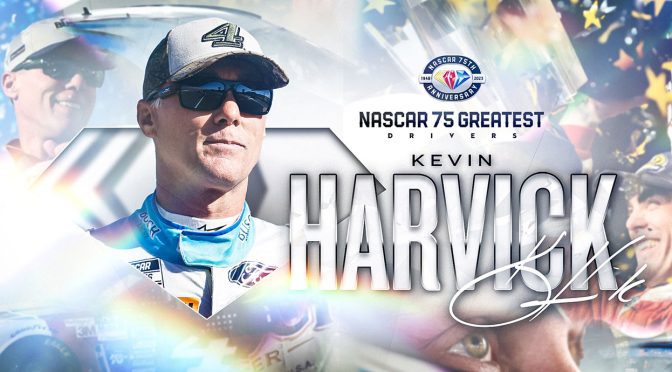
Kevin Harvick, a winner of three NASCAR national-series championships, who is currently competing in his final season in the Cup Series, has been named to NASCAR’s 75 Greatest Drivers list.

Harvick is 10th on the all-time Cup wins list with 60 victories, two behind Kyle Busch for the active drivers’ lead. The 47-year-old took home his first and only Cup Series championship in 2014.

RELATED: See who’s on NASCAR 75 team | More on NASCAR 75

He is the seventh driver on the active Cup Series roster to be named to the elite list this spring, joining Kyle Busch, Brad Keselowski, Kyle Larson, Denny Hamlin, Chase Elliott and Martin Truex Jr. The 75-driver list includes the original 50 Greatest Drivers, who were selected for NASCAR’s golden anniversary in 1998. Plus, 25 new honorees as part of the diamond celebration.

The Bakersfield, California native is a winner in all of NASCAR’s “Crown Jewel” events highlighted by an iconic photo-finish victory over Mark Martin in the 2007 Daytona 500. He’s grabbed three victories in the Brickyard 400 and two apiece in the Coca-Cola 600 and Southern 500.

Harvick rose to prominence through the former NASCAR Southwest Series and ARCA Menards Series West. His breakthrough came in 1998 as he won five races en route to the 1998 West championship. He competed full-time in the Craftsman Truck Series in 1999 before teaming with Richard Childress Racing in the Xfinity Series at the turn of the century.

Harvick immediately found success at the Xfinity level, winning three races in his rookie season and took home the title a year later.

During his 2001 title run in the Xfinity Series, Harvick had to make an abrupt, career-altering move, taking over for Dale Earnhardt in the Cup Series after the seven-time champion’s tragic death.

Running the No. 29 for RCR, it only took three Cup races for Harvick to win his first race, outdueling Jeff Gordon in a photo finish at Atlanta Motor Speedway. Harvick won 22 more Cup races with RCR between 2001-2013 and the 2006 Xfinity championship before moving to Stewart-Haas Racing in 2014.

MORE: All of Harvick’s Cup Series wins

Harvick immediately clicked with his new No. 4 team and crew chief Rodney Childers which led to the team capturing five wins and the 2014 Cup title.

He has won 37 races at SHR and currently sits fifth in points, a third of the way through his final season.

KANSAS CITY, Kan. — A heavyweight bout between two title contenders that came down to the final lap. Post-race fisticuffs between two heated competitors. Cars on the brink of control that drivers wheeled to a record number of lead changes and high volume of caution flags.

Sunday’s NASCAR Cup Series race at Kansas Speedway had just about everything a fan could hope for. And the best part is we get to see it all again in the playoffs on Sept. 10.

MORE: Relive Kansas excitement | Exclusive audio: Gragson, Chastain fight

The showdown between Denny Hamlin and Kyle Larson was an all-time duel over the final 26 laps once Hamlin cleared William Byron for second place. Hamlin trailed by 1.3 seconds after the pass and steadily reeled in the 2021 champion. But it wasn’t until the final lap that the No. 11 Toyota driver could truly make his move — and in an attempt to side-draft Larson, Hamlin contacted his left-rear, sending Larson into the wall. That set up the 37th and final lead change of the day, most for a 400-miler on an intermediate track and handily topping the previous Kansas record of 26 lead changes set back in 2009.

A thrilling finish sealed a thrilling afternoon.

“This is just a perfect race track for this race car,” Hamlin said. “The match between the car, the tire and the race track, it’s just a perfect match. That’s why you saw today really nobody running away from the field. As many leaders as we saw side by side, two, three laps in, I saw these guys dicing up three-wide for the lead. It has just enough (tire) falloff where track position is very important, but it’s not everything. You can still get position on someone like you saw there on the last lap.

“It’s a Kansas thing. So what happens is that the preferred lane is up high, so you have to drive in the corner and pull a slider on someone, and sometimes that slider doesn’t work, which is why you saw most of the wrecks, I think, were probably a product of that.”

Indeed, the yellow flag waved 11 times Sunday, the most in the past six races at the Midwestern mile-and-a-half tri-oval. Nine of those cautions were for incidents. As Hamlin detailed, the nature of racing at a track with so many lane options despite a preferred line allows drivers to take risks. Some are rewarded, some penalized.

Such was the case for Christopher Bell, Hamlin’s teammate at Joe Gibbs Racing. As Ross Chastain slid from middle to high at the exit of Turn 2, Bell dove low in an attempt to complete the pass. Ever so slightly, Bell miscalculated and caught Chastain’s left-rear, sending Bell’s No. 20 Toyota sliding into the backstretch wall and ending his day.

“I don’t know what happened to the 1, but I was just trying to be too aggressive on my side-draft whenever I got up beside him,” Bell told reporters at the care center.

RELATED: Ride with Bell to see day-ending crash

Successful or not, those daunting moves are the ones that enthrall us as spectators. A slew of drivers found their limits Sunday … and some did so off the track, too.

Noah Gragson found his after getting pinched into the outside wall by Chastain at the exit of Turn 4 for their second run-in in three weeks. That led the Legacy Motor Club rookie to Chastain’s car post-race, where Gragson found the eighth-generation watermelon farmer for a confrontation. It started with words; it ended with a punch thrown by Chastain that led to them being physically separated by security.

Chastain, at the nucleus of plenty of incidents in the past 15 months, pointed to the Next Gen vehicle as the genesis of such hotly-contested moments.

“I think everybody is evolving to the new car,” Chastain said. “It’s not so new anymore. We’ve got to get a handle on it. And then there’s times where we’re running 20th-ish and I can’t get by people, and then a couple good restarts and some good adjustments by (crew chief) Phil Surgen and the boys and girls at Trackhouse, and we’re back up there fighting for a top five. It’s some of the best drivers in the world in totally equal cars and putting on some good racing.”

MORE: At-track photos | Hamlin’s championship odds move to 8-1

The intensity was present from the drop of the green flag as Chastain, Larson and Tyler Reddick found themselves in a fierce, three-wide battle for the lead by Lap 4. Just two laps later, Reddick slid high at the exit of Turn 4 and spun Larson across the frontstretch.

Larson’s rally was nearly completed — but instead fell a half-lap short.

The thrills seem bound to continue — both in the near future and the long-term. The series shifts to Darlington Raceway next week for its annual Throwback Weekend, a fitting theme for paint schemes and the abrasive 1.366-mile, asymmetrical oval.

And when the Cup stars fly back west to Kansas, the higher stakes will provide plenty of incentive to push those limits even further.

A post-race argument quickly escalated to fisticuffs between Ross Chastain and Noah Gragson after Sunday’s NASCAR Cup Series event at Kansas Speedway.

Gragson confronted Chastain on pit road after close racing at the end of the AdventHealth 400 forced his No. 42 Legacy Motor Club Chevrolet into the outside retaining wall. The two had a brief discussion before fists flew.

RELATED: Race results | Alternate angle of pit-road scuffle

Chastain squarely landed a punch before the two drivers were quickly separated by security. The discussion turned physical when Gragson grabbed Chastain’s fire suit and pushed him backward. Chastain shook free a few seconds later and connected with his right hand.

“I got tight off of (Turn) 4 for sure,” Chastain said of the contact that precipitated their scuffle. “Noah and I have a very similar attitude on the race track, and we train together, we prepare together, we know each other’s … every little bit about each other. Yeah, definitely crowded him up off of 4, and he took a swipe at us in 3, and then he came down and grabbed a hold of me, and a very big man once told me we have a no-push policy here at Trackhouse.”

Chastain finished fifth in the No. 1 Trackhouse Racing Chevrolet, while Gragson placed 29th in the 36-car field, five laps down after an earlier spin. It marked the second time in a three-week span that the two drivers had raced closely, and Gragson got the worst of it April 23 at Talladega Superspeedway.

“Just got fenced by the 1,” Gragson said. “He took care of us at Talladega. We’re Chevrolet teammates and he didn’t work with us there, and then fenced us here and I’m just over it. Nobody else has the balls to at least confront him, so if you don’t at least just grab him and do something, he’s just going to keep doing it, and I’m over it. It’s the second time. I have respect for (Chastain team owner) Justin Marks and the rest of the Trackhouse team, and that’s why I’m not wrecking him on the race track, but I’m ready to fight him. I didn’t even get a shot in because the security guards got in the middle of it, but nobody confronts the guy. He just keeps doing it, and I’m sick and tired of it.”

Denny Hamlin didn’t tap-dance around the tap that helped him to a much-needed victory at Kyle Larson’s expense in Sunday’s AdventHealth 400 NASCAR Cup Series race at Kansas Speedway.

After an intense chase that began with a restart on Lap 221 of 267, Hamlin closed in on Larson’s Chevrolet on the final lap and further loosened an already loose race car. Slight contact from the right front of Hamlin’s Toyota turned Larson into the outside wall as Hamlin streaked past and took the checkered flag.

Larson recovered to finish second, 1.307 seconds behind the winner, who ended a 33-race drought with his fourth victory at Kansas and exited his car at the finish line to a chorus of boos from fans who didn’t like the way he won the race.

RELATED: Race results | At-track photos

“Yeah, I got position on him there, tried to side-draft him and clipped his left rear,” said Hamlin, who collected his 49th career victory, tying him with Tony Stewart for 15th most all-time. “But I’m glad he was able to at least finish.

“Credit to my FedEx team, though. Four hundred wins for Joe Gibbs Racing (203 in the NASCAR Cup Series, 197 in the Xfinity Series)—it’s such a great accomplishment for them.”

Hamlin’s last-lap pass for the win was the first at Kansas. The race featured 37 lead changes among 12 drivers, the most lead changes in NASCAR history in a 400-mile race on a 1.5-mile intermediate speedway.

Larson led seven times for a race-high 85 laps, including a stretch of 46 straight, before Hamlin grabbed the win on Lap 267.

“I haven’t seen a replay,” Larson said, “but obviously, he was side-drafting really aggressively, like he would. He was touching me, it felt like, and it had me really out of control. I wish we could…”

As Larson uttered those words, his attention turned to a confrontation between fifth-place finisher Ross Chastain and Noah Gragson, who swapped sheet metal at least twice during the race. The drivers took a couple of swings at each other before being restrained.

“I got tight off of (Turn) 4, for sure,” said Chastain, who ran Gragson up toward the wall during the final stage. “Noah and I have a very similar attitude on the racetrack. We train together, we prepare together, and we know every little thing about each other.

“Yeah, I definitely crowded him up off of 4, and he took a swipe at us in 3 and came down and grabbed ahold of me (after the race). A very big man once told me we have a no-push policy here at Trackhouse (Racing).”

MORE: Larson, Reddick collide early | Chastain, Gragson tussle

Pole winner William Byron ran third after recovering from a speeding penalty that put him two laps down. Bubba Wallace passed Chastain with 15 laps left to secure the fourth position. Joey Logano, Chase Elliott, Martin Truex Jr., Tyler Reddick and Austin Dillon completed the top 10.

The fact that Larson was able to contend for the win at all was a reflection of his talent, given thorny circumstances that set him back in the early going. In a three-way battle for the lead before the race was five laps old, Reddick tried to shoehorn his No. 45 Toyota between Larson, the leader, and Ross Chastain, then running third.

But Reddick tapped the rear of Larson’s Chevrolet and sent the No. 5 spinning toward the apron. Larson avoided contact with the wall and recovered to reassume the lead during the second stage.

As Hamlin’s crew chief Chris Gabehart noted after the race, “Denny Hamlin just beat the most talented race car driver in the world. What does that say?”

Consecutive wrecks late in Stage 2 scrambled the running order and handed the stage win to Logano, who had stayed out under the sixth caution for Christopher Bell’s wreck on the backstretch on Lap 159.

As Chastain slowed slightly on the backstretch, Bell steered his No. 20 Toyota to the inside, then moved up the track and clipped Chastain’s Chevrolet. Bell spun into the wall and damaged his car beyond repair.

“Just tried to get a little too aggressive on the side-draft, got into the 1 (Chastain) and spun out,” Bell said succinctly after leaving the infield care center.

At least he didn’t blame Chastain.

The Cup Series’ next race is the Goodyear 400, scheduled Sunday at Darlington Raceway (3 p.m. ET, FS1, MRN, SiriusXM NASCAR Radio). All three national series will be competing as part of NASCAR’s Official Throwback Weekend.

PAINT SCHEMES: Early look at throwback schemes for Darlington

Note: Post-race inspection in the Cup Series garage was completed with no issues, affirming Hamlin’s victory. Competition officials indicated that five cars will be taken for wind-tunnel testing: Trackhouse Racing’s No. 1 Chevrolet, the No. 3 Richard Childress Racing Chevy, Stewart-Haas Racing’s No. 4 Ford, the No. 19 Joe Gibbs Racing Toyota and the No. 22 Ford from Team Penske.

Contributing: Staff reports

Kyle Busch made an early exit from Sunday’s NASCAR Cup Series race at Kansas Speedway, sustaining significant damage in a crash at the end of the second stage.

Busch had an eventful day in Sunday’s AdventHealth 400, rallying from early pit-road issues and a bumping duel with Ross Chastain. But his day ended after just 162 of the scheduled 267 laps after his No. 8 Richard Childress Racing Chevrolet crashed into the inside retaining wall on the backstretch.

RELATED: Race results | At-track photos

The field had just restarted after an incident involving Christopher Bell. Busch was running in close position behind Brad Keselowski’s No. 6 Ford when the field jammed up, and his No. 8 veered toward the apron.

“Just trying to get below the 6 car there off of (Turn) 2 and somebody was beneath me, got hit and spun out,” Busch told reporters at the infield care center. “I don’t know. Just bad-luck circumstances bit us again. I felt like we worked hard all day long to finally get up in there in the top five and get some track position and ready to go race for some stage points. Caution comes out and people with old tires cycle up and just … manipulate the race, right, and change it. It happens. On the wrong end of it.”

Busch had his fair share of run-ins on the track in Sunday’s race, including one with Chastain that saw Busch door the No. 1 Chevrolet down the backstretch earlier in the contest. That frustration wasn’t reserved for Chastain alone, though.

“Yeah, it wasn’t just him. It was a lot of guys,” Busch said. “It’s a product of the car. You’re three-tenths faster than a guy, you run him down from a half-a-straightaway back, and then you just stall when you get there. You can’t maneuver, and you can’t pass, so all they do is aero-block you and pinch you and make you burn your tires up, and then you get passed by the guy that was behind you.”

Busch, a two-time winner this season, wound up with a 35th-place finish in the 36-car field.

Which channels have NASCAR Darlington TV programming this week? We answer that and give the weekly NASCAR television listings here in the NASCAR Darlington TV schedule.

Note: All NASCAR Darlington TV times are ET.

MORE: How to find USA Network | How to find FS1 | Get FOX Sports App | Watch on USA Network | Get the NBC Sports App | Watch on Peacock | FloRacing | How to watch NASCAR International

Monday, May 8
2 a.m., NASCAR Craftsman Truck Series: Heart of America 200 at Kansas Speedway (re-air), FS1
4 a.m., NASCAR Cup Series AdventHealth 400 at Kansas Speedway (re-air), FS1
6 p.m., NASCAR Race Hub, FS1
10 p.m., NASCAR Cup Series AdventHealth 400 at Kansas Speedway (re-air), FS2

Tuesday, May 9
1 a.m., NASCAR Craftsman Truck Series: Heart of America 200 at Kansas Speedway (re-air), FS2
3 a.m., ARCA Menards Series: Dawn 150 at Kansas Speedway (re-air), FS2
5 a.m., NASCAR Race Hub: Best of Radioactive: Kansas (re-air), FS2
7 a.m., NASCAR Cup Series AdventHealth 400 at Kansas Speedway (re-air), FS2
6 p.m., NASCAR Race Hub, FS1
6 p.m., Dale Jr. Download, Peacock
9 p.m., NASCAR Cup Series AdventHealth 400 at Kansas Speedway (re-air), FS2

Wednesday, May 10
Midnight, NASCAR Craftsman Truck Series: Heart of America 200 at Kansas Speedway (re-air), FS2
2 a.m., NASCAR Race Hub: Best of Radioactive: Darlington (re-air), FS2
6 p.m., NASCAR Race Hub, FS1
6 p.m., Dale Jr. Download, Peacock
7 p.m., NASCAR’s Greatest Races: 2003 NASCAR Cup Series Carolina Dodge Dealers 400 at Darlington Raceway (re-air), FS2
10 p.m., NASCAR Race Hub: Best of Radioactive: Darlington (re-air), FS2
11 p.m., The Nascarcade (re-air), FS2

Thursday, May 11
6 p.m., NASCAR Race Hub, FS1
6 p.m., Dale Jr. Download, Peacock

Friday, May 12
Noon, NASCAR Pace Lap, MAVTV
3 p.m., NASCAR Craftsman Truck Series practice and qualifying at Darlington Raceway, FS1
3 p.m., NASCAR Pace Lap (re-air), MAVTV
4:30 p.m., NASCAR Race Hub Weekend Edition: Darlington, FS1
5 p.m., NASCAR Xfinity Series practice and qualifying at Darlington Raceway, FS1
6:30 p.m., NASCAR RaceDay — NCTS: Darlington, FS1
7:30 p.m., NASCAR Craftsman Truck Series: Buckle Up South Carolina 200 at Darlington Raceway, FS1
10 p.m., NASCAR’s Greatest Races: NASCAR Cup Series 2011 Southern 500 at Darlington (re-air), FS1

On MRN:
7 p.m., NASCAR Craftsman Truck Series: Buckle Up South Carolina 200 at Darlington Raceway

Saturday, May 13
1 a.m., NASCAR Xfinity Series practice and qualifying at Darlington Raceway (re-air), FS1
5:30 a.m., NASCAR Craftsman Truck Series: Buckle Up South Carolina 200 (re-air), FS1
8 a.m., NASCAR Race Hub: Best of Radioactive: Darlington (re-air), FS2
8:30 a.m., NASCAR Craftsman Truck Series: Buckle Up South Carolina 200 at Darlington Raceway (re-air), FS2
9:30 a.m., NASCAR Whelen Modified Tour: Duel at the Dog 200 at Monadnock Speedway (re-air), CNBC
10:30 a.m., NASCAR Cup Series practice and qualifying at Darlington Raceway, FS1
1 p.m., NASCAR RaceDay — NXS: Darlington, FOX
1:30 p.m., NASCAR Xfinity Series: Shriner’s Children 200 at Darlington Raceway, FOX
3:30 p.m., NASCAR Weekly Racing at Berlin Raceway, FloRacing
3:55 p.m., IMSA Weathertech Sports Car Championship: Laguna Seca Qualifying, Peacock
5:20 p.m., IMSA Lamborghini Super Trofeo at Laguna Seca Race 1, Peacock
6:05 p.m., NASCAR Weekly Racing at Florence Motor Speedway, FloRacing
6:45 p.m., NASCAR Pinty’s Series at Sunset Speedway, FloRacing
7 p.m., NASCAR Weekly Racing at South Boston Speedway, FloRacing
7 p.m., NASCAR Weekly Racing at Langley Speedway, FloRacing
7:30 p.m., IMSA Michelin Pilot Challenge at Laguna Seca, Peacock
7:45 p.m., NASCAR Weekly Racing at Bowman Gray Stadium, FloRacing
8:15 p.m., NASCAR Weekly Racing at All American Speedway, FloRacing
9 p.m., NASCAR Cup Series practice and qualifying at Darlington Raceway (re-air), FS1
9:30 p.m., ARCA Menards Series East: Music City 200 at Nashville Fairgrounds Speedway, FloRacing
9:30 p.m., ARCA Menards Series East: Music City 200 at Nashville Fairgrounds Speedway, FloSports
10 p.m., NASCAR Season Opener at Alaska Raceway Park, FloRacing

On MRN:
10:30 a.m., NASCAR Cup Series practice and qualifying at Darlington Raceway
1 p.m., NASCAR Xfinity Series: Shriner’s Children 200 at Darlington Raceway

Sunday, May 14
4 a.m., NASCAR Cup Series practice and qualifying at Darlington Raceway (re-air), FS2
6 a.m., NASCAR Xfinity Series: Shriner’s Children 200 at Darlington Raceway (re-air), FS2
12:40 p.m., IMSA Lamborghini Super Trofeo at Laguna Seca Race 2, Peacock
1:30 p.m., NASCAR RaceDay — NCS: Darlington, FS1
3 p.m., IMSA WeatherTech SportsCar Championship at Laguna Seca, NBC
3 p.m., NASCAR Cup Series: Goodyear 400 at Darlington Raceway, FS1
6:30 p.m., NASCAR Cup Series Post-Race Show: Darlington, FS1
7 p.m., NASCAR 75: The Greatest Countdown Show Ever!, FS1
8 p.m., NASCAR Race Hub: Best of Radioactive: Darlington (re-air), FS1

On MRN:
2 p.m., NASCAR Cup Series: Goodyear 400 at Darlington Raceway

Kansas Speedway turned out to be a favorable race track for 23XI Racing and Toyota in the first season of the Next Gen car. Kurt Busch won the spring race in the No. 45 Toyota, and Bubba Wallace won the fall race while subbing for the injured Busch in the No. 45 to complete the Kansas sweep.

FANTASY LIVE: Set your roster | See weekend schedule | Sunday fantasy update

It was the first time a car had swept the events at the same track in the same year with two different drivers since the No. 21 car went to Victory Lane with A.J. Foyt (spring) and David Pearson (summer) in 1972 at Daytona International Speedway. If Tyler Reddick takes the No. 45 to Victory Lane in Sunday’s AdventHealth 400 (3 p.m. ET, FS1, MRN, SiriusXM NASCAR Radio), it will be the first time the same car number has won three times in a row at a venue with three different drivers.

In addition, Toyota as a manufacturer comes into Kansas with momentum thanks to Martin Truex Jr’s win last week at Dover in the No. 19 Joe Gibbs Racing Toyota and news yesterday that Legacy Motor Club will be moving to Toyota in 2024. Add to all that the fact that Toyota was really good at Kansas last year, placing five cars in the top six in the spring and four cars in the top five in the fall, and it could be another favorable race for the Camrys. However, Toyota will have some strong challengers this year in order to keep the streak alive — most notably the Hendrick Motorsports fleet, which will see driver William Byron start on the Busch Light Pole today.

OTHERS TO WATCH

KYLE LARSON: He has six finishes of eighth or better in the last eight starts at Kansas, including a win in October of 2021. He starts second in today’s race.

WILLIAM BYRON: He has six top 10s in the last seven races at Kansas, including a sixth-place run last fall, and starts from the pole position today.

ROSS CHASTAIN: This season’s points leader finished seventh in both races last year at Kansas after not finishing better than 13th before that.

MARTIN TRUEX JR.: He has 11 top-10 finishes in the last 12 races at Kansas, including two wins when he swept the 2017 races.

Projections as of Sunday, May 7.

RACING INSIGHTS’ PROJECTIONS FOR ADVENTHEALTH 400

FinishCar numberDriver
15Kyle Larson
224William Byron
319Martin Truex Jr.
411Denny Hamlin
51Ross Chastain
620Christopher Bell
74Kevin Harvick
812Ryan Blaney
98Kyle Busch
1045Tyler Reddick
1122Joey Logano
129Chase Elliott
136Brad Keselowski
1499Daniel Suárez
1523Bubba Wallace
163Austin Dillon
1714Chase Briscoe
182Austin Cindric
1917Chris Buescher
2054Ty Gibbs
2143Erik Jones
227Corey LaJoie
2347Ricky Stenhouse Jr.
2434Michael McDowell
2510Aric Almirola
2616A.J. Allmendinger
2748Josh Berry
2838Todd Gilliland
2942Noah Gragson
3021Harrison Burton
3131Justin Haley
3241Ryan Preece
3377Ty Dillon
3451J.J. Yeley
3578Josh Bilicki
3615Brennan Poole

The race weekend at Kansas Speedway didn’t start off well for William Byron. In the opening laps of practice, the No. 24 Chevrolet slapped the wall in Turns 3 and 4 and had the 16th quickest single-lap speed. But Byron rebounded in qualifying by winning the pole – his second of the season. Byron now has 10 career poles at 10 different tracks at the Cup Series level. That doesn’t affect my lineup, however, as I’ve made no changes from Fantasy Fastlane.

RELATED: Starting lineup for Sunday | Set your Fantasy Live roster

Dustin Albino’s race-day lineup:

Starter 1: Martin Truex Jr.
Starter 2: Denny Hamlin
Starter 3: Tyler Reddick
Starter 4: Bubba Wallace
Starter 5: Kyle Larson
Garage pick: Ross Chastain

NEXT IN LINE: William Byron, Christopher Bell, Daniel Suárez, Kyle Busch

RISING: As noted in Fantasy Fastlane earlier this week, Kansas hasn’t been all that kind to Logano in recent years. He’s a three-time winner at the track but collected a pair of 17th-place finishes last season at the 1.5-miler. The No. 22 car made just six laps in practice, the fewest of all 36 cars. Collectively, I’m shying away from Ford this weekend, but Logano looked to manhandle his car for all it was worth on Saturday.

With just one top-15 finish in the last eight races this season, Suárez needs to right the ship before it’s too late. Currently, he’s below the playoff cutline, ranked 17th in points. The good news for the No. 99 team is they put a competitive car on the track Saturday, ranking fourth on 10-lap averages. He will start ninth on Sunday and rounded out the top 10 in the Kansas race last fall.

FALLING: What a difference a few weeks can make at a totally different style of track. At Martinsville Speedway last month, Stewart-Haas Racing was the team to beat. This week? Three-time Kansas winner Kevin Harvick led the four-car brigade but was just 27th in practice. Qualifying wasn’t much better overall for the team, but Harvick improved to 13th. Stay clear of SHR this weekend.

Historically, Chase Elliott has been a threat at Kansas with eight top-10 finishes in 14 starts, including a victory in 2018. But while Elliott’s two Hendrick Motorsports teammates, Byron and Larson, share the front row, the No. 9 team will be mired in 21st when the green flag waves. In practice, he ranked 16th out of 22 drivers to make a 10-lap run. With a host of road courses and other strong ovals on the schedule, don’t use Elliott this weekend.

MORE: Read all the info for Kansas showdown

FEATURED MATCHUPS 

Denny Hamlin vs. Martin Truex Jr.: These two Joe Gibbs Racing drivers looked even on Saturday during practice and qualifying. The No. 11 Toyota was the quickest car in the field on 10-, 15- and 20-lap average. Truex was no slouch, ranking fifth on 10-lap averages. Flip a coin because this could go either way, but Truex sealed the deal at Dover last week and could easily go on a late spring heater. The No. 19 car is my pick to win the AdventHealth 400.

Josh Berry vs. Ty Gibbs: Look no further than Gibbs, who drives a Toyota. While Berry’s HMS teammates share the front row, he lacks experience – especially on intermediate tracks – to Gibbs in the Next Gen cars. Berry’s first start of the year was a struggle at Las Vegas when he filled in for Elliott. Gibbs has constantly improved this season and should contend for a top-10 finishing position – if not better – on Sunday.

Tyler Reddick vs. Bubba Wallace: Like the two JGR teammates of Hamlin and Truex, the 23XI Racing duo of Reddick and Wallace were both solid. Wallace got tight on his qualifying run and will start 17th. Don’t let that stir you away from thinking about using the No. 23 Toyota on Sunday; he’s going to be strong and won at Kansas last fall. But I still lean Reddick. Should Reddick win on Sunday, it will be the first time in NASCAR history that the same car number has won at the same track in three straight races with different drivers.

Ross Chastain vs. Kyle Larson: Seems like these guys are probably on good terms, right? Ha. The good news for both drivers is they showed plenty of speed in practice and qualifying and will likely be running towards the front of the field. Chastain, the regular season championship leader, is consistently consistent, while Larson’s uneven season will likely continue Sunday. Larson wasn’t pleased with his long-run speed, but I’m thinking the Cliff Daniels-led team will figure it out, and Larson will be in contention for the win. He’s the pick.

KANSAS CITY, Kan. – When the iconic Michael Jordan teamed with one of NASCAR’s 75 Greatest Drivers in Denny Hamlin to form 23XI Racing, few would have pinned Kansas Speedway as the team’s best facility.

That includes the team’s inaugural driver, Bubba Wallace.

MORE: Kansas schedule | At-track photos: Kansas

Yet the 1.5-mile tri-oval just west of the Missouri River beckoned a 23XI sweep in 2022, only its second year in existence, giving the two-car program half of its four total wins at this one track alone. The No. 45 Toyota prevailed at the Midwestern circuit in both May and September, but it was both primary drivers Kurt Busch and Wallace collecting the respective wins.

“I’m assuming that when they all started this, they didn’t really plan on sweeping Kansas races in their second year going,” Wallace said Saturday.

Wallace returns in his now-traditional No. 23 entry while fresh-faced teammate Tyler Reddick has taken over the No. 45 car in place of Busch after his 2022 injury. Team president Steve Lauletta lauded how critical last year’s triumphs were for the young organization ahead of Sunday’s AdventHealth 400 (3 p.m. ET, FS1, MRN, SiriusXM NASCAR Radio).

“I think it was a big statement for the team because of how we won both races, right?” Lauletta told NASCAR.com in a Wednesday phone interview. “It was the first win for a brand-new team and the 45 in the spring with Kurt behind the wheel. And then we follow it up with the 23 team with Bubba in the fall, who was running the 45 based on Kurt making the playoffs from that Kansas win, and we backed it up, and we drove that car to Victory Lane.

“So the 45 winning both races in Kansas with two different drivers, two different teams shows how adaptable the team is and how we work as one organization in terms of preparing and sharing data and information. And the approach that we have as an organization really came to life with how we won both those races.”

The circumstances in 2022 were challenging to say the least. Busch, beginning that year at age 43, joined the program to help the team grow and invest his time, energy and championship-caliber abilities to do so. His May victory was physical proof that work on and off the track was paying off.

But the concussion Busch sustained during qualifying at Pocono Raceway a little more than two months later has sidelined the 2004 NASCAR Cup Series champion to this day. Busch remains an integral part of 23XI Racing, though, an ever-present face despite no longer wheeling a race car himself.

“He’s active with the drivers, working with both Tyler and Bubba,” Lauletta said. “He’s active with everybody on the team from a culture standpoint and bringing his enthusiasm and his love of building this team into a contender that he has his fingerprints on from last year and wants to keep that going.

“He’s also got his input into what we’re doing with our partners, keeping a great relationship with Monster, with McDonald’s, with Toyota and MoneyLion and all the ones that supported him last year when he moved to 23XI. So he hasn’t missed a beat with us, and in fact, is having as much of an impact out of the car as he did in the car last year.”

What the team accomplished on track in Kansas a season ago still resonates loudly within the shop. Wallace’s September victory propelled the No. 45 team further into the owners points playoffs and served as his second career Cup win – his first on a non-superspeedway oval.

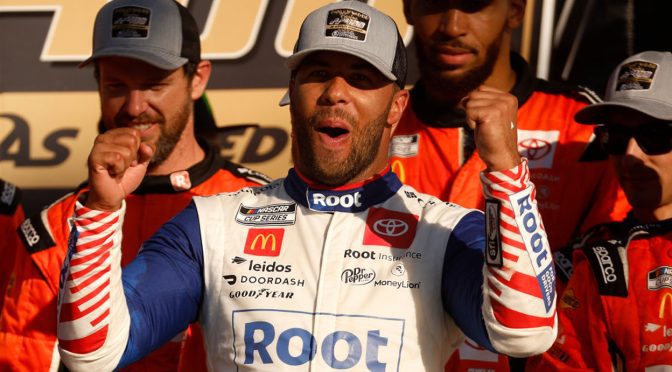
In this 2022 photo, Bubba Wallace celebrates his win at Kansas
Chris Graythen | Getty Images

“That team and Bubba took that responsibility, and week in and week out were a top-10 car, and that led to, you know, closing it out with the win at Kansas,” Lauletta said. “But they were just always there. And that had him and everybody here realizing like we can do this week in and week out, and there shouldn’t be any expectation that we’re not going to do that.”

RELATED: Relive Busch’s victory | Look back at Wallace’s triumph

The Kansas victory was no mistake, either. The Alabama native led for a career-high 58 laps en route to the win, adding onto a career-best season in top fives (five) and top 10s (10) while scoring a victory in consecutive seasons.

“The win last year was big for the team, and to complete the sweep was really cool,” Wallace said. “I thought the 23 car was pretty solid there in the first race too. We had some troubles that kind of took us out of contention, but to come back and seal the deal in the 45 was just special for our team and being so new, right? That was our second year, and making the most of it. … Just proud to be a part of the process. And coming back here, all the momentum’s on our side.”

That September performance was a statement, not just to spectators but higher-ups within the 23XI organization. Wallace is the driver Jordan and Hamlin chose to build the program around when it came onto the scene in 2021. In truth, the win was an exclamation point on the solid midseason Wallace strung together over the course of the 2022 season. His growth has been evident to team co-owner Hamlin.

“He’s better than I thought he was,” a blunt Hamlin said. “I mean, that’s just the simple answer is that I knew he was good. I didn’t know how that he had the potential to be great. And I think that he’s continued to chip away at getting better and better every week. Every race track that has been an Achilles’ heel to him, he just keeps chipping away and finishing a few spots better each time he goes. He’s really evolving as a driver, and I think that I’m super-proud for him.”

The turning point came almost exactly a year ago.

“After Dover last year, met with the drivers, met with the team on my expectations,” Hamlin explained. “I certainly was not ecstatic about our performance, both on and off the race track and just felt like we needed to step up and figure out who we were going to be.”

Tyler Reddick climbs into his No. 45 Toyota at Kansas
Sean Gardner | Getty Images

Now in the 23XI fold himself, Reddick showed significant speed in his No. 8 Chevrolet with Richard Childress Racing in 2022 in both Kansas races, but flat tires derailed his days in each visit.

“Seeing the pace that the 23XI has when we’ve been going to Kansas and having to race against them, in the past, it’s been frustrating, but now it’s really nice seeing the speed that they have,” Reddick said last week at Dover.

With speed comes a plethora of positivity heading into a race weekend. Wallace and Reddick know the tall tasks at hand that come with putting a complete race together en route to the win. But motivating performances and open notebooks provide a strong platform to build upon heading into this weekend’s event.

“Everyone takes a lot of great notes,” Reddick said, praising Busch in addition to crew chiefs Billy Scott and Bootie Barker. “Just the amount of information that everyone shares within our organization and then what we share with Joe Gibbs and back and forth gives us all a lot of knowledge to go off of. So everyone’s done a really good job of that, and we’ve had plenty to go off of for sure to prepare for this race.”

Such a detailed notebook stokes confidence, which Reddick has proven can be enough fuel on its own to propel him to success.

“When you have confidence like that, it’s a game changer, you know?” Reddick said. “I mean, like, we were all kind of nervous (yet) excited about what we were gonna have at COTA, right? And we go out there and P1 in practice, run the lap times that we did, and then qualify like we did too, you know, like, that’s just a huge shot of confidence.

“So when you’re going into a place that you won both races last year, as a team standpoint, you’re very, very confident going in, and that’s a great thing for motivation.”

Both drivers have proven their strengths at this particular mile-and-a-half track. Now the internal battles begin.

“Obviously, Bubba’s excited about Kansas. I am, too,” Reddick said. “I guess we’ve just gotta figure out how we’re gonna sort that one out – which one of us will win it.”