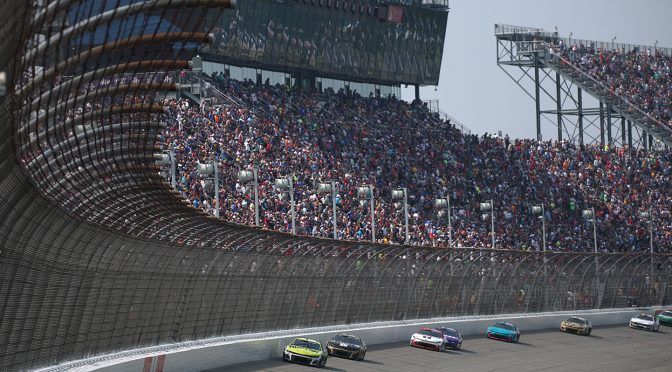
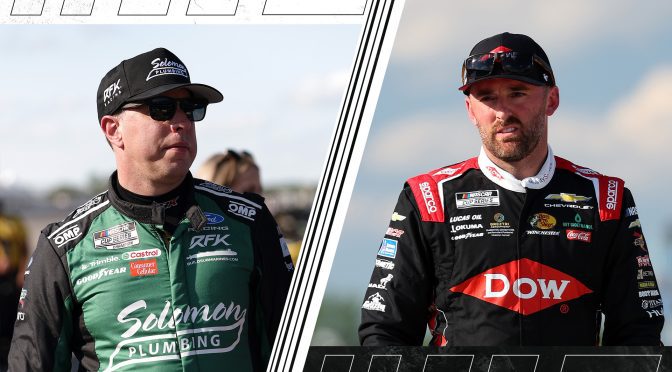
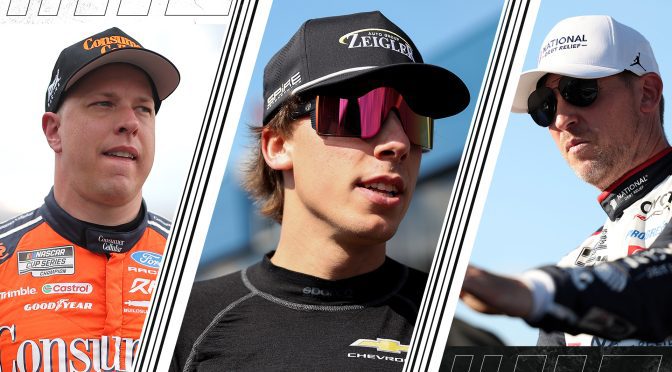
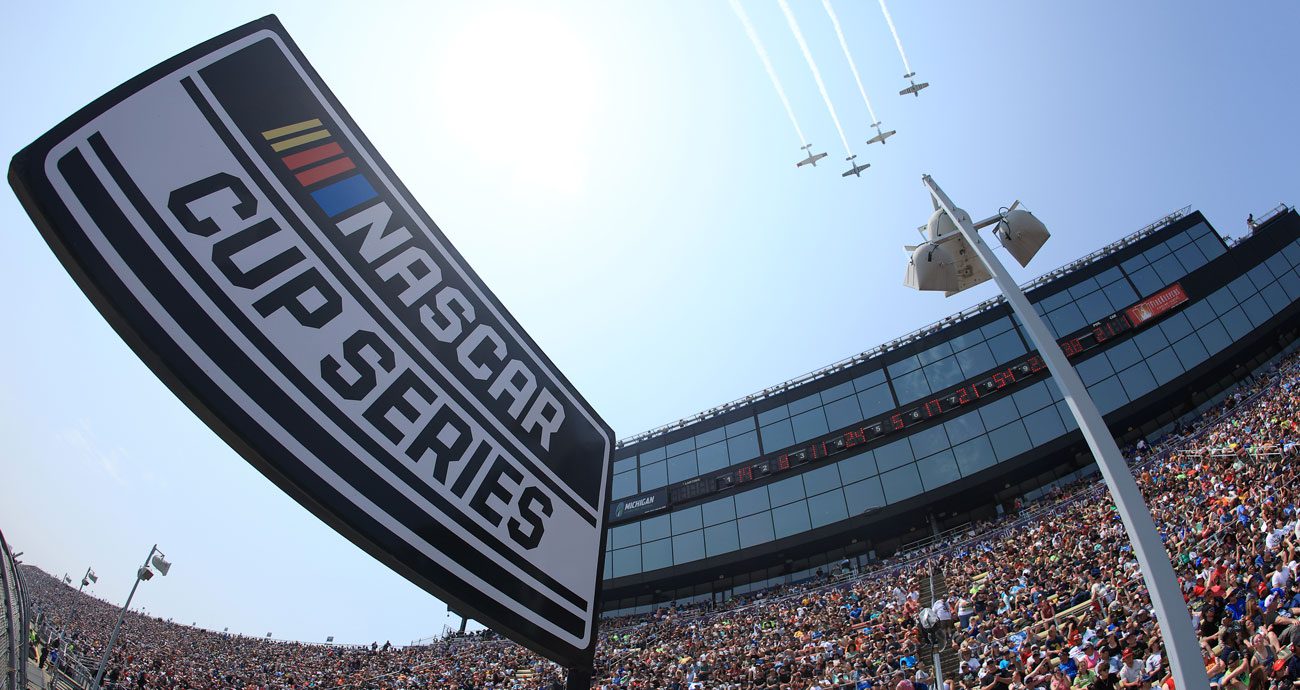
On an action-packed afternoon where perseverance proved as important as raw speed, veteran Denny Hamlin pulled off an amazing run from the rear of the starting grid to claim the checkered flag, taking his second consecutive and fourth overall trophy in the NASCAR Cup Series’ FireKeepers Casino 400 at a sold-out Michigan International Speedway.
The massive effort marked Hamlin’s 63rd career win — tying him with the late Kyle Busch for ninth-place on the Cup Series all-time wins list. And as importantly, the showing — combined with points leader Tyler Reddick’s first DNF of the season — cut Hamlin’s deficit to Reddick nearly in half. He now trails him by only 51 points with 11 races left to settle the Cup Series regular season title.
RELATED: Race results | At-track photos
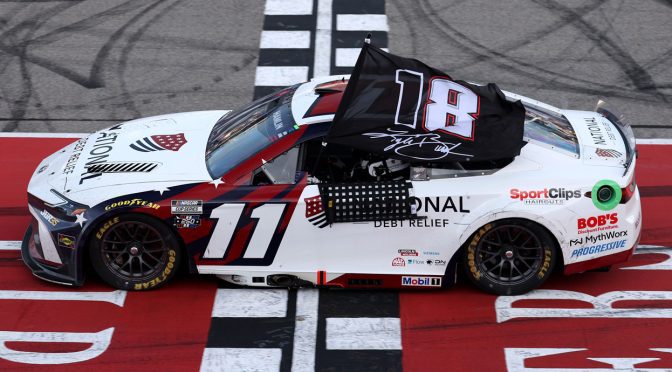
Hamlin, 45, celebrated the milestone victory — his third of the year and second consecutive last-to-first effort in as many weeks — by waving a black-and-white No. 18 “Kyle Busch” flag outside his driver’s window while driving around the track for a victory lap — capped by a long burnout. The ode to the two-time series champ Busch, Hamlin’s former teammate who died two weeks ago from pneumonia and sepsis, received huge applause and a standing ovation from the massive grandstand crowd.
Although Hamlin won the pole position for Sunday’s race, he started from the rear of the 37-car field after the team made unapproved adjustments after qualifying. The opening stage was mostly frustrating for Hamlin, who only managed to run between 20th and 30th place early. But the perennial championship contender and his JGR team made adjustments all day, and he was running top-five by Lap 140 of the 200-lapper. And moving forward quickly.
“Great car, unbelievable,” Hamlin said, thanking his crew after taking the checkered flag. After a day where patience and confidence mattered most, his No. 11 Toyota led 40 laps — including the final 39 of the 200-lap race — and pulled away to an amazing 11.110-second win over fellow Toyota driver, Legacy Motor Club’s Erik Jones.
“Just amazing,” Hamlin said of his car and crew. “That last run there, just hammered down. Had a few good restarts and once I got the lead, laid out all I had.
“The offseason was rough for me, rough for the NASCAR family. We lost a lot of people. This week we lost Gentleman Ned (Jarrett) and still thinking of Kyle (Busch), (his wife) Samantha (and children) Brexton and Lennix. Just grateful to be able strap in every week and I don’t take it for granted this opportunity that I’m in. Just love that we’re making the best of it.”
SHOP: Denny Hamlin winner gear
A record 11 caution flags — plus a 20-minute red flag — flew for incidents and accidents throughout the afternoon, involving half the field to varying degrees. And while the stoppages slowed the race, it also allowed drivers to save enough fuel late, enabling them to make the checkered flag without losing positions on extra pit stops.
Although Hamlin was far in front of the field, the positions just behind him were decided in the closing laps. The runner-up showing was the Michigan-native Jones’ best of the season. Bubba Wallace finished third in the 23XI Racing Toyota co-owned by Hamlin and NBA legend Michael Jordan. Hendrick Motorsports’ Kyle Larson was fourth in the No. 5 Chevrolet, with Spire Motorsports’ Carson Hocevar rounding out the top five in the No. 77 Chevrolet.
“Lot of opportunities there to get stage points, but if we can go up there and challenge for a win, we’re going to do that,” said Jones, whose primary team owner is seven-time Cup Series champion Jimmie Johnson.
“I think we’ve got a good package, and our group is rolling really well as a team. We’re executing well. Just got to do every little thing right and it [win] will come. You run up front, and it’s going to happen for you.”
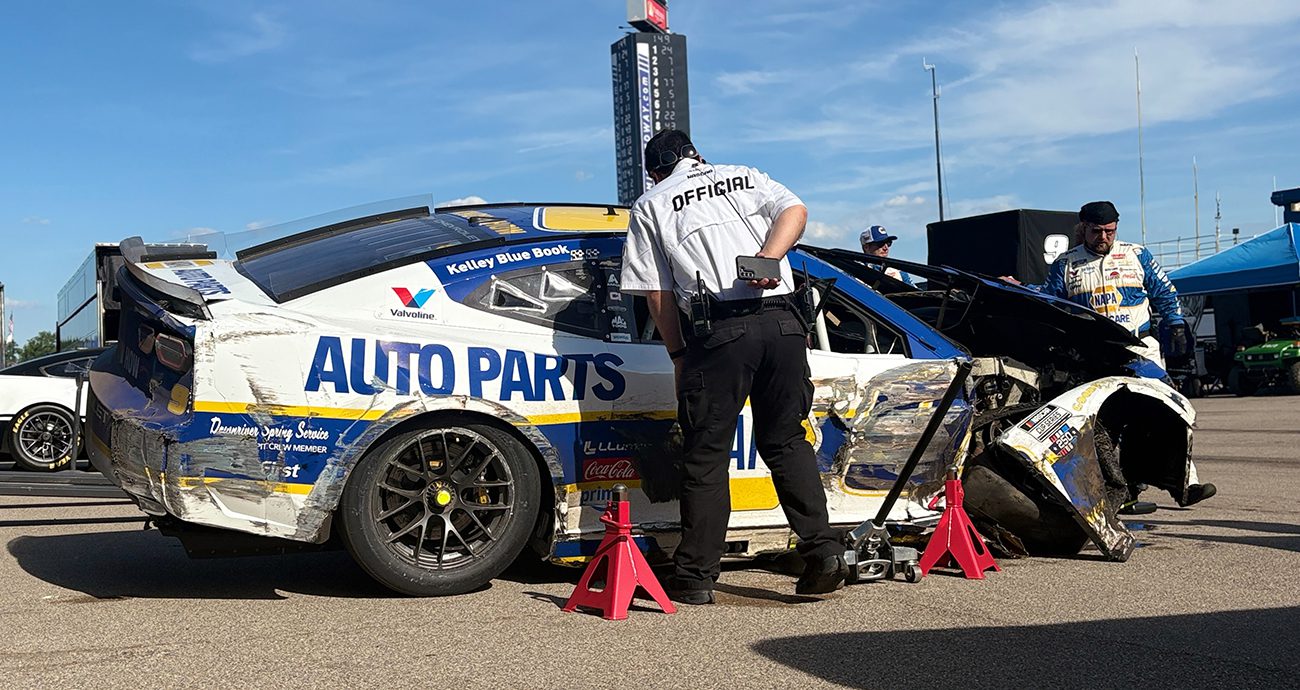
A nine-car chain-reaction wreck early in the race eliminated championship leader and the 2024 Michigan winner Reddick from contention. Another dramatic incident with frontrunners Chase Elliott and Christopher Bell with 51 laps to go necessitated a 20-minute red flag to repair the track wall.
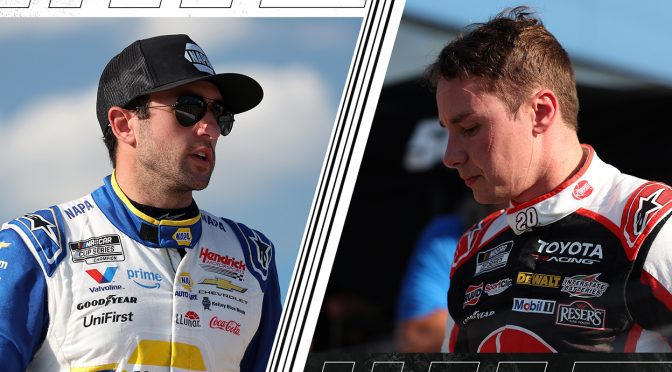
That red flag was necessitated after a hard collision between the two trophy contenders as they ran side-by-side vying for second place. Elliott’s No. 9 Hendrick Motorsports Chevrolet got loose and moved up track and into Bell’s No. 20 Joe Gibbs Racing Toyota.
“Totally my fault. I feel so bad for Christopher [Bell],” said Elliott, who won Stage 2 and led a race-best 67 laps on the day.
“Was trying to make use of fresh tires and at least get to second and hopefully stay side-by-side with him,” Elliott continued. “Got in there and got free. Thought I was going to spin and was kinda committed to spinning out, and as soon as I started to commit to spinning it just hooked up, hooked right and unfortunately sent Christopher into the wall super hard and me shortly there behind.
“Just racing really hard. I felt like it was the turning point of the race, and I needed to make something happen and stepped over the line and paid for it. I just told (Bell) I was sorry. Obviously, it was not on purpose, but I knew it was a really big hit for both of us. I think he took the brunt of it, honestly, with two really big hits. I have a lot of respect for Bell and feel like we always race each other with respect on track. I don’t want that to happen to anyone. It was a big one and certainly not intentional.”
Spire’s Daniel Suarez — who won at Charlotte Motor Speedway two weeks ago — finished sixth, followed by three-time series champion Joey Logano of Team Penske, whose seventh-place effort marked his fifth top-10 of the season. Logano’s teammate Ryan Blaney was eighth in the No. 12 Ford, followed by RFK Racing’s Chris Buescher and JGR’s Chase Briscoe.
Not only was the top of the championship standings drastically affected on Sunday, but only 26 points now separate 14th-place Shane van Gisbergen from 17th-place Logano, with the top-16 drivers advancing to The Chase, which begins Sept. 6 at Darlington Raceway.
The Cup Series moves to another of its traditional venues next week, Pocono Raceway, for Sunday’s Great American Getaway 400 presented by VISITPA at the famous 2.5-mile triangle (3 p.m. ET, Prime Video, HBO Max, MRN Radio, SiriusXM NASCAR Radio). Briscoe is the defending race winner.
Stage 2 recap
Chase Elliott scored the Stage 2 win in Sunday’s Cup Series race at Michigan International Speedway after a slew of mid-stage incidents.
Erik Jones was second when the stage ended on Lap 120, with Daniel Suárez third, Kyle Larson fourth and William Byron fifth. Christopher Bell, Carson Hocevar, Denny Hamlin, Joey Logano and Zane Smith completed the top 10.
A multicar crash at the front of the field took out multiple contenders midway through the second segment.
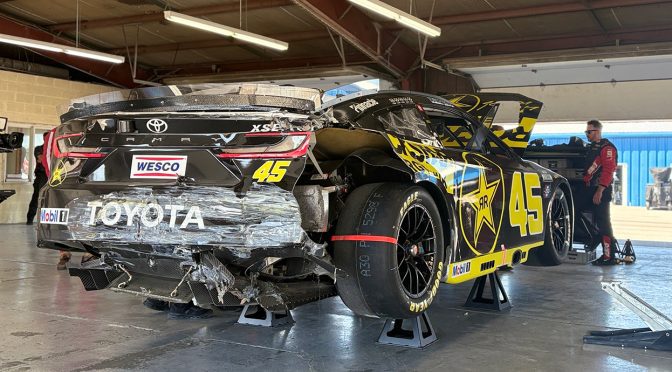
On a Lap 83 restart, Carson Hocevar tipped John Hunter Nemechek sideways just past the start/finish line at the back of the top 10 to trigger the sixth caution flag of the day. Nemechek was hit into Bubba Wallace, whose car veered into Ty Gibbs. Gibbs then collected series points leader Tyler Reddick, who spun across the track and backed into the inside wall at pit exit before being struck again by Austin Dillon’s No. 3 Chevrolet.
Denny Hamlin, who qualified on pole position but started Sunday’s race from the rear, was also involved and spun at the end of the frontstretch but sustained no significant damage.
Hocevar restarted on the inside of Row 4, with the three cars ahead of him — Kyle Larson, Gibbs and Nemechek seemingly losing momentum as they approached the start/finish line.
Reddick entered with a 97-point lead over Denny Hamlin in the Cup Series points standings and has not finished worse than 15th all season. His 23XI Racing team attempted to repair the No. 45 Toyota on pit lane but ultimately went to the garage and was unable to complete repairs, handing Reddick his first DNF of the season in Race 15. Reddick will be credited with a 35th-place finish.
MORE: Stage 2 results | How nine cars collided in pileup
Brad Keselowski was then collected in another incident on the ensuing restart on Lap 90 for the seventh yellow flag of the race. His No. 6 RFK Racing Ford was clipped by Nemechek entering Turn 1 as Keselowski had to slow for other racers. Keselowski spun and crashed into the retaining SAFER barrier before he drove his car to the garage, ending his day with a 34th-place result.
Keselowski was also the first driver to incur trouble early in Stage 2 in Sunday’s Cup Series race. The 2012 series champion and Michigan native cut a left-rear tire on Lap 65, slowing his No. 6 Ford for the fourth caution period of the FireKeepers Casino 400.
Strategy reared its head under the yellow-flag period as a litany of teams opted for two-tire pit stops. Quick changes led to a frantic pit road, though. As then-leader Gibbs exited his stall after a two-tire change, he collided with Ryan Preece’s No. 60 Ford, leading to minor damage on both vehicles. Because of where the contact occurred, Preece was unable to pit and had to complete another lap before returning to pit road. Gibbs, meanwhile, maintained a top-five position for the Lap 70 restart.
The race continued for just another eight laps before trouble struck again when AJ Allmendinger spun exiting Turn 2. His No. 16 Kaulig Racing Chevrolet slid down to the apron of the back straightaway, leading to two flat right-side tires but no wall contact.
Stage 1 recap
Tyler Reddick soared to the Stage 1 victory in Sunday’s Cup Series race at Michigan International Speedway for his first stage win of the season.
Ty Gibbs finished second at the conclusion of Lap 45, with Carson Hocevar third, Chase Elliott fourth and Bubba Wallace fifth. Zane Smith, Kyle Larson, Chris Buescher, Riley Herbst and Daniel Suárez completed the top 10.
MORE: Stage 1 results
Sunday’s FireKeepers Casino 400 began with multiple incidents for rookie Connor Zilisch.
The 19-year-old driver of the No. 88 Trackhouse Racing Chevrolet spun on Lap 2 through Turns 3 and 4, darting high on entry and losing control of his vehicle before sliding sideways and incurring left-rear damage. Erik Jones, who qualified 10th but started from the rear of the field due to unapproved adjustments, scrubbed the wall after going high to avoid Zilisch’s spinning Chevrolet.
On the ensuing restart, Zilisch found trouble again on Lap 9 when his No. 88 Chevrolet broke traction exiting Turn 2, drifting up the race track and spinning out, leading to a long slide nose-first into the inside wall, bringing his day to a very early end.
“We’re done,” Zilisch radioed. “Gosh, man! Oh my God.”
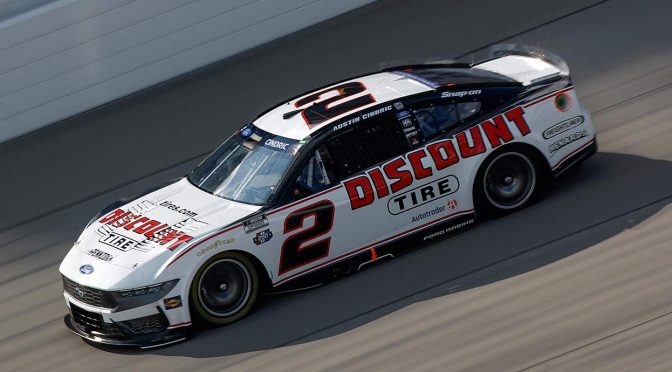
That impact brought Zilisch to his third consecutive DNF due to a crash and third straight last-place finish. A 10-time winner in NASCAR O’Reilly Auto Parts Series competition in 2025, Zilisch was collected in a collision with Austin Cindric on Lap 52 of the Coca-Cola 600 at Charlotte Motor Speedway on May 24, then hit the wall after 71 laps in the May 31 contest at Nashville Superspeedway after a brake rotor exploded on his No. 88 car.
“I was really loose, but yeah, it’s just unfortunate. Another short race for us,” Zilisch told Prime Video after being evaluated and released from the infield care center. “Thank you to WeatherTech for being a part of it. We’ll go try and get them at Pocono next week.”
NOTE: Inspection was completed in the Cup Series garage with no issues, confirming Hamlin as the Michigan winner. The Nos. 1, 5, 22 and 23 cars will be returning to the NASCAR R&D Center in Concord, North Carolina, for engine dynamometer testing.
Contributing: Staff reports