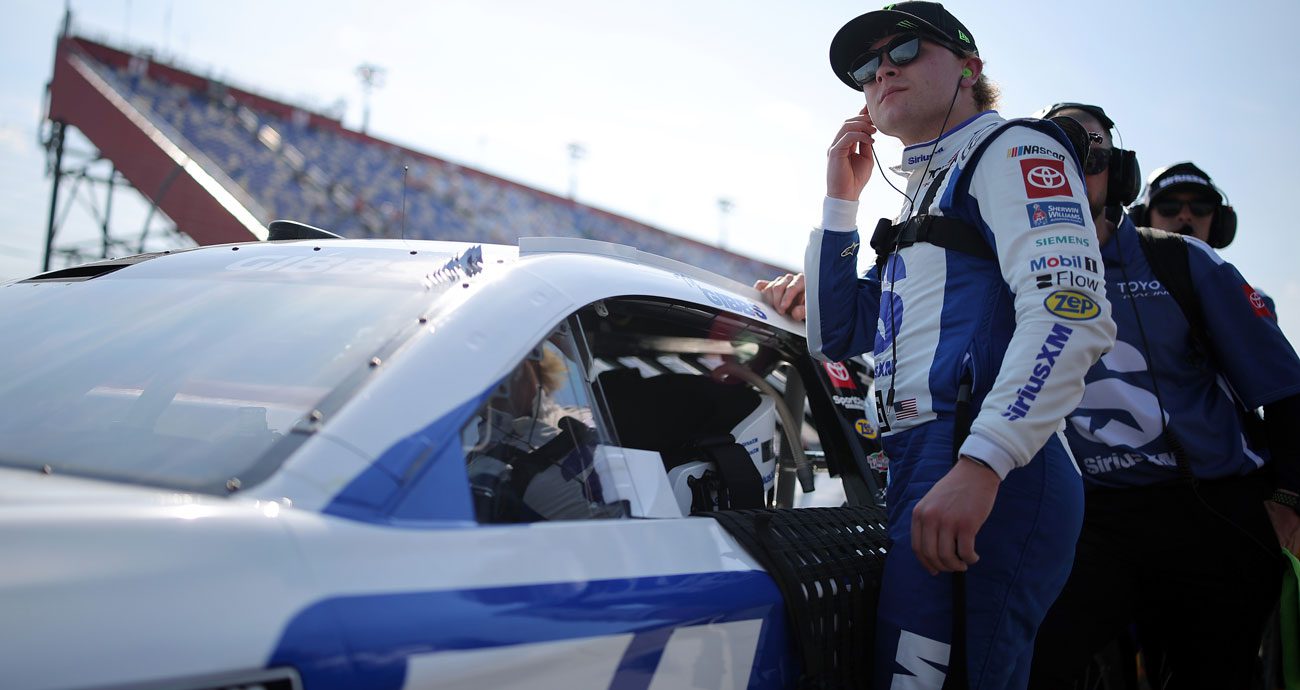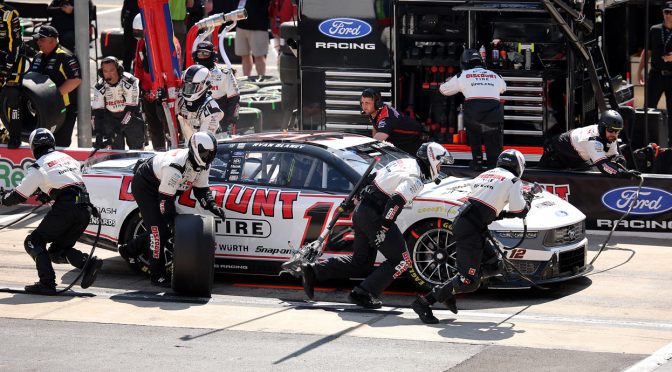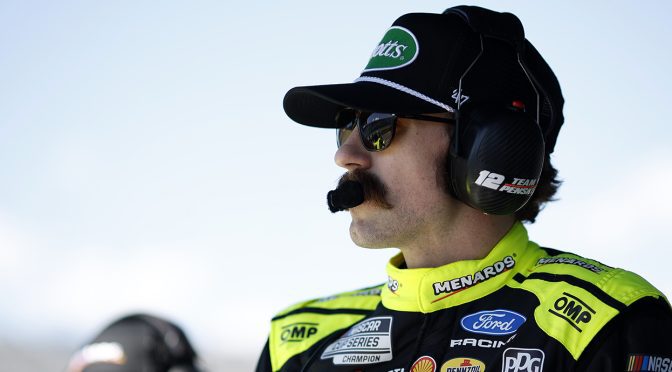
KANSAS CITY, Kan. — After weeks of inconsistency on pit road, the Jonathan Hassler-led No. 12 bunch for Team Penske made a change ahead of Sunday’s AdventHealth 400 at Kansas Speedway (2 p.m. ET, FOX, HBO Max, MRN Radio, SiriusXM NASCAR Radio).
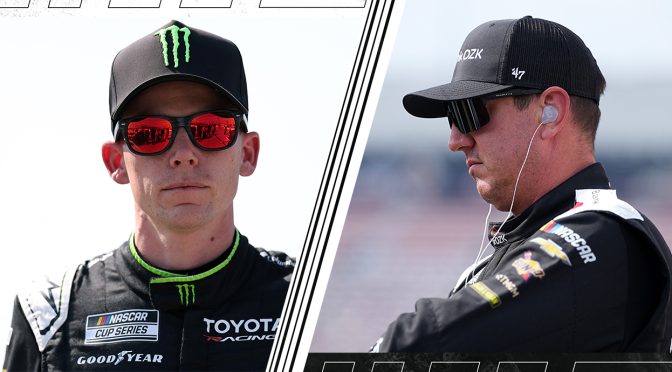
Jackman Graham Stoddard returns to the team, having previously spent multiple seasons as part of Ryan Blaney’s pit crew.
With the No. 12 pit crew losing 88 positions on pit road through eight races (31 more than any other race team), Blaney and Hassler spoke to Travis Geisler, vice president of competition for Penske’s NASCAR program. The goal was to figure out how to improve the entire organization, with its pit crews spreading through the walls of Wood Brothers Racing and Front Row Motorsports. Former No. 12 jackman Landon Honeycutt has moved to the No. 21 car, piloted by Josh Berry.
RELATED: Kansas schedule | Fantasy lineup advice for Sunday
“My role, whoever is with us, is to make them part of the team,” Blaney said on Saturday at Kansas. “No matter who it is, it’s like you’re one of the 12 guys and that’s my main role. It’s not decision-making and stuff like that with that regard. All I can do is sit in on the meetings and hear what they think and wherever it ends up, welcome whoever is with us and make them part of the group, part of the boys.”
Before a late roster change made on Thursday evening, Patrick Gray, the previous jackman of the No. 21 car, was slated to join the No. 12 team at Kansas. The competition group landed on bringing Stoddard back in-house for Kansas.
Stoddard’s resume speaks for itself. He has won three Cup Series championships as a jackman for Penske, most recently with Joey Logano in 2024. He was sidelined during that 2024 season finale, falling ill and leaving the No. 22 car’s pit stall to the attention of Phoenix Raceway’s medical staff.
“A lot of experience and he’s a guy you can count on from that standpoint and performs very well under pressure,” Paul Wolfe, crew chief of the No. 22 car, told NASCAR.com on Saturday. “He’s shown that. He has been part of three championship teams.”
For the 2025 season, Stoddard was the primary jackman for the Wood Bros. He spent the first eight races of the 2026 season with Noah Gragson’s No. 4 team.
“Graham is a great person, and it was a lot of fun to get to work with him for a while and then him still being in the building and seeing him on a day-to-day basis is fun,” Blaney added. “I consider him a friend of mine. A great veteran guy, championship-caliber guy. We’re excited to have Graham with us and looking forward to seeing what he brings.”
The No. 12 team made six mistakes in the opening eight races of the 2026 campaign, all occurring on the left side of the car. When the team had a clean four-tire exchange, it still ranked 16th on average, right in the middle of the field.
Blaney’s lightning speed has overcome the adversity. In all three races where the No. 12 car has lost considerable track position, he’s rebounded to a podium effort, including a victory at Phoenix, where the team relinquished 48 spots on pit road with a pair of loose tires that needed to be tightened by a fellow Penske team further down pit road. The team also dropped 23 spots at Darlington Raceway and 11 last weekend at Bristol Motor Speedway.
Wolfe has made similar changes throughout his Penske tenure. While those decisions are tough, it’s a process in building a program.
“You win and lose together, so those relationships are sometimes hard to separate with performance and holding up your part of the job,” Wolfe added. “I feel like as long as everyone is up front, communicates and understands what the situation is, I think it makes those changes a lot easier.
“Looking back at history with Penske, I think we’re pretty good about not making quick decisions. We try really hard to make the situations and teams work that were put together to start the season. And over time, if the chemistry is not right, we’ve made changes. We’ve moved guys around amongst teams and been able to have success. Sometimes, it’s not always their abilities; it’s finding the right situation of how they might work with other guys amongst other teams.”
The No. 4 pit crew that Stoddard is departing ranks 34th overall in speed and is tied with Blaney’s prior No. 12 crew for the most mistakes in the series at six, per NASCAR insights. Three of those were attributed to the jackman. On the flip side, the No. 4 team ranks sixth in plus-minus positions gained or lost at minus-1.