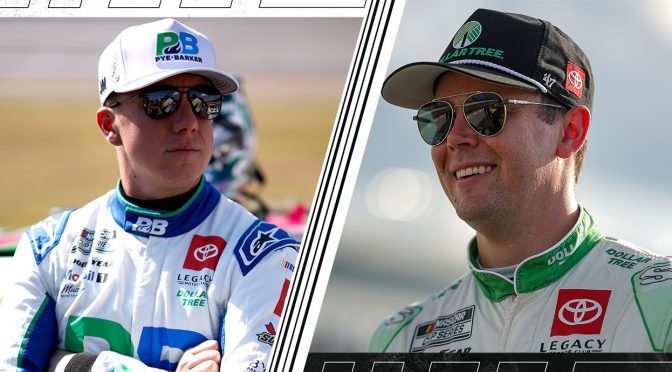
Editor’s note: Today’s Legacy Motor Club preview continues NASCAR.com’s countdown of team previews for the 2026 Cup Series season.
LEGACY MOTOR CLUB
Manufacturer: Toyota Engine: Toyota Racing Development Driver-crew chief pairings: John Hunter Nemechek-Travis Mack (No. 42); Erik Jones-Justin Alexander (No. 43)
Team outlook: As Legacy Motor Club begins its third year as a Toyota team, it has continued to evolve both in leadership roles and performance on track. The 2025 season produced the best overall statistical showings for the team’s two full-time drivers in Jones and Nemechek. Two team drivers scored top-10 finishes in the same race three times last season — a significant sign of progress. Team owner, seven-time NASCAR Cup Series champion and NASCAR Hall of Famer Jimmie Johnson — who will again compete in a handful of selected races — earned one of Legacy’s best showings of the season with a third-place effort in the season-opening Daytona 500. The mark was matched later by Jones at Darlington Raceway during the Southern 500. Expectations are raised for the 2026 season, with both Jones and Nemechek hoping to seriously contend for wins and take a true step toward Legacy’s first championship bid.
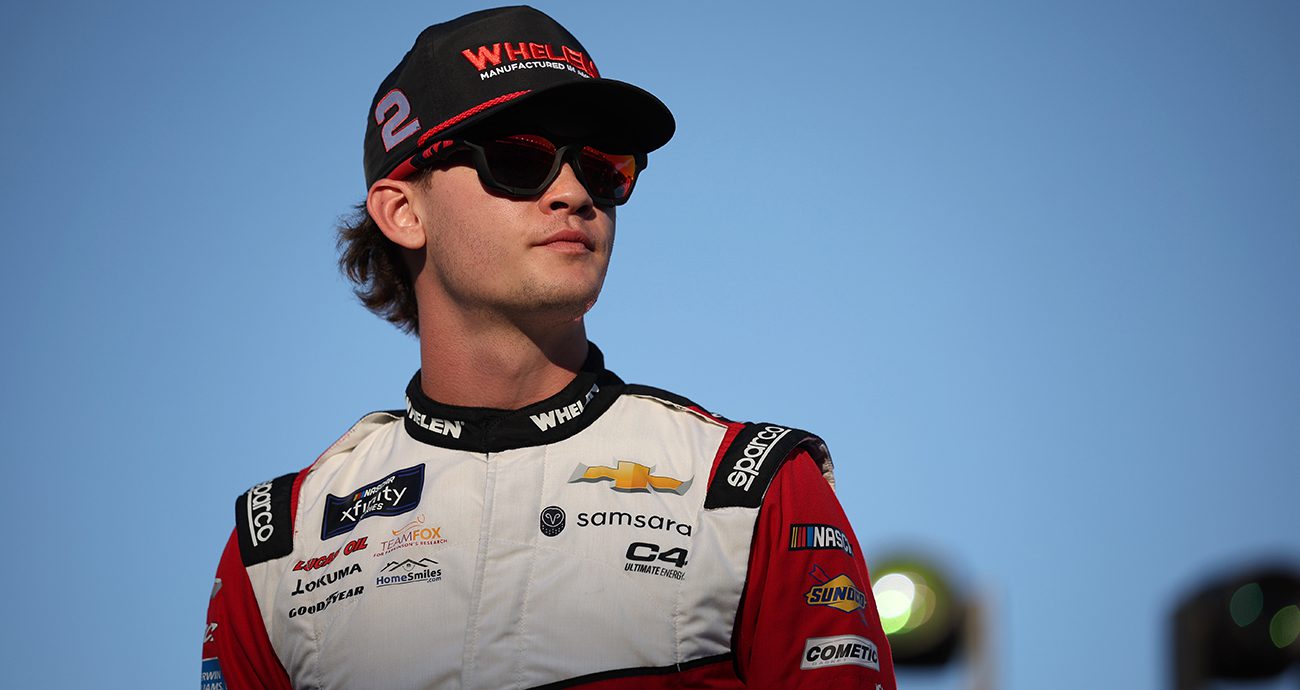
JOHN HUNTER NEMECHEK, NO. 42 TOYOTA
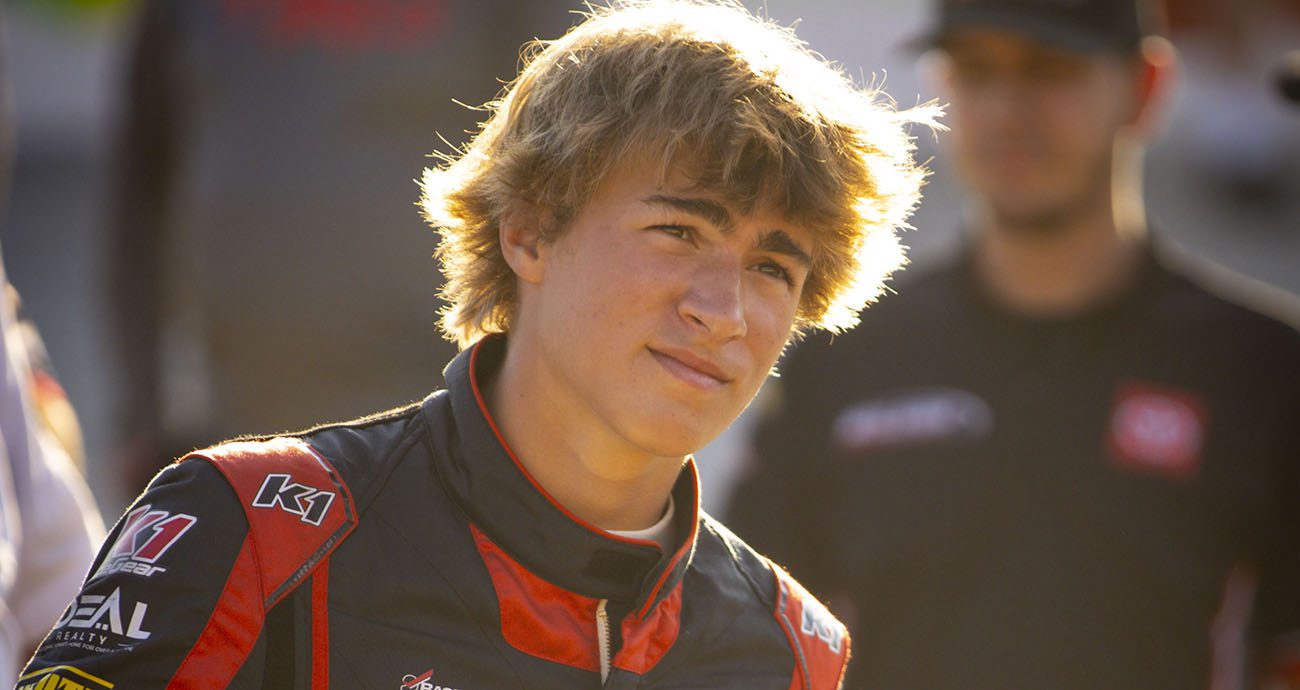
Experience: 3 full-time seasons in NASCAR Cup Series; 113 starts 2025 stats: 25th in final Cup Series standings; 0 wins, 2 top fives, 8 top 10s, 0 poles, 37 laps led
Driver outlook: The talented second-generation NASCAR standout is coming off his best season in the Cup Series statistically. In his first full year with crew chief Travis Mack leading the team, Nemechek’s eight top-10 efforts doubled his previous best total, and the 28-year-old earned the first two top-five finishes of his career. His fifth-place showing in the season-opening Daytona 500 set the tone, and a fourth-place finish in another landmark event, September’s Southern 500, was a career high mark. It all points to important progress — for the team and for Nemechek, who has contended for championships previously in the O’Reilly Auto Parts Series and Craftsman Truck Series. The 37 laps he led in 2025 were also a career high mark and speak well for the team’s potential after only one season of the Nemechek-Mack duo. Four times last year, they put together back-to-back top 10s, showing the kind of consistency they hope to improve upon in 2026. With his 25th-place finish in the title run a personal best, hoisting that first winner’s trophy in the Cup Series is a legitimate goal for this highly-capable driver and team.
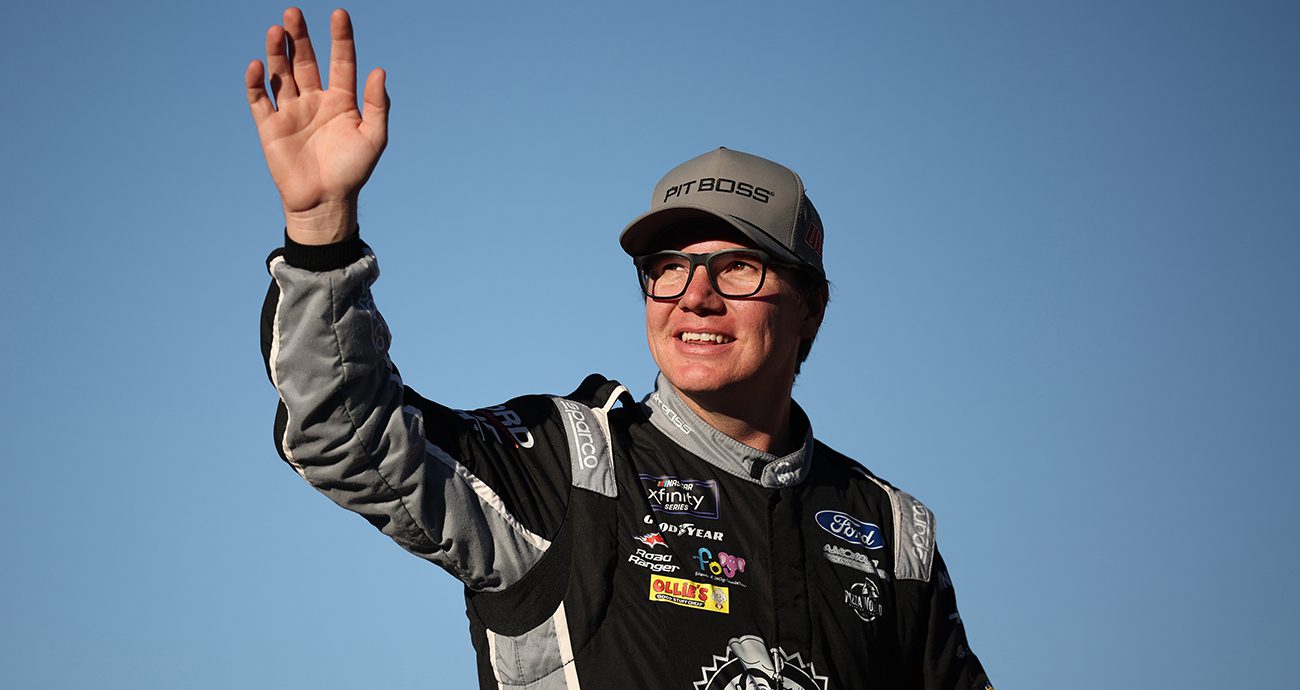
Experience: 9 full-time seasons in NASCAR Cup Series; 325 starts 2025 stats: 24th in final Cup Series standings; 0 wins, 4 top fives, 5 top 10s, 0 poles, 11 laps led
Driver outlook: While he did not win a race,Jones improved statistically over 2024, finishing four positions higher in the championship (24) and raising his top-five (four) and top-10 (five) finishes relative to the year prior. Jones’ 11 laps led (coming in only two races), however, were uncharacteristic as a three-time Cup Series winner (with the most recent coming in 2022 at Darlington) and former Craftsman Truck Series champion. The 29-year-old holds high expectations and hopes, however, that a new crew chief this season in Justin Alexander will help deliver sooner rather than later. Huge victories in the Daytona 500 (2018) and Coca-Cola 500 (2017) are on a successful resume for Alexander, who moves to Legacy from Richard Childress Racing.
A feeling of déjà vu settled into the SageNet Center on Monday evening during the opening night of competition for the 40th annual Chili Bowl Nationals powered by NOS Energy Drink.
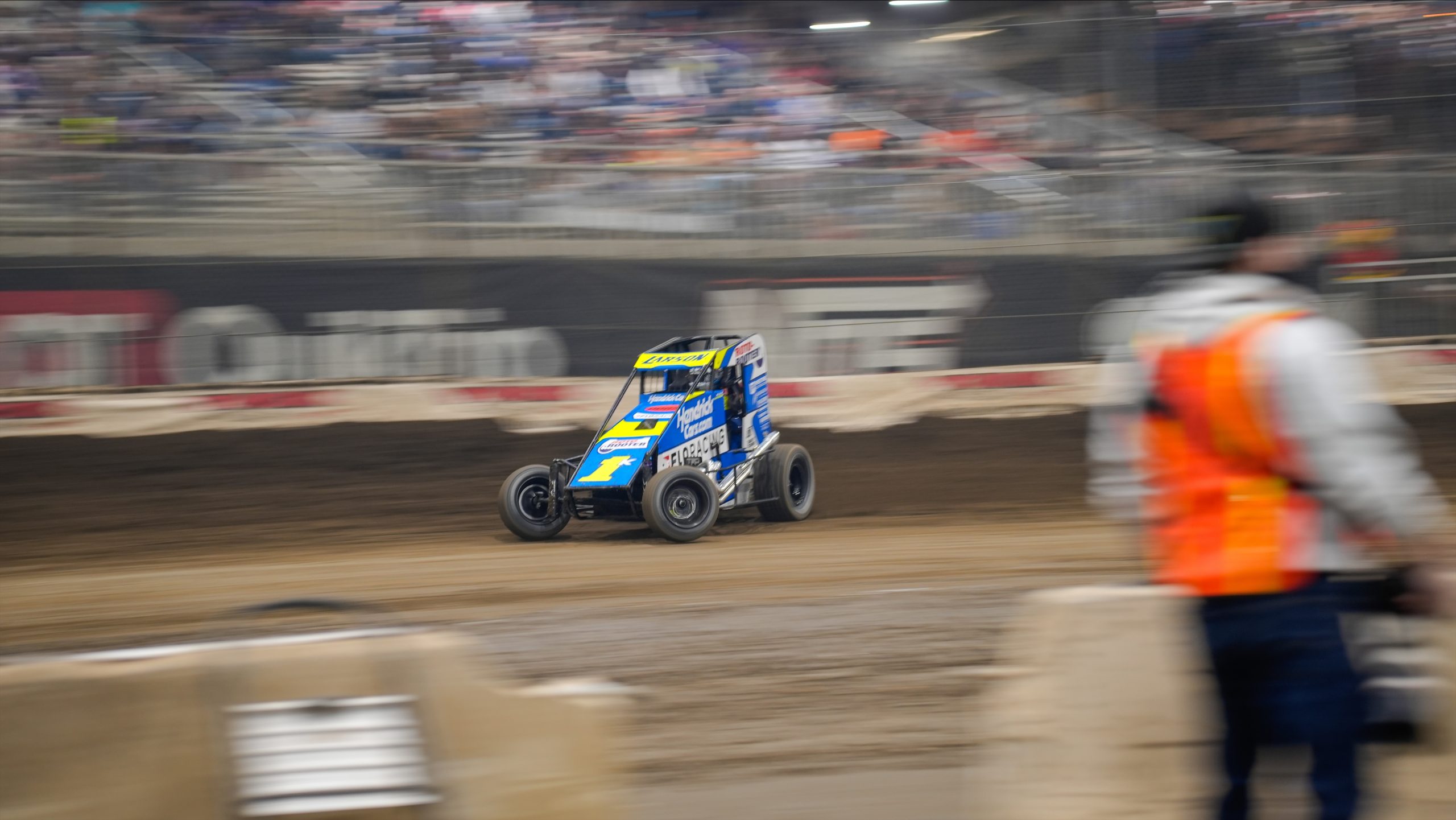
For the second consecutive year, Kyle Larson stormed from fourth to first to win the first preliminary feature of the week and lock himself into Saturday’s 55-lap championship feature for Midget car racing’s biggest event.
As if that wasn’t enough to cultivate the feeling of déjà vu, earlier in the evening, Christopher Bell rolled to a his second straight victory in the annual O’Reilly Auto Parts Race of Champions.
It’s like Larson and Bell know a thing or two about racing inside the SageNet Center. After all, they both have won the Chili Bowl three times.
Larson started fourth in Monday’s 30-lap preliminary feature and was leading by the 10th circuit, though he faced constant pressure from Briggs Danner and Cannon McIntosh.
A few mid-race cautions, including one that was the result of contact between Larson and the lapped car of Gaige Weldon, provided Larson with the clean race track he needed to punch his ticket directly into Saturday’s championship feature.
“My car felt good, and I was making decent decisions in traffic,” Larson said. “Then one lapper (Weldon) tried to rip back around me and then lane changed into (Turn) 3 and I tagged him. It kind of calmed the race down.
“It’s good to be back in position for Saturday.”
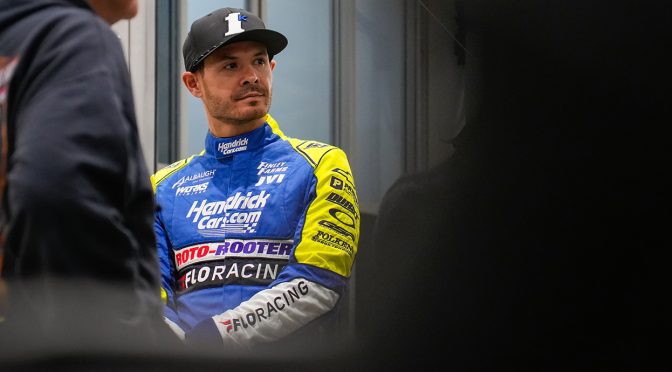
Kyle Larson (Photo: Bobby Pastelak/NASCAR)
One year ago, Larson used a Monday night preliminary feature win to catapult himself to his third Chili Bowl victory.
“It’s definitely a ways away,” Larson said of a repeat title. “I think if we can get a good draw for the Pole Shuffle like we did last year and put ourselves on the front row or second row, we’ll have a good shot.”
Bell kicked off his Chili Bowl Nationals with a flag-to-flag victory in the annual running of the O’Reilly Auto Parts Race of Champions, an invite-only event featuring racing champions from across the motorsports world.
The driver of the No. 20 Toyota for Joe Gibbs Racing in the NASCAR Cup Series qualified first and started from the pole for the 25-lap feature after drawing a 0 for the invert.
He dominated the event despite brief challenges from eventual runner-up Shane Golobic to secure his fourth Race of Champions victory and first as an owner-driver.
“This makes everything a whole lot more stressful,” Bell said after securing his first Midget car win inside the SageNet Center in his own equipment. “I was about ready to puke before the race. I was like, ‘Is it right? Is it wrong? What are we doing?’
“I think it just makes the triumph so much more rewarding.”
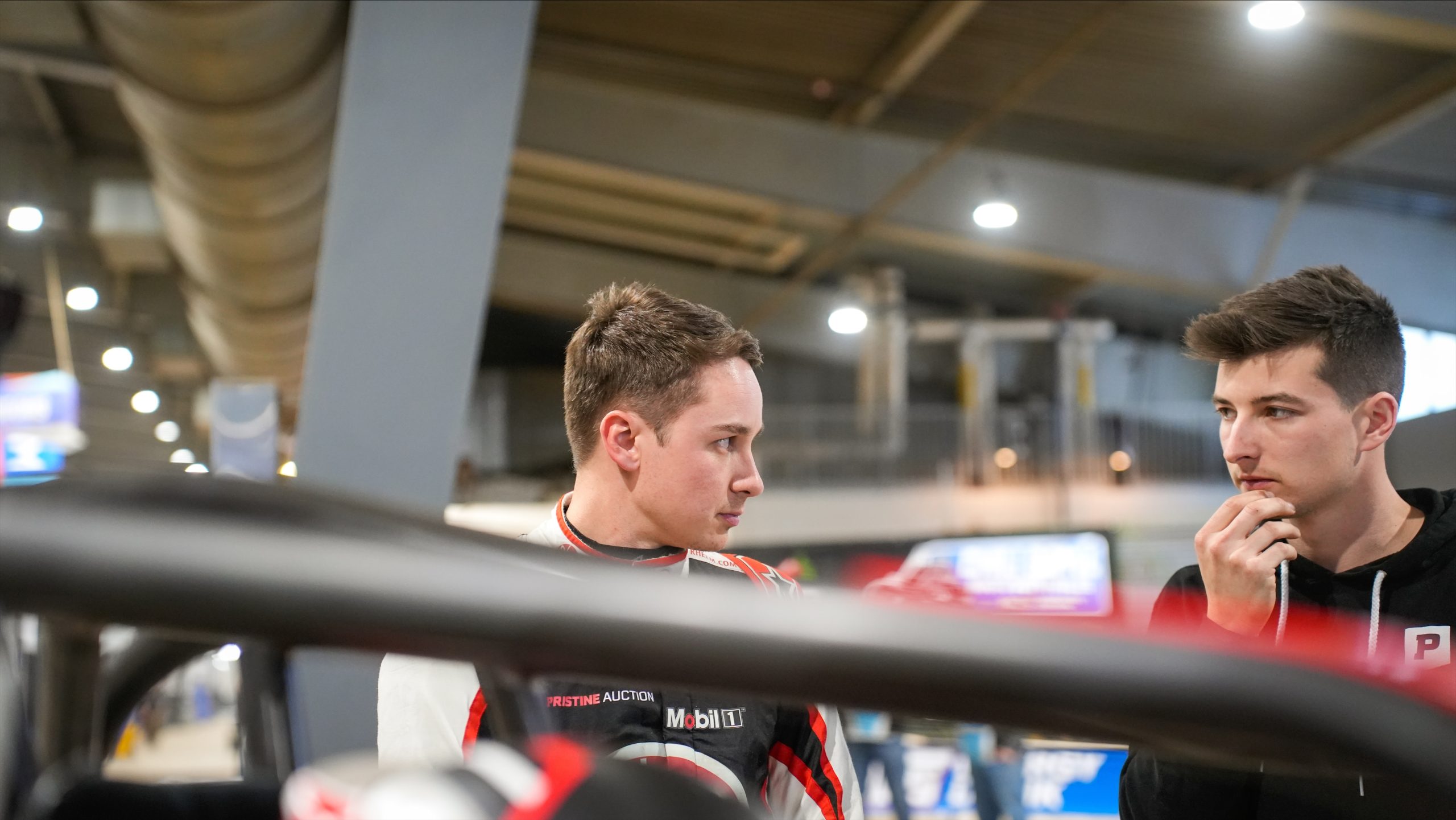
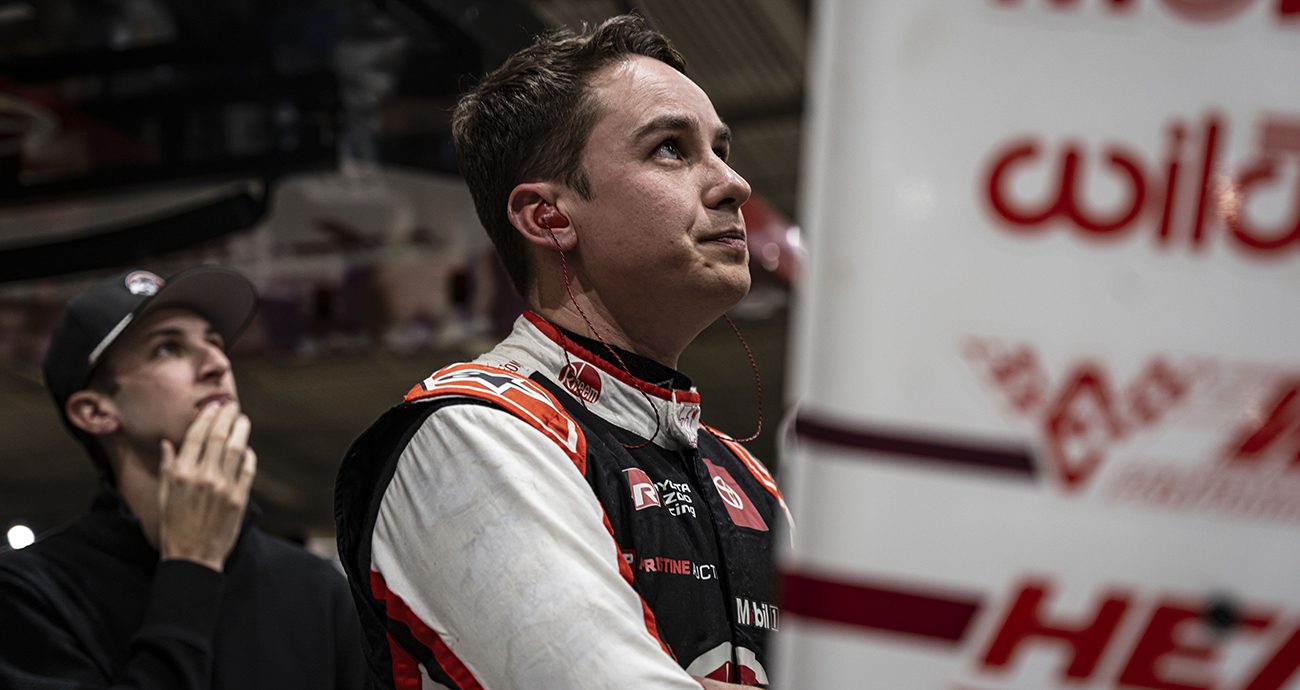
Christopher Bell pictured on opening night of the Chili Bowl (Photo: Bobby Pastelak/NASCAR)
Perhaps more important for Bell than winning the Race of Champions was the valuable track time on the always-tricky, temporary quarter-mile clay oval built specifically for this event each season.
Bell believes the eventual champion of the 40th Chili Bowl Nationals will be one of the drivers who competed in the Race of Champions on Monday night. He just hopes it’s him.
“The Race of Champions is the cream of the crop,” Bell said. “It certainly feels like the Chili Bowl winner is going to come out of this race. It feels good to be on top. We’ll see. There is a lot of racing to unfold.”
The 40th running of the Chili Bowl Nationals presented by NOS Energy Drink continues Tuesday night. Action kicks off at 5 p.m. ET with complete coverage available live on FloRacing.
NASCAR has announced a return to The Chase championship format for all three national series beginning in 2026, with a modified structure from the previous iteration designed to reward performance throughout the season and provide a larger sample size to determine the championship.
Below is a breakdown of how the new format works.
HOW MANY DRIVERS MAKE THE POSTSEASON?
The number of postseason drivers remains the same from the previous elimination-style format, but the manner in which drivers qualify changes (more on that below). For the NASCAR Cup Series, 16 drivers advance to The Chase. The number of drivers for the NASCAR O’Reilly Auto Parts Series is 12 and for the NASCAR Craftsman Truck Series, 10.
HOW DO DRIVERS QUALIFY FOR THE CHASE?
The top 16 drivers following the regular-season finale for the NASCAR Cup Series advance to the postseason. It’s the top 12 drivers for the O’Reilly Auto Parts Series and top 10 for the Craftsman Truck Series.
CAN DRIVERS QUALIFY FOR THE CHASE VIA ‘WIN AND IN’?
No, “win and in” is no longer a means to advance to the postseason. It is strictly based on points standings for each national series.
HOW MANY POSTSEASON RACES ARE THERE?
Like the previous elimination-style format, there are 10 Chase races for the Cup Series following a 26-race regular season. There are nine Chase races for the NASCAR O’Reilly Auto Parts Series and seven for NASCAR Craftsman Truck Series.
ARE THERE ANY CHANGES TO THE POINTS STRUCTURE?
Yes. Wins are now worth 55 points, which is a notable increase from the previous structure of 40 points for a win. The remaining positions pay the same points (35 for second, 34 for third, 33 for fourth, etc.) and stage points are also the same (10 points for first, nine points for second, eight points for third, etc.). The goal is to reward drivers who go for wins, not just strong points days, and ensure aggressive racing and strong team performance remain central to each weekend.
ONCE THE CHASE BEGINS, ARE THERE ANY ELIMINATIONS?
No, The Chase does not have eliminations.
ARE POINTS RESEEDED FOR THE CHASE?
Yes, points are re-seeded just once for The Chase — following the end of the regular season and based on where drivers finish in the standings for the regular season.
Here is what reseeded points look like for the NASCAR Cup Series. (The NASCAR O’Reilly Auto Parts Series and NASCAR Craftsman Truck Series seedings will be the same, except cut off at 12 and 10, respectively.)
1st: 2,100
2nd: 2,075
3rd: 2,065
4th: 2,060
5th: 2,055
6th: 2,050
7th: 2,045
8th: 2,040
9th: 2,035
10th: 2,030
11th: 2,025
12th: 2,020
13th: 2,015
14th: 2,010
15th: 2,005
16th: 2,000
SO THE REGULAR SEASON CHAMPION HAS AN ADVANTAGE?
Yes. As recognition for sustained excellence, the top driver at the end of the regular season will earn a 25-point cushion over the second seed. The entirety of the regular season is valued with the descending points structure.
HOW IS THE CHAMPION DETERMINED?
Whichever driver in The Chase has the most points following the season finale is the champion.
HOW WAS THE CHASE FORMAT DECIDED?
The changes come after an extensive review that included collaboration between owners, drivers, OEMs, tracks, broadcast partners and — most importantly — the fans. The enhanced format follows an exhaustive Playoff Committee and fan-feedback review that put forward three key recommendations:
A larger sample size for a championship
Bolster the importance of each race
Rewarding consistency while maintaining the importance of winning
After more than a decade with an elimination-style playoff system, NASCAR’s championship format has busted the bracket and cut to The Chase.
NASCAR will return to a postseason Chase in all three national series in 2026, implementing a championship procedure that rewards full-season consistency and introducing a new points model that stokes the emphasis on race wins.
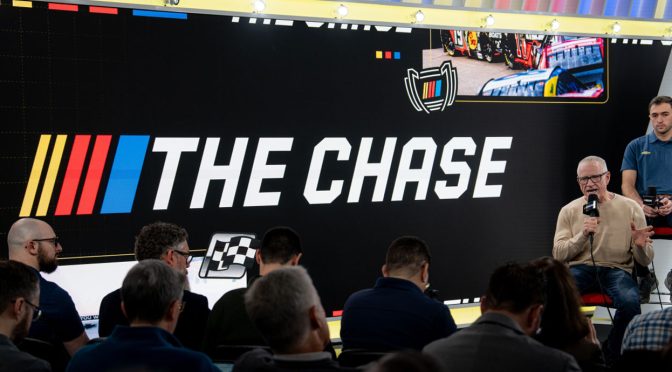
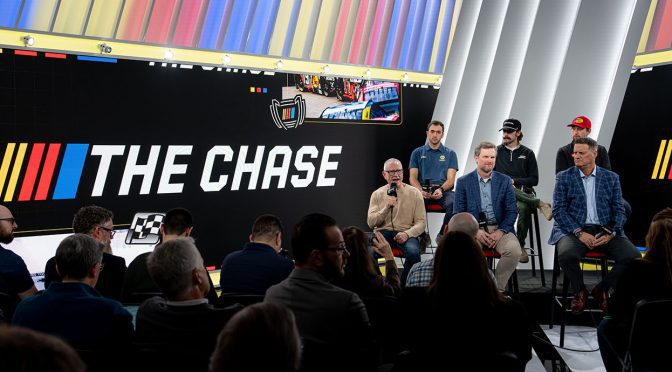
The format, announced Monday afternoon at the NASCAR Productions Facility, closes the elimination era and the one-race championship system that had been in place since 2014 for the Cup Series and since 2016 for the O’Reilly Auto Parts Series and Craftsman Truck Series. The new method for deciding those three championships takes a page from stock-car racing’s history and its first postseason system, but with modifications that chart its course for the future.
“The biggest thing was looking at who we wanted to be as a sport going forward, and that included really a focus on our core fan base and who had been with us for a long, long time and gotten the sport to where it was. So we wanted our future format to reflect that,” NASCAR president Steve O’Donnell said. “A lot of things you’re going to see and how we talked to the fans, from an overall NASCAR standpoint, was going to really embrace that hardcore fan, and so we felt like the format needed to absolutely reflect that.”
The new format uses the framework of the system that was in place from 2004-2013 in the Cup Series, but with several key enhancements.
The field sizes for The Chase in each series remain the same — the top 16 drivers in the Cup Series, 12 in O’Reilly and 10 in Trucks — but all drivers qualify based on regular-season points. The “win-and-you’re-in” rule that provided regular-season winners with automatic playoff berths is no more.
Race winners now collect 55 points, a 15-point increase over the previous points system. Points awards for all other positions and stage results remain the same, but bankable playoff points are no longer part of the format.
Points will be reset for each series’ Chase field with a 25-point premium awarded to the regular-season champion. Top seeds will start The Chase with 2,100 points, 2,075 for the second seed and 2,065 for the third, with a five-point drop for each seed after.
The Cup Series’ Chase spans the final 10 races of the season, with nine Chase races for the O’Reilly Auto Parts Series and seven in the Craftsman Truck Series.
The driver with the most points at the end of the season will be the series champion.
O’Donnell said “everything was on the table” when the new format was taking shape, and options ranged from modifying the elimination system, to adopting Chase-style procedures, to running a full 36-race points contest without playoffs. A playoff committee made up of industry stakeholders and partners — and led by NASCAR executive vice president and chief brand officer Tim Clark — met regularly last year to discuss the format, and opinions were split about the direction.
What emerged, O’Donnell said, was a happy medium that he hopes satisfies all corners of the sport, foremost fans.
“As discussions continued to flow about what we wanted to do, the core elements were we wanted it to be something the fans would embrace, we wanted it to reward consistency throughout all of the 36 races, but it was also really important for winning to matter. We didn’t want that to go away,” O’Donnell said. “So how do you marry all of those together, and where we landed, we think, is the best of both worlds, that it has that element of every race matters, all 36 races matter, but you’re also able to include The Chase and our form of a playoff, so to speak.
“But going back to The Chase, it was unique to NASCAR. It’s something we believe the fans will embrace. It’s 10 races, with every race mattering and still being very simple to explain to the fans. One set of points, easy to explain, and the best driver at the end of 36 races is ultimately going to win the championship if they can perform for those final 10 races.”
Sean Gardner | Getty Images
Last year’s championship races drew intense scrutiny after the checkered flag fell at Phoenix Raceway. Just one of the three title favorites — Truck Series champ Corey Heim — prevailed, and he needed a daring move on an overtime restart to secure the crown. Fellow season-long dominators Denny Hamlin (Cup Series) and Connor Zilisch (O’Reilly Series) finished as runners-up in their respective series after coming up short in the winner-take-all finales.
O’Donnell said those championship outcomes didn’t necessarily prompt the format change for this season, since the discussion process had begun long before last fall’s finales. Instead, he said the weekend seemed to confirm that the timing was right for a new direction.
“If anything, I’ll use myself personally, I was someone who thought we had to go away from the one-race championship,” O’Donnell said, “but when you looked at the (Truck Series) race on Friday night, if Corey Heim hadn’t have won, he’d be like, ‘Oh my gosh, what’s happening?’ But the dramatic fashion he won in, had everyone looking at each other and saying, ‘Wow, that was pretty wild. It was pretty cool.’ If anything, it kind of reintroduced that a little bit, but at the end of the day, really looking at where do you want to be in totality with all the things that could happen in a one-race, a four-race (final), whatever that may be, it just felt like the industry and everyone was really ready for us to make it as simple as possible, definitely reward winning, but have something to be able to be easily explained and that the industry could feel like this is where we want to be.”
Simplification, O’Donnell said, was a focal point of the committee’s work.
“Not only to newer fans but even the fans who follow the sport, I think, had a difficulty at times,” O’Donnell said, “and so one of the core elements that was part of the committee that Tim led was, can you explain this if you got on an elevator and you had 20 floors to explain it to somebody, how does it work? And we wanted to make sure we could do that, and we feel like we’re able to do that with one points system. You reset for the final 10 (races), but the points remain the same, and it’s pretty easy to understand that if you’re leading the points at the end, you’re our champion.”
The new 55-point payday for race wins marks the first major revision to the NASCAR points system since 2017, when stage points became part of the race procedures. It also marks a departure from the previous format’s primary single-race bonus, the automatic playoff berths that accompanied a trip to Victory Lane.
While that system yielded multiple clutch performances in must-win moments, it also, on occasion, incentivized overly aggressive driving and provided playoff spots for drivers deep in the standings who were able to produce a season-saving victory. A 55-point payout, O’Donnell said, should provide motivation that fuels both race-weekend and season-long goals.
“I think when you looked at the ‘win-and-you’re-in,’ it would be hard to argue that it didn’t change the way the drivers raced,” O’Donnell said. “So we did not want to lose, going into Turn 4, we don’t want someone blatantly taking someone out, right, but a bump-and-run, an aggressive move, is part of what NASCAR is all about. So how do you keep that element? And so by adding 15 points, we thought that that would be enough of an incentive, hopefully, to continue to really push that winning narrative.
“One of the things with win-and-in that we didn’t think about that ultimately happened was we wanted every race to matter, and that didn’t happen with win-and-in, right? You saw someone who could win that first playoff race and then kind of say, ‘OK, I’ll see you in a couple weeks,’ and that’s not something we want to deliver for the fans. So we felt like more points to the win, but you still have got to be there every race and hopefully you’re going for those wins for 36 races in a row.”
The Chase will officially return when the postseason begins for all three series in September. With the O’Reilly Auto Parts Series expanding to a nine-race postseason, The Chase will begin for both that circuit and the Cup Series on Labor Day weekend at Darlington Raceway; the Truck Series Chase will open two weeks later at Bristol Motor Speedway. “It was the goal and a little bit of luck, candidly,” O’Donnell said, indicating that competition officials will aim to sync those three Chase schedules even more closely in future seasons.
O’Donnell said the overall goal couldn’t have been possible without the cooperation of the playoff committee, which drew contributors from a wide cross-section of the NASCAR industry. He said their passion for the sport and the desire to make it better were pivotal.
“I think what I would say about the playoff committee is, first and foremost, an appreciation for the time they committed,” O’Donnell said. “They don’t have to do that, it’s not part of their day job, but they all took the time to do it from all walks of life — OEMs, drivers, teams, tracks — and all had a position going in, and I would say that position probably changed for most people, including myself, during the process.
“So that’s what collaboration is all about, is taking the best ideas, formulating those, beating those up as a group, coming back and making sure you’re right, and we certainly took a long time to get here, but we did that because we wanted to land at a place that some would say, ‘Well, you’ve been there in the past.’ Yes, we have, but we’ve tweaked it, and I think it’s in a really strong position and something I believe that the fans should embrace, we hope that they’ll embrace, but I know our industry is going to be behind.”
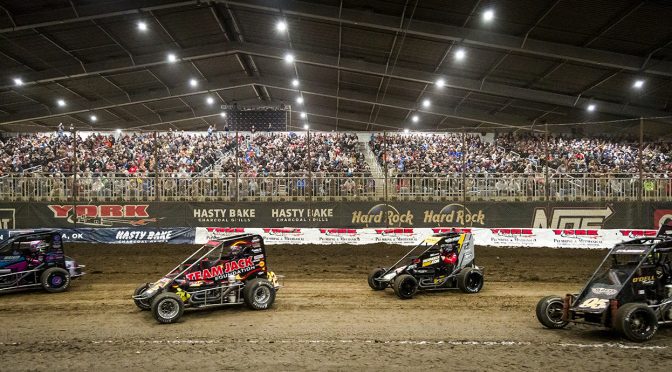
Considered the Super Bowl of midget car racing, the Chili Bowl Nationals presented by NOS Energy Drink attract more than 300 competitors from across the United States and the world to compete at Tulsa Expo Raceway, a temporary circuit constructed inside the SageNet Center at Tulsa’s Expo Square in Oklahoma.
This year marks the 40th running of the event, which began in 1987 and has continued to grow in prestige each year since.
A number of NASCAR drivers have made their way to the Chili Bowl through the years, and select handful have won the prestigious Golden Driller trophy. Among them is two-time NASCAR Cup Series champion Kyle Larson, the three-time and defending Chili Bowl winner. Christopher Bell is also three-time Chili Bowl champion. Three-time Cup champion Tony Stewart has won the Chili Bowl twice, and Dave Blaney, a veteran of more than 450 Cup races, won the Chili Bowl in 1993.
Five drivers who competed in the Cup Series last year are entered in the 2026 Chili Bowl: Larson, Bell, Ty Gibbs, J.J. Yeley and Josh Bilicki.
Jesse Love, the 2025 NASCAR O’Reilly Auto Parts Series champion and 2023 ARCA Menards Series champion, will compete in a car owned by Hendrick Motorsports crew chief Blake Harris. Corey Day, who is set to embark upon his first full O’Reilly Auto Parts Series season in 2026, is also scheduled to compete. Sheldon Creed, an O’Reilly Auto Parts Series regular and 2020 NASCAR Craftsman Truck Series champion, will make his Chili Bowl debut this year.
The NASCAR Regional level is also well represented at the Chili Bowl. Jake Johnson, a winner on the NASCAR Whelen Modified Tour, will make his Chili Bowl debut. Gavan Boschele, who recently signed with Nitro Motorsports in the ARCA Menards Series, will drive a car owned by Kyle Busch. ARCA Menards Series regular Brayton Laster will compete for the first time in Tulsa, as will ARCA competitor and active duty U.S. Air Force pilot Ryan Roulette.
Below is everything to know about the 2026 Chili Bowl, including the schedule, the entry list and the results from the event’s 39-year history.
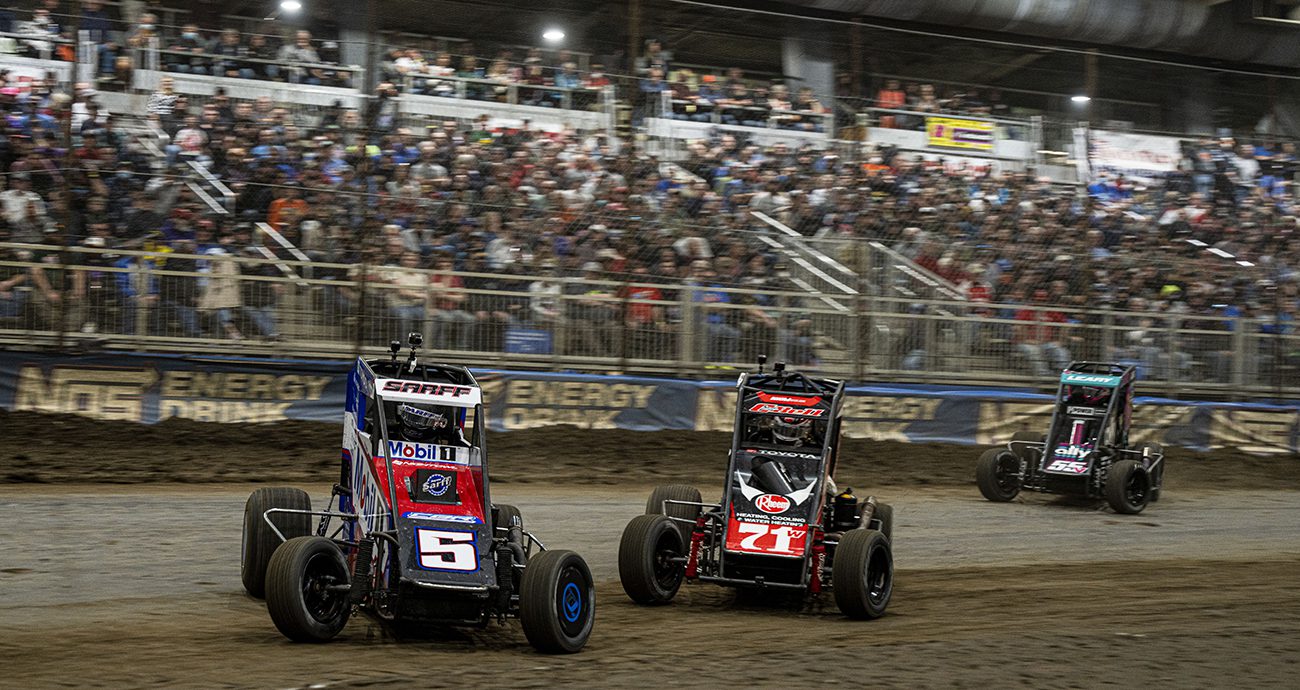
Karter Sarff leads, Christopher Bell and C.J. Leary during last year’s Chili Bowl Nationals at the Tulsa Expo Center. (Photo: Yem Sanlaeid/NASCAR)
What TV channel is the Chili Bowl on in 2026?
The 2026 Chili Bowl Nationals in Tulsa will be shown live in its entirety on FloRacing, the streaming home for all NASCAR Regional action. The event will not be shown on a traditional television network.
FloRacing’s race coverage begins Monday, Jan. 13 and includes all five qualifying nights as well as the championship finale on Saturday, Jan. 17.
Below is the breakdown of the TV and live streaming schedule for the 2026 Chili Bowl.
Chili Bowl schedule
Date
Event
How to watch
Broadcast Start Time
Monday, Jan. 12
2nd Opinion Auto Center Qualifying Night plus the ROC; Race of Champions
Two NASCAR Cup Series winners are among the nearly 400 drivers entered in the 2026 Chili Bowl Nationals.
As of Jan. 7, the entry list had reached 385 drivers. The all-time record for Chili Bowl entries was set in 2022 with 381 competitors.
Kyle Larson headlines the list of NASCAR competitors entered to compete in the Chili Bowl. He captured back-to-back Chili Bowl titles in 2020 and 2021 and added his third Golden Driller trophy last year.
Also entered is Christopher Bell, a three-time Chili Bowl Nationals champion who won the event in three consecutive years from 2017-19.
Additional entries include 2025 NASCAR O’Reilly Auto Parts Series champion Jesse Love, NASCAR Cup Series competitor Ty Gibbs, 2020 NASCAR Craftsman Truck Series champion Sheldon Creed, Cup veterans J.J. Yeley and Josh Bilicki, NASCAR Whelen Modified Tour winner Jake Johnson and ARCA competitors Gavan Boschele, Brayton Laster and Ryan Roulette.
The entry list features drivers from 36 states and five countries (Canada, United Kingdom, Australia, New Zealand, Netherlands).
The complete 2026 Chili Bowl entry list can be viewed here.
Chili Bowl results
Kyle Larson added another trophy to his legendary collection with his third Chili Bowl Nationals victory last year. After taking consecutive Chili Bowl crowns in 2020 and 2021, he earned his third with an epic drive in the 40-lap main event in 2025.
Legendary sprint car driver Sammy Swindell, a three-time World of Outlaws champion, holds the record with five Chili Bowl A-Main victories (1989, 1992, 1996, 1998, 2009). He is once again entered in 2024.
Swindell’s son Kevin ranks second in Chili Bowl A-Main victories with four (all in a row from 2010-14), though injuries sustained in a 2015 crash ended his driving career.
Below is the complete list of Chili Bowl winners from 1987-2025.
Year
Chili Bowl A-Main winner
1987
Rich Vogler
1988
Scott Hatton
1989
Sammy Swindell
1990
Johnny Heydenreich
1991
Lealand McSpadden
1992
Sammy Swindell
1993
Dave Blaney
1994
Andy Hillenburg
1995
Donnie Beechler
1996
Sammy Swindell
1997
Billy Boat
1998
Sammy Swindell
1999
Dan Boorse
2000
Cory Kruseman
2001
Jay Drake
2002
Tony Stewart
2003
Dan Boorse
2004
Cory Kruseman
2005
Tracy Hines
2006
Tim McCreadie
2007
Tony Stewart
2008
Damion Gardner
2009
Sammy Swindell
2010
Kevin Swindell
2011
Kevin Swindell
2012
Kevin Swindell
2013
Kevin Swindell
2014
Bryan Clauson
2015
Rico Abreu
2016
Rico Abreu
2017
Christopher Bell
2018
Christopher Bell
2019
Christopher Bell
2020
Kyle Larson
2021
Kyle Larson
2022
Tanner Thorson
2023
Logan Seavey
2024
Logan Seavey
2025
Kyle Larson
NASCAR drivers at the 2026 Chili Bowl
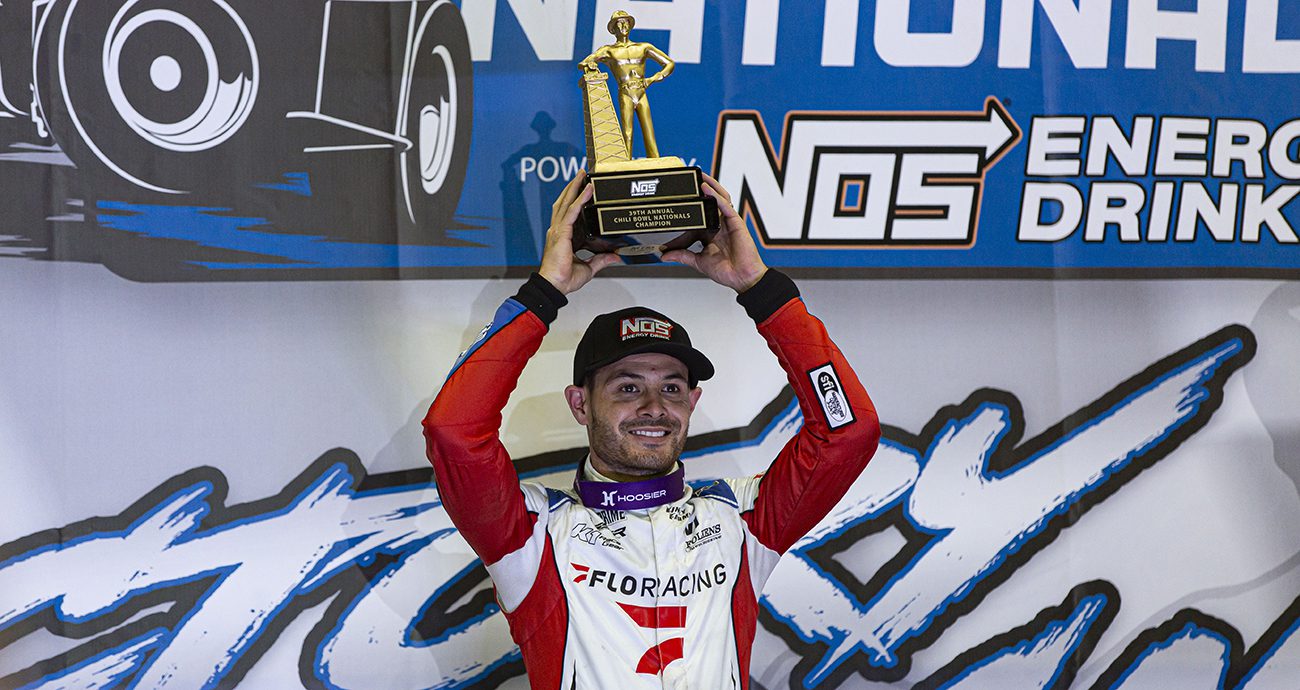
Kyle Larson poses in victory lane after winning the 2025 Chili Bowl Nationals. (Photo: Hannah Sanlaeid/NASCAR)
Reigning NASCAR Cup Series champion Kyle Larson will make his 18th Chili Bowl Nationals attempt this year. A three-time (2020-21, 2025) Chili Bowl Nationals champion, Larson has made the championship feature 12 times during his career.
One season ago, he won the Monday preliminary night feature and he followed that with his third victory in the Saturday championship feature.
Christopher Bell is a three-time Chili Bowl champion. (Photo: Yem Sanlaeid/NASCAR)
For the second consecutive year, Christopher Bell will be back in the SageNet Center for the Chili Bowl Nationals. The native of nearby Norman, Oklahoma will be making his 13th Chili Bowl attempt. He won three consecutive Chili Bowl championships from 2017-19.
Last year he returned to the Chili Bowl after a two-year hiatus, finishing 10th in the Saturday finale.
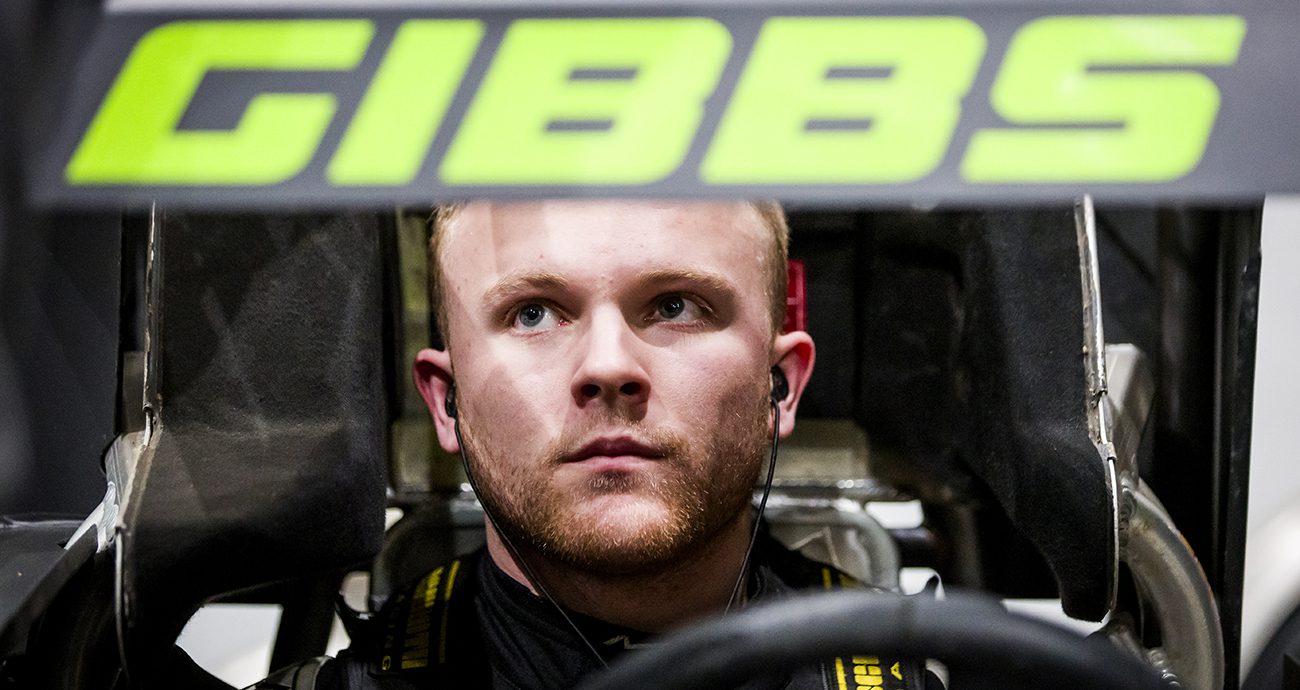
Ty Gibbs made his Chili Bowl debut in 2025. (Photo: Shane Bevel/NASCAR)
Ty Gibbs, the 2022 NASCAR O’Reilly Auto Parts Series champion, is making his return to the Chili Bowl Nationals after making his debut in the event one season ago. In his first Chili Bowl attempt last year, he finished sixth in an F-Main on championship Saturday.
Jesse Love will make his fourth Chili Bowl Nationals attempt this year. (Photo: James Gilbert/Getty Images)
Reigning NASCAR O’Reilly Auto Parts Series champion Jesse Love is making his return to the Chili Bowl after last competing in 2024. He’ll be driving a car owned by Blake Harris, crew chief for Alex Bowman in the NASCAR Cup Series.
Of his three previous Chili Bowl attempts, Love’s best finish came in 2021, when he finished 13th in a B-Main on championship Saturday.
J.J. Yeley will attempt the Chili Bowl for the 30th time this year. (Photo: Yem Sanlaeid/NASCAR)
A legend inside the SageNet Center, veteran NASCAR star J.J. Yeley returns to the Chili Bowl Nationals for his 30th attempt to capture the prestigious Golden Driller trophy. In his 29 previous attempts, Yeley has made the championship feature eight times, including a runner-up finish in 2007.
Yeley made history during the 2004 running of the event, advancing a stunning 69 positions from his F-Main to finish third in the Chili Bowl championship race.
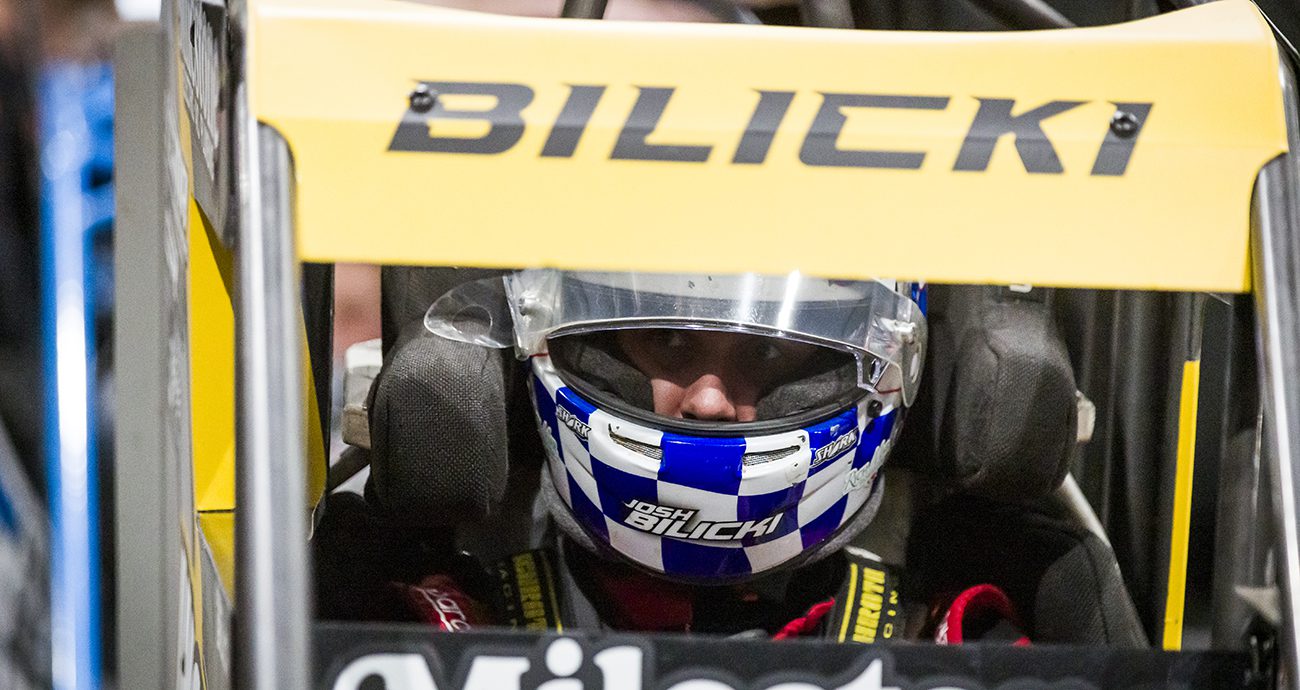
Josh Bilicki is back for another Chili Bowl attempt in 2026. (Photo: Shane Bevel/NASCAR)
Journeyman NASCAR competitor Josh Bilicki returns to the SageNet Center for the fourth consecutive year to take part in the 2026 Chili Bowl Nationals.
His best effort in his previous three starts came last year when he made it to a G-Main on championship Saturday.
Corey Day will attempt to improve upon his best finish of third in the Chili Bowl this season. (Photo: Ed Zurga/ARCA Racing)
Corey Day, who was recently confirmed for his first full NASCAR O’Reilly Auto Parts Series season with Hendrick Motorsports, is back for his fifth attempt at the Chili Bowl Nationals in 2026.
In four previous attempts inside the SageNet Center, Day has made the championship feature three times. His best effort came in 2024, when he finished third in the Saturday night main event behind winner Logan Seavey and runner-up Buddy Kofoid.
Sheldon Creed is scheduled to make his Chili Bowl Nationals debut. (Photo: James Gilbert/Getty Images)
Sheldon Creed, who races in the NASCAR O’Reilly Auto Parts Series for the Haas Factory Team, is scheduled to make his Chili Bowl Nationals debut this year.
Creed is no stranger to dirt racing. He’s been a regular competitor at North Carolina’s Millbridge Speedway for years and previously competed in the Tulsa Shootout, the annual precursor to the Chili Bowl inside the SageNet Center.
Gavan Boschele will make his fourth Chili Bowl attempt this year driving a car owned by Kyle Busch. (Photo: Julia Schachinger/NASCAR)
Gavan Boschele, who is joining Nitro Motorsports this year for most of the ARCA Menards Series schedule, is returning to Tulsa for his fourth Chili Bowl attempt. He’ll do so aboard a Midget car owned by two-time NASCAR Cup Series champion Kyle Busch.
His best effort inside the SageNet Center came in his debut in 2022, when he finished 14th in a B-Main on championship Saturday.
Three other drivers competing at NASCAR’s Regional level are slated to make their Chili Bowl debuts this year. They include NASCAR Whelen Modified Tour race winner Jake Johnson, as well as ARCA Menards Series racers Brayton Laster and Ryan Roulette. All three will look to turn heads during one of dirt racing’s most prestigious events.
The same dirt used for the inaugural Chili Bowl in 1987 forms the track each year.
“The Chili Bowl’s key ingredient is the clay which once covered the adjacent fairgrounds,” the event’s website reads. “Without sun or wind to harm it, the indoor garden (roughly a quarter-mile circle) is heavily saturated so that the boldest dirt track artists of our time can truly shine.”
Located outside the Tulsa Expo Center is the famous golden driller statue, a massive figure depicting an oil worker. That is why the driver who wins the Chili Bowl A-Main on championship Saturday will receive a Golden Driller trophy, one of the most sought after trophies in all of motorsports.
Format
Below is the Chili Bowl format as outlined on ChiliBowl.com. One major change for the 2026 edition of the event is the length of the championship main event on Saturday night, which returns to a 55-lap distance after being 40 laps last year.
Qualifying Nights (Monday-Friday)
Heat Races
Drivers draw for heat racing starting position at 2 p.m. at chalkboard each day
The driver who draws lowest number will start on the pole of Heat 1, second lowest number on the pole of Heat 2, etc.
Number of heats decided by number of cars – 7-10 cars per heat race (8 Laps)
Advancement from heat race to features is based upon passing points earned in heat race and qualifying races. Passing points are based upon car starting position when the yellow light goes out prior to the initial start of the heat or qualifying race.
C Mains/Qualifying Races/B Mains/A Main
The 40 drivers earning the most passing points advance to Four “A” Qualifying Races; drivers in passing points positions 41-68 will go to two C Main races. The two C Main races will have 16 cars 12 laps in length.
The top four cars in each C Main race will advance to the back of the B Main races, going 15 laps. (Top four from first C Main to back of first B Main, top four from second C Main to back of second B main)
The lineup of each “A” Qualifying race will include an inversion of six cars. The top 24 cars in passing points will make the inversion. (The top point driver will start on row 3 of the first qualifying race, the No. 2 driver on row 3 of the second qualifying race, etc.)
The four qualifying races will have 10 cars each, with the top 16 in combined passing points from the heats and Qualifying races advancing to the A Main.
The balance of the cars (24) from the “A” qualifying races will advance to two 16 car B Mains. The top four in each B Main will advance to the A Main, going 30 laps.
There will be 24 drivers in each Preliminary Night A Feature
The top two drivers in the Preliminary A qualify for Saturday’s A Main.
Saturday Night Features
A Feature
The lineup for the top 10 cars in the A feature will be determined through the Chili Bowl Pole Dash.
The five A feature winners will draw 1-5, followed by the five drivers who finished second drawing 6-10 to seed the Pole Dash.
Pole Dash Procedure
Each of the races will have four cars and be four laps.
Preliminary Night Winners will draw for positions 1st – 5th, Runner up will draw 6th – 10th
First Race will be drivers who draw 7th – 10th, lined up in that order. Top 2 will advance.
Second Race, front row will be drivers who draw 5th & 6th, with the two drivers moving on from the first race in Row 2 (Winner inside, 2nd outside).
Third Race front row will be drivers who draw 3rd & 4th, with the two drivers moving on from the second race in Row 2 (Winner inside, 2nd outside).
Fourth Race front row will be drivers who draw 1st & 2nd, with the two drivers moving on from the third race in Row 2 (Winner inside, 2nd outside).
Winner of the fourth race will earn the pole in Saturday’s A-Feature.
(Note: All positions in races other than Saturday’s A-Main will line up upon the original draw of the winners prior to the pole dash. Example: If the Friday winner draws number 1, the Wednesday winner draws number 2, Tuesday winner draws number 3, Thursday winner draws number 4, and the Monday winner draws number 5, all positions in all races will be based on Friday first, Wednesday second, Tuesday third, Thursday fourth, and Monday fifth.)
Seven drivers will advance from each B main to the A for a total of 24 cars with Provisionals set aside for the defending Chili Bowl Champion and previous year’s Race of Champions Winner should they not transfer.
B Mains (20 Laps)
There will be two B mains, with 20 drivers in each B main.
Drivers finishing in their Preliminary A feature in position 3-8 will qualify for the B mains
Five drivers will advance from each C main to the B mains (1st C to 1st B, 2nd C to 2nd B)
C Mains (15 Laps)
There will be two C Mains, with 20 drivers in each C
Drivers finishing in their Preliminary A feature positions 9-14 will qualify for the C mains
Five drivers will advance from each D main to the C Mains
D Mains (15 Laps)
There will be two D mains, with 20 drivers in each D
Drivers finishing in their Preliminary A feature positions 15-20 will qualify for the D mains
Five drivers will advance from each E main to the D mains
E Mains (15 Laps)
There will be two E mains, with 20 drivers in each E
Drivers finishing in their Preliminary night A features 21-24 and B features 5th will qualify for the E mains
Five drivers will advance from each F main to the E mains
F Mains (15 Laps)
There will be two F mains, with 20 drivers in each F
Drivers finishing in their Preliminary night B features in positions 6-8 will qualify for the F mains
Five drivers will advance from each G main to the F mains
G Mains (10 Laps)
There will be two G mains, with 16 drivers in each G
Drivers finishing in their Preliminary night B features in positions 9-10 will qualify for the G mains
Five drivers will advance from each H main to the G mains
H Mains (10 Laps)
There will be two H mains, with 16 drivers in each H
Drivers finishing in their Preliminary night B features in positions 11-12 will qualify for the H mains
Six drivers will advance from each I main to the H mains
I Mains (10 Laps)
There will be two I mains, with 16 drivers in each I
Drivers finishing in their Preliminary night B features in positions 13-14 will qualify for the I mains
Six drivers will advance from each J main to the I mains
J Mains (10 Laps)
There will be two J mains, with 16 drivers in each J
Drivers finishing in their Preliminary night B features in positions 15-16 will qualify for the I mains
Six drivers will advance from each K main to the I mains
K Mains (10 Laps)
There will be two K mains, with 16 drivers in each K
Drivers finishing in their Preliminary night C features in positions 5-6 will qualify for the K mains
Six drivers will advance from each L main to the L mains
L Mains (10 Laps)
There will be two L Mains, with 16 drivers in each L
Drivers finishing in their Preliminary night C feature in position 7-8 will qualify for the L Mains
Six drivers will advance from each M main to the L mains
M Mains (10 Laps)
There will be two M Mains, with 16 drivers in each M
Drivers finishing in C feature positions 9-10 will qualify for the M Mains
Six drivers will advance from each N main to the M mains
N Mains (10 Laps)
There will be two N Mains, with 16 drivers in each N
Drivers finishing in C feature positions 11-12 will qualify for the N Mains
Six drivers will advance from each O main to the N mains
O Mains (10 Laps)
There will be two O Mains, with 16 drivers in each O
Drivers finishing in D feature positions 3-4 will qualify for the O Mains.
Six drivers will advance from each P Main to the O Mains
P&Q Mains (10 Laps)
There will be two P Mains and possibly two Q Mains, with the number of drivers TBA in each.
Drivers finishing in D feature positions 4 on back will qualify for these race, and lineup position will be determined by finish on qualifying night and number of cars.
NASCAR Fantasy Live is open for the 2026 Cup Series season. All players can sign up now to create their accounts and team names, plus activate their leagues for the new year. Players will also have the option to start a league from scratch. To play, users must log in to their accounts on NASCAR.com or via the NASCAR Mobile App.
New players can earn 200 Fan Rewards points for signing up. Players will earn an additional 10 Fan Rewards points per week for setting a lineup. Another way to earn points is through streaks. Players will get 50 points for five straight weeks of making a lineup, and if you make it 10 in a row, you earn 100 points. Twenty consecutive weeks will give you 200 points, and 30 consecutive weeks will net 300 points. Should a player complete the full season of setting a lineup, 500 Fan Rewards points are coming their way.
Fan Rewards points can be exchanged for exclusive prizes, including race tickets, VIP experiences and autographed NASCAR merchandise.
Rules and regulations are akin to years prior. Players will select five drivers to fill their weekly lineup, with a sixth driver placed as their garage pick. Players can adjust their lineup through the conclusion of Stage 2. Once the final stage begins, the garage will close, and picks are locked. At that point, the drivers in your lineup will get credited as a use, and their performances will reflect your weekly points. Picks for each race week will open on Tuesday.
The unpredictable head-to-head matchups — four per week — will return for the 2026 season. Players will have the opportunity to choose between a pair of drivers who will have the better heads-up finish during a given race. Should the participant choose the correct driver, they will receive an additional 10 bonus points.
The scoring system will coincide with NASCAR’s championship format. For example, if you have the race winner in your lineup, you will receive the points that the winner earns for the race weekend. Should drivers in your lineup place within the top 10 during the two stage breaks, you will net those points as well. Official points won’t be determined until post-race inspection is clear, approximately two hours after the conclusion of each race, and the finishing order is confirmed. In the unfortunate event that one of your starters fails post-race inspection, NASCAR Fantasy Live will reflect the points.
Show me the money! The player who tabulates the most points for the season-opening Daytona 500 will earn a $10,000 reward. For the duration of the 36-race season, whoever accumulates the most points will lock up a $25,000 prize. Second place will receive $10,000, with $5,000 going to the player who finishes third.
The 2026 NASCAR Cup Series season is rapidly approaching, and that means it’s almost time to begin setting weekly NASCAR Fantasy Live lineups. With the 2026 edition of the game now live, it would be fitting to reflect on standout performers from the 2025 campaign to help inform those early-season lineups.
The 2025 Cup season was dominated by the sport’s juggernauts, with Hendrick Motorsports, Joe Gibbs Racing and Team Penske combining to win 75% of all points-paying races. Five of the nine races that they didn’t capture checkered flags were road courses (hello, Trackhouse Racing). There were a few surprises along the way, though.
Rookie Shane van Gisbergen achieved near perfection when turning left and right, while two-time and reigning series champion Kyle Larson upped his ante at superspeedways. Chase Briscoe also emerged as a championship threat in his debut season with JGR. Then, there’s Austin Dillon, who converted a Hail Mary late in the regular season at Richmond Raceway in a runaway victory.
It’s time to unveil the 2025 fantasy MVPs for each type of track configuration: intermediates, short tracks, road courses and drafting tracks. Will these trends continue in 2026?
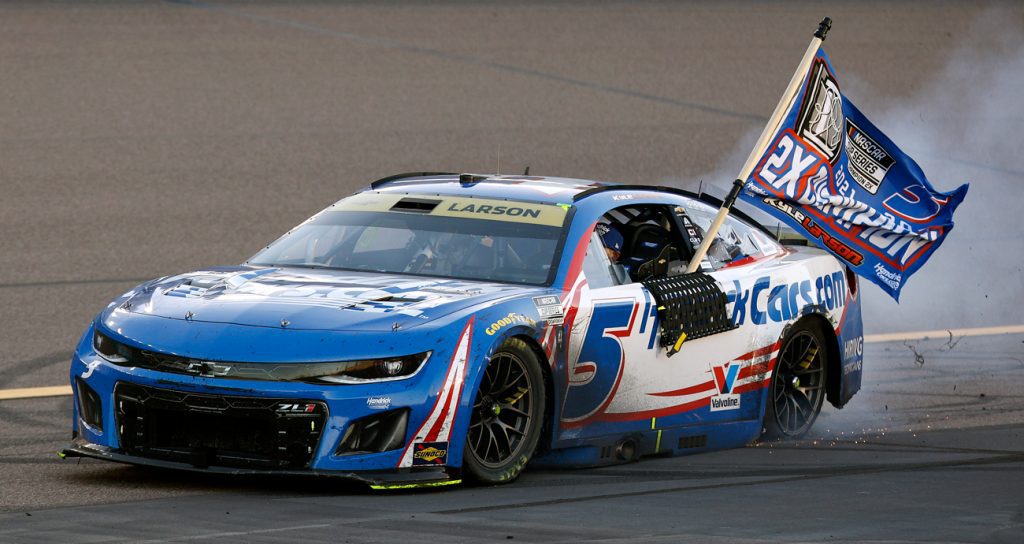
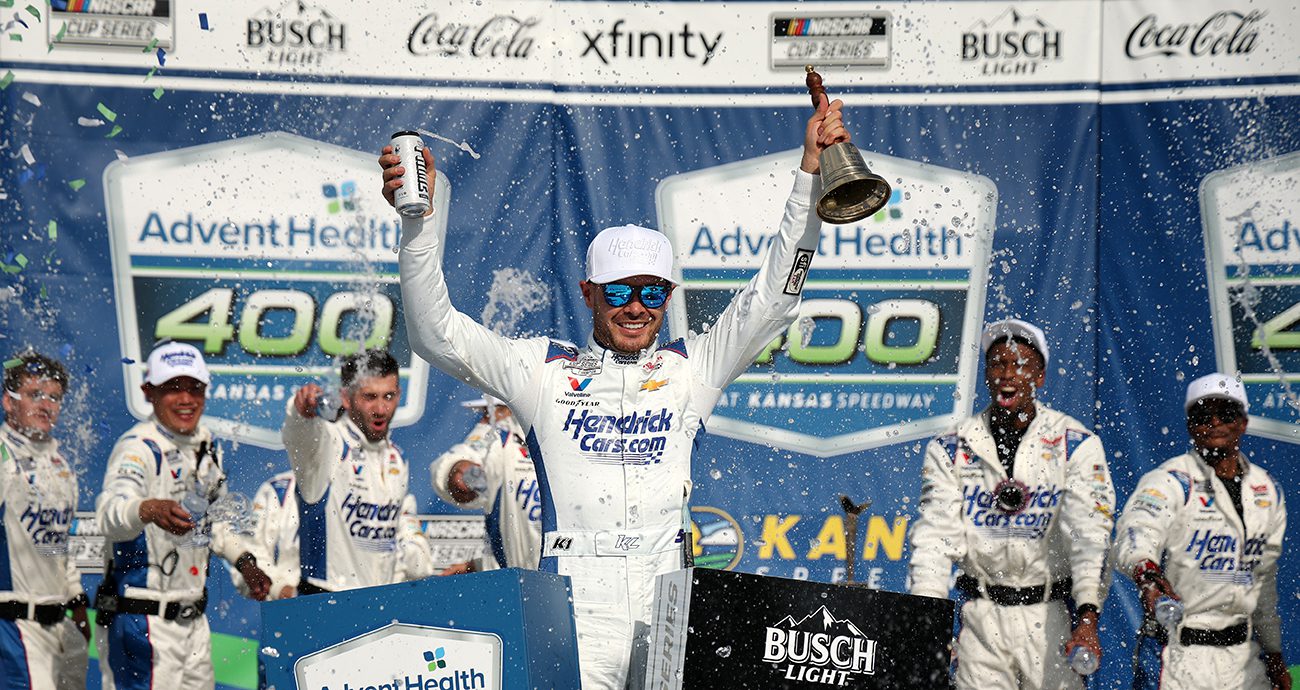
Intermediates: Kyle Larson Larson will enter the 2026 season on a 24-race winless drought, his longest streak since joining Hendrick in 2021. He was, however, the last one celebrating in Phoenix after banking a second Cup Series championship, and is now one of just three multi-time champions in the Cup field to begin the new season.
Larson and the No. 5 team were the only ones to visit Victory Lane multiple times at intermediate tracks in 2025. The site of his most recent victory — Kansas Speedway — was the most dominant performance ever in a 400-mile race on an intermediate track, leading 221 of 267 laps (82.8%). Consider Larson a fan of moving the final race of the season to Homestead-Miami Speedway, as well, after winning two of the last four races in South Beach — including last year.
What really stands out, which is crucial for fantasy, is that Larson tallied 69 more points than any other driver in those seven intermediate events. His 314 points earned, 555 laps led, six top-10 finishes, 5.71 average starting position and 8.57 average finishing position were all top of the chart.
Chris Graythen | Getty Images
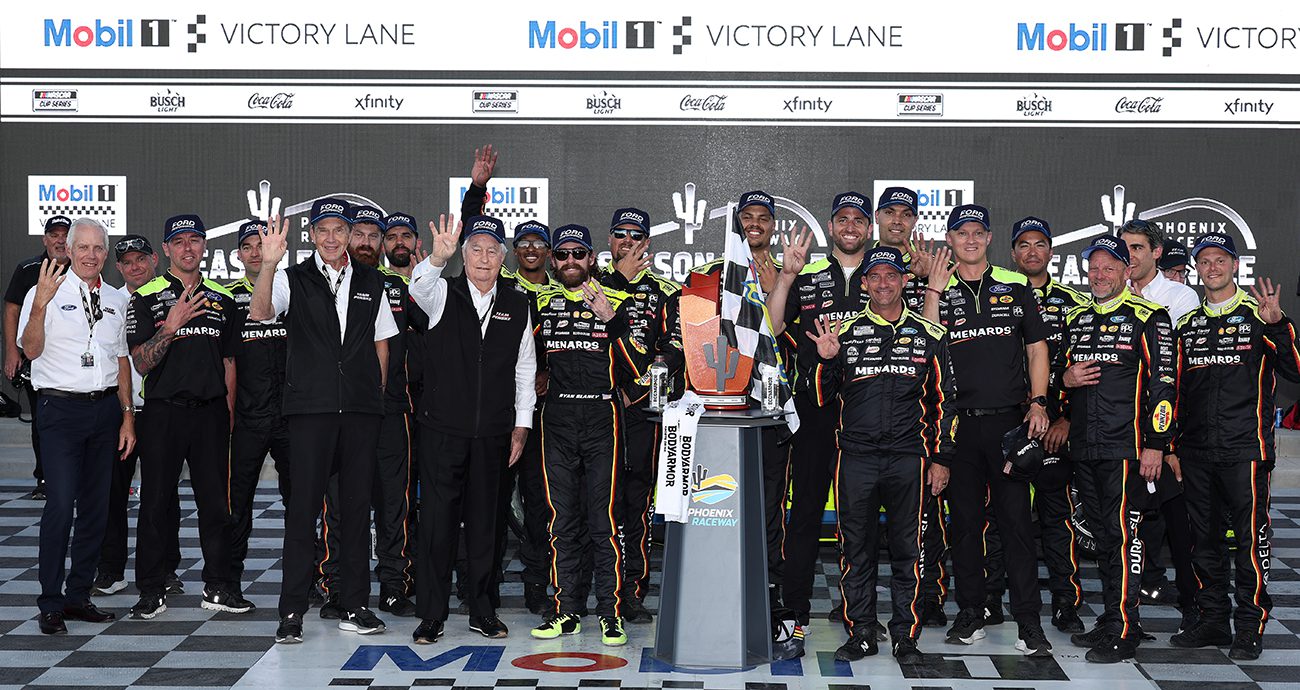
Short tracks: Ryan Blaney Consistency is key with fantasy, and no driver was more stable at short tracks in 2025 than Ryan Blaney. The surprising statistic, though, is that Blaney went winless at the tight, confined venues in 2025, ultimately scoring a victory in the season finale at Phoenix Raceway, which isn’t considered a short track, measuring 1 mile in length.
For years, Team Penske’s strongest suit has been short-track performance and that continued last year. Blaney collected 256 points, 41 more than William Byron, who won a pair of short-track events and could have a real argument to be the best short-track driver in 2025. Blaney’s five top-five finishes were the best of the bunch, however, tying Penske teammate Joey Logano with the most top 10s (five). He also paced the field for 323 circuits, trailing only Byron (445) and Larson (420). The real kicker, though? He had an average finishing position of 4.83 — nearly half of the next driver on the list (Byron, 9.0).
Photo by James Gilbert | Getty Images
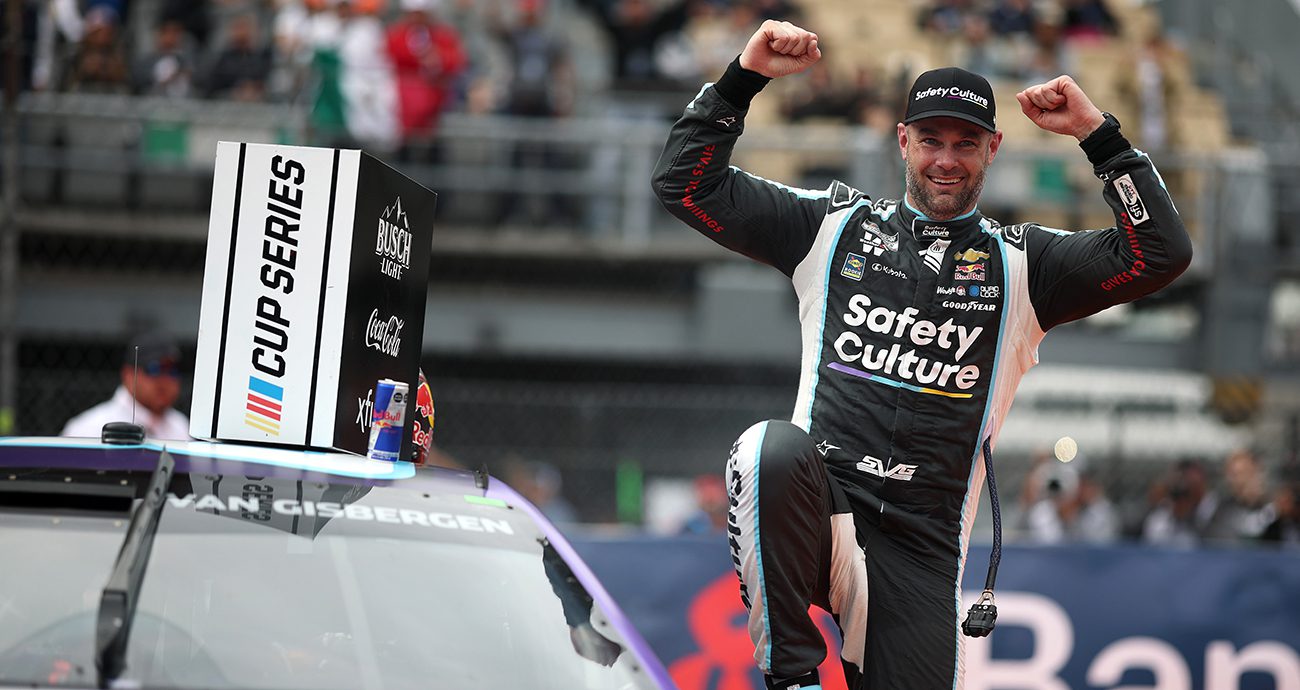
Road Courses: Shane van Gisbergen This might be the easiest selection of all time for any category known to mankind. Van Gisbergen was a menace at road courses in his freshman season, at times toying with his competition without abusing his car. It resulted in a handful of victories, and he will look to tie Jeff Gordon’s six consecutive road course triumphs in the opening month of 2026 at Circuit of The Americas.
Doing a deeper dive, van Gisbergen’s performance was otherworldly. The No. 88 team won three poles and had an average starting spot of 2.17 across the six road courses, including the Chicago Street Race. His average finishing position improved to 1.83, with a sixth-place outing at COTA being the dampener. The New Zealand phenom put on a clinic by leading 301 laps, while Blaney and Kyle Busch were tied for second with 42 laps led apiece. The 293 points scored were 73 markers more than Christopher Bell, placing runner-up in a second category. Only Bell, Tyler Reddick and Chase Elliott were within 100 points of SVG.
Chris Graythen | Getty Images
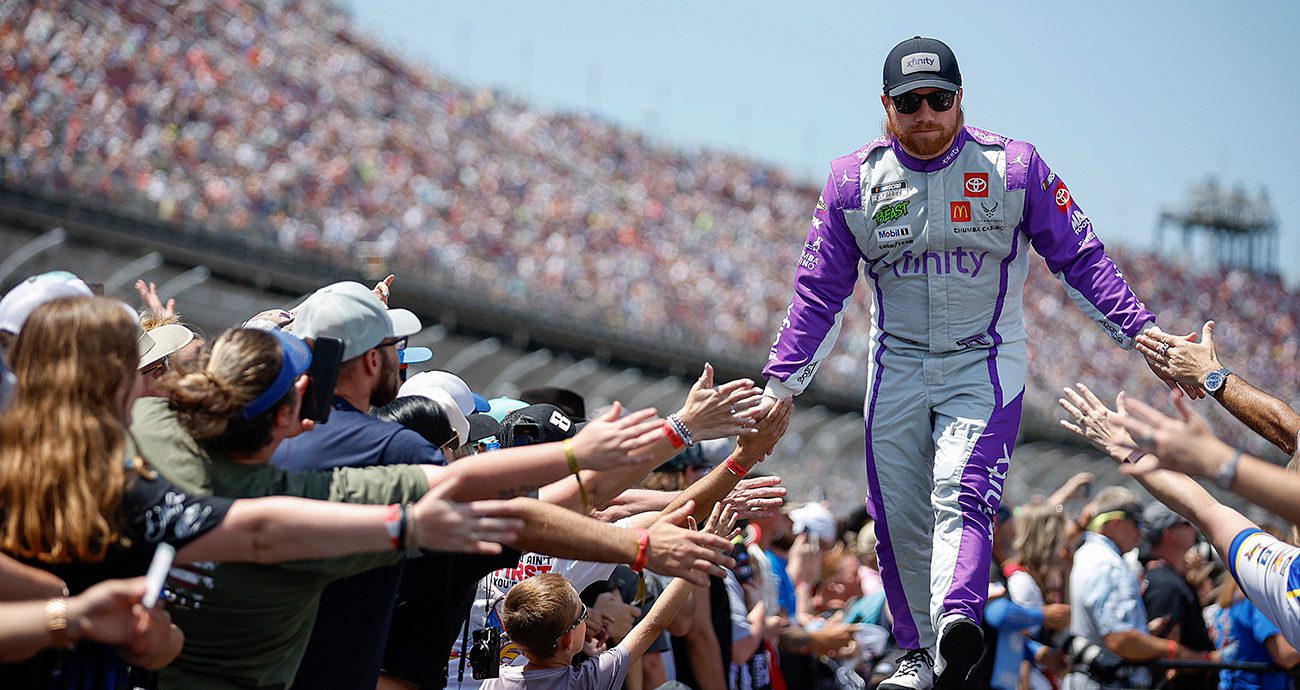
Drafting tracks: Tyler Reddick Let’s transition to the most challenging selection — drafting-track MVP. When thinking of drafting tracks, Team Penske immediately jumps to the top of the board, as both Blaney and Austin Cindric were able to get into the win column in 2025 at superspeedways. Logano logged 263 laps led, more than double the amount of any other driver (Cindric, 127), but compiled an average finishing position of 27.5. Eight drivers had multiple top-five finishes, including Larson, who ranked second in points scored (197). Carson Hocevar accumulated the most top 10s with four, including a nail-biting defeat in the second race of the season at EchoPark Speedway in a three-wide finish.
If we’re basing this on points, though, Reddick was the man on top in 2025, with 199 markers earned. The No. 45 team earned the best average finish at 11.2, more than a full position better than Larson (12.3). Giving him the nod was missing the last-lap chaos of the Daytona 500, gaining 11 spots in the process to place runner-up. It’s safe to say there could be co-MVPs here, adding the likes of a Hendrick Motorsports trio in Larson, Chase Elliott (Atlanta win, third-most points scored) and Byron (Daytona 500 win, fourth-most points scored).
NASCAR’s new 750-horsepower rules configuration for the majority of Cup Series tracks is set for its first major rehearsal, with teams tuning up Tuesday for an organizational test session at North Wilkesboro (N.C.) Speedway.
One team from each chartered Cup Series organization is expected to participate in the one-day preseason test. The historic 0.625-mile oval, brought back to life to host the NASCAR All-Star Race the last three years, will hold its first points-paying Cup Series race in 30 years on July 19 (7 p.m. ET, TNT Sports, PRN Radio, SiriusXM NASCAR Radio, HBO Max).
NASCAR officials announced Oct. 8 that the baseline horsepower output for Cup Series road courses and oval tracks measuring less than 1.5 miles would increase from 670 to 750. Those venues will use the aerodynamic rules configuration that debuted on short tracks in 2024, a package that reduced downforce with three-inch rear spoilers and fewer strakes on the rear diffuser.
Tuesday’s test session is scheduled to run from 9 a.m. to 5 p.m. ET. North Wilkesboro’s grandstands will be open to fans from noon-5 p.m. with free admission, and tickets for the Cup Series’ Window World 450 will go on sale from the track’s box office during that five-hour timeframe — one day before ticket sales open up to the general public.
Teams and drivers scheduled to participate in Tuesday’s test:
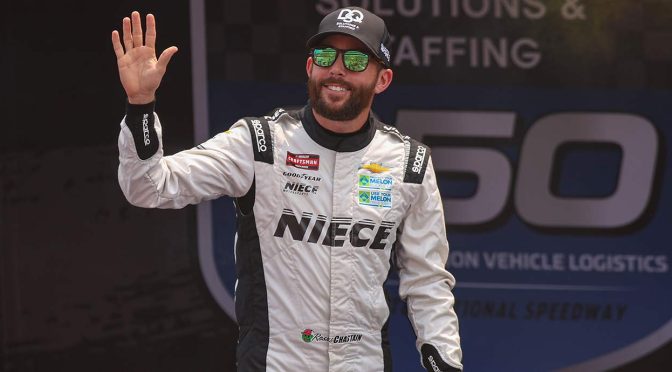
Niece Motorsports announced Friday that Ross Chastain will return to the team for a partial schedule in the NASCAR Craftsman Truck Series in 2026, with plans to drive the No. 45 Chevrolet in more races this season.
Chastain, a Cup Series regular for Trackhouse Racing, has scored all five of his Truck Series victories with the Niece organization. He competed in five races last season, but new competition guidelines for Cup Series veterans announced last November will permit him to enter as many as eight races in other national series. While his schedule has not been finalized, Chastain indicated that he intends to maximize his opportunities.
“It’s great to be back with Niece Motorsports in a larger capacity this year,” Chastain said in a team release. “When I heard about the rule change, I knew we had to run more races together. We’ve got a great core group of people here in Salisbury (N.C.), and I want to bring them all back to Victory Lane. I’m thankful to have the opportunity and appreciate the ownership group and our partners for making it happen, along with everyone at Trackhouse for allowing me to run in the Truck Series.”
Veteran Phil Gould will be the No. 45 Chevy team’s crew chief. Chastain will split time in the No. 45 seat with 19-year-old newcomer Landen Lewis — the CARS Tour Late Model Stock champion — and a third driver to be named later. The organization also said that primary partners for the No. 45 team will be announced later.
The Craftsman Truck Series begins the 2026 campaign on Feb. 13 (7:30 p.m. ET, FS1, NASCAR Racing Network Radio, SiriusXM NASCAR Radio) at Daytona International Speedway.
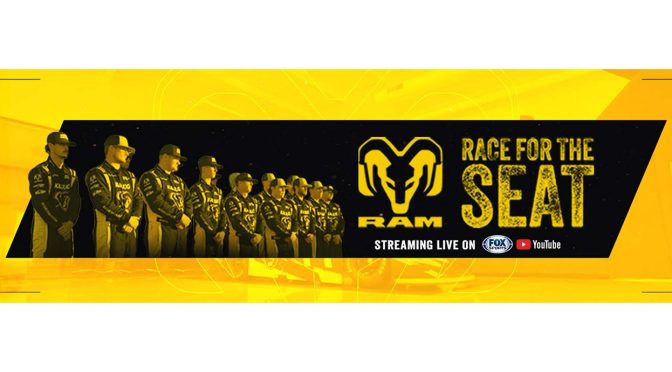
Ram Trucks laid out plans for the fifth and final seat on its NASCAR Craftsman Truck Series operation Friday, announcing that a full-season ride with Kaulig Racing in 2026 will go to the winner of a reality-show competition.
Billed as “15 Drivers. 10 Challenges. 1 Seat,” the “Race for the Seat” program will debut Sunday, Jan. 25 on FOX, with subsequent episodes airing on Ram’s YouTube channel through Feb. 6. The contest’s winner is set to be in one of the five Kaulig-Ram entries when the manufacturer returns to NASCAR competition in the Craftsman Truck Series opener Feb. 13 (7:30 p.m. ET, FS1, NASCAR Racing Network, SiriusXM NASCAR Radio) at Daytona International Speedway.
UFC CEO Dana White and Thrill Sports Productions will be executive producers of “Race for the Seat,” which will feature commentary from White, Ram CEO Tim Kuniskis and Kaulig Racing team principals Matt Kaulig and Chris Rice. The eight-episode audition will take place at tracks including Virginia International Raceway and South Boston (Va.) Speedway.
“We promised Ram would approach NASCAR differently — and Race For The Seat is proof,” Kuniskis said in a Ram release. “Sometimes raw talent isn’t enough. Many successful careers start with an opportunity, a lucky break — or in my case, a good old-fashioned kick in the ass.”
The five-team lineup for Kaulig Racing’s first Truck Series voyage is now complete, with three full-time drivers set to compete alongside two wild-card Ram entries. Brendan “Butterbean” Queen (No. 12), Daniel Dye (No. 10) and Justin Haley (No. 16) will drive Ram 1500s full-time for the organization. A fourth entry — the No. 25 — will go to a rotating group of drivers each race through Ram’s Free Agent Driver Program, with the fifth roster slot — No. 14, according to the show’s promotional images — reserved for the “Race for the Seat” champ.
Ram announced its return to NASCAR competition June 8 at Michigan International Speedway, with officials promising a new, full-throttle approach to the sport. The automaker’s partnership with Kaulig Racing was formally revealed Aug. 23 with plans for a five-truck operation in 2026.