CONCORD, N.C. — It’s more than a hashtag. It’s a mindset.
And Jimmie Johnson has altered both.
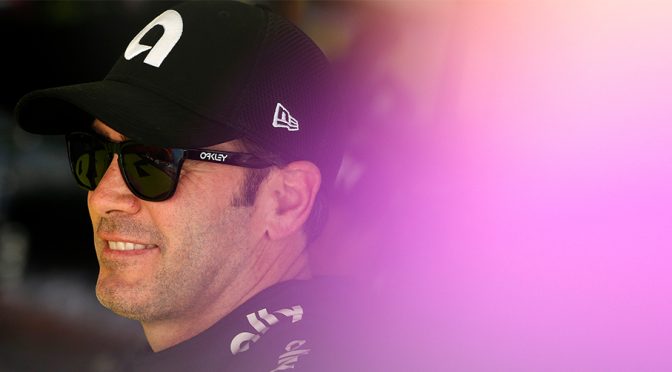
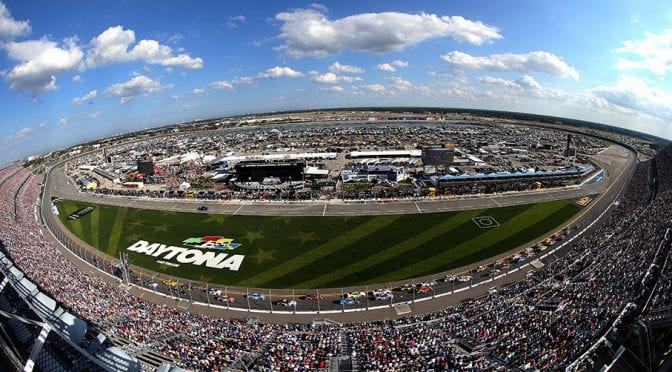
Just weeks before the 2020 NASCAR Cup Series season kicks off at Daytona International Speedway, the seven-time champion scratched his original #Chasing8 tagline and replaced it with #OneFinalTime on social media. Johnson, who announced he will retire from full-time racing at the conclusion of this year’s schedule, realized he doesn’t want to put the weight of securing a record eighth championship on himself or his No. 48 Hendrick Motorsports team. Because that’s not what this season – his final season – is about.
“My ultimate goal this year, and I think what happened through the self-awareness of the offseason, is just about being present,” Johnson said Thursday at the Hendrick Motorsports complex. “I’m going to get in that car, and I’m going to give it 100 percent as I always do. Who knows what the outcome is going to be? We’re going to lay it all on the line and go. I’m not chasing it. I’m going to try to be present and just be me.”
He’s “Seven-Time,” the only driver tied with NASCAR Hall of Famers Richard Petty and Dale Earnhardt for most championships. He’s a competitor with 83 wins in the sport’s premier league. He’s the veteran after 18 years and change of top-rank experience.
All of those numbers can still be bettered, regardless of the words posted on social media.
“It’s more of the mindset that goes with that hashtag,” Johnson said. “Ultimately, it doesn’t change things much. … I’m out there to win an eighth championship. This is about winning races, making the playoffs and trying to be in the final four.”
None of which happened in 2019.
Johnson failed to make the NASCAR Playoffs for the first time in his career. It was his second straight winless year after 16 consecutive seasons with at least two victories. Ranking 18th in the final standings then marked his worst points finish since he began full-time competition in 2002.
The pressure got to Johnson, which is exactly what he wants to avoid in 2020. Stay in the moment and out of his head.
Crew chief Cliff Daniels, who took over the No. 48 pit box midway through last season, can already see the mental switch, and the hashtag was just changed Wednesday. The explanation makes sense. Johnson is going back to, well, being Johnson.
“Since he’s been a kid, he can show up and drive anything – literally from a dirt bike to a mountain bike to any type of race car – just from the seat of his pants and be phenomenal,” Daniels said. “He’s never really worried about chasing a statistic or a competitor or anything like that. So, I think that was a pretty powerful moment for him to get back in his old mindset where maybe more recently he was chasing a statistic or a competitor or something.”
That can happen when retirement rumors prematurely swirl and results aren’t showing up on the track.
Can’t change the past, though. What matters now: #OneFinalTime is coming at the right time.
“In my own head, I’m not done yet,” Johnson said. “I don’t want to get to a point where I’m pissed off going to the track and I don’t want to be there. I want to give 100 percent, and I know I can do that in 2020.”
The 2002 Daytona 500 is remembered for a few things; most famously Sterling Marlin exiting his car during a red flag and physically pulling on the fender to alleviate a tire rub.
The damage to Marlin’s car happened on the previous restart after Marlin started second behind Jeff Gordon and a wreck broke out mid-pack. While racing back to the yellow flag, Marlin went low on Gordon, who blocked, and Marlin won the race back to the flag by a nose over Ward Burton. The following red flag is where it got interesting.
During the break, Marlin can be seen getting out of his car (around 3:09 of the video) and pulling the fender of his No. 40 Silver Bullet Dodge away from the right front Goodyear tire. Per NASCAR rules, teams are not allowed to work on the car under the red flag so Marlin was penalized for the infraction. That handed the lead to Ward Burton.
Burton went on to win his first Daytona 500 and the fourth race of his career. He went on to win a second race in 2002 at New Hampshire.
Catch all the action from the 2002 Daytona 500 in this week’s NASCAR Full Race Replay.
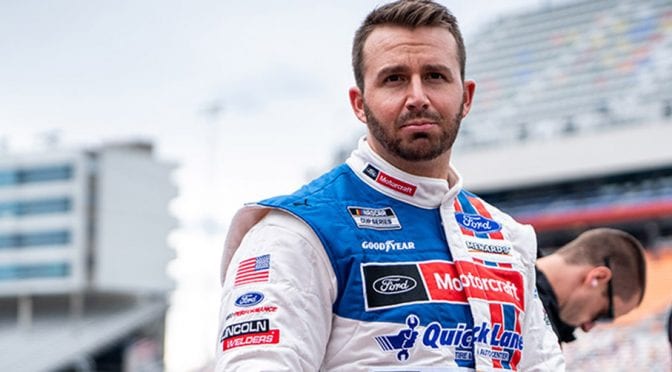
Matt DiBenedetto doesn’t mince words when he talks about his opportunity to drive the No. 21 Wood Brothers Racing Ford for the 2020 NASCAR Cup Series season.
“It’s the best opportunity I’ve ever had in my racing life,” DiBenedetto said on Monday at Charlotte Motor Speedway. “It took everybody, every team, every step of the way that let me grind it out and keep advancing my career. This opportunity driving for the Wood Brothers is obviously amazing — an unbelievable family and their alliance with Team Penske.”
The storied Wood Brothers organization has been sitting on 99 wins since Ryan Blaney’s win at Pocono in 2017. Blaney spent three seasons driving for the team prior to his move over to Team Penske for the 2018 season. His advice to DiBenedetto was pretty straightforward.
“They’re just great guys,” Blaney said of his previous team. “I said to have fun. I had so much fun driving for the Wood Brothers. Eddie and Len are great people. Leonard’s obviously amazing. It was a pleasure to get to know Glen for the few years that I was there. It’s just a great group that they got working over there.
“… The Wood Brothers are very laid back people. Obviously, they love racing. They wouldn’t be in it this long if they didn’t love racing. That’s all they know. That’s all they do. There’s no pressure. There’s no pressure to go prove yourself. He’s going to do a great job. He showed this last year in the 95 car how great he can be.”
DiBenedetto fired off strong out of the gate at Daytona Speedweeks last year. He finished fourth in the first Duel race before leading the most laps in the 2019 Daytona 500 – 49 – before a late wreck ended his day.
His solid close to the 2019 season only emphasizes his growth, as he earned all three of his top fives, all seven of his top 10s and 12 of his 13 top 15s in the final 21 races of the season. Those results along with the backing of a Team Penske alliance at Wood Brothers Racing have made him a trendy pick to make the playoffs.
“That’s the goal; to go win races. Plural. Make the playoffs,” DiBenedetto said. “You got to check off one box at a time but I know we have the people, the team, pit crew, all these guys to be able to do it.
“I’m confident in not only myself but this whole group to go out and, as I always say, turn a lot of heads. That’s what I’ve had to do every step of the way and with this group, that’s going to be no problem.”
Editor’s note: Today’s Wood Brothers Racing preview continues NASCAR.com’s countdown of team previews for the NASCAR Cup Series season, ranked in order of best finish in last year’s owner standings.
WOOD BROTHERS RACING Manufacturer: Ford Engine: Roush Yates Driver: Matt DiBenedetto Crew Chief: Greg Erwin
What’s new: With Paul Menard retiring after 16 years (13 full-time seasons) in the Cup Series, Matt DiBenedetto takes over the reigns in the iconic No. 21 car. Entering his sixth full season at NASCAR’s premier level, DiBenedetto proved his raw talent with a career year in 2019 and has emerged into a rising star.
Team strength: If the hype and momentum around the talented DiBenedetto is not enough to spark the No. 21 team this year, sitting on 99 Cup Series wins for Wood Brothers Racing might be. This year has a chance to be a record year for Wood Brothers and DiBenedetto, who still finds himself searching for his first series victory. The combination of these factors and a continued technical alliance with Team Penske will be significant motivation and should certainly be an organizational strength this season.
The Action Network Best Bet: I love the pairing of Wood Brothers and DiBenedetto. But like Ricky Stenhouse Jr., the question from a betting perspective is how much the market will as well. In a vacuum, DiBenedetto is an interesting betting option on concrete surfaces, as both he and Menard, who drove this car last year, had good runs at Bristol Motor Speedway and Dover International Speedway last season. – PJ Walsh
2019 Stats: Three top fives, seven top 10s; highest finish of career in runner-up effort at Bristol 2020 Championship Odds: 40-1 Racing Insights Number to Know: Seven. Seven different drivers got their first Cup Series win while driving for Wood Brothers Racing – most recently, Trevor Bayne in the 2011 Daytona 500. Fantasy Live Five: Bristol, Sonoma, Daytona, New Hampshire, Indianapolis Outlook: Coming off of a personal record-setting year, DiBenedetto’s upward trend should provide a boost of momentum heading into his first season driving for Wood Brothers Racing. Among all of the drivers competing for their first Cup Series win, the 28-year old driver certainly has an exceptional chance to find himself in Victory Lane and achieve his first playoff berth in 2020.
With the DAYTONA 500 just around the corner, race fans everywhere will be afforded a unique way to commemorate the 62nd running of the Great American Race.
Beginning today, DAYTONA 500 ticket holders with AR-enabled devices will be given special access to a new augmented reality feature on the NASCAR Mobile App in which they can scan their commemorative ticket and bring it to life with a special DAYTONA 500 video that celebrates the storied history of the event.
No stranger to the AR space of late, the new feature comes on the heels of NASCAR Mobile’s “AR Burnout Experience Driven by Goodyear” – a unique experience in which users were able to use augmented reality to get behind the wheel of their favorite NASCAR Playoff driver’s car and perform burnouts in a 3D-rendered vehicle.
There will also be an option within the NASCAR Mobile App for non-ticket holders to scan a flat surface to place the same Daytona 500 video in augmented reality. That feature will be accessible via a banner within the app.
More AR-enabled experiences are expected for NASCAR Mobile in the near future as the league continues to experiment with new ways to engage and immerse digitally minded race fans.
Tune in Sunday, February 16 at 2:30 p.m. on FOX to see the DAYTONA 500 action unfold and be sure to check out the latest features in NASCAR Mobile.
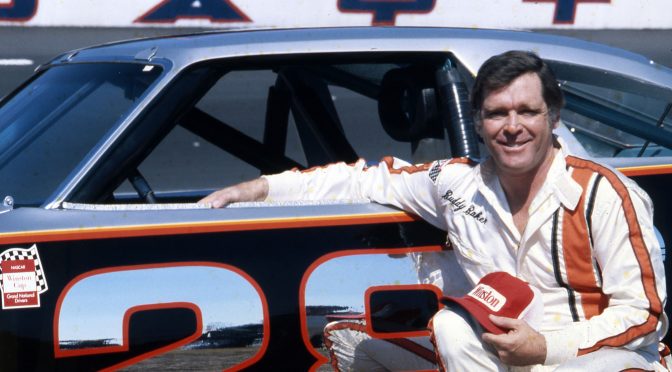
To a whole generation of NASCAR fans, Buddy Baker was for years the gentle voice and big personality on television race broadcasts and a popular SiriusXM NASCAR Radio show. He loved to laugh and lift the audience and his knowledge of the sport was second-to-none.
He had that enviable perspective because he was such an important force as a NASCAR driver – winning 19 times despite running only two full seasons in 35 years of NASCAR Cup Series competition. He hoisted a Daytona 500 trophy, won four Talladega (Ala.) Superspeedway races, was the first to turn a 200-mph lap (in testing) and steered cars for an A-list of owners – many NASCAR Hall of Famers in their own right – running the gamut from Ray Fox to Petty Enterprises to Bud Moore and the Wood Brothers.
And on Jan. 31, seven years after helping induct his champion father Buck Baker into the NASCAR Hall of Fame, the late Buddy Baker will have his own place in the great Hall alongside Joe Gibbs, Bobby Labonte, Tony Stewart and Waddell Wilson as the 2020 NASCAR Hall of Fame inductees.
“I’ve always been proud to call Buck Baker dad,” Buddy Baker said as he emotionally spoke at his late father’s 2013 NASCAR Hall of Fame induction. And now the Bakers will be joined again permanently among the sport’s most celebrated legends.
Buddy Baker passed away from cancer in August 2015 but his love of the sport and the sport’s adoration of him is clearly evident from drivers he competed against to fans that adored him to the media he worked alongside.
“I don’t know if it’s possible to separate the driving portion of his career from the TV portion of his career because it’s all a part of the Buddy Baker story in racing,” longtime NASCAR television announcer Allen Bestwick said of his former broadcast partner.
“You could put [fellow NASCAR Hall of Famers] Ned Jarrett and Benny Parsons in that category with Buddy. When the sport was rocketing through the growth period, they were the people that were the experts that educated people who were watching at home in their living room and newer to NASCAR. They were the people who gave them enjoyment and introduced them to the characters and the stories.
“And people that came into the sport during the tail end of his driving career, maybe did not understand what a force Buddy Baker was in his driving career.”
One of the most noteworthy characteristics of Baker’s driving career was that he was so successful despite running only partial schedules for 33 of 35 years, including the majority of the time in the 1970s when he established himself as a renowned force on some of the sport’s most iconic tracks in Daytona, Talladega, Darlington and Charlotte.
He was particularly good on the superspeedways at Daytona and Talladega, which during the peak of Baker’s career in the 1970s, were still considered relatively new forms of competition.
Before the late Dale Earnhardt’s famously fickle relationship pursuing a Daytona 500 trophy, Baker was the poster child for near misses in the sport’s most famous event. The 1970s were a classic heartbreak story line at Daytona for Baker who, for example, led 156 of the 200 laps in 1973 only to suffer an engine blow with 10 laps remaining. He finished runner-up in 1971 by 10-seconds to Richard Petty. Baker was third in 1977.
During a 20-year period from 1967-87, Baker had 14 top-10 finishes in the Daytona 500, highlighted, by his win from the pole position in 1980. That February afternoon Baker led 143 of 200 laps and his average speed of 177.602 mph remains one of the fastest Daytona 500s in the 61-year history of the “Great American Race.”
In 64 total races at Daytona International Speedway, Baker earned an amazing 31 top-10 finishes and is in rarefied company to have won both the Daytona 500 and the 400-mile mid-season race at the track.
His work on the Talladega high banks was no less impressive. He won three straight Talladega races in the 1975-76 seasons – the first to string together that many wins on the sport’s biggest track. He added a fourth trophy there the same year he won the Daytona 500 (1980).
“In the early era of superspeedway racing – which we kind of forget that a lot, that these tracks were just built in the ‘60s – they were a brand-new thing,” Bestwick said. “And Buddy was so good at it and adapted so quickly to it. He was one of the dominant forces of the big tracks when the big tracks became ‘a thing.’
“That was new ground for everyone. And Buddy was a master at it.”
Perhaps one of Baker’s most important contributions to the sport as a driver was his work with no trophy on the line: testing tires, and specifically, developing tire inner liners. It was high speed, high danger work but Baker was willing to do it because he knew the outcome would potentially save so many lives. And it has.
“All the things he did, developing the [tire] inner liner, I mean blowing out tires and hitting the wall on purpose in tests – those are just things people don’t do anymore,” three-time Cup Series champion Darrell Waltrip recalled of Baker, someone who was both friend (off-track) and foe (on-track).
“So, he was a rare breed and a really great race car driver. When it came to Daytona and Talladega, especially, I’d take him over anybody. He was that good.”
In all, Baker earned 19 Cup Series wins, celebrating in Victory Lane at least one time in 11 different seasons. He won 38 pole positions, including a career-best six poles in 1980. He finished with an even 700 starts finishing top five in 202 races and top 10 in 311 races.
He only competed full time in the 1976 and 1977 seasons. Perhaps his best season statistically came in 1973 when he ran 27 of 28 races and finished in the top-five a personal best 16 times, and top 10 in 20 of the 27 races. He won twice and earned five pole positions that year.
His best finish in the Cup Series championship was fifth in 1977. Three times he finished in the top 10 in the championship without running a full season’s slate of races. His final trophy hoist came fittingly enough at Daytona International Speedway in the summer of 1983, when he scored a 29-second victory over Morgan Shephard.
Baker’s run of surpassed expectations and shake-your-head achievements essentially came to an end following a severe head injury in 1988 after competing in the prestigious Charlotte Motor Speedway 600-miler. Baker was involved in a crash but didn’t realize the extent of his injury immediately after the race. Three months later, he required emergency brain surgery.
While Baker made a few more random race starts, he soon discovered a second career – broadcasting.
Fellow NASCAR Hall of Famer Waltrip appreciates Baker’s unique place in NASCAR lore. Both Waltrip and Baker moved from the driver’s seat to the television commentating chair after their racing careers and then blossomed in the heyday of NASCAR’s big media personalities.
“A lot of people don’t even know I drove, they think all I’ve done is television,” Waltrip said. “It’s fascinating to me, but that’s a fact. I’ll mention something I did back in my heyday, and someone will say, ‘I didn’t know you did that. I didn’t know you drove.’”
Ask any of the numerous radio and television broadcasters Baker worked with what it was like to call a race alongside him and inevitably they smile. There is always a warm laugh. Not at Baker but because of Baker. He had such a way of putting people at ease. He was candid in his broadcast descriptions, oftentimes eliciting a “that is exactly what I was thinking” feeling from his audience.
His tall 6-foot-5 stature may have given off an intimidating vibe, but Baker was actually unfailingly warm and kind to people and had a way of putting people at ease. His presence on SiriusXM NASCAR Radio was a key connection between Baker and an adoring audience that respected his past and appreciated his present.
“He had a connection with people and a passion for the sport,” Bestwick said.
“Broadcasting really, to go on television, is a whole new world from driving a race car,” Bestwick reminded. “Nowadays, guys grow up being media-trained. That didn’t exist back then. But Buddy’s love for the sport and his natural enjoyment and his gregarious nature at the racetrack was able to shine through on television.
“People can tell right away if you’re faking it or you’re real and Buddy was as real as they got. He loved the sport, he loved talking about it and he loved being around it. And that all came across through television and radio.”
The connection between Baker and NASCAR fans was absolutely real. So real, that in the summer of 2015, he decided to share his most personal news with his adoring media audience. He revealed his cancer diagnosis during his final SiriusXM NASCAR Radio show.
“Do not shed a tear,” Baker calmly asked of his audience. “Give me a smile when you say my name.”
He died a month later, Aug. 10, 2015, at the age of 74. But in these next weeks – especially as the sport celebrates Baker’s achievements on-track and off – there will indeed be not just smiles, but wide grins saying his name and remembering his great presence in the sport.
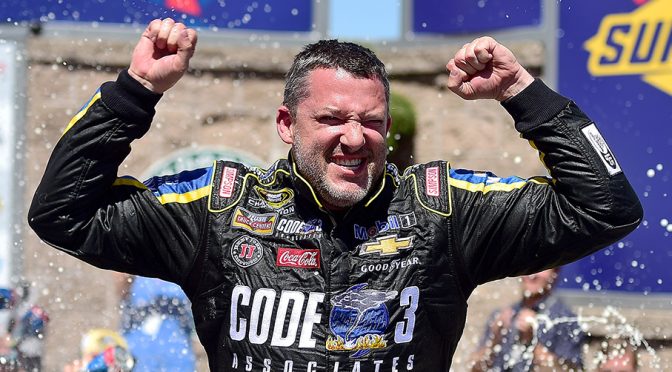
For those that ever watched him race; saw him win and win and win; watched him hoist NASCAR’s cherished Cup Series championship trophy, again and again and again – Tony Stewart’s place in the NASCAR Hall of Fame certainly seemed an inevitability.
And on Friday evening, Stewart, 48, will be enshrined with a group of the sport’s highest achievers in the NASCAR Hall of Fame – joining his former team owner Joe Gibbs and former teammate Bobby Labonte along with legendary crew chief Waddell Wilson and the late, multi-talented Buddy Baker.
Perhaps fittingly this Class of 2020 is one of the most diverse representations in the sport – including a team owner, championship drivers, a heralded crew chief and driver-turned-broadcaster extraordinaire.
For all his career, Stewart has proven to be among the most diversely talented competitors – winning in every form of racing, in whatever kind of car he drove.
Stewart dazzled fans and impressed fellow competitors in a three-time NASCAR Cup championship driving career (2002, 2005, 2011). He is the only driver in history to have won both a premier NASCAR Cup Series title and an IndyCar championship (1997). And Stewart is also the only driver to have won a NASCAR championship under the longstanding former points system (2002, 2005) and the new playoff system (2011).
His 2011 NASCAR Cup Series title came as both driver and team owner. And he added another owner’s trophy in 2014 when his Stewart-Haas Racing team earned the Cup championship with driver Kevin Harvick.
“Tony’s career, I look at on paper and he’s my true hero as far as what he’s been able to do,” fellow inductee Labonte said of his former teammate.
After becoming the first driver to earn all three of USAC’s top championships – in Midgets, Silver Crown and Sprint Cars – then taking the IndyCar title in 1997, Stewart was ready and primed to give NASCAR a real go.
Although he had plenty of credibility and a long resume already – Stewart actually began his Cup career after only 36 sporadic starts over three seasons in the Xfinity Series; some of that time overlapping with his IndyCar schedule. The open-wheel master did not win a race in a stock car while learning the new craft in the Xfinity Series – although he had a pair of runner-up finishes at Rockingham, N.C. and New Hampshire in 1998.
His natural talent and ability to learn quickly, however, provided all the promise and confidence Joe Gibbs needed to give Stewart a shot in NASCAR’s big leagues. Stewart made his Cup Series debut in 1999. And never disappointed.
He earned 15 top-10 finishes in his first 24 Cup races and then put an exclamation point on that first-year effort with a win at Richmond, Va. in only his 25th start – leading a dominating 333 of the race’s 400 laps. With the incredible effort, he became the first Cup Series rookie to win a race since Davey Allison more than a decade (1987) earlier.
ISC Images Archives via Getty Images
He answered his maiden win with back-to-back victories at races at Phoenix Raceway and Homestead-Miami Speedway that November to close out the stunning rookie campaign. He became the first Cup Series rookie to win three races – a top-mark he and seven-time Cup champion Jimmie Johnson (2002) still share today.
The next season, 2000, going door-to-door with other NASCAR Hall of Famers such as seven-time champion Dale Earnhardt, Terry Labonte, Ricky Rudd, Rusty Wallace and Dale Jarrett, Stewart went on to win a career-high single-season total of six races as his Joe Gibbs teammate and fellow 2020 Hall of Fame inductee Labonte won the Cup title.
Two years later – in 2002 – Stewart was hoisting his first Cup championship trophy and added another in 2005. He had won 24 Cup Series races in just those first six seasons.
It was a time of great success and happiness for Stewart, who today readily recognizes how special it is for him to be inducted right alongside his former team owner (Gibbs), teammate (Labonte) and former Xfinity Series crew chief (Wilson). He even attended the Buck Baker Driving School and recalls having Buddy Baker on-site during his beginnings in a stock car – so this year’s class feels particularly familiar and esteemed to him.
As with another NASCAR Hall of Famer, Jeff Gordon, Stewart’s presence and success in NASCAR helped people look at the sport differently. And it opened up a broad spectrum of career possibilities for drivers. From off-road racer Jimmie Johnson to fellow USAC driver Kasey Kahne, who soon became stars as well, Stewart trail-blazed an unexpected opportunity.
“It was such an honor, from where I come from, racing with him,” said the seven-time champion Johnson.
“Finding drivers that had a non-traditional route to NASCAR, those guys were a notch up for me. I can recall going and watching Tony race a midget at Ventura (Raceway). I was probably 16 or 17 years old, so it goes way back knowing who he was and watching his career in IndyCar. And then to go toe-to-toe with him was a huge honor.”
Johnson also acknowledged the honor of racing Stewart was simultaneously one of the biggest championship challenges he faced in his own decorated career.
“At times I knew I could frustrate him and use that to my advantage,” Johnson said with a slight laugh. “But the bulk of the time, I knew I had to be on my game. I mean the guy’s tenacious. If you left the slightest opening, he was going to take it.
“I just respected that and enjoyed it. I knew in the day, when that orange hood was coming, plus I had the [competing sponsor] pressure of Lowe’s versus Home Depot. I knew when that orange hood was coming, I was fighting for my life.”
The harder they raced, the closer they actually became as friends. Their sponsors were direct competitors and Johnson and Stewart were deciding Cup Series titles year after year after year. But the respect they gained – on and off-track – has been life-lasting.
“We were expected to be such fierce rivals that we joked about it and kinda formed a friendship off of it,” Johnson said.
Robert Laberge | Getty Images
“On my side, I just always felt when we would have a few beers and have a chance to connect, he really valued my opinion and being a young guy new to the sport trying to find my way, to have somebody really listen was new for me and really special to me in ways. This is Tony Stewart and he’s really listening to me. So, for me, maybe that was the start of it.”
As the seasons went on, Stewart developed a reputation similar to his racing idol, the legendary A.J. Foyt. He was uber-talented, but also no-nonsense on-track. And highly spirited. He left nothing on the table, in regard to his feelings. Emotion was as much a part of Stewart’s at-track presence as was his great talent to wheel any type of car to victory.
At times, it appeared any perceived conflict or underestimation seemed to energize Stewart. This champion “underdog” was perhaps most threatening in that he was a master of surpassing expectation. It was something he learned early in his life, overcoming and exceeding a lot of expectation as he made his way up the ranks in the USAC classes. He earned a shot in racing’s big-time because of his immense talent, never because of a fat family checkbook.
And that grit and gumption was on full display in his incredible 2011 championship run.
After being winless the entire 26-race regular season, Stewart reeled off victories in the first two Playoff races at Chicago and New Hampshire – his third season in the dual role of driver and team owner. A month later, he won back-to-back races at Martinsville and Texas Motor Speedway and showed up at Homestead-Miami Speedway for the championship race a mere three points behind Carl Edwards.
The two had fun in the week leading up to the championship finale dropping verbal barbs like a pair of boxers before the championship fight. And as compelling a storyline as they created leading into the race, the race itself proved to be unlike no NASCAR title events previously or since.
Twice the race was stopped for rain and Stewart’s No. 14 Ford had to overcome a couple of mechanical issues that arose. But he took the lead on the final restart and held point for 36 laps, beating Edwards to the line by 1.306 seconds.
The one-two result meant the two drivers were technically tied in points. However, Stewart had won five races and Edwards had only one trophy meaning the title went to Stewart by tiebreaker. The only time in NASCAR history the points standings finished in a tie.
That dramatic and compelling championship run remains the most memorable for Stewart.
“So many things happened that night,” Stewart said, recalling the challenges.
“All the things that happened were setbacks and to be able to come back from that. That’s definitely the highlight for me.”
Stewart closed his Cup driving career out in 2016 in a fitting manner – earning a win in his last season with a last-lap pass on the Sonoma (Calif.) road course. He finished with 49 victories and 308 top-10 finishes in 618 starts – a hefty 50 percent of the time he suited up, he finished in the top 10.
Stewart remains a very engaged team owner – having won a title with Harvick. And fittingly, his team is perpetually championship-eligible, challenging for NASCAR trophies while its namesake continues to suit up in short tracks across the country – finishing his driving career right where he started it.
But with a whole lot of success in between.
“Not many people are still doing what they love to do and getting inducted in the Hall of Fame at the same time,” Stewart acknowledged.
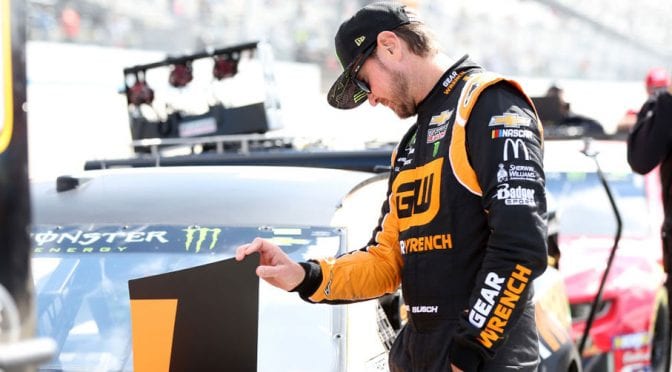
APEX, N.C. — Employees at the Apex Tool Group in Apex, NC, helped celebrate the upcoming start of the NASCAR Cup Series season alongside Kurt Busch, members of the Chip Ganassi Racing team, and the new-look GEARWRENCH® No. 1 Chevrolet Camaro ZL1 1LE Wednesday. At what was dubbed ‘The Green Flag Event,’ Busch officially unveiled the new paint scheme for his GEAWRENCH car, which will take to the track four times this season.
Apex Tool Group — one of the largest tool manufacturers in the world — is the parent company of GEARWRENCH, which is a premier hand tool brand for automotive and industrial mechanics.
“There’s so much excitement around Kurt and we wanted to make sure our team members at our Raleigh facility knew that they were a part of it,” said Rena Fiorello, director of brand management for GEARWRENCH. “It was fun to feel that team atmosphere and make sure that our colleagues understand that they’re truly part of everything we do, and that includes our partnership with Kurt and Chip Ganassi Racing.”
After unveiling his car’s new look emblazed with GEARWENCH black and orange, Busch took turns driving employees around a track in the parking lot to give them a taste of what it feels like to be in a NASCAR race. He took time to sign autographs, take photos, and gave a special shout-out to the employees who are military service veterans.
Busch will drive the GEARWRENCH car during four races on the 2020 schedule: Phoenix Raceway (March 8), Charlotte Motor Speedway (May 24), Dover International Speedway (Aug. 23) and Talladega Superspeedway (Oct. 4). For more information, visit www.gearwrench.com.
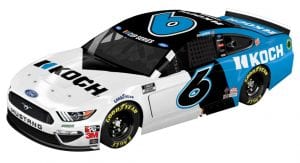
CONCORD, N.C. (January 29, 2020) – Roush Fenway Racing has announced that Koch Industries (pronounced “coke”) will serve as the primary partner for Ryan Newman when its flagship No. 6 Ford Mustang hits the track for the 62nd annual running of the famed Daytona 500, kicking off the 2020 NASCAR Cup Series season. Koch Industries will make its debut on the No. 6 in the Busch Clash all-star event on Feb. 9 at the Daytona International Speedway.
“We are looking forward to teaming up with Koch Industries and having them on the car for one of the most celebrated races of the season,” said Newman, who scored a dramatic victory with a last-lap pass at the iconic event in 2008. “Winning the 500 is one of the biggest accomplishments of my racing career. We have really fast superspeedway cars at Roush Fenway and we’d like nothing better than to kick off our season by driving the Koch Industries Ford into Victory Lane at Daytona.”
Roush Fenway boasts a pair of wins at the Daytona 500, with former NASCAR champion Matt Kenseth taking the celebrated checkered flag in 2009 and 2012; the latter serving as Hall of Fame owner Jack Roush’s historic 300th NASCAR victory. Overall, Roush Fenway has won seven times at the “World Center of Racing” in the NASCAR Cup Series, most recently in the 2017 summer race.
“Koch Industries is excited to partner with Roush Fenway and Ryan Newman in this year’s Daytona 500. As our businesses continue to manufacture the things that make life better — from fuel to electronics to automotive sensors and component parts — the partnership between Koch Industries and Roush Fenway for this race is a natural fit. Sunday at Daytona is the premier event of the season and we are proud to help represent one of racing’s brightest stars,” said Steve Lombardo, chief communications and marketing officer for Koch Industries.
This will mark Newman’s 19th start in the Daytona 500. He finished 14th last season, despite a late accident that forced the veteran driver to cross the finish line with a severely damage race car. He scored a seventh-place finish in the 500 in his inaugural run in 2002 and has finished top 10 in the famed event on five occasions, including the victory in 2008.
Sunday’s Busch Clash is set for 3 PM ET and will air live on FS1. The twin qualifying races fire off at 7 PM ET on Thursday, Feb. 13 and will be televised live on FS1. The Daytona 500 is set for Sunday, Feb. 16 at 2:30 PM ET and will be televised live on FOX.
Editor’s note: Today’s JTG Daugherty Racing preview continues NASCAR.com’s countdown of team previews for the NASCAR Cup Series season, ranked in order of best finish in last year’s owner standings.
JTG DAUGHERTY RACING Manufacturer: Chevrolet Engine: Hendrick Drivers: Ryan Preece, Ricky Stenhouse Jr. Crew Chiefs: Trent Owens (Preece), Brian Pattie (Stenhouse)
What’s new: After more than 250 NASCAR Cup Series starts with Roush Fenway Racing, Ricky Stenhouse Jr.’s move to JTG Daugherty Racing brings an established veteran presence alongside second-year teammate Ryan Preece. Making the transition with Stenhouse is a familiar name in crew chief Brian Pattie, who commanded Stenhouse’s pit box for the past three seasons. Preece will also have a new car number — the No. 37 — and be under the direction of crew chief Trent Owens.
Team strength: The newly formed pairing of Preece and Stenhouse has the potential to be dynamic and beneficial for both drivers. Stenhouse led 109 laps last season, while Preece led just one. Front-running experience and an established veteran presence alongside the talented young driver will only bolster the organization’s quest for an appearance in the 2020 NASCAR Playoffs.
The Action Network Best Bet: I’m certainly in a wait-and-see mode with Stenhouse as the new driver of the No. 47. Before Daytona 500 odds opened, I was optimistic about getting a good price on Stenhouse, but odds (20-1 at FanDuel Sportsbook) are way too short on him for my tastes. If he hovers around the same price on race day, I’ll look to fade him in matchups with drivers like Alex Bowman, Aric Almirola, William Byron and Erik Jones, who all have worse odds to win “The Great American Race.” — PJ Walsh
Racing Insights Number to Know: Four. 2019 was the team’s fourth straight season with at least seven top-10 finishes. — Racing Insights
RYAN PREECE: NO. 37 CHEVROLET
2019 Stats: One top five, three top 10s; highest finish – third at Talladega in April 2020 Championship Odds: 5,000-1 Fantasy Live Five: Talladega, Daytona, Indianapolis, Michigan, Kansas Outlook: Preece made strides as a rookie, posting a 23.1 average finish in his first full season at the Cup Series level. Doubling his top-five and top-10 totals from a year ago is within reach for Preece and crew this year. After picking up a pair of top-10 finishes at superspeedways in 2019, expect the second-year driver to be in the mix for his first career win each time the series heads to Daytona International Speedway and Talladega Superspeedway.
Brian Lawdermilk | Getty Images
RICKY STENHOUSE JR.: NO. 47 CHEVROLET 2019 Stats: One top five, three top 10s; 109 laps led (66 at superspeedways) 2020 Championship Odds: 1,000-1 Fantasy Live Five: Talladega, Bristol, Daytona, Charlotte, Richmond Outlook: The change of scenery should be inspiring for Stenhouse, as he vies for a spot in the NASCAR Playoffs for the first time since the 2017 season. While his overall numbers were down from a year ago, he led more than 100 laps for the second consecutive season and his 15.1 average start was the second-best mark of his career. If the No. 47 crew can put together a similar trend in qualifying this year, a return to Victory Lane and the NASCAR Playoffs could be in the cards.