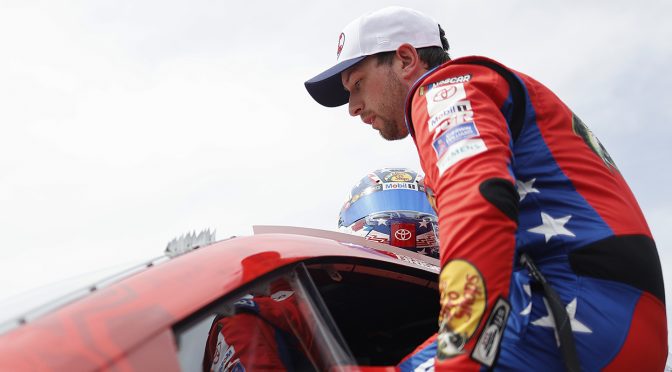
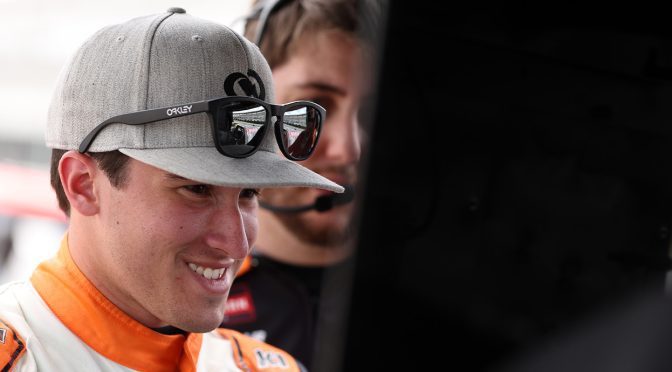
DARLINGTON, S.C. — There’s one huge difference between Chase Briscoe’s approach to the Cook Out Southern 500 last year and his mindset this year.
The level of expectations is exponentially higher for Sunday’s opening playoff race at the “Lady in Black” (6 p.m. ET, USA Network, HBO Max, MRN Radio, SiriusXM NASCAR Radio, NBC Sports App).
For the first time in his NASCAR Cup Series career, Briscoe believes he has a championship-caliber team.
That wasn’t the case last year when the Southern 500 was the final race of the regular season. Briscoe needed a victory just to make the playoffs, and after a near-perfect run, he took the checkered flag and qualified for the postseason.
Last year, Briscoe drove for now-defunct Stewart-Haas Racing. This year, he’s driving the potent No. 19 Toyota for Joe Gibbs Racing, an organization that expects to win and compete for championships.
“Last year, nobody expected us (to win), and truthfully, as a race team, we weren’t coming into Darlington and being like ‘This is our weekend,’” Briscoe said. “At SHR (Stewart-Haas), you really couldn’t go to the race track each weekend and say we are going to win this weekend, or we are going to have a shot at it.
“We knew that we would be good, because we had been solid at Darlington, but I don’t think we thought we would have race-winning speed, I would say. So, this (the playoff race) feels more pressure-packed than a win-or-go-home situation, because we all kind of made up our minds that we were probably going home anyways, and it just so happened that we won that race, and we were in.”
DARLINGTON, S.C. — If any active driver has come close to mastering the track “Too Tough to Tame,” it’s Denny Hamlin, who asserted his superiority once again in qualifying for Sunday’s Cook Out Southern 500 (6 p.m. ET, USA Network, HBO Max, MRN Radio, SiriusXM NASCAR Radio, NBC Sports App).
Gaining enormous time through Turns 3 and 4 on his single qualifying lap at Darlington Raceway, Hamlin knocked Joe Gibbs Racing teammate Chase Briscoe off the provisional pole for the first NASCAR Cup Series Playoffs race.
A five-time winner at Darlington — most among active drivers — Hamlin covered the 1.366-mile distance in 28.694 seconds (171.381 mph), beating Briscoe (171.255 mph) by 0.021 seconds. Briscoe had won the pole position for the previous three crown-jewel races — Daytona 500, Coca-Cola 600 and Brickyard 400.
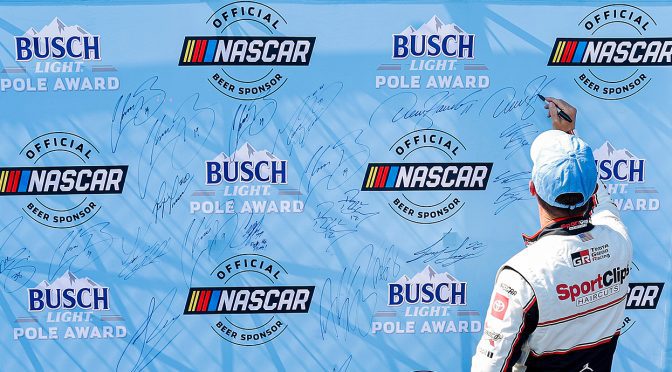
The Busch Light Pole Award was Hamlin’s second at Darlington, his second of the 2025 season and the 45th of his career. He is the first driver to reach 40 poles in a Toyota, with his first five coming when JGR ran Chevrolets.
“It turned,” Hamlin said of the performance of his No. 11 Camry. “We struggled with balance all through race practice, but we made some good adjustments to run one lap.”
Hamlin acknowledged his car still needs work to enhance its performance in race trim.
After a stellar first two corners on his qualifying lap, Briscoe wasn’t as aggressive as he needed to be at the narrow end of the egg-shaped track.
“That one stings,” Briscoe said. “My 1 and 2 was really good, and I didn’t want to go into (Turn) 3 and hit the wall or something, so I under-drove it.”
Playoff drivers occupy the first 12 spots on the grid for Sunday’s race. Josh Berry qualified third at 170.578 mph in the No. 21 Wood Brothers Racing Ford. Tyler Reddick was fourth at 170.466 mph in the No. 45 23XI Toyota, followed by Kyle Larson of Hendrick Motorsports as the top Chevrolet driver.
Ross Chastain, Christopher Bell, Bubba Wallace, Austin Dillon, Austin Cindric, William Byron and Ryan Blaney will start from positions sixth through 12th, respectively.
The remaining four playoff drivers qualified as follows: Joey Logano (14th), Shane van Gisbergen (20th), Chase Elliott (21st) and Alex Bowman (29th).
Berry’s qualifying performance was his best since starting second at Atlanta nine races ago.
“I’m super proud of that effort,” he said. “Our big focus was trying to qualify better here, and the guys did a great job. I feel like our car is really strong, and I’m excited for (Sunday). The biggest thing I feel like I’ve fought here is starting position, so starting up front, I think we can just manage the race easier and obviously score some stage points.
“That’s going to be important, so just having a mistake-free day by taking care of the car and having good pit stops will help keep us in the hunt.”
McDowell fastest in practice
Spire Motorsports’ Michael McDowell topped the leaderboard in practice early Friday morning at 169.531 mph over teammate Justin Haley (168.856 mph) and Joe Gibbs Racing’s Ty Gibbs (168.850 mph).
Carson Hocevar (168.394 mph) and Noah Gragson (168.135 mph) rounded out the top five.
Todd Gilliland (168.002 mph), AJ Allmendinger (167.653 mph), playoff driver Bubba Wallace (167.243 mph), Kyle Busch (167.203 mph) and John Hunter Nemechek (166.902 mph) completed the top 1o.
Four playoff drivers were outside of the top 30 on the speed charts, with Alex Bowman (31st), Shane van Gisbergen (32nd), Josh Berry (33rd) and Chase Elliott (34th).
Ryan Preece got up into the Turn 3 wall and earned an early Darlington stripe, while Zane Smith spun entering pit road. Neither incident in Group 1 brought out the caution. Group 2 was incident-free.
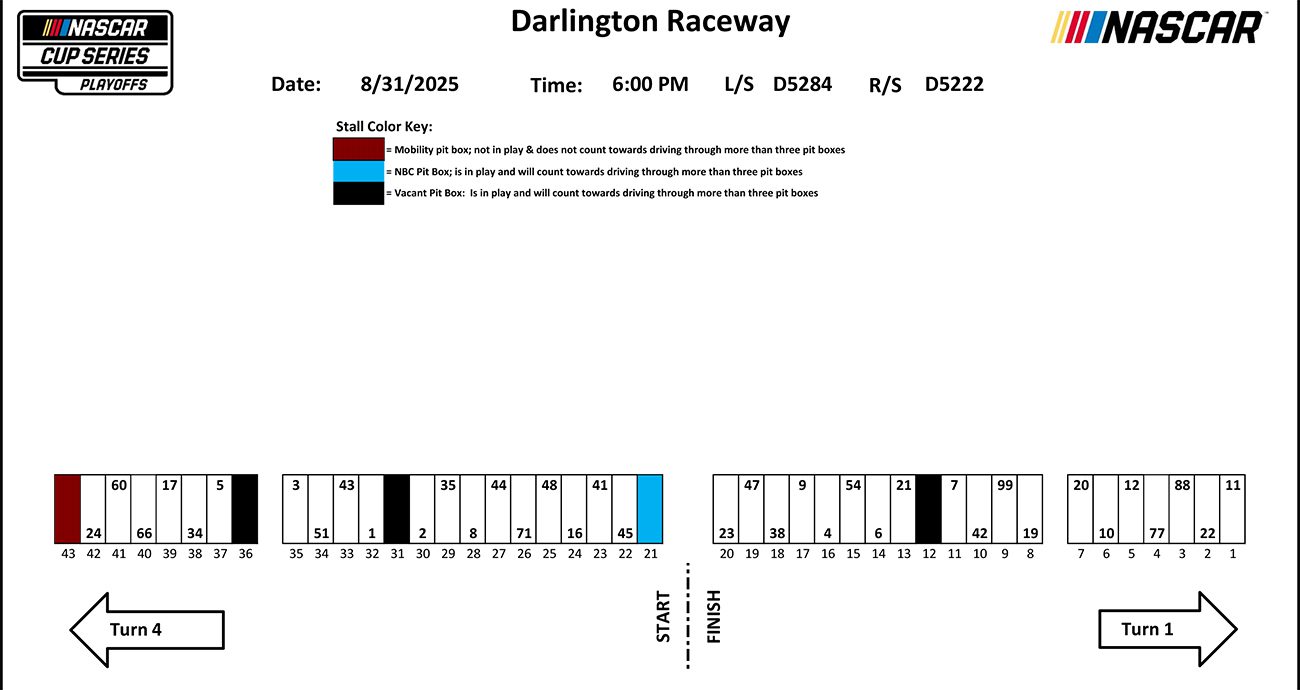
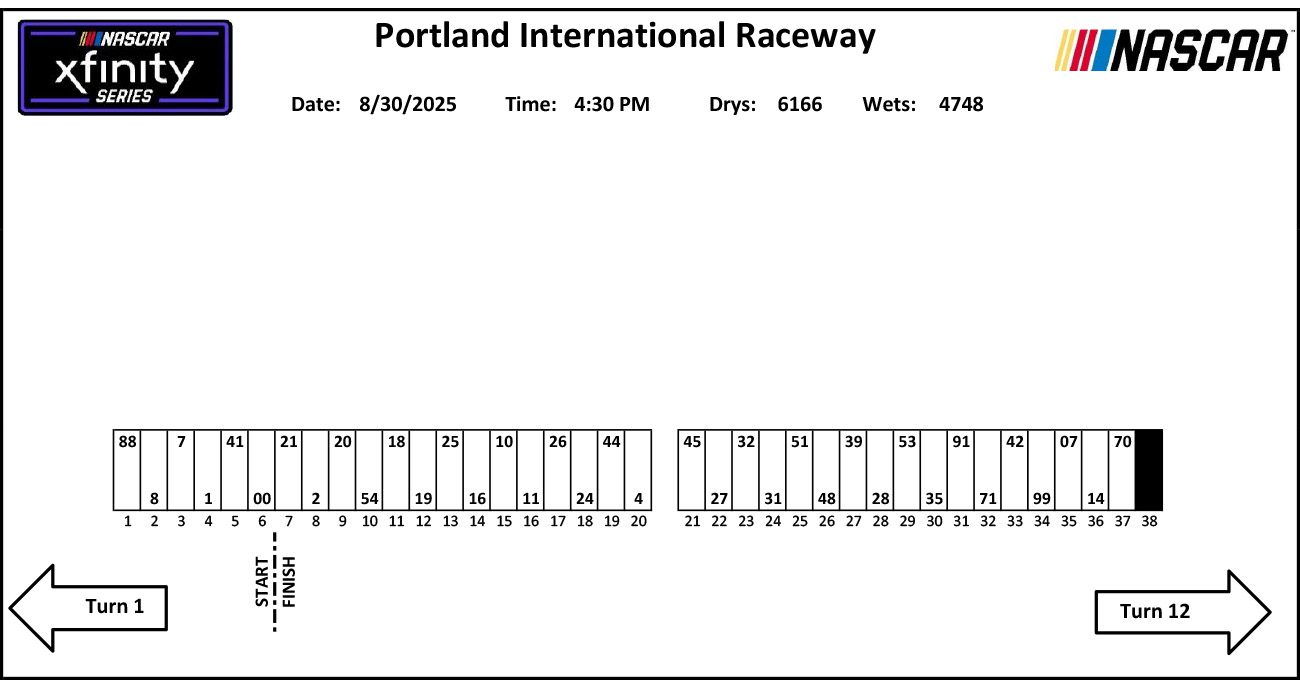
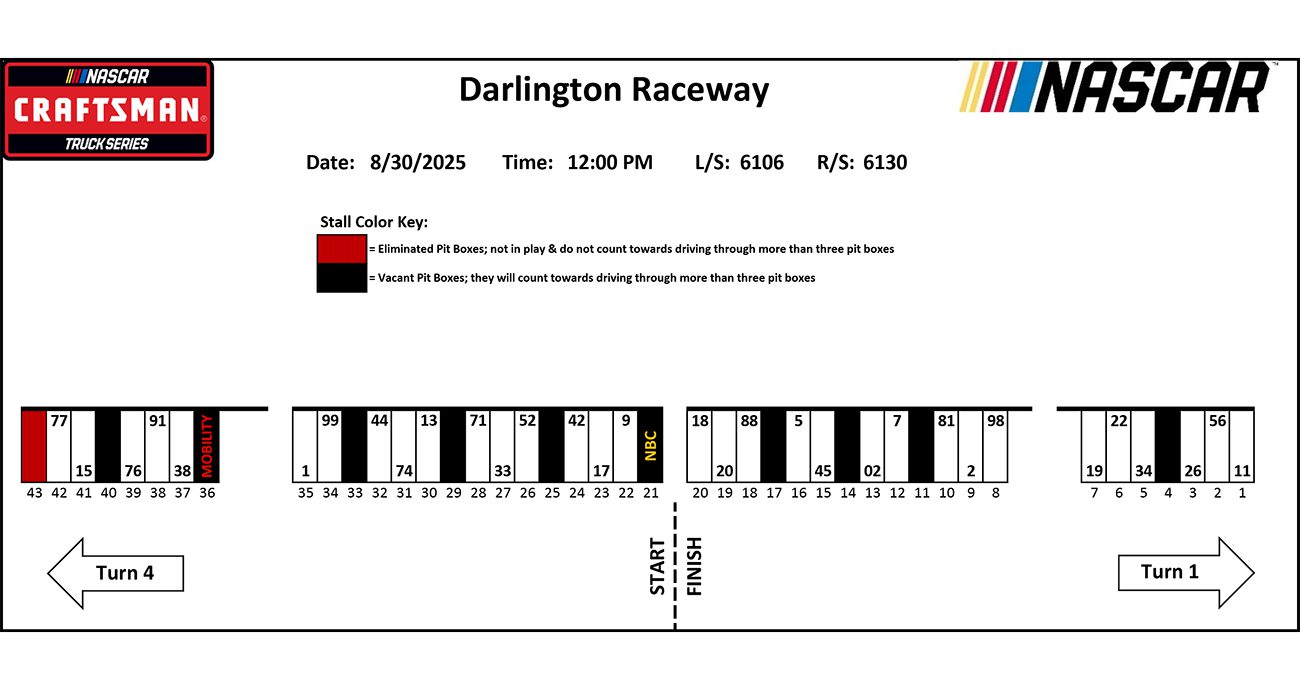
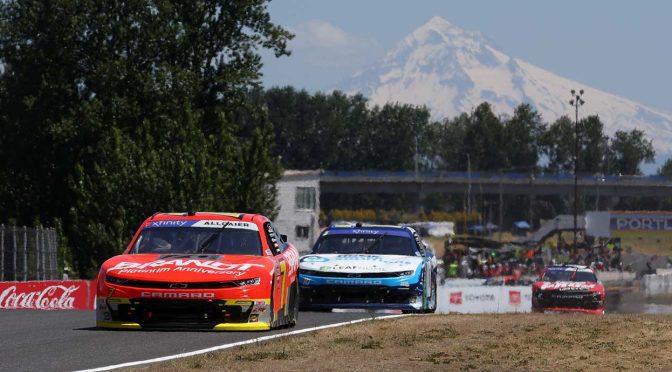
See where your favorite drivers will pit this weekend with the NASCAR Cup Series and NASCAR Craftsman Truck Series at Darlington Raceway, and the NASCAR Xfinity Series at Portland International Raceway.
NASCAR Cup Series
Southern 500 at Darlington Raceway on Sunday (6 p.m. ET, USA, MRN Radio, SiriusXM NASCAR Radio, NBC Sports App).
Drivers, start your engines … and start saving fuel.
The latter command has been so hard to escape in the NASCAR Cup Series this season, it’s left Chase Briscoe obsessed with maximizing his mileage — even without a fuel gauge to confirm his performance.
Whenever the yellow flag flies during a Cup race, Briscoe begins absent-mindedly toggling the engine of his No. 19 Toyota.
“It’s become a habit,” the Joe Gibbs Racing star said. “Even weeks where we don’t need to be, I’m saving fuel just for the sake of it because you never know what can happen and it eventually adds up. That’s just been something I’ve really kind of burned into my mind over the course of the last couple of years in Cup racing, and it’s obviously worked out for us.”
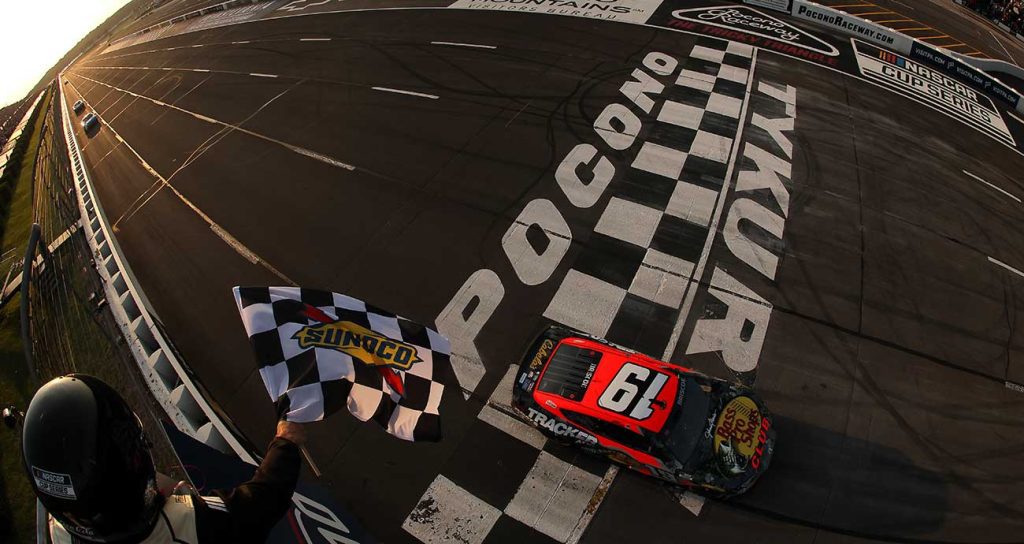
It worked out well enough to put Briscoe in the playoffs by holding off teammate Denny Hamlin at Pocono Raceway — one of several races this summer in which fuel conservation played a major role in the outcome.
The trend figures to continue into the playoffs starting Sunday with the Southern 500 at Darlington Raceway — and possibly be a key determinant in who is crowned champion. Joey Logano won the 2024 title after advancing to the championship race by running the final 72 laps in his No. 22 Ford without stopping to win at Las Vegas Motor Speedway — the increasingly rare instance of a fuel mileage outcome predicated on filling up.
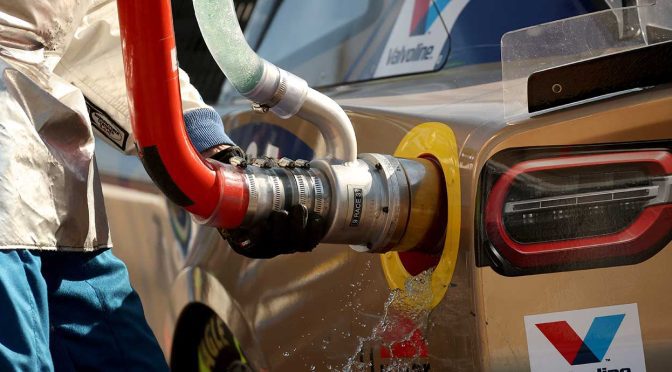
The only time a Gen 7 car’s 20-gallon fuel cell is typically at capacity anymore is when it’s mandatory for the initial green flag.
From that point on, it’s a neverending chess match between teams crunching numbers and strategizing to spend as little time in the pits for refueling as possible. A crack staff of engineers armed with algorithms and mounds of data might need to track the consumption of as much as 70 gallons of fuel without once having the benefit of measuring off a full tank.
Jonathan Bachman | Getty Images
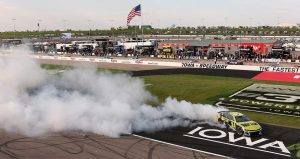
Though there might be some confusion about the precision of those calculations when William Byron is still able to smoke the tires of his No. 24 Chevrolet for a few hundred feet in celebration after winning at Iowa Speedway on fumes, consider that a victory burnout takes roughly 8 ounces of fuel (or about 6 percent of a gallon).
“Even with all the technology and effort, to get it right within 8 ounces throughout the course of three hours is a really small error value that teams are tasked with hitting,” Joe Gibbs Racing director of competition Chris Gabehart said. “It’s really hard to do. When you see a burnout afterward, it might just be because the math was really, really good but not perfect.”
As a veteran of racing series that allow for real-time monitoring of fuel consumption, Austin Cindric is continually amazed that NASCAR teams can model their mileage accurately through a blend of math that includes throttle application, braking usage and lap times.
“There’s a lot more guessing that goes on in a fuel-save situation in the NASCAR Cup Series than really anything else I’ve ever driven, or been a part of,” said the Team Penske driver, who made the 2024 playoffs on a fuel-mileage win. “In any other series, I’d know what my fuel capacity is, and I’d have it on my dash. I’d know how much fuel I just used on the last lap, so I can make real-time adjustments without even getting feedback from my team.
“(In NASCAR), it is a lot of estimating based off of data. The guys that are tasked with that challenge on top of the pit box and back in the shop have a lot to overcome. When you hear guys just making it on fuel or running out at the line, it honestly is so impressive.”
Meg Oliphant | Getty Images
After running out of fuel while leading at Michigan and contending at Indy earlier this season, Byron credited the Iowa victory to an improvement in mileage precision, and the regular-season champion believes it might be remembered as the tipping point for a team that has become more aggressively confident with strategy.
“I’m proud of my crew chief and my engineering team to make those tighter decisions and have them more refined because I think that could be the difference,” Byron said. “Fuel mileage is always a thing. You can go to a place with high tire wear where it’s not as big, but fuel mileage and track position are becoming just more and more of a critical element with the cars all being the same.
“That race gave us a ton of confidence that we can be up front competing for the lead and not have to run all out.”
With the emphasis on conserving fuel, here are answers to some questions about the practice heading into the playoffs:
Why has fuel conservation become such a hot topic in recent years?
There have been three primary inflection points, beginning with carburetors being phased out in 2012.
Before the introduction of electronic fuel injection, mileage calculations were rather primitive and often based on weighing fuel cans to determine how much gasoline was in the car.
The advent of EFI, and the electronic control unit (ECU) that records more than 60 settings ranging from RPMs to brake pressure, opened up a wealth of data that NASCAR teams were able to harness.
“ECU data made everything visible lap by lap,” Gabehart said. “There was a lot more nuance that you could see, and that was huge. Once the data got opened up to all the teams, everyone was off to the races on refining their processes.”
That next leap forward happened when teams began receiving live access to data during races as the 2017 introduction of stage cautions created two predetermined yellow-flag pit stops (which opened the strategy playbook and lessened the importance of filling up). For the 2018 season, NASCAR built a real-time data pipeline with steering, braking and throttle information distributed directly to teams.
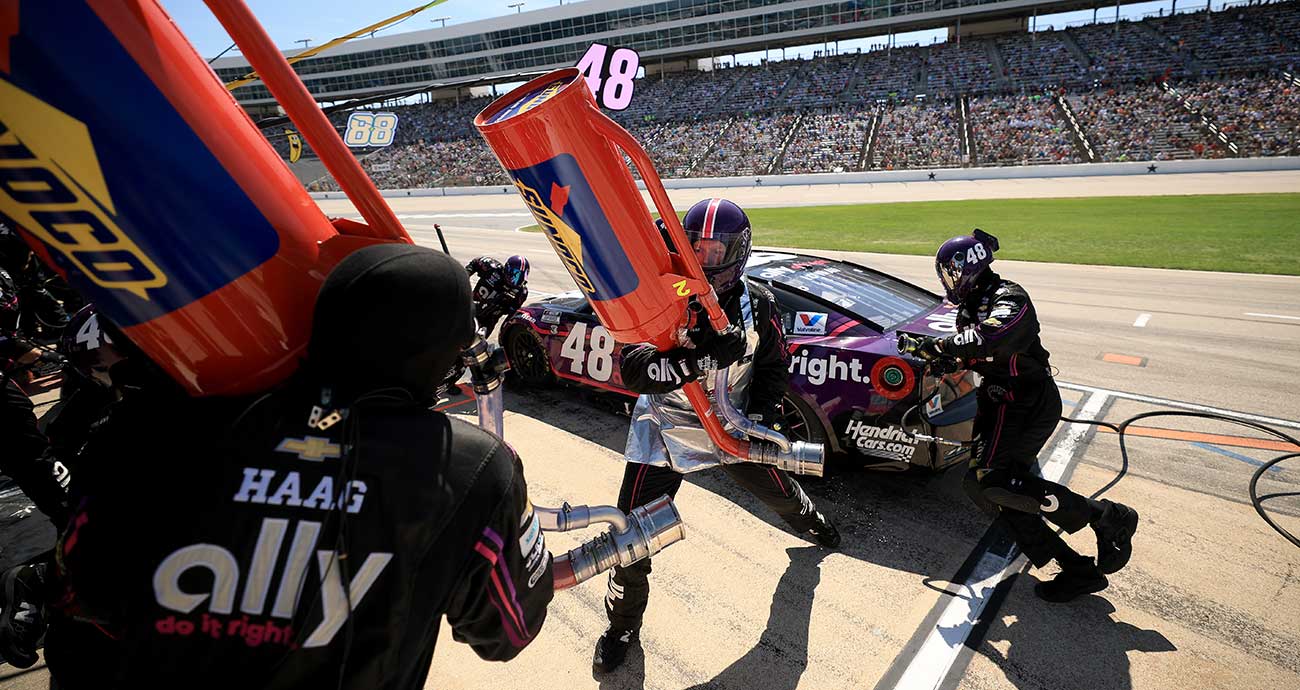
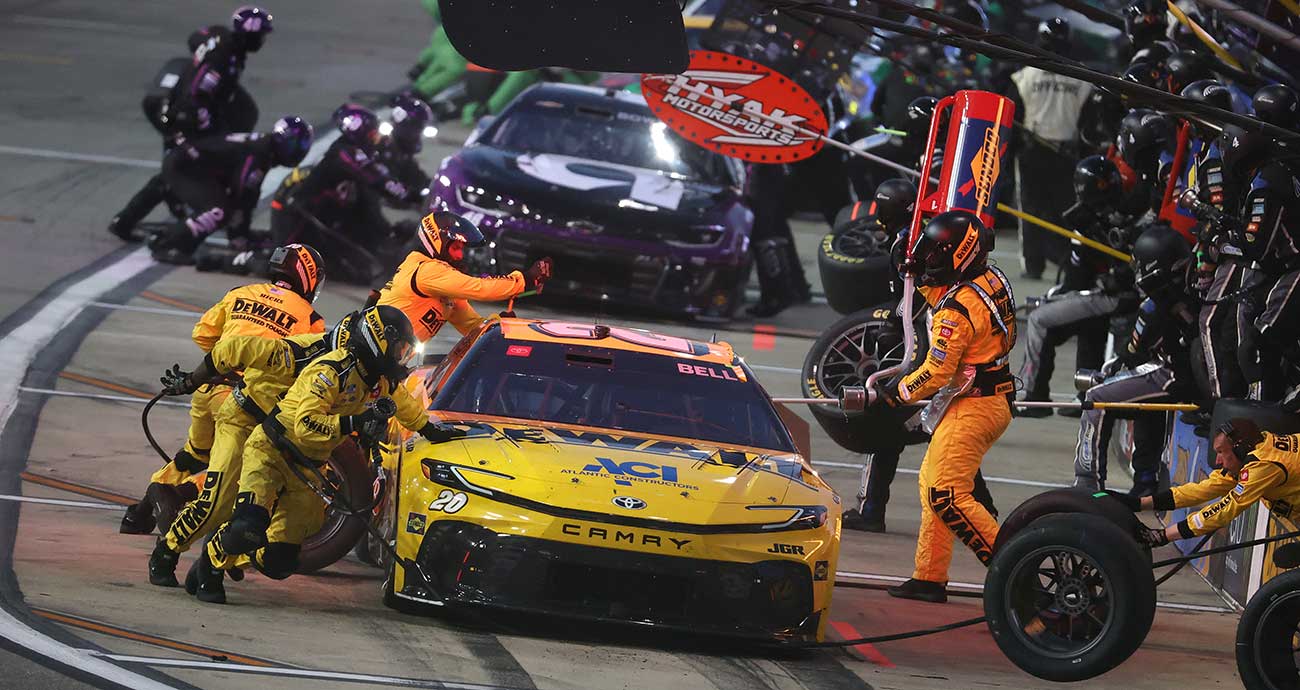
The most recent sea change was the debut of the single-lug nut pit stop with the Next Gen car’s debut in 2022. That allowed pit crews to change four tires faster than they were able to fill the car with fuel (vs. the five-lug nut era when stops were a tad slower and roughly equal to a complete fuel fill).
Logano said the single lug nut made mileage “more of a discussion point. Are you going to slow down your pit stop for more gas?”
The answer is usually no, particularly on tracks where an extra second can mean losing multiple positions on the track. Teams increasingly have chosen to send drivers from their stalls when the jack drops rather than wait.
“It does all come down to if one team is willing to leave the pit stall after 8 and a half seconds and three gallons short, but another team is willing to fill it up, that’s a second and a half or so that that team’s sitting in the pit box,” Gabehart said. “Are you willing to give up those spots for extra fuel? That’s a constant decision that these teams are facing.”
Chris Graythen | Getty Images
How do teams calculate fuel mileage without relying on a gauge?
The process starts with a multimillion-dollar dynamometer that allows engineers to map out fuel consumption while purposely running engines at 60 to 80 percent throttle at varying loads to mimic the myriad tracks of the Cup Series. It’s a reverse-engineering exercise to locate a sweet spot between the base amount of fuel consumption needed to avoid damaging the engine and the optimized amount of fuel for maximum power.
During the race, teams can then pinpoint how much fuel is being consumed based off how much throttle a driver uses on every lap.
Engineers generally have charts or graphs that list mileage corresponding to lap times and throttle traces. Engines use fuel proportionally to the RPMs, so consumption can be decreased by asking a driver to coast longer (which is easier to do on bigger tracks with long straightaways).
In Byron’s win at Iowa, crew chief Rudy Fugle told SiriusXM NASCAR Radio that the team relied on four engineers (three working remotely, the fourth on the pit box) to calculate and monitor fuel mileage. Working with manufacturers, teams are also evaluating the opposition’s fuel consumption rates.
How do drivers hone their fuel-saving craft?
It’s tricky because the only time they are able to improve is under race conditions.
“I don’t go to the sim and practice fuel saving,” Ryan Blaney said. “You can’t really. It’s kind of a trait that you’re learning under fire a lot. I feel like I’m OK. I can turn into a hybrid every now and then and fuel save a little bit.
“Each track is different. It’s way harder to save gas at certain places than others. (Daytona and Talladega), you can save a lot of gas pretty easy just because of the draft, but a Martinsville fuel save is way harder to do and make lap time because (of) heavy brakes.”
Bubba Wallace, who won the Brickyard 400 by being able to stretch his last tank through overtime, jokes that he has “a hybrid Toyota Tundra that shuts off at the stop lights” but otherwise just goes off feel and knowledge.
“You have to have the right people behind the scenes giving you the right information to help you do that,” Wallace said. “They just tell me to lift, and I lift, and they tell me to go, and I go. I‘m just following what they’re doing, so it’s more of a testament to my engineers.”
Jared C. Tilton | Getty Images
At Iowa, Fugle said Byron was three laps short on fuel with 30 laps remaining. Over the next 22 laps, Byron ran at 60 percent throttle or less — putting him within the window to reach the finish with eight laps left.
“You kind of learn how much throttle percentage it really takes to make a lap time,” Byron said.
Briscoe said he became astute at toggling the engine — a popular fuel-saving trick — by competing against former teammate Noah Gragson on who could achieve the longest shutoff time during races.
“I guess I’m really good at shutting the thing off and rolling for a long time,” said Briscoe, who’s been told by crew chief James Small that he is among the best at saving under yellow.
Drivers often are coached during the week by team engineers on their rates of deceleration, minimum corner speeds and proper steering, braking and throttle techniques for efficient laps that maintain fuel conservation without sacrificing speed.
In some cases, teams have been known to put signs inside the cockpit to depict throttle usage for conserving fuel. But an overabundance of information also can be overwhelming.
“It really becomes how much can I absorb as a driver,” Gabehart said. “So a lot of it is not just the data, but data management. And where the drivers are concerned, that’s more true now than ever because they just have so much of it.
“We’re probably evolving to a world where I don’t need the driver to know why I’m telling them to do what I’m telling them to do. I just need them to do it. Their job is to execute it. In a lot of ways, that’s where driving a car is evolving to and certainly where fuel mileage is concerned. There’s a lot of data and studying and preparation that needs to go into it, but with the live data that we have, you can just coach them through it.”
How are drivers able to maintain or increase their lead while saving fuel?
This was the mystery behind the wins by Briscoe at Pocono and Byron at Iowa.
One explanation is that the focus on saving fuel prevents over-driving the corner. By coasting on the straightaways (even going several mph slower at Pocono), a driver can give up maximum speed but recover it in the average time over the course of the lap by carrying more speed through the corner.
“My dad’s always told me, ‘If you just slow down a little bit, you probably go faster,’ and it was the truth at Pocono,” said Briscoe, who has developed a more feathery touch to his throttle since joining JGR this year. “Where my car was better compared to Denny, I could maximize the straightaway so long he would never get back to me on corner entry to be able to do something with how early I was lifting.”
Pocono and Iowa are also tracks with narrower racing lines, putting the car in the lead at an aerodynamic advantage.
“The closer you get to the car in front, the aero wake just becomes so terribly difficult to deal with for the car in the rear,” Gabehart said. “The car in the rear wears its tires out and stalls out. So it puts that premium on putting the car out front at all costs because the reality is that some tracks, once you’ve got that clean air, you can start saving fuel more and that car behind you just can’t pass you.”
What is ‘the switch?’
It’s a term commonly used by teams in referring to an emergency fuel reserve that can be activated with the driver flipping a switch if the engine begins to stumble.
NASCAR allows two lift pumps to deliver fuel from the bladder into a location where it’s sucked into the engine. When delivery stops from the primary pump, the second pump can be deployed to transfer enough fuel for about a lap at most tracks. Before last year, teams were permitted to run the secondary pump below the primary to scoop more fuel, but staggering the heights was outlawed last year to reduce the emergency supply (which once was two laps on a big track).
ThorSport Racing is no stranger to success when it comes to competing for championships in the NASCAR Craftsman Truck Series. The longest tenured team in the Truck Series garage holds six championships, the most of any organization in series history.
The Ohio-based team is also the only organization to win multiple consecutive series titles, with Matt Crafton earning back-to-back championships from 2013-14 and again taking top honor in 2019, Ben Rhodes adding two more titles (2021 and 2023) and Ty Majeski claiming the 2024 crown.
Enter Jake Garcia, a 20-year-old from Monroe, Georgia, in his second year of competing under the blue oval banner for ThorSport Racing. Garcia is making his first appearance in the Truck Series Playoffs in his young career.
Surrounded by championship banners from his three teammates, there is no question that the No. 13 driver knows all too well that there’s certainly a championship pedigree at ThorSport.
“You know, we’ve got a really strong team,” Garcia said during Truck Series Playoffs media day. “I’m the only full-time driver that hasn’t won a championship, so I think there’s some pressure that comes along with that, too. Entering the playoffs to get a championship, that way you’re not maybe the odd man out anymore.
“I think that I can rely on my teammates, you know, Matt Crafton and Ben Rhodes and Ty as well. You know, for some advice on entering this deal, because they’ve been in this situation before, and I haven’t, so I’ll use a little bit of their help. And, you know, some of my guys have been on a championship team as well. So I think that all plays into our advantage entering these playoffs.”
Taking advice from those who have been in this format before is essential when every race matters in the quest for the title, even better when the advice comes from a championship-winning teammate.
Majeski has made the postseason for three consecutive seasons and is the only other ThorSport driver accompanying Garcia in the seven-race stretch, looking to defend his victory from a season ago.
“I think the biggest thing is just not letting the moment get too big, right?” Majeski said when asked about advice he’d give his teammate. “There’s a reason that the No. 13 group and Jake made the playoffs, and don’t lose sight of how you got to this point. As soon as you kind of let the stage get too big and overthink it, that’s when you make mistakes, and that’s really the only thing that can really disrupt your playoff run, is making a mistake, especially in that first round.”
The other driver Garcia plans to lean on throughout his first experience in the playoffs is longtime series veteran Crafton, who announced that he would step away from full-time competition in the series at the conclusion of the 2025 season.
Such advice brings plenty of value as the young Garcia tries to carve his own playoff path, beginning with Saturday’s postseason opener at Darlington Raceway (Noon ET, FS1, NASCAR Racing Network Radio, SiriusXM NASCAR Radio).
“It’s been great to have Matt as a teammate for these past two seasons at ThorSport,” Garcia said. “His dad, Danny, worked on my quarter midget stuff when I ran quarter midgets when I was a little kid. So I’ve known Danny and Matt forever. Matt used to come to some of the races and hang out with us, so I’ve known him forever, and it’s been really cool to be able to grow up and become his teammate in the Truck Series and be able to work with him.
“He brings a ton of experience every week. If I ever need anything, I can ask him a question, and he usually has an answer for me, because he’s been to that track so many times. So you know, I’m really thankful to have him as a teammate, and I’m looking forward to finishing out the rest of the year with him.”
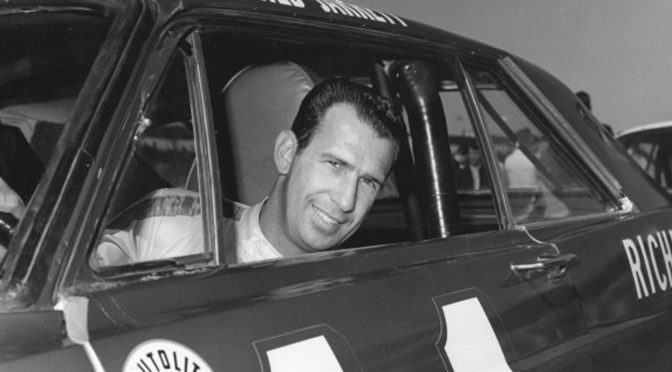
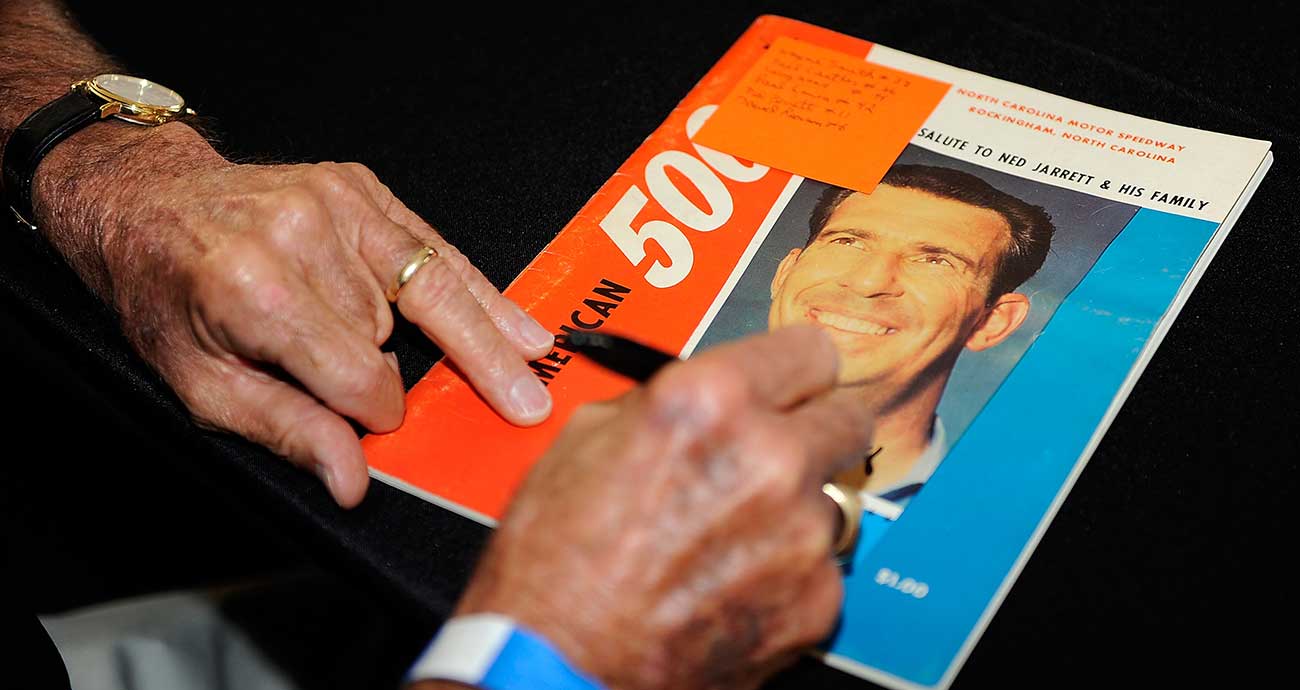
Strange as it may seem in retrospect, Ned Jarrett wasn’t the outright pre-race favorite when the odds were drawn for the Southern 500 in 1965. Other flat-footed drivers were considered harder chargers, and the memories of Jarrett’s most recent go in the Labor Day classic may have remained fresh enough to make him a slight dark horse.
In the previous year’s 500-miler at rugged Darlington Raceway, Jarrett opened the endurance race with a rare Lap 1, Turn 1 spinout. Trying to gather up his No. 11 Bondy Long-owned Ford, he lost control again — all before one circuit was complete.
“Fortunately, I was able to go on and I managed to finish in fourth place,” Jarrett told the Florence Morning News in 1999, “but I was thinking what 500 miles is going to be like if I can’t even finish one lap.”
The next year, Jarrett sought out some divine help. The night before the 500, he served as a guest speaker for the Darlington Methodist Youth Fellowship group. As a former NASCAR Cup Series champion and a certified star, the fee for the eloquent Jarrett’s public-speaking appearances was increasing, but he never charged church or civic groups for his time. The favor the youth group returned was all the payment he needed.
NASCAR Research & Archives Center | Getty Images
“They said they would pray for me,” Jarrett told reporters. “Well, somebody did, including myself.”
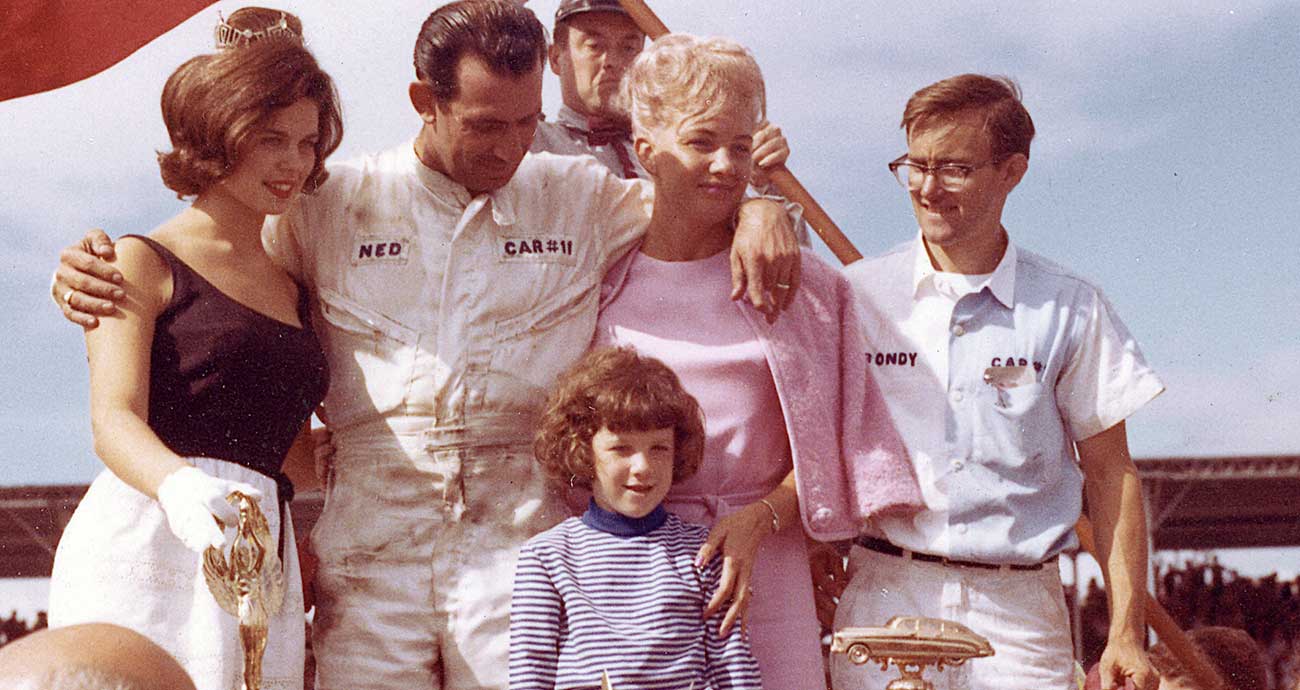
The next day, Jarrett established one of stock-car racing’s untouchable performance achievements, surviving a contest of attrition to win the Southern 500 by a whopping 14 laps. Jarrett’s staggering 19.25-mile margin of victory still stands as a Cup Series record, one that turns 60 years old next week and remains a historic highlight as Darlington celebrates its 75th anniversary season.
The story of the 1965 Southern 500 is one of chaos and tragedy, attrition and perseverance and ultimately the tale of a true, unassailable record, set at one of NASCAR’s most treacherous venues. A Cup Series race’s margin of victory hasn’t been measured in laps since Geoff Bodine finished on a lap of his own in 1994 at North Wilkesboro Speedway. In this era of greater competitive parity, it’s a mark that’s highly unlikely ever to be repeated.
“It’s a Southern 500 win by 14 laps. You know, we talk about records are made to be broken,” said Dale Jarrett, Ned’s Hall of Famer son and a three-time Darlington winner in his own right. “Well, I think that’s one that’s going to withstand the test of time.”
* * *
Dale Jarrett was just a couple of months shy of turning 9 years old in the summer of 1965 when the stock-car racing schedule turned to Darlington, but his memories of that weekend remain vivid.
He remembers the high school band from his adopted hometown playing, marching in formation in their tablecloth-checked shirts and white shorts. Actors from the cast of the hit TV show “Gunsmoke” waved from the parade around Darlington’s town square. ABC’s “Wide World of Sports” provided on-the-spot coverage. The fanfare matched the magnitude.
“It was just amazing to be there,” Dale Jarrett says. “I mean, there were so many things that lined up. We obviously lived in Camden, South Carolina, where Bondy Long had the race team. We had moved from North Carolina down to there, and so Darlington was like our home track.”
Though he was in the midst of another title-caliber season, Ned Jarrett received less pre-race attention than some of the hotshots — Junior Johnson, Fred Lorenzen and Marvin Panch among them — who outpaced his No. 11 Ford in qualifying. Even with Richard Petty, David Pearson and a host of Chrysler teams missing from the field after competition officials banned the Hemi V-8 engine in 1965, the early laurels went elsewhere.
Though Jarrett had won 11 of the 44 races to that point of the season on smaller ovals, the motoring press considered him overdue for a prestigious payday. A 10th-place starting position seemed like it might prolong his wait. Darlington’s tenacity and the unreliable nature of 1960s equipment toiling for a 500-mile test in searing heat tilted the balance in favor of Jarrett’s steady approach.
Johnson — one of those popular favorites — started from the pole position, figuring to set the early pace while fighting off a flu virus that had laid him low earlier in the weekend. His goal lasted just half a lap, when his No. 26 Ford misfired with ignition trouble, handing the lead to the fair-haired Lorenzen.
Tragedy unfolded with just two laps complete. Buren Skeen — a competitive Bowman Gray Stadium regular from Denton, North Carolina, making his first Darlington start — was critically injured when his No. 23 Ford was speared in the driver’s door by Reb Wickersham’s No. 03 entry after a Turn 1 spin. Skeen perished a week later in a Florence hospital.
Another crash a third of the way in produced another fright, but also relief that both contenders escaped unscathed. Cale Yarborough made an inside move on Sam McQuagg in their contest for the lead on Lap 119, but their cars became entangled and slid up against the retaining wall through the first turn. Yarborough’s Banjo Matthews-prepared car teetered after the impact, vaulting over the guard rail and tumbling over the banking. Both drivers were done for the day, but uninjured.
Fifteen drivers were already out of the race by then, including Marvin Panch’s Wood Brothers No. 21 Ford, which succumbed to engine woes and a spin in its own fluids. That left the fray up front to Lorenzen in his Holman-Moody No. 28 Ford and the speedy Darel Dieringer, who ended up leading the most laps in Bud Moore’s No. 15 Mercury.
Jarrett, meanwhile, kept on the fringes of the top five, moving up when others made pit stops. At one point, he was content to let Dieringer by while keeping his steady pace and staying mindful of his big-picture points battle with Dick Hutcherson for the standings lead.
Trouble found Lorenzen and Dieringer in short order as the laps ticked down, with Jarrett running third and set to capitalize. Engine failure halted Lorenzen’s charge, and Dieringer’s seemingly clear path to victory closed when his car’s differential gave way, forcing him to make multiple stops before eventually parking 19 laps short of the finish. He had a four-lap lead at the time.
“This is the one I really wanted,” a downtrodden Lorenzen told ABC’s Chris Economaki after his exit. Of all the crown-jewel wins Lorenzen amassed, the Southern 500 remained a glaring void until his career’s end. Dieringer returned the next year to give Hall of Famer Bud Moore his only Southern 500 triumph.
Jarrett wasn’t home free, and he fretted about the overheating that his debris-battered No. 11 Ford had to endure in the baking sun. He backed off the throttle, preserving his growing lead over eventual runner-up Buddy Baker, who drove in relief of his father, Buck. The Baker entry had its own issues with rising temperatures and could get no closer.
The Bondy Long pit board that showed Jarrett the word “Water?” just moments earlier was soon chalked with a dollar sign. Though Baker had pulled up to Jarrett’s bumper in time for photos of the finish, the number of laps in the margin of victory required a hands-and-toes count. Just 15 of the 44 starters were running at the finish, and Jarrett stood atop them all.
“It was quite a ride, there was no doubt about it,” Jarrett told Economaki before recalling his speaking engagement on the eve of the race. “Don’t let anyone ever tell you that prayer don’t help.”
NASCAR Research & Archives Center | Getty Images
* * *
The Jarrett family still claims the neighboring towns of Newton, Conover and Hickory in the North Carolina foothills as their homes, but for a brief window in the 1960s, Camden, South Carolina, got the billing.
“Camden is no racing hotbed,” Ned Jarrett noted back then, even though the town sits just a 45-minute drive east to Darlington. So when word of Jarrett’s Southern 500 triumph spread, the veteran driver was one of the most surprised.
“Most of them had never paid the slightest attention to stock-car racing until I moved there two years ago,” Jarrett told the Richmond Times-Dispatch a week after his victory. “Now they listen to radio broadcasts of races and talk to me about racing. They gave me a welcome home after Darlington I’ll never forget.”
Jarrett returned to find his home’s lights on in the setting sun and his driveway and lawn filled with well-wishers. A banner spread across the front of the house touting his Darlington win, and though 10 races remained on the Cup Series schedule that season, the party felt like a coronation for Jarrett’s commanding lead in the standings.
“People were everywhere. Oh, it was just unbelievable,” Dale Jarrett says. “They had decorated, and they basically went ahead and crowned Dad as the champion and the Southern 500 winner. So it was just amazing to see how the town had embraced our family. It was just a small town, just like what we came from in Conover, North Carolina, and it was just great that they understood that and how much it meant.”
The massive Southern 500 victory was the 49th of Ned Jarrett’s 50 career wins. Less than a year later, with Ford briefly withdrawing from stock-car competition, Jarrett found himself without a regular ride. He announced his retirement from driving at the relatively young age of 33.
“I feel that I have accomplished about as much as one driver could expect to …,” Jarrett told the Bristol Herald Courier then. “My goal has always been to quit when I’m as high up the ladder as I’ve ever been. I don’t want to go down the other side.”
Darlington remained a revered place for the Jarrett family after the transition. Ned Jarrett returned many times as a broadcaster and a dignitary, and his son, Dale, cherished his time racing at NASCAR’s first superspeedway, growing up nearby and keeping the tradition of the Darlington Stripe in the family for a new generation.
“It’s just a special place because of what the track is and the history of it,” Dale Jarrett says. “I mean, you talk about 75 years coming up, and it’s just amazing through the years when you look back at the great champions that have raced and won there. To be a part of that, even though I never won the Southern 500, I did win the spring race three times, and it’s just amazing to be able to follow in my dad’s footsteps and win at such a difficult race track like that. So it holds a special place in our heart, again for many reasons.”
Years later, Ned Jarrett called Darlington “the toughest track that was, and still is, run by NASCAR.” Jarrett was known as a meticulous planner, one who took great care in his preparation and his approach. Winning the Southern 500 was one of the goals he’d set, and it remains one of his most memorable accomplishments. The record-setting margin means it won’t be forgotten.
“As far as races that I’ve won, it ranks at the top,” Jarrett told the Florence Morning News in 1999. “The absolute top.”
At the top and bottom of the NASCAR Xfinity Series standings, there are plenty of unresolved issues with two races left in the regular season.
Those issues should gain considerable clarity, however, after Saturday’s Pacific Office Automation 147 at Portland International Raceway (7:30 p.m. ET on CW, MRN and SiriusXM NASCAR Radio).
In the battle for the Regular Season Championship, Justin Allgaier holds a three-point lead over JR Motorsports teammate Connor Zilisch, a seven-time winner this season.
Zilisch, who got a major assist from relief driver Parker Kligerman in his victory last Friday at Daytona, has accumulated 36 playoff points. Allgaier has 24, and no other driver in the series has more than eight.
Nevertheless, the race for the regular-season title can’t be characterized as a two-driver affair with two events remaining before the 12-driver playoff field is set. Though Sam Mayer, who is highly skilled on road courses, has only eight playoff points, he is only 26 points behind Allgaier in the regular-season standings.
Despite posting just one victory, Mayer has stayed close with consistent performances, equaling Allgaier’s totals for top fives (12) and top 10s (15) in 24 starts.
“Yeah, it’s great to be consistent and all, but you want to win, because when it comes to the playoffs, the bonus points you get are the only thing that matters,” said Mayer, who ran third on the winding 1.967-mile Portland road course in 2023 and won the pole last year before finishing 28th.
“We’re going to keep working on that. We have two more shots at it, and I think we’ll be good at both of those races, so it’s just a matter of getting the job done. The ‘W’ is the only thing on the mind right now.”
To get the win, however, he’ll have to beat Zilisch, who has won three road-course races this season and five of the last six races overall.
At the bottom of the standings, there are still four playoff spots to be decided. Harrison Burton currently leads cousin Jeb Burton by 36 points for the final postseason berth.
After weeks of fretting over who would make it into the playoffs, the good news is that the field of 16 championship-chasing drivers is finally set. The bad news? Just about every playoff driver can now immediately shift to worrying about being in the top 12 in three weeks’ time. Forget about feeling comfortable: There’s always heightened intensity at this stage of the season, and it can only rise from here.
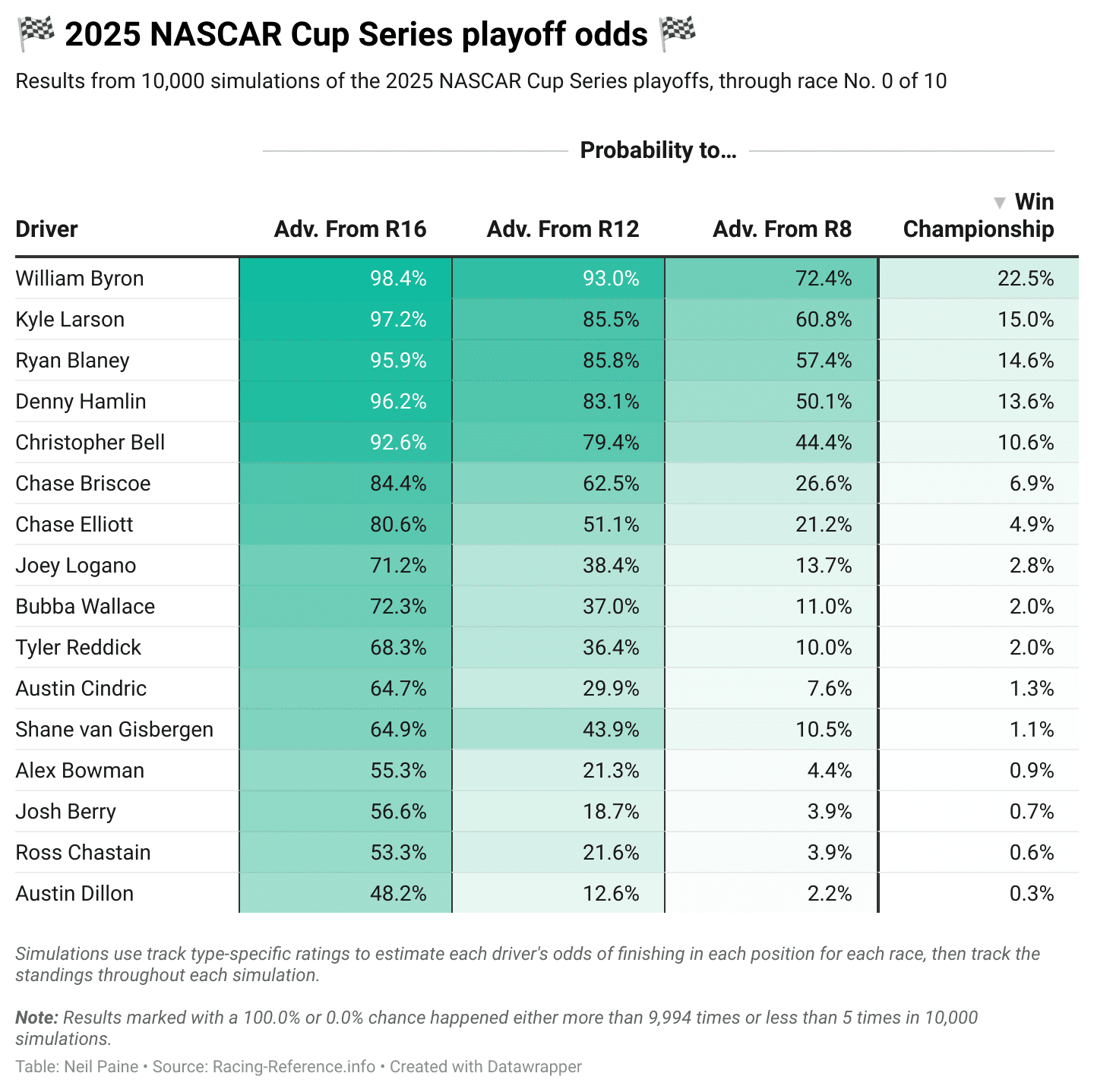
To help quantify who is under the most pressure — and who has the greatest opportunity to alleviate it for themselves — we are dusting off our playoff simulator model from last season to run 10,000 alternate versions of how the next 10 races might play out. This year’s version has a few improvements, headlined by the use of the more predictive Driver Rating metric (rather than pure finishing quality) as the backbone of the predictions. For more about how the system works, read here — or otherwise, scroll down to see the initial forecast odds and find out which drivers have no sooner made the playoffs than they are right back on elimination watch.
Unsurprisingly, three of the four lowest-ranked drivers in the initial playoff point standings are also among the most likely names to be knocked out: Austin Dillon, Alex Bowman and Josh Berry. The exception among the lowest-ranked drivers is Tyler Reddick, who has a surprisingly strong 68 percent chance to advance despite currently sitting a point below the cutline. At the same time, Ross Chastain is down at 53 percent to make the Round of 12 despite entering the playoffs a point to the good.
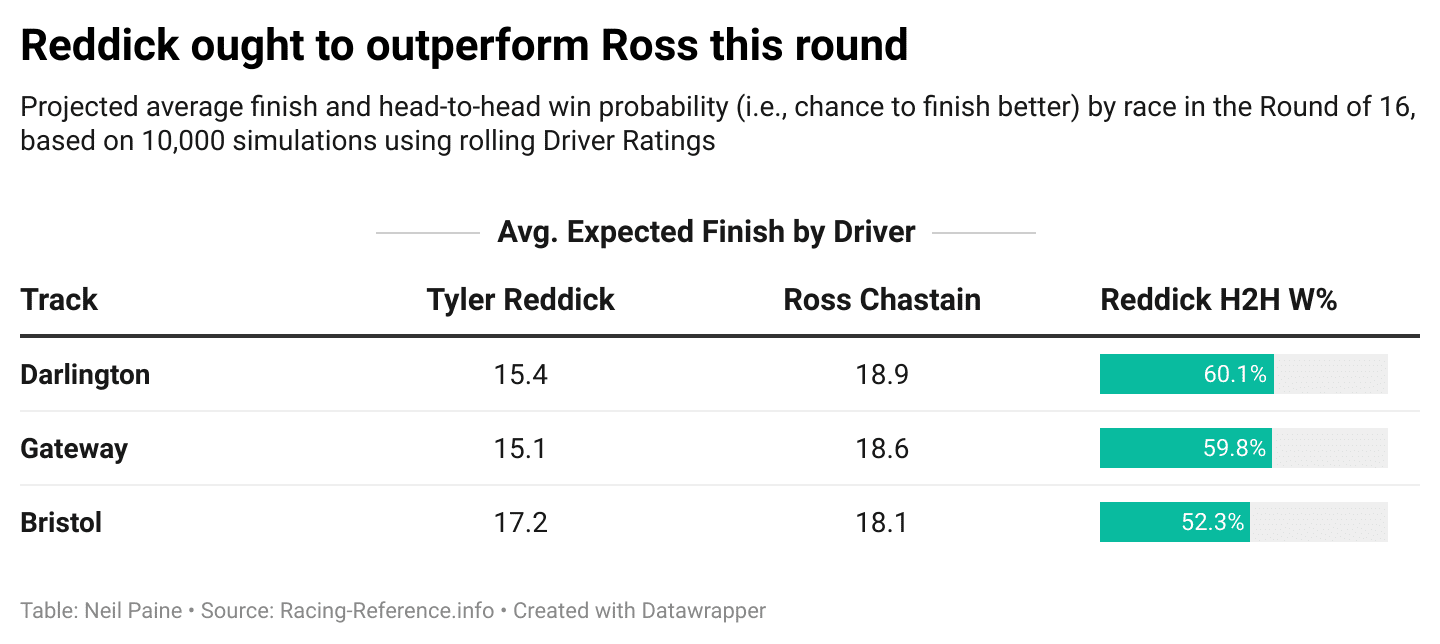
What gives? For one thing, Reddick has been in better form than Chastain this season, despite having one fewer win. The former leads the latter in top-five finishes, average finish and — most importantly for our predictive purposes here — average Driver Rating, with the No. 45 car handily topping the No. 1 in that regard, 88.1 to 75.4. With two ovals to work with this round, where Reddick has been far better than Chastain this season, it helps explain why Ross is an underdog despite the more favorable situation in the points.
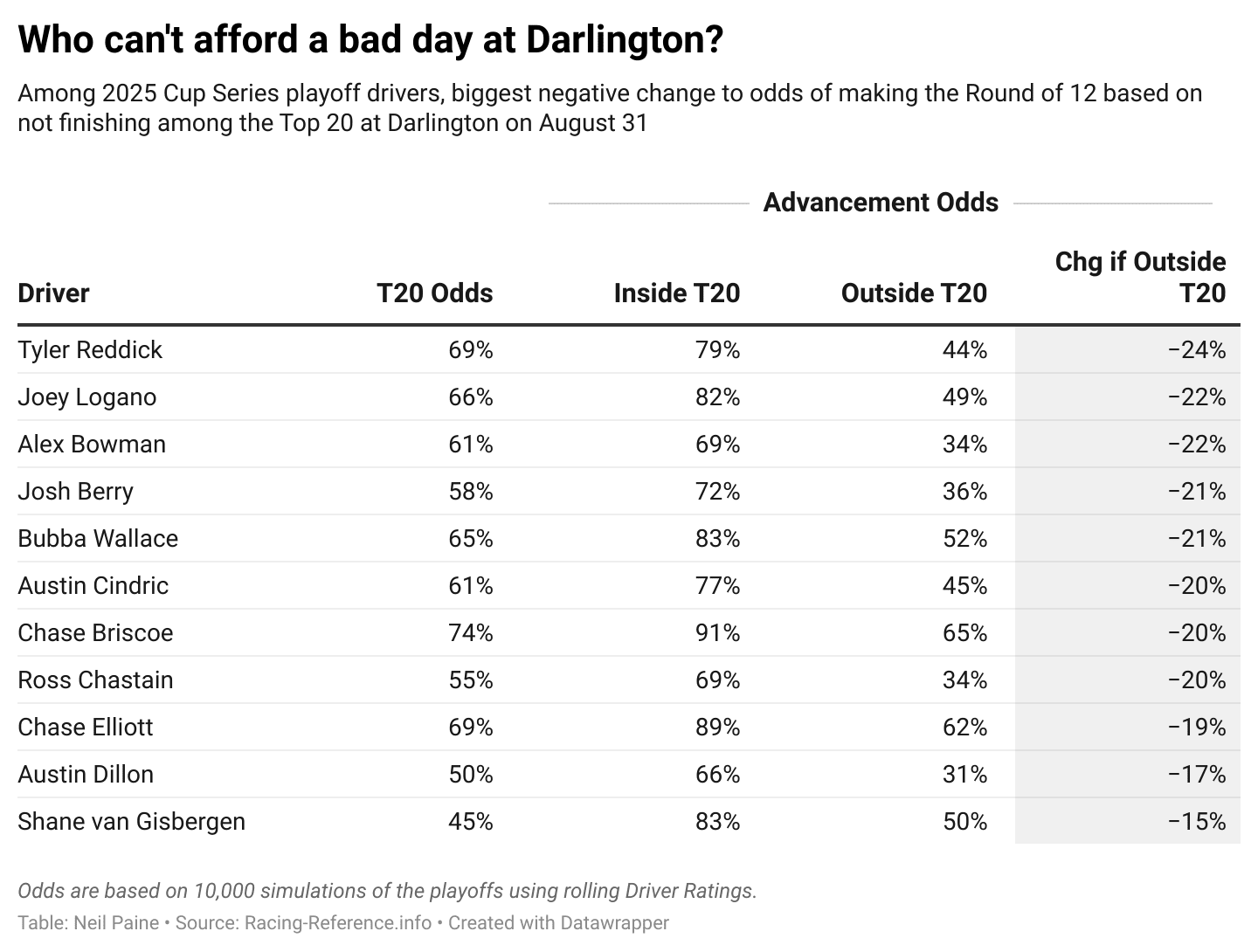
Still, both drivers are unquestionably under huge pressure starting this weekend at Darlington — and the simulations back up that feeling. Because Reddick has a strong history there, and is expected to be among the favorites, he can’t afford to have a weak Southern 500 finish and still be in a solid position to advance this round. If Reddick finishes outside the top 20, for instance, his odds to make the Round of 12 fall from their current 68 percent level to just 44 percent, the biggest drop-off of any driver in simulations where they finish outside the top 20 on Sunday evening:
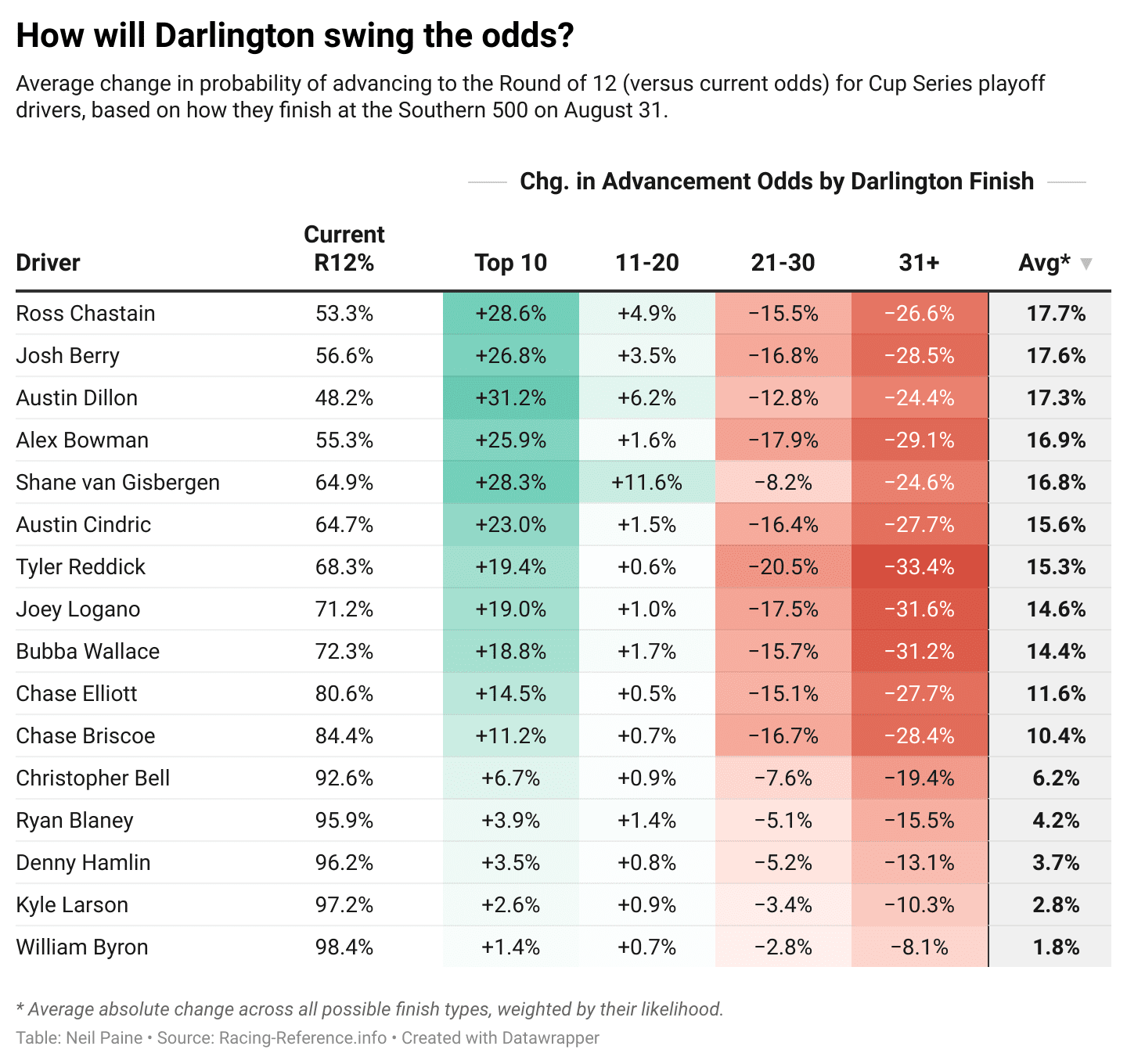
Such downside risk is one very obvious version of pressure — the kind where you don’t have the luxury of an off-day at a track where you’re supposed to do well. But there’s also the pressure to take advantage of a chance to boost your odds. Shane van Gisbergen could gain 19 points of advancement probability with a top-20 finish at an oval, where he’s tended to struggle (43.7 average Driver Rating) this season. Austin Dillon’s chances of advancing could pick up a whopping 31 percentage points if he finishes among the top 10 on Sunday. And nobody’s odds are more certain to change, one way or the other, than Chastain’s between now and the end of the Southern 500.
We can quantify that by using one of our favorite data points that falls out of these simulations — the “leverage index” for each driver in a race. What does that mean, exactly? Borrowing from the same concept in baseball analytics, we can calculate the average swing in a driver’s advancement odds — positive or negative — resulting from all possible outcomes he might have. The result is perhaps the best single measurement of pressure, as it captures the “do-or-die” nature of any given race for a driver, causing their odds to shift dramatically regardless of the circumstances.
Going back to Chastain, he faces the highest leverage of any playoff driver right away in Darlington, with an average change of +/- 17.7 percentage points in his odds to make the Round of 12 across all simulated outcomes. He gains 29 points with a top 10, but he loses 27 points if he finishes outside the top 30 — just to provide a few examples of how much Darlington will potentially move his advancement needle.
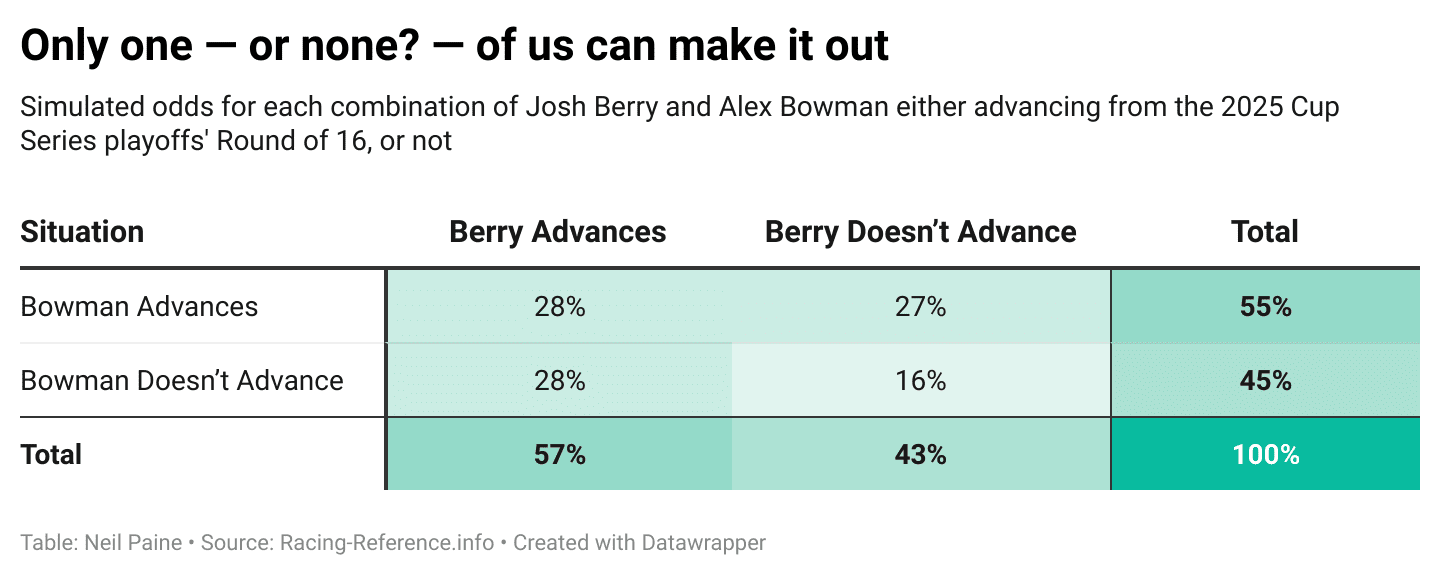
Berry and Dillon aren’t far behind Chastain in the leverage department, and they should each be rivals to watch all round long. But the biggest Round of 16 rivalry in terms of leverage — combining the swing in one driver’s advancement odds depending on if another makes or misses the Round of 12, weighted by the likelihood of each outcome — is Josh Berry versus Alex Bowman. Here’s a breakdown of each driver’s chances to advance, conditional on the other driver advancing (or not):
In the simulations, there was only a 28 percent chance that both Bowman and Berry could simultaneously escape the Round of 16, while there was a 55 percent chance that one would make it out while the other didn’t — and even a 16 percent chance that both would fail to advance.
Most likely, that means the two will be locked in a bitter fight that starts as soon as the green flag drops at Darlington, part of a Southern 500 that will set the tone for the playoffs as a whole: every lap carries big-time playoff consequences, and the only guarantee is relentless pressure from the very start.
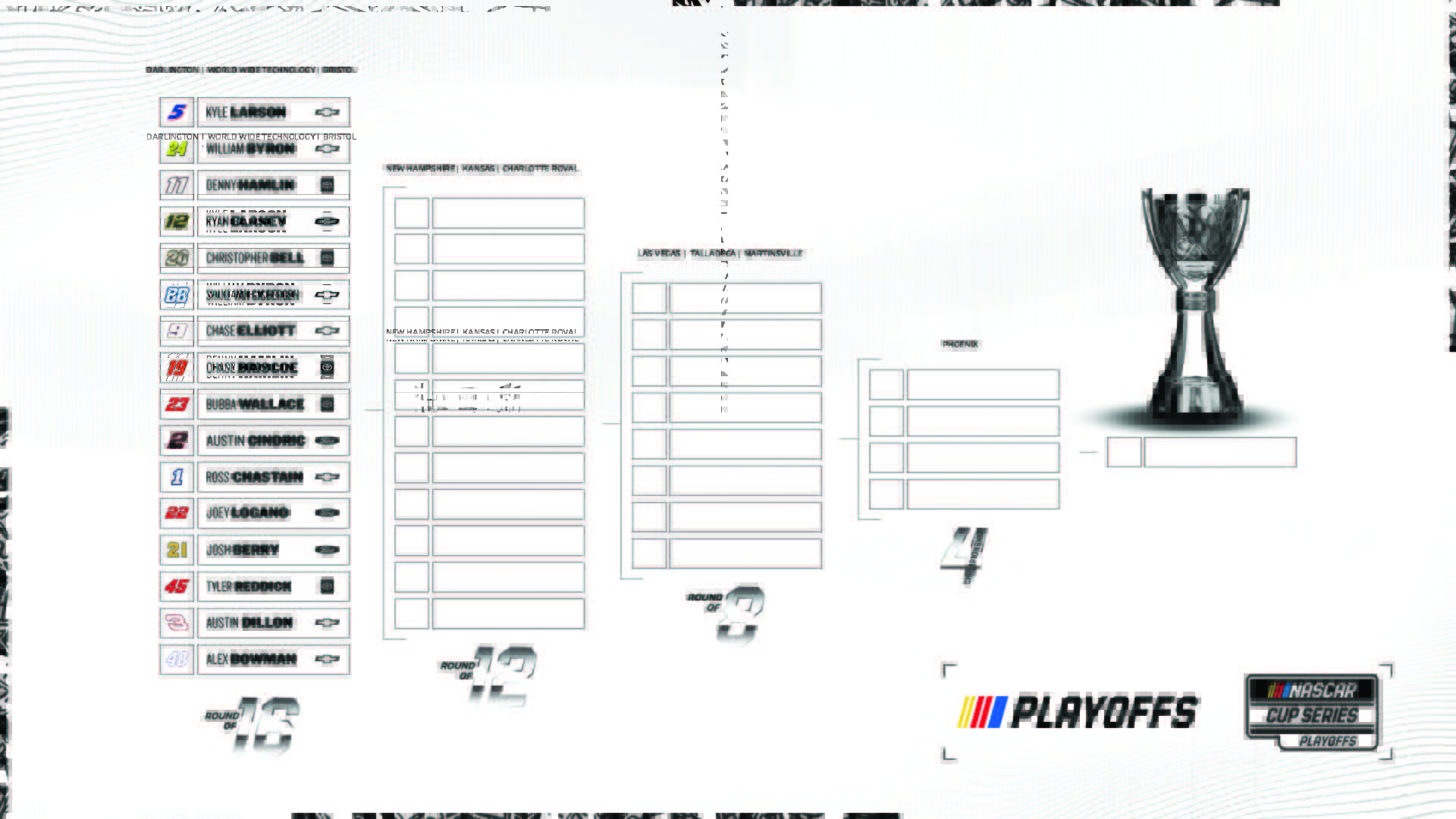
Racing Insights is doing something different with its NASCAR Insights stats for the playoffs by providing numbers specifically tailored to the Round of 16. By looking at statistics at similar tracks, they’ve come up with rankings in the categories of speed, long-run speed, passing, defense and restarts to give a glimpse of drivers’ strengths and weaknesses for the first three races of the Cup Series Playoffs at Darlington Raceway, World Wide Technology Raceway at Gateway and Bristol Motor Speedway.
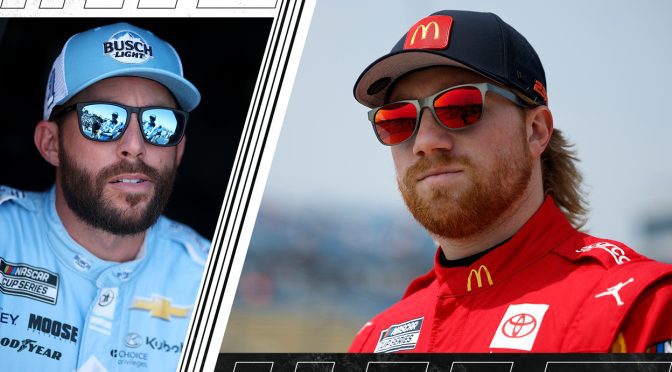
What’s immediately noticeable in the numbers is Daytona winner Ryan Blaney ranks first among full-time drivers in speed, long-run speed and passing. At seventh in defense and fourth in restarts, Blaney’s total score of 14 puts him at the very top of the list (see table below). This is notable because Blaney has yet to win at any of the tracks in the Round of 16 — but he has had some strong performances there lately, where it’s not hard to imagine him being in Victory Lane at any of the three tracks.
That said, Denny Hamlin and William Byron aren’t that far off from Blaney with total scores of 16 and 17, respectively. Hamlin ranks second in long-run speed and defense, third in speed, fourth in passing and fifth on restarts. Byron is first on restarts, second in both speed and passing, third on long-run speed and ninth on defense. Expect Hamlin and Byron to be like Blaney and advance to the Round of 12 rather easily, barring unforeseen circumstances such as wrecks or mechanical issues.
On the flipside of the equation are Shane van Gisbergen and Austin Dillon. SVG is the lowest playoff driver on the list with a total score of 156 as he ranks 28th in defense, 29th in long-run speed, 31st in speed, 33rd in passing and 35th in restarts on tracks similar to the ones in the Round of 16. Therefore, for the Round of 12 race at the Charlotte Roval to be a factor for the road-course ace, he’ll need to buck the statistical trends and hope for some bad luck for other playoff drivers in the opening round.
Dillon, meanwhile, is more within reach of the other playoff drivers than SVG with a total score of 102. He ranks 14th in defense, 18th in long-run speed, 21st in passing, 22nd in speed and 27th on restarts. Darlington is probably Dillon’s best chance for a top-10 finish in the Round of 16, so it’s imperative he gets off to a good start there.
But if you’re looking for a dark-horse driver who might punch above his weight so to speak, look no further than Tyler Reddick. Although Reddick enters Darlington below the cutoff line 14th in the standings, he’s the sixth-best driver on the NASCAR Insights list with a total score of 41. Reddick ranks third in passing, sixth in speed, ninth in long-run speed, 11th on defense and 12th on restarts. Reddick hasn’t had the statistical growth this season that he’s enjoyed in the past, but the possibility is still there for him to put things together and go on a run.
Shane van Gisbergen might be entering his first NASCAR Cup Series Playoffs campaign as the most lightly regarded four-race winner in recent memory. Chalk some of the shorter shrift up to his designation as a Cup Series rookie, even one with veteran credentials, but also for his role as a road-course specialist and a relative newbie on oval tracks.
Either way, van Gisbergen seems OK with it.
“It’s always fun to have your back against the wall, right, and have to push hard,” the 36-year-old New Zealander said during Wednesday’s Cup Series Playoffs Media Day rounds. “I don’t use it for motivation or anything, but it’s cool being the underdog.”
Van Gisbergen enters the 10-race postseason as one of the field of 16’s largest question marks heading into Sunday’s Cook Out Southern 500 (6 p.m. ET, USA Network, MRN Radio, SiriusXM NASCAR Radio, NBC Sports App) at the historic Darlington Raceway. He joins a handful of others with aspirations of making a deep charge into the elimination-style bracket in spite of how their spot in the Cup Series standings might favor them.
Van Gisbergen — who finished the regular season 25th in points before the standings were re-seeded — dashed onto the playoff grid with four dominating victories on road courses, prevailing in Mexico City, Chicago, Sonoma Raceway and Watkins Glen International in order. His next prime road-race opportunity comes in the Round of 12 finale at the Charlotte Motor Speedway Roval, meaning he’ll have to survive the oval gauntlet of Darlington, World Wide Technology Raceway at Gateway and Bristol Motor Speedway to advance past the opening round.
Trackhouse Racing teammate Ross Chastain says he’s seen strides from SVG on the oval tracks that make up the majority of the Cup Series schedule. Though van Gisbergen has yet to post a top-10 finish on an oval this year, Chastain said his teammate’s progress is enough to boost his company-wide confidence.
“The gap from the 1 to the 88 on the ovals has shrunk,” said Chastain, using the car numbers belonging to him and his teammate. “If we’re fast, I expect him to be right there with us. He’s put the time in and learned the cars. You’ll always be better with more experience, but there’s enough there that if Trackhouse performs the way we want to, he can make a lot of people wrong, and one of them won’t be me. I expect him to be right there with me wherever I’m at.”
Other one-time winners face similar questions about their postseason expectations. On his “Actions Detrimental” podcast, Denny Hamlin was asked which four drivers would be the first to be eliminated from playoff contention. His answers: Josh Berry, Austin Cindric, Austin Dillon and van Gisbergen. Those same four also dwell at the lower end of the oddsmakers’ betting boards for the Cup Series championship.
“Guess we’ll have to watch, won’t we?” Cindric said with a smile after learning of Hamlin’s picks. The Team Penske No. 2 Ford driver had the best points finish of that group before re-seeding, ending the regular season 15th. He also has recent success at a pair of playoff tracks, winning at Talladega Superspeedway in April to clinch his third postseason berth in four years, and prevailing at World Wide Technology Raceway last season.
Is Cindric entering the playoffs under the so-called radar? “I would love to be invisible for the first two rounds, because I know I’ll make it to the Round of 8,” he quipped.
Berry, driving for the Penske-affiliated Wood Brothers team, ended the regular season 21st in the Cup Series standings. He provided a highlight to his first season in the No. 21 Ford early on, winning at Las Vegas Motor Speedway in the fifth race of the year to ensure his place on the playoff list.
Since then, positive results have been a little harder to come by. Berry has not posted a top-five result since Vegas, though he stacked finishes of eighth at Richmond and ninth at Daytona to close out the regular season with some modest momentum.
“We’re in a day and age right now, everybody’s worried about consistency, right?” Berry said. “Everybody’s worried about, they want to bring back the old point system, and they want to do this different. It’s just the flavor of the week right now, I feel like. So it’s easy to look at us and feel like we’re not deserving, but ultimately, we won our race, won my first race that advanced us to the playoffs, and I feel like there’s plenty of races along the way that we’ve been fast. And so yeah, I don’t view us as a team that’s an easy first-round exit. I feel like we can hold our own and we’re ready to do it.”
Several drivers and teams view the postseason as an opportunity to reset, but Dillon and his No. 3 Richard Childress Racing team elected to start that process sooner. Dillon said that after Dover Motor Speedway on July 20, the No. 3 group made a wholesale re-evaluation of its plan for the final five races of the regular season. That stretch yielded a convincing repeat win at Richmond Raceway, sealing one of the last available playoff berths.
Even with Dillon’s net gain, he still ended the regular season 26th in points — lowest of the 16 playoff drivers before re-seeding. If that’s reason to discount his playoff aims, Dillon says that’s where he’s found motivation.
“I always use it as fuel, but I feel like I have really a good confidence and a calm about it, like I don’t have anything to prove in that sense,” Dillon said. “I’m just really happy with where we’re at as an organization because the first quarter of the season, I would have said differently. But now I feel confident, like I feel good that we can execute and make a good push and run.”
That road starts this weekend at Darlington, a grueling, asymmetrical oval where van Gisbergen has competed twice before in the Cup Series and has a best finish of seventh in Xfinity competition. The chatter about writing him off, SVG says he’s already tuned that out.
“Yeah, which is great. Doesn’t worry us and puts no pressure on us, right?” van Gisbergen said. “So if we have a good week this week, it makes the next few harder, but if we have a tough week, it puts us in a hole, and it’s gonna be hard to get out of it. So hopefully it’ll be nice to prove people wrong, too.”